NADPH: The Master Reductant in Cellular Defense and Biosynthesis - Molecular Mechanisms and Research Applications
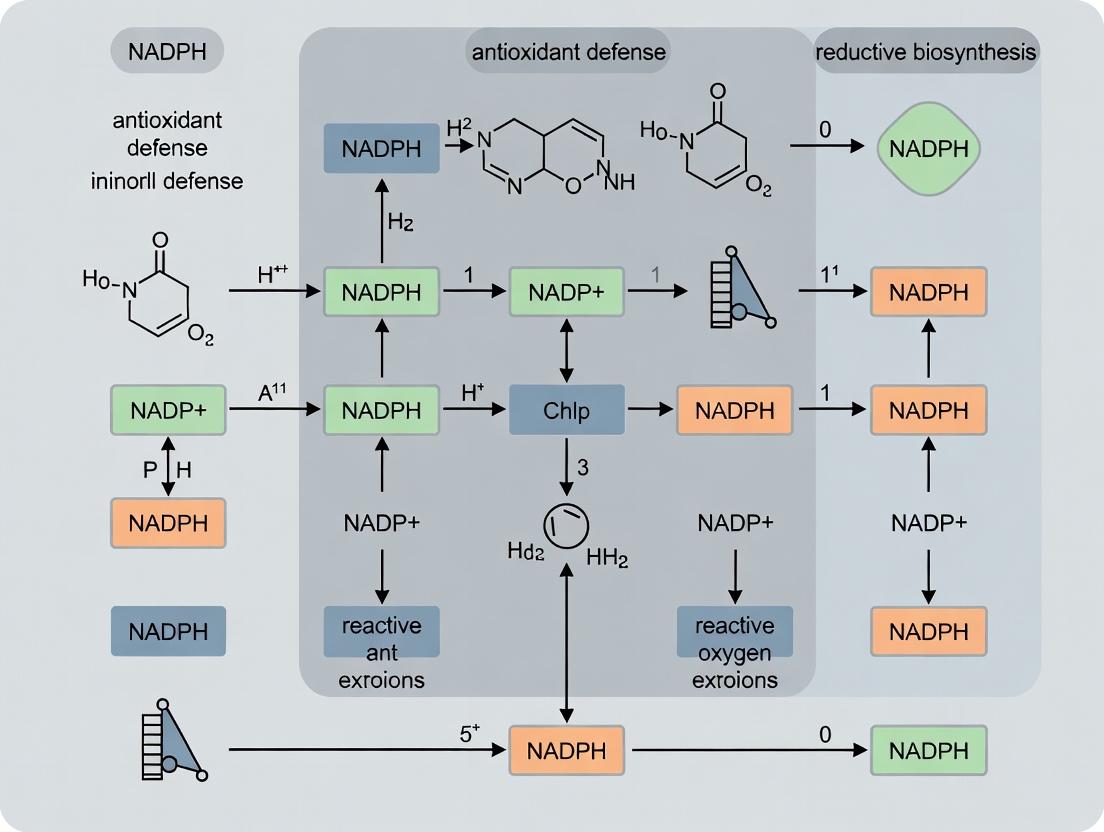
This comprehensive review elucidates the critical dual role of NADPH as the central reducing power for both antioxidant defense and anabolic biosynthesis.
NADPH: The Master Reductant in Cellular Defense and Biosynthesis - Molecular Mechanisms and Research Applications
Abstract
This comprehensive review elucidates the critical dual role of NADPH as the central reducing power for both antioxidant defense and anabolic biosynthesis. Targeting researchers and drug developers, we explore the foundational biochemistry of NADPH generation via the pentose phosphate pathway, malic enzyme, and IDH1. The article details methodological approaches for measuring cellular NADPH/NADP⁺ ratios and flux, troubleshoots common experimental challenges in modulating NADPH pools, and provides a comparative analysis of NADPH-dependent antioxidant systems (glutathione, thioredoxin) versus reductive biosynthesis pathways (fatty acids, nucleotides). We conclude with future directions for targeting NADPH metabolism in cancer, aging, and metabolic disorders.
Understanding NADPH: The Biochemical Keystone of Reduction in the Cell
Within the research landscape of cellular redox homeostasis, nicotinamide adenine dinucleotide phosphate (NADPH) is a critical cofactor. Its primary functions are concentrated within two core, interconnected physiological domains: antioxidant defense and reductive biosynthesis. This whitepaper provides a technical introduction to NADPH, detailing its chemical structure, redox properties, and key distinctions from its close analog NADH. Understanding these fundamental characteristics is essential for research aimed at modulating oxidative stress in disease or targeting anabolic pathways in proliferative cells, such as those in cancers.
Chemical Structure and Biosynthesis
NADPH is a phosphorylated derivative of NADH. Both share an identical core structure: a nicotinamide ring (the redox-active moiety), a ribose, a pyrophosphate bridge, an adenine ring, and another ribose. The sole structural difference is the presence of a phosphate ester group on the 2'-carbon of the adenosine ribose in NADPH (Figure 1).
- Primary Biosynthetic Pathways: NADPH is generated through several major metabolic fluxes, which are compartmentalized and regulated. The pentose phosphate pathway (PPP), particularly its oxidative arm catalyzed by glucose-6-phosphate dehydrogenase (G6PD), is the major cytosolic source. Other contributors include cytosolic and mitochondrial isoforms of NADP+-dependent isocitrate dehydrogenase (IDH1/2) and malic enzyme.
Figure 1: Key NADPH Biosynthetic Pathways
Redox Properties and Function
The core function of NADPH is as a hydride (H⁻) donor. The redox reaction occurs at the C4 position of the nicotinamide ring.
Reduction Half-Reaction: NADP⁺ + 2e⁻ + H⁺ → NADPH
Key Thermodynamic Property: The standard reduction potential (E°') for the NADP⁺/NADPH couple is approximately -0.324 V, which is identical to that of the NAD⁺/NADH couple. This strongly negative potential makes NADPH a potent reducing agent.
Functional Distinction: Despite identical redox potentials, NADPH and NADH are kinetically compartmentalized by distinct substrate specificities of enzymes. NADPH is predominantly used in reductive anabolism (e.g., fatty acid, cholesterol biosynthesis) and antioxidant systems (e.g., regenerating reduced glutathione via glutathione reductase). NADH is primarily channeled into catabolic energy production (mitochondrial electron transport chain).
Quantitative Comparison: NADPH vs. NADH
Table 1: Core Comparison of NADPH and NADH
| Property | NADPH | NADH |
|---|---|---|
| Full Name | Nicotinamide Adenine Dinucleotide Phosphate (Reduced) | Nicotinamide Adenine Dinucleotide (Reduced) |
| Primary Cellular Role | Reductive biosynthesis & Antioxidant defense | Catabolic energy production (ATP synthesis) |
| Reduction Potential (E°') | ~ -0.324 V | ~ -0.324 V |
| Structure Difference | Phosphate ester on 2'-OH of adenosine ribose | Free 2'-OH on adenosine ribose |
| Typical [Reduced]/[Oxidized] Ratio | ~ 100:1 (Cytosol, highly reduced) | ~ 1:1000 (Mitochondrial matrix, highly oxidized) |
| Major Biosynthetic Source | Pentose Phosphate Pathway (G6PD) | Glycolysis, TCA Cycle |
| Key Consumer Enzymes | Glutathione Reductase, Thioredoxin Reductase, Cytochrome P450 Reductase, Fatty Acid Synthase | Complex I (NADH:ubiquinone oxidoreductase) of ETC |
Table 2: Representative NADPH-Dependent Reactions in Research Context
| Pathway/System | Enzyme | Reaction (Simplified) | Research Relevance |
|---|---|---|---|
| Glutathione System | Glutathione Reductase (GR) | GSSG + NADPH + H⁺ → 2 GSH + NADP⁺ | Quantifying oxidative stress; Drug-induced hepatotoxicity models. |
| Thioredoxin System | Thioredoxin Reductase (TrxR) | Trx (oxidized) + NADPH + H⁺ → Trx (reduced) + NADP⁺ | Studying redox signaling in cancer & inflammation. |
| Nitric Oxide Synthase | NOS isoforms | L-Arg + O₂ + NADPH → NO + L-Cit + NADP⁺ | Vascular biology; Neurotransmission; Immune response. |
| Cytochrome P450 | P450 Reductase | RH + O₂ + NADPH + H⁺ → ROH + H₂O + NADP⁺ | Drug metabolism & pharmacokinetics (DMPK) studies. |
| Fatty Acid Synthesis | Fatty Acid Synthase (FASN) | Acetyl-CoA + 7 Malonyl-CoA + 14 NADPH → Palmitate + 14 NADP⁺ | Oncology target (lipid metabolism in proliferating cells). |
Experimental Protocols
Protocol 1: Spectrophotometric Assay for Cellular NADPH/NADP⁺ Ratio
- Principle: NADPH absorbs at 340 nm, while NADP⁺ does not. Enzymatic cycling reactions can distinguish the two pools.
- Procedure:
- Rapid Extraction: Lyse 1x10⁶ cells in 200 µL of cold 0.1N HCl (for NADP⁺) or 0.1N NaOH (for NADPH), followed by immediate heating at 60°C for 5 min. Neutralize.
- NADPH Measurement: To 50 µL of alkaline extract, add 200 µL of assay buffer (100mM Tris-HCl pH 8.0, 2mM EDTA, 0.5mM MTT, 2mM PMS, 6U/ml G6PD). Read A₅₄₀ (t=0). Initiate reaction with 2mM G6P. Monitor A₅₄₀ increase for 10 min (ΔA is proportional to NADPH).
- Total NADP(H) Measurement: Repeat step 2 on a separate aliquot of acidic extract that has been pre-incubated with 0.1M NaOH to convert all NADP⁺ to NADPH.
- Calculation: NADP⁺ = Total - NADPH. Ratio = NADPH / NADP⁺. Use standard curves for quantitation.
Protocol 2: Fluorescent Imaging of NADPH Redox State (iNAP Probe)
- Principle: Genetically encoded biosensor (iNAP) exhibits fluorescence resonance energy transfer (FRET) changes upon NADPH binding.
- Procedure:
- Transfection: Transfect cells with plasmid encoding iNAP (targeted to cytosol or mitochondria as needed).
- Imaging: After 24-48h, image live cells on a confocal microscope with appropriate environmental control.
- Excitation/Detection: Excite at 425nm. Collect emission simultaneously at 475nm (cyan) and 525nm (yellow).
- Data Analysis: Calculate the FRET ratio (YFP/CFP emission). A decrease in ratio indicates a decrease in [NADPH]. Include positive (e.g., glucose deprivation) and negative (e.g., H₂O₂ pulse) controls.
The Scientist's Toolkit: Key Research Reagent Solutions
Table 3: Essential Reagents for NADPH Research
| Reagent / Material | Function & Explanation |
|---|---|
| Glucose-6-Phosphate Dehydrogenase (G6PD), Recombinant | Enzyme used in enzymatic cycling assays to specifically quantify NADP⁺/NADPH levels by catalyzing the reduction of NADP⁺. |
| β-Nicotinamide Adenine Dinucleotide 2'-Phosphate (NADP⁺/NADPH), High-Purity Salts | Primary standards for calibration curves in spectrophotometric, fluorometric, or HPLC assays. Critical for accurate quantification. |
| Glutathione Reductase (GR) Inhibitor (e.g., BCNU) | Pharmacological tool to inhibit the glutathione cycle, forcing NADPH pool redistribution and studying downstream effects on oxidative stress. |
| Genetically Encoded NADPH Biosensors (e.g., iNAP, Apollo-NADP⁺) | Enable real-time, compartment-specific (cytosol, mitochondria) monitoring of NADPH dynamics in live cells. |
| LC-MS/MS Kit for NADP(H) Quantitation | Gold-standard method for absolute, specific quantification of NADP⁺ and NADPH from complex biological samples, avoiding enzymatic interferences. |
| Glucose-6-Phosphate (G6P) Substrate | Substrate for G6PD in PPP. Used in experiments to stimulate NADPH production or in enzymatic assay mixtures. |
| NADPH Oxidase (NOX) Inhibitors (e.g., VAS2870, GSK2795039) | Tools to study the role of NADPH as a substrate for reactive oxygen species (ROS) generation by NOX enzymes in signaling and disease. |
Within the critical framework of cellular redox homeostasis and anabolic synthesis, nicotinamide adenine dinucleotide phosphate (NADPH) serves as the principal reducing agent. Its generation is tightly regulated through several major enzymatic pathways. This whitepaper provides an in-depth technical analysis of the three core NADPH-producing systems: the Pentose Phosphate Pathway (PPP), the Malic Enzyme (ME), and Isocitrate Dehydrogenase 1 (IDH1). The discussion is framed within the broader thesis that spatial, temporal, and quantitative regulation of NADPH flux is fundamental to antioxidant defense, reductive biosynthesis, and associated disease pathologies, offering key targets for therapeutic intervention.
The Pentose Phosphate Pathway (PPP): The Cytosolic Workhorse
The oxidative branch of the PPP is the primary and ubiquitous source of cytosolic NADPH. Glucose-6-phosphate dehydrogenase (G6PD) and 6-phosphogluconate dehydrogenase (6PGD) each generate one molecule of NADPH in irreversible reactions.
Key Regulatory Node: G6PD is the rate-limiting enzyme, allosterically inhibited by NADPH and acyl-CoA, ensuring feedback regulation. Its activity is crucial for managing oxidative stress in tissues like red blood cells, liver, and adrenal cortex.
Malic Enzyme (ME): Linking Metabolism and Cytosolic NADPH
Malic enzymes decarboxylate malate to pyruvate, concurrently reducing NADP⁺ to NADPH. Three isoforms exist:
- ME1 (c-NADP-ME): Cytosolic, directly produces NADPH.
- ME2 (m-NADP-ME): Mitochondrial, can use NAD⁺ or NADP⁺.
- ME3 (m-NADP-ME): Mitochondrial, NADP⁺-specific.
Physiological Context: ME1 is a key anaplerotic and NADPH-generating enzyme, particularly active in lipogenic tissues (liver, adipose) and proliferating cells, where it supports fatty acid synthesis and redox balance.
Isocitrate Dehydrogenase 1 (IDH1): A Dual-Function Enzyme
Cytosolic NADP⁺-dependent isocitrate dehydrogenase 1 (IDH1) catalyzes the oxidative decarboxylation of isocitrate to α-ketoglutarate (α-KG), producing NADPH.
Unique Role & Pathological Link: Beyond NADPH production, mutant forms of IDH1 (e.g., R132H) in cancers gain a neomorphic activity, reducing α-KG to the oncometabolite D-2-hydroxyglutarate (D-2HG), which consumes NADPH and alters cellular epigenetics and redox state.
Quantitative Comparison of Major NADPH Pathways
Table 1: Quantitative and Regulatory Features of Core NADPH-Producing Enzymes
| Feature | PPP (G6PD/6PGD) | Malic Enzyme 1 (ME1) | Isocitrate Dehydrogenase 1 (IDH1) |
|---|---|---|---|
| Cellular Location | Cytosol | Cytosol | Cytosol, Peroxisomes |
| Primary Metabolic Input | Glucose-6-Phosphate | Malate | Isocitrate |
| Net Reaction (NADPH) | G6P + 2 NADP⁺ → Ru5P + CO₂ + 2 NADPH + 2 H⁺ | Malate + NADP⁺ → Pyruvate + CO₂ + NADPH | Isocitrate + NADP⁺ → α-KG + CO₂ + NADPH |
| NADPH per Reaction Cycle | 2 | 1 | 1 |
| Key Allosteric Regulators | NADPH (Inhibitor), NADP⁺ (Activator) | Fumarate (Activator, human), ATP (Inhibitor) | NADPH (Feedback Inhibitor) |
| Primary Physiological Role | Redox defense, Nucleotide synthesis | Lipogenesis, Gluconeogenesis, Redox balance | Redox balance, Lipid synthesis, Oxidative stress response |
| Association with Disease | G6PD Deficiency (Hemolytic Anemia) | Overexpression in cancers | Somatic mutations in gliomas, AML, chondrosarcoma |
Experimental Protocols for NADPH Pathway Analysis
Protocol 1: Quantifying NADPH/NADP⁺ Ratio via Enzymatic Cycling Assay This standard method provides high sensitivity for determining redox ratios.
- Cell Lysate Preparation: Harvest cells in ice-cold 0.1M NaOH (for NADPH) or 0.1M HCl (for NADP⁺). Neutralize immediately.
- Reagent Preparation: Prepare cycling assay buffer: 100mM Tris-Cl (pH 8.0), 0.5mM EDTA, 0.1% BSA, 2mM G6P, 5µM resazurin, 2U/ml G6PD.
- Assay Execution: In a 96-well plate, mix 50µl sample with 100µl cycling reagent. Incubate at 37°C for 30-60 min, protected from light.
- Detection: Measure fluorescence (Ex 560nm / Em 590nm). Calculate concentrations against standard curves of known NADPH/NADP⁺.
Protocol 2: Tracing Metabolic Flux through the PPP using [1-¹³C]-Glucose
- Isotope Labeling: Culture cells in medium containing 10mM [1-¹³C]-glucose for a defined period (e.g., 2-24h).
- Metabolite Extraction: Quench metabolism with dry ice-cold 80% methanol. Collect intracellular metabolites.
- Mass Spectrometry Analysis: Analyze polar metabolites via LC-MS or GC-MS. Quantify the ¹³C enrichment in metabolites like ribose-5-phosphate, lactate, and alanine.
- Flux Calculation: The ratio of ¹³C-labeled lactate (M+1) from the first turn of the PPP versus (M+3) from glycolysis indicates relative PPP flux.
Protocol 3: Assessing IDH1 Mutant Activity and D-2HG Production
- Transfection & Sample Prep: Transfect cells with plasmid encoding IDH1-R132H or empty vector. Harvest cells after 48h.
- D-2HG Extraction: Use methanol:water (80:20) extraction. Dry under nitrogen stream.
- Derivatization: Derivatize samples with diacetyl-L-tartaric anhydride (DATA) for chiral separation.
- LC-MS/MS Analysis: Analyze using a chiral column. Quantify D-2HG and L-2HG using multiple reaction monitoring (MRM) against deuterated internal standards (D-2HG-d₆).
Signaling and Metabolic Relationship Diagrams
Title: Core NADPH Pathways and Regulatory Interactions
Title: NADPH in the Glutathione Antioxidant System
The Scientist's Toolkit: Key Research Reagents & Materials
Table 2: Essential Research Tools for NADPH Pathway Investigation
| Reagent / Material | Provider Examples | Function & Application |
|---|---|---|
| NADPH/NADP⁺ Assay Kit (Fluorometric) | Cayman Chemical, Sigma-Aldrich, Abcam | Quantifies total, oxidized, and reduced pools in cell/tissue lysates. |
| [1-¹³C]-Glucose / [U-¹³C]-Glucose | Cambridge Isotope Labs, Sigma-Aldrich | Stable isotope tracer for measuring PPP flux and metabolic routing via GC/LC-MS. |
| Recombinant Human IDH1 (WT & R132H) | Sino Biological, Proteintech | Enzyme source for in vitro kinetic assays and inhibitor screening. |
| D-2-hydroxyglutarate (D-2HG) ELISA Kit | Cell Biolabs, Cayman Chemical | High-throughput quantification of the oncometabolite in patient serum or cell media. |
| G6PD Activity Assay Kit (Colorimetric) | Sigma-Aldrich, BioVision | Directly measures the activity of the rate-limiting PPP enzyme from samples. |
| siRNA/shRNA Libraries (G6PD, ME1, IDH1) | Dharmacon, Sigma-Aldrich, Origene | Gene knockdown for functional studies on pathway dependency. |
| Specific Inhibitors (e.g., 6-AN, ME1 inhibitor, AGI-5198) | MedChemExpress, Tocris, Selleckchem | Pharmacological tools to probe pathway function (6-AN for PPP, AGI-5198 for IDH1-R132H). |
| Anti-IDH1 R132H Mutation Antibody | Agilent/Dako, Cell Signaling Tech | IHC and IF detection of mutant protein in tumor samples for diagnostics. |
Within the broader thesis of NADPH's role in cellular redox homeostasis, this whitepaper delineates its critical function as the exclusive reducing currency for the glutathione (GSH) and thioredoxin (Trx) systems. These parallel antioxidant networks are fundamental for detoxifying reactive oxygen species (ROS), maintaining protein thiol homeostasis, and supporting reductive biosynthesis. The imperative to sustain NADPH production is a cornerstone of cellular defense, with dysregulation directly linked to oxidative stress diseases and offering targets for therapeutic intervention in cancer, neurodegeneration, and metabolic disorders.
NADPH: The Central Reductive Powerhouse
NADPH is generated primarily through four enzymatic pathways:
- Pentose Phosphate Pathway (PPP): Glucose-6-phosphate dehydrogenase (G6PD) is the rate-limiting enzyme.
- Malic Enzyme (ME1): Decarboxylates malate to pyruvate, generating cytosolic NADPH.
- Isocitrate Dehydrogenase 1 (IDH1): Cytosolic enzyme converting isocitrate to α-ketoglutarate.
- Folate Metabolism: Methylenetetrahydrofolate dehydrogenase (MTHFD1) activity.
Table 1: Primary Cellular Sources of NADPH
| Pathway | Key Enzyme | Localization | Approximate Contribution to Cytosolic NADPH Pool* |
|---|---|---|---|
| Pentose Phosphate Pathway | Glucose-6-Phosphate Dehydrogenase (G6PD) | Cytosol | 30-50% |
| Malic Enzyme Reaction | Malic Enzyme 1 (ME1) | Cytosol | 20-40% |
| Isocitrate Dehydrogenase | Isocitrate Dehydrogenase 1 (IDH1) | Cytosol | 10-20% |
| Folate Cycle | MTHFD1 | Cytosol | Variable (Tissue-dependent) |
*Contributions are tissue and condition-dependent; values represent typical ranges from recent flux analyses.
The Glutathione Redox System
This system reduces hydrogen peroxide (H₂O₂) and organic hydroperoxides.
Core Reaction: 2GSH + ROOH → GSSG + ROH + H₂O
- Reduction: Catalyzed by Glutathione Peroxidase (GPX).
- Regeneration: NADPH reduces GSSG back to 2GSH via Glutathione Reductase (GR).
Experimental Protocol 1: Quantifying Cellular Glutathione Redox State (HPLC-based)
- Principle: Rapid acidification to trap thiols, followed by derivatization and separation.
- Procedure:
- Cell Quenching: Aspirate medium, add 1 mL of ice-cold 0.1M HCl containing 0.1% Triton X-100 and 1mM diethylenetriaminepentaacetic acid (DTPA). Scrape cells on ice.
- Derivatization: Mix 100 µL lysate with 10 µL of 100mM 2-vinylpyridine (to derivative GSSG) and incubate 30 min at room temperature. For total GSH (GSH+GSSG), omit this step.
- Neutralization: Add 20 µL of 2M triethanolamine to neutralize.
- Assay: Use an enzymatic recycling assay (GR, DTNB) or HPLC with electrochemical detection. For HPLC, pre-column derivatization with iodoacetic acid and dansyl chloride is common.
- Key Control: Use N-ethylmaleimide (NEM) for rapid thiol alkylation in alternate samples.
Table 2: Key Components of the Glutathione System
| Component | Abbreviation | Primary Function | Key Cofactor/Substrate |
|---|---|---|---|
| Reduced Glutathione | GSH | Direct electron donor for reduction reactions, radical scavenging | -- |
| Glutathione Peroxidase | GPX (1-8) | Reduces H₂O₂ and lipid hydroperoxides to H₂O/alcohol | GSH |
| Glutathione Reductase | GR | Reduces GSSG to regenerate 2 GSH | NADPH |
| Glutaredoxin | Grx | Reduces protein disulfides or glutathionylated proteins | GSH |
Diagram Title: NADPH-Dependent Glutathione Redox Cycle
The Thioredoxin Redox System
This system reduces protein disulfides, ribonucleotide reductase (for DNA synthesis), and peroxiredoxins (Prx) for H₂O₂ detoxification.
Core Reaction: Protein-S₂ + Trx-(SH)₂ → Protein-(SH)₂ + Trx-S₂
- Reduction: Catalyzed by Thioredoxin Reductase (TrxR) using NADPH.
- Electron Transfer: Reduced Trx donates electrons to target proteins/Prx.
Experimental Protocol 2: Measuring Thioredoxin Reductase Activity
- Principle: NADPH consumption monitored at 340 nm as TrxR reduces DTNB (Ellman's reagent).
- Procedure:
- Reaction Mix (1 mL): 50 mM potassium phosphate buffer (pH 7.0), 1 mM EDTA, 0.24 mM NADPH, 5 mM DTNB, and cell lysate/protein sample.
- Baseline: Record absorbance at 340 nm (A340) for 1 minute.
- Initiation: Add 50 µL of 10 mM DTNB (if not included initially). Mix rapidly.
- Measurement: Record A340 decrease for 3-5 minutes. The molar extinction coefficient for NADPH (ε₃₄₀ = 6220 M⁻¹cm⁻¹) is used.
- Calculation: Activity (U/mg) = (ΔA340/min) / (6.22 * mg protein/mL in cuvette).
- Specificity Control: Include assay with 1 µM auranofin (specific TrxR inhibitor) to confirm signal origin.
Table 3: Key Components of the Thioredoxin System
| Component | Abbreviation | Primary Function | Key Cofactor/Substrate |
|---|---|---|---|
| Thioredoxin (Reduced) | Trx-(SH)₂ | Reduces protein disulfides, peroxiredoxins | -- |
| Thioredoxin Reductase | TrxR (1/2) | Reduces oxidized Trx using NADPH | NADPH, Selenocysteine (Sec) |
| Peroxiredoxin | Prx (1-6) | Reduces H₂O₂, peroxynitrite, organic hydroperoxides | Trx-(SH)₂ |
Diagram Title: NADPH-Driven Thioredoxin System Reduction Cascade
Interplay, Regulation, and Pathophysiological Implications
The GSH and Trx systems are non-redundant, compartmentalized, and interconnected. Cross-talk occurs via glutaredoxin and shared substrates like H₂O₂. NADPH availability from the PPP, ME1, or IDH1 is the master regulator of total cellular antioxidant capacity. Pharmacological inhibition of TrxR (e.g., auranofin) or GSH synthesis (e.g., buthionine sulfoximine, BSO) induces oxidative stress, a strategy explored in cancer therapy. Conversely, boosting NADPH via NRF2 activation is protective in neurodegenerative models.
The Scientist's Toolkit: Research Reagent Solutions
Table 4: Essential Reagents for Studying NADPH-Linked Antioxidant Systems
| Reagent | Primary Function/Application | Example Product/Catalog # (for reference) |
|---|---|---|
| Butathione Sulfoximine (BSO) | Irreversible inhibitor of γ-glutamylcysteine synthetase (GCL), depletes cellular GSH. | Sigma-Aldrich, B2515 |
| Auranofin | Potent, specific inhibitor of Thioredoxin Reductase (TrxR). | Tocris Bioscience, 2223 |
| 2-Vinylpyridine | Thiol-blocking agent used to derivative GSH for specific measurement of GSSG. | Sigma-Aldrich, 132292 |
| DTNB (Ellman's Reagent) | Colorimetric thiol detection; used in GR/TrxR activity and total GSH assays. | Thermo Fisher, 22582 |
| Recombinant Human Thioredoxin (Trx1) | Substrate for TrxR activity assays; used in redox pull-down experiments. | R&D Systems, 7420-TX |
| NADPH Tetrasodium Salt | Essential cofactor for in vitro GR and TrxR enzyme activity assays. | Cayman Chemical, 9000745 |
| Glutathione Reductase (from yeast) | Enzyme used in enzymatic recycling assays for quantification of total GSH/GSSG. | Sigma-Aldrich, G3664 |
| CellROX or DCFH-DA | Fluorogenic probes for measuring general cellular ROS levels. | Thermo Fisher, C10422 (CellROX Green) |
| siRNA against G6PD or ME1 | Knockdown key NADPH-producing enzymes to study consequences on redox systems. | Dharmacon, ON-TARGETplus pools |
| NRF2 Activators (e.g., sulforaphane) | Induce expression of GCL, GR, and NADPH-producing enzymes via NRF2 pathway. | Sigma-Aldrich, S4441 |
Within the broader research thesis on NADPH's dual roles in cellular metabolism, this document focuses on its function as the indispensable electron donor for reductive anabolism. While the antioxidant defense role of NADPH (via glutathione and thioredoxin systems) is well-established, its function in fueling biosynthetic pathways is equally critical for cell proliferation, tissue repair, and disease pathogenesis. This whitepaper provides an in-depth technical guide on the generation and utilization of NADPH specifically for the synthesis of lipids and nucleotides, processes fundamental to cancer biology, regenerative medicine, and metabolic disorders.
NADPH is produced primarily through four cytosolic and mitochondrial pathways. The relative contribution of each pathway varies by tissue, metabolic state, and disease context.
Diagram 1: Major NADPH-Generating Pathways (100 chars)
Table 1: Quantitative Contribution of NADPH-Producing Pathways in Proliferating Cells
| Pathway | Key Enzyme | Localization | Approx. NADPH Contribution (%) (Cancer Cell Line) | Km for NADP+ (μM) | Primary Regulation |
|---|---|---|---|---|---|
| Oxidative Pentose Phosphate Pathway (oxPPP) | Glucose-6-Phosphate Dehydrogenase (G6PD) | Cytosol | 40-60% | ~20-50 μM | NADP+/NADPH ratio; Transcriptional (Nrf2) |
| Malic Enzyme 1 (ME1) Reaction | Malic Enzyme 1 (ME1) | Cytosol | 20-30% | ~10-30 μM | ATP, Fumarate; Transcriptional |
| Cytosolic Isocitrate Dehydrogenase 1 (IDH1) | Isocitrate Dehydrogenase 1 (IDH1) | Cytosol/Peroxisome | 10-20% | ~10 μM | [Isocitrate], [Mg2+]; Mutations in cancer |
| Folate Cycle (MTHFD1) | Methylenetetrahydrofolate Dehydrogenase 1 | Cytosol | 5-15% | Variable | Folate availability; Purine synthesis demand |
Data synthesized from recent metabolomic flux studies (2021-2023). Contributions are cell-type dependent.
NADPH Consumption in Lipid Synthesis: The Fatty Acid and Cholesterol Pathways
De novo lipogenesis requires massive amounts of NADPH for the reductive steps catalyzed by fatty acid synthase (FASN) and other enzymes.
Experimental Protocol: Measuring NADPH Flux into Palmitate
Title: In Vitro Flux Assay for NADPH Utilization in De Novo Lipogenesis
Objective: Quantify the rate and stoichiometry of NADPH consumption during palmitate synthesis from acetyl-CoA.
Materials:
- Purified recombinant enzymes (ACLY, ACC, FASN complex).
- (^{14})C-Acetyl-CoA or (^{13})C-Acetyl-CoA (for LC-MS).
- NADPH (with UV-Vis/fluorometric detection capability).
- Reaction buffer (pH 7.4, containing Mg2+, ATP, bicarbonate).
- Stopping solution: 2M KOH in 75% ethanol.
- Scintillation counter or LC-MS system.
Procedure:
- Prepare a master mix containing 50 mM Tris-HCl (pH 7.4), 5 mM MgCl2, 2 mM ATP, 10 mM NaHCO3, 0.2 mM acetyl-CoA (including tracer), and 0.5 mM NADPH.
- Initiate the reaction by adding the enzyme cocktail (ACLY, ACC, FASN) to the master mix at 37°C.
- Aliquot the reaction mixture at T=0, 5, 10, 20, and 30 minutes into the stopping solution to halt enzyme activity.
- For radiometric detection, extract lipids via the Folch method, separate by TLC, and quantify (^{14})C incorporation into palmitate via scintillation counting.
- Parallel measurement: In a separate cuvette, monitor NADPH consumption directly by measuring absorbance at 340 nm (ε340 = 6220 M−1cm−1) in a spectrophotometer.
- Calculate flux: The theoretical stoichiometry is 14 NADPH per palmitate (C16:0). Compare the measured NADPH oxidation rate to the palmitate synthesis rate.
Diagram 2: NADPH Consumption in Fatty Acid Synthesis (99 chars)
NADPH Consumption in Nucleotide Synthesis: Ribonucleotide Reduction andDe NovoPurine Synthesis
Nucleotide biosynthesis, particularly the de novo synthesis of purines and the reduction of ribonucleotides to deoxyribonucleotides (catalyzed by Ribonucleotide Reductase, RNR), is heavily dependent on NADPH.
Table 2: NADPH-Dependent Steps in Nucleotide Synthesis
| Biosynthetic Pathway | Specific Step | Enzyme | Stoichiometry (NADPH per Nucleotide) | Electron Transfer Path |
|---|---|---|---|---|
| Deoxyribonucleotide Synthesis | Ribonucleotide Reduction | Ribonucleotide Reductase (RNR) | 1 per dNDP | NADPH -> Thioredoxin Reductase -> Thioredoxin -> RNR |
| De Novo Purine Synthesis | Step 3: GAR Transformylase | GAR Transformylase | 1 (indirect via folate) | NADPH -> MTHFD1 -> 10-formyl-THF -> Formyl group donor |
| Step 9: AICAR Transformylase | AICAR Transformylase | 1 (indirect via folate) | NADPH -> MTHFD1 -> 10-formyl-THF -> Formyl group donor | |
| Pyrimidine Synthesis | Dihydroorotate Oxidation | Dihydroorotate Dehydrogenase (DHODH) | 0 (uses CoQ) | N/A |
| Potential salvage | - | - | NADPH via glutathione system maintains nucleotide pool redox state. |
Experimental Protocol: Assessing RNR Dependence on the Thioredoxin/NADPH System
Title: Coupled Enzyme Assay for Ribonucleotide Reductase Activity via Thioredoxin Reductase/NADPH
Objective: Measure the rate of CDP reduction to dCDP by monitoring NADPH oxidation in a coupled system.
Materials:
- Purified RNR (class Ia, e.g., from E. coli or mammalian recombinant).
- Purified Thioredoxin (Trx) and Thioredoxin Reductase (TrxR).
- NADPH.
- Substrate: CDP.
- Effector: ATP (activates CDP reduction).
- Reaction buffer: 50 mM HEPES (pH 7.2), 15 mM MgCl2, 1 mM DTT (for enzyme stability).
- UV-Vis spectrophotometer.
Procedure:
- Prepare assay mixture: 50 mM HEPES pH 7.2, 15 mM MgCl2, 5 μM Trx, 0.1 μM TrxR, 1 mM ATP, 0.2 mM CDP, 0.15 mM NADPH.
- Pre-incubate the mixture at 37°C for 2 minutes.
- Baseline measurement: Record the absorbance at 340 nm for 1 minute to establish any background oxidation.
- Initiate reaction: Add purified RNR to a final concentration of 0.5 μM and mix rapidly.
- Kinetic measurement: Continuously monitor the decrease in A340 for 10-15 minutes.
- Control: Run a parallel reaction without CDP to subtract any non-specific NADPH oxidation.
- Calculation: Use the linear portion of the curve to calculate the rate of NADPH oxidation (ΔA340/min). Convert to reaction velocity using the extinction coefficient (ε340 = 6220 M−1cm−1). One mole of NADPH oxidized corresponds to one mole of dCDP produced.
Diagram 3: NADPH Drives dNTP Synthesis via Thioredoxin (87 chars)
The Scientist's Toolkit: Key Research Reagent Solutions
Table 3: Essential Reagents for Studying NADPH in Biosynthesis
| Reagent/Material | Function/Application | Key Considerations & Examples |
|---|---|---|
| NADPH Quantification Probes | Direct measurement of NADPH/NADP+ ratios. | LC-MS/MS: Gold standard for absolute quantification. Fluorescent Biosensors: e.g., iNAP sensors for live-cell imaging. Enzymatic Cycling Assays: Highly sensitive, uses diaphorase/resazurin. |
| Isotopic Tracers for Flux Analysis | Tracing NADPH origin and fate in synthesis pathways. | 1,2-(^{13})C-Glucose: Distinguishes oxPPP vs. TCA cycle-derived NADPH. (^{2})H2O: Labels NADPH via deuterium exchange in enzymes like G6PD/6PGD. (^{13})C-Acetate: Traces lipogenesis flux and NADPH consumption. |
| Pathway-Specific Inhibitors | Genetic or chemical perturbation of NADPH metabolism. | G6PD Inhibitor: 6-Aminonicotinamide (6-AN). ME1 Inhibitor: ME1 siRNA/shRNA; small molecules under development. IDH1 Mutant Inhibitors: Ivosidenib (AG-120) for mutant IDH1 cancers. |
| Recombinant Enzymes | In vitro reconstruction of biosynthetic pathways. | Human FASN complex, ACC, RNR, Trx/TrxR systems. Essential for controlled mechanistic and kinetic studies. |
| Metabolomic Standards | Normalization and identification in LC-MS studies. | Stable isotope-labeled internal standards for NADP(H), ribose-5-phosphate, malate, fatty acids, nucleotides (e.g., (^{13})C(_{15})-NADP+, d5-Palmitate). |
Within the broader thesis of NADPH's pivotal role in antioxidant defense and reductive biosynthesis, this whitepaper examines the critical, yet often overlooked, compartmentalization of NADPH pools. NADPH is not a freely diffusible, homogeneous metabolite but exists in distinct, independently regulated pools within the cytosol, mitochondria, and nucleus. This spatial organization is fundamental to its compartment-specific functions, ranging from maintaining redox balance to fueling anabolic reactions. Understanding the sources, sinks, and regulation of these discrete pools is essential for research targeting oxidative stress-related diseases, cancer metabolism, and aging.
Compartment-Specific NADPH Generation Pathways
NADPH is generated by different enzymatic systems in each cellular compartment, creating isolated redox environments.
Cytosol: The primary source is the oxidative pentose phosphate pathway (oxPPP), driven by glucose-6-phosphate dehydrogenase (G6PD) and 6-phosphogluconate dehydrogenase (6PGD). Additional sources include cytosolic isoforms of malic enzyme (ME1) and isocitrate dehydrogenase 1 (IDH1).
Mitochondria: The primary generator is mitochondrial isocitrate dehydrogenase 2 (IDH2). Other contributors include nicotinamide nucleotide transhydrogenase (NNT), which couples proton flow to convert NADH to NADPH, and mitochondrial malic enzyme (ME3).
Nucleus: The nucleus lacks a complete metabolic pathway de novo. Nuclear NADPH is primarily maintained by shuttling mechanisms (e.g., the isocitrate/α-ketoglutarate shuttle involving IDH1) and potentially by nuclear localization of enzymes like G6PD and 6PGD under certain conditions.
Title: NADPH Generation Pathways by Compartment
Quantitative Comparison of NADPH Pools and Turnover
Pool sizes and turnover rates vary significantly by compartment, cell type, and metabolic state. The following table summarizes key quantitative data from recent studies using genetically encoded biosensors (e.g., iNap sensors) and isotopic tracing.
Table 1: Characteristics of Subcellular NADPH Pools
| Parameter | Cytosol | Mitochondria | Nucleus | Measurement Method |
|---|---|---|---|---|
| Approx. Concentration (μM) | 50 - 100 | 30 - 80 | 10 - 40 | Genetically encoded biosensors (iNap, Peredox) |
| [NADPH]/[NADP+] Redox Ratio | ~100-200 | ~20-40 | ~50-100 | Fluorescence lifetime imaging (FLIM) of biosensors |
| Primary Generating Enzyme | G6PD | IDH2 | IDH1 (shuttle) | siRNA knockdown / isotopic flux analysis |
| Key Consumer Pathway | Glutathione reductase (GR), Fatty acid synthesis | Thioredoxin reductase 2 (TrxR2), Glutathione reductase (GR2) | Thioredoxin reductase 1 (TrxR1), Biosynthesis (e.g., ribonucleotides) | Metabolic flux analysis (13C-glucose/glutamine) |
| Response to Oxidative Stress | Rapid depletion, then oxPPP upregulation | Sustained demand, sensitive to NNT activity | Moderate depletion, regulates transcription factor activity | H2O2 challenge + biosensor kinetics |
Experimental Protocols for Measuring Compartmentalized NADPH
Protocol: Live-Cell Imaging with Genetically Encoded NADPH Biosensors
Purpose: To dynamically monitor real-time NADPH levels in specific subcellular compartments. Key Reagents:
- Plasmid constructs for compartment-targeted iNap or SoNar sensors (e.g., iNap3-mito, iNap3-nuc).
- Appropriate cell line (e.g., HeLa, HEK293T).
- Imaging medium without phenol red.
- Confocal or widefield fluorescence microscope with environmental control (37°C, 5% CO2).
- Pharmacological agents: Rotenone (mitochondrial stress), Tert-butyl hydroperoxide (TBHP, oxidative stress), G6PD inhibitor (6-AN).
Procedure:
- Transfection: Seed cells in glass-bottom dishes. Transfect with the biosensor plasmid using a suitable transfection reagent (e.g., Lipofectamine 3000). Incubate for 24-48 hours.
- Imaging Setup: Replace medium with pre-warmed imaging medium. Place dish on microscope stage. Set appropriate excitation/emission filters (e.g., ~410/480 nm for iNap).
- Baseline Acquisition: Capture images every 30-60 seconds for 5-10 minutes to establish baseline fluorescence.
- Intervention: Add stimulus (e.g., 200 μM TBHP) or inhibitor (e.g., 10 μM Rotenone) without moving the dish. Use a micro-injector or pre-add to medium.
- Kinetic Imaging: Continue time-lapse imaging for 30-60 minutes post-intervention.
- Data Analysis: Quantify fluorescence intensity (F) within regions of interest (ROIs) defined for each compartment. Normalize to baseline (F/F0). Plot normalized fluorescence vs. time.
Protocol: Subcellular Fractionation Followed by Enzymatic NADPH Assay
Purpose: To biochemically quantify absolute NADPH levels in isolated organelles. Key Reagents:
- Cell homogenization buffer (e.g., 250 mM sucrose, 10 mM HEPES, pH 7.4).
- Differential centrifugation media.
- Mitochondrial isolation kit.
- Nuclear extraction kit.
- Commercial NADP/NADPH quantification kit (fluorometric or colorimetric).
- BCA protein assay kit.
Procedure:
- Cell Harvest: Grow cells to ~80% confluence. Wash with PBS, trypsinize, and pellet cells (500 x g, 5 min).
- Subcellular Fractionation:
- Cytosolic Fraction: Resuspend cell pellet in ice-cold homogenization buffer with protease inhibitors. Homogenize with a Dounce homogenizer (20-30 strokes). Centrifuge at 1,000 x g for 10 min at 4°C to remove nuclei and unbroken cells. Transfer supernatant. Centrifuge this supernatant at 15,000 x g for 20 min to pellet mitochondria. The resulting supernatant is the cytosolic fraction.
- Mitochondrial Fraction: Resuspend the 15,000 x g pellet in mitochondrial isolation buffer. Purify further via density gradient centrifugation per kit instructions.
- Nuclear Fraction: Use a commercial nuclear extraction kit to isolate nuclei from the initial 1,000 x g pellet.
- NADPH Extraction: Immediately mix each fraction with extraction buffer from the NADP/NADPH kit (often acid/base extraction to distinguish NADPH from NADP+). Centrifuge to clarify.
- Enzymatic Assay: Perform the assay on each extract following kit instructions. Typically, NADPH reduces a precursor to a fluorescent product.
- Normalization: Measure the total protein content of each fraction using a BCA assay. Express NADPH levels as nmol/mg of fraction protein.
Title: Subcellular Fractionation for NADPH Assay Workflow
The Scientist's Toolkit: Key Research Reagents
Table 2: Essential Reagents for Studying Compartmentalized NADPH
| Reagent / Tool | Function / Target | Key Application in NADPH Research |
|---|---|---|
| iNap / SoNar Biosensors | Genetically encoded fluorescent sensors for NADPH/NADH. | Live-cell, compartment-specific (e.g., iNap3-mito) real-time monitoring of NADPH dynamics. |
| 6-Aminonicotinamide (6-AN) | Inhibitor of G6PD (oxPPP). | Selectively depletes cytosolic NADPH pool to study its specific roles and compensatory mechanisms. |
| Rotenone / Antimycin A | Inhibitors of mitochondrial ETC Complex I/III. | Induces mitochondrial ROS, testing the capacity and kinetics of the mitochondrial NADPH pool for antioxidant defense. |
| Tert-Butyl Hydroperoxide (TBHP) | Membrane-permeable ROS generator. | Challenges global and compartment-specific NADPH pools to assess redox buffering capacity. |
| [U-13C]-Glucose / Glutamine | Isotopically labeled metabolic tracers. | Tracks carbon flux through NADPH-producing pathways (oxPPP, IDH, ME) via LC-MS to quantify pathway contributions in different compartments. |
| siRNAs/shRNAs (G6PD, IDH1/2, NNT) | Gene knockdown tools for NADPH enzymes. | Determines the relative importance of specific generating pathways for compartmental NADPH maintenance and function. |
Functional Implications and Research Context
The compartmentalization of NADPH has profound implications for the thesis on antioxidant defense and biosynthesis.
- Targeted Antioxidant Defense: The mitochondrial NADPH pool is non-redundant for regenerating mitochondrial glutathione and thioredoxin systems, directly protecting against mtROS. A separate nuclear pool is crucial for maintaining redox-sensitive transcription factors (e.g., NRF2, p53) in their reduced, DNA-binding competent states.
- Compartment-Sized Biosynthesis: Cytosolic NADPH primarily fuels fatty acid and sterol synthesis. Nuclear NADPH may support local ribonucleotide reduction for DNA repair and replication. Mitochondrial NADPH is required for biosynthetic steps within the organelle.
- Drug Development: Targeting compartment-specific NADPH metabolism is a promising strategy. Inhibiting cytosolic NADPH generation could starve cancer cell proliferation, while bolstering the mitochondrial pool could protect neurons in neurodegenerative diseases. This requires compounds with subcellular targeting (e.g., mitochondrially-targeted precursors or inhibitors).
Introduction Within the broader thesis of NADPH's indispensable role in antioxidant defense and reductive biosynthesis, the regulation of its production is paramount. NADPH serves as the principal reducing equivalent, fueling glutathione regeneration, thioredoxin systems, and biosynthetic pathways for fatty acids and nucleotides. The cellular concentration and flux of NADPH are tightly controlled at the transcriptional level by a network of key regulators, including Nuclear factor erythroid 2–related factor 2 (NRF2) and Sterol Regulatory Element-Binding Proteins (SREBPs). This whitepaper provides an in-depth technical analysis of these transcriptional hubs, their interplay, and experimental approaches for their study.
Key Transcriptional Regulators of NADPH-Producing Enzymes The following table summarizes the major transcriptional regulators, their targets in NADPH metabolism, and their primary physiological triggers.
Table 1: Core Transcriptional Regulators of NADPH Metabolism
| Regulator | Full Name | Key Target Enzymes (Gene) | Primary Inductive Stimulus | Role in NADPH Context |
|---|---|---|---|---|
| NRF2 | Nuclear factor erythroid 2–related factor 2 | Glucose-6-phosphate dehydrogenase (G6PD), 6-phosphogluconate dehydrogenase (PGD), Malic enzyme 1 (ME1), Isocitrate dehydrogenase 1 (IDH1) | Oxidative stress, Electrophiles, ARE inducers | Upregulates PPP and other enzymes to boost NADPH for antioxidant defense (GSH regeneration). |
| SREBP1c | Sterol Regulatory Element-Binding Protein 1c | ATP-citrate lyase (ACLY), Acetyl-CoA carboxylase (ACC), Fatty acid synthase (FASN), G6PD | Insulin, High Carbohydrate, Low Sterols | Drives de novo lipogenesis, requiring NADPH as a reducing cofactor; co-activates G6PD. |
| ChREBP | Carbohydrate Response Element Binding Protein | G6PD, PGD, ACLY, ME1 | High Glucose (via glucose metabolites) | Coordinates glucose utilization with NADPH production for biosynthesis during carbohydrate surplus. |
| p53 | Tumor protein p53 | Glucose-6-phosphate dehydrogenase (G6PD) (represses), TIGAR | Genotoxic stress, DNA damage | Can suppress PPP flux via TIGAR activation or G6PD repression, modulating NADPH/ROS balance. |
| ATF4 | Activating Transcription Factor 4 | Phosphoserine aminotransferase 1 (PSAT1) | ER stress, Amino acid deprivation | Supports NADPH production via serine biosynthesis pathway, linking stress response to redox balance. |
Detailed Signaling Pathways and Cross-Talk
Diagram 1: NRF2-KEAP1 Pathway and NADPH Enzyme Induction
Diagram 2: SREBP1c Processing and Lipogenic Gene Activation
Experimental Protocols
Protocol 1: Chromatin Immunoprecipitation (ChIP) for Validating Transcription Factor Binding Objective: To confirm direct binding of NRF2 or SREBP1 to promoter regions of target genes (e.g., G6PD).
- Cross-linking: Treat cells (e.g., HepG2, MEFs) with an inducer (e.g., 10 µM sulforaphane for NRF2; insulin/sterol depletion for SREBP1c) or vehicle for an optimized time (e.g., 4-6h). Add 1% formaldehyde directly to culture medium for 10 min at room temp to cross-link proteins to DNA.
- Cell Lysis & Sonication: Quench cross-linking with 125 mM glycine. Harvest cells, lyse, and shear chromatin via sonication to yield DNA fragments of 200-500 bp.
- Immunoprecipitation: Clarify lysate. Incubate an aliquot (input control) with the rest with species-matched IgG (negative control) or specific antibody against NRF2 or SREBP1 overnight at 4°C with rotation. Capture antibody-chromatin complexes with protein A/G magnetic beads.
- Washing & Elution: Wash beads sequentially with low salt, high salt, LiCl, and TE buffers. Elute complexes and reverse cross-links at 65°C overnight.
- DNA Purification & Analysis: Treat with RNase A and Proteinase K. Purify DNA. Analyze by quantitative PCR (qPCR) using primers spanning the putative ARE or SRE in the target gene promoter. Enrichment is calculated as % of input.
Protocol 2: Luciferase Reporter Assay for Transcriptional Activity Objective: To measure the functional activity of a transcription factor on a specific promoter.
- Reporter Construct: Clone the promoter region (e.g., ~1 kb upstream of G6PD start site) containing the predicted ARE/SRE into a luciferase reporter vector (e.g., pGL4-Basic).
- Transfection: Co-transfect cells in 24-well plates with the reporter construct, a Renilla luciferase control plasmid (for normalization), and optionally an expression plasmid for the TF (e.g., constitutive active NRF2) or a siRNA to knock it down.
- Stimulation: After 24h, treat cells with relevant stimuli (e.g., sulforaphane) for another 24h.
- Lysis & Measurement: Lyse cells with passive lysis buffer. Measure Firefly and Renilla luciferase activities sequentially using a dual-luciferase assay system on a luminometer.
- Analysis: Normalize Firefly luciferase activity to Renilla activity. Report data as fold-change relative to control-treated or empty vector-transfected cells.
The Scientist's Toolkit: Key Research Reagent Solutions
Table 2: Essential Reagents for Studying NADPH Transcriptional Regulation
| Reagent/Category | Example Product/Description | Primary Function in Research |
|---|---|---|
| NRF2 Activators | Sulforaphane, Tert-Butylhydroquinone (tBHQ), Dimethyl Fumarate (DMF) | Induce oxidative stress response via KEAP1 inhibition, used to study NRF2-driven gene expression and NADPH flux. |
| SREBP Inhibitors | Fatostatin, Betulin | Block SREBP processing by binding to SCAP, used to dissect SREBP's role in lipogenesis and NADPH demand. |
| ChIP-Grade Antibodies | Anti-NRF2 (e.g., D1Z9C XP), Anti-SREBP-1 (e.g., 2A4), Normal Rabbit IgG | Essential for validating direct TF-DNA binding in Chromatin Immunoprecipitation assays. |
| Luciferase Reporter Vectors | pGL4-Basic Vector, Cignal Lenti ARE Reporter | To measure promoter activity driven by ARE, SRE, or other response elements. |
| Metabolic Flux Assays | [1-¹³C] or [2-¹³C] Glucose, NADP/NADPH-Glo Assay | Tracer to quantify PPP flux via LC-MS; Bioluminescent assay to measure absolute NADPH/NADP+ ratios. |
| Genetic Manipulation Tools | siRNA/shRNA against KEAP1, SREBF1; CRISPR-Cas9 for NFE2L2 (NRF2) knockout | To genetically perturb the pathway and observe effects on NADPH metabolism and downstream phenotypes. |
Conclusion The transcriptional orchestration of NADPH metabolism by NRF2, SREBP, and associated regulators represents a critical nexus in cellular redox and metabolic homeostasis. NRF2 primarily responds to redox demands, enhancing NADPH production for defense, while SREBP and ChREBP coordinate with anabolic programs. Advanced techniques like ChIP, reporter assays, and flux analyses allow researchers to dissect this complex regulation. Understanding these pathways offers high-value targets for therapeutic intervention in diseases characterized by oxidative stress or dysregulated biosynthesis, such as cancer, metabolic syndrome, and neurodegenerative disorders.
Quantifying and Manipulating NADPH: Techniques for Research and Discovery
Within the broader thesis of NADPH's central role in antioxidant defense (e.g., via glutathione and thioredoxin systems) and reductive biosynthesis (e.g., fatty acid and nucleotide synthesis), precise quantification of the NADPH/NADP⁺ ratio is paramount. This redox couple serves as a critical readout of cellular metabolic state, oxidative stress, and the functionality of pathways like the pentose phosphate pathway. This guide details three gold-standard methodological approaches for its measurement.
Core Assay Principles & Comparative Data
The choice of assay involves trade-offs between sensitivity, specificity, throughput, and the ability to distinguish isoforms. The following table summarizes key characteristics.
Table 1: Comparison of NADPH/NADP⁺ Assay Methodologies
| Parameter | Spectrophotometric (UV-Vis) | Enzymatic Cycling (Fluorescent) | Liquid Chromatography-Tandem Mass Spectrometry (LC-MS/MS) |
|---|---|---|---|
| Core Principle | Direct measurement of absorbance at 340 nm (NAD(P)H) vs. 260 nm (total). | Enzyme-coupled amplification of signal for low-concentration analytes. | Physical separation and detection by mass/charge ratio. |
| Specificity | Low. Cannot distinguish NADH from NADPH without specific enzymes. | Moderate. Specificity conferred by enzymes (e.g., G6PD for NADP⁺). | Very High. Distinguishes NADPH, NADP⁺, NADH, NAD⁺, and potential isomers. |
| Sensitivity | Low (μM range in cuvette). | High (nM to pM range in plate). | Very High (pM to fM range). |
| Throughput | Low to Medium. | High (96- or 384-well plate format). | Low to Medium. |
| Key Advantage | Simple, cost-effective, absolute quantification. | Highly sensitive, suitable for cell lysates and high-throughput screening. | Definitive identification, multiplexing capability, isotopic tracer compatibility. |
| Key Limitation | High background in complex samples, low sensitivity. | Subject to interference from enzyme inhibitors. | Expensive, requires specialized expertise and equipment. |
| Typical Sample Requirement | High (10-100 μg protein for extract). | Low (1-10 μg protein for extract). | Very Low (0.1-1 μg protein for extract). |
| Reported Linear Range | 2 – 200 μM (in cuvette) | 0.1 – 10 μM (in well) | 0.001 – 1 μM (on column) |
Detailed Experimental Protocols
Spectrophotometric Assay (Dual-Wavelength)
This protocol is adapted from established methods for measuring pyridine nucleotides.
Principle: NADPH absorbs maximally at 340 nm, while NADP⁺ absorbs at 260 nm. A two-step extraction separates oxidized and reduced forms.
Reagents:
- Acid Extraction Buffer: 0.1 M HCl, 0.01% Triton X-100 (for NADP⁺ stabilization).
- Alkaline Extraction Buffer: 0.1 M NaOH, 0.01% Triton X-100 (for NADPH stabilization).
- Phosphate Buffer: 0.1 M sodium phosphate, pH 7.4.
- Enzyme Solution: Glucose-6-phosphate dehydrogenase (G6PD) in phosphate buffer.
Procedure:
- Sample Preparation: Snap-freeze cell pellets or tissue in liquid N₂.
- Dual Extraction:
- For NADP⁺ (Acid Extract): Homogenize sample in cold Acid Extraction Buffer. Centrifuge (12,000 x g, 10 min, 4°C). Neutralize supernatant with 0.1 M NaOH. Keep on ice.
- For NADPH (Alkaline Extract): Homogenize a parallel sample in cold Alkaline Extraction Buffer. Centrifuge as above. Neutralize supernatant with 0.1 M HCl. Keep on ice.
- Spectrophotometric Measurement:
- NADPH: Read absorbance of the neutralized alkaline extract at 340 nm (A₃₄₀) and 260 nm (A₂₆₀) in a UV-transparent cuvette. A₃₄₀ represents NADPH.
- NADP⁺: To the neutralized acid extract, add G6PD and glucose-6-phosphate. Incubate 15 min at 37°C to convert all NADP⁺ to NADPH. Read A₃₄₀. This is total NADP(H). Calculate [NADP⁺] = [Total] - [NADPH].
- Calculation: Use the extinction coefficient for NADPH (ε₃₄₀ = 6220 M⁻¹cm⁻¹) to calculate concentrations. Ratio = [NADPH] / [NADP⁺].
Enzymatic Cycling Fluorescent Assay
This is a high-sensitivity, plate-based protocol using commercial kit principles.
Principle: NADP⁺ is specifically reduced to NADPH by G6PD using glucose-6-phosphate. The generated NADPH then reduces a proprietary probe (e.g., resazurin) to a highly fluorescent product (resorufin) in a cycle, amplifying the signal.
Reagents:
- Extraction Buffer (Commercial or in-house: typically neutral buffer with detergent).
- NADP⁺/NADPH Assay Buffer.
- Enzyme Mix (containing G6PD).
- Developer (containing cycling enzymes and fluorescent probe).
- Standards: NADP⁺ and NADPH (0-10 μM range).
Procedure:
- Single Extraction: Homogenize cells/tissue in a neutral Extraction Buffer. Rapidly deproteinize using a 10 kDa spin filter (for total) or perform a two-step heat treatment (60°C, 30 min to degrade NADP⁺, then ice to degrade NADPH) to separate pools.
- Plate Setup: Load standards and samples in duplicate into a black 96-well plate.
- NADPH Measurement: To sample wells, add Assay Buffer and Developer. Incubate 1-4 hours at 37°C, protected from light. Measure fluorescence (Ex/Em ~540/590 nm).
- Total NADP(H) Measurement: To parallel sample wells, add Assay Buffer and Enzyme Mix (to convert all NADP⁺ to NADPH). Incubate 30 min. Add Developer, incubate, and read fluorescence as above.
- Calculation: Generate standard curves for NADPH and Total. Calculate [NADP⁺] = [Total] - [NADPH]. Derive the ratio.
LC-MS/MS Quantification
This protocol outlines the core steps for targeted metabolomics of pyridine nucleotides.
Principle: Analytes are separated by reverse-phase or HILIC chromatography and detected via multiple reaction monitoring (MRM) for ultimate specificity.
Reagents:
- Extraction Solvent: 80% methanol/20% PBS, pre-chilled to -80°C, containing isotopically labeled internal standards (e.g., ¹³C-NADP⁺, ¹³C-NADPH).
- Mobile Phase A: 10 mM ammonium acetate in water, pH 9.0 (for HILIC) or 0.1% formic acid in water (for RP).
- Mobile Phase B: Acetonitrile.
Procedure:
- Rapid Quenching & Extraction: Aspirate culture media and immediately add cold (-80°C) Extraction Solvent to cells. Scrape, vortex, and incubate at -80°C for 15 min. Centrifuge (16,000 x g, 15 min, 4°C). Transfer supernatant for analysis.
- Chromatography: Use a HILIC (e.g., BEH Amide) or a charged surface hybrid (CSH) C18 column. Run a gradient from high to low organic solvent. HILIC is often preferred for polar metabolites.
- Mass Spectrometry (MRM Mode):
- Ion Source: Electrospray Ionization (ESI), positive mode for NADP(H).
- Key MRM Transitions:
- NADP⁺: 744.1 → 136.0 (characteristic adenine fragment) and 744.1 → 508.0 (phosphate loss).
- NADPH: 746.1 → 136.0 and 746.1 → 628.0.
- Corresponding transitions for internal standards.
- Data Analysis: Integrate peak areas. Calculate the ratio of analyte peak area to internal standard peak area. Use a calibration curve from pure standards (matrix-matched) for absolute quantification. Compute the NADPH/NADP⁺ ratio.
The Scientist's Toolkit
Table 2: Essential Research Reagent Solutions for NADPH/NADP⁺ Analysis
| Item | Function & Importance |
|---|---|
| Glucose-6-Phosphate Dehydrogenase (G6PD) | Key enzyme for NADP⁺-specific reduction in cycling assays. Confers specificity for the NADP(H) pool over NAD(H). |
| Isotopically Labeled Internal Standards (e.g., ¹³C₁₅-NADP⁺) | Critical for LC-MS/MS. Corrects for matrix effects and extraction efficiency losses, enabling absolute quantification. |
| Solid-Phase Extraction (SPE) Cartridges (e.g., Oasis HLB) | Used in LC-MS/MS sample prep to remove interfering salts and lipids, reducing ion suppression and column fouling. |
| Rapid Quenching Solution (Cold 80% Methanol) | Instantly halts metabolism for LC-MS/MS, providing a "snapshot" of the in vivo NADPH/NADP⁺ ratio. |
| Resazurin-based Fluorescent Probe | The core detection molecule in cycling assays. Its reduction to resorufin by NADPH (via an intermediate enzyme) generates a strong, quantifiable signal. |
| Heat-Stable Lactonase (e.g., from Archaeoglobus fulgidus) | Used in specific protocols to prevent artifact formation from 6-phosphogluconolactone during enzymatic cycling, improving accuracy. |
| Deproteinizing Filters (10 kDa MWCO) | Provides a quick method to remove enzymes and large proteins from samples for fluorescent or LC-MS assays, preventing ongoing reaction. |
Visualizations
Diagram 1: NADPH in Cellular Redox & Biosynthesis Pathways
Diagram 2: Assay Selection & Experimental Workflow
Diagram 3: LC-MS/MS NADPH Analysis Workflow
Nicotinamide adenine dinucleotide phosphate (NADPH) is a critical cofactor in cellular redox biochemistry. Within the context of antioxidant defense and reductive biosynthesis research, NADPH serves two primary, essential roles: (1) as the reducing agent for glutathione reductase and thioredoxin reductase to maintain intracellular antioxidant systems, and (2) as the electron donor for de novo synthesis of fatty acids, cholesterol, and nucleotides. The pentose phosphate pathway (PPP), also known as the phosphogluconate pathway, is a major source of cytosolic NADPH. Precise tracing of glucose flux through the oxidative and non-oxidative branches of the PPP is therefore fundamental to understanding cellular redox balance, proliferative capacity, and response to oxidative stress or chemotherapeutic agents. This technical guide details the application of stable isotope-labeled glucose (¹³C, ²H) to dissect PPP flux and quantify NADPH production rates, providing a core methodology for research in cancer metabolism, metabolic disorders, and drug development targeting NADPH-dependent pathways.
Isotope Tracer Principles and PPP Fundamentals
The PPP bifurcates from glycolysis at glucose-6-phosphate (G6P). The oxidative branch (irreversible) generates NADPH and ribulose-5-phosphate via G6P dehydrogenase (G6PD) and 6-phosphogluconate dehydrogenase (6PGD). The non-oxidative branch (reversible) orchestrates carbon rearrangements to produce glycolytic intermediates (fructose-6-phosphate, glyceraldehyde-3-phosphate) and ribose-5-phosphate for nucleotide synthesis.
Isotopic tracing leverages mass spectrometry (MS) and nuclear magnetic resonance (NMR) to detect the incorporation of labeled atoms from the substrate into downstream metabolites. Key tracers include:
- [1,2-¹³C₂]Glucose: Ideal for delineating oxidative vs. non-oxidative PPP flux via labeling patterns in pentose phosphates and lactate.
- [3,4-¹³C₂]Glucose: Useful for assessing the reversibility of the non-oxidative branch.
- [²H₇]Glucose (Deuterated): Specifically traces NADPH production via deuterium incorporation into the reduced form of metabolites (e.g., [²H]palmitate) or the water pool, as deuterium from the C1 position is transferred to NADP⁺ during the G6PD reaction.
Table 1: Common Isotope-Labeled Glucose Tracers for PPP Analysis
| Tracer | Label Position | Primary Application in PPP/NADPH Studies | Key Readout by LC-MS/NMR |
|---|---|---|---|
| [1,2-¹³C₂]Glucose | C1, C2 | Quantifying fractional flux through oxidative PPP | M+2 lactate; M+1 vs. M+2 ribose phosphate |
| [3,4-¹³C₂]Glucose | C3, C4 | Assessing non-oxidative branch reversibility (transketolase/transaldolase) | Labeling pattern in fructose-6-phosphate |
| [1-¹³C]Glucose | C1 | Oxidative PPP flux, anapleurosis | ¹³CO₂ release, M+1 lactate |
| [U-¹³C₆]Glucose | All Carbons | Comprehensive metabolic network analysis | Full isotopomer distribution across central carbon metabolites |
| [1-²H]Glucose | Deuterium at C1 | Direct tracking of NADPH reducing equivalents | Deuterium incorporation into lipids (palmitate) or water (²H₂O) |
| [2-²H]Glucose | Deuterium at C2 | Glycolytic vs. PPP contribution to NADPH | Differential deuterium labeling in metabolites |
Detailed Experimental Protocols
Protocol: Tracing PPP Flux with [1,2-¹³C₂]Glucose in Cultured Cells
Objective: To determine the fraction of glucose catabolized through the oxidative pentose phosphate pathway.
Reagents & Materials:
- Cell culture of interest (e.g., cancer cell line, primary hepatocytes).
- Glucose-free culture medium.
- [1,2-¹³C₂]Glucose (≥99% isotopic purity).
- Phosphate-buffered saline (PBS), ice-cold.
- Methanol/Water/Chloroform extraction solvents.
- LC-MS system with hydrophilic interaction liquid chromatography (HILIC).
Procedure:
- Culture & Tracer Incubation: Grow cells to 70-80% confluence. Replace medium with fresh medium containing 10 mM [1,2-¹³C₂]glucose as the sole glucose source. Incubate for a defined time (e.g., 1, 4, 24 hours) under standard conditions (37°C, 5% CO₂). Include biological replicates.
- Rapid Metabolite Extraction: At time point, quickly aspirate medium, wash cells twice with ice-cold PBS. Add 80% methanol (pre-chilled to -80°C) to quench metabolism. Scrape cells and transfer suspension to a tube. Add chloroform and water for phase separation (Bligh-Dyer method). Vortex and centrifuge.
- Polar Metabolite Collection: Collect the upper aqueous phase containing polar metabolites (glycolytic/PPP intermediates). Dry under a gentle stream of nitrogen or using a vacuum concentrator.
- LC-MS Analysis: Reconstitute dried metabolites in MS-grade water. Analyze using HILIC-MS (negative ion mode). Monitor mass isotopologues of key metabolites:
- Lactate: M+0 (unlabeled, m/z 89), M+1 (m/z 90), M+2 (m/z 91). [1,2-¹³C₂]Glucose yields M+2 lactate via glycolysis, but M+1 lactate if it first traverses the oxidative PPP (which decarboxylates C1).
- Ribose-5-Phosphate (R5P)/Seduheptulose-7-Phosphate (S7P): Analyze labeling patterns to deduce oxidative vs. non-oxidative contributions.
- Data Calculation: Calculate the Oxidative PPP Fraction using the formula:
Oxidative PPP Flux (%) = (M+1 Lactate) / (M+1 Lactate + M+2 Lactate) * 100This leverages the fact that the oxidative branch removes C1 as CO₂, preventing its contribution to lactate.
Protocol: Quantifying NADPH Production via [1-²H]Glucose
Objective: To directly measure NADPH production derived from the oxidative PPP.
Reagents & Materials:
- [1-²H]Glucose (≥98% deuterium enrichment).
- Lipid extraction kit (e.g., methyl-tert-butyl ether based).
- Derivatization reagents for Gas Chromatography-MS (e.g., BSTFA + TMCS).
- GC-MS system.
Procedure:
- Tracer Incubation & Lipid Synthesis: Incubate cells with medium containing 10 mM [1-²H]glucose for 12-48 hours to allow sufficient incorporation of deuterium into newly synthesized fatty acids via NADPD (deuterated NADPH).
- Lipid Extraction: Harvest cells and extract total lipids using an organic solvent system (e.g., MTBE/Methanol/Water). Isolate the organic phase and dry under nitrogen.
- Fatty Acid Hydrolysis & Derivatization: Hydrolyze triglycerides and phospholipids with methanolic KOH. Extract released fatty acids. Derivatize to fatty acid methyl esters (FAMEs) using BF₃ in methanol or acidic methanol.
- GC-MS Analysis: Inject FAMEs onto a non-polar GC column coupled to MS. Monitor the molecular ion region for palmitate (C16:0) methyl ester (m/z 270).
- Data Interpretation: The deuterium from the C1 of glucose is transferred to NADP⁺ to form NADPD during the G6PD reaction. NADPD then donates deuterium to fatty acid synthase. The amount of deuterium enrichment (m+1, m+2, etc. ions) in palmitate is proportional to NADPH production from the oxidative PPP. Compare to controls using unlabeled glucose.
Data Presentation: Quantitative Flux Analysis
Table 2: Example PPP Flux Data from Cancer Cell Lines Treated with Oxidative Stress (H₂O₂)
| Cell Line / Condition | Total Glucose Uptake (nmol/min/mg protein) | Glycolytic Flux to Lactate (%) | Oxidative PPP Flux (%) | NADPH/NADP⁺ Ratio | Notes |
|---|---|---|---|---|---|
| HeLa (Control) | 45.2 ± 3.1 | 78 ± 5 | 12.5 ± 1.8 | 5.2 ± 0.7 | Baseline flux |
| HeLa (+ 200 µM H₂O₂) | 48.5 ± 4.0 | 65 ± 6 | 28.4 ± 3.2* | 8.1 ± 1.1* | PPP induced for NADPH |
| MCF-7 (Control) | 32.8 ± 2.5 | 82 ± 4 | 8.3 ± 1.1 | 4.8 ± 0.5 | Lower basal PPP |
| MCF-7 (+ 200 µM H₂O₂) | 35.1 ± 3.3 | 70 ± 5 | 19.7 ± 2.4* | 7.3 ± 0.9* | Robust PPP response |
| G6PD-Inhibited HeLa | 42.1 ± 3.8 | 85 ± 4 | 3.1 ± 0.9* | 1.5 ± 0.3* | Confirms PPP reliance |
Data are mean ± SD; *p < 0.01 vs. paired control. Fluxes determined via [1,2-¹³C₂]glucose tracing and isotopomer modeling.
Visualizing Pathways and Workflows
Title: Isotope Tracing Strategy for the Pentose Phosphate Pathway and NADPH
Title: Workflow for Isotopic Tracing of PPP Flux and NADPH Production
The Scientist's Toolkit: Essential Research Reagents
Table 3: Key Reagent Solutions for Isotopic Tracing of the PPP
| Reagent / Material | Function in Experiment | Key Considerations / Vendor Examples |
|---|---|---|
| [1,2-¹³C₂]Glucose | Core tracer for distinguishing oxidative PPP flux via mass isotopomers in downstream metabolites. | Isotopic purity >99%; Cambridge Isotope Laboratories, Sigma-Aldrich. Use glucose-free medium. |
| [1-²H]Glucose | Tracer for direct tracking of NADPH reduction equivalents via deuterium incorporation into lipids. | Ensure high deuterium enrichment at C1 (>98%); avoid exchangeable positions. |
| Glucose-Free Cell Culture Medium | Essential for controlled tracer introduction without unlabeled background. | DMEM without glucose, supplemented with dialyzed FBS to remove serum sugars. |
| Ice-cold 80% Methanol (in H₂O) | Quenching agent to instantly halt metabolic activity, preserving in vivo metabolite levels. | Prepare with LC-MS grade solvents, store at -80°C. |
| MTBE/Methanol/Water (3:1:1) | Lipid extraction solvent system for efficient isolation of deuterated fatty acids. | MTBE is highly volatile; perform in fume hood. |
| Derivatization Reagents (BSTFA) | Silylation agent for polar metabolites (e.g., ribose phosphate) prior to GC-MS analysis. | Hydroscopic; must be stored dry and under argon. |
| HILIC LC Column (e.g., BEH Amide) | Chromatography column for separating polar, hydrophilic metabolites (PPP intermediates). | Requires high organic mobile phase start. Compatible with MS. |
| C18 Reverse-Phase LC Column | For separating fatty acids and other non-polar metabolites. | Used for analysis of lipid extracts. |
| Stable Isotope-Resolved Metabolomics (SIRM) Software (e.g., IsoCor, MetaboAnalyst) | Software for correcting natural isotope abundance and modeling metabolic flux. | Critical for accurate interpretation of MS data. |
Within the broader thesis of NADPH's central role in cellular antioxidant defense and reductive biosynthesis, the targeted modulation of NADPH-producing enzymes emerges as a critical research and therapeutic strategy. NADPH, generated primarily by the oxidative pentose phosphate pathway (PPP) and malic enzyme (ME) reactions, is the principal reducing equivalent for glutathione regeneration and anabolic processes. This technical guide details current methodologies for genetic manipulation (knockdown/overexpression) and pharmacological inhibition of key NADPH enzymes, focusing on Glucose-6-Phosphate Dehydrogenase (G6PD) and Malic Enzymes (ME1, ME2, ME3). The aim is to provide a framework for probing NADPH metabolism in disease contexts such as cancer, neurodegeneration, and metabolic syndromes.
Key NADPH-Producing Enzymes: Targets for Modulation
Glucose-6-Phosphate Dehydrogenase (G6PD): The rate-limiting enzyme of the PPP, catalyzing the first committed step to produce NADPH. Its activity is crucial for managing oxidative stress and supporting nucleotide synthesis.
Malic Enzyme (ME): Catalyzes the oxidative decarboxylation of malate to pyruvate, concurrently generating NADPH. Three isoforms exist: cytosolic NADP+-dependent ME1, mitochondrial NAD(P)+-dependent ME2, and mitochondrial NADP+-dependent ME3.
Other Contributors: Isocitrate Dehydrogenases (IDH1/2), Methylenetetrahydrofolate Dehydrogenase (MTHFD1), and Folate metabolism.
Genetic Modulation: Methodologies and Protocols
Stable Knockdown using shRNA
Objective: To achieve long-term reduction of target enzyme expression (e.g., G6PD, ME1). Protocol Outline:
- Design & Cloning: Design 3-5 shRNA sequences targeting distinct regions of the mRNA transcript (e.g., using public siRNA design tools). Clone validated sequences into a lentiviral plasmid vector (e.g., pLKO.1-puro).
- Virus Production: Co-transfect HEK293T packaging cells with the shRNA plasmid and third-generation packaging plasmids (psPAX2, pMD2.G) using a transfection reagent (e.g., polyethylenimine, PEI). Culture for 48-72 hours.
- Viral Harvest & Transduction: Collect and filter (0.45 µm) viral supernatant. Infect target cells (e.g., HeLa, MCF-7) in the presence of polybrene (8 µg/mL). After 24 hours, replace with fresh medium.
- Selection & Validation: Begin puromycin selection (concentration determined by kill curve) 48 hours post-transduction. Maintain selection for 5-7 days. Validate knockdown via:
- Western Blotting: Using isoform-specific antibodies.
- qRT-PCR: Quantify mRNA levels.
- Functional Assay: Measure cellular NADPH/NADP+ ratio or enzyme activity (see Section 5).
CRISPR/Cas9-Mediated Knockout
Objective: To generate complete, stable loss-of-function mutations. Protocol Outline:
- sgRNA Design & Cloning: Design two sgRNAs targeting early exons of the gene of interest. Clone into a Cas9-expression plasmid (e.g., lentiCRISPRv2).
- Cell Transduction & Selection: Produce lentivirus and transduce target cells as in 3.1. Select with appropriate antibiotic (e.g., puromycin, blasticidin).
- Clonal Isolation: Perform limiting dilution to isolate single-cell clones.
- Genotype Validation: Screen clones by genomic DNA PCR followed by Sanger sequencing or T7 Endonuclease I assay to confirm indel mutations. Validate protein loss by Western blot.
cDNA Overexpression
Objective: To ectopically increase enzyme expression. Protocol Outline:
- Vector Construction: Clone the full-length open reading frame (ORF) of the target gene (e.g., human G6PD, ME1) into a mammalian expression vector (e.g., pcDNA3.1, pLVX-EF1α) with a selectable marker (e.g., hygromycin, neomycin).
- Generation of Stable Cell Lines: Transfect target cells using lipid-based methods (e.g., Lipofectamine 3000) or generate lentivirus for transduction. Begin antibiotic selection 48 hours later.
- Validation: Assess overexpression by Western blot and measure increased enzymatic activity.
Table 1: Summary of Genetic Modulation Strategies
| Method | Target | Typical Efficiency | Time to Result | Key Applications |
|---|---|---|---|---|
| shRNA Knockdown | mRNA | 70-90% protein reduction | 1-2 weeks | Functional studies, long-term culture, in vivo models |
| CRISPR Knockout | Genomic DNA | Complete ablation | 3-4 weeks | Studying essentiality, creating null backgrounds |
| cDNA Overexpression | Protein | 5-50x over endogenous | 2-3 weeks | Rescue experiments, studying gain-of-function |
Pharmacological Inhibition: Key Compounds and Use
Table 2: Selected Pharmacological Inhibitors of NADPH Enzymes
| Inhibitor | Primary Target | IC50 / Potency | Mechanism | Key Considerations |
|---|---|---|---|---|
| Dehydroepiandrosterone (DHEA) | G6PD | ~100 µM (competitive) | Steroid-based competitive inhibitor | Non-specific; affects steroid pathways. |
| 6-Aminonicotinamide (6-AN) | G6PD | Low µM range | Metabolized to an NADP+ analog, competitive inhibitor | Can be toxic; affects other dehydrogenases. |
| Polydatin | G6PD | ~4.6 µM | Natural stilbenoid, non-competitive inhibitor | More specific than DHEA; also has antioxidant properties. |
| ME1 Inhibitor (ME1i) | ME1 (cytosolic) | Sub-µM (e.g., Compound 17, ~0.2 µM) | Allosteric or active-site inhibitors from HTS | Emerging tool compounds; specificity over ME2/3 varies. |
| ME2 Inhibitor (ME2i) | ME2 (mitochondrial) | Sub-µM (e.g., LW6, ~0.8 µM) | Often allosteric inhibitors | Some (like LW6) can promote ME2 degradation. |
| ME3 Inhibitor | ME3 (mitochondrial) | Limited selective tools | -- | Research ongoing; siRNA remains primary tool. |
Standard In Vitro Inhibition Protocol
Objective: To assess the acute effect of an inhibitor on cellular NADPH metabolism. Protocol:
- Seed cells in appropriate multi-well plates (96-well for assays, 6-well for molecular analysis).
- Treatment: After adherence, treat cells with a dose range of the inhibitor (e.g., 0.1 µM – 100 µM) or vehicle control (e.g., DMSO, concentration ≤0.1%). Include a positive control (e.g., 50 µM DHEA for G6PD inhibition).
- Incubation: Incubate for a defined period (typically 4-48 hours, depending on the study's metabolic timescale).
- Endpoint Analysis:
- Viability: MTT or CellTiter-Glo assay.
- NADPH/NADP+ Ratio: Use commercial colorimetric or fluorometric kits.
- ROS Measurement: Using fluorescent probes (DCFDA, CellROX).
- Metabolomics: LC-MS analysis of PPP intermediates (e.g., 6-phosphogluconate accumulation upon G6PD inhibition).
Core Functional Assays for Validation
Enzyme Activity Assay (Spectrophotometric)
For G6PD Activity:
- Principle: Monitor NADPH production by absorbance at 340 nm.
- Reaction Mix (1 mL): 50 mM Tris-HCl (pH 8.0), 10 mM MgCl₂, 0.2 mM NADP⁺, 1 mM Glucose-6-Phosphate. Start reaction with cell lysate (10-50 µg protein).
- Calculation: Activity (U/mg) = (ΔA₃₄₀/min × 1000) / (6.22 × mg protein).
Cellular NADPH/NADP+ Ratio
- Kit: Use commercial kits (e.g., Promega, BioVision, Abcam) based on enzymatic cycling.
- Protocol: Follow manufacturer's instructions for cell lysis (using specific extraction buffers to preserve redox state) and separate measurement of NADPH and total NADP+. Calculate NADP+ by subtraction.
The Scientist's Toolkit: Research Reagent Solutions
Table 3: Essential Research Reagents and Materials
| Item | Function/Description | Example Product/Catalog # |
|---|---|---|
| Anti-G6PD Antibody | Detection of G6PD protein by Western Blot/IF | Santa Cruz Biotechnology, sc-373886; Abcam, ab210702 |
| Anti-ME1 Antibody | Detection of cytosolic malic enzyme | Proteintech, 10380-1-AP |
| Lentiviral shRNA Plasmid | For stable gene knockdown | Sigma-Aldrich MISSION pLKO.1-puro constructs |
| lentiCRISPRv2 Plasmid | For CRISPR/Cas9-mediated knockout | Addgene, #52961 |
| NADPH/NADP+ Assay Kit | Quantification of redox ratio | Promega, G9081; Abcam, ab65349 |
| G6PD Activity Assay Kit | Direct measurement of enzyme activity | Sigma-Aldrich, MAK015 |
| DHEA (≥98% purity) | Classic pharmacological G6PD inhibitor | Sigma-Aldrich, D4000 |
| 6-Aminonicotinamide | Potent PPP/G6PD inhibitor | Sigma-Aldrich, A68203 |
| Polybrene (Hexadimethrine bromide) | Enhances viral transduction efficiency | Sigma-Aldrich, H9268 |
| Puromycin Dihydrochloride | Selection antibiotic for stable cell lines | Gibco, A1113803 |
Pathway and Workflow Visualizations
Title: NADPH Production Pathways and Functional Roles
Title: Core Research Workflow for NADPH Enzyme Modulation
Nicotinamide adenine dinucleotide phosphate (NADPH) is a critical redox cofactor, serving as the primary electron donor in anabolic biosynthesis and antioxidant defense. Its precise subcellular dynamics govern redox homeostasis, signaling, and metabolic flux. Understanding these dynamics is central to research in cancer metabolism, neurodegenerative diseases, and aging. This whitepaper details the application of genetically encoded biosensors for the real-time, compartment-specific visualization of NADPH/NADP⁺ ratios, providing a technical guide within the broader thesis of NADPH's role in cellular health and disease.
Principles of Genetically Encoded NADPH/NADP⁺ Biosensors
Genetically encoded biosensors are engineered fluorescent proteins coupled with specific ligand-binding domains. For NADPH/NADP⁺, sensors typically utilize bacterial Rex proteins or specific dehydrogenases that undergo conformational changes upon binding, altering Förster Resonance Energy Transfer (FRET) efficiency or fluorescence intensity.
Core Architectures
- iNAP Sensors: Intensity-based NADPH/NADP⁺ sensors. iNAP1-4 variants use T-Rex from Thermus aquaticus fused to circularly permuted fluorescent proteins (cpFPs). NADPH binding increases fluorescence intensity.
- Apollo-NADP⁺: A ratiometric, single fluorescent protein sensor. It uses a Rex domain fused to a single cpFP, where NADP⁺ binding causes a spectral shift, allowing ratioetric quantification.
- Frex Family: FRET-based sensors using Rex domains between donor and acceptor FPs. NADPH binding alters FRET efficiency.
Key Characteristics Comparison
| Sensor Name | Type | Excitation/Emission (nm) | Dynamic Range (ΔF/F or ΔR/R) | Affinity (Kd for NADPH) | Primary Subcellular Localization |
|---|---|---|---|---|---|
| iNAP1 | Intensity | 488/518 | ~1.5 | ~40 µM | Cytosol, Nucleus |
| iNAP3 | Intensity | 488/518 | ~3.0 | ~100 µM | Cytosol, Nucleus |
| iNAP4 | Intensity | 488/518 | ~4.0 | ~400 µM | Cytosol, Nucleus |
| Apollo-NADP⁺ v1 | Ratiometric | 405/470 & 550 | ~3.5 (R470/550) | ~100 µM (for NADP⁺) | Cytosol, Nucleus, Mitochondria* |
| Frex | FRET | 433/475 & 527 | ~1.8 (FRET ratio) | ~1 µM | Cytosol |
Note: Requires targeted signal sequences (e.g., MLS for mitochondria). Dynamic range values are approximate and can vary by expression system.
Experimental Protocols for Live-Cell Imaging
Protocol 1: Transient Transfection and Calibration of iNAP Sensors in Mammalian Cells
Objective: To measure cytosolic NADPH dynamics in HEK293T cells.
Materials:
- HEK293T cell line
- iNAP1, iNAP3, or iNAP4 plasmid DNA (e.g., from Addgene)
- Lipofectamine 3000 transfection reagent
- Phenazine methosulfate (PMS, 10 µM) & Glucose Oxidase (GOX, 10 U/mL) for oxidative challenge
- Methylene Blue (MB, 10 µM) as an electron acceptor to stimulate NADPH oxidation
- Confocal or widefield fluorescence microscope with stable 488 nm laser/excitation and appropriate emission filter (e.g., 500-550 nm bandpass).
Procedure:
- Cell Seeding: Seed cells onto poly-D-lysine coated 35-mm glass-bottom dishes 24 hours prior to transfection to reach 60-70% confluency.
- Transfection: Transfect cells with 1-2 µg of iNAP plasmid using Lipofectamine 3000 according to the manufacturer's protocol. Incubate for 24-48 hours.
- Imaging: Perform imaging in a physiological buffer (e.g., Hanks' Balanced Salt Solution, HBSS) at 37°C with 5% CO₂.
- Acquisition: Acquire time-lapse images every 30-60 seconds with low laser power to minimize photobleaching and phototoxicity.
- Stimulation: After establishing a baseline (5-10 min), add oxidative challenge agents (e.g., PMS/GOX mix) or metabolic modulators (e.g., 10 mM glucose) directly to the dish.
- Calibration: At the end of each experiment, perform in situ calibration. Apply 10 µM Rotenone & Antimycin A (inhibits mitochondrial respiration, lowers NADPH) to obtain minimum fluorescence (Fmin). Subsequently, apply 10 mM Dithiothreitol (DTT, strong reductant) to obtain maximum fluorescence (Fmax). Normalized NADPH level = (F - Fmin) / (Fmax - F_min).
Protocol 2: Ratiometric Imaging with Apollo-NADP⁺ in Mitochondria
Objective: To measure mitochondrial NADP⁺/NADPH redox state.
Materials:
- Apollo-NADP⁺ plasmid with N-terminal mitochondrial targeting sequence (e.g., MLS)
- Cell line of choice (e.g., HeLa)
- Dual-emission ratiometric imaging setup (e.g., with 405 nm excitation, and simultaneous collection at 470/30 nm and 550/30 nm).
Procedure:
- Transfection & Expression: As per Protocol 1, but using the mitochondrial-targeted Apollo-NADP⁺ construct. Verify mitochondrial localization via co-staining with MitoTracker Deep Red.
- Ratiometric Acquisition: Acquire dual-channel images simultaneously. The ratio R = F470 / F550 is inversely correlated with NADPH levels (Apollo responds to NADP⁺).
- Data Analysis: Calculate the ratio (R) for each time point and region of interest (ROI) drawn around individual mitochondria or cytosolic areas.
- Quantification: Normalize ratios as R/R₀, where R₀ is the baseline ratio. A decrease in R indicates NADPH oxidation (increase in NADP⁺). In situ calibration can be performed similarly to Protocol 1 to convert ratios to approximate NADP⁺ concentrations.
The Scientist's Toolkit: Essential Research Reagents
| Reagent/Category | Example Product/Name | Primary Function in Experiment |
|---|---|---|
| Biosensor Plasmids | iNAP1-4 (Addgene #: 139479-82), Apollo-NADP⁺ (Addgene #: 154258) | Encodes the genetically encoded sensor protein for expression in target cells. |
| Transfection Reagent | Lipofectamine 3000, Polyethylenimine (PEI), FuGENE HD | Facilitates plasmid DNA delivery into mammalian cells. |
| Metabolic Modulators | Phenazine Methosulfate (PMS), Glucose Oxidase (GOX), Methylene Blue, Rotenone, Antimycin A | Induce controlled oxidative stress or inhibit specific metabolic pathways to perturb NADPH pools. |
| Redox Calibrants | Dithiothreitol (DTT), Hydrogen Peroxide (H₂O₂) | Used for in situ calibration to define sensor's minimum (oxidized) and maximum (reduced) fluorescence. |
| Organelle Markers | MitoTracker Deep Red FM, H2B-mCherry (nuclear) | Co-localization markers to confirm correct subcellular targeting of the biosensor. |
| Imaging Buffer | Hanks' Balanced Salt Solution (HBSS), Leibovitz's L-15 Medium | Physiological buffers for maintaining cell health during live-cell imaging without CO₂ control. |
Visualizing NADPH Dynamics in Signaling Pathways
Diagram Title: NADPH Metabolic Node & Biosensor Readout Logic
Diagram Title: Core Workflow for NADPH Biosensor Experiments
Applications in Research and Drug Development
These biosensors enable direct assessment of NADPH flux in models of:
- Cancer Therapy: Screening drugs that target NADPH-producing enzymes (e.g., IDH1, G6PD).
- Neurodegeneration: Monitoring oxidative stress resilience in neurons and glia.
- Metabolic Diseases: Evaluating hepatic NADPH dynamics in fatty liver disease.
- Drug Toxicity: Assessing drug-induced oxidative stress in primary hepatocytes.
Genetically encoded biosensors like iNAP and Apollo-NADP⁺ provide an unparalleled window into the real-time, compartmentalized dynamics of NADPH, a central hub in redox biology. By integrating the detailed protocols, tools, and conceptual frameworks outlined herein, researchers can rigorously interrogate NADPH's critical role in antioxidant defense and reductive biosynthesis, advancing both basic science and translational drug discovery.
Within the broader thesis on NADPH's role in antioxidant defense and reductive biosynthesis, assessing its status is critical for understanding disease pathophysiology. NADPH serves as the principal reducing agent for glutathione regeneration (via glutathione reductase) and thioredoxin system function, directly countering oxidative stress. Simultaneously, it fuels anabolic pathways such as fatty acid and nucleotide biosynthesis. This dual function places NADPH at a nexus where its cellular concentration and regeneration capacity directly influence disease progression in oncology, neurodegeneration, and ischemic injury. This guide details methodologies for quantifying NADPH and its redox ratio across these key disease models.
Table 1: Reported NADPH/NADP+ Ratios and Concentrations in Disease Models
| Disease Model | Cell/Tissue Type | Reported NADPH/NADP+ Ratio | Total NADP(H) Pool (nmol/mg protein) | Key Method | Reference Year |
|---|---|---|---|---|---|
| Cancer Proliferation | HeLa Cells | 5.2 ± 0.8 | 12.4 ± 1.5 | Enzymatic Cycling (Spectrophotometry) | 2023 |
| MCF-7 Cells | 4.1 ± 0.6 | 10.8 ± 1.2 | LC-MS/MS | 2024 | |
| Neuronal Oxidative Stress | Primary Mouse Cortical Neurons (H2O2 stress) | 2.8 ± 0.4 → 1.1 ± 0.3* | 8.5 ± 0.9 | Fluorescent Biosensor (iNap) | 2023 |
| Ischemia-Reperfusion | Mouse Heart Tissue (Post-I/R) | 3.5 ± 0.5 → 0.9 ± 0.2* | 15.3 ± 2.1 → 7.8 ± 1.4* | Enzymatic Cycling (Spectrofluorometry) | 2024 |
| Rat Brain Cortex (Post-I/R) | 4.0 ± 0.6 → 1.5 ± 0.4* | 9.8 ± 1.1 → 5.2 ± 0.8* | LC-MS/MS | 2023 |
*Denotes significant change post-insult.
Table 2: Key Enzymatic Sources of NADPH and Their Relevance in Disease Models
| Enzyme | Primary Pathway | Cancer Proliferation | Neuronal Stress | Ischemia-Reperfusion |
|---|---|---|---|---|
| Glucose-6-Phosphate Dehydrogenase (G6PD) | Pentose Phosphate Pathway | Upregulated; Major source | Baseline source; may decrease under stress | Critical for recovery post-reperfusion |
| Malic Enzyme 1 (ME1) | Malate → Pyruvate | Often upregulated | Minor source | Contributes to oxidative damage |
| Isocitrate Dehydrogenase 1 (IDH1) | Cytosolic TCA Cycle | Mutated in gliomas; alters NADPH production | Important for astrocyte-neuron shuttle | Potential protective role |
| Methylenetetrahydrofolate Dehydrogenase 1 (MTHFD1) | Folate Metabolism | Significant contributor in some cancers | Limited data | Limited data |
| NADP+-dependent IDH2 | Mitochondrial TCA Cycle | Maintains mitochondrial redox | Protects against neuronal apoptosis | Crucial for mitochondrial recovery |
Experimental Protocols
Protocol A: LC-MS/MS Quantification of NADPH and NADP+ in Cultured Cancer Cells
Objective: To precisely quantify absolute levels of NADPH and NADP+ in cancer cell lines (e.g., MCF-7, HeLa) under proliferative vs. quiescent conditions.
- Cell Harvest & Extraction: Grow cells in 10-cm dishes to 70-80% confluence. Rapidly aspirate media and quench metabolism with 2 mL of ice-cold 80% methanol/20% PBS containing 0.1 M formic acid (pre-spiked with 10 nM 13C-NADPH and 13C-NADP+ as internal standards). Scrape cells on dry ice.
- Sample Processing: Transfer suspension to a pre-chilled tube. Vortex for 30s, then incubate at -20°C for 1 hour. Centrifuge at 16,000 x g for 15 min at 4°C. Transfer supernatant to a new tube and dry completely in a vacuum concentrator.
- LC-MS/MS Analysis: Reconstitute dried pellet in 100 µL of HPLC-grade water. Inject 5 µL onto a HILIC column (e.g., BEH Amide, 2.1 x 100 mm, 1.7 µm) maintained at 40°C. Use mobile phase A: 20 mM ammonium acetate in water (pH 9.0), B: acetonitrile. Gradient: 85% B to 30% B over 8 min. Use negative ion mode MRM. Transitions: NADPH: 744→408, 744→272; NADP+: 744→426.
- Data Analysis: Quantify using the internal standard curve method. Calculate the NADPH/NADP+ redox ratio.
Protocol B: Real-Time Monitoring of NADPH Dynamics in Primary Neurons using iNap Biosensor
Objective: To monitor live, subcellular changes in NADPH redox status in primary cortical neurons during oxidative stress induction.
- Neuronal Culture & Transfection: Isolate primary cortical neurons from E16-E18 mouse embryos. Plate on poly-D-lysine coated glass-bottom dishes. At DIV 5-7, transfert with plasmid encoding the genetically encoded NADPH biosensor iNap (or iNap1 for cytosolic, iNap3 for mitochondrial) using a calcium phosphate method or suitable lipofection reagent.
- Imaging Setup: At DIV 10-14, replace media with pre-warmed, phenol-red free imaging buffer. Use a confocal or widefield fluorescence microscope with environmental control (37°C, 5% CO2). For iNap, use excitation at 405 nm and 488 nm, and collect emission at 510-550 nm.
- Stress Induction & Imaging: Acquire a 5-minute baseline ratiometric measurement (F488/F405). Add 200 µM H2O2 directly to the dish while continuously imaging. Capture images every 30 seconds for 60 minutes.
- Data Processing: Calculate the ratio R = F488/F405 for each time point. Normalize to the average baseline ratio (R0). Plot normalized ratio (R/R0) over time. A decrease indicates NADPH depletion.
Protocol C: Enzymatic Cycling Assay for NADP(H) in Ischemia-Reperfusion Tissue Homogenates
Objective: To determine the NADPH/NADP+ ratio in small tissue samples (e.g., heart, brain) following ischemia-reperfusion injury.
- Tissue Processing: Subject animals to I/R injury (e.g., 30 min coronary occlusion followed by 2h reperfusion). Rapidly freeze tissue of interest in liquid N2. Weigh ~20 mg of frozen powder and homogenize in 200 µL of either acid extraction buffer (0.1 M HCl, for total NADPH+NADP) or alkaline extraction buffer (0.1 M NaOH, for total NADP+) in separate tubes. Heat at 50°C for 10 min, then neutralize with opposite buffer.
- Enzymatic Reaction: Prepare a master mix (per well): 50 µL of 0.1 M Tris-HCl (pH 8.0), 10 µL of 0.5 M EDTA, 10 µL of 10 mM MTT, 10 µL of 5 mM PMS, 10 µL of 20 mM Glucose-6-Phosphate, and 2 µL (0.5 U) of G6PD. Add 80 µL of master mix to 20 µL of tissue extract in a 96-well plate.
- Measurement: Immediately start kinetic measurement at 565 nm (for MTT formazan) in a plate reader at 30°C for 10-15 minutes. The rate of absorbance increase is proportional to NADP+ concentration.
- Calculation: Use standard curves of known NADPH/NADP+ concentrations. NADP+ is measured directly from alkaline extract. Total NADP(H) is measured from acid extract (converts all NADP+ to NADPH). NADPH = Total - NADP+.
Diagrams
NADPH Pathways in Disease Models
Title: NADPH Pathways in Disease Models
Experimental Workflow for NADPH Assessment
Title: NADPH Assessment Experimental Workflow
The Scientist's Toolkit: Research Reagent Solutions
Table 3: Essential Reagents and Kits for NADPH Status Assessment
| Item | Function & Application | Example Product/Catalog # | Key Considerations |
|---|---|---|---|
| NADP/NADPH Quantitation Kit | Colorimetric or fluorimetric enzymatic cycling assay for total and oxidized pools in cell/tissue lysates. | Abcam ab65349 / Sigma MAK038 | Ideal for high-throughput; measures low pmol levels. Choose based on sensitivity (fluor > colorimetric). |
| Genetically Encoded NADPH Biosensor (iNap plasmids) | Live-cell, ratiometric imaging of NADPH dynamics in cytosol or mitochondria. | Addgene #129642 (iNap1), #129644 (iNap3) | Requires transfection/transduction; optimized excitation at 420/488 nm, emission ~510 nm. |
| 13C-labeled NADPH & NADP+ Internal Standards | For isotope-dilution LC-MS/MS for absolute quantification. | Cambridge Isotopes CLM-1063 / Sigma 658347 | Essential for highest accuracy MS quantification. Use stable isotope (13C, 15N) to avoid natural abundance interference. |
| Glucose-6-Phosphate Dehydrogenase (G6PD) | Critical enzyme for NADPH generation in assays and for enzymatic cycling quantification. | Roche 10127647001 / Sigma G5885 | Verify high specific activity; used as a reagent in cycling assays and to study PPP flux. |
| PMS (Phenazine Methosulfate) | Electron coupler in enzymatic cycling assays, transfers electrons from reduced enzyme to tetrazolium dye (e.g., MTT, WST-8). | Sigma P9625 | Light sensitive; prepare fresh. Concentration optimization is critical to avoid non-linear rates. |
| MTT (Thiazolyl Blue Tetrazolium Bromide) | Tetrazolium dye reduced to colored formazan in enzymatic cycling assays, measured at 565-570 nm. | Sigma M2128 | Alternative: more sensitive water-soluble WST-8. MTT formazan is insoluble. |
| Acid/Alkaline Extraction Buffers | Selective stabilization of NADPH (acid) or NADP+ (alkaline) during metabolite extraction from cells/tissues. | Homemade: 0.1M HCl/0.1M NaOH | Speed of quenching is critical. Include protease/phosphatase inhibitors if analyzing phosphorylated proteins concurrently. |
| HILIC Chromatography Columns | For LC-MS/MS separation of polar metabolites NADPH and NADP+. | Waters BEH Amide, 1.7µm / SeQuant ZIC-pHILIC | Provides superior retention and peak shape for NADP(H) compared to reverse-phase. Requires high organic starting mobile phase. |
Within cellular biochemistry, NADPH is a critical hydride donor, powering two principal biological imperatives: antioxidant defense and reductive biosynthesis. In antioxidant defense, NADPH is the essential cofactor for regenerating reduced glutathione (GSH) via glutathione reductase and for sustaining thioredoxin and peroxiredoxin systems, crucial for managing oxidative stress. In biosynthesis, NADPH drives the synthesis of fatty acids, nucleotides, and cholesterol. This duality positions NADPH at a nexus of cellular fate—its consumption and production reflect the metabolic phenotype of a cell. The central thesis framing this guide is that NADPH pool dynamics serve as a high-fidelity, integrative readout of metabolic pathway activity, making it a powerful biomarker for screening compounds that target metabolic rewiring in diseases like cancer, metabolic disorders, and aging. High-throughput screening (HTS) using NADPH-centric assays enables the discovery of drugs that selectively disrupt these pathways in pathological states.
Core Quantitative Data on NADPH in Metabolism
Table 1: Key Enzymes Governing NADPH Production and Their Disease Relevance
| Pathway | Key Enzyme(s) | Primary Function | % Cellular NADPH Contribution (Tissue Dependent) | Disease Association (Therapeutic Target) |
|---|---|---|---|---|
| Pentose Phosphate Pathway (PPP) | Glucose-6-Phosphate Dehydrogenase (G6PD) | Oxidative branch, generates NADPH. | 20-40% (Liver, RBCs, proliferating cells) | Cancer (chemoresistance), Hemolytic anemia. |
| Malic Enzyme (ME) | ME1 (cytosolic), ME2/3 (mitochondrial) | Decarboxylates malate to pyruvate, generating NAD(P)H. | 10-30% (Adipose, liver, brain) | Cancer (ME1 in glioblastoma, ME2 in KRAS cancers). |
| Isocitrate Dehydrogenase (IDH) | IDH1 (cytosol/peroxisome), IDH2 (mitochondria) | Oxidatively decarboxylates isocitrate to α-KG, generating NADPH. | 20-60% (Liver, brain) | Gliomas, AML (IDH1/2 mutations create oncometabolite 2-HG). |
| Follic Acid Metabolism | Methylenetetrahydrofolate Dehydrogenase 2 (MTHFD2) | Mitochondrial folate cycle enzyme generating NADPH. | High in many cancers | Cancer (highly expressed in many tumors). |
| NADPH Pool Status | NADP+/NADPH Ratio | Indicator of reductive capacity. | Normal: ~0.005 (highly reduced) | Oxidative Stress (↑ Ratio), Cancer (tightly regulated low ratio). |
Table 2: Common HTS Assay Formats for NADPH Quantification
| Assay Format | Principle | Dynamic Range | Throughput (Well Format) | Key Advantage | Key Limitation |
|---|---|---|---|---|---|
| Direct Fluorescence (A340) | NADPH absorbs light at 340 nm. | ~µM to mM | Medium (96-/384-well) | Label-free, simple. | Low sensitivity, high background in complex media. |
| Coupled Enzymatic (e.g., GR-DTNB) | NADPH reduces GSSG via GR; GSH reacts with DTNB (Ellman's reagent). | ~nM to µM | High (384-/1536-well) | Sensitive, robust, widely validated. | Multi-step, reagent stability. |
| Probe-Based (e.g., NAD(P)H FL) | Use of cell-permeable fluorescent probes (e.g., WST-8, resazurin). | Variable, depends on probe | Very High (1536-well) | Homogeneous, live-cell capable. | Not specific for NADPH vs NADH, potential off-target effects. |
| Luminescent (NADPH-Glo) | NADPH drives reductase reaction to generate luciferin, measured by luminescence. | ~pM to nM | Very High (384-/1536-well) | Highly sensitive, single-reagent addition, ATP-insensitive. | Requires cell lysis, cost. |
Detailed Experimental Protocols
Protocol 1: Coupled Enzymatic NADPH Quantification Assay for 384-Well HTS
- Objective: Quantify NADPH concentration in cell lysates to screen for modulators of metabolic pathways (e.g., G6PD inhibitors).
- Reagents: (See The Scientist's Toolkit, Table 3).
- Procedure:
- Cell Seeding & Compound Treatment: Seed 5000 cells/well in 384-well plates. Incubate (e.g., 37°C, 5% CO₂) for 24h. Add compound libraries via pintool/fluidic dispenser. Incubate for desired time (e.g., 6-72h).
- Cell Lysis: Remove media. Add 20 µL/well of ice-cold Lysis Buffer (see Toolkit). Shake plate for 10 min at 4°C.
- Reaction Mix Preparation: Prepare fresh Assay Buffer containing: 100 mM Tris-HCl (pH 8.0), 5 mM EDTA, 0.1 mg/mL BSA, 0.2 mM DTNB, 0.2 U/mL Glutathione Reductase (GR). Keep on ice.
- Assay Execution: Transfer 10 µL of cleared lysate (or NADPH standard) to a fresh 384-well assay plate. Initiate reaction by adding 40 µL of Assay Buffer. Mix immediately by orbital shaking.
- Detection & Kinetics: Immediately monitor absorbance at 412 nm every 30 seconds for 5-10 minutes using a plate reader.
- Data Analysis: Calculate the linear rate (ΔA412/min) for each well. Determine NADPH concentration from a standard curve (0-10 µM NADPH) run on the same plate. Normalize to total protein content (e.g., via BCA assay).
Protocol 2: Live-Cell NAD(P)H Monitoring Using a Fluorescent Probe
- Objective: Monitor real-time changes in total NAD(P)H levels in live cells in response to compound treatment.
- Reagents: Cell-permeable NAD(P)H probe (e.g., WST-8, Resazurin), HBSS or phenol-red free media.
- Procedure:
- Cell Preparation: Seed cells in black-walled, clear-bottom 384-well plates. Culture to ~70% confluence.
- Probe Loading: Replace medium with 40 µL/well of pre-warmed, probe-containing medium (e.g., 10 µM final concentration). Incubate for 30-60 minutes under culture conditions.
- Baseline Read: Read fluorescence (Ex/Em: ~540/590 nm for resazurin) to establish a baseline.
- Compound Addition: Using an integrated injector, add 10 µL of 5X concentrated compound solutions directly to wells. Use controls (vehicle, positive control like a mitochondrial uncoupler FCCP).
- Kinetic Measurement: Read fluorescence every 2-5 minutes for 1-2 hours.
- Analysis: Normalize fluorescence to time-zero (pre-compound) values. Plot fold-change over time.
Visualizations: Pathways and Workflows
Diagram 1 Title: NADPH Production Pathways & Drug Targeting
Diagram 2 Title: HTS Workflow for NADPH-Based Screening
The Scientist's Toolkit
Table 3: Essential Research Reagents and Materials
| Category | Item/Reagent | Function/Description | Example Vendor/Product |
|---|---|---|---|
| Core Assay Reagents | Glutathione Reductase (GR) | Enzyme that uses NADPH to reduce GSSG to GSH, enabling coupled detection. | Sigma-Aldrich (G3664), Roche. |
| 5,5'-Dithio-bis-(2-nitrobenzoic acid) (DTNB, Ellman's Reagent) | Chromogen that reacts with thiols (like GSH) to produce yellow TNB²⁻, measurable at A412. | Thermo Fisher (22582). | |
| NADPH (tetrasodium salt) | Standard for calibration curves. Essential for assay validation. | Cayman Chemical (9000745). | |
| Cell Culture & Lysis | NADPH-Glo Assay | Homogeneous, single-reagent addition luminescent assay for detecting NADPH. | Promega (G9081). |
| CellTiter-Glo / CyQUANT | Parallel assays for normalizing NADPH data to cell number or viability. | Promega (G7572), Thermo Fisher (C35011). | |
| RIPA or Specialized Lysis Buffer | For extracting metabolites; should contain base (e.g., Tris), salt, detergent, and protease inhibitors. | Commercial kits (e.g., Abcam ab152163). | |
| Probes & Dyes | Resazurin (AlamarBlue) | Cell-permeable blue dye reduced to pink, fluorescent resorufin by NAD(P)H. For live-cell reads. | Thermo Fisher (R12204). |
| WST-8 | Tetrazolium salt reduced by NAD(P)H to a water-soluble formazan dye. | Dojindo (CK04). | |
| HTS Infrastructure | Automated Liquid Handler | For precise, high-speed dispensing of cells, compounds, and reagents in 384/1536-well plates. | Beckman Coulter Biomek, Hamilton STAR. |
| Multimode Plate Reader | For absorbance, fluorescence, and luminescence detection in microplate format. Kinetic capability is key. | BMG Labtech CLARIOstar, PerkinElmer EnVision. |
Navigating NADPH Research: Pitfalls, Challenges, and Experimental Solutions
Nicotinamide adenine dinucleotide phosphate (NADPH) serves as the principal reducing agent in cells, underpinning both the antioxidant defense systems (e.g., glutathione and thioredoxin pathways) and reductive biosynthesis (e.g., fatty acid and nucleotide synthesis). Accurate quantification of its cellular levels is therefore critical for research in metabolism, oxidative stress, and drug discovery. However, reliable measurement is frequently compromised by technical artifacts, primarily autofluorescence, the inherent instability of the molecule, and variable extraction efficiency. This guide details these core challenges and provides robust methodological solutions.
Autofluorescence Interference
A primary challenge in spectrophotometric or fluorometric NADPH assays is cellular autofluorescence. Many endogenous fluorophores (e.g., flavins, pyridoxine, collagen) emit light in overlapping spectral regions, leading to falsely elevated readings.
Key Sources of Autofluorescence:
- Flavins (FAD, FMN): Ex ~450 nm, Em ~515 nm.
- Pyridoxine: Ex ~330 nm, Em ~400 nm.
- NADH: Ex ~340 nm, Em ~450 nm (spectrally overlaps NADPH).
- Lipofuscin & Advanced Glycation End-products (AGEs): Broad excitation/emission.
Protocol 1: Correcting for Autofluorescence via Sample Blanking
- Sample Preparation: Split your homogenized cellular extract into two equal aliquots.
- Enzymatic Reaction (Main Assay): To one aliquot, add the complete assay mixture (including substrate, enzyme, and buffer) to convert NADPH to NADP⁺ and measure fluorescence/absorbance (Signal_total).
- Background Reaction (Blank): To the duplicate aliquot, add an identical assay mixture but include a specific NADPH-oxidizing enzyme (e.g., glutathione reductase plus oxidized glutathione) to pre-deplete NADPH prior to the detection reaction. Alternatively, for enzyme-coupled assays, omit the coupling enzyme.
- Calculation:
Corrected NADPH Signal = Signal_total - Signal_blank.
Table 1: Common Autofluorescent Compounds and Spectral Properties
| Compound | Typical Excitation (nm) | Typical Emission (nm) | Primary Cell/Tissue Source |
|---|---|---|---|
| NAD(P)H | 340-360 | 450-470 | All metabolically active cells |
| Flavins (FAD/FMN) | ~450 | ~515 | Mitochondria |
| Pyridoxine | ~330 | ~400 | Various |
| Lipofuscin | 340-500 | 540-670 | Aged cells, lysosomes |
| Collagen | 270-370 | 400-450 | Extracellular matrix |
NADPH Stability Issues
NADPH is chemically labile. Oxidation by molecular oxygen, photodegradation, and temperature-dependent decay can rapidly diminish actual concentrations between sample preparation and measurement.
Factors Affecting Stability:
- pH: Unstable in acidic conditions (pH < 6.0).
- Temperature: Rapid degradation at room temperature or above.
- Oxidation: Susceptible to oxidation in the presence of oxygen and transition metals.
Protocol 2: Stabilizing NADPH During Sample Processing
- Extraction Buffer: Use an alkaline buffer (e.g., 20mM NaOH, 50mM bicarbonate buffer pH ~10.0) or a dedicated stabilization buffer containing chelating agents (e.g., 1-2 mM EDTA/DTPA) to sequester metals.
- Temperature Control: Perform all extraction steps at 4°C or on ice. Immediately after extraction, flash-freeze aliquots in liquid nitrogen and store at -80°C. Avoid repeated freeze-thaw cycles.
- Assay Conditions: Perform the detection assay immediately after thawing. Keep the assay plate/tube on ice and shield from direct light. Use freshly prepared or properly stored (-20°C, desiccated) NADPH standards.
Table 2: NADPH Recovery Under Different Storage Conditions
| Condition | Buffer Composition | Temperature | Time | % NADPH Remaining |
|---|---|---|---|---|
| Optimal | 20mM NaOH, 1mM EDTA | -80°C | 1 month | 98 ± 2 |
| Suboptimal | Neutral PBS | -20°C | 1 week | 75 ± 8 |
| Degradative | Neutral PBS | 4°C | 24 hours | 45 ± 12 |
| Degradative | Neutral PBS | Room Temp | 1 hour | 60 ± 10 |
Extraction Efficiency Variability
Inefficient or inconsistent cell lysis and extraction is a major source of quantitative error, leading to underestimation and high sample-to-sample variability.
Protocol 3: Optimized Metabolite Extraction for NADPH
- Method: Methanol/Water-based Extraction (Recommended for most cell cultures).
- Detailed Workflow:
- Culture Quenching: Rapidly aspirate media and quench cells with cold (-20°C) 80% methanol/water solution. For adherent cells, add solvent directly to plate on a bed of dry ice.
- Scraping/Harvest: Immediately scrape adherent cells or dislodge suspension cell pellet in the quenching solvent.
- Incubation: Keep the cell suspension at -20°C for 15 minutes to ensure complete metabolite leakage.
- Centrifugation: Spin at 16,000 x g for 15 minutes at 4°C.
- Separation: Transfer the supernatant (containing metabolites) to a new tube.
- Drying: Evaporate the methanol using a centrifugal vacuum concentrator (SpeedVac).
- Reconstitution: Resuspend the dried metabolite pellet in an appropriate, pH-compatible assay buffer or water. Vortex thoroughly.
- Key Consideration: The acidic nature of NADPH necessitates alkaline reconstitution buffers for stability if not assayed immediately.
Experimental Workflows and Pathways
Title: NADPH Measurement Workflow with Blank Correction
Title: NADPH in Antioxidant Defense via Glutathione System
The Scientist's Toolkit: Research Reagent Solutions
| Item | Function/Benefit |
|---|---|
| Alkaline Extraction Buffers (e.g., 20-50mM NaOH, NH4HCO3) | Stabilizes NADPH during lysis by maintaining high pH, preventing acidic degradation. |
| Metal Chelators (e.g., EDTA, DTPA) | Added to extraction buffers to sequester transition metals that catalyze NADPH oxidation. |
| Cold Methanol/Water Mixtures (80:20 v/v, -20°C) | Rapidly quenches metabolism and initiates efficient, denaturing metabolite extraction. |
| Enzymatic Assay Kits (Coupled) | Utilize enzymes like glutathione reductase or glucose-6-phosphate dehydrogenase for specific, amplified detection. |
| NADPH Oxidizing Enzymes (e.g., Purified GR+GSSG) | Used to create sample-specific blanks by selectively depleting NADPH to correct for autofluorescence. |
| Acid/Base Neutralization Tubes | Critical for normalizing pH after acidic or basic extraction before running a pH-sensitive enzymatic assay. |
| Stable Isotope Internal Standards (e.g., 13C-NADPH) | For LC-MS workflows, corrects for losses during sample preparation and matrix effects. |
Within the context of antioxidant defense and reductive biosynthesis, NADPH serves as the principal hydride donor, fueling pathways critical for cellular redox homeostasis, lipid and nucleotide synthesis, and detoxification. Its oxidized counterpart, NADH, primarily drives ATP production in the mitochondria. Despite their distinct metabolic roles, NADPH and NADH share nearly identical absorbance/fluorescence spectra and core chemical structures, differing only in the presence of an additional phosphate group on the 2' position of the adenosine ribose in NADPH. This high degree of similarity presents a formidable analytical challenge: accurately quantifying NADPH in the presence of a vast excess of NADH in complex cellular lysates. This whitepaper details advanced strategies to achieve this essential specificity.
Quantitative Landscape: NADPH vs. NADH in Cellular Contexts
The relative concentrations and redox states of these pyridine nucleotides vary significantly by cellular compartment and metabolic condition, underscoring the need for precise measurement.
Table 1: Representative Concentrations and Ratios of Pyridine Nucleotides in Mammalian Cells
| Parameter | Cytosol | Mitochondria | Notes |
|---|---|---|---|
| Total NADH + NAD⁺ | ~300-600 µM | ~2-5 mM | NADH pool is largely mitochondrial. |
| Total NADPH + NADP⁺ | ~50-100 µM | ~10-50 µM | Cytosolic pool is dominant for NADPH. |
| NADPH/NADP⁺ Ratio | ~50:1 to 100:1 | ~5:1 to 10:1 | Cytosol is highly reducing for NADPH. |
| NADH/NAD⁺ Ratio | ~1:100 to 1:1000 | ~1:1 to 1:10 | Cytosol is highly oxidizing for NADH/NAD⁺. |
| Typical NADH:NADPH Molar Ratio | ~1:1 to 5:1 | ~100:1 | Assays must discriminate against high background NADH, especially in total lysates. |
Core Strategies for Specific Measurement
Enzymatic Cycling Assays with Selective Enzymes
This gold-standard method exploits enzymes with absolute specificity for NADPH or NADP⁺.
Protocol: NADPH-Specific Enzymatic Cycling Assay
- Lysate Preparation: Snap-freeze tissue/cells in liquid N₂. Homogenize in 0.1N HCl (for NADPH/NADP⁺) or 0.1N NaOH (for NADP⁺/NADH) with heating (60°C, 5 min) to decompose enzymes. Neutralize immediately.
- Reaction Setup: Prepare a master mix containing:
- 100 mM Tris-HCl (pH 8.0)
- 2 mM Glucose-6-Phosphate (G6P)
- 0.2 mM WST-1 or Resazurin (electron acceptor)
- 0.1% BSA
- 2 µM 1-methoxyPMS (electron mediator)
- 2 U/mL Leuconostoc mesenteroides Glucose-6-Phosphate Dehydrogenase (G6PDH). This enzyme is specific for NADP⁺, not NAD⁺.
- Measurement: Aliquot master mix + sample into a microplate. Incubate at 37°C and measure A₄₅₀nm (WST-1) or fluorescence (Ex 560nm/Em 590nm for Resazurin) kinetically for 10-30 minutes.
- Quantification: Compare reaction rates to an NADPH standard curve (e.g., 0-2 µM) run in parallel. The assay specifically detects total NADP(H). To determine NADPH and NADP⁺ separately, use separate alkaline (measures NADP⁺) and acid (measures NADPH) extracts.
Protocol: NADH-Selective Assay (for Comparative Validation) Use the same principle with NAD⁺-specific enzymes:
- Replace G6PDH with Saccharomyces cerevisiae G6PDH (which uses NAD⁺ or NADP⁺) plus a NAD⁺-specific substrate pair (e.g., Lactate Dehydrogenase/Lactate).
- Or, use Alcohol Dehydrogenase (ADH) in high [ethanol] for NAD⁺ specificity.
LC-MS/MS: The Definitive Orthogonal Method
Liquid chromatography coupled with tandem mass spectrometry provides physical separation and unequivocal identification.
Protocol: Hydrophilic Interaction Liquid Chromatography (HILIC) - MS/MS for NADPH/NADH
- Extraction: Use a single-phase extraction with 80% methanol/water at -80°C to quench metabolism. Centrifuge, dry supernatant under N₂, and reconstitute in HILIC-compatible solvent (e.g., 90% acetonitrile).
- Chromatography:
- Column: Atlantis Premier BEH HILIC Silica, 2.1 x 100 mm, 1.7 µm.
- Mobile Phase: A) 10mM Ammonium Acetate, pH 9.5 in H₂O; B) Acetonitrile.
- Gradient: 90% B to 40% B over 8 min.
- The phosphate group allows HILIC to resolve NADPH (retention time ~5.5 min) from NADH (~5.0 min).
- MS Detection: Use negative ESI MRM. Key transitions:
- NADPH: m/z 744→408 (CE: -30V)
- NADH: m/z 664→428 (CE: -25V)
- Use stable isotope-labeled internal standards (¹³C-NADPH, ¹³C-NADH) for absolute quantification.
The Scientist's Toolkit: Key Research Reagent Solutions
Table 2: Essential Reagents for NADPH/NADH Specificity
| Reagent / Kit | Function & Specificity Notes |
|---|---|
| Enzymatic Cycling Assay Kits (e.g., NADP/NADPH-Glo) | Bioluminescent assays leveraging NADP⁺-specific reductase enzymes; offer high sensitivity and selectivity in complex lysates. |
| Leuconostoc mesenteroides G6PDH | The critical enzyme for NADPH-specific cycling; absolute specificity for NADP⁺ over NAD⁺. |
| NADPH/NADH Fluorescent Probes (e.g., SoNar, iNAP) | Genetically encoded biosensors for live-cell imaging; provide compartment-specific ratiometric readouts of NADPH:NADP⁺ ratios. |
| HILIC-MS/MS Grade Columns & Solvents | Essential for physical separation of NADPH and NADH prior to mass spec detection. |
| Stable Isotope-Labeled NADPH & NADH (¹³C, ¹⁵N) | Internal standards for LC-MS/MS enabling absolute, matrix-effect-corrected quantification. |
| Acid/Base Extraction Buffers | Selective stabilization of reduced (acid) or oxidized (base) forms for separate quantification. |
| WST-1 / Resazurin (Cell counting Kit-8) | Stable, water-soluble electron acceptors for enzymatic cycling, producing a colored or fluorescent signal proportional to NAD(P)H. |
Visualizing Pathways and Workflows
Title: NADPH Pathways & Specific Assay Workflow
Title: LC-MS/MS Workflow for NADPH/NADH
Accurate disentanglement of NADPH from NADH is non-negotiable for advancing research in antioxidant defense and reductive biosynthesis. While enzymatic cycling with strictly NADP⁺-specific enzymes like L. mesenteroides G6PDH offers a sensitive and accessible routine method, LC-MS/MS with HILIC separation provides the definitive confirmatory technique. The choice depends on required throughput, sensitivity, and the need for absolute specificity versus detailed speciation. Implementing these rigorous approaches ensures that observed metabolic phenomena can be correctly attributed to the distinct redox circuits governed by NADPH or NADH.
The central role of nicotinamide adenine dinucleotide phosphate (NADPH) in cellular homeostasis is undeniable, serving as the principal electron donor for both antioxidant defense systems (e.g., glutathione and thioredoxin regeneration) and reductive biosynthesis (e.g., fatty acid and nucleotide synthesis). Within the broader thesis of NADPH's function, a critical research challenge emerges: direct experimental or therapeutic perturbation of NADPH levels is met with robust, multifaceted cellular resistance. This whitepaper delves into the technical complexities of these challenges, focusing on the rapid activation of compensatory metabolic pathways and longer-term cellular adaptations that confound research and drug development aimed at modulating NADPH-driven processes.
Core Compensatory Pathways and Quantitative Data
When NADPH pools are stressed—whether via genetic knockdown of NADPH-producing enzymes, pharmacological inhibition, or oxidative challenge—cells deploy immediate compensatory mechanisms. Quantitative data from recent studies (2023-2024) highlights the scale and kinetics of these responses.
Table 1: Key Compensatory Pathways for NADPH Homeostasis
| Pathway/Enzyme | Primary Localization | NADPH Yield (per cycle) | Induction Time Post-Perturbation | Major Trigger |
|---|---|---|---|---|
| Oxidative Pentose Phosphate Pathway (OxPPP) | Cytosol | 2 NADPH | Minutes to Hours | Increased [NADP+]/[NADPH] ratio, Nrf2 activation |
| Malic Enzyme 1 (ME1) | Cytosol | 1 NADPH | 4-12 Hours | ER Stress, ATP depletion |
| Isocitrate Dehydrogenase 1 (IDH1) | Cytosol & Peroxisome | 1 NADPH | 12-24 Hours | Mitochondrial ROS, Hypoxia |
| Folylpolyglutamate Synthetase (FPGS) / MTHFD cycle | Cytosol | 1 NADPH (from NADH via MTHFD2) | 24-48 Hours | Serine availability, Mitochondrial stress |
| NADPH Shuttles (e.g., IDH2 → citrate → IDH1) | Mitochondria Cytosol | Variable | Minutes | Mitochondrial redox imbalance |
Diagram Title: Temporal Hierarchy of NADPH Compensation
Detailed Experimental Protocols for Studying Compensation
Protocol 3.1: Real-Time Tracing of OxPPP Flux Upon NADPH Inhibition
Objective: Quantify the immediate flux rerouting to the Oxidative Pentose Phosphate Pathway (OxPPP) after acute NADPH depletion. Reagents:
- Cell line of interest (e.g., HepG2, MCF-7).
- NADPH synthesis inhibitor (e.g., 6-AN, 50 μM; or G6PD inhibitor G6PDi-1, 1 μM).
- ( [1^{-13}C] )-Glucose or ( [2^{-13}C] )-Glucose tracer.
- LC-MS/MS system equipped for polar metabolite analysis.
- Rapid quenching solution (60% methanol, -40°C, with 10 mM ammonium acetate).
Procedure:
- Culture cells to 80% confluence in 6 cm dishes. Pre-incubate in tracer-free, serum-free media for 1 hour.
- Replace media with identical media containing the ( ^{13}C )-glucose tracer and the NADPH inhibitor. Start timer.
- At time points (0, 5, 15, 30, 60 min), rapidly aspirate media and quench cells with 2 mL of -40°C quenching solution.
- Scrape cells, transfer to -80°C tubes, and perform metabolite extraction via three freeze-thaw cycles.
- Analyze extracts via LC-MS/MS. Calculate OxPPP flux by the ratio of m+1 labeled ribose-5-phosphate (from ( [1^{-13}C] )-glucose) to total R5P, or by the ( ^{13}C )-labeling pattern in lactate.
- Key Control: Parallel experiment with an inhibitor of the non-oxidative PPP (e.g., transaldolase inhibitor oxythiamine) to dissect contributions.
Protocol 3.2: Profiling Long-Term Transcriptional Adaptation via scRNA-seq
Objective: Identify heterogeneous cell-state adaptations to chronic NADPH pool stress. Reagents:
- Chronic perturbation tool: Dox-inducible shRNA against IDH1 or ME1, or low-dose chronic inhibitor.
- 10x Genomics Chromium Controller and Single Cell 3' Gene Expression kit.
- Live-cell staining dye: CellTracker Green CMFDA (measures general metabolism).
- Fluorescent biosensor: iNAP1 (if applicable) for NADPH/NADP+ ratio imaging.
- Cell sorting apparatus (FACS).
Procedure:
- Generate a stable cell line with inducible knockdown of target NADPH-producing enzyme.
- Induce knockdown for 7-14 days. Include uninduced controls.
- Harvest cells, and stain live cells with CellTracker Green (5 μM, 30 min).
- Sort cells into high-metabolism and low-metabolism populations based on fluorescence.
- Process each population separately through 10x Genomics library prep following manufacturer's protocol.
- Sequence libraries and perform bioinformatic analysis (Cell Ranger, Seurat). Cluster cells and perform differential gene expression analysis. Focus on pathways: NRF2 targets, serine biosynthesis, folate cycle, mTORC1 signaling.
- Correlate gene signatures with metabolic flux data from parallel bulk cultures.
The Scientist's Toolkit: Key Research Reagents
Table 2: Essential Reagents for NADPH Perturbation Studies
| Reagent / Solution | Function & Application | Key Consideration |
|---|---|---|
| G6PDi-1 (or 6-Aminonicotinamide) | Inhibits Glucose-6-Phosphate Dehydrogenase, the rate-limiting enzyme of OxPPP, to block primary NADPH production. | 6-AN has off-target effects; G6PDi-1 is more specific but less cell-permeable. |
| NADPH/NADP+ Genetically Encoded Biosensor (e.g., iNAP, Peredox) | Live-cell, ratiometric imaging of NADPH redox status in cytosol/mitochondria. | Calibration is sensitive to pH; requires careful control experiments. |
| ( ^{13}C ), ( ^{2}H ) (D), or ( ^{15}N )-labeled Metabolic Tracers | Enables flux analysis (MFA) to quantify pathway contributions. ( [2^{-13}C] )-Glucose is gold standard for OxPPP vs. glycolysis. | Choice of tracer position is critical; requires LC-MS or GC-MS capability. |
| DPBS with 10 mM Methyl Pyruvate | "Energy Rescue" media. Provides mitochondrial substrate (pyruvate) independent of NADPH-linked pathways for viability assays. | Distinguishes between NADPH-specific effects and general metabolic collapse. |
| BSO (Buthionine Sulfoximine) | Inhibits γ-glutamylcysteine synthetase, depletes glutathione, and indirectly increases NADPH demand. | Used to synergistically stress the NADPH system without direct enzyme inhibition. |
| Recombinant Human NRF2 Activator (e.g., sulforaphane) | Pharmacologically activates NRF2-KEAP1 axis to upregulate NADPH-producing genes. | Positive control for compensatory transcriptional response. |
| NADPH Quantitation Kit (Colorimetric/Fluorometric) | End-point measurement of absolute NADPH or NADP+/NADPH ratio in cell lysates. | Rapid freezing/quenching is essential to preserve in vivo ratio. |
Integrated Signaling and Metabolic Network
The cellular response integrates signaling cascades with metabolic reprogramming. The diagram below maps the primary sensor systems to their effector pathways.
Diagram Title: Signaling Network in NADPH Compensation
The formidable challenges in perturbing NADPH pools—namely, rapid pathway compensation and deep cellular adaptation—underscore that NADPH homeostasis is a central, guarded pillar of cellular metabolism. For researchers, this necessitates a systems-level experimental approach that simultaneously monitors multiple producing pathways, redox states, and transcriptional programs over varied timescales. For drug development professionals, particularly in oncology where cancer cells often exhibit NADPH dependency, these adaptations present a significant resistance mechanism. Successful therapeutic strategies will likely require multiplexed inhibition of both primary NADPH sources and the key compensatory pathways identified here, combined with biomarkers (e.g., high ME1 expression) to predict adaptation. This field remains a testament to the complexity and resilience of metabolic networks central to the thesis of NADPH's indispensable role in life and disease.
Within the broader thesis of NADPH's pivotal role in cellular antioxidant defense and reductive biosynthesis, optimizing in vitro culture conditions is a critical, yet often overlooked, prerequisite. Baseline NADPH flux—the steady-state rate of NADPH production and consumption—fundamentally influences a cell's capacity to manage oxidative stress and support anabolic processes. This guide details how two core media components, glucose and serum, directly modulate this flux, providing researchers with a framework for experimental standardization and metabolic manipulation.
The NADPH Production Network: Key Pathways
NADPH is primarily generated through four enzymatic pathways, each sensitive to nutrient availability:
- Oxidative Pentose Phosphate Pathway (PPP): The major source, initiated by Glucose-6-phosphate dehydrogenase (G6PD). Highly responsive to glucose levels and the cellular NADP+/NADPH ratio.
- Malic Enzyme (ME1): Decarboxylates malate to pyruvate, generating cytosolic NADPH. Linked to glutamine metabolism.
- Isocitrate Dehydrogenase 1 (IDH1): Converts isocitrate to α-ketoglutarate in the cytosol/peroxisomes, producing NADPH.
- Folylpolyglutamate Synthase (FPGS)/MTHFD1: A folate-cycle related pathway contributing to mitochondrial NADPH.
Title: Core Cytosolic NADPH Generating Pathways
Effects of Media Glucose on NADPH Flux
Glucose concentration directly fuels the oxidative PPP. Both excess and deprivation can skew metabolic flux, affecting the NADPH/NADP+ redox state.
Table 1: Impact of Glucose Concentration on NADPH-Linked Parameters in Cultured Mammalian Cells
| Cell Line | Glucose (mM) | [NADPH]/[NADP+] Ratio | PPP Flux (% of total glucose) | GSH/GSSG Ratio | Key Outcome/Reference |
|---|---|---|---|---|---|
| HEK293 | 5 (Low) | ↓ 40% | ↓ 60% | ↓ 35% | Increased ROS, growth arrest. |
| HEK293 | 25 (High) | ↑ 25% | ↑ 50% | Mild reductive stress, altered biosynthesis. | |
| MCF-7 | 10 (Std) | Baseline | Baseline | Baseline | Standard condition. |
| Primary Hepatocytes | 2.5 (Very Low) | ↓ 60% | ↓ 75% | ↓ 50% | Severe oxidative stress & apoptosis. |
Experimental Protocol: Measuring PPP Flux with [1-¹⁴C] vs. [6-¹⁴C] Glucose
Objective: Quantify the fraction of glucose metabolized through the oxidative PPP.
Principle: Metabolism of [1-¹⁴C]glucose through the PPP releases ¹⁴CO₂ at the 6-phosphogluconate dehydrogenase step. Metabolism via glycolysis/TCA cycle releases ¹⁴CO₂ from [6-¹⁴C]glucose at later steps. The difference in ¹⁴CO₂ evolution rates indicates PPP flux.
Materials:
- Cells cultured in test glucose conditions for 48h.
- [1-¹⁴C]D-glucose and [6-¹⁴C]D-glucose.
- Sealed tissue culture flasks with a center well.
- CO₂ trapping agent (e.g., benzethonium hydroxide) in a microcentrifuge tube.
- 0.4 N H₂SO₄ for acidification.
Procedure:
- Replace media with identical media containing 1 μCi/mL of either [1-¹⁴C]glucose or [6-¹⁴C]glucose.
- Immediately place a tube with 400 μL CO₂ trap in the center well. Seal the flask.
- Incubate for 2 hours at 37°C.
- Inject 500 μL 0.4N H₂SO₄ through the septum into the media to stop metabolism and release dissolved CO₂.
- Continue incubation with shaking for 1 hour to capture all evolved ¹⁴CO₂.
- Quantify radioactivity in the trap via liquid scintillation counting.
- Normalize counts to total cellular protein.
Calculation: PPP-derived CO₂ = CO₂ from [1-¹⁴C] - CO₂ from [6-¹⁴C]. Total glucose oxidation = CO₂ from [6-¹⁴C]. PPP Flux (%) = (PPP-derived CO₂ / Total glucose consumed) * 100.
Effects of Serum Concentration on NADPH Flux
Serum provides growth factors, hormones, lipids, and trace elements. Its concentration influences cellular proliferation versus quiescence, drastically changing metabolic demand for NADPH.
Table 2: Impact of Serum Concentration on NADPH Homeostasis
| Cell Line | Serum (%) | Proliferation Rate | [NADPH] (pmol/μg protein) | NADPH Consumption (Biosynthesis) | Sensitivity to Oxidant (H₂O₂ IC₅₀) |
|---|---|---|---|---|---|
| NIH/3T3 | 10% (High) | High | 15.2 ± 1.5 | High | 120 ± 10 μM |
| NIH/3T3 | 0.5% (Low) | Low (Quiescent) | 18.5 ± 2.1* | Low | 250 ± 15 μM* |
| HeLa | 10% | High | 12.8 ± 0.9 | High | 95 ± 8 μM |
| HeLa | 1% | Moderate | 14.1 ± 1.2 | Moderate | 140 ± 12 μM |
*Indicates significant increase (p<0.05).
Experimental Protocol: Measuring Total NADPH Pool via Enzymatic Cycling Assay
Objective: Accurately measure the total (free + bound) NADPH cellular pool.
Principle: NADPH reduces a tetrazolium dye (MTT) via an intermediate electron acceptor (phenazine ethosulfate, PES), generating a colored formazan product. The rate of formation is proportional to [NADPH].
Materials:
- NADPH Extraction Buffer: 0.1M NaOH, 0.01% DTAB (for base lysis).
- Assay Buffer: 0.1M Tris-HCl (pH 8.0), 0.3% BSA.
- Enzyme Solution: 2.5 U/mL Glucose-6-phosphate dehydrogenase (G6PD) in assay buffer.
- Substrate/Salt Solution: 10mM Glucose-6-phosphate, 5mM MgCl₂ in assay buffer.
- Coloring Solution: 0.5mg/mL MTT, 1.2mg/mL PES in assay buffer (prepare fresh, light-sensitive).
- 96-well plate reader capable of measuring 570 nm absorbance.
Procedure:
- Extraction: Wash cells in ice-cold PBS. Add 100 μL NADPH extraction buffer per 10⁶ cells. Incubate at 60°C for 5 min, then neutralize with an equal volume of 0.1M HCl. Centrifuge at 12,000g for 5 min; use supernatant.
- Assay Setup: In a 96-well plate, combine:
- 50 μL sample or NADPH standard (0-10 μM range)
- 50 μL Substrate/Salt Solution
- 50 μL Enzyme Solution
- 50 μL Coloring Solution
- Measurement: Incubate at room temperature protected from light. Monitor A₅₇₀ kinetically every minute for 15-30 minutes.
- Analysis: Calculate the slope (ΔA₅₇₀/min) for standards and samples. Determine NADPH concentration from the standard curve and normalize to total cellular protein from a parallel well.
Integrated Optimization Workflow
Title: Media Optimization Workflow Based on Research Goal
The Scientist's Toolkit: Key Research Reagent Solutions
Table 3: Essential Reagents for NADPH Flux Studies
| Reagent/Material | Function & Rationale | Example Supplier/Cat. No. (Illustrative) |
|---|---|---|
| [1-¹⁴C]-D-Glucose & [6-¹⁴C]-D-Glucose | Radiotracers to specifically quantify oxidative PPP flux versus glycolysis/TCA cycle. | PerkinElmer, NEC043X / NEC045X |
| Glucose-6-Phosphate Dehydrogenase (G6PD) | Key enzyme for enzymatic cycling assays to quantify NADPH pools. | Sigma-Aldrich, G4134 |
| Phenazine Ethosulfate (PES) | Intermediate electron carrier in NADPH cycling assays, enhances sensitivity. | Sigma-Aldrich, P4544 |
| 3-(4,5-Dimethylthiazol-2-yl)-2,5-diphenyltetrazolium bromide (MTT) | Tetrazolium dye reduced by NADPH/PES to colored formazan for spectrophotometric detection. | Thermo Fisher, M6494 |
| β-Nicotinamide adenine dinucleotide phosphate (NADPH) Standard | Essential for generating standard curves in quantitative assays. | Roche, 10107824001 |
| Dialyzed Fetal Bovine Serum (dFBS) | Serum with low-molecular-weight metabolites (like glucose) removed. Allows precise control of nutrient composition. | Gibco, A3382001 |
| Seahorse XFp Extracellular Flux Analyzer | Instrument for real-time, live-cell metabolic profiling (Glycolysis, OXPHOS). Can be adapted with specific substrates to infer PPP activity. | Agilent Technologies |
| LC-MS/MS System | Gold standard for absolute quantification of NADPH, NADP+, and related metabolites (GSH, nucleotides). | Various (e.g., Thermo Q-Exactive) |
| Cellular NADP/NADPH-Glo Assay | Homogeneous, bioluminescent assay kit for rapid ratio determination in cell lysates. | Promega, G9081 |
The reduced form of nicotinamide adenine dinucleotide phosphate (NADPH) is universally recognized as a critical cofactor in cellular metabolism. Its two canonical roles are: (1) providing the reducing power for antioxidant defense (e.g., via glutathione and thioredoxin systems) to neutralize reactive oxygen species (ROS), and (2) fueling reductive biosynthesis of lipids, nucleotides, and other macromolecules required for cell growth. This whitepaper posits that a central thesis in modern NADPH research is the reconciliation of its seemingly conflicting functions in proliferation versus survival. Proliferation demands NADPH for biosynthesis, potentially diverting it from antioxidant pathways and increasing oxidative stress. Conversely, survival under stress requires NADPH for detoxification, which may limit biosynthetic capacity. The interpretation of experimental data on NADPH is thus inherently context-dependent, hinging on cell type, metabolic state, genetic background, and the nature of the imposed challenge.
Table 1: Context-Dependent Effects of NADPH Manipulation on Cellular Outcomes
| Experimental Context | NADPH Manipulation | Effect on Proliferation | Effect on Survival/Stress Resistance | Key Measured Metrics | Proposed Mechanism |
|---|---|---|---|---|---|
| Cancer Cell Lines (High Biosynthetic Demand) | Inhibition of G6PD (PPP) | Decreased (IC₅₀: 10-100 µM for G6PDi) | Decreased (e.g., 70% ↑ apoptosis) | Nucleotide levels, 2D growth, GSH/GSSG ratio | Depleted nucleotides & ribose-5-P for DNA synthesis; compromised redox balance. |
| Inhibition of ME1 or IDH1 | Variable (Cell-type specific) | Increased sensitivity to radiation/chemo | Clonogenic survival, Lipidomic profiles, NADPH/NADP⁺ ratio | Disrupted lipid synthesis & redox homeostasis in specific subcellular compartments. | |
| Primary Cells / Nutrient Deprivation | Genetic activation of NRF2 (↑NADPH production) | Mild increase or no change | Markedly Increased (e.g., 50% ↓ in cell death under oxidative stress) | Cell viability assays, ROS levels, GSH recycling rate | Enhanced antioxidant capacity via upregulation of PPP and glutathione synthesis genes. |
| Supplementation with NADPH precursors (e.g., NADP⁺) | Minimal effect | Increased (e.g., 40% protection from H₂O₂) | ATP levels, Mitochondrial membrane potential | Direct boosting of NADPH pool for glutathione reductase and thioredoxin reductase. | |
| Therapeutic Challenge (e.g., Chemotherapy) | Inhibition of MTHFD (folate cycle) | Synergistic inhibition with antimetabolites | Decreased (Combination Index < 0.8) | In vivo tumor volume, NADPH/NADP⁺, dNTP pools | Dual deprivation of nucleotides (purines) and NADPH for redox control. |
Detailed Experimental Protocols
Protocol 1: Quantifying NADPH/NADP⁺ Ratio via Enzymatic Cycling Assay Principle: NADPH is specifically oxidized, generating a colored formazan product proportional to its concentration. Procedure:
- Cell Extraction: Harvest 1x10⁶ cells in 100 µl of cold NADP⁺/NADPH extraction buffer (acidic for NADP⁺, basic for NADPH stabilization). Split sample for separate measurements.
- NADPH Measurement (Total Pool):
- To 50 µl of total extract, add 100 µl of reaction mix containing: 0.1 M Tris-HCl (pH 8.0), 0.5 mM MTT, 2 mM PMS, 1.3 U/ml G6PD, 2 mM G6P.
- Incubate at 37°C for 30 min. G6PD oxidizes G6P, reducing NADP⁺ to NADPH, which then reduces MTT via PMS.
- Measure absorbance at 565 nm. Compare to an NADPH standard curve.
- NADP⁺ Measurement (Oxidized Pool):
- Heat a separate 50 µl aliquot of extract at 60°C for 30 min to degrade NADPH.
- Add the same reaction mix as in step 2.
- The signal is generated from the pre-existing NADP⁺ in the sample. Calculate NADPH by subtracting NADP⁺ from the total pool.
Protocol 2: Assessing NADPH Dependency for Proliferation via Seahorse XF Glycolysis Stress Test Principle: Measures extracellular acidification rate (ECAR) as a proxy for glycolysis and PPP flux. Procedure:
- Cell Seeding: Seed 2x10⁴ cells/well in a Seahorse XF96 cell culture microplate. Culture overnight.
- Inhibitor Treatment: Pre-treat cells with vehicle or a NADPH pathway inhibitor (e.g., 50 µM G6PDi-1) for 2 hours.
- Assay Run: Replace medium with Seahorse XF base medium (pH 7.4). Load cartridge with ports containing: Port A: 10 mM Glucose, Port B: 1 µM Oligomycin, Port C: 50 mM 2-DG.
- Data Analysis: The basal ECAR after glucose injection reflects glycolytic flux. The post-oligomycin spike is glycolytic capacity. Inhibition of NADPH production often reduces both parameters, indicating metabolic inflexibility and impaired proliferative potential.
Visualizing Pathways and Logical Relationships
Title: Logic of NADPH's Context-Dependent Roles
Title: NADPH Source & Sink Pathways
The Scientist's Toolkit: Key Research Reagent Solutions
Table 2: Essential Reagents for Studying NADPH Biology
| Reagent / Material | Supplier Examples | Function / Application |
|---|---|---|
| G6PD Inhibitor (G6PDi-1) | Sigma-Aldrich, Cayman Chemical | Chemically inhibits Glucose-6-Phosphate Dehydrogenase, blocking the primary flux into the oxidative PPP to study NADPH deprivation. |
| NADPH/NADP⁺ Glo Assay | Promega | Luminescent assay for direct, specific quantification of NADPH and NADP⁺ ratios in cell lysates. |
| CellROX / DCFDA Oxidative Stress Probes | Thermo Fisher Scientific | Fluorescent dyes that become activated upon oxidation by ROS; used to correlate NADPH status with oxidative stress. |
| Recombinant Human NRF2 Lentivirus | VectorBuilder, Addgene | For genetic activation of the NRF2 antioxidant program to upregulate NADPH-producing enzymes. |
| Seahorse XFp Analyzer & Kits | Agilent Technologies | Measures real-time metabolic fluxes (ECAR, OCR) to assess the metabolic impact of NADPH pathway modulation. |
| Deuterated Glucose ([U-¹³C]Glucose) | Cambridge Isotope Labs | Enables tracing of glucose flux through the PPP vs. glycolysis via LC-MS to quantify NADPH production. |
| GSH/GSSG Ratio Detection Kit | Abcam, Cayman Chemical | Colorimetric or fluorometric measurement of the glutathione redox couple, a primary readout of NADPH-dependent antioxidant capacity. |
| siRNA Pool (IDH1, ME1, MTHFD) | Dharmacon, Santa Cruz | For targeted gene knockdown to dissect contributions of specific NADPH-producing enzymes. |
Nicotinamide adenine dinucleotide phosphate (NADPH) is a critical cofactor in cellular redox homeostasis, serving as the primary electron donor in antioxidant defense systems (e.g., glutathione and thioredoxin pathways) and reductive biosynthetic processes (e.g., fatty acid and nucleotide synthesis). The accurate and standardized reporting of NADPH levels, fluxes, and utilization rates is therefore foundational for research spanning oxidative stress, metabolic disorders, cancer biology, and drug development. Inconsistent units, normalization methods, and assay protocols create significant barriers to data comparison, meta-analysis, and reproducibility. This guide establishes current best practices to address these challenges.
Standardizing Quantitative Reporting: Units and Conventions
NADPH quantification data must be reported in clearly defined units, with explicit detail on what is being measured (e.g., concentration, pool size, flux). The table below summarizes the recommended units for common reporting parameters.
Table 1: Recommended Units and Conventions for NADPH Reporting
| Parameter Measured | Recommended Unit | Description & Rationale |
|---|---|---|
| Cellular/ Tissue Concentration | nmol/mg protein, pmol/µg DNA, µmol/L cell volume | Normalization to protein (Bradford/Lowry) or DNA content is most common. Reporting wet/dry weight is discouraged due to variability. Cell volume normalization is ideal for flux comparisons but requires precise measurement. |
| NADPH/NADP⁺ Ratio | Dimensionless ratio | Report as [NADPH]/[NADP⁺]. Crucially, specify the assay method (e.g., enzymatic cycling, LC-MS) as methods differ in specificity for the reduced vs. oxidized forms. |
| Enzyme Activity (e.g., G6PD, IDH) | mU/mg protein | 1 Unit (U) = 1 µmol NADPH produced/min under defined conditions (pH, temperature, substrate saturation). Always report specific activity. |
| Flux (Metabolic Flux Analysis) | nmol/(hr·10⁶ cells) or nmol/(min·mg protein) | Essential for dynamic studies. Requires stable-isotope tracing (e.g., ²H or ¹³C-glucose) and LC-MS or NMR. Report the tracer used and fractional enrichment. |
| Imaging Data (e.g., fluorescence probes) | Relative Fluorescence Units (RFU) ratio | Report as ratio of sensor emission (e.g., 450nm/510nm for iNAP probes) or normalized to baseline (F/F₀). Must include details of probe, calibration, and imaging conditions. |
Normalization Methodologies: A Critical Evaluation
Choosing an appropriate normalization control is paramount. The method should be biologically justified, experimentally robust, and consistently reported.
Table 2: Normalization Methods for NADPH Assays
| Method | Best For | Protocol Summary | Considerations |
|---|---|---|---|
| Total Protein | Homogenates from cells/tissues | 1. Lyse cells/tissue in RIPA or assay-compatible buffer.2. Perform BCA or Bradford assay on an aliquot.3. Normalize NADPH readout to µg or mg of total protein. | Most common; integrates overall biomass. Avoid if treatments drastically alter protein synthesis/degradation. |
| Cell Count | Adherent or suspension cell cultures | 1. Use parallel plates for accurate counting (hemocytometer or automated counter).2. Harvest cells and assay NADPH from a known cell number.3. Express data as pmol/10⁶ cells. | Straightforward but sensitive to counting errors. Does not account for changes in cell size/protein content. |
| DNA Content | Tissues or cells with variable protein content | 1. Extract DNA from an aliquot of lysate using a commercial kit.2. Quantify DNA via fluorometry (e.g., PicoGreen).3. Normalize NADPH to total ng DNA. | Robust for tissues with fat/fibrous content. More stable than protein under many conditions. |
| Cytochromec Oxidase Activity | Mitochondrial-specific NADPH pools | 1. Measure cyt c oxidation at 550nm in mitochondrial isolates.2. Use activity as a marker of mitochondrial content.3. Normalize mitochondrial NADPH to this activity. | Specialized for compartmentalized studies. Requires high-quality mitochondrial isolation. |
Key Experimental Protocols
Enzymatic Cycling Assay for Total NADPH + NADP⁺ and Ratio
Principle: NADPH reduces a tetrazolium dye (e.g., MTT, WST-1) in a cycle mediated by diaphorase, generating a colorimetric product. Specific measurement of NADPH or NADP⁺ is achieved by selective destruction of one form with heat (acid/base).
Detailed Protocol:
- Cell Extraction: Rapidly quench metabolism (e.g., with hot alkali or acid). Use two aliquots per sample.
- NADPH Measurement (Aliquot A): Treat with 0.1M HCl (60°C, 15 min) to destroy NADP⁺. Neutralize.
- Total (NADPH+NADP⁺) Measurement (Aliquot B): Treat with 0.1M NaOH (60°C, 15 min) to destroy NADPH, then convert all NADP⁺ to NADPH by adding an enzymatic mix (glucose-6-phosphate + G6PD). Neutralize.
- Cycling Reaction: To extracted sample, add cycling buffer containing: 100mM Tris-HCl (pH 8.0), 0.5mM MTT, 2mM PMS, 5mM G6P, 0.5U/mL G6PD, and 0.1% BSA.
- Incubation & Detection: Incubate at 37°C for 5-30 min (optimize for linear range). Stop with 0.1M HCl. Read absorbance at 570nm.
- Calculation: Calculate NADP⁺ from the difference (Total - NADPH). Report ratio as [NADPH]/[NADP⁺].
LC-MS/MS for Absolute Quantification and Flux Analysis
Principle: Liquid chromatography coupled to tandem mass spectrometry allows separation and highly specific detection of NADPH and related metabolites using stable isotope-labeled internal standards.
Detailed Protocol:
- Extraction: Use cold 80% methanol/water (-80°C) for rapid quenching and extraction. Include internal standards (e.g., ¹³C-NADPH).
- Sample Preparation: Centrifuge, dry supernatant under nitrogen, and reconstitute in LC-compatible buffer.
- LC Conditions: HILIC chromatography (e.g., BEH Amide column). Mobile phase A: 95% Acetonitrile/20mM Ammonium Acetate; B: 20mM Ammonium Acetate in water. Gradient elution.
- MS Conditions: Negative ion mode ESI. MRM transitions: NADPH (744→408, 744→272); NADP⁺ (742→620, 742→408).
- Flux Analysis: Culture cells with ¹³C-glucose (e.g., [1,2-¹³C]glucose). Trace ¹³C incorporation into NADPH via mass isotopomer distribution (M+2, M+3 peaks). Calculate fractional enrichment and flux through the oxidative pentose phosphate pathway.
The Scientist's Toolkit: Research Reagent Solutions
Table 3: Essential Reagents and Kits for NADPH Research
| Item | Function & Application | Key Consideration |
|---|---|---|
| WST-1/MTT Tetrazolium Salts | Electron acceptor in enzymatic cycling assays; produces water-soluble/formazan dye. | WST-1 yields a water-soluble product, simplifying steps. MTT requires solvent dissolution. |
| Glucose-6-Phosphate Dehydrogenase (G6PD) | Enzyme used in cycling assays to regenerate NADPH from NADP⁺. | High specific activity is critical for assay sensitivity and linearity. |
| NADPH/NADP⁺ Assay Kit (Colorimetric/Fluorometric) | Commercial kits providing optimized reagents for ratio determination. | Ensure kit specificity; some may cross-react with NADH/NAD⁺. Validate in your system. |
| iNAP or roGFP Biosensors | Genetically encoded fluorescent sensors for real-time, subcellular NADPH dynamics. | Requires transfection/transduction. iNAP is ratiometric (excitation 420/500nm, emission 450/510nm). |
| ¹³C or ²H-Labeled Glucose | Tracer for metabolic flux analysis (MFA) of NADPH production pathways. | Purity of isotopic enrichment (>99%) is crucial for accurate MFA modeling. |
| PicoGreen dsDNA Quantitation Reagent | Highly sensitive fluorescent dye for normalization to DNA content. | More sensitive and specific than A260, resistant to common contaminants. |
| Acid/Base Stable Isotope Internal Standards (¹³C-NADPH) | For LC-MS absolute quantification; corrects for extraction efficiency and ion suppression. | Essential for rigorous quantitative MS. Should be added at the initial quenching step. |
Visualization of Pathways and Workflows
Title: NADPH Production via PPP and Major Utilization Pathways
Title: Enzymatic Cycling Assay Workflow for NADPH/NADP+ Ratio
NADPH Systems in Competition: Validating Targets and Comparing Defense vs. Biosynthesis
Within the context of NADPH's critical role in antioxidant defense and reductive biosynthesis, this whitepaper provides a comparative analysis of the kinetic and thermodynamic efficiencies of NADPH-dependent versus NADH-dependent enzymes. The distinct metabolic roles of these dinucleotides are encoded in the specificities and catalytic parameters of their partner oxidoreductases. This guide details the experimental methodologies used to delineate these differences and presents current data essential for researchers and drug development professionals targeting these pathways.
Nicotinamide adenine dinucleotide phosphate (NADPH) and its non-phosphorylated counterpart NADH are essential electron carriers. NADPH is primarily dedicated to reductive biosynthesis (e.g., fatty acid, nucleotide synthesis) and the maintenance of antioxidant defenses (e.g., via glutathione reductase and thioredoxin reductase). In contrast, NADH is principally involved in catabolic reactions, feeding electrons into the mitochondrial electron transport chain for ATP production. This functional segregation is enforced by the distinct kinetic and thermodynamic properties of the enzymes that utilize these cofactors.
Kinetic Parameter Comparison
Kinetic efficiency is typically measured by parameters such as kcat (turnover number), KM (Michaelis constant for the cofactor), and kcat/KM (catalytic efficiency). NADPH-dependent enzymes often exhibit a significantly lower KM for NADPH than for NADH, ensuring high affinity and specificity even at low cellular concentrations of NADPH.
Table 1: Representative Kinetic Parameters for Selected Enzymes
| Enzyme (EC Number) | Cofactor | kcat (s⁻¹) | KM (μM) | kcat/KM (μM⁻¹s⁻¹) | Primary Metabolic Role |
|---|---|---|---|---|---|
| Human Glucose-6-Phosphate Dehydrogenase (1.1.1.49) | NADP⁺ | 180 | 40 | 4.50 | PPP, NADPH production |
| NAD⁺ | 0.5 | 750 | 0.0007 | ||
| Human Isocitrate Dehydrogenase 1 (Cytosolic) (1.1.1.42) | NADP⁺ | 15 | 30 | 0.50 | Reductive biosynthesis |
| NAD⁺ | Not Detectable | - | - | ||
| Human Malate Dehydrogenase (Mitochondrial) (1.1.1.37) | NADH | 550 | 80 | 6.88 | TCA cycle |
| NADPH | 20 | >1000 | <0.02 | ||
| E. coli Glutathione Reductase (1.8.1.7) | NADPH | 220 | 12 | 18.33 | Antioxidant defense |
| NADH | 5 | 3000 | 0.0017 |
Data compiled from recent BRENDA database entries and primary literature (2022-2024). PPP: Pentose Phosphate Pathway.
Thermodynamic Considerations
The standard reduction potential (E'°) for the NAD⁺/NADH and NADP⁺/NADPH couples is identical (~ -320 mV). Therefore, the thermodynamic driving force for electron transfer is not inherently different. The critical distinction lies in the specificity and regulation conferred by enzyme-cofactor binding. The extra 2'-phosphate group on NADPH creates a highly specific binding niche in NADPH-dependent enzymes, often involving a conserved basic residue (e.g., arginine or lysine). This interaction influences the binding free energy (ΔGbinding), effectively creating a "specificity filter" that discriminates against NADH. Thermodynamic cycles show that the penalty for misbinding NADH is a significantly less favorable ΔGbinding.
Experimental Protocols for Determination of Kinetic and Thermodynamic Parameters
Continuous Spectrophotometric Assay for Dehydrogenase Activity
Purpose: To determine kcat, KM for cofactor, and kcat/KM.
Reagents:
- Purified enzyme solution.
- Appropriate buffer (e.g., 50 mM Tris-HCl, pH 7.5, 100 mM NaCl).
- Cofactor stock solutions (NADPH/NADH, NADP⁺/NA⁺) in buffer.
- Enzyme-specific substrate (e.g., glucose-6-phosphate, isocitrate).
- Spectrophotometer with temperature control.
Protocol:
- Prepare a master mix containing buffer and saturating concentration of the enzyme's primary substrate.
- In a cuvette, add master mix and varying concentrations of the oxidized cofactor (NAD(P)⁺) for forward reaction assays.
- Initiate the reaction by adding a small, fixed volume of enzyme. Mix rapidly.
- Monitor the increase in absorbance at 340 nm (A340) due to the formation of NAD(P)H for 60-180 seconds. The extinction coefficient (ε) for NAD(P)H is 6.22 mM⁻¹cm⁻¹.
- Calculate initial velocity (v0) = (ΔA340 / min) / (6.22 * pathlength in cm).
- Plot v0 vs. [cofactor] and fit data to the Michaelis-Menten equation: v0 = (Vmax[S]) / (KM + [S]).
- kcat = Vmax / [total enzyme]. Perform the same assay with the alternative cofactor for comparison.
Isothermal Titration Calorimetry (ITC) for Binding Thermodynamics
Purpose: To directly measure the binding constant (KD), stoichiometry (n), enthalpy (ΔH), and entropy (ΔS) of cofactor binding.
Protocol:
- Extensively dialyze the purified enzyme into a degassed assay buffer.
- Load the dialysate into the sample cell of the calorimeter.
- Prepare cofactor (NADPH or NADH) solution in the same dialysis buffer used for the enzyme.
- Program the instrument to perform a series of injections (e.g., 19 x 2 µL) of the cofactor solution into the enzyme solution.
- Measure the heat released or absorbed after each injection.
- Integrate the raw heat peaks and fit the data to a single-site binding model to obtain KD (KM analogue), ΔH, and n.
- Calculate ΔG = -RT ln(1/KD) and ΔS = (ΔH - ΔG)/T. Compare ΔG values for NADPH vs. NADH binding.
Visualization of Metabolic Partitioning and Experimental Workflow
The Scientist's Toolkit: Key Research Reagents & Materials
Table 2: Essential Reagents for Comparative Enzyme Studies
| Reagent/Material | Function & Rationale |
|---|---|
| Recombinant Purified Enzymes (e.g., human G6PDH, IDH1, GR) | Essential substrate for all assays. Purity is critical for accurate kcat and ITC measurements. |
| High-Purity NADPH (Tetrasodium Salt) & NADH (Disodium Salt) | Primary enzyme cofactors. Must be >98% pure, aliquoted, and stored at -80°C to prevent degradation. |
| NADP⁺ & NAD⁺ (High Purity) | Oxidized cofactor substrates for forward dehydrogenase reactions. |
| Enzyme-Specific Substrates (e.g., Glucose-6-P, Isocitrate, GSSG) | Used at saturating concentrations to measure cofactor kinetics specifically. |
| UV-Transparent Cuvettes (Quartz or Specialized Plastic) | For accurate spectrophotometric measurements at 340 nm. |
| Isothermal Titration Calorimeter (e.g., Malvern PEAQ-ITC) | Gold-standard for direct, label-free measurement of binding thermodynamics. |
| Dialysis Cassettes (3.5-10 kDa MWCO) | For exhaustive buffer exchange of protein prior to ITC, ensuring perfect buffer matching. |
| Spectrophotometer with Peltier Temperature Control | For consistent, temperature-regulated kinetic assays. |
| Data Analysis Software (e.g., GraphPad Prism, MicroCal PEAQ-ITC Analysis) | For nonlinear regression fitting of kinetic (M-M) and thermodynamic (binding isotherm) data. |
The kinetic and thermodynamic profiling of NADPH- vs. NADH-dependent enzymes reveals a landscape of exquisite specificity. The much higher catalytic efficiency (kcat/KM) of native cofactor pairs is driven by favorable binding interactions, not redox potential. In the context of antioxidant defense and biosynthesis, this ensures NADPH is utilized even when NADH is more abundant. For drug development, this specificity presents both a challenge and an opportunity: targeting the unique cofactor-binding pocket of NADPH-dependent enzymes (like IDH1/2 mutants in cancer or GR in parasites) can yield highly selective inhibitors with minimal off-target effects on NADH-dependent metabolism. The experimental frameworks outlined herein are fundamental for characterizing such therapeutic candidates.
Within the broader research thesis on NADPH's critical role in cellular antioxidant defense (maintaining reduced glutathione pools) and reductive biosynthesis (e.g., fatty acid and nucleotide synthesis), validating specific enzymatic sources of NADPH has become paramount. The dysregulation of NADPH homeostasis is implicated in cancer metabolism, neurodegenerative diseases, and chemoresistance. This guide details the in vivo validation of pharmacological inhibitors targeting key NADPH-producing enzymes—Glucose-6-phosphate dehydrogenase (G6PD), 6-phosphogluconate dehydrogenase (6PGD), Malic Enzyme 1 (ME1), and Isocitrate Dehydrogenase 1 (IDH1)—focusing on experimental strategies to disentangle efficacy from off-target effects.
Key NADPH-Producing Enzymes and Quantitative Landscape
Table 1: Major Mammalian NADPH-Producing Enzymes and Their Quantitative Contributions
| Enzyme | Gene | Subcellular Localization | Primary Tissue Expression | Reported In Vivo NADPH Contribution (Cell-Type Dependent) | Known Pathological Associations |
|---|---|---|---|---|---|
| Glucose-6-Phosphate Dehydrogenase | G6PD | Cytosol | Ubiquitous, high in liver, RBC, adrenal cortex | ~30-60% (Liver, proliferating cells) | Hemolytic anemia, cancer cell survival, chemoresistance |
| 6-Phosphogluconate Dehydrogenase | PGD | Cytosol | Ubiquitous | ~10-30% (Often coupled with G6PD) | Cancer cell anabolism |
| Malic Enzyme 1 | ME1 | Cytosol | Liver, adipose, steroidogenic tissues | ~10-40% (Lipogenic tissues) | Obesity, NAFLD, tumorigenesis |
| Isocitrate Dehydrogenase 1 | IDH1 | Cytosol/Peroxisome | Ubiquitous | Variable; critical under oxidative stress | IDH1-mutant gliomas, AML (produces D-2HG) |
| Methylenetetrahydrofolate Dehydrogenase 1 | MTHFD1 | Cytosol | Proliferating cells | Significant in 1-carbon metabolism | Cancer, developmental disorders |
Experimental Protocols forIn VivoValidation
Core Protocol: Tracer-Based Flux Quantification of NADPH Production
Objective: To measure the in vivo contribution of a specific enzyme to the NADPH pool following inhibitor administration.
- Animal Model: NSG mice with patient-derived xenografts (PDXs) or genetically engineered mouse models (GEMMs) of relevant disease (e.g., liver steatosis, glioma).
- Tracer Infusion: After inhibitor/vehicle treatment, perform a steady-state infusion of [2-²H]-glucose or [3-²H]-glucose via jugular vein cannula.
- Tissue Harvest & Metabolite Extraction: Rapidly freeze target tissue (e.g., liver, tumor) in situ using liquid N₂-cooled clamps. Homogenize in 80:20 methanol:water at -80°C.
- NADPH Deuterium Enrichment Analysis: Extract NADPH using solid-phase chromatography. Analyze by LC-MS/MS to determine ²H enrichment at the 4R position of NADPH, which reflects direct flux through the oxidative pentose phosphate pathway (G6PD/6PGD activity).
- Data Normalization: Express enrichment as Mole Percent Excess (MPE). Compare inhibitor vs. vehicle groups to calculate fractional inhibition of enzyme flux.
Protocol: Assessing Target Engagement and SpecificityIn Vivo
- Activity-Based Protein Profiling (ABPP):
- Probe Synthesis: Design a clickable, biotin-tagged chemical probe based on the inhibitor scaffold.
- In Vivo Dosing: Administer probe to mice (with/without pre-treatment with excess unlabeled inhibitor for competition).
- Tissue Processing: Harvest tissues, lyse, and perform on-bead click-chemistry with an azide-biotin tag.
- Streptavidin Pulldown & Proteomics: Isverse probe-labeled proteins, digest with trypsin, and identify by LC-MS/MS. Specific target engagement is confirmed by dose-dependent competition.
Protocol: Functional Readouts of NADPH Depletion
- GSH/GSSG Ratio Measurement: Homogenize tissue in 5% sulfosalicylic acid. Derivatize with iodoacetic acid and 1-fluoro-2,4-dinitrobenzene. Separate and quantify reduced (GSH) and oxidized (GSSG) glutathione via HPLC.
- Lipid Peroxidation Assay (MDA Quantification): Use LC-MS/MS to measure malondialdehyde (MDA) levels in tissue homogenates as a direct marker of oxidative stress.
- De Novo Lipogenesis Measurement: Inject ¹³C-acetate i.v. 1 hour prior to sacrifice. Analyze ¹³C enrichment in palmitate from extracted tissue lipids via GC-MS.
Diagrams of Pathways and Workflows
NADPH Production Pathways & Inhibitor Sites
(Diagram 1: NADPH Production Pathways & Inhibitor Sites)
In Vivo Target Validation Workflow
(Diagram 2: In Vivo Target Validation Workflow)
The Scientist's Toolkit: Research Reagent Solutions
Table 2: Essential Reagents and Tools for In Vivo NADPH Inhibitor Validation
| Reagent/Tool | Function/Application in Validation | Example (Non-exhaustive) |
|---|---|---|
| Stable Isotope Tracers | Quantifying in vivo metabolic flux through NADPH pathways. | [2-²H]-Glucose, [3-²H]-Glucose, [U-¹³C]-Glucose, ¹³C-Acetate |
| Activity-Based Probes (ABPs) | Directly labeling and quantifying active enzyme target engagement in tissue lysates. | Clickable, biotinylated probes based on inhibitor scaffolds (e.g., for G6PD). |
| LC-MS/MS Systems | High-sensitivity quantification of metabolites, NADPH/NADP⁺ ratios, tracer enrichments, and oxidized lipids. | Triple quadrupole or Q-TOF systems with hydrophilic interaction chromatography (HILIC). |
| Genetic Animal Models | Providing context for inhibitor efficacy and identifying compensatory mechanisms. | Tissue-specific G6pd, Me1, or Idh1 knockout mice; PDX models. |
| Commercially Available Inhibitors | Tool compounds for proof-of-concept studies. | G6PD: 6-AN (6-Aminonicotinamide), DHEA; ME1: ME1 inhibitor NPD-389; IDH1: Ivosidenib (AG-120). |
| Antibody Panels | Assessing downstream signaling and oxidative stress markers in tissue sections (IHC/IF). | Anti-4-HNE, Anti-Nrf2, Anti-Ki67, Cleaved Caspase-3. |
| Seahorse XF Analyzer (with tissue plates) | Real-time ex vivo measurement of metabolic phenotypes (glycolysis, mitochondrial respiration) in tissue biopsies post-inhibitor treatment. | XFp or XFe96 Analyzer with XF Plasma Membrane Permeabilizer (PMP). |
Within cellular metabolism, Nicotinamide Adenine Dinucleotide Phosphate (NADPH) serves as a critical reducing equivalent, powering two essential but often competing processes: antioxidant defense and reductive biosynthesis. Under basal conditions, cells maintain a balance, allocating NADPH to support the synthesis of lipids, nucleotides, and other macromolecules. However, under oxidative, metabolic, or genotoxic stress, the demand for NADPH in antioxidant systems—principally the glutathione (GSH) and thioredoxin (Trx) systems—drastically increases. This creates a fundamental trade-off, forcing cells to prioritize survival over growth. This whitepaper, framed within the broader thesis of NADPH's dual roles, examines the molecular mechanisms governing this metabolic prioritization, its implications in disease, and current research methodologies.
The NADPH Balance: Quantitative Landscape
NADPH pools and fluxes are tightly regulated. The following table summarizes key quantitative data on NADPH production and consumption in mammalian cells.
Table 1: Major Sources and Consumers of Cytosolic NADPH
| Pathway/Enzyme | Reaction | Estimated Contribution to NADPH Pool | Notes |
|---|---|---|---|
| Oxidative Pentose Phosphate Pathway (PPP) | G6P → Ribulose-5-P + CO₂ + 2 NADPH | ~30-60% under stress | Key inducible source; G6PD is rate-limiting. |
| Malic Enzyme 1 (ME1) | Malate + NADP⁺ → Pyruvate + CO₂ + NADPH | ~10-30% | Links TCA cycle to cytosolic NADPH. |
| Isocitrate Dehydrogenase 1 (IDH1) | Isocitrate + NADP⁺ → α-KG + CO₂ + NADPH | ~10-20% | Cytosolic/nuclear isoform. |
| Folate Metabolism (MTHFD1) | 10-Formyl-THF + NADP⁺ → CO₂ + THF + NADPH | Context-dependent | One-carbon cycle link. |
| NADPH Consumer: Glutathione Reductase (GR) | GSSG + NADPH → 2 GSH | Highly variable | Km for NADPH ~5-10 µM; flux increases >10x with oxidative stress. |
| NADPH Consumer: Thioredoxin Reductase (TrxR) | Trx(ox) + NADPH → Trx(red) | Highly variable | Maintains redox status of peroxiredoxins, ribonucleotide reductase. |
| NADPH Consumer: Fatty Acid Synthase (FASN) | Acetyl-CoA + 7 Malonyl-CoA + 14 NADPH → Palmitate | High in proliferating cells | Consumes 14 NADPH per palmitate. |
| Typical Cellular NADPH/NADP⁺ Ratio | ~10:1 to 100:1 (cytosol) | Sharply decreases under severe oxidative stress. |
Molecular Mechanisms of Prioritization Under Stress
The cell employs a multi-layered regulatory system to divert NADPH from biosynthesis to antioxidant defense.
1. Allosteric & Redox Regulation: Key biosynthetic enzymes are directly inhibited by oxidative stress signals. For example, glucose-6-phosphate dehydrogenase (G6PD) of the PPP is activated by elevated NADP⁺ levels (a marker of NADPH consumption), creating a feed-forward loop for antioxidant NADPH production. Conversely, fatty acid synthase (FASN) activity is sensitive to the redox state of its vicinal thiols, leading to inhibition under oxidizing conditions.
2. Transcriptional Reprogramming: The transcription factor Nrf2 (NF-E2-related factor 2) is the master regulator of the antioxidant response. Under oxidative stress, Keap1-mediated degradation of Nrf2 is inhibited, allowing Nrf2 translocation to the nucleus. There, it induces the expression of NADPH-producing enzymes (G6PD, ME1, IDH1, PGD) and antioxidant enzymes (GR, TrxR, peroxiredoxins). Simultaneously, stress-activated kinases (p38, JNK) can inhibit the mTORC1 pathway, downregulating the sterol regulatory element-binding protein (SREBP) transcription factors that drive lipogenic gene expression (e.g., FASN, ACC).
3. Post-Translational Modifications (PTMs): S-glutathionylation, sulfenylation, and phosphorylation rapidly modulate enzyme activity. For instance, S-glutathionylation of cysteines in FASN and ACLY inhibits their activity, directly shunting carbon and reducing power away from lipogenesis.
Diagram 1: Core Signaling Pathways in NADPH Prioritization
Key Experimental Protocols
Understanding the NADPH trade-off requires integrated methodologies.
Protocol 1: Quantifying Real-Time NADPH/NADP⁺ Redox State
- Objective: Measure the dynamic NADPH/NADP⁺ ratio in live cells under stress.
- Method (Genetically Encoded Sensor iNAP):
- Transfection: Stably transfect cells with the iNAP (Intracellular NADPH/NADP⁺ sensor) expression vector.
- Imaging Setup: Use a confocal fluorescence microscope with controlled environment (37°C, 5% CO₂). iNAP is a ratiometric sensor: excite at 410 nm and 480 nm, collect emission at 520 nm.
- Calibration: Perform in situ calibration at the end of each experiment using 10 µM rotenone (to fully oxidize the sensor) and 10 µM antimycin A + 50 mM 2-deoxyglucose (to fully reduce it).
- Stress Application: Treat cells with stressors (e.g., 200 µM H₂O₂, 1 mM diamide, glucose deprivation) while recording fluorescence ratios. Express results as the percentage of sensor oxidation/reduction or as a calibrated ratio.
- Key Output: Time-resolved changes in NADPH redox state, showing depletion upon oxidative challenge and potential recovery.
Protocol 2: Tracing NADPH Flux with Isotopic Labeling
- Objective: Determine the relative contribution of different pathways (PPP, ME1) to the NADPH pool under stress vs. basal conditions.
- Method (¹³C-Glucose Tracing & Mass Spectrometry):
- Cell Culture & Labeling: Culture cells in standard medium. Replace medium with one containing [1-¹³C]-glucose or [U-¹³C]-glucose. For stressed condition, add H₂O₂ concurrently.
- Metabolite Extraction: After a defined period (e.g., 1-4 hours), quickly wash cells with cold saline and quench metabolism with 80% methanol at -80°C.
- LC-MS Analysis: Analyze polar metabolites via Liquid Chromatography-Mass Spectrometry (LC-MS). Key metabolites: ribulose-5-phosphate, malate, citrate, aspartate.
- Flux Calculation: Use the ¹³C labeling patterns (e.g., M+1, M+2 masses) in metabolites and computational flux analysis (e.g., via INCA or Isotopomer Network Compartmental Analysis) to calculate flux through G6PD and ME1. Increased M+1 labeling in ribulose-5-P from [1-¹³C]-glucose indicates increased PPP flux.
- Key Output: Quantitative flux rates (nmol/min/mg protein) for NADPH-producing pathways.
Diagram 2: Isotopic Tracing Workflow for NADPH Flux
The Scientist's Toolkit: Key Research Reagent Solutions
Table 2: Essential Reagents for NADPH Trade-off Research
| Reagent / Material | Function / Application | Key Provider Examples |
|---|---|---|
| iNAP / Frex-NADPH | Genetically encoded fluorescent biosensors for live-cell, real-time imaging of NADPH/NADP⁺ ratios. | Allele Biotechnology; Addgene (plasmids). |
| [1-¹³C]-Glucose, [U-¹³C]-Glucose | Stable isotope tracers for metabolic flux analysis (MFA) to quantify PPP and other pathway contributions. | Cambridge Isotope Laboratories; Sigma-Aldrich. |
| NADP/NADPH Quantitation Kits (Colorimetric/Fluorometric) | For endpoint quantification of total, oxidized, and reduced pools from cell lysates. | Promega (G9081); Abcam (ab65349); Sigma (MAK038). |
| Recombinant Human G6PD, ME1, IDH1 | Enzyme standards for activity assays or in vitro reconstitution studies of NADPH production. | Sigma-Aldrich; ProSpec. |
| BSO (Buthionine Sulfoximine) | Specific, irreversible inhibitor of γ-glutamylcysteine synthetase, depletes cellular glutathione, exacerbates antioxidant demand. | Cayman Chemical; Tocris. |
| Auranofin | Potent inhibitor of Thioredoxin Reductase (TrxR), used to specifically challenge the Trx antioxidant system. | Cayman Chemical; MedChemExpress. |
| Nrf2 Activators (e.g., Sulforaphane) & Inhibitors (e.g., ML385) | Pharmacological tools to modulate the Nrf2 antioxidant response pathway. | Cayman Chemical; Tocris. |
| siRNA/shRNA Libraries (G6PD, ME1, Nrf2, Keap1, SREBP1) | For targeted gene knockdown to validate specific regulatory nodes in the trade-off. | Dharmacon; Santa Cruz Biotechnology. |
| Seahorse XFp Analyzer w/ NADP/NADH Assay Kit | Extracellular flux analysis to measure real-time NADPH production rates in cells. | Agilent Technologies. |
Implications for Disease and Drug Development
The inability to properly manage the NADPH trade-off underpins numerous pathologies. Cancer cells, with their high biosynthetic demands, often overexpress NADPH-producing enzymes and Nrf2, creating a redox buffer that supports proliferation and confers chemoresistance. Conversely, in neurodegenerative diseases like Alzheimer's, impaired PPP flux may lead to NADPH insufficiency, glutathione depletion, and chronic oxidative damage. Therapeutic strategies are emerging: targeting Nrf2 in cancer to disrupt redox balance, or boosting NADPH production via PKM2 or G6PD modulators to protect neurons. Understanding the precise context of the NADPH trade-off is thus critical for developing targeted metabolic therapies.
Within the broader thesis of NADPH's role in antioxidant defense and reductive biosynthesis, this whitepaper provides a technical guide to the critical variations in NADPH metabolism across species and tissues. NADPH is an essential electron donor for biosynthetic reactions and for maintaining the cellular redox state via glutathione and thioredoxin systems. Its generation, utilization, and regulation differ markedly between tissues such as the liver, brain, and rapidly dividing cells (e.g., cancer cells, activated lymphocytes), and these differences are further nuanced across model organisms. Understanding these variations is paramount for developing targeted therapeutic strategies in diseases like cancer, neurodegeneration, and metabolic disorders.
NADPH is primarily generated by four key enzymatic systems, with their relative importance varying by tissue and species.
Table 1: Primary NADPH-Generating Enzymes and Their Tissue Prevalence
| Enzyme (Gene) | Major Tissue/Cell Type | Primary Function in NADPH Metabolism | Key Regulatory Factors |
|---|---|---|---|
| Glucose-6-Phosphate Dehydrogenase (G6PD) | Liver, Adipose, Rapidly Dividing Cells | Pentose Phosphate Pathway (PPP) oxidative phase. Major source for biosynthesis. | Insulin, NADP+/NADPH ratio, oxidative stress. |
| Malic Enzyme 1 (ME1) | Liver, Adipose Tissue | Converts malate to pyruvate, generating cytosolic NADPH. | Thyroid hormone, dietary factors. |
| Isocitrate Dehydrogenase 1 (IDH1) | Liver, Brain (Cytosol) | Cytosolic conversion of isocitrate to α-ketoglutarate. | NADP+ availability, cellular energy status. |
| Methylenetetrahydrofolate Dehydrogenase 1/2 (MTHFD1/2) | Rapidly Dividing Cells | Mitochondrial folate cycle. Key for purine synthesis and NADPH. | Folate levels, proliferation signals. |
| NADP+-dependent Isocitrate Dehydrogenase 2 (IDH2) | Brain, Liver (Mitochondria) | Mitochondrial isoform; critical for antioxidant defense in mitochondria. | Mitochondrial oxidative stress, Sirt3 deacetylation. |
| Folypolyglutamate Synthetase (FPGS) | Rapidly Dividing Cells | Supports mitochondrial folate metabolism linked to NADPH. | Proliferation, mitochondrial activity. |
Quantitative Cross-Tissue & Cross-Species Comparisons
Data from rodent models (mouse, rat) and human studies reveal distinct NADPH metabolic profiles.
Table 2: Comparative NADPH Metabolism Metrics in Mouse Tissues
| Tissue/Cell Type | [NADPH] (nmol/mg protein) | [NADPH]/[NADP+] Ratio | Primary Enzyme Activity (U/mg protein) | Key Stress Response |
|---|---|---|---|---|
| Liver | 35.2 ± 4.1 | ~4:1 - 6:1 | G6PD: 25.3; ME1: 18.7 | Induces PPP & Nrf2 pathway under oxidative stress. |
| Brain (Cortex) | 18.6 ± 2.8 | ~2:1 - 3:1 | IDH2: 12.1; G6PD: 5.2 | Reliant on mitochondrial IDH2; vulnerable to GSH depletion. |
| Activated T-Cells | 42.5 ± 6.3 | ~8:1 - 10:1 | G6PD: 45.8; MTHFD2: High | PPP flux increases >20-fold upon activation for biomass. |
| Hepatoma (Hepa1-6) | 58.0 ± 7.5 | ~10:1 - 15:1 | G6PD: 65.2; ME1: 22.4 | High baseline PPP, resistant to ROS-induced apoptosis. |
Table 3: Cross-Species Variations in Key Enzyme Expression (Relative mRNA)
| Species | Liver G6PD | Brain IDH2 | Kidney ME1 | Notes on Model Relevance |
|---|---|---|---|---|
| Mouse (C57BL/6J) | 1.00 (Ref) | 1.00 (Ref) | 1.00 (Ref) | Standard model; high basal metabolic rate. |
| Rat (Sprague Dawley) | 0.85 ± 0.10 | 1.25 ± 0.15 | 1.15 ± 0.12 | Higher mitochondrial antioxidant capacity in brain. |
| Human (Post-mortem) | 0.70 ± 0.20* | 1.50 ± 0.30* | 0.90 ± 0.18* | Higher brain IDH2 may reflect larger, long-lived neurons. |
| Naked Mole-Rat | 0.50 ± 0.08 | 3.20 ± 0.40 | 0.80 ± 0.10 | Exceptional oxidative stress resistance; unique metabolism. |
Note: Human data normalized to mouse baseline; significant inter-individual variation.
Detailed Experimental Protocols
Protocol: Quantifying Tissue-Specific NADPH/NADP+ Ratios via Cycling Assay
Principle: Enzymatic cycling assay using glutathione reductase (GR) and a fluorescent reporter (Resazurin).
Materials:
- Fresh or snap-frozen tissue samples (liver, brain, cultured cells).
- Acidic extraction buffer (0.1N HCl) and alkaline extraction buffer (0.1N NaOH).
- Assay Buffer: 100mM Tris-HCl (pH 8.0), 0.5mM EDTA, 0.1% BSA.
- Enzyme Mix: 10 U/ml Glutathione Reductase (GR), 10μM GSSG, 5μM Resazurin in assay buffer.
- Stop Solution: 20mM iodoacetamide.
- Fluorescence plate reader (Ex/Em: 560/590 nm).
Procedure:
- Dual Extraction:
- Weigh ~20mg tissue. Homogenize in 200μL of acidic buffer for NADPH measurement. Centrifuge (12,000g, 10 min, 4°C). Collect supernatant.
- Homogenize a separate aliquot in alkaline buffer (60°C, 10 min) for Total NADP (NADPH + NADP+). Neutralize with HCl/Tris. Centrifuge, collect supernatant.
- Cycling Reaction:
- In a black 96-well plate, mix 50μL sample (acidic or alkaline extract) with 100μL Enzyme Mix.
- Incubate at 37°C for 30 min, protected from light.
- Add 50μL Stop Solution to halt reaction.
- Detection & Calculation:
- Measure fluorescence. Generate a standard curve with known NADPH concentrations.
- NADPH = value from acidic extract.
- Total NADP = value from alkaline extract.
- NADP+ = Total NADP - NADPH.
- Express as nmol/mg protein (using BCA assay on separate aliquot).
Protocol: Metabolic Flux Analysis of PPP in Cultured Cells using [1,2-¹³C₂]-Glucose
Principle: Tracing ¹³C from glucose into downstream metabolites via GC-MS to determine PPP flux relative to glycolysis.
Materials:
- Cell lines (e.g., primary hepatocytes, glioblastoma cells, activated T-cells).
- [1,2-¹³C₂]-Glucose.
- Glucose-free culture medium.
- Methanol:water:chloroform (4:3:4) extraction solvent.
- Derivatization reagents: Methoxyamine hydrochloride in pyridine, N-tert-butyldimethylsilyl-N-methyltrifluoroacetamide (MTBSTFA).
- GC-MS system with appropriate column (e.g., DB-5MS).
Procedure:
- Tracing:
- Culture cells to ~80% confluence. Wash with PBS and incubate with medium containing 10mM [1,2-¹³C₂]-Glucose for a defined time (e.g., 2, 6, 24h).
- Rapidly wash cells with ice-cold saline and quench metabolism with 1mL extraction solvent on dry ice.
- Sample Processing:
- Scrape cells, vortex, and centrifuge (15,000g, 15min, 4°C).
- Collect upper aqueous phase. Dry under nitrogen stream.
- Derivatize: Add 20μL methoxyamine solution (37°C, 90 min), then 40μL MTBSTFA (60°C, 60 min).
- GC-MS Analysis & Flux Calculation:
- Inject 1μL sample. Monitor mass isotopomers of metabolites (e.g., lactate, ribose-5-phosphate, alanine).
- Key Calculation: The m+1 and m+2 enrichment in lactate from [1,2-¹³C₂]-Glucose is decreased if PPP flux is active because the ¹³C at the C-1 position is lost as CO₂ by G6PD. PPP flux is modeled using software (e.g., IsoCor, Metran) comparing observed labeling patterns to a network model of central carbon metabolism.
The Scientist's Toolkit: Key Research Reagent Solutions
Table 4: Essential Reagents for NADPH Metabolism Research
| Reagent / Kit Name | Vendor Examples (Non-exhaustive) | Primary Function in Research | Key Application / Note |
|---|---|---|---|
| NADP/NADPH Quantitation Kit | Sigma-Aldrich (MAK038), Abcam (ab65349), Promega (G9081) | Fluorometric or colorimetric measurement of NADP+ and NADPH pools. | Essential for determining redox state (NADPH/NADP+ ratio) in tissue extracts. |
| Glucose-6-Phosphate Dehydrogenase Activity Assay Kit | Sigma-Aldrich (MAK015), Cayman Chemical (703202) | Spectrophotometrically measures G6PD enzyme activity via NADPH production. | Assessing PPP capacity in tissue lysates or cell lines. |
| [1,2-¹³C₂]-Glucose & Other Tracers | Cambridge Isotope Labs, Sigma-Aldrich | Stable isotope-labeled substrate for metabolic flux analysis (MFA). | Tracing carbon fate through PPP vs. glycolysis; requires GC-MS/LC-MS. |
| GSH/GSSG Ratio Detection Kit | Cayman Chemical (703002), Arbor Assays (K006-F5) | Measures reduced and oxidized glutathione, a primary sink for NADPH. | Indicator of functional NADPH output for antioxidant defense. |
| Recombinant Human IDH1/IDH2 Proteins | Novus Biologicals, Abcam, R&D Systems | Positive controls for activity assays or substrate for inhibitor screening. | Critical for studying gain/loss-of-function mutations in cancer models. |
| Nrf2 Activators (e.g., sulforaphane) & Inhibitors | Tocris Bioscience, Selleckchem | Modulate expression of NADPH-generating enzymes via the Nrf2/ARE pathway. | Investigating transcriptional regulation of NADPH metabolism under stress. |
| siRNAs/shRNAs for G6PD, ME1, IDH1 | Horizon Discovery, Sigma-Aldrich, Origene | Gene knockdown to study pathway necessity and metabolic rewiring. | Functional validation in cell culture models of proliferation or stress. |
| Seahorse XFp / XFe96 Analyzer & PPP Stress Test | Agilent Technologies | Real-time measurement of extracellular acidification (ECAR) linked to PPP activity. | Live-cell, dynamic profiling of metabolic pathway use. |
Implications for Drug Development
Targeting NADPH metabolism presents therapeutic opportunities but requires tissue- and context-specific strategies.
- Cancer: Inhibiting G6PD or MTHFD2 in rapidly dividing cells can disrupt redox balance and nucleotide synthesis, selectively targeting tumors. IDH1/2 mutant-specific inhibitors (e.g., ivosidenib) are a proven paradigm.
- Neurodegeneration: Enhancing mitochondrial NADPH production (via IDH2 activation) may protect neurons from oxidative damage in Alzheimer's or Parkinson's disease.
- Metabolic Disease: Modulating hepatic NADPH synthesis (e.g., via ME1) could influence lipid synthesis and insulin sensitivity, relevant for NAFLD/NASH.
NADPH metabolism is not a monolithic process but a highly compartmentalized and tissue-specific network. The liver prioritizes high-capacity NADPH production for biosynthesis and detoxification, the brain relies on mitochondria for defense, and proliferating cells rewire metabolism to support anabolic growth. Cross-species comparisons highlight conserved principles and unique adaptations. A deep technical understanding of these variations, supported by the protocols and tools outlined, is critical for advancing research within the thesis of NADPH's central role in health and disease.
1. Introduction: Frameworks in NADPH Research
Within the study of cellular redox metabolism and the pivotal role of NADPH in antioxidant defense (e.g., glutathione regeneration via glutathione reductase) and reductive biosynthesis (e.g., fatty acid and nucleotide synthesis), researchers require robust methodological frameworks. Accurate assessment of NADPH dynamics is critical for understanding disease mechanisms, from cancer to neurodegeneration, and for developing therapeutic interventions. This guide benchmarks the two primary methodologies: dynamic Flux Analysis and static Ratio Measurements. Each offers distinct insights into the NADPH pool's generation, utilization, and regulation.
2. Core Methodological Principles
- Static Ratio Measurements: This approach quantifies the absolute or relative concentrations of metabolites at a single time-point, typically using spectroscopic, fluorometric, or chromatographic techniques (e.g., HPLC, LC-MS/MS). Common readouts include the NADPH/NADP⁺ ratio, the GSH/GSSG ratio, or the absolute level of NADPH. It provides a snapshot of the redox state.
- Flux Analysis (¹³C Metabolic Flux Analysis - MFA): This dynamic approach uses isotopically labeled tracers (e.g., ¹³C-glucose, ¹³C-glutamine) to track the flow of atoms through metabolic networks. By measuring isotopic enrichment in downstream metabolites via mass spectrometry, it quantifies the in vivo reaction rates (fluxes) of pathways like the Pentose Phosphate Pathway (PPP), the primary generator of cytosolic NADPH.
3. Comparative Strengths and Weaknesses
Table 1: Benchmarking Flux Analysis vs. Static Ratio Measurements
| Aspect | Flux Analysis (e.g., ¹³C-MFA) | Static Ratio Measurements |
|---|---|---|
| Primary Output | Reaction rates (fluxes) in nmol/g DW/h. | Metabolite concentrations or ratios (e.g., NADPH/NADP⁺). |
| Temporal Resolution | Dynamic; integrates over tracer incubation period (hours). | Static; single time-point snapshot. |
| Information Depth | High. Reveals pathway activity, alternative route usage, and network interactions. | Low. Reveals state but not the rates creating it. |
| Key Strength | Identifies flux rewiring under perturbations; quantifies de novo NADPH production from specific sources. | Rapid, technically accessible. Excellent for classifying redox states (e.g., oxidative stress). |
| Key Weakness | Complex, expensive, computationally intensive. Requires sophisticated modeling. | Misleading dynamics. A stable ratio can mask simultaneous high synthesis and consumption (futile cycling). |
| Suitability for NADPH Studies | Essential for linking genetic/pharmacologic perturbations to functional changes in NADPH turnover. | Limited for mechanistic biosynthesis/defense studies; correlative. |
| Throughput | Low to medium. | High. |
| Cost | High (tracers, MS, expertise). | Low to medium. |
Table 2: Example Quantitative Data from Representative Studies
| Method | Experimental Condition | Key Finding | Quantitative Result |
|---|---|---|---|
| Static LC-MS/MS | Hepatocytes treated with oxidative stressor (tBHP) | Depletion of reduced NADPH pool. | NADPH/NADP⁺ ratio decreased from 4.2 ± 0.3 to 1.1 ± 0.2. |
| ¹³C-MFA (using [1-¹³C]-Glucose) | Cancer cell line vs. normal counterpart | Increased PPP flux for NADPH production in cancer cells. | PPP flux: 15.8 ± 1.5 nmol/g DW/h (cancer) vs. 5.2 ± 0.8 nmol/g DW/h (normal). |
| Static Enzymatic Assay | Drug treatment targeting NADPH synthesis. | Direct measurement of total NADPH. | NADPH concentration reduced by 60% ± 5%. |
| ¹³C-MFA (using [3,4-¹³C]-Glucose) | Genetic knockdown of mitochondrial NADPH shuttles | Reveals contribution of mitochondrial metabolism to cytosolic NADPH. | Malic enzyme flux contribution to cytosolic NADPH dropped by >70%. |
4. Detailed Experimental Protocols
Protocol 4.1: Static Measurement of NADPH/NADP⁺ Ratio via Cycling Assay
- Principle: Enzymatic cycling reactions selectively amplify the signal of NADPH or NADP⁺ for sensitive colorimetric/fluorometric detection.
- Procedure:
- Cell Extraction: Rapidly quench metabolism (liquid N₂, -80°C methanol). Use acid extraction (e.g., 0.5M HClO₄) for NADP⁺, alkaline extraction (e.g., 0.5M NaOH) for NADPH, or a single dual-purpose extraction method.
- Neutralization: Centrifuge extracts and neutralize supernatants promptly.
- NADPH Assay: In a well, mix sample with assay buffer (pH ~8.0), EDTA, PES (Phenazine Ethosulfate), and MTT (Thiazolyl Blue Tetrazolium). Start reaction with glucose-6-phosphate (G6P). G6P dehydrogenase uses NADP⁺ to oxidize G6P, generating NADPH. NADPH then reduces MTT via PES, forming a purple formazan.
- NADP⁺ Assay: Use the same principle but add an initial step to convert all NADP⁺ to NADPH (e.g., with G6P and G6PDH).
- Quantification: Measure absorbance at 570 nm. Calculate concentrations from standard curves.
Protocol 4.2: Core ¹³C-MFA Workflow for PPP/NADPH Flux Quantification
- Principle: Cells are fed a ¹³C-labeled substrate. Mass spectrometry measures the resulting isotopic labeling patterns in metabolites, and computational modeling fits these to a metabolic network to estimate fluxes.
- Procedure:
- Tracer Experiment: Culture cells to mid-log phase. Replace medium with identical medium containing the tracer (e.g., [1-¹³C]-glucose where carbon 1 is 99% ¹³C). Incubate for a defined period (e.g., 6-24h) to reach isotopic steady-state in central carbon metabolism.
- Metabolite Quenching & Extraction: Rapidly wash cells with cold saline and quench in -20°C methanol. Perform extraction with a methanol/water/chloroform mixture.
- LC-MS/MS Analysis: Derivatize polar metabolites if needed. Separate via hydrophilic interaction liquid chromatography (HILIC). Use a high-resolution mass spectrometer to detect mass isotopomer distributions (MIDs) of metabolites (e.g., ribose-5-phosphate, sedoheptulose-7-phosphate, ATP, etc.).
- Network Definition & Flux Estimation: Construct a stoichiometric model of central metabolism (glycolysis, PPP, TCA, etc.). Input: the measured MIDs, extracellular uptake/secretion rates. Use software (e.g., INCA, IsoSim) to iteratively adjust fluxes until the simulated MIDs best fit the experimental MIDs via least-squares regression.
5. Visualization of Methodological Concepts
Title: Static vs Flux Method Comparison
Title: ¹³C Tracer Decarbonylation in Oxidative PPP
6. The Scientist's Toolkit: Essential Research Reagents & Materials
Table 3: Key Research Reagent Solutions for NADPH Studies
| Reagent / Material | Function & Application | Critical Consideration |
|---|---|---|
| ¹³C-Labeled Substrates ([1-¹³C]-Glucose, [U-¹³C]-Glutamine) | Tracers for MFA to quantify pathway-specific NADPH production. | Purity (>99% ¹³C), isotopic positional enrichment, sterility for cell culture. |
| NADPH/NADP⁺ Cycling Assay Kits | High-sensitivity colorimetric/fluorometric quantification of redox ratios. | Extraction method compatibility; specificity for NADP(H) over NAD(H). |
| LC-MS/MS Grade Solvents (Methanol, Acetonitrile, Water) | Metabolite extraction and chromatographic separation for MFA and advanced static profiling. | Ultra-low background contamination to avoid signal interference. |
| Stable Isotope-Based MFA Software (INCA, IsoSim, OpenFlux) | Computational platform for metabolic network modeling and flux estimation from MS data. | Requires precise network definition and quality experimental data inputs. |
| Rotenone & G6PD Inhibitors (e.g., DHEA) | Pharmacological tools to perturb mitochondrial complex I or the oxidative PPP, respectively. | Used to validate NADPH source contributions and probe redundancy. |
| Genetically Encoded Biosensors (e.g., iNAP, Apollo-NADP⁺) | Real-time, subcellular monitoring of NADPH dynamics in live cells. | Requires transfection/transduction; calibration for quantitative rigor. |
| Rapid Quenching Solution (Cold 60% Methanol) | Immediate halting of enzymatic activity to preserve in vivo metabolite levels. | Speed is critical; must be pre-chilled to -80°C or used with liquid N₂. |
7. Conclusion and Strategic Recommendations
The choice between flux analysis and static ratios hinges on the research question. For classifying a cell's redox status or screening for gross NADPH depletion, static ratios are efficient and sufficient. However, to mechanistically understand how NADPH homeostasis is maintained, how it is perturbed in disease, or how a drug modulates its production and consumption, flux analysis is indispensable. A synergistic approach is often most powerful: using static ratios for initial phenotypic characterization and high-throughput screening, followed by targeted ¹³C-MFA on key conditions for deep mechanistic insight. This combined strategy is paramount for advancing our understanding of NADPH biology in health, disease, and therapeutic development.
Within the broader thesis on NADPH's role in antioxidant defense and reductive biosynthesis, integrating omics data provides a systems-level understanding. NADPH is a critical cofactor for both the glutathione and thioredoxin antioxidant systems and for anabolic pathways like fatty acid and nucleotide synthesis. Modulations in NADPH homeostasis, driven by the pentose phosphate pathway (PPP), malic enzyme, and NADP+-dependent isocitrate dehydrogenase (IDH), have profound downstream effects. Correlating these modulations with transcriptomic and metabolomic profiles allows researchers to map the regulatory networks controlling redox balance and biosynthetic flux, offering crucial insights for diseases like cancer, metabolic disorders, and neurodegeneration.
Foundational Concepts: NADPH Generation and Consumption
NADPH is primarily generated through three major pathways:
1. Oxidative Pentose Phosphate Pathway (PPP): Glucose-6-phosphate dehydrogenase (G6PD) is the rate-limiting enzyme. 2. Malic Enzyme (ME1): Converts malate to pyruvate, generating NADPH. 3. Cytosolic IDH1 and Mitochondrial IDH2: Catalyze the oxidative decarboxylation of isocitrate to α-ketoglutarate.
Primary NADPH Consumption Pathways:
- Antioxidant Defense: Glutathione reductase (GSR) and thioredoxin reductase (TXNRD).
- Reductive Biosynthesis: Fatty acid synthase (FASN), sterol biosynthesis.
- Detoxification: Cytochrome P450 enzymes.
Experimental Protocols for Inducing and Measuring NADPH Modulations
Genetic and Pharmacological Perturbations
| Perturbation Type | Target | Example Agent/Approach | Primary Effect |
|---|---|---|---|
| Genetic Knockdown | G6PD, IDH1 | siRNA, shRNA | Decreases NADPH production |
| Pharmacological Inhibition | G6PD | 6-Aminonicotinamide (6-AN) | Inhibits PPP, lowers NADPH |
| Pharmacological Activation | NRF2 (upregulates PPP) | Sulforaphane | Increases NADPH generation |
| Nutrient Manipulation | PPP Substrate | High vs. Low Glucose Media | Alters flux through PPP |
Quantifying NADPH/NADP+ Ratios
Protocol: Enzymatic Cycling Assay
- Cell Lysis: Harvest cells in 0.1M NaOH (for NADPH) or 0.1M HCl (for NADP+). Heat at 60°C (NaOH) or 60°C (HCl) for 10 min to degrade the other species.
- Neutralization: Centrifuge and neutralize supernatants with opposite buffer.
- Reaction Mix (for NADPH):
- Buffer: 50mM Tris-HCl (pH 8.0), 0.5mM EDTA.
- Substrates: 0.2 mM Thiazolyl Blue (MTT), 2.0 mM Phenazine Ethosulfate (PES).
- Enzyme: 5 U/ml Glucose-6-phosphate Dehydrogenase (G6PD).
- Starter: 2 mM Glucose-6-phosphate.
- Measurement: Add sample to reaction mix in a 96-well plate. Monitor absorbance at 570 nm for 10-20 min. Calculate concentration via standard curve.
Omics Profiling: Methodologies and Integration
Transcriptomic Profiling (RNA-Seq)
Protocol: Standard Bulk RNA-Seq Workflow
- Sample Prep: Isolate total RNA (TRIzol) from control and NADPH-modulated cells (n≥3). Ensure RIN > 8.5.
- Library Prep: Use poly-A selection for mRNA, followed by cDNA synthesis, end repair, A-tailing, and adapter ligation (e.g., Illumina TruSeq).
- Sequencing: Perform 150bp paired-end sequencing on an Illumina NovaSeq to a depth of ~30-40 million reads per sample.
- Bioinformatics:
- Alignment: Map reads to reference genome (e.g., GRCh38) using STAR aligner.
- Quantification: Generate gene counts with featureCounts.
- Differential Expression: Use DESeq2 in R (threshold: |log2FC| > 1, adj. p-value < 0.05).
- Pathway Analysis: Enrichment in Gene Ontology (GO), KEGG, or Hallmark gene sets using GSEA.
Metabolomic Profiling (LC-MS)
Protocol: Targeted Metabolomics for Redox Metabolites
- Metabolite Extraction: Quick wash cells with saline, quench metabolism with -80°C 80% methanol/H₂O. Scrape, vortex, centrifuge (15,000g, 15min, 4°C). Dry supernatant under nitrogen.
- LC-MS Analysis:
- LC: HILIC column (e.g., BEH Amide). Mobile phase A: 95% H₂O/5% Acetonitrile with 20mM ammonium acetate (pH 9.5). B: Acetonitrile. Gradient elution.
- MS: Triple quadrupole mass spectrometer in negative/positive MRM mode.
- Targets: NADPH, NADP+, GSH, GSSG, PPP intermediates (G6P, 6PG, R5P), nucleotides.
- Data Processing: Use vendor software (e.g., Skyline) for peak integration. Normalize to protein content and internal standards (¹³C-labeled metabolites).
Data Integration and Correlation Analysis
Core Strategy: Multi-Omics Factor Analysis (MOFA) is ideal for identifying latent factors that drive variation across transcriptomic and metabolomic datasets from the same samples.
Protocol: MOFA Integration Workflow
- Data Preparation: Create two matrices: (1) Normalized gene expression counts (variance-stabilized), (2) Log-transformed, z-scored metabolite abundances.
- Model Training: Use the
MOFA2R package. Train model with default parameters, requesting ~10 factors. - Factor Interpretation: Identify factors strongly associated with the experimental perturbation (e.g., NADPH inhibition). Examine top-weighted genes and metabolites for that factor.
- Network Construction: Input correlated genes (e.g., from Factor 1) and metabolites into STRING DB and MetaboAnalyst to build integrated networks. Overlay enrichment results.
Table 1: Example Correlations from an Integrated Study (Hypothetical Data)
| NADPH/NADP+ Ratio | Transcriptomic Change (Adj. p<0.05) | Metabolomic Change (p<0.05) | Inferred Biological Process |
|---|---|---|---|
| Decreased by 60% | G6PD ↓ 2.5-fold, NQO1 ↓ 3.1-fold | GSSG/GSH ↑ 4-fold, Ribose-5-P ↓ 70% | Impaired antioxidant defense & nucleotide precursor synthesis |
| Increased by 150% | FASN ↑ 2.0-fold, ACLY ↑ 1.8-fold | Palmitate ↑ 40%, Citrate ↓ 30% | Enhanced reductive lipid biosynthesis |
| No Change | TXNRD1 ↑ 1.5-fold, IDH1 ↓ 1.4-fold | Aspartate ↑ 25%, Malate ↓ 20% | Metabolic rewiring compensating for redox stress |
The Scientist's Toolkit: Essential Research Reagents
| Item | Function | Example Product/Catalog # |
|---|---|---|
| 6-Aminonicotinamide (6-AN) | Competitive inhibitor of G6PD, used to perturb PPP flux. | Sigma-Aldrich, A68203 |
| NADPH/NADP+ Glo Assay | Luminescent assay for direct ratio quantification in cell lysates. | Promega, G9081 |
| Sulforaphane | NRF2 activator, induces expression of PPP and antioxidant genes. | Cayman Chemical, 14775 |
| MTT Assay Kit | Used in enzymatic cycling assays for NADPH quantification. | Abcam, ab211091 |
| RNeasy Mini Kit | High-quality total RNA isolation for transcriptomics. | Qiagen, 74104 |
| TruSeq Stranded mRNA Kit | Library preparation kit for poly-A selected RNA-Seq. | Illumina, 20020594 |
| ZIC-pHILIC Column | LC column for polar metabolite separation in metabolomics. | Merck SeQuant, 1504600001 |
| ¹³C-Glucose Isotope | Tracer for flux analysis of PPP and NADPH-producing pathways. | Cambridge Isotopes, CLM-1396 |
Visualizing Pathways and Workflows
Workflow for NADPH-Omics Integration
NADPH-Centric Metabolic & Regulatory Network
The integration of transcriptomic and metabolomic data with targeted NADPH measurements is a powerful paradigm for deconvoluting the complex role of this essential redox cofactor. This guide provides a framework for designing perturbation experiments, executing robust omics profiling, and applying integrative bioinformatic analyses. The generated multi-layered datasets move research beyond correlative observations, enabling the construction of predictive models of how NADPH dynamics govern the critical balance between antioxidant defense and reductive biosynthesis in health and disease.
Conclusion
NADPH stands at a critical metabolic nexus, its allocation between protective antioxidant systems and anabolic processes determining cellular fate. This review synthesizes insights from its foundational biochemistry, modern research methodologies, experimental optimization, and comparative systems analysis. The precise measurement and manipulation of NADPH metabolism present both challenges and unparalleled opportunities. Future research must move beyond static snapshots to dynamic, compartment-specific flux analysis in physiologically relevant models. For biomedical research, targeting NADPH metabolism offers a promising, albeit complex, strategy for therapeutic intervention. Exploiting the differential NADPH dependency of healthy versus malignant or inflamed tissues—such as through inhibition of specific NADPH-producing isoforms in cancer or boosting NADPH for neuroprotection—represents a frontier in precision medicine. Advancing tools for spatial-temporal monitoring and selective modulation will be key to translating our understanding of this master reductant into novel diagnostics and therapies for cancer, neurodegenerative diseases, and metabolic syndromes.