NAD(P)H Quantification Variability: Mastering Pre-analytical Conditions for Reliable Research and Drug Development
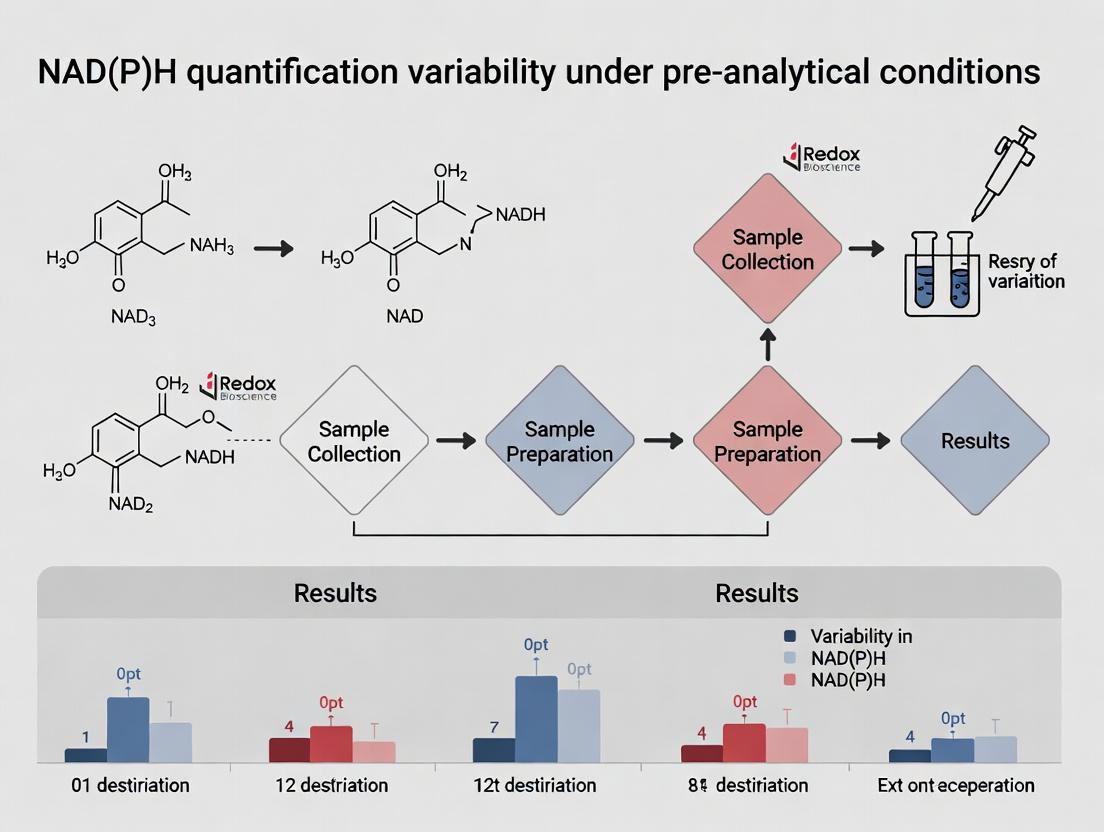
Accurate quantification of NAD(P)H is critical for research in metabolism, aging, and drug discovery, yet results are highly susceptible to pre-analytical variability.
NAD(P)H Quantification Variability: Mastering Pre-analytical Conditions for Reliable Research and Drug Development
Abstract
Accurate quantification of NAD(P)H is critical for research in metabolism, aging, and drug discovery, yet results are highly susceptible to pre-analytical variability. This article provides a comprehensive guide for researchers, scientists, and drug development professionals. It explores the foundational roles of NAD(H) and NADP(H) in cellular redox and signaling, details methodological best practices for sample collection and processing, offers troubleshooting strategies for common artifacts, and validates leading quantification techniques against standardized controls. By synthesizing current knowledge, this resource aims to establish robust protocols that enhance reproducibility and data reliability across biomedical research.
Understanding NAD(P)H: Core Roles, Redox Couples, and Why Pre-analytics Matter
Technical Support Center: Troubleshooting NAD(P)H Quantification
Introduction This technical support center addresses common experimental challenges in quantifying cellular NAD(H) and NADP(H) pools. Accurate measurement is critical for metabolic research and drug development but is highly susceptible to pre-analytical variability. The following guides and FAQs are framed within ongoing thesis research on optimizing pre-analytical conditions to reduce quantification artifacts.
Frequently Asked Questions (FAQs)
Q1: My measured NAD+/NADH ratio is consistently lower than literature values. What could be causing this? A: Rapid degradation of NAD+ is the most likely cause. Key pre-analytical factors to check:
- Sample Collection & Quenching: Cells/tissues must be quenched and extracted immediately (within seconds) using cold acid (for NAD/NADP) or alkali (for NADH/NADPH) buffers. Using the wrong buffer or delays will degrade the oxidized forms.
- Temperature: Keep samples on dry ice or liquid nitrogen throughout processing.
- Extraction Buffer pH: Verify your protocol's specific buffer requirements. Cross-contamination of extraction buffers invalidates the separate assays.
Q2: Why do my NADPH values have high inter-assay variability, even with technical replicates? A: NADPH is especially prone to oxidation and enzymatic interconversion.
- Enzyme Inhibition: Ensure your extraction buffer contains specific inhibitors to halt enzymatic activity (e.g., APAD for alcohol dehydrogenase, FK866 for NAMPT).
- Oxidation: Add a strong thiol reductant like DTT to your homogenization buffer to prevent artificial oxidation of NADPH.
- Freeze-Thaw Cycles: Avoid them. Analyze extracts immediately after preparation or store at -80°C in single-use aliquots.
Q3: Can I use a single extraction method to measure all four nucleotides (NAD+, NADH, NADP+, NADPH)? A: No. A single extraction will lead to interconversion and inaccurate ratios. You must perform parallel extractions from the same biological sample using two different methods:
- Acidic Extraction (e.g., HCl, TCA): Stabilizes NAD+ and NADP+.
- Alkaline Extraction (e.g., NaOH, Thermal lysis): Stabilizes NADH and NADPH. The two extracts are then neutralized before assay. Results from the separate extracts are combined mathematically to calculate ratios.
Q4: My cell-based assay shows unexpected changes in total NAD(P)H after drug treatment. Is this real or an artifact? A: It could be either. First, rule out artifacts:
- Cell Number Normalization: Normalize to cell count (using a nuclear stain) in addition to total protein. Drug treatments can affect protein synthesis.
- Lysis Efficiency: Confirm your lysis method is consistent between control and treated groups, especially if the drug affects cell morphology or death.
- Assay Interference: Run a spiking/recovery experiment with your drug present in the assay buffer to check for chemical interference with the detection chemistry (e.g., cycling enzymes).
Troubleshooting Guide Table
| Symptom | Likely Cause | Recommended Action |
|---|---|---|
| Low NAD+/NADH Ratio | Slow quenching, acidic degradation of NAD+, wrong extraction buffer. | Quench in <10 sec with liquid N2. Use validated alkaline buffer for NADH extraction. |
| Undetectable NADPH | Oxidation during processing, incomplete inhibition of NADP+-consuming enzymes. | Add DTT (1-10mM) and specific enzyme inhibitors to lysis buffer. Use fresh aliquots. |
| High Background Noise | Contaminated labware, degraded assay reagents, insufficient washing in enzymatic kits. | Use fresh, filter-sterilized buffers. Include a "no-enzyme" control. Increase wash steps. |
| Inconsistent Replicates | Inconsistent cell scraping/harvesting, variable extraction volumes, freeze-thaw cycles. | Use standardized mechanical scraping. Pre-aliquot extraction buffers. Use single-use aliquots. |
Detailed Experimental Protocol: Parallel Extraction for Accurate NAD(H)/NADP(H) Ratios
Objective: To separately and accurately quantify the oxidized and reduced forms of NAD and NADP from a single cell culture sample.
I. Materials & Reagents
- Cells grown in 6-well or 12-well plates.
- Cold PBS, pH 7.4.
- Extraction Buffer A (Acidic): 0.2M HCl, 0.1% Triton X-100. (Stabilizes NAD+, NADP+).
- Extraction Buffer B (Alkaline): 0.2M NaOH, 1mM DTT, 0.1% Triton X-100. (Stabilizes NADH, NADPH).
- Neutralization Buffer for A: 0.2M Tris base.
- Neutralization Buffer for B: 0.2M HCl.
- Dry ice/ethanol bath or liquid nitrogen.
- Table-top microcentrifuge (4°C).
II. Procedure
- Rapid Quenching: Aspirate media and immediately place culture plate on a dry ice/ethanol bath for 10-15 seconds to flash-freeze.
- Parallel Extraction:
- Well A1 (Acidic Extract): Add 200 µL of ice-cold Extraction Buffer A directly onto frozen cells. Scrape rapidly and transfer to a pre-chilled 1.5mL tube on ice. Vortex 10 sec.
- Well A2 (Alkaline Extract): Add 200 µL of ice-cold Extraction Buffer B directly onto frozen cells. Scrape rapidly and transfer to a separate pre-chilled tube on ice. Vortex 10 sec.
- Incubation & Clarification:
- Incubate Acidic Extract on ice for 10 min.
- Incubate Alkaline Extract at 55°C for 10 min (to thermally denature enzymes).
- Centrifuge both extracts at 16,000 x g for 5 min at 4°C.
- Neutralization:
- Transfer supernatant to fresh tubes.
- Neutralize Acidic Extract supernatant with an equal volume of Neutralization Buffer A.
- Neutralize Alkaline Extract supernatant with an equal volume of Neutralization Buffer B.
- Assay: Immediately proceed with your chosen commercial cycling assay or LC-MS/MS protocol. Use neutralized extracts within 4 hours or snap-freeze at -80°C.
The Scientist's Toolkit: Key Research Reagent Solutions
| Reagent / Material | Function in NAD(P)H Research |
|---|---|
| Acid/Base Extraction Buffers | Selective stabilization of oxidized (acid) or reduced (base) cofactor pools to prevent interconversion. |
| Thiol Reductants (DTT, TCEP) | Prevents artificial oxidation of the reduced forms (NADH, NADPH), crucial for accurate NADPH quantification. |
| Enzyme Inhibitors (e.g., FK866, APAD) | Halts specific enzymatic activities (e.g., NAMPT, dehydrogenases) that rapidly consume or interconvert NAD(P) pools post-harvest. |
| Cyclic Enzyme Assay Kits | Provides a sensitive, spectrophotometric/fluorometric method to quantify specific nucleotides via enzymatic cycling reactions (e.g., using alcohol dehydrogenase, diaphorase). |
| LC-MS/MS Standards | Stable isotope-labeled internal standards (e.g., NAD+-¹³C₅, NADP+-d4) are essential for absolute quantification and correcting for matrix effects in mass spectrometry. |
| Rapid Quenching Tools | Liquid nitrogen, dry ice/ethanol baths, or specialized heated/microwave systems to instantly halt metabolism at the precise experimental timepoint. |
Visualization: NAD(P)H Metabolic Pathways & Quantification Workflow
Diagram 1: Core NAD and NADPH Metabolic Pathways (Max 760px)
Diagram 2: NAD(P)H Quantification Critical Workflow (Max 760px)
Diagram 3: Pre-Analytical Impact on NAD(P)H Data (Max 760px)
Technical Support Center: Troubleshooting NAD(P)H Quantification
FAQs & Troubleshooting Guides
Q1: My assay shows inconsistent NADH/NAD+ ratios between biological replicates from the same cell line. What are the most likely pre-analytical culprits?
A: Inconsistency is often introduced during sample collection and quenching. Key factors to audit:
- Quenching Speed & Method: Metabolism changes rapidly upon cell disruption. Manual scraping on wet ice is too slow. Optimal method: direct lysis in boiling extraction buffer or rapid freezing in liquid N₂.
- Extraction Buffer pH: NAD⁺ is acid-stable but alkali-labile, while NADH is alkali-stable but acid-labile. Using a single, neutral-pH lysis buffer will degrade one species. Protocol: Use separate parallel extractions:
- Acidic Extraction (for NAD⁺/NADP⁺): Lysis in 0.1-0.2M HCl (e.g., 50-100µl per 10⁶ cells), incubate 10 min on ice, then neutralize with 0.1-0.2M NaOH/Tris base.
- Alkaline Extraction (for NADH/NADPH): Lysis in 0.1-0.2M NaOH (e.g., 50-100µl per 10⁶ cells), incubate 10 min on ice, then neutralize with 0.1-0.2M HCl.
- Cell Counting & Normalization: Always normalize to cell count, not just protein or buffer volume. Small variations in seeding density dramatically affect the redox state.
Q2: My NADPH/NADP+ readings are unexpectedly low. Could my protocol be degrading NADPH?
A: Yes. NADPH is highly susceptible to oxidative degradation. Pre-analytical steps to check:
- Oxygen Exposure: Perform extractions under an inert atmosphere (e.g., Argon blanket) if possible.
- Buffer Additives: Your alkaline extraction buffer must contain antioxidants. Protocol Addition: Supplement your 0.1M NaOH lysis buffer with 1mM EDTA (chelates pro-oxidant metals) and 0.1% (w/v) cysteine (reducing agent). Process samples immediately.
- Freeze-Thaw: Avoid. Aliquot extracts and freeze at -80°C immediately. Thaw only once on ice for assay.
Q3: How do I interpret a high NAD+/NADH ratio versus a high NADP+/NADPH ratio? Are they both indicative of "oxidative stress"?
A: No, they report on distinct metabolic compartments. Misinterpreting these is a common pitfall.
- High NAD+/NADH Ratio: Primarily indicates a more oxidized state in the cytosol, often linked to high glycolytic flux (feeding electrons into the electron transport chain) or impaired mitochondrial reduction capacity. It is not a direct measure of reactive oxygen species (ROS).
- High NADP+/NADPH Ratio: Directly indicates oxidative stress and depletion of reductive power. NADPH is the primary reducing currency for antioxidant systems (glutathione, thioredoxin). A high ratio means the cell's antioxidant capacity is being challenged.
Q4: My commercial enzymatic cycling assay kit gives different absolute values than my HPLC-MS method. Which is correct?
A: Both can be "correct" but measure different pools. This is a major source of variability in literature values.
- Enzymatic Cycling Assays: Measure free, accessible cofactors. They are sensitive and specific but can miss protein-bound pools.
- HPLC-MS/MS: Measures total (free + loosely bound) cofactors after extraction. Values are typically higher.
- Action: Choose your method based on your biological question and always report which method you used. Consistency within a study is critical. Do not compare absolute values from different methodologies.
Table 1: Effect of Common Pre-Analytical Errors on Reported Redox Ratios
| Variable | Error Introduced | Typical Magnitude of Artefact | Primary Ratio Affected |
|---|---|---|---|
| Slow Quenching (>60 sec on wet ice) | Metabolic continuation | NAD+/NADH can shift by 30-50% | NAD+/NADH |
| Single, Neutral pH Extraction | Cofactor degradation | Can degrade >90% of acid/alkali-labile species | Both |
| Multiple Freeze-Thaw Cycles | Oxidative degradation | NADPH levels can drop by 20-40% per cycle | NADP+/NADPH |
| Normalization to Protein Only | Ignores metabolic cell size | Inter-replicate CV can increase by >15% | Both |
Detailed Experimental Protocol: Parallel Acid/Alkaline Extraction for Mammalian Cells
Objective: To accurately quantify all four redox cofactors (NAD+, NADH, NADP+, NADPH) from adherent cell cultures.
Reagents:
- Acid Extraction Buffer: 0.1M HCl, 0.01% Triton X-100.
- Alkaline Extraction Buffer: 0.1M NaOH, 1mM EDTA, 0.1% (w/v) Cysteine.
- Neutralization Solution (Acid): 0.1M Tris Base, 0.05M Trizma HCl.
- Neutralization Solution (Alkaline): 0.1M HCl, 0.05M Trizma HCl.
- PBS, pre-chilled.
Procedure:
- Grow cells to ~80% confluency in two identical plates per condition.
- Rapid Quenching: Aspirate media. Immediately add 500µL of pre-chilled PBS and place plate on wet ice.
- Aspirate PBS completely. Immediately add the appropriate hot extraction buffer (~80°C).
- Plate A: Add 500µL of Hot Acid Buffer. Swirl vigorously.
- Plate B: Add 500µL of Hot Alkaline Buffer. Swirl vigorously.
- Immediately scrape cells and transfer the lysate to a pre-heated (80°C) microcentrifuge tube.
- Incubate tubes at 80°C for 5 minutes in a dry bath with gentle shaking.
- Cool samples on ice for 5 minutes.
- Neutralize:
- Acid Lysate (Plate A): Add 500µL of Neutralization Solution (Acid). Vortex.
- Alkaline Lysate (Plate B): Add 500µL of Neutralization Solution (Alkaline). Vortex.
- Clarify by centrifugation at 16,000 x g for 10 minutes at 4°C.
- Transfer supernatant to a new tube. Aliquot and freeze at -80°C. Avoid freeze-thaw cycles.
- Proceed with your chosen quantification method (enzymatic cycling or LC-MS).
Visualizations
Diagram 1: Pre-Analytical Workflow for Redox Cofactor Extraction
Diagram 2: Metabolic Pathways & Redox Cofactor Function
The Scientist's Toolkit: Essential Research Reagents
Table 2: Key Reagents for Reliable NAD(P)H Quantification
| Reagent / Material | Function / Role | Critical Specification / Note |
|---|---|---|
| Hot Acid Extraction Buffer | Stabilizes NAD⁺ & NADP⁺ for measurement. | Must be ~0.1-0.2M HCl. Pre-heat to 80°C for immediate enzyme inactivation. |
| Hot Alkaline Extraction Buffer | Stabilizes NADH & NADPH for measurement. | Must be ~0.1-0.2M NaOH. Must contain 1mM EDTA & 0.1% cysteine. Pre-heat to 80°C. |
| Pre-Chilled PBS | Rapid medium removal and initial quenching. | Must be ice-cold. Process on wet ice. |
| Liquid Nitrogen | Gold-standard quenching for suspension cells. | Snap-freeze cell pellet in <5 seconds. |
| Antioxidants (Cysteine/DTE) | Protects reduced cofactors (NAD(P)H) from oxidation. | Essential in alkaline buffer. Prepare fresh. |
| Enzymatic Cycling Assay Kit | Quantifies free cofactor pools via fluorescence/colorimetry. | Choose kits with specific enzymes for each cofactor (e.g., alcohol dehydrogenase for NAD⁺). |
| LC-MS/MS Solvents | For chromatographic separation and detection of total cofactor pools. | Requires optimized mobile phases (e.g., ion-pairing reagents) for polar metabolites. |
| Inert Atmosphere (Argon/N₂) | Minimizes oxidative degradation during extraction. | Critical for high-sensitivity work or hypoxia studies. |
This technical support center addresses common challenges in pre-analytical workflows for NAD(P)H quantification research, a critical factor in metabolic and drug development studies. The following guides and FAQs are framed within our broader thesis on mitigating variability in NAD(P)H measurement.
Troubleshooting Guides & FAQs
FAQ 1: My NAD(P)H fluorescence readings show high variability between biological replicates, even with the same treatment. What are the most likely pre-analytical causes?
- Answer: High inter-replicate variability often stems from the initial sample handling chain. The primary suspects are:
- Inconsistent Cell Quenching & Harvesting: Variations in the speed and temperature of media removal and the addition of quenching/extraction buffers can drastically alter metabolic state. A delay of even 30 seconds at room temperature can skew the NADH/NAD+ ratio.
- Non-uniform Cell Counting & Seeding: Inaccurate cell counts lead to differing metabolic loads per well, directly impacting absolute NAD(P)H signals. Always use a calibrated automated cell counter and confirm seeding density microscopically.
- Inadequate Nutrient Depletion in Assay Media: Using fresh, high-nutrient assay media without a proper equilibration period (e.g., 1-2 hours) can cause transient metabolic shifts. Ensure consistent pre-incubation times.
FAQ 2: During the extraction process for LC-MS-based NAD(P)H quantification, my internal standard recovery is inconsistent. How can I fix this?
- Answer: Inconsistent internal standard (ISTD) recovery points to extraction variability. Follow this protocol:
- Use a Cold, Acid/Base-Stable ISTD: e.g., 13C-NAD+, added immediately upon lysis.
- Standardize the Physical Disruption: For adherent cells, use a cell scraper on ice, then vortex for 60 seconds. For pellets, use a bead homogenizer or vigorous vortexing with a set time and power.
- Control Temperature Rigorously: Perform all extraction steps in a 4°C cold room or on wet ice. Allow extraction buffers to equilibrate to the correct temperature before use.
- Centrifugation Consistency: Use a pre-cooled centrifuge (4°C) and standardize time, speed, and rotor type (fixed-angle preferred).
FAQ 3: My cell culture is healthy, but I detect unexpectedly low NAD(P)H levels in all conditions. Which step in the vulnerability chain should I audit first?
- Answer: This systemic signal depression typically indicates analyte degradation or loss. The most vulnerable step is sample storage and processing.
- Immediate Stabilization: After extraction, the sample pH must be stabilized immediately for the specific analyte (e.g., acidic for NAD+, basic for NADH).
- Freeze-Thaw Cycles: Never perform more than one freeze-thaw cycle on extracted samples. Aliquot into single-use vials.
- Storage Temperature: Store extracted samples at -80°C, not -20°C. Ensure your freezer logs show stable, uninterrupted temperature.
Table 1: Effect of Room Temperature Delay Post-washing on Cellular NADH/NAD+ Ratio in HEK293 Cells (Measured by Enzymatic Cycling Assay).
| Delay Time at RT (post-wash) | Mean NADH/NAD+ Ratio | Coefficient of Variation (CV) | % Change from Baseline (0 min) |
|---|---|---|---|
| 0 minutes (Baseline) | 0.15 | 8% | 0% |
| 2 minutes | 0.18 | 15% | +20% |
| 5 minutes | 0.25 | 22% | +67% |
| 10 minutes | 0.31 | 30% | +107% |
Table 2: Variability Introduced by Different Cell Detachment Methods (Data from HCT116 Cells).
| Detachment Method | Trypsinization Time | Quenching Method | Resulting NAD(P)H (RFU) CV | Viability Post-detachment |
|---|---|---|---|---|
| Trypsin-EDTA (0.25%) | 5 min, 37°C | Ice-cold PBS wash (x2) | 25% | 92% |
| Accutase | 10 min, 37°C | Ice-cold PBS wash (x2) | 18% | 96% |
| Scraping on Ice | N/A | Direct extraction | 8% | >99% |
Detailed Experimental Protocol: Recommended Workflow for Minimizing Pre-analytical Variability in NAD(P)H Quantification via Fluorescence
Title: Standardized Protocol for Metabolite Preservation in Cultured Mammalian Cells.
Objective: To harvest cellular material for NAD(P)H quantification with minimal metabolic perturbation.
Materials: See "The Scientist's Toolkit" below. Procedure:
- Pre-chill Equipment: Place metal plate, scrapers, PBS, and extraction buffer on wet ice.
- Rapid Wash: Aspirate culture media completely and immediately add 5 mL of pre-chilled 1X PBS to the 10 cm dish. Swirl gently and aspirate completely. Repeat for a total of two washes. Time on plate < 30 seconds total.
- Immediate Quench & Harvest: Add 1 mL of pre-chilled, nitrogen-saturated Extraction Buffer (80% methanol, 20% PBS) directly onto the washed cells. Immediately scrape the dish on the ice-cold metal plate.
- Transfer & Homogenize: Quickly transfer the extract to a pre-cooled 2 mL microcentrifuge tube. Vortex vigorously for 60 seconds.
- Incubate & Centrifuge: Place the tube at -80°C for 15 minutes to precipitate proteins. Centrifuge at 16,000 x g for 15 minutes at 4°C.
- Clearant Collection: Immediately transfer the supernatant (the metabolite-containing fraction) to a new, pre-labeled tube on dry ice. Store at -80°C until analysis.
- Protein Pellet: Retain the pellet for protein concentration normalization (e.g., BCA assay).
Visualizations
Diagram 1: The Pre-analytical Vulnerability Chain for NAD(P)H Quantification
Diagram 2: NAD(P)H Biosynthesis & Consumption Pathways
Diagram 3: Workflow for Comparative NAD(P)H Study with Controls
The Scientist's Toolkit: Essential Research Reagent Solutions
Table 3: Key Materials for Robust NAD(P)H Quantification Workflows.
| Item | Function & Importance |
|---|---|
| Ice-cold, Nitrogen-saturated Methanol/PBS (80:20) | Rapidly quenches metabolism, inhibits enzymatic degradation of labile cofactors. Nitrogen saturation prevents oxidation. |
| Stable Isotope Internal Standards (e.g., 13C-NAD+, 15N-NADPH) | Essential for LC-MS protocols to correct for extraction inefficiency, ionization suppression, and instrument drift. |
| Pre-cooled, Conductive PCR Tubes/Lids | For sample storage; ensures rapid freezing, minimizes freeze-thaw stress, and prevents sample mix-ups. |
| Calibrated Automated Cell Counter | Ensures precise and consistent seeding density, a major source of pre-analytical variability. |
| Cell Scrapers (for adherent cultures) | Preferable to enzymatic detachment for metabolic studies, as it is faster and avoids receptor-mediated signaling. |
| Temperature-Controlled Metal Plate or Block | Provides a rapid heat sink for dishes/tubes during quenching, maintaining a consistent cold thermal mass. |
| Pierce BCA Protein Assay Kit | For normalizing metabolite concentrations to total cellular protein from the same sample pellet. |
Technical Support Center: Troubleshooting NAD(P)H Quantification
FAQs & Troubleshooting Guides
Q1: Our cell-based NAD(P)H fluorescence readings show high variability between replicates. What are the most likely pre-analytical causes?
A: High intra-assay variability in fluorescence-based NAD(P)H quantification is frequently traced to pre-analytical sample handling. Key factors to troubleshoot:
- Cell Confluency & Seeding Density: Inconsistent cell numbers directly alter total metabolite pools.
- Serum Starvation Time: Duration of serum reduction/withdrawal prior to assay must be standardized, as serum components influence metabolic state.
- Assay Buffer Equilibration: Cells must be equilibrated in the assay buffer (e.g., HBSS, PBS) at the correct temperature (often 37°C) for a consistent, specified time (e.g., 30 min) to stabilize basal metabolism.
- Trypsinization vs. Direct Lysis: Detaching cells with trypsin can perturb NAD(P)H levels. Where possible, measure directly in cultured wells or use gentle, enzyme-free detachment buffers.
Q2: When extracting NADH and NADPH from tissue for LC-MS analysis, we observe rapid degradation. How can we stabilize these analytes?
A: NAD(P)H are notoriously labile. The following protocol is critical:
- Rapid Processing: Snap-freeze tissue in liquid nitrogen within seconds of excision.
- Cold Acidic Extraction: Homogenize frozen tissue in pre-chilled (< 4°C) acidic extraction buffer (e.g., 0.1N HCl or 0.5M perchloric acid) to inhibit degrading enzymes (e.g., NADases).
- Neutralization: Immediately neutralize the acidic homogenate with a pre-chilled basic buffer (e.g., 0.1N NaOH in 0.1M phosphate buffer) to a stable pH (~7.0-7.5). Perform this step on ice.
- Clarification & Storage: Centrifuge at >12,000g at 4°C for 10 min. Aliquot the supernatant and store at -80°C. Avoid repeated freeze-thaw cycles.
Q3: How does the choice of anticoagulant in blood collection affect subsequent plasma NAD+ measurements?
A: The anticoagulant is a major pre-analytical variable. EDTA plasma is generally preferred. Heparin can interfere with some LC-MS methods, and citrate dilutes the sample. A recent study showed significant differences:
Table 1: Effect of Blood Collection Tube on Measured Plasma NAD+ Levels
| Anticoagulant | Relative NAD+ Recovery (%) | Key Interference Risk |
|---|---|---|
| K2EDTA | 100% (Reference) | Minimal, recommended for LC-MS |
| Sodium Heparin | 85-92% | Possible ion suppression in MS |
| Sodium Citrate | 78-85% | Sample dilution, altered pH |
Protocol: Draw blood into pre-chilled K2EDTA tubes. Process within 30 minutes. Centrifuge at 2000g for 10 min at 4°C. Immediately aliquot plasma into cryovials and freeze at -80°C.
Q4: We get inconsistent results when comparing frozen vs. fresh cell lysates for NADPH-dependent enzyme assays. What is the best practice?
A: For enzyme activity assays dependent on NADPH as a cofactor, fresh lysates are superior. If freezing is necessary:
- Use Cryoprotectants: Add stabilizing agents like glycerol (5-10% v/v) or bovine serum albumin (0.1% w/v) to the lysis buffer.
- Flash-Freeze: Freeze aliquots in liquid nitrogen or a dry-ice/ethanol bath before transferring to -80°C.
- Single-Use Aliquots: Thaw on ice only once. Do not re-freeze.
- Activity Check: Always run a parallel positive control (fresh lysate from a standardized culture) to quantify the loss due to freeze-thaw.
The Scientist's Toolkit: Key Research Reagent Solutions
Table 2: Essential Reagents for NAD(P)H Quantification Studies
| Reagent / Material | Function & Critical Note |
|---|---|
| Carbonyl Cyanide 4-(trifluoromethoxy)phenylhydrazone (FCCP) | Mitochondrial uncoupler; used as a control to collapse the mitochondrial membrane potential and measure maximum NADH oxidation capacity in live-cell assays. |
| Rotenone & Antimycin A | Electron transport chain inhibitors (Complex I and III); used to induce full reduction of NADH pool in cells for fluorescence calibration. |
| Acidic Extraction Buffer (0.1N HCl, 4°C) | Quenches metabolism and inhibits enzymatic degradation of labile NAD(P)H during tissue/cell extraction. Must be pre-chilled. |
| Bicinchoninic Acid (BCA) Assay Kit | For normalizing metabolite levels to total protein content, correcting for cell number variability in lysate-based methods. |
| Phenazine Ethosulfate (PES) | Electron acceptor used in cycling enzymatic assays to amplify signal for low-abundance NAD(P)+ detection. Light-sensitive. |
| Dihydroethidium (DHE) | Fluorescent probe for superoxide; critical to check for redox artifacts when measuring NAD(P)H fluorescence, as oxidation can confound signals. |
| Stable Isotope-Labeled NAD+ (e.g., 13C-NAD+) | Internal standard for LC-MS quantification; essential for correcting for matrix effects and extraction efficiency losses. |
Experimental Protocols
Protocol 1: Standardized Workflow for Live-Cell NAD(P)H Autofluorescence Measurement Goal: Minimize pre-analytical variability in fluorescence-based readings.
- Cell Preparation: Seed cells in a black-walled, clear-bottom 96-well plate at a precisely optimized and consistent density. Include blank wells (medium only).
- Serum Stabilization: 24h post-seeding, replace medium with low-serum (e.g., 0.5% FBS) or serum-free assay medium. Incubate for 16 hours.
- Equilibration: Replace medium with pre-warmed (37°C) assay buffer (e.g., HBSS with 10mM HEPES, pH 7.4). Incubate plate at 37°C for 30 min in a non-CO2 incubator.
- Baseline Reading: Read fluorescence (Ex/Em: ~350nm/450nm for NADH, ~340nm/460nm for NADPH) on a plate reader with temperature control (37°C).
- Pharmacological Controls (Optional): Add rotenone (2µM) to fully reduce pools or FCCP (1µM) to oxidize. Incubate 10-15 min and read again.
- Normalization: Perform BCA protein assay on replicate wells after removing buffer and lysing cells.
Protocol 2: Acid/Base Extraction of NADPH from Cultured Cells for HPLC Goal: Stable extraction and separation of NADPH from NADP+ and NADH.
- Wash & Quench: Aspirate medium from culture dish (e.g., 60mm). Rapidly wash cells twice with 2 mL of ice-cold PBS. Immediately add 0.5 mL of 0.1N HCl (4°C).
- Scrape & Collect: Scrape cells on ice and transfer the acidic suspension to a pre-chilled 1.5 mL microcentrifuge tube.
- Neutralize: Add 0.5 mL of 0.1N NaOH in 0.1M Phosphate Buffer (pH 8.0) to the tube. Vortex immediately and vigorously.
- Clarify: Centrifuge at 12,000g for 10 minutes at 4°C.
- Filter & Analyze: Pass the supernatant through a 0.22µm nylon syringe filter. Analyze immediately by HPLC or aliquot and store at -80°C for ≤ 48 hours.
Visualization: Experimental Workflows & Impact Pathways
Title: Pre-analytical Error Impact on Research Workflow
Title: Key Control Points in NAD(P)H Workflow
Standardizing NAD(P)H Workflows: From Sample Collection to Assay Execution
Technical Support Center: Troubleshooting NAD(P)H Quantification
Frequently Asked Questions (FAQs)
Q1: My NADH fluorescence signal from cultured cells is inconsistent between replicates. What are the most likely pre-analytical culprits? A: Inconsistency in adherent cell samples often stems from:
- Passage Number & Confluence Variability: Cells harvested at different densities exhibit different metabolic states. Protocol: Always harvest at the same confluence (e.g., 80-90%) and limit analyses to a defined passage range (e.g., passages 5-15).
- Trypsinization Time: Over-trypsinization can deplete cellular ATP/NAD(P)H. Protocol: Standardize trypsin exposure (e.g., 37°C for exactly 2 minutes) and neutralize completely with serum-containing medium.
- Quenching by Media Components: Phenol red in culture media can quench fluorescence. Protocol: Wash cells twice with pre-warmed, phenol-free, buffered saline (e.g., PBS, pH 7.4) before lysis or live reading.
Q2: When extracting NADH/NAD+ from liver tissue, my yields are low. How can I optimize the protocol? A: Tissue samples are highly vulnerable to enzymatic degradation.
- Primary Culprit: Inadequate tissue stabilization post-harvest. NADases remain active until tissue is fully homogenized in denaturing buffer.
- Protocol: 1. Snap-Freeze: Submerge tissue fragment (< 30 mg) in liquid nitrogen within 10 seconds of excision. 2. Homogenize Cold: Keep samples on dry ice. Homogenize directly in ice-cold acidic extraction buffer (e.g., 0.1M HCl for NAD+) or alkaline buffer (e.g., 0.1M NaOH for NADH) to selectively stabilize each form. 3. Rapid Neutralization: Centrifuge homogenate and immediately neutralize supernatant with the opposite buffer.
Q3: For plasma NAD+ quantification, how do I prevent degradation during blood processing? A: Biofluids require immediate action to halt enzymatic activity.
- Critical Step: Use of correct, immediate stabilizing agent.
- Protocol: Draw blood into pre-chilled tubes containing acidic stabilization buffer (e.g., 0.5M perchloric acid, 0.1M citrate). Invert to mix immediately. Centrifuge at 4°C within 15 minutes of draw to separate plasma. Snap-freeze plasma at -80°C until analysis. Avoid repeated freeze-thaw cycles.
Q4: My intracellular NADPH/NADP+ ratio seems physiologically implausible. What could be causing this? A: This often indicates oxidation of NADPH during sample prep.
- Cause: Exposure to oxygen or oxidants during lysis.
- Protocol: For redox-sensitive analytes like NADPH, employ an anoxic lysis protocol. Perform cell lysis in an anaerobic chamber flushed with N₂, using degassed, nitrogen-sparged buffers containing chelators (e.g., EDTA). Process samples under inert gas when possible.
Comparative Data on Sample Types for NAD(P)H Analysis
Table 1: Key Characteristics & Challenges of Sample Types for NAD(P)H Quantification
| Sample Type | Key Advantage | Primary Pre-Analytical Challenge | Recommended Stabilization Method | Typical Yield Range (pmol/mg) |
|---|---|---|---|---|
| Adherent Cells | Homogeneous, controlled environment. | Metabolic perturbation from harvesting. | Rapid, trypsin-free scraping into liquid N₂ or hot buffer. | NAD+: 200-600; NADH: 50-150. |
| Suspension Cells | Easy to aliquot, no detachment needed. | Sedimentation and oxygenation differences. | Direct centrifugation into pellet, flash-freeze in <60 sec. | NAD+: 150-500; NADH: 40-120. |
| Tissue (e.g., Liver) | In vivo relevance, native architecture. | Rapid post-mortem degradation (t₁/₂ <30s). | Snapshot freeze-clamping in situ (<5s post-excision). | NAD+: 400-800; NADH: 100-250. |
| Plasma/Serum | Minimally invasive, longitudinal studies. | Extreme vulnerability to ex vivo enzymatic activity. | Immediate acidification post-draw (within 30s). | NAD+: 2-10; NADH: <1 (often undetectable). |
| Urine | Non-invasive, large volume available. | Low concentration, variable pH/creatinine. | Collect on ice, acidify (HCl to pH ~2), store at -80°C. | NAD+: 0.1-2 (normalized to creatinine). |
Table 2: Troubleshooting Matrix for Common NAD(P)H Assay Issues
| Symptom | Possible Cause (Tissue) | Possible Cause (Cells) | Possible Cause (Biofluid) | Corrective Action |
|---|---|---|---|---|
| Low Total NAD(P) | Incomplete homogenization; slow freezing. | Incomplete lysis; buffer pH wrong. | Degradation during processing; no stabilizer. | Validate homogenizer settings; use denaturing buffer; add immediate stabilizer. |
| High Background | Autofluorescence from collagen/elastin. | Fluorescent media components (phenol red). | Hemolyzed sample; lipemic plasma. | Include a no-analyte tissue blank; wash cells thoroughly; centrifuge with care. |
| High Inter-Assay CV | Variable ischemic time before freezing. | Variable cell confluence or passage number. | Inconsistent time-to-freeze post-collection. | Standardize harvest-to-freeze interval (<60s); standardize culture; use a process timer. |
| Unstable Signal | Enzymatic degradation during assay. | Photobleaching of fluorescent readout. | Analyte instability at assay pH/Temp. | Keep extracts on ice; reduce plate reader integration time; validate assay kinetics. |
Experimental Protocols
Protocol 1: Rapid Metabolite Stabilization for Cultured Cells (NAD/NADH)
- Preparation: Pre-warm phenol-free PBS. Prepare two tubes per sample: one with 400µL of 0.1M NaOH (for NADH), one with 400µL of 0.1M HCl (for NAD+), both on ice.
- Harvest: Aspirate media. Rinse cells quickly with 2mL warm PBS. Aspirate completely.
- Lysis: For NADH, add 400µL 0.1M NaOH directly to plate, scrape cells on ice, and transfer to tube. For NAD+, use 0.1M HCl. Process within 15 seconds per well.
- Neutralization: Vortex briefly. For NaOH lysate, add 200µL of 0.1M HCl. For HCl lysate, add 200µL of 0.1M NaOH. Vortex.
- Clarification: Centrifuge at 12,000xg for 5 minutes at 4°C. Transfer supernatant to a fresh tube on dry ice. Store at -80°C.
Protocol 2: Acid/Base Extraction for NAD/NADH from Snap-Frozen Tissue
- Equipment: Pre-cool mortar and pestle with liquid N₂.
- Pulverization: Weigh frozen tissue (<30mg). Under constant liquid N₂, pulverize to a fine powder.
- Split & Extract: Rapidly split powder into two equal aliquots into pre-weighed, cold microtubes.
- To one aliquot, add 10 volumes of 0.1M HCl (for NAD+). Vortex 10 sec.
- To the other, add 10 volumes of 0.1M NaOH (for NADH). Vortex 10 sec.
- Homogenize: Use a chilled handheld homogenizer (5-10 sec) or a bead mill (2 min at 20Hz) while tubes are kept on ice/ice-water slurry.
- Incubate & Neutralize: Incubate extracts at 55°C for 10 minutes (to denature enzymes). Cool on ice. Neutralize HCl extract with an equal volume of 0.1M NaOH, and vice-versa.
- Clarify & Store: Centrifuge at 12,000xg for 15 min at 4°C. Aliquot and snap-freeze supernatants.
Visualizations
Diagram 1: NAD(P)H Quantification Workflow Comparison
Diagram 2: Key Pre-Analytical Factors Affecting NAD(P)H Integrity
The Scientist's Toolkit: Research Reagent Solutions
Table 3: Essential Materials for NAD(P)H Sample Preparation
| Item | Function in Pre-Analytical Phase | Critical Specification |
|---|---|---|
| Acidic Extraction Buffer | Denatures enzymes, stabilizes NAD+ and NADP+. | 0.1M HCl or 0.5M Perchloric Acid (PCA), pre-chilled to 4°C. |
| Alkaline Extraction Buffer | Denatures enzymes, stabilizes NADH and NADPH. | 0.1M NaOH, pre-chilled to 4°C. |
| Neutralization Buffer | Returns pH to optimal range for enzymatic/LC-MS assay. | 1M Tris-HCl (pH ~8.0 for acid extracts) or 0.5M HCl (for base extracts). |
| Liquid Nitrogen | Instantly halts metabolism in tissues and cell pellets. | N/A - ensure adequate supply for snap-freezing. |
| Pre-Chilled Stabilizer Tubes | Immediate stabilization of NAD+ in blood plasma. | Tubes prefilled with 0.5M PCA or citrate buffer, validated for NAD+ assays. |
| Phenol-Free Buffered Saline | Removes fluorescent culture media without perturbing pH. | PBS, pH 7.4, without phenol red or calcium/magnesium. |
| Cryogenic Vials & Mortar/Pestle | For storage and pulverization of frozen tissue. | Pre-cooled with liquid N₂; maintained cold during transfer. |
| Anaerobic Chamber or Gas Pak | Prevents oxidation of NADPH during processing. | Maintains O₂ level < 0.1% for redox-sensitive extractions. |
Technical Support Center: Troubleshooting NAD(P)H Quantification Pre-Analytical Variability
Frequently Asked Questions (FAQs)
Q1: Our cell culture NAD(P)H readings show high variability between replicates, even with identical cell counts. What could be happening during sampling? A: This is a classic pre-analytical error. Variability is often introduced during the harvest/sampling step. Key issues:
- Inconsistent Quenching Speed: A delay of even 10-15 seconds between sampling individual replicates can allow metabolic changes. Ensure a rapid, uniform quenching method (e.g., direct expulsion into liquid N₂-cooled methanol) for all samples.
- Temperature Fluctuation: If samples are not immediately stabilized at -80°C after quenching, enzymatic activity can degrade NAD(P)H. Use pre-chilled tools and transfer samples to a -80°C freezer within minutes.
Q2: After quenching adherent cells with cold methanol, the metabolite recovery is low. How can we improve yield? A: Low recovery often stems from inefficient extraction after quenching.
- Scraping Inefficiency: Ensure the quenching solution covers the monolayer completely and use a cold, dedicated scraper. Consider using a two-phase method: quench with cold methanol, then add a water-containing buffer and scrape.
- Incomplete Sonication: For microbial pellets or tissue, a brief, powerful sonication step on ice after quenching is crucial for complete cell lysis and metabolite release. Optimize pulse duration to avoid heating.
Q3: We observe rapid degradation of NADPH standards during plate preparation for assay. How do we stabilize them? A: NAD(P)H is light and pH-sensitive.
- Buffer & pH: Always prepare fresh standards in an alkaline buffer (e.g., 0.1M NaOH or bicarbonate buffer, pH ~10). This stabilizes the reduced form.
- Light & Temperature: Keep standard solutions on ice and in amber tubes or under dim light. Prepare a master mix immediately before use and avoid multiple freeze-thaw cycles.
Q4: Our LC-MS/MS results for NADH and NADPH show poor peak separation. What modifications to the mobile phase can help? A: This requires fine-tuning the chromatographic conditions. A common approach is to use a hydrophilic interaction liquid chromatography (HILIC) column with an ammonium acetate buffer. * Suggested Protocol: Column: BEH Amide (2.1 x 100 mm, 1.7 µm). Mobile Phase A: 20mM ammonium acetate in water, pH 9.0. Mobile Phase B: Acetonitrile. Use a gradient from 85% B to 50% B over 5-6 minutes. This typically resolves NAD⁺, NADH, NADP⁺, and NADPH.
Summarized Data on Pre-analytical Factors Affecting NAD(P)H Stability
Table 1: Impact of Quenching Delay on Measured NADH/NAD⁺ Ratio in Mammalian Cell Culture
| Quenching Delay (Seconds) | NADH/NAD⁺ Ratio (Mean ± SD) | % Change from Baseline (0s) |
|---|---|---|
| 0 (Immediate) | 0.15 ± 0.02 | 0% |
| 10 | 0.12 ± 0.03 | -20% |
| 30 | 0.08 ± 0.04 | -47% |
| 60 | 0.05 ± 0.02 | -67% |
Table 2: Recovery Efficiency of NADPH Using Different Quenching/Extraction Methods
| Method | Description | Average NADPH Recovery (%) |
|---|---|---|
| Cold Methanol (-40°C) | Direct addition to culture, rapid mixing | 95 ± 3 |
| Liquid Nitrogen Flash-Freeze | Rapid immersion of cell pellet in LN₂ | 92 ± 5 |
| Hot Ethanol (70°C) | Addition of 70°C ethanol, then cooling | 85 ± 7 |
| Perchloric Acid (6% v/v) | Acidic quenching, neutralization required | 88 ± 6 |
Detailed Experimental Protocols
Protocol 1: Rapid Quenching and Extraction of NAD(P)H from Adherent Cells for LC-MS/MS
- Preparation: Pre-cool a bath of 60% methanol in water to -40°C (using dry ice). Pre-label 1.5 mL microcentrifuge tubes and chill on dry ice.
- Quenching: Aspirate culture medium swiftly. Immediately add 500 µL of -40°C 60% methanol directly onto the cells in the culture dish.
- Harvest: Using a cold cell scraper, dislodge cells and transfer the slurry to the pre-chilled tube. Place tube back on dry ice.
- Extraction: Vortex for 30 seconds. Sonicate on ice for 10 seconds (3 pulses). Incubate at -20°C for 1 hour.
- Pellet Debris: Centrifuge at 16,000 x g for 15 minutes at 4°C.
- Collection: Transfer the supernatant (containing metabolites) to a new pre-chilled tube. Dry under a gentle stream of nitrogen gas.
- Reconstitution: Reconstitute the dried pellet in 100 µL of 0.1M NaOH for assay, or in initial LC-MS mobile phase for analysis. Store at -80°C if not used immediately.
Protocol 2: Enzymatic Cycling Assay for NADPH Quantification (Microplate Format)
- Prepare Reaction Mix (per well):
- 50 µL Assay Buffer (100mM Tris-HCl, pH 8.0)
- 20 µL Sample or Standard (in 0.1M NaOH)
- 10 µL EDTA Solution (10mM)
- 10 µL Thiazolyl Blue Tetrazolium Bromide (MTT, 0.5 mg/mL)
- 10 µL Phenazine Ethosulfate (PES, 1 mg/mL)
- Initiate Reaction: Add 10 µL of Glucose-6-Phosphate Dehydrogenase (G6PD, 2 U/mL) to each well. Mix immediately by shaking the plate.
- Incubation: Incubate the plate at 37°C in the dark for 5-30 minutes (kinetic reading is recommended).
- Measurement: Measure the absorbance at 570 nm using a microplate reader. Use a standard curve (e.g., 0-20 pmol/well NADPH) to calculate concentrations.
Visualizations
Critical Window Workflow for Metabolite Stabilization
Enzymatic Cycling Assay for NADPH Detection
The Scientist's Toolkit: Key Research Reagent Solutions
Table 3: Essential Materials for NAD(P)H Quantification Studies
| Item | Function | Critical Notes |
|---|---|---|
| 60% Methanol (-40°C) | Quenching agent. Rapidly halts metabolism and denatures enzymes. | Must be pre-cooled and used immediately upon exposure to air. |
| Liquid Nitrogen | For flash-freezing samples (e.g., pellets, tissues). | Provides the fastest possible quenching for some systems. |
| Glucose-6-Phosphate Dehydrogenase (G6PD) | Key enzyme for NADPH-specific cycling assays. | Verify activity; prepare fresh aliquots to avoid loss of activity. |
| Phenazine Ethosulfate (PES) | Electron coupler in enzymatic assays. | Light sensitive. Use amber tubes. Toxic—handle with care. |
| Thiazolyl Blue Tetrazolium Bromide (MTT) | Tetrazolium dye reduced to colored formazan by PES. | Filter solution to remove insoluble particles. |
| Ammonium Acetate Buffer (pH 9.0) | Mobile phase for HILIC chromatography of nucleotides. | pH is critical for peak shape and separation. |
| BEH Amide HILIC Column | LC column for polar metabolite separation (NAD(P)H, NAD(P)⁺). | Condition with starting buffer for stable retention times. |
| Stable Isotope Labeled NADH-d₃/NADPH-d₃ | Internal standards for LC-MS/MS quantification. | Essential for correcting for matrix effects and extraction losses. |
Technical Support Center: Troubleshooting NAD(P)H Quantification
Context: This support center is established as part of a doctoral thesis investigating the sources of variability in NAD(P)H quantification, with a focus on the critical pre-analytical phase. Consistent and accurate lysis is paramount for reliable results.
Troubleshooting Guide
Issue 1: Low or Inconsistent NAD(P)H Signal
- Potential Cause: Inefficient cell lysis or rapid enzymatic degradation of the analyte.
- Solution: Verify that your buffer is appropriate for your cell type. For tough cells (e.g., tissue, yeast), a mechanical disruption method (bead beating, sonication) combined with a strong detergent (e.g., SDS) may be necessary. Immediately place samples on ice or in a -80°C freezer after lysis to halt metabolism.
Issue 2: Rapid Signal Decline Post-Lysis
- Potential Cause: Inadequate inhibition of NAD(P)H-consuming enzymes (dehydrogenases, oxidases) or chemical instability (oxidation) in the buffer.
- Solution: Ensure your lysis buffer contains essential stabilizing components. Consider increasing the concentration of enzyme inhibitors (e.g., 50 mM NaF for phosphatases, 1-5 mM iodoacetamide for dehydrogenases) and antioxidants. Adjust pH to alkaline conditions (8.0-8.5) to stabilize the reduced forms.
Issue 3: High Background in Fluorescent Assays
- Potential Cause: Buffer components (like detergents) or cellular debris interfering with the detection method.
- Solution: Centrifuge lysates at high speed (e.g., 12,000-16,000 x g, 10 min, 4°C) to remove particulates. For fluorescent assays, test your lysis buffer without sample to check for autofluorescence. Consider switching to a detergent with lower UV absorbance, like CHAPS or Triton X-100, instead of SDS.
Issue 4: Inaccurate NADH/NADPH Ratio
- Potential Cause: Differential extraction efficiency or stability of the two cofactors.
- Solution: Use a hot, alkaline buffer (e.g., 60°C, 0.1M NaOH) for extraction, which rapidly denatures enzymes and is known to improve the stability of both species. Perform the extraction quickly and consistently across all samples.
Frequently Asked Questions (FAQs)
Q1: Why is the choice of lysis buffer so critical for NAD(P)H quantification? A: NAD(P)H are labile metabolites with short half-lives post-lysis. The buffer must achieve complete and rapid cell disruption while instantly inactivating enzymes that would otherwise consume or interconvert these cofactors. The buffer's pH, detergent strength, and additive composition directly dictate extraction efficiency and stability, forming the largest source of pre-analytical variability.
Q2: Should I use an acidic or alkaline lysis buffer? A: Alkaline buffers (pH ~8.0-8.5) are generally preferred for measuring the reduced forms (NADH, NADPH), as the alkaline conditions stabilize them against oxidation. Acidic extraction (e.g., with perchloric acid) is better suited for quantifying the oxidized forms (NAD+, NADP+) but can lead to degradation of the reduced forms. Your buffer choice must align with your assay target.
Q3: How quickly should I process samples after lysis? A: Immediately. The recommended workflow is to lyse, then either assay directly or snap-freeze the lysate in liquid nitrogen within 30-60 seconds. Never let lysates sit at room temperature.
Q4: Can I use the same lysis buffer for both adherent cells and tissues? A: Often, no. Adherent cells may be efficiently lysed with a mild RIPA-like buffer. Tissues, with their complex extracellular matrix, typically require a stronger detergent (like SDS) and/or mechanical homogenization. You must validate extraction efficiency for each sample type.
Q5: What is the single most important additive for stabilizing NAD(P)H? A: There is no single "magic bullet," but a combination is key. A successful buffer typically includes: 1) A detergent for lysis, 2) A base (like NaOH) for pH, 3) A chelator (like EDTA), and 4) Targeted enzyme inhibitors (like NaF, iodoacetamide). The specific concentrations must be optimized for your system.
Data Presentation: Buffer Composition & Performance
Table 1: Comparison of Common Lysis Buffer Formulations for NAD(P)H Extraction
| Buffer Type | Key Components (Typical Concentrations) | pH | Pros | Cons | Best For |
|---|---|---|---|---|---|
| Hot Alkaline | 0.1M NaOH, 0.1% Triton X-100 | ~12.5 | Rapid enzyme denaturation, stabilizes reduced forms. | Extreme pH may degrade some analytes, requires neutralization. | Mammalian cells, quick screening. |
| Organic Solvent | 80% Methanol, 20% Water, -80°C | NA | Instantly halts metabolism, broad metabolite coverage. | Evaporation concerns, requires cold handling, may not lyse all cells. | Tissues, microbial cells for metabolomics. |
| Detergent-Based | 50mM Tris, 0.5% Triton X-100, 5mM EDTA, 50mM NaF | 7.4-8.0 | Compatible with many downstream assays, gentle. | Slower enzyme inhibition, potential for metabolite conversion. | Adherent cell cultures, protein co-extraction. |
| Strong Denaturing | 2% SDS, 50mM Tris, 5mM Iodoacetamide | 8.0 | Highly efficient lysis, potent enzyme inhibition. | Incompatible with some enzymatic assays, high background in fluorescence. | Tough samples (tissue, yeast, bacteria). |
Table 2: Impact of Key Buffer Additives on NAD(P)H Recovery Data synthesized from current literature (2023-2024)
| Additive | Function | Recommended Concentration | Effect on NAD(P)H Recovery | Note |
|---|---|---|---|---|
| NaF | Phosphatase Inhibitor | 10-50 mM | Increases by ~15-25% | Prevents conversion via phosphatase activity. |
| Iodoacetamide | Dehydrogenase Inhibitor | 1-5 mM | Increases by ~20-30% | Alkylates cysteine residues, critical for GAPDH inhibition. |
| EDTA | Chelating Agent | 1-5 mM | Increases by ~10% | Chelates divalent cations required by some NADases. |
| NAC (N-Acetyl Cysteine) | Antioxidant | 1-10 mM | Increases by ~10-15% | Reduces ambient oxidation; can interfere with some assays. |
| Detergent (Triton X-100) | Membrane Solubilization | 0.1-1.0% | Essential for >90% lysis | Higher % needed for tissue; optimize to minimize assay interference. |
Experimental Protocols
Protocol 1: Rapid Hot Alkaline Extraction for Cultured Cells Objective: To efficiently extract and stabilize NADH and NADPH from monolayer cell cultures.
- Preparation: Pre-heat a thermomixer or water bath to 60°C. Prepare 0.1M NaOH lysis buffer (with 0.1% Triton X-100 optional) and keep on ice until the heating step.
- Lysis: Aspirate culture medium from a 6-well plate. Immediately add 500 µL of cold NaOH buffer to each well.
- Heating: Quickly scrape cells and transfer the suspension to a pre-heated microcentrifuge tube. Incubate at 60°C for 5 minutes with agitation (e.g., 500 rpm).
- Neutralization: Place tubes on ice. Add an equal volume (500 µL) of 0.1M HCl to neutralize. Vortex briefly.
- Clarification: Centrifuge at 16,000 x g for 10 minutes at 4°C to pellet debris.
- Analysis: Transfer the clear supernatant to a new tube on ice. Proceed immediately with your chosen quantification assay (e.g., enzymatic cycling, LC-MS).
Protocol 2: Mechanical Lysis for Tissue Samples with Inhibitor Cocktail Objective: To achieve complete lysis of tissue while inhibiting NAD(P)H degradation.
- Buffer Preparation: Prepare ice-cold lysis buffer: 50mM Tris (pH 8.0), 0.5% SDS, 5mM EDTA, 50mM NaF, 2mM iodoacetamide. Add iodoacetamide fresh just before use.
- Tissue Processing: Snap-freeze tissue in liquid N₂. On dry ice, pulverize tissue with a mortar and pestle or a cryogenic grinder.
- Homogenization: Weigh ~20 mg of frozen powder into a pre-chilled tube containing 500 µL of lysis buffer. Homogenize using a motorized pestle (or bead beater for tough tissue) for 30-60 seconds on ice.
- Incubation: Vortex the homogenate and incubate on ice for 10 minutes.
- Clarification: Centrifuge at 16,000 x g for 15 minutes at 4°C.
- Analysis: Carefully collect the supernatant, avoiding the lipid layer and pellet. Assay immediately or snap-freeze in liquid N₂ for later analysis.
Diagrams
Pre-Analytical Workflow for NAD(P)H
Lysis Buffer Selection Logic
The Scientist's Toolkit: Research Reagent Solutions
Table 3: Essential Materials for NAD(P)H Pre-Analytical Research
| Item | Function & Rationale | Example Product/Cat. # (for reference) |
|---|---|---|
| Iodoacetamide | Alkylating agent that irreversibly inhibits glyceraldehyde-3-phosphate dehydrogenase (GAPDH), a major enzyme consuming NADH. | Sigma-Aldrich, I1149 |
| Sodium Fluoride (NaF) | Broad-spectrum serine/threonine phosphatase inhibitor, prevents metabolic interconversion pathways. | Thermo Scientific, 202734 |
| Triton X-100 | Non-ionic detergent effective for membrane solubilization of mammalian cells with low assay interference. | Sigma-Aldrich, X100 |
| CHAPS Detergent | Zwitterionic detergent; useful for cell lysis where maintaining protein complexes or low background is needed. | Thermo Scientific, 28300 |
| N-Acetyl Cysteine (NAC) | Antioxidant reductant; helps maintain NAD(P)H in reduced state by scavenging ROS in the lysate. | Sigma-Aldrich, A9165 |
| NADH/NADPH Standard | High-purity analytical standard essential for generating a calibration curve and validating assay accuracy. | Cayman Chemical, 9000577 / 9000578 |
| Cryogenic Vials & Beads | For snap-freezing tissue powders or cell pellets to instantly halt metabolism prior to lysis. | Precellys CK14 tubes (w/ beads) |
| pH Meter & Buffers | Critical for accurately adjusting lysis buffer pH, as small shifts greatly affect cofactor stability. | Various calibrated systems |
Technical Support Center
Troubleshooting Guide & FAQs
Q1: Our NAD(P)H measurements show high inter-sample variability. Could pre-analytical snap-freezing be the cause? A: Yes. Inconsistent snap-freezing rates are a primary source of variability. Slow or uneven freezing leads to ice crystal formation, which can lyse organelles and degrade labile cofactors like NAD(P)H. Ensure samples are snap-frozen in a uniform, small volume (e.g., < 100 µL aliquots) using an isopentane bath pre-cooled by liquid nitrogen (-150°C to -160°C) or a specialized high-performance freezer. Do not place samples directly in liquid nitrogen if they are in conductive vials, as this creates an insulating vapor layer slowing the freeze.
Q2: What is the optimal storage temperature and duration for NAD(P)H samples before analysis? A: Based on current research, storage at -80°C is critical. For detailed guidance, refer to the table below.
Table 1: Stability of NAD(P)H in Biological Matrices Under Different Storage Conditions
| Matrix | Temperature | Maximum Recommended Duration (for <10% loss) | Key Degradation Factor |
|---|---|---|---|
| Cell Lysates | -80°C | 4 weeks | Hydrolytic & enzymatic activity |
| Tissue Homogenates | -80°C | 2 weeks | Residual phosphatase activity |
| Plasma/Serum | -80°C | 8 weeks | Chemical oxidation |
| Liquid N₂ (-196°C) | All matrices | >1 year (theoretical) | Minimal chemical degradation |
Q3: During thawing, our samples often appear clumpy or discolored. What protocol should we follow? A: Clumping indicates protein denaturation, often from slow or repeated thawing. Follow this protocol:
- Rapid Thaw: Remove sample from -80°C and immediately place it in a 37°C water bath for 60-90 seconds, just until the last ice crystal disappears. For cell lysates, use a 4°C ice-water bath for slower, controlled thawing (2-3 minutes).
- Immediate Processing: Immediately place the sample on wet ice.
- Single-Use Aliquots: Vortex gently and centrifuge briefly (4°C, 10,000 x g, 30 sec) to collect condensation. Use the aliquot once and discard. Never re-freeze.
Q4: Our assay controls are stable, but experimental sample NAD(P)H values are erratic. What step should we check? A: This points to inconsistency during the sample quenching and collection phase prior to freezing. Implement a standardized, rapid quenching protocol:
- For Cell Culture: Aspirate media, immediately add liquid nitrogen-pre-cooled methanol or a dedicated quenching buffer (e.g., containing 60% methanol, 0.85% ammonium bicarbonate, pH 7.4 at -40°C). Scrape cells on dry ice.
- Work Quickly: The time from quenching to snap-freezing must be under 30 seconds.
- Uniform Aliquot Volume: Partition the quenched sample into small, identical-volume aliquots before snap-freezing to ensure identical freeze/thaw kinetics.
Experimental Protocols
Protocol 1: Standardized Snap-Freezing for Cell Pellet Metabolomics
- Materials: Cultured cells, liquid N₂, isopentane, 2 mL cryovials, pre-cooled (-80°C) metal block.
- Method:
- Quench metabolism per Q4.
- Pellet cells (4°C, 1000 x g, 2 min).
- Aspirate supernatant. Immediately add 100 µL of cold extraction buffer (e.g., 80% methanol/water).
- Vortex 10 sec. Transfer entire volume to a pre-chilled 2 mL cryovial.
- Immerse vial directly into isopentane cooled by liquid N₂ for 1 minute.
- Transfer vial to a pre-cooled (-80°C) metal rack, then store at -80°C or liquid N₂.
Protocol 2: Controlled Thawing for NAD(P)H Quantification Assays
- Materials: Snap-frozen sample, 37°C water bath or 4°C ice-water bath, wet ice.
- Method:
- Prepare all assay reagents and plate on ice.
- Remove one sample aliquot from -80°C. Do not thaw multiple tubes simultaneously.
- For most tissues/plasma: Place vial in a 37°C water bath, agitating gently. Remove immediately upon the last ice crystal disappearing.
- For cell lysates: Place vial in a 4°C ice-water bath for 2-3 minutes.
- Place vial immediately on wet ice.
- Proceed with extraction or assay within 10 minutes.
Visualizations
Title: NAD(P)H Pre-Analytical Variability Factors
Title: Optimized NAD(P)H Sample Workflow
The Scientist's Toolkit: Research Reagent Solutions
Table 2: Essential Materials for NAD(P)H Stability Studies
| Item | Function & Importance |
|---|---|
| Pre-Chilled Isopentane | Provides optimal heat transfer for uniform snap-freezing without vapor layer issue of direct LN₂. |
| Single-Use, Low-Protein-Bind Cryovials | Minimizes analyte loss to tube walls and ensures consistent aliquot volume. |
| Methanol-Based Quenching Buffer (-40°C) | Instantly halts metabolism, preserving the in vivo NAD(P)H redox state. |
| NAD/NADH & NADP/NADPH Extraction Kits | Specialized buffers for selective stabilization and separation of oxidized/reduced forms. |
| Stable Isotope-Labeled NAD(P)H Internal Standards (e.g., ¹³C-NADH) | Critical for correcting for losses during sample prep in LC-MS/MS assays. |
| Cryogenic Tissue Grinder (e.g., Bessman) | Allows homogenization of tissue samples while kept frozen in LN₂, preventing thaw. |
| Temperature-Validated -80°C Freezer | Ensures storage temperature is consistently below the critical threshold for enzymatic degradation. |
Troubleshooting Guide & FAQs
This technical support center addresses common issues in NAD(P)H quantification, framed within research on pre-analytical condition variability.
Q1: My enzymatic cycling assay shows inconsistent rates between replicates. What could be the cause? A: This is often due to pre-analytical variability. Ensure sample lysis is immediate and complete, and that extraction buffers are freshly prepared with appropriate pH stabilization (e.g., acidic for NAD⁺, basic for NADH). Keep samples on ice and perform assays immediately. Inhomogeneous cell counting or lysis prior to quenching metabolism are frequent culprits.
Q2: My LC-MS/MS results for NADH are lower than expected, with high signal variability. A: NADH is highly susceptible to oxidation during sample preparation. Key steps: 1) Use a dedicated, rapid quenching method like cold methanol/acetonitrile containing an antioxidant (e.g., 20 mM ascorbic acid). 2) Keep samples at -80°C and analyze immediately after thawing on ice. 3) Ensure your mobile phase is degassed and contains a chelating agent to prevent metal-catalyzed degradation in the LC system.
Q3: My fluorescent probe (e.g., roGFP, SoNar) shows a saturated signal or no response in my cell model. A: This typically indicates probe mis-calibration or improper expression. First, perform an in-situ calibration using defined redox buffers (e.g., DTT/TCEP/ H₂O₂ systems) and ionophores. Ensure you are using the correct excitation/emission wavelengths for the redox state. Confirm probe expression levels are not causing cellular toxicity or buffer overload.
Q4: How do I decide between extracting total (NAD(H) + NADP(H)) vs. individual pyridine nucleotides? A: The choice depends on your biological question. Use separate extractions if pools are independently regulated. For total pools, perchloric acid (PCA) extraction is robust. For separate quantification of oxidized and reduced forms, consider alkaline (for NAD⁺/NADP⁺) and acidic (for NADH/NADPH) extractions, but be aware of inter-conversion artifacts. Always report your exact extraction protocol.
Q5: I get different absolute concentrations for the same sample across platforms (Enzymatic vs. LC-MS/MS). Is this normal? A: Yes, absolute values can vary significantly due to platform-specific biases. Enzymatic assays measure activity and can be influenced by matrix effects. LC-MS/MS measures molecular mass and is sensitive to ionization efficiency and extraction recovery. Focus on consistent trends within a single, validated platform. Use spike-in recovery experiments (e.g., deuterated internal standards for LC-MS/MS) to validate your method.
Table 1: Comparison of NAD(P)H Quantification Platforms
| Platform | Typical Sensitivity (LOD) | Dynamic Range | Key Pre-Analytical Consideration | Throughput | Cost per Sample |
|---|---|---|---|---|---|
| Enzymatic Cycling | ~1-10 pmol | 2-3 orders of magnitude | Rapid quenching; buffer pH critical | High (96/384-well) | Low |
| LC-MS/MS | ~0.1-1 pmol | 4-5 orders of magnitude | Antioxidants in extraction; stable isotope internal standards required | Medium | High |
| Genetically-Encoded Fluorescent Probes | N/A (ratiometric) | Limited by probe Kd | Requires transfection/transduction; in-situ calibration essential | Single-cell imaging | Medium (post-setup) |
Table 2: Impact of Common Pre-Analytical Errors on Quantification
| Error Source | Effect on Enzymatic Assay | Effect on LC-MS/MS | Effect on Fluorescent Probes |
|---|---|---|---|
| Delayed Quenching (>30s) | ↓ NADH, ↑ NAD⁺ (oxidation) | ↓ NADH, ↑ NAD⁺ | Rapid signal drift, unreliable ratio |
| Incomplete Cell Lysis | Underestimation of all pools | Underestimation; high variability | N/A (intracellular) |
| Freeze-Thaw Cycles (>1) | ↓ NADH stability | ↓ NADH; formation of degradation peaks | N/A (live-cell only) |
| Improper Extraction pH | Inter-conversion of redox pairs | Inter-conversion of redox pairs | N/A |
Experimental Protocols
Protocol 1: Rapid Metabolite Quenching and Dual Extraction for LC-MS/MS Analysis of NAD⁺ and NADH Objective: To separately and accurately quantify oxidized and reduced nicotinamide adenine dinucleotides.
- Culture & Quench: Aspirate medium from adherent cells (6-well plate). Immediately add 1 mL of cold 80:20 methanol:water (-40°C) containing 0.5 mM ascorbic acid.
- Scrape & Transfer: Scrape cells on dry ice and transfer suspension to a pre-cooled microcentrifuge tube.
- First Extract (for NAD⁺ & NADP⁺): Add 375 µL of cold 0.5 M K₂CO₃ in 50% methanol to 500 µL of quenched sample. Vortex, centrifuge (16,000g, 10 min, 4°C). Transfer supernatant (neutralized extract) to a new tube. This contains oxidized forms.
- Second Extract (for NADH & NADPH): To the pellet from step 3, add 500 µL of cold 40:40:20 acetonitrile:methanol:water with 0.1 M formic acid. Vortex, sonicate on ice, centrifuge. Transfer supernatant (acidic extract) to a new tube. This contains reduced forms.
- Dry & Reconstitute: Dry both extracts in a vacuum concentrator. Reconstitute in 100 µL of LC-MS grade water for analysis.
- LC-MS/MS: Use a HILIC column with positive ionization MRM. Include stable isotope-labeled internal standards (e.g., NAD⁺-¹⁵N₅, NADH-d₃) added immediately after quenching.
Protocol 2: Enzymatic Cycling Assay for Total NAD(H) in a Microplate Format Objective: To measure the total (oxidized + reduced) NAD pool activity.
- Sample Preparation: Lyse cells in a hot alkaline buffer (60°C, 0.1 M NaOH, 15 min) to convert all species to NAD⁺. Neutralize with an equal volume of 0.1 M HCl.
- Prepare Reaction Mix (per well):
- 100 µL Assay Buffer: 100 mM Tris-HCl (pH 8.0), 1% ethanol, 0.5 mg/mL MTT, 2 mg/mL PMS.
- 5 µL Enzyme Mix: 2 U/mL alcohol dehydrogenase (ADH) in buffer.
- Run Assay: Add 50 µL of neutralized sample or standard (NAD⁺, 0-10 µM) to the well. Initiate reaction by adding 105 µL of Reaction Mix. Incubate at 30°C protected from light.
- Measurement: Monitor absorbance at 565 nm kinetically for 10-30 minutes. The rate of increase (∆A/min) is proportional to total NAD concentration.
- Calculation: Generate a standard curve from known NAD⁺ concentrations and calculate sample concentrations from the linear fit of the standard rates.
Visualizations
Title: Enzymatic Cycling Amplification Workflow
Title: LC-MS/MS Quantification Workflow
Title: Fluorescent Probe Redox Sensing Principle
The Scientist's Toolkit: Research Reagent Solutions
| Item | Function | Key Consideration for Pre-Analytical Variability |
|---|---|---|
| Cold Methanol/ACN Quenching Buffer | Rapidly halts metabolism, extracts metabolites. | Must be pre-cooled to -40°C or lower; inclusion of antioxidants (ascorbate) improves NADH stability. |
| Stable Isotope Internal Standards (e.g., NAD⁺-¹⁵N₅) | Corrects for losses during extraction and matrix effects in LC-MS/MS. | Should be added immediately upon quenching for accurate recovery correction. |
| Alcohol Dehydrogenase (ADH) | Key enzyme for enzymatic cycling assays. | Lot-to-lot activity variability requires re-optimization of enzyme concentration per batch. |
| Phenazine Methosulfate (PMS) | Electron carrier in enzymatic cycling. | Light-sensitive; prepare fresh daily in dark. |
| MTT or Resazurin | Final electron acceptor, produces measurable color/fluorescence. | MTT produces insoluble formazan; resazurin is fluorescent/colorimetric and water-soluble. |
| Genetically-Encoded Probe Plasmid (e.g., pLPC-SoNar) | Enables live-cell, ratiometric NAD(P)H sensing. | Requires careful titration of expression levels to avoid buffering the native pool. |
| Redox Calibration Buffers (DTT/H₂O₂) | For in-situ calibration of fluorescent probes. | Essential for converting ratiometric signal to absolute redox potential; must be used with ionophores. |
Solving Common NAD(P)H Quantification Problems: Artifacts, Inconsistencies, and Fixes
Technical Support Center: Troubleshooting NAD(P)H Quantification Variability
Troubleshooting Guides
Guide 1: Investigating Low NAD(P)H Signal in Cell-Based Assays
- Problem: Unexpectedly low luminescence or fluorescence signal in NAD(P)H quantification assays.
- Diagnostic Steps:
- Check Cell Viability: Perform a viability assay (e.g., trypan blue, MTT) in parallel. Sample degradation often correlates with cell death.
- Review Sample Handling: Verify the time from sample collection to lysis. Prolonged time on ice or at room temperature can degrade labile metabolites.
- Inspect Lysis Buffer: Ensure lysis buffer is fresh, at the correct pH, and contains necessary stabilizers (e.g., chelating agents, protease inhibitors).
- Confirm Assay Reagents: Check that detection reagents (enzymes, substrates, probes) are within their expiry date and have been stored properly.
Guide 2: Addressing High Inter-Sample Variability in Tissue Homogenates
- Problem: Large standard deviations or inconsistent replicates in tissue NAD(P)H measurements.
- Diagnostic Steps:
- Standardize Homogenization: Ensure consistent tissue mass, homogenizer speed, and duration across all samples. Incomplete or variable homogenization is a major source of error.
- Monitor Temperature: Homogenization generates heat. Use pre-chilled equipment and operate in short bursts on ice to prevent thermal degradation.
- Centrifugation Parameters: Adhere strictly to specified centrifugation speed, time, and temperature to ensure consistent recovery of the supernatant.
- Immediate Processing: Flash-freeze tissue in liquid nitrogen immediately after dissection and store at -80°C until homogenization.
Frequently Asked Questions (FAQs)
Q1: What are the most critical pre-analytical factors that cause NAD(P)H degradation? A1: The most critical factors are:
- Temperature: NAD(P)H is thermally labile. Samples should be kept on ice or at -80°C whenever possible.
- pH: Degradation accelerates at non-physiological pH. Lysis and assay buffers must be correctly pH-adjusted.
- Time: The delay between sample collection (e.g., cell harvesting, tissue dissection) and stabilization/lysis must be minimized and consistent.
- Enzymatic Activity: Endogenous enzymes (e.g., NADases) can rapidly consume the analyte. Use specific inhibitors or rapid, denaturing lysis methods.
Q2: How can I tell if my sample degradation is due to oxidation? A2: Monitor the NADPH/NADP+ and NADH/NAD+ ratios. A shift towards the oxidized forms (NADP+, NAD+) can indicate oxidative degradation. Using a assay that quantifies both the reduced and oxidized forms simultaneously is key. Incorporating antioxidants (e.g., N-acetylcysteine) in your lysis buffer during method development can serve as a test—if signal increases, oxidation was likely occurring.
Q3: My negative control (e.g., no-cells lysis) shows detectable signal. Is this sample degradation? A3: Not necessarily sample degradation, but it indicates assay interference. This can be caused by:
- Contaminated reagents or labware.
- Auto-oxidation of assay substrates.
- Components in your lysis buffer that react with the detection chemistry. Always run a complete buffer-only control through your entire protocol.
Q4: What is the best way to stabilize NAD(P)H in cell culture samples for a long-running experiment? A4: For cells in multi-well plates, the recommended workflow is:
- Aspirate media quickly.
- Immediately add an appropriate, pre-chilled acidic or alkaline lysis buffer (as per your assay kit's instructions) to denature enzymes.
- Scrape and collect lysates, then freeze at -80°C until all time points are collected. Analyze all samples in the same batch run.
Table 1: Quantitative Indicators of Sample Degradation in NAD(P)H Assays
| Indicator | Normal Range (Typical) | Degradation Warning Sign | Possible Cause |
|---|---|---|---|
| Signal Intensity | Consistent with historical control data | >25% decrease from expected/control | Analytic decay, enzyme inactivation, improper lysis |
| Inter-assay CV | <15% | >20% | Inconsistent sample handling or processing times |
| Intra-assay CV | <10% | >15% | Poor homogenization, pipetting error, thaw cycles |
| NAD(P)H/NAD(P)+ Ratio | Cell-type specific (e.g., ~0.1-10) | Drastic shift towards oxidized form | Oxidative stress, delayed processing, inappropriate buffer |
| Sample pH post-lysis | As specified by assay protocol (e.g., pH 7-8 for many) | Significant deviation (±0.5 pH units) | Buffer error, cellular acidosis/alkalosis pre-lysis |
Experimental Protocol: Validating Sample Integrity for NAD(P)H Quantification
Protocol: Time-Course Stability Test for Tissue Samples
Objective: To determine the maximum allowable delay between tissue dissection and flash-freezing.
Materials: See "The Scientist's Toolkit" below.
Method:
- Sacrifice and Dissect: Following ethical guidelines, rapidly dissect the target tissue from the model organism.
- Time-Course Aliquotting: Immediately subdivide the tissue into equal-weight aliquots (minimum n=3 per time point).
- Delay Intervention: Place each aliquot on a pre-chilled surface (0-4°C). Flash-freeze individual aliquots in liquid nitrogen at defined time points: 0 min (control), 2 min, 5 min, 10 min, 20 min.
- Storage: Store all samples at -80°C until analysis.
- Homogenization & Assay: Process all samples simultaneously using a validated NAD(P)H/NAD(P)+ quantification kit. Use the same master mix of reagents.
- Analysis: Plot total NAD(P)H and relevant ratios against delay time. Use ANOVA to identify the time point where significant degradation begins.
Visualizations
Title: Pre-analytical Workflow & Degradation Risk Points
Title: Primary Pathways of NAD(P)H Sample Degradation
The Scientist's Toolkit: Key Research Reagent Solutions
Table 2: Essential Materials for Reliable NAD(P)H Quantification
| Item | Function & Rationale |
|---|---|
| Snap-Freezing Vials (Pre-chilled) | For rapid immobilization of tissue samples in liquid nitrogen to halt all metabolic activity instantly. |
| Denaturing Lysis Buffer (Acidic/Alkaline) | Quickly denatures degradative enzymes, "locking in" the in vivo NAD(P)H/NAD(P)+ ratio. Choice depends on assay compatibility. |
| NAD(P)H/NAD(P)+ Quantification Kit (Cyclic Enzymatic) | Provides high sensitivity and specificity. Pre-mixed master mixes reduce pipetting error and increase reproducibility. |
| Cryogenic Tissue Homogenizer (e.g., bead mill) | Ensures complete, rapid, and consistent homogenization of frozen tissue at maintained low temperatures. |
| Antioxidant Cocktail (e.g., NACA, Trolox) | Added to lysis buffer to mitigate oxidative degradation during the brief processing window. Must be validated for non-interference. |
| Metabolite Stabilization Solution | Commercial solutions designed to rapidly penetrate cells and stabilize labile metabolites like NADH prior to lysis. |
Optimizing Lysis and Neutralization Protocols for Different Tissues (e.g., Liver vs. Brain)
Technical Support & Troubleshooting Center
FAQs & Troubleshooting Guides
Q1: My NAD(P)H readings from brain homogenates are consistently lower and more variable than those from liver. What could be the main pre-analytical cause? A: This is a common issue rooted in tissue-specific biochemistry. The brain has exceptionally high glycolytic activity and rapid post-mortem metabolite degradation. The primary cause is likely delayed/incomplete inactivation of NAD(P)H-consuming enzymes (e.g., dehydrogenases) during lysis. For brain tissue, immediate flash-freezing in liquid N₂ and the use of a stronger, ice-cold acid lysis buffer (e.g., 0.2-0.6 N HClO₄ or hot 80-95°C alkaline buffer) is non-negotiable. Liver is more resilient but requires rapid processing to prevent redox cycling.
Q2: My neutralized lysate from liver tissue forms a precipitate, clogging my assay plate. How do I prevent this? A: Precipitation often occurs when the neutralization step is incomplete or too rapid, causing salt (e.g., KClO₄ from HClO₄ neutralization with KOH) or protein aggregation. Ensure:
- The lysate is kept ice-cold during acid lysis.
- Neutralize slowly with vigorous vortexing. Add the base (e.g., K₂CO₃, KOH, TRIZMA) in small aliquots.
- After neutralization, incubate on ice for 10-15 minutes, then centrifuge at 12,000 x g for 10 minutes at 4°C. Always use the clear supernatant for the assay. For liver, which is protein-rich, a second centrifugation or filtration (0.2 µm) may be needed.
Q3: What is the optimal tissue-to-buffer volume ratio for reliable NAD(P)H extraction from dense (brain) versus soft (liver) tissues? A: The ratio is critical for complete enzyme inactivation and to avoid assay interference. See Table 1.
Q4: How does the choice of lysis buffer chemistry (acidic vs. alkaline) affect the stability of NADH vs. NADPH differently in brain lysates? A: NADH and NADPH have different stabilities at various pH levels. Acidic lysis (HClO₄, TCA) rapidly inactivates enzymes and preserves the total pool (NAD(P)+ + NAD(P)H) but can cause some hydrolysis of the reduced forms over time if not neutralized promptly. Alkaline lysis (NaOH with heating) selectively degrades oxidized forms, allowing measurement of the reduced forms (NADH/NADPH) directly. Brain tissue, with its high lactate dehydrogenase activity, often benefits from acidic lysis for total NAD(P) quantification. For specific reduced forms, hot alkaline lysis is faster but requires immediate assay.
Q5: The recovery of my NADPH spike-in control is low in brain samples. How can I optimize my protocol? A: Low spike-in recovery indicates active degradation or binding during processing. First, ensure your lysis buffer is freshly prepared and ice-cold. Increase the strength of the denaturant: for brain, use 0.6 N HClO₄ instead of 0.2 N. Include a chelating agent (e.g., 1-2 mM EDTA) in the lysis buffer to inhibit metal-dependent phosphatases. Perform the homogenization step in a cold room, and keep the tube in a dry ice/ethanol bath between bursts. Neutralize to a pH between 7.0-7.8, as measured by a test sample with pH paper.
Table 1: Recommended Tissue-to-Buffer Ratios and Lysis Conditions
| Tissue Type | Recommended Lysis Buffer | Optimal Tissue:Buffer Ratio (w/v) | Critical Homogenization Step | Neutralization Agent | Post-Neutralization Incubation (on ice) |
|---|---|---|---|---|---|
| Brain (Murine) | 0.6 N Ice-cold HClO₄ (+ 2 mM EDTA) | 1:10 to 1:20 | Power homogenizer (Polytron), 2x 10 sec bursts, tube in dry ice bath. | 3 M K₂CO₃ (cold) | 15 min, then centrifuge 15 min @ 12,000g |
| Liver (Murine) | 0.2 N Ice-cold HClO₄ | 1:20 to 1:30 | Dounce homogenizer (tight pestle), 15-20 strokes on ice. | 2 M KOH / 0.6 M TRIZMA | 10 min, then centrifuge 10 min @ 10,000g |
| Cultured Cells | 0.1 N NaOH (for reduced) or 0.2 N HClO₄ (for total) | 1x10⁶ cells: 100 µL | Vortex vigorously, then heat at 60°C for 10 min (alkaline) or freeze-thaw (acid). | 0.1 N HCl (for alkaline) or 0.1 M K₂HPO₄-Trizma (for acid) | 5 min, then centrifuge 5 min @ max speed |
Table 2: Impact of Pre-Analytical Delay on Measured NADPH Levels (% of Baseline)
| Delay Time (at 4°C) | Brain Cortex (Acid Lysis) | Liver (Acid Lysis) | Brain Cortex (Alkaline Lysis) |
|---|---|---|---|
| 0 min (Baseline) | 100% ± 3 | 100% ± 5 | 100% ± 4 |
| 5 min | 72% ± 8 | 95% ± 4 | 45% ± 12 |
| 15 min | 35% ± 10 | 88% ± 6 | <10% |
| 30 min | <15% | 75% ± 8 | Not Detectable |
Experimental Protocols
Protocol A: Acid Extraction for Total NAD(P)+ and NAD(P)H from Brain Tissue
- Pre-chill Tools: Cool bead homogenizer or Polytron probe, tubes, and 0.6 N HClO₄ buffer on dry ice or in ice-slurry.
- Homogenize: Weigh ~20 mg flash-frozen brain tissue. Add 10x volume (w/v) ice-cold 0.6 N HClO₄ (e.g., 200 µL for 20 mg). Homogenize immediately with two 10-second bursts, keeping the tube submerged in a dry ice/ethanol bath between bursts.
- Incubate: Keep homogenate on ice for 10 minutes.
- Neutralize: Centrifuge at 12,000 x g for 5 min at 4°C. Transfer supernatant to a new tube. Slowly add ice-cold 3 M K₂CO₃ (approx. 1/3 volume of supernatant) while vortexing. Check pH (target 7.0-7.5).
- Clarify: Incubate neutralized lysate on ice for 15 min. Centrifuge at 12,000 x g for 15 min at 4°C.
- Assay: Use the clear supernatant immediately for enzymatic cycling assay or freeze at -80°C for later use (single freeze-thaw only).
Protocol B: Alkaline Extraction for Reduced NAD(P)H from Liver Tissue
- Prepare Alkaline Buffer: Freshly prepare 0.2 N NaOH in a pre-warmed tube.
- Homogenize: Weigh ~10 mg flash-frozen liver tissue. Add 20x volume (w/v) of 0.2 N NaOH (e.g., 200 µL for 10 mg). Immediately homogenize with a Dounce homogenizer (20 strokes) on ice.
- Heat Denature: Immediately transfer the homogenate to a 60°C water bath for 10 minutes.
- Neutralize & Cool: Remove tubes and place on ice. Add an equal volume of ice-cold 0.2 N HCl (e.g., 200 µL) to neutralize. Vortex.
- Clarify: Add 400 µL of ice-cold 100 mM phosphate-Trizma buffer (pH 7.4). Vortex, then centrifuge at 10,000 x g for 10 min at 4°C.
- Assay: Use the supernatant immediately for measurement. Do not store.
The Scientist's Toolkit: Research Reagent Solutions
| Item | Function & Rationale |
|---|---|
| HClO₄ (Perchloric Acid) | Strong acid denaturant. Rapidly inactivates enzymes, preserving the total NAD(P) pool. Used for total quantification. |
| K₂CO₃ (Potassium Carbonate) | Common neutralizing agent for acid lysates. Forms KClO₄ precipitate, which is removed by centrifugation. Must be ice-cold. |
| NaOH (Sodium Hydroxide) | Strong alkaline denaturant. Selectively degrades oxidized NAD(P)+, allowing specific measurement of the reduced forms (NAD(P)H). |
| EDTA (Ethylenediaminetetraacetic acid) | Chelating agent. Added to lysis buffers to inhibit metal-dependent enzymes (e.g., phosphatases, dehydrogenases) that degrade NAD(P)H. |
| TRIZMA Base (Tris Hydrochloride) | Buffer agent. Used in neutralization steps to stabilize pH in the optimal 7.0-7.8 range for enzymatic cycling assays. |
| Enzymatic Cycling Assay Kit | Contains alcohol dehydrogenase, diaphorase, or similar enzymes to specifically and sensitively amplify the NAD(P)H signal for colorimetric/fluorimetric detection. |
Diagrams
Mitigating Ex Vivo Metabolism and Enzyme Activity During Processing.
Technical Support Center: Troubleshooting Guides & FAQs
FAQs on Ex Vivo Stability for NAD(P)H Quantification
Q1: Our NADH levels drop precipitously in tissue homogenates between sample collection and analysis. What is the most likely cause and immediate fix? A: This indicates rapid ex vivo enzymatic degradation. NADH is consumed by active dehydrogenases and oxidases. The immediate fix is to implement rapid freezing (e.g., clamp-freezing in liquid nitrogen) and perform homogenization in an ice-cold, acidic extraction buffer (e.g., 0.1-0.5 N HCl or perchloric acid) to instantly denature enzymes. Do not use neutral PBS-based buffers for initial tissue disruption.
Q2: We observe high and variable NADPH/NADP+ ratios in cultured cell pellets. How can we better arrest metabolism during cell harvesting? A: Metabolism continues during trypsinization and centrifugation. Switch to a direct quenching method:
- Aspirate media rapidly.
- Immediately add ice-cold 80% methanol/water (-20°C or -80°C) directly to the monolayer.
- Scrape cells into the quenching solvent.
- Incubate at -80°C for 15-30 minutes to fully arrest metabolism before centrifugation and extraction. This method is superior to PBS washing and trypsin.
Q3: Which specific enzyme inhibitors should we include in our buffer for liver tissue studies? A: Liver is highly metabolically active. A combination cocktail is recommended. See table below.
Research Reagent Solutions for Metabolic Arrest
| Reagent/Chemical | Function in Mitigating Ex Vivo Metabolism |
|---|---|
| Liquid Nitrogen | For snap-freezing/slam-freezing; instantaneously halts all metabolic activity by vitrification. |
| Acidic Extraction Buffer (HClO₄ or HCl) | Rapidly denatures proteins and enzymes upon tissue homogenization, preventing cofactor cycling. |
| 80% Methanol (-80°C) | A quenching solvent for cells; rapidly penetrates and inactivates enzymes. |
| Potassium Bicarbonate (KHCO₃) | Used to neutralize acidic extracts post-homogenization before analysis (prevents NADH hydrolysis in acid). |
| FX-11 (Diaryliodonium Salt) | Specific inhibitor of the NADPH oxidase NOX4. |
| Apocynin | Inhibitor of NADPH oxidase complex assembly. |
| Rotenone | Inhibits mitochondrial Complex I, halting NADH consumption by the electron transport chain. |
Troubleshooting Guide: Common Pitfalls and Protocols
Issue: Inconsistent Results Between Replicates in High-Metabolism Tissues (e.g., Heart, Liver). Root Cause: Inconsistent time delays and temperature management during the pre-homogenization phase. Protocol: Standardized Rapid Dissection & Freezing for Rodent Tissues
- Pre-chill Tools: Have liquid N₂, pre-cooled aluminum blocks, and insulated forceps/scalpels ready.
- Euthanize & Dissect: Perform dissection swiftly (<60 seconds post-mortem for target organ).
- Freeze: Immediately place tissue sample into a pre-labeled tube and submerge in liquid N₂. DO NOT place tissue directly into warm tubes or on wet ice.
- Pulverize: While frozen, use a ceramic mortar and pestle cooled with liquid N₂ to pulverize the tissue to a fine powder.
- Weigh & Homogenize: Transfer ~20-50 mg of frozen powder to ice-cold extraction buffer (e.g., 400 µL of 0.1 N HCl) and homogenize immediately with a pre-cooled rotor-stator homogenizer.
Issue: NADPH Auto-oxidation and Degradation in Processed Samples. Root Cause: Exposure to neutral/basic pH and repeated freeze-thaw cycles. Solution:
- Maintain extract pH < 3.0 until just before the assay.
- Aliquot neutralized extracts and store at -80°C. Avoid more than one freeze-thaw cycle.
- Consider adding a metal chelator (e.g., 1 mM EDTA) to the neutralization buffer.
Quantitative Data Summary: Impact of Pre-Analytical Conditions on NAD(P)H
Table 1: Effect of Processing Delay on Measured NADH in Mouse Liver Tissue (Simulated Data Based on Literature).
| Processing Condition | Delay Time (min) | Temperature | NADH Level (% of Snap-Frozen Control) | Coefficient of Variation (CV) |
|---|---|---|---|---|
| Snap-Freeze (Liquid N₂) | 0 | -196°C | 100% | 2-5% |
| Wet Ice | 2 | 0-4°C | 65% | 15% |
| Room Temp | 2 | 22°C | 30% | 25% |
| Room Temp | 5 | 22°C | <10% | >40% |
Table 2: Efficacy of Different Quenching Methods for Cultured Cells (Hypothetical Data).
| Cell Harvesting Method | Relative NADPH Level | NADPH/NADP+ Ratio Consistency (CV) | Key Artifact |
|---|---|---|---|
| Direct Methanol Quench | High | Low (<8%) | Minimal |
| Trypsinization + PBS Wash | Low | High (>25%) | Extensive metabolism during wash steps |
| Scraping in Cold PBS | Moderate | Moderate (15%) | Continued mitochondrial activity |
Visualization: Pathways and Workflows
Diagram 1: Key Enzymatic Pathways Affecting Ex Vivo NAD(P)H Stability
Diagram 2: Optimal Workflow for Tissue NAD(P)H Quantification
Addressing Interference from Buffers, Detergents, and Common Reagents
FAQs & Troubleshooting Guide
Q1: My NAD(P)H assay signal is consistently lower than expected. Could common lab reagents be the cause? A: Yes. Reductants like DTT and β-mercaptoethanol, often present in lysis buffers, directly reduce assay tetrazolium dyes, depleting the reagent before it can react with your target NAD(P)H. This causes artificially low signals. Ensure your sample preparation buffer is compatible or desalt your samples before analysis.
Q2: I observe high background fluorescence in my NADH quantification assay. What is a likely culprit? A: Detergents like Triton X-100 and NP-40 are common sources of fluorescence interference, especially at wavelengths used for NADH (Ex~340 nm, Em~460 nm). Switch to non-fluorescent detergents (e.g., CHAPS, digitonin) or use a assay chemistry less susceptible to this interference, such as an enzymatic cycling method.
Q3: How do I verify if my buffer components are interfering with the assay? A: Perform a spike-and-recovery test. Prepare a standard curve of known NADH concentrations in both water and your complete sample buffer. Compare the slopes and signals. Recovery outside 85-115% indicates interference.
Q4: Can common preservatives or stabilizers in commercial reagent kits affect NAD(P)H quantification? A: Absolutely. Azides (e.g., sodium azide) inhibit many enzymes used in coupled enzymatic assays. Albumin (BSA) can bind small molecules and alter kinetics. Always review the full composition of additives and test for interference.
Troubleshooting Table: Common Interferents & Signatures
| Interferent Class | Example Reagents | Primary Interference Mechanism | Observable Effect in Assay |
|---|---|---|---|
| Reducing Agents | DTT, β-Mercaptoethanol, TCEP | Direct chemical reduction of detection dye (WST, MTT, Resazurin) | Falsely elevated background or depleted signal; non-linear standard curves. |
| Detergents | Triton X-100, NP-40, SDS | Light scattering & intrinsic fluorescence; can disrupt enzyme activity. | High background in fluorimetry; altered kinetics in enzymatic assays. |
| Oxidants / Preservatives | Sodium Azide, Thimerosal | Inhibition of enzymatic detection components. | Low signal, poor standard curve development, reduced assay sensitivity. |
| Carrier Proteins | Bovine Serum Albumin (BSA) | Non-specific binding of NAD(P)H or assay enzymes. | Altered standard curve slope; inconsistent replicate readings. |
| Colorants / Phenols | Phenol Red, Pyruvate | Absorption at critical assay wavelengths (340nm, 450nm). | Spectral overlap causing inaccurate absorbance/fluorescence readings. |
Experimental Protocols
Protocol 1: Spike-and-Recovery Test for Interference Detection
- Prepare a master mix of your NAD(P)H detection assay according to the manufacturer's instructions.
- In a 96-well plate, create two parallel dilution series of a NADH standard (e.g., 0-10 µM).
- Series A: Diluted in ultrapure water or the assay's recommended buffer.
- Series B: Diluted in your complete experimental buffer (containing detergents, reductants, etc.).
- Add an equal volume of assay master mix to all wells. Run the assay per standard protocol.
- Generate standard curves for both Series A and B. Calculate the % recovery at each point: (Signal in B / Signal in A) * 100.
- Interpretation: Consistent recovery between 85-115% indicates minimal interference. A significant downward shift indicates signal quenching or inhibition; an upward shift indicates direct reduction or background contribution.
Protocol 2: Sample Desalting via Spin Column for Interferent Removal
- Select a compatible size-exclusion spin column (e.g., Zeba, 7K MWCO).
- Pre-equilibrate the column by washing 3x with your desired output buffer (e.g., assay buffer or PBS without interferents).
- Apply your sample (volume ≤ column capacity) to the top of the resin bed.
- Centrifuge at the manufacturer's recommended speed and time.
- Collect the eluate, which now contains your macromolecules (proteins, NAD(P)H) while leaving small molecule interferents (DTT, azide) in the column.
Visualizations
Title: Workflow for Removing Interferents via Desalting
Title: Troubleshooting Logic for Assay Interference
The Scientist's Toolkit: Key Reagent Solutions
| Item | Primary Function in Mitigating Interference |
|---|---|
| Size Exclusion Spin Columns (e.g., Zeba, 7K MWCO) | Rapidly desalt samples to remove small molecule interferents (reductants, azide) while retaining macromolecules. |
| Non-Fluorescent Detergents (CHAPS, Digitonin, Dodecyl Maltoside) | Cell lysis and membrane protein solubilization without contributing background fluorescence. |
| Compatible Lysis Buffers (e.g., Commercial NAD/NADH extraction buffers) | Formulated specifically to stabilize NAD(P)H pools while being compatible with common detection chemistries. |
| Enzymatic NAD(P)H Detection Kits (Cycling Assays) | Often more specific and less prone to chemical interference than direct colorimetric/fluorimetric dye reduction. |
| Assay Decontamination Reagents (e.g., Diluted Bleach, NADase) | Cleans work surfaces and degrades NADH carryover to prevent cross-contamination between samples. |
Troubleshooting Guides & FAQs
Q1: Why do I observe a rapid decline in my NAD(P)H signal during sample preparation for spectroscopic assays?
A: This is a classic sign of oxidative artifact. NADPH (and NADH) are highly susceptible to oxidation by ambient oxygen, especially in the presence of trace metals (e.g., Fe³⁺, Cu²⁺) that catalyze the reaction. The decline indicates conversion to NAD(P)⁺ before measurement. Implement immediate stabilization with a metal chelator (e.g., deferoxamine) and work under an inert atmosphere (Ar/N₂) for all processing steps prior to lysis in an antioxidant buffer.
Q2: My LC-MS/MS results for NADH/NAD⁺ ratios are inconsistent between biological replicates. What pre-analytical factors should I check?
A: Inconsistency in redox ratios is predominantly pre-analytical. Key factors to standardize:
- Anoxia during harvest: The time from cell/media removal to quenching must be minimized and identical. Use rapid freezing in liquid N₂ or acidic extraction under argon.
- Extraction buffer pH: Use acidic extraction (e.g., 0.1M HCl for NAD⁺) and basic extraction (e.g., 0.1M NaOH for NADH) to stabilize each species. Neutral pH allows rapid degradation.
- Antioxidant cocktail: Ensure your extraction buffer contains a standardized mix, e.g., 1-10 mM N-acetylcysteine (broad antioxidant), 1-5 mM deferoxamine (metal chelator).
Q3: Can the use of antioxidants in my extraction buffer interfere with my enzymatic cycling assay?
A: Yes, some can. Thiol-based antioxidants (e.g., DTT, β-mercaptoethanol) at high concentrations (>1mM) can act as non-specific reducing agents, leading to artificially high signals in enzymatic recycling assays. Recommended alternatives for these assays are non-thiol antioxidants like butylated hydroxytoluene (BHT, 0.1-0.5 mM) or Trolox (water-soluble vitamin E analog, 0.5-2 mM), which effectively inhibit lipid peroxidation without interfering with enzyme kinetics.
Q4: How effective are commercial anaerobic chambers vs. simple degassing/sparging for preventing NADH oxidation?
A: The effectiveness depends on the required stringency, as summarized in the table below.
| Method | Approximate Residual O₂ | Key Advantage | Limitation for NAD(P)H Work |
|---|---|---|---|
| Anaerobic Chamber (Glove Box) | <1 ppm | Full procedural workflow in inert atmosphere. | Cost, sample transfer logistics, moisture control. |
| Schlenk Line/Vacuum-Sparging | 1-10 ppm | Excellent for liquid solutions. | Not suitable for handling tissue/cells during processing. |
| Chemical O₂ Scavengers (Glucose/Oxidase, Pyrogallol) | ~10 ppm | Low-cost, in-situ solution for buffers. | Can alter metabolic milieu; may introduce interferents. |
| Overlay with Inert Gas (N₂/Ar) | ~0.5-1% (5000-10000 ppm) | Simple, good for storage. | Poor protection during active manipulation of samples. |
Protocol: Standardized Anaerobic Harvesting and Extraction for NAD(P)H Quantification
- Objective: To preserve the in vivo NADH/NAD⁺ ratio in cultured mammalian cells.
- Reagents: Deoxygenated PBS (sparged with N₂ for 30 min), 0.1M HCl/0.1M NaOH (with 0.5 mM deferoxamine, 0.1 mM BHT, kept under Ar), liquid N₂.
- Procedure:
- Pre-chill: Place a metal cell scraper on dry ice. Pre-fill an insulated box with liquid N₂.
- Anoxic Wash: For adherent cells, swiftly decant media. Immediately add 5 mL of cold, deoxygenated PBS pre-equilibrated in the anaerobic chamber (or sparged) to the monolayer.
- Rapid Quenching: Decant PBS. Immediately place the culture dish on the pre-chilled metal scraper in the liquid N₂ vapor phase. Within 10-15 seconds, scrape the frozen monolayer into a pre-cooled (-80°C) tube stored inside the anaerobic chamber.
- Dual-pH Extraction: Inside the chamber, add 500 µL of acidic buffer (for NAD⁺ extraction) to the frozen cell pile. Vortex 10 sec. Transfer 250 µL of this homogenate to a separate tube. To the remaining 250 µL, add 250 µL of basic buffer (for NADH extraction) to neutralize and extract NADH. Vortex. Keep all samples on dry ice until transfer to -80°C storage.
- Clarification: Centrifuge frozen samples at 4°C, 16,000 x g for 10 min. Use supernatant for assay.
The Scientist's Toolkit: Essential Reagents for Redox Artifact Prevention
| Item | Function in NAD(P)H Stabilization | Recommended Concentration / Type |
|---|---|---|
| Deferoxamine Mesylate | Iron(III) chelator. Removes catalytic metal ions that drive Fenton chemistry and non-enzymatic oxidation. | 0.5 - 5 mM in extraction buffers. |
| N-Acetylcysteine (NAC) | Broad-spectrum antioxidant and thiol donor. Scavenges ROS, helps maintain reduced pools. | 1 - 10 mM in lysis/media. Avoid in enzymatic assays. |
| Trolox | Water-soluble vitamin E analog. Lipid-soluble antioxidant that protects membranes; less assay interference. | 0.5 - 2 mM. |
| Anaerobic Chamber (Coy Lab) | Maintains an atmosphere of 95-97% N₂ / 3-5% H₂ with Pd catalyst to scavenge O₂ to <1 ppm. | For full sample prep workflow. |
| Butylated Hydroxytoluene (BHT) | Phenolic antioxidant, inhibits lipid peroxidation. Useful in enzymatic assay buffers. | 0.1 - 0.5 mM in organic-soluble prep. |
| Pyrogallol Solution | Chemical O₂ scavenger for creating a local anaerobic microenvironment in sealed tubes. | Saturated solution in a small inner vial. |
| Deoxygenated Buffers | Pre-treatment of all aqueous solutions to remove dissolved O₂, the primary oxidant. | Sparge with N₂/Ar for >20 min per 100 mL. |
Diagrams
Title: Sources and Prevention of NAD(P)H Oxidation
Title: Anaerobic NAD/NADH Extraction Protocol Steps
Benchmarking NAD(P)H Methods: Accuracy, Reproducibility, and Cross-Platform Validation
Troubleshooting Guides & FAQs
General NAD(P)H Quantification: Pre-Analytical Challenges
Q1: My enzymatic cycling assay shows high background signal, masking my NADPH quantification. What could be the cause? A: High background is often due to reagent contamination or improper sample deproteinization. Ensure all buffers and water are free of alcohols or aldehydes. For cell lysates, acid extraction (e.g., with 0.5M HClO₄) followed by neutralization (with 0.5M K₂CO₃) is critical to precipitate proteins that interfere. Run a "no-enzyme" control and a "no-sample" control to identify the contamination source.
Q2: My LC-MS/MS results for NADH and NADPH show poor peak separation and low signal-to-noise. How can I optimize this? A: This typically stems from suboptimal chromatographic conditions or ion suppression. Use a dedicated HILIC column (e.g., BEH Amide) for polar metabolite separation. Mobile phase should be high-quality ammonium acetate or formate at pH ~9.0. Ensure sample extraction uses cold, low-pH buffer (e.g., 80% methanol in 20mM ammonium acetate, pH 7.4) to stabilize labile cofactors and immediately freeze at -80°C.
Q3: My electrochemical biosensor gives a drifting baseline and inconsistent readings between replicates. A: Drift indicates instability in the sensor surface or reference electrode. Re-calibrate the reference electrode before each run. For screen-printed electrodes, ensure the working electrode (often carbon/Prussian blue) is not fouled; gently polish if possible. Inconsistent replicates are frequently due to uneven sample application or variations in temperature. Use a fixed-volume micropipette for sample deposition and conduct experiments in a temperature-controlled environment.
Assay-Specific Issues
Q4: In my enzymatic assay, the standard curve is linear but my sample values fall outside it, even after dilution. A: This suggests matrix interference from your sample. Perform a standard addition experiment: spike known amounts of NADH standard into your sample matrix. If the recovery is not near 100%, you must modify the extraction protocol or use a more specific assay. Consider protein precipitation with perchloric acid followed by filtration (10 kDa MWCO filter).
Q5: My mass spectrometry data shows significant degradation of NADH during the run. How can I improve stability? A: NADH is highly labile. Keep samples at 4°C in the autosampler and use a cooled tray. Add a chelating agent (e.g., 1mM EDTA) to your extraction buffer to inhibit metal-catalyzed degradation. Consider rapid, isocratic elution to shorten analytical run time and reduce on-column degradation.
Q6: My biosensor's sensitivity has dropped significantly after a few uses. Can it be regenerated? A: Biosensor decay is common. For enzyme-based (e.g., diaphorase) sensors, regenerate by incubating in fresh enzyme solution for 1 hour at 4°C. For abiotic sensors, clean the electrode surface by cycling in a blank buffer (e.g., PBS, pH 7.4) from -0.5V to +0.5V for 20 cycles at 100 mV/s.
Table 1: Technical Comparison of NAD(P)H Quantification Methods
| Parameter | Enzymatic Cycling Assay | Mass Spectrometry (LC-MS/MS) | Electrochemical Biosensor |
|---|---|---|---|
| Sensitivity | ~1-10 nM | ~0.1-1 nM | ~10-100 nM |
| Dynamic Range | 2-3 orders of magnitude | 4-5 orders of magnitude | 2-3 orders of magnitude |
| Specificity | Moderate (may cross-react) | High (separates isomers) | Variable (depends on biorecognition element) |
| Sample Throughput | High (plate-based) | Low to Medium | Medium |
| Sample Volume | 10-100 µL | 5-50 µL | 5-20 µL |
| Key Interferents | Dehydrogenase enzymes, colored compounds | Isobaric metabolites, ion suppressants | Ascorbate, uric acid, electrode fouling agents |
| Cost per Sample | Low | High | Medium |
| Best for | High-throughput, total pool analysis | Absolute quantification, redox ratio (NAD+/NADH) | Rapid, real-time kinetic measurements |
Table 2: Impact of Pre-Analytical Conditions on NAD(P)H Measurement (Representative Data)
| Condition | Enzymatic Assay (% Change) | LC-MS/MS (% Change) | Biosensor (% Change) |
|---|---|---|---|
| Room Temp Delay (30 min) | -45% | -60% | -75% |
| Freeze-Thaw (3 cycles) | -30% | -25% | N/A* |
| Acid Extraction vs. Heat | +110% Recovery | +95% Recovery | Not Applicable |
| Neutral pH Storage | -70% | -65% | -50% |
| Addition of Chelator (EDTA) | +15% Stability | +25% Stability | +10% Stability |
*Biosensor typically uses fresh samples.
Detailed Experimental Protocols
Protocol 1: Acid-Based Extraction for NADH/NAD+ Ratio via LC-MS/MS
- Objective: Accurately quantify the NAD+/NADH redox ratio from cultured cells.
- Reagents: Cold 80% Methanol (in 20mM ammonium acetate, pH 7.4), Cold 0.5M HClO₄, 0.5M K₂CO₃, LC-MS grade water.
- Steps:
- Aspirate medium from a 6-well plate and rapidly wash with cold PBS.
- Add 500 µL of cold 80% methanol solution directly to cells on dry ice. Scrape immediately.
- Transfer suspension to a pre-cooled microtube. Vortex 10s, incubate at -80°C for 15 min.
- Centrifuge at 16,000 x g, 4°C for 10 min.
- Transfer supernatant to a new tube. Dry under a gentle nitrogen stream.
- Reconstitute in 100 µL LC-MS grade water, vortex thoroughly.
- Centrifuge at 16,000 x g, 4°C for 5 min before injecting onto HILIC LC-MS/MS.
- Critical Note: For separate NADH quantification, use alkaline extraction (0.5M KOH in 50% ethanol). For NAD+, use acid extraction (0.5M HClO₄).
Protocol 2: Enzymatic Cycling Assay for Total NADPH in Tissue Homogenate
- Objective: Measure total NADPH levels in liver tissue.
- Reagents: Assay Buffer (100mM Tris, 0.5mM EDTA, pH 8.0), Enzyme Mix (Glucose-6-phosphate dehydrogenase, Diaphorase), Developer (MTT or Resazurin), Glucose-6-phosphate, Positive Control (NADPH standard).
- Steps:
- Homogenize 20mg tissue in 200µL of cold 0.1M NaOH (for NADPH extraction). Heat at 60°C for 5 min to degrade NADP+.
- Cool on ice, neutralize with 200µL of 0.1M HCl. Centrifuge at 12,000 x g for 10 min.
- Prepare a 96-well plate with: Blank (buffer), Standards (0-10 µM NADPH), Samples (diluted supernatant).
- Add 50µL of sample/standard to each well.
- Add 100µL of master mix (containing assay buffer, G6P, developer, and enzyme mix).
- Incubate at 37°C for 5-30 min, protected from light.
- Measure absorbance at 565nm (for MTT) or fluorescence (Ex560/Em590 for Resazurin).
- Calculate concentration from the standard curve.
Visualizations
Diagram 1: Pre-analytical Workflow for NAD(P)H Analysis
Diagram 2: NADPH Cycling in Enzymatic Assay
The Scientist's Toolkit: Research Reagent Solutions
Table 3: Essential Reagents for NAD(P)H Quantification Studies
| Reagent/Material | Function & Role in Pre-Analytical Phase | Key Consideration |
|---|---|---|
| Perchloric Acid (HClO₄, 0.5-1.0 M) | Acid extraction for NAD+ stabilization and protein precipitation. | Must be cold; neutralization with K₂CO₃ must be precise to avoid pH shift. |
| Potassium Hydroxide (KOH, 0.5 M in 50% EtOH) | Alkaline extraction for specific stabilization of NADH/NADPH. | Rapid processing is critical to prevent hydrolysis. |
| Methanol (LC-MS Grade, 80% in Buffer) | Broad metabolite quenching and extraction for LC-MS. Maintains enzyme inactivation. | Must be kept at -80°C before use; hygroscopic. |
| Glucose-6-Phosphate Dehydrogenase (G6PDH) | Key enzyme in cycling assays, catalyzes NADP+ reduction. | Specific activity should be verified; requires G6P substrate. |
| Diaphorase Enzyme | Coupling enzyme in cycling assays, transfers electrons from NAD(P)H to probe. | Can use from various sources; check for side-reactivity. |
| Resazurin Sodium Salt | Fluorescent/colorimetric redox probe in cycling assays (becomes resorufin). | Light-sensitive; prepare fresh solution in dark. |
| Ammonium Acetate (LC-MS Grade) | Mobile phase additive for HILIC chromatography; aids in ionization. | pH must be adjusted accurately (~9.0 for HILIC). |
| NADPH Disodium Salt (High Purity Standard) | Primary standard for calibration curves in all methods. | Verify purity by A260/A340 ratio; store dessicated at -80°C. |
| Prussian Blue/Carbon Screen-Printed Electrode | Biosensor transducer; catalyzes reduction of H₂O₂ from oxidase enzymes. | Surface can be fouled; check cyclic voltammogram before use. |
| 10 kDa Molecular Weight Cutoff (MWCO) Filter | Rapid deproteinization of samples for MS or biosensor analysis. | Centrifugation force and time must be optimized to avoid metabolite binding. |
Establishing Internal and External Controls for Inter-laboratory Reproducibility
Technical Support Center: Troubleshooting Guides & FAQs
This support center addresses common issues in NAD(P)H quantification assays, framed within research on pre-analytical condition variability.
FAQ: Pre-Analytical and Assay Troubleshooting
Q1: Our lab's NADH standard curve is inconsistent between analysts. What internal controls should we implement? A: Inconsistent standard curves often stem from variable reagent preparation or pipetting. Implement this protocol:
- Internal Control: Use a commercially available, pre-constituted NADH standard (e.g., 100 µM) as an intermediate control point. Include it in triplicate on every plate.
- Protocol: Prepare all calibration standards from a single, master stock solution in the required buffer (e.g., PBS, pH 7.4). Aliquot and freeze immediately at -80°C. Thaw a fresh aliquot for each assay. Use a calibrated, positive displacement pipette for viscous stock solutions.
- Data Interpretation: If your pre-constituted control is within 5% of its expected value but the serial dilution curve is erratic, the issue is likely in your serial dilution technique.
Q2: Cellular NADPH/NADP+ ratios vary dramatically between plates, even using the same cell line and passage. What external controls can normalize this? A: This points to variability in cell culture pre-analytical conditions. Implement external biological controls.
- External Control Cell Lines: Use two stable, commercially available control cell lines: one with a known high glycolytic flux (e.g., HEK293) and one with known oxidative phosphorylation dominance (e.g., HepG2). Culture and plate these alongside your experimental cells on every plate.
- Protocol: Seed control lines at a defined density (e.g., 10,000 cells/well) in dedicated wells. Process them identically through the assay. Their measured NADPH/NADP+ ratio should fall within a historical, lab-defined range.
- Troubleshooting: If control ratios deviate, investigate recent changes in serum lot, passage number, mycoplasma contamination, or assay reagent pH.
Q3: Our fluorescence-based intracellular NAD(P)H readings have high background and low signal-to-noise. How can we optimize? A: High background is frequently due to autofluorescence from media components or cell debris.
- Optimization Protocol:
- Wash Step: Prior to lysis, wash cell monolayers gently but thoroughly 2-3 times with pre-warmed, phenol-red-free PBS.
- Lysis Buffer Control: Always include a "no-cell" control well containing only lysis buffer to measure background from the reagent itself.
- Plate Reader Validation: Use a fluorescence plate reader calibration plate to ensure optical alignment is correct. Confirm the excitation/emission filters match your assay's specifications (e.g., ~340 nm/450 nm for canonical NAD(P)H fluorescence).
- Reagent Solution: Switch to a dedicated, proprietary NAD(P)H extraction/lysis buffer that contains inhibitors to halt enzymatic activity rapidly.
Q4: How do we validate that our extraction protocol completely quashes enzymatic activity to "freeze" the NAD(P)H/NADP+ ratio at harvest? A: Perform a spike-and-recovery experiment with external controls.
- Protocol:
- Split a cell lysate sample into three parts after your standard extraction.
- Sample A: Leave untreated.
- Sample B: Spike with a known, low concentration of NADPH (e.g., 1 µM).
- Sample C: Spike with a known, high concentration of NADPH (e.g., 10 µM).
- Interpretation: Measure the NADPH in all samples. The recovered amount in B and C should equal the baseline (A) + the spike, within 90-110%. Significant deviation indicates your extraction buffer is inadequate, and NADPH/NADP+ is being degraded or converted during processing.
Table 1: Impact of Pre-Analytical Variables on NAD(P)H Quantification
| Variable | Tested Condition | Mean NADPH (nmol/10^6 cells) | % CV vs. Control |
|---|---|---|---|
| Cell Harvesting | Trypsin (5 min) | 4.2 | 25% |
| Cold PBS Scrape | 5.3 | Control | |
| Extraction Temp | Room Temp Lysis | 3.8 | -28% |
| 4°C Lysis | 5.3 | Control | |
| Serum Starvation | 0% FBS, 24h | 6.1 | +15% |
| 10% FBS | 5.3 | Control |
Table 2: Performance of Internal & External Controls in Inter-Lab Study
| Control Type | Specific Control | Target Value | Acceptable Range | % of Labs Within Range (n=20) |
|---|---|---|---|---|
| Internal | Pre-mixed NADH Std (10 µM) | 10.0 µM | 9.5 - 10.5 µM | 85% |
| External | Control Cell Line A (HEK293) | NADPH/NADP+ = 2.1 | 1.7 - 2.5 | 65% |
| External | Control Cell Line B (HepG2) | NADPH/NADP+ = 1.2 | 0.9 - 1.5 | 70% |
Detailed Experimental Protocol: NAD(P)H Extraction & Enzymatic Cycling Assay
Title: Standardized Protocol for Cellular NADP+ and NADPH Quantification
Principle: NADPH is acid-stable but base-labile, while NADP+ is base-stable. This protocol uses differential extraction to separate the pools, followed by an enzymatic cycling reaction that reduces a tetrazolium dye (MTT) to formazan, measured at 565 nm.
Reagents: PBS (ice-cold), 0.1N HCl / 0.1N NaOH, Extraction Buffer (0.1M Tris-HCl, 0.01% Triton X-100, pH 8.0), Cycling Buffer (0.1M Tris, 0.5mM EDTA, 0.01% Triton, pH 8.0), 4.2mM MTT, 16.6mM PES, 6.6mM G6P, 2U/mL G6PDH).
Procedure:
- Cell Harvest: Grow cells in 6-well plates. Wash quickly 2x with ice-cold PBS. Scrape cells in 500 µL PBS into a pre-chilled microcentrifuge tube. Keep on ice.
- Differential Extraction:
- For NADPH (Base-Labile): Aliquot 200 µL cell suspension. Add 20 µL of 0.1N HCl, vortex. Incubate at 60°C for 15 min. Cool, neutralize with 20 µL of 0.1N NaOH. Centrifuge at 12,000g for 5 min (4°C). Collect supernatant.
- For NADP+ (Acid-Labile): Aliquot 200 µL cell suspension. Add 20 µL of 0.1N NaOH, vortex. Incubate at 60°C for 15 min. Cool, neutralize with 20 µL of 0.1N HCl. Centrifuge at 12,000g for 5 min (4°C). Collect supernatant.
- Enzymatic Cycling Assay:
- Prepare a master mix of Cycling Buffer, MTT, PES, G6P, and G6PDH.
- In a 96-well plate, add 50 µL of sample (extract or standard) to 100 µL of master mix.
- Incubate at 37°C for 30 minutes, protected from light.
- Stop reaction with 50 µL of 0.1M HCl.
- Read absorbance at 565 nm immediately.
- Calculation: Generate standard curves from known NADPH/NADP+ standards processed identically. Calculate concentrations from linear regression and normalize to cell count or protein content.
Pathway & Workflow Diagrams
Diagram Title: NAD(P)H Quantification Workflow & Variability Sources
Diagram Title: NADPH Enzymatic Cycling Assay Reaction Pathway
The Scientist's Toolkit: Key Research Reagent Solutions
| Item | Function in NAD(P)H Research | Key Consideration |
|---|---|---|
| Dedicated NAD(P)H Extraction Buffer | Rapidly lyses cells and quenches metabolism to "freeze" the in vivo ratio of cofactors. Contains specific inhibitors of dehydrogenases. | Pre-mixed, proprietary buffers improve inter-lab consistency vs. lab-made recipes. |
| Enzymatic Cycling Assay Kit | Provides optimized, lyophilized master mix for the G6PDH/MTT cycling reaction, ensuring linear kinetics and high sensitivity. | Lot-to-lot consistency of the enzyme (G6PDH) is critical for standard curve reproducibility. |
| Pre-constituted NADH/NADPH Standards | Ready-to-use, QC-verified standards in stable buffer. Serves as a primary internal control for the assay readout itself. | Eliminates variability from weighing, stock solution preparation, and degradation of lab-made stocks. |
| Control Cell Lines (CRISPR-modified) | Genetically engineered cells with stable overexpression or knockout of NADPH-producing enzymes (e.g., G6PDH). Serve as biological external controls. | Provides a predictable, stable NADPH/NADP+ baseline to control for cell culture variables. |
| Fluorescence-Compatible, Phenol-Red-Free Media | For live-cell NAD(P)H fluorescence assays. Minimizes background autofluorescence during kinetic readings. | Essential for assays using native fluorescence (e.g., 340/450 nm) or genetically encoded sensors. |
Validating with Spiked Recovery Experiments and Certified Reference Materials
Troubleshooting Guide & FAQs for NAD(P)H Quantification Variability in Pre-Analytical Research
Q1: We observe inconsistent NAD(P)H recovery rates (>120% or <80%) in our spiked recovery experiments. What could be the cause? A: This typically indicates interference from the sample matrix or instability of the analyte. Key troubleshooting steps include:
- Check Sample Preparation: Ensure rapid quenching and deproteinization to halt enzymatic activity. Using ice-cold acid (e.g., 0.1M HCl) or organic solvents (e.g., methanol/acetonitrile) is critical.
- Verify Spike Solution Integrity: Prepare fresh NAD(P)H spiking solution in a neutral, cooled buffer immediately before use. NAD(P)H degrades rapidly at neutral/basic pH and under light exposure.
- Assess Matrix Effects: Dilute your sample and re-run the recovery. If recovery improves, it suggests strong matrix suppression/enhancement. Consider modifying the extraction protocol or using a standard addition method.
- Confirm CRM Compatibility: Ensure the Certified Reference Material (CRM) you are using for validation is in a matrix comparable to your experimental samples (e.g., cell lysate, plasma).
Q2: Our results using a commercial assay kit do not align with values obtained from our validated HPLC method. How should we proceed? A: Discrepancies often arise from differing specificities.
- Investigate Specificity: The kit may detect related redox species (e.g., NADH, NADPH, or their oxidized forms) non-specifically. Cross-check by spiking individual pure compounds.
- Re-Validate with CRM: Use a matrix-matched CRM for both methods. Consistent recovery with the CRM for one method suggests the other may have interference.
- Review Lysis Conditions: The kit's provided lysis buffer may not fully quench metabolism. Compare the quenching efficacy against your HPLC protocol's extraction step.
Q3: How do we control for variability introduced during cell harvesting and lysis in pre-analytical steps? A: Standardize the following protocol meticulously:
- Rapid Quenching: Aspirate medium and immediately add pre-chilled quenching solution (e.g., 80% methanol, -40°C) directly onto cells in culture.
- Swift Scraping/Transfer: Complete cell scraping and transfer to a cold tube within 10-15 seconds.
- Consistent Temperature: Keep samples below -20°C during extraction. Use pre-chilled tools.
- Internal Standard (IS): Spike a stable isotope-labeled NADH (e.g., NADH-d4) immediately after quenching to correct for losses during subsequent processing.
Q4: What is the recommended number of replicates and spike levels for a robust recovery experiment in this context? A: Follow this statistically sound design, summarized in the table below.
Table 1: Recommended Design for Spiked Recovery Experiments
| Parameter | Recommendation | Purpose |
|---|---|---|
| Spike Levels | 3 concentrations (low, mid, high) within the assay's linear range. | Assess accuracy across the measurement range. |
| Replicates | Minimum of 6 (n=6) per spike level. | Ensure statistical power and reliable SD/RSD calculation. |
| Matrix Types | At least 3 distinct biological replicates (e.g., different cell passages, animal subjects). | Account for biological matrix variability. |
| Calculation | Recovery % = [(Spiked Sample Result - Unspiked Sample Result) / Known Spike Amount] x 100. | Quantify accuracy. |
| Acceptance | Mean recovery of 85-115%, with RSD <10%. | Common benchmark for bioanalytical validation. |
Q5: Can we use a CRM as a substitute for a full spiked recovery experiment? A: No, they serve complementary purposes. See the table below for their distinct roles.
Table 2: Roles of Spiked Recovery vs. Certified Reference Materials (CRM)
| Aspect | Spiked Recovery Experiment | Certified Reference Material (CRM) |
|---|---|---|
| Primary Purpose | Assess accuracy and matrix effects of the entire method in your specific sample matrix. | Provide traceability and validate measurement accuracy against a certified value in a defined matrix. |
| What it Validates | The efficacy of sample prep, extraction, and analysis for your lab's samples. | The correctness of the analytical instrument's calibration and performance. |
| Best Used For | Method development/validation for new sample types (e.g., novel tissue). | Routine quality control, periodic verification of assay performance, and inter-lab comparison. |
Detailed Experimental Protocol: Spiked Recovery for Cell-Based NAD(P)H Quantification
Title: Protocol for Determining NADH Recovery from Cultured Cell Lysates.
Principle: NADH is spiked into a clarified cell lysate at known concentrations post-quenching but pre-analysis. The measured increase is compared to the theoretical spike to calculate recovery percentage, evaluating matrix interference.
Materials:
- Pre-quenched and extracted cell lysate (test matrix)
- Freshly prepared NADH standard solution (in 10mM Tris-HCl, pH 8.0, kept on ice)
- Internal Standard solution (e.g., NADH-d4)
- Assay reagents (e.g., enzyme cycling mix or LC-MS mobile phases)
Procedure:
- Prepare Sample Matrix: Generate a pooled, clarified cell lysate from your control samples. Split into four equal aliquots.
- Spike Addition:
- Aliquot 1: Unspiked. Add volume of buffer equal to spike.
- Aliquot 2: Low Spike. Add a low-volume spike to increase concentration within the low-calibrator range.
- Aliquot 3: Mid Spike. Add a mid-volume spike.
- Aliquot 4: High Spike. Add a high-volume spike near the ULOQ.
- Processing: Vortex all aliquots thoroughly. Incubate on ice for 10 minutes. Proceed with your standard quantification method (e.g., load to HPLC, add assay mix).
- Analysis: Quantify NADH in all samples. Calculate recovery for each spike level using the formula in Table 1.
Diagrams
Diagram 1: Workflow for Validating NAD(P)H Quantification Methods
The Scientist's Toolkit: Key Research Reagent Solutions
Table 3: Essential Materials for NAD(P)H Quantification & Validation
| Item | Function & Importance |
|---|---|
| Stable Isotope-Labeled Internal Standards (e.g., NADH-d4, NADPH-d4) | Corrects for analyte losses during sample processing and matrix effects during analysis (especially for LC-MS). Critical for high accuracy. |
| Certified Reference Materials (CRMs) for NAD/NADH in a relevant matrix (e.g., in cell lysate or plasma) | Provides an accuracy benchmark with traceable values. Used to verify the calibration and overall performance of the analytical method. |
| Rapid-Quenching Solutions (e.g., 80% Methanol, -40°C; or hot buffered ethanol) | Instantly halts metabolism to "snapshot" in vivo NAD(P)H levels, minimizing pre-analytical degradation. |
| Enzyme-Based Assay Kits (with specific dehydrogenases) | Offers a sensitive, plate-reader compatible method. Must be validated for specificity against related redox species. |
| Solid-Phase Extraction (SPE) Cartridges (for HPLC/LC-MS) | Purifies and concentrates samples pre-analysis, removing salts and interfering compounds that affect recovery and column longevity. |
| Antioxidant & Chelator Cocktails (e.g., containing BHT, DTPA) | Added to extraction buffers to prevent metal-catalyzed oxidation of NAD(P)H during sample processing. |
Technical Support Center: NAD(P)H Quantification Pre-analytical Variability
Troubleshooting Guides & FAQs
Q1: We observe high inter-site variability in NAD(P)H fluorescence plate reader values. What are the most likely pre-analytical culprits? A: The primary culprits are often sample handling inconsistencies. Key factors to audit across sites include:
- Cell Lysis Buffer Composition & pH: Variations in detergent concentration, buffer type (e.g., RIPA vs. specialized NADH extraction buffers), and pH (critical for NADH stability) directly impact extraction efficiency and coenzyme stability.
- Temperature & Timing During Processing: Delays between media removal, washing, and lysis, or performing steps at room temperature vs. 4°C, lead to rapid metabolite degradation.
- Cell Quenching Method: Inconsistent methods (rapid cold PBS wash vs. direct lysis, use of liquid N₂) alter the metabolic state at the moment of capture.
Q2: How can we standardize the cell number seeding protocol to minimize variability in final fluorescence readings? A: Implement a dual-normalization protocol:
- Pre-seeding Normalization: Use automated cell counters with consistent staining protocols (e.g., Trypan Blue) across sites. Establish a target cell viability threshold (>95%) for seeding.
- Post-lysis Normalization: Quantify total protein concentration from an aliquot of each lysate using a standardized assay (e.g., BCA). Use this value to normalize the NAD(P)H fluorescence signal. This corrects for minor differences in final cell count per well.
Q3: Our extracted NADH samples degrade before the assay can be run. How should samples be stored between lysis and measurement? A: NADH is highly labile. Follow this cascade:
- Immediate Analysis: Ideally, read plates immediately after adding the assay reagent.
- Short-term Hold (≤4 hours): Keep lysates on wet ice in the dark.
- Long-term Storage: For multi-site batched analysis, snap-freeze lysates in a dry ice/ethanol bath and store at -80°C. Avoid freeze-thaw cycles. Analyze within 2 weeks. Document all hold times.
Q4: What controls are essential for validating the NAD(P)H assay performance across multiple laboratories? A: Each assay plate must include these internal controls:
- Background Control: Lysis buffer only.
- Standard Curve: A freshly prepared NADH serial dilution in matching lysis buffer (e.g., 0-10 µM range). This validates reagent performance and allows for interpolation.
- Process Control: A reference cell line pellet (e.g., HEK293) processed identically at each site and shipped centrally for parallel analysis to identify site-specific processing artifacts.
Q5: How do we handle discrepancies in background fluorescence between different plate reader models? A:
- Calibrate Instruments using a uniform fluorescent standard plate (e.g., Fluorescein).
- Harmonize Settings: Mandate identical excitation/emission wavelengths (e.g., Ex 340nm / Em 460nm), gain settings (use auto-gain on a middle standard first), and read height.
- Subtract Site-Specific Background: Use the average value of the lysis buffer-only wells from each individual plate for background subtraction for that plate.
Table 1: Impact of Pre-analytical Variables on NADH Recovery (%)
| Variable Tested | Standardized Protocol | Deviant Condition | Mean NADH Recovery (%) | % Coefficient of Variation (CV) |
|---|---|---|---|---|
| Lysis Temperature | On ice | Room Temperature | 100% vs. 62% | 5% vs. 28% |
| Delay to Lysis | Immediate (<1 min) | 5-minute delay post-wash | 100% vs. 78% | 6% vs. 22% |
| Freeze-Thaw Cycles | 0 cycles | 1 cycle | 100% vs. 85% | 5% vs. 15% |
| Buffer pH | 7.4 (Optimal) | pH 8.5 | 100% vs. 71% | 4% vs. 19% |
Table 2: Multi-Site Variability Metrics Pre- and Post-Protocol Alignment
| Metric | Pre-Alignment (3 sites, n=36) | Post-Alignment (3 sites, n=36) |
|---|---|---|
| Inter-site CV of NADH Signal | 34.7% | 8.2% |
| Intra-site CV (Average) | 12.5% | 5.8% |
| Correlation (R²) to Reference Method (LC-MS) | 0.76 | 0.98 |
| Mean Signal Difference (Max-Min Site) | 42% | 11% |
Experimental Protocols
Protocol 1: Standardized NAD(P)H Extraction from Adherent Cells for Fluorometry
- Seed cells in a 96-well plate at a density determined by optimization (e.g., 10,000 cells/well) and culture for 48 hours.
- Rapid Quenching: Aspirate media and immediately wash cells with 200 µL of ice-cold PBS.
- Immediate Lysis: Add 100 µL of NAD/NADH Extraction Buffer (pre-chilled to 4°C, e.g., containing 1% DTAB in 50mM NaOH) directly to the well.
- Lysate Handling: Scrape cells, transfer lysate to a pre-chilled microcentrifuge tube, and vortex for 10 seconds.
- Centrifuge: Spin at 12,000 x g for 5 minutes at 4°C to pellet debris.
- Assay or Storage: Transfer supernatant (containing NADH) to a new tube on ice. Proceed to fluorometric assay immediately or snap-freeze in liquid N₂ and store at -80°C.
Protocol 2: Fluorometric NADH Quantification Assay (Cyclic Enzyme Method)
- Prepare Reaction Mix: For a 100 µL reaction in a black 96-well plate: 50 µL cell extract, 40 µL Reaction Buffer (100mM Tris, pH 8.0), 10 µL Lactate Dehydrogenase (LDH) solution (5 U/mL), and 2 µL Lactate (100mM final concentration).
- Initiate Reaction: Add 2 µL of Resazurin (0.01mM final) and 2 µL of Diaphorase (1 U/mL final). Mix by gentle pipetting.
- Read Fluorescence: Immediately measure fluorescence kinetically (Ex 540-570nm / Em 580-610nm) every minute for 30-60 minutes at 37°C.
- Calculate: Determine the rate of resorufin production (RFU/min), which is proportional to NADH concentration. Compare to the standard curve.
Diagrams
The Scientist's Toolkit: Research Reagent Solutions
Table 3: Essential Materials for NAD(P)H Quantification Studies
| Item | Function & Rationale |
|---|---|
| NAD/NADH Extraction Buffer (with DTAB in alkali) | Efficiently extracts and stabilizes labile NADH by denaturing enzymes and maintaining alkaline pH to prevent degradation. |
| Cyclic Enzyme Assay Kit (e.g., containing Lactate Dehydrogenase, Diaphorase, Resazurin) | Provides highly sensitive and specific amplification of the NADH signal, converting it to a fluorescent resorufin readout. |
| Black/Solid 96-Well Microplates | Minimizes well-to-well crosstalk and background fluorescence for optimal signal-to-noise ratio in fluorometry. |
| Cell Counter with Viability Stain (e.g., Trypan Blue) | Ensures accurate and consistent seeding of live cells, a critical pre-analytical variable. |
| BCA Protein Assay Kit | Enables post-lysis normalization of NAD(P)H data to total protein content, correcting for minor cell number discrepancies. |
| Pre-made NADH Standard Curve (lyophilized) | Provides a reliable, consistent reference for interpolating sample concentrations and validating assay performance run-to-run. |
| Snap-freeze Vessels (e.g., LN₂ or Dry Ice/Ethanol Bath) | Allows for immediate stabilization of extracts for batched, multi-site analysis, preserving metabolite integrity. |
Technical Support Center: Troubleshooting NAD(P)H Quantification
Troubleshooting Guides
Issue 1: High Intra-Assay Variability in Fluorescence Readings
- Problem: Large coefficient of variation (CV) between technical replicates.
- Diagnosis: Inconsistent pre-analytical handling affecting enzyme stability or co-factor availability.
- Solution: Standardize cell lysis duration and temperature. Include a sample processing checklist in metadata.
Issue 2: Inconsistent Results Between Plate Readers
- Problem: Same sample yields different quantification values on different instruments.
- Diagnosis: Lack of standardized calibration and instrument-specific metadata.
- Solution: Implement a daily calibration protocol using stable fluorescent standards (e.g., Fluorescein, Quinine Sulfate). Report instrument make, model, gain, integration time, and calibration values.
Issue 3: Poor Correlation Between Enzymatic Cycling Assays and Fluorescence
- Problem: Discrepancy between total NAD(P)H pool measured enzymatically and autofluorescence signal.
- Diagnosis: Autofluorescence primarily senses free NAD(P)H, missing the protein-bound fraction. Differences in cell quenching or media components.
- Solution: Report the fractionation method (if any) and the extraction buffer composition. Always note the measured fraction (e.g., "free cytosolic NADH").
Frequently Asked Questions (FAQs)
Q1: What are the most critical pre-analytical conditions to document for cell-based NAD(P)H assays? A1: The essential metadata are summarized in Table 1.
Table 1: Essential Pre-Analytical Metadata for NAD(P)H Research
| Category | Specific Parameter | Impact on Quantification |
|---|---|---|
| Cell Culture | Passage number, confluency %, media formulation, serum batch, hours post-seeding | Affects metabolic baseline and redox state. |
| Treatment | Compound/dose, duration, vehicle control, hypoxia/anoxia duration | Directly modulates NAD(P)H/NAD(P)+ ratios. |
| Harvesting | Trypsinization duration, quenching method (e.g., liquid N2), wash buffer (PBS glucose?) | Rapid metabolic shifts occur; quenching preserves in vivo state. |
| Lysis/Extraction | Buffer pH, detergent, sonication power/duration, temperature, use of acid/base extraction | Efficiency of release and stability of NAD(P)H. |
Q2: How does the choice of detection method influence the required reporting standards? A2: Each method targets different pools and has unique vulnerabilities.
- Autofluorescence (340/460 nm ex/em): Report microscope/plate reader filters, exposure time, and correction for background autofluorescence from media/plastic. Must document cell number/confluency for normalization.
- Enzymatic Cycling Assays (e.g., WST-8/MTT): Critical to report reaction temperature, time, and the standard curve range (R² value). Potential interference from other cellular dehydrogenases must be noted.
- LC-MS/MS: The gold standard for separation. Must report extraction solvent, chromatography column, separation gradient, and ionization mode. Distinguishes NADH from NADPH and their oxidized forms.
Q3: What is a robust protocol for consistent NAD(P)H extraction from adherent mammalian cells? A3: Detailed Protocol: Hot Alkaline Extraction for Total NADPH & NADH.
- Grow cells in a 6-well plate to 80% confluency under defined conditions.
- Treat/perturb cells as required. Include vehicle controls.
- Rapidly aspirate media and immediately add 500 µL of hot (60°C) 0.1N NaOH to inactivate enzymes.
- Incubate at 60°C for 5 minutes with gentle shaking.
- Scrape cells and transfer the lysate to a pre-heated microcentrifuge tube.
- Centrifuge at 18,000 x g for 5 minutes at 4°C to remove debris.
- Immediately neutralize a 400 µL aliquot of supernatant with 40 µL of 1M Tris-HCl, pH 7.4.
- Clarify by centrifugation and use the supernatant for enzymatic cycling assay immediately or flash-freeze for later analysis.
Q4: What key reagents are essential for reliable NAD(P)H research? A4: Research Reagent Solutions Toolkit
| Reagent/Material | Function | Critical Consideration |
|---|---|---|
| PBS (without glucose) | Washing cells post-treatment to remove media components. | Prevents exogenous substrate from influencing the redox state. |
| Hot Alkaline Lysis Buffer (0.1N NaOH) | Rapidly denatures enzymes to "freeze" the in vivo NAD(P)H ratio. | Speed is critical; pre-heat. Incompatible with direct fluorescence. |
| Acid/Base Extraction Buffers | Separate oxidation-labile NADH (acid) from stable NAD+ (base). | Allows for separate quantification of reduced and oxidized pools. |
| Enzymatic Cycling Assay Kit (e.g., WST-8 based) | Amplifies signal for sensitive colorimetric/fluorometric detection of total pool. | Validate for lack of interference from test compounds. |
| Stable Fluorescent Calibration Standards | Normalizes data across instruments and days. | Use instrument-specific recommended standards (e.g., Quinine Sulfate for fluorescence). |
| NADH/NADPH Chemical Standards | For generating standard curves in assays. | Prepare fresh daily in appropriate extraction buffer. |
Experimental Workflow Visualization
Title: NAD(P)H Research Experimental & Reporting Workflow
NAD(P)H Biosynthesis & Redox Signaling Pathways
Title: Core NAD(P)H Metabolic Pathways & Functions
Conclusion
Mastering pre-analytical conditions is not a preliminary step but the cornerstone of reliable NAD(P)H quantification. This synthesis underscores that variability introduced during sample collection, stabilization, and processing can fundamentally obscure true biological signals, leading to irreproducible findings. By adopting the foundational knowledge, standardized methodologies, troubleshooting protocols, and validation frameworks outlined here, researchers can dramatically improve data fidelity. Future directions must involve the community-wide adoption of standardized operating procedures (SOPs) and the development of more robust stabilization technologies. Such rigor is imperative for advancing our understanding of metabolism, aging, and disease, and for accelerating the development of therapies targeting NAD(P)H pathways with confidence.