NAD+/NADH Redox Couple: The Central Controller of Cellular Energy Metabolism and Its Therapeutic Potential
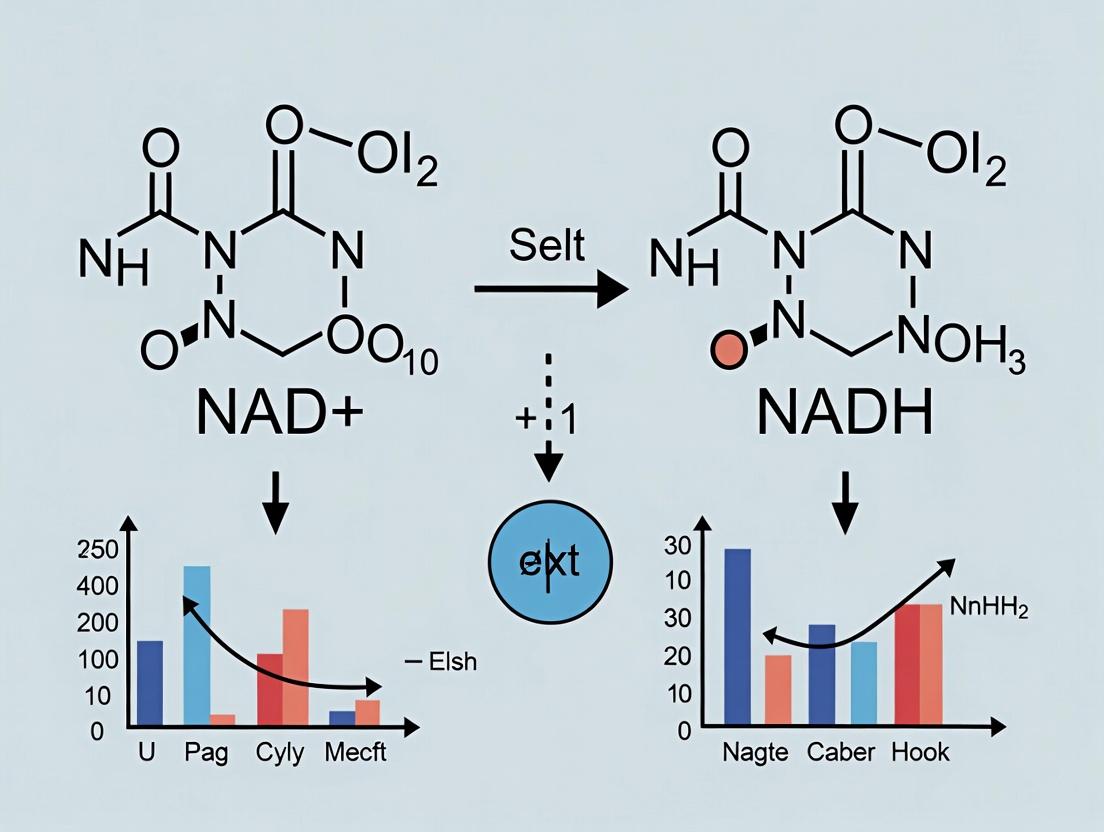
This article provides a comprehensive overview of the NAD+/NADH redox couple as the fundamental regulator of cellular bioenergetics.
NAD+/NADH Redox Couple: The Central Controller of Cellular Energy Metabolism and Its Therapeutic Potential
Abstract
This article provides a comprehensive overview of the NAD+/NADH redox couple as the fundamental regulator of cellular bioenergetics. It explores the foundational biochemistry of electron transfer, delves into state-of-the-art methodological approaches for its quantification in research and drug development, addresses common challenges and optimization strategies in experimental workflows, and validates these methods through comparative analysis. Designed for researchers, scientists, and drug development professionals, the content synthesizes current knowledge to inform the development of NAD+-centric therapies for metabolic disorders, aging, and neurodegeneration.
The Biochemistry of Power: Decoding the NAD+/NADH Redox Couple in Cellular Energetics
Within cellular energy metabolism, the nicotinamide adenine dinucleotide (NAD+/NADH) redox couple serves as a central hydride transfer agent. NAD+ acts as an oxidizing agent, accepting electrons (in the form of a hydride ion, H-) during catabolic reactions, while its reduced form, NADH, functions as a reducing agent, donating electrons to the electron transport chain for ATP synthesis and to other reductive biosynthetic pathways. This reversible redox coupling is fundamental to cellular bioenergetics, metabolic regulation, and signaling.
The thermodynamic and kinetic parameters governing the NAD+/NADH redox couple are critical for understanding its role in metabolism.
Table 1: Core Physicochemical and Cellular Parameters of the NAD+/NADH Couple
| Parameter | Value / Description | Significance / Notes |
|---|---|---|
| Standard Reduction Potential (E°') | -0.320 V (pH 7.0, 25°C) | Indicates a strong reducing agent when in NADH form. |
| Wavelength of Maximum Absorption (NADH) | 340 nm | Used for spectrophotometric quantification. |
| Molar Extinction Coefficient (ε) at 340 nm | 6,220 M⁻¹cm⁻¹ | Enables calculation of NADH concentration from absorbance. |
| Typical Cellular NAD+/NADH Ratio (Cytosol) | ~700:1 to 1000:1 | Highly oxidized, favoring catabolic oxidation reactions. |
| Typical Cellular NAD+/NADH Ratio (Mitochondria) | ~7-8:1 | More reduced, optimized for electron donation to ETC. |
| Total NAD(H) Pool Size (Mammalian Cells) | 0.2 - 0.5 mM | Pool is tightly regulated; availability influences metabolic flux. |
Experimental Protocols for Assessing Redox State & Activity
Accurate measurement of the NAD+/NADH ratio and enzymatic activities dependent on this couple is essential for research.
Protocol: Enzymatic Cycling Assay for Quantifying NAD+ and NADH Pools
Objective: To separately quantify oxidized (NAD+) and reduced (NADH) cellular pools with high sensitivity. Principle: NAD+ is reduced to NADH via enzyme-catalyzed cycling, generating a fluorescent product proportional to the original cofactor concentration.
Materials & Procedure:
- Cell/ Tissue Extraction: Rapidly lyse samples in either:
- Acidic Extract (for NAD+): 0.2N HCl, 0.1% Triton X-100. Heat at 60°C for 5 min, then neutralize with 0.2N NaOH/Tris base.
- Alkaline Extract (for NADH): 0.2N NaOH, 0.1% Triton X-100. Heat at 60°C for 5 min, then neutralize with 0.2N HCl/Tris-HCl.
- NAD+ Cycling Reaction:
- Prepare a master mix containing (final concentrations): 100 mM Tris-HCl (pH 8.0), 0.5 mM MTT, 2.5 mM PMS, 2% ethanol, 5 U/mL alcohol dehydrogenase (ADH).
- Mix sample extract with master mix in a 96-well plate.
- Incubate at 37°C for 5-30 min (kinetic measurement).
- Measure absorbance at 570 nm. Compare to standard curve of known NAD+ concentrations.
- NADH Cycling Reaction: Use a similar principle with a different enzyme system (e.g., lactate dehydrogenase with lactate and MTT/PMS).
Protocol: Real-Time Monitoring of NADH via Fluorescence Lifetime Imaging Microscopy (FLIM)
Objective: To spatially resolve NADH levels and its protein-bound vs. free state in live cells. Principle: Free and protein-bound NADH have distinct fluorescence lifetimes. FLIM measures the average time a molecule remains in its excited state, reporting on its microenvironment.
Materials & Procedure:
- Cell Preparation: Plate cells on glass-bottom dishes. Maintain in appropriate media without phenol red for imaging.
- FLIM System Setup: Use a two-photon or confocal microscope equipped with time-correlated single photon counting (TCSPC) capabilities. Excite at ~740-750 nm for two-photon excitation of NADH.
- Data Acquisition: Acquire FLIM images of untreated control cells and treated cells (e.g., with metabolic inhibitors). Collect sufficient photons per pixel for robust lifetime fitting.
- Data Analysis: Fit fluorescence decay curves per pixel using a biexponential model:
- Short lifetime component (~0.4 ns): Corresponds to free NADH.
- Long lifetime component (~2.0-3.5 ns): Corresponds to protein-bound NADH (e.g., bound to mitochondrial complexes).
- Calculate the fractional contribution and mean fluorescence lifetime.
The Scientist's Toolkit: Key Research Reagent Solutions
Table 2: Essential Reagents for NAD+/NADH Research
| Reagent / Material | Function / Application | Key Notes |
|---|---|---|
| Alcohol Dehydrogenase (ADH) | Enzyme for NAD+ cycling assays. Catalyzes reduction of NAD+ to NADH using ethanol. | Source: S. cerevisiae. Critical for specificity in quantification. |
| Lactate Dehydrogenase (LDH) | Enzyme for NADH cycling assays. Catalyzes oxidation of NADH to NAD+ using pyruvate. | Also used to deplete NADH in control experiments. |
| Phenazine Methosulfate (PMS) | Electron coupler in enzymatic cycling assays. Transfers electrons from NADH to MTT. | Light-sensitive; prepare fresh. |
| 3-(4,5-Dimethylthiazol-2-yl)-2,5-diphenyltetrazolium bromide (MTT) | Tetrazolium dye reduced to purple formazan by PMS/NADH. Read at 570 nm. | Common in viability assays; used here as cycling indicator. |
| FK866 (Daporinad) | Potent, specific inhibitor of NAMPT (nicotinamide phosphoribosyltransferase). | Depletes cellular NAD+ pools; used to study NAD+ dependency. |
| NMN (Nicotinamide Mononucleotide) | NAD+ precursor. Used to boost intracellular NAD+ levels in supplementation studies. | Key reagent for rescuing phenotypes associated with NAD+ depletion. |
| Resazurin Sodium Salt | Cell-permeable blue dye reduced to pink, fluorescent resorufin by NADH. | Used for continuous, non-destructive monitoring of cellular redox state. |
Visualizing Core Pathways and Relationships
Diagram 1: NAD+/NADH Redox Couple in Central Metabolic Pathways
Diagram 2: Experimental Workflow for NAD+/NADH Pool Quantification
Abstract This technical whitepaper examines the core catabolic pathways—glycolysis, the tricarboxylic acid (TCA) cycle, and fatty acid beta-oxidation—through the lens of the NAD⁺/NADH redox couple, the central arbitrator of cellular energy metabolism. A precise redox balance is critical for efficient ATP production, metabolic signaling, and cellular health. Disruptions in this balance are implicated in aging, metabolic disorders, and neurodegeneration, making these pathways prime targets for therapeutic intervention. This guide provides current quantitative data, experimental protocols for probing redox states, and essential research tools for investigators in translational metabolism research.
1. Introduction: The NAD⁺/NADH Redox Framework Cellular catabolism is the exergonic process of breaking down complex molecules to release energy, which is conserved primarily as ATP and reducing equivalents. The pyridine nucleotide pair NAD⁺/NADH serves as the principal electron carrier, shuttling hydride ions (H⁻) from oxidative pathways to the mitochondrial electron transport chain (ETC). The cytosolic and mitochondrial NAD⁺/NADH ratios are distinct, creating separate redox pools that regulate metabolic flux. Research focusing on modulating NAD⁺ bioavailability and the NAD⁺/NADH ratio is a cornerstone of contemporary drug development for age-related diseases.
2. Core Catabolic Pathways: Quantitative Analysis The following tables summarize the quantitative output of the core catabolic pathways per molecule of primary substrate, highlighting their contribution to the NAD⁺/NADH redox economy.
Table 1: Glycolysis (Glucose → Pyruvate)
| Location | ATP (Net) | NADH | Pyruvate | Other Outputs |
|---|---|---|---|---|
| Cytosol | +2 | +2 (cytosolic) | 2 | 2 H⁺ |
Note: Under aerobic conditions, cytosolic NADH is shuttled into mitochondria via malate-aspartate or glycerol-3-phosphate shuttles, effectively oxidizing NADH back to NAD⁺.
Table 2: Mitochondrial TCA Cycle (per Acetyl-CoA)
| Location | ATP (GTP) | NADH | FADH₂ | CO₂ | Regenerated Molecule |
|---|---|---|---|---|---|
| Mitochondrial Matrix | 1 (GTP) | 3 | 1 | 2 | Oxaloacetate |
Table 3: Beta-Oxidation (per Palmitoyl-CoA, C16:0)
| Location | Acetyl-CoA | NADH | FADH₂ | Total ATP Yield* |
|---|---|---|---|---|
| Mitochondrial Matrix | 8 | 7 | 7 | ~106 |
Note: *Theoretical maximum yield via ETC and oxidative phosphorylation. Actual yield is lower due to costs of fatty acid activation and transport.
3. Experimental Protocols for Assessing Pathway Flux and Redox State 3.1. Protocol: Measuring Real-Time Glycolytic Flux via Extracellular Acidification Rate (ECAR) Objective: Quantify glycolytic rate in live cells using a Seahorse XF Analyzer. Methodology:
- Seed cells in a specialized XF microplate and culture to desired confluency.
- Replace medium with unbuffered assay medium (pH 7.4) supplemented with 10 mM glucose and incubate in a non-CO₂ incubator for 1 hour.
- Load the cell plate into the XF Analyzer. The instrument sequentially measures oxygen consumption rate (OCR) and ECAR via solid-state sensors.
- Perform an injection sequence:
- Basal measurement: Baseline ECAR.
- Inject 10 mM Glucose: Induces glycolytic flux. The spike in ECAR (from lactate/H⁺ production) indicates glycolytic capacity.
- Inject 1.5 μM Oligomycin (ATP synthase inhibitor): Forces maximum glycolytic rate by blocking mitochondrial ATP production.
- Inject 50 mM 2-Deoxy-D-glucose (2-DG, glycolytic inhibitor): Confirms glycolytic acidification is measured.
- Analysis: Normalize data to protein content. Glycolytic parameters (Glycolysis, Glycolytic Capacity, Glycolytic Reserve) are calculated from ECAR values post-injections.
3.2. Protocol: Determining Mitochondrial NAD⁺/NADH Redox State via Lactate/Pyruvate Ratio Objective: Infer the free mitochondrial NAD⁺/NADH ratio using a mass spectrometry-based metabolomics approach. Methodology:
- Cell Quenching & Metabolite Extraction: Rapidly quench cell culture (e.g., 80% methanol at -80°C). Scrape cells, vortex, and centrifuge at 16,000 x g for 15 min at 4°C.
- LC-MS/MS Analysis: Separate metabolites on a HILIC column. Use a triple quadrupole mass spectrometer in multiple reaction monitoring (MRM) mode.
- Targeted Quantification: Quantify lactate and pyruvate using isotopically labeled internal standards (e.g., ¹³C₃-lactate, ¹³C₃-pyruvate).
- Calculation: The cytosolic NAD⁺/NADH ratio is proportional to the [pyruvate]/[lactate] ratio via the near-equilibrium lactate dehydrogenase (LDH) reaction. The mitochondrial ratio can be inferred using the combined metabolite systems of lactate/pyruvate, β-hydroxybutyrate/acetoacetate, and the malate-aspartate shuttle, applying the Nernst equation for each couple.
4. Visualization of Metabolic and Redox Integration
5. The Scientist's Toolkit: Key Research Reagents
Table 4: Essential Reagents for Catabolic & Redox Research
| Reagent/Category | Example Product | Primary Function in Research |
|---|---|---|
| NAD⁺ Precursors | Nicotinamide Riboside (NR), Nicotinamide Mononucleotide (NMN) | Boost intracellular NAD⁺ pools; test therapeutic potential in disease models. |
| Metabolic Inhibitors | 2-Deoxy-D-glucose (2-DG), Oligomycin, Rotenone, Etomoxir | Inhibit specific pathway steps (glycolysis, ATP synthase, ETC Complex I, CPT1) to probe flux and dependencies. |
| Fluorescent Redox Biosensors | SoNar (NAD⁺/NADH), iNAP (NADPH) | Genetically encoded sensors for real-time, compartment-specific monitoring of redox ratios in live cells. |
| Isotopically Labeled Substrates | [U-¹³C]-Glucose, [¹³C₁₆]-Palmitate | Trace metabolic fate via LC-MS or NMR; determine pathway fluxes (e.g., glycolytic vs. TCA contribution). |
| Seahorse XF Assay Kits | Glycolysis Stress Test Kit, Mito Fuel Flex Test | Standardized reagents for profiling cellular metabolic phenotypes in real time. |
| Antibodies for Key Enzymes | Anti-PDH, Anti-ACSL1, Anti-GAPDH | Assess protein expression, phosphorylation status (e.g., PDH inactivation by phosphorylation), and localization. |
The study of cellular bioenergetics is fundamentally centered on the NAD+/NADH redox couple. Within the broader thesis of cellular energy metabolism research, understanding the primacy of NADH as a substrate for oxidative phosphorylation is paramount. This whitepaper provides an in-depth technical analysis of NADH-driven ATP generation, framing it within current research paradigms that explore modulating the NAD+/NADH ratio for therapeutic intervention in age-related diseases, metabolic disorders, and neurodegeneration.
Biochemical Fundamentals: NADH Oxidation and Proton Motive Force
NADH, generated primarily in the mitochondrial matrix via the tricarboxylic acid (TCA) cycle and β-oxidation, serves as the principal electron donor for Complex I (NADH:ubiquinone oxidoreductase). The transfer of two electrons from NADH through the electron transport chain (ETC) to molecular oxygen is coupled to proton pumping across the inner mitochondrial membrane, establishing the electrochemical gradient (proton motive force, Δp) that drives ATP synthesis.
The stoichiometry of this process is a key focus of contemporary research, with updated values reflecting experimental refinements.
Table 1: Stoichiometry of Proton Motive Force Generation and ATP Yield per NADH Oxidized
| Parameter | Theoretical (Classical) | Current Consensus (Revised) | Notes |
|---|---|---|---|
| Protons Pumped by Complex I | 4 H⁺/2e⁻ | 4 H⁺/2e⁻ | Firmly established. |
| Protons Pumped by Complex III | 4 H⁺/2e⁻ | 4 H⁺/2e⁻ | Via Q-cycle. |
| Protons Pumped by Complex IV | 2 H⁺/2e⁻ | 2 H⁺/2e⁻ | |
| Total H⁺ Pumped per NADH | 10 H⁺ | 10 H⁺ | |
| H⁺ Required for ATP Synthesis | 3-4 H⁺/ATP | 4.67 H⁺/ATP | Includes cost of Pi & ADP transport (P⁺/O ratio ~2.5). |
| Net ATP Yield per NADH | ~2.5-2.7 ATP | ~2.0-2.2 ATP | Revised chemiosmotic coupling ratio. |
Key Experimental Protocols for NADH-ETC Research
Protocol: High-Resolution Respirometry to Assess NADH-Linked Respiration
Objective: To measure the oxygen consumption rate (OCR) driven specifically by NADH-generating substrates. Materials: Isolated mitochondria or permeabilized cells, Oxygraph-2k or Seahorse XF Analyzer. Procedure:
- Calibration: Calibrate the oxygen sensor in air-saturated and oxygen-depleted assay medium at experimental temperature.
- Baseline State (LEAK): Add mitochondria to the chamber. Provide substrates for complex I (e.g., 5 mM Pyruvate + 2.5 mM Malate). The resulting State 2 respiration represents proton leak.
- NADH-Linked OXPHOS Capacity (State 3): Add a saturating amount of ADP (1-2 mM). The rapid OCR is the NADH-linked phosphorylating respiration.
- Maximum ETC Capacity: Titrate the uncoupler FCCP (0.5-2 µM steps) to collapse the proton gradient and achieve maximal electron flow.
- Inhibition: Add 0.5 µM rotenone (Complex I inhibitor) to confirm the signal is NADH/Complex I-dependent. Data Analysis: Calculate the ADP/O ratio (mol ADP phosphorylated per atom O consumed) as a measure of coupling efficiency.
Protocol: Spectrofluorometric Measurement of Mitochondrial NADH/NAD+ Redox State
Objective: To monitor the autofluorescence of reduced NADH as a proxy for the matrix NADH/NAD+ ratio. Materials: Fluorescence spectrophotometer with thermostatic control, isolated mitochondria or cultured cells. Procedure:
- Setup: Set excitation to 340-360 nm and emission to 450-470 nm. Use a low scan speed for kinetic measurement.
- Baseline: Record baseline fluorescence of mitochondria in buffer.
- Substrate Addition: Add 5 mM glutamate + 5 mM malate. Observe the rapid increase in fluorescence (NADH accumulation).
- ADP Pulse: Add 1 mM ADP. Observe the rapid decrease in fluorescence as NADH is oxidized to regenerate NAD+ for respiration.
- Inhibition Control: Add rotenone. Fluorescence increases as NADH oxidation halts. Data Analysis: Normalize fluorescence changes relative to baseline (F/F₀). The rate of NADH oxidation upon ADP addition reflects ETC capacity.
Visualization of Pathways and Workflows
Diagram Title: NADH-Driven Electron Transport Chain and Chemiosmosis
Diagram Title: Respirometry Protocol for NADH-Linked Flux
The Scientist's Toolkit: Key Research Reagent Solutions
Table 2: Essential Reagents for NADH/ETC Research
| Reagent/Material | Function/Description | Example Product/Catalog |
|---|---|---|
| Digitonin | A mild detergent for selective plasma membrane permeabilization in cells, leaving mitochondria intact for substrate access. | Sigma-Aldrich, D141 |
| Pyruvate + Malate | Classic NADH-generating substrate combination for Complex I. Pyruvate enters matrix, is converted to Acetyl-CoA, and feeds the TCA cycle with malate. | Thermo Fisher Scientific |
| Rotenone | High-affinity, specific inhibitor of Complex I (NDUFS subunits). Used to confirm NADH-linked respiration. | Cayman Chemical, 13995 |
| ADP, Sodium Salt | Purine nucleotide substrate for ATP synthase. Used to initiate State 3 phosphorylating respiration. | Sigma-Aldrich, A2754 |
| FCCP (Carbonyl cyanide-p-trifluoromethoxyphenylhydrazone) | Protonophoric uncoupler. Collapses the H⁺ gradient, allowing maximum ETC flux independent of ATP synthase. | Tocris Bioscience, 0453 |
| NADH, Disodium Salt | Direct substrate for enzymatic assays or for calibrating fluorescence measurements. Cell-impermeable. | Roche, 10107735001 |
| ATPenol (BMS-199264) | A specific, reversible inhibitor of ATP synthase (Complex V). Used to distinguish ETC flux from ATP synthesis. | MedChemExpress, HY-101562 |
| Seahorse XF DMEM Medium, pH 7.4 | Bicarbonate-free, optimized medium for extracellular flux analysis in live cells. | Agilent Technologies, 103575-100 |
| MitoTracker Deep Red FM | A cell-permeant dye that stains active mitochondria, used for normalization in live-cell assays. | Invitrogen, M22426 |
The NAD+/NADH redox couple is a cornerstone of cellular energy metabolism, facilitating electron transfer in glycolysis, the TCA cycle, and oxidative phosphorylation. However, NAD+ also serves as an essential co-substrate for several non-redox enzyme families, including sirtuins (SIRTs), poly(ADP-ribose) polymerases (PARPs), and CD38. This whitepaper details the mechanisms, quantitative dynamics, and experimental interrogation of these NAD+-consuming pathways, framing them within the broader context of NAD+ biology. The depletion of NAD+ pools by these enzymes integrates metabolic state with critical cellular processes such as genomic stability, signaling, and stress response, presenting targets for therapeutic intervention.
NAD+ exists in two interconvertible forms: the oxidized (NAD+) and reduced (NADH) states. While the redox function is fundamental for ATP generation, NAD+ is also cleaved by three major classes of enzymes:
- Sirtuins (SIRTs): NAD+-dependent protein deacylases (e.g., deacetylases) linking metabolism to epigenetic and transcriptional regulation.
- Poly(ADP-ribose) Polymerases (PARPs): Primarily involved in DNA damage repair, consuming substantial NAD+ upon activation.
- CD38/CD157: Ectoenzymes with NAD+ glycohydrolase activity, major regulators of extracellular and intracellular NAD+ levels.
The competition for a limited cellular NAD+ pool creates a metabolic network where energy status directly influences signaling and repair pathways.
Quantitative Dynamics of NAD+ Consumption
The relative contribution and kinetics of NAD+-consuming enzymes vary by cell type and metabolic state. The following table summarizes key quantitative parameters.
Table 1: Kinetic and Cellular Parameters of Major NAD+ Consumers
| Enzyme Family | Primary Reaction | Cellular Location | Approx. Km for NAD+ (μM) | Estimated % of Basal NAD+ Turnover | Key Inhibitors (Research Tools) |
|---|---|---|---|---|---|
| SIRTs (e.g., SIRT1) | Protein Deacylation | Nucleus/Cytoplasm | 50 - 100 | 10-20% | Nicotinamide, EX-527 (SIRT1-specific) |
| PARP1 | ADP-ribosylation | Nucleus | ~50 | <5% (Basal), >90% (Acute DNA damage) | Olaparib, 3-AB, PJ34 |
| CD38 | Hydrolysis/Cyclization | Plasma Membrane | 1 - 10 | 50-70% (In immune cells) | Apigenin, 78c, Thiazoloquin(az)olinones |
Table 2: NAD+ Pool Size and Turnover Under Different Conditions
| Condition | Total Cellular NAD+ (pmol/mg protein) | NAD+/NADH Ratio | Half-life of NAD+ (min) | Primary Consumer Activated |
|---|---|---|---|---|
| Basal (HeLa cells) | 300 - 500 | 5 - 10 | 30 - 60 | CD38 / SIRTs |
| Oxidative Stress | 200 - 400 | 3 - 7 | 60 - 120 | PARP1 (Moderate) |
| Acute DNA Damage (H2O2/MMS) | 50 - 150 | 0.5 - 3 | < 15 | PARP1 (Massive) |
| Fasting/Caloric Restriction | 400 - 700 | 10 - 20 | 90 - 120 | SIRTs (Upregulated) |
Detailed Experimental Protocols
Protocol: Measuring Real-Time NAD+ Consumption by PARP1In Vitro
Objective: Quantify NAD+ depletion kinetics using recombinant PARP1 activated by DNA damage. Materials: See "The Scientist's Toolkit" below. Method:
- Prepare a reaction buffer (50 mM Tris-HCl pH 8.0, 50 mM NaCl, 4 mM MgCl2).
- In a black 96-well plate, mix: 50 µL buffer, 10 µL activated DNA (100 ng/µL sheared salmon sperm DNA), 10 µL recombinant human PARP1 (10 nM final).
- Initiate the reaction by adding 30 µL of NAD+ solution containing 100 µM NAD+ and 1 µM thiazol blue (MTT formazan precursor).
- Immediately monitor absorbance at 565 nm (for MTT reduction) or fluorescence (Ex/Em 340/450 nm for NADH formation via coupled enzyme assay) every 30 seconds for 60 minutes at 30°C.
- Calculate NAD+ consumption rate from the standard curve. Include controls without DNA (no PARP activation) and without enzyme.
Protocol: Assessing SIRT1 Activity in Cell Lysates
Objective: Determine deacetylase activity dependent on intracellular NAD+ levels. Method:
- Lysate Preparation: Lyse cells in ICE-cold lysis buffer (50 mM Tris-HCl pH 8.0, 150 mM NaCl, 1% NP-40, 1 mM DTT, protease inhibitors). Centrifuge at 14,000g for 15 min at 4°C. Retain supernatant.
- Activity Assay: Use a fluorogenic SIRT1 activity assay kit. In a plate, combine 40 µL lysate (20-50 µg protein), 10 µL fluorophore-conjugated acetylated p53 peptide substrate (200 µM), and 50 µL of assay buffer with or without 500 µM NAD+.
- Incubation & Measurement: Incubate at 37°C for 1-2 hours. Stop the reaction with developer containing nicotinamide and protease. Measure fluorescence (Ex/Em 360/460 nm).
- Calculation: Activity is expressed as relative fluorescence units (RFU) per µg protein per hour. Subtract values from no-NAD+ controls.
Signaling Pathways and Metabolic Crosstalk
Diagram 1: NAD+ Metabolic Crosstalk Network
Diagram 2: PARP1 Overactivation & Metabolic Collapse
The Scientist's Toolkit: Key Research Reagents
Table 3: Essential Research Reagents for Studying NAD+-Consuming Enzymes
| Reagent | Function/Description | Example Product (Supplier) |
|---|---|---|
| NAD+/NADH Assay Kits | Colorimetric/Fluorometric quantification of total, oxidized, and reduced pools. | NAD/NADH-Glo (Promega), Colorimetric NAD/NADH Assay (BioVision) |
| Recombinant Enzymes | High-purity SIRT, PARP, CD38 for in vitro kinetic and inhibition studies. | Active human PARP1 (Enzo), Human SIRT1 (SignalChem) |
| Selective Inhibitors | Pharmacological probes to dissect specific enzyme contributions in cells. | EX-527 (SIRT1), Olaparib (PARP1/2), 78c (CD38) |
| Activity Assay Kits | Fluorogenic or colorimetric readouts of specific enzyme activity in lysates. | SIRT1 Fluorometric Drug Discovery Kit (BPS Bio), PARP Activity Assay Kit (Abcam) |
| Anti-ADP-ribose Antibodies | Detection of PARP activity (PAR) or mono(ADP-ribosyl)ation in cells/tissues. | Anti-PAR (10H) (Santa Cruz), Anti-mono-ADP-ribose (E6F6A) (Cell Signaling) |
| cADPR Analogs/Antagonists | Probe calcium signaling pathways downstream of CD38. | 8-Br-cADPR (antagonist) (Tocris) |
| LC-MS/MS Standards | Isotope-labeled NAD+ and metabolites for precise quantification. | ¹³C₁₅-NAD+ (Cambridge Isotopes), d4-NAM (Sigma) |
The NAD+/NADH redox couple is a fundamental cofactor pair in cellular metabolism, acting as a primary electron carrier in catabolic and anabolic reactions. Crucially, the cellular NAD system is not a single, homogenous pool. It is compartmentalized into distinct, independently regulated subcellular pools within the cytosol, mitochondria, and nucleus. This compartmentalization creates unique redox environments, dictates localized metabolic flux, and enables distinct signaling functions. Understanding the concentration, regulation, and exchange mechanisms of these pools is a core thesis in modern metabolic research, with profound implications for understanding aging, neurodegeneration, and cancer, and for developing targeted therapeutics.
Quantitative Comparison of NAD Pools
The following table summarizes key quantitative data on the distinct NAD pools, derived from recent mammalian cell (primarily hepatic) studies.
Table 1: Characteristics of Major Subcellular NAD Pools
| Parameter | Cytosolic Pool | Mitochondrial Pool | Nuclear Pool |
|---|---|---|---|
| Approx. Total Concentration (μM) | 200 - 500 | 200 - 500 (Matrix) | Data limited; likely similar to cytosolic |
| [NAD+]/[NADH] Redox Ratio | 60 - 700 (Highly Oxidizing) | 5 - 10 (More Reduced) | Estimated to be oxidizing; precise data scarce |
| pH | ~7.2 | ~7.9 (Matrix) | ~7.2 |
| Primary Synthesis Pathway | Preiss-Handler (from Na) & Salvage (from Nr/Nam) | Salvage (from NMN); Nr transport limited | Salvage (from Nr/Nam); possible local synthesis |
| Key Consumers | GAPDH, PARPs (primarily PARP1/2), SIRTs (cytosolic) | TCA Cycle, ETC, SIRT3-5 | PARPs (DNA repair), SIRTs (esp. SIRT1,6,7), DNA synthesis |
| Key Transport Mechanism | NMN/NaMN via Slc12a8?; Nam exchange | NAD+ via MCART1/SLC25A51; NMN via other SLC25A | Permeable nuclear pore; possible active regulation |
Experimental Protocols for Measuring Compartmentalized NAD Pools
Genetically Encoded Biosensors (Live-Cell Imaging)
Principle: Expression of fluorescent protein-based sensors (e.g., SoNar, FiNad, Peredox) that undergo conformational changes upon NADH or NAD+ binding, altering fluorescence intensity or ratio. Protocol:
- Cell Transfection: Plate cells (e.g., HeLa, HEK293) on glass-bottom dishes. Transfect with plasmid encoding the biosensor (e.g., SoNar for NADH/NAD+ ratio) targeted to specific compartments (cytosol, nucleus, or mitochondria) using a lipid-based transfection reagent. For mitochondria, use a sensor fused to a mitochondrial targeting sequence (MTS).
- Imaging Setup: 24-48h post-transfection, place dishes on a confocal or widefield fluorescence microscope equipped with environmental control (37°C, 5% CO2). For ratiometric sensors (e.g., SoNar, excitation at 420 nm and 485 nm, emission at 515 nm), configure appropriate filter sets.
- Calibration: In situ calibration is performed post-experiment: a. Treat cells with 1 µM rotenone & 10 mM pyruvate to fully reduce the sensor (Rmax). b. Treat cells with 10 µM antimycin A & 10 mM 2-deoxyglucose to fully oxidize the sensor (Rmin). c. Calculate the NADH/NAD+ ratio using the formula: Ratio = (R - Rmin) / (Rmax - R) * Kd, where R is the measured ratio and Kd is the sensor's dissociation constant (determined in vitro).
- Data Acquisition & Analysis: Acquire time-lapse images. Analyze mean fluorescence intensity or ratio within regions of interest (ROIs) drawn around individual cells or subcellular compartments. Normalize to baseline.
Enzymatic Cycling Assays on Fractionated Cells
Principle: Physical separation of cellular compartments via differential centrifugation followed by quantitative measurement of NAD+ and NADH using enzymatic recycling reactions. Protocol:
- Cell Fractionation: a. Harvest ~10^7 cells by trypsinization and wash with cold PBS. b. Resuspend pellet in 1 mL ice-cold isotonic mitochondrial buffer (e.g., 250 mM sucrose, 10 mM HEPES, 1 mM EDTA, pH 7.4) with protease inhibitors. c. Homogenize cells with 30-50 strokes in a tight-fitting Dounce homogenizer on ice. Check efficiency (>90% cell lysis) under a microscope. d. Centrifuge homogenate at 600 x g for 10 min at 4°C to remove nuclei and unbroken cells (P1). Save supernatant (S1). e. Centrifuge S1 at 10,000 x g for 20 min at 4°C. The pellet (P2) is the crude mitochondrial fraction. The supernatant (S2) contains cytosol and other organelles. f. For a pure nuclear fraction, resuspend P1 in a buffer with 0.5% NP-40, vortex, and centrifuge at 1000 x g. Wash pellet to obtain clean nuclei.
- NAD+ and NADH Extraction: a. For NAD+: Aliquot of fraction is added to an equal volume of 0.5N HCl, vortexed, heated at 60°C for 15 min, neutralized with 0.5N NaOH/Tris base. b. For NADH: Aliquot is added to an equal volume of 0.5N NaOH, vortexed, heated at 60°C for 15 min, neutralized with 0.5N HCl/Tris base.
- Enzymatic Cycling Assay: a. Prepare reaction mix (final volume 100 µL): 50 µL sample/extract, 50 µL cycling buffer (100 mM Tris pH 8.0, 1% ethanol, 0.5 mM MTT, 2 mM PMS, 10 µM flavin mononucleotide, 20 µg/mL alcohol dehydrogenase). b. Incubate at 37°C for 5-30 min (time within linear range). The reaction is: NAD+ + Ethanol NADH + Acetaldehyde + H+; NADH + MTT+ (PMS) → NAD+ + MTT-formazan (colored). c. Stop reaction with 50 µL 12N HCl. d. Measure absorbance at 570 nm. Compare to a standard curve of known NAD+ concentrations.
Visualization of NAD Pool Regulation
Diagram Title: NAD+ Pool Compartmentalization and Key Fluxes
Diagram Title: Subcellular Fractionation Workflow for NAD Assay
The Scientist's Toolkit: Key Research Reagent Solutions
Table 2: Essential Reagents for NAD Pool Research
| Reagent / Material | Function / Description | Example Vendor/Cat. # |
|---|---|---|
| Genetically Encoded Biosensors | Fluorescent proteins for live-cell, compartment-specific NADH/NAD+ ratio or concentration imaging. | Addgene (e.g., plasmids #129901, #125976) |
| NAD/NADH Assay Kit (Fluorometric) | Homogeneous, enzymatic kit for quantifying total NAD+ and NADH from whole cell lysates or fractions without extraction. | Abcam (ab176723), Promega (G9071) |
| NAMPT Inhibitor (FK866) | Potent and specific inhibitor of nicotinamide phosphoribosyltransferase (NAMPT), the rate-limiting enzyme in the NAD salvage pathway. Depletes NAD. | Tocris (3411) |
| PARP Inhibitor (Olaparib) | High-potency inhibitor of PARP1/2, preventing NAD+ consumption by DNA damage repair pathways, allowing study of nuclear NAD+ pool dynamics. | Selleckchem (S1060) |
| SIRT Activator (Resveratrol) | A polyphenol that activates SIRT1, affecting nuclear and cytosolic NAD+ consumption. Used to probe SIRT-dependent NAD+ flux. | Sigma-Aldrich (R5010) |
| Mitochondrial Uncoupler (FCCP) | Protonophore that collapses the mitochondrial membrane potential, stimulating ETC activity and rapidly oxidizing the mitochondrial NADH pool. | Cayman Chemical (15218) |
| Recombinant NAMPT Enzyme | Used in in vitro assays to study salvage pathway kinetics or to supplement cellular activity. | R&D Systems (7529-PC-010) |
| Nicotinamide Riboside (NR) Cl | NAD+ precursor vitamin. Used to boost cellular NAD+ levels and study precursor uptake, compartment-specific supplementation, and kinetics. | ChromaDex (Custom) |
| SLC25A51 Antibody | Validated antibody for immunoblotting or immunofluorescence to assess mitochondrial NAD+ transporter expression and localization. | Proteintech (27732-1-AP) |
| Density Gradient Medium (Percoll/Iodixanol) | For high-purity isolation of mitochondria or nuclei via density gradient centrifugation, reducing cross-contamination for assays. | Cytiva (17-0891-01) / Sigma (D1556) |
The Redox State (NAD+/NADH Ratio) as a Key Metabolic Sensor and Regulator
Abstract This whitepaper, framed within a broader thesis on NAD+/NADH redox couple cellular energy metabolism research, details the central role of the NAD+/NADH ratio as a master metabolic sensor and regulator. We examine the molecular mechanisms through which this redox couple modulates enzymatic activity, signaling pathways, and transcriptional programs to maintain metabolic homeostasis. The document provides a technical guide for researchers, including current quantitative data, experimental protocols for key assays, and essential research tools.
1. Introduction The balance between oxidized nicotinamide adenine dinucleotide (NAD⁺) and its reduced form (NADH) constitutes a fundamental cellular redox metric. This ratio, rather than the absolute concentrations of either moiety, serves as a critical indicator of the catabolic and anabolic state. It directly influences the activity of numerous dehydrogenases, sirtuins, and poly(ADP-ribose) polymerases (PARPs), thereby connecting mitochondrial function, metabolic flux, epigenetic regulation, and stress response pathways.
2. Core Quantitative Data on NAD+/NADH in Mammalian Systems
Table 1: Reported NAD+/NADH Ratios and Concentrations in Mammalian Tissues/Cells
| Compartment/Cell Type | NAD+ (μM) | NADH (μM) | Approx. NAD+/NADH Ratio | Primary Measurement Method | Key Reference (Example) |
|---|---|---|---|---|---|
| Cytosol (Liver) | 200 - 600 | 10 - 50 | 5 - 10 | Enzymatic Cycling | Williamson et al., 1967 |
| Mitochondria (Liver) | 200 - 400 | 2000 - 6000 | ~0.03 - 0.1 | Fractionation + Cycling | Krebs & Veech, 1969 |
| Whole Cell (HeLa) | 200 - 400 | 40 - 100 | 3 - 5 | LC-MS/MS | Trammell et al., 2016 |
| Plasma (Human) | 0.1 - 0.5 | ~0.01 | ~10 - 50 | LC-MS/MS | Trammell et al., 2016 |
| Brain Tissue | 80 - 150 | 20 - 40 | 2 - 5 | LC-MS/MS | Zhu et al., 2021 |
3. Key Regulatory Pathways and Mechanisms
3.1. Direct Modulation of Metabolic Enzymes The NAD+/NADH ratio thermodynamically controls the direction of reversible dehydrogenase reactions (e.g., Lactate Dehydrogenase, Glyceraldehyde-3-Phosphate Dehydrogenase). A low ratio (high NADH) inhibits oxidative pathways like the TCA cycle and promotes reductive biosynthesis.
3.2. Sirtuin-Dependent Epigenetic & Signaling Regulation Sirtuins (SIRT1-7) are NAD⁺-dependent deacylases linking redox state to gene expression. Low NAD⁺ inhibits sirtuin activity, affecting:
- SIRT1: Deacetylates PGC-1α (mitochondrial biogenesis), FOXOs (stress resistance), histones.
- SIRT3: Major mitochondrial deacetylase; regulates Acetyl-CoA synthetase 2, complex I subunits.
3.3. Hypoxia-Inducible Factor (HIF) Regulation Under normal oxygen, HIF-1α is hydroxylated by prolyl hydroxylases (PHDs), which require O₂ and α-ketoglutarate, and are inhibited by high NADH and succinate. Hypoxia or a low NAD+/NADH ratio stabilizes HIF-1α, promoting glycolytic gene expression.
Pathway Diagram: NAD+/NADH-Dependent Metabolic & Transcriptional Regulation
4. Experimental Protocols for Key Assays
4.1. Protocol: LC-MS/MS Quantification of NAD+ and NADH
- Principle: Liquid chromatography coupled to tandem mass spectrometry for specific, sensitive separation and detection.
- Procedure:
- Rapid Quenching & Extraction: Cells/tissue (<50 mg) are flash-frozen in liquid N₂. Extract using 80:20 Methanol:Water at -80°C with 0.1M formic acid (for NAD⁺) or mild alkali (for NADH stabilization). Separate extracts for each pool.
- Sample Preparation: Centrifuge at 16,000 x g, 15 min, 4°C. Dry supernatant under vacuum. Reconstitute in LC-MS mobile phase.
- LC-MS/MS Analysis: Use a C18 reverse-phase column. Mobile phase: Water and Acetonitrile, both with 0.1% Formic Acid. Gradient elution. Monitor specific mass transitions for NAD⁺ (m/z 664→428) and NADH (m/z 666→649).
- Quantification: Use stable isotope-labeled internal standards (e.g., ¹³C-NAD⁺, ¹⁵N-NADH) for absolute quantification. Normalize to protein content or cell count.
4.2. Protocol: Enzymatic Cycling Assay for Subcellular NAD+/NADH
- Principle: Amplifies signal via cyclic enzymatic reduction/oxidation linked to a fluorescent reporter.
- Procedure (for Cytosolic vs. Mitochondrial):
- Digitonin-Based Fractionation: Wash cells in PBS. Incubate with 0.01% digitonin (in isotonic buffer) for 5 min on ice to permeabilize plasma membrane. Collect supernatant (cytosolic fraction). Lyse pellet with 1% Triton X-100 (total/mitochondrial-enriched fraction).
- NADH-Specific Extraction: Split each fraction. For NAD⁺ measurement, heat aliquot at 60°C for 30 min to degrade NADH. For total NAD(H), use no heat.
- Cycling Reaction: Mix sample with reaction buffer containing: 100mM Tris-Cl (pH 8.0), 1% ethanol, 0.5mM MTT, 2mM PMS, 2U/mL alcohol dehydrogenase. Incubate at 37°C for 5-30 min.
- Detection: Measure formazan formation (from MTT reduction) at 565 nm. Calculate concentrations from standard curves. Mitochondrial NAD(H) is derived by subtracting cytosolic from total.
Experimental Workflow: Assessing Compartmentalized NAD+/NADH
5. The Scientist's Toolkit: Key Research Reagent Solutions
Table 2: Essential Materials for NAD+/NADH Research
| Reagent/Tool | Function & Application | Key Consideration |
|---|---|---|
| Digitoxin / Digitonin | Selective permeabilization of plasma membrane for subcellular fractionation. | Concentration and incubation time are cell-type specific; optimize for each model. |
| Acid/Base Extraction Buffers | To stabilize labile NADH (acid degrades it) or total NAD(H) (alkali). | Must perform parallel extractions for NAD⁺ and NAD(H) pools. |
| NAD⁺ / NADH Fluorescent Biosensors (e.g., SoNar, Frex) | Real-time, compartment-specific ratiometric imaging of redox state. | Requires transfection/transduction; calibration is essential for quantitative interpretation. |
| Stable Isotope-Labeled NAD⁺ (¹³C, ¹⁵N) | Internal standards for LC-MS/MS enabling absolute quantification. | Critical for accounting for matrix effects and extraction efficiency losses. |
| Sirtuin Inhibitors (e.g., EX527 for SIRT1) & Activators (e.g., Resveratrol, SRT1720) | Pharmacological probes to manipulate NAD⁺-dependent signaling pathways. | Beware off-target effects; use genetic knockdown/knockout for validation. |
| NMN (Nicotinamide Mononucleotide) / NR (Nicotinamide Riboside) | NAD⁺ precursors used to experimentally boost cellular NAD⁺ levels. | Control for potential effects of degradation products (e.g., nicotinamide). |
Quantifying the Current: Advanced Methods for Measuring NAD+/NADH in Research & Drug Discovery
This technical guide details the application of spectrophotometric and fluorometric assays within the context of NAD+/NADH redox couple research, a central component of cellular energy metabolism. It provides the foundational principles, current standard protocols, and a practical toolkit for researchers and drug development professionals investigating metabolic pathways, mitochondrial function, and associated diseases.
The nicotinamide adenine dinucleotide (NAD+/NADH) redox couple is a critical coenzyme pair serving as a primary electron carrier in catabolic and anabolic reactions. The ratio of NAD+ to NADH reflects the cellular redox state and is intrinsically linked to ATP production via oxidative phosphorylation, glycolysis, and the TCA cycle. Precise quantification of this ratio and its dynamics is therefore paramount in metabolism, aging, and disease research.
Core Principles
Spectrophotometric Assays
Spectrophotometry measures the absorption of light by a sample. NADH and NADPH absorb light at 340 nm, while their oxidized forms (NAD+, NADP+) do not. This property allows direct, label-free quantification of dehydrogenase-coupled reactions by monitoring the appearance or disappearance of NAD(P)H at 340 nm (A340). The Beer-Lambert law (A = ε * c * l) governs the relationship between absorbance (A), molar absorptivity (ε for NADH is ~6220 M⁻¹cm⁻¹), concentration (c), and pathlength (l).
Fluorometric Assays
Fluorometry measures the emission light from excited molecules. NADH/NADPH are naturally fluorescent (excitation ~340 nm, emission ~460 nm), while their oxidized forms are not. This provides higher sensitivity (up to 100-1000x more sensitive than absorbance) by detecting fluorescence intensity, enabling measurement of low-concentration samples or subtle changes in the redox state.
Standard Protocols
Direct Spectrophotometric Assay for Lactate Dehydrogenase (LDH) Activity
Principle: LDH catalyzes the reversible conversion of pyruvate to lactate, coupled with the oxidation of NADH to NAD+. The decrease in A340 is proportional to LDH activity. Protocol:
- Reagent Preparation: Prepare assay buffer (50 mM Tris-HCl, pH 7.5), 20 mM sodium pyruvate, and 2 mM NADH. Keep on ice.
- Setup: In a cuvette, mix:
- 950 µL assay buffer
- 20 µL NADH stock (final 40 µM)
- 10-20 µL sample (containing LDH)
- Baseline: Incubate at 25°C for 1 minute. Record initial A340 for 30 seconds.
- Initiation: Add 20 µL sodium pyruvate stock (final 0.4 mM). Mix rapidly.
- Measurement: Immediately record the decrease in A340 at 25°C for 3 minutes (kinetic mode).
- Calculation: Activity (U/mL) = (ΔA340/min * Total Volume (µL) * Dilution Factor) / (6.22 * Sample Volume (µL) * Pathlength (cm)). One unit reduces 1 µmol of NADH per minute.
Cycling Fluorometric Assay for Total NAD+/NADH Quantification
Principle: A two-enzyme cycle selectively reduces NAD+ or oxidizes NADH, amplifying the signal via resazurin reduction to fluorescent resorufin. Protocol for NADH Measurement:
- Sample Preparation: Rapidly extract metabolites using acid/base extraction to freeze the in vivo redox state. For NADH, use alkaline extraction (e.g., 0.1 M NaOH/0.01% SDS).
- Reagent Preparation: Prepare cycling assay buffer (100 mM Tris-HCl, pH 8.0), containing 2 mM phenazine ethosulfate (PES), 400 µM resazurin, 10 U/mL alcohol dehydrogenase (ADH), and 2% ethanol.
- Setup: In a black 96-well plate, add:
- 90 µL cycling assay buffer per well
- 10 µL NADH standard (0-2 µM) or processed sample.
- Reaction: Incubate at 25°C for 60 minutes, protected from light.
- Measurement: Read fluorescence (Ex: 540-570 nm, Em: 580-610 nm).
- Analysis: Generate a standard curve from known NADH concentrations and interpolate sample values. Perform a separate assay for NAD+ using acid extraction and heat to decompose NADH.
Table 1: Comparison of Spectrophotometric vs. Fluorometric Assays for NADH Detection
| Parameter | Spectrophotometric (Direct A340) | Fluorometric (Cycling Assay) |
|---|---|---|
| Detection Limit | ~0.1-1 µM | ~1-10 nM |
| Dynamic Range | ~1-50 µM | ~10 nM - 5 µM |
| Molar Absorptivity/Factor | ε = 6,220 M⁻¹cm⁻¹ | Amplified via enzyme cycling |
| Key Advantage | Direct, label-free, inexpensive | High sensitivity, suitable for low-abundance samples |
| Key Disadvantage | Lower sensitivity, interfered by turbidity/absorbance | More complex protocol, potential for reagent interference |
| Typical Application | Enzyme kinetics (e.g., LDH, GAPDH activity) | Quantifying cellular NAD+/NADH pools, redox state |
Table 2: Key Properties of the NAD+/NADH Redox Couple
| Property | NAD+ | NADH |
|---|---|---|
| Absorbance Peak | None at 340 nm | 340 nm (ε = 6,220 M⁻¹cm⁻¹) |
| Fluorescence | Non-fluorescent | Ex ~340 nm, Em ~460 nm |
| Primary Metabolic Role | Oxidizing agent (electron acceptor) | Reducing agent (electron donor) |
| Typical Cellular Ratio (Cytosol) | ~700:1 (NAD+:NADH) | - |
| Stability in Extract | Acid-stable, heat-stable | Base-stable, heat-labile |
The Scientist's Toolkit: Research Reagent Solutions
Table 3: Essential Materials for NAD+/NADH Assays
| Reagent / Material | Function & Rationale |
|---|---|
| NAD+ & NADH Standards (High Purity) | For generating accurate standard curves; essential for quantification. |
| Alcohol Dehydrogenase (ADH) / Lactate Dehydrogenase (LDH) | Key enzymes for cycling or direct enzymatic assays, respectively. Must be high-specific-activity. |
| Phenazine Ethosulfate (PES) | An intermediate electron carrier in cycling assays, transferring electrons from NADH to resazurin. |
| Resazurin Sodium Salt | Fluorogenic redox dye; reduction by PES yields highly fluorescent resorufin. |
| Acid/Base Lysis Buffers (e.g., HCl/NaOH with detergents) | For metabolically quenching cells and extracting either NAD+ or NADH specifically without conversion. |
| Black/Wall 96- or 384-Well Plates | For fluorometric assays to minimize crosstalk and background signal. |
| Spectrophotometer with Kinetic Capability | For monitoring changes in A340 over time in enzyme activity assays. |
| Plate Reader with Fluorescence Capability | For high-throughput, sensitive detection of fluorescence in cycling or direct fluorometric assays. |
Visualization of Key Concepts
Title: NAD+/NADH Role in Energy Pathways & Detection
Title: Fluorometric NAD+/NADH Quantification Workflow
Title: NAD+ Cycling Assay Principle
HPLC and LC-MS/MS for Absolute Quantification and Separation of Isoforms
The NAD⁺/NADH redox couple is a central arbiter of cellular energy metabolism, signaling, and homeostasis. Research into its compartmentalization, flux, and enzyme-specific dependencies requires precise analytical tools. Many enzymes involved in NAD⁺ metabolism, such as dehydrogenases, sirtuins, and poly(ADP-ribose) polymerases, exist as multiple isoforms with distinct functions, localization, and kinetics. Therefore, the absolute quantification and separation of specific protein isoforms and their associated metabolites are critical for elucidating their individual contributions to the cellular redox state and metabolic health. High-Performance Liquid Chromatography (HPLC) coupled with tandem mass spectrometry (LC-MS/MS) provides the requisite specificity, sensitivity, and accuracy to meet this challenge, moving beyond bulk measurements to isoform-resolved analysis.
Core Principles: HPLC Separation and MS/MS Quantification
- HPLC for Separation: Reversed-phase (RP) or Ion-Exchange (IEX) chromatography is employed to resolve isoforms based on hydrophobicity or charge differences, often resulting from minor amino acid substitutions or post-translational modifications (PTMs). UPLC (Ultra-Performance LC) systems using sub-2µm particles offer superior resolution and speed.
- LC-MS/MS for Quantification: Following chromatographic separation, analytes are ionized (typically via Electrospray Ionization - ESI) and filtered by mass-to-charge ratio (m/z) in the first quadrupole. Selected precursor ions are fragmented in a collision cell, and unique product ions are monitored in the second analyzer. This Selected/Multiple Reaction Monitoring (SRM/MRM) mode provides exceptional specificity for targeted quantification against stable isotope-labeled internal standards (SIS), enabling absolute quantitation even in complex biological matrices.
Experimental Protocols for Isoform Analysis
Protocol 1: Bottom-Up Proteomic Quantification of NAD⁺-Related Enzyme Isoforms
Objective: To absolutely quantify the expression levels of specific SIRT (e.g., SIRT1 vs. SIRT3) or ALDH isoforms in tissue lysates. Workflow:
- Sample Preparation: Homogenize tissue/cells in RIPA buffer with protease inhibitors. Determine protein concentration via BCA assay.
- Digestion: Denature 50-100 µg of protein with 2M urea/50mM TEAB. Reduce with 5mM DTT (30 min, 56°C), alkylate with 15mM iodoacetamide (30 min, dark). Quench with DTT. Digest with trypsin (1:50 w/w) overnight at 37°C.
- Peptide Selection & SIS Procurement: Use proteomic databases (e.g., PeptideAtlas) to select proteotypic peptides unique to each isoform. Synthesize these peptides and their heavy isotope-labeled (¹³C/¹⁵N-Arg/Lys) analogs as SIS.
- Spike-In & Cleanup: Spike a known amount (e.g., 10-100 fmol) of each SIS peptide into the digested sample. Desalt using C18 solid-phase extraction tips.
- LC-MS/MS Analysis:
- Column: C18 RP column (1.7 µm, 2.1 x 100 mm).
- Gradient: 2-35% mobile phase B (0.1% FA in ACN) over 30 min at 0.3 mL/min.
- MS: Triple quadrupole MS in positive MRM mode. Optimize CE for 3-4 transitions per peptide.
- Data Analysis: Calculate the ratio of the endogenous peptide peak area to the SIS peptide peak area. Use a calibration curve (prepared with known ratios of light:heavy peptide) to determine the absolute amount.
Protocol 2: Quantification of NAD⁺ and NADH with Isocratic Separation
Objective: To measure the absolute concentrations of the NAD⁺ and NADH redox pair in cell extracts, preserving the redox state. Workflow:
- Rapid Extraction: To prevent artifactual oxidation/reduction, use a biphasic extraction. Briefly, snap-freeze cells in liquid N₂, then homogenize in 80:20 (v/v) methanol:water at -20°C. Add chloroform and water, vortex, and centrifuge. Collect the aqueous (upper) phase containing NAD⁺/NADH.
- HPLC Separation: Use an analytical column compatible with hydrophilic interaction (HILIC) or ion-pairing RP chromatography.
- Column: Amino-bonded HILIC column (3 µm, 4.6 x 150 mm).
- Mobile Phase: 50mM ammonium acetate buffer (pH 6.0) / Acetonitrile (30:70, v/v). Isocratic elution for 15 min.
- Detection: UV/Vis at 260 nm for separation verification.
- LC-MS/MS Quantification:
- Ionization: ESI positive mode for NAD⁺; ESI negative or positive after derivatization for NADH.
- MRM Transitions: Monitor NAD⁺: 664→136, 664→428; NADH: 666→136, 666→649.
- Quantification: Use stable isotope-labeled NAD⁺-d₄ and NADH-d₄ as internal standards spiked during extraction.
Data Presentation
Table 1: MRM Transitions for Quantification of Selected NAD⁺ Metabolism Isoforms
| Target Isoform | Proteotypic Peptide Sequence | Precursor Ion (m/z) | Product Ion 1 (m/z) | Product Ion 2 (m/z) | Collision Energy (V) |
|---|---|---|---|---|---|
| SIRT1 | GAGPGGAVQPILQE | 659.8 (+2) | 946.5 (y₈) | 1060.5 (y₉) | 24 |
| SIRT3 | IAVEEGIVPGGPTR | 681.8 (+2) | 857.4 (y₇) | 970.5 (y₈) | 22 |
| ALDH1A1 | EGVYLPR | 410.2 (+2) | 569.3 (y₅) | 682.4 (y₆) | 19 |
| ALDH2 | TLEAIQK | 401.2 (+2) | 558.3 (y₅) | 671.4 (y₆) | 18 |
Table 2: Absolute Concentrations of NAD⁺, NADH, and SIRT3 in Murine Tissues (Example Data)
| Tissue | NAD⁺ (pmol/mg) | NADH (pmol/mg) | NAD⁺/NADH Ratio | SIRT3 (fmol/µg total protein) |
|---|---|---|---|---|
| Liver | 450 ± 35 | 65 ± 8 | 6.9 ± 0.8 | 120 ± 15 |
| Heart | 320 ± 25 | 95 ± 10 | 3.4 ± 0.4 | 85 ± 9 |
| Brain | 110 ± 15 | 30 ± 5 | 3.7 ± 0.6 | 25 ± 4 |
| Skeletal Muscle | 180 ± 20 | 50 ± 7 | 3.6 ± 0.5 | 45 ± 6 |
Visualization
Diagram Title: LC-MS/MS workflow for absolute quantification of protein isoforms.
Diagram Title: Key NAD⁺-consuming enzyme isoforms and their functional outputs.
The Scientist's Toolkit: Essential Research Reagent Solutions
Table 3: Key Reagents for HPLC and LC-MS/MS-based NAD⁺/Isoform Research
| Item | Function / Application | Example/Note |
|---|---|---|
| Stable Isotope-Labeled Standards (SIS) | Internal standards for absolute quantification by MS; corrects for losses & ion suppression. | ¹³C₆,¹⁵N₂-Lys/Arg peptides for proteins; NAD⁺-d₄, NADH-d₄ for metabolites. |
| Mass Spectrometry-Grade Solvents | Essential for low-background LC-MS/MS; minimizes contamination and ion source fouling. | 0.1% Formic Acid in Water (MP A); 0.1% Formic Acid in Acetonitrile (MP B). |
| Trypsin, Sequencing Grade | Highly purified protease for reproducible protein digestion into peptides for bottom-up proteomics. | Porcine or recombinant trypsin, TPCK-treated to reduce chymotryptic activity. |
| HPLC/UPLC Columns | Stationary phases for high-resolution separation of isoforms or metabolites. | C18 (RP) for peptides; HILIC (e.g., NH₂) for polar metabolites like NAD⁺/H. |
| Solid-Phase Extraction (SPE) Plates/Tips | For rapid desalting and cleanup of peptide or metabolite samples prior to LC-MS. | C18 or mixed-mode sorbents in 96-well format for high-throughput processing. |
| NAD⁺/NADH Extraction Kits | Optimized reagents for rapid, redox-state-preserving extraction from cells/tissues. | Often based on acid/base lysis or cold organic solvents to inhibit enzymatic activity. |
| Recombinant Protein Isoforms | Positive controls for MRM assay development and optimization of separation conditions. | Purified human SIRT1, SIRT3, ALDH2, etc., for generating standard curves. |
Genetically Encoded Biosensors (e.g., SoNar, Frex) for Real-Time, Subcellular Imaging
Within the broader thesis on cellular energy metabolism, the NAD⁺/NADH redox couple is a fundamental readout of the cell's metabolic state, linking glycolysis, the TCA cycle, oxidative phosphorylation, and numerous signaling pathways. Traditional biochemical assays provide static, population-average measurements, destroying subcellular compartmentalization. This technical guide details the use of genetically encoded biosensors (GEBs) for the NAD⁺/NADH couple, specifically SoNar and Frex, which enable real-time, dynamic, and subcellular imaging of redox metabolism in living cells and organisms. Their application is revolutionizing our understanding of metabolic flux, heterogeneity, and adaptive responses in health, disease, and during drug intervention.
Core Biosensor Architectures & Mechanisms
Frex (Fluorescent Protein-based biosensor for NADH): A single-fluorophore biosensor utilizing a circularly permuted fluorescent protein (cpFP) fused to a specific NADH-binding protein (Rex from B. subtilis). NADH binding induces a conformational change that enhances fluorescence intensity. It is primarily sensitive to free, reduced NADH.
SoNar (Sensor for NADH/NAD⁺ Redox): A dual-fluorophore, rationetric biosensor employing Förster Resonance Energy Transfer (FRET). It consists of a Rex domain sandwiched between two FPs (e.g., T-Sapphire and cpVenus). NADH binding promotes a conformational change that increases FRET efficiency, while NAD⁺ binding decreases it. The ratio of acceptor-to-donor emission provides a quantitative measure of the NAD⁺/NADH ratio, largely independent of sensor concentration and photobleaching.
Table 1: Key Characteristics of NAD(H) Biosensors
| Feature | Frex Family (e.g., Frex, Peredox, iNAP) | SoNar |
|---|---|---|
| Sensing Target | Free NADH | NAD⁺/NADH Redox Ratio |
| Output Signal | Intensity-based increase with NADH | Rationetric (FRET-based) |
| Key Domains | Rex (NADH-binding) + cpFP | Rex + FP Donor + FP Acceptor |
| Primary Advantage | High sensitivity to NADH dynamics | Minimally perturbing, quantitative ratio, less artifact-prone |
| Primary Limitation | Sensitive to pH, concentration, expression level | More complex construct, lower dynamic range for absolute NADH |
| Excitation/Emission | ~480 nm / ~520 nm | Ex: 405-430 nm (Donor); Ratio: Em530/Em480 |
| Kd for NADH | ~1 µM (Frex) | ~0.1 µM (High affinity) |
Detailed Experimental Protocols
Protocol 1: Transfection, Expression & Live-Cell Imaging of SoNar
Objective: To monitor real-time changes in cytosolic NAD⁺/NADH ratio in response to metabolic perturbations. Materials: See "Scientist's Toolkit" below. Procedure:
- Sensor Expression: Seed HeLa or HEK293T cells in a glass-bottom imaging dish. Transfect with plasmid encoding SoNar (e.g., pcDNA3.1-SoNar) using a suitable transfection reagent (e.g., Lipofectamine 3000). Incubate for 24-48 hours.
- Imaging Setup: Use a confocal or widefield fluorescence microscope with environmental control (37°C, 5% CO₂). Configure dual-emission channels: Channel 1 (Donor, T-Sapphire): Ex 405-430 nm, Em 460-500 nm BP. Channel 2 (Acceptor, cpVenus): Ex 405-430 nm, Em 520-550 nm BP. Use a 40x or 60x oil-immersion objective.
- Rationetric Imaging: Acquire images from both channels simultaneously or sequentially with minimal delay. Set exposure times to avoid saturation.
- Calibration & Data Analysis: Acquire a time-series. Calculate the background-subtracted ratio (R = IntensityChannel2 / IntensityChannel1) for each time point and region of interest (ROI). For in situ calibration at the end of the experiment, treat cells with 10 µM Rotenone & Antimycin A (to maximize NADH, Rmax) followed by 10 mM Pyruvate & 1 µM FCCP (to maximize NAD⁺, Rmin). The normalized ratio can be expressed as (R - Rmin)/(Rmax - Rmin).
- Metabolic Perturbation: During imaging, add compounds: 10 mM Glucose (glycolytic boost), 10 µM Rotenone (Complex I inhibition), or 1 mM Oxamate (LDH inhibitor). Monitor ratio dynamics.
Protocol 2: Subcellular Targeting & Compartment-Specific Measurements
Objective: To measure NAD⁺/NADH ratios in specific organelles (e.g., mitochondria, nucleus). Procedure:
- Construct Design: Clone SoNar or Frex with appropriate targeting sequences: Mitochondria: COX8 or ATP synthase γ-subunit N-terminal signal. Nucleus: NLS (Nuclear Localization Sequence). Cytosol: No signal (default).
- Validation of Targeting: Co-transfect with organelle-specific markers (e.g., MitoTracker, H2B-mCherry) and perform colocalization analysis (Pearson's coefficient >0.8).
- Compartment-Specific Imaging: Follow Protocol 1, but define ROIs specifically within the targeted organelles. Note: Calibration (Step 4 above) must be performed for each targeted sensor variant, as the in situ Rmax/Rmin may differ per compartment.
Signaling Pathways & Metabolic Integration
The data from SoNar/Frex imaging integrates into the central network of cellular energy metabolism. The following diagram illustrates the core pathways and where these biosensors provide critical, dynamic readouts.
Diagram Title: Metabolic Pathways & NAD(H) Biosensor Integration
The Scientist's Toolkit: Research Reagent Solutions
Table 2: Essential Materials for Biosensor-Based Metabolic Imaging
| Item | Function & Description | Example Product/Catalog |
|---|---|---|
| Biosensor Plasmid | DNA construct encoding the sensor (SoNar, Frex, or targeted variant). | Addgene: #60331 (SoNar), #44434 (Frex). |
| Cell Line | Mammalian cells suitable for transfection and metabolism studies. | HEK293T, HeLa, U2OS, primary hepatocytes. |
| Transfection Reagent | For intracellular plasmid delivery. | Lipofectamine 3000 (Thermo), FuGENE HD (Promega). |
| Glass-Bottom Dishes | High-quality imaging substrate with optimal optical clarity. | MatTek P35G-1.5-14-C, Ibidi μ-Dish. |
| Live-Cell Imaging Medium | Phenol-red-free medium buffered for ambient CO₂. | FluoroBrite DMEM (Gibco), Hanks' Balanced Salt Solution (HBSS). |
| Metabolic Modulators | Pharmacological agents to perturb metabolism for calibration/experiments. | Rotenone (Complex I inhibitor), Antimycin A (Complex III inhibitor), FCCP (uncoupler), Oxamate (LDH inhibitor), Sodium Pyruvate. |
| Organelle Markers | Fluorescent dyes/constructs to validate sensor targeting. | MitoTracker Deep Red (Thermo), H2B-mCherry plasmid. |
| Microscope System | System capable of rationetric or time-lapse imaging with environmental control. | Confocal (Zeiss LSM, Nikon A1) or widefield with LED light source (e.g., Lumencor). |
| Analysis Software | For image processing, ratio calculation, and time-series analysis. | Fiji/ImageJ, MetaMorph, NIS-Elements, MATLAB. |
Data Interpretation & Critical Considerations
Quantitative Analysis: Always use ratio (for SoNar) or normalized intensity (for Frex, calibrated with controls). Report changes as ΔR/R₀ (%) or normalized values. Generate kinetic traces from ROI analyses. Key Controls & Pitfalls:
- pH Artifacts: Both sensors are pH-sensitive. Use pH-stable buffers and/or co-image with a pH sensor (e.g., pHluorin) to rule out artifacts.
- Expression Level: High overexpression can buffer the NAD(H) pool and perturb metabolism. Use low transfection levels or stable, inducible cell lines.
- Phototoxicity: Minimize light exposure during time-lapse to avoid inducing metabolic stress.
- Proper Calibration: Always perform in situ calibration at the experiment's end to relate ratio values to the physiological range.
Genetically encoded biosensors like SoNar and Frex are indispensable tools for the thesis on NAD⁺/NADH metabolism. They transform abstract biochemical concepts into vivid, spatiotemporal movies of cellular redox dynamics. By following the detailed protocols, understanding the integrated pathways, and rigorously applying the toolkit, researchers can uncover novel insights into metabolic regulation, disease mechanisms (e.g., cancer, neurodegeneration), and the metabolic effects of candidate therapeutics with unprecedented resolution.
Research into the NAD+/NADH redox couple is central to understanding cellular energy metabolism, aging, and age-related pathologies. The decline in NAD+ levels is a hallmark of aging, linked to mitochondrial dysfunction, genomic instability, and impaired stress resistance. Screening NAD+-boosting compounds like Nicotinamide Mononucleotide (NMN) and Nicotinamide Riboside (NR) in preclinical models is a critical step in translating basic redox metabolism research into therapeutic interventions. This guide details the technical framework for such screening within a rigorous research thesis on cellular bioenergetics.
Core Quantitative Data on NMN & NR
Table 1: Pharmacokinetic & Efficacy Profile of NMN vs. NR in Rodent Models
| Parameter | NMN (Oral, 300 mg/kg) | NR (Oral, 300 mg/kg) | Key Measurement Method |
|---|---|---|---|
| Peak Plasma NAD+ Increase | ~2.5-fold at 60 min | ~2.0-fold at 90 min | LC-MS/MS |
| Tissue NAD+ Elevation (Liver) | +60-80% | +40-60% | Enzymatic cycling assay |
| Half-life (t1/2) in Plasma | ~15-20 min | ~20-30 min | Pharmacokinetic modeling |
| Key Active Transporters | SLC12A8 implicated | Requires dephosphorylation to NR | Genetic knockout models |
| Primary Metabolite | NAD+ | NMN (intermediate) | Isotope tracing |
| Improvement in Mitophagy (Aged Mice) | Significant (p<0.01) | Moderate (p<0.05) | mt-Keima assay |
Table 2: Common Preclinical Disease Model Outcomes
| Disease Model (Mouse) | Compound & Dose | Primary Outcome (vs. Control) | Assay Used |
|---|---|---|---|
| High-Fat Diet Induced Metabolism | NMN, 500 mg/kg/day | Restored glucose tolerance by 45%, reduced hepatic steatosis | ITT, OGTT, Histology |
| Ischemic-Reperfusion Injury (Heart) | NR, 400 mg/kg/day | Infarct size reduced by ~35%, improved ejection fraction | Echocardiography, TTC staining |
| Alzheimer's (3xTg AD model) | NMN, 250 mg/kg/day | Improved memory, reduced amyloid-β plaques by ~30% | Morris water maze, IHC |
| Chemotherapy-Induced Neuropathy | NR, 200 mg/kg/day | Preserved nerve conduction velocity, reduced pain sensitivity | Electrophysiology, von Frey test |
Experimental Protocols for Key Screening Assays
Protocol: LC-MS/MS Quantification of NAD+ Metabolomics
Objective: Precisely quantify NAD+, NMN, NR, and related metabolites in tissues/plasma.
- Sample Preparation: Snap-freeze tissues in liquid N2. Homogenize in 80% methanol (pre-chilled to -80°C) containing isotopically labeled internal standards (e.g., 13C-NAD+).
- Protein Precipitation: Centrifuge at 16,000 x g for 15 min at 4°C. Transfer supernatant and dry under nitrogen stream.
- Reconstitution: Reconstitute dried extract in HPLC-grade water.
- LC-MS/MS Analysis:
- Column: HILIC column (e.g., BEH Amide, 2.1 x 100 mm, 1.7 μm).
- Mobile Phase: A: 20 mM ammonium acetate in water (pH 9.0); B: acetonitrile. Gradient elution.
- MS: Operate in positive electrospray ionization (ESI+) mode with multiple reaction monitoring (MRM).
- Data Analysis: Calculate concentrations using standard curves normalized to internal standards.
Protocol: In Vivo Efficacy in Aged C57BL/6J Mice
Objective: Assess functional improvements in metabolism and endurance.
- Animal Grouping: 20-month-old male mice (n=10/group): Vehicle control, NMN (300 mg/kg), NR (300 mg/kg). Administer via oral gavage daily for 8 weeks.
- Endurance Test (Pre- & Post-Treatment): Run mice on a treadmill with a 5° incline. Initial speed 5 m/min, increase by 1 m/min every 2 min. Record time to exhaustion.
- Tissue Collection: Euthanize 2 hours after final dose. Collect plasma, liver, skeletal muscle, brain. Snap-freeze.
- Analysis: Measure tissue NAD+ (LC-MS/MS), mitochondrial respiration (Seahorse Analyzer in isolated muscle fibers), and gene expression (qPCR for Sirt1, Parp1, Nnmt).
Visualizations
Diagram: NAD+ Biosynthesis & Compound Screening Pathways
Diagram 1: NAD+ Biosynthesis & Screening Pathways
Diagram: Preclinical Screening Workflow
Diagram 2: Preclinical Screening Workflow
The Scientist's Toolkit: Research Reagent Solutions
Table 3: Essential Reagents and Tools for Screening
| Item | Function & Application in Screening | Example Vendor/Kit |
|---|---|---|
| NAD+/NADH Assay Kit (Colorimetric/Fluorometric) | Quantifies total NAD+ and NADH separately in tissue lysates. Essential for baseline and post-treatment measurement. | Abcam (ab65348), Sigma (MAK037) |
| SIRT1 Activity Assay Kit | Direct fluorometric measurement of deacetylase activity, a key functional readout of NAD+ bioavailability. | CycLex (STA-561), Enzo (ENZ-400) |
| Seahorse XF Analyzer Consumables | For real-time measurement of mitochondrial OCR and ECAR in primary cells or tissue extracts post-treatment. | Agilent (Seahorse XFp/XFe96) |
| Isotopically Labeled Standards (13C-NAD+, 15N-NMN) | Critical for accurate LC-MS/MS quantification via internal standardization and metabolic flux studies. | Cambridge Isotopes, Sigma |
| NR & NMN (Research Grade) | High-purity compounds for in vivo administration. Purity verification via HPLC is mandatory. | ChromaDex (TRU NIAGEN NR), Sigma (NMN) |
| CD38 Inhibitor (e.g., 78c) | Pharmacological tool to inhibit the major NAD+ consumer, used to validate mechanism. | Tocris (5430) |
| Anti-NAMPT Antibody | For Western blotting to assess expression levels of the rate-limiting salvage enzyme. | Cell Signaling (D6B2) |
| In Vivo Gavage Needles (Ball-Tip) | For safe and accurate daily oral delivery of compounds to rodents. | Cadence Science |
Cellular energy metabolism, governed by the NAD+/NADH redox couple, is a fundamental axis of biological regulation. The thesis that dysregulation of this redox state is a core driver of pathological cellular reprogramming provides the critical framework for this guide. In oncology and immunology, metabolic reprogramming is not merely an epiphenomenon but a requisite for functional shifts: cancer cells undergo metabolic adaptations to support proliferation and survival, while immune cells dynamically rewire their metabolism to enable activation, differentiation, and effector functions. Precise assessment of this reprogramming, particularly through the lens of NAD+/NADH-driven pathways, is therefore essential for understanding disease mechanisms and identifying therapeutic vulnerabilities. This whitepaper provides a technical guide for researchers to interrogate these metabolic networks.
Core Metabolic Pathways and Quantitative Analysis
Metabolic reprogramming centers on alterations in glycolysis, oxidative phosphorylation (OXPHOS), the pentose phosphate pathway (PPP), and fatty acid oxidation/synthesis. The NAD+/NADH ratio is a central sensor and regulator across these pathways.
Table 1: Key Metabolic Flux Differences in Reprogrammed Cells
| Metabolic Parameter | Proliferative Cancer Cell (e.g., Warburg Effect) | Activated T-cell (Effector, e.g., CD8+) | Quiescent/Regulatory Immune Cell (e.g., Treg) | Primary Measurement Technique |
|---|---|---|---|---|
| Glycolytic Rate | High (Aerobic Glycolysis) | High upon activation | Low | Extracellular Acidification Rate (ECAR), 2-NBDG uptake |
| OXPHOS Dependency | Low/Moderate (Variable) | Increases with memory differentiation | High (Fatty Acid Oxidation) | Oxygen Consumption Rate (OCR) |
| NAD+/NADH Ratio | Lower (High Glycolytic Flux Reduces NAD+) | Dynamic; decreases with glycolytic burst | Higher (Favors OXPHOS) | Genetically-encoded biosensors (e.g., SoNar, Peredox) |
| PPP Flux | Elevated (For nucleotide synthesis & NADPH) | Elevated for biomass & redox balance | Lower | Metabolite tracing with [1,2-¹³C]Glucose |
| Lactate Production | Very High | High in effector phase | Low | Lactate assay, NMR |
| ATP Production Rate | High (Glycolysis-dominated) | High, source shifts with phase | Moderate (OXPHOS-dominated) | Luciferase-based assays, OCR/ECAR modeling |
Detailed Experimental Protocols
Protocol: Real-Time Metabolic Profiling with Seahorse XF Analyzer
Objective: Simultaneously measure OCR (mitochondrial respiration) and ECAR (glycolysis) in live cancer or immune cells. Principle: The assay uses sequential injection of modulators to dissect metabolic function. The NAD+/NADH status is inferred from respiratory capacity and glycolytic reserve.
Materials:
- Seahorse XF96/XFe96 Cell Culture Microplate
- Seahorse XF DMEM medium, pH 7.4
- Compounds: Oligomycin (ATP synthase inhibitor, 1.5 µM), FCCP (uncoupler, 1.0 µM), Rotenone & Antimycin A (Complex I & III inhibitors, 0.5 µM each), Glucose (10 mM), 2-Deoxy-D-glucose (2-DG, 50 mM, hexokinase inhibitor).
Procedure:
- Cell Preparation: Seed cells (50,000-100,000 per well for adherent lines; 200,000-500,000 for immune cells in poly-D-lysine coated wells) 18-24 hours pre-assay.
- Media Replacement: 1 hour pre-assay, replace medium with unbuffered Seahorse XF DMEM supplemented with 2 mM Glutamine and 10 mM Glucose (for mitochondrial stress test) or 2 mM Glutamine only (for glycolysis stress test). Incubate at 37°C, non-CO₂.
- Calibrate Seahorse Cartridge.
- Compound Loading: Load port A with Oligomycin, port B with FCCP, port C with Rotenone/Antimycin A (Mito Stress Test). For Glycolysis Stress Test: port A-Glucose, port B-Oligomycin, port C-2-DG.
- Run Assay: Place plate in analyzer. The program measures baseline OCR/ECAR, then takes measurements after each compound injection (3 cycles each).
- Data Analysis: Normalize data to protein/cell count. Calculate key parameters: Basal OCR/ECAR, ATP-linked respiration, Proton Leak, Maximal Respiration, Spare Respiratory Capacity, Glycolysis, Glycolytic Capacity, Glycolytic Reserve.
Protocol: Intracellular NAD+/NADH Ratio Measurement using Cycling Assay
Objective: Quantify the absolute levels and ratio of NAD+ to NADH from cell lysates. Principle: Enzymatic cycling reactions that are specific to either NAD+ or NADH (after differential destruction of the other). The reaction generates a fluorescent product proportional to cofactor concentration.
Materials:
- NAD+/NADH Extraction Buffer (acidic for NAD+, basic for NADH stability)
- NAD+/NADH Assay Kit (e.g., Colorimetric/Fluorometric, ab65348)
- Heat block or water bath
- Microplate reader
Procedure:
- Cell Lysis & Extraction:
- For Total NAD (NAD+ + NADH): Lyse 1-2 x 10⁶ cells in 400 µL of plain lysis buffer. Use immediately.
- For NAD+ only: Lyse cells in 400 µL of acidic extraction buffer (e.g., HCl-based), then neutralize with buffer.
- For NADH only: Lyse cells in 400 µL of alkaline extraction buffer (e.g., NaOH-based), then neutralize. Alternatively, heat the acidic lysate at 60°C for 30 min to destroy NAD+ before neutralization for NADH measurement.
- Centrifuge lysates at 12,000g for 5 min at 4°C. Collect supernatant.
- Prepare Reaction Mix per kit instructions (typically contains cycling enzyme, developer, and substrate).
- Add Sample: Combine 50 µL sample (or standard) with 50 µL reaction mix in a 96-well plate.
- Incubate & Read: Incubate at room temperature for 1-5 hours (or per kit) protected from light. Measure absorbance at 450 nm or fluorescence (Ex/Em ~540/590 nm).
- Calculation: Calculate concentrations from standard curves. NADH = Total NAD – NAD+. Report as ratio [NAD+]/[NADH].
Signaling Pathway and Workflow Visualizations
Diagram: Core NAD+-Centric Metabolic Pathways in Cell Reprogramming
Diagram: Experimental Workflow for Metabolic Assessment
The Scientist's Toolkit: Key Research Reagent Solutions
Table 2: Essential Reagents for Metabolic Reprogramming Studies
| Reagent/Category | Specific Example(s) | Primary Function in Assessment |
|---|---|---|
| Metabolic Phenotyping Kits | Seahorse XF Cell Mito Stress Test Kit, Glycolysis Stress Test Kit | Gold-standard for real-time, live-cell measurement of OCR and ECAR to profile mitochondrial function and glycolytic flux. |
| NAD+/NADH Quantification Kits | Abcam ab65348, Promega G9071, BioVision K337 | Colorimetric/Fluorometric measurement of absolute NAD+ and NADH levels from cell/tissue lysates to calculate redox ratio. |
| Genetically-Encoded Biosensors | SoNar (NADH/NAD+), Peredox (NADH), iNAP (NADPH) | Real-time, subcellular dynamic monitoring of redox states in live cells via fluorescence microscopy or flow cytometry. |
| Stable Isotope-Labeled Metabolites | [U-¹³C]-Glucose, [¹³C]-Glutamine, [¹⁵N]-Glutamine (Cambridge Isotope Labs) | Tracing carbon/nitrogen fate through metabolic networks via GC-MS or LC-MS to quantify pathway fluxes (e.g., PPP, TCA cycle). |
| Key Metabolic Inhibitors | 2-Deoxy-D-glucose (2-DG, Glycolysis), Oligomycin (ATP Synthase), Rotenone (Complex I), UK-5099 (MPC) | Pharmacological tools to perturb specific metabolic nodes and probe pathway dependencies and flexibility. |
| Flow Cytometry Metabolic Probes | 2-NBDG (Glucose Uptake), TMRE/MitoTracker Deep Red (Mitochondrial Membrane Potential), CellROX (ROS) | Multiparameter assessment of metabolic features at single-cell resolution in mixed populations (e.g., tumor-infiltrating immune cells). |
| Antibodies for Metabolic Proteins | Anti-GLUT1, Anti-HK2, Anti-PDH, Anti-phospho-PDH (Ser293) | Immunoblot or immunofluorescence to assess protein expression and regulatory post-translational modifications. |
The cellular redox state, governed primarily by the NAD+/NADH couple, is a fundamental regulator of energy metabolism, genomic stability, and stress response pathways. Dysregulation of this redox balance is a cornerstone of aging and metabolic diseases such as type 2 diabetes, non-alcoholic fatty liver disease (NAFLD), and cardiovascular disorders. Consequently, quantifying and mapping NAD+-related metabolic fluxes offers a powerful avenue for developing mechanistically grounded biomarkers. This whitepaper details technical strategies for biomarker discovery and validation within this paradigm.
Quantitative Landscape of NAD+ Biology in Disease
Recent clinical and pre-clinical studies reveal significant alterations in NAD+ metabolism across diseases.
Table 1: Key Quantitative Alterations in NAD+ Metabolism in Disease States
| Disease/Condition | Key Alteration | Reported Magnitude | Measurement Technique | Primary Source |
|---|---|---|---|---|
| Aging (Human/Mouse Tissues) | Decline in NAD+ levels | 40-50% decrease in liver, muscle, brain with age | LC-MS/MS | [PMID: 29856954, 2022] |
| Type 2 Diabetes (Human Muscle) | Reduced NAD+/NADH ratio | ~30% reduction vs. healthy controls | Enzymatic cycling assay | [PMID: 35115413, 2022] |
| NAFLD/NASH (Mouse Model) | Depletion of hepatic NAD+ | Up to 60% reduction in high-fat diet models | LC-MS/MS | [PMID: 36787618, 2023] |
| Heart Failure (Human Plasma) | Elevated cADPR (NAD+-derived) | 2.5-fold increase vs. control | HPLC | [PMID: 36322840, 2022] |
| Obesity (Human Adipose) | Increased CD38 (NADase) expression | mRNA upregulation 3-4 fold | qPCR, IHC | [PMID: 35525296, 2022] |
Core Experimental Protocols for Biomarker Assessment
Protocol: Absolute Quantification of NAD+ and NADH via LC-MS/MS
Objective: To precisely measure the absolute concentrations and ratio of NAD+ and NADH in tissues or biofluids.
- Sample Collection & Quenching: Snap-freeze tissue in liquid N₂. For plasma, collect in pre-chilled tubes with NADase inhibitors (e.g., nicotinamide). Homogenize in 80:20 methanol:water (-20°C).
- Extraction: Centrifuge homogenate (16,000g, 15min, 4°C). Dry supernatant under N₂ gas. Reconstitute in LC-MS mobile phase A.
- LC-MS/MS Analysis:
- Column: HILIC column (e.g., 2.1 x 100mm, 1.7μm).
- Mobile Phase: A= 20mM ammonium acetate in water (pH 9.5), B= acetonitrile. Gradient: 95% B to 60% B over 8 min.
- MS: ESI positive mode. MRM transitions: NAD+ 664→428, NADH 666→649. Use stable isotope-labeled internal standards (¹³C-NAD+, ¹³C-NADH).
- Data Analysis: Calculate concentration from standard curves. Report as nmol/g tissue or pmol/μL biofluid.
Protocol: Flux Analysis of NAD+ Biosynthesis (Salvage Pathway)
Objective: To measure the functional activity of the NAD+ salvage pathway via isotopic tracer tracing.
- Tracer Administration: Administer stable isotope-labeled precursor (e.g., ¹³C-¹⁵N-nicotinamide) to cell culture or animal model.
- Sample Harvest: Collect cells/tissues at multiple time points (e.g., 0, 1, 4, 12h). Extract metabolites as in 3.1.
- LC-HRMS Analysis: Use high-resolution mass spectrometry to separate and detect isotopologues of NAD+, NADH, and intermediates (NaMN, NaAD).
- Flux Calculation: Utilize software (e.g., IsoCor, Metran) to correct for natural isotope abundance and model isotopic enrichment over time, calculating flux into NAD+.
Protocol: Imaging NAD+/NADH Redox State via Genetically Encoded Sensor
Objective: To spatially resolve the NAD+/NADH ratio in live cells or tissues.
- Sensor Expression: Transduce cells or generate transgenic animals expressing the Peredox or SoNar fluorescence biosensor.
- Imaging Setup: Use a confocal or two-photon microscope with dual-channel detection (Peredox: Ex 405nm/485nm, Em 515nm). Maintain physiological temperature and CO₂.
- Calibration: Perform in-situ calibration using ionophores (e.g., pyruvate/lactate bolus) to define minimum (reduced) and maximum (oxidized) ratio values.
- Quantification: Calculate ratio (R) of fluorescence (F515nm from Ex405nm / F515nm from Ex485nm). Compute NAD+/NADH = (R - Rmin) / (Rmax - R) * K_d.
Pathway Diagrams
Diagram 1: NAD+ Metabolism Core Pathways & Disease Links
Diagram 2: Biomarker Development & Validation Workflow
The Scientist's Toolkit: Key Research Reagent Solutions
Table 2: Essential Reagents for NAD+ Biomarker Research
| Category | Item | Function & Application | Example Vendor/Product |
|---|---|---|---|
| Analytical Standards | Stable Isotope-Labeled NAD+, NMN, NR (¹³C, ¹⁵N) | Internal standards for absolute quantification by LC-MS/MS; tracers for flux analysis. | Cambridge Isotopes; Sigma-Aldrich |
| Enzyme Assay Kits | NAMPT Activity Assay Kit | Measures the enzymatic activity of rate-limiting NAMPT in tissue lysates or serum. | Colorimetric/Fluorometric kits (e.g., CycLex) |
| Biosensors | Genetically Encoded Redox Sensors (Peredox, SoNar) | Live-cell imaging of NAD+/NADH ratio; spatial and temporal resolution. | Addgene (plasmids); transgenic mouse models. |
| Inhibitors/Activators | FK866 (NAMPT inhibitor); PARP Inhibitors (Olaparib); CD38 Inhibitors (78c) | Pharmacological tools to perturb pathways and validate biomarker responsiveness. | Tocris Bioscience; MedChemExpress |
| Sample Stabilization | NAD/NADH Extraction Buffers with Stabilizers | Prevents rapid degradation of labile NADH during sample processing. | Biovision; Cell Biolabs |
| Antibodies | Anti-Nampt, Anti-CD38, Anti-PARP1 (with activity cleavage site) | IHC, Western Blot to assess protein expression and localization in tissues. | Cell Signaling Technology; Abcam |
Navigating Redox Challenges: Troubleshooting and Optimizing NAD+/NADH Assays
Within the broader thesis on NAD+/NADH redox couple cellular energy metabolism, a critical and often underappreciated challenge is the rapid degradation of these labile molecules during sample preparation. The accurate quantification of the NAD+/NADH ratio is paramount, as it serves as a central readout of cellular metabolic state, mitochondrial function, and redox status. Errors introduced during collection, processing, and storage propagate downstream, invalidating complex experimental data. This guide details the core pitfalls and establishes rigorous best practices to ensure data integrity in metabolic research and drug development targeting this pathway.
The Instability Problem: Key Factors
NAD+ and NADH are highly susceptible to enzymatic, chemical, and thermal degradation. The primary threats are:
- Enzymatic Degradation: Active NADases (e.g., CD38, SARM1) and phosphatases rapidly consume NAD+ post-lysis if not immediately inhibited.
- Chemical Degradation: NADH is particularly sensitive to oxidative degradation and pH fluctuations. Alkaline conditions favor oxidation.
- Thermal Degradation: Both molecules degrade at room temperature; stability increases exponentially at sub-zero temperatures.
The following table summarizes key degradation rates from recent literature:
Table 1: Quantitative Degradation Rates of NAD+/NADH Under Suboptimal Conditions
| Molecule | Condition | Temperature | Degradation Rate (Half-Life) | Key Factor |
|---|---|---|---|---|
| NAD+ | Cell Lysate, no inhibitors | 4°C | ~30-60 minutes | Enzymatic (NADases) |
| NAD+ | Cell Lysate, no inhibitors | 25°C | <10 minutes | Enzymatic (NADases) |
| NADH | Neutral Buffer, exposed to air | 4°C | ~2-4 hours | Chemical Oxidation |
| NADH | Alkaline Buffer (pH >8.0) | 25°C | <30 minutes | Chemical Oxidation |
| Both | Serum-containing media | 37°C | Minutes | Enzymatic & Thermal |
Detailed Experimental Protocols for Robust Sampling
Protocol 1: Rapid Metabolite Extraction from Cultured Mammalian Cells (NAD+/NADH Preserving)
Principle: Use rapid hot acid/base lysis to denature enzymes instantly, separating the acid-stable (NAD+) and base-stable (NADH) fractions.
Reagents:
- Hot (≥95°C) 0.1M HCl (for NAD+ extraction)
- Hot (≥95°C) 0.1M NaOH (for NADH extraction)
- Ice-cold PBS, pH 7.4
- Appropriate assay buffer (e.g., commercial NAD/NADH kit detection buffer)
Procedure:
- Preparation: Pre-heat two heating blocks or water baths: one to ≥95°C with 0.1M HCl, another to ≥95°C with 0.1M NaOH.
- Washing: Aspirate culture media from cells (e.g., in a 6-well plate). Immediately add 2 mL of ice-cold PBS to each well. Swirl and aspirate completely.
- Dual Extraction:
- For NAD+: Add 250-500 µL of hot HCl to the well. Immediately scrape cells and transfer the lysate to a pre-heated microcentrifuge tube. Incubate at 95°C for 5 minutes.
- For NADH: In a parallel well, add 250-500 µL of hot NaOH. Immediately scrape and transfer. Incubate at 95°C for 5 minutes.
- Neutralization & Clarification:
- Cool extracts on ice for 5 minutes.
- Neutralize HCl extract with an equal volume of 0.1M NaOH. Neutralize NaOH extract with an equal volume of 0.1M HCl.
- Centrifuge at 18,000 x g, 4°C for 10 minutes to pellet debris.
- Storage: Transfer cleared supernatant to a new tube. Snap-freeze in liquid nitrogen and store at -80°C. Analyze within 1 week.
Protocol 2: Enzymatic Cycling Assay for Quantification (Example Workflow)
Principle: A validated, sensitive method using enzyme-coupled reactions that amplify the signal from NAD+ or NADH.
Procedure:
- Reagent Preparation: Prepare master mix per kit instructions (e.g., containing alcohol dehydrogenase, diaphorase, resazurin, and reaction buffer).
- Sample Thaw: Thaw neutralized extracts on ice.
- Plate Setup: Load standards (0, 1, 2.5, 5, 10 µM NADH) and samples in duplicate into a black or clear 96-well plate. Recommended volume: 50 µL/well.
- Reaction Initiation: Add 50 µL of master mix to each well. Mix thoroughly by pipetting or plate shaking.
- Incubation & Detection: Incubate at room temperature, protected from light, for 15-60 minutes (time course depends on kit). Measure fluorescence (Ex/Em ~540/590 nm for resorufin product) or absorbance (570 nm) using a plate reader.
- Calculation: Generate a standard curve and interpolate sample values. Calculate the NAD+/NADH ratio using the paired acid/base extracts from the same cell population.
Visualization of Workflows and Pathways
Title: Sample Prep Workflow for NAD/NADH Ratio
Title: NAD/NADH in Cellular Energy Metabolism
The Scientist's Toolkit: Research Reagent Solutions
Table 2: Essential Materials for Robust NAD+/NADH Research
| Item / Reagent | Function & Critical Note |
|---|---|
| Hot Acid/Base Lysis Buffers (0.1M HCl/NaOH) | Instantly denatures degradative enzymes. Must be pre-heated to ≥95°C for effective inactivation. |
| NAD+/NADH Assay Kit (Enzymatic Cycling) | Provides optimized, sensitive reagents for quantification. Superior to direct UV measurement. Select kits with acid/base compatibility. |
| Protease/NADase Inhibitors (e.g., Nicotinamide, APO866) | Can be added to some lysis buffers to slow degradation if immediate heat lysis is impossible. Not a substitute for speed. |
| Snap-Freeze Apparatus (Liquid Nitrogen or Dry Ice/Ethanol Bath) | Critical for halting all metabolic activity instantly in tissue samples prior to homogenization. |
| Cryogenic Tissue Pulverizer | Allows homogenization of snap-frozen tissue while keeping it frozen, preventing thaw-associated degradation. |
| Ice-cold, Inert Washing Buffer (e.g., PBS, 0.9% Saline) | Removes media/serum containing extracellular enzymes without shocking cells. Must be ice-cold and applied swiftly. |
| Low Protein-Binding Microtubes & Tips | Prevents adsorption losses of low-concentration metabolites to plastic surfaces. |
| -80°C Freezer (Reliable) | For long-term storage. Degradation is negligible at -80°C but progresses at -20°C over time. |
Within the study of NAD+/NADH cellular energy metabolism, a critical yet often overlooked challenge is the accurate distinction between the free (unbound) and protein-bound pools of these cofactors. The redox state of free NAD+/NADH drives thermodynamics for hundreds of dehydrogenases, while bound pools reflect enzyme occupancy and metabolic flux. This guide details the technical complexities of this distinction, providing methodological frameworks for precise measurement.
Cellular NAD(H) exists in two functionally distinct compartments: a small, rapidly turning over free pool and a large, stable protein-bound pool. The free NAD+/NADH ratio governs the thermodynamic driving force for reactions, whereas the bound pool indicates metabolic engagement. In research on aging, cancer, and metabolic disorders, conflating these pools leads to misinterpretation of "cellular redox state" and flawed therapeutic targeting.
Quantitative Landscape of NAD(H) Pools
The table below summarizes typical pool sizes and ratios in mammalian cells, highlighting the orders-of-magnitude difference.
Table 1: Characteristic Sizes and Ratios of NAD(H) Pools in Cultured Mammalian Cells
| Pool | Estimated Concentration (μM) | NAD+/NADH Ratio | Turnover Time | Primary Measurement Method |
|---|---|---|---|---|
| Free NAD+ | 70-150 | Seconds | Enzymatic cycling, LC-MS/MS with quenching | |
| Free NADH | 2-10 | ~70 (Cytosol) | Seconds | Enzymatic cycling, LC-MS/MS with quenching |
| Protein-Bound Total NAD(H) | 200-600 | ~1-10 (Varies by enzyme) | Minutes to Hours | Acid/Base extraction, Total NAD(H) assays |
| Free Pool Ratio (Cytosol) | 60 - 700 | Calculated from metabolite couples (e.g., Lactate/Pyruvate) | ||
| Free Pool Ratio (Mitochondria) | 7 - 8 | Calculated from metabolite couples (e.g., β-HB/AcAc) | ||
| Total Cellular Ratio | 3 - 7 | Bulk extraction, often misleading |
Core Methodologies for Separation and Assay
Rapid Quenching and Extraction for Free Pools
Principle: Instantaneous inactivation of metabolism to preserve in vivo concentrations.
- Protocol (Acid Quench for Free NAD+):
- Rapidly aspirate culture medium.
- Apply 0.6M HClO₄ (pre-chilled to -20°C) directly to cells on plate/dish.
- Scrape cells immediately and transfer to a microtube kept on dry ice.
- Thaw on ice, vortex, and centrifuge at 16,000g for 10min at 4°C.
- Neutralize supernatant with 2M KOH / 0.5M K₂HPO₄. Precipitate KClO₄ on ice for 15min.
- Centrifuge again; use supernatant for LC-MS/MS analysis.
- Key: Process complete within 30 seconds. Alkaline quench (0.5M KOH in 50% EtOH) is used for preserving free NADH.
Distinguishing Bound vs. Total via Differential Extraction
Principle: Sequential extraction separates acid-labile (free) from acid-stable (protein-bound) NAD(H).
- Protocol (Sequential Extraction):
- Lyse cells in neutral buffer (e.g., 50mM Tris, pH 8.0) with protease inhibitors.
- Centrifuge at 100,000g for 30min to separate soluble protein.
- Free Pool Aliquot: Mix an aliquot of supernatant with 0.5M HClO₄, neutralize, and assay. This measures free + loosely bound.
- Total Pool Aliquot: Mix a separate aliquot with 0.5M HClO₄, then heat at 60°C for 15min to release protein-bound NAD(H). Neutralize and assay.
- Bound Pool Calculation: [Total] – [Free] = [Protein-Bound].
Gold-Standard Assay: LC-MS/MS Quantification
Protocol Outline:
- Chromatography: HILIC column (e.g., BEH Amide). Mobile phase A: 20mM ammonium acetate, pH 9.5; B: Acetonitrile. Gradient elution.
- MS Detection: Negative ESI mode. Monitor transitions: NAD+: 662.1→540.1; NADH: 664.1→646.1. Use stable isotope-labeled internal standards (¹³C-NAD+, D-NADH).
- Quantification: Peak area ratio (analyte/IS) vs. calibration curve from authentic standards.
Signaling and Metabolic Pathways Involving NAD(H) Pools
Diagram 1: Free vs. Bound Pools in NAD(H) Signaling Pathways
Diagram 2: Experimental Workflow for Pool-Specific NAD(H) Analysis
The Scientist's Toolkit: Key Research Reagents and Materials
Table 2: Essential Reagents for NAD(H) Pool-Specific Research
| Reagent / Material | Function / Purpose | Critical Notes |
|---|---|---|
| Perchloric Acid (HClO₄), 0.6M, ice-cold | Rapid acid quenching for free NAD+ stabilization. | Must be pre-chilled. Neutralize with KOH/K₂HPO₄. |
| Potassium Hydroxide (KOH) in Ethanol | Rapid alkaline quenching for free NADH stabilization. | Prevents auto-oxidation of NADH. |
| ¹³C₁₅-NAD+ (stable isotope) | Internal standard for LC-MS/MS. | Corrects for extraction losses & matrix effects. |
| D-NADH (deuterated) | Internal standard for LC-MS/MS. | Must be handled under inert atmosphere to prevent oxidation. |
| Recombinant NADase (from N. crassa) | Enzymatic removal of free NAD+ to validate assays. | Used in control experiments to confirm specificity. |
| Acetonitrile (LC-MS Grade) | Mobile phase for HILIC chromatography. | Essential for separating NAD+ and NADH peaks. |
| Ammonium Acetate Buffer, pH 9.5 | Mobile phase additive for LC-MS. | Maintains ionization efficiency and separation. |
| Anti-NAD(H) binding protein antibodies | Immunoprecipitation of bound pools. | For proteomic analysis of NAD(H)-binding partners. |
| Microcentrifuge with cooling (4°C) | Rapid processing of quenched samples. | Prevents metabolic activity during prep. |
Accurately distinguishing free and protein-bound NAD(H) is non-negotiable for meaningful redox metabolism research. Relying on total cellular measurements is a major pitfall that obscures true thermodynamic and regulatory states. The field must standardize rapid quenching protocols paired with sensitive detection (LC-MS/MS) and employ controlled enzymatic validations. This precision is paramount for developing therapies that aim to modulate the NAD+ system, ensuring interventions target the correct biochemical pool.
The accurate measurement of the NAD+/NADH redox couple is fundamental to understanding cellular energy metabolism, metabolic flux, and redox signaling. However, the dynamic and compartmentalized nature of these pyridine nucleotides across tissues (e.g., liver, brain, muscle) and cellular compartments (cytosol, mitochondria, nucleus) presents a significant methodological pitfall. Inaccurate extraction can rapidly degrade labile species, perturb the in vivo equilibrium, and lead to erroneous conclusions about the cellular redox state. This guide details the technical challenges and provides standardized protocols for achieving accurate, compartment-resolved quantification.
Core Challenges and Principles
The primary challenges in accurate NAD(H) extraction are:
- Rapid Turnover: NADH and particularly NAD+ are metabolically labile.
- Compartment-Specific Pools: Independent pools exist in cytosol, mitochondria, and nucleus with distinct ratios.
- Acid/Base Lability: NAD+ is stable in acid but degraded in base; NADH is stable in base but degraded in acid.
- Artifactual Oxidation/Reduction: Extraction methods can artificially shift the equilibrium.
Quantitative Comparison of Extraction Methodologies
The choice of extraction method drastically influences the measured NAD+/NADH ratio. The table below summarizes the efficacy of common approaches based on recent literature.
Table 1: Comparison of NAD(H) Extraction Methodologies
| Method & Principle | Target Compartment | Advantages | Disadvantages | Reported NAD+/NADH Ratio (Sample: Mouse Liver) | Key Artifact Risk |
|---|---|---|---|---|---|
| Acid Extraction (e.g., HClO₄, TCA) | Total Cellular | Stabilizes NAD+; Prevents enzymatic degradation. | Degrades NADH; Requires separate alkaline extract for NADH. | ~3-5 | Underestimation of NADH pool. |
| Alkaline Extraction (e.g., NaOH, KOH) | Total Cellular | Stabilizes NADH. | Degrades NAD+. | ~1-2 (if calculated) | Underestimation of NAD+ pool. |
| Two-Phase Acid/Base Extraction | Total Cellular | Measures both nucleotides from same sample. | Complex workflow; Potential incomplete recovery. | ~4-7 | Inconsistent recovery between phases. |
| Thermic Stabilization (e.g., Boiling PBS) | Total Cellular | Simple; Rapid denaturation of enzymes. | Incomplete for some tissues; May not halt all metabolism. | Variable | High variability. |
| Organic Solvent (e.g., Methanol/Chloroform) | Cytosolic-Enriched | Good metabolite coverage; Fast. | Poor recovery of charged nucleotides; May not quench fully. | Not Standardized | Leakage from organelles. |
| Digitonin-Based Fractionation | Subcellular | Allows compartment-specific analysis. | Cross-contamination risk; Optimization required per tissue. | Cytosol: ~60-100; Mitochondria: ~5-10 | Organelle lysis during permeabilization. |
Detailed Experimental Protocols
Protocol 4.1: Two-Phase Hot Alkaline/Acid Extraction for Total Cellular NAD+ and NADH
This protocol minimizes interconversion during extraction.
- Sample Snap-Freezing: Excise tissue (<50 mg) and freeze immediately in liquid N₂. Pulverize frozen tissue to powder.
- Alkaline Extraction (for NADH): Add 400 µL of 0.2 M NaOH (pre-chilled) to ~20 mg powdered tissue in a 1.5 mL tube. Vortex vigorously, then heat at 65°C for 10 min. Neutralize with 400 µL of 0.1 M HCl and 200 µL of 0.5 M Tris-HCl (pH 7.4). Centrifuge at 16,000 x g for 10 min at 4°C. Collect supernatant (NADH fraction).
- Acid Extraction (for NAD+): To a separate ~20 mg aliquot, add 400 µL of 0.2 M HClO₄. Vortex and incubate on ice for 10 min. Neutralize with ~100 µL of 3 M K₂CO₃ / 0.5 M MOPS (pH ~7.0). Centrifuge as above. Collect supernatant (NAD+ fraction).
- Quantification: Use enzymatic cycling assays (e.g., alcohol dehydrogenase or lactate dehydrogenase-based) or LC-MS/MS on clarified supernatants.
Protocol 4.2: Digitonin-Based Subcellular Fractionation for Cultured Cells
This protocol enables estimation of cytosolic and mitochondrial NAD(H) pools.
- Cell Permeabilization: Culture cells in a 6-well plate. Wash with PBS. Add 1 mL of digitonin permeabilization buffer (150 mM NaCl, 50 mM HEPES, 50 µg/mL digitonin, pH 7.4). Incubate on a rocker at 4°C for precisely 5-10 min (optimize per cell line).
- Cytosolic Fraction Collection: Gently collect the buffer, which contains cytosolic contents. Immediately add 250 µL of 2 M HClO₄ to 750 µL of this fraction to acid-extract cytosolic NAD+.
- Mitochondrial Fraction Collection: Wash remaining cells with PBS. Add 1 mL of 0.2 M NaOH directly to the plate to lyse cells and extract the mitochondrial (and remaining) NADH. Scrape and transfer to a tube. Process for alkaline extraction as in 4.1.
- Normalization: Measure protein content or citrate synthase activity in both fractions for normalization.
Visualization of Workflows and Pathways
Workflow for Accurate NAD(H) Extraction from Tissues
NAD+/NADH Redox Couple in Cellular Metabolism
The Scientist's Toolkit: Key Research Reagent Solutions
Table 2: Essential Materials for NAD(H) Extraction & Analysis
| Reagent/Material | Function & Rationale | Critical Consideration |
|---|---|---|
| Liquid Nitrogen | Instantaneous metabolic quenching; preserves in vivo state. | Must be readily available at collection site; use appropriate safe containers. |
| Digitonin | Mild detergent selective for cholesterol-rich plasma membranes; permeabilizes cells without lysing organelles. | Optimal concentration is cell-type specific; must be titrated for each model system. |
| Perchloric Acid (HClO₄) | Strong acid for NAD+ extraction; denatures enzymes instantly. | Highly corrosive. Requires careful neutralization (e.g., with K₂CO₃/MOPS) before assay. |
| Sodium Hydroxide (NaOH) | Strong base for NADH extraction; rapidly inactivates degradative enzymes. | Must be neutralized (e.g., with HCl/Tris) for downstream enzymatic assays. |
| NAD+ & NADH Standards (Isotope-Labeled for MS) | Essential for generating standard curves and quantifying recovery/ion suppression in LC-MS. | Use fresh or properly aliquoted stocks; check purity. |
| Enzymatic Cycling Assay Kits (e.g., Colorimetric/Fluorometric) | Highly sensitive detection of low-abundance NAD(H) in clarified extracts. | Susceptible to interference; requires sample dilution and spike-in recovery tests. |
| LC-MS/MS System with C18 Column | Gold-standard for specific, simultaneous quantification of NAD+, NADH, and related metabolites. | Requires proper mobile phases (e.g., ion-pairing reagents) to resolve phosphorylated nucleotides. |
| Organelle-Specific Antibodies (e.g., COX IV, LDH) | For validating subcellular fractionation purity via western blot. | Critical for confirming minimal cross-contamination in digitonin-based protocols. |
Within the critical field of NAD+/NADH redox couple cellular energy metabolism research, the accuracy of experimental data is paramount. Assays measuring NAD(H) pools, enzymatic activities (e.g., Sirtuins, PARPs, dehydrogenases), or metabolic fluxes are plagued by potential cross-reactivity, autofluorescence, and non-specific signal. This technical guide details a systematic approach to validate assay specificity and implement robust strategies for minimizing background interference, ensuring the fidelity of conclusions related to mitochondrial function, oxidative stress, and cellular energetics.
Core Principles of Interference in NAD(H) Assays
Interference arises from multiple sources, compromising specificity. Key challenges include:
- Chemical/Reagent Interference: Compounds in buffers (e.g., dithiothreitol, ascorbate) or drug libraries can react with assay reagents.
- Sample Matrix Effects: Cellular lysates contain enzymes, proteins, and metabolites (e.g., glutathione, lactate) that catalyze unwanted side-reactions.
- Optical Interference: Absorbance or fluorescence of test compounds at wavelengths overlapping with assay detection.
- Enzymatic Non-Specificity: Assay enzymes (e.g., diaphorase in cycling assays) may utilize unintended substrates.
Methodologies for Validation and Optimization
Specificity Validation: Spiking and Recovery Experiments
Objective: To confirm the assay signal originates solely from the intended analyte (e.g., NAD+).
Detailed Protocol:
- Prepare Samples: Generate a dilution series of the pure target analyte in assay buffer to create a standard curve. In parallel, prepare biological sample matrices (e.g., cell lysate in neutralized perchloric acid) at a relevant dilution.
- Spike-In: For each matrix sample, create "spiked" aliquots by adding a known quantity of pure analyte (low, mid, and high levels within the dynamic range).
- Assay Execution: Run the assay on: a) Buffer-only standard curve, b) Unspiked matrix samples, c) Spiked matrix samples, d) "Analyte-only" controls (pure analyte in buffer at levels matching the spike).
- Calculation & Acceptance Criteria:
- Measured [Analyte] in unspiked matrix =
[U] - Measured [Analyte] in spiked matrix =
[S] - Expected [Analyte] in spiked matrix =
[U] + [Spike Amount] - % Recovery = (
[S] - [U]) /[Spike Amount]× 100 - Specificity is validated if recovery is consistently 85-115% across the spike levels.
- Measured [Analyte] in unspiked matrix =
Table 1: Example NAD+ Spike Recovery Data in HEK293 Cell Lysate
| Sample Matrix | Spike Added (pmol) | Measured NAD+ (pmol) | Expected Total (pmol) | % Recovery |
|---|---|---|---|---|
| Buffer Only | 0 | 0.0 | 0.0 | - |
| Buffer Only | 20 | 19.8 | 20.0 | 99.0 |
| Cell Lysate (1:20) | 0 | 15.2 | 15.2 | - |
| Cell Lysate (1:20) | 10 | 24.9 | 25.2 | 97.0 |
| Cell Lysate (1:20) | 20 | 34.5 | 35.2 | 96.5 |
Background Minimization: Strategic Controls and Sample Processing
Objective: To identify and subtract all non-analyte-derived signal.
Essential Control Experiments:
- No-Enzyme Control: Replaces the key detection enzyme (e.g., dehydrogenase) with buffer. Corrects for non-enzymatic conversion of substrates.
- No-Substrate Control: Omits the key enzymatic substrate. Corrects for signal from contaminants in other reagents.
- Blank Matrix Control: Uses matrix (lysate/buffer) from a sample where the analyte has been selectively degraded (e.g., treatment with nucleotide pyrophosphatase for NAD+ assays).
- Sample Processing Controls: For extraction-based assays (NAD+ vs. NADH), parallel samples must be extracted with acid (total NAD) and alkali (degrades NAD+) to calculate NADH by difference.
Table 2: Mandatory Controls for a Cycling Fluorescence NAD/NADH Assay
| Control Type | Key Omission/Treatment | Corrects For |
|---|---|---|
| Reagent Blank | Biological Sample | Background fluorescence of assay reagents. |
| No-Enzyme Control | Detection Enzyme (e.g., Diaphorase) | Chemical reduction of tetrazolium dye. |
| No-Substrate Control | Cycling Substrate (e.g., Alcohol) | NADH oxidase activity in other reagents. |
| Matrix-Only Control | All detection reagents | Signal from compounds in the sample matrix. |
| Enzymatic Scavenging | Pre-treatment with NADase | Confirms signal is NAD(H)-specific. |
Protocol: Enzymatic Validation of NAD+ Assay Specificity
Title: Confirmatory Enzymatic Scavenging Assay for NAD+ Specificity.
Reagents: NADase (from Neurospora crassa), specific buffer (e.g., 10 mM phosphate, pH 7.5), test samples, standard NAD+ solution.
Procedure:
- Aliquot equal volumes of sample and NAD+ standard into two tubes (Test and Control).
- To the Test tube, add NADase (e.g., 0.1 U/mL final). To the Control tube, add an equal volume of NADase buffer.
- Incubate at 37°C for 60 minutes to allow complete degradation of NAD+.
- Heat-inactivate at 90°C for 5 minutes (verify enzyme inactivation).
- Run both Test and Control aliquots in your primary NAD+ detection assay.
- Interpretation: A >95% reduction in signal in the Test (NADase-treated) sample versus the Control confirms the assay is specific for NAD+-related molecules.
The Scientist's Toolkit: Research Reagent Solutions
Table 3: Essential Reagents for Optimized NAD(H) Metabolism Assays
| Item | Function & Rationale |
|---|---|
| Stable NAD+/NADH Analogs (e.g., 3-Acetylpyridine ADP) | Non-metabolizable controls for testing assay specificity and transport studies. |
| Enzymatic Scavengers (NADase, LDH, Peroxidase) | Selectively degrade target analytes or interfering substances (e.g., H2O2) to validate signal origin. |
| Solid-Phase Extraction Plates (C18, Ion-Exchange) | Pre-clean complex samples (serum, tissue homogenates) to remove interfering lipids, proteins, and fluorophores. |
| Quenching Reagents (PCA, TCA, Hot Alkali) | Rapidly halt metabolism for accurate snapshots; alkali specifically degrades NAD+ for separate NADH measurement. |
| Fluorescent Dyes with Narrow Emission (e.g., Resazurin, Coumarin-based) | Offer cleaner signal with less spectral overlap than broad-emission dyes (e.g., MTT formazan). |
| Recombinant, High-Purity Enzymes (Diaphorase, Dehydrogenases) | Minimize lot-to-lot variability and contaminating enzyme activities that cause background. |
| Mass Spectrometry Internal Standards (13C-15N-NAD+) | Gold-standard for absolute quantification and cross-validation of colorimetric/fluorometric assays. |
Visualizing Workflows and Pathways
Title: NAD+/NADH Assay Workflow with Key Controls
Title: Interference Sources and Mitigation Strategies Map
Rigorous validation of specificity and systematic minimization of background are not optional steps but foundational to reliable NAD+/NADH redox metabolism research. By implementing the described protocols for recovery assessments, comprehensive controls, and enzymatic validation, researchers can generate data with high confidence. This precision is critical for elucidating subtle changes in cellular bioenergetics, evaluating therapeutic modulators of NAD+ pathways, and advancing our understanding of metabolism in health and disease.
In NAD+/NADH redox couple cellular energy metabolism research, quantitative accuracy is paramount. Normalization corrects for technical variability, ensuring observed changes in NAD(H), metabolic fluxes, or downstream signaling reflect true biology, not differences in sample input. This technical guide details the principles, protocols, and applications of three cornerstone normalization strategies—cell count, total protein, and total DNA—within this specific research context. The selection of an optimal strategy is framed as a critical determinant of data integrity for researchers and drug developers targeting metabolic pathways.
Cellular energy metabolism, governed by the NAD+/NADH redox state, is highly sensitive to perturbations. Experimental workflows—from cell lysis to enzymatic assay or LC-MS/MS—introduce variance. A 20% difference in seeded cells or lysate volume can produce a misleading 20% "change" in absolute NAD+ levels. Normalization controls for this by referencing the target analyte to an invariant internal quantity, converting absolute measurements into relative concentrations (e.g., pmol/µg protein), enabling valid biological comparison.
Core Normalization Strategies: Principles and Applications
Each strategy measures a fundamental cellular constituent. The optimal choice depends on the experimental question, sample type, and potential confounders.
Table 1: Comparison of Core Normalization Strategies
| Strategy | Measured Quantity | Primary Application | Key Advantages | Key Limitations |
|---|---|---|---|---|
| Cell Count | Number of viable cells | Suspension cultures, flow cytometry, plate-based assays. | Intuitive, direct biological reference. | Impractical for tissue samples; sensitive to clumping; requires immediate processing. |
| Total Protein | Total protein mass | Most adherent cell culture lysates, tissue homogenates. | Stable, correlates with biomass; compatible with most lysis buffers. | Altered by treatments affecting protein synthesis/degradation (e.g., mTOR inhibition). |
| Total DNA | Total DNA content | Tissue samples with heterogeneous cell size, samples with altered protein metabolism. | Highly stable; constant per diploid genome. | Insensitive to aneuploidy; requires complete lysis/nuclease digestion; buffer incompatibility with chelators. |
Detailed Experimental Protocols
Cell Count Normalization (for Suspension Cells)
Objective: To lyse a precisely known number of cells for subsequent NAD(H) extraction. Reagents: Trypan Blue (0.4%), PBS, appropriate metabolic quenching/lysis buffer (e.g., acid/base for NAD(H) preservation). Protocol:
- Harvest suspension culture gently to maintain viability.
- Mix 10 µL of cell suspension with 10 µL of Trypan Blue. Load onto a hemocytometer.
- Count viable (unstained) cells in at least 4 large squares. Calculate concentration (cells/mL):
(Total Count / # Squares) x Dilution Factor x 10^4. - Aliquot a volume containing the desired cell number (e.g., 1 x 10^6 cells) into a microcentrifuge tube. Pellet cells (300 x g, 5 min).
- Aspirate supernatant completely. Immediately add the appropriate pre-chilled lysis/extraction buffer to the cell pellet.
- Vortex vigorously and proceed with NAD(H) extraction and assay.
Total Protein Normalization (BCA Assay)
Objective: To determine the protein concentration of a lysate for subsequent normalization. Principle: Bicinchoninic acid (BCA) reacts with Cu⁺ reduced by peptide bonds in alkaline conditions, forming a purple complex. Reagents: BCA assay kit, Bovine Serum Albumin (BSA) standards, cell/tissue lysate in compatible buffer (avoid >1% detergents like SDS). Protocol:
- Lysate Preparation: Lyse adherent cells or tissue directly in RIPA or appropriate extraction buffer. Centrifuge (16,000 x g, 10 min, 4°C) to clear debris. Keep supernatant.
- Standard Curve: Prepare BSA standards in the same buffer as samples (e.g., 0, 125, 250, 500, 1000 µg/mL).
- Reaction: Aliquot 10 µL of standard or sample into a 96-well plate in duplicate. Add 200 µL of BCA working reagent.
- Incubation: Incubate plate at 37°C for 30 minutes.
- Measurement: Measure absorbance at 562 nm on a plate reader.
- Calculation: Generate a linear standard curve (Abs562 vs. µg/mL). Calculate protein concentration of each sample.
- Normalization: For NAD(H) data, divide the measured pmol of NAD(H) by the total µg of protein from the same lysate volume.
Total DNA Normalization (Fluorometric Assay, e.g., Hoechst/PicoGreen)
Objective: To determine the DNA content of a lysate. Principle: Fluorescent dyes (Hoechst 33258, PicoGreen) bind double-stranded DNA with high specificity. Reagents: Fluorescent DNA quantification kit, DNA standard (e.g., λ-DNA), cell/tissue lysate. Note: Lysis must be complete (use nuclease/protease) to release all DNA. Protocol:
- Complete Lysis: Use a buffer containing a nuclease/protease (e.g., 0.1 mg/mL Proteinase K in 10 mM Tris, 1 mM EDTA, pH 8.0) and incubate at 50-60°C for 2 hours.
- Standard Curve: Prepare DNA standards in the same lysis buffer.
- Reaction: Mix an aliquot of lysate or standard with the fluorescent dye working solution in a black 96-well plate.
- Incubation: Incubate at room temperature, protected from light, for 5-10 min.
- Measurement: Read fluorescence at appropriate Ex/Em (e.g., Hoechst: ~365/460 nm).
- Calculation & Normalization: Generate a standard curve and calculate DNA concentration. Normalize NAD(H) data to total ng of DNA.
Integrating Normalization into NAD+/NADH Research Workflows
The choice of normalization directly impacts the interpretation of metabolic data. For instance, a drug intended to boost NAD+ levels may also inhibit protein synthesis. Normalizing to total protein could artifactually inflate the calculated "NAD+ per cell." In this case, DNA normalization may be more robust. A tiered approach, measuring multiple normalizers, can validate strategy choice.
The Scientist's Toolkit: Research Reagent Solutions
Table 2: Essential Reagents for Normalization in Metabolic Studies
| Reagent / Kit | Provider Examples | Primary Function in Normalization |
|---|---|---|
| Trypan Blue Stain (0.4%) | Thermo Fisher, Bio-Rad | Viable cell counting for cell count-based normalization. |
| BCA Protein Assay Kit | Thermo Fisher (Pierce), Sigma-Aldrich | Colorimetric quantification of total protein concentration in lysates. |
| Hoechst 33258 or PicoGreen dsDNA Assay Kits | Thermo Fisher (Invitrogen), Promega | Fluorometric quantification of total double-stranded DNA content. |
| NAD/NADH-Glo Assay | Promega | Luminescent detection of NAD+/NADH; requires compatible normalization on parallel lysates. |
| Acid/Base Extraction Buffers | Home-made or commercial (e.g., BioVision) | Selective stabilization of NAD+ (base) or NADH (acid) prior to measurement. |
| RIPA Lysis Buffer | Cell Signaling Tech, MilliporeSigma | Efficient extraction of total protein and compatible with many downstream assays. |
| Proteinase K | Roche, NEB | Digests proteins for complete DNA release in DNA-based normalization. |
Visualizing Experimental and Logical Workflows
Decision Flow for Normalization Strategy Selection
Integrated NAD+/NADH Assay & Normalization Workflow
In NAD+/NADH-centric energy metabolism research, rigorous normalization is non-negotiable. Cell count, total protein, and total DNA each offer distinct advantages and cater to specific experimental paradigms. The conscious selection and meticulous execution of a normalization strategy, documented with clear protocols and validated reagents, form the bedrock of reproducible, interpretable data. This discipline is essential for elucidating subtle redox shifts and advancing therapeutic interventions in metabolic disease, aging, and oncology.
Standardizing Protocols for Reproducibility in Multi-Center Studies
The reproducibility crisis is a significant impediment in biomedical research, particularly in complex, systems-level fields like cellular energy metabolism. Research on the NAD+/NADH redox couple—a central regulator of mitochondrial function, sirtuin activity, and cellular health—is especially vulnerable to protocol variability. Inconsistent methods for sample collection, processing, and analysis across laboratories can yield conflicting results, stalling therapeutic development for age-related and metabolic diseases. This whitepaper provides a technical framework for standardizing protocols in multi-center NAD+/NADH research to ensure data robustness, comparability, and reproducibility.
The Centrality of NAD+/NADH in Energy Metabolism: A Systems View
The NAD+/NADH ratio is a critical cellular redox sensor. NAD+ serves as an essential coenzyme in catabolic reactions (e.g., glycolysis, TCA cycle), accepting electrons to become NADH. NADH, in turn, fuels the electron transport chain for oxidative phosphorylation. The balance between these molecules governs key signaling pathways:
- Sirtuin Activation: NAD+-dependent deacetylases (SIRT1-7) regulate stress resistance, metabolism, and epigenetics.
- PARP Activity: DNA repair enzyme PARP1 consumes NAD+, competing with sirtuins.
- CD38/NADase: A major NAD+-consuming enzyme influencing extracellular NAD+ pools.
Variations in measuring this dynamic system can drastically alter findings.
Key Areas Requiring Protocol Standardization & Quantitative Data
Current literature reveals significant methodological variance. The following table summarizes key quantitative challenges and proposed standardization targets.
Table 1: Sources of Variability in NAD+/NADH Research & Standardization Targets
| Parameter | Common Source of Variability | Impact on Data | Proposed Standard Target |
|---|---|---|---|
| Sample Collection & Quenching | Delay between tissue extraction and metabolism quenching; use of different quenching methods (e.g., liquid N2 vs. acidic/basic buffers). | Rapid post-mortem changes degrade NAD+; incomplete quenching alters NADH/NAD+ ratio. Studies show a >50% drop in cardiac NAD+ within 30 seconds of ischemia. | Snap-freeze in liquid N2 within <10 seconds of dissection for tissue. For cells, use rapid cold methanol/acidic buffer quenching. |
| NAD+/NADH Extraction | Use of acidic (stabilizes NAD+) vs. basic (stabilizes NADH) extraction buffers; buffer composition; extraction temperature and duration. | Incomplete extraction or incorrect pH leads to biased quantification. Acid extraction alone recovers total NAD(H); differential extraction (acid for NAD+, alkali for NADH) is required for separate pools. Protocol differences can yield 2-3 fold differences in reported cellular NAD+ concentrations. | Implement a validated, two-step differential extraction protocol (e.g., acid extract for NAD+, then alkali/heat for NADH from same sample). |
| Quantification Assay | Enzymatic cycling assays (colorimetric/fluorometric) vs. HPLC/MS-based methods; commercial kit variability; calibration curve standards. | Enzymatic assays can be influenced by interfering substances; LC-MS offers specificity and simultaneous quantification of related metabolites (e.g., NADP+). Inter-lab coefficient of variation (CV) for enzymatic kits can exceed 20%, while LC-MS protocols can achieve CVs <10% with proper internal standards (e.g., 15N-NAD+). | Advocate for LC-MS/MS as the gold standard for multi-center studies, with a shared stable isotope internal standard. |
| Normalization | Normalization to protein concentration (Bradford/BCA), cell count, tissue weight, or DNA content. | Introduces significant variance. For cultured cells, differences in confluence or protein assay accuracy can skew results. | Standardize normalization to both protein content (using a standardized assay) and cell count (via parallel plate). |
| Reported Metrics | Reporting absolute concentration (pmol/mg protein), ratios (NAD+/NADH), or fold-change relative to control. | Makes cross-study comparison difficult. Physiological NAD+/NADH ratios vary by compartment (cytosol ~700:1, mitochondria ~7:1). | Mandate reporting of absolute concentrations for NAD+ and NADH, plus the calculated ratio, with compartment specification. |
| Cell Culture Conditions | Passage number, media formulation (serum type, glucose/pyruvate levels), confluency at harvest, atmospheric O2 vs. physiological O2 (physoxia ~5%). | High glucose can suppress NAD+ biosynthesis; serum batch effects can alter metabolism. Physoxia versus normoxia (21% O2) dramatically impacts redox state. | Standardize media (e.g., Dulbecco's Modified Eagle Medium with defined serum), passage range (e.g., 5-15), and use physoxic (5% O2) conditions for relevant tissues. |
Detailed Standardized Experimental Protocols
Protocol 4.1: Standardized Collection and Quenching for Cultured Cells (NAD+/NADH)
Objective: To instantly arrest metabolism and preserve the in vivo NAD+/NADH ratio. Reagents: PBS (pre-chilled to 4°C), 60% MeOH/40% PBS (v/v, chilled to -80°C), Liquid N2. Equipment: Conical tubes, vacuum aspirator, metal scraper or cell lifter, dry ice. Procedure:
- Aspiration: Quickly aspirate culture media from dish (e.g., 6-cm).
- Wash: Immediately add 2 mL of ice-cold PBS, swirl gently, and aspirate completely.
- Quench: Within 5 seconds of PBS removal, add 1.0 mL of -80°C 60% MeOH/PBS solution to the monolayer.
- Harvest: Place dish on a dry ice bed. Once the quenching buffer is frozen (≈30 sec), use a cold metal scraper to dislodge the frozen cell sheet.
- Transfer: Transfer the frozen cell slurry to a pre-weighed, pre-chilled 1.5 mL microcentrifuge tube. Keep on dry ice.
- Storage: Store at -80°C until extraction. Note: This extract is suitable for the acid extraction step below.
Protocol 4.2: Standardized Differential Extraction for NAD+ and NADH
Objective: To separately and completely extract the acid-stable (NAD+) and base-labile (NADH) fractions from the same biological sample. Reagents:
- Extraction Buffer A (Acid): 0.2 M HCl, 0.1 M Glycine, 0.1% Triton X-100.
- Extraction Buffer B (Base): 0.2 M NaOH, 0.1 M Glycine, 0.1% Triton X-100.
- Neutralization Buffer A: 0.25 M Trizma Base.
- Neutralization Buffer B: 0.2 M HCl. Equipment: Thermonixer, microcentrifuge, vortex. Procedure:
- Sample Homogenization: To the quenched cell pellet (from 4.1), add 400 µL of ice-cold Extraction Buffer A. Vortex vigorously for 30 sec.
- Acid Extraction (NAD+ Total): Incubate the homogenate at 55°C for 10 min in a thermomixer with shaking (500 rpm). This extracts total NAD(H) and degrades NADH.
- Neutralization & Clarification: Cool on ice for 2 min. Add 100 µL of ice-cold Neutralization Buffer A, vortex, and centrifuge at 18,000 x g for 10 min at 4°C.
- Supernatant Collection (Acid Fraction): Transfer the supernatant to a new tube. This fraction contains NAD+ (from original NAD+ and converted NADH). Store at -80°C. Label: "Acid Extract - NAD+ assay".
- Pellet Processing for NADH: Resuspend the pellet from step 3 in 400 µL of ice-cold Extraction Buffer B. Vortex vigorously.
- Base Extraction (NADH): Incubate at 55°C for 10 min with shaking. This selectively extracts and stabilizes the original NADH.
- Neutralization & Clarification: Cool on ice. Add 100 µL of ice-cold Neutralization Buffer B, vortex, and centrifuge at 18,000 x g for 10 min at 4°C.
- Supernatant Collection (Base Fraction): Transfer supernatant to a new tube. This fraction contains NADH. Store at -80°C. Label: "Base Extract - NADH assay". The acid and base extracts are now ready for parallel quantification via LC-MS/MS.
Protocol 4.3: LC-MS/MS Quantification of NAD+ and NADH
Objective: To specifically and accurately quantify NAD+ and NADH concentrations using liquid chromatography-tandem mass spectrometry. Reagents: HPLC-grade water, acetonitrile, formic acid; NAD+ & NADH standards; Internal Standard (e.g., 13C-NAD+). Equipment: UHPLC system coupled to a triple-quadrupole mass spectrometer. Chromatography:
- Column: HILIC column (e.g., 2.1 x 100 mm, 1.7 µm).
- Mobile Phase A: 10 mM Ammonium Acetate in water, pH 9.0.
- Mobile Phase B: Acetonitrile.
- Gradient: 95% B to 60% B over 5 min, hold 1 min, re-equilibrate.
- Flow Rate: 0.4 mL/min. Injection Volume: 5 µL. Mass Spectrometry (ESI+):
- Monitor transitions: NAD+ (m/z 664.1 → 136.0), NADH (m/z 666.1 → 649.1), 13C-NAD+ (m/z 669.1 → 139.0).
- Use standard curves prepared in the respective extraction matrices (acid or base) and normalized using the internal standard peak area.
Visualizing the System and Workflow
Diagram 1: NAD+/NADH Metabolism & Standardization Workflow
Diagram 2: Differential Extraction Protocol Flow
The Scientist's Toolkit: Essential Research Reagent Solutions
Table 2: Key Reagents & Materials for Standardized NAD+/NADH Research
| Item / Reagent Solution | Function & Rationale for Standardization |
|---|---|
| Stable Isotope Internal Standards (e.g., 13C-NAD+, 15N-NAD+, D4-NADH) | Critical for LC-MS/MS. Corrects for matrix effects and losses during sample preparation. Using a shared, identical lot across centers is essential for direct inter-lab data comparison. |
| Validated Differential Extraction Kit or Pre-mixed Buffer System | A commercial or consortium-provided kit with pre-qualified acid/base extraction and neutralization buffers minimizes buffer preparation variance in pH and composition. |
| Standardized Cell Culture Medium | Defined, serum-free or dialyzed serum-supplemented medium (e.g., customized DMEM with fixed glucose/pyruvate levels) eliminates batch effects of nutrients and growth factors that influence NAD+ biosynthetic pathways. |
| Physiological Oxygen (Physoxia) Chamber (5% O2, 5% CO2) | Standard 21% O2 (normoxia) is hyperoxic for most mammalian cells, inducing oxidative stress and skewing redox metrics. Physoxic conditions should be the standardized environment for cell culture prior to NAD+ analysis. |
| Rapid Quenching Device | For tissue studies, a specialized clamp or press that enables sub-second freezing in liquid N2 or cold metal block is superior to manual immersion, reducing pre-quenching artifact. |
| HILIC Column for LC-MS (Specific Brand & Lot Coordination) | Different HILIC columns can exhibit varied retention and matrix tolerance. Specifying a particular column chemistry (e.g., amide-based) and coordinating lot numbers across centers improves chromatographic consistency. |
| Commonly Calibrated Protein Assay Kit | For normalization, a single lot of a colorimetric protein assay (e.g., BCA), calibrated against a shared bovine serum albumin standard, should be used by all centers to minimize inter-assay CV. |
| NAD+/NADH Certified Reference Material (CRM) | A lyophilized, stability-tested control sample (e.g., from NIST or a central lab) with pre-defined NAD+/NADH concentrations. Included in every batch run to monitor inter-center assay performance and longitudinal drift. |
Benchmarks of Efficacy: Validating and Comparing NAD+ Therapies & Biomarkers
The cellular NAD+/NADH redox couple is fundamental to bioenergetics, serving as a primary cofactor in catabolic reactions and a substrate for key signaling enzymes (sirtuins, PARPs, CD38). Age-related NAD+ decline is implicated in metabolic dysfunction. This whitepaper critically evaluates the predominant strategies for elevating intracellular NAD+ in preclinical models: administration of the precursors Nicotinamide Riboside (NR) and Nicotinamide Mononucleotide (NMN), and direct NAD+ delivery.
Quantitative Efficacy Data in Model Systems
Table 1: NAD+ Boosting Efficacy Across In Vitro and In Vivo Models
| Compound | Model System | Dose & Duration | Key Outcome (vs. Control) | Reported Fold-Change in [NAD+] | Primary Citation |
|---|---|---|---|---|---|
| NR | C2C12 Myotubes | 500 µM, 24h | Increased mitochondrial function | ~1.5-2.0x | Canto et al., 2012 |
| NR | Aged Mouse Liver | 400 mg/kg/d, 1 week | Restored NAD+ levels | ~1.7x | Trammell et al., 2016 |
| NMN | HEK293 Cells | 500 µM, 24h | Increased SIRT1 activity | ~2.0-2.5x | Yoon et al., 2020 |
| NMN | Aged Mouse Skeletal Muscle | 500 mg/kg/d, 12 months | Improved muscle function | ~1.8x | Mills et al., 2016 |
| Direct NAD+ | Primary Neurons (Oxidative Stress) | 1 mM, 6h | Enhanced cell viability | ~2.5x (Intracellular) | Wang et al., 2021 |
| Direct NAD+ (Liposomal) | Mouse Plasma (Single Injection) | 50 mg/kg, i.v. | Elevated plasma NAD+ rapidly | >10x (Plasma, transient) | Yoon et al., 2022 |
Table 2: Pharmacokinetic and Pathway-Specific Parameters
| Parameter | NR | NMN | Direct NAD+ |
|---|---|---|---|
| Presumed Primary Transporter | SLC12A8 (NRK1-dependent) | SLC12A8 (proposed) | Not applicable (encapsulation required) |
| Key Synthesis Enzyme | NR Kinases (NRK1/2) | Nicotinamide Phosphoribosyltransferase (NAMPT) | – |
| Bioavailability (Oral) | High; rapidly cleaved to NAM in gut/liver | Moderate; may be degraded extracellularly | Negligible (requires IV/advanced delivery) |
| Time to Peak [NAD+] (Tissue) | 1-3 hours (Liver) | 15-30 minutes (Liver) | Minutes (Plasma, with slow tissue release) |
| Activation of SIRT1/PARP | Yes (indirect) | Yes (indirect) | Context-dependent; may inhibit via product feedback |
Detailed Experimental Protocols
Protocol 1: Standardized Cell-Based NAD+ Quantification (Fluorometric Assay)
- Cell Seeding: Plate cells (e.g., HEK293, C2C12) in 96-well plates at optimal density.
- Treatment: Incubate with compounds (NR, NMN, NAD+ at 100-1000 µM range) or vehicle for desired time (e.g., 24h). Include a positive control (e.g., FK866, a NAMPT inhibitor).
- NAD+ Extraction: Wash cells with PBS. Add 200 µL of NAD+ extraction buffer (e.g., 0.5% DTAB in alkali). Heat at 60°C for 15 min, then neutralize.
- Assay: Use commercial NAD+/NADH assay kit. Mix sample extract with reaction mix containing cycling enzyme, developer, and substrate. Incubate for 1-4 hours protected from light.
- Measurement: Read fluorescence (Ex/Em ~540/590 nm). Calculate NAD+ concentration against a standard curve normalized to protein content (BCA assay).
Protocol 2: In Vivo Efficacy Study in Aged Mice
- Animal Model: 22-month-old C57BL/6J mice (n=10/group).
- Dosing Regimen: Administer via daily oral gavage for 2-4 weeks.
- Group 1: Vehicle control (e.g., water).
- Group 2: NR chloride (400 mg/kg/day).
- Group 3: NMN (500 mg/kg/day).
- Group 4: Liposomal NAD+ (50 mg/kg, i.v., twice weekly).
- Tissue Harvest: Euthanize 2 hours post-final dose. Rapidly dissect tissues (liver, skeletal muscle, brain), freeze in liquid N2.
- Analysis: Homogenize tissues in extraction buffer. Perform NAD+ quantification (as in Protocol 1) and downstream analyses (e.g., mitochondrial respiration via Seahorse Analyzer, Western blot for SIRT1 targets).
Pathway and Workflow Visualizations
Title: NAD+ Precursor Metabolism and Signaling Pathways
Title: In Vivo Comparative Efficacy Study Design
The Scientist's Toolkit: Key Research Reagent Solutions
| Reagent / Material | Function / Application | Example Product / Note |
|---|---|---|
| NAD+/NADH-Glo Assay | Luminescent quantification of total NAD+ and NADH from cells or tissue lysates. High sensitivity. | Promega #G9071 |
| SIRT1 Direct Fluorescent Assay Kit | Measures SIRT1 deacetylase activity in cell extracts, linking NAD+ levels to functional output. | CycLex #CY-1151V2 |
| FK866 (APO866) | Potent, specific inhibitor of NAMPT. Used as a negative control to deplete NAD+ and validate precursor efficacy. | Tocris #4815; use at low nM range. |
| Liposomal NAD+ Formulation | Enables in vivo study of direct NAD+ delivery by protecting it from degradation. Critical for IV studies. | Prepared in-house (DSPC/Cholesterol) or commercial research-grade. |
| Stable Isotope-Labeled NR/NMN (e.g., 13C15N) | Allows precise tracking of precursor flux into NAD+ and downstream metabolites via LC-MS. | Sigma-Aldiek Custom Synthesis. |
| Seahorse XFp Analyzer | Measures mitochondrial respiration (OCR) and glycolysis (ECAR) in live cells post-treatment. | Agilent Technologies. |
| NRK1/NRK2 Recombinant Proteins | For in vitro kinase assays to test precursor phosphorylation kinetics. | R&D Systems. |
Mitochondrial function is the cornerstone of cellular energy metabolism, with the NAD+/NADH redox couple serving as the principal hydride carrier in oxidative phosphorylation (OXPHOS). The accurate validation of mitochondrial outcomes—Oxygen Consumption Rate (OCR), Adenosine Triphosphate (ATP) production, and Mitochondrial Membrane Potential (ΔΨm)—is critical for research into metabolic diseases, aging, neurodegeneration, and drug development. This guide details the methodologies and integration of these key parameters within the framework of cellular redox state analysis.
Core Assays: Principles and Quantitative Benchmarks
Oxygen Consumption Rate (OCR)
OCR measures the rate of oxygen utilization by mitochondria, primarily at Complex IV of the electron transport chain (ETC). It is the gold standard for assessing mitochondrial respiration.
Table 1: Typical Basal and Stressed OCR Values in Common Cell Models
| Cell Type | Basal OCR (pmol/min/µg protein) | Maximal OCR (FCCP) | ATP-linked OCR (Oligo-sensitive) | Non-Mitochondrial OCR (Rot/AA) | Key Reference |
|---|---|---|---|---|---|
| HepG2 | 80-120 | 200-300 | 50-80 | 15-30 | doi:10.1016/j.biocel.2020.105847 |
| C2C12 Myotubes | 150-250 | 400-600 | 100-180 | 20-40 | doi:10.1074/jbc.M117.789834 |
| Primary Neurons (Cortical) | 40-70 | 80-130 | 20-40 | 10-20 | doi:10.1523/JNEUROSCI.0889-21.2021 |
| HEK293 | 60-100 | 150-250 | 40-70 | 15-25 | doi:10.1038/s41598-020-62887-y |
Experimental Protocol: Seahorse XF Analyzer Mito Stress Test
- Cell Preparation: Seed cells in a XF96 cell culture microplate (e.g., 20,000 cells/well for HEK293) 24 hours prior. Use appropriate growth medium.
- Assay Medium: On the day, replace growth medium with 180 µL/well of XF assay medium (Agilent, #103575) supplemented with 10 mM glucose, 1 mM pyruvate, and 2 mM L-glutamine, pH 7.4. Incubate at 37°C (non-CO₂) for 1 hr.
- Injector Loading: Load ports of the XF sensor cartridge.
- Port A: 20 µL Oligomycin (1.5 µM final)
- Port B: 22 µL FCCP (1.0 µM final for most cells; titrate beforehand)
- Port C: 25 µL Rotenone/Antimycin A (0.5 µM final each)
- Run Assay: Calibrate cartridge. Run the standard Mito Stress Test program (3-5 measurements of basal, then 3 measurements after each injection).
- Data Normalization: Normalize OCR data to total cellular protein (μg/well) using a Bradford assay post-run.
ATP Production
Total cellular ATP levels reflect the net energetic state, driven by both mitochondrial OXPHOS and glycolytic flux.
Table 2: Representative Cellular ATP Levels and Source Contribution
| Assay Type | Typical ATP Level | Mitochondrial Contribution (Oligomycin-sensitive) | Glycolytic Contribution | Common Kit/Assay |
|---|---|---|---|---|
| Luminescence (L/L) | 1-5 nmol/µg protein (cell-type dependent) | 60-80% in high-OXPHOS cells (e.g., myotubes) | 20-40% | Promega CellTiter-Glo 2.0 |
| Bioluminescence (Real-time) | ~1.5 mM intracellular concentration | Quantifiable via coupled assays | Quantifiable via 2-DG inhibition | Abcam ab113849 |
Experimental Protocol: Luminescent ATP Assay (CellTiter-Glo 2.0)
- Cell Treatment: Treat cells in a white-walled 96-well plate with experimental compounds. Include controls (vehicle, oligomycin 2.5 µM for mitochondrial inhibition, 2-deoxyglucose 50 mM for glycolytic inhibition).
- Lysis & Detection: Equilibrate plate and reagent to room temp. Add equal volume of CellTiter-Glo 2.0 Reagent (100 µL to 100 µL medium). Orbital shake for 2 minutes to induce cell lysis.
- Incubation: Incubate at RT for 10 minutes to stabilize luminescent signal.
- Measurement: Record luminescence on a plate reader. Generate a standard curve with known ATP concentrations for absolute quantification.
Mitochondrial Membrane Potential (ΔΨm)
ΔΨm, the electrochemical gradient across the inner mitochondrial membrane, is a key indicator of mitochondrial health and coupling. It is primarily driven by proton pumping at ETC complexes I, III, and IV.
Table 3: Common ΔΨm Probes and Their Characteristics
| Probe | Excitation/Emission (nm) | Readout | Response to Depolarization | Notes |
|---|---|---|---|---|
| TMRE (Tetramethylrhodamine, ethyl ester) | 549/575 | Fluorescence Intensity (Flow Cytometry, Microscopy) | Decrease | Potentiometric, Nernstian distribution; use 20-200 nM. |
| JC-1 | 514/529 (monomer), 585/590 (aggregate) | Ratio of Aggregates (red) to Monomers (green) | Decrease in red/green ratio | Ratio-metric, less sensitive to loading. |
| TMRM (similar to TMRE) | 548/573 | Fluorescence Intensity/Quenching | Decrease | More photostable than TMRE. |
Experimental Protocol: Flow Cytometry with TMRE
- Staining: Harvest cells and resuspend in pre-warmed culture medium containing 50 nM TMRE and 1 µg/mL Hoechst 33342 (viability dye). Incubate at 37°C for 30 minutes.
- Control Preparation: Include an unstained control and a depolarized control (co-incubate with 10 µM FCCP or 50 µM CCCP).
- Acquisition: Analyze cells immediately on a flow cytometer using a 561 nm laser and 582/15 nm bandpass filter. Gate on single, live cells.
- Analysis: Report median fluorescence intensity (MFI) of the TMRE channel. ΔΨm is proportional to log(TMRE MFI). The depolarization index can be calculated as:
1 - (MFI_sample / MFI_untreated_control).
Integration with NAD+/NADH Redox State
The NAD+/NADH ratio is a master regulator of mitochondrial activity. A low NAD+/NADH ratio (high reduction) can limit flux through dehydrogenases (e.g., PDH, IDH), reducing electron donation to the ETC and impacting OCR and ΔΨm.
Comprehensive Experimental Workflow
A robust validation strategy requires a multi-parametric approach.
The Scientist's Toolkit: Key Research Reagent Solutions
Table 4: Essential Reagents for Mitochondrial Function Validation
| Reagent/Kit | Vendor (Example) | Catalog # | Primary Function in Validation |
|---|---|---|---|
| Seahorse XF Mito Stress Test Kit | Agilent Technologies | 103015-100 | Contains optimized concentrations of oligomycin, FCCP, and rotenone/antimycin A for sequential injection in OCR assays. |
| CellTiter-Glo 2.0 Assay | Promega | G9242 | Luminescent homogeneous assay for quantitating total cellular ATP levels. |
| TMRE (Tetramethylrhodamine, Ethyl Ester) | Thermo Fisher Scientific | T669 | Cell-permeant, cationic, fluorescent dye used to measure ΔΨm. |
| MitoTracker Deep Red FM | Thermo Fisher Scientific | M22426 | Far-red fluorescent dye that stains mitochondria in live cells, useful for normalization or imaging. |
| NAD/NADH-Glo Assay | Promega | G9071 | Bioluminescent assay for quantifying total, NAD+, or NADH levels from cells. |
| Oligomycin A | Sigma-Aldrich | 75351 | ATP synthase inhibitor used to determine ATP-linked OCR and glycolytic contribution. |
| Carbonyl cyanide 4-(trifluoromethoxy)phenylhydrazone (FCCP) | Cayman Chemical | 15218 | Mitochondrial uncoupler used to collapse ΔΨm and induce maximal OCR. |
| Rotenone | Sigma-Aldrich | R8875 | Complex I inhibitor used to reveal non-mitochondrial oxygen consumption. |
| Antimycin A | Sigma-Aldrich | A8674 | Complex III inhibitor used with rotenone to shut off mitochondrial respiration. |
Thesis Context: This whitepaper details a systematic approach to cross-species validation within the core research thesis investigating the NAD+/NADH redox couple's role in cellular energy metabolism, aging, and age-related pathologies. The translational pipeline from model organisms to non-human primates (NHPs) is critical for de-risking therapeutic interventions targeting this pathway.
Research on the NAD+/NADH redox couple has revealed its central role in bioenergetics, serving as a cofactor for enzymes like sirtuins, PARPs, and CD38. Its decline with age is a conserved hallmark across species. Validating findings across an evolutionary spectrum—from unicellular eukaryotes (Saccharomyces cerevisiae) to rodents (Mus musculus) and finally to non-human primates (e.g., Macaca mulatta)—is essential to establish mechanistic conservation and therapeutic translatability to humans.
Quantitative Data Across Species
Table 1: Conserved Metrics of NAD+ Metabolism Across Species
| Species | Baseline NAD+ (nmol/g or nmol/mg protein) | Key Aging-Related Decline | Primary NAD+ Consumer (Aging) | Response to NAD+ Precursor (e.g., NR/NMN) |
|---|---|---|---|---|
| Yeast (S. cerevisiae) | 50-80 nmol/mg protein | Replicative lifespan-dependent | Sir2p (Sirtuin) | Extends replicative lifespan via Sir2 activation |
| Mouse (C57BL/6J) | 800-1200 nmol/g tissue (liver) | ~50% in liver by 24 months | CD38, PARP1 | Raises tissue NAD+ 50-100%, improves insulin sensitivity |
| Non-Human Primate (Rhesus) | ~300-500 nmol/g tissue (skeletal muscle) | 20-40% in multiple tissues over adult lifespan | CD38 (proposed) | Raises blood NAD+ 2-4 fold, improves vascular function |
Table 2: Experimental Readouts for Cross-Species Validation
| Validation Tier | Physiological Readout | Molecular/Cellular Readout |
|---|---|---|
| Yeast (Lifespan) | Replicative Lifespan (RLS) | Gene silencing at rDNA, mitochondrial respiration |
| Mouse (Healthspan) | Glucose Tolerance, Rotarod, EchoMRI | Tissue NAD+ levels, Sirtuin activity, Mitochondrial proteomics |
| NHP (Translational) | Resting Metabolic Rate, Vascular stiffness, Cognitive tests | PBMC NAD+ flux, Muscle biopsy RNA-seq, Plasma metabolomics |
Detailed Experimental Protocols
Yeast: Replicative Lifespan Assay & NAD+ Measurement
Objective: To validate that genetic or pharmacological manipulation of NAD+ biosynthesis extends lifespan. Protocol:
- Strain & Culture: Use BY4742 background. Grow in synthetic complete (SC) media with 2% glucose to mid-log phase.
- Microdissection: Use a tetrad dissection microscope. For each strain/condition, isolate 35+ virgin daughter cells onto fresh YPD agar plates.
- Lifespan Tracking: Incubate at 30°C. Every 90-120 minutes, physically separate each mother cell's new daughter cell using a micromanipulator. Count generations until senescence (cessation of division).
- NAD+ Extraction: Harvest 5e7 cells from mid-log cultures. Quench metabolism with cold 0.6M perchloric acid. Neutralize with 2M KOH/0.3M MOPS.
- Quantification: Use an enzymatic cycling assay (e.g., NAD+ is reduced by alcohol dehydrogenase in presence of ethanol, generating a fluorescent resorufin product read at Ex/Em 544/590nm).
Mouse: Longitudinal NAD+ Precursor Intervention Study
Objective: To assess the efficacy of an NAD+ precursor (e.g., NR chloride) on age-related metabolic decline. Protocol:
- Animals & Design: 18-month-old male C57BL/6J mice (n=15/group). Control (vehicle in drinking water) vs. NR (400 mg/kg/day in water).
- Intervention Duration: 12 weeks.
- In-life Phenotyping:
- Weeks 0, 6, 12: Intraperitoneal glucose tolerance test (IPGTT; 2g/kg glucose after 6h fast).
- Week 11: Rotarod test (latency to fall, 3 trials/day over 2 days).
- Weekly: Body composition via EchoMRI.
- Terminal Analysis: Euthanize at 21 months. Flash-freeze tissues (liver, brain, quadriceps). Measure tissue NAD+ via LC-MS/MS and SIRT1/3 deacetylase activity using fluorogenic substrates (e.g., Ac-p53 peptide for SIRT1).
Non-Human Primate: Pilot Safety & Biomarker Study
Objective: To establish pharmacokinetics/pharmacodynamics of a clinical candidate NAD+ precursor in a translational model. Protocol:
- Animals & Design: Middle-aged (12-15 years) rhesus macaques (n=4-6/group). Placebo vs. drug (e.g., oral NMN, 100 mg/kg/day).
- Duration: 4-week treatment.
- Sampling & Analysis:
- Pharmacokinetics: Serial blood draws post-first dose for LC-MS/MS quantification of NMN and NAD+.
- Biomarkers: Weekly fasted blood draws for plasma metabolomics and PBMC isolation for NAD+ quantification.
- Functional Measures: Pre- and post-study: DEXA for body composition, pulse wave velocity for arterial stiffness.
- Tissue Biopsy: Percutaneous skeletal muscle biopsy (vastus lateralis) pre- and post-treatment for RNA-seq and mitochondrial respiration (Seahorse Analyzer on isolated fibers).
Signaling Pathways & Workflows
The Scientist's Toolkit: Research Reagent Solutions
Table 3: Essential Reagents for Cross-Species NAD+ Research
| Reagent Category | Specific Item/Kit | Function & Application |
|---|---|---|
| NAD+ Quantification | EnzyChrom NAD+/NADH Assay Kit (BioAssay Systems) | Colorimetric enzymatic cycling for quick tissue/cell lysate screens. |
| Gold-Standard Metabolomics | LC-MS/MS with stable isotope tracers (e.g., ^13C-NAD precursors) | Absolute quantification of NAD+ and its related metabolome; tracking flux. |
| Sirtuin Activity | Fluorogenic SIRT Assay Kit (Cayman Chemical) | Uses acetylated substrate (e.g., p53) to measure SIRT1 deacetylase activity in tissue extracts. |
| NAD+ Precursors | Nicotinamide Riboside Chloride (ChromaDex), β-NMN (Sigma) | High-purity compounds for in vivo supplementation studies in mice and NHPs. |
| Mitochondrial Function | Seahorse XF Analyzer & Mito Stress Test Kit (Agilent) | Live-cell measurement of OCR (Oxidative Phosphorylation) in isolated cells or tissue biopsies. |
| Aging Biomarker | Mouse/Rhesus IL-6, TNF-α ELISA Kits (R&D Systems) | Quantification of age-related inflammatory cytokines in plasma/serum. |
| Transcriptomics | SMART-Seq v4 for low-input RNA (Takara Bio) | For sequencing from small tissue biopsies (e.g., NHP muscle) or sorted cells. |
Comparative Analysis of Clinical Trial Biomarkers (NAD+ Levels, PARP Activity, etc.)
This whitepaper provides an in-depth technical analysis of key biomarkers in clinical trials targeting NAD+ metabolism. Within the broader thesis of NAD+/NADH redox couple cellular energy metabolism research, the quantification of NAD+ levels and related enzymatic activities like Poly (ADP-ribose) polymerase (PARP) is paramount. These biomarkers serve as critical pharmacodynamic (PD) endpoints to evaluate target engagement, mechanism of action, and therapeutic efficacy of interventions such as NAD+ precursors (e.g., NR, NMN) and PARP inhibitors.
Core Biomarkers: Definitions and Biological Significance
- NAD+ Levels: The central metric of redox state and substrate availability for NAD+-consuming enzymes. Direct measurement reflects the pool available for signaling and metabolism.
- PARP Activity: Primarily PARP1 activity, a major NAD+ consumer in DNA damage response. Its activity inversely correlates with NAD+ levels and is a direct drug target in oncology.
- NAD+/NADH Ratio: A critical indicator of cellular redox state, influencing metabolic flux, signaling pathways, and oxidative stress.
- Nicotinamide (NAM): A product of NAD+ consumption by enzymes like PARP and sirtuins. Elevated NAM can indicate increased NAD+ turnover and provide feedback inhibition.
- Mono- and Poly(ADP-ribose) (MAR/PAR): Direct enzymatic products of PARP activity. PAR levels, in particular, are a sensitive biomarker of PARP activation and DNA damage.
- Sirtuin Activity (e.g., SIRT1): NAD+-dependent deacetylase activity, linking NAD+ levels to epigenetic and metabolic regulation.
Table 1: Summary of Biomarker Changes in Select NAD+-Targeting Clinical Trials
| Intervention & Trial Phase | Primary Population | Key Biomarker Outcomes (Change from Baseline) | Measurement Method | Reference (Year) |
|---|---|---|---|---|
| Nicotinamide Riboside (NR) Phase I/II | Healthy Elderly, Mild Cognitive Impairment | Whole Blood NAD+: ↑ 40-90%PBMC NAD+: ↑ 60-150%NAM: ↑ Significantly | LC-MS/MS | Science, 2023 |
| PARP Inhibitor (Olaparib) Phase 0/I | Ovarian Cancer | Tumor PARP Activity: ↓ >80%Plasma PAR: ↓ ~70%Tumor NAD+: ↑ 30-50% | ELISA, LC-MS/MS | Cancer Discov, 2022 |
| Nicotinamide Mononucleotide (NMN) Phase I | Healthy Middle-Aged Adults | Blood NAD+: ↑ 50-100%Insulin Sensitivity: Modest ↑ | LC-MS/MS, HOMA-IR | Cell Metab, 2024 |
| NAD+ Infusion Phase I | Mitochondrial Myopathy | Muscle NAD+/NADH: ↑ ~2-foldATP Production: ↑ 25% | Magnetic Resonance Spectroscopy | Nat Commun, 2023 |
Detailed Experimental Protocols for Biomarker Assays
Protocol 4.1: LC-MS/MS Quantification of NAD+ Metabolites from Blood/Plasma
- Sample Collection & Stabilization: Draw blood into pre-chilled tubes containing stabilizing agents (e.g., acid for NAD+, base for NADH). Immediate snap-freezing in liquid N₂ is critical.
- Extraction: Homogenize samples in 80% methanol at -20°C. Add isotopically labeled internal standards (e.g., ¹³C-NAD+, D₄-NAM).
- Centrifugation: Spin at 16,000 x g for 15 min at 4°C. Transfer supernatant and dry under vacuum.
- Reconstitution & Analysis: Reconstitute in LC-MS compatible buffer. Inject onto a HILIC or reverse-phase column coupled to a tandem mass spectrometer operating in MRM (Multiple Reaction Monitoring) mode.
- Quantification: Use standard curves generated from pure analytes and normalize peak areas to internal standards.
Protocol 4.2: PARP Activity Assay from PBMCs or Tissue Lysates
- Lysate Preparation: Isolate PBMCs via density gradient centrifugation or homogenize tissue. Lyse cells in ice-cold buffer containing protease inhibitors.
- Activity Reaction: Incubate lysate with reaction buffer containing biotinylated NAD+ and activated DNA (to stimulate PARP1).
- Detection (ELISA-based): Transfer reaction mix to a streptavidin-coated plate to capture biotinylated PAR polymers. Detect using an anti-PAR antibody followed by an HRP-conjugated secondary antibody.
- Quantification: Develop with TMB substrate, stop reaction, and read absorbance at 450 nm. Express activity relative to total protein content.
Protocol 4.3: Enzymatic Cycling Assay for NAD+/NADH Ratio
- Differential Extraction: Split sample: one aliquot treated with acid to extract total NAD(H), another with base to degrade NAD+ (leaving NADH).
- Cycling Reaction: In a neutralized extract, add an enzyme mix (alcohol dehydrogenase, diaphorase, resazurin). NAD+ drives the reduction of resazurin to fluorescent resorufin.
- Fluorescence Measurement: Read fluorescence (Ex 544 nm / Em 590 nm) kinetically. Calculate NAD+ and NADH concentrations from standard curves, then derive the ratio.
Visualizing Key Pathways and Workflows
Title: Core NAD+ Metabolic Pathway and Key Biomarkers
Title: Integrated Clinical Biomarker Analysis Workflow
The Scientist's Toolkit: Key Research Reagent Solutions
Table 2: Essential Reagents and Kits for NAD+ and PARP Biomarker Research
| Item | Function / Application | Example Vendor(s) |
|---|---|---|
| Stabilized NAD+/NADH Extraction Kits | Preserve labile redox states during sample collection from blood/tissue for accurate quantification. | BioVision, Sigma-Aldrich |
| Isotopically Labeled Internal Standards (¹³C-NAD+, D₄-NAM) | Essential for precise, matrix-effect corrected quantification in LC-MS/MS assays. | Cambridge Isotopes, Sigma-Aldrich |
| HILIC Chromatography Columns | Optimal separation of polar NAD+ metabolome components (NAD+, NADH, NMN, NR) for LC-MS. | Waters, Thermo Fisher |
| PARP Activity Assay Kits (Colorimetric/Fluorometric) | Measure PARP enzyme activity in cell/tissue lysates using ELISA or plate-based formats. | Trevigen, Abcam |
| Anti-PAR Antibodies (Monoclonal) | Detect poly(ADP-ribose) chains via immunoassay (ELISA, Western) as a direct readout of PARP activation. | MilliporeSigma, BD Biosciences |
| NAD/NADH-Glo or Similar Cycling Assays | Luminescent high-throughput detection of total NAD(H) and their ratio in cells. | Promega |
| Recombinant Human PARP1 Enzyme | Positive control for activity assays and for screening/characterizing PARP inhibitors. | BPS Bioscience |
| SIRT Activity Assay Kits | Fluorometric measurement of NAD+-dependent deacetylase activity as a functional PD biomarker. | Cayman Chemical |
The accurate quantification and spatial mapping of the NAD+/NADH redox couple is fundamental to advancing our understanding of cellular energy metabolism. This redox pair serves as a primary cofactor in glycolysis, the TCA cycle, and oxidative phosphorylation, directly reflecting the metabolic state of a cell. Disruptions in NAD+/NADH homeostasis are implicated in aging, neurodegeneration, cancer, and metabolic syndromes. Research progress, however, is critically dependent on the analytical methods employed, each presenting a unique triad of trade-offs between sensitivity, throughput, and cost. This whitepaper provides an in-depth technical comparison of established and emerging methodologies, framed within the practical demands of modern metabolic research and drug development.
Methodological Comparison: Quantitative Analysis
The following table summarizes the core quantitative performance metrics of key established and emerging methods for NAD+/NADH analysis.
Table 1: Comparison of NAD+/NADH Analytical Methods
| Method | Sensitivity (Detection Limit) | Throughput (Samples/Day) | Approx. Cost per Sample (USD) | Key Principle |
|---|---|---|---|---|
| Established: Enzymatic Cycling Assay | ~1-10 pmol (NAD+) | 96-384 (Medium) | $2 - $5 | Enzymatic amplification of signal via redox cycling and colorimetric/fluorometric readout. |
| Established: HPLC with UV/FLD | ~0.1-1 pmol | 20-40 (Low) | $10 - $20 | Physical separation of NAD+ and NADH followed by ultraviolet or fluorescence detection. |
| Established: LC-MS/MS | ~0.01-0.1 fmol (High) | 50-100 (Medium) | $15 - $30 | Chromatographic separation with tandem mass spectrometry for highly specific detection. |
| Emerging: Genetically Encoded Biosensors (e.g., SoNar, Frex) | Single-cell (Spatial) | 1-10 (Low, for imaging) | N/A (Capital Cost High) | Rationetric fluorescent protein-based sensors expressed in live cells. |
| Emerging: Electrochemical Sensors | ~10 nM concentration | 12-24 (Low) | $5 - $15 (probe cost) | Direct redox potential measurement or enzyme-coupled amperometric detection. |
| Emerging: High-Content Fluorescent Probes (e.g., Peredox) | Single-cell (Spatial) | 10-100 (Medium-High, via HCS) | $1 - $3 (probe cost) | Chemical probes that exhibit NADH-dependent fluorescence intensity or lifetime changes. |
Detailed Experimental Protocols
Protocol 1: Enzymatic Cycling Assay for Total NAD+ and NADH
This established protocol offers a balance of sensitivity and throughput for lysate analysis.
Principle: NAD+ is converted to NADH via alcohol dehydrogenase (ADH). The generated NADH then reduces a tetrazolium dye (e.g., MTT) in a cycling reaction catalyzed by diaphorase, producing a colored formazan product.
Reagents:
- Extraction Buffer: Acid (for NAD+) / Alkaline (for NADH) buffers to stabilize respective species.
- Reaction Buffer: Tris-HCl (pH 8.0), containing phenazine ethosulfate (PES), MTT, ethanol, and ADH.
- Stop Solution: Acidic solution (e.g., 0.1M HCl).
Procedure:
- Sample Preparation: Rapidly lyse cells in hot (60°C) acid or alkali buffer to extract NAD+ or NADH, respectively. Neutralize extracts.
- Reaction Setup: In a 96-well plate, mix 50 µL sample/standard with 100 µL Reaction Buffer.
- Incubation: Incubate at 37°C for 5-30 minutes, protected from light.
- Termination & Readout: Add 50 µL Stop Solution. Measure absorbance at 570 nm using a plate reader.
- Calculation: Quantify using a standard curve generated from known NAD+ or NADH concentrations.
Protocol 2: Live-Cell Rationetric Imaging with Genetically Encoded Biosensor (SoNar)
This emerging protocol enables dynamic, single-cell NAD+ redox measurement.
Principle: SoNar is a cpYFP-based sensor that undergoes a conformational change upon NADH binding, altering its excitation spectrum. The ratio of fluorescence at 420 nm vs. 485 nm (with emission at 535 nm) is used to calculate the NAD+/NADH ratio.
Reagents:
- Cell culture medium.
- Transfection reagent (e.g., lipofectamine) or viral particles for stable SoNar expression.
- Imaging buffer: HEPES-buffered saline solution.
Procedure:
- Cell Preparation: Transfect or transduce cells with the SoNar expression plasmid. Establish a stable cell line via antibiotic selection.
- Imaging Setup: Plate cells on glass-bottom dishes 24-48 hours before imaging. Use a confocal or widefield microscope with a 40x/60x oil objective and capable of rapid dual-excitation switching.
- Image Acquisition: Acquire sequential images at Ex420/Em535 and Ex485/Em535. Maintain environmental control (37°C, 5% CO2).
- Data Analysis: Calculate the 420/485 ratio for each pixel/cell over time. Calibrate the ratio to absolute NAD+/NADH using permeabilized cells with defined NAD+/NADH buffers (e.g., using alamethicin and substrate cocktails).
Protocol 3: Targeted Quantification via LC-MS/MS
This established high-sensitivity protocol for absolute quantification.
Principle: Molecules are separated by liquid chromatography, ionized, and filtered by mass-to-charge ratio (m/z) in the first quadrupole. Selected precursor ions are fragmented in a collision cell, and specific product ions are monitored in the third quadrupole.
Reagents:
- Extraction Solvent: 80% methanol in water, chilled to -80°C, containing stable isotope-labeled internal standards (e.g., ¹⁵N-NAD+).
- Mobile Phase A: 0.1% Formic acid in water.
- Mobile Phase B: 0.1% Formic acid in acetonitrile.
Procedure:
- Metabolite Extraction: Quench cells with cold (-80°C) extraction solvent. Scrape, vortex, and centrifuge at high speed (16,000 x g, 15 min, 4°C). Dry supernatant under nitrogen and reconstitute in water.
- LC Separation: Inject sample onto a reversed-phase C18 column. Use a gradient from 0% to 20% B over 10 minutes at 0.3 mL/min.
- MS/MS Detection: Use positive electrospray ionization (ESI+). Monitor transitions: NAD+ (m/z 664.1 → 136.1, 524.1); NADH (m/z 666.1 → 136.1, 649.1). Use internal standard transitions for quantification.
- Quantification: Integrate peak areas. Calculate concentrations from a linear calibration curve of analyte vs. internal standard area ratio.
Visualization of Method Selection and NAD+ Metabolism Pathways
Title: Decision Workflow for Selecting an NAD+/NADH Analysis Method
Title: Central NAD+/NADH Redox Couple in Core Energy Metabolism
The Scientist's Toolkit: Key Research Reagent Solutions
Table 2: Essential Reagents and Materials for NAD+/NADH Research
| Item | Function & Application | Example Vendor/Cat. No. (Illustrative) |
|---|---|---|
| NAD/NADH-Glo Assay | Luminescent assay for quantifying total NAD/NADH or separate species in cell lysates. High-throughput screening compatible. | Promega, G9071 |
| CycLex NAD+/NADH Assay Kit | Colorimetric enzymatic cycling assay for sensitive quantification in a 96-well format. | MBL International, CY-1253 |
| Peredox-mCherry Plasmid | Genetically encoded, rationetric biosensor for imaging NAD+/NADH ratio in live cells. | Addgene, Plasmid #32383 |
| NADH/NAD+ Quantification Kit (Colorimetric) | Simple, direct colorimetric measurement of NADH and NAD+ without a cycling enzyme. | Abcam, ab65348 |
| Stable Isotope Internal Standards (¹³C, ¹⁵N-NAD+) | Critical for accurate absolute quantification via LC-MS/MS, correcting for matrix effects and ion suppression. | Cambridge Isotope Laboratories, CLM-10653 |
| Alamethicin | Pore-forming agent used to permeabilize cells for in situ calibration of genetically encoded biosensors. | Sigma-Aldrich, A4665 |
| Monoethyl Fumarate (SLC-015) | Cell-permeable compound that increases the NAD+/NADH ratio, used as a positive experimental control. | Cayman Chemical, 21985 |
| Antimycin A | Inhibitor of mitochondrial Complex III, rapidly shifts cells to a more reduced state (increases NADH). Used as a control. | Sigma-Aldrich, A8674 |
The choice between established and emerging methods for NAD+/NADH analysis is not a simple hierarchical selection but a strategic decision dictated by the specific research question. Established methods (Enzymatic, LC-MS/MS) remain indispensable for robust, quantitative biochemistry, offering validated sensitivity and precision for bulk measurements, crucial for metabolic flux studies and biomarker validation in drug development. Emerging methods (Biosensors, Advanced Probes) are revolutionizing the field by providing dynamic, spatially resolved data in live cells, enabling the discovery of metabolic heterogeneity and rapid cellular responses to stimuli. The optimal research strategy often involves a convergent approach: using high-sensitivity established methods for absolute quantification and validation, while employing emerging imaging techniques to reveal the nuanced spatial and temporal dynamics of the NAD+/NADH redox couple in living systems. This multi-modal methodology will be pivotal in translating basic insights into cellular energy metabolism into novel therapeutic interventions.
Validation of preclinical models for Alzheimer's disease (AD) and Parkinson's disease (PD) is a critical bottleneck in translational neuroscience. This process must move beyond superficial phenocopy to ensure models accurately reflect the complex, human disease-specific perturbations in biological pathways. A powerful framework for this validation is the cellular energy metabolism axis centered on the NAD+/NADH redox couple. NAD+ is not only a coenzyme for oxidoreductases but also a substrate for sirtuins (SIRTs), poly(ADP-ribose) polymerases (PARPs), and CD38/157 ectoenzymes. Its depletion is a hallmark of aging and neurodegeneration, linking mitochondrial dysfunction, genomic instability, and synaptic failure. Therefore, rigorous validation of AD/PD models requires quantitative assessment of NAD+ metabolism and its downstream effectors.
Validation must occur across molecular, cellular, and behavioral tiers. Key quantitative metrics related to NAD+ metabolism are summarized below.
Table 1: Key Molecular & Metabolic Validation Metrics in AD/PD Models
| Validation Tier | Specific Metric | Typical Change in AD/PD | Example Measurement Technique |
|---|---|---|---|
| NAD+ System Core | NAD+/NADH Ratio | ↓ Decreased (Brain region-specific) | Enzymatic cycling assay, LC-MS/MS |
| Intracellular NAD+ Levels | ↓ Depleted | LC-MS/MS, Fluorescent biosensors | |
| NAMPT (Rate-limiting enzyme) Activity | ↓ Reduced | Radiolabeled assay, ELISA | |
| Mitochondrial Function | Oxygen Consumption Rate (OCR) | ↓ Impaired | Seahorse XF Analyzer |
| ATP Production | ↓ Reduced | Luminescent assay | |
| Mitochondrial Membrane Potential (ΔΨm) | ↓ Depolarized | TMRE, JC-1 staining | |
| Downstream Effectors | SIRT1 Activity | ↓ Decreased | Fluorometric/deacetylase assay |
| SIRT3 Activity | ↓ Decreased | Fluorometric/deacetylase assay | |
| PARP1 Activity | ↑ Elevated (Due to DNA damage) | ELISA for PAR polymers | |
| Pathological Hallmarks | Phospho-Tau (e.g., pTau 181, 217) | ↑ Increased | Immunoblot, ELISA |
| Aβ42/Aβ40 Ratio | ↑ Increased | MSD-ECL, ELISA | |
| α-Synuclein Oligomers | ↑ Increased | FRET-based assay, ELISA |
Table 2: In Vivo Functional & Behavioral Correlates
| Model Type | Common Test | Measured Parameter | Link to NAD+/Energy Deficit |
|---|---|---|---|
| AD Models (e.g., 5xFAD, 3xTg) | Morris Water Maze | Escape latency, Time in target quadrant | Spatial learning deficits correlate with hippocampal NAD+ depletion. |
| Y-Maze | Spontaneous alternation % | Working memory impairment linked to prefrontal cortex bioenergetics. | |
| Novel Object Recognition | Discrimination Index | Recognition memory deficits associated with cortical & hippocampal dysfunction. | |
| PD Models (e.g., MPTP, α-synuclein) | Rotarod | Latency to fall | Motor coordination deficit reflects nigrostriatal energy crisis. |
| Cylinder Test | Forelimb use asymmetry | Asymmetry correlates with unilateral NAD+ loss in substantia nigra. | |
| Pole Test | Time to descend | Bradykinesia linked to mitochondrial complex I dysfunction. |
Experimental Protocols for Key Validation Experiments
Protocol 3.1: LC-MS/MS Quantification of NAD+ and Related Metabolites from Brain Tissue
Objective: To precisely measure absolute concentrations of NAD+, NADH, NMN, and NR in discrete brain regions. Procedure:
- Tissue Harvesting: Rapidly dissect brain region (e.g., hippocampus, cortex, substantia nigra) and freeze in liquid N₂. Store at -80°C.
- Metabolite Extraction: Homogenize tissue in 80% methanol (pre-chilled to -80°C) containing internal standards (e.g., ¹³C-NAD+). Vortex, sonicate, and incubate at -20°C for 1 hr.
- Sample Clearance: Centrifuge at 16,000 x g for 15 min at 4°C. Transfer supernatant to a new tube. Dry using a vacuum concentrator.
- Reconstitution: Reconstitute dried extract in LC-MS grade water.
- LC-MS/MS Analysis:
- Column: HILIC column (e.g., BEH Amide).
- Mobile Phase: (A) 10mM Ammonium acetate in water, pH 9.0; (B) Acetonitrile. Gradient elution.
- MS: Operate in positive/negative switching MRM mode. Use optimized transitions for each analyte and its internal standard.
- Data Analysis: Calculate concentrations using standard curves and correct for recovery via internal standards.
Protocol 3.2: Ex Vivo Mitochondrial Stress Test using a Seahorse XF Analyzer on Synaptosomes
Objective: To assess mitochondrial function in nerve terminals isolated from model brains. Procedure:
- Synaptosome Preparation: Prepare synaptosomes from fresh brain tissue using a Percoll gradient centrifugation protocol.
- Plate Coating: Seed synaptosomes (10-20 µg protein/well) onto poly-D-lysine coated Seahorse XF96 cell culture microplates. Centrifuge plate at 2000 x g for 1 hr at 4°C to adhere.
- Assay Media: Replace with Seahorse XF Base Medium supplemented with 10mM glucose, 1mM pyruvate, and 2mM glutamine (pH 7.4). Incubate at 37°C, CO₂-free for 1 hr.
- Injection Ports:
- Port A: Oligomycin (1.5 µM final) – inhibits ATP synthase, reveals ATP-linked respiration.
- Port B: FCCP (1 µM final, titrated) – uncoupler, reveals maximal respiratory capacity.
- Port C: Rotenone/Antimycin A (0.5 µM final each) – inhibits complexes I & III, reveals non-mitochondrial respiration.
- Run Assay: Execute the standard Mitochondrial Stress Test program on the Seahorse XF Analyzer.
- Data Analysis: Calculate basal respiration, ATP-linked respiration, proton leak, maximal respiration, and spare respiratory capacity.
Protocol 3.3: Fluorometric SIRT1 Deacetylase Activity Assay
Objective: To measure functional SIRT1 activity from brain nuclear extracts. Procedure:
- Nuclear Extract Preparation: Use a commercial nuclear extraction kit to isolate nuclei from brain tissue. Extract proteins in lysis buffer with protease inhibitors.
- Assay Setup: Use a commercial fluorometric SIRT1 activity assay kit based on deacetylation of a fluorescently-labeled acetylated peptide substrate (e.g., corresponding to p53).
- Reaction: Combine nuclear extract, fluorogenic substrate, NAD+ (co-substrate), and assay buffer in a black 96-well plate. Include positive (recombinant SIRT1) and negative (no extract, no NAD+) controls.
- Development: Incubate at 37°C for 30-60 min. Add Developer solution containing nicotinamide to stop the reaction and produce the fluorescent signal.
- Measurement: Read fluorescence (excitation ~340-360 nm, emission ~440-460 nm).
- Analysis: Normalize fluorescence to protein concentration. Activity is expressed as relative fluorescence units (RFU)/µg protein/min.
Signaling Pathways in NAD+ Metabolism & Neurodegeneration
Title: NAD+ Decline Core Pathway in Neurodegeneration
Validation Workflow for an NAD+-Centric Study
Title: Integrated Validation Workflow for Neurological Models
The Scientist's Toolkit: Essential Research Reagents & Materials
Table 3: Key Research Reagent Solutions for NAD+/Model Validation
| Reagent/Material | Function/Application | Example Product/Type |
|---|---|---|
| NAD+/NADH Quantification Kits | Accurate measurement of redox state via enzymatic cycling or LC-MS internal standards. | Promega NAD/NADH-Glo, Sigma MAK037, Cambridge Isotopes ¹³C-NAD+ (IS). |
| Mitochondrial Stress Test Kits | Pre-optimized kits for Seahorse XF Analyzer to profile mitochondrial function. | Agilent Seahorse XFp Cell Mito Stress Test Kit. |
| SIRT Activity Assay Kits | Fluorometric or luminescent measurement of SIRT1/2/3 deacetylase activity. | Cyclex SIRT1/SIRT2 Deacetylase Fluorometric Kit, Abcam SIRT3 Activity Assay Kit. |
| PARP Activity Assay Kits | Quantification of PARP1 activity via ELISA for PAR polymers or colorimetric NAD+ consumption. | Trevigen PARP Activity Chemiluminescent Assay Kit. |
| Phospho-Tau/Aβ/α-Syn ELISA Kits | Highly specific, quantitative measurement of pathological protein forms. | MSD Human (4-repeat) Phospho-Tau (181) Kit, FUJIFILM Wako Aβ42/40 Ratio Assay, BioLegend α-Syn ELISA. |
| Synaptosome Isolation Kits | Isolation of functional nerve terminals for ex vivo bioenergetic profiling. | Syn-PER Synaptic Protein Extraction Reagent (Thermo Fisher). |
| NAD+ Precursors (in vivo) | For therapeutic challenge studies to test model responsiveness (NR, NMN, Nicotinamide). | ChromaDex Niagen (NR), Sigma N3501 (NMN). |
| Fluorescent Biosensors | Live-cell imaging of NAD+/NADH redox state or ATP levels. | SoNar (NADH/NAD+), iATPSnFR (ATP). |
| High-Fidelity Animal Models | Genetically engineered models replicating human AD/PD genetics and pathology. | Jackson Laboratory: 5xFAD (B6SJL-Tg), B6;129-Tg(PDGFB-APPSwInd)20Lms/2J (J20). |
Conclusion
The NAD+/NADH redox couple stands as a master integrator of cellular energy status, metabolic signaling, and stress response. Foundational knowledge of its biochemistry underpins the development of precise methodological tools, which, when optimized and validated, are revealing its profound therapeutic potential. The comparative validation of NAD+-boosting strategies highlights a promising, yet complex, landscape for drug development. Future research must focus on achieving targeted, tissue-specific NAD+ modulation, understanding the long-term consequences of intervention, and translating robust preclinical biomarkers into validated clinical endpoints. This will be crucial for developing effective therapies for a range of conditions linked to metabolic decline, from aging and diabetes to neurodegenerative disorders.