NAD vs. NADP: A Complete Guide to Structure, Function, and Clinical Significance for Researchers
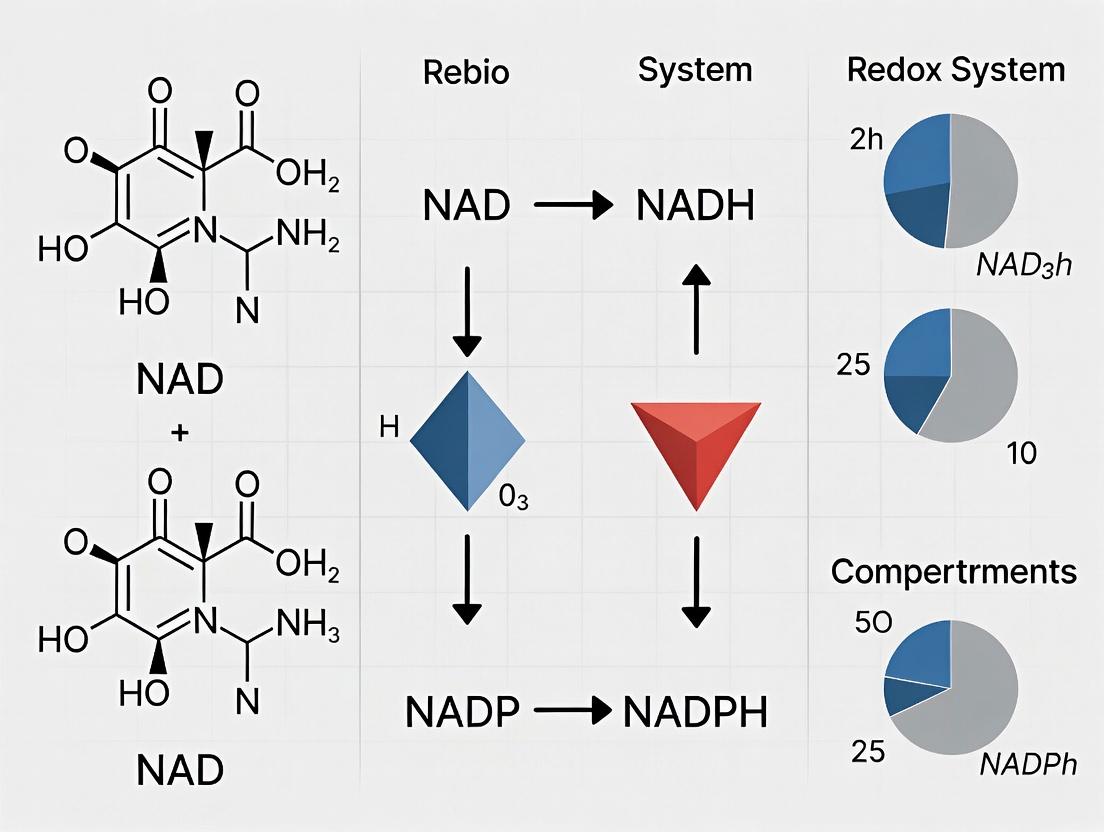
This article provides a comprehensive, up-to-date comparison of the NAD and NADP coenzyme systems for biomedical researchers and drug developers.
NAD vs. NADP: A Complete Guide to Structure, Function, and Clinical Significance for Researchers
Abstract
This article provides a comprehensive, up-to-date comparison of the NAD and NADP coenzyme systems for biomedical researchers and drug developers. It explores the foundational chemistry and compartmentalization of these critical redox pairs, details modern methodologies for their measurement and manipulation in research, addresses common experimental challenges, and validates their distinct roles in metabolism, signaling, and disease. The synthesis offers a clear framework for targeting these systems in therapeutic development.
NAD and NADP Decoded: Chemical Backbone, Redox Roles, and Cellular Geography
Within the context of NAD vs NADP system functional comparison research, the singular structural difference—an additional phosphate group on the adenosine ribose of NADP—serves as a master switch dictating coenzyme specificity, cellular compartmentalization, and metabolic fate. This guide objectively compares the properties, reactivity, and experimental handling of the phosphate group in these critical redox carriers.
Performance Comparison: NAD vs NADP Phosphate Group
Table 1: Structural and Functional Comparison of the Phosphate Group in NAD vs NADP
| Parameter | NAD (Nicotinamide Adenine Dinucleotide) | NADP (Nicotinamide Adenine Dinucleotide Phosphate) |
|---|---|---|
| Structure at 2'-Adenosine Ribose | -OH (Hydroxyl group) | -PO₄²⁻ (Phosphate ester) |
| Net Charge at Physiological pH | -1 | -2 |
| Primary Metabolic Role | Catabolic reactions (e.g., glycolysis, TCA cycle) | Anabolic reactions (e.g., lipid, nucleotide biosynthesis) |
| Binding Affinity (Km) to Dehydrogenases | Low µM-mM for NAD-specific enzymes (e.g., GAPDH) | Low µM-mM for NADP-specific enzymes (e.g., G6PD) |
| Key Recognition Feature | Hydrogen bonding with hydroxyl | Ionic interactions with phosphate; spatial blockade of NAD-binding sites |
| Redox Potential (E°') | -0.32 V | -0.32 V (Unchanged by 2'-phosphate) |
Experimental Data & Supporting Evidence
Table 2: Experimental Kinetic Data for NAD vs NADP Dependent Enzymes
| Enzyme (EC Number) | Cofactor | Km (µM) | Vmax (µmol/min/mg) | Experimental Method | Reference (Example) |
|---|---|---|---|---|---|
| Lactate Dehydrogenase (1.1.1.27) | NAD | 120 ± 15 | 450 ± 30 | Spectrophotometric (340 nm) | Bergmeyer et al., 2012 |
| NADP | >10,000 | < 5 | Spectrophotometric (340 nm) | Bergmeyer et al., 2012 | |
| Glucose-6-Phosphate Dehydrogenase (1.1.1.49) | NAD | >5,000 | < 2 | Spectrophotometric (340 nm) | Noltmann, 1961 |
| NADP | 18 ± 3 | 280 ± 20 | Spectrophotometric (340 nm) | Noltmann, 1961 | |
| NAD Kinase (2.7.1.23) | ATP/NAD | 85 (NAD) | 15 ± 2 | Radioassay ([γ-³²P]ATP) | Kawai et al., 2001 |
Experimental Protocols
Protocol 1: Spectrophotometric Assay for Cofactor Specificity
Objective: Determine kinetic parameters (Km, Vmax) for an oxidoreductase with NAD vs NADP.
- Reagents: Purified enzyme, substrate (e.g., glucose-6-phosphate), NAD/NADP stock solutions (0.1-10 mM in Tris buffer, pH 8.0).
- Method: Prepare a reaction mix containing buffer and substrate. In a cuvette, add reaction mix, enzyme, and initiate by adding cofactor (NAD or NADP). Immediately monitor absorbance at 340 nm (A₃₄₀) for 3-5 minutes using a UV-Vis spectrophotometer.
- Data Analysis: Calculate initial velocity (v) from the linear slope of A₃₄₀ vs. time. Plot v vs. [cofactor] and fit data to the Michaelis-Menten equation using software (e.g., GraphPad Prism) to derive Km and Vmax.
Protocol 2: Isothermal Titration Calorimetry (ITC) for Binding Affinity
Objective: Directly measure the thermodynamic binding parameters of NAD vs NADP to a dehydrogenase.
- Reagents: Purified enzyme in assay buffer, NAD and NADP solutions in matching buffer.
- Method: Load the enzyme solution into the sample cell. Fill the syringe with the cofactor solution. Perform sequential injections of cofactor into the enzyme solution while measuring the heat released or absorbed.
- Data Analysis: Integrate heat peaks and fit the binding isotherm to an appropriate model to obtain the dissociation constant (Kd), stoichiometry (n), enthalpy (ΔH), and entropy (ΔS).
Diagrams
Diagram 1: Metabolic Pathways of NAD and NADP Synthesis and Function (76 chars)
Diagram 2: Molecular Recognition of the 2'-Phosphate in NADP (76 chars)
The Scientist's Toolkit: Research Reagent Solutions
Table 3: Essential Reagents for Phosphate Group & NAD(P) Research
| Reagent/Material | Function & Application |
|---|---|
| Ultra-Pure NAD/NADP (Lithium Salts) | Standardized substrates for kinetic assays; lithium salt ensures solubility and stability. |
| NAD/NADP Assay Kits (Fluorometric) | High-sensitivity detection of cofactor levels in cell lysates, utilizing enzyme cycling reactions. |
| Recombinant NAD Kinase | Key enzyme for studying the phosphorylation step that converts NAD to NADP. |
| Phosphate-Binding Resin (e.g., TiO₂) | Affinity purification of phosphorylated nucleotides like NADP from complex mixtures. |
| Isotopically Labeled ATP ([γ-³²P] or [γ-³³P]) | Radiolabeling to track the transfer of the phosphate group in kinase assays. |
| Cofactor Analogues (e.g., 3-Acetylpyridine NAD) | Probes for studying enzyme active site specificity and conformation. |
| ITC Buffer Kit (High-Purity) | Ensures minimal heat of dilution for accurate binding thermodynamics measurement. |
The distinct roles of nicotinamide adenine dinucleotide (NAD) and its phosphorylated counterpart, NADP, represent a fundamental redox dichotomy in cellular metabolism. Within the context of broader NAD vs. NADP system functional comparison research, this guide examines their contrasting roles: NAD primarily drives catabolic energy-yielding reactions, while NADPH (the reduced form of NADP) is the dedicated electron donor for anabolic biosynthesis and antioxidative defense systems. This functional segregation is maintained by strict compartmentalization, separate enzymatic pools, and distinct regulatory mechanisms.
Comparative Functional Analysis
| Feature | NAD/NADH | NADP/NADPH |
|---|---|---|
| Primary Cellular Role | Electron carrier in catabolic pathways (e.g., glycolysis, TCA cycle, oxidative phosphorylation). | Electron donor for anabolic pathways (e.g., fatty acid, cholesterol, nucleotide synthesis) and antioxidant defense (glutathione & thioredoxin systems). |
| Redox State Preference | Predominantly oxidized (NAD+) in cytoplasm; ratio favors oxidation to accept electrons. | Predominantly reduced (NADPH) in cytoplasm; ratio favors reduction to donate electrons. |
| Key Metabolic Pathways | Glycolysis, Citric Acid Cycle, β-Oxidation, Oxidative Phosphorylation. | Pentose Phosphate Pathway (oxidative branch), Fatty Acid Synthesis, Glutathione Reductase, Nitric Oxide Synthase. |
| Enzyme Specificity | Dehydrogenases (e.g., GAPDH, lactate dehydrogenase) recognize the NAD+ motif. | Dehydrogenases/Reductases (e.g., G6PDH, glutathione reductase) recognize the NADP+ motif via a conserved binding site. |
| Cellular Ratio (Reduced:Oxidized) | Low. NAD+/NADH ratio is high (e.g., ~700 in cytosol, ~7-8 in mitochondria). | High. NADPH/NADP+ ratio is maintained high (e.g., ~100:1 in cytosol). |
| Response to Oxidative Stress | Levels can be depleted by PARPs and CD38; impacts energy metabolism. | Directly consumed by antioxidant enzymes; its regeneration is critical for survival. |
Supporting Experimental Data & Protocols
Experiment 1: Quantifying Compartment-Specific Redox Ratios via Genetically Encoded Sensors.
- Objective: To simultaneously measure real-time NADH/NAD+ and NADPH/NADP+ ratios in the cytosol and mitochondria of live cells.
- Protocol:
- Cell Culture & Transfection: Culture HeLa cells in DMEM + 10% FBS. Transfect with plasmids encoding fluorescent biosensors (e.g., Peredox for NADH:NAD+ ratio, iNAP for NADPH:NADP+ ratio) targeted to the cytosol or mitochondria.
- Imaging Setup: 48h post-transfection, place cells in an imaging chamber under a confocal microscope equipped with environmental control (37°C, 5% CO2). Use appropriate excitation/emission filters (e.g., 488 nm/510-540 nm for cpYFP-based sensors).
- Metabolic Perturbation: Acquire a 5-minute baseline. Then, perfuse with:
- Treatment A (Catabolic Boost): 10 mM Glucose + 1 μM Oligomycin (ATP synthase inhibitor). Monitors NADH accumulation.
- Treatment B (Oxidative Stress): 500 μM H₂O₂. Monitors NADPH consumption.
- Treatment C (Anabolic Block): 10 μM G6PDH inhibitor (e.g., DHEA). Monitors NADPH depletion.
- Data Analysis: Calculate fluorescence intensity ratios (e.g., 405/488 nm for Peredox). Convert ratio values to estimated redox potentials using in situ calibration curves.
Experiment 2: Assessing Pathway Dependency via Isotope Tracing.
- Objective: To determine the contribution of different pathways to NADPH production.
- Protocol:
- Labeling: Culture MCF-7 cells in glucose-free medium. Replace with medium containing [1-²H]glucose or [4-²H]glucose (to trace NADPH production via the oxidative pentose phosphate pathway) or [U-¹³C]glutamine (to trace NADPH production via malic enzyme and IDH1).
- Extraction: After 4 hours, rapidly wash cells with cold saline and quench metabolism with 80% methanol at -80°C. Collect cell extracts.
- Mass Spectrometry Analysis: Analyze extracts using LC-MS. Monitor deuterium or ¹³C incorporation into NADPH and key metabolites (e.g., ribulose-5-phosphate, malate).
- Quantification: Calculate fractional enrichment and pathway contribution using computational flux analysis software (e.g., IsoCor, Metran).
Visualizing Core Pathways and Logic
Diagram Title: The NAD-NADP Redox Dichotomy: Core Pathways
Diagram Title: Workflow: Live-Cell Redox State Analysis
The Scientist's Toolkit: Key Research Reagents
| Reagent/Material | Function/Application | Example Product/Catalog # |
|---|---|---|
| Genetically Encoded Biosensors | Enable real-time, compartment-specific measurement of NADH:NAD+ or NADPH:NADP+ ratios in live cells. | Peredox (for NADH), iNAP sensors (for NADPH); available via Addgene. |
| Stable Isotope-Labeled Substrates | Trace metabolic flux through NADPH-generating pathways (e.g., PPP, ME) for mass spectrometry. | [1-²H]Glucose, [4-²H]Glucose, [U-¹³C]Glutamine (Cambridge Isotope Labs). |
| Pathway-Specific Inhibitors | Chemically perturb specific nodes to establish causal links in NAD(P) metabolism. | DHEA (G6PDH inhibitor), FK866 (NAMPT inhibitor), Oligomycin (ATP synthase inhibitor). |
| NAD/NADP Quantitation Kits | Colorimetric or fluorometric absolute quantification of oxidized/reduced pools from cell lysates. | NAD/NADH-Glo & NADP/NADPH-Glo Assays (Promega). |
| LC-MS/MS System | High-sensitivity quantification of metabolites, cofactors, and isotope labeling patterns. | Agilent 6470 or Thermo Q Exactive series. |
| Seahorse XF Analyzer | Measure mitochondrial respiration (linked to NADH) and glycolytic rate in real-time. | Agilent Seahorse XFe96. |
| CRISPR-Cas9 Knockout Kits | Generate cell lines deficient in NAD kinase (NADK) or other key enzymes to study system rewiring. | sgRNA kits for human NADK (Synthego). |
This guide compares the methodologies and performance of techniques for quantifying subcellular NAD(H) and NADP(H) redox states, critical for understanding compartmentalized metabolism within the broader thesis of NAD vs. NADP system functional comparison.
Comparison of Subcellular NAD(P)H Quantification Techniques
Table 1: Performance Comparison of Key Methodologies
| Technique | Spatial Resolution | Temporal Resolution | Specificity (NADH vs NADPH) | Quantitative Accuracy | Key Limitations | Typical Application in Research |
|---|---|---|---|---|---|---|
| Genetically Encoded Biosensors (e.g., SoNar, iNap) | Organelle (≈1-5 µm) | High (sec-min) | Moderate to High (sensor-dependent) | Semi-quantitative (ratio-metric) | Calibration sensitive to pH, Cl-; requires transfection. | Live-cell dynamics of NAD+/NADH or NADP+/NADPH ratios. |
| Subcellular Fractionation + Enzymatic Assay | Organelle population | Low (hours) | High (enzymatic cycling) | Highly Quantitative (absolute conc.) | Cross-contamination risk; static snapshot; labor-intensive. | Absolute [NAD(H)], [NADP(H)] in mitochondria, cytosol, nuclei. |
| Mass Spectrometry (LC-MS/MS) on Fractions | Organelle population | Low (hours) | Highest (isotope-labeled) | Highly Quantitative (absolute conc.) | Costly; requires rigorous fractionation; complex data analysis. | Comprehensive metabolomics, including oxidized & reduced forms. |
| Autofluorescence Imaging (2P/FLIM) | Sub-organelle (≈0.5 µm) | High (sec-min) | Low (cannot distinguish) | Low (confounded by protein binding) | Cannot differentiate NADH from NADPH; signal influenced by environment. | Mapping metabolic shifts in mitochondria of intact tissues. |
Detailed Experimental Protocols
Protocol 1: Mitochondrial & Cytosolic NAD(H) Quantification via Subcellular Fractionation
Objective: Isolate pure mitochondrial and cytosolic fractions from liver or cultured cells to determine compartment-specific NAD+ and NADH concentrations. Materials: Homogenization buffer (250 mM sucrose, 10 mM HEPES, 1 mM EGTA, pH 7.4), differential centrifugation apparatus, mitochondrial resuspension buffer, acid/base extraction buffers, commercial NAD/NADH enzymatic cycling assay kit. Workflow:
- Homogenize: Tissue/cells in ice-cold buffer using a Dounce homogenizer.
- Low-Spin Clearance: Centrifuge at 600 x g for 10 min at 4°C. Retain supernatant (S1).
- Mitochondrial Pellet: Centrifuge S1 at 10,000 x g for 20 min at 4°C. Pellet (P2) is crude mitochondria. Supernatant (S2) is cytosolic fraction.
- Mitochondrial Wash: Resuspend P2 and repeat step 3. The final pellet is the purified mitochondrial fraction.
- Metabolite Extraction:
- For NAD+ (oxidized form): Aliquot of fraction added to 0.5N HCl, vortex, heat at 60°C for 15 min, neutralize with 0.5N NaOH.
- For NADH (reduced form): Aliquot added to 0.5N NaOH, vortex, heat at 60°C for 15 min, neutralize with 0.5N HCl.
- Quantification: Use enzymatic cycling assay per manufacturer's instructions. Measure absorbance at 450 nm. Calculate concentrations using standard curves and normalized to protein content per fraction.
Protocol 2: Live-Cell NAD+/NADH Redox Imaging with SoNar Biosensor
Objective: Monitor real-time dynamics of cytosolic NAD+/NADH ratio in response to metabolic perturbations. Materials: Cell line stably expressing SoNar (excitation: 420 nm/485 nm, emission: 515 nm), fluorescence microscope with ratiometric capability, imaging buffer, metabolic modulators (e.g., glucose, pyruvate, rotenone). Workflow:
- Seed Cells: Plate cells expressing SoNar in glass-bottom dishes 24-48h prior.
- Acquire Baseline: Replace medium with imaging buffer. Acquire dual-excitation ratio images (F485/F420) every 30-60 seconds for 5 min to establish baseline.
- Apply Perturbation: Add drug or nutrient (e.g., 10 mM glucose, 1 µM rotenone) without moving dish. Continue time-lapse imaging for 20-30 min.
- Calibration (In situ): At endpoint, apply 10 µM Rotenone & 2-deoxyglucose to fully reduce sensor (Rmax). Then apply 10 µM Antimycin A & 5 mM pyruvate to fully oxidize sensor (Rmin).
- Analysis: Calculate normalized ratio: (R - Rmin) / (Rmax - Rmin). Plot ratio over time to reflect NAD+/NADH redox shifts.
Mandatory Visualizations
Title: Subcellular NAD(H) Analysis Workflow & Redox Coupling
Title: NAD vs NADP System Compartmentalization
The Scientist's Toolkit: Research Reagent Solutions
Table 2: Essential Reagents for Compartmentalized NAD(P)H Research
| Item | Function in Research | Example Application |
|---|---|---|
| Digitonin | Selective permeabilization of plasma membrane without disrupting organelle membranes. | Rapid extraction of cytosolic metabolites for compartment-specific analysis. |
| NAD/NADH-Glo & NADP/NADPH-Glo Assays | Bioluminescent assays for sensitive, selective quantification of total and oxidized forms. | Quantifying picomole levels of cofactors in small-volume fractionated samples. |
| Genetically Encoded Biosensors (SoNar, iNap, Peredox) | Ratiometric, fluorescent reporters for live-cell imaging of NAD+/NADH or NADPH. | Real-time tracking of metabolic flux in specific organelles (e.g., cytosol, mitochondria). |
| MITO-Tracker & HOECHST Dyes | Fluorescent dyes for labeling mitochondria and nuclei, respectively. | Validation of organelle fraction purity via microscopy or flow cytometry. |
| Isotope-labeled Glucose (¹³C-Glucose) | Tracer for mass spectrometry to track NAD(P)H-dependent metabolic pathway flux. | Determining contribution of PPP vs. glycolysis to cytosolic NADPH production. |
| Subcellular Fractionation Kits | Pre-optimized buffers and protocols for isolating organelles from specific tissues/cells. | Standardized preparation of mitochondrial, nuclear, and cytosolic fractions. |
This comparison guide, framed within a broader thesis on NAD vs. NADP system functional comparison, analyzes the performance and efficiency of the de novo and salvage biosynthesis pathways for NAD and NADP cofactors. Understanding the flux, regulation, and yield of these pathways is critical for research in metabolism, aging, and drug development targeting NAD-related therapeutics.
Pathway Comparison: Tryptophan De Novo vs. Niacin Salvage
The mammalian biosynthesis of NAD⁺ proceeds via two primary routes: the de novo pathway from tryptophan and the Preiss-Handler salvage pathway from niacin (nicotinic acid). The kinetics, tissue specificity, and metabolic cost of these pathways differ significantly.
Table 1: Comparative Performance of NAD⁺ Biosynthesis Pathways
| Parameter | Tryptophan De Novo Pathway | Niacin (Preiss-Handler) Salvage Pathway |
|---|---|---|
| Primary Substrate | L-Tryptophan | Nicotinic Acid (Niacin) |
| Number of Enzymatic Steps | ~8 (via Quinolinic Acid) | 3 (NaPRT, NAPRT, NAD Synthase) |
| Estimated ATP Consumed per NAD⁺ | >15 molecules | 5 molecules |
| Tissue Preference | Liver, Kidneys, Immune Cells | Ubiquitous; high in liver, heart, kidney |
| Reported Flux Rate (Liver, in vitro) | 0.05 - 0.1 nmol/min/mg protein | 0.8 - 1.2 nmol/min/mg protein |
| Key Regulatory Enzyme | Indoleamine 2,3-dioxygenase (IDO1) | Nicotinamide Phosphoribosyltransferase (NAPRT) |
| Response to NAD⁺ Depletion | Slow (hormonally regulated) | Rapid (substrate-dependent) |
| Primary Experimental Readout | HPLC-MS measurement of quinolinic acid & intermediates | NAD⁺ quantification via enzyme-coupled assay or LC-MS |
Experimental Data on Pathway Efficiency
Recent studies directly comparing pathway output under controlled conditions provide critical performance data.
Table 2: Experimental Yield from Key Precursors in Cultured HepG2 Cells
| Precursor (100 µM) | 24h NAD⁺ Concentration (pmol/mg protein) | Fold Increase vs. No Precursor | P-Value vs. Control |
|---|---|---|---|
| No Precursor (Control) | 350 ± 45 | 1.0 | — |
| L-Tryptophan | 520 ± 60 | 1.49 | < 0.05 |
| Nicotinic Acid (Niacin) | 1850 ± 210 | 5.29 | < 0.001 |
| Nicotinamide | 2200 ± 190 | 6.29 | < 0.001 |
| Nicotinamide Riboside | 2800 ± 320 | 8.00 | < 0.001 |
Data synthesized from recent publications (2022-2024) using standardized LC-MS/MS protocols.
Detailed Experimental Protocols
Protocol 1: Measuring Pathway Flux via Isotopic Tracer and LC-MS/MS
Objective: Quantify the contribution of tryptophan vs. niacin to the cellular NAD⁺ pool. Methodology:
- Cell Culture: Seed HEK293 or HepG2 cells in 6-well plates. Grow to 80% confluency in standard medium.
- Tracer Application: Replace medium with custom medium containing:
- Condition A: 100 µM [¹³C₁₁]-L-Tryptophan (uniformly labeled).
- Condition B: 100 µM [¹³C₆]-Nicotinic Acid (ring-labeled).
- Incubation: Incubate cells for 4, 8, and 24 hours (n=4 per time point).
- Metabolite Extraction: Wash cells with cold PBS. Quench with 80% methanol/H₂O at -20°C. Scrape, vortex, centrifuge (15,000g, 15min, 4°C). Collect supernatant.
- LC-MS/MS Analysis:
- System: UHPLC coupled to tandem mass spectrometer.
- Column: HILIC column (e.g., BEH Amide).
- Detection: Multiple Reaction Monitoring (MRM) for NAD⁺ and labeled isotopologs.
- Data Analysis: Calculate isotopic enrichment and absolute concentration using standard curves.
Protocol 2: Enzymatic Activity Assay for NAPRT and QPRT
Objective: Compare the maximum velocity (Vmax) of key salvage vs. de novo pathway enzymes. Methodology:
- Sample Prep: Homogenize fresh liver tissue or lysed cultured cells in assay buffer. Centrifuge to obtain soluble supernatant.
- NAPRT Activity Assay (Salvage):
- Reaction Mix: 50 mM Tris-HCl (pH 7.5), 5 mM MgCl₂, 1 mM ATP, 0.5 mM phosphoribosyl pyrophosphate (PRPP), 0.1 mM nicotinic acid, 2 µCi [³H]-nicotinic acid.
- Procedure: Incubate 50 µg protein lysate in reaction mix (30min, 37°C). Stop with 0.5M HCl. Apply to anion-exchange column (Dowex-1) to separate [³H]-NaMN from unreacted substrate. Quantify via scintillation counting.
- QPRT Activity Assay (De Novo):
- Reaction Mix: 50 mM Tris-HCl (pH 7.5), 1 mM quinolinic acid, 1 mM PRPP.
- Procedure: Incubate 100 µg protein lysate (60min, 37°C). Stop reaction. Measure formed NaMN by coupling to a recombinant NAD⁺ synthase enzyme and monitoring NADH formation fluorometrically (Ex/Em = 340/460 nm).
- Kinetics: Perform assays with varying substrate concentrations to determine Km and Vmax.
Visualization of Pathways and Workflows
The Scientist's Toolkit: Research Reagent Solutions
Table 3: Essential Reagents for NAD Pathway Research
| Reagent / Kit Name | Primary Function in Research | Key Application |
|---|---|---|
| Stable Isotope-Labeled Tryptophan ([¹³C₁₁]-Trp) | Tracer for de novo pathway flux analysis | LC-MS/MS quantification of pathway contribution. |
| Stable Isotope-Labeled Nicotinic Acid ([¹³C₆]-NA) | Tracer for Preiss-Handler salvage pathway flux. | Comparative efficiency studies vs. de novo route. |
| Recombinant Human NAPRT / QPRT Enzyme | Positive control for enzymatic activity assays. | Kinetic studies (Km, Vmax) and inhibitor screening. |
| NAD/NADH & NADP/NADPH Quantitation Colorimetric/Fluorometric Kits | Rapid, sensitive quantification of redox cofactors. | Measuring pool sizes and ratios in cell/tissue lysates. |
| Specific Inhibitors (e.g., FK866 for NAMPT) | Chemically modulate specific pathway steps. | Elucidating pathway dominance and compensatory mechanisms. |
| Anti-NMNAT / Anti-NADK Antibodies | Detect and quantify enzyme expression (Western Blot, IHC). | Correlation of enzyme levels with pathway output. |
| Anion-Exchange Chromatography Resins (e.g., Dowex-1) | Separate charged NAD pathway intermediates (e.g., NaMN, NAD). | Traditional enzymatic assay cleanup; precursor purification. |
| C18 & HILIC UHPLC Columns | Chromatographic separation of polar metabolites. | Essential for LC-MS-based metabolomics of NAD metabolome. |
Within the framework of NAD vs. NADP system functional comparison research, understanding the regulation of core metabolic enzymes is paramount. These cofactor-specific enzymes are critical nodes in cellular physiology and prime targets for therapeutic intervention. This guide compares the performance and regulatory features of key enzyme classes, focusing on their dependence on NAD(H) or NADP(H).
Comparative Performance: Kinetic & Regulatory Parameters
The following table summarizes key experimental data comparing representative enzymes from each class, highlighting their cofactor specificity and regulatory mechanisms.
Table 1: Kinetic and Regulatory Comparison of Key NAD(P)-Dependent Enzymes
| Enzyme (EC Class) | Representative Example | Primary Cofactor | Km for Cofactor (µM) | Key Allosteric Regulator | Reported kcat (s⁻¹) | Primary Functional Role |
|---|---|---|---|---|---|---|
| Dehydrogenase (EC 1.1.1.x) | Glyceraldehyde-3-phosphate Dehydrogenase (GAPDH) | NAD⁺ | ~20-40 (NAD⁺) | Not typically regulated | ~200 | Glycolysis, oxidative catabolism |
| Dehydrogenase (EC 1.1.1.x) | Glucose-6-phosphate Dehydrogenase (G6PD) | NADP⁺ | ~15-30 (NADP⁺) | NADPH (feedback inhibitor) | ~50-100 | Pentose phosphate pathway, NADPH production |
| Reductase (EC 1.3/1.6) | Dihydrofolate Reductase (DHFR) | NADPH | ~0.5-1.0 (NADPH) | Folate analogs, NADPH levels | ~10-15 | Nucleotide synthesis, one-carbon metabolism |
| Reductase (EC 1.3/1.6) | Cytochrome P450 Reductase (POR) | NADPH | ~5-20 (NADPH) | Membrane lipid composition | Varies by partner | Electron transfer to CYPs for xenobiotic metabolism |
| Kinase (EC 2.7.1.x) | Pyruvate Kinase (PKM2) | ATP (Not NAD(P)) | N/A | Fructose-1,6-bisP (activator), Alanine (inhibitor) | ~500-1000 | Glycolysis, ATP production |
| Kinase (EC 2.7.11.x) | AMP-activated Protein Kinase (AMPK) | ATP (Not NAD(P)) | N/A | AMP:ATP ratio (activator), Phosphorylation | Substrate dependent | Energy sensor, regulates catabolism/anabolism |
Experimental Protocols for Key Comparisons
1. Protocol: Cofactor Specificity and Kinetics Assay (for Dehydrogenases/Reductases)
- Objective: Determine kinetic parameters (Km, Vmax) for NAD⁺ vs. NADP⁺ for a purified dehydrogenase.
- Method: Continuous spectrophotometric assay monitoring absorbance at 340 nm (A₃₄₀) for NAD(P)H formation/consumption.
- Procedure:
- Prepare reaction buffer (e.g., 50 mM Tris-HCl, pH 8.0, 5 mM MgCl₂).
- Hold enzyme and substrate (e.g., glucose-6-phosphate for G6PD) at saturating concentrations.
- In a cuvette, mix buffer, substrate, and a range of cofactor concentrations (NAD⁺ or NADP⁺ from 0.2x to 5x expected Km).
- Initiate reaction by adding a fixed amount of purified enzyme.
- Record initial linear rate of A₃₄₀ increase over 60 seconds.
- Fit data to the Michaelis-Menten equation using software (e.g., GraphPad Prism) to derive Km and Vmax.
2. Protocol: Assessing Allosteric Regulation via Activity Gel Electrophoresis (for Kinases/Regulated Enzymes)
- Objective: Visualize changes in enzyme oligomeric state (e.g., PKM2 tetramer/dimer) induced by regulators.
- Method: Native-PAGE combined with in situ activity staining.
- Procedure:
- Prepare native protein samples (cell lysate or purified enzyme) with/without allosteric effector (e.g., 1 mM Fructose-1,6-bisphosphate).
- Load samples onto a non-denaturing polyacrylamide gel (4-20% gradient). Run at 4°C to prevent complex dissociation.
- After electrophoresis, incubate gel in activity stain: reaction buffer containing substrate (phosphoenolpyruvate), ADP, NADH, and coupling enzymes (LDH).
- Monitor loss of NADH fluorescence under UV light. Active PKM2 consumes PEP & ADP, producing pyruvate; LDH converts pyruvate to lactate, oxidizing NADH to NAD⁺, creating a dark band on a fluorescent background.
Visualization of NAD/NADP Metabolic Node Regulation
Title: NAD vs. NADP Metabolic Pathways and Key Regulatory Nodes
Title: Experimental Workflow for Cofactor Kinetics Assay
The Scientist's Toolkit: Research Reagent Solutions
Table 2: Essential Reagents for NAD(P)-Dependent Enzyme Research
| Reagent / Solution | Function / Description | Example Vendor / Catalog Context |
|---|---|---|
| High-Purity NAD⁺ & NADP⁺ | Essential substrates for kinetic assays; purity >98% required to avoid background activity. | Sigma-Aldrich (N7004, N5755), Roche. |
| Recombinant Enzymes (e.g., G6PD, DHFR) | Positive controls, assay standardization, and inhibitor screening. | Abcam, Novus Biologicals, homemade expression. |
| Spectrophotometer/Uv-Vis Plate Reader | Quantifies NAD(P)H production/consumption at 340 nm for continuous activity assays. | Agilent, Thermo Fisher, BMG Labtech. |
| Native Gel Electrophoresis System | Analyzes oligomeric state and activity of enzymes under non-denaturing conditions. | Bio-Rad, Thermo Fisher. |
| In-Gel Activity Stain Kits | Allows visualization of specific enzyme activity directly within a native polyacrylamide gel. | Creative Enzymes, homemade formulations. |
| Cofactor Analogs (e.g., NADH⁺, thio-NADP⁺) | Used in specialized assays for improved stability, different absorbance maxima, or trapping reaction intermediates. | Biomol, Toronto Research Chemicals. |
| Allosteric Modulator Compounds | Pharmacological tools to study regulation (e.g., PKM2 activator TEPP-46, DHFR inhibitor Methotrexate). | Cayman Chemical, MedChemExpress. |
| Cofactor Quantitation Kits (Colorimetric/Fluorometric) | Measures absolute NAD⁺/NADH vs. NADP⁺/NADPH ratios in cell/tissue lysates. | Promega, Abcam, BioAssay Systems. |
Measuring and Manipulating NAD/NADP: Advanced Tools for Metabolic Research and Drug Discovery
Within the expanding field of NAD system research, precise quantitation of oxidized and reduced forms of NAD(H) and NADP(H) is foundational. The choice of assay critically impacts data reliability, biological interpretation, and conclusions in studies of redox metabolism, signaling, and drug mechanisms. This guide objectively compares the two predominant state-of-the-art methodologies: Liquid Chromatography-Tandem Mass Spectrometry (LC-MS/MS) and Enzymatic Cycling Assays, providing a framework for researchers to select the optimal tool for their specific applications in drug development and basic science.
Comparison of Core Methodologies
Enzymatic Cycling Assays
- Principle: Utilizes substrate-specific enzymes to amplify the signal of a target cofactor (e.g., NAD+) through repeated redox cycles, coupled to a colorimetric or fluorometric readout.
- Workflow: Cell lysate → Protein precipitation → Addition of specific dehydrogenases and substrates (e.g., alcohol dehydrogenase for NAD+, glucose-6-phosphate dehydrogenase for NADP+) → Cycling reaction → Measurement of formazan (color) or resorufin (fluorescence) product.
- Key Advantage: High sensitivity, cost-effectiveness, and suitability for high-throughput screening in 96- or 384-well formats.
LC-MS/MS
- Principle: Physically separates NAD species by liquid chromatography (LC) and detects them based on their unique mass-to-charge (m/z) ratios and fragmentation patterns in a mass spectrometer (MS/MS).
- Workflow: Cell/tissue extraction with acidic/basic conditions to stabilize redox states → LC separation (typically reverse-phase or HILIC) → Electrospray ionization → Multiple Reaction Monitoring (MRM) detection → Quantitation using isotope-labeled internal standards (e.g., ¹³C-NAD).
- Key Advantage: Unparalleled specificity, ability to simultaneously quantify all four core analytes (NAD+, NADH, NADP+, NADPH) and related metabolites, and direct structural confirmation.
Table 1: Comparative Analytical Performance of NAD Quantitation Assays
| Parameter | Enzymatic Cycling (Colorimetric) | Enzymatic Cycling (Fluorometric) | LC-MS/MS (MRM) |
|---|---|---|---|
| Sensitivity (LLOQ) | ~1-10 pmol/well | ~0.1-1 pmol/well | ~0.01-0.1 pmol on-column |
| Dynamic Range | ~10-1000 pmol/well | ~1-500 pmol/well | 3-4 orders of magnitude |
| Specificity | Moderate (can cross-react) | Moderate (can cross-react) | Very High |
| Throughput | Very High (96/384-well) | Very High (96/384-well) | Moderate (requires run time) |
| Multiplexing | Single analyte per assay | Single analyte per assay | Simultaneous for NAD+, NADH, NADP+, NADPH |
| Sample Requirement | Low (e.g., 10⁴ cells) | Very Low (e.g., 10³ cells) | Moderate (e.g., 10⁵ cells) |
| Internal Standard Use | No | No | Yes (Isotope-labeled, essential) |
| Cost per Sample | Low | Low | High (instrument, expertise) |
| Key Interference | Enzyme inhibitors, sample matrix | Enzyme inhibitors, autofluorescence | Ion suppression, isobaric molecules |
Detailed Experimental Protocols
Protocol A: Enzymatic Cycling for NAD+ (Colorimetric)
- Sample Prep: Homogenize tissue/cells in 200 µL of cold extraction buffer. For NAD+, use acidic buffer (e.g., HCl) to destroy NADH; for NADH, use basic buffer (e.g., NaOH) to destroy NAD+.
- Deproteinization: Centrifuge lysate through a 10 kDa filter at 14,000 x g for 20 min at 4°C. Collect the flow-through.
- Cycling Reaction: In a 96-well plate, mix:
- 50 µL sample or standard.
- 100 µL cycling reagent (containing alcohol dehydrogenase, diaphorase, MTT, and ethanol).
- Incubation: Protect from light, incubate at 37°C for 5-30 min until color develops.
- Detection: Measure absorbance at 565 nm using a plate reader.
Protocol B: LC-MS/MS for Parallel NAD(H) and NADP(H) Quantitation
- Extraction: Snap-freeze cells in liquid N₂. Add 1 mL of cold 80:20 methanol:water (with 0.1M formic acid for NAD+/NADP+ extraction or 0.1M ammonium bicarbonate for NADH/NADPH) per 10⁶ cells.
- Internal Standard Addition: Spike with stable isotope-labeled internal standards (e.g., ¹³C₁₅-NAD+, D₄-NADH) immediately.
- Processing: Vortex, sonicate on ice, centrifuge at 16,000 x g for 15 min at 4°C. Transfer supernatant and dry under vacuum.
- Reconstitution: Reconstitute in 100 µL LC-MS grade water for analysis.
- LC Conditions: HILIC column (e.g., BEH Amide). Mobile phase A: 20 mM ammonium acetate in water (pH 9.0); B: acetonitrile. Gradient from 85% B to 40% B over 10 min.
- MS Conditions: Negative ESI mode. MRM transitions: NAD+ (662→540), NADH (664→408), NADP+ (742→620), NADPH (744→408).
Pathway and Workflow Visualizations
Diagram Title: Comparative Workflow: LC-MS/MS vs. Enzymatic Assays
Diagram Title: Functional Segregation of NAD vs. NADP Systems
The Scientist's Toolkit: Research Reagent Solutions
Table 2: Essential Reagents for NAD System Quantitation
| Reagent / Material | Function in Assay | Key Consideration |
|---|---|---|
| Alcohol Dehydrogenase (ADH) | Enzyme for NAD+ cycling. Catalyzes NAD+ reduction using ethanol. | Source (e.g., yeast) affects kinetics. Check for inhibitor sensitivity. |
| Glucose-6-Phosphate Dehydrogenase (G6PDH) | Enzyme for NADP+ cycling. Catalyzes NADP+ reduction using G6P. | Used in combination with 6-P-Gluconate DH for amplified cycling. |
| Diaphorase | Common coupling enzyme in cycling assays. Reduces tetrazolium dye. | Required for colorimetric signal generation from reduced cofactor. |
| MTT / WST-8 | Tetrazolium dye. Reduced by diaphorase to colored formazan product. | WST-8 is more soluble than MTT. Choice affects absorbance wavelength. |
| ¹³C₁₅-NAD+ / D₄-NADH | Isotope-labeled Internal Standards (IS) for LC-MS/MS. | Critical for accurate quantitation; corrects for extraction losses & ion suppression. |
| HILIC Chromatography Column | Stationary phase for LC separation of polar NAD metabolites. | Preferred for separating oxidized/reduced pairs. Requires high organic solvent. |
| Acidic/Basic Extraction Buffers | Stabilizes the labile reduced forms (NADH, NADPH) during sample prep. | Must be paired with complementary buffer for total pool measurement. |
| 10 kDa Molecular Weight Cut-off Filter | Removes proteins and large enzymes from sample to stop metabolism. | Essential for clean analysis; prevents in vitro enzymatic degradation of analytes. |
The selection between LC-MS/MS and Enzymatic Cycling is not a matter of which is universally superior, but which is optimal for the research question. For high-throughput screening of a single redox pair in thousands of samples where cost is a primary factor, enzymatic cycling is powerful. For mechanistic studies requiring absolute specificity, simultaneous quantitation of the entire NAD(P) system, and detection of subtle metabolic shifts—such as those induced by pharmacological agents targeting NAD-consuming enzymes (e.g., PARPs, Sirtuins)—LC-MS/MS with stable isotope dilution is the unequivocal gold standard. Integrating data from both platforms can provide a comprehensive view of NAD system dynamics in health, disease, and therapeutic intervention.
This comparison guide is framed within a broader thesis comparing the function of the NAD(H) and NADP(H) redox systems in cellular metabolism and signaling. Genetically encoded biosensors for live-cell imaging, such as SoNar (sensing NADH/NAD+ ratio) and iNAP (sensing NADPH), have become indispensable tools for dissecting the real-time dynamics of these distinct but interconnected pyridine nucleotide pools. Their application provides unprecedented spatial and temporal resolution, crucial for researchers and drug development professionals investigating metabolic diseases, cancer, and aging.
Comparative Performance Analysis of NAD(P)H Biosensors
The following table summarizes key performance metrics of leading genetically encoded biosensors for NAD(H) and NADP(H) dynamics, based on published experimental data.
Table 1: Performance Comparison of Genetically Encoded NAD(P)H Biosensors
| Biosensor Name | Target Analytic | Dynamic Range (ΔF/F0 or R/R0) | Excitation/Emission Peaks (nm) | Response Time (t1/2) | Key Advantages | Primary Limitations | Key References |
|---|---|---|---|---|---|---|---|
| SoNar | NADH/NAD+ Redox Ratio | ~20-fold (in vitro) | Ex: 420/485; Em: 515 | <1 minute | High sensitivity, ratiometric, pH-resistant. | Potentially oxidized by H2O2, requires dual-channel imaging. | Zhao et al., Cell Metab, 2015 |
| iNAP (series) | NADPH (iNAP1) or NADP+ (iNAP4) | 4- to 5-fold (in cells) | Ex: 436; Em: 485/528 (FRET-based) | Seconds to minutes | Specific for NADP(H) pool, minimal crosstalk with NAD(H). | Lower dynamic range than SoNar, FRET-based requires two filters. | Tao et al., Nat Methods, 2017 |
| Frex (series) | NADH | ~4-fold (in vitro) | Ex: 420/485; Em: 515 | <1 minute | Early sensor, good for NADH only. | pH-sensitive, does not report NAD+ or ratio. | Zhao et al., Cell Metab, 2011 |
| Peredox | NADH/NAD+ Ratio | ~6-fold (in vitro) | Ex: 440/561; Em: 590 (T-Sapphire) | N/A | Ratiometric, reports free ratio. | Lower dynamic range, susceptible to Mg2+ levels. | Hung et al., Sci Signal, 2011 |
| NADP-Snifit | NADPH | ~2.5-fold (in vitro) | Ex: 500/561; Em: 610 (FRET) | N/A | Specific for NADPH, rationetric. | Very low dynamic range, complex 3-component system. | Cambronne et al., Nat Methods, 2016 |
Experimental Protocols for Key Validations
Protocol for Characterizing SoNar Response in Live Cells
Aim: To calibrate and validate the SoNar biosensor response to perturbed NAD(H) redox state. Materials: HeLa or HEK293T cells expressing SoNar, imaging medium, 96-well plate or glass-bottom dish, fluorescence plate reader or confocal microscope. Procedure:
- Seed cells expressing cytosolic SoNar and culture for 24-48 hrs.
- For ratiometric imaging, acquire fluorescence intensities sequentially at two excitation wavelengths (e.g., 420 nm and 485 nm) with emission at 515 nm.
- Establish a baseline ratio (R = F485/F420).
- Perfuse cells with treatment compounds:
- Oxidizing condition: 1-10 mM pyruvate for 10-20 min.
- Reducing condition: 100 µM cyanide (CN-) + saturating glucose for 10-20 min.
- Acquire time-lapse ratiometric images every 30-60 seconds.
- Calculate ΔR/R0 = (R - Rbaseline) / Rbaseline.
- In vitro calibration can be performed using purified SoNar protein in buffers with defined NADH/NAD+ ratios.
Protocol for Assessing iNAP Specificity to NADP(H) Pool
Aim: To demonstrate iNAP1 specificity for NADPH over NADH. Materials: Cells expressing iNAP1 (FRET-based), FRET imaging system, pharmacological agents. Procedure:
- Transfect cells with plasmids for iNAP1 (cpVenus donor, mRuby2 acceptor).
- Perform live-cell FRET imaging: excite donor at 436 nm, collect emission at 485 nm (donor, Fd) and 528 nm (acceptor, Fa).
- Calculate the FRET ratio (R = Fa / Fd) over time.
- Apply NADPH-specific perturbations:
- Increase NADPH: Treat with 10-50 µM Tert-Butyl Hydroperoxide (t-BOOH) to stimulate pentose phosphate pathway (PPP).
- Decrease NADPH: Treat with 1-10 µM Buthionine sulfoximine (BSO) to inhibit glutathione synthesis.
- Apply NADH-specific perturbations (e.g., CN- or pyruvate). The iNAP1 signal should show minimal change, confirming specificity for the NADP(H) pool.
Visualization of Pathways and Workflows
Title: Metabolic Pathways and Biosensor Targets for NADH vs NADPH
Title: Generic Workflow for Live-Cell Imaging with NAD(P)H Biosensors
The Scientist's Toolkit: Research Reagent Solutions
Table 2: Essential Materials for Live-Cell Imaging with NAD(P)H Biosensors
| Item | Function in Experiment | Example Product/Catalog |
|---|---|---|
| Genetically Encoded Biosensor Plasmid | DNA construct for expressing the sensor protein (e.g., SoNar, iNAP) in target cells. | Addgene: #58319 (SoNar), #100919 (iNAP1). |
| Cell Culture Vessels for Imaging | Optically clear, sterile dishes for high-resolution microscopy. | MatTek P35G-1.5-14-C glass-bottom dishes. |
| Transfection Reagent | For delivering plasmid DNA into mammalian cells. | Lipofectamine 3000 (Thermo Fisher), PolyJet (SignaGen). |
| Phenazine Methosulfate (PMS) | Chemical oxidant used in vitro or in permeabilized cells to validate sensor response. | Sigma-Aldrich, P9625. |
| Cyanide (CN-) or Antimycin A | Inhibitor of mitochondrial electron transport chain, induces a reduced state (high NADH). | Sodium Cyanide, Sigma-Aldrich, 380970. |
| Pyruvate | Oxidative substrate that shifts cells to an oxidized state (low NADH/high NAD+). | Sodium Pyruvate, Thermo Fisher, 11360070. |
| Tert-Butyl Hydroperoxide (t-BOOH) | Pro-oxidant that depletes NADPH via glutathione reductase, used for iNAP validation. | Sigma-Aldrich, 458139. |
| Live-Cell Imaging Medium | Buffered, nutrient-containing medium without phenol red to minimize background fluorescence. | FluoroBrite DMEM (Thermo Fisher, A1896701). |
| Microscope with Ratiometric/FRET Capability | System capable of rapid, multi-wavelength excitation/emission and time-lapse acquisition. | Inverted microscopes with filter wheels or tunable LEDs (e.g., Nikon Ti2, Olympus IX83). |
| Image Analysis Software | For calculating intensity ratios, generating time courses, and statistical analysis. | Fiji/ImageJ with Ratio Plus plugin, MetaMorph, NIS-Elements. |
This comparison guide evaluates key tools for modulating the NAD(H) and NADP(H) pools, central to redox metabolism and signaling, within the context of a functional NAD vs. NADP system thesis research.
Comparison of NAD+ Precursor Supplementation Strategies
Precursor supplementation aims to elevate intracellular NAD+ levels, impacting both NAD and NADP systems through shared biosynthesis pathways.
Table 1: Efficacy of Major NAD+ Precursors in Mammalian Cell Models
| Precursor | Typical Dose (in vitro) | Fold Increase in NAD+ (Reported Range) | Key Enzyme Required | Primary Advantages | Primary Limitations | Impact on NADP/NADPH |
|---|---|---|---|---|---|---|
| Nicotinamide (NAM) | 1-5 mM | 1.5 - 3x | NAMPT | Cost-effective, readily available | Inhibits sirtuins (feedback), requires NAMPT | Moderate increase (shared pathway) |
| Nicotinic Acid (NA) | 0.1-1 mM | 2 - 4x | NAPRT1 | Bypasses NAMPT limitation | Can cause flushing, less potent in some cell types | Moderate increase (shared pathway) |
| Nicotinamide Riboside (NR) | 0.1-0.5 mM | 2 - 5x | NRK1/2 | Oral bioavailability, specific pathway | Can be degraded by CD38, cost | Moderate increase (shared pathway) |
| Nicotinamide Mononucleotide (NMN) | 0.1-0.5 mM | 3 - 8x | NMNATs | Direct precursor, often most potent | Potential instability in media, high cost | Moderate increase (shared pathway) |
Experimental Protocol for Precursor Comparison:
- Cell Culture: Seed HepG2 or primary fibroblasts in 96-well plates.
- Treatment: At 70% confluency, replace media with treatment media containing equimolar doses (e.g., 0.5 mM) of each precursor or vehicle control (n=6 per group).
- Incubation: Incubate for 24 hours at 37°C, 5% CO₂.
- NAD/NADP Extraction: Use acid/base extraction kits. Pellet cells, extract with 0.5M HClO₄ (for NAD/NADPH) or 0.5M KOH/EtOH (for NADH/NADP), then neutralize.
- Quantification: Perform enzymatic cycling assays (e.g., using alcohol dehydrogenase for NAD/NADH and glucose-6-phosphate dehydrogenase for NADP/NADPH) and measure absorbance at 450nm. Normalize to total protein.
Title: NAD+ Biosynthesis Pathways from Precursors
Comparison of Pharmacological Inhibitors Targeting NAD Metabolism
Inhibitors are used to deplete NAD pools or block interconversion, elucidating system-specific dependencies.
Table 2: Key Inhibitors in NAD/NADP System Research
| Inhibitor | Target Enzyme | Primary Effect | Typical IC50/Concentration | Selectivity Considerations | Application in NAD vs. NADP Research |
|---|---|---|---|---|---|
| FK866 (Daporinad) | NAMPT | Depletes cellular NAD+ | 1-10 nM | Highly selective for NAMPT; long pre-treatment required (24-48h). | Probes NAD(H)-dependent processes; secondary NADP depletion may occur later. |
| Gallotannin | NADK | Inhibits NADP synthesis | ~5 µM (cellular) | Also inhibits other kinases at higher doses; use with appropriate controls. | Directly uncouples NAD from NADP pools, isolating NADP-specific functions. |
| Methotrexate (Low-Dose) | Dihydrofolate Reductase | Depletes cellular NADPH | 10-100 nM | Affects nucleotide synthesis; impacts redox via thioredoxin system. | Probes NADPH-dependent reductive biosynthesis and antioxidant defense. |
| 6-Aminonicotinamide (6-AN) | G6PD / 6-Phosphogluconate Dehydrogenase | Inhibits PPP, depletes NADPH | 10-50 µM | Non-specific at high doses; induces metabolic rerouting. | Challenges the NADP system's reducing power and pentose phosphate flux. |
Experimental Protocol for NADK Inhibition (Gallotannin):
- Cell Seeding & Treatment: Seed U251 cells in 12-well plates. At 50% confluency, treat with Gallotannin (0, 5, 10 µM) for 12 hours.
- Metabolite Extraction: Use dual-phase extraction (MeOH/CHCl₃/H₂O). Scrape cells in 80% MeOH, add CHCl₃ and H₂O, vortex, and centrifuge. Collect the upper aqueous phase.
- LC-MS/MS Analysis: Analyze extracts via hydrophilic interaction chromatography (HILIC) coupled to a tandem mass spectrometer. Use stable isotope-labeled internal standards (e.g., ¹³C-NAD) for quantification.
- Data Analysis: Calculate the NADP/NAD ratio for each treatment. Statistical analysis via one-way ANOVA.
Title: Inhibitor Targets in NAD/NADP Interconversion
CRISPR-Cas9 Based Genetic Modulation: Knockout vs. CRISPRi
Genetic tools enable stable modulation of genes governing NAD/NADP balance.
Table 3: Genetic Strategies for Modulating NAD/NAP Systems
| Approach | Target Gene Example | Typical Efficiency (Indel % or Knockdown) | Key Experimental Readout | Advantages | Limitations |
|---|---|---|---|---|---|
| CRISPR-Cas9 Knockout (KO) | NADK (encodes NAD Kinase) | >70% frameshift indels | NADP/NAD ratio, cell growth in oxidative stress | Complete, stable ablation of function. | Possible compensation or lethality; clonal variability. |
| CRISPR-Cas9 Knockout (KO) | NAMPT (key salvage enzyme) | >70% frameshift indels | Total NAD(H) levels, sensitivity to FK866 | Definitive proof of gene function. | Often requires conditional or inducible systems for essential genes. |
| CRISPR Interference (CRISPRi) | NAMPT or NADK | 70-90% transcriptional repression | Gradual metabolite depletion, phenotypic tracking | Tunable, reversible, reduces clonal effects. | Knockdown, not knockout; potential for incomplete silencing. |
| Base Editing | NMNAT1 (gain-of-function mutations) | Varies by site | Enzyme activity, NAD synthesis rate | Can introduce specific point mutations without DSBs. | Limited by PAM sequence and editing window efficiency. |
Experimental Protocol for NADK KO via CRISPR-Cas9:
- gRNA Design: Design two gRNAs targeting early exons of the human NADK gene. Clone into a lentiviral Cas9/gRNA expression vector (e.g., lentiCRISPRv2).
- Virus Production & Transduction: Produce lentivirus in HEK293T cells. Transduce HCT116 cells with virus and select with puromycin (2 µg/mL) for 72 hours.
- Pooled Culture & Cloning: Maintain as a pooled population for initial phenotypic checks. For clonal lines, single-cell sort into 96-well plates.
- Genotype Validation: Extract genomic DNA from clones. Perform PCR on the target region and sequence via Sanger sequencing. Use TIDE analysis to confirm frameshift mutations.
- Phenotype Validation: Measure NADP and NAD levels via enzymatic assays (as in Protocol 1). Subject clones to 200 µM H₂O₂ for 6 hours and assay viability (CellTiter-Glo).
The Scientist's Toolkit: Key Research Reagent Solutions
| Reagent / Material | Primary Function in NAD/NADP Research | Example Vendor/Product |
|---|---|---|
| NAD/NADH-Glo & NADP/NADPH-Glo Assays | Luminescent quantification of oxidized/reduced pools in cell lysates. Highly sensitive. | Promega |
| Stable Isotope-Labeled Precursors (e.g., ¹³C-NA, ¹⁵N-NR) | Tracing NAD synthesis flux and turnover via LC-MS. | Cambridge Isotope Laboratories |
| Recombinant Human NAMPT/NADK Proteins | In vitro enzyme activity assays for inhibitor screening. | R&D Systems, BPS Bioscience |
| CRISPR-Cas9 Lentiviral Knockout Kits (Pooled Libraries) | For genome-wide screening of NAD/NADP metabolism genes. | Santa Cruz (sc-400000), Sigma (MISSION) |
| Methanol, Acetonitrile (LC-MS Grade) | For metabolite extraction and LC-MS mobile phase preparation. | Fisher Chemical |
| HILIC Chromatography Columns (e.g., SeQuant ZIC-pHILIC) | Separation of polar metabolites like NAD, NADP, precursors. | MilliporeSigma |
| CellTiter-Glo / MTT Reagents | Assessing cell viability after metabolic perturbation. | Promega, Thermo Fisher |
| FK866 (Daporinad) & Gallotannin | Standard pharmacological tools for NAMPT and NADK inhibition. | Tocris, Cayman Chemical |
Within the broader framework of NAD vs NADP system research, therapeutic strategies to augment the NAD+ pool have emerged as a pivotal area of investigation. Unlike NADP, which is primarily dedicated to anabolic and antioxidative reactions, NAD+ is central to catabolic energy metabolism, DNA repair, and signaling via enzymes like PARPs and sirtuins. This guide compares three leading NAD+-boosting strategies—Nicotinamide Riboside (NR), Nicotinamide Mononucleotide (NMN), and CD38 inhibitors—in preclinical models, based on recent experimental data.
Comparative Efficacy in Preclinical Models
Table 1: Summary of Key Preclinical Outcomes
| Therapeutic | Model (Species) | Dosage & Duration | Key Outcome Metrics | Result vs. Control | Primary Cited Mechanism |
|---|---|---|---|---|---|
| Nicotinamide Riboside (NR) | Aged Mice (C57BL/6) | 400 mg/kg/d; 12 months | Muscle Stem Cell Function, Mitochondrial Respiration | ~50% improvement in muscle regeneration; 30% increase in O2 consumption | Precursor for NAD+ salvage pathway; Activates SIRT1/PGC-1α |
| Nicotinamide Mononucleotide (NMN) | Alzheimer's Model (3xTg mice) | 500 mg/kg/d; 4 months | Cognitive Function (Y-maze), Cerebral Blood Flow, Aβ Plaque Load | ~40% better spontaneous alternation; 25% reduced plaque load | Direct NAD+ precursor; Enhances SIRT3-mediated mitochondrial function |
| CD38 Inhibitor (78c) | High-Fat Diet Mice | 10 mg/kg/d; 16 weeks | Insulin Sensitivity, Adipose Tissue Inflammation | 2-fold increase in glucose tolerance; 60% reduction in TNF-α mRNA | Inhibits primary NAD+ hydrolase, elevating tissue NAD+ levels |
| NR | Diabetic Nephropathy (Rat) | 300 mg/kg/d; 8 weeks | Albuminuria, Renal Fibrosis | ~65% reduction in urine albumin; 40% less fibrosis | Attenuates oxidative stress (reduced NADPH oxidase activity) |
| NMN | Vascular Aging (Mouse) | 300 mg/kg/d; 2 months | Aortic Stiffness (PWV), Endothelial Function | 25% reduction in PWV; ~90% restoration of arterial dilation | Restores SIRT1 activity in endothelium |
| CD38 Inhibitor (apigenin) | Aged Mice | 50 mg/kg/d; 6 weeks | NAD+ levels (Heart, Liver), Exercise Capacity | 70% increase in cardiac NAD+; 30% longer treadmill run time | Specific inhibition of CD38 ectoenzyme activity |
Detailed Experimental Protocols
1. Protocol: Assessment of NAD+ Levels and Glucose Tolerance (CD38 Inhibitor Study)
- Objective: To evaluate the metabolic effects of a pharmacological CD38 inhibitor.
- Materials: C57BL/6 mice on HFD, CD38 inhibitor (e.g., 78c), vehicle control, NAD+ assay kit (colorimetric/fluorometric), glucose meter, insulin.
- Method:
- Randomize mice into treatment (78c) and vehicle groups (n=10-12).
- Administer compound daily via intraperitoneal injection for specified duration.
- NAD+ Measurement: Euthanize a subset, rapidly collect liver tissue. Homogenize in extraction buffer. Use an enzymatic cycling assay to quantify NAD+ levels, comparing to a standard curve.
- Glucose Tolerance Test (GTT): Fast mice for 6h. Measure baseline blood glucose (tail vein). Inject glucose (2 g/kg i.p.). Measure glucose at 15, 30, 60, 90, and 120 min post-injection.
- Insulin Tolerance Test (ITT): In fed mice, inject human insulin (0.75 U/kg i.p.). Measure glucose at 0, 15, 30, 60, and 90 min.
- Analysis: Compare area under the curve (AUC) for GTT/ITT and tissue NAD+ concentrations between groups (t-test or ANOVA).
2. Protocol: Evaluating Neurological Function (NMN in Alzheimer's Model)
- Objective: To determine the impact of NMN on cognitive decline and pathology.
- Materials: 3xTg AD mice, NMN in drinking water, control water, Y-maze apparatus, equipment for immunofluorescence.
- Method:
- Administer NMN-adulterated or control water to age-matched mice for 4 months.
- Y-maze Test: Place mouse in a symmetrical Y-maze for 8 minutes. Record all arm entries. Calculate spontaneous alternation percentage: [(Number of alternations) / (Total entries - 2)] * 100.
- Tissue Harvest: Perfuse mice transcardially with PBS followed by 4% PFA. Extract and post-fix brains.
- Immunohistochemistry: Section brains (coronal, 40 µm). Perform antigen retrieval, block, and incubate with primary antibody against Aβ (e.g., 6E10). Use fluorescent secondary antibody and DAPI counterstain. Image hippocampal and cortical regions.
- Image Analysis: Use software (e.g., ImageJ) to threshold and quantify plaque area or count in standardized fields.
- Analysis: Compare alternation % and plaque burden between NMN and control groups.
Signaling Pathways
Title: NAD+ Boosting Pathways and Sirtuin Activation
Experimental Workflow
Title: Preclinical Study Workflow for NAD+ Therapeutics
The Scientist's Toolkit: Key Research Reagent Solutions
| Reagent / Kit | Primary Function in NAD+ Research |
|---|---|
| Colorimetric/ Fluorometric NAD+ Assay Kit | Quantifies total NAD+ levels from tissue/cell lysates via enzymatic cycling reactions. Essential for confirming therapeutic efficacy. |
| CD38 Inhibitors (e.g., 78c, apigenin) | Small molecule tools to specifically inhibit the major NAD+-consuming ectoenzyme, used to probe CD38's role in NAD+ homeostasis. |
| NR & NMN (Research Grade) | High-purity precursors for oral or injectable administration in animal studies to directly test NAD+ repletion strategies. |
| Sirtuin Activity Assay Kit | Measures deacetylase activity of SIRT1-7, often in a fluorometric format, to link increased NAD+ to downstream functional activation. |
| Anti-CD38 Antibody | For detecting CD38 protein expression via western blot (WB) or immunohistochemistry (IHC) to assess target engagement or expression changes. |
| NADP/NADPH Assay Kit | Crucial for parallel assessment of the redox state and anabolic capacity of the NADP system, differentiating it from NAD+ effects. |
Nicotinamide adenine dinucleotide (NAD) and its phosphorylated counterpart NADP are central redox cofactors with distinct cellular roles. While NAD is primarily involved in catabolic reactions and signaling (e.g., PARP, sirtuins), the NADP/NADPH system is dedicated to anabolic biosynthesis and antioxidant defense. This functional dichotomy makes the NADP(H) pool a critical target in rapidly proliferating cancer cells. Two key enzymes, Nicotinamide Phosphoribosyltransferase (NAMPT) and Isocitrate Dehydrogenase 1/2 (IDH1/2), have emerged as prominent oncology targets for modulating the NADP(H) axis. This guide compares the therapeutic targeting of NAMPT and mutant IDH1/2, evaluating their performance as oncology targets based on current experimental and clinical data.
Target Comparison: NAMPT vs. IDH1/2
Table 1: Target Profile and Biological Rationale
| Feature | NAMPT (Rate-limiting enzyme in NAD salvage) | Mutant IDH1/2 (Neomorphic enzyme) |
|---|---|---|
| Primary Role | Catalyzes the first step in NAD biosynthesis from nicotinamide, replenishing NAD/NADP pools. | Catalyzes the reduction of α-KG to the oncometabolite D-2-hydroxyglutarate (2-HG). |
| Connection to NADP(H) | Controls total cellular NAD(H)/NADP(H) availability. NADP is synthesized from NAD. | Mutant enzyme consumes NADPH for 2-HG production, linking to NADPH depletion and redox stress. |
| Therapeutic Hypothesis | Starve cancer cells of NAD(P)(H), inducing metabolic and genotoxic stress. | Inhibit 2-HG production to reverse epigenetic dysregulation and induce differentiation. |
| Primary Cancer Indications | Hematological malignancies, glioblastoma, breast cancer. | IDH1/2-mutant gliomas, acute myeloid leukemia (AML), cholangiocarcinoma. |
Table 2: Clinical and Preclinical Performance Comparison
| Parameter | NAMPT Inhibitors (e.g., FK866, CHS-828) | IDH1/2 Inhibitors (e.g., Ivosidenib, Enasidenib) |
|---|---|---|
| Clinical Status | Limited success; multiple Phase I/II trials, significant toxicity (thrombocytopenia, retinal). | FDA-approved for mutant IDH1/2 AML. Strong clinical efficacy in specific genetic subsets. |
| Therapeutic Window | Narrow. High toxicity due to essential role of NAMPT in normal cells. | Wider. Target is a gain-of-function mutation largely absent in normal cells. |
| Biomarker Dependency | Biomarkers not well-defined; attempts to link to NAPRT1 deficiency. | Absolutely dependent on IDH1/2 mutation; validated companion diagnostics. |
| Mechanism of Resistance | Upregulation of alternative NAD+ synthesis pathways (Preiss-Handler). | Secondary mutations in the inhibitor binding site, isoform switching. |
| Key Efficacy Data (Representative) | IC~50~ ~1-20 nM in vitro; tumor regression in xenografts but poor clinical response rates. | Complete remission + hematologic improvement in ~30-40% of R/R AML patients. |
Experimental Data and Protocols
Key Experiment 1: Assessing NAD(P)H Depletion and Cytotoxicity
Aim: To compare the metabolic and cytotoxic effects of NAMPT inhibition vs. mutant IDH inhibition. Protocol:
- Cell Lines: Use an IDH1-mutant glioma line (e.g., HT1080, engineered or patient-derived) and a NAMPTi-sensitive line (e.g., leukemia line).
- Treatment: Treat cells with a dose range of NAMPTi (FK866, 0.1-100 nM) or IDH1i (Ivosidenib, 0.01-10 µM) for 72 hours.
- NAD/NADP(H) Measurement:
- Lyse cells at 24h and 72h.
- Use enzymatic cycling assays (e.g., Promega NAD/NADH-Glo or colorimetric/fluorometric kits from BioVision) to quantify NAD+, NADH, NADP+, and NADPH separately.
- Calculate NAD/NADP and NADH/NADPH ratios.
- Viability Assay: Perform CellTiter-Glo ATP assay at 72h to correlate metabolite changes with cell death.
- Data Analysis: Plot dose-response curves, calculate IC~50~ values, and correlate with fold-change in NADP(H) levels.
Table 3: Representative In Vitro Results
| Treatment | NADPH Level (% of Control) | 2-HG Level (% of Control) | Cellular ATP (% of Control) | IC~50~ (nM) |
|---|---|---|---|---|
| NAMPTi (FK866) | ~20% at 10 nM | No significant change | ~40% at 10 nM | 1-5 nM |
| IDH1i (Ivosidenib) | Increases to ~150% | <5% at 1 µM | ~90% at 1 µM | >1000 nM (cytostatic) |
| Combination | Variable | <5% | ~25% | Synergistic (CI<1) |
Key Experiment 2: Measuring Oncometabolite 2-HG
Aim: To validate target engagement of IDH1/2 inhibitors and assess functional competition with NADPH. Protocol:
- Sample Preparation: Treat IDH1-mutant cells with IDH inhibitor for 48 hours. Collect cell pellets and extract metabolites with 80% methanol/water.
- LC-MS/MS Analysis:
- Use a hydrophilic interaction chromatography (HILIC) column.
- Employ multiple reaction monitoring (MRM) for D-2-HG and L-2-HG.
- Use stable isotope-labeled D-2-HG as an internal standard.
- NADPH Co-factor Assay: In parallel, run an in vitro enzyme activity assay using recombinant mutant IDH1 protein, α-KG, NADPH, and the inhibitor. Monitor NADPH consumption by absorbance at 340 nm.
Pathway and Mechanism Diagrams
Diagram 1: NAMPT Inhibition Depletes NAD(P)H Pools
Diagram 2: Mutant IDH Inhibition Blocks Oncometabolite Production
The Scientist's Toolkit: Key Research Reagent Solutions
Table 4: Essential Reagents for NADP(H) and Target Research
| Reagent/Material | Supplier Examples | Primary Function in Research |
|---|---|---|
| NAD/NADPH-Glo Assay | Promega | Luminescent quantification of total NAD/NADPH levels from cells. |
| D-2-Hydroxyglutarate (D-2-HG) ELISA Kit | Cayman Chemical, BioVision | Specific, high-throughput immunodetection of the oncometabolite. |
| Recombinant Human NAMPT Protein | R&D Systems, BPS Bioscience | In vitro enzymatic activity assays and inhibitor screening. |
| Mutant IDH1 (R132H) Enzyme | Sigma-Aldrich, Reaction Biology | Biochemical characterization of mutant activity and inhibitor IC~50~ determination. |
| CellTiter-Glo 2.0 Assay | Promega | Measurement of cellular ATP as a surrogate for viability/metabolic health. |
| HILIC Columns (e.g., BEH Amide) | Waters Corp | LC-MS/MS metabolite separation for 2-HG, NADP+, etc. |
| Stable Isotope Labels (¹³C-Glucose, ¹⁵N-Glutamine) | Cambridge Isotope Labs | Tracing metabolic flux through PPP, TCA cycle, and NADPH-generating pathways. |
| Selective Inhibitors (FK866, Ivosidenib) | MedChemExpress, Selleckchem | Positive controls for in vitro and in vivo target validation studies. |
Solving NAD/NADP Research Challenges: Sample Integrity, Assay Pitfalls, and Data Interpretation
The accurate quantification of pyridine nucleotides (NAD, NADH, NADP, NADPH) is foundational to research comparing the NAD and NADP systems. A study's validity hinges on the pre-analytical phase, where rapid quenching and efficient extraction are critical to capture the in vivo redox state. This guide compares common methodological approaches and their impact on analytical outcomes.
Comparison of Quenching and Extraction Protocols
The following table summarizes experimental data comparing the efficacy of different protocols in preserving the NAD(P)/NAD(P)H ratio and yielding total nucleotide levels. Data is synthesized from recent comparative studies.
Table 1: Performance Comparison of Quenching & Extraction Methods for NAD(P) Analysis
| Method Category | Specific Protocol | Avg. NAD+ Yield (nmol/g) | Avg. NADH Preservation (% of in vivo estimate) | NADP/NADPH Ratio Stability | Key Advantages | Key Limitations |
|---|---|---|---|---|---|---|
| Acidic Quenching | Boiling HCl-ethanol (pH ~4), rapid cooling | 850 ± 120 | ~85% | Good for NADPH | Denatures enzymes instantly; good for total NAD/NADP. | Acidic conditions can degrade labile nucleotides (e.g., NADPH). |
| Alkaline Quenching | Boiling NaOH + EDTA, rapid cooling | 110 ± 35 | <10% | Poor | Excellent for base-stable NADH & NADPH. | Rapidly degrades oxidized forms (NAD+, NADP+). |
| Combined Quench-Extract | Cold Methanol/Acetonitrile (-40°C) with Buffering | 920 ± 95 | ~92% | Excellent | Rapid thermal/quenching; preserves redox ratios best. | Requires ultra-low temps; solvent removal step. |
| Mechanical Disruption | Liquid N₂ grinding + Neutral buffer | 780 ± 110 | ~70% | Moderate | Good for tissue heterogeneity. | Enzyme activity may continue during grinding. |
| Enzyme Inhibition | Perchloric Acid (PCA, 0.5-1M) at 4°C | 890 ± 105 | ~88% | Good | Precipitates proteins effectively; common standard. | Requires careful neutralization; handling strong acid. |
Detailed Experimental Protocols
Protocol A: Combined Cold Solvent Quench-Extraction (High-Fidelity Redox Preservation)
- Quenching: Rapidly transfer cell culture (e.g., 1 mL) into 4 mL of pre-chilled (-40°C) quenching solvent (60% methanol, 20% acetonitrile, 20% 10mM ammonium acetate, pH 7.4). Vortex immediately for 30 seconds.
- Incubation: Hold at -40°C for 10 minutes to ensure complete metabolic arrest.
- Separation: Centrifuge at 16,000 x g for 10 minutes at -20°C.
- Collection: Transfer supernatant to a new tube. Pellet can be used for protein assay.
- Drying: Evaporate solvents using a centrifugal vacuum concentrator at 4°C.
- Reconstitution: Reconstitute dried metabolites in 100 µL of ice-cold LC-MS compatible buffer (e.g., 10mM ammonium acetate, pH 7.0).
- Analysis: Proceed immediately to LC-MS/MS analysis for NAD+, NADH, NADP+, NADPH.
Protocol B: Acidic Quenching with Perchloric Acid (PCA) for Total Pools
- Quenching: Add 200 µL of cold 1M PCA to 1 mL of cell suspension. Vortex vigorously.
- Incubation: Keep on ice for 10 minutes.
- Neutralization: Centrifuge at 16,000 x g for 5 min at 4°C. Transfer supernatant to a tube containing 100 µL of cold 2M K₂HPO₄/KOH buffer to neutralize (pH ~7.0). Confirm pH with indicator paper.
- Precipitation: Centrifuge again to remove insoluble potassium perchlorate salt (14,000 x g, 10 min, 4°C).
- Collection: Carefully collect the clear, neutralized supernatant.
- Analysis: Analyze immediately or store at -80°C. Suitable for enzymatic cycling assays or LC-MS.
Visualizing the Workflow and Metabolic Context
Diagram 1: Core experimental workflow for NAD(P) analysis.
Diagram 2: NAD vs NADP metabolic pathway segregation.
The Scientist's Toolkit: Research Reagent Solutions
Table 2: Essential Reagents for NAD(P) Quenching & Extraction
| Reagent / Solution | Function in Protocol | Critical Consideration |
|---|---|---|
| Cold Methanol/Acetonitrile (-40°C) | Rapid thermal quenching & metabolite extraction. Minimizes enzyme activity. | Must be pre-chilled deeply; hygroscopic—keep dry. |
| Buffered Solvent (e.g., Ammonium Acetate, pH 7.4) | Maintains near-physiological pH during cold solvent extraction to preserve redox states. | Buffer concentration must be optimized for LC-MS compatibility. |
| Perchloric Acid (PCA, 0.5-1M) | Denatures enzymes and precipitates proteins effectively for total pool analysis. | CAUTION: Strong oxidizer. Requires careful neutralization with KOH/K₂HPO₄. |
| Potassium Hydroxide (KOH) / Phosphate Buffer | Neutralizes acid extracts to pH ~7.0 to prevent nucleotide degradation before analysis. | Precipitation of KClO₄ must be complete; centrifuge thoroughly. |
| Liquid Nitrogen | Instantly freezes tissue/cells for mechanical disruption, halting metabolism. | Use appropriate PPE. Tissue must be submerged or ground finely. |
| Enzyme Inhibitors (e.g., APAD, FK866) | Chemical quenching agents that block specific NAD biosynthesis pathways as a control. | Used in addition to physical quenching for specific research questions. |
| NAD/NADP Standard Isotopologues (e.g., ¹³C-¹⁵N) | Internal standards for LC-MS/MS to correct for recovery and matrix effects. | Should be added immediately upon lysis for accurate quantification. |
Within the broader research thesis comparing NAD(P)/NAD(P)H system functionality, a critical operational challenge is the accurate measurement of these distinct cellular redox ratios. The inherent chemical instability of reduced forms (NADH, NADPH) and the pH-dependence of their spectroscopic properties complicate direct comparison. This guide compares the performance of direct spectroscopic assays with enzymatic cycling assays, the prevailing alternative.
Experimental Protocol & Data Comparison
Protocol 1: Direct UV-Vis Spectrophotometry.
- Principle: Measures absorbance at 340 nm (A340), where NADH and NADPH absorb light, while their oxidized forms do not.
- Method: Lyse cells in appropriate buffer. Clarify lysate by centrifugation. Measure A340 immediately. Quantify reduced pyridine nucleotides using the Beer-Lambert law (ε340 = 6220 M⁻¹cm⁻¹). For total NAD(H) or NADP(H), split the lysate: one aliquot is treated with acid (e.g., 0.2M HCl) to decompose NADH/NADPH, then neutralized to measure NAD⁺/NADP⁺; the other is treated with base (e.g., 0.2M NaOH) to decompose NAD⁺/NADP⁺, then neutralized to measure NADH/NADPH. Oxidized amounts are determined by difference.
- Key Challenge: Requires rapid processing to prevent degradation. Does not distinguish NADH from NADPH.
Protocol 2: Enzymatic Cycling Assay.
- Principle: Amplifies signal for specific detection of each nucleotide. For NAD⁺: Use alcohol dehydrogenase (ADH) to cyclically reduce NAD⁺ in the presence of ethanol, generating a colored formazan product. For NADP⁺: Use glucose-6-phosphate dehydrogenase (G6PDH) to cyclically reduce NADP⁺ in the presence of glucose-6-phosphate. Separate assays are run for reduced forms after destroying oxidized forms with heat/acid.
Table 1: Performance Comparison of NAD(P)H Quantification Methods
| Aspect | Direct Spectrophotometry | Enzymatic Cycling Assay |
|---|---|---|
| Sensitivity | Low (μM range) | High (nM to pM range) |
| Specificity | Low (measures total reduced pool) | High (specific for NADH or NADPH) |
| pH Sensitivity | Very High (Absorbance spectrum shifts with pH) | Low (Optimized in stable buffer) |
| Sample Stability Requirement | Extreme (Instant measurement needed) | Moderate (Stable if processed correctly) |
| Throughput | High | Moderate |
| Key Interference | Any compound absorbing at 340 nm | Enzyme inhibitors in lysate |
| Best for Measuring | Rapid, relative changes in total reduced pool | Absolute, specific ratios (NAD+/NADH, NADP+/NADPH) |
Table 2: Impact of pH on Measured A340 of NADH (50 μM in Buffer)
| Buffer pH | Measured A340 | Apparent NADH Concentration (μM) |
|---|---|---|
| 6.0 | 0.215 | 34.6 |
| 7.0 | 0.295 | 47.4 |
| 8.0 | 0.305 | 49.0 |
| 9.0 | 0.310 | 49.8 |
(Data illustrates the critical need for pH control during direct measurement.)
Experimental Workflow for Ratio Determination
Diagram Title: Workflow for Specific NAD(P)H Ratio Assay
NAD vs. NADP Metabolic Pathway Context
Diagram Title: Functional Segregation of NAD and NADP Pools
The Scientist's Toolkit: Key Research Reagent Solutions
| Reagent / Kit | Primary Function |
|---|---|
| NAD/NADH-Glo / NADP/NADPH-Glo Assay | Luciferase-based, bioluminescent detection for high-throughput, specific quantification of each nucleotide in a plate format. |
| Enzymatic Cycling Mixes (e.g., ADH, G6PDH) | Core reagents for sensitive, specific colorimetric or fluorometric detection of target nucleotides. |
| Rapid Quenching Buffers (e.g., Hot Acidic/Cold Alkaline) | Immediately stabilize the in vivo redox state of pyridine nucleotides upon cell lysis. |
| pH-Stable Extraction Buffers | Maintain consistent pH during nucleotide extraction to prevent spectral shifts and degradation. |
| Recombinant NAD Kinase (NADK) | Critical enzyme for in vitro studies probing the conversion of NAD+ to NADP+. |
| LC-MS/MS Standards (¹³C/¹⁵N-labeled) | Internal standards for the most accurate absolute quantification of all four nucleotides via mass spectrometry. |
Avoiding Cross-Reactivity and Interference in Commercial Assay Kits
This comparison guide is framed within a broader thesis investigating the functional interplay between NAD and NADP redox systems in metabolic regulation and signaling. Accurate quantification of these cofactors is critical, yet commercial assay kits are susceptible to cross-reactivity and interference, compromising data integrity. We objectively compare the performance of leading kits for NAD/NADH and NADP/NADPH quantification.
Performance Comparison of NAD(P)H Detection Kits
We evaluated three commercial colorimetric/fluorometric kits (denoted Kit A, B, C) against a validated LC-MS/MS protocol (the gold standard). Samples included cell lysates from a hepatic model treated with a metabolic perturbant. Key metrics were specificity (cross-reactivity between NAD/NADP families), linearity, recovery in spiked samples, and interference from common assay components (e.g., nucleotides, enzymes).
Table 1: Performance Metrics for NAD/NADH Quantification Kits
| Metric | Kit A (Fluorometric) | Kit B (Colorimetric) | Kit C (Bioluminescent) | LC-MS/MS (Reference) |
|---|---|---|---|---|
| NAD/NADP Cross-Reactivity | < 0.5% | 2.1% | < 0.1% | 0% |
| Dynamic Range | 0.1-10 µM | 1-50 µM | 0.01-1 µM | 0.01-100 µM |
| Spike Recovery (NAD) | 98% ± 5% | 105% ± 8% | 102% ± 3% | 100% ± 2% |
| Interference Score (1-5, 5=High) | 1 (Low) | 3 (Moderate) | 2 (Low) | 1 (Low) |
| Assay Time | 45 min | 60 min | 25 min | 120 min |
Table 2: Performance Metrics for NADP/NADPH Quantification Kits
| Metric | Kit A (Fluorometric) | Kit B (Colorimetric) | Kit C (Bioluminescent) | LC-MS/MS (Reference) |
|---|---|---|---|---|
| NADP/NAD Cross-Reactivity | 1.2% | 5.5% | < 0.5% | 0% |
| Dynamic Range | 0.05-5 µM | 2-40 µM | 0.005-0.5 µM | 0.01-100 µM |
| Spike Recovery (NADPH) | 95% ± 7% | 88% ± 12% | 99% ± 4% | 100% ± 2% |
| Interference Score (1-5, 5=High) | 2 (Low) | 4 (High) | 1 (Low) | 1 (Low) |
Detailed Experimental Protocols
Protocol 1: Evaluation of Cross-Reactivity
Objective: Quantify signal generated by non-target pyridine nucleotides. Method:
- Prepare standard solutions of NADH, NAD, NADPH, and NADP at 10 µM in assay buffer.
- Using each commercial kit, process each standard according to the manufacturer's instructions.
- For each kit, calculate the apparent concentration of the target analyte (e.g., NADH) when a non-target analyte (e.g., NADPH) is present.
- Cross-reactivity (%) = (Apparent concentration of target / Actual concentration of non-target) * 100.
Protocol 2: Interference & Spike Recovery Test
Objective: Assess accuracy in a complex biological matrix. Method:
- Prepare a control cell lysate and determine the baseline NAD(H) level using LC-MS/MS (Reference value).
- Spike the same lysate with a known concentration (within the kit's range) of NAD standard.
- Process the unspiked and spiked lysates with each commercial kit (n=6).
- Calculate Recovery (%) = [(Measured concentration in spiked lysate – Measured concentration in unspiked lysate) / Known spike concentration] * 100.
Visualization of Pathways and Workflows
Diagram Title: Experimental Workflow for Kit Comparison
Diagram Title: NAD/NADP Redox Systems and Assay Interference
The Scientist's Toolkit: Research Reagent Solutions
Table 3: Essential Materials for NAD/NADP Research
| Reagent/Material | Function & Importance |
|---|---|
| Acid/Base Extraction Buffers | Selectively stabilizes either oxidized (acid) or reduced (base) forms for accurate species-specific measurement. |
| Enzymatic Cycling Reagents | Amplifies signal for low-abundance cofactors; source purity is critical to avoid background noise. |
| Deproteinizing Filters | Removes proteins that can interfere with detection or degrade labile cofactors like NADH. |
| Nucleotide Standards (Ultra-Pure) | Essential for calibration curves; must be verified for purity to avoid cross-contamination. |
| Specific Dehydrogenase Enzymes | Used in kit detection steps; high specificity minimizes cross-reactivity between NADH and NADPH. |
| LC-MS/MS Grade Solvents | Required for reference method validation to ensure no ion suppression or contamination. |
| Metabolic Quenching Solution | Rapidly halts cellular metabolism to "snapshot" in vivo NAD(P)H ratios upon lysis. |
Optimizing Conditions for Specific Enzyme Activity Measurements
Within the broader research on NAD vs NADP system functional comparisons, precise enzyme activity assays are critical. Enzymes often show distinct kinetics and regulatory profiles depending on their cofactor preference (NAD⁺ or NADP⁺). This guide compares experimental protocols and reagent kits for measuring dehydrogenase activities, focusing on optimization for specificity and accuracy.
Key Experimental Protocols for Dehydrogenase Activity Measurement
Protocol 1: Continuous Spectrophotometric Assay for Lactate Dehydrogenase (LDH)
Objective: To measure LDH activity, which specifically utilizes NAD⁺.
- Reaction Mix (1 mL):
- 50 mM Tris-HCl buffer (pH 7.5)
- 0.2 mM NAD⁺
- 10 mM Sodium pyruvate
- 1-10 µL of enzyme sample.
- Initiate reaction by adding 0.2 mM NADH.
- Monitor decrease in absorbance at 340 nm (A₃₄₀) for 3 minutes at 25°C.
- Calculation: Activity (U/mL) = (ΔA₃₄₀/min × Total Volume × DF) / (6.22 × Light Path × Sample Volume), where 6.22 is the mM extinction coefficient of NADH.
Protocol 2: Coupled Enzymatic Assay for Glucose-6-Phosphate Dehydrogenase (G6PDH)
Objective: To measure G6PDH activity, which is specific to NADP⁺.
- Reaction Mix (1 mL):
- 50 mM Tris-HCl buffer (pH 8.0)
- 10 mM MgCl₂
- 0.5 mM NADP⁺
- 2 mM Glucose-6-phosphate.
- Initiate reaction by adding enzyme sample.
- Monitor increase in A₃₄₀ for 3 minutes at 25°C due to NADPH formation.
- Use the same calculation as Protocol 1, applying the extinction coefficient for NADPH.
Comparison of Commercial Assay Kits for Dehydrogenase Activity
Table 1: Comparison of NAD(P)-Dependent Dehydrogenase Activity Assay Kits
| Kit Name / Provider | Target Enzyme | Cofactor Specificity | Assay Format | Signal Detection | Throughput | Reported Sensitivity (Detection Limit) | Key Advantage | Consideration for NAD/NADP Research |
|---|---|---|---|---|---|---|---|---|
| Sigma-Aldrich Dehydrogenase Activity Assay Kit (MAK367) | Broad (LDH, G6PDH, etc.) | Configurable (NAD⁺ or NADP⁺) | Colorimetric (WST-1 Formazan) | Absorbance 450 nm | 96-well plate | 0.2-2 mU/mL | Flexible for multiple enzyme types. | Allows direct comparison using same detection chemistry. |
| Abcam Glucose-6-Phosphate Dehydrogenase Activity Kit (ab102529) | G6PDH | NADP⁺-specific | Fluorometric | Ex/Em 535/587 nm | 96-well plate | ~0.5 mU/mL | High sensitivity, minimal interference. | Specific for NADP⁺ system; cannot assess NAD⁺ cross-activity. |
| Cayman Chemical Lactate Dehydrogenase Kit (600450) | LDH | NAD⁺-specific | Colorimetric (INT Tetrazolium) | Absorbance 490-520 nm | 96-well plate | ~4 mU/mL | Robust for cell cytotoxicity studies. | Specific for NAD⁺ system. Optimal for LDH isozymes. |
| Promega NAD/NADH-Glo & NADP/NADPH-Glo Assays | Metabolic Enzymes | Specific Luminescent Detection | Bioluminescent | Luminescence | 384-well plate | Sub-picomole levels | Quantifies specific redox states (NAD vs NADH). | Ideal for profiling cofactor ratios, not direct enzyme kinetics. |
The Scientist's Toolkit: Key Research Reagent Solutions
Table 2: Essential Materials for Optimizing Dehydrogenase Assays
| Reagent / Material | Function & Role in Optimization | Example in NAD/NADP Research |
|---|---|---|
| High-Purity NAD⁺ & NADP⁺ | Substrate for dehydrogenases. Purity is critical to avoid cross-contamination affecting specificity. | Used to determine kinetic parameters (Km, Vmax) and cofactor preference. |
| Enzyme-Specific Buffers | Maintain optimal pH and ionic strength for target enzyme activity. | Tris-HCl (pH 7.5-8.5) or phosphate buffers are common. Mg²⁺ often included for NADP⁺ enzymes. |
| WST-1 / MTT Tetrazolium Salts | Electron acceptors in coupled colorimetric assays; generate measurable formazan dye. | Allows continuous monitoring of NAD(P)H production without requiring UV detection. |
| Recombinant Dehydrogenase Standards | Positive controls for assay validation and quantitative calibration. | Enables precise unit definition and inter-assay comparison (e.g., recombinant human G6PDH). |
| Selective Enzyme Inhibitors | To confirm assay specificity and rule out background activity. | Oxamate for LDH (NAD⁺ system); Dehydroepiandrosterone (DHEA) for G6PDH (NADP⁺ system). |
| Microplate Reader (UV-Vis & Fluorescence) | Instrument for high-throughput absorbance/fluorescence measurement at 340 nm or kit-specific wavelengths. | Essential for kinetic measurements and screening applications. |
Visualizing Key Pathways and Workflows
NAD vs NADP Dehydrogenase Reaction Pathways
Enzyme Assay Optimization Workflow
A critical challenge in metabolic research lies in differentiating whether an observed fluctuation in a metabolite level or enzyme activity is the cause of a downstream phenotypic change or the effect of an upstream regulatory event. This distinction is paramount in the functional comparison of the NAD and NADP systems, as both cofactors are central to redox balance, signaling, and biosynthesis, yet serve distinct and often interconnected roles.
Comparative Guide: Methodologies for Causal Inference in NAD(P) Studies
To objectively compare the performance of experimental approaches for establishing causality, we evaluate several key methodologies used in recent studies.
Table 1: Comparison of Methodological Approaches for Causal Inference
| Method | Core Principle | Key Application in NAD/NADP Research | Temporal Resolution | Perturbation Specificity | Primary Limitation |
|---|---|---|---|---|---|
| Isotopic Tracer Flux Analysis | Tracks fate of labeled atoms through metabolic networks. | Distinguishes between biosynthesis vs. consumption fluxes of NAD/NADP. | Minutes to hours | High (pathway-specific) | Does not directly test necessity/sufficiency. |
| Pharmacological Inhibition | Acute chemical modulation of enzyme activity. | e.g., Inhibition of NAD kinase to deplete NADP pools. | Seconds to minutes | Moderate (off-target effects possible) | Specificity and toxicity concerns. |
| Genetic Knockdown/Knockout | Stable reduction or elimination of a gene product. | Silencing NMNAT isoforms to alter NAD synthesis branches. | Hours to days | High | Compensatory mechanisms may develop. |
| Optogenetic/ Chemogenetic Tools | Spatiotemporally precise activation/inactivation of enzymes or pathways. | Light-controlled NADPH oxidase to induce localized oxidative stress. | Seconds | Very High | Technical complexity in implementation. |
| Metabolite Time-Course with Correlation Networks | Measures multiple metabolites over time to infer connectivity. | Identifies NAD/NADP ratios as hubs correlating with antioxidant metabolites. | Minutes to hours | Observational (no direct perturbation) | Correlative; cannot prove causality. |
Experimental Protocols for Establishing Causality
Protocol 1: Acute Depletion via Chemogenetic Approach
- Objective: To test if a rapid drop in cytosolic NADPH causes a loss of glutathione reduction.
- Method:
- Transfect cells with a chemogenetic assembly (e.g., APEX2 fused to a cytosolic NADPH-oxidizing enzyme).
- Initiate reaction by adding biotin-phenol and H₂O₂ to the culture medium.
- Quench reaction at intervals (0, 30, 60, 120 sec) with Trolox and sodium ascorbate.
- Rapidly extract metabolites for LC-MS/MS quantification of NADPH, NADP⁺, GSH, and GSSG.
- Data Interpretation: A lagged correlation where NADPH depletion precedes a rise in GSSG/GSH ratio suggests a causal relationship.
Protocol 2: Isotopic Tracer for NAD vs. NADP Synthesis
- Objective: To determine if glutamine-derived carbon preferentially fuels de novo NAD or NADP synthesis.
- Method:
- Culture cells in media with [U-¹³C₅]-glutamine as the sole glutamine source.
- Harvest cells at 0, 2, 4, 8, and 24 hours.
- Extract nucleotides and analyze via HPLC coupled to high-resolution mass spectrometry.
- Model isotopic enrichment patterns (M+5, M+4, etc.) in NAD, NADH, NADP, and NADPH using computational flux analysis software (e.g., INCA).
- Data Interpretation: Differential enrichment kinetics and patterns reveal separate or shared precursor pools and synthesis rates for the two cofactor systems.
Pathway and Workflow Visualizations
The Scientist's Toolkit: Research Reagent Solutions
Table 2: Essential Reagents for NAD/NADP Causal Studies
| Reagent / Material | Primary Function | Key Application Example |
|---|---|---|
| [¹³C, ¹⁵N]-labeled Tryptophan/Nicotinate | Isotopic tracer for de novo and salvage pathways. | Tracing precursor incorporation into NAD vs. NADP with minimal isotopic scrambling. |
| FK866 (Daporinad) | High-specificity inhibitor of NAMPT (salvage pathway). | Acute pharmacological depletion of total NAD pools to test downstream dependency. |
| Recombinant NAD Kinase (NADK) | Enzyme for in vitro or in situ NADP synthesis. | Supplementation studies to rescue NADP-dependent processes in NADK-deficient models. |
| Genetically Encoded Biosensors (e.g., iNAP, SoNar) | Real-time, compartment-specific ratiometric fluorescence. | Live-cell imaging of NADPH:NADP+ or NADH:NAD+ ratio dynamics in response to stimuli. |
| LC-MS/MS with Ion-Pairing Chromatography | Sensitive, specific separation and quantification of redox cofactors. | Absolute quantification of oxidized/reduced forms of NAD and NADP from small sample volumes. |
| CRISPR-Cas9 Knock-in for Tagged Enzymes | Endogenous labeling for protein complex isolation. | Identifying novel protein interactors of NADK or NADP-dependent enzymes under stress. |
Head-to-Head: Validating Distinct Roles in Metabolism, Signaling, and Human Disease
This guide, framed within a broader thesis on NAD vs. NADP system functional comparisons, provides an objective performance analysis of these pivotal cofactors. NAD (Nicotinamide Adenine Dinucleotide) and its phosphorylated derivative NADP are central to cellular metabolism but serve distinct primary functions: NAD is predominantly involved in catabolic, energy-yielding reactions, while NADP drives anabolic, reductive biosynthesis. Their balanced pool is critical for cellular homeostasis, and dysregulation is implicated in diseases from cancer to neurodegeneration, making them targets for drug development.
Comparative Functional Analysis
Primary Roles and Reaction Specificity
The fundamental distinction lies in their redox partnerships. NAD⁺/NADH operates primarily with dehydrogenases in mitochondrial oxidative phosphorylation, glycolysis, and the TCA cycle, facilitating ATP production. In contrast, NADP⁺/NADPH is the primary electron donor for reductive biosynthesis, including fatty acid and nucleotide synthesis, and maintains cellular antioxidant defenses via glutathione and thioredoxin systems. Enzyme specificity is largely absolute, governed by distinct structural motifs recognizing the phosphate group on the 2' position of the adenosine ribose in NADP.
Thermodynamic and Kinetic Parameters
Despite similar redox potentials (approximately -320 mV), the systems are kinetically insulated. The cellular NAD⁺/NADH ratio is maintained in a more oxidized state (~700:1 in cytoplasm), favoring oxidation of fuels. The NADP⁺/NADPH ratio is kept highly reduced (~0.005:1 in cytoplasm), powerfully driving reductive reactions. This compartmentalization and ratio differential are crucial for directing metabolic flux.
Quantitative Performance Data
Table 1: Key Metabolic Parameters of NAD and NADP Systems in a Standard Mammalian Cell Line (e.g., HEK293)
| Parameter | NAD⁺/NADH System | NADP⁺/NADPH System | Measurement Method |
|---|---|---|---|
| Total Pool Size | ~400 µM | ~80 µM | Enzymatic cycling assays coupled to fluorescent detection |
| Cytosolic Ratio (Ox/Red) | ~700 | ~0.005 | Lactate/Pyruvate (for NAD) & 6P-Gluconate/6P-Glucose (for NADP) mass spectrometry |
| Mitochondrial Ratio (Ox/Red) | ~7-8 | ~0.1-0.2 | Subcellular fractionation followed by enzymatic assay |
| Primary Metabolic Pathway | Glycolysis, TCA Cycle, OXPHOS | Pentose Phosphate Pathway, Fatty Acid Synthesis | Flux analysis (¹³C-glucose tracing) |
| Turnover Rate (Half-life) | ~1-2 hours | ~2-4 hours | Isotopic labeling (²H or ¹⁵N-nicotinamide) & LC-MS/MS |
Table 2: Key Enzyme Activities Comparing NAD- vs. NADP-Dependent Reactions
| Enzyme (EC Number) | Cofactor | Specific Activity (U/mg protein) | Km for Cofactor (µM) | Associated Pathway |
|---|---|---|---|---|
| Glyceraldehyde-3-P Dehydrogenase (1.2.1.12) | NAD⁺ | 120 ± 15 | 25 ± 5 | Glycolysis |
| Malate Dehydrogenase (1.1.1.37) | NAD⁺ | 450 ± 50 | 80 ± 10 | TCA Cycle |
| Glucose-6-P Dehydrogenase (1.1.1.49) | NADP⁺ | 35 ± 5 | 12 ± 3 | Oxidative PPP |
| Isocitrate Dehydrogenase 1 (1.1.1.42) | NADP⁺ | 28 ± 4 | 8 ± 2 | Reductive Biosynthesis |
Experimental Protocols
Protocol 1: Quantifying NAD⁺/NADH and NADP⁺/NADPH Ratios via Enzymatic Cycling
- Principle: Oxidized and reduced forms are measured separately after differential extraction. The cofactor drives a cycling reaction that reduces a probe (e.g., resazurin to resorufin), amplifying signal.
- Method:
- Rapid Extraction: Cells are lysed in either acid (for total NAD/NADP, converting reduced forms to oxidized) or alkali (for reduced forms only, degrading oxidized forms). Neutralize immediately.
- Assay Setup:
- For NAD⁺/NADH: Use alcohol dehydrogenase (ADH) cycling. Reaction mix: 100 mM Bicine (pH 7.8), 500 mM ethanol, 20 µM resazurin, 5 µM flavin mononucleotide (FMN), 0.1% BSA, 2 U/mL alcohol dehydrogenase, 5 U/mL diaphorase. Add sample and measure resorufin fluorescence (Ex/Em: 544/590 nm).
- For NADP⁺/NADPH: Use glucose-6-phosphate dehydrogenase (G6PD) cycling. Reaction mix: 100 mM Tris (pH 8.0), 5 mM glucose-6-phosphate, 20 µM resazurin, 5 µM FMN, 0.1% BSA, 2 U/mL G6PD, 5 U/mL diaphorase.
- Calculation: Quantify using standard curves. The reduced form is measured directly from the alkali extract. The oxidized form = (Total from acid extract) - (Reduced).
Protocol 2: Metabolic Flux Analysis Using ¹³C-Glucose Tracing
- Principle: Tracking the incorporation of ¹³C from labeled glucose into metabolites reveals pathway activity for NADPH production (oxidative PPP) vs. NADH production (glycolysis/TCA).
- Method:
- Feed cells with [1-¹³C]-glucose or [U-¹³C]-glucose in a controlled bioreactor.
- Quench metabolism at time points (e.g., using cold methanol). Perform metabolite extraction.
- Analyze by LC-MS or GC-MS to determine mass isotopomer distributions of metabolites (e.g., ribose-5-phosphate, lactate, citrate).
- PPP Flux Calculation: The ratio of M+1 labeling in ribose-5-phosphate (from [1-¹³C]-glucose) indicates direct oxidative PPP flux relative to total pentose phosphate production.
Visualizations
The Scientist's Toolkit: Research Reagent Solutions
Table 3: Essential Reagents for NAD/NADP System Research
| Reagent / Kit Name | Primary Function in Analysis | Key Feature for Researchers |
|---|---|---|
| NAD/NADPH-Glo Assay (Promega) | Luminescent detection of total oxidized (NAD⁺/NADP⁺) or reduced (NADH/NADPH) pools. | Non-radioactive, homogeneous "add-mix-measure" format; suitable for high-throughput screening. |
| NAD/NADP Quantification Colorimetric Kit (BioVision) | Colorimetric enzymatic cycling assay for separate quantification of all four species. | Cost-effective; includes all necessary enzymes and standards for complete profile. |
| [1-¹³C]-D-Glucose (Cambridge Isotopes) | Stable isotope tracer for metabolic flux analysis, specifically to measure oxidative PPP contribution. | >99% isotopic purity; essential for precise mass isotopomer distribution analysis. |
| Recombinant Human G6PD / IDH1 / MDH (Sigma-Aldrich) | Purified enzymes for developing custom assays or studying enzyme kinetics. | High specific activity; used for standard curves and validating assay conditions. |
| PicoProbe NADH Fluorometric Assay (Abcam) | Direct, sensitive fluorometric measurement of NADH using a specific probe. | Bypasses enzymatic cycling; minimal interference from NAD⁺; useful for real-time kinetics. |
| Subcellular Fractionation Kit (e.g., Mitochondria Isolation Kit, Thermo) | Isolate mitochondria/cytosol to measure compartment-specific NAD(P)H ratios. | Rapid, column-based protocol preserves metabolite integrity for accurate compartmentalized analysis. |
Within the broader thesis on the functional dichotomy of pyridine nucleotide systems, this guide provides a comparative analysis of two critical metabolic fates: NAD-consuming signaling pathways (via sirtuins and PARPs) versus the NADP-dependent management of reactive oxygen species (ROS). These systems represent a fundamental metabolic partitioning, where NAD drives information processing (e.g., deacetylation, ADP-ribosylation) and NADP drives redox defense.
Comparative Analysis: NAD-Consuming Enzymes vs. NADPH-Dependent Antioxidant Systems
Core Functional and Kinetic Comparison
Table 1: System-Level Functional Comparison
| Feature | NAD as Substrate (Sirtuins/PARPs) | NADP in ROS Management |
|---|---|---|
| Primary Role | Signal transduction, DNA repair, epigenetic/gene regulation | Redox homeostasis, antioxidant defense |
| Core Enzymes | Sirtuins (SIRT1-7), PARPs (PARP1,2) | Glutathione reductase (GR), Thioredoxin reductase (TrxR) |
| Redox State Utilized | Preferentially oxidized form (NAD⁺) | Preferentially reduced form (NADPH) |
| Key Output | Protein deacetylation, ADP-ribosylation, altered gene expression | Reduced glutathione (GSH), reduced thioredoxin (Trx) |
| Cellular Compartment | Nucleus (SIRT1,6,7; PARP1), Cytoplasm, Mitochondria (SIRT3-5) | Cytoplasm (GR), Mitochondria (GR, TrxR2), Nucleus |
| Response to Stress | Activated by DNA damage (PARP), metabolic shifts (Sirtuins) | Activated by oxidative stress (e.g., Nrf2 pathway) |
| Link to Pathology | Aging, neurodegeneration, cancer (dysregulated signaling) | Oxidative stress diseases, inflammation, cancer |
Table 2: Representative Experimental Kinetic Data
| Enzyme / System | Substrate (Km) | Product | Reported Km for NAD(P)(H) (μM) | Key Inhibitor (IC50) |
|---|---|---|---|---|
| SIRT1 | NAD⁺, Acetyl-lysine | Deacetylated protein, O-Acetyl-ADP-ribose | NAD⁺: ~90-100 μM | Ex527 (IC₅₀ ~100 nM) |
| PARP1 | NAD⁺ | Poly(ADP-ribose) (PAR) | NAD⁺: ~50 μM | Olaparib (IC₅₀ ~5 nM) |
| Glutathione Reductase (GR) | NADPH, GSSG | GSH | NADPH: ~5-10 μM | BCNU (irreversible) |
| Thioredoxin Reductase (TrxR1) | NADPH, Trx(ox) | Trx(red) | NADPH: ~10-30 μM | Auranofin (IC₅₀ ~5 nM) |
Metabolic Competition and Interplay
A pivotal concept is the competition for NAD⁺ pools. PARP hyperactivation during genotoxic stress can deplete NAD⁺, indirectly limiting Sirtuin activity and ATP production, thereby influencing cell fate. Conversely, the NADP system is metabolically linked through NAD kinase (NADK), which phosphorylates NAD⁺ to generate NADP⁺, which is then reduced to NADPH.
Experimental Protocols for Key Comparative Assays
Protocol 1: Measuring NAD⁺ Consumption by Sirtuins/PARPs in Cell Lysates
Objective: Quantify the rate of NAD⁺ depletion in response to specific activators.
- Cell Treatment & Lysis: Treat cells (e.g., HEK293) with PARP activator (e.g., H₂O₂, 200 μM) or Sirtuin activator (e.g., Resveratrol, 50 μM) for 1-4 hours. Lyse cells in NAD⁺-compatible buffer (e.g., 0.5% Triton X-100, protease inhibitors).
- NAD⁺ Extraction & Measurement: Use a commercial NAD⁺/NADH quantification kit (colorimetric/fluorometric). Deproteinize lysates with perchloric acid or by filtration (10 kDa cut-off).
- Data Analysis: Express NAD⁺ levels as pmol/μg protein. Compare to untreated and inhibitor controls (e.g., Olaparib for PARP, Ex527 for SIRT1).
Protocol 2: Assessing NADPH-Dependent Antioxidant Capacity
Objective: Measure the reducing capacity of the glutathione system.
- Sample Preparation: Prepare cytosolic or whole-cell lysates.
- Glutathione Reductase (GR) Activity Assay:
- Reaction Mix: 100 mM Potassium phosphate buffer (pH 7.0), 1 mM EDTA, 150 μM NADPH, 1 mM GSSG.
- Initiate reaction by adding lysate. Monitor the decrease in absorbance at 340 nm (A₃₄₀) due to NADPH oxidation for 2-3 minutes.
- Calculate activity using the NADPH extinction coefficient (6.22 mM⁻¹cm⁻¹).
- Total Glutathione (GSH+GSSG) Assay: Use the DTNB (5,5'-dithio-bis-(2-nitrobenzoic acid)) recycling assay, where GR activity is coupled to the reduction of DTNB, measured at A₄₁₂.
Visualizing Signaling Pathways and Metabolic Interplay
Diagram Title: NAD Signaling vs. NADPH Redox Defense Pathways
Diagram Title: Experimental Workflow for Parallel NAD/NADPH Assays
The Scientist's Toolkit: Key Research Reagent Solutions
Table 3: Essential Reagents for NAD/NADPH Pathway Research
| Reagent / Kit Name | Function in Research | Key Application |
|---|---|---|
| NAD⁺/NADH Quantitation Kit (Colorimetric/Fluorometric) | Measures absolute levels of oxidized and reduced NAD. | Assessing NAD⁺ depletion by PARPs/Sirtuins; monitoring cellular NAD⁺ status. |
| NADP⁺/NADPH Quantitation Kit | Specifically measures NADP(H) pools. | Evaluating redox potential and NADPH supply for antioxidant systems. |
| PARP Activity Assay Kit | Measures PARP enzyme activity via incorporation of biotinylated-NAD⁺ or ELISA. | Screening PARP inhibitors; assessing DNA damage response. |
| Sirtuin Activity Assay Kit (Fluorescent) | Uses fluorophore-conjugated acetylated substrates. | Profiling Sirtuin isoform activity; testing activators/inhibitors. |
| Glutathione (GSH/GSSG) Detection Kit | Quantifies total, reduced, and oxidized glutathione. | Determining cellular redox state and antioxidant capacity. |
| Recombinant Active Human SIRT1/PARP1/GR | Provides standardized enzyme for in vitro biochemical assays. | Kinetic studies (Km, Vmax), inhibitor IC₅₀ determination. |
| Cell-Permeable NAD⁺ Precursors (e.g., NMN, NR) | Boosts intracellular NAD⁺ levels. | Rescuing NAD⁺ depletion phenotypes; studying Sirtuin-mediated effects. |
| Potent Inhibitors (Ex527, Olaparib, Auranofin) | Isoform-specific chemical probes for target validation. | Establishing causal links between enzyme activity and cellular phenotypes. |
I. Introduction Within the broader thesis of NAD vs. NADP system functional comparison, this guide examines two divergent pathological landscapes. The decline of the NAD(H) pool is a hallmark of aging and neurodegenerative diseases, driving cellular dysfunction. In stark contrast, elevated NADP(H) redox capacity is a key feature in many cancers, directly contributing to chemoresistance by scavenging treatment-induced oxidative stress. This comparison analyzes the performance of these distinct metabolic states as drivers of disease progression.
II. Quantitative Comparison: Key Metrics and Experimental Data
Table 1: Comparative Metrics of NAD(H) in Aging/Neurodegeneration vs. NADP(H) in Chemoresistance
| Metric | NAD(H) in Aging/Neurodegeneration | NADP(H) in Cancer Chemoresistance | Key Supporting Experimental Data |
|---|---|---|---|
| Primary Pool Change | Decline (30-70% in tissues) | Elevated (1.5-3x in resistant lines) | Brain NAD+ decreases ~50% in aged mice vs. young. Resistant ovarian cancer cells show 2.5x higher NADPH/NADP+ ratio. |
| Key Enzyme Target | NAMPT (rate-limiting for salvage) | Glucose-6-phosphate dehydrogenase (G6PD) (PPP flux) | NAMPT inhibition worsens neuronal survival; G6PD inhibition sensitizes tumors to chemo (e.g., cisplatin). |
| Primary Consequence | Bioenergetic & Sirtuin Deficit | Redox Defense Overcapacity | SIRT1/3 activity loss; increased protein acetylation. Glutathione (GSH) regeneration maintained under oxidative insult. |
| Therapeutic Strategy | NAD+ Precursor Boost (NR, NMN) | NADPH Pathway Inhibition | NR supplementation restores 60% of NAD+ pool in old mice, improving mitochondrial function. G6PD knockdown increases ROS and chemo sensitivity 4-fold. |
| Experimental Readout | NAD+ quant., PARP/SIRT activity, OCR | NADPH/NADP+ ratio, GSH/GSSG, ROS levels | LC-MS for absolute NAD+ quant.; Seahorse for OCR. Enzymatic cycling assays for NADPH; flow cytometry with H2DCFDA for ROS. |
III. Experimental Protocols
Protocol A: Quantifying NAD+ Decline in Aging Brain Tissue
- Tissue Homogenization: Flash-frozen brain regions (e.g., cortex) are homogenized in cold acid extraction buffer (0.6 N HClO4) for NAD+ or alkali buffer (0.6 N KOH) for NADH.
- Neutralization: Centrifuge at 12,000g, 4°C, for 10 min. Neutralize supernatant with opposite buffer (KOH for acid extract, HClO4 for alkali).
- Enzymatic Cycling Assay: In a 96-well plate, mix neutralized sample with assay buffer (Bicine pH 7.8, alcohol dehydrogenase, MTT, phenazine ethosulfate). Start reaction with ethanol, measure absorbance at 570 nm over 10-30 minutes.
- Calculation: Compare to standard curve from known NAD+ standards.
Protocol B: Assessing NADPH-Driven Chemoresistance via GSH Assay
- Cell Treatment: Culture chemoresistant and parental cancer cell lines. Treat with chemotherapeutic (e.g., 50 μM cisplatin) for 24h.
- Cell Lysis: Wash cells, lyse in ice-cold assay buffer containing 1% Triton X-100.
- Total Glutathione Assay: Use commercial GSH/GSSG assay kit. Deproteinize samples with 5% sulfosalicylic acid. For total GSH, mix sample with reaction mix containing DTNB and glutathione reductase, measure absorbance at 412 nm.
- GSSG-specific Assay: First derivatize GSH with 2-vinylpyridine. Proceed as above.
- Analysis: Calculate GSH/GSSG ratio from standard curves. Resistant lines typically maintain a higher ratio post-treatment.
IV. Pathway and Workflow Visualizations
Title: NAD+ Decline in Aging & Neurodegeneration Pathway
Title: NADPH-Driven Chemoresistance Redox Pathway
Title: Experimental Workflow for Comparing NAD/NADPH Roles
V. The Scientist's Toolkit: Key Research Reagents & Materials
Table 2: Essential Reagents for NAD/NADPH System Research
| Reagent/Material | Function & Application | Example (Non-exhaustive) |
|---|---|---|
| NAD/NADPH Assay Kits | Quantitative, colorimetric/fluorimetric measurement of total pools or ratios in cells/tissues. | Sigma-Aldrich MAK037 (NAD/NADH), Abcam ab186031 (NADP/NADPH). |
| Precursors & Modulators | NAD+ Boosting: NR, NMN. NADPH Targeting: G6PD inhibitor (e.g., 6-AN), IDH1 inhibitor. | ChromaDex Niagen (NR), Cayman Chemical 6-Aminonicotinamide. |
| ROS Detection Probes | Flow cytometry or microscopy-based detection of reactive oxygen species. | Thermo Fisher Scientific DCFDA/H2DCFDA (general ROS), MitoSOX Red (mitochondrial superoxide). |
| Seahorse XF Analyzer Kits | Real-time measurement of mitochondrial oxygen consumption rate (OCR) and glycolytic rate (ECAR). | Agilent XF Cell Mito Stress Test Kit, XF Glycolysis Stress Test Kit. |
| Sirtuin Activity Assays | Fluorimetric measurement of deacetylase activity, often dependent on NAD+ cofactor. | CycLex SIRT1/SIRT3 Deacetylase Assay Kit. |
| LC-MS/MS Standards | Isotope-labeled internal standards for absolute, precise quantification of metabolites. | Cambridge Isotope Laboratories ( ^{13}C,\textsuperscript{15}N )-NAD+, ( d4 )-NADPH. |
| Genetic Tools | siRNA/shRNA for knockdown (e.g., NAMPT, G6PD); cDNA for overexpression. | Dharmacon siGENOME SMARTpools, Origene expression vectors. |
This guide compares two distinct therapeutic strategies targeting the interconnected nicotinamide adenine dinucleotide (NAD) and nicotinamide adenine dinucleotide phosphate (NADP) systems. The first strategy, systemic NAD+ restoration, aims to boost the oxidized form of NAD, a crucial coenzyme for catabolic reactions and sirtuin signaling, to correct age-related or disease-associated NAD+ depletion. The second, tumor-specific NADPH inhibition, selectively targets the reduced form of NADP, which is essential for anabolic biosynthesis and antioxidant defense in cancer cells. Both approaches seek a therapeutic window—between efficacy and toxicity—but operate on opposite sides of the redox balance and with divergent specificity scopes.
Quantitative Data Comparison
Table 1: Key Comparative Metrics for NAD+ Restoration vs. NADPH Inhibition Strategies
| Metric | Systemic NAD+ Restoration (e.g., NR/NMN) | Tumor-Specific NADPH Inhibition (e.g., G6PD/IDH1 inhibitors) |
|---|---|---|
| Primary Target | NAD+ biosynthetic pathways (e.g., NAMPT, salvage) | NADPH-generating enzymes (e.g., G6PD, MTHFD2, IDH1) |
| Primary Goal | Increase NAD+ pool; enhance sirtuin activity, mitochondrial function | Deplete NADPH pool; induce oxidative stress, inhibit biosynthesis |
| Therapeutic Context | Age-related diseases, metabolic disorders, neurodegeneration | Oncology (specifically tumors reliant on PPP & reductive metabolism) |
| Key Efficacy Markers | ↑ Tissue NAD+ levels, ↑ SIRT1 activity, ↑ mitochondrial respiration | ↓ Intratumoral NADPH/NADP+ ratio, ↑ ROS, ↓ GSH/GSSG ratio |
| Selectivity Challenge | Low tissue specificity; potential pro-tumor effects | High selectivity needed to spare normal cells; tumor genotype-dependent |
| Reported In Vivo Efficacy | ~30-70% increase in tissue NAD+; improved function in model organisms | Tumor growth inhibition: 40-80% in xenograft models (context-dependent) |
| Major Toxicity Concern | Off-target metabolism; potential to fuel tumor growth | Hematological toxicity, oxidative damage to healthy tissues |
Table 2: Representative Experimental Outcomes from Recent Studies
| Study Model (Year) | Intervention (NAD+ Restoration) | Key Result (vs. Control) | Intervention (NAPH Inhibition) | Key Result (vs. Control) |
|---|---|---|---|---|
| Aged Mouse Muscle (2023) | NR, 400 mg/kg/d, 12 weeks | NAD+ ↑ 55%; Max running speed ↑ 25% | N/A | N/A |
| Triple-Negative Breast Cancer Xenograft (2024) | NMN supplementation | Tumor volume ↑ 15% (cautionary) | G6PD inhibitor (G6PDi-1) | Tumor volume ↓ 62%; NADPH/NADP+ ↓ 70% |
| Hepatic Steatosis Model (2023) | NAMPT activator (P7C3) | Hepatic NAD+ ↑ 40%; lipid accumulation ↓ 50% | N/A | N/A |
| Lung Adenocarcinoma (KRAS-mut) (2024) | N/A | N/A | MTHFD2 inhibitor (LY345899) | Tumor growth ↓ 58%; increased sensitivity to chemo |
Experimental Protocols for Key Assays
Protocol 1: Quantifying Intracellular NAD+ and NADPH/NADP+ Ratios
Method: Cycling enzymatic assays or LC-MS/MS. Steps:
- Cell/Tissue Extraction: Snap-freeze samples in liquid N₂. Homogenize in extraction buffer (e.g., 0.1M HCl for NAD+, 0.1M NaOH for NADPH) to stabilize respective forms.
- Neutralization: Centrifuge and neutralize supernatants immediately.
- Enzymatic Assay: For NAD+, use an alcohol dehydrogenase cycling reaction converting a probe (e.g., MTT) to formazan, measured at 565nm. For NADPH, use glutathione reductase cycling assay.
- LC-MS/MS (Gold Standard): Separate nucleotides using reverse-phase chromatography. Quantify using specific MRM transitions (e.g., NAD+ m/z 664→428).
- Normalization: Normalize to protein content or cell count.
Protocol 2: Assessing Therapeutic WindowIn Vivo
Method: Orthotopic or xenograft tumor model combined with systemic health metrics. Steps:
- Cohort Design: Implant tumor cells in experimental group. Establish age/disease model for NAD+ restoration.
- Dosing: Administer either NAD+ precursor (e.g., NR, 400 mg/kg, oral gavage) or NADPH inhibitor (e.g., specific inhibitor, i.p.) for 2-4 weeks.
- Efficacy Monitoring: Measure tumor volume (calipers, bioluminescence) or functional improvement (e.g., exercise capacity, metabolic panels).
- Toxicity Monitoring: Weekly weights, blood counts (CBC), liver/kidney function markers (ALT, BUN).
- Endpoint Analysis: Harvest tumors and critical organs (heart, liver, kidney). Measure target engagement (NAD+ or NADPH levels) and pathological signs of toxicity.
Visualization of Pathways and Strategies
Title: Strategies for Modulating NAD and NADPH Pools
Title: Therapeutic Windows for NAD+ and NADPH Strategies
The Scientist's Toolkit: Key Research Reagent Solutions
Table 3: Essential Reagents for NAD/NADPH Research
| Reagent / Kit Name | Primary Function in Research | Key Application |
|---|---|---|
| NAD/NADH-Glo & NADP/NADPH-Glo Assays (Promega) | Luminescent detection of total and reduced forms. | High-throughput screening of cellular cofactor levels post-treatment. |
| Recombinant Human NAMPT Protein (R&D Systems) | Key enzyme in NAD+ salvage pathway. | In vitro assays for activator/inhibitor screening. |
| 6-Aminonicotinamide (6-AN) | A classic, non-specific G6PD inhibitor. | Tool compound for inducing PPP blockade and studying consequences. |
| LC-MS/MS NAD Metabolomics Kits (e.g., Zen-Bio) | Absolute quantification of NAD+, NADH, NADP+, NADPH. | Gold-standard validation of cellular redox ratios. |
| NR (Nicotinamide Riboside) Chloride (Sigma/Cayman) | Stable, bioavailable NAD+ precursor. | In vivo studies on systemic NAD+ restoration. |
| MTHFD2 Inhibitors (e.g., LY345899) | Selective inhibitor of mitochondrial folate enzyme. | Targeting NADPH production in specific cancer subtypes. |
| CellROX / DCFDA Oxidative Stress Probes (Thermo Fisher) | Fluorescent detection of reactive oxygen species (ROS). | Functional readout of successful NADPH inhibition in cells. |
| SIRT1 Activity Assay Kit (Fluorometric, Abcam) | Measures deacetylase activity dependent on NAD+. | Downstream functional assessment of NAD+ restoration. |
Within the broader thesis of NAD vs. NADP system functional comparison research, a critical question emerges regarding the most reliable and accessible biomarker for assessing cellular redox and metabolic status in vivo. This guide objectively compares the biomarker potential of circulating NAD+ metabolites—measured in plasma or serum—with tissue-specific NADP/NADPH ratios, which are indicative of the local reductive biosynthetic capacity.
Quantitative Comparison of Biomarker Attributes
Table 1: Comparative Analysis of Biomarker Candidates
| Attribute | Circulating NAD+ Metabolites (e.g., NAD+, NMN, NR) | Tissue NADP/NADPH Ratios |
|---|---|---|
| Sample Type | Plasma, Serum (non-invasive/time-series) | Tissue Biopsy (invasive, terminal/snapshot) |
| Primary Indication | Systemic NAD+ bioavailability/precursor flux | Local reductive capacity & oxidative stress |
| Dynamic Range | Moderate; influenced by diet, circadian rhythm | High; varies drastically by tissue (liver vs. brain) and pathology |
| Stability Post-Collection | Low; requires rapid processing, enzyme inhibitors | Moderate; tissue can be snap-frozen |
| Correlation to Tissue NAD+ Pools | Moderate to Weak (species/organ dependent) | Not Applicable (direct tissue measure) |
| Key Assay Platforms | LC-MS/MS, Enzymatic Cycling | Enzymatic Cycling, LC-MS/MS on tissue extracts |
| Utility in Drug Dev. | High for pharmacokinetics of NAD+ boosters | High for target engagement in specific organs |
Table 2: Representative Experimental Data from Recent Studies
| Study Focus | Circulating NAD+ Metabolites (Findings) | Tissue NADP/NADPH (Findings) | Reference (Year) |
|---|---|---|---|
| Aging Intervention | Oral NR increased plasma NAD+ by ~2.5-fold in elderly subjects. | Muscle NAD+ increased, but liver NADP/NADPH ratio unchanged. | Trammell et al., Nature Comm (2016) |
| Metabolic Disease | Lower plasma NAD+ correlated with fasting glucose in T2D cohort. | Liver-specific NAMPT knockout caused severe drop in hepatic NADP/NADPH. | Yoshino et al., Cell Metab (2011) |
| Drug Mechanism | CD38 inhibitor increased plasma NAD+ levels in mice. | Drug increased brain NADP/NADPH ratio, indicating reduced oxidative stress. | Camacho-Pereira et al., Cell Metab (2016) |
Detailed Experimental Protocols
Protocol 1: Quantification of Circulating NAD+ Metabolites by LC-MS/MS
Sample Preparation:
- Collect blood into pre-chilled tubes containing dipyridyl (NADase inhibitor) and acid (for stabilization). Centrifuge immediately at 4°C to isolate plasma.
- Deproteinize 50 µL plasma with 150 µL of cold methanol containing isotopically labeled internal standards (e.g., ¹³C-NAD+).
- Vortex, centrifuge at 16,000 x g for 10 min at 4°C. Transfer supernatant for analysis. LC-MS/MS Analysis:
- Separate metabolites using a hydrophilic interaction liquid chromatography (HILIC) column.
- Use positive electrospray ionization and monitor specific multiple reaction monitoring (MRM) transitions for NAD+, NMN, NR, and NAM.
- Quantify via standard curves normalized to internal standards.
Protocol 2: Measurement of Tissue NADP/NADPH Ratio via Enzymatic Cycling Assay
Tissue Homogenization:
- Homogenize ~20 mg of snap-frozen tissue in 400 µL of cold acid extraction buffer (for total NADP+NADPH) or alkaline buffer (for NADPH only) to preserve the redox state.
- Centrifuge at high speed to obtain clear supernatant. Enzymatic Assay (for Total NADP+NADPH):
- In a 96-well plate, mix sample, assay buffer (pH 8.0), MTT, PMS, and glucose-6-phosphate.
- Start reaction by adding glucose-6-phosphate dehydrogenase (G6PDH). G6PDH reduces NADP+ to NADPH, which then reduces MTT to formazan via PMS.
- Measure absorbance at 565 nm over time. Compare to an NADP+ standard curve.
- Repeat with alkali-treated samples (NADPH-only) to calculate NADP+ by difference and the ratio.
The Scientist's Toolkit: Key Research Reagent Solutions
Table 3: Essential Reagents for Biomarker Analysis
| Reagent / Kit | Function in Research | Key Consideration |
|---|---|---|
| Stabilizing Blood Collection Tubes | Instant stabilization of labile NAD metabolites post-phlebotomy. | Critical for accurate plasma NAD+ levels; avoids ex vivo degradation. |
| Deuterated/Labeled NAD+ Metabolites | Internal standards for LC-MS/MS quantification. | Essential for normalization, correcting for matrix effects and recovery. |
| NADP/NADPH-Glo Assay | Luminescent-based detection of ratios in cell lysates. | Homogeneous, high-throughput; less suited for complex tissues. |
| Specific CD38/NAMPT Inhibitors | Pharmacological tools to manipulate NAD+ systems. | Used to validate biomarker responsiveness in vivo. |
| Cryogenic Tissue Homogenizers | Rapid, uniform lysis of frozen tissue for redox state preservation. | Maintains the in vivo NADP/NADPH ratio at moment of freezing. |
Visualizing the Systems and Workflows
Title: NAD+ Precursor Flow to NADPH System & Biomarker Points
Title: Dual Workflow for Circulating vs. Tissue Biomarker Analysis
The selection between circulating NAD+ metabolites and tissue NADP/NADPH ratios as a biomarker is not a matter of superiority but of biological context and translational application. Circulating metabolites offer a dynamic, pharmacologically responsive, and clinically feasible measure for systemic NAD+ booster trials. In contrast, tissue NADP/NADPH ratios provide a direct, functional readout of redox state within a specific organ, indispensable for understanding disease mechanism and target engagement in that tissue. A comprehensive NAD vs. NADP system thesis should integrate both approaches, using circulating levels for longitudinal monitoring and tissue ratios for definitive functional assessment.
Conclusion
The NAD and NADP systems, while chemically similar, establish functionally segregated metabolic networks critical for cell viability. NAD primarily governs energy harvest and signaling via sirtuins and PARPs, linking its depletion to aging and metabolic disease. Conversely, NADP(H) is central to anabolic biosynthesis and antioxidant defense, making its pathways actionable targets in oncology. For researchers, selecting appropriate analytical tools and understanding the distinct compartmentalization and kinetics of these pools are paramount. Future directions include developing more precise organelle-specific biosensors, next-generation NAD+ boosters with improved pharmacokinetics, and dual-target strategies that modulate both systems for complex diseases like fibrosis and cancer. A nuanced, system-specific approach will be essential for translating this fundamental biochemistry into effective clinical interventions.