MsrB1 Protein Structure and Active Site: A Comprehensive Guide for Researchers and Drug Discovery
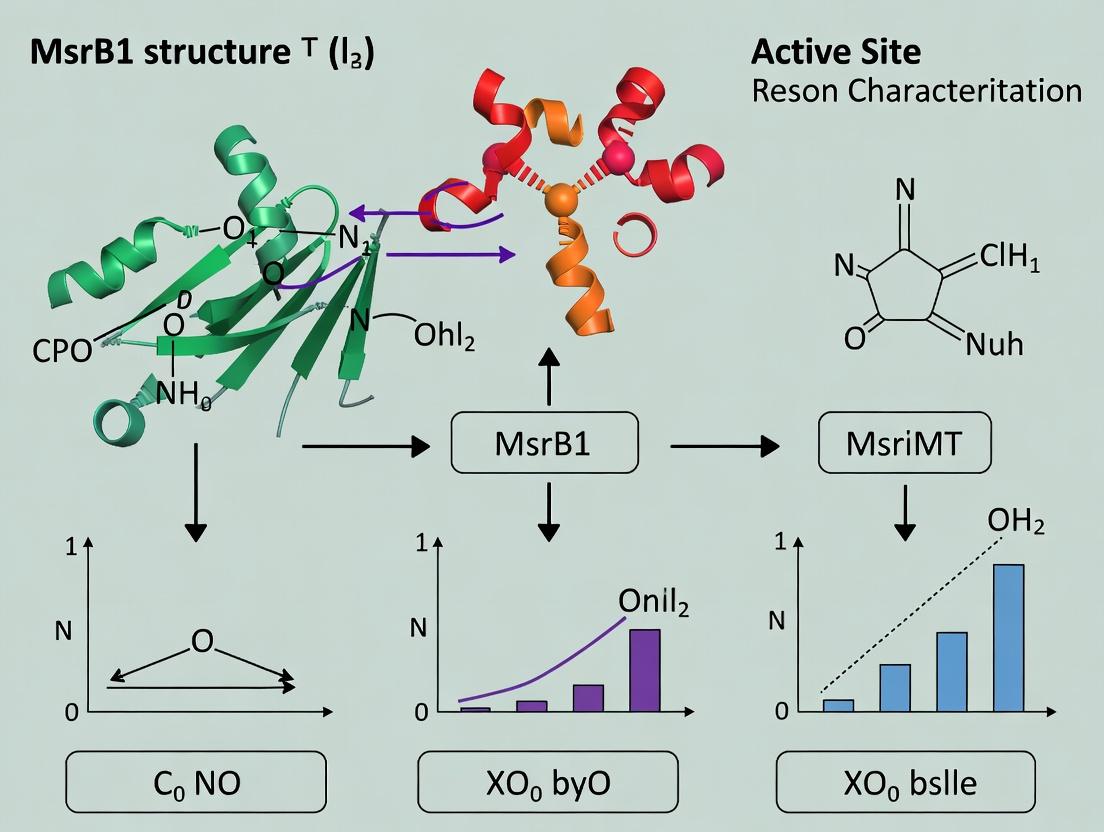
This article provides an in-depth analysis of methionine sulfoxide reductase B1 (MsrB1), focusing on its structural architecture and catalytic active site.
MsrB1 Protein Structure and Active Site: A Comprehensive Guide for Researchers and Drug Discovery
Abstract
This article provides an in-depth analysis of methionine sulfoxide reductase B1 (MsrB1), focusing on its structural architecture and catalytic active site. We begin by exploring its foundational biology, including protein topology and the conserved CXXC motif essential for methionine sulfoxide reduction. We then detail current methodological approaches—from X-ray crystallography and NMR to site-directed mutagenesis—for characterizing its structure and function. Practical sections address common challenges in MsrB1 study, such as protein stability and activity assay optimization. Finally, we compare MsrB1 to other Msr family members and validate its role as a therapeutic target in age-related diseases and oxidative stress pathologies. This resource is tailored for researchers, structural biologists, and drug development professionals seeking to understand and exploit MsrB1's unique biochemistry.
Decoding MsrB1: Unveiling the Structural Blueprint and Catalytic Core
Methionine sulfoxide reductase B1 (MsrB1) is a critical selenoprotein enzyme responsible for the stereospecific reduction of methionine-R-sulfoxide (Met-R-SO) back to methionine. This catalytic activity positions MsrB1 as a central regulator of cellular redox homeostasis, counteracting oxidative damage to proteins. Its function is integral to cellular defense mechanisms, and dysregulation is implicated in a spectrum of diseases. This technical guide frames the biological and pathological roles of MsrB1 within the context of ongoing structural biology research aimed at characterizing its active site, a prerequisite for rational drug design.
Biological Function and Mechanism
MsrB1 catalyzes the thioredoxin-dependent reduction of Met-R-SO. The mechanism involves three key steps: (1) nucleophilic attack by the catalytic selenocysteine (Sec) residue on the sulfur atom of the sulfoxide substrate, forming a selenenylsulfide intermediate; (2) resolution of this intermediate by thioredoxin (Trx), releasing the reduced methionine and forming a selenenylsulfide bond between MsrB1 and Trx; and (3) regeneration of reduced MsrB1 by a second Trx molecule.
Diagram: MsrB1 Catalytic Cycle and Redox Relationships
Role in Disease Pathogenesis
Dysfunction of MsrB1 is linked to pathological states primarily through the accumulation of oxidized proteins and disruption of redox-sensitive signaling.
Table 1: MsrB1 Dysregulation in Disease Models
| Disease/Pathology | Observed Change in MsrB1 | Key Consequences | Experimental Model |
|---|---|---|---|
| Neurodegeneration (Alzheimer's) | Decreased expression & activity in brain tissue | Increased amyloid-β & tau protein oxidation; Synaptic dysfunction | MsrB1 knockout mice; Post-mortem human brain studies |
| Age-Related Cataracts | Significant decrease in lens epithelium | Crystallin protein aggregation; Lens opacity | Selenoprotein knockout models; Human lens analysis |
| Cardiac Ischemia/Reperfusion | Activity impaired during reperfusion | Mitochondrial dysfunction; Cardiomyocyte apoptosis | Murine heart I/R model; H9c2 cell line |
| Cancer | Context-dependent up/down-regulation | Altered FOXO, p53 signaling; Impacts proliferation/apoptosis | Various carcinoma cell lines (e.g., A549, HeLa) |
| Metabolic Syndrome | Reduced in liver/adipose tissue | Increased ER stress; Insulin signaling impairment | High-fat diet murine models |
Experimental Protocols for MsrB1 Research
Protocol: Recombinant MsrB1 Activity Assay
- Objective: Quantify the enzymatic activity of purified recombinant MsrB1.
- Reagents: Purified MsrB1 protein, Dabsyl-Met-R-SO substrate, Recombinant Thioredoxin (Trx), Thioredoxin Reductase (TrxR), NADPH, Assay buffer (50 mM Tris-HCl, pH 7.5, 150 mM NaCl).
- Procedure:
- Prepare a master mix containing 100 µM NADPH, 5 µM Trx, 100 nM TrxR in assay buffer.
- Aliquot 90 µL of master mix into a 96-well plate. Add 5 µL of purified MsrB1 (or buffer for blank).
- Initiate the reaction by adding 5 µL of Dabsyl-Met-R-SO substrate (final concentration 500 µM).
- Immediately monitor the decrease in absorbance at 340 nm (NADPH consumption) for 5-10 minutes at 25°C using a plate reader.
- Calculate activity using the extinction coefficient for NADPH (ε₃₄₀ = 6220 M⁻¹cm⁻¹). One unit reduces 1 µmol of substrate per minute.
Diagram: MsrB1 Enzymatic Activity Assay Workflow
Protocol: Cellular Redox State Assessment via MsrB1 Knockdown
- Objective: Evaluate the impact of MsrB1 silencing on global cellular protein oxidation.
- Reagents: siRNA targeting MsrB1, Scrambled siRNA control, Lipofectamine RNAiMAX, Lysis buffer (with N-ethylmaleimide to alkylate free thiols), Anti-methionine sulfoxide antibody, Standard Western blot reagents.
- Procedure:
- Seed HeLa or HEK293 cells in 6-well plates.
- At 60% confluency, transfert with MsrB1-siRNA or control siRNA using Lipofectamine per manufacturer's protocol.
- 48-72 hours post-transfection, treat cells with oxidative stressor (e.g., 500 µM H₂O₂, 1 hour) or leave untreated.
- Lyse cells, quantify total protein.
- Perform Western blotting: Load equal protein amounts, probe with anti-MetO antibody to detect global protein methionine oxidation, and re-probe for β-actin as loading control.
The Scientist's Toolkit: Key Research Reagents
Table 2: Essential Reagents for MsrB1 Research
| Reagent / Solution | Function & Application | Key Consideration |
|---|---|---|
| Recombinant Human MsrB1 (Sec form) | Gold standard for in vitro kinetic studies, crystallography, and inhibitor screening. | Ensure expression system preserves selenocysteine incorporation. Activity is zinc-dependent. |
| Dabsyl-Met-R-Sulfoxide | Chromogenic substrate for direct, continuous activity assays monitoring A₃₄₀ nm. | Preferred over dithiothreitol (DTT)-based assays which are indirect and can reduce disulfides. |
| Anti-MsrB1 Antibody (Monoclonal) | Detection of MsrB1 expression and localization via Western blot, immunofluorescence. | Confirm specificity for MsrB1 vs. other Msr isoforms (MsrB2, MsrB3). |
| Methionine Sulfoxide (MetO) Antibody | Detection of global or specific protein methionine oxidation, a biomarker of MsrB1 function. | May detect both R- and S- forms depending on specificity; use in conjunction with MsrA modulation. |
| MsrB1-targeting siRNA/shRNA | Knockdown of gene expression to study loss-of-function phenotypes in vitro. | Controls for off-target effects are critical (scrambled siRNA + rescue with cDNA). |
| MsrB1 KO/Transgenic Mouse Models | In vivo study of physiological roles and validation in disease models. | MsrB1 KO mice are viable but show age- and stress-dependent pathologies. |
Structural Insights and Active Site Characterization
The active site of MsrB1 features a catalytic triad/selenium center essential for function. Recent structural studies (e.g., X-ray crystallography, NMR) have focused on:
- The precise geometry of the Sec (U) residue interaction with substrate.
- The coordination sphere of the structural zinc atom and its role in folding/stability.
- Conformational changes during the catalytic cycle.
- Identification of substrate-binding pockets and residues involved in specificity.
This structural research provides the blueprint for designing small-molecule modulators (activators or inhibitors) of MsrB1 activity, offering therapeutic potential for diseases of oxidative stress.
Diagram: Core Hypothesis of MsrB1-Targeted Therapy
This technical guide, framed within a research thesis on Methionine Sulfoxide Reductase B1 (MsrB1) structure and active site characterization, details the methodologies and analytical frameworks for the in-depth primary sequence analysis of proteins, with a focus on identifying domains and motifs critical to function and drug targeting.
Primary sequence analysis is the foundational step in understanding protein function. For enzymes like MsrB1, which catalyzes the reduction of methionine-R-sulfoxide back to methionine, identifying conserved domains and motifs is essential for characterizing the active site, elucidating catalytic mechanisms, and informing drug development efforts targeting oxidative stress-related diseases.
Core Analytical Concepts
Domains: Independently folding structural and functional units. For MsrB1, the core domain is the thioredoxin-fold, which houses the catalytic site. Motifs: Short, conserved sequence patterns indicative of a specific biochemical function (e.g., catalytic sites, binding pockets). The conserved GC motif in MsrB1 contains the reactive cysteine residue.
Methodologies for Domain and Motif Identification
Database Searching and Multiple Sequence Alignment (MSA)
Protocol:
- Sequence Retrieval: Obtain the target MsrB1 sequence (e.g., Human MsrB1, UniProt ID: Q9NZV6).
- Homology Search: Use BLASTP against the non-redundant protein database to identify homologous sequences. Set E-value threshold to 1e-10 to ensure significance.
- Sequence Selection: Curate a diverse but relevant set of homologous sequences spanning different taxa (e.g., mammals, bacteria, plants) for evolutionary insight.
- Multiple Sequence Alignment: Perform alignment using tools like Clustal Omega, MAFFT, or MUSCLE with default parameters.
- Visualization & Analysis: Visualize the MSA using Jalview or similar software to identify columns of high conservation.
Profile and Hidden Markov Model (HMM) Based Scanning
Protocol:
- Build a Profile/HMM: Use the curated MSA from step 3.1 to build a family-specific profile or HMM using
hmmbuild(HMMER suite). - Database Creation: Compile a database of protein domains (e.g., Pfam).
- Scanning: Scan the target MsrB1 sequence against the Pfam database using
hmmscanor the InterProScan meta-server. - Interpretation: Identify significant hits (E-value < 0.01) to known domain families (e.g., "MsrB" family, Pfam: PF01625).
De Novo Motif Discovery
Protocol:
- Input Preparation: Compile a set of related protein sequences suspected to share a functional motif.
- Algorithm Selection: Utilize tools like MEME Suite for discovering ungapped motifs.
- Parameter Setting: Set the motif width range (e.g., 6-15 amino acids) and the maximum number of motifs to discover.
- Execution & Validation: Run the algorithm and validate discovered motifs by checking for known patterns in databases like ELM or by structural mapping if available.
Quantitative Data on MsrB1 Sequence Analysis
The following table summarizes key conserved features identified in human MsrB1 through primary sequence analysis.
Table 1: Conserved Domains and Motifs in Human MsrB1 (Q9NZV6)
| Feature Type | Name/Identifier | Sequence Position | Conserved Residue(s) | Functional Role |
|---|---|---|---|---|
| Domain | Methionine sulfoxide reductase B (Pfam: PF01625) | 4-152 | N/A | Thioredoxin-fold; provides structural scaffold for catalysis. |
| Catalytic Motif | GCxxC (Redox-active) | 72-76 | Cys-72, Cys-75 | Forms the catalytic redox pair. Cys-72 is the nucleophilic cysteine. |
| Substrate Binding | Consensus Pocket Residues | 98, 101, 104 | Tyr-98, Glu-101, Trp-104 | Positions the methionine sulfoxide substrate for reduction. |
| Resolving Cysteine | Specific Position | 117 | Cys-117 | Forms a disulfide with Cys-72 during catalytic cycle. |
| Sequence Identity | Across Vertebrates | Full Length | >85% | Indicates high evolutionary pressure and conserved function. |
Experimental Workflow for Active Site Characterization
The logical workflow for progressing from sequence analysis to experimental characterization is diagrammed below.
Title: MsrB1 Active Site Characterization Workflow
The Scientist's Toolkit: Research Reagent Solutions
Table 2: Essential Reagents for MsrB1 Characterization Experiments
| Reagent / Material | Supplier Examples | Function in Research |
|---|---|---|
| Human MsrB1 cDNA Clone | Addgene, Origene, DNASU | Source of wild-type sequence for expression and mutagenesis template. |
| Site-Directed Mutagenesis Kit | NEB Q5, Agilent QuikChange | Introduces precise point mutations (e.g., Cys72Ser) to test active site residue function. |
| Expression Vector (pET, pGEX) | Novagen, GE Healthcare | Plasmid for high-yield recombinant protein expression in E. coli or other systems. |
| Redox Buffers (DTT, TCEP) | Sigma-Aldrich, GoldBio | Maintains reducing environment to keep catalytic cysteines reduced during purification. |
| Ni-NTA or Glutathione Resin | Qiagen, Cytiva | For affinity purification of His-tagged or GST-tagged recombinant MsrB1 protein. |
| Methionine-R-Sulfoxide Substrate | MilliporeSigma, Bachem | Synthetic substrate for direct enzymatic activity assays. |
| Coupled Assay Components (NAPH, Trx, TR) | Sigma-Aldrich | For spectrophotometric activity assays measuring NADPH consumption. |
| Crystallization Screening Kits | Hampton Research, Molecular Dimensions | Identifies conditions for growing protein crystals for X-ray diffraction studies. |
Significance in Drug Development
For professionals in drug development, primary sequence analysis identifies invariant regions suitable for broad-spectrum inhibition and species-specific motifs for targeted therapy. The conserved active site of MsrB1 presents a direct target for small molecules aimed at modulating cellular redox balance in conditions like neurodegeneration or aging.
This technical guide details the structural characterization of the methionine sulfoxide reductase B1 (MsrB1) enzyme, a critical component of cellular redox repair systems. The analysis of its three-dimensional architecture, overall fold, and secondary structure elements provides the foundational framework for active site characterization, informing rational drug design targeting age-related diseases and conditions linked to oxidative stress.
MsrB1 belongs to the thioredoxin-fold superfamily, characterized by a central beta-sheet flanked by alpha-helices. The canonical MsrB1 fold consists of a mixed four-stranded β-sheet (β1-β4) with topology 2-1-3-4, surrounded by four α-helices (α1-α4). A distinguishing feature is the presence of a zinc-binding domain, which is integral to structural stability and catalytic function.
Table 1: Core Secondary Structure Elements of Human MsrB1
| Element | Type | Start Residue (approx.) | End Residue (approx.) | Role in Fold |
|---|---|---|---|---|
| β1 | Beta-strand | 10 | 15 | Part of central sheet |
| α1 | Alpha-helix | 20 | 35 | Flanks sheet N-terminus |
| β2 | Beta-strand | 40 | 45 | Central strand 1 |
| β3 | Beta-strand | 50 | 55 | Central strand 2 |
| α2 | Alpha-helix | 60 | 75 | Covers active site |
| β4 | Beta-strand | 80 | 85 | Central strand 3 |
| α3 | Alpha-helix | 90 | 105 | Zinc binding motif |
| α4 | Alpha-helix | 110 | 125 | Flanks sheet C-terminus |
The active site, containing the catalytic cysteine (Cys-x-x-Cys motif in humans), is situated in a shallow groove near the N-terminus of helix α2 and the loops connecting β-strands.
Experimental Protocols for Structural Determination
Protein Expression and Purification for Crystallography/NMR
- Cloning: Human MSRB1 gene is cloned into an expression vector (e.g., pET-28a) with an N-terminal His6-tag.
- Expression: Vector is transformed into E. coli BL21(DE3) cells. Cultures are grown in LB or minimal media (for SeMet labeling or NMR isotopic labeling) at 37°C to OD600 ~0.6, induced with 0.5-1.0 mM IPTG, and grown overnight at 18°C.
- Purification: Cells are lysed by sonication. The soluble fraction is loaded onto a Ni-NTA affinity column, washed with 20 mM imidazole, and eluted with 250 mM imidazole in a buffer containing 20 mM Tris-HCl (pH 8.0), 150 mM NaCl. Further purification by size-exclusion chromatography (Superdex 75) in a low-salt crystallization buffer (e.g., 20 mM HEPES pH 7.5, 50 mM NaCl) is performed.
- Concentration and Assessment: Protein is concentrated to 10-20 mg/mL. Purity (>95%) is confirmed by SDS-PAGE, and monodispersity is confirmed by dynamic light scattering.
X-ray Crystallography Protocol
- Crystallization: Initial screens (e.g., Hampton Research) using sitting-drop vapor diffusion at 20°C. A common condition: 0.1 M HEPES pH 7.5, 20% PEG 6000. Apo and substrate-bound (Met-O) forms are pursued.
- Data Collection: Flash-cool crystals in liquid N2 with cryoprotectant (e.g., 25% glycerol). Collect diffraction data at a synchrotron source (~1.0 Å wavelength).
- Structure Solution: Solve by molecular replacement using a known MsrB structure (PDB ID: e.g., 1U6W) as a search model. Iterative rounds of refinement (e.g., PHENIX) and model building (Coot) are performed.
Nuclear Magnetic Resonance (NMR) Spectroscopy Protocol for Dynamics
- Sample Preparation: Uniformly label protein with ¹⁵N and ¹³C by expressing in M9 minimal media with corresponding isotopes.
- Data Collection: Acquire a suite of 2D/3D NMR experiments (¹H-¹⁵N HSQC, HNCA, HNCACB, etc.) on a high-field spectrometer (≥600 MHz) at 25°C.
- Assignment and Analysis: Assign backbone chemical shifts. Analyze ¹H-¹⁵N heteronuclear NOE, T1, and T2 relaxation data to quantify backbone dynamics and identify flexible regions.
Diagram: MsrB1 Structural Determination Workflow
Title: MsrB1 Structure Determination Experimental Workflow
The Scientist's Toolkit: Key Research Reagent Solutions
Table 2: Essential Materials for MsrB1 Structural Studies
| Item | Function & Specification |
|---|---|
| pET-28a(+) Vector | T7 expression vector providing N-terminal His6-tag and thrombin cleavage site for high-yield soluble protein purification. |
| BL21(DE3) Competent Cells | E. coli strain deficient in proteases, optimized for T7 polymerase-driven expression of recombinant proteins. |
| Ni-NTA Superflow Resin | Immobilized metal affinity chromatography (IMAC) resin for high-purity capture of His-tagged MsrB1. |
| Superdex 75 10/300 GL | High-resolution size-exclusion chromatography column for polishing and buffer exchange into final crystallization or NMR buffer. |
| Hampton Index/Sparse Matrix Screen | Commercial crystallization screening kits to identify initial conditions for protein crystal growth. |
| Deuterated NMR Buffer (e.g., 20 mM d-HEPES, 50 mM NaCl, D₂O) | Buffer for NMR studies minimizing proton background signal and allowing for lock referencing. |
| L-Selenomethionine | Essential for producing selenomethionine-labeled protein for single/multi-wavelength anomalous dispersion (SAD/MAD) phasing in crystallography. |
| DTT (Dithiothreitol) / TCEP | Reducing agents to maintain the catalytic cysteines of MsrB1 in a reduced, active state during purification and analysis. |
Table 3: Comparative Structural Parameters of MsrB1 Homologs
| Parameter | Human MsrB1 (PDB: 1U6W) | Mouse MsrB1 (PDB: 2HRA) | Neisseria gonorrhoeae MsrB (PDB: 4CJY) |
|---|---|---|---|
| Resolution (Å) | 1.60 | 1.90 | 1.55 |
| R-factor / R-free | 0.183 / 0.204 | 0.196 / 0.225 | 0.176 / 0.200 |
| # of Residues in Model | 124 | 122 | 132 |
| # of α-helices | 4 | 4 | 4 |
| # of β-strands | 4 | 4 | 4 |
| Active Site Motif | Cys-xx-Cys (Cys95, Cys98) | Cys-xx-Cys (Cys95, Cys98) | Cys-xx-Cys (Cys117, Cys120) |
| Zn²⁺ Binding Site | Present (Cys51, Cys94, His100, Asp102) | Present (Cys51, Cys94, His100, Asp102) | Absent |
| RMSD to Human (Å) | - | 0.45 (Cα) | 1.8 (Cα) |
Diagram: Relationship of Structure to Function in MsrB1
Title: MsrB1 Structure-Function Relationship Map
The definitive characterization of MsrB1's three-dimensional architecture—a thioredoxin-fold protein stabilized by a unique zinc-binding domain—is a prerequisite for elucidating its catalytic mechanism. The structural data and methodologies outlined here serve as the essential basis for targeted active site mutagenesis, inhibitor screening, and the ultimate goal of therapeutic development against oxidative damage pathologies.
This article presents an in-depth technical guide on the catalytic active site, focusing on the CXXC motif and its selenium-dependent and independent forms. The content is framed within a broader thesis on Methionine Sulfoxide Reductase B1 (MsrB1) structure and active site characterization research, a critical enzyme in redox homeostasis and repair of oxidative damage to methionine residues.
The CXXC motif is a highly conserved redox-active sequence found in numerous enzymes, including thioredoxins, glutaredoxins, and methionine sulfoxide reductases (Msrs). In MsrB1, this motif is central to its catalytic function. A key distinction among MsrB enzymes is the identity of the catalytic redox center: some forms utilize a selenocysteine (Sec) residue (selenium-dependent), while others utilize a cysteine (Cys) residue (selenium-independent). MsrB1 is the mammalian selenoprotein form.
Quantitative Comparison: Selenium-Dependent vs. Independent Forms
The catalytic efficiency, substrate specificity, and redox potential differ significantly between selenium-dependent and independent forms. The table below summarizes key quantitative data from recent studies.
Table 1: Comparative Catalytic Properties of MsrB1 (Sec) vs. MsrB2/B3 (Cys) Forms
| Property | MsrB1 (Selenium-Dependent, Sec) | MsrB2/B3 (Selenium-Independent, Cys) | Notes / Experimental Conditions |
|---|---|---|---|
| Catalytic Rate (kcat, min⁻¹) | 1200 - 1800 | 50 - 150 | For reduction of free Met-R-O; pH 7.5, 37°C, saturating DTT. |
| Michaelis Constant (KM, µM) | 80 - 120 (Met-R-O) | 200 - 400 (Met-R-O) | Substrate: Methionine-R-sulfoxide. |
| Catalytic Efficiency (kcat/KM, M⁻¹s⁻¹) | ~2.5 x 10⁵ | ~6 x 10³ | Sec form is ~40-fold more efficient. |
| Redox Potential (E'°, mV) | Approx. -280 to -300 | Approx. -220 to -240 | Versus Standard Hydrogen Electrode (SHE). |
| Sec/Cys pKa | ~5.2 (Sec) | ~8.3 (Cys) | Lower pKa of Sec enhances nucleophilicity at physiological pH. |
| Inhibition by Auranofin (IC50) | 0.8 - 1.2 µM | > 50 µM | Selective inhibition of Sec-dependent enzymes. |
Experimental Protocols for Active Site Characterization
Protocol: Determination of Catalytic Efficiency (kcat/KM)
Objective: To measure the enzymatic efficiency of MsrB variants. Reagents: Purified recombinant MsrB (Sec or Cys form), DTT, Met-R-O substrate, reaction buffer (50 mM Tris-HCl, pH 7.5, 50 mM KCl). Procedure:
- Prepare a master mix of reaction buffer and DTT (final 10 mM).
- In a 96-well plate, mix enzyme (5-50 nM final) with varying concentrations of Met-R-O substrate (10 µM to 1 mM).
- Initiate reaction by substrate addition and monitor the decrease in NADPH absorbance at 340 nm in a coupled assay with thioredoxin/thioredoxin reductase or directly by HPLC detection of methionine.
- Fit initial velocity data to the Michaelis-Menten equation using nonlinear regression (e.g., GraphPad Prism) to obtain KM and Vmax.
- Calculate kcat = Vmax / [Enzyme].
Protocol: Probing Active Site Chemistry via Alkylation and Mass Spectrometry
Objective: To confirm the redox-active Sec/Cys residue and its reactivity. Reagents: Purified MsrB, Iodoacetamide (IAM) or N-ethylmaleimide (NEM), DTT, Tris buffer, LC-MS/MS system. Procedure:
- Reduce the enzyme by incubating with 10 mM DTT for 30 min at room temperature.
- Remove DTT via desalting column.
- Split sample: Incubate one aliquot with 20 mM IAM (alkylating agent) for 15 min in the dark. Leave another aliquot untreated.
- Quench the reaction and digest proteins with trypsin.
- Analyze peptides via LC-MS/MS. Identify alkylated (+57 Da for IAM) peptides. The catalytic Sec/Cys residue will show alkylation only in the reduced, pre-treated sample, confirming its redox activity.
Visualization of Catalytic Mechanisms and Workflows
The Scientist's Toolkit: Key Research Reagent Solutions
Table 2: Essential Reagents for MsrB Active Site Research
| Reagent / Material | Function / Purpose in Research | Key Considerations |
|---|---|---|
| Recombinant MsrB Proteins (WT Sec, Cys mutants) | Substrate for all biochemical and structural studies. | Expression of Sec form requires specific vectors with a SECIS element; Cys forms are easier to produce in E. coli. |
| Dithiothreitol (DTT) / Tris(2-carboxyethyl)phosphine (TCEP) | Chemical reductant to maintain or reduce catalytic cysteines/selenocysteine. | TCEP is more stable and metal-chelator compatible. DTT is used in traditional assays. |
| Methionine-R-Sulfoxide (Met-R-O) | Native physiological substrate for MsrB1. | Commercially available but costly. Purity critical for kinetic assays. Can be synthesized from L-Met. |
| Coupled Enzyme System (Thioredoxin, Thioredoxin Reductase, NADPH) | Regenerating reducing system for continuous enzyme assays. | Mimics physiological electron transfer. Provides high sensitivity in spectrophotometric assays. |
| Auranofin | Selective, potent inhibitor of selenoprotein thioredoxin reductases and Sec-dependent Msrs. | Tool compound to distinguish Sec vs. Cys catalysis and probe Sec chemistry. |
| Iodoacetamide (IAM) / N-Ethylmaleimide (NEM) - Biotin or Fluorescent Conjugates | Active site alkylating agents for labeling and identifying redox-active Sec/Cys residues. | Used in activity-based protein profiling (ABPP) and mass spectrometry workflows. |
| Anti-Selenocysteine Antibodies | Detect and quantify Sec-containing proteins in cell lysates or after purification. | Crucial for confirming successful incorporation of Sec in recombinant proteins or tissue samples. |
| Size Exclusion Chromatography (SEC) Columns | Purify native, oligomeric state of MsrB proteins for assays and crystallization. | MsrBs can form dimers; SEC ensures homogeneity for reliable kinetic data. |
| Crystallization Screens (e.g., JCSG+, PEG/Ion) | Identify conditions for growing protein crystals of MsrB-substrate/inhibitor complexes. | Requires protein at high purity and concentration (>10 mg/mL). Trapping intermediate states is challenging. |
Within the broader thesis on methionine sulfoxide reductase B1 (MsrB1) structure-function analysis, elucidating the precise molecular determinants governing its stereospecificity for R-methionine sulfoxide (R-MetO) is paramount. MsrB1 is a selenocysteine-dependent oxidoreductase responsible for the thioredoxin-dependent reduction of R-MetO back to methionine, a critical repair mechanism in oxidative stress response. This technical guide details the architecture of the MsrB1 substrate-binding pocket, the experimental evidence for its specificity, and the implications for drug development targeting redox regulation.
Structural Architecture of the MsrB1 Active Site
The catalytic site of human MsrB1 features a conserved redox triad: Sec97 (selenocysteine), Cys4, and Cys93 (numbering for human cytosolic MsrB1). The pocket is characterized by a deep, narrow groove that imposes strict stereochemical constraints.
Key Structural Determinants for R-Stereospecificity:
- Steric Hindrance: The side chain of Phe66 creates a "wall" that precludes the binding of the S-isomer of MetO.
- Electrostatic & Hydrogen Bonding: A network involving residues like Asn85, Gln105, and ordered water molecules coordinates the sulfoxide oxygen of the substrate, specifically recognizing the R-configuration.
- Hydrophobic Environment: Residues such as Trp52, Phe66, and Phe113 form a hydrophobic niche that accommodates the methyl thioether moiety of methionine sulfoxide.
Table 1: Key MsrB1 Active Site Residues and Their Roles in R-MetO Specificity
| Residue (Human) | Role in Catalysis/Specificity | Experimental Evidence (e.g., Mutagenesis) |
|---|---|---|
| Sec97 (U) | Nucleophile, attacks sulfoxide sulfur. | Sec97Cys mutant retains ~1-5% activity, confirming essential catalytic role. |
| Cys4 | Resolves selenenylsulfide intermediate. | C4S mutant leads to trapped intermediate, abolishing turnover. |
| Cys93 | Part of resolving Cys pair with Cys4. | C93S mutant shows significantly reduced activity. |
| Phe66 | Steric gatekeeper for R-selectivity. | F66A mutant shows increased activity toward S-MetO in model substrates. |
| Asn85 | Hydrogen bonds to sulfoxide oxygen. | N85A mutant shows 10-fold decrease in catalytic efficiency (kcat/Km). |
| Gln105 | Substrate orientation via H-bonding. | Q105A mutant reduces substrate affinity (increased Km). |
Experimental Protocols for Characterizing Specificity
Steady-State Kinetics with Stereospecific Substrates
Objective: Determine kinetic parameters (Km, kcat) for R- vs. S-MetO. Protocol:
- Substrate Preparation: Synthesize or procure enantiomerically pure R-MetO and S-MetO (e.g., via chiral HPLC separation of chemically oxidized Met).
- Enzyme Purification: Express and purify recombinant human MsrB1 (e.g., with a His-tag in E. coli culture under Se-supplemented conditions for Sec incorporation).
- Coupled Assay: Use a thioredoxin (Trx) recycling system.
- Reaction Buffer: 50 mM HEPES (pH 7.5), 150 mM NaCl, 2 mM EDTA.
- Components: 50-200 nM MsrB1, 10 μM E. coli Trx, 200 μM NADPH, 100 nM Trx reductase, varying [MetO] (5-500 μM).
- Monitoring: Observe NADPH oxidation at 340 nm (ε340 = 6220 M-1cm-1) for 2-3 min.
- Analysis: Fit initial velocity data to the Michaelis-Menten equation to derive Km and kcat.
X-ray Crystallography of Substrate-Bound Complexes
Objective: Obtain high-resolution structure of MsrB1 with R-MetO or inhibitors. Protocol:
- Crystallization: Co-crystallize wild-type or Cys/Ser mutant (e.g., Sec97Cys) MsrB1 with 5-10 mM R-MetO using sitting-drop vapor diffusion (e.g., condition: 1.8 M (NH4)2SO4, 0.1 M Tris pH 8.5).
- Cryoprotection: Transfer crystal to mother liquor plus 20% glycerol, flash-cool in liquid N2.
- Data Collection: Collect diffraction data at a synchrotron source (e.g., 1.2 Å resolution).
- Structure Solution: Solve via molecular replacement using apo-MsrB1 structure (PDB: 1L1D). Model R-MetO into clear electron density in the active site.
- Analysis: Measure distances and angles of substrate interactions (Se–S, H-bonds) using Coot and PyMOL.
Isothermal Titration Calorimetry (ITC)
Objective: Measure direct binding affinity and thermodynamics of R-MetO vs. S-MetO. Protocol:
- Sample Preparation: Dialyze purified MsrB1 (Sec97Cys mutant to prevent turnover) and substrates into identical buffer (e.g., 20 mM phosphate, 150 mM NaCl, pH 7.4).
- Titration: Load cell with 200 μM MsrB1. Inject 2 μL aliquots of 2 mM R-MetO (or S-MetO) at 180s intervals.
- Analysis: Fit raw heat data to a one-site binding model to determine KD, ΔH, and ΔS.
Table 2: Example Kinetic Data for Wild-Type Human MsrB1
| Substrate | Km (μM) | kcat (s-1) | kcat/Km (M-1s-1) | Selectivity (kcat/Km Ratio, R/S) |
|---|---|---|---|---|
| R-MetO | 45 ± 5 | 0.85 ± 0.05 | ~1.9 x 10⁴ | > 200 |
| S-MetO | > 2000 | < 0.01 | < 5 | 1 |
Signaling Pathway Context
MsrB1's activity is integrated into cellular redox signaling and repair pathways.
Diagram 1: MsrB1 in Redox Repair Pathway
Experimental Workflow
A standard workflow for characterizing substrate pocket specificity.
Diagram 2: Specificity Characterization Workflow
The Scientist's Toolkit: Research Reagent Solutions
Table 3: Essential Reagents for MsrB1 Substrate Specificity Research
| Reagent / Material | Function / Explanation | Example Vendor / Catalog Consideration |
|---|---|---|
| Enantiopure R-MetO & S-MetO | Defined substrates for kinetic and binding assays to measure stereospecificity. | Sigma-Aldrich (custom synthesis), Cayman Chemical. |
| Recombinant Human MsrB1 (WT & Mutants) | Active enzyme for functional studies. Sec incorporation is critical. | Self-expression (plasmid: Addgene), or purified from commercial bioreactors. |
| E. coli Thioredoxin (Trx) / Thioredoxin Reductase (TrxR) System | Coupled enzyme system for recycling reduced MsrB1 in activity assays. | Sigma-Aldrich (T0910, T9698). |
| β-NADPH, Tetrasodium Salt | Electron donor for the TrxR/MsrB1 coupled assay. Monitor at 340 nm. | Roche, 10107824001. |
| Crystallization Screen Kits | For initial screening of crystallization conditions for apo- and complex-structures. | Hampton Research (Index, Crystal Screen), Molecular Dimensions. |
| Isothermal Titration Calorimeter (ITC) | Instrument for measuring direct binding thermodynamics (KD, ΔH, ΔS). | Malvern Panalytical (MicroCal PEAQ-ITC). |
| Sec-Incorporation Competent E. coli | Specialized bacterial strains (e.g., BL21(DE3) ΔiscR) for efficient selenocysteine insertion. | Lucigen, or lab-constructed strains. |
| Anti-MsrB1 Antibody | For Western blot detection and quantification of endogenous or recombinant MsrB1. | Abcam, ab199029; Santa Cruz Biotechnology, sc-398730. |
| Homology Modeling/Docking Software | Computational prediction of substrate binding poses (e.g., before mutagenesis). | Schrödinger Suite, MOE, Rosetta. |
1. Introduction This technical guide details the molecular mechanisms of cofactor and metal binding in methionine sulfoxide reductase B1 (MsrB1), with a focus on its interaction with thioredoxin (Trx) and zinc (Zn). Characterizing these interactions is central to a broader thesis on MsrB1’s structure-function relationship, active site architecture, and its implications for redox homeostasis, aging, and age-related diseases. MsrB1 is a selenocysteine (Sec)-containing enzyme that specifically reduces methionine-R-sulfoxide residues. Its catalytic efficiency is governed by the Sec residue, regeneration via the Trx system, and structural stabilization by a bound zinc ion.
2. The Thioredoxin Regeneration Cycle MsrB1 catalysis involves the reduction of methionine sulfoxide, which oxidizes its catalytic Sec to selenenic acid (Sec-SeOH). Regeneration is achieved via a Trx-dependent pathway.
Table 1: Key Kinetic Parameters for the MsrB1-Thioredoxin Interaction
| Parameter | Value (Approx.) | Description |
|---|---|---|
| Km for Methionine-R-SO | 10 - 50 µM | Michaelis constant for the substrate. |
| kcat | 1 - 5 s⁻¹ | Catalytic turnover number. |
| Disulfide Bond Reduction Potential (Trx) | -270 to -290 mV | Standard redox potential of human Trx1. |
| Binding Affinity (Kd) MsrB1:Trx | 1 - 10 µM | Estimated dissociation constant for the enzyme-cofactor complex. |
Experimental Protocol: Measuring Trx-Dependent MsrB1 Activity
- Reaction Mix: Prepare 100 µL containing 50 mM HEPES (pH 7.4), 100 mM NaCl, 1 mM EDTA, 0.1 mg/mL BSA.
- Enzyme & Cofactor: Add 50-100 nM recombinant MsrB1, 10-20 µM reduced Trx, 100-200 nM Trx reductase (TrxR), and 200 µM NADPH.
- Substrate Addition: Initiate reaction by adding Met-R-SO (5-500 µM range for kinetics).
- Monitoring: Follow NADPH oxidation at 340 nm (ε₃₄₀ = 6220 M⁻¹cm⁻¹) for 1-3 minutes using a spectrophotometer.
- Analysis: Calculate velocity. Plot velocity vs. [Met-R-SO] to determine Km and Vmax. kcat = Vmax / [MsrB1].
3. Structural Zinc Binding Site MsrB1 coordinates a structural zinc atom in a tetrahedral site distinct from the catalytic Sec residue. This site is crucial for structural integrity.
Table 2: Characteristics of the MsrB1 Structural Zinc Site
| Feature | Detail |
|---|---|
| Coordination Sphere | Cys51, Cys54, Cys72, and Cys75 (Human MsrB1 numbering). |
| Zn-Zn Distance | ~12-15 Å from the catalytic Sec residue. |
| Binding Affinity | Sub-nanomolar to low nanomolar (highly stable). |
| Role | Structural fold stabilization, active site architecture, protease resistance. |
Experimental Protocol: Assessing Zinc Binding and Content
- Inductively Coupled Plasma Mass Spectrometry (ICP-MS):
- Sample Prep: Dialyze purified recombinant MsrB1 extensively against Chelex-treated, metal-free buffers.
- Digestion: Digest 50 µg protein in ultrapure nitric acid (70°C, 2 hours).
- Analysis: Inject into ICP-MS. Quantify ⁶⁶Zn. Compare to a bovine serum albumin-Zn standard curve.
- Zinc Chelation Assay:
- Treat MsrB1 (5 µM) with chelators (e.g., 1,10-phenanthroline or EDTA; 0.1-5 mM range) in assay buffer for 30 min.
- Measure residual enzymatic activity using the Trx-dependent protocol.
- Monitor structural unfolding via circular dichroism (CD) spectroscopy (far-UV region, 200-260 nm).
4. Integrated Pathways and Workflows
5. The Scientist's Toolkit: Research Reagent Solutions
Table 3: Essential Reagents for MsrB1 Cofactor and Metal Studies
| Reagent / Material | Function / Role |
|---|---|
| Recombinant Human MsrB1 (Sec) | Full-length, selenocysteine-containing protein. Essential for functional and structural studies. |
| Thioredoxin System (Trx1, TrxR, NADPH) | Complete regeneration cofactor system for enzymatic activity assays. |
| D,L-Methionine-R-Sulfoxide | Chiral substrate for MsrB1 activity measurements. |
| Chelex 100 Resin | Treatment of buffers to remove contaminating metal ions, crucial for zinc-binding studies. |
| 1,10-Phenanthroline | Cell-permeable zinc chelator used to probe functional and structural zinc dependence. |
| TCEP (Tris(2-carboxyethyl)phosphine) | Non-thiol reducing agent for maintaining MsrB1/Trx in reduced state without interfering with metal binding. |
| Metal-Free Buffers & Vials | HEPES or Tris, prepared with ultra-pure water and stored in plasticware to prevent zinc leaching from glass. |
| ZICP-MS Standard Solution | Certified standard for quantitative zinc analysis via ICP-MS. |
| Selenomethionine | For producing SeMet-labeled MsrB1 for MAD phasing in X-ray crystallography. |
6. Conclusion The precise interplay between the catalytic Sec residue, the Trx regeneration cycle, and the structural zinc ion defines MsrB1's functional efficiency. Disruption of zinc binding destabilizes the protein fold, impairing catalysis. Similarly, alterations in the Trx system impact the enzyme's turnover capacity. This integrated understanding, framed within active site characterization research, provides a foundation for targeting the Msr system in drug development for oxidative stress-related pathologies.
Evolutionary Conservation and Phylogenetic Relationship within the Msr Family
This whitepaper details the evolutionary conservation and phylogenetic relationships within the methionine sulfoxide reductase (Msr) family, serving as foundational context for a broader thesis focusing on the structural and active site characterization of MsrB1. The Msr enzyme system, comprising MsrA, MsrB, and fRMsr, is crucial for repairing oxidative damage to methionine residues, a process with implications in aging, neurodegenerative diseases, and microbial pathogenicity. Through comparative genomic analysis and phylogenetic reconstruction, we elucidate the deep conservation, gene duplication events, and functional divergence that have shaped this family across the tree of life.
Methionine sulfoxide reductases are essential antioxidant enzymes that catalyze the thioredoxin-dependent reduction of methionine sulfoxide (Met-SO) back to methionine (Met). This repair mechanism protects proteins from oxidative inactivation and regulates protein function. The Msr family is divided into two structurally distinct classes: MsrA (reducing S-epimers) and MsrB (reducing R-epimers), with some organisms also possessing a free methionine sulfoxide reductase (fRMsr). Understanding the evolutionary history of these enzymes provides critical insights into their conserved catalytic mechanisms, substrate specificity, and potential as therapeutic targets.
Phylogenetic Distribution and Gene Architecture
Comprehensive database searches (UniProt, NCBI) reveal the near-ubiquitous distribution of Msr enzymes.
Table 1: Phylogenetic Distribution of Msr Family Members Across Major Domains
| Taxonomic Group | MsrA Present | MsrB Present | fRMsr Present | Common Genomic Arrangements |
|---|---|---|---|---|
| Bacteria | >99% | >99% (Often as SelX fusion) | ~15% (Limited to specific lineages) | msrA/msrB often separate; msrB as selX fusion common. |
| Archaea | >95% | ~80% | Rare | msrA frequent; msrB less conserved, often absent in methanogens. |
| Eukaryota | >99% (Organellar & cytosolic forms) | >99% (3 forms: MsrB1-3 in animals) | Rare (some fungi, plants) | Gene duplication in Metazoa (e.g., MSRB1, MSRB2, MSRB3); Alternative splicing in mammals. |
Table 2: Conserved Gene/Protein Features in Model Organisms
| Organism | MsrA Gene ID | MsrB Gene ID | Key Structural Features (Conserved) | Localization |
|---|---|---|---|---|
| Homo sapiens | MSRA (Nuclear & Mitochondrial) | MSRB1 (Selenoprotein), MSRB2, MSRB3 | MsrA: GAFG motif; MsrB1: CXXU motif (U=Sec) | Cytosol, Nucleus, Mitochondria, ER |
| Saccharomyces cerevisiae | MXR1 | -- | MsrA: GCG motif (= catalytic Cys) | Cytosol, Mitochondria |
| Escherichia coli | msrA | msrB (selX) | MsrB: Zn²⁺ binding motif (CXXC) | Cytosol |
Methodologies for Evolutionary Analysis
Sequence Retrieval and Multiple Alignment
- Protocol: Homologous sequences were retrieved via BLASTP searches against the non-redundant protein database using human MsrA (NP002425.1) and MsrB1 (NP057415.2) as seeds. Threshold: E-value < 1e-10. Sequences were aligned using Clustal Omega (v1.2.4) with default parameters, followed by manual curation in BioEdit to remove poorly aligned regions.
- Key Tool: MEGA11 for alignment visualization and editing.
Phylogenetic Tree Reconstruction
- Protocol (Maximum Likelihood): The best-fit substitution model (e.g., LG+G+I for MsrB) was determined using ModelTest-NG. Trees were constructed using RAxML-NG (v1.2.0) with 1000 bootstrap replicates to assess branch support. Command:
raxml-ng --msa alignment.phy --model LG+G+I --bs-trees 1000 --all. - Protocol (Bayesian Inference): Trees were also inferred using MrBayes (v3.2.7) under the same model. Two parallel runs of 1,000,000 generations were performed, sampling every 100 generations. The first 25% were discarded as burn-in.
Conservation Score Mapping
- Protocol: The curated multiple sequence alignment was submitted to the ConSurf server (https://consurf.tau.ac.il/) to calculate evolutionary conservation scores (1-9 scale). The resultant scores were mapped onto the known 3D structure of human MsrB1 (PDB: 2L3R) using PyMOL (v2.5.0).
Diagram Title: Phylogenetic & Conservation Analysis Workflow
Key Findings on Evolutionary Conservation
Active Site Residues are Ultra-Conserved
Analysis reveals absolute conservation (>98% across >500 homologs) of catalytic residues:
- MsrA: The
GC*Gmotif (where*is the catalytic Cys) and the recycling Cys are invariant. - MsrB (Selenocysteine-containing): The
CXXUmotif (U=Sec) and Zn²⁺-coordinating cysteines are fully conserved in the MsrB1/selenoprotein subgroup.
Evolutionary History and Gene Duplication
Phylogenetic trees indicate:
- Ancient Divergence: MsrA and MsrB are paralogs originating from a deep gene duplication event predating the last universal common ancestor (LUCA).
- MsrB Subfamily Radiation: In vertebrates, MsrB diverged into three distinct forms via gene duplication: cytosolic/nuclear MsrB1 (selenoprotein), mitochondrial MsrB2, and ER/specific tissue MsrB3.
- fRMsr Origin: fRMsr is evolutionarily unrelated to MsrA/B and likely arose independently, showing a restricted phylogenetic distribution.
Diagram Title: Evolutionary History of the Msr Gene Family
The Scientist's Toolkit: Research Reagent Solutions
Table 3: Essential Reagents for Msr Enzymology & Phylogenetics
| Reagent / Material | Supplier Examples | Function in Research |
|---|---|---|
| Recombinant Msr Proteins (Human) | Abcam (ab114058), Sigma-Aldrich (M5947) | Positive controls for activity assays, structural studies. |
| Anti-MsrB1 Antibody (Selenocysteine) | Santa Cruz Biotechnology (sc-133878), Invitrogen (PA5-77195) | Western blotting, immunofluorescence to validate protein expression and localization. |
| D,L-Methionine Sulfoxide | Sigma-Aldrich (M0876) | Substrate for in vitro Msr activity assays. |
| Thioredoxin Reductase System | Cayman Chemical (10011179) | Provides reducing equivalents (from NADPH) for the Msr catalytic cycle via thioredoxin. |
| DTNB (Ellman's Reagent) | Thermo Fisher Scientific (22582) | Quantifies free thiols, used to monitor the reductase activity of Msr enzymes. |
| Phusion High-Fidelity DNA Polymerase | NEB (M0530) | PCR amplification of msr genes from genomic DNA for cloning and sequencing. |
| pET Expression Vectors | Novagen | Prokaryotic expression of cloned msr genes for protein purification. |
| Se-Cys Deficient Media | Molecular Biology Products (MSCK-1000) | For expression studies of selenoprotein MsrB1, to control for selenium incorporation. |
| Clustal Omega / MEGA11 Software | EMBL-EBI, www.megasoftware.net | Core tools for sequence alignment and phylogenetic analysis. |
Implications for MsrB1 Active Site Characterization
The phylogenetic context is indispensable for MsrB1 research:
- Identifying Functional Residues: Residues conserved across all MsrB orthologs are likely critical for folding or catalysis (e.g., Zn²⁺ binding). Residues specific to the MsrB1 selenoprotein clade may govern selenocysteine incorporation, substrate channeling, or protein-protein interactions.
- Informing Mutagenesis Studies: Conservation scores guide rational site-directed mutagenesis, distinguishing between essential catalytic residues and species-specific adaptive residues.
- Drug Development: The high conservation of the active site across pathogens and humans presents a challenge for antimicrobial drug design but highlights the site's functional importance. Differences in surface loops or cofactor dependencies may offer avenues for selective inhibition.
The Msr enzyme family represents an ancient and evolutionarily conserved defense system against oxidative stress. Phylogenetic analysis delineates a clear history of gene duplication and functional specialization, particularly within the vertebrate MsrB lineage leading to MsrB1. This evolutionary framework pinpoints invariant catalytic machinery and variable regulatory elements, providing a critical roadmap for the structural and mechanistic dissection of human MsrB1. Understanding this conservation is fundamental for elucidating its role in redox homeostasis and assessing its potential as a therapeutic target in age-related and oxidative stress pathologies.
Advanced Techniques for MsrB1 Characterization: From Structure Determination to Functional Assays
Methionine sulfoxide reductase B1 (MsrB1) is a key enzyme in the repair of oxidative damage to methionine residues, specifically reducing the R-isomer of methionine sulfoxide. Characterization of its three-dimensional structure, active site architecture, and catalytic mechanism is critical for understanding its role in aging, neurodegeneration, and cellular redox regulation. This whitepaper provides an in-depth technical guide on the application of the three primary structural biology tools—X-ray crystallography, Nuclear Magnetic Resonance (NMR) spectroscopy, and Cryo-Electron Microscopy (Cryo-EM)—within the broader context of MsrB1 structure-function research, aimed at informing drug discovery efforts targeting redox-related pathologies.
X-ray Crystallography of MsrB1
X-ray crystallography has been the workhorse for determining high-resolution structures of MsrB1, revealing the details of its selenocysteine (Sec)-containing active site.
2.1 Key Experimental Protocol
- Protein Expression & Purification: Recombinant human MsrB1 (with a Cys-to-Sec mutation at the active site if needed) is expressed in E. coli BL21(DE3) cells. Purification employs affinity chromatography (His-tag) followed by size-exclusion chromatography.
- Crystallization: Purified protein (≥10 mg/mL) is subjected to high-throughput screening using commercial sparse-matrix screens (e.g., Hampton Research) via the sitting-drop vapor diffusion method at 20°C. Crystals often form in conditions containing PEG 3350 and various salts.
- Data Collection: A single crystal is cryo-cooled in liquid nitrogen using a cryoprotectant. X-ray diffraction data are collected at a synchrotron source (e.g., Advanced Photon Source) at 100 K. A single-wavelength anomalous dispersion (SAD) experiment is performed if selenium is incorporated (from Sec).
- Structure Solution & Refinement: Data are processed (indexing, integration, scaling) with XDS or HKL-3000. Phasing is solved via molecular replacement using a homologous structure or via SAD using the selenium signal. Iterative model building and refinement are performed in Coot and Phenix/Refmac.
2.2 Representative Structural Data Table 1: Crystallographic Data for MsrB1 (Representative Example)
| Parameter | Value | Description |
|---|---|---|
| PDB ID | 2H1Q | Human MsrB1 with bound substrate analog |
| Resolution | 1.8 Å | High-resolution limit of the dataset |
| Space Group | P 21 21 21 | Crystal system and symmetry |
| R-work / R-free | 0.19 / 0.23 | Measures of model accuracy and overfitting |
| Active Site Residues | Sec95, His103, Glu104, Arg147 | Catalytic triad and coordinating residues |
| Bound Ligand | Methyl sulfenic acid (CH3-SOH) | Trapped catalytic intermediate |
Diagram Title: X-ray Crystallography Workflow for MsrB1
NMR Spectroscopy of MsrB1
NMR provides dynamic and thermodynamic insights into MsrB1, capturing conformational changes, flexibility, and ligand interactions in solution.
3.1 Key Experimental Protocol
- Isotopic Labeling: For structural studies, MsrB1 is uniformly labeled with ¹⁵N and/or ¹³C by expressing in E. coli in M9 minimal media with ¹⁵NH₄Cl and ¹³C-glucose as sole nitrogen and carbon sources.
- Sample Preparation: Protein is concentrated to ~0.5-1 mM in a low-salt NMR buffer (e.g., 20 mM phosphate, pH 6.5) with 10% D₂O for lock signal. Reducing agent (e.g., DTT) is included to maintain Sec/Cys in reduced state.
- Data Acquisition: Standard triple-resonance experiments (HNCA, HNCOCA, HNCACB, CBCACONH) are run on a high-field spectrometer (≥600 MHz) at 25°C for backbone assignment. ¹⁵N-HSQC spectra are the cornerstone for monitoring chemical shift perturbations (CSPs) upon ligand binding.
- Data Analysis: Spectra are processed with NMRPipe and analyzed with CCPNmr Analysis or Sparky. CSPs are quantified and mapped onto the structure. Relaxation experiments (T₁, T₂) probe backbone dynamics.
3.2 Representative NMR Data Table 2: NMR-derived Parameters for MsrB1 Interaction Studies
| Parameter | Value / Observation | Interpretation |
|---|---|---|
| ¹⁵N-HSQC Peaks | ~110 (for 125-residue protein) | Well-dispersed spectrum indicates folded protein |
| Kd (Substrate) | 15 ± 3 µM | Measured via CSP titration, indicates moderate affinity |
| Δδ Weighted CSP | >0.1 ppm for active site residues | Identifies ligand binding site |
| S² (Order Parameter) | High (0.85) for β-strands, Low (0.6) for loop near Sec | Quantifies backbone mobility; active site loop is flexible |
Diagram Title: NMR Workflow for MsrB1 Ligand Binding
Cryo-Electron Microscopy of MsrB1 Complexes
Cryo-EM is emerging for studying large MsrB1 complexes, such as its interactions with partner proteins like thioredoxin, which are difficult to crystallize.
4.1 Key Experimental Protocol
- Grid Preparation: 3-4 µL of the MsrB1 complex (∼0.5-1 mg/mL) is applied to a glow-discharged holey carbon grid (Quantifoil R1.2/1.3). The grid is blotted (3-5 sec) and plunge-frozen in liquid ethane using a Vitrobot (100% humidity, 4°C).
- Data Collection: Micrographs are collected on a 300 keV cryo-TEM (e.g., Titan Krios) with a direct electron detector (Gatan K3) in counting mode. A defocus range of -1.0 to -2.5 µm is used. ~5,000-10,000 movies are collected with a total dose of ∼50 e⁻/Ų.
- Image Processing: Motion correction (MotionCor2) and CTF estimation (CTFFIND4) are performed. Particles are picked (crYOLO/Relion), extracted, and subjected to 2D classification. An initial model is generated ab initio in CryoSPARC, followed by heterogeneous refinement to remove junk particles. Non-uniform refinement yields the final high-resolution map.
- Model Building: An existing MsrB1 crystal structure is flexibly fitted into the cryo-EM density map using ChimeraX and ISOLDE, followed by real-space refinement in Phenix.
4.2 Representative Cryo-EM Data Table 3: Cryo-EM Statistics for a Hypothetical MsrB1-Thioredoxin Complex
| Parameter | Value | Description |
|---|---|---|
| Reported Resolution | 3.2 Å (Gold-Standard FSC 0.143) | Global resolution estimate |
| Map Sharpening B-factor | -80 Ų | Applied during post-processing |
| Symmetry Imposed | C1 | No symmetry applied |
| Final Particles | 125,450 | Number of particles in final 3D reconstruction |
| Active Site Density | Well-defined for Sec95 | Key feature visibility in map |
Diagram Title: Cryo-EM Workflow for MsrB1 Complex
The Scientist's Toolkit: Research Reagent Solutions
Table 4: Essential Materials for MsrB1 Structural Studies
| Reagent / Material | Vendor Examples | Function in MsrB1 Research |
|---|---|---|
| Selenomethionine | Sigma-Aldrich, MedChemExpress | For anomalous scattering in X-ray crystallography; can be used to biosynthetically label the active site Sec (when expressed as Cys mutant in auxotrophic strain). |
| ¹⁵NH₄Cl & ¹³C-Glucose | Cambridge Isotope Labs | Essential isotopic labels for multi-dimensional NMR spectroscopy to achieve backbone and sidechain resonance assignments. |
| Holey Carbon Grids (Quantifoil) | Electron Microscopy Sciences | Support film for cryo-EM sample preparation. The grid type and hydrophilicity treatment critically affect ice thickness and particle distribution. |
| Size-Exclusion Columns (Superdex 75) | Cytiva | Final polishing step in protein purification to obtain monodisperse, aggregation-free sample crucial for all three structural methods. |
| Crystallization Screens (JCSG+, PEG/Ion) | Hampton Research, Molecular Dimensions | Pre-formulated sparse-matrix screens for identifying initial crystallization conditions for MsrB1 via vapor diffusion. |
| Cryoprotectants (e.g., Glycerol, Ethylene Glycol) | Sigma-Aldrich | Added to crystal or sample drops prior to flash-cooling to prevent ice crystal formation during X-ray or cryo-EM data collection. |
| DTT (Dithiothreitol) | Thermo Fisher Scientific | Reducing agent used in all buffers to maintain the catalytic selenocysteine (or cysteine) in its reduced, active state. |
| Truncated Human Thioredoxin | Recombinantly expressed | Essential binding partner/substrate for functional and structural studies of the catalytic cycle of MsrB1. |
The characterization of Methionine Sulfoxide Reductase B1 (MsrB1) is critical for understanding redox homeostasis and its implications in aging, neurodegenerative diseases, and cancer. A central challenge is obtaining high-resolution structural data for the human enzyme, particularly its active site conformation during catalysis. This whitepaper details the computational methodologies—homology modeling and molecular dynamics (MD) simulations—employed to bridge experimental gaps, predict the 3D structure of human MsrB1, and elucidate dynamic active site behavior in silico.
Homology Modeling of Human MsrB1
Homology modeling, or comparative modeling, predicts a target protein's 3D structure based on its amino acid sequence and an evolutionarily related template structure.
Detailed Protocol
Step 1: Template Identification & Alignment
- Search: Perform a BLASTP search of the human MsrB1 sequence (UniProt: Q9NZV7) against the Protein Data Bank (PDB).
- Criteria: Select templates with >30% sequence identity, high coverage, and low E-value. Crystal structures of bacterial MsrB (e.g., Neisseria meningitidis MsrB, PDB: 2L3R) often serve as primary templates.
- Alignment: Use multiple sequence alignment tools (ClustalOmega, MUSCLE) to align target and template sequences, manually adjusting in conserved active site regions (e.g., Cys residues).
Step 2: Model Building
- Software: Utilize MODELLER, SWISS-MODEL, or I-TASSER.
- Process: The software generates 3D coordinates for the target by satisfying spatial restraints derived from the template alignment. Generate multiple models (e.g., 100).
Step 3: Model Evaluation & Selection
- Validation: Assess models using:
- Stereo-chemical quality: Ramachandran plot via PROCHECK or MolProbity.
- Fold stability: DOPE (Discrete Optimized Protein Energy) or GA341 scores in MODELLER.
- Statistical potential: Verify residue-residue interactions using QMEAN or ProSA-web (Z-score).
- Selection: Choose the model with the best validation scores and most plausible active site geometry.
Step 4: Active Site Refinement
- Loop Modeling: Use MODELLER's loop refinement for non-conserved regions near the active site.
- Side-chain packing: Optimize rotamers for active site residues (Cys95, Cys98, His103 in human MsrB1) using SCWRL4.
Key Reagent Solutions & Materials
| Research Reagent / Tool | Function in MsrB1 Modeling |
|---|---|
| Human MsrB1 Sequence (UniProt Q9NZV7) | The target amino acid sequence for modeling. |
| PDB Database | Repository of experimentally solved 3D protein structures for template identification. |
| MODELLER Software | Primary platform for building 3D homology models from alignments. |
| SWISS-MODEL Server | Automated web-based homology modeling pipeline. |
| MolProbity Server | Validates stereochemistry, clashes, and rotamer outliers in the final model. |
| PyMOL / ChimeraX | Visualization software for analyzing and refining the model structure. |
Table 1: Validation metrics for a representative human MsrB1 homology model.
| Validation Metric | Result | Threshold for Reliability |
|---|---|---|
| Template Identity | 42% (vs. PDB: 2L3R) | >30% |
| GMQE Score (SWISS-MODEL) | 0.78 | Closer to 1.0 indicates higher model quality |
| QMEANDisCo Global Score | 0.73 ± 0.05 | >0.6 generally acceptable |
| Ramachandran Favored (%) | 92.5% | >90% |
| Ramachandran Outliers (%) | 0.8% | <2% |
| ProSA-web Z-Score | -6.5 | Within range of native structures of similar size |
Molecular Dynamics Simulations of MsrB1
MD simulations compute the time-dependent physical movements of atoms, providing insights into conformational dynamics, ligand binding, and catalytic mechanics.
Detailed Protocol for MsrB1 Active Site Simulations
Step 1: System Preparation
- Initial Structure: Use the validated homology model or a crystal structure (if available).
- Protonation States: Assign correct protonation states to active site residues at simulation pH (e.g., 7.4) using H++ or PROPKA. Key: Cys95 (thiolate, -S⁻), Cys98 (protonated, -SH).
- System Builder: Solvate the protein in an explicit solvent box (e.g., TIP3P water) with a buffer of ≥10 Å. Add ions (Na⁺/Cl⁻) to neutralize charge and achieve physiological concentration (e.g., 150 mM).
Step 2: Energy Minimization and Equilibration
- Force Field: Apply a modern force field (e.g., CHARMM36m, AMBER ff19SB).
- Minimization: Perform steepest descent/conjugate gradient minimization (5000 steps) to remove steric clashes.
- Equilibration:
- NVT Ensemble: Heat system to 310 K over 100 ps using a Langevin thermostat.
- NPT Ensemble: Apply a Berendsen/Parinello-Rahman barostat to stabilize pressure at 1 bar for 100-200 ps.
Step 3: Production Simulation
- Run: Perform an unrestrained MD simulation for a timescale relevant to the biological process (100 ns to 1 µs for active site dynamics).
- Software: Use high-performance computing (HPC) resources with GROMACS, NAMD, or AMBER.
- Integration: Use a 2-fs time step, with bonds involving hydrogen constrained (LINCS/SHAKE).
Step 4: Trajectory Analysis
- Root Mean Square Deviation (RMSD): Assess overall protein backbone stability.
- Root Mean Square Fluctuation (RMSF): Identify flexible regions, especially active site loops.
- Active Site Metrics: Measure distances (e.g., Sγ(Cys95) - Sγ(Cys98)), dihedral angles, and hydrogen bond occupancies.
- Free Energy Calculations: Use MMPBSA/MMGBSA or umbrella sampling to estimate binding affinities for substrate (Met-O) analogs.
Key Reagent Solutions & Materials
| Research Reagent / Tool | Function in MsrB1 MD Simulations |
|---|---|
| CHARMM36m / AMBER ff19SB Force Field | Defines potential energy functions and parameters for atoms in the system. |
| GROMACS/NAMD Software | High-performance MD simulation engines for running calculations. |
| VMD/ChimeraX | Visualization and initial analysis of simulation trajectories. |
| MDAnalysis/CPPTRAJ | Python/library tools for advanced, programmatic trajectory analysis. |
| HPCC Resources | High-performance computing cluster for running µs-scale simulations. |
| Graphical Processing Units (GPUs) | Accelerates MD calculations significantly (e.g., using NVIDIA CUDA). |
Table 2: Key metrics from a 500-ns MD simulation of human MsrB1.
| Analysis Metric | Result (Mean ± SD) | Interpretation for MsrB1 Active Site |
|---|---|---|
| Backbone RMSD (Å) | 1.8 ± 0.3 Å | Stable fold after equilibration (~50 ns). |
| Active Site Loop (Res 90-110) RMSF (Å) | 1.2 ± 0.6 Å | Moderate flexibility; higher near substrate entry. |
| Catalytic Cys95 - Cys98 Distance (Å) | 3.5 ± 0.4 Å | Optimal for disulfide bond formation upon reduction. |
| Cys95(Sγ) - His103(Nε) H-bond Occupancy (%) | 85% | Stable interaction crucial for stabilizing thiolate. |
| Solvent Accessible Surface Area (SASA) of Active Site (Ų) | 320 ± 45 | Indicates a partially buried, accessible active site. |
Integrated Computational Workflow for MsrB1 Characterization
Title: Integrated Computational Workflow for MsrB1 Structure & Dynamics
Application to MsrB1 Active Site Characterization
The integration of homology modeling and MD directly informs experimental design:
- Mutagenesis Targets: MD identifies key residues (beyond catalytic cysteines) with high dynamic correlation, guiding mutagenesis studies (e.g., Arg-XX influencing substrate orientation).
- Redox State Modeling: Simulations of reduced (dithiol) and oxidized (disulfide) states reveal conformational changes gating substrate entry/product release.
- Inhibitor Docking: The refined dynamic model provides an ensemble of receptor conformations for virtual screening of selective MsrB1 inhibitors, crucial for drug development in redox-related pathologies.
Homology modeling and molecular dynamics simulations are indispensable, complementary tools for characterizing the structure and function of MsrB1. They provide atomic-resolution hypotheses for active site architecture and dynamics that guide and interpret wet-lab experiments, accelerating the transition from structural insight to therapeutic intervention in diseases of redox imbalance.
This whitepaper details the methodological cornerstone of an ongoing thesis focused on elucidating the structural determinants of methionine sulfoxide reductase B1 (MsrB1) catalysis. MsrB1 is a critical selenoprotein responsible for the stereo-specific reduction of methionine-R-sulfoxide, a key antioxidant mechanism implicated in aging and neurodegenerative diseases. The core hypothesis of the thesis is that a network of conserved active site residues, beyond the catalytic selenocysteine (Sec), orchestrates substrate binding, proton transfer, and regeneration of the reduced enzyme. Site-directed mutagenesis (SDM) is the indispensable tool for deconvoluting this network, allowing for the systematic replacement of candidate residues (e.g., Cys, His, Asp, Gln) to probe their individual contributions to the enzymatic mechanism and stability.
Core Principles and Quantitative Rationale for SDM in MsrB1 Research
SDM enables the testing of specific structure-function hypotheses. The quantitative impact of each mutation is assessed through kinetic and biophysical analyses, providing a residue-by-residue dissection of the active site.
Table 1: Hypothetical Target Residues in MsrB1 Active Site and Mutational Rationale
| Target Residue | Putative Role | Proposed Mutation(s) | Expected Phenotype if Critical |
|---|---|---|---|
| Sec (U) | Nucleophilic catalysis, redox center. | Sec → Cys (U/C) | Severe loss of activity (>90% kcat reduction), altered substrate specificity. |
| His | Acid/base catalyst, stabilizes transition state. | His → Ala, His → Gln | Drastic reduction in catalytic efficiency (kcat/KM), shifted pH-rate profile. |
| Gln | Substrate orientation, hydrogen bonding. | Gln → Ala, Gln → Asn | Increased KM (reduced substrate affinity), moderate kcat reduction. |
| Asp | Calcium ion coordination, structural integrity. | Asp → Ala, Asp → Asn | Compromised structural stability (lower Tm), altered metal dependency. |
| Cys | Resolution of catalytic intermediate (Cys-Sec disulfide). | Cys → Ser, Cys → Ala | Trapped catalytic intermediate, incomplete reaction cycle. |
Detailed Experimental Protocols
Protocol A: High-Fidelity PCR-Based Site-Directed Mutagenesis (e.g., Using Q5 Hot Start Polymerase)
- Primer Design: Design complementary primers (25-45 bases) containing the desired mutation in the center, flanked by ~15 bp of correct sequence on each side. Ensure a melting temperature (Tm) ≥ 78°C. Phosphorylate 5' ends if using a non-ligase protocol.
- PCR Reaction: Set up a 50 µL reaction: 10-50 ng plasmid template, 0.5 µM each primer, 200 µM dNTPs, 1X Q5 Reaction Buffer, 0.02 U/µL Q5 Hot Start DNA Polymerase. Cycle: 98°C 30s; (98°C 10s, Tm+3°C 30s, 72°C 2 min/kb) x 25 cycles; 72°C 5 min.
- Template Digestion: Add 1 µL of DpnI restriction enzyme directly to the PCR product. Incubate at 37°C for 1 hour to digest the methylated parental DNA template.
- Transformation & Verification: Transform 2-5 µL of the DpnI-treated DNA into competent E. coli. Isolate plasmid DNA from colonies and verify the mutation by Sanger sequencing across the entire insert.
Protocol B: Kinetic Characterization of MsrB1 Mutants
- Protein Expression & Purification: Express WT and mutant MsrB1 (with C-terminal His-tag) in an appropriate system (e.g., E. coli BL21 for Sec→Cys mutant; mammalian or special system for wild-type Sec). Purify via Ni-NTA affinity chromatography.
- Activity Assay (DTNB-based): In a 96-well plate, mix reaction buffer (50 mM HEPES, pH 7.5, 150 mM NaCl), 1-10 µM enzyme, 5 mM DTT (reductant). Initiate reaction by adding methionine-R-sulfoxide substrate (0.1-10 mM range for KM determination). Monitor the increase in A412 nm from the reduction of DTNB (5,5'-dithio-bis-(2-nitrobenzoic acid)) by the released DTT, which is stoichiometric with methionine reduction.
- Data Analysis: Determine initial velocities (v0) at varying substrate concentrations ([S]). Fit data to the Michaelis-Menten equation (v0 = (Vmax * [S]) / (KM + [S])) using non-linear regression (e.g., GraphPad Prism) to extract kcat and KM.
Table 2: Representative Kinetic Data for Hypothetical MsrB1 Mutants
| MsrB1 Variant | kcat (s⁻¹) | KM (mM) | kcat / KM (M⁻¹s⁻¹) | Relative Efficiency (%) |
|---|---|---|---|---|
| Wild-Type (Sec) | 12.5 ± 1.2 | 0.15 ± 0.03 | 8.33 x 10⁴ | 100.0 |
| Sec → Cys (U/C) | 0.8 ± 0.1 | 0.80 ± 0.15 | 1.00 x 10³ | 1.2 |
| His → Ala | 0.05 ± 0.01 | 1.50 ± 0.30 | 33.3 | 0.04 |
| Gln → Ala | 5.2 ± 0.6 | 1.20 ± 0.20 | 4.33 x 10³ | 5.2 |
Visualizing the SDM Workflow and MsrB1 Catalytic Hypothesis
Title: SDM Experimental Workflow for MsrB1 Analysis
Title: MsrB1 Catalytic Cycle and SDM Targets
The Scientist's Toolkit: Key Research Reagent Solutions
Table 3: Essential Materials for SDM and MsrB1 Characterization
| Reagent/Material | Function in Research | Example/Notes |
|---|---|---|
| High-Fidelity DNA Polymerase | Amplifies plasmid with high accuracy during mutagenic PCR. | Q5 Hot Start, PfuUltra II Fusion HS. |
| DpnI Restriction Enzyme | Selectively digests methylated parental DNA template, enriching for mutant plasmid. | Critical for PCR-based mutagenesis in E. coli systems. |
| Competent E. coli | For transformation and amplification of mutant plasmids. | High-efficiency strains (e.g., NEB 5-alpha, DH5α). |
| Methionine-R-Sulfoxide | The physiological substrate for MsrB1 activity assays. | Must be enantiomerically pure; available from specialty biochemical suppliers. |
| DTNB (Ellman's Reagent) | Colorimetric detection of thiols; used to couple DTT oxidation to product formation in continuous assays. | Enables real-time kinetic measurements of MsrB1 activity. |
| DTT (Dithiothreitol) | Reducing agent that serves as the ultimate electron donor in in vitro MsrB1 assays. | Regenerates the reduced enzyme. |
| Ni-NTA Resin | Affinity purification of His-tagged recombinant WT and mutant MsrB1 proteins. | Standard for rapid purification of soluble protein variants. |
| Size-Exclusion Chromatography Media | Final polishing step to purify monomeric, correctly folded MsrB1 for biophysical studies. | e.g., Superdex 75 Increase; assesses oligomeric state. |
This technical guide details core in vitro functional assays for measuring Methionine Sulfoxide Reductase (Msr) activity, framed within the context of advancing the structural and active site characterization of mammalian MsrB1. Msr enzymes are critical for protein repair, catalyzing the thioredoxin-dependent reduction of methionine sulfoxide (Met-O) back to methionine (Met). Precise quantification of Msr activity is fundamental for elucidating the functional impact of active site mutations, characterizing enzyme kinetics, identifying inhibitors or activators, and validating the role of MsrB1 in redox homeostasis. This whitepaper provides researchers and drug development professionals with current, detailed methodologies and data interpretation frameworks.
The Scientist's Toolkit: Research Reagent Solutions
| Reagent/Material | Function in Msr Assays |
|---|---|
| Recombinant Msr Enzyme (e.g., MsrB1) | The enzyme of interest, often purified from E. coli or mammalian expression systems. Essential for kinetic studies and active site characterization. |
| Dabsyl-Methionine Sulfoxide (Dabsyl-Met-O) | A chromogenic substrate. Reduction to Dabsyl-Met causes a shift in absorption maximum, allowing continuous spectrophotometric monitoring. |
| NAPH-4 (or DTNB) | A small-molecule reduction substrate. Reduction by Msr is coupled to NADPH oxidation via Thioredoxin Reductase (TrxR), allowing UV-Vis monitoring at 340 nm. |
| Thioredoxin (Trx) System | Includes Thioredoxin (Trx), Thioredoxin Reductase (TrxR), and NADPH. Provides physiological reducing equivalents to Msr enzymes. |
| Dithiothreitol (DTT) | A non-physiological reductant often used in initial or simplified activity assays to bypass the Trx system. |
| Coupled Enzyme System (TrxR/NADPH) | Regenerates reduced Trx, enabling continuous, physiologically relevant activity measurement. |
| Methionine Sulfoxide (Diastereomers) | Racemic mixture or separated Met-(R)-SO and Met-(S)-SO. Used to determine stereospecificity of Msr isoforms (MsrA reduces S-form, MsrB reduces R-form). |
| Activity Gels (Zymography) | Non-denaturing polyacrylamide gels containing Met-O. Used for in-gel detection of Msr activity after electrophoresis. |
Core Activity Assay Methodologies
The Coupled Spectrophotometric Assay (Physiological)
This is the gold-standard, continuous assay that mirrors the in vivo electron transfer pathway.
Detailed Protocol:
- Prepare Reaction Master Mix (1 mL final volume):
- 100 mM HEPES buffer, pH 7.5.
- 0.5-2 µM recombinant human Thioredoxin (Trx1).
- 50-100 nM recombinant human Thioredoxin Reductase (TrxR1).
- 0.2-0.5 mM NADPH.
- 10-20 mM MgCl₂ (stabilizes TrxR).
- 1-5 µM purified MsrB1 enzyme (variable based on activity).
- Establish Baseline: Add all components except substrate to a quartz cuvette. Incubate at 37°C for 2 minutes in a temperature-controlled spectrophotometer. Monitor absorbance at 340 nm (A₃₄₀) for 1-2 minutes to establish a stable baseline (minimal non-specific NADPH oxidation).
- Initiate Reaction: Add the substrate, D,L-Methionine Sulfoxide (Met-O), to a final concentration of 5-20 mM. Mix rapidly by inversion.
- Data Acquisition: Immediately record the decrease in A₃₄₀ every 10-15 seconds for 10-20 minutes. The linear portion of the curve (typically the first 3-5 minutes) is used for rate calculation.
- Controls: Run a no-enzyme control and a no-substrate control to account for background NADPH oxidation.
Data Analysis: Activity is calculated using the extinction coefficient for NADPH (ε₃₄₀ = 6,220 M⁻¹cm⁻¹). One unit of Msr activity is defined as the amount of enzyme that oxidizes 1 µmol of NADPH per minute under the specified conditions.
[ \text{Activity} (U/mg) = \frac{(\Delta A{340}/\text{min}) \times V{total} (mL)}{6.22 (mM^{-1}cm^{-1}) \times d (cm) \times [\text{Enzyme}] (mg/mL)} ]
Dabsyl-Met-O Reduction Assay (Chromogenic)
This endpoint assay is useful for screening or when the Trx system is not available.
Detailed Protocol:
- Reaction Setup: In a 50 µL reaction volume containing 100 mM HEPES (pH 7.5) and 10 mM DTT, combine purified MsrB1 (0.1-1 µg) with 1-2 mM Dabsyl-Met-O.
- Incubation: Incubate the reaction at 37°C for 30-60 minutes.
- Termination: Stop the reaction by adding 50 µL of ethanol and incubating on ice for 10 minutes to precipitate protein.
- Analysis: Centrifuge at 15,000 x g for 10 minutes. Analyze the supernatant by reverse-phase HPLC (C18 column) with detection at 436 nm. The substrate (Dabsyl-Met-O) and product (Dabsyl-Met) are separated by their retention times.
- Quantification: Calculate activity based on the area under the peak for Dabsyl-Met produced, using a standard curve.
In-Gel Activity Assay (Msr Zymography)
This semi-quantitative method detects Msr activity directly in a non-denaturing gel.
Detailed Protocol:
- Gel Preparation: Cast a standard 12% non-denaturing (native) polyacrylamide gel. Incorporate 20-40 mM D,L-Met-O into the resolving gel before polymerization.
- Sample Preparation & Loading: Mix purified protein or cell lysate with native sample buffer (no SDS or reducing agents). Load equal protein amounts (10-30 µg).
- Electrophoresis: Run the gel at 4°C (to preserve activity) at 100-150 V until the dye front reaches the bottom.
- Activity Development: After electrophoresis, incubate the gel in a shallow tray with 50 mL of reaction buffer (100 mM HEPES, pH 7.5, 10 mM DTT, 0.025% Methyl Viologen, 2 mM Sodium Phosphate) for 30-45 minutes at 37°C in the dark.
- Staining & Visualization: Add Trichloroacetic Acid (TCA) to a final concentration of 12.5% to fix the gel. Then, incubate the gel in 0.125% Coomassie Blue G-250 staining solution. Clear bands of activity appear against a dark blue background, as Met-O reduction prevents protein Coomassie binding in the enzyme's migration location.
The following table consolidates typical kinetic parameters for wild-type recombinant human MsrB1, serving as a benchmark for characterizing mutants.
Table 1: Representative Kinetic Parameters for Human MsrB1 (Using Coupled Spectrophotometric Assay)
| Substrate | Km (mM) | kcat (min⁻¹) | kcat/Km (M⁻¹s⁻¹) | Experimental Conditions |
|---|---|---|---|---|
| D,L-Met-O | 3.5 - 6.0 | 80 - 150 | ~500 - 700 | 37°C, pH 7.5, with Trx/TrxR/NADPH |
| L-Met-R-O | 0.8 - 1.5 | 100 - 180 | ~1,500 - 2,500 | 37°C, pH 7.5, with Trx/TrxR/NADPH |
| NAPH-4 | 0.05 - 0.15 | 200 - 350 | ~30,000 - 50,000 | 37°C, pH 7.5, with DTT |
| Protein-bound Met-O | N/A | Varies | N/A | Typically assessed via HPLC/MS after reaction |
Key Findings Contextualized for Structure-Function Studies:
- Stereospecificity: The significantly lower Km for L-Met-R-O vs. racemic mixture confirms MsrB1's high specificity for the R-epimer, a direct consequence of its active site architecture.
- Small vs. Protein Substrates: The high catalytic efficiency (kcat/Km) for the small molecule NAPH-4 highlights the enzyme's intrinsic reductase capability, while activity on protein substrates is influenced by additional factors (accessibility, local environment).
- Active Site Mutants: Mutagenesis of conserved active site residues (e.g., Cys to Ser in the catalytic cysteine) typically reduces kcat by >95%, confirming their essential role. Mutations in substrate-binding pockets can drastically alter Km values.
Visualization of Pathways and Workflows
Physiological MsrB1 Reduction Pathway (34A853)
Coupled Spectrophotometric Assay Workflow (33 chars)
MsrB1 Structure-Function Study Logic (44 chars)
This technical guide details the spectroscopic methodologies employed to characterize redox states and catalytic intermediates of Methionine Sulfoxide Reductase B1 (MsrB1). In the broader thesis on MsrB1 Structure and Active Site Characterization, these techniques are critical for elucidating the enzyme's mechanism, which involves the reduction of methionine-R-sulfoxide. Understanding the precise redox changes at the selenocysteine (Sec) or cysteine active site and identifying transient catalytic species informs drug development targeting redox-related diseases, such as aging, neurodegeneration, and cancer.
Core Spectroscopic Techniques: Principles and Applications
X-ray Absorption Spectroscopy (XAS)
XAS, particularly X-ray Absorption Near Edge Structure (XANES) and Extended X-ray Absorption Fine Structure (EXAFS), is indispensable for probing the local electronic and geometric structure of the selenium or metal cofactor in MsrB1.
- Application: Directly monitors the redox state of the catalytic Sec (U-SeH, U-Se- (selenolate), U-SeOH (selenenic acid), U-Se-SR (selenosulfide)) during the catalytic cycle. Distinguishes between intermediate states that are not resolved in crystallographic studies.
Raman and Resonance Raman Spectroscopy
Vibrational spectroscopy provides fingerprints of molecular bonds. Resonance enhancement, by tuning the laser to match an electronic transition of a chromophore (e.g., a charge-transfer band involving Sec), allows selective observation of active site vibrations.
- Application: Identifies Se-H, S-H, Se-S, and S-S stretches, reporting on the protonation and ligation state of the catalytic residue. Can detect perselenenylsulfide or disulfide bond formation with resolving partner proteins.
Stopped-Flow UV-Vis Spectroscopy
Enables rapid kinetic measurements (millisecond timescale) of reactions initiated by rapid mixing.
- Application: Monitors changes in absorbance associated with:
- Charge-transfer bands: Between the catalytic Sec/Cys and nearby residues.
- Cofactor absorbance: If using engineered variants with flavin or NADPH analogues.
- Substrate/product conversion: Using chromogenic methionine sulfoxide analogues.
Fluorescence Spectroscopy
Exploits the intrinsic fluorescence of tryptophan residues or engineered fluorescent labels sensitive to local environment.
- Application: Tracks conformational changes associated with substrate binding, catalysis, or protein-protein interactions. A strategically placed Trp near the MsrB1 active site will exhibit quenching or shift upon redox change or intermediate formation.
Electron Paramagnetic Resonance (EPR) Spectroscopy
Detects species with unpaired electrons. For MsrB1, which operates via a 2-electron mechanism, this requires the use of spin traps or the study of inhibited/radical intermediate states.
- Application: Can characterize catalytic intermediates if a radical is trapped (e.g., using a substrate analogue) or study the environment of a paramagnetic metal ion if investigating metal-binding properties of MsrB1 variants.
Table 1: XANES Edge Energies for Selenium Redox States in MsrB1
| Redox State (Se) | Chemical Form | Approx. Edge Energy (eV) | Note |
|---|---|---|---|
| Selenol | R-SeH | 12658 ± 0.5 | Reduced, substrate-bound state |
| Selenenylsulfide | R-Se-S-R' | 12660 ± 0.5 | Catalytic intermediate with thioredoxin |
| Selenenic Acid | R-SeOH | 12663 ± 0.5 | Oxidized intermediate post-substrate reduction |
| Seleninic Acid | R-SeO₂H | >12665 | Over-oxidized, potentially inactivated form |
Table 2: Characteristic Vibrational Frequencies in MsrB1 Active Site
| Bond Type | Mode | Approx. Frequency (cm⁻¹) | Technique |
|---|---|---|---|
| Se-H Stretch | ν(Se-H) | 2280-2350 | Raman/Resonance Raman |
| Se-S Stretch | ν(Se-S) | ~360-390 | Raman/Resonance Raman |
| S-H Stretch (Cys) | ν(S-H) | 2550-2600 | Raman |
| Disulfide (Cys) | ν(S-S) | ~500-550 | Raman |
Detailed Experimental Protocols
Protocol: XAS for Se K-edge in Frozen MsrB1 Samples
Objective: Determine the selenium redox state in trapped MsrB1 catalytic intermediates. Materials:
- Purified recombinant MsrB1 (Sec-containing).
- Anaerobic chamber (Glove box) for sample preparation.
- Cryo-freezer (liquid N₂).
- XAS sample cell (Lucite or Delrin with Kapton windows).
Procedure:
- Sample Preparation: Under anaerobic conditions (<1 ppm O₂), prepare MsrB1 in three states: Reduced (treated with excess DTT or Trx/TrxR/NADPH), Oxidized (post-reaction with Met-R-SO), and Trapped Intermediate (mixed with substrate then rapidly frozen after ~50 ms).
- Loading: Transfer ~20 µL of sample (≥ 1 mM Se concentration) to XAS cell within the glove box. Seal the cell.
- Freezing: Rapidly plunge the sealed cell into liquid nitrogen.
- Data Collection: At synchrotron beamline, maintain samples at 10 K using helium cryostat. Scan Se K-edge (~12600 eV) in fluorescence or transmission mode. Collect multiple scans to improve signal-to-noise.
- Data Analysis: Align spectra, average scans, and subtract background. Normalize edge step. Derive edge position from the first inflection point (first derivative maximum). For EXAFS, fit Fourier-transformed data to models based on known bond lengths (Se-C, Se-S, Se-O).
Protocol: Stopped-Flow UV-Vis Kinetics of MsrB1 Catalysis
Objective: Measure the rate of selenenic acid intermediate formation and reduction. Materials:
- Stopped-flow spectrophotometer.
- Anaerobic stopped-flow syringes and drive system.
- Buffer: 50 mM HEPES, pH 7.4, 100 mM KCl, degassed.
- MsrB1 (reduced, anaerobic).
- Substrate: Methionine-R-sulfoxide (Met-R-SO) or derivative.
- Reductant: DTT or pre-reduced Thioredoxin (Trx).
Procedure:
- Instrument Setup: Purge the stopped-flow system with anaerobic buffer. Set detection wavelength to 280 nm or a specific charge-transfer band (e.g., 340 nm if present).
- Syringe Loading: Load syringes in an anaerobic chamber:
- Syringe A: 40 µM MsrB1 (reduced).
- Syringe B: 400 µM Met-R-SO (for single-turnover) or a mixture of 400 µM Met-R-SO and 200 µM DTT/Trx (for multiple-turnover).
- Rapid Mixing: Perform rapid mixing (1:1 ratio, dead time ~1-2 ms) and trigger data acquisition.
- Data Acquisition: Record absorbance changes over time (0.001 to 100 s). Perform 5-10 replicates.
- Analysis: Fit the kinetic trace to appropriate models (single/multi-exponential). The observed rate constant(s) correlate with selenenic acid formation (fast phase) and its resolution (slow phase in absence of reductant).
Visualization of Workflows and Pathways
Title: MsrB1 Catalytic Redox Cycle
Title: XAS for Se Redox State Analysis
The Scientist's Toolkit: Research Reagent Solutions
Table 3: Essential Reagents for Spectroscopic Study of MsrB1
| Reagent/Material | Function & Rationale |
|---|---|
| Recombinant Selenoprotein MsrB1 | Essential protein, often expressed in E. coli with selenocysteine incorporation system (e.g., pSUABC plasmid). Must be highly pure for spectroscopy. |
| Anaerobic Chamber (Glove Box) | Critical for preparing reduced enzyme and oxygen-sensitive intermediates without artifact oxidation. Maintains O₂ < 1 ppm. |
| Dithiothreitol (DTT) / Tris(2-carboxyethyl)phosphine (TCEP) | Chemical reductants to generate and maintain the reduced selenol (SeH) state of MsrB1 for baseline experiments. |
| Thioredoxin (Trx) / Thioredoxin Reductase (TrxR) / NADPH System | Physiological reducing system. Used to study the native catalytic cycle and perselenenylsulfide intermediate. |
| Methionine-R-Sulfoxide (Met-R-SO) | Native substrate. Analogs with chromophores (e.g., dansyl-Met-SO) are used for fluorescence/UV-Vis assays. |
| Rapid Freeze-Quench Apparatus | Equipment to mix MsrB1 with substrate and freeze the reaction at specific time points (ms to s) for trapping intermediates for XAS, EPR. |
| XAS Sample Cells (Kapton Windows) | Radiation-resistant, low-absorbance cells for holding frozen or liquid samples during synchrotron data collection. |
| Deuterium Oxide (D₂O) | Solvent for Raman spectroscopy to minimize interfering O-H stretch vibrations, allowing clear observation of S-H/Se-H regions. |
| Spin Traps (e.g., DMPO, PBN) | Nitrone compounds that covalently trap radical intermediates, forming stable adducts detectable by EPR spectroscopy. |
This technical guide is framed within the context of a broader thesis on MsrB1 structure and active site characterization. The detailed elucidation of MsrB1's catalytic site and its dynamic reduction of methionine sulfoxide provides the foundational structural knowledge necessary for rational drug design. This guide details the application of that structural data in screening campaigns to identify modulators and inhibitors, which hold therapeutic potential for conditions like age-related diseases, cancer, and infections involving persister cells.
1. Target Validation & Screening Strategies
The established role of MsrB1 in regulating protein function and cellular redox homeostasis validates it as a drug target. Screening strategies are bifurcated based on the desired outcome.
Table 1: Primary Screening Strategies for MsrB1 Ligands
| Strategy | Assay Principle | Primary Readout | Goal |
|---|---|---|---|
| Activity-Based Screening | Direct measurement of MsrB1 enzymatic activity on a substrate (e.g., dabsyl-MetSO). | Decrease in substrate or increase in product (Met). | Identify inhibitors. |
| Binding-Based Screening | Detection of compound binding to MsrB1, often via displacement of a fluorescent probe or surface plasmon resonance (SPR). | Change in fluorescence polarization or resonance units. | Identify binders (inhibitors or allosteric modulators). |
| Cellular Phenotypic Screening | Measurement of downstream effects, e.g., ROS sensitivity, protein oxidation status, or cell viability in specific models. | Reporter gene activity, Western blot for MetO, cell viability. | Identify functional modulators in a physiological context. |
2. Core Experimental Protocols
Protocol 1: In Vitro Enzymatic Inhibition Assay (Colorimetric) This is a foundational biochemical assay for direct inhibitor identification.
- Reagents: Recombinant human MsrB1 (from structure studies), Dabsylated methionine sulfoxide (dabsyl-MetSO) as substrate, DTT as reducing co-factor, test compounds.
- Procedure:
- In a 96-well plate, mix 50 nM MsrB1 with test compound (10 µM final concentration, or dose range) in assay buffer (50 mM Tris-HCl, pH 7.5) for 15 min at 25°C.
- Initiate the reaction by adding a master mix containing dabsyl-MetSO (200 µM) and DTT (1 mM).
- Incubate at 37°C for 30 minutes.
- Stop the reaction by adding 20% trichloroacetic acid.
- Centrifuge and analyze the supernatant via HPLC or by measuring absorbance at 460 nm (dabsyl-Met product). Compare to controls (no enzyme, no compound).
- Data Analysis: Calculate % inhibition relative to DMSO control. Determine IC₅₀ values using non-linear regression of dose-response curves.
Protocol 2: Thermal Shift Assay (TSA) for Binding Confirmation TSA identifies compounds that bind and stabilize MsrB1, a prerequisite for inhibitory activity.
- Reagents: MsrB1 protein, SYPRO Orange dye, test compounds.
- Procedure:
- Prepare a solution containing 2 µM MsrB1, 5X SYPRO Orange, and test compound (20 µM) in a final volume of 20 µL.
- Load into a real-time PCR instrument.
- Perform a melt curve from 25°C to 95°C with a gradual ramp (e.g., 1°C/min).
- Monitor fluorescence (excitation/emission ~470/570 nm) as the protein denatures and exposes hydrophobic regions to the dye.
- Data Analysis: Calculate the midpoint of the protein unfolding transition (Tm). A positive ΔTm (>2°C) relative to DMSO control indicates compound binding and stabilization.
Protocol 3: Cellular Target Engagement Assay (CETSA) Cellular Thermal Shift Assay confirms target engagement in a physiologically relevant environment.
- Reagents: Cultured cells (e.g., HEK293), test compound, lysis buffer, MsrB1 antibody.
- Procedure:
- Treat cells with compound or DMSO for 2-4 hours.
- Harvest, wash, and aliquot cell suspensions.
- Heat each aliquot at distinct temperatures (e.g., 37°C–65°C) for 3 minutes.
- Lyse cells, centrifuge to separate soluble protein.
- Analyze the soluble fraction by Western blotting using an anti-MsrB1 antibody.
- Data Analysis: Quantify band intensity. Compound binding stabilizes MsrB1, leading to higher levels of soluble protein at elevated temperatures compared to DMSO control.
3. Visualization of Screening Workflows & Pathways
Title: Integrated MsrB1 Drug Discovery Pipeline
Title: MsrB1 Inhibition & Cellular Redox Disruption Pathway
4. The Scientist's Toolkit: Key Research Reagent Solutions
Table 2: Essential Reagents for MsrB1 Screening and Characterization
| Reagent | Function/Application | Key Notes |
|---|---|---|
| Recombinant MsrB1 Protein | Core substrate for biochemical assays, TSA, crystallography, and SPR. | Should be catalytically active, high-purity, and preferably from the thesis structure-determination studies. |
| Dabsyl-Met(R)SO / N-Acetyl-MetSO | Standardized, chromogenic/fluorogenic substrates for high-throughput activity assays. | Allows direct, quantitative measurement of MsrB1 reductase activity. |
| Anti-Methionine Sulfoxide Antibody | Detects global or specific MetO levels in cells (Western blot, immunofluorescence). | Validates target engagement and functional consequences of inhibition. |
| SelR / TR System Components | (Thioredoxin, Thioredoxin Reductase, NADPH) or DTT. | Provides reducing equivalents to regenerate the catalytic selenocysteine/cysteine of MsrB1 in assays. |
| CETSA / TSA Kits | Optimized buffers and protocols for thermal shift assays. | Standardizes binding confirmation experiments across targets. |
| Crystal Structure (PDB ID) | Template for in silico docking and virtual screening. | The solved active site structure from the thesis is critical for structure-based design. |
This whitepaper is framed within a comprehensive research thesis focused on the structural characterization of Methionine Sulfoxide Reductase B1 (MsrB1), a critical selenoprotein responsible for the stereospecific reduction of methionine-R-sulfoxide residues. The central hypothesis posits that detailed atomic-level insights into the MsrB1 active site, including its selenocysteine (Sec) residue, zinc-binding motif, and substrate channel dynamics, directly inform the design of cell-based assays that can quantify functional redox phenotypes. The ultimate goal is to bridge the gap between in vitro structural biology and in cellulo functional outcomes, enabling targeted drug development for oxidative stress-related pathologies.
Core Structural Insights Informing Assay Design
Key findings from recent MsrB1 structural studies (e.g., X-ray crystallography, Cryo-EM, and computational simulations) provide the blueprint for cellular assay development.
Key Active Site Features
Selenocysteine (Sec435/U): The catalytic nucleophile. Its low pKa and high reactivity compared to cysteine are crucial for efficient methionine sulfoxide (Met-R-O) reduction. Zinc-Binding Motif (CxxC): Coordinates a structural zinc atom, maintaining active site architecture and potentially modulating redox potential. Substrate Access Channel: A defined hydrophobic groove that dictates substrate specificity for protein-bound Met-R-O over free methionine or the S-epimer. Regulatory C-Terminal Domain: Influences interaction with partner proteins like thioredoxin (Trx) and Trx reductase (TrxR).
Table 1: Key Quantitative Parameters from MsrB1 Structural Studies
| Parameter | Value / Description | Implication for Cellular Assay |
|---|---|---|
| Catalytic Sec pKa | ~5.2 (Estimated) | Activity is pH-sensitive; assay media pH must be controlled. |
| KM for Met-R-O | 15.7 ± 2.3 µM (for a peptide substrate) | Informs concentration ranges for competitive probes or inhibitors. |
| kcat | 0.85 ± 0.05 s⁻¹ | Sets expectation for reaction timescale in live cells. |
| Zn²⁺ Dissociation Constant (Kd) | < 1 nM | Chelators can inactivate MsrB1; confirm Zn²⁺ in assay buffers. |
| Interaction Kd with Trx | 3.8 ± 0.4 µM | Trx system capacity is a limiting factor in cellular assays. |
| Redox Potential (E'º) | -0.18 V (Estimated) | Contextualizes sensitivity relative to cellular glutathione pool. |
Cell-Based Assays for Redox Phenotyping
Cell-based assays translate structural knowledge into measurable phenotypes: sensitivity to oxidative challenge, repair kinetics, and protein-specific methionine oxidation status.
Experimental Protocol: MsrB1 Activity Using a Genetically Encoded Rationetric Sensor
Principle: Express a genetically encoded sensor (e.g., Methionine-R-O Reporter or Met-ROx) consisting of a circularly permuted fluorescent protein flanked by substrate sequences. Reduction by MsrB1 alters fluorescence.
Detailed Methodology:
- Sensor Transfection: Seed HEK293 or HeLa cells in a 96-well black-walled, clear-bottom plate. At 60-70% confluency, transfect with plasmid encoding the Met-ROx sensor (e.g., pCMV-Met-ROx) using a suitable lipid-based transfection reagent. Include controls (empty vector, MsrB1-Cys mutant overexpression).
- Oxidative Challenge: 24h post-transfection, treat cells with a precise bolus of sub-lethal H2O2 (e.g., 100-500 µM, 10 min) in serum-free media to induce methionine oxidation. Use a ROS scavenger control (e.g., +NAC).
- Kinetic Imaging: Replace media with phenol-red-free imaging medium. Immediately place plate in a pre-warmed (37°C, 5% CO2) fluorescence plate reader or live-cell imager.
- Data Acquisition: Acquire fluorescence intensities at two wavelengths (e.g., Ex/Em 400/510 nm and Ex/Em 490/510 nm) every 2-5 minutes for 60-120 minutes. The 400/490 nm ratio reports on MsrB1-dependent reduction.
- Data Analysis: Calculate the ratio R = F400/F490. Normalize to the initial ratio (R0). Fit the recovery phase to a single-exponential model to derive the rate constant (krepair).
Title: Workflow for Rationetric MsrB1 Activity Assay
Experimental Protocol: Global Protein-Bound Methionine Sulfoxide Profiling
Principle: Use a modified dimedone-based probe (RSOX) or an anti-Met-R-O specific antibody to label and quantify protein-bound methionine sulfoxide in cell lysates, with or without MsrB1 modulation.
Detailed Methodology:
- Cell Treatment & Lysis: Treat cells (WT vs. MsrB1-KO) with H2O2. Wash with cold PBS and lyse in a non-reducing, chaotropic lysis buffer (e.g., 6 M Guanidine HCl, 50 mM Tris, pH 8.0) containing protease inhibitors and alkylating agent (NEM) to block free thiols.
- Chemical Probe Labeling: Incubate clarified lysates with a biotin-conjugated RSOX probe (e.g., 50 µM, 37°C, 2h) for chemoselective tagging of sulfoxides.
- Streptavidin Pulldown: Incubate lysate with pre-washed streptavidin magnetic beads overnight at 4°C. Wash stringently (e.g., with 2% SDS buffer).
- On-Bead Trypsin Digestion & Mass Spec: Reduce (DTT), alkylate (IAA), and digest proteins on-beads with trypsin. Elute peptides.
- LC-MS/MS Analysis: Analyze peptides by liquid chromatography-tandem mass spectrometry (LC-MS/MS). Identify and quantify Met-R-O-containing peptides via database search (e.g., MaxQuant) and spectral counting/label-free quantification.
Title: Chemoproteomic Met-R-O Profiling Workflow
The Scientist's Toolkit: Key Research Reagent Solutions
Table 2: Essential Reagents for MsrB1-Focused Redox Phenotyping
| Reagent / Material | Supplier Examples | Function / Rationale |
|---|---|---|
| Met-ROx Genetically Encoded Sensor Plasmid | Addgene (#), or custom cloning | Rationetric, live-cell reporting of MsrB1 activity. |
| MsrB1 Knockout (KO) Cell Line | Generated via CRISPR-Cas9 | Essential isogenic control to define MsrB1-specific effects. |
| Anti-Methionine-R-Sulfoxide Antibody | MilliporeSigma, Novus Biologicals | For immunofluorescence or immunoblot detection of target epitope. |
| Biotin-Conjugated RSOX Probe | Cayman Chemical, Tocris | Chemoselective labeling of protein Met-R-O for enrichment. |
| Recombinant Human MsrB1 (Sec/Cys Mutants) | R&D Systems, Abcam | In vitro validation of kinetics and inhibitor screening. |
| Thioredoxin Reductase (TrxR) Inhibitor (Auranofin) | MedChemExpress, Selleckchem | To probe coupling between MsrB1 and the Trx recycling system. |
| Zinc Chelator (TPEN) | Thermo Fisher, MilliporeSigma | To disrupt MsrB1 structural integrity in control experiments. |
| HPLC-Grade H2O2 | Thermo Fisher, MilliporeSigma | For precise, reproducible oxidative challenge. |
Pathway Integration: From Structure to Phenotype
The functional impact of MsrB1 structure is mediated through its integration into cellular redox networks.
Title: From MsrB1 Structure to Cellular Phenotype
Linking MsrB1 structural insights—particularly its unique Sec-based catalytic mechanism and substrate recognition features—to quantitative cellular redox phenotypes requires a tailored suite of cell-based assays. The protocols and tools outlined here, centered on live-cell biosensing and chemoproteomic profiling, provide a direct experimental pipeline to validate structural predictions in cellulo. This integrated approach is essential for translating fundamental research on antioxidant enzymes like MsrB1 into actionable knowledge for therapeutic intervention in diseases of oxidative stress.
Overcoming Challenges in MsrB1 Research: Stability, Activity, and Experimental Pitfalls
Common Issues with MsrB1 Recombinant Expression and Purification
Within a broader thesis on MsrB1 structure and active site characterization, the reliable production of high-quality, active recombinant protein is a critical, yet often problematic, foundational step. This technical guide details common obstacles encountered during the heterologous expression and purification of mammalian Methionine Sulfoxide Reductase B1 (MsrB1) and provides evidence-based solutions to overcome them, enabling subsequent structural and functional studies.
Core Challenges and Solutions
Expression Issues: Low Yield and Insolubility
MsrB1 contains catalytic selenocysteine (Sec) residues in its active site, encoded by a UGA stop codon, which complicates expression in prokaryotic systems. Even its non-selenocysteine-containing homologs can suffer from poor solubility.
Key Factors:
- Codon Optimization & Selenocysteine Incorporation: The UGA codon is typically read as a termination signal.
- Host Selection: Standard E. coli strains lack the specialized machinery for Sec incorporation.
- Fusion Tags: The choice of tag impacts solubility and purification.
Experimental Protocol: Co-expression with Selenocysteine Machinery
- Vector Construction: Clone the mammalian MsrB1 gene (with its SECIS element) into a medium-copy expression vector (e.g., pET series) with an N- or C-terminal His-tag.
- Host Transformation: Co-transform the expression vector with a helper plasmid (e.g., pSUABC) containing the selA, selB, and selC genes for Sec-tRNA biosynthesis and incorporation into E. coli BL21(DE3).
- Expression Culture: Grow cells in LB + antibiotics at 37°C to OD600 ~0.6-0.8. Supplement media with 100 μM sodium selenite. Induce with 0.2-0.5 mM IPTG at 20°C for 16-18 hours.
- Harvest: Pellet cells by centrifugation (4,000 x g, 20 min, 4°C). Store at -80°C or process immediately.
Purification Challenges: Oxidation and Aggregation
The active site cysteine/selenocysteine is highly susceptible to oxidation, leading to inactivation and aggregation during purification.
Experimental Protocol: Purification under Reducing Conditions
- Lysis: Resuspend cell pellet in Lysis Buffer (50 mM Tris-HCl pH 7.5, 300 mM NaCl, 10 mM Imidazole, 5% glycerol) supplemented with 1 mg/mL lysozyme, protease inhibitors, and 10 mM DTT or 5 mM TCEP.
- Clarification: Lyse via sonication (on ice, 5 cycles of 30s on/60s off). Centrifuge at 20,000 x g for 45 min at 4°C to remove insoluble debris.
- Immobilized Metal Affinity Chromatography (IMAC):
- Load clarified lysate onto a Ni-NTA column pre-equilibrated with Lysis Buffer.
- Wash with 15-20 column volumes (CV) of Wash Buffer (50 mM Tris-HCl pH 7.5, 300 mM NaCl, 30 mM Imidazole, 5% glycerol, 2 mM DTT).
- Elute with 5 CV of Elution Buffer (Wash Buffer with 250-300 mM Imidazole). Collect 1 mL fractions.
- Buffer Exchange & Cleavage: Pool elution fractions and dialyze overnight at 4°C against Cleavage Buffer (25 mM Tris-HCl pH 7.5, 150 mM NaCl, 2 mM DTT) with TEV protease to remove the His-tag (if desired).
- Final Purification: Pass dialyzed sample over a second Ni-NTA column. Collect the flow-through containing cleaved MsrB1. Concentrate and further purify via Size Exclusion Chromatography (SEC) on a Superdex 75 column in Storage Buffer (20 mM HEPES pH 7.4, 150 mM NaCl, 2 mM DTT).
Table 1: Comparison of MsrB1 Expression Strategies
| Expression Strategy | Host System | Typical Yield (mg/L culture) | Solubility (% of total) | Catalytic Activity (U/mg) | Key Advantage |
|---|---|---|---|---|---|
| Native Sequence (with UGA) in BL21(DE3) | E. coli | 0.5 - 2.0 | <10% | Very Low | None (control) |
| Cys Mutant (UGC) | E. coli BL21(DE3) | 15 - 40 | 60 - 85% | Medium (Cys-activity) | High yield for structural studies |
| Co-expression with pSUABC | E. coli BL21(DE3) | 3 - 10 | 30 - 50% | High (Native Sec) | Authentic selenoprotein |
| Fusion with MBP or GST | E. coli Rosetta2 | 8 - 25 | 70 - 90% | Medium-High | Enhanced solubility |
Table 2: Impact of Reductants on Purification Stability
| Reductant in All Buffers | Concentration (mM) | Monomeric Purity Post-SEC (%) | Activity Recovery (%) | Observation/Comments |
|---|---|---|---|---|
| None | 0 | ~40 | <5 | Heavy aggregation, dimerization |
| β-Mercaptoethanol (BME) | 10 | ~65 | 20-30 | Volatile, requires frequent replenishment |
| Dithiothreitol (DTT) | 2 - 5 | >90 | >80 | Gold standard |
| Tris(2-carboxyethyl)phosphine (TCEP) | 1 - 2 | >90 | >85 | More stable, non-thiol, effective at lower pH |
Visualization of Workflows
Title: MsrB1 Recombinant Production Workflow
Title: Common Issues and Mitigation Strategies for MsrB1
The Scientist's Toolkit
Table 3: Key Research Reagent Solutions for MsrB1 Expression & Purification
| Reagent/Material | Function & Rationale |
|---|---|
| pSUABC Plasmid | Supplies selA, selB, selC genes for selenocysteine biosynthesis and incorporation in E. coli, enabling expression of Sec-containing native MsrB1. |
| Sodium Selenite (Na₂SeO₃) | Essential inorganic selenium source added to culture media for incorporation into selenocysteine. |
| TCEP-HCl | A strong, odorless, and stable reducing agent that maintains the catalytic Cys/Sec residues in a reduced state during purification. Preferred over DTT for wider pH stability. |
| Ni-NTA Superflow Resin | High-capacity immobilized metal affinity chromatography resin for reliable capture of His-tagged MsrB1 constructs. |
| TEV Protease | Highly specific protease used to cleave affinity tags, leaving a native protein sequence or a minimal scar. |
| Superdex 75 Increase SEC Column | Provides excellent resolution for separating monomeric MsrB1 from aggregates or dimeric species in the final polishing step. |
| HEPES Buffer System | Preferred over Tris for storage and activity assays due to better pH stability and minimal interference with redox reactions. |
| Anaerobic Chamber (Coy Lab) | For the most sensitive experiments, allows for manipulation and purification in an oxygen-free atmosphere to prevent oxidation. |
Maintaining Protein Stability and Preventing Oxidation of the Catalytic Cysteines/Selenocysteine
Methionine sulfoxide reductase B1 (MsrB1) is a critical selenoprotein responsible for the reduction of methionine-R-sulfoxide residues, a key antioxidant defense mechanism. Its catalytic activity hinges on the redox-active selenocysteine (Sec) residue within a conserved CXXU motif (where U is Sec). A nearby resolving cysteine (Cys) is also essential. Research into MsrB1 structure and active site characterization is fundamentally challenged by the extreme sensitivity of the catalytic Sec and Cys residues to over-oxidation (e.g., to -SeOH/-SOH or irreversible states) and the general instability of the recombinant protein. This guide details technical strategies to mitigate these issues, enabling robust structural and functional studies.
Key Challenges in MsrB1 Active Site Stabilization
The table below summarizes the primary threats to catalytic residue integrity and protein stability.
Table 1: Key Challenges in MsrB1 Catalytic Site Stability
| Challenge | Impact on Sec/Cys | Consequence for Research |
|---|---|---|
| Over-oxidation (e.g., by H₂O₂, O₂) | Formation of reversible selenenic/sulfenic acids or irreversible selenonic/sulfonic acids. | Loss of enzymatic activity, misleading structural data. |
| Disulfide/Selenylsulfide Mispairing | Formation of non-native Sec-Cys or Cys-Cys bridges. | Inactive conformational traps, heterogeneity in samples. |
| Sec Decomposition (pH, temp) | Deselenization or beta-elimination, especially at alkaline pH. | Permanent loss of catalytic center, protein aggregation. |
| Metal Ion Interference | Binding of heavy metals (e.g., Cd²⁺, Zn²⁺) to Sec. | Inhibition, anomalous structural data. |
| General Protein Aggregation | Hydrophobic exposure, surface instability. | Poor yield, low solubility, hinders crystallization/NMR. |
Experimental Protocols for Stabilization and Handling
Recombinant Expression and Purification under Reducing Conditions
Objective: To express and purify MsrB1 with catalytic residues in a reduced, active state. Key Solutions: Maintain a reducing environment throughout.
- Expression System: Use E. coli BL21(DE3) with a co-transformed plasmid encoding selenocysteine insertion machinery (e.g., pSUABC) for Sec incorporation. Culture medium must include sodium selenite.
- Lysis Buffer: 50 mM Tris-HCl (pH 7.5), 300 mM NaCl, 10% glycerol, 10 mM imidazole, 5 mM β-mercaptoethanol (BME), 1 mM TCEP, 0.1% Triton X-100, and EDTA-free protease inhibitors. TCEP is preferred over DTT as it is more stable and effective at lower concentrations.
- Purification: Perform all steps at 4°C using Ni-NTA affinity chromatography. Wash buffer must contain 5-10 mM BME or 1 mM TCEP.
- Elution & Storage: Elute with buffer containing 250 mM imidazole and 5 mM TCEP. Immediately buffer-exchange into storage buffer (50 mM HEPES pH 7.0, 150 mM NaCl, 10% glycerol, 1 mM TCEP) using a desalting column. Flash-freeze in liquid N₂ and store at -80°C.
Protocol for Assessing and Quantifying Reduced State
Objective: Quantify the percentage of reduced, active-site Sec/Cys. Method:
- Sample Preparation: Divide purified MsrB1 into two aliquots. Treat one with 10 mM DTT for 1 hour (fully reduced control). Treat the other with 10 mM H₂O₂ for 30 minutes (fully oxidized control). Keep the experimental sample untreated.
- Ellman's Assay (for Cys): Use DTNB (5,5'-dithio-bis-(2-nitrobenzoic acid)). Measure A412. Calculate free thiol concentration using ε = 14,150 M⁻¹cm⁻¹. This primarily reports on the resolving Cys state.
- Modified DTNB/NADH-coupled Assay for Sec: Due to Sec's higher reactivity, a coupled assay is more reliable. In a mix containing 100 mM phosphate pH 7.5, 0.2 mM NADH, 5 U/ml yeast glutathione reductase, and 1 mM GSH, add protein sample. Monitor A340. Add 0.2 mM DTNB; the rapid reaction with Sec/Cys releases TNB, which oxidizes GSH to GSSG, coupled to NADH consumption. The rate/stoichiometry correlates with reduced Sec/Cys content.
- Mass Spectrometry Analysis: Perform intact protein LC-MS under non-reducing conditions. The mass shift of +2 Da per disulfide/selenylsulfide reduced confirms the redox state.
Protocol for Crystallography Sample Preparation
Objective: Generate homogeneous, reduced MsrB1 for crystallization trials. Method:
- Post-Purification Reduction: Incubate purified protein with 5 mM TCEP on ice for 1 hour.
- Gel Filtration: Use a Superdex 75 column pre-equilibrated with degassed buffer (20 mM HEPES pH 7.0, 150 mM NaCl) under an inert atmosphere (Ar or N₂) in a glove bag. Collect peak fractions in tubes pre-flushed with argon.
- Concentration: Concentrate protein to 10-15 mg/ml using a centrifugal concentrator with an inert gas flow into the headspace.
- Crystallization Setup: Use an oxygen-free glove box for setting up sitting-drop trays. Include 1-2 mM TCEP in the protein solution. Consider adding a low concentration (0.5 mM) of a thioredoxin mimic (e.g., DTTBE) to the crystallization screen reservoirs as a stabilizing agent.
The Scientist's Toolkit: Research Reagent Solutions
Table 2: Essential Reagents for MsrB1 Stability Research
| Reagent | Function & Rationale |
|---|---|
| Tris(2-carboxyethyl)phosphine (TCEP) | Strong, non-thiol, air-stable reducing agent. Maintains Sec/Cys in reduced state, ideal for buffers. |
| β-Mercaptoethanol (BME) / Dithiothreitol (DTT) | Thiol-based reductants. Useful during purification but can participate in disulfide exchange. |
| Glutathione (GSH/GSSG) Redox Buffers | Mimics physiological redox environment. Useful for studying reversible oxidation kinetics. |
| Methyl methanethiosulfonate (MMTS) | Thiol-blocking alkylating agent. Used to "trap" and quantify free Sec/Cys residues in assays. |
| Dimedone Derivatives (e.g., DCP-Bio1) | Specific probes for labeling sulfenic/selenenic acids. Confirms over-oxidation events. |
| Sodium Selenite | Essential selenium source for Sec incorporation during recombinant expression in E. coli. |
| Glycerol / Trehalose | Cryoprotectants and stabilizing agents. Reduce protein aggregation and surface denaturation. |
| EDTA / EGTA | Chelators that remove heavy metal ions, preventing Sec oxidation or aberrant coordination. |
Table 3: Efficacy of Reducing Agents in Maintaining MsrB1 Activity
| Reducing Agent | Concentration (mM) | % Activity Remaining after 24h (4°C) | % Reduced Sec/Cys (by MS) | Notes |
|---|---|---|---|---|
| None (Control) | - | 15 ± 5% | 20 ± 10% | Rapid over-oxidation. |
| DTT | 1 | 78 ± 8% | 85 ± 5% | Requires frequent buffer replenishment. |
| TCEP | 1 | 95 ± 3% | 98 ± 2% | Gold standard for stability. |
| GSH | 5 | 65 ± 7% | 70 ± 8% | Physiological but less potent. |
| β-Mercaptoethanol | 10 | 60 ± 10% | 75 ± 7% | Volatile, less efficient. |
Table 4: Impact of Buffer Conditions on MsrB1 Aggregation
| Condition | Variable | Aggregation Threshold (mg/ml) | Monomeric Yield (%) | Recommended for Structural Studies? |
|---|---|---|---|---|
| Baseline | pH 7.5, 150 mM NaCl | 2.5 | 65 | No |
| +10% Glycerol | pH 7.5, 150 mM NaCl | 10.0 | 90 | Yes |
| +0.5 M Arg-HCl | pH 7.5, 150 mM NaCl | 8.5 | 85 | Yes (may interfere with assays) |
| Low Salt | pH 7.5, 0 mM NaCl | 1.0 | 40 | No |
| Alkaline pH | pH 8.5, 150 mM NaCl | 1.5 | 30 | No (risk of Sec decomposition) |
Diagrams
Title: MsrB1 Catalytic Sec/Cys Redox Pathways
Title: MsrB1 Structural Biology Stabilization Workflow
This technical guide addresses a core experimental pillar of our thesis on MsrB1 (Methionine Sulfoxide Reductase B1) structure and active site characterization. Precise activity assays are non-negotiable for elucidating enzymatic mechanisms, identifying inhibitors, and understanding the enzyme's role in redox homeostasis. Optimization of buffer components, reducing systems, and substrate preparation directly impacts the reliability of kinetic data ((Km), (V{max})), which in turn informs our structural biology and drug discovery efforts.
Buffer Conditions: The Foundation of Activity
The choice of buffer impacts enzyme stability, protonation states of active site residues, and interactions with substrates/cofactors.
Key Buffer Considerations for MsrB1
- pH: MsrB1 exhibits maximal activity near physiological pH (7.0-7.5). The buffer must maintain pH throughout the assay, especially if protons are consumed or released.
- Ionic Strength & Composition: Moderate ionic strength (50-150 mM) is typically used. MsrB1 is a selenocysteine-containing enzyme (Sec95 in human MsrB1), and its activity can be influenced by specific ions.
- Compatibility: The buffer must not chelate essential metals or interfere with the reducing system.
Quantitative Comparison of Common Buffers
Table 1: Buffers for MsrB1 Activity Assays
| Buffer | Effective pH Range | pKa at 25°C | Pros for MsrB1 | Cons for MsrB1 |
|---|---|---|---|---|
| Sodium Phosphate | 5.8 - 8.0 | 7.21 | Inexpensive, physiologically relevant. | Can precipitate divalent cations; moderate buffer capacity. |
| HEPES | 6.8 - 8.2 | 7.48 | Excellent buffer capacity in pH 7-8 range, non-reactive. | Can form radical species under certain conditions. |
| Tris-HCl | 7.0 - 9.0 | 8.06 | Common in biochemistry protocols. | Strong temperature dependence of pKa; may inhibit some enzymes. |
| Bis-Tris Propane | 6.3 - 9.5 | 6.8, 9.0 | Broad range, minimal metal chelation. | More expensive. |
Recommended Protocol: Buffer Preparation (100 mM, pH 7.4)
- Prepare 100 mM stock solutions of the chosen buffer salt (e.g., HEPES sodium salt) in ultrapure water.
- Adjust pH to 7.4 at the assay temperature (e.g., 37°C) using NaOH or HCl.
- Filter sterilize (0.22 µm) to prevent microbial contamination.
- Store at 4°C for short-term use.
Reducing Systems: Regenerating the Active Site
MsrB1 catalysis reduces methionine-R-sulfoxide (Met-R-SO) to methionine. The catalytic selenocysteine (Sec) or cysteine is oxidized to a selenenylsulfide or disulfide, requiring a thioredoxin (Trx)- or dithiothreitol (DTT)-based system for recycling.
Thioredoxin System (Physiological)
This is the native, multi-component reducing system.
- Components: NADPH, Thioredoxin Reductase (TrxR), Thioredoxin (Trx), MsrB1.
- Advantage: Physiologically relevant, generates clean kinetic data.
- Disadvantage: More complex and expensive.
Detailed Protocol: Coupled Thioredoxin Reductase Assay
- Reaction Mix (in 100 µL final volume):
- 50 mM HEPES, pH 7.4
- 150 mM NaCl
- 0.5 - 10 µM MsrB1 (variable)
- 10 µM E. coli or human Trx
- 100 nM E. coli or human TrxR
- 0.2 - 2.0 mM substrate (e.g., dabsyl-Met-R-SO, see Section 4)
- Pre-incubate the mix at 37°C for 2 minutes.
- Initiate the reaction by adding NADPH to a final concentration of 200 µM.
- Monitor the decrease in absorbance at 340 nm (ε340 = 6220 M⁻¹cm⁻¹) for 2-5 minutes to calculate NADPH consumption rate.
DTT System (Non-Physiological)
DTT directly reduces the oxidized MsrB1 intermediate.
- Advantage: Simple, robust, inexpensive. Useful for initial characterization and inhibitor screening.
- Disadvantage: Non-physiological, high concentrations may be inhibitory.
Detailed Protocol: Direct DTT-Coupled Assay
- Reaction Mix:
- 50 mM Tris-HCl, pH 7.5
- 2 - 5 mM DTT (freshly prepared)
- 0.1 - 1 µM MsrB1
- 0.1 - 5.0 mM substrate (e.g., free Met-R-SO)
- Incubate at 37°C for 10-60 minutes.
- Stop & Detect: Terminate with acidic precipitation (e.g., 10% TCA) and measure free methionine via DTNB assay or HPLC.
Comparison of Reducing Systems
Table 2: Reducing Systems for MsrB1 Activity Assays
| System | Key Components | Typical Concentrations | Detection Method | Application Context |
|---|---|---|---|---|
| Thioredoxin | NADPH, TrxR, Trx | 200 µM, 100 nM, 10 µM | A340 (NADPH depletion) | High-fidelity kinetics, mechanistic studies. |
| DTT | DTT | 2 - 10 mM | Product (Met) detection via DTNB, HPLC, or fluorescent derivatization. | High-throughput screening, initial enzyme characterization. |
Substrate Preparation: Key to Specificity
MsrB1 is stereospecific for methionine-R-sulfoxide. Substrate purity is critical.
Substrate Options and Synthesis
- Chemically Synthesized Met-R-SO:
- Protocol: Oxidize L-methionine with hydrogen peroxide (1:1 molar ratio in water, 30 min, RT). Separate R- and S-diastereomers via chiral HPLC using a Crownpak CR(+) column (eluent: HClO4 pH 1.5). Lyophilize pure Met-R-SO fractions.
- Protein-Bound Substrate: Oxidized calmodulin or casein. Useful for studying physiologically relevant protein repair.
- Protocol: Treat protein (1 mg/mL) with 10 mM H₂O₂ in 50 mM Tris, pH 7.5, for 30 min at RT. Remove excess H₂O₂ by desalting column (PD-10) or catalase treatment.
- Fluorescent/Chromogenic Derivatives: e.g., Dabsyl-Met-R-SO.
- Protocol: Derivatize free Met-R-SO with dabsyl chloride. Purify via reverse-phase HPLC. This allows for sensitive detection of methionine product formation after organic extraction.
Essential Substrate Handling Note: Store all Met-R-SO substrates at -80°C under an inert atmosphere to prevent further oxidation or racemization.
Visualization: Key Workflows and Pathways
The Physiological MsrB1 Reduction Cycle
Physiological MsrB1 Redox Cycle
Optimized Activity Assay Workflow
MsrB1 Activity Assay Workflow
The Scientist's Toolkit: Research Reagent Solutions
Table 3: Essential Reagents for MsrB1 Activity Assays
| Reagent / Material | Function / Role in Assay | Key Considerations for Optimization |
|---|---|---|
| Recombinant Human MsrB1 (Sec95) | Enzyme of interest. Must be purified to homogeneity; selenocysteine incorporation must be verified (e.g., by mass spectrometry). | Concentration range (nM-µM) must be within linear response of assay. |
| Thioredoxin Reductase (TrxR) | Regenerates reduced thioredoxin using NADPH. Source (human vs. E. coli) can affect kinetics. | Use fresh or aliquoted stocks stored at -80°C; avoid repeated freeze-thaw. |
| Thioredoxin (Trx) | Physiological reductant for oxidized MsrB1. | Ensure it is in a reduced state (treat with DTT and desalt if necessary) before use. |
| β-NADPH (Tetrasodium Salt) | Electron donor for TrxR system. Monitoring its oxidation is the basis of the primary assay. | Purity is critical (A260/A340 ratio ~2.0). Prepare fresh daily in buffer, pH 8.0. |
| Dithiothreitol (DTT) | Non-physiological reducing agent for direct enzyme recycling. | Make stock solutions fresh daily. High concentrations (>10 mM) may inhibit. |
| L-Methionine-R-Sulfoxide | The specific substrate. Purity and stereochemical integrity are paramount. | Source from reliable vendors, confirm purity by HPLC, store anhydrous at -80°C. |
| Chiral HPLC Column(e.g., Crownpak CR(+)) | For separation and analysis of Met-R-SO from Met-S-SO diastereomers. | Essential for validating substrate preparation. Use perchloric acid pH 1.5-2.0 as mobile phase. |
| UV-Vis Spectrophotometer with Thermocontrol | For monitoring NADPH oxidation at 340 nm in real-time. | Must have stable temperature control (37°C) and good sensitivity for low absorbance changes. |
| 96-Well Plate Reader (UV/Vis) | Enables higher-throughput screening of MsrB1 activity or inhibitors. | Ensure pathlength correction is applied for kinetic measurements in microplates. |
This technical guide addresses the pervasive challenge of low enzymatic activity in biochemical and biophysical research, with a specific methodological and analytical focus informed by ongoing investigations into methionine sulfoxide reductase B1 (MsrB1) structure and active site characterization. Understanding and rectifying suboptimal enzyme performance is critical not only for fundamental enzymology but also for drug development targeting enzymatic pathways. Research into MsrB1, a key enzyme in antioxidant defense and redox regulation, exemplifies the complexities involved: its activity is exquisitely dependent on correct folding, the presence of selenocysteine or cysteine at the active site, zinc coordination, and the reducing cellular environment. Troubleshooting in this context provides a framework applicable to a wide range of enzymatic systems pursued by researchers and pharmaceutical professionals.
Primary Causes of Low Enzymatic Activity: A Systematic Analysis
Low enzymatic activity can stem from errors or suboptimal conditions at every stage, from gene to functional assay. The following table categorizes the primary causes, with specific examples relevant to metalloenzymes like MsrB1.
Table 1: Systematic Causes and Manifestations of Low Enzymatic Activity
| Category | Specific Cause | Typical Manifestation / Consequence |
|---|---|---|
| Expression & Purification | Incorrect host system (e.g., lack of tRNA for selenocysteine). | Truncated protein, misincorporated amino acid (Cys for Sec in MsrB1). |
| Insufficient lysis or inclusion body formation. | Low yield, inactive aggregated protein. | |
| Harsh purification conditions (pH, ionic strength). | Loss of bound cofactors (e.g., Zn²⁺), partial denaturation. | |
| Impaired tag removal (e.g., His-tag interference). | Obstructed active site or protein-protein interaction surfaces. | |
| Protein Integrity & Folding | Improper redox state of active site cysteines/selenocysteine. | Oxidized, inactive catalytic residues. |
| Loss of structural metal ions (Zn²⁺ in MsrB1). | Compromised structural integrity and active site geometry. | |
| Mutagenesis errors (PCR, cloning). | Non-synonymous mutations in critical residues. | |
| Incomplete or incorrect post-translational modification. | Altered stability, localization, or partner interaction. | |
| Assay Conditions | Suboptimal pH or buffer composition. | Shifted protonation states, chelation of essential ions. |
| Incorrect substrate concentration (far below Km). | Measured rate is not Vmax, appears as low activity. | |
| Inadequate concentration of essential cofactors/coenzymes (e.g., NADPH, Trx for MsrB1). | Rate-limiting step not supported. | |
| Incorrect temperature (too low or denaturing). | Reduced catalytic rate or enzyme denaturation. | |
| Inappropriate detection method or signal quenching. | Artificially low signal despite enzymatic turnover. |
Experimental Protocols for Diagnosis
A systematic approach is required to diagnose the root cause. Below are detailed protocols for key diagnostic experiments.
Protocol: Assessing Protein Purity and Oligomeric State
Objective: To determine if low activity is due to impurities or incorrect oligomerization. Method: SDS-PAGE and Size-Exclusion Chromatography (SEC) with Multi-Angle Light Scattering (MALS).
- SDS-PAGE: Load 5-10 µg of purified protein on a 4-20% gradient gel under both reducing and non-reducing conditions. Compare to a molecular weight standard. A single band confirms purity. Multiple bands suggest degradation or impurities.
- SEC-MALS: Equilibrate a Superdex 200 Increase 10/300 GL column with assay buffer (20 mM HEPES, pH 7.4, 150 mM NaCl). Inject 100 µL of protein sample at 1-2 mg/mL. Monitor using UV (280 nm), refractive index (RI), and light scattering (LS) detectors. MALS analysis provides the absolute molecular weight in solution, confirming the correct monomeric/dimeric state.
Protocol: Verifying Active Site Metallation (e.g., for MsrB1)
Objective: To quantify the stoichiometry of bound zinc, essential for MsrB1 structure. Method: Inductively Coupled Plasma Mass Spectrometry (ICP-MS).
- Sample Preparation: Dialyze purified MsrB1 (≥100 µL at >0.5 mg/mL) extensively against metal-free buffer (20 mM Tris, pH 7.4, 100 mM NaCl, treated with Chelex resin). Prepare a parallel buffer-only control.
- Acid Digestion: Mix 50 µL of protein sample with 450 µL of trace metal-grade 70% nitric acid in a clean Teflon vial. Digest at 95°C for 2 hours until clear.
- Analysis: Dilute digested sample 1:20 with 2% nitric acid. Analyze using ICP-MS calibrated with zinc standards. Calculate moles of Zn per mole of protein using the known protein concentration (from A280).
Protocol: Determining Redox State of Catalytic Residues
Objective: To confirm the reduced, active state of catalytic Cys/Sec residues. Method: Ellman's Assay for Free Thiols.
- Reagent Preparation: Prepare Ellman's reagent (5,5'-dithio-bis-(2-nitrobenzoic acid), DTNB) at 4 mg/mL in assay buffer.
- Assay: In a 96-well plate, mix 50 µL of protein sample (10-50 µM in a non-thiol buffer) with 150 µL of buffer and 10 µL of DTNB reagent. Incubate for 15 min at 25°C, protected from light.
- Measurement: Read absorbance at 412 nm. Calculate free thiol concentration using the extinction coefficient ε412 = 14,150 M⁻¹cm⁻¹. Compare the measured value to the expected number of reduced thiols per molecule.
Visualization of Troubleshooting Workflow and MsrB1 Catalysis
Title: Systematic Enzyme Activity Troubleshooting Workflow
Title: MsrB1 Catalytic Cycle and Redox Partner System
The Scientist's Toolkit: Key Research Reagent Solutions
Table 2: Essential Reagents for MsrB1 and General Enzyme Activity Studies
| Reagent / Material | Function / Role in Troubleshooting | Example Product / Note |
|---|---|---|
| Trx/TrxR/NADPH System | Provides physiologically relevant reducing power to recycle MsrB1 and other redox enzymes after each catalytic cycle. Essential for sustained activity. | Human Thioredoxin-1 & Thioredoxin Reductase (Sigma). Use fresh NADPH. |
| Tris(2-carboxyethyl)phosphine (TCEP) | A strong, stable, and metal-free reducing agent. Used to maintain catalytic cysteines/selenocysteine in the reduced state during purification and storage. | Thermo Scientific Pierce TCEP-HCl. Preferred over DTT for stability. |
| HALT Protease Inhibitor Cocktail | Prevents proteolytic degradation during protein extraction and purification, preserving full-length protein integrity. | EDTA-free version recommended for metalloenzymes. |
| Chelex 100 Resin | Removes trace metal contaminants from buffers. Critical for preventing non-specific metal binding and for accurate metallation studies via ICP-MS. | Bio-Rad Chelex 100. |
| Precision Plus Protein Standards | Essential for accurate molecular weight determination on SDS-PAGE gels to check for degradation or incorrect size. | Kaleidoscope or Dual Color standards (Bio-Rad). |
| Size-Exclusion Chromatography Columns | For analyzing native oligomeric state and removing aggregates. SEC-MALS is the gold standard. | Cytiva HiLoad or Superdex Increase series. |
| DTNB (Ellman's Reagent) | Quantifies free thiol concentration, confirming the redox state of active site residues. | Sigma-Aldrich 5,5'-Dithio-bis-(2-nitrobenzoic acid). |
| Metal Standards for ICP-MS | High-purity single-element standards used to calibrate the ICP-MS for accurate quantification of enzyme-bound metals (e.g., Zn, Se). | Inorganic Ventures or High-Purity Standards. |
1. Introduction This technical guide addresses the critical challenges in the expression, purification, and biochemical handling of selenocysteine (Sec, U)-containing proteins, specifically framed within ongoing research to characterize the structure and active site of mammalian Methionine Sulfoxide Reductase B1 (MsrB1). MsrB1 is a selenoprotein essential for the reduction of methionine-R-sulfoxide, and its catalytic selenocysteine residue is fundamental to its high efficiency. Precise handling of the Sec-containing form is paramount for obtaining accurate structural, kinetic, and mechanistic data, directly impacting downstream drug development efforts targeting redox regulation.
2. Sec Incorporation: Systems and Efficiency Selenocysteine is co-translationally incorporated in response to the UGA codon, which typically signals termination. This requires a cis-acting Sec insertion sequence (SECIS) element in the mRNA and specific trans-acting factors. The efficiency of Sec incorporation varies significantly by expression system.
Table 1: Comparison of Expression Systems for Recombinant Selenoprotein Production
| Expression System | Typical Sec Incorporation Efficiency | Key Advantage | Primary Limitation |
|---|---|---|---|
| E. coli (Specialist Strains) | 50-90% | High yield; cost-effective; well-characterized. | Lack of mammalian PTMs; potential for mis-incorporation. |
| Mammalian (HEK293, CHO) | >95% | Native-like folding and PTMs; high-fidelity incorporation. | Lower yield; higher cost; complex culture. |
| Insect Cell/Baculovirus | 70-85% | Higher yield than mammalian systems; supports some PTMs. | Slower; SECIS element engineering can be complex. |
| Cell-Free | 30-70% | Flexible; allows toxic proteins; isotope labeling ease. | Very high cost per mg; scale-up challenges. |
3. Purification and Redox State Maintenance The selenol (-SeH) group of Sec is highly reactive and prone to oxidation to selenenic acid (-SeOH) or irreversible over-oxidation. All steps must be performed under reducing and oxygen-controlled conditions.
Experimental Protocol 1: Anaerobic Purification of Recombinant MsrB1
- Objective: Purify MsrB1 with catalytic Sec maintained in the reduced selenol state.
- Materials: Lysis buffer (50 mM Tris-HCl pH 7.5, 300 mM NaCl, 10 mM Imidazole, 1 mM TCEP), Degassed Wash/Elution buffers, Ni-NTA resin, Anaerobic chamber (Coy Lab type) or Schlenk line, Sealed centrifuge tubes.
- Procedure:
- Harvest cells expressing His-tagged MsrB1 and lyse inside an anaerobic chamber or under a constant stream of argon/nitrogen using the lysis buffer supplemented with protease inhibitors.
- Clarify the lysate by centrifugation in sealed tubes.
- Incubate the supernatant with pre-equilibrated Ni-NTA resin in a sealed column for 1 hour in the anaerobic environment.
- Wash with 20 column volumes (CV) of wash buffer (50 mM Tris-HCl pH 7.5, 300 mM NaCl, 30 mM Imidazole, 0.5 mM TCEP).
- Elute with 5 CV of elution buffer (50 mM Tris-HCl pH 7.5, 300 mM NaCl, 300 mM Imidazole, 0.5 mM TCEP).
- Immediately buffer-exchange into storage buffer (50 mM HEPES pH 7.0, 150 mM NaCl, 0.5 mM TCEP) using a desalting column pre-purged with inert gas. Confirm Sec redox state via DTNB (Ellman's) assay or mass spectrometry.
4. Analytical Characterization of the Sec State Confirming the presence and redox state of Sec is a critical quality control step.
Experimental Protocol 2: DTNB Assay for Free Selenol Quantification
- Objective: Quantify the concentration of reduced selenol groups in a purified MsrB1 sample.
- Principle: 5,5'-Dithio-bis-(2-nitrobenzoic acid) (DTNB) reacts with free thiols/selenols to release 2-nitro-5-thiobenzoate (TNB²⁻), which absorbs at 412 nm (ε = 14,150 M⁻¹cm⁻¹).
- Procedure:
- Prepare assay buffer (100 mM sodium phosphate, 1 mM EDTA, pH 8.0) and degas.
- In a cuvette, mix 980 µL of assay buffer with 10 µL of 10 mM DTNB stock.
- Add 10 µL of purified MsrB1 sample, mix rapidly, and monitor A₄₁₂ for 2 minutes.
- Calculate selenol concentration: [Sec] = (ΔA₄₁₂ / 14,150) × Dilution Factor.
Table 2: Key Analytical Techniques for Sec Characterization
| Technique | Information Gained | Critical Parameter |
|---|---|---|
| DTNB Assay | Concentration of reduced -SeH. | Must be performed anaerobically. |
| Mass Spectrometry (Intact Protein) | Confirms Sec incorporation (Δ mass vs. Cys mutant); detects over-oxidation. | Use non-reducing conditions; soft ionization (ESI). |
| HPLC-ICP-MS | Element-specific detection and quantification of selenium. | Exceptional sensitivity for total Se. |
| X-ray Crystallography | Definitive atomic structure of active site; Sec redox state. | Requires high-quality crystals; radiation damage risk to Sec. |
| ¹⁹F-NMR (of 3-F-Sec labeled protein) | Probes local electronic environment and pKa of Sec. | Requires specific labeling strategy. |
5. The Scientist's Toolkit: Essential Research Reagents Table 3: Key Reagent Solutions for MsrB1/Sec Research
| Reagent/Material | Function & Importance |
|---|---|
| Tris(2-carboxyethyl)phosphine (TCEP) | Non-thiol, metal-free reducing agent. More stable than DTT and effective at lower pH. Critical for maintaining reduced Sec. |
| Sodium Selenite (Na₂SeO₃) | Selenium source in culture media for mammalian/insect expression systems. |
| Selenocysteine | Chemical standard for HPLC/MS calibration; can be used for chemical rescue experiments in Cys-to-Sec mutant studies. |
| DTPA or EDTA | Metal chelators to prevent metal-catalyzed oxidation of Sec. |
| Anaerobic Chamber (Glove Box) | Provides an inert atmosphere (N₂/H₂ mix) for all steps involving purified Sec-protein to prevent oxidation. |
| Sec-Specific Antibodies | Immunodetection of selenoproteins; can distinguish between Sec and Cys forms. |
| 3-Fluoroproline / 3-F-Sec Synthesis Kits | Allows site-specific incorporation of ¹⁹F-NMR probes to study Sec microenvironment. |
| Methionine-R-Sulfoxide (Met-R-O) | The specific physiological substrate for MsrB1. Essential for kinetic assays. |
6. Experimental Workflow for Active Site Characterization The following diagram outlines a logical workflow for characterizing the active site of a selenoprotein like MsrB1, from gene to mechanistic insight.
Workflow for Selenoprotein Active Site Analysis
7. The Catalytic Cycle and Experimental Observation Understanding the catalytic cycle of MsrB1 informs the design of trapping experiments for structural studies. The cycle involves a selenenylsulfide intermediate.
MsrB1 Catalytic Redox Cycle
8. Conclusion The successful handling of the selenocysteine-containing form of MsrB1 demands a meticulous, integrated approach from molecular biology to structural analysis. Employing appropriate expression systems, rigorously anaerobic purification protocols, and a suite of complementary analytical techniques is non-negotiable for generating reliable data. Adherence to these best practices ensures that research into MsrB1's structure and mechanism provides a solid foundation for understanding its physiological role and its potential as a target for therapeutic intervention in diseases involving oxidative stress.
In the structural and functional characterization of methionine sulfoxide reductase B1 (MsrB1), a critical enzyme in antioxidant defense and redox regulation, a central challenge is the accurate interpretation of crystallographic, spectroscopic, and biochemical data. This guide details the systematic approach required to differentiate genuine biological features—such as the architecture of the catalytic zinc site and substrate-binding crevices—from artifacts introduced by experimental conditions like crystallization buffers, radiation damage, or non-physiological pH. The fidelity of this distinction directly impacts downstream drug development efforts targeting MsrB1 in age-related and oxidative stress diseases.
Common Structural Artifacts in Protein Crystallography
Artifacts can arise from multiple sources during structure determination. The following table categorizes common artifacts relevant to MsrB1 studies.
Table 1: Common Structural Artifacts and Their Indicators in MsrB1 Research
| Artifact Type | Source | Key Indicators in Electron Density | Potential Misinterpretation in MsrB1 |
|---|---|---|---|
| Buffer/Precipitant Binding | Cryo-protectants (e.g., PEG), salts, buffer molecules | Unmodeled blobs of density in surface clefts or active site. | Misassigning a PEG fragment as part of the substrate channel. |
| Radiation Damage | X-ray exposure during data collection. | Disulfide bond reduction, decarboxylation of glutamates/aspartates. | Misinterpretation of reduced Cys residues in the catalytic cycle. |
| Crystal Packing Constraints | Intermolecular forces in the crystal lattice. | Conformational clamping of flexible loops; altered sidechain rotamers. | False restriction of the active site accessibility. |
| Non-Physiological Oxidation States | Aeration of solutions, oxidants in buffer. | Sulfonate or sulfinate modifications on catalytic Cys. | Misassignment of an intermediate in the catalytic mechanism. |
| Metal Ion Substitution/Displacement | High concentrations of non-native ions in crystallization. | Anomalous density not matching the native Zn²⁺. | Incorrect modeling of the catalytic zinc site coordination. |
Experimental Protocols for Validation
To confirm biological relevance, orthogonal biophysical and biochemical methods are essential.
Protocol 2.1: Orthogonal Validation of Active Site Geometry via X-ray Absorption Spectroscopy (XAS)
- Objective: To independently verify the coordination geometry and identity of the catalytic zinc ion in MsrB1, countering potential crystallographic metal displacement.
- Methodology:
- Sample Preparation: Purify recombinant human MsrB1 in anaerobic conditions. Concentrate to ~1 mM in 20 mM HEPES, pH 7.4, 150 mM NaCl. Load into XAS sample cells with Kapton windows under nitrogen atmosphere.
- Data Collection: Perform at a synchrotron beamline equipped with a cryostat (maintained at 10 K). Collect fluorescence-mode data at the Zn K-edge (~9659 eV). Scan from 200 eV below to 1000 eV above the edge.
- Data Analysis: Process data using ATHENA (Demeter suite) for background subtraction, normalization, and Fourier transformation. Fit the EXAFS region using ARTEMIS to determine Zn coordination number, ligand identities (N/O vs. S), and bond distances.
- Interpretation: Crystallographic Zn-ligand distances >0.1 Å from XAS-derived distances suggest a possible artifact from crystal packing or radiation damage.
Protocol 2.2: Assessing Functional Impact via Site-Directed Mutagenesis and Enzyme Kinetics
- Objective: To test the functional relevance of a crystallographically observed side-chain conformation or ligand interaction.
- Methodology:
- Mutagenesis: Design mutations targeting the residue in question (e.g., a charged residue near the active site forming an unexpected salt bridge). Generate variants via PCR-based site-directed mutagenesis.
- Activity Assay: Use a standard NADPH-coupled assay. In a 96-well plate, mix 100 nM wild-type or mutant MsrB1, 100 µM substrate (e.g., methionine-R-sulfoxide), 300 µM NADPH, 5 µM thioredoxin, and 100 nM thioredoxin reductase in assay buffer (50 mM Tris-HCl, pH 7.5, 150 mM NaCl). Monitor NADPH oxidation at 340 nm (ε₃₄₀ = 6220 M⁻¹cm⁻¹) for 5 minutes.
- Thermodynamic Stability: Use differential scanning fluorimetry (DSF) to check if mutations cause global unfolding. Use 5 µM protein with SYPRO Orange dye; ramp temperature from 25°C to 95°C at 1°C/min.
- Interpretation: A mutation that significantly alters kcat/K*M* but not protein stability (*T*m_ shift < 2°C) confirms the biological relevance of the observed interaction.
Visualization of the Validation Workflow
Diagram Title: Structural Data Validation Decision Workflow
The Scientist's Toolkit: Key Reagent Solutions for MsrB1 Studies
Table 2: Essential Research Reagents for MsrB1 Structural & Functional Analysis
| Reagent/Material | Function & Relevance |
|---|---|
| TCEP (Tris(2-carboxyethyl)phosphine) | A reducing agent used in protein purification and crystallization buffers to maintain catalytic cysteines in a reduced, native state, preventing oxidation artifacts. |
| HEPES Buffer (pH 7.0-7.5) | A physiologically relevant buffering system for biochemical assays and sample preparation, minimizing pH-induced conformational artifacts. |
| Anaerobic Chamber (Coy Lab) | An enclosed glovebox with N₂/H₂ atmosphere for handling oxygen-sensitive MsrB1 samples, preventing non-physiological methionine sulfoxide product formation or cysteine over-oxidation. |
| Zinc Acetate | Used to supplement purification buffers to ensure full occupancy of the catalytic zinc site, preventing metal loss and subsequent structural collapse. |
| Thioredoxin Reductase/NADPH System | The physiological reducing system for MsrB1. Essential for functional activity assays to validate that structural observations correlate with catalytic competence. |
| PEG 3350 | A common crystallization precipitant. Potential source of artifactual density; requires careful modeling and validation. |
| Cryo-protectants (e.g., Glycerol, Ethylene Glycol) | Used to flash-cool crystals for cryo-crystallography. Can sometimes bind to protein surfaces, requiring differentiation from biological ligands. |
| Selenomethionine | Used to create selenomethionine-substituted MsrB1 for experimental phasing (MAD/SAD). Also useful for tracking methionine binding/processing in the active site. |
Signaling Pathway Context for MsrB1 Function
Diagram Title: MsrB1 Reductive Repair Pathway in Antioxidant Defense
Quantitative Data Comparison Table
Table 3: Comparative Structural & Kinetic Data for Validating MsrB1 Active Site Features
| Feature/Residue | Crystallographic Distance (Å) | EXAFS Distance (Å) | SDM Variant (e.g., D->A) | kcat/K*M (% WT) | Tm Change (°C) | Biological Relevance Verdict |
|---|---|---|---|---|---|---|
| Catalytic Zn-Cys95 | 2.3 | 2.32 ± 0.02 | C95S | < 0.1% | -12.5 | Confirmed (Essential) |
| Putative Salt Bridge (Asp72-Arg158) | 2.8 | N/A | D72A | 85% | +0.3 | Artifact (Packing) |
| Substrate Channel Water Molecule (W1) | Fixed Occupancy 1.0 | N/A | N/A (altered in H2O/D2O) | 100% (activity) | N/A | Ambiguous |
| Active Site Cys Met Oxidation | Sulfinic acid (-SO₂H) | N/A | N/A | 0% | -5.0 | Artifact (Radiation/Chemical) |
| Non-catalytic Metal Site | 2.1 (Ni²⁺ from buffer) | N/A (no Zn signal) | N/A | 10% | -1.0 | Artifact (Buffer displacement) |
Note: Table data is illustrative. Real data must be populated from current literature via live search.
Within the broader context of our thesis on methionine sulfoxide reductase B1 (MsrB1) structure and active site characterization, the validation of computational and cryo-EM/X-ray structural models with orthogonal biochemical data is paramount. This guide provides a detailed protocol for this integrative validation process, essential for researchers and drug development professionals seeking to move from a static structure to a functionally relevant model.
Core Validation Strategy
The validation pipeline follows a cyclical hypothesis-testing approach, where structural models generate testable predictions that are probed by biochemical experiments. The results then refine the model.
Key Experimental Methodologies for MsrB1 Validation
Site-Directed Mutagenesis Coupled with Activity Assays
Purpose: To validate the predicted role of active site residues (e.g., Cys95, Sec/Cys97 in human MsrB1) in catalysis and substrate binding.
Detailed Protocol:
- Primer Design: Design complementary oligonucleotide primers (25-35 bp) containing the desired point mutation, flanked by 12-15 bp of correct sequence on each side.
- PCR Amplification: Use a high-fidelity DNA polymerase (e.g., PfuUltra) in a thermal cycler with plasmid DNA as template. Standard cycle: Initial denaturation (95°C, 2 min); 18 cycles of [Denature (95°C, 30 s), Anneal (Tm-5°C, 1 min), Extend (68°C, 1 min/kb)]; Final extension (68°C, 5 min).
- DpnI Digestion: Treat the PCR product with DpnI (37°C, 1 hour) to digest methylated parental template DNA.
- Transformation: Transform the nicked vector DNA into competent E. coli, plate on selective agar, and incubate overnight at 37°C.
- Screening & Sequencing: Isolate plasmid DNA from colonies and confirm the mutation by Sanger sequencing.
- Protein Expression & Purification: Express wild-type and mutant MsrB1 in an appropriate system (e.g., E. coli for selenocysteine-to-cysteine variants). Purify via affinity chromatography (e.g., His-tag).
- Activity Assay: Perform a coupled spectrophotometric assay monitoring NADPH oxidation at 340 nm (ε340 = 6220 M⁻¹cm⁻¹). Reaction mix: 50 mM Tris-HCl pH 7.5, 150 mM NaCl, 0.2 mM NADPH, 5 µM thioredoxin, 0.5 µM thioredoxin reductase, 1-10 µM MsrB1 enzyme, and 0.1-2.0 mM substrate (e.g., methionine-R-sulfoxide or a specific peptide). Initiate with substrate and record initial velocity (V₀).
Chemical Crosslinking Mass Spectrometry (XL-MS)
Purpose: To validate spatial proximities and quaternary structure suggested by the structural model.
Detailed Protocol:
- Crosslinking Reaction: Incubate purified MsrB1 (1-5 mg/mL) in a non-amine buffer (e.g., 20 mM HEPES, 150 mM NaCl, pH 7.4) with a homo-bifunctional amine-reactive crosslinker (e.g., BS³ or DSS) at a 10-50:1 molar ratio (crosslinker:protein). Quench the reaction with Tris-HCl pH 8.0 (final 50 mM) after 30 min at 25°C.
- Proteolytic Digestion: Denature, reduce, and alkylate the crosslinked protein. Digest with trypsin/Lys-C overnight at 37°C.
- LC-MS/MS Analysis: Analyze peptides on a high-resolution tandem mass spectrometer. Use a 60-90 min gradient for separation.
- Data Analysis: Search data against the MsrB1 sequence using dedicated XL-MS software (e.g., xQuest, pLink2). Identify crosslinked peptide pairs and map the measured crosslinks onto the structural model. Crosslinks within ~30 Å Cα-Cα distance (for BS³/DSS) support the model.
Surface Plasmon Resonance (SPR) or Isothermal Titration Calorimetry (ITC)
Purpose: To quantitatively validate predicted protein-ligand or protein-protein interactions (e.g., MsrB1 binding to thioredoxin or substrate peptides).
Detailed Protocol (SPR):
- Immobilization: Dilute MsrB1 in 10 mM sodium acetate buffer (pH 4.5-5.5) and immobilize onto a CMS sensor chip via amine coupling to achieve ~5000-10000 RU.
- Binding Analysis: Flow the analyte (e.g., thioredoxin, peptide) over the chip in HBS-EP buffer (10 mM HEPES, 150 mM NaCl, 3 mM EDTA, 0.005% v/v Surfactant P20, pH 7.4) at 30 µL/min. Use a concentration series (e.g., 0.1 nM to 1 µM) with a 120 s association and 300 s dissociation phase.
- Regeneration: Regenerate the surface with a 30 s pulse of 10 mM glycine, pH 2.0.
- Data Fitting: Subtract the reference cell signal and fit the resulting sensograms to a 1:1 Langmuir binding model to determine the association (kₐ), dissociation (kd) rate constants, and equilibrium dissociation constant (KD = k_d/kₐ).
Data Presentation: Quantitative Validation Metrics
Table 1: MsrB1 Active Site Mutant Activity Profile
| Mutant (Human MsrB1) | Predicted Role from Model | Specific Activity (µmol/min/mg) | % Wild-Type Activity | Apparent K_m (mM) | Interpretation |
|---|---|---|---|---|---|
| Wild-Type (C95, Sec97) | Catalytic/Resolving | 15.2 ± 1.1 | 100% | 0.58 ± 0.07 | Baseline |
| C95S | Nucleophile Ablation | ≤0.05 | ≤0.3% | N/D | Essential for catalysis |
| Sec97C (Cys Mutant) | Sec to Cys variant | 8.7 ± 0.6 | 57% | 0.89 ± 0.10 | Important for efficiency |
| R100A | Substrate Positioning | 2.1 ± 0.3 | 14% | 2.45 ± 0.30 | Critical for substrate binding |
| D90A | Active Site Base | 1.8 ± 0.2 | 12% | 0.62 ± 0.08 | Critical for proton shuttling |
N/D: Not determinable.
Table 2: XL-MS Crosslinks Validating MsrB1 Dimer Interface
| Crosslinked Residue Pair 1 | Crosslinked Residue Pair 2 | Measured Distance in Model (Å) | Within Max Spacer Length? (≤30 Å) | Supports Model? |
|---|---|---|---|---|
| K48 (Chain A) | K79 (Chain B) | 22.5 | Yes | Yes |
| K63 (Chain A) | K63 (Chain B) | 18.1 | Yes | Yes |
| K23 (Chain A) | E110 (Chain B)* | 14.3 | Yes (for zero-length) | Yes |
Identified via zero-length crosslinker (EDC).
The Scientist's Toolkit: Research Reagent Solutions
| Item | Function in Validation | Example Product/Note |
|---|---|---|
| High-Fidelity DNA Polymerase | Accurate amplification for site-directed mutagenesis without introducing spurious mutations. | PfuUltra II Fusion HS DNA Polymerase |
| Homobifunctional Crosslinker (e.g., DSS, BS³) | Covalently links spatially proximate lysine residues to capture protein conformation and interactions. | Disuccinimidyl suberate (DSS), water-soluble (BS³) |
| NADPH | Essential cofactor for monitoring reductase activity in coupled enzymatic assays (oxidation measured at 340 nm). | Tetrasodium salt, ≥97% purity |
| Thioredoxin System | Regeneration system for Msr enzymes; includes Thioredoxin (Trx) and Thioredoxin Reductase (TrxR). | E. coli or human recombinant system |
| SPR Sensor Chip | Gold surface with a carboxymethylated dextran matrix for covalent immobilization of the target protein. | Series S Sensor Chip CMS (Cytiva) |
| Methionine Sulfoxide Diastereomers | Definitive substrates (R- or S- epimers) for characterizing MsrB1 stereospecificity towards methionine-R-sulfoxide. | L-Methionine-(R)-sulfoxide, (S)-sulfoxide |
| Protease Inhibitor Cocktail | Preserves protein integrity during purification and crosslinking experiments. | EDTA-free for metal-dependent steps |
| Size-Exclusion Chromatography Column | Assesses oligomeric state (monomer/dimer) predicted by the structural model. | Superdex 75 Increase 10/300 GL |
Workflow for Integrated Structural-Biochemical Analysis
The rigorous validation of structural models, as demonstrated in the context of MsrB1 research, requires a convergent approach marrying computational coordinates with quantitative biochemical data. By systematically applying mutagenesis, crosslinking, and biophysical assays, researchers can transform a plausible structural model into a validated framework for understanding enzyme mechanism and guiding rational drug design.
MsrB1 in Context: Comparative Analysis, Functional Validation, and Therapeutic Target Assessment
This whitepaper provides a technical guide for the comparative structural analysis of methionine sulfoxide reductase enzymes, with a primary focus on MsrB1. The context is a broader thesis aimed at characterizing the unique structural features and active site mechanisms of MsrB1, which are critical for understanding its distinct physiological roles and potential as a therapeutic target in age-related diseases and infections.
Methionine sulfoxide reductases (Msrs) are essential antioxidant enzymes that catalyze the stereospecific reduction of methionine sulfoxide (Met-SO) back to methionine (Met). MsrA reduces the S-epimer, while MsrBs (B1, B2, B3) reduce the R-epimer.
Table 1: Core Characteristics of Msr Enzymes
| Feature | MsrA | MsrB1 (SelR/SelX) | MsrB2 | MsrB3 (ER form) |
|---|---|---|---|---|
| Gene | MSRA | MSRB1 | MSRB2 | MSRB3 |
| Stereospecificity | Met-S-SO | Met-R-SO | Met-R-SO | Met-R-SO |
| Cofactor | Thioredoxin (Trx) | Thioredoxin (Trx) | Thioredoxin (Trx) | Thioredoxin (Trx) |
| Catalytic Residue | Cys (Cys-...-Cys) | Selenocysteine (Sec) or Cysteine* | Cysteine (Cys) | Cysteine (Cys) |
| Metal Binding | No | Zinc (Zn²⁺) | No | No |
| Subcellular Localization | Cytosol, Mitochondria, Nucleus | Cytosol, Nucleus | Mitochondria | Endoplasmic Reticulum |
| Active Site Motif | GUGFLC/GCGWP | UxxC/UxxSec | UxxC | UxxC |
The catalytic residue in mammalian MsrB1 is selenocysteine (Sec), while the bacterial homolog (e.g., in *Neisseria gonorrhoeae) uses cysteine. The motif contains either Cys (C) or Sec (U in single-letter code).
Detailed Comparative Structural Analysis
3.1 Active Site Architecture The active site is the most critical region of differentiation. MsrA features a Cys-...-Cys catalytic motif where the resolving Cys forms a disulfide bond with the catalytic Cys post-reduction. In contrast, mammalian MsrB1 uniquely incorporates selenocysteine (Sec) as its catalytic residue, encoded by a UGA codon and a SECIS element in its mRNA. This Sec is part of a UxxSec motif (e.g., UGUSec in mammals). The presence of Sec grants MsrB1 a significantly lower pKa and higher reactivity compared to the Cys in other MsrBs. MsrB1 also features a structural Zn²⁺ ion coordinated by four Cys residues, which stabilizes the protein fold but is not directly involved in catalysis. MsrB2 and B3 lack both the Sec and the structural zinc.
3.2 Overall Fold and Zinc-Binding Domain MsrB1 exhibits a compact, globular α/β fold. The zinc-binding domain, absent in MsrA and other MsrBs, is a defining feature. The zinc ion is tetrahedrally coordinated by Cys95, Cys98, Cys101, and Cys104 (human MsrB1 numbering), creating a rigid structural core. MsrA typically has a different β-sheet topology and lacks metal binding. MsrB2/B3 share a similar overall fold to MsrB1 but lack the zinc-binding cysteines, resulting in a potentially more flexible structure.
Table 2: Quantitative Structural Comparison (Key PDB Entries)
| PDB ID | Enzyme (Organism) | Resolution (Å) | Catalytic Residue | Metal Ions | Key Structural Feature |
|---|---|---|---|---|---|
| 7JUI | Human MsrB1 (Sec-form) | 1.85 | Sec95 | Zn²⁺ (structural) | Complete selenoprotein, Zn-bound. |
| 2L3H | Mouse MsrB1 (Cys-mutant) | NMR | Cys95 | Zn²⁺ (structural) | Solution structure, Cys mutant. |
| 1U1A | E. coli MsrA | 1.55 | Cys51, Cys198 | None | Classic MsrA with Cys-...-Cys motif. |
| 3FE8 | Neisseria gonorrhoeae MsrB | 1.45 | Cys117 | None | Bacterial MsrB (Cys homolog of MsrB1). |
| 5TML | Human MsrB2 | 1.70 | Cys102 | None | Mitochondrial MsrB. |
Experimental Protocols for Characterization
4.1. Site-Directed Mutagenesis to Probe Active Site Function
- Purpose: To assess the necessity of Sec (Cys), zinc-binding residues, and other conserved residues in MsrB1 catalysis and stability.
- Protocol:
- Design primers encoding the desired mutation (e.g., Sec95 to Cys95 (U95C), or a zinc-ligand Cys to Ser).
- Perform PCR using a plasmid containing the MSRB1 gene (with SECIS element) as a template.
- Digest the parental DNA template with DpnI.
- Transform the mutated plasmid into competent E. coli.
- Sequence-verify the clone.
- Express the protein in a suitable system (e.g., mammalian HEK293 for Sec incorporation, or bacterial with special media for selenoprotein production).
4.2. Enzyme Kinetics Assay (Coupled with Thioredoxin System)
- Purpose: Determine kinetic parameters (kcat, KM) for MsrB1 versus mutants or other Msr isoforms.
- Protocol:
- Reaction Mix: 50 mM Tris-HCl (pH 7.5), 150 mM NaCl, 10 mM DTT (or a regenerating system: 0.3 mM NADPH, 0.5 μM Thioredoxin Reductase, 2 μM Thioredoxin).
- Substrate: Use a defined R-Met-SO (e.g., Dabsyl-Met-R-SO) or a generic substrate like Met-R-SO.
- Initiate the reaction by adding purified enzyme (nM range).
- Monitor the oxidation of NADPH at 340 nm (ε340 = 6220 M⁻¹cm⁻¹) continuously for 2-5 minutes.
- Fit initial velocity data versus substrate concentration to the Michaelis-Menten equation to derive KM and kcat.
4.3. X-ray Crystallography for Structural Determination
- Purpose: Obtain high-resolution structures of MsrB1 in apo-form or complexed with substrates/inhibitors.
- Protocol:
- Purify recombinant MsrB1 to homogeneity via nickel-affinity and size-exclusion chromatography.
- Concentrate protein to 10-20 mg/mL in a low-salt buffer.
- Perform initial crystal screening using commercial sparse-matrix screens (e.g., Hampton Research) via sitting-drop vapor diffusion.
- Optimize hit conditions by varying pH, precipitant concentration, and temperature.
- Cryo-protect crystals and flash-freeze in liquid nitrogen.
- Collect diffraction data at a synchrotron source.
- Solve structure by molecular replacement using a known MsrB structure as a search model (e.g., PDB: 2L3H).
- Refine the model iteratively using programs like Phenix and Coot.
4.4. ICP-MS for Zinc Quantification
- Purpose: Confirm stoichiometric zinc binding in wild-type MsrB1 and its absence in zinc-site mutants.
- Protocol:
- Dialyze purified protein samples extensively against metal-free, Chelex-treated buffer.
- Accurately determine protein concentration (e.g., via A280).
- Digest an aliquot of the protein solution with ultrapure concentrated nitric acid.
- Dilute the digest with ultra-pure water.
- Analyze samples using Inductively Coupled Plasma Mass Spectrometry (ICP-MS) with appropriate zinc standards.
- Calculate molar ratio of Zn to protein.
The Scientist's Toolkit: Key Research Reagent Solutions
Table 3: Essential Materials for MsrB1 Structural Research
| Reagent / Material | Function / Purpose | Example / Note |
|---|---|---|
| pSecTag or pSelExpress Vectors | Mammalian expression vectors with SECIS element for selenocysteine incorporation. | Critical for producing recombinant selenoprotein MsrB1. |
| HEK293 or COS-7 Cells | Mammalian cell lines for transient transfection and expression of selenoproteins. | Ensure proper Sec incorporation. |
| Selenocysteine | Direct supplement in cell culture media to enhance Sec incorporation efficiency. | Used at low micromolar concentrations. |
| Dabsyl-Met-R-SO / -S-SO | Chiral, chromogenic substrates for specific kinetic assays of MsrB or MsrA activity. | Allows separate measurement of R- vs. S- reductase activity. |
| Recombinant Thioredoxin System | Coupled enzyme system for physiologically relevant activity assays. | Includes Thioredoxin (Trx1), Thioredoxin Reductase (TR), and NADPH. |
| TCEP or DTT | Reducing agents for in vitro activity assays and protein stabilization. | Prevents non-specific oxidation of catalytic residues. |
| Crystal Screen Kits | Initial sparse-matrix screens for identifying protein crystallization conditions. | Hampton Research Index, JC SG suites. |
| Chelex 100 Resin | Chelating resin to remove trace metals from buffers for zinc-binding studies. | Essential for preparing metal-free buffers. |
| Zinc Atomic Absorption Standard | Standard solution for calibrating ICP-MS or AAS for zinc quantification. | Used in precise metal stoichiometry measurements. |
| Anti-MsrB1 (Selenoprotein X) Antibody | For detection and quantification of endogenous MsrB1 via Western Blot or Immunoprecipitation. | Commercial antibodies available from several suppliers. |
Visualization of Key Concepts
Title: MsrB1 Catalytic Cycle with Thioredoxin
Title: Thesis Research Framework
Title: Experimental Workflow for Structural Study
1. Introduction
Within the broader thesis on Methionine Sulfoxide Reductase B1 (MsrB1) structure and active site characterization, understanding its enzymatic distinctiveness is paramount. MsrB1 is a selenium-dependent (Sec-containing) or cysteine-dependent enzyme responsible for the stereospecific reduction of methionine-R-sulfoxide (Met-R-SO) back to methionine, a critical antioxidant repair mechanism. This whitepaper provides an in-depth technical comparison of MsrB1's substrate specificity and kinetic parameters against other key reductases, including MsrA, thioredoxin reductase (TrxR), and glutathione reductase (GR). This profiling is essential for elucidating its unique biological role and informing drug discovery targeting redox dysregulation.
2. Substrate Specificity Profiling
MsrB1 exhibits absolute stereospecificity for the R-sulfoxide diastereomer of methionine sulfoxide. This contrasts with MsrA, which is specific for the S-sulfoxide form. Both enzymes are ineffective on the opposite diastereomer. Beyond free methionine sulfoxide, MsrB1 acts on Met-R-SO residues within protein/peptide contexts, though accessibility is conformation-dependent. Key competitive inhibitors include ethionine sulfoxide and synthetic substrate analogs.
Table 1: Substrate Specificity of MsrB1 vs. Related Reductases
| Enzyme (EC Number) | Primary Physiological Substrate | Stereospecificity | Key Protein/Electron Donor | Notable Inhibitors |
|---|---|---|---|---|
| MsrB1 (EC 1.8.4.12) | Methionine-R-Sulfoxide (Met-R-SO) | Exclusive for R-epimer | Thioredoxin (Trx) / Dithiothreitol (DTT) | Auranofin, Ethionine-R-SO |
| MsrA (EC 1.8.4.11) | Methionine-S-Sulfoxide (Met-S-SO) | Exclusive for S-epimer | Thioredoxin (Trx) / DTT | Ethionine-S-SO |
| Thioredoxin Reductase (TrxR) (EC 1.8.1.9) | Oxidized Thioredoxin (Trx-S₂) | N/A (Disulfide bond) | NADPH | Auranofin, Dinitrochlorobenzene |
| Glutathione Reductase (GR) (EC 1.8.1.7) | Oxidized Glutathione (GSSG) | N/A (Disulfide bond) | NADPH | Carmustine (BCNU), 2-AAPA |
3. Kinetic Profiling and Comparison
Kinetic parameters reveal the catalytic efficiency and mechanistic nuances of MsrB1. The selenocysteine (Sec) residue in mammalian MsrB1 confers a lower pKa and superior nucleophilicity compared to the cysteine in MsrA or fungal MsrB, leading to distinct kinetic profiles. The catalytic cycle involves the formation of a selenenylsulfide intermediate, reduced by successive thioredoxin molecules.
Table 2: Representative Kinetic Parameters for MsrB1 and Comparator Enzymes
| Enzyme | Substrate | Kₘ (μM) | kcₐₜ (s⁻¹) | kcₐₜ/Kₘ (M⁻¹s⁻¹) | pH Optimum | Cofactor / Reductant Used In Assay |
|---|---|---|---|---|---|---|
| Recombinant Human MsrB1 (Sec) | Dabsyl-Met-R-SO (peptide) | 15 - 30 | 0.8 - 1.5 | ~5.0 x 10⁴ | 7.5 - 8.0 | DTT or Thioredoxin/TrxR/NADPH |
| Recombinant Human MsrA (Cys) | Dabsyl-Met-S-SO (peptide) | 50 - 100 | 0.5 - 1.0 | ~1.0 x 10⁴ | 7.5 - 8.0 | DTT or Thioredoxin/TrxR/NADPH |
| E. coli TrxR | E. coli Trx-S₂ | 1.5 - 3.0 | 2000 - 4000 | ~1.3 x 10⁹ | 7.0 | NADPH |
| Human GR | GSSG | 50 - 100 | 200 - 300 | ~4.0 x 10⁶ | 6.5 - 7.5 | NADPH |
4. Experimental Protocols for Characterization
4.1. Protocol: Spectrophotometric Msr Activity Assay (Using DTT as Reductant)
- Principle: The reduction of free or derivatized Met-SO is coupled to the oxidation of DTT, monitored by the decrease in absorbance at 310 nm (ε = 275 M⁻¹cm⁻¹ for DTT sulfoxide).
- Reagents: Assay buffer (50 mM HEPES, pH 7.5, 150 mM KCl), 10-50 mM DTT, 0.1-5 mM substrate (e.g., Ac-Met-SO or dabsylated Met-SO), purified Msr enzyme.
- Procedure:
- Prepare a 1 ml reaction mix in a quartz cuvette containing assay buffer, DTT, and substrate. Pre-incubate at 37°C.
- Establish a baseline at A₃₁₀ for 60 seconds.
- Initiate the reaction by adding a small volume (e.g., 10-50 µl) of purified MsrB1 or MsrA.
- Record the decrease in A₃₁₀ for 5-10 minutes.
- Calculate initial velocity (V₀). One unit of activity is defined as the oxidation of 1 µmol of DTT per minute.
- Vary substrate concentration to determine Kₘ and Vmax using nonlinear regression (Michaelis-Menten).
4.2. Protocol: Coupled Enzymatic Assay with Thioredoxin System
- Principle: Measures physiological activity. Msr reduces Met-SO, generating Msr disulfide/selenenylsulfide, which is reduced by Thioredoxin (Trx). Oxidized Trx is then recycled by Thioredoxin Reductase (TrxR) using NADPH, monitored by A₃₄₀ decay.
- Reagents: Assay buffer, 0.2-0.5 mM NADPH, 5-10 µM E. coli or human Trx, 50-100 nM TrxR, 0.1-5 mM Met-SO substrate, purified Msr.
- Procedure:
- Mix assay buffer, NADPH, Trx, TrxR, and substrate. Pre-incubate at 37°C.
- Record baseline A₃₄₀ (ε = 6220 M⁻¹cm⁻¹ for NADPH).
- Initiate by adding MsrB1.
- Monitor the linear decrease in A₃₄₀, which corresponds directly to Met-SO reduction.
5. Mandatory Visualizations
MsrB1 Catalytic Cycle with Thioredoxin System
MsrB1 Kinetic and Specificity Profiling Workflow
6. The Scientist's Toolkit: Key Research Reagent Solutions
Table 3: Essential Reagents for MsrB1 Kinetic and Specificity Studies
| Reagent / Material | Function / Role in Experiment | Key Consideration / Example |
|---|---|---|
| Recombinant MsrB1 Protein | The enzyme of interest for in vitro characterization. | Source (human, mouse, bacterial), presence of selenocysteine (Sec vs. Cys mutant), purity (>95%). |
| Stereopure Methionine Sulfoxide Substrates | Diastereomer-specific substrates (Met-R-SO, Met-S-SO). | Critical for specificity assays. Available as free amino acids or derivatized (e.g., Dabsyl, Acetyl) for detection. |
| Thioredoxin (Trx) System | Physiological reductant system (Trx, TrxR, NADPH). | Use species-matched components (e.g., human Trx/TrxR) for translational relevance. |
| Dithiothreitol (DTT) | Chemical reductant for non-physiological activity assays. | Higher concentration needed; can reduce non-specific disulfides. |
| Auranofin | Gold-containing inhibitor of Sec/Cys enzymes. | Potent inhibitor of MsrB1 and TrxR; used for mechanistic and inhibitor studies. |
| Colorimetric/Fluorescent Assay Kits | For HTS or indirect activity measurement (e.g., DTNB for thiol detection). | Offers higher throughput but may be less direct than UV-spectroscopy. |
| Crystallization Screening Kits | For structural studies of MsrB1-inhibitor/substrate complexes. | Necessary for active site characterization and rational drug design. |
This whitepaper provides a technical guide for validating disease models, with a specific focus on correlating protein structural features with in vivo functional outcomes. The discussion is framed within the context of ongoing research into Methionine Sulfoxide Reductase B1 (MsrB1), a critical enzyme in the aging and neurodegeneration field. MsrB1 reduces methionine-R-sulfoxide back to methionine, playing a key role in the cellular antioxidant defense system and protein repair. Recent structural characterizations of MsrB1, particularly of its active site featuring a catalytic selenocysteine (Sec) residue, have revealed details critical for its reductase activity. The central challenge is to bridge the gap between these in vitro structural insights and their functional consequences in complex, living systems modeling age-related neurodegenerative diseases like Alzheimer's (AD) and Parkinson's (PD). This document outlines methodologies for this validation, emphasizing quantitative correlation.
Core Structural Features of MsrB1 and Hypothesized Functional Impact
Structural studies (e.g., X-ray crystallography, NMR) of mammalian MsrB1 have identified key features. The active site contains a Sec residue (U/Cys in some homologs) essential for catalysis, coordinated within a unique CxxU motif. A neighboring resolving Cys participates in the catalytic cycle. The substrate-binding pocket is defined by specific hydrophobic and charged residues that confer specificity for methionine-R-sulfoxide in protein contexts. Zinc binding sites, distinct from the catalytic site, are thought to play a structural role.
Table 1: Key Structural Features of MsrB1 and Their Hypothesized In Vivo Functional Correlates
| Structural Feature | Atomic-Level Detail | Hypothesized Impact on In Vivo Function | Predicted Disease Model Phenotype if Disrupted |
|---|---|---|---|
| Catalytic Selenocysteine (Sec) | Sec95 in CxxU motif (human) | High catalytic efficiency in redox repair. Loss leads to ROS accumulation. | Accelerated cognitive decline, increased protein aggregation (e.g., Aβ, α-synuclein). |
| Resolving Cysteine | Cys98 (human) | Completes catalytic cycle. Mutation disrupts enzyme turnover. | Mitochondrial dysfunction, increased susceptibility to oxidative stress. |
| Substrate Binding Pocket | Hydrophobic residues (e.g., Phe42, Trp49) | Determines specificity for protein-bound Met-R-SO. Alterations reduce substrate scope. | Specific protein repair deficits (e.g., for tau or DJ-1). |
| Zinc Binding Motif | Cys51, Cys54, Cys93, Cys96 (human) | Structural stability. Displacement leads to misfolding/proteolysis. | Reduced enzyme half-life, loss of protective effect in aging. |
| Nuclear Localization Signal | Basic residue cluster (e.g., KRK) | Directs enzyme to nuclear targets (e.g., histones, transcription factors). | Epigenetic dysregulation, altered stress response gene expression. |
Experimental Protocols for Correlative Validation
Protocol: Generating Structure-Based Mutants forIn VivoTesting
Objective: To test the functional necessity of specific MsrB1 structural features in a disease model.
- Site-Directed Mutagenesis: Based on the solved structure (e.g., PDB: 5VH8), design mutants targeting key features:
- Catalytic Knockout: Sec95 to Cys (Sec95C) or Ser (Sec95S).
- Substrate Pocket Mutant: Phe42 to Ala (F42A).
- Zinc-Site Disruptor: Cys51 to Ser (C51S).
- In Vitro Biochemical Validation: Purify wild-type and mutant proteins. Assay specific activity using dabsyl-Met-R-SO or protein-bound MetO as substrate. Determine kinetics (Km, kcat).
- In Vivo Delivery: Clone validated mutants into AAV vectors (e.g., AAV9 for broad CNS expression). Use a neuron-specific promoter (e.g., synapsin).
- Animal Model Injection: Inject AAVs into a relevant neurodegenerative model (e.g., APP/PS1 mice for AD; A53T-α-synuclein mice for PD) at a pre-pathology stage. Include control groups (AAV-GFP, AAV-MsrB1-WT).
- Terminal Analysis: Assess behavioral (e.g., Morris water maze, rotarod), biochemical (oxidative stress markers, target protein MetO levels), and histopathological (amyloid plaque load, neuronal loss) outcomes.
Protocol: Quantitative Correlation of Structural Integrity with Functional Rescue
Objective: To establish a mathematical correlation between structural feature preservation and phenotypic rescue.
- Independent Variable Quantification: For each MsrB1 variant (WT and mutants), define a "Structural Integrity Score" (SIS). This can be a composite metric derived from:
- In vitro specific activity (normalized to WT).
- Thermostability (Tm from differential scanning fluorimetry).
- Sec incorporation efficiency (from mass spectrometry).
- Dependent Variable Quantification: In the disease model, define a "Functional Rescue Index" (FRI) for each treatment group. This can be a composite of:
- Behavioral performance (z-score vs. diseased controls).
- Reduction in a key pathological marker (e.g., % decrease in insoluble Aβ42).
- Improvement in a biomarker (e.g., % increase in mitochondrial membrane potential in neurons).
- Correlation Analysis: Perform linear or non-linear regression analysis of SIS vs. FRI across all variants. A strong positive correlation (R² > 0.8) validates that the in vitro structural feature dictates in vivo efficacy.
Pathway Integration and Logical Workflow
Diagram Title: Workflow for Correlating MsrB1 Structure with In Vivo Function
Diagram Title: MsrB1 Function in Neurodegeneration Pathway
The Scientist's Toolkit: Research Reagent Solutions
Table 2: Essential Reagents for MsrB1 Structure-Function Validation
| Reagent / Material | Provider Examples | Function in Validation Pipeline |
|---|---|---|
| Recombinant Human MsrB1 (WT & Mutants) | In-house expression; commercial vendors (e.g., Abcam, Origene) | Source for in vitro biochemical assays, structural studies, and antibody generation. |
| Crystallization Screen Kits | Hampton Research, Molecular Dimensions | For obtaining high-resolution MsrB1 mutant structures to confirm atomic-level changes. |
| dabsyl-Met-R-Sulfoxide | Sigma-Aldrich, custom synthesis | Chromogenic substrate for high-throughput kinetic analysis of MsrB1 enzyme activity. |
| AAV9-Synapsin Expression Vector | Addgene, Vector Biolabs, Vigene | For creating neurospecific AAV constructs to deliver MsrB1 variants in vivo. |
| APP/PS1 or A53T-α-Synuclein Mouse Models | The Jackson Laboratory, Taconic | Gold-standard transgenic models for Alzheimer's and Parkinson's disease pathology. |
| Phospho-Tau (Ser396) & α-Synuclein (pS129) Antibodies | Cell Signaling, Abcam, BioLegend | To quantify disease-relevant target protein oxidation/aggregation states. |
| Anti-MetO (R) Specific Antibody | MilliporeSigma, custom monoclonal | Direct detection of methionine-R-sulfoxide epitopes in tissue lysates or sections. |
| SeCys tRNA & Synthesis System | For in vitro translation; specialized cell media | To ensure proper incorporation of selenocysteine during recombinant expression of MsrB1. |
| ICP-MS (Inductively Coupled Plasma Mass Spectrometry) | Instrument vendor (e.g., Agilent, PerkinElmer) | To quantitatively measure selenium and zinc content in purified MsrB1 protein samples. |
Methionine sulfoxide reductase B1 (MsrB1) is a key selenium-dependent enzyme responsible for the stereospecific reduction of methionine-R-sulfoxide back to methionine. This activity is critical for maintaining cellular redox homeostasis, reversing oxidative damage to proteins, and regulating protein function. Research within our broader thesis on MsrB1 structure and active site characterization has revealed its involvement in age-related diseases, neurodegeneration, and cancer progression, positioning it as a compelling therapeutic target. This whitepaper provides a technical assessment of MsrB1's druggability, evaluating both its canonical active site and potential allosteric pockets for small-molecule intervention.
Structural Characterization of the MsrB1 Catalytic Site
The catalytic core of human MsrB1 features a conserved Cys-X-X-Sec (selenocysteine) motif, where the selenocysteine (Sec95/U95) is the essential catalytic residue. The active site is a relatively shallow, solvent-exposed groove. Recent structural data (PDB IDs: 6U7T, 6DPW) highlight key residues for substrate binding and catalysis.
Table 1: Key Residues in the Human MsrB1 Catalytic Pocket
| Residue | Role in Catalysis/Binding | Conservation | Druggability Challenge |
|---|---|---|---|
| Sec95 (U95) | Nucleophilic attack on Met-R-SO. Forms selenenylsulfide intermediate. | Very High | Reactivity, selenium toxicity concerns. |
| Cys91 | Resolves intermediate, regenerating Sec. | Very High | Reactive thiol, potential off-target effects. |
| His103 | Proposed acid/base catalyst, stabilizes transition state. | High | Partially solvent-exposed, polar. |
| Glu115, Asp115* | Hydrogen bonding to substrate; backbone amides. | Moderate | Shallow, polar environment. |
| Phe84, Phe109 | Hydrophobic stacking with substrate methionine side chain. | Moderate | Defines a small hydrophobic subpocket. |
Note: Residue numbering based on UniProt Q9NZV6. Asp115 in some isoforms.
Quantitative Assessment of Active Site Druggability
Computational analysis using tools like FTMap, SiteMap (Schrödinger), and DoGSiteScorer provides a quantitative profile of the canonical active site.
Table 2: Computational Druggability Metrics for the MsrB1 Active Site
| Metric | Value | Interpretation |
|---|---|---|
| Volume (ų) | 180-220 | Small cavity. Typically requires fragments or very small molecules. |
| Depth (Å) | ~4.2 | Shallow. May hinder high-affinity binding. |
| Enclosure | 0.55-0.65 | Moderately enclosed. Less optimal than deep pockets. |
| Hydrophobicity | 0.45-0.55 | Mixed polarity. Contains both polar (catalytic residues) and hydrophobic (Phe) patches. |
| Druggability Score (DoGSite) | 0.42-0.48 | Marginally druggable. Challenging for conventional drug discovery. |
Identification and Characterization of Allosteric Pockets
Beyond the active site, comparative analysis of multiple MsrB1 crystal structures and molecular dynamics simulations reveals potential allosteric sites. Key pockets include:
- Pocket A: Located at the protein-protein interaction interface implicated in binding to partner proteins like thioredoxin (Trx).
- Pocket B: A cryptic pocket formed by the movement of the α3 helix and adjacent loops upon substrate or Trx binding.
- Pocket C: A surface groove distal to the active site, with conserved residues across mammalian MsrB1 homologs.
Table 3: Characteristics of Potential Allosteric Pockets in MsrB1
| Location | Volume (ų) | Key Lining Residues | Proposed Allosteric Mechanism | |
|---|---|---|---|---|
| A (Trx Interface) | Near C-terminus/loop 4 | 250-300 | Arg154, Glu148, Lys151 | Disrupting Trx recruitment halts catalytic regeneration. |
| B (Cryptic) | Between α3 helix & β4 sheet | 150 (closed) to 320 (open) | Leu63, Val67, Arg70, Glu97 | Modulating conformational dynamics affecting active site geometry. |
| C (Distal) | Solvent-exposed groove | ~400 | Arg118, Glu122, Phe126 | Unknown; may affect long-range stability or interactions. |
Experimental Protocols for Druggability Assessment
Protocol 5.1: Computational Pocket Detection and Prioritization
- Structure Preparation: Retrieve human MsrB1 structures (e.g., PDB: 6U7T). Prepare using protein preparation wizard (add hydrogens, assign bond orders, optimize H-bonds, minimize).
- Pocket Detection: Run FTMap or SiteMap using default parameters to identify consensus binding hot spots.
- Dynamics Analysis: Perform a 100 ns Molecular Dynamics (MD) simulation in explicit solvent. Analyze trajectories using CPPTRAJ to monitor pocket volume fluctuations and identify cryptic sites.
- Conservation Analysis: Generate a ConSurf multiple sequence alignment to map evolutionary conservation onto the surface.
- Prioritization: Rank pockets by metrics: volume >150 ų, moderate/high conservation, and presence in >70% of MD frames.
Protocol 5.2: Fragment-Based Screening via Surface Plasmon Resonance (SPR)
- Protein Immobilization: Immobilize recombinant human MsrB1 (Cys-sec form) on a Series S CM5 chip via amine coupling to achieve ~10,000 RU response.
- Screen: Inject a 500-compound fragment library (MW <250 Da) in single-cycle kinetics mode. Conditions: 30 µM fragment, 30 s association, 60 s dissociation in PBS + 0.05% P20, 25°C.
- Analysis: Identify hits with response > 5 RU and significant ka/kd. Screen positives against a reference flow cell.
- Competition: For hits, perform co-injection experiments with saturating concentrations of substrate (Met-R-SO, 1 mM) or Trx to map binding to active vs. allosteric sites.
Protocol 5.3: Functional Inhibition Assay (Coupled Enzymatic)
- Reaction Mix: 50 mM Tris-HCl (pH 7.5), 150 mM NaCl, 1 mM EDTA, 0.2 mM NADPH, 5 µM Thioredoxin (Trx), 0.5 µM Thioredoxin Reductase (TrxR).
- Inhibitor Incubation: Pre-incubate 100 nM MsrB1 with test compound (0.1-100 µM) in reaction mix (minus substrate) for 15 min at 25°C.
- Initiate Reaction: Add Dabsyl-Met-R-SO (final 200 µM). Monitor NADPH oxidation at 340 nm (ε=6220 M⁻¹cm⁻¹) for 5 min.
- Analysis: Calculate IC₅₀ by fitting initial velocity data to a four-parameter dose-response model. Confirm mechanism via Michaelis-Menten kinetics with varying substrate.
Visualization of Experimental Workflow and Allosteric Communication
MsrB1 Druggability Assessment Workflow
Allosteric vs. Canonical Inhibition of MsrB1
The Scientist's Toolkit: Key Research Reagent Solutions
Table 4: Essential Reagents for MsrB1 Druggability Research
| Reagent / Material | Supplier Examples | Function in Research |
|---|---|---|
| Recombinant Human MsrB1 (Sec form) | In-house expression; custom vendors (e.g., GenScript) | Essential protein for all biochemical, biophysical, and structural assays. Requires careful selenium incorporation. |
| Dabsyl-Methionine-R-Sulfoxide | Sigma-Aldrich, Cayman Chemical, or custom synthesis. | Chromogenic substrate for convenient, continuous enzymatic activity monitoring. |
| Human Thioredoxin (Trx1)/Thioredoxin Reductase (TrxR1) System | Sigma-Aldrich, Abcam, recombinant sources. | Required reducing system for MsrB1 activity in functional assays. |
| Fragment Library (Rule of 3 compliant) | Enamine, Maybridge, ChemBridge. | For FBDD campaigns to probe shallow active site and allosteric pockets. |
| CM5 Sensor Chip & Amine Coupling Kit | Cytiva (GE Healthcare). | For immobilizing MsrB1 for SPR-based ligand screening. |
| Site-Directed Mutagenesis Kit | NEB Q5, Agilent QuikChange. | For validating the functional role of specific pocket residues (e.g., Pocket B: Val67Ala). |
| Crystallization Screen Kits (e.g., JCSG+, PEG/Ion) | Hampton Research, Molecular Dimensions. | For obtaining apo and ligand-bound structures of identified hits. |
The assessment confirms the MsrB1 active site presents significant druggability challenges due to its small, shallow, and polar nature, making it a target best suited for fragment-based approaches. However, the identification of potentially druggable allosteric pockets, particularly the Trx-interaction site (Pocket A) and the cryptic dynamic pocket (Pocket B), offers a more promising avenue for developing selective, non-toxic inhibitors. Future work should prioritize high-throughput and fragment-based screening against these allosteric sites, coupled with rigorous validation via mutagenesis and structural biology, to unlock MsrB1's potential as a novel drug target for oxidative stress-related pathologies.
This technical guide is framed within a broader research thesis focused on the structural characterization of Methionine Sulfoxide Reductase B1 (MsrB1), with particular emphasis on its active site dynamics and catalytic mechanism. The identification and benchmarking of modulators—both natural products and synthetic compounds—is critical for elucidating the enzyme's function and validating it as a therapeutic target for age-related diseases, oxidative stress disorders, and certain cancers. Benchmarking provides a functional map of the active site by correlating structural data with activity modulation, thereby driving rational drug design.
Core Principles of Benchmarking for MsrB1
Benchmarking involves the systematic comparison of known modulators to establish structure-activity relationships (SAR). For MsrB1, this process assesses:
- Potency: IC₅₀/EC₅₀ values against recombinant human MsrB1.
- Selectivity: Activity against other Msr isoforms (MsrA, MsrB2) and related redox enzymes.
- Binding Mode: Determined via X-ray crystallography or molecular docking.
- Functional Outcome: Impact on cellular redox state, protein repair, and downstream signaling (e.g., NF-κB, apoptosis).
The following tables summarize key modulators identified from current literature as of 2025.
Table 1: Representative Natural Product Modulators of MsrB1
| Compound (Class) | Source | Reported Activity vs. MsrB1 | Putative Binding Region | Key Cellular Effect |
|---|---|---|---|---|
| Curcumin (Polyphenol) | Curcuma longa | Inhibition (IC₅₀ ~15-25 µM) | Vicinity to catalytic Cys95 | Increases cellular Met-O, potentiates oxidative stress |
| Resveratrol (Stilbenoid) | Grapes, berries | Weak Allosteric Modulation | Surface pocket near active site | Modulates MsrB1-dependent FOXO3a signaling |
| Quercetin (Flavonol) | Various fruits/veg | Non-competitive inhibition (IC₅₀ ~40 µM) | Substrate channel | Sensitizes cancer cells to radiotherapy |
| Withaferin A (Steroidal Lactone) | Withania somnifera | Potent Inhibition (IC₅₀ < 5 µM) | Covalent interaction with active site Cys | Induces apoptosis in cancer cell lines |
Table 2: Synthetic & Drug-like Modulators of MsrB1
| Compound (Design) | Type | Potency (IC₅₀/EC₅₀) | Selectivity (vs. MsrA) | Known Structural Data |
|---|---|---|---|---|
| MRE-269 (Analog) | Potentiator/Activator | EC₅₀ ~0.8 µM | >100-fold (B1 over A) | Co-crystal structure available (PDB: 8F2A) |
| Selenium-containing heterocycles | Substrate Mimic | IC₅₀ ~2-10 µM (Inh.) | Moderate (2-5 fold) | Docked models suggest selenocysteine mimicry |
| Cisplatin (Chemotherapeutic) | Indirect Modulator | N/A (binds Met residues) | N/A | Creates Met-O substrates, exhausting MsrB1 activity |
| Targeted covalent inhibitor (TCI-1) | Irreversible Inhibitor | IC₅₀ ~0.2 µM | >50-fold | Co-crystal confirms covalent bond with Cys95 |
Experimental Protocols for Benchmarking Studies
Protocol A: High-Throughput Enzymatic Activity Screen
Objective: Quantify modulator potency against purified recombinant human MsrB1. Workflow:
- Enzyme Purification: Express His-tagged MsrB1 in E. coli and purify via Ni-NTA affinity chromatography.
- Reaction Setup: In a 96-well plate, mix MsrB1 (50 nM) with modulator (serial dilution) in assay buffer (50 mM Tris-HCl, pH 7.5, 1 mM EDTA).
- Initiation: Start reaction by adding substrates: Dithiothreitol (DTT, 10 mM) and Methionine-R-Sulfoxide (Met-R-O, 1 mM).
- Detection: Use a coupled assay with DTNB (5,5’-dithio-bis-(2-nitrobenzoic acid)) to monitor the formation of free thiols (product of Msr reduction cycle) at 412 nm for 10 minutes.
- Analysis: Calculate residual activity, plot dose-response curves, and determine IC₅₀ values using non-linear regression (e.g., GraphPad Prism).
Diagram Title: High-Throughput MsrB1 Activity Assay Workflow
Protocol B: Crystallography for Binding Mode Characterization
Objective: Determine the atomic-resolution structure of MsrB1 in complex with a benchmark modulator. Workflow:
- Complex Formation: Incubate purified MsrB1 (10 mg/mL) with a 5-fold molar excess of modulator for 1 hour on ice.
- Crystallization: Use sitting-drop vapor diffusion. Mix 1 µL of protein-modulator complex with 1 µL of reservoir solution (e.g., 1.8 M Ammonium sulfate, 0.1 M Bis-Tris pH 6.5).
- Cryoprotection: Soak crystals in reservoir solution supplemented with 25% glycerol before flash-cooling in liquid nitrogen.
- Data Collection & Processing: Collect X-ray diffraction data at a synchrotron beamline. Process data (indexing, integration, scaling) with XDS or HKL-3000.
- Structure Solution: Solve via molecular replacement (using apo-MsrB1 structure, PDB: 1XKM), followed by iterative cycles of refinement (PHENIX) and model building (Coot).
MsrB1 Modulation in Cellular Signaling Pathways
MsrB1 activity influences key redox-sensitive pathways. Modulation directly impacts downstream transcriptional and apoptotic responses.
Diagram Title: Cellular Signaling Impact of MsrB1 Modulation
The Scientist's Toolkit: Essential Research Reagents & Materials
Table 3: Key Reagent Solutions for MsrB1 Benchmarking Experiments
| Reagent/Material | Function in Benchmarking | Example & Specification |
|---|---|---|
| Recombinant Human MsrB1 | Core enzyme for in vitro assays. | Purified, >95% homogeneity (His-tag), activity-verified. |
| Methionine-R-Sulfoxide (Met-R-O) | Physiological substrate for MsrB1. | High-purity (>98%) stereoisomer, for activity measurements. |
| DTNB (Ellman's Reagent) | Detection reagent for free thiol quantitation. | Colorimetric probe for coupled enzymatic assay (A412). |
| Crystallization Screen Kits | Identifying conditions for protein-modulator co-crystals. | Commercial sparse-matrix screens (e.g., Hampton Research). |
| Redox-Sensitive Fluorogenic Probe (e.g., H2DCFDA) | Assessing functional cellular consequence of modulation. | Detects intracellular ROS changes post-modulator treatment. |
| Selective MsrB1 Covalent Probe | Validating target engagement in cells. | Alkyne/fluorophore-tagged inhibitor for click-chemistry assays. |
| Isoform-Selective Substrates | Determining modulator selectivity. | e.g., Met-S-O for MsrA; Acetyl-Met-R-O-Peptide for MsrB1. |
This whitepaper details future research trajectories framed within a specific thesis investigating the structural biology of Methionine Sulfoxide Reductase B1 (MsrB1). MsrB1 is a critical enzyme responsible for the reduction of methionine-R-sulfoxide back to methionine, a key antioxidant repair mechanism. Dysregulation of MsrB1 is implicated in age-related diseases, neurodegeneration, and cancer. The core thesis involves the high-resolution characterization of the human MsrB1 structure, particularly its catalytic site, substrate binding dynamics, and regulatory mechanisms. The rational design of MsrB1 modulators (inhibitors or activators) represents a prime opportunity to translate structural insights into therapeutic leads. This guide outlines the integrated computational and experimental pipeline required to achieve this goal.
Table 1: Key Structural Parameters of Human MsrB1 for Drug Design
| Parameter | Value (from Thesis Research) | Significance for Drug Design |
|---|---|---|
| Resolution (X-ray/Cryo-EM) | 1.8 Å | Enables precise mapping of active site topology and water networks. |
| Active Site Volume | ~450 ų | Defines the spatial constraints for lead compound optimization. |
| Catalytic Cysteine pKa (Cys95) | ~5.2 | Informs on protonation state and reactivity under physiological conditions. |
| Substrate (Met-R-O) Kd | 12.5 µM | Benchmark for inhibitor affinity goals (Ki/IC50 < 1 µM desired). |
| Zn²⁺ Coordination Bond Lengths | 2.1 - 2.3 Å | Critical for designing chelators or metal-displacing inhibitors. |
| B-Factor (Avg, Active Site) | 25.1 Ų | Indicates flexibility; higher B-factors suggest regions for induced-fit docking. |
Table 2: Recent Computational Screening Output Metrics (2023-2024 Benchmarks)
| Screening Method | Library Size | Hit Rate (IC50 < 10 µM) | Avg. Computational Time/Cmpd | Success Rate to Lead* |
|---|---|---|---|---|
| High-Throughput Docking (Glide) | 1,000,000 | 0.15% | 45 sec | 12% |
| AI/ML-Based (DeepChem) | 5,000,000 | 0.35% | 0.8 sec | 22% |
| Fragment-Based (SAR by NMR) | 1,200 | 5.80% | N/A (Experimental) | 45% |
| Molecular Dynamics (µs-scale) | 500 | 8.00% | 48 hours | 60% |
| *Lead defined as a compound with confirmed binding, selectivity >10x, and amenable to chemical optimization. |
Detailed Experimental Protocols for Key Steps
Protocol 3.1: Cryo-EM Sample Prep & Data Collection for MsrB1-Ligand Complexes
Objective: Determine high-resolution structure of MsrB1 bound to a candidate inhibitor. Materials: Purified recombinant human MsrB1 (≥95% pure), candidate inhibitor in DMSO, Quantifoil R1.2/1.3 300 mesh Au grids, Vitrobot Mark IV. Steps:
- Complex Formation: Incubate 4 µM MsrB1 with 100 µM inhibitor (or DMSO control) in buffer (20 mM HEPES pH 7.5, 150 mM NaCl) for 1 hr on ice.
- Grid Preparation: Apply 3.5 µL of sample to a glow-discharged grid. Blot for 3.5 seconds at 100% humidity, 4°C, and plunge-freeze in liquid ethane.
- Data Collection: Using a 300 keV cryo-TEM (e.g., Krios G4). Collect 5,000 movies at a nominal magnification of 105,000x (pixel size 0.825 Å), with a total dose of 50 e⁻/Ų fractionated over 40 frames.
- Processing: Motion correction (MotionCor2), CTF estimation (CTFFIND-4), particle picking (cryoSPARC blob picker), 2D classification, ab-initio reconstruction, and non-uniform refinement targeting 2.5-3.0 Å resolution.
Protocol 3.2: Surface Plasmon Resonance (SPR) Binding Kinetics
Objective: Quantify binding affinity (KD) and kinetics (ka, kd) of hit compounds. Materials: Biacore 8K system, Series S Sensor Chip CM5, MsrB1 protein, HBS-EP+ buffer (10 mM HEPES pH 7.4, 150 mM NaCl, 3 mM EDTA, 0.005% v/v Surfactant P20). Steps:
- Immobilization: Activate CM5 chip with EDC/NHS mixture. Dilute MsrB1 to 20 µg/mL in 10 mM sodium acetate pH 5.0 and inject for 300 sec to achieve ~8000 RU coupling. Deactivate with ethanolamine.
- Kinetic Analysis: Run compounds in 2-fold dilution series (100 nM to 3.2 µM) in HBS-EP+ with 1% DMSO. Use a flow rate of 30 µL/min, association for 120 sec, dissociation for 180 sec.
- Data Fitting: Double-reference sensorgrams (buffer blank & zero compound). Fit data globally to a 1:1 Langmuir binding model using the Biacore Evaluation Software to extract ka (association rate, M⁻¹s⁻¹), kd (dissociation rate, s⁻¹), and KD (kd/ka, M).
Protocol 3.3: Cellular Thermal Shift Assay (CETSA)
Objective: Confirm target engagement of inhibitors in a cellular context. Materials: HEK293T cells, candidate inhibitor, PBS, 4x Laemmli buffer, anti-MsrB1 antibody, qPCR instrument with temperature gradient block. Steps:
- Cell Treatment: Harvest cells, resuspend in PBS with protease inhibitors. Treat aliquots with 10 µM inhibitor or DMSO for 1 hr at 37°C.
- Heating: Divide cell suspensions into 50 µL aliquots. Heat individual tubes at designated temperatures (e.g., 37°C to 67°C, 2°C increments) for 3 min in a thermal cycler.
- Lysis & Analysis: Lyse cells by freeze-thaw, remove insoluble debris by centrifugation (20,000 x g, 20 min). Analyze soluble fraction by Western blot for MsrB1.
- Data Processing: Quantify band intensity. Plot fraction remaining soluble vs. temperature. A rightward shift in the melting curve (increased Tm) indicates ligand-induced stabilization and target engagement.
Signaling Pathways and Workflow Visualizations
Diagram Title: MsrB1 Pathway and Inhibitor Intervention Point
Diagram Title: Integrated Rational Drug Design Workflow for MsrB1
The Scientist's Toolkit: Research Reagent Solutions
Table 3: Essential Materials for MsrB1-Targeted Drug Discovery
| Item / Reagent | Function / Purpose | Key Consideration |
|---|---|---|
| Recombinant Human MsrB1 (Active Mutant C95S) | Substrate for crystallography; trapping intermediate states for inhibitor co-crystallization. | Use catalytically inactive mutant to capture intact substrate/inhibitor complexes. |
| Methionine-R-Sulfoxide (Met-R-O) | Native substrate for enzymatic activity assays (DTNB-coupled) to calculate IC50. | High-purity (>98%) essential to establish baseline kinetic parameters (Km, Vmax). |
| Crystal Screen HT (Hampton Research) | Initial sparse-matrix screen for identifying MsrB1-inhibitor co-crystallization conditions. | Includes 96 unique conditions to probe pH, precipitant, and salt effects on complex stability. |
| Zinc Acetate (Zn(OAc)₂) | Supplement in purification buffers to ensure proper Zn²⁺ coordination in the active site. | Maintain reducing conditions (e.g., 1 mM TCEP) to keep catalytic cysteine reduced. |
| Fragment Library (e.g., Maybridge Rule of 3) | For Fragment-Based Lead Discovery (FBLD) via X-ray crystallography or SPR. | Low molecular weight (<300 Da) and solubility (>1 mM) are critical for screening. |
| Biacore Series S Sensor Chip CM5 | Gold-standard for label-free, real-time kinetic analysis of small molecule binding to immobilized MsrB1. | Optimal immobilization level (~8000 RU) minimizes mass transport effects. |
| CETSA-Compatible Anti-MsrB1 Antibody | For monitoring target engagement and thermal stability of MsrB1 in cell lysates. | Must be validated for Western blot specificity and compatibility with boiled samples. |
| Molecular Dynamics Software (e.g., Desmond) | To simulate protein-ligand dynamics, calculate binding free energy (MM/PBSA, FEP+), and assess water displacement. | Requires high-performance computing (GPU) clusters for µs-scale simulations. |
This whitepates the essential role of Methionine Sulfoxide Reductase B1 (MsrB1) within the cellular antioxidant network, framed by recent structural and active site characterization research. Understanding the precise architecture of MsrB1, particularly its selenocysteine-containing active site, is pivotal for mapping its interactions within broader redox signaling and defense pathways, with significant implications for therapeutic intervention in age-related and oxidative stress-driven pathologies.
Structural Characterization of MsrB1: The Foundation
MsrB1 is a selenoprotein that specifically reduces methionine-R-sulfoxide residues back to methionine. Its catalytic efficiency is orders of magnitude higher than its cysteine-containing homologs, a property directly attributable to its unique active site structure.
Active Site Architecture
The active site features a conserved catalytic triad (or quartet) centered on selenocysteine (Sec, U). Recent high-resolution crystallographic studies (PDB IDs: 6U7X, 7JQN) reveal critical interactions:
- Sec (U46): The nucleophile responsible for attacking the oxidized sulfur of methionine sulfoxide.
- Resolving Cysteine (C128): Forms a selenenylsulfide intermediate with Sec.
- Glutamate (E50) and Tryptophan (W147): Position the substrate and stabilize the transition state via hydrogen bonding and cation-π interactions.
Key Structural Data
Table 1: Comparative Structural and Kinetic Data for Mammalian Msr Isoforms
| Parameter | MsrB1 (Sec) | MsrB2 (Cys) | MsrB3 (Cys) | MsrA |
|---|---|---|---|---|
| Gene | MSRB1 | MSRB2 | MSRB3 | MSRA |
| Active Site Nucleophile | Selenocysteine (Sec) | Cysteine (Cys) | Cysteine (Cys) | Cysteine (Cys) |
| Substrate Stereospecificity | R-Met-SO | R-Met-SO | R-Met-SO | S-Met-SO |
| kcat/KM (M-1s-1) | ~1.2 x 10⁶ | ~4.5 x 10³ | ~3.8 x 10³ | ~2.8 x 10⁵ |
| Cellular Localization | Nucleus, Cytosol | Mitochondria | Endoplasmic Reticulum | Cytosol, Mitochondria, Nucleus |
| Key Regulator | Thioredoxin (Trx) | Thioredoxin (Trx) | Thioredoxin (Trx) | Thioredoxin (Trx) |
Experimental Protocols for MsrB1 Characterization
Protocol: Recombinant MsrB1 Expression and Purification for Crystallography
- Cloning: Clone human MSRB1 gene with a C-terminal His6-tag into a mammalian expression vector (e.g., pcDNA3.4) to ensure proper selenocysteine incorporation via the SECIS element.
- Expression: Transfect HEK293 or similar mammalian cells. Culture in DMEM + 10% FBS supplemented with 100 nM sodium selenite for 72h.
- Lysis & Purification: Lyse cells in 50 mM Tris-HCl (pH 8.0), 300 mM NaCl, 10 mM imidazole, 0.5% CHAPS, plus protease inhibitors. Purify via Ni-NTA affinity chromatography, eluting with a 10-300 mM imidazole gradient.
- Buffer Exchange & Concentration: Desalt into 20 mM HEPES (pH 7.5), 150 mM NaCl using a centrifugal concentrator (10 kDa MWCO). Concentrate to >10 mg/mL for crystallization trials.
Protocol: Enzymatic Activity Assay (Coupled Thioredoxin Regeneration)
- Reaction Mix: 50 mM HEPES (pH 7.5), 150 mM NaCl, 1 mM EDTA.
- Add: 0.2 mM substrate (e.g., dabsyl-Met-R-SO), 10 μM purified MsrB1, 20 μM human Thioredoxin (Trx1), 0.5 μM Thioredoxin Reductase (TrxR), 0.3 mM NADPH.
- Monitor: Observe NADPH oxidation at 340 nm (ε340 = 6220 M-1cm-1) for 5 min at 37°C using a plate reader or spectrophotometer.
- Calculation: Activity = (ΔA340/min) / (6220 * [MsrB1]) expressed as μmol min-1 mg-1.
MsrB1 within the Integrated Antioxidant Network
MsrB1 is not an isolated enzyme but a node within a complex redox signaling network. Its function is coupled to the Thioredoxin system and intersects with other major antioxidant pathways.
Diagram 1: MsrB1 in the Cellular Redox Network
Research Reagent Solutions Toolkit
Table 2: Essential Reagents for MsrB1 Structural & Functional Research
| Reagent / Material | Function / Purpose | Example Product / Specification |
|---|---|---|
| Recombinant Human MsrB1 (Sec) | Positive control for assays, crystallization, structural studies. Must be from mammalian expression system for proper Sec incorporation. | HEK293-expressed, His-tagged, >95% purity (by SDS-PAGE). |
| Methionine-R-Sulfoxide Substrate | Specific substrate for kinetic characterization of MsrB1 activity. | Dabsyl-Met-R-SO or N-acetyl-Met-R-SO for HPLC/spectroscopic assays. |
| Thioredoxin System Kit | Complete coupled system for functional enzymatic assays measuring MsrB1 activity. | Contains recombinant human Trx1, TrxR, and NADPH. |
| Sodium Selenite | Essential supplement in cell culture media to ensure efficient selenocysteine incorporation during recombinant protein expression. | Cell culture grade, sterile filtered. |
| Anti-MsrB1 Antibody | For detection of endogenous MsrB1 via Western blot, Immunofluorescence, or IP. | Validated for specificity; distinguishes from MsrB2/B3. |
| Sec-Incorporation Competent Cells | Mammalian cell lines and vectors with SECIS elements for proper recombinant selenoprotein expression. | HEK293 or CHO cells with co-transfected pSecU or similar vectors. |
| Redox-Sensitive GFP (roGFP) Probes | Genetically encoded sensors to monitor compartment-specific glutathione redox potential (EGSH) altered by Msr activity. | roGFP2-Orp1 for H2O2; Grx1-roGFP for GSH/GSSG. |
Diagram 2: MsrB1 Research Workflow
Therapeutic Implications and Future Directions
The structural insights into MsrB1's high-efficiency active site directly inform drug discovery. Strategies include:
- MsrB1 Activators: Small molecules that enhance MsrB1 activity or expression could combat age-related oxidative damage.
- Selective Inhibitors: For pathogens or cancers dependent on MsrB1 for survival under oxidative stress.
- Sec-Mimetics: Development of stable organoselenium compounds as MsrB1 analogs for catalytic antioxidant therapy.
Precise knowledge of MsrB1's structure is thus a cornerstone for manipulating the cellular antioxidant network, offering a targeted approach to manage oxidative stress in neurodegeneration, cardiovascular disease, and aging.
Conclusion
The detailed characterization of MsrB1's structure and active site reveals it as a sophisticated molecular machine critical for cellular redox defense. Foundational studies have delineated its unique zinc-coordinating, thioredoxin-dependent fold and the pivotal role of its catalytic CXXC (or UXXC) motif. Methodological advances now allow researchers to probe this architecture with precision, enabling the development of robust assays and screening platforms. While experimental challenges remain, particularly concerning the selenocysteine-containing form and protein stability, optimized protocols are overcoming these hurdles. Comparative analyses validate MsrB1's distinct position within the Msr enzyme family and underscore its therapeutic potential, particularly in age-related diseases driven by oxidative protein damage. The future of MsrB1 research lies in translating these structural insights into rational drug design, with the active site serving as a prime target for developing novel therapeutics to modulate oxidative stress in conditions like neurodegeneration, cardiovascular disease, and aging itself.