Mitochondrial Redox Signaling and ETC Dynamics: From Fundamental Mechanisms to Therapeutic Targeting in Disease
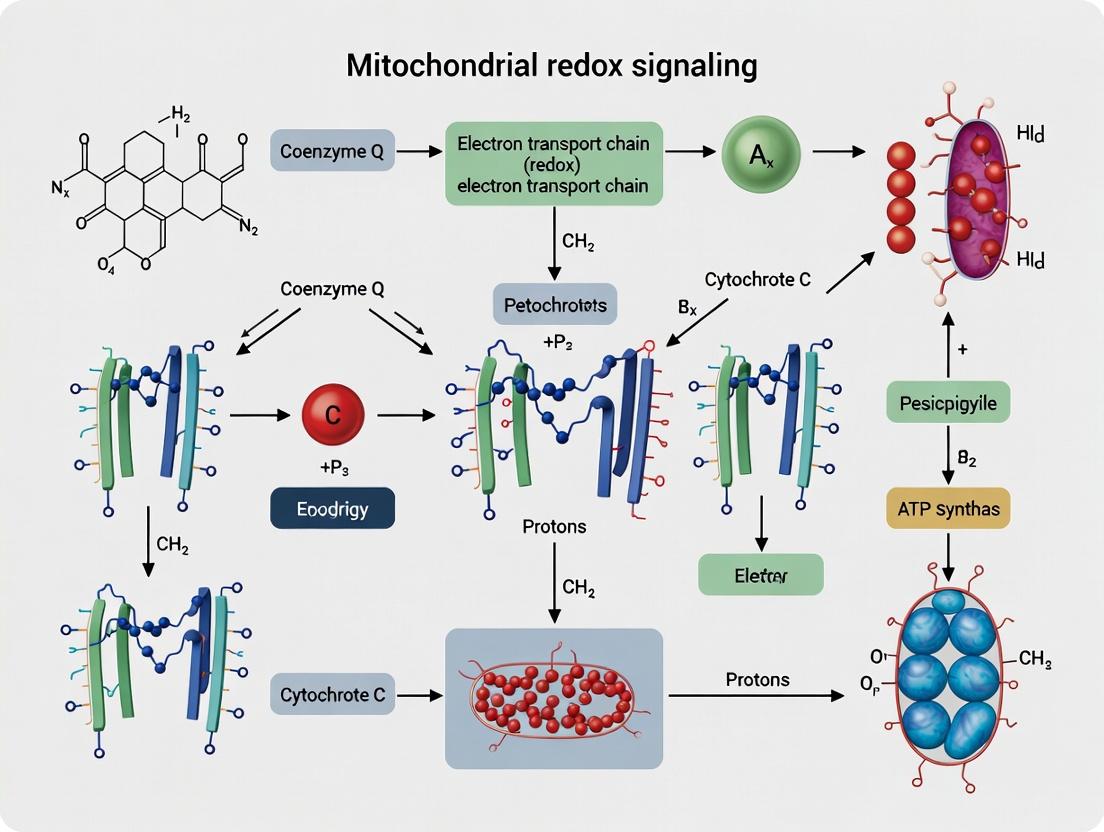
This comprehensive review for researchers and drug development professionals explores the intricate relationship between mitochondrial electron transport chain (ETC) function and redox signaling.
Mitochondrial Redox Signaling and ETC Dynamics: From Fundamental Mechanisms to Therapeutic Targeting in Disease
Abstract
This comprehensive review for researchers and drug development professionals explores the intricate relationship between mitochondrial electron transport chain (ETC) function and redox signaling. We first establish the core principles of reactive oxygen species (ROS) generation as signaling molecules versus damaging byproducts, detailing the specific ETC sites involved. We then examine cutting-edge methodologies for measuring mitochondrial redox states and bioenergetic flux, including their application in disease models. The article addresses common experimental challenges in isolating ETC contributions to cellular redox balance and offers optimization strategies. Finally, we critically evaluate and compare pharmacological and genetic interventions targeting the ETC-redox axis, assessing their validation in preclinical research. This synthesis provides a roadmap for leveraging mitochondrial redox biology in the development of novel therapeutics.
The Redox Engine: Decoding Fundamental Principles of Mitochondrial ETC and ROS Signaling
Mitochondrial reactive oxygen species (mROS), predominantly superoxide anion (O2•−) and its derivative hydrogen peroxide (H2O2), have undergone a profound conceptual evolution. Historically dismissed as damaging byproducts of electron transport chain (ETC) inefficiency, they are now recognized as essential secondary messengers in cellular redox signaling. This whitepaper, framed within the broader thesis of mitochondrial redox signaling and ETC research, delineates the precise mechanisms, quantitative dynamics, and experimental paradigms that define this dualism. For researchers and drug development professionals, understanding this dichotomy is critical for targeting metabolic diseases, cancer, and aging.
Quantitative Landscape of mROS Production and Removal
The steady-state concentration of mROS is a function of tightly regulated production and scavenging systems. The following tables summarize key quantitative data.
Table 1: Major Sites of mROS Production in the Mammalian Electron Transport Chain
| ETC Complex | Primary Site | Estimated % of Total O2•− | Major Substrate/Condition | Approximate Production Rate (nmol/min/mg protein) |
|---|---|---|---|---|
| Complex I | FMN site (Matrix-facing) | 40-50% | Reverse electron transfer (RET) with high Δp, succinate | 0.3 - 1.5 |
| Complex I | Ubiquinone-binding site | <5% | Forward electron transfer, NADH-linked | 0.01 - 0.1 |
| Complex III | Qo site (Intermembrane space-facing) | 30-40% | Antimycin A inhibition, high membrane potential | 0.2 - 1.0 |
| Other Sources | PDH, KGDC, ETF-QOR | 5-10% | Substrate saturation, enzyme defects | Varies |
Data compiled from recent studies using isolated mitochondria and fluorometric/probe-based assays (2021-2023).
Table 2: Primary Mitochondrial Antioxidant Systems
| System | Key Enzymes/Components | Substrate | Location | Approximate Capacity (Relative) | Knockout/Inhibition Phenotype |
|---|---|---|---|---|---|
| Superoxide Dismutase | MnSOD (SOD2) | O2•− | Mitochondrial matrix | High | Neonatal lethality, oxidative stress |
| Glutathione Peroxidase | GPx1, GPx4 | H2O2, Lipid peroxides | Matrix, Inner membrane | Medium-High | Increased susceptibility to oxidative damage |
| Thioredoxin-Peroxiredoxin | Prx3, Prx5, Trx2, TrxR2 | H2O2, ONOO− | Matrix, Intermembrane space | Very High | Embryonic lethality (Trx2), hypersensitivity to H2O2 |
| Catalase | (Not typically present; ectopic expression studied) | H2O2 | Peroxisomes (not mitochondria) | N/A | N/A |
Signaling Pathways Mediated by mROS
mROS, particularly H2O2, modulate cell fate and function via oxidation of specific cysteine thiols on target proteins, altering their activity.
Pathway 1: Hypoxia Adaptation via HIF-1α Stabilization Under normoxia, prolyl hydroxylases (PHDs) hydroxylate HIF-1α, targeting it for VHL-mediated proteasomal degradation. A moderate, sustained mROS burst under physiological hypoxia (or mitochondrial dysfunction) inhibits PHD activity by oxidizing ferrous iron in their active sites. This stabilizes HIF-1α, which translocates to the nucleus, dimerizes with HIF-1β, and activates genes for angiogenesis (VEGF), glycolysis (GLUT1, LDHA), and cell survival.
Pathway 2: Inflammatory Response via NLRP3 Inflammasome Activation mtROS, often coupled with mitochondrial DNA (mtDNA) release, is a critical secondary signal for activating the NLRP3 inflammasome. mROS oxidizes thioredoxin-interacting protein (TXNIP), causing it to dissociate from thioredoxin and bind to NLRP3. This, along with potassium efflux, triggers NLRP3 oligomerization, caspase-1 activation, and maturation of IL-1β and IL-18, driving pyroptosis.
Pathway 3: Metabolic Adaptation via Activation of the Nrf2/KEAP1 Pathway Under oxidative stress, mROS can indirectly activate Nrf2. KEAP1, a cytosolic sensor, contains reactive cysteines. Electrophilic species derived from mROS-induced lipid peroxidation (e.g., 4-HNE) or direct H2O2 modify these cysteines, causing KEAP1 to release Nrf2. Nrf2 translocates to the nucleus and upregulates antioxidant response element (ARE)-driven genes (HO-1, NQO1, GCLC), enhancing cellular defense.
Diagram 1: mROS stabilizes HIF-1α under hypoxia (64 chars)
Diagram 2: mROS and TXNIP activate NLRP3 inflammasome (67 chars)
Experimental Protocols for Key Investigations
Protocol: Measuring Site-Specific mROS Production in Isolated Mitochondria
Objective: Quantify O2•−/H2O2 flux from specific ETC sites (e.g., Complex I RET vs. Complex III Qo site). Reagents: Isolation buffer (e.g., Mannitol/Sucrose/HEPES), substrates (succinate, glutamate/malate, antimycin A, rotenone), Amplex UltraRed (10 µM), horseradish peroxidase (HRP, 0.1 U/mL), superoxide dismutase (SOD, 50 U/mL). Procedure:
- Isolate mitochondria from tissue/cells via differential centrifugation.
- In a fluorometer plate, add mitochondria (0.1 mg protein/mL) in respiration buffer.
- For Complex I RET (Matrix O2•−): Add succinate (5 mM) to induce RET. Include rotenone (1 µM) to confirm Complex I origin. Add Amplex Red/HRP with and without exogenous SOD. SOD-sensitive signal indicates O2•−, which dismutates to H2O2 detected by Amplex Red.
- For Complex III Qo site (IMS O2•−): Add antimycin A (1 µM) to block Qi site, inducing O2•− from Qo site. Use substrates like succinate or TMPD/ascorbate. Since O2•− is released to IMS, use acetylated cytochrome c reduction assay (monitored at 550 nm) as Amplex Red may not access IMS efficiently.
- Calculate flux rates using H2O2 standard curves. Express as nmol H2O2/min/mg protein.
Protocol: Validating mROS-Mediated Redox Signaling via Cysteine Oxidation
Objective: Detect specific protein oxidation (e.g., PHD, KEAP1) in response to physiological mROS stimuli. Reagents: Dimedone-based probes (e.g., DYn-2, 50 µM for live-cell labeling), anti-dimedone antibody, siRNA for mitochondrial antioxidants (e.g., SOD2), MitoPQ (mitochondria-targeted paraquat, 1 µM) as a generator. Procedure:
- Treat cells (e.g., HeLa, MEFs) with physiological mROS inducer (e.g., low-dose MitoPQ, hypoxia chamber at 1-2% O2) for 1-2 hours.
- For live-cell labeling, add cell-permeable DYn-2 for the final 30 min.
- Lyse cells under non-reducing conditions with N-ethylmaleimide (NEM, 20 mM) to alkylate free thiols.
- Perform click chemistry to biotinylate DYn-2-labeled sulfenic acids.
- Pull down biotinylated proteins with streptavidin beads, elute, and identify targets by western blot (for candidate proteins) or mass spectrometry.
- Confirm functional consequence: Co-assess HIF-1α stabilization (western) or Nrf2 nuclear translocation (immunofluorescence) under the same conditions.
The Scientist's Toolkit: Research Reagent Solutions
Table 3: Essential Reagents for mROS Research
| Reagent/Tool | Category | Primary Function | Example Product/Catalog # |
|---|---|---|---|
| MitoSOX Red | Fluorescent Probe | Selective detection of mitochondrial matrix superoxide. Cell-permeable, oxidized by O2•−, and exhibits red fluorescence when bound to DNA. | Thermo Fisher, M36008 |
| MitoPY1 | Ratiometric Probe | Mitochondria-targeted, ratiometric H2O2 sensor. Allows quantitative assessment of matrix H2O2 dynamics. | Tocris, 6581 |
| MitoTEMPO | Mitochondria-targeted Antioxidant | Mito-genic SOD mimetic and scavenger. Used to specifically quench mROS and confirm its involvement in a phenotype. | Sigma-Aldrich, SML0737 |
| MitoParaquat (MitoPQ) | Mitochondria-targeted ROS Generator | Delivers paraquat to the mitochondrial matrix, selectively increasing mROS production without significant cytosolic effects. | Custom synthesis (Murphy Lab) |
| Antimycin A | ETC Inhibitor | Inhibits Complex III at Qi site, leading to maximal O2•− production from the Qo site. A key tool for probing Complex III ROS. | Sigma-Aldrich, A8674 |
| Rotenone | ETC Inhibitor | Inhibits Complex I, used to distinguish between forward (rotenone-sensitive) and reverse (rotenone-insensitive) electron transfer ROS production. | Sigma-Aldrich, R8875 |
| Acetylated Cytochrome c | Spectrophotometric Assay | Impermeable to mitochondrial outer membrane. Reduction by O2•− released into the intermembrane space is monitored at 550 nm. | Sigma-Aldrich, C4186 (acetylation required) |
| Amplex UltraRed/HRP | Fluorometric Assay | Highly sensitive detection of H2O2. HRP catalyzes oxidation of Amplex Red by H2O2 to resorufin (Ex/Em ~571/585 nm). | Thermo Fisher, A36006 |
| CPTIO | Scavenger | Cell-permeable, specific scavenger for nitric oxide (•NO), used to disentangle mROS signaling from peroxynitrite (ONOO−) formation. | Cayman Chemical, 81540 |
Diagram 3: Workflow for mROS signaling investigation (67 chars)
The dual nature of mROS presents both a challenge and an opportunity for therapeutic intervention. In pathologies like neurodegeneration or ischemia-reperfusion injury, where mROS overproduction is detrimental, targeted antioxidants like MitoTEMPO or Nrf2 activators hold promise. Conversely, in immune activation or certain adaptive responses, controlled mROS generation may be beneficial. The future of drug development in this field lies in achieving precise, context-dependent modulation—enhancing specific mROS signals while inhibiting pathological bursts. This requires a deep understanding of the quantitative thresholds, spatial localization, and specific redox targets outlined in this guide.
Within the broader thesis of mitochondrial redox signaling, the electron transport chain (ETC) is not merely an energy transducer but a critical hub for reactive oxygen species (ROS) generation. Superoxide (O₂•⁻) and its dismutation product hydrogen peroxide (H₂O₂) are primary ROS originating from specific sites within Complexes I, II, and III. Their regulated production acts as essential signaling molecules, while dysregulation contributes to oxidative stress pathologies. This whitepaper provides an in-depth technical analysis of the architectural features governing ROS generation at these sites, essential for researchers and drug development professionals targeting mitochondrial redox biology.
Architectural Determinants of ROS Generation
ROS generation is a thermodynamic inevitability of electron leak to oxygen from specific ETC components. The architecture—including redox center positioning, local oxygen concentration, and the reduction state of electron carriers—dictates the site-specific rate.
Complex I (NADH:ubiquinone oxidoreductase): The primary site is the flavin mononucleotide (FMN) cofactor, where electrons from NADH first enter. A secondary site is the ubiquinone-binding pocket. Reverse electron transport (RET) from a highly reduced ubiquinol pool back through Complex I, driven by a high proton motive force, dramatically increases O₂•⁻ generation from the FMN site.
Complex II (Succinate dehydrogenase): ROS generation occurs primarily at the flavin adenine dinucleotide (FAD) cofactor, where succinate is oxidized. Under conditions of high succinate concentration and a highly reduced ubiquinone pool (e.g., during ischemia/reperfusion), electron backflow can increase FAD reduction state and O₂•⁻ production.
Complex III (Ubiquinol:cytochrome c oxidoreductase): The primary site is the Q₀ site (quinol oxidation site), where the unstable semiquinone intermediate directly donates an electron to molecular oxygen. This occurs during the Q-cycle and is the only site whose O₂•⁻ generation is directed toward both the intermembrane space and the matrix.
Quantitative Data on ROS Generation Sites
Live search data indicates significant variation in reported rates due to methodological differences (e.g., substrate conditions, inhibitors, detection probes). The following table synthesizes consensus findings under defined experimental conditions.
Table 1: Comparative Quantitative Metrics for Major ROS-Generating Sites
| ETC Complex | Primary Site | Reported O₂•⁻/H₂O₂ Generation Rate (nmol/min/mg protein) | Key Condition/Trigger | Major Topological Release Direction |
|---|---|---|---|---|
| Complex I | FMN site (RET) | 0.5 - 4.0 | Succinate-driven RET, high Δp, no ADP | Mitochondrial Matrix |
| Complex I | Forward site (FMN/Q site) | 0.1 - 0.5 | NADH, rotenone, low Δp | Mitochondrial Matrix |
| Complex II | FAD site | 0.05 - 0.3 | Succinate, thenoyltrifluoroacetone (TTFA), malonate | Mitochondrial Matrix |
| Complex III | Q₀ site | 0.2 - 1.5 | Antimycin A, high [QH₂], myxothiazol absence | Intermembrane Space & Matrix |
Detailed Experimental Protocols for Assessing Site-Specific ROS
Protocol: Measuring H₂O₂ Generation from Isolated Mitochondria Using Amplex Red
Purpose: Quantify net H₂O₂ efflux from specific ETC sites. Reagents: Isolation buffer (e.g., Mannitol/Sucrose/HEPES), substrate cocktails (e.g., 5mM succinate, 5mM glutamate/malate), inhibitors (e.g., 2µM rotenone, 10µM antimycin A), Amplex Red (50µM), horseradish peroxidase (1 U/mL), SOD (50 U/mL). Procedure:
- Isolate mitochondria via differential centrifugation.
- In a 96-well plate, add assay buffer, HRP, SOD, and Amplex Red.
- Add mitochondrial sample (0.1-0.2 mg protein).
- Initiate reaction with specific substrate (e.g., succinate for RET) or inhibitor (e.g., antimycin A for Complex III).
- Monitor fluorescence (λex/λem = 563/587 nm) kinetically for 10-30 min.
- Calculate H₂O₂ production using a standard curve. Data Interpretation: Use specific inhibitor cocktails to isolate contributions. e.g., Rotenone (Complex I inhibition) vs. Antimycin A (Complex III Q₀ site stabilization).
Protocol: Direct O₂•⁻ Detection from ETC Complexes Using EPRI
Purpose: Direct detection and quantification of O₂•⁻ from specific complexes. Reagents: Isolated ETC complexes (e.g., bovine heart Complex I), spin trap (e.g., 50mM DMPO), substrates (e.g., NADH, decylubiquinol), inhibitor (e.g., rotenone). Procedure:
- Purify ETC complex via affinity chromatography.
- In an ESR flat cell, mix complex (0.1-0.5 mg/mL) with spin trap in appropriate buffer.
- Rapidly mix with substrate to initiate reaction.
- Acquire Electron Paramagnetic Resonance (EPR) spectra immediately (X-band, ~9.8 GHz).
- Quantify DMPO-OOH adduct signal (characteristic hyperfine splitting). Data Interpretation: Signal amplitude is proportional to O₂•⁻ production. Compare signals with and without site-specific inhibitors.
Visualization of Pathways and Workflows
Diagram 1: Topology of O2 Production in ETC
Diagram 2: H2O2 Measurement Workflow
The Scientist's Toolkit: Key Research Reagent Solutions
Table 2: Essential Reagents for ETC ROS Research
| Reagent / Material | Primary Function | Key Application in ROS Studies |
|---|---|---|
| Rotenone | Complex I inhibitor (blocks Q-site) | Suppresses forward electron flow; induces ROS from forward site at high concentration. |
| Antimycin A | Complex III inhibitor (stabilizes Q₀ site semiquinone) | Maximizes O₂•⁻ production from the Q₀ site toward both sides of the IMM. |
| Myxothiazol | Complex III inhibitor (blocks Q₀ site quinol oxidation) | Inhibits Q₀ site ROS generation; used with Antimycin A to pinpoint site. |
| Thenoyltrifluoroacetone (TTFA) | Complex II inhibitor (blocks ubiquinone binding) | Inhibits electron egress from Complex II, used to assess CII-derived ROS. |
| Malonate | Competitive succinate dehydrogenase inhibitor | Reversible inhibitor of Complex II substrate oxidation. |
| Amplex Red / Horseradish Peroxidase (HRP) | Fluorogenic H₂O₂ detection system | Measures net H₂O₂ release from mitochondria or cells. |
| MitoSOX Red | Mitochondria-targeted fluorogenic dye for O₂•⁻ | Live-cell imaging of mitochondrial superoxide (with caution for artifacts). |
| Decylubiquinol / Coenzyme Q1 | Reduced ubiquinone analogs | Substrate for studying Complex III and RET-driven Complex I ROS in isolated systems. |
| Superoxide Dismutase (SOD), PEG-SOD | O₂•⁻ scavenger (PEG-SOD is cell-permeable) | Confirms O₂•⁻ involvement; PEG-SOD assesses intermembrane space vs. matrix O₂•⁻. |
| MitoTEMPO | Mitochondria-targeted SOD mimetic / antioxidant | Tool to scavenge mitochondrial matrix O₂•⁻ and study downstream signaling effects. |
Within the context of mitochondrial redox signaling and electron transport chain (ETC) research, redox couples function as critical regulatory hubs. The NAD(P)+/NAD(P)H, GSH/GSSG, and thioredoxin (Trx) systems are not merely passive redox buffers but are dynamic, interconnected nodes that sense and transduce metabolic and oxidative stress signals. These couples directly influence mitochondrial bioenergetics, apoptosis, and retrograde signaling to the nucleus, positioning them as central targets for understanding metabolic diseases, aging, and therapeutic intervention.
Core Redox Systems: Biochemistry and Interconnections
The NAD+/NADH System
The NAD+/NADH couple is a primary hydride transfer agent, integral to catabolic and anabolic reactions. Its ratio is a key indicator of cellular metabolic state. In mitochondria, the NADH pool is primarily generated by the TCA cycle and oxidized by Complex I of the ETC, directly linking substrate oxidation to ATP production.
The GSH/GSSG System
Glutathione (γ-glutamyl-cysteinyl-glycine) is the most abundant low-molecular-weight thiol. The reduced (GSH) to oxidized (GSSG) ratio is the principal determinant of the cellular redox environment. GSH serves as a direct antioxidant, a cofactor for enzymes like glutathione peroxidases (GPx), and a regulator of protein thiol-disulfide status.
The Thioredoxin System
The thioredoxin system comprises thioredoxin (Trx), thioredoxin reductase (TrxR), and NADPH. Trx, with its active dithiol motif, reduces protein disulfides and is a key regulator of signaling molecules like apoptosis signal-regulating kinase 1 (ASK1). Its activity is tightly linked to the NADPH pool.
System Interdependence
These systems are metabolically coupled. NADPH, generated primarily by the pentose phosphate pathway, is the reducing power for both glutathione reductase (regenerating GSH from GSSG) and thioredoxin reductase (regenerating reduced Trx). The NADPH/NADP+ ratio thus underpins the reducing capacity of the GSH and Trx systems.
Diagram 1: Interconnection of Core Redox Systems. (97 characters)
Quantitative Data on Redox Couples in Mitochondria
Table 1: Characteristics of Major Cellular Redox Couples
| Redox Couple | Typical Ratio (Reduced/Oxidized) | Midpoint Potential (E°', V, pH 7.0) | Primary Subcellular Compartment | Key Regulatory Enzymes |
|---|---|---|---|---|
| NAD+/NADH | ~700:1 (Cytosol), ~7:1 (Mitochondria) | -0.320 | Cytosol, Mitochondria | Dehydrogenases, Complex I (NADH:ubiquinone oxidoreductase) |
| NADP+/NADPH | ~100:1 | -0.324 | Cytosol, Mitochondria | IDH1/2, G6PD, ME1, NNT |
| GSH/GSSG | 30:1 to 100:1 | -0.240 (for 2GSH/GSSG) | Cytosol (1-11 mM), Mitochondria (5-11 mM) | Glutathione Reductase (GR), Glutathione Peroxidases (GPx) |
| Trx-(SH)2 / Trx-S2 | >100:1 | -0.230 | Cytosol, Mitochondria (Trx2) | Thioredoxin Reductase (TrxR), Peroxiredoxins (Prx) |
Table 2: Impact of Perturbations on Mitochondrial Redox Pools
| Perturbation/Model | NAD+/NADH Ratio | GSH/GSSG Ratio | Trx Redox State | Measured Outcome |
|---|---|---|---|---|
| Acute H₂O₂ (100 µM) | Decrease (20-40%) | Sharp Decrease (to ~5:1) | Oxidized (Trx-S2 ↑) | ASK1 Activation, Prx Inactivation |
| Complex I Inhibition (Rotenone) | Increase (NADH ↑) | Moderate Decrease | Mild Oxidation | ↑ Superoxide, ↓ ATP, Apoptosis |
| Glucose Deprivation | Decrease (NAD+ ↑) | Decrease | Oxidation | AMPK Activation, Autophagy |
| Aging (Mouse Liver) | Decrease (~50%) | Decrease (30-60%) | More Oxidized | ↓ ETC Function, ↑ mtROS |
Key Experimental Protocols
Protocol: Measuring Mitochondrial NAD+/NADH Ratio via Enzymatic Cycling
- Principle: NADH is alkali-stable, while NAD+ is acid-stable. Differential extraction allows separate quantification via enzymatic recycling reactions that produce a fluorescent product.
- Reagents:
- Extraction Buffers: 0.1M HCl (for NAD+), 0.1M NaOH (for NADH).
- Assay Buffer: 0.1M Bicine, pH 7.8.
- Enzyme Mix: Alcohol dehydrogenase (ADH), diaphorase.
- Substrates/Cofactors: Ethanol, resazurin, phenazine ethosulfate (PES).
- Standard: NAD+ and NADH for calibration.
- Procedure:
- Rapid Extraction: Snap-freeze cell pellets. Split sample. Treat one with HCl (extracts NAD+), neutralize. Treat the other with NaOH (extracts NADH), heat to destroy NAD+, neutralize.
- Cycling Reaction: In a 96-well plate, combine sample, Bicine buffer, ethanol, resazurin, PES, and ADH.
- Detection: Incubate at 37°C, monitor fluorescence (Ex/Em: 544/590 nm) kinetically.
- Calculation: Quantify from standard curves. Report as NAD+/NADH and total pool size.
Protocol: Quantifying GSH/GSSG Ratio using the Tietze Assay (DTNB Recycling)
- Principle: GSH reduces 5,5'-dithio-bis-(2-nitrobenzoic acid) (DTNB) to produce yellow 2-nitro-5-thiobenzoic acid (TNB). GSSG is measured after derivatization of GSH with 2-vinylpyridine.
- Reagents:
- Extraction Buffer: Ice-cold metaphosphoric acid (MPA) or perchloric acid with EDTA.
- Derivatization Agent: 2-vinylpyridine.
- Assay Reagents: DTNB, glutathione reductase (GR), NADPH.
- Buffers: Sodium phosphate buffer with EDTA, pH 7.5.
- Procedure:
- Acid Extraction: Lyse cells in MPA buffer, centrifuge to deproteinize.
- GSH Sample: Use neutralized supernatant directly.
- GSSG Sample: Incubate aliquot of neutralized supernatant with 2-vinylpyridine for 1h to derivative all GSH. Centrifuge to remove excess reagent.
- Recycling Assay: To sample, add phosphate-EDTA buffer, DTNB, and NADPH. Initiate reaction by adding GR. Monitor absorbance at 412 nm for 2-3 minutes.
- Calculation: GSH concentration = Total GSH (from GSH sample) - [2 x GSSG]. GSSG is determined from the derivatized sample. Report as nmol/mg protein and GSH/GSSG ratio.
Diagram 2: GSH/GSSG Assay Workflow. (28 characters)
Protocol: Assessing Thioredoxin Redox State via Redox Western Blot
- Principle: Alkylating agents (e.g., iodoacetic acid, N-ethylmaleimide) trap thiols in their current redox state. Non-reducing SDS-PAGE separates reduced and oxidized forms based on mobility shift.
- Reagents:
- Alkylation Buffer: Ice-cold lysis buffer (e.g., 50mM Tris-HCl, pH 7.5, 150mM NaCl, 1% NP-40) containing 50mM N-ethylmaleimide (NEM) or 100mM iodoacetic acid (IAA) to block free thiols.
- Control Reductant: Dithiothreitol (DTT) or Tris(2-carboxyethyl)phosphine (TCEP).
- Electrophoresis: Non-reducing Laemmli sample buffer (without β-mercaptoethanol or DTT), pre-cast gels.
- Antibodies: Anti-Trx1 (cytosolic) or anti-Trx2 (mitochondrial).
- Procedure:
- Trapping: Lyse cells directly in ice-cold alkylation buffer. Incubate on ice for 15-30 min.
- Cleaning: Remove excess alkylating agent via protein precipitation or spin column.
- Controls: Prepare a reduced control by treating an aliquot of lysate with DTT before alkylation.
- Gel Electrophoresis: Load samples on a non-reducing gel. Do not add reductant to samples or running buffer.
- Western Blot: Transfer and probe with anti-Trx antibody. The oxidized form (disulfide) runs faster (higher mobility) than the reduced form.
- Analysis: Quantify band intensities. % Reduced = (Intensityreduced / (Intensityreduced + Intensity_oxidized)) * 100.
The Scientist's Toolkit: Key Research Reagent Solutions
Table 3: Essential Reagents for Redox Couple Research
| Reagent/Category | Example Products | Primary Function in Research |
|---|---|---|
| Redox-Sensitive Fluorescent Probes | roGFP (roGFP2, mito-roGFP2), HyPer, MitoPY1 | Genetically encoded or chemical probes to visualize real-time redox dynamics (e.g., GSH/GSSG, H₂O₂) in specific compartments. |
| NAD+/NADH Quantitation Kits | Promega NAD/NADH-Glo, Abcam ab65348, BioVision K337/K338 | Luminescent or colorimetric assays for sensitive, high-throughput measurement of total and compartmentalized NAD+/NADH pools. |
| GSH/GSSG Quantitation Kits | Cayman Chemical 703002, Thermo Fisher Scientific EIAGSHC | Optimized DTNB-recycling or LC-MS/MS-based kits for accurate, selective measurement of GSH, GSSG, and their ratio. |
| Thioredoxin Redox State Kits | Redox Western Blot Kits (e.g., with IAM/Alkylating agents), Recombinant Trx/TrxR proteins | Tools to trap, detect, and quantify the reduced vs. oxidized forms of thioredoxin and related proteins. |
| Specific Enzyme Inhibitors/Activators | Auranofin (TrxR inhibitor), BSO (γ-glutamylcysteine synthetase inhibitor), FK866 (NAMPT inhibitor), MitoTEMPO (mtROS scavenger) | Pharmacological tools to perturb specific nodes of the redox networks and study downstream consequences. |
| Mass Spectrometry Standards | Isotopically labeled NAD+, NADH, GSH, GSSG (e.g., ¹³C, ¹⁵N, D-labeled) | Internal standards for absolute quantification and redox metabolomics via LC-MS/MS, enabling systems-level analysis. |
Diagram 3: Mitochondrial Redox Signaling Network. (44 characters)
Within the broader thesis on mitochondrial redox signaling and electron transport chain (ETC) research, this whitepaper details the bidirectional communication pathways between mitochondria and the nucleus/cytosol. Mitochondrial retrograde signaling describes the communication of mitochondrial functional status—particularly redox imbalance and metabolic distress—to the nucleus to elicit transcriptional reprogramming. Conversely, anterograde signaling encompasses nuclear-controlled responses that regulate mitochondrial biogenesis and function. This redox-dependent crosstalk is fundamental to cellular adaptation, stress response, and pathogenesis, making it a critical focus for therapeutic intervention in diseases like cancer, neurodegeneration, and metabolic disorders.
Core Signaling Pathways and Molecular Mechanisms
Retrograde Signaling Pathways
Mitochondrial retrograde signaling is initiated by perturbations in mitochondrial membrane potential (ΔΨm), elevated reactive oxygen species (ROS) production, or altered NAD+/NADH ratio. Key pathways include:
- The ATF4-Integrated Stress Response (ISR) Pathway: Activated by mitochondrial dysfunction through eIF2α phosphorylation, leading to ATF4-mediated transcription of genes involved in amino acid metabolism and antioxidant defense.
- The mtUPR (Mitochondrial Unfolded Protein Response): Involves the transcription factor ATFS-1 (in C. elegans) or ATF5/ATF4 (in mammals), which is imported into healthy mitochondria and degraded. Upon mitochondrial import failure, it localizes to the nucleus to upregulate mitochondrial chaperones and proteases.
- Calcium-Dependent Signaling: Mitochondrial calcium efflux, often via the mitochondrial permeability transition pore (mPTP), activates calcineurin, which dephosphorylates NFAT transcription factors, driving their nuclear translocation.
- ROS as Second Messengers: Specific ROS flashes (e.g., H2O2) can oxidize redox-sensitive cytosolic proteins like KEAP1, releasing Nrf2 to migrate to the nucleus and activate antioxidant response element (ARE)-driven genes.
- Metabolite Signaling: Accumulation of metabolites like succinate, fumarate, or 2-hydroxyglutarate can inhibit α-ketoglutarate-dependent dioxygenases, leading to histone/DNA hypermethylation and altered gene expression (e.g., via HIF-1α stabilization).
Anterograde Signaling Pathways
The nucleus reciprocally regulates mitochondria via:
- PGC-1α Axis: The master regulator PGC-1α is activated by upstream sensors like AMPK and SIRT1 (responding to AMP/ATP and NAD+/NADH ratios, respectively). It co-activates transcription factors (NRF-1, NRF-2, ERRα) to drive expression of nuclear-encoded mitochondrial proteins.
- TFAM Regulation: NRF-1/2 also induce transcription of TFAM, which is imported into mitochondria to regulate mitochondrial DNA replication and transcription.
Diagram 1: Mitochondrial-Nuclear Redox Signaling Crosstalk
Table 1: Key Redox Metabolites and Signaling Thresholds
| Signaling Molecule | Basal Level (Reported Range) | Stress/Activation Threshold | Primary Sensor/Effector | Reference (Example) |
|---|---|---|---|---|
| H₂O₂ (mt) | 1-10 nM (local) | Sustained >100 nM | KEAP1, PRX, PTEN | (Sies et al., 2022) |
| NAD+ / NADH (Cytosolic) | Ratio: 100-700 (cell-type specific) | Ratio < 50 | SIRT1, PARP | (Canto et al., 2015) |
| ATP / ADP | Ratio: ~10 | Ratio < 5 | AMPK | (Herzig & Shaw, 2018) |
| Succinate (mt) | 0.5-2 mM | >5 mM (accumulation) | HIF-1α (via PHD inhibition) | (Mills & O'Neill, 2014) |
| ΔΨm | -150 to -180 mV | Depolarization > +20 mV | ATFS-1/ATF5 import | (Quiros et al., 2016) |
Table 2: Experimental Readouts for Pathway Activity
| Pathway | Key Readout | Assay Method | Typical Fold-Change (Stress vs. Control) |
|---|---|---|---|
| mtUPR | CHOP (DDIT3) mRNA | qRT-PCR | 3-10 fold ↑ |
| Nrf2/ARE | NQO1, HMOX1 mRNA | qRT-PCR / Luciferase Reporter | 2-8 fold ↑ |
| PGC-1α | PGC-1α (PPARGC1A) mRNA | qRT-PCR | 2-5 fold ↑ |
| ISR | p-eIF2α / total eIF2α | Western Blot | 2-4 fold ↑ |
| ROS Burst | H₂O₂ flux | Amplex Red / HyPer probe | 2-20 fold ↑ |
Experimental Protocols
Protocol: Inducing and Measuring Retrograde Signaling via Mitochondrial Stress
Objective: To activate the mtUPR/ISR and quantify downstream nuclear transcriptional responses. Materials: See "Scientist's Toolkit" below. Procedure:
- Cell Treatment: Plate cells (e.g., HEK293, MEFs) and treat with mitochondrial stressors for optimal time (e.g., 10 µM Antimycin A for 6h, 20 µM CCCP for 24h, or 1 µM Oligomycin for 12h). Include vehicle control.
- RNA Extraction & qRT-PCR:
- Lyse cells in TRIzol. Isolate total RNA and determine concentration.
- Perform cDNA synthesis using 1 µg RNA and a high-capacity reverse transcriptase kit.
- Prepare qPCR reactions with SYBR Green master mix and primer sets for target genes (ATF4, CHOP, HSP60, ClpP) and housekeeping genes (ACTB, GAPDH).
- Run on a real-time PCR system. Analyze data via the ΔΔCt method.
- Western Blot for Protein Markers:
- Harvest cells in RIPA buffer with protease/phosphatase inhibitors.
- Resolve 20-30 µg protein by SDS-PAGE and transfer to PVDF membrane.
- Block with 5% BSA, then incubate overnight at 4°C with primary antibodies: p-eIF2α (Ser51), total eIF2α, ATF4.
- Incubate with HRP-conjugated secondary antibody (1:5000) for 1h at RT.
- Develop with ECL substrate and image. Quantify band intensity.
- Functional Validation (Optional): Pre-treat cells with 5 mM N-Acetylcysteine (NAC, antioxidant) for 1h prior to stressor to confirm redox-dependence of signaling.
Protocol: Live-Cell Imaging of Mitochondrial ROS and Cytosolic Redox Probes
Objective: To visualize real-time ROS generation and correlate with signaling events. Procedure:
- Cell Preparation: Seed cells into glass-bottom imaging dishes. Transfect with a genetically encoded redox sensor (e.g., Cyto-roGFP2-Orp1 for H₂O₂, or mt-Grx1-roGFP2 for glutathione redox potential) 24-48h prior to imaging.
- Microscopy Setup: Use a confocal or widefield fluorescence microscope with environmental control (37°C, 5% CO₂). For roGFP probes, set up excitation at 405 nm and 488 nm, and emission at 510 nm.
- Image Acquisition: Acquire baseline images. Then, perfuse treatment (e.g., Antimycin A) while continuously imaging. Capture images every 30-60 seconds for 30-60 minutes.
- Data Analysis: Calculate the ratiometric value (405/488 nm excitation) for each time point using ImageJ or similar software. Plot ratio over time. A sustained increase indicates oxidation.
Diagram 2: Workflow for Retrograde Signaling Analysis
The Scientist's Toolkit: Research Reagent Solutions
Table 3: Essential Reagents and Tools for Redox Signaling Research
| Item | Function & Application | Example Product/Catalog # (for reference) |
|---|---|---|
| Mitochondrial Stressors | Induce ETC dysfunction to initiate retrograde signaling. | Antimycin A (ETC CIII inhibitor), CCCP (Uncoupler), Oligomycin (ATP synthase inhibitor). |
| Genetically Encoded Redox Probes | Live-cell, ratiometric measurement of specific redox couples (H₂O₂, GSH/GSSG). | pLVX-cyto-roGFP2-Orp1, pLPC-mt-Grx1-roGFP2. |
| Small-Molecule Redox Probes | Chemical detection of ROS/RNS. | MitoSOX Red (mt superoxide), CM-H2DCFDA (general ROS), MitoPY1 (mt H₂O₂). |
| ΔΨm-Sensitive Dyes | Monitor mitochondrial membrane potential. | TMRE, JC-1, TMRM. |
| Seahorse XF Analyzer Kits | Real-time measurement of mitochondrial OCR and ECAR. | XF Cell Mito Stress Test Kit, XF Glycolysis Stress Test Kit. |
| Pathway-Specific Antibodies | Detect activation/translocation of key signaling proteins. | p-eIF2α (Ser51), ATF4, Nrf2, PGC-1α, TFAM (from suppliers like CST, Abcam). |
| qRT-PCR Primer Panels | Profile expression of antioxidant, metabolic, and UPR genes. | Human Mitochondrial Stress Response PCR Array, Custom-designed SYBR Green primer sets. |
| SIRT1/AMPK Activators/Inhibitors | Modulate anterograde signaling pathways. | Resveratrol (SIRT1 activator), AICAR (AMPK activator), Compound C (AMPK inhibitor). |
| NAD+/NADH Quantification Kits | Measure cellular redox state. | Colorimetric/Fluorometric NAD/NADH Assay Kit. |
Physiological Roles of Redox Signaling in Metabolism, Apoptosis, and Autophagy (Mitophagy)
Within the context of mitochondrial redox signaling and electron transport chain (ETC) research, redox signaling—mediated by reactive oxygen and nitrogen species (ROS/RNS) and antioxidant systems—serves as a fundamental regulator of cellular homeostasis. This whitepaper details the physiological roles of redox signaling in three interconnected processes: metabolic adaptation, apoptosis, and selective mitochondrial autophagy (mitophagy). Precise spatiotemporal control of redox couples (e.g., NADPH/NADP+, GSH/GSSG, and thioredoxin redox state) dictates cellular fate, integrating signals from mitochondrial bioenergetics and ETC function.
Redox Regulation of Cellular Metabolism
Mitochondrial ROS (mtROS), particularly superoxide (O2•-) and hydrogen peroxide (H2O2), generated primarily at Complexes I and III of the ETC, function as signaling molecules that modulate metabolic pathways.
Key Mechanisms:
- HIF-1α Stabilization: Under hypoxic or pseudohypoxic conditions (e.g., ETC dysfunction), increased mtROS inhibits prolyl hydroxylases (PHDs), stabilizing Hypoxia-Inducible Factor 1-alpha (HIF-1α). HIF-1α drives a metabolic shift towards glycolysis.
- AMPK Activation: Oxidative stress can activate AMP-activated protein kinase (AMPK) both directly via cysteine oxidation and indirectly through ATP depletion. AMPK promotes catabolic processes (fatty acid oxidation, glycolysis) and inhibits anabolic pathways (lipogenesis, protein synthesis).
- Phosphatase Inhibition: Redox signaling can transiently inactivate protein tyrosine phosphatases (PTPs) via oxidation of catalytic cysteine residues, thereby amplifying growth factor signaling (e.g., insulin/IGF-1 pathway) and potentiating pro-growth metabolic responses.
Table 1: Key Redox-Sensitive Metabolic Regulators
| Regulator/Target | Redox Modification | Metabolic Consequence | Primary ROS Source |
|---|---|---|---|
| HIF-1α | Inhibition of PHDs (Fe2+ oxidation) | Glycolytic shift, angiogenesis | ETC Complex III |
| AMPK | Direct oxidative activation | FA oxidation, glucose uptake, mTORC1 inhibition | Multiple (NOX, ETC) |
| PTP1B | Cysteine sulfenylation (-SOH) | Prolonged insulin receptor signaling | Receptor-associated NOX |
| Pyruvate Kinase M2 | Cysteine oxidation | Channeling of glycolytic intermediates to anabolic pathways | Mitochondrial H2O2 |
| KEAP1-NRF2 | KEAP1 cysteine modification | Antioxidant gene transcription, metabolic reprogramming | Mitochondrial/cytosolic H2O2 |
Redox Control of Apoptosis
Redox signaling plays a dual role in apoptosis, acting as both an initiator and a regulator of the intrinsic (mitochondrial) pathway.
Key Mechanisms:
- Mitochondrial Permeability Transition Pore (mPTP) Opening: Elevated matrix ROS, coupled with calcium and depleted adenine nucleotides, promotes mPTP opening, leading to loss of membrane potential (ΔΨm), swelling, and outer membrane rupture.
- Cardiolipin Oxidation: mtROS directly oxidizes cardiolipin on the inner mitochondrial membrane. Oxidized cardiolipin translocates to the outer membrane, facilitating the docking and activation of pro-apoptotic BAX/BAK proteins.
- Bcl-2 Family Regulation: Anti-apoptotic proteins like Bcl-2 can be inactivated via oxidative modifications, while pro-apoptotic proteins like BIM can be stabilized.
- Caspase Activation: The redox environment influences caspase activity. Thioredoxin (Trx), when reduced, binds and inhibits ASK1 and caspases. Oxidation of Trx releases ASK1, triggering the MAPK apoptosis pathway.
Diagram Title: Redox Signaling in the Intrinsic Apoptotic Pathway
Redox Signaling in Autophagy and Mitophagy
Redox signals are critical for the induction of general autophagy and the selective targeting of damaged mitochondria via mitophagy, a key mitochondrial quality control mechanism.
Key Mechanisms:
- ATG4 Regulation: The cysteine protease ATG4, which processes LC3, is reversibly inactivated by oxidation. This allows the processed LC3 to remain lipidated and associated with the phagophore membrane, promoting autophagosome formation.
- PINK1/Parkin Pathway: Mitochondrial depolarization (ΔΨm loss) inhibits PINK1 import and degradation, leading to its stabilization on the outer mitochondrial membrane (OMM). PINK1 phosphorylates ubiquitin and Parkin, recruiting Parkin to mitochondria. Parkin ubiquitinates OMM proteins, tagging the organelle for autophagic degradation. mtROS is both a signal for damage and a modulator of PINK1/Parkin activity.
- Receptor-Mediated Mitophagy: Proteins like NIX, BNIP3, and FUNDC1 act as mitophagy receptors. Their function is often regulated by phosphorylation, which can be influenced by redox-sensitive kinases/phosphatases.
- Hormesis via Mitophagy: Low-level mtROS can induce protective mitophagy to remove mildly damaged units, while severe ROS bursts trigger apoptosis.
Table 2: Quantitative Metrics in Redox-Dependent Mitophagy
| Parameter | Basal Level | Induced Level (e.g., CCCP) | Measurement Method | Significance |
|---|---|---|---|---|
| Mitochondrial ROS (H2O2) | 0.1-0.5 nM (matrix) | 5-20 nM (matrix) | roGFP2-Orp1 / MitoPY1 | Initial mitophagy signal |
| ΔΨm | -150 to -180 mV | Depolarized (> -80 mV) | TMRE / JC-1 fluorescence | PINK1 stabilization trigger |
| LC3-II/I Ratio | ~0.5 - 1.0 | 3.0 - 10.0 | Western Blot | Autophagosome formation |
| Parkin Recruitment (t½) | N/A | 15-45 min | Live-cell imaging (GFP-Parkin) | Tagging efficiency |
| Mitophagic Flux | 0.5-2% mitochondria/hr | 10-30% mitochondria/hr | mt-Keima assay | Overall pathway activity |
Diagram Title: Redox Signaling in the PINK1/Parkin Mitophagy Pathway
Experimental Protocols for Key Assays
5.1. Measuring Mitochondrial H2O2 Flux using Amplex UltraRed
- Principle: Horseradish peroxidase (HRP) utilizes H2O2 to oxidize Amplex Red to fluorescent resorufin.
- Protocol:
- Isolate mitochondria or use permeabilized cells in respiration buffer (e.g., MiR05).
- Add 5 U/mL HRP, 10 µM Amplex UltraRed, and 25 U/mL superoxide dismutase (SOD) to convert all O2•- to H2O2.
- Initiate substrate-specific respiration (e.g., 10 mM glutamate/5 mM malate).
- Monitor fluorescence (Ex/Em: 565/600 nm) kinetically in a plate reader. Subtract values with catalase (500 U/mL) control.
- Quantify using an H2O2 standard curve (0-1 µM).
5.2. Assessing Mitophagic Flux with mt-Keima
- Principle: mt-Keima is a pH-sensitive fluorescent protein targeted to mitochondria. Neutral pH (mitochondria) excites at 440 nm, while acidic pH (lysosomes) excites at 586 nm. Emission is at 620 nm.
- Protocol:
- Stably transduce cells with adenovirus encoding mt-Keima.
- Treat cells with mitophagy inducer (e.g., 10 µM CCCP, 1 µM Oligomycin/Antimycin A) +/- lysosomal inhibitor (40 nM Bafilomycin A1) for 6-24h.
- Analyze by confocal microscopy or flow cytometry.
- Calculation: Mitophagic flux = (586/440 nm ratio with BafA1) - (586/440 nm ratio without BafA1). High ratio indicates mitochondria in lysosomes.
5.3. Monitoring Glutathione Redox Potential (EGSH) using Grx1-roGFP2
- Principle: Glutaredoxin 1 (Grx1)-linked roGFP2 equilibrates with the GSH/GSSG pool. Oxidation increases excitation at 400 nm and decreases at 490 nm.
- Protocol:
- Express roGFP2-Grx1 in cytosol or mitochondrial matrix of cells.
- Acquire live-cell ratiometric images (Ex: 400 & 490 nm, Em: 525 nm) under experimental conditions.
- Calculate ratio (R = I400/I490).
- Normalize: % Oxidation = [(R - Rmin) / (Rmax - R)] * 100. Determine Rmax with 1 mM diamide, Rmin with 10 mM DTT.
- Calculate EGSH using Nernst equation: EGSH = E0 - (59.1 mV/z)*log([GSH]2/[GSSG]), where E0 = -240 mV for Grx1-roGFP2 at pH 7.4, and z=2.
The Scientist's Toolkit: Research Reagent Solutions
Table 3: Essential Reagents for Redox Signaling Research
| Reagent / Material | Function / Application | Example Product/Catalog # |
|---|---|---|
| MitoSOX Red | Selective detection of mitochondrial superoxide (O2•-). Fluorescent upon oxidation. | Thermo Fisher Scientific, M36008 |
| Amplex UltraRed / Amplex Red | Highly sensitive fluorogenic substrate for H2O2 detection in solution-based assays. | Thermo Fisher Scientific, A36006 |
| roGFP2-Orp1 / Grx1-roGFP2 | Genetically encoded ratiometric biosensors for specific detection of H2O2 or GSH redox potential (EGSH). | Addgene (plasmids #64999, #64971) |
| TMRE / TMRM | Cell-permeant, potentiometric dyes for measuring mitochondrial membrane potential (ΔΨm). | Abcam, ab113852 |
| mt-Keima | Ratiometric, pH-stable fluorescent protein for quantifying mitophagic flux via imaging or flow cytometry. | MBL International, AM-1100 (adenovirus) |
| Antimycin A | Complex III inhibitor (Qi site). Robustly increases mtROS production upstream of cytochrome c. | Sigma-Aldrich, A8674 |
| Carbonyl cyanide m-chlorophenyl hydrazone (CCCP) | Mitochondrial uncoupler. Depolarizes ΔΨm, inducing PINK1/Parkin mitophagy. | Sigma-Aldrich, C2759 |
| Bafilomycin A1 | V-ATPase inhibitor. Blocks lysosomal acidification and autophagosome-lysosome fusion. Used to measure autophagic flux. | Cayman Chemical, 11038 |
| MitoTEMPO | Mitochondria-targeted superoxide dismutase mimetic and antioxidant. Scavenges mtO2•- without disrupting ETC. | Sigma-Aldrich, SML0737 |
| Recombinant Human Parkin Protein | For in vitro ubiquitination assays to study Parkin enzyme kinetics and redox regulation. | R&D Systems, 9465-PR |
| Seahorse XFp / XFe96 Analyzer | Instrument for real-time measurement of mitochondrial respiration (OCR) and glycolytic rate (ECAR). | Agilent Technologies |
Tools of the Trade: Advanced Methods to Probe ETC Function and Redox Dynamics in Research & Disease
The study of mitochondrial electron transport chain (ETC) function extends beyond bioenergetics to encompass its central role in cellular redox signaling. The ETC is a primary source of reactive oxygen species (ROS), which act as critical signaling molecules in pathways regulating apoptosis, autophagy, metabolic adaptation, and inflammation. High-resolution respirometry, particularly using Oroboros O2k instruments, provides the precision necessary to dissect the nuanced relationships between electron flux, proton motive force, coupling efficiency, and ROS production. By accurately quantifying respiratory states and capacities, researchers can investigate how perturbations in ETC function—through genetic, pharmacological, or disease-state modulation—alter the redox balance and downstream signaling cascades, offering insights into mechanisms of disease and targets for therapeutic intervention in metabolic, neurodegenerative, and oncological disorders.
Core Principles of High-Resolution Respirometry
High-resolution respirometry measures oxygen concentration and flux (JO₂) in closed chambers with very low background oxygen consumption. The Oroboros O2k system features dual chambers with integrated Clark-type oxygen sensors, temperature control (±0.001°C), and continuous stirring, allowing for stable measurements at very low oxygen levels (even into the nanomolar range). This enables the determination of:
- Respiratory Control Ratios (RCR): A measure of mitochondrial coupling (State 3/State 2 or State 3/State 4o).
- ETC Capacity: The maximum flux through specific complexes.
- Leak Respiration: Uncoupling of electron transport from ATP synthesis.
- Oxidative Phosphorylation (OXPHOS) Capacity: The maximal ADP-stimulated respiration. These parameters are foundational for assessing mitochondrial health and its role in redox signaling networks.
Key Experimental Protocols for Assessing Coupling and Capacity
Protocol 1: Substrate-Uncoupled-Inhibitor Titration (SUIT) Protocol for Isolated Mitochondria
Objective: To sequentially probe the function of individual ETC complexes and coupling states. Methodology:
- Chamber Setup: Isolate mitochondria from tissue/cells. Add mitochondrial preparation (e.g., 0.2 mg protein/mL) to MiR05 respiration buffer (pH 7.1) at 37°C.
- LEAK State (State 2): Add NADH-linked substrates (e.g., 10 mM Pyruvate + 2 mM Malate + 10 mM Glutamate). Respiration in the absence of ADP reflects proton leak.
- OXPHOS Capacity (State 3): Add a saturating concentration of ADP (2.5-5 mM). This stimulates maximal phosphorylation-linked respiration through Complex I (CI).
- Complex I & II Combined Capacity: Add 10 mM Succinate (CII substrate). Respiration now reflects combined electron input from CI and CII.
- ETC Capacity (State 3u): Add 2.5 μM Carbonyl cyanide m-chlorophenyl hydrazone (CCCP), an uncoupler, to collapse the proton gradient and reveal maximum ETC flux independent of ATP synthase limitation.
- Complex II-Specific Capacity: Add 0.5 μM Rotenone (CI inhibitor). Remaining respiration is driven solely by CII.
- Residual Oxygen Consumption (ROX): Add 2.5 μM Antimycin A (CIII inhibitor). The residual signal is subtracted from all previous respiratory states as non-mitochondrial oxygen consumption.
Protocol 2: Cell Permeabilization Protocol for Intact Cell ETC Analysis
Objective: To assess the function of endogenous mitochondrial networks within their cellular context. Methodology:
- Intact Cells: Place intact cells (e.g., 1-2x10⁶ cells/mL) in culture medium in the chamber.
- Basal Respiration: Record routine respiration.
- Permeabilization: Add 5–10 μg/mL digitonin (optimized per cell type) to permeabilize the plasma membrane while leaving mitochondrial membranes intact.
- CYTOCHROME c Test: Add 10 μM cytochrome c. An increase in respiration of >15% indicates outer mitochondrial membrane damage; data from such preparations should be discarded.
- SUIT Protocol Application: Proceed with a SUIT protocol (as above) using defined substrates and inhibitors to probe specific ETC pathways.
Data Presentation: Key Respiratory Parameters
Table 1: Key Quantitative Parameters from a Standard SUIT Experiment
| Parameter | Abbreviation | Typical Value (Mouse Liver Mitochondria) | Physiological Significance |
|---|---|---|---|
| Complex I LEAK | L(n) | 20-40 pmol O₂·s⁻¹·mg⁻¹ | Basal proton leak with NADH substrates |
| Complex I OXPHOS | P(n) | 100-200 pmol O₂·s⁻¹·mg⁻¹ | Maximum ATP synthesis-linked CI capacity |
| Complex I+II OXPHOS | P(n+s) | 150-300 pmol O₂·s⁻¹·mg⁻¹ | Convergent electron input capacity |
| ETC Maximum Capacity | E(n+s) | 180-350 pmol O₂·s⁻¹·mg⁻¹ | Maximum uncoupled electron transfer |
| Respiratory Control Ratio | RCR (P(n)/L(n)) | 5-10 | Index of mitochondrial coupling integrity |
| Coupling Efficiency | 1-(L(n)/P(n)) | 80-95% | Fraction of respiration used for ATP synthesis |
Table 2: Key Reagents for ETC Assessment & Redox Signaling Studies
| Research Reagent | Function in Experiment | Relevance to Redox Signaling |
|---|---|---|
| Malate & Pyruvate | CI-linked substrates; generate NADH. | Influence NADH/NAD⁺ ratio, a key redox couple. |
| Succinate | CII-linked substrate; drives FADH₂ production. | Affects the Q-pool redox state and succinate/fumarate ratio. |
| ADP | Phosphorylation substrate; induces State 3 respiration. | High ADP suppresses Δψm and ROS production. |
| CCCP/FCCP | Protonophore uncouplers; induce State 3u. | Used to clamp Δψm at low levels to study ROS vs. Δψm relationship. |
| Rotenone | CI inhibitor (blocks Q-binding site). | Induces ROS production from CI (site IQ), a key signaling source. |
| Antimycin A | CIII inhibitor (blocks Qi site). | Induces maximal ROS production from CIII (site IIIQo). |
| Amplex UltraRed/HRP | Fluorescent detection system for H₂O₂. | Quantifies H₂O₂ flux concurrently with O₂ flux (O2k-Fluo LED2 module). |
| Digitonin | Selective plasma membrane permeabilizer. | Allows study of in situ mitochondria with preserved morphology and interactions. |
Pathway and Workflow Visualizations
Genetically Encoded Redox Sensors (e.g., roGFP, HyPer) for Compartment-Specific Measurements
This technical guide details the application of genetically encoded redox sensors for the spatially-resolved, real-time measurement of redox potentials within subcellular compartments. This work is framed within a broader thesis investigating Mitochondrial Redox Signaling and Electron Transport Chain (ETC) Dynamics. Precise, compartment-specific quantification of reactive oxygen species (ROS) and redox couples (e.g., GSH/GSSG, H₂O₂) is critical for dissecting how mitochondrial ETC function, metabolic state, and pathological stressors translate into specific redox signals that regulate apoptosis, autophagy, and metabolic adaptations. These sensors are indispensable tools for moving beyond bulk cellular measurements to understand organelle-specific signaling events.
Core Sensor Classes: Principles and Quantitative Properties
roGFP (Redox-Sensitive Green Fluorescent Protein)
roGFPs are ratiometric, genetically encoded sensors for the glutathione redox potential (EGSSG/2GSH). They contain two surface-exposed cysteine residues that form a disulfide bond upon oxidation, causing a shift in excitation peaks.
Key Quantitative Data:
| Property | roGFP1 | roGFP2 | roGFP1-Rx | Notes |
|---|---|---|---|---|
| Redox Partner | Glutaredoxin-1 (Grx1) | Glutaredoxin-1 (Grx1) | Thioredoxin-1 (Trx1) | Defines redox couple specificity |
| Excitation Peaks | ~400 nm (oxidized), ~490 nm (reduced) | ~400 nm (oxidized), ~490 nm (reduced) | ~400 nm (oxidized), ~490 nm (reduced) | Ratiometric (400/490) measurement |
| Midpoint Potential (E0') | -287 mV | -272 mV | -235 mV | Determines dynamic range |
| Dynamic Range (ΔRatio) | ~5-8 fold | ~5-8 fold | ~5-8 fold | Ratio 400/490 ex (510 nm em) |
| Response Time | Seconds to minutes | Seconds to minutes | Seconds to minutes | Depends on kinetics of equilibration |
Diagram 1: roGFP Redox Sensing Mechanism
HyPer Family (H₂O₂ Sensors)
HyPer is a circularly permuted YFP (cpYFP) inserted into the regulatory domain of the bacterial H₂O₂-sensing protein, OxyR. H₂O₂ causes a conformational change altering fluorescence intensity.
Key Quantitative Data:
| Property | HyPer | HyPer-2 | HyPer-3 | HyPerRed | Notes |
|---|---|---|---|---|---|
| Sensed Species | H₂O₂ | H₂O₂ | H₂O₂ | H₂O₂ | Specific for H₂O₂ |
| Excitation/Emission | Ex: 420/500 nm, Em: 516 nm | Ex: 420/500 nm, Em: 516 nm | Ex: 420/500 nm, Em: 516 nm | Ex: 587 nm, Em: 610 nm | Ratiometric (Ex 500/420) for most |
| Dynamic Range (ΔRatio) | ~5-8 fold | ~10-12 fold | ~2-3 fold | ~3.5 fold | HyPer-2 is more sensitive |
| Kd for H₂O₂ | ~0.1-0.2 µM | ~0.13 µM | ~0.25 µM | ~0.7 µM | Apparent affinity |
| Response Time | ~1-5 seconds | ~1-5 seconds | ~1-5 seconds | ~1-5 seconds | Fast kinetics |
| pH Sensitivity | High (cpYFP-based) | High | Reduced | Low | Critical control required |
Diagram 2: HyPer H₂O₂ Sensing Mechanism
Detailed Experimental Protocols
Protocol: Live-Cell Imaging of Mitochondrial Matrix Redox Potential using roGFP2-Grx1
Objective: Measure real-time changes in mitochondrial matrix EGSSG/2GSH in response to ETC perturbations.
Reagents & Materials:
- Cell Line: HeLa or primary cells stably expressing mito-roGFP2-Grx1 (targeting via COX8A or Cyt c oxidase subunit VIII signal).
- Imaging Buffer: Hanks' Balanced Salt Solution (HBSS) with 10 mM HEPES, pH 7.4.
- Control Reagents: 2 mM DTT (full reduction), 100 µM Diamide (full oxidation).
- ETC Modulators: 1 µM Antimycin A (Complex III inhibitor), 10 µM Rotenone (Complex I inhibitor), 5 µM Oligomycin (ATP synthase inhibitor).
- Equipment: Confocal or widefield fluorescence microscope with capable 405 nm and 488 nm excitation lasers/lines, and a 500-540 nm emission filter.
Procedure:
- Cell Preparation: Seed cells expressing mito-roGFP2 on glass-bottom dishes 24-48h prior. Before imaging, replace medium with pre-warmed Imaging Buffer.
- Calibration (In-Situ):
- Acquire baseline ratiometric images (Ex 405 nm / Ex 488 nm, Em ~510 nm).
- Perfuse with Imaging Buffer containing 2 mM DTT for 15 min, acquire images for fully reduced state (Rred).
- Wash and perfuse with Imaging Buffer containing 100 µM Diamide for 15 min, acquire images for fully oxidized state (Rox).
- Experimental Measurement:
- Acquire baseline ratio images for 5-10 min.
- Add pharmacological agent (e.g., Antimycin A) while continuously acquiring time-lapse images (e.g., every 30-60 sec) for 30-60 min.
- Data Analysis:
- For each time point/cell, calculate the Degree of Oxidation (OxDroGFP):
OxD = (R - R<sub>red</sub>) / (R<sub>ox</sub> - R<sub>red</sub>)where R is the measured 405/488 ratio. - Convert OxD to redox potential (E) using the Nernst equation:
E = E<sub>0</sub> - (RT/nF) * ln([GSH]²/[GSSG])where E0 for roGFP2 is -272 mV. For roGFP equilibrated with the Grx system, this simplifies to:E = E<sub>0</sub> - 59.1 mV * log((1 - OxD)/OxD) at 30°C.
- For each time point/cell, calculate the Degree of Oxidation (OxDroGFP):
Protocol: Measuring Cytosolic H₂O₂ Bursts using HyPer-2
Objective: Detect rapid, compartment-specific H₂O₂ generation upon growth factor stimulation.
Reagents & Materials:
- Cell Line: HEK293 cells expressing cyto-HyPer-2.
- Imaging Buffer: Phenol-red free medium with 10 mM HEPES.
- Stimuli: 100 ng/mL Epidermal Growth Factor (EGF).
- Controls: 100 µM H₂O₂ (max response), 10 mM DTT (full reduction).
- pH Control: SypHer or pHyPer (pH-sensitive, H₂O₂-insensitive control).
- Equipment: As above, with appropriate Ex 420 nm and 500 nm lines.
Procedure:
- Dual-Channel Acquisition: Acquire time-lapse images using alternating excitation at 420 nm and 500 nm (emission ~516 nm). Calculate the 500/420 ratio for each time point.
- pH Control Parallel Experiment: Perform identical experiment in cells expressing the pH sensor SypHer.
- Stimulation: After baseline acquisition (2 min), add EGF directly to the dish and continue acquisition for 15-20 min.
- Calibration: At the end, apply 100 µM H₂O₂ then 10 mM DTT to define dynamic range.
- Data Analysis:
- Normalize the HyPer-2 ratio (R) as a fraction of its dynamic range:
(R - R<sub>min</sub>) / (R<sub>max</sub> - R<sub>min</sub>). - Subtract any ratio changes observed with the SypHer control to correct for pH artifacts.
- Plot corrected, normalized ratio over time to visualize H₂O₂ dynamics.
- Normalize the HyPer-2 ratio (R) as a fraction of its dynamic range:
The Scientist's Toolkit: Research Reagent Solutions
| Item | Function & Application | Example/Notes |
|---|---|---|
| Targeted Sensor Plasmids | Enables compartment-specific expression (e.g., mitochondrial matrix, intermembrane space, cytosol). | Addgene vectors: pLPC-mito-roGFP2, pHyPer-2-cyto, pLPC-HyPer-dMito. |
| Grx1/Trx1 Fusion roGFPs | Ensures thermodynamic equilibration with specific redox couples. | roGFP2-Orp1 for peroxiredoxin-coupled H₂O₂ sensing. |
| pH-Control Sensors (SypHer) | Essential control for HyPer experiments to dissect pH from H₂O₂ signals. | SypHer has same cpYFP but inert OxyR domain. |
| ETC Inhibitor Panel | To perturb mitochondrial ROS production and redox state. | Rotenone (CI), Antimycin A (CIII), Oligomycin (CV), FCCP (Uncoupler). |
| Redox-Calibration Reagents | For in-situ calibration and dynamic range definition. | DTT (reductant), Diamide (thiol oxidizer), H₂O₂ (direct oxidant). |
| ROI Analysis Software | For quantitative, time-resolved ratiometric analysis from image data. | ImageJ/Fiji with Time Series Analyzer, NIS-Elements, MetaMorph. |
| Live-Cell Imaging Chamber | Maintains physiological conditions (37°C, 5% CO₂) during experiments. | Stage-top incubators or perfusion chambers. |
Diagram 3: Experimental Workflow for Mitochondrial Redox Imaging
Critical Considerations & Recent Advances
- Sensor Validation: Always verify correct subcellular localization (e.g., via co-staining with MitoTracker).
- Photostability & Expression Level: High expression can buffer redox changes; low expression increases noise. Optimize for each cell type.
- pH Artifacts: A major confounder for cpYFP-based sensors (HyPer). The use of SypHer or the newer, pH-resistant HyPer7 (Kd ~ 0.14 µM, >20-fold dynamic range, minimal pH sensitivity) is now strongly recommended for H₂O₂ sensing.
- Multiplexing Potential: Spectral variants like HyPerRed and roGFP2-iL (for cysteine oxidation) allow simultaneous monitoring of multiple redox parameters.
- Integration with Thesis Research: Combining mito-roGFP2 or mito-HyPer with assays of mitochondrial membrane potential (ΔΨm, via TMRM) and NAD(P)H autofluorescence provides a comprehensive, real-time view of ETC function and its redox output, directly testing hypotheses about site-specific ROS production and signaling.
Metabolomic and Fluxomic Approaches to Track Redox-Critical Metabolites (NADH, α-KG, Succinate)
Within the broader thesis of mitochondrial redox signaling and Electron Transport Chain (ETC) research, understanding the dynamics of key redox metabolites is paramount. Metabolites like NADH/NAD⁺, α-ketoglutarate (α-KG), and succinate are not merely substrates or products; they are critical signaling molecules that influence epigenetic regulation, hypoxia responses, and reactive oxygen species (ROS) generation. Their ratios and compartmentalization integrate metabolic status with cellular signaling. Metabolomics provides a static snapshot of concentrations, while fluxomics reveals dynamic flow rates through pathways. This guide details the integrated application of these approaches to track these critical metabolites, providing a technical framework for elucidating their role in mitochondrial redox biology and its implications in disease and therapy.
Quantitative Data on Redox-Critical Metabolites
Table 1: Typical Concentration Ranges of Redox Metabolites in Mammalian Cells
| Metabolite | Pool | Typical Concentration (Approx.) | Notes / Context |
|---|---|---|---|
| NADH | Cytosolic | 10-70 µM | Free, not protein-bound. Ratio NADH/NAD⁺ is ~0.001. |
| NADH | Mitochondrial | 0.1-0.5 mM | Higher matrix concentration. Ratio NADH/NAD⁺ is ~0.1-0.3. |
| NAD⁺ | Total Cellular | 0.2-0.5 mM | Predominantly oxidized form in cytosol. |
| α-Ketoglutarate (α-KG) | Mitochondrial | 0.1-1.0 mM | Key TCA cycle intermediate, substrate for 2-OGDD enzymes. |
| Succinate | Mitochondrial | 0.5-2.0 mM | Accumulates during ischemia; inhibits PHDs via product inhibition. |
| Lactate | Extracellular | 1-10 mM (cell culture) | Indicator of glycolytic flux and cytosolic NADH reoxidation. |
| Glutamate | Total Cellular | 1-10 mM | Linked to α-KG via transaminases; reflects nitrogen metabolism. |
Table 2: Key Flux Rates in Central Carbon Metabolism
| Pathway / Reaction | Typical Flux Rate (Approx.) | Method of Determination | Relevance to Redox |
|---|---|---|---|
| Glycolytic Flux | 50-200 nmol/min/mg protein | ¹³C-Glucose tracing, lactate output | Generates cytosolic NADH and pyruvate. |
| Pyruvate Dehydrogenase (PDH) Flux | 10-50 nmol/min/mg protein | ¹³C-Pyruvate tracing, hyperpolarized ¹³C-MRS | Critical entry point for acetyl-CoA, produces mitochondrial NADH. |
| TCA Cycle Turnover (Citrate Synthase) | 20-100 nmol/min/mg protein | ¹³C-Glutamine/glucose tracing | Main generator of mitochondrial NADH, FADH₂, and succinate/α-KG. |
| Glutaminolysis | 10-40 nmol/min/mg protein | ¹³C-Glutamine tracing | Produces α-KG, anaplerotic. |
| ETC / Oxygen Consumption (OCR) | 100-400 pmol/min/cell (Seahorse) | Seahorse XF Analyzer | Direct readout of NADH/FADH₂ reoxidation. |
Experimental Protocols
LC-MS-Based Targeted Metabolomics for Redox Metabolites
Objective: To accurately quantify the absolute or relative concentrations of NADH, NAD⁺, α-KG, succinate, and related metabolites from cell or tissue extracts.
Protocol Summary:
- Rapid Quenching & Extraction: Cells are quickly washed with ice-cold saline and quenched with 80% methanol (pre-chilled to -80°C) containing internal standards (e.g., ¹³C or ¹⁵N-labeled versions of target metabolites). For compartmentalization, digitonin fractionation can be used.
- Sample Processing: Samples are vortexed, incubated at -80°C for 15 min, then centrifuged (16,000 x g, 15 min, 4°C). The supernatant is dried in a vacuum concentrator.
- Derivatization (Optional, for NADH): To stabilize labile NADH, samples can be derivatized with acidic phenylethyl bromide or analyzed immediately under controlled conditions.
- LC-MS Analysis:
- Chromatography: HILIC (e.g., BEH Amide column) is ideal for polar metabolites. Mobile phase A: 20mM ammonium acetate in water (pH 9.5); B: acetonitrile. Gradient from high B to high A.
- Mass Spectrometry: Multiple Reaction Monitoring (MRM) on a triple quadrupole MS in positive/negative electrospray ionization (ESI) mode.
- Key MRM Transitions: NAD⁺ (m/z 664→428), NADH (m/z 666→649), α-KG (m/z 145→101), Succinate (m/z 117→73).
- Data Analysis: Peak areas are normalized to internal standards, cell count, and protein content. Ratios (e.g., NADH/NAD⁺, α-KG/succinate) are calculated.
¹³C Metabolic Flux Analysis (MFA) to Track Redox Fluxes
Objective: To determine in vivo metabolic flux rates, particularly through TCA cycle branches influencing α-KG and succinate pools.
Protocol Summary:
- Tracer Design: Use [U-¹³C]glucose or [U-¹³C]glutamine. The former labels pyruvate -> acetyl-CoA, the latter directly labels α-KG entering the TCA cycle.
- Tracer Incubation: Incubate cells with tracer media for a time-series (e.g., 0, 15, 30, 60, 120 min) to achieve isotopic steady-state or non-steady-state.
- Sample Harvest & Extraction: As in 3.1.
- GC-MS or LC-MS Analysis for Isotopologues: Measure mass isotopomer distributions (MIDs) of metabolites (e.g., citrate, α-KG, succinate, malate, aspartate).
- Flux Computational Modeling: Use software (e.g., INCA, Isotopomer Network Compartmental Analysis) to integrate MIDs, extracellular fluxes (e.g., glucose uptake, lactate secretion), and biomass composition. The model iteratively fits flux values that best reproduce the experimental MIDs. Key outputs include PDH flux, glutaminase flux, reductive carboxylation flux, and TCA cycle turnover rate.
Real-Time Monitoring with Genetically Encoded Sensors
Objective: To monitor subcellular, real-time dynamics of metabolites in live cells.
Protocol Summary:
- Sensor Expression: Transfect cells with plasmids encoding FRET-based or single FP-based sensors (e.g., SoNar/cyto-SFINAS for NADH/NAD⁺, iNap for NAD⁺, or GEMs for α-KG).
- Live-Cell Imaging: Use a fluorescence microscope with controlled environment (37°C, 5% CO₂). For FRET sensors, acquire images at donor and acceptor emission wavelengths.
- Calibration & Quantification: Perform in situ calibration using ionophores and substrates (e.g., pyruvate + lactate to clamp NADH/NAD⁺ ratio). Calculate ratio (R = FAcceptor / FDonor) or intensity.
- Perturbation Experiments: Treat cells with pharmacological agents (e.g., Rotenone/antimycin for ETC inhibition, FCCP for uncoupling, DM-αKG for α-KG modulation) and record sensor response kinetics.
Signaling Pathway & Workflow Diagrams
Diagram Title: Redox Metabolite Signaling in Mitochondrial Biology
Diagram Title: Integrated Metabolomic & Fluxomic Workflow
The Scientist's Toolkit: Research Reagent Solutions
Table 3: Essential Reagents and Kits for Redox Metabolite Research
| Item / Reagent | Function & Application | Example Vendor / Catalog |
|---|---|---|
| ¹³C/¹⁵N-labeled Tracers | Substrates for MFA to trace metabolic flux. | Cambridge Isotopes; [U-¹³C]Glucose, [U-¹³C]Glutamine. |
| Seahorse XF FluxPak | For real-time measurement of OCR (ETC function) and ECAR (glycolysis). | Agilent Technologies. |
| NAD/NADH-Glo & NADP/NADPH-Glo Assays | Luminescence-based, highly sensitive quantification of total/enzymatic extraction-based redox cofactor pools. | Promega. |
| Genetically Encoded Sensors (plasmids) | Live-cell imaging of NADH, NAD⁺, α-KG. | Addgene; SoNar, iNap, GEM-apo, SFINAS. |
| Hyperpolarized [1-¹³C]Pyruvate | For real-time NMR-based monitoring of PDH flux and lactate production in vivo. | GE Healthcare / Sigma-Aldrich. |
| MITO-Tracker Probes (e.g., Deep Red FM) | To label mitochondria for spatial correlation with metabolite sensor signals. | Thermo Fisher Scientific. |
| PHD/Demethylase Inhibitors | Pharmacological tools to probe α-KG-dependent enzyme function (e.g, IOX2, JIB-04). | Tocris Bioscience, Cayman Chemical. |
| HILIC-MS Grade Solvents | Essential for robust and reproducible LC-MS analysis of polar metabolites. | Millipore Sigma, Fisher Chemical. |
| Metabolomics Software (e.g., Skyline, XCMS, INCA) | For MS data processing, peak alignment, and flux modeling. | MacCoss Lab, Scripps, Metran. |
Within the broader framework of mitochondrial redox signaling and electron transport chain (ETC) research, the quantitative assessment of ETC dysfunction and resultant oxidative stress is paramount. The mitochondrion serves as a central signaling hub, where the flux of electrons through the ETC complexes (I-IV) governs not only ATP synthesis but also the production of reactive oxygen species (ROS) and the regulation of redox-sensitive pathways. Disruption of this delicate balance is a pathophysiological hallmark across disparate disease models. This technical guide details contemporary methodologies for measuring these critical parameters in the contexts of neurodegeneration, cancer, and metabolic syndromes, providing a standardized experimental toolkit for comparative research.
Table 1: Characteristic Mitochondrial Alterations Across Disease Models
| Disease Model | Key ETC Complex Dysfunction | Oxidative Stress Markers | Common Bioenergetic Readout |
|---|---|---|---|
| Neurodegeneration (e.g., Alzheimer's, Parkinson's) | Complex I and IV deficiency (30-40% activity loss in post-mortem brain tissue). | Increased lipid peroxidation (4-HNE, MDA ↑ 2-3 fold); Protein carbonylation; 8-OHdG in mtDNA. | Reduced spare respiratory capacity (↓ 25-50%); Increased mitochondrial membrane potential (ΔΨm) heterogeneity. |
| Cancer (e.g., carcinomas, leukemias) | Complex I downregulation; Shift to Complex II substrate dependency. | Moderately elevated H₂O₂ (1.5-2 fold) acting as a mitogenic signal; Altered GSH/GSSG ratio. | Glycolytic preference (Warburg effect); High basal glycolysis with retained OXPHOS capacity (metabolic plasticity). |
| Metabolic Syndrome (e.g., NAFLD, T2D) | Complex III and IV inhibition linked to lipid overload and glucotoxicity. | Markedly elevated ROS (2-4 fold) from fatty acid β-oxidation; mtDNA damage. | Proton leak ↑; Coupling efficiency ↓; Reduced ATP-linked respiration. |
Experimental Protocols for Core Measurements
Protocol: High-Resolution Respirometry (HRR) for ETC Functional Assessment
- Principle: Measures O₂ consumption rate (OCR) in real-time using permeabilized cells or isolated mitochondria.
- Workflow:
- Sample Prep: Isolate mitochondria from tissue (differential centrifugation) or use digitonin-permeabilized cells.
- Instrument Setup: Calibrate O₂ and temperature sensors in the respiration buffer (e.g., MiR05).
- Substrate-Uncoupler-Inhibitor Titration (SUIT) Protocol:
- State 2 (LEAK): Add NADH-linked substrates (Pyruvate, Malate, Glutamate).
- State 3 (OXPHOS): Add ADP.
- Complex II Stimulation: Add Succinate.
- Maximal ETC Capacity: Titrate uncoupler (FCCP) to induce State 3u.
- Inhibition: Sequentially add Rotenone (Complex I inhibitor), Antimycin A (Complex III inhibitor), and TMPD/Ascorbate (for Complex IV activity).
- Analysis: Calculate flux control ratios, RCR (State3/State2), and specific complex activities.
Protocol: Live-Cell Multiplexed Assay for OCR and ECAR
- Principle: Utilizes a Seahorse XF Analyzer to simultaneously measure OCR (mitochondrial respiration) and ECAR (extracellular acidification rate, proxy for glycolysis) in intact cells.
- Workflow:
- Cell Culture: Seed cells in a XF microplate (~24h prior).
- Compound Loading: Hydrate sensor cartridge and load compounds (Glucose, Oligomycin, FCCP, Rotenone/Antimycin A) into injection ports.
- Run Assay: Instrument sequentially measures basal OCR/ECAR, then injects compounds to assess ATP-linked respiration, maximal respiration, spare capacity, and glycolytic parameters.
- Normalization: Normalize data to protein content or cell number.
Protocol: Spectrophotometric Assay for Complex I Activity
- Principle: Measures NADH dehydrogenase activity by monitoring the oxidation of NADH coupled to the reduction of an artificial electron acceptor, decylubiquinone.
- Method:
- Prepare assay buffer (25 mM potassium phosphate, pH 7.2, 5 mM MgCl₂, 2 mM KCN, 0.1% BSA).
- Add sample (mitochondrial lysate) and 100 µM NADH. Monitor baseline at 340 nm.
- Initiate reaction with 70 µM decylubiquinone.
- Measure initial linear decrease in absorbance (ε₃₄₀ = 6.22 mM⁻¹cm⁻¹). For specificity, add 2 µM rotenone to a parallel well to determine rotenone-sensitive activity.
Protocol: Quantification of Mitochondrial ROS (H₂O₂)
- Principle: Use of the fluorogenic probe Amplex Red in the presence of horseradish peroxidase (HRP).
- Method:
- Incubate cells or isolated mitochondria in KRPG buffer with 10 µM Amplex Red and 0.2 U/mL HRP.
- Add relevant substrates (e.g., 10 mM succinate for reverse electron flow at Complex I).
- Measure fluorescence (Ex/Em: 571/585 nm) kinetically for 30-60 min.
- Quantification: Generate a standard curve with known H₂O₂ concentrations. Data is expressed as pmol H₂O₂/min/mg protein.
Visualizing Pathways and Workflows
Title: Mitochondrial ROS Signaling Cascade in Disease
Title: Substrate-Uncoupler-Inhibitor Titration (SUIT) Workflow
The Scientist's Toolkit: Research Reagent Solutions
Table 2: Essential Reagents for Measuring ETC Function and Oxidative Stress
| Reagent / Kit | Primary Function | Key Application |
|---|---|---|
| Seahorse XF Cell Mito Stress Test Kit | Pre-optimized compounds for intact cell respiration assay. | In situ profiling of basal respiration, ATP production, proton leak, and spare capacity. |
| Oroboros O2k with SUIT Protocols | High-resolution respirometry with customizable substrate/inhibitor regimes. | Deep mechanistic dissection of ETC complex function in isolated mitochondria. |
| Amplex Red Hydrogen Peroxide/Peroxidase Assay Kit | Highly sensitive fluorometric detection of H₂O₂. | Quantifying mtROS release from isolated mitochondria or permeabilized cells. |
| MitoSOX Red / MitoTracker Green | Live-cell fluorescent probes for superoxide and mitochondrial mass. | Confocal imaging of mitochondrial ROS and network morphology. |
| Abcam Complex I Enzyme Activity Microplate Kit | Spectrophotometric immunocapture-based activity assay. | High-throughput screening of Complex I dysfunction in tissue homogenates. |
| Cayman Chemical 8-OHdG ELISA Kit | Competitive ELISA for oxidative DNA damage marker. | Assessing mtDNA/ nuclear DNA oxidation in tissue or serum/urine samples. |
| CellROX / DCFDA | Cell-permeable fluorogenic probes for general cellular ROS. | Flow cytometry analysis of global oxidative stress in live cells. |
| JC-1 Dye (ΔΨm indicator) | Rationetric fluorescent probe aggregating in polarized mitochondria. | Measuring mitochondrial membrane potential shifts (early apoptosis, uncoupling). |
The integration of mitochondrial redox signaling and electron transport chain (ETC) activity monitoring into high-throughput screening platforms presents a transformative approach for early-stage drug discovery. This technical guide details the methodologies, readouts, and analytical frameworks for employing these bioenergetic parameters as primary screens for target identification, framed within the evolving thesis that mitochondrial function is a central node in disease pathophysiology and therapeutic intervention.
Modern drug discovery is increasingly shifting towards phenotypic screening, where compounds are assessed for their ability to modulate integrated cellular processes rather than isolated protein targets. Within this paradigm, mitochondrial redox state and ETC function serve as exquisite, quantitative reporters of cellular health, stress, and metabolic rewiring. Dysregulated redox balance (excessive ROS production or depleted antioxidant capacity) and compromised oxidative phosphorylation (OXPHOS) are hallmarks of numerous diseases, including neurodegeneration, metabolic disorders, cancer, and aging. Screening platforms that capture these parameters enable the identification of compounds that correct pathological bioenergetic states, thereby revealing novel therapeutic targets within the redox and ETC regulatory networks.
Core Readout Technologies and Quantitative Data
The following table summarizes the primary technologies used to quantify redox and ETC parameters in screening formats.
Table 1: Core Redox/ETC Readout Technologies for High-Throughput Screening
| Assay Type | Measured Parameter | Common Probes/Dyes | Detection Mode | Key Advantage | Typical Z'-Factor (HTS Benchmark) |
|---|---|---|---|---|---|
| ROS Detection | Cellular Reactive Oxygen Species (e.g., H₂O₂, O₂⁻) | H2DCFDA, MitoSOX Red, CellROX | Fluorescence (Plate Reader) | Subcellular specificity (e.g., mitochondrial). | 0.5 - 0.7 |
| Glutathione Status | Reduced (GSH) to Oxidized (GSSG) Ratio | Monochlorobimane, ThiolTracker Violet | Fluorescence | Direct measure of major antioxidant pool. | 0.4 - 0.6 |
| Mitochondrial Membrane Potential (ΔΨm) | Proton Motive Force across Inner Mitochondrial Membrane | TMRE, JC-1, TMRM | Fluorescence (Ratiometric or Intensity) | Sensitive indicator of ETC coupling and health. | 0.6 - 0.8 |
| Oxygen Consumption Rate (OCR) | Mitochondrial Respiration | Solid-state or fluorescent O₂ sensors (Seahorse XF Analyzer) | Extracellular Flux Analysis | Real-time, kinetic profiling of ETC function. | 0.7 - 0.9 |
| Extracellular Acidification Rate (ECAR) | Glycolytic Flux | pH-sensitive sensors (Seahorse XF Analyzer) | Extracellular Flux Analysis | Parallel readout for metabolic phenotyping (Warburg effect). | 0.7 - 0.9 |
| NAD(P)H / FAD Autofluorescence | Metabolic Cofactor Redox State | Native fluorescence (NAD(P)H 340/450 nm; FAD 450/535 nm) | Fluorescence (Time-resolved) | Label-free, real-time metabolic imaging. | 0.5 - 0.7 |
Experimental Protocols for Key Screening Assays
Protocol 3.1: High-Content Live-Cell Screening for ΔΨm and ROS
This protocol uses a multiplexed, fluorescent dye approach in a 384-well format suitable for automated imaging systems.
- Cell Seeding: Plate cells (e.g., HepG2, primary neurons) in black-walled, clear-bottom 384-well plates at an optimized density (e.g., 5000 cells/well) in full growth medium. Incubate for 24 hours.
- Compound Treatment: Using a liquid handler, transfer compounds from library stocks to achieve desired final concentration (typically 1-10 µM). Include controls: vehicle (DMSO <0.5%), CCCP (10 µM, ΔΨm depolarizer), and Rotenone/Antimycin A (1 µM, ROS inducer). Incubate for desired time (e.g., 6-24h).
- Staining: Prepare staining solution in pre-warmed, serum-free, phenol-red free medium:
- Hoechst 33342 (1 µg/mL) for nuclei.
- TMRE (20 nM) for ΔΨm.
- H2DCFDA (5 µM) for general ROS or MitoSOX Red (2.5 µM) for mitochondrial superoxide.
- Critical: Protect from light.
- Incubation: Remove treatment medium, add 40 µL staining solution per well. Incubate at 37°C for 30 minutes.
- Wash & Imaging: Carefully wash wells twice with 50 µL PBS. Add 50 µL PBS. Image immediately on a high-content imager (e.g., ImageXpress Micro) using appropriate filter sets: DAPI (Hoechst), TRITC (TMRE), FITC (H2DCFDA).
- Analysis: Use image analysis software (e.g., MetaXpress, CellProfiler) to segment nuclei and define cytoplasmic/mitochondrial ROIs. Calculate mean fluorescence intensity (MFI) per cell for TMRE and DCF/MitoSOX. Normalize MFI to vehicle control. A compound "hit" may simultaneously normalize depressed TMRE and elevated ROS signals in a disease model.
Protocol 3.2: Seahorse XF Mito Stress Test for ETC Profiling
This is the gold-standard protocol for functional, kinetic analysis of mitochondrial respiration in a 96-well plate format.
- Cell Culture Plate Preparation: Seed cells in XF96 cell culture microplates at optimal confluency (e.g., 20,000 cells/well for adherent lines) 24 hours prior to assay. Ensure a monolayer without clumps.
- Assay Medium Preparation: On the day of the assay, prepare XF Assay Medium (base medium + 10 mM Glucose + 1 mM Pyruvate + 2 mM L-Glutamine, pH 7.4). Warm to 37°C.
- Compound Incubation: If testing chronic effects, pre-treat cells in the growth medium. For acute modulator testing, compounds are loaded into the injection ports of the sensor cartridge (see Step 5).
- Cell Hydration & Equilibration: Replace growth medium with 180 µL of warm assay medium per well. Incubate cells in a non-CO₂ incubator at 37°C for 45-60 minutes.
- Sensor Cartridge Loading: Hydrate the Seahorse XFp Sensor Cartridge in XF Calibrant overnight at 37°C in a non-CO₂ incubator. Load compounds for the Mito Stress Test into the injection ports:
- Port A: Oligomycin (1.5 µM final) – ATP synthase inhibitor.
- Port B: FCCP (1.0 µM final, titrate for cell type) – Uncoupler, induces maximal respiration.
- Port C: Rotenone & Antimycin A (0.5 µM each final) – Complex I & III inhibitors.
- Run the Assay: Place the cell culture plate and sensor cartridge into the Seahorse XF Analyzer. The automated program will measure baseline OCR/ECAR, then sequentially inject compounds from Ports A-C, taking measurements after each injection.
- Data Analysis: Calculate key parameters using the Seahorse Wave software: Basal Respiration, ATP-linked Respiration, Proton Leak, Maximal Respiration, Spare Respiratory Capacity, and Non-Mitochondrial Respiration. Hits are identified by their ability to rescue defective parameters (e.g., low spare capacity) in disease cells.
Signaling Pathways & Workflow Visualizations
Diagram Title: Redox/ETC Screening to Target ID Workflow
Diagram Title: ETC Flow and ROS Generation Sites
The Scientist's Toolkit: Key Research Reagent Solutions
Table 2: Essential Reagents and Kits for Redox/ETC Screening
| Reagent/Kits | Supplier Examples | Primary Function in Screening |
|---|---|---|
| Seahorse XF Cell Mito Stress Test Kit | Agilent Technologies | Standardized, optimized reagents (Oligomycin, FCCP, Rotenone/Antimycin A) for kinetic profiling of OCR/ECAR in live cells. |
| CellROX & MitoSOX Oxidative Stress Probes | Thermo Fisher Scientific | Fluorogenic dyes for detecting general cellular (CellROX) or mitochondrial-specific (MitoSOX) reactive oxygen species. |
| TMRE / JC-1 Dyes | Abcam, Thermo Fisher | Potentiometric dyes for quantifying mitochondrial membrane potential (ΔΨm); JC-1 allows ratiometric analysis. |
| GSH/GSSG-Glo Assay | Promega | Luminescence-based assay for quantifying the reduced/oxidized glutathione ratio in a homogenous, plate-based format. |
| NAD/NADH-Glo & NADP/NADPH-Glo Assays | Promega | Highly sensitive luminescent assays to quantify the redox state of pyridine nucleotides, key cofactors in metabolism. |
| Mitochondrial ToxGlo Assay | Promega | Multiplexed assay combining ATP content and Caspase-3/7 activity to deconvolute cytotoxic from cytostatic effects of screening hits. |
| XF Plasma Membrane Permeabilizer (PMP) | Agilent Technologies | Enables the use of substrates like ADP, succinate, etc., directly on mitochondria in situ, allowing precise dissection of ETC complex function. |
| MitoTracker Probes | Thermo Fisher Scientific | Cell-permeant dyes that accumulate in mitochondria based on membrane potential, useful for staining and tracking mitochondrial morphology/health. |
Resolving Complexity: Troubleshooting Experimental Pitfalls in ETC and Redox Research
Within the broader thesis on mitochondrial redox signaling and electron transport chain (ETC) dynamics, a fundamental experimental challenge persists: the accurate attribution of reactive oxygen species (ROS) flux to mitochondrial versus non-mitochondrial origins. Cellular ROS assays are plagued by artifacts stemming from probe limitations, compensatory cellular pathways, and the intricate crosstalk between mitochondrial and extramitochondrial oxidant sources. This guide provides a technical framework for deconvoluting these signals, ensuring data integrity in studies of redox biology and drug mechanisms targeting the ETC.
Primary Mitochondrial ROS Generation Sites
ROS production is an inherent byproduct of oxidative phosphorylation. The major sites within the ETC are:
- Complex I (NADH:ubiquinone oxidoreductase): FMN moiety generates superoxide (O₂•⁻) primarily into the mitochondrial matrix under conditions of high NADH/NAD⁺ ratio and reverse electron transfer (RET) driven by a high proton motive force and reduced Coenzyme Q pool.
- Complex III (Ubiquinol:cytochrome c oxidoreductase): The Qo site (outer ubiquinol oxidation site) releases O₂•⁻ into both the matrix and the intermembrane space (IMS), with IMS release being more accessible to cytosolic probes.
- NADPH Oxidases (NOX Family): Professional ROS-generating enzymes on plasma and organelle membranes.
- Peroxisomal Metabolism: Fatty acid β-oxidation and oxidases (e.g., xanthine oxidase).
- Endoplasmic Reticulum: Protein folding and oxidative reactions involving Ero1 and PDI.
- Cytosolic Enzymes: Cyclooxygenases, lipoxygenases, and cytochrome P450 enzymes.
Quantitative Data on ROS Generation Potentials and Artifacts
| ROS Source | Primary ROS Species | Estimated Contribution to Cellular H₂O₂ (%) | Key Inhibitor/Modulator | Typical [Inhibitor] for Selectivity |
|---|---|---|---|---|
| Mitochondrial CI (Fwd) | O₂•⁻ (Matrix) | 10-30% (Condition-dependent) | Rotenone | 100-500 nM |
| Mitochondrial CI (RET) | O₂•⁻ (Matrix) | Up to 80% under RET conditions | Rotenone, Piericidin A | 100-500 nM |
| Mitochondrial CIII | O₂•⁻ (IMS/Matrix) | 20-50% | Antimycin A, Myxothiazol | 1-10 µM (Antimycin A) |
| Plasma Membrane NOX | O₂•⁻ (Extracellular) | 5-40% (Cell-type specific) | GSK2795039, Apocynin, DPI | 10-50 µM (Apocynin) |
| Peroxisomal Oxidases | H₂O₂ (Cytosol) | 10-20% | Allopurinol (Xanthine Ox.) | 100 µM |
Table 2: Common Artifacts in Fluorescent/Luminescent ROS Probes
| Probe/Assay | Target Species | Common Artifacts & Interferences | Mitochondrial Specificity |
|---|---|---|---|
| DCFH-DA | Broad Spectrum | Auto-oxidation, redox cycling, photo-oxidation, non-ROS enzyme interactions (peroxidases). | Very low. Requires coupling with inhibitors. |
| MitoSOX Red | Mitochondrial O₂•⁻ | Non-specific DNA binding, oxidation by non-O₂•⁻ species (e.g., cytochrome c, peroxidases), pH sensitivity. | Moderate. Requires validation with ETC inhibitors. |
| Amplex Red | H₂O₂ | Peroxidase-dependent; signal depends on exogenous peroxidase activity and location. | None. Must be coupled with subcellular targeting. |
| HyPer Family | H₂O₂ (Genetically encoded) | pH sensitivity (except pH-stable variants), slow kinetics, overexpression artifacts. | High when targeted to mitochondrial matrix or IMS. |
| Lucigenin | O₂•⁻ (Extracellular) | Redox cycling artifact, generating additional O₂•⁻, leading to signal amplification. | None. |
Experimental Protocols for Source Discrimination
Objective: To apportion total cellular ROS signal between mitochondrial and non-mitochondrial origins. Workflow:
- Cell Preparation: Seed cells in appropriate assay plates. Pre-treat with vehicle or inhibitors for required time (e.g., 30-60 min for ETC inhibitors).
- Inhibitor Cocktail Application:
- Condition 1 (Basal): Vehicle control.
- Condition 2 (Total Non-Mito ROS): Add mitochondrial "quencher" cocktail: 1 µM Antimycin A + 100 nM Rotenone + 1 µM Oligomycin (inhibits ATP synthase, increases pmf and RET potential). Remaining signal is largely non-mitochondrial.
- Condition 3 (Mitochondrial ROS): Add specific NOX/Peroxisomal inhibitors (e.g., 10 µM GSK2795039 + 100 µM Allopurinol). Subtract from basal.
- Condition 4 (CIII-specific vs CI-specific): Compare signal with 1 µM Myxothiazol (inhibits CIII, reduces CIII ROS but may increase CI ROS via Q pool reduction) vs. 1 µM Antimycin A (inhibits CIII, increases CIII ROS).
- Probe Loading & Measurement: Load with appropriate probe (e.g., 5 µM MitoSOX in HBSS for 30 min at 37°C). Wash and measure fluorescence/luminescence. Include ROS-positive control (e.g., 100 µM Pyocyanin).
- Data Analysis: Calculate mitochondrial contribution as:
Signal(Basal) - Signal(Condition 2). Validate with genetic models (e.g., ρ⁰ cells) where possible.
Protocol: Genetic Validation using ρ⁰ Cells
Objective: To confirm the mitochondrial origin of a ROS signal by eliminating mitochondrial DNA (mtDNA). Methodology:
- Generate ρ⁰ Cells: Treat wild-type cells with 50 ng/mL Ethidium Bromide, 50 µg/mL Uridine, and 1 mM Pyruvate for 15-20 days in culture. Verify mtDNA depletion by absence of mtDNA-encoded protein (e.g., Complex IV subunit MTCO1) via western blot.
- Parallel Assay: Perform identical ROS assays on parental and ρ⁰ cell lines under basal and stimulated conditions.
- Interpretation: A signal abolished in ρ⁰ cells is mitochondrial. A persistent signal is non-mitochondrial. Caution: ρ⁰ cells have altered metabolism and may upregulate alternative ROS sources.
Visualization of Pathways and Workflows
Diagram 1: Cellular ROS Contributing to Probe Signal
Diagram 2: Decision Workflow for ROS Source Attribution
The Scientist's Toolkit: Essential Reagents and Materials
Table 3: Research Reagent Solutions for Mitochondrial ROS Studies
| Reagent / Material | Primary Function | Key Considerations |
|---|---|---|
| Rotenone | Complex I inhibitor. Suppresses forward electron flow ROS; can enhance RET ROS under specific conditions. | Use at low nanomolar range (100-500 nM) to avoid off-target microtubule effects. |
| Antimycin A | Complex III inhibitor (Qi site). Dramatically increases O₂•⁻ production from the Qo site of CIII. | A key tool for maximizing mitochondrial ROS signal to test probe sensitivity. |
| Myxothiazol | Complex III inhibitor (Qo site). Prevents O₂•⁻ generation from CIII. | Compare with Antimycin A to differentiate CIII vs. CI ROS. |
| MitoTEMPO / MitoQ | Mitochondria-targeted antioxidants. Scavenge mitochondrial ROS specifically. | Positive control for quenching mitochondrial ROS; validates source assignment. |
| MitoSOX Red | Fluorogenic probe targeted to mitochondria, oxidized specifically by superoxide. | Requires careful calibration, image analysis, and validation with inhibitors/ρ⁰ cells. |
| Genetic Encoded Sensors (e.g., mito-HyPer, Grx1-roGFP2) | Ratiometric, targeted sensors for H₂O₂ or glutathione redox potential. | Provide quantitative, compartment-specific data but require transfection/transduction. |
| Cellular ρ⁰ Kit | Combination of Ethidium Bromide, Uridine, Pyruvate to generate mitochondrial DNA-depleted cells. | Essential genetic control; monitor for adaptive metabolic changes. |
| PEG-SOD & PEG-Catalase | Cell-impermeable enzymes. Quench extracellular O₂•⁻ and H₂O₂. | Distinguish intra- vs. extracellular ROS origins, especially with Amplex Red. |
| GSK2795039 / VAS2870 | Specific NOX2/4 inhibitors (vs. non-specific DPI). | More specific pharmacological tools for blocking NOX-derived ROS. |
| Seahorse XF Mito Stress Test Kit | Measures OCR to infer ETC function. Correlate mitochondrial function with ROS assays. | Dysfunctional ETC does not always equal higher ROS; RET conditions are key. |
Optimizing Substrate-Uncoupler-Inhibitor Titration (SUIT) Protocols for Clear ETC Complex Analysis
Mitochondrial redox signaling is a fundamental cellular process, integrating bioenergetic status with adaptive responses. Precise assessment of Electron Transport Chain (ETC) function is critical for dissecting this signaling nexus, as reactive oxygen species (ROS) production and antioxidant capacity are tightly coupled to proton motive force and electron flux. The Substrate-Uncoupler-Inhibitor Titration (SUIT) protocol, executed via high-resolution respirometry, is the gold standard for functionally dissecting individual ETC complexes and coupling states. This guide provides an optimized framework for SUIT protocols, ensuring unambiguous data that directly fuels research into mitochondrial redox biology and its implications in physiology, pathology, and drug discovery.
Core Principles of the SUIT Protocol
The SUIT principle leverages sequential, well-defined additions of metabolic substrates, uncouplers, and inhibitors to isolate and probe the capacity of specific ETC segments. The order of additions is critical to generate a clear, stepwise respiratory profile.
Key Advantages:
- Multi-Parameter Analysis: From a single experiment, obtain data on leak respiration, OXPHOS capacity, ET capacity, residual oxygen consumption (ROX), and coupling efficiency.
- Internal Controls: Each step serves as a control for the subsequent one, enhancing data robustness.
- Flexibility: Protocols can be tailored for specific tissues, cell types, or scientific questions (e.g., fatty acid oxidation, NADH vs. FADH2 shuttle pathways).
Optimized SUIT Protocols: Detailed Methodologies
The following protocols are designed for permeabilized cells or isolated mitochondrial preparations using instruments like the Oroboros O2k or Seahorse XF Analyzer (with adapted reagent kits). All titrations are sequential.
Protocol 1: Reference Protocol for Coupled Complex I & II Analysis
This protocol provides a comprehensive overview of linked mitochondrial function.
Experimental Workflow:
- Calibration: Calibrate the oxygen sensor and perform a background (ROX) correction assay.
- Sample Introduction: Add permeabilized cells or isolated mitochondria to the chamber in MiR05 (or similar) respiration medium at 37°C.
- Step 1 - LEAK (CI): Add 10 mM Pyruvate + 2 mM Malate + 10 mM Glutamate. This stimulates Complex I (NADH)-supported LEAK respiration (State 4), where protons leak back across the inner membrane.
- Step 2 - OXPHOS (CI): Add 2.5 mM ADP. This induces OXPHOS capacity through Complex I (State 3).
- Step 3 - OXPHOS (CI+II): Add 10 mM Succinate. This provides electrons via Complex II (FADH2), revealing the combined OXPHOS capacity through Complexes I & II.
- Step 4 - ETS (CI+II): Titrate 0.5 µM steps of carbonyl cyanide m-chlorophenyl hydrazone (CCCP) until maximum uncoupled respiration is achieved. This reveals the maximum non-coupled Electron Transfer System (ETS) capacity.
- Step 5 - ETS (CII): Add 0.5 µM Rotenone. This inhibits Complex I, isolating the Complex II-supported ETS capacity.
- Step 6 - Residual Oxygen Consumption (ROX): Add 2.5 µM Antimycin A. This inhibits Complex III, revealing any non-mitochondrial residual oxygen consumption. Subtract this value from all previous steps.
- (Optional) Step 7 - CIV Capacity: Add 0.5 mM TMPD + 2 mM Ascorbate (as an artificial electron donor). This directly assays Cytochrome c Oxidase (Complex IV) capacity. Note: This step requires specific inhibitor corrections.
Diagram Title: SUIT Protocol 1: Coupled CI & II Analysis Workflow
Protocol 2: Protocol for Direct Complex IV Assessment
This streamlined protocol is optimized for measuring Cytochrome c Oxidase activity.
Experimental Workflow:
- Steps 1-6: Follow Protocol 1 to inhibit Complex III with Antimycin A.
- Step 7 - CIV OXPHOS: Add 4 µM Cytochrome c to test for outer membrane integrity (respiration should not increase >15%).
- Step 8 - CIV Capacity: Add 0.5 mM TMPD + 2 mM Ascorbate. TMPD donates electrons directly to Cytochrome c, bypassing upstream complexes.
- Step 9 - CIV Inhibition: Add 0.5 mM KCN (or NaN₃) to inhibit Complex IV, confirming the specificity of the signal.
Data Presentation and Analysis
Table 1: Key Respiratory States and Parameters Derived from SUIT Protocol 1
| Respiratory State | Inducing Additions | ETC Segment Probed | Key Parameter Derived | Biological Interpretation |
|---|---|---|---|---|
| LEAK (CI) | Pyruvate, Malate, Glutamate | Complex I | L |
Proton leak, basal energy expenditure. |
| OXPHOS (CI) | + ADP | Complex I | P_CI |
ADP-phosphorylating capacity via NADH. |
| OXPHOS (CI+CII) | + Succinate | CI + CII + CIII + CIV | P_CI+CII |
Maximum coupled (ATP-linked) respiration. |
| ETS (CI+CII) | + Uncoupler (CCCP) | CI + CII + CIII + CIV | E_CI+CII |
Maximum electron flux capacity. |
| ETS (CII) | + Rotenone | CII + CIII + CIV | E_CII |
Maximum electron flux via FADH2/succinate. |
| ROX | + Antimycin A | Non-ETC | R |
Non-mitochondrial oxygen consumption. |
| ETS (CIV) | + TMPD/Ascorbate | Complex IV | E_CIV |
Maximum Cytochrome c Oxidase activity. |
Table 2: Critical Calculation Formulas for SUIT Data
| Parameter | Formula | Description |
|---|---|---|
| Coupling Efficiency | (P_CI - L) / P_CI |
Fraction of CI-linked respiration used for ATP synthesis. |
| Respiratory Control Ratio (RCR) | P_CI+CII / L |
Classical index of mitochondrial coupling integrity. |
| ETS Reserve Capacity | E_CI+CII - P_CI+CII |
Spare capacity to respond to energy demand or stress. |
| CII/CI Ratio | E_CII / P_CI |
Indicates relative contribution of FADH2 vs. NADH pathways. |
The Scientist's Toolkit: Essential Research Reagents
Table 3: Key Reagent Solutions for SUIT Protocols
| Reagent | Typical Working Concentration | Primary Function | Critical Note |
|---|---|---|---|
| Digitonin | 5-10 µg/mL (cells) | Selective permeabilization of plasma membrane. | Conc. is cell-type dependent; optimize to preserve mitochondrial integrity. |
| ADP | 2.5-5 mM | Substrate for ATP synthase; induces State 3 respiration. | Use high-purity, magnesium salt; prepare fresh aliquots. |
| Carbonyl cyanide m-chlorophenyl hydrazone (CCCP) | 0.5-2 µM (titrated) | Protonophore uncoupler; dissipates proton gradient to measure ETS capacity. | Light-sensitive; titrate stepwise to find optimum uncoupling. |
| Rotenone | 0.5 µM | Inhibits Complex I (NADH:ubiquinone oxidoreductase). | Highly toxic; use in ethanol stock. |
| Antimycin A | 2.5 µM | Inhibits Complex III (bc1 complex). | Highly toxic; use in ethanol stock. |
| TMPD/Ascorbate | 0.5 mM / 2 mM | Artificial electron donor system for Complex IV (Cyanide-sensitive). | TMPD is auto-oxidizable; correct for ROX measured after KCN. |
| Potassium Cyanide (KCN) | 0.5-1 mM | Inhibits Complex IV (Cytochrome c oxidase). | EXTREME TOXICITY. Use with extreme caution in a fume hood, neutralize waste. |
Optimization and Troubleshooting Guide
- Membrane Integrity: Always perform a cytochrome c test (≤15% stimulation) to confirm intact outer mitochondrial membranes in isolated preparations.
- Inhibitor Specificity: Verify the completeness of inhibition. Incomplete Complex I inhibition by rotenone can lead to overestimation of Complex II capacity.
- [Search Result Integration] According to current best practices (2023-2024), the inclusion of malate dehydrogenase (MDH) inhibitors like levamisole (5 mM) in protocols using malate is now recommended to prevent oxaloacetate accumulation, which can artificially inhibit Complex I via product inhibition, leading to clearer and more reproducible CI-linked respiration rates.
- Data Normalization: Normalize respiration rates to citrate synthase activity, mitochondrial protein content, or cell number for accurate cross-sample comparison.
Optimized SUIT protocols deliver the precise functional data required to map ETC perturbations onto redox signaling events. By clearly defining capacities and control ratios, researchers can model how changes in electron flux (e.g., CI impairment) alter the thermodynamic back-pressure on the chain, influencing sites of ROS generation like Complex I and III. This direct functional readout is indispensable for validating drug targets aimed at modulating mitochondrial ROS signaling, assessing metabolic flexibility in disease models, and defining the bioenergetic basis of cellular health within the framework of mitochondrial redox biology.
Within mitochondrial redox signaling and electron transport chain (ETC) research, the accurate quantification of reactive oxygen and nitrogen species (ROS/RNS) is paramount. These molecules are not merely damaging byproducts but crucial signaling entities regulating mitophagy, apoptosis, and metabolic adaptation. However, technical hurdles in probe permeability, subcellular targeting, and signal calibration persistently confound data interpretation. This guide details contemporary strategies to overcome these challenges, enabling precise, compartment-specific redox measurements.
Cell Permeability: Engineering Access
A probe must traverse the plasma membrane without sequestration or modification. Key strategies include esterification and nanostructure delivery.
Experimental Protocol: Acetoxymethyl (AM) Ester Loading
- Probe Preparation: Prepare a 1-10 mM stock of the redox probe (e.g., H2DCFDA, MitoSOX Red) in high-quality, anhydrous DMSO. Aliquot and store at -20°C protected from light and moisture.
- Loading Solution: Prior to experiment, dilute the stock in a pre-warmed (37°C), serum-free, buffered physiological solution (e.g., HBSS) to a final working concentration (typically 1-10 µM). Vortex gently.
- Cell Washing: Wash adherent cells 2x with serum-free buffer.
- Loading: Incubate cells with the working solution for 20-45 minutes at 37°C, 5% CO2. Protect from light.
- Hydrolysis: Replace loading solution with complete, serum-containing growth medium. Incubate for an additional 30 minutes to allow complete intracellular esterase hydrolysis of AM esters to the active, charged form.
- Final Wash: Wash cells 2x with assay buffer before imaging or spectrometry.
Table 1: Permeabilization Strategies and Efficacy
| Strategy | Mechanism | Example Probe | Typical Efficiency | Key Limitation |
|---|---|---|---|---|
| Acetoxymethyl (AM) Esters | Intracellular esterases cleave esters, trapping charged dye. | H2DCFDA, Fluo-4 AM | 70-90% | Variable esterase activity; potential compartmentalized hydrolysis. |
| Nanoparticle Carriers | Encapsulation for delivery; release via degradation/pH. | PEG-PLGA nanoparticles with roGFP plasmid. | 50-80% | Complexity of synthesis; potential cytotoxicity. |
| Cell-Penetrating Peptides (CPPs) | Covalent conjugation enabling direct translocation. | TAT-conjugated roGFP. | 60-85% | Endosomal entrapment; non-specific localization. |
| Microinjection | Direct physical injection into cytosol. | roGFP1 protein. | ~100% (injected cells) | Low throughput; technically demanding. |
Compartmentalization: Targeting Specificity
Mis-localization is a primary source of artifact. Targeting leverages specific chemistries and genetic encoding.
Experimental Protocol: Validating Mitochondrial Targeting with Co-localization
- Co-loading: Load cells with the organelle-targeted redox probe (e.g., MitoTracker Deep Red, 50 nM) and a well-characterized organelle-specific dye (e.g., MitoTracker Green FM, 100 nM) or express a fluorescent organelle marker protein (e.g., COX8A-GFP for mitochondria).
- Image Acquisition: Acquire high-resolution confocal images using sequential scanning to avoid bleed-through. Use appropriate laser/excitation lines.
- Analysis: Calculate Pearson's Correlation Coefficient (PCC) or Mander's Overlap Coefficient (MOC) using image analysis software (e.g., ImageJ/FIJI with Coloc 2 plugin). A PCC > 0.8 indicates strong co-localization.
- Positive Control: Treat cells with a mitochondrial uncoupler (e.g., FCCP, 1 µM) known to depolarize mitochondria. The signal from potential-sensitive probes (e.g., JC-1, TMRM) should shift accordingly, confirming correct localization.
Figure 1: Strategies for subcellular probe targeting and delivery pathways.
Calibration and Quantification: From Signal to Concentration
A ratiometric or calibrated response is essential for quantitative comparisons.
Experimental Protocol: In Situ Calibration of Ratiometric Probe roGFP2
- Cell Preparation: Seed cells expressing mitochondrially-targeted roGFP2 (roGFP2-Mito).
- Imaging Setup: Acquire ratio images (excitation at 405 nm and 488 nm, emission at 510 nm) using live-cell microscopy.
- Oxidation State Determination:
- Full Oxidation: Treat cells with 2 mM H2O2 and 100 µM Diamide for 5-10 minutes.
- Full Reduction: Treat cells with 10 mM DTT (dithiothreitol) for 10-15 minutes.
- Image Acquisition: Acquire images after each treatment.
- Calculation: For each pixel/cell, calculate the 405/488 nm fluorescence ratio (R). Determine the degree of oxidation (OxD):
- OxD = (R - Rred) / (Rox - Rred)
- Where Rred and Rox are the ratios under fully reduced and oxidized conditions, respectively. OxD ranges from 0 (fully reduced) to 1 (fully oxidized).
Table 2: Calibration Parameters for Common Redox Probes
| Probe | Target Species | Excitation/Emission (nm) | Ratiometric? | Calibration Method | Dynamic Range (Approx.) |
|---|---|---|---|---|---|
| roGFP2-Orp1 | H2O2 | 400, 490 / 510 | Yes | In situ H2O2/DTT treatment | 1-100 µM H2O2 |
| MitoPY1 | H2O2 | 510 / 530 | No | Ex vivo standard curve with defined H2O2 | 0.5-50 µM |
| MitoSOX Red | Mitochondrial O2•- | 510 / 580 | No | HPLC/MS detection of specific oxidation product (2-OH-Mito-E+) | Semi-quantitative |
| H2DCFDA | Broad ROS | 495 / 525 | No | Highly susceptible to artifact; not recommended for quantitative calibration. | Qualitative only |
Figure 2: Experimental workflow for ratiometric redox probe calibration.
The Scientist's Toolkit: Research Reagent Solutions
| Item | Function & Rationale |
|---|---|
| MitoSOX Red | Lipophilic cation-targeted dihydroethidium derivative. Selectively oxidized by superoxide in mitochondria, yielding a fluorescent product. Critical for assessing mitochondrial O2•- but requires careful interpretation and HPLC validation. |
| roGFP2-Orp1 | Genetically encoded, rationetric probe. roGFP provides a redox-sensitive readout, fused to the yeast peroxidase Orp1 for specific H2O2 sensing. Enables quantitative, compartment-specific H2O2 measurement via live-cell microscopy. |
| Acetoxymethyl (AM) Esters | Chemical modification rendering probes cell-permeant. Critical for loading charged dyes like H2DCFDA and Fluo-4. Efficiency depends on cellular esterase activity. |
| Carbonyl Cyanide 4-(Trifluoromethoxy)phenylhydrazone (FCCP) | Mitochondrial uncoupler. Used as a control to dissipate mitochondrial membrane potential (ΔΨm), validating the ΔΨm-dependent accumulation of cationic probes (e.g., TMRM, MitoTracker). |
| Dithiothreitol (DTT) | Strong reducing agent. Used during in situ calibration to fully reduce roGFP-based probes, establishing the minimum ratio (Rred). |
| Diamide (Azodicarboxylic acid bis(Dimethylamide)) | Thiol-oxidizing agent. Used in combination with H2O2 during calibration to fully oxidize roGFP probes, establishing the maximum ratio (Rox). |
| Poly(D,L-lactide-co-glycolide) (PLGA) Nanoparticles | Biodegradable polymer nanoparticles. Enable controlled delivery and release of encapsulated probes or plasmids, potentially reducing off-target loading. |
| TAT Peptide (GRKKRRQRRRPPQ) | Cell-penetrating peptide. Covalently conjugated to proteins (e.g., roGFP) to facilitate plasma membrane translocation, useful for primary or difficult-to-transfect cells. |
This technical guide addresses a central challenge in mitochondrial physiology research: distinguishing causative drivers from secondary consequences in datasets where redox parameters (e.g., ROS levels, glutathione status) correlate with bioenergetic metrics (e.g., OCR, membrane potential). Within the broader thesis that mitochondria act as signaling hubs, accurate interpretation is paramount. Misattribution can lead to flawed models of disease pathogenesis (e.g., in neurodegeneration, metabolic syndrome) and ineffective therapeutic strategies targeting the electron transport chain (ETC) or antioxidant systems.
Foundational Concepts & Key Variables
Table 1: Core Measurable Variables in Redox-Bioenergetic Studies
| Variable Category | Specific Metric | Typical Assay/Probe | Common Correlation (But Not Necessarily Causation) |
|---|---|---|---|
| Redox State | NADPH/NADP⁺ Ratio | Enzymatic cycling, biosensors | High ratio correlates with high ΔΨm. |
| GSH/GSSG Ratio | HPLC, fluorescent probes (e.g., monochlorobimane) | Low ratio correlates with decreased ATP production. | |
| H₂O₂ (ROS) Flux | Amplex Red, genetically encoded sensors (e.g., HyPer) | Increased flux correlates with reduced spare respiratory capacity. | |
| Bioenergetic Output | Oxygen Consumption Rate (OCR) | Seahorse XF Analyzer, Clark electrode | Central integrated parameter. |
| Mitochondrial Membrane Potential (ΔΨm) | TMRE, JC-1, TMRM | High ΔΨm can correlate with elevated ROS. | |
| ATP Production Rate | Luciferase-based assays, FRET sensors | Often inversely correlates with oxidative stress markers. | |
| ETC Complex Activity | Complex I/II/III/IV Activity | Spectrophotometric assays (e.g., NADH oxidation, cytochrome c reduction) | Specific deficits can cause distinct redox shifts. |
Experimental Protocols for Causal Inference
Protocol: Acute Pharmacologic Perturbation with Parallel Readouts
Objective: To determine if a change in a redox variable causes a bioenergetic shift. Method:
- Cell Preparation: Seed cells in parallel in Seahorse XF plates and confocal dishes.
- Acute Perturbation: Treat cells with a rapid-acting redox modulator (e.g., 100 µM Tert-butyl hydroperoxide (tBHP) to oxidize, 5 mM N-Acetylcysteine (NAC) to reduce) or vehicle control.
- Simultaneous Real-time Measurement:
- Group A (Seahorse): Initiate a Mitochondrial Stress Test (baseline, oligomycin, FCCP, rotenone/antimycin A) immediately post-perturbation.
- Group B (Imaging): Load with ΔΨm probe (TMRM, 20 nM) and H₂O₂ sensor (HyPer7). Image every 60 seconds for 30 minutes post-perturbation.
- Analysis: Plot OCR parameters (basal, ATP-linked, maximal) against the kinetic trajectory of ΔΨm and H₂O₂ from the imaging set. Causation is suggested if the redox change precedes and predicts the magnitude of the bioenergetic change.
Protocol: Genetic Manipulation with Rescued Control
Objective: To test if modulating a bioenergetic component alters redox state as a consequence. Method:
- Model Generation: Create stable cell lines: (i) ETC Complex I knockdown (NDUFS1 siRNA/shRNA), (ii) Rescue line (knockdown + expression of an siRNA-resistant NDUFS1).
- Multi-parametric Assay:
- Lyse cells for spectrophotometric Complex I activity and GSH/GSSG HPLC.
- Plate parallel samples for Seahorse analysis and for live-cell ROS measurement using CellROX Deep Red.
- Interpretation: If the knockdown shows high ROS and low OCR, but the rescue line normalizes OCR without fully normalizing ROS, it suggests persistent ROS is a downstream consequence of adapted signaling, not a direct result of the acute bioenergetic defect.
Protocol: Isotope-Labeled Tracing with Redox Cofactor Analysis
Objective: To map metabolic flux consequences of redox perturbations. Method:
- Treat cells with ([U-¹³C])-glucose in the presence or absence of a redox stressor (e.g., paraquat to induce superoxide).
- Quench metabolism at timed intervals (e.g., 15 min, 60 min).
- Perform LC-MS analysis on cell extracts to determine:
- Redox Cofactors: Absolute quantitation of NADH, NAD⁺, NADPH, NADP⁺.
- Metabolic Flux: ¹³C enrichment in TCA cycle intermediates (citrate, α-ketoglutarate, succinate) and glycolytic products.
- Analysis: Calculate ratios (NADH/NAD⁺) and fractional enrichment. A causal redox change (altered NADPH pool) will precede and drive measurable changes in ¹³C-flux through oxidative pathways.
Visualization of Pathways and Workflows
- Diagram 1 Title: Causal vs. Adaptive Relationships in Redox-Bioenergetics
- Diagram 2 Title: Integrated Experimental Workflow for Causal Testing
- Diagram 3 Title: ETC ROS as Cause and Consequence in Signaling
The Scientist's Toolkit: Research Reagent Solutions
Table 2: Essential Reagents for Disentangling Cause and Consequence
| Reagent Category | Specific Example | Function in Experimental Design |
|---|---|---|
| Acute Redox Modulators | Tert-Butyl Hydroperoxide (tBHP) | Controlled, diffusible oxidant to induce a rapid redox shift as a potential cause. |
| L-Buthionine-sulfoximine (BSO) | Inhibits glutathione synthesis, chronically depleting GSH to test its role as a causal buffer. | |
| Bioenergetic Perturbagens | Oligomycin, FCCP, Rotenone, Antimycin A (Seahorse Kit) | Standard toolkit to dissect ETC function and measure parameters after a redox perturbation. |
| Glucose/Oligomycin Stress Test | Assesses flexibility between glycolysis and OXPHOS, a common consequence of redox stress. | |
| Genetically Encoded Sensors | HyPer7 (H₂O₂), roGFP2 (Glutathione redox potential), iNAP (NADPH) | Enable live-cell, compartment-specific (e.g., mito-targeted) kinetic tracking of redox changes. |
| CEPIA-mt (mt-Ca²⁺), AT1.03 (ATP) | Monitor bioenergetic-related ions/molecules simultaneously with redox sensors. | |
| Isotopic Tracers | [U-¹³C]-Glucose, [U-¹³C]-Glutamine | Map metabolic flux consequences downstream of primary redox events. |
| Targeted Antioxidants | MitoTEMPO (mitochondria-targeted SOD mimetic) | Used to test if scavenging a specific ROS reverses a bioenergetic defect, implying causation. |
| Key Assay Kits | GSH/GSSG-Glo Assay | Luminescent endpoint for quantifying the glutathione redox couple. |
| Complex I Enzyme Activity Dipstick Assay | Rapid check for ETC complex activity changes as a potential consequence of oxidative damage. |
Best Practices for Sample Preparation in Mitochondrial Isolation to Preserve Native Redox States
This technical guide outlines critical procedures for isolating mitochondria while preserving their native redox states, a prerequisite for accurate study of mitochondrial redox signaling and electron transport chain (ETC) function. Inadequate preparation can artificially alter reactive oxygen species (ROS) levels, oxidize redox-sensitive thiols, and disrupt metabolic coupling, leading to erroneous conclusions in mechanistic and drug discovery research. The protocols herein are framed within the thesis that precise control of the isolation microenvironment is essential to capture physiologically relevant redox signaling events.
Foundational Principles for Redox Preservation
The primary objective is to minimize artifactual oxidation or reduction during tissue disruption, homogenization, and purification. Key principles include:
- Anoxia Minimization: Prevent anoxia during sample excision, as it induces reductive stress and alters ETC complex reduction states.
- Chelation and Inhibition: Use chelators to inhibit transition metal-catalyzed oxidation (e.g., via the Fenton reaction) and protease/phosphatase inhibitors to preserve post-translational modifications.
- pH and Ionic Strength Stability: Maintain physiological pH (7.0-7.5) and ionic strength to prevent membrane potential (ΔΨm) collapse and protein conformational changes.
- Rapid Processing: Execute procedures quickly at 0-4°C to slow enzymatic activity.
Pre-Isolation: Tissue Harvest & Cell Lysis
The initial moments post-harvest are most critical for redox state integrity.
Experimental Protocol: Rapid Heart/Brain Tissue Harvest for Redox Analysis
- Perfusion (if applicable): For organs like heart, perform rapid in situ perfusion with ice-cold, oxygenated (95% O₂/5% CO₂) Buffer A (see Toolkit) via the aorta to clear blood and maintain oxygenation until arrest.
- Excision & Chilling: Excise tissue block (< 100 mg) and immediately submerge in 10 mL of ice-cold Homogenization Buffer (Buffer B) within 5-10 seconds.
- Mincing: Rapidly mince tissue with sharp scissors on a chilled plate with 1-2 mL of Buffer B. Complete within 60 seconds.
- Immediate Processing: Transfer minced tissue to pre-chilled Dounce homogenizer for immediate lysis.
Key Modifications for Cultured Cells:
- Wash cells with ice-cold PBS containing 1 mM EDTA.
- Scrape (do not trypsinize) into Buffer B and transfer immediately.
Isolation Medium Composition: Core Reagents & Rationale
The isolation buffer is the cornerstone of redox preservation.
Table 1: Essential Components of Redox-Preserving Homogenization Buffer
| Component | Typical Concentration | Function in Redox Preservation | Critical Note |
|---|---|---|---|
| Sucrose | 250-300 mM | Maintains osmotic pressure; prevents matrix swelling/rupture. | Preferred over mannitol for better stabilization of dehydrogenases. |
| Tris-HCl or HEPES | 10-20 mM (pH 7.4) | pH stability. HEPES has superior buffering at 4°C. | Adjust pH at isolation temperature. |
| KCl | 50-100 mM | Maintains ionic strength similar to cytosol. | Supports membrane potential stability. |
| MgCl₂ | 1-5 mM | Stabilizes ATPases and ETC complexes. | |
| EGTA | 0.5-1 mM | Chelates Ca²⁺; inhibits mPTP opening and Ca²⁺-dependent ROS bursts. | Use instead of EDTA for higher Ca²⁺ selectivity. |
| BSA (fatty acid-free) | 0.1-0.5% (w/v) | Binds free fatty acids and lysophospholipids; protects membrane integrity. | Must be fatty acid-free to avoid uncoupling. |
| Protease Inhibitors | 1X Cocktail | Prevents degradation of redox-sensitive proteins (e.g., peroxiredoxins). | Include serine/cysteine protease inhibitors. |
| Phosphatase Inhibitors | 1X Cocktail | Preserves redox-sensitive phosphorylation states (e.g., PDH). | Critical for signaling studies. |
Redox-Specific Additives (to be added fresh):
- N-Ethylmaleimide (NEM) or Iodoacetamide (IAM): (1-5 mM) Alkylates free thiols to "snapshot" the reduced state of cysteine residues. Crucial for proteomics.
- Cyclosporin A (CsA): (1-2 µM) Specific inhibitor of the mitochondrial permeability transition pore (mPTP), preventing anoxia-induced pore opening.
Homogenization & Differential Centrifugation: A Refined Workflow
Gentle, efficient mechanical disruption is paramount.
Experimental Protocol: Dounce Homogenization for Liver/Brain
- Equipment: Use a tight-fitting (Wheaton type B) Dounce homogenizer, pre-chilled.
- Process: Add tissue/cell slurry. Perform 10-15 slow, controlled strokes with consistent pressure. Monitor lysis under a microscope (>90% cell breakage).
- First Spin: Centrifuge homogenate at 600 x g for 10 min at 4°C. This pellets nuclei, unbroken cells, and heavy debris.
- Collect Supernatant (S1): Decant supernatant carefully into a fresh tube. Avoid the loose pellet.
- Second Spin: Centrifuge S1 at 8,000 x g for 10 min at 4°C. This pellets the intact mitochondrial fraction.
- Wash: Gently resuspend the mitochondrial pellet in Wash Buffer (Buffer C: Buffer B without BSA) using a loose-fitting (Type A) Dounce or a soft brush. Re-centrifuge at 8,000 x g for 10 min.
- Final Resuspension: Resuspend the final pellet in a minimal volume of Resuspension Buffer (Buffer D: 250 mM sucrose, 10 mM HEPES, pH 7.4) for immediate assays.
Diagram 1: Mitochondrial Isolation Workflow for Redox Studies
Quality Assessment & Redox Validation
Post-isolation, assess both integrity and redox state.
Table 2: Essential Quality Control Assays
| Assay | Target Metric | Acceptable Range for Redox Studies | Protocol Summary |
|---|---|---|---|
| Protein Yield | mg mitochondrial protein/g tissue | Tissue-specific (e.g., Liver: 15-25 mg/g) | Bradford/Lowry assay on final resuspension. |
| Citrate Synthase (CS) Activity | Specific activity (nmol/min/mg) | >100 nmol/min/mg | Spectrophotometric rate of DTNB reduction at 412 nm. |
| Cytochrome c Oxidase (COX) Assay | Specific activity (nmol/min/mg) | >200 nmol/min/mg | Oxidation of reduced cyt c monitored at 550 nm. |
| Respiratory Control Ratio (RCR) | State 3/State 4 respiration | >4 (with glutamate/malate) | Measure O₂ consumption (Clark electrode) before/after ADP addition. |
| Redox-Sensitive Western Blot | e.g., Prx-SO₂/3, Drp1 S-Nitrosylation | Qualitative comparison to in vivo snap-freeze control. | Use non-reducing gels + alkylating agents in lysis buffer. |
| Glutathione Redox Potential (EGSH) | GSH/GSSG Ratio | In isolated mito: ~ -280 to -300 mV | Metabolite extraction followed by LC-MS or enzymatic recycling assay. |
Experimental Protocol: Quick Integrity Check via RCR
- Calibrate a Clark-type oxygen electrode at 30°C with air-saturated respiration buffer (125 mM KCl, 10 mM HEPES, 2 mM MgCl₂, 2.5 mM Pi, pH 7.2).
- Add 0.5 mg mitochondrial protein. Add Complex I substrates (5 mM glutamate + 5 mM malate).
- Record State 2 (basal) respiration.
- Add 200 µM ADP. Record maximal State 3 respiration.
- After ADP depletion, record State 4 respiration.
- Calculate RCR = State 3 rate / State 4 rate. An RCR >4 indicates coupled, intact mitochondria suitable for redox studies.
Diagram 2: Determinants of Data Validity in Redox Studies
The Scientist's Toolkit: Key Research Reagent Solutions
| Item | Function & Rationale | Example Product/Catalog # |
|---|---|---|
| Fatty Acid-Free BSA | Binds free fatty acids to prevent uncoupling of oxidative phosphorylation, preserving ΔΨm and ROS homeostasis. | MilliporeSigma, A8806 |
| HEPES Buffer (1M, pH 7.4) | Superior biological buffer for maintaining pH at 4°C during isolation, critical for enzyme stability. | Thermo Fisher, 15630080 |
| Protease Inhibitor Cocktail (EDTA-free) | Prevents proteolytic degradation of redox-sensitive signaling proteins (e.g., kinases, phosphatases). | Roche, cOmplete Mini 11836170001 |
| Phosphatase Inhibitor Cocktail | Preserves phosphorylation states of ETC and apoptotic proteins integral to redox signaling. | Thermo Fisher, 78420 |
| N-Ethylmaleimide (NEM) | Thiol-alkylating agent used to "trap" reduced cysteine residues during lysis for redox proteomics. | MilliporeSigma, E3876 |
| Cyclosporin A (CsA) | Specific mPTP inhibitor; prevents induction of pore opening during isolation, averting ROS surges. | Cayman Chemical, 11011 |
| Digitonin (High Purity) | For selective plasma membrane permeabilization in cultured cells, minimizing damage to organelles. | MilliporeSigma, D141 |
| Glutathione Redox Assay Kit | Quantifies GSH/GSSG ratio to calculate the mitochondrial glutathione redox potential (E_GSH). | Cayman Chemical, 703002 |
| Oxygraph-2k (or equivalent) | High-resolution respirometer for measuring mitochondrial oxygen flux and calculating RCR. | Oroboros Instruments |
| Sucrose (Molecular Biology Grade) | Provides osmotic support without entering metabolic pathways, preventing artifunctional changes. | MilliporeSigma, S0389 |
Bench to Bedside: Validating and Comparing Therapeutic Strategies Targeting the ETC-Redox Axis
Within the framework of mitochondrial redox signaling and electron transport chain (ETC) research, pharmacological modulation of mitochondrial function presents two divergent strategies: direct inhibition of ETC complexes versus scavenging of reactive oxygen species (ROS) via antioxidants. This analysis contrasts their mechanisms, downstream signaling consequences, and experimental applications, underscoring their distinct roles in probing mitochondrial biology and therapeutic potential.
Core Mechanisms and Signaling Pathways
ETC Inhibitors: Mechanism
ETC inhibitors bind to specific protein complexes (I-IV), halting electron flow, reducing proton pumping, and collapsing the mitochondrial membrane potential (ΔΨm). This directly attenuates ATP synthesis and, crucially, increases upstream electron leakage, leading to superoxide (O₂•⁻) generation at sites proximal to the inhibition.
Redox-Scavenging Antioxidants: Mechanism
These compounds (e.g., MitoTEMPO, MitoQ) chemically quench ROS, including O₂•⁻ and H₂O₂, without directly altering electron flow through the ETC. They are often targeted to the mitochondrial matrix via lipophilic cations (e.g., triphenylphosphonium), mitigating oxidative damage and modulating redox-signaling pathways.
Comparative Signaling Consequences
- ETC Inhibitors: Induce a pro-oxidant shift, activating pathways like HIF-1α stabilization, AMPK signaling (via low ATP), and the mitochondrial unfolded protein response (UPRmt).
- Antioxidants: Induce a reductive shift, potentially suppressing redox-sensitive pathways such as NF-κB and Nrf2/Keap1, and altering adaptive hormesis.
Diagram Title: Divergent Signaling Pathways of ETC Inhibitors vs. Antioxidants
Quantitative Data Comparison
Table 1: Comparative Profile of Select Pharmacological Modulators
| Modulator Class | Specific Agent | Primary Target / Action | Key Effect on ROS | ΔΨm Impact | Primary Research Application |
|---|---|---|---|---|---|
| ETC Inhibitor | Rotenone | Complex I (NADH dehydrogenase) inhibition | ↑↑ (Site: FMN site of CI) | Collapse | Inducing parkinsonian models, studying retrograde signaling |
| ETC Inhibitor | Antimycin A | Complex III (bc₁ complex) inhibition at Qi site | ↑↑↑ (Site: Qo site of CIII) | Collapse | Maximizing superoxide production for in vitro assays |
| ETC Inhibitor | Oligomycin | ATP synthase (Complex V) inhibition | ↑ (Indirect, via elevated ΔΨm) | Increase | Distinguishing ATP-linked vs. leak respiration in OCR assays |
| Redox-Scavenging Antioxidant | MitoTEMPO | Mitochondria-targeted superoxide dismutase mimetic | ↓ (Scavenges O₂•⁻) | Minimal | Isolating ROS-specific effects in disease models (e.g., ischemia) |
| Redox-Scavenging Antioxidant | MitoQ | Ubiquinone targeted to mitochondria; regenerated by CII | ↓ (Reduces lipid peroxyl radicals) | Can help maintain | Testing role of oxidative damage in aging & metabolic disease |
Experimental Protocols
Protocol: Assessing Acute ETC Inhibition vs. Antioxidant Treatment in Cultured Cells
Objective: To measure real-time changes in oxygen consumption rate (OCR), extracellular acidification rate (ECAR), and mitochondrial ROS following treatment with an ETC inhibitor versus a targeted antioxidant.
Materials: See Scientist's Toolkit below. Workflow:
- Cell Seeding & Calibration: Seed HeLa or primary cells in an XF96 cell culture microplate. Incubate overnight. Hydrate sensor cartridge in XF calibrant at 37°C in a non-CO₂ incubator.
- Baseline Measurement: Replace medium with XF assay medium (supplemented with glucose, glutamine, pyruvate). Incubate for 1 hour. Load cartridge and perform 3 baseline measurement cycles (mix 3 min, wait 2 min, measure 3 min).
- Sequential Pharmacological Injection:
- Port A: Inject either ETC inhibitor (e.g., 2 µM Antimycin A) or antioxidant (e.g., 1 µM MitoTEMPO). For direct comparison, use separate wells.
- Port B: Inject 0.5 µM Oligomycin.
- Port C: Inject 10 µM FCCP.
- Port D: Inject Rotenone/Antimycin A mix (if not already injected).
- Post-Assay Normalization: Measure protein content via bicinchoninic acid assay per well.
- Parallel ROS Measurement: In a parallel plate, load cells with 5 µM MitoSOX Red. After treatments from Step 3, image using fluorescence microscopy (Ex/Em ~510/580 nm). Quantify fluorescence intensity per cell.
Diagram Title: Workflow for Comparative Mitochondrial Bioenergetics Assay
Protocol: Differentiating Redox Signaling vs. Toxicity Using Genetic Reporters
Objective: To dissect whether a modulator's effect is via specific redox signaling or general toxicity using a redox-sensitive promoter (e.g., Nrf2/ARE) reporter.
Materials: HEK293T cells, Nrf2/ARE-luciferase reporter plasmid, Renilla luciferase control plasmid, transfection reagent, luciferase assay kit, modulators. Workflow:
- Transfection: Co-transfect cells with ARE-firefly lucuciferase and constitutive Renilla luciferase plasmids for 24-48h.
- Treatment: Treat cells with a range of concentrations of an ETC inhibitor (e.g., Rotenone, 10 nM - 100 nM) or antioxidant (MitoQ, 50 nM - 1 µM) for 6-12h. Include positive control (e.g., sulforaphane).
- Dual-Luciferase Assay: Lyse cells, measure firefly and Renilla luciferase activity sequentially.
- Viability Assay: Perform MTT or CellTiter-Glo assay in parallel wells.
- Analysis: Normalize firefly luminescence to Renilla for transfection efficiency. Plot normalized reporter activity against cell viability. A signaling-specific agent increases reporter activity without reducing viability, while a toxic agent reduces viability.
The Scientist's Toolkit
Table 2: Essential Research Reagents for Comparative Studies
| Reagent / Material | Primary Function | Example Supplier / Cat. No. (Illustrative) |
|---|---|---|
| XF Assay Medium | Substrate-limited medium for accurate OCR/ECAR measurement. | Agilent, 103575-100 |
| Oligomycin | ATP synthase inhibitor; used to determine ATP-linked respiration. | Sigma-Aldrich, 75351 |
| FCCP | Mitochondrial uncoupler; reveals maximum respiratory capacity. | Cayman Chemical, 15218 |
| Rotenone & Antimycin A | Complex I & III inhibitors; shut down mitochondrial respiration. | Sigma-Aldrich, R8875 & A8674 |
| MitoTEMPO | Mitochondria-targeted superoxide dismutase mimetic and antioxidant. | Sigma-Aldrich, SML0737 |
| MitoSOX Red | Fluorogenic dye for selective detection of mitochondrial superoxide. | Thermo Fisher, M36008 |
| Seahorse XF96 Analyzer | Instrument for real-time measurement of OCR and ECAR. | Agilent Technologies |
| Nrf2/ARE Reporter Plasmid | Luciferase construct to monitor antioxidant response element activation. | Addgene, plasmid #109461 |
| Dual-Luciferase Reporter Assay System | For sequential measurement of firefly and Renilla luciferase activity. | Promega, E1910 |
| CellTiter-Glo 2.0 Assay | Luminescent assay to determine number of viable cells based on ATP. | Promega, G9242 |
Within mitochondrial redox signaling research, validating genetic knockdowns of Electron Transport Chain (ETC) components and redox enzymes (e.g., SOD2, PRDX3, GPX4) is a critical step. This guide details the experimental framework for confirming the efficacy and specificity of such interventions (siRNA, CRISPR/Cas9) and interpreting their functional consequences on mitochondrial bioenergetics and signaling.
Target Selection and Intervention Design
Key Targets in ETC & Redox Pathways
ETC Complexes: Subunits of Complex I (NDUFB8), III (UQCRC2), IV (MTCO1), and V (ATP5A). Redox Enzymes: Superoxide dismutase 2 (SOD2), Glutathione peroxidase 4 (GPX4), Peroxiredoxin 3 (PRDX3), Thioredoxin 2 (TXN2).
Intervention Modalities
- siRNA/shRNA: Ideal for transient knockdown; requires validation of mRNA reduction.
- CRISPR/Cas9 Knockout: Creates permanent gene disruption; necessitates confirmation at genomic, transcript, and protein levels.
- CRISPR Interference (CRISPRi): Allows for tunable transcriptional repression.
Core Validation Workflow: A Multi-Parameter Approach
Validation must proceed from molecular confirmation to functional phenotyping.
Title: Multi-Tier Genetic Knockdown Validation Workflow
Detailed Experimental Protocols & Data Presentation
Tier 1: Molecular Validation Protocols
Protocol 3.1.1: Genomic Validation for CRISPR
- Purpose: Confirm indel formation at target locus.
- Method: Genomic DNA PCR around target site, followed by Sanger sequencing and decomposition tracking (e.g., TIDE, ICE analysis) or Next-Generation Sequencing (NGS).
- Key Controls: Non-targeting guide RNA (sgNT) control, parental wild-type cells.
Protocol 3.1.2: Transcript-Level Validation (qRT-PCR)
- Purpose: Quantify mRNA knockdown efficiency.
- Steps:
- RNA Extraction: Use TRIzol or column-based kits with DNase I treatment.
- cDNA Synthesis: Use random hexamers and reverse transcriptase.
- qPCR: Use SYBR Green or TaqMan assays. Normalize to 2-3 stable housekeeping genes (e.g., HPRT1, GAPDH, β-actin). Calculate fold change via ΔΔCt method.
- Key Controls: Non-targeting siRNA (siNT) or sgNT. Include an off-target gene for specificity.
Protocol 3.1.3: Protein-Level Validation (Western Blot)
- Purpose: Confirm reduction of target protein and assess compensatory changes.
- Steps:
- Lysis: Use RIPA buffer with protease/phosphatase inhibitors for whole-cell lysates. For mitochondrial isolation, use digitonin-based fractionation.
- Electrophoresis & Transfer: Use 4-20% gradient gels.
- Antibody Probing: Use validated antibodies for target and loading controls (e.g., Vinculin, GAPDH for total cell; VDAC1/TOMM20 for mitochondrial).
- Key Controls: Include a positive control (e.g., known knockout cell line) if available.
Table 1: Representative Validation Metrics for ETC Component Knockdown
| Target (Complex) | Intervention | mRNA Reduction (%) | Protein Reduction (%) | Common Validation Antibody (Cat. Example) |
|---|---|---|---|---|
| NDUFB8 (CI) | siRNA / CRISPR | 70-90 | 60-85 | Abcam ab110242 |
| SDHB (CII) | siRNA / CRISPR | 75-95 | 70-90 | Abcam ab14714 |
| UQCRC2 (CIII) | siRNA / CRISPR | 65-85 | 60-80 | Proteintech 14742-1-AP |
| MTCO1 (CIV) | siRNA / CRISPR | 80-95 | 75-95 | Abcam ab14705 |
| ATP5A (CV) | siRNA / CRISPR | 70-90 | 65-85 | Abcam ab14748 |
Tier 2: Functional Phenotyping Protocols
Protocol 3.3.1: Mitochondrial Respiration Assay (Seahorse XF Analyzer)
- Purpose: Measure bioenergetic functional consequences.
- Workflow:
- Cell Seeding: Seed 10,000-40,000 cells/well in a Seahorse plate 24h pre-assay.
- Assay Medium: Use substrate-limited medium (e.g., XF DMEM, 1mM Pyruvate, 2mM Glutamine, 10mM Glucose).
- Compound Injections:
- Port A: Oligomycin (1.5 µM) – inhibits ATP synthase, measures ATP-linked respiration.
- Port B: FCCP (1-2 µM, titrated) – uncoupler, measures maximal respiration.
- Port C: Rotenone & Antimycin A (0.5 µM each) – inhibit CI & CIII, measure non-mitochondrial respiration.
- Key Metrics: Basal Respiration, ATP-linked Respiration, Maximal Respiration, Spare Respiratory Capacity.
Protocol 3.3.2: Mitochondrial ROS Measurement (MitoSOX Red)
- Purpose: Quantify superoxide production in live cells.
- Steps:
- Staining: Load cells with 2-5 µM MitoSOX Red in serum-free medium for 10-20 min at 37°C.
- Washing: Wash cells 2-3 times with warm PBS or buffer.
- Detection: Use fluorescence microscopy (Ex/Em ~510/580 nm) or flow cytometry. Include a positive control (e.g., Antimycin A treatment).
- Critical Control: Treat parallel samples with mitochondrial-targeted antioxidant (e.g., MitoTEMPO) to confirm specificity.
Table 2: Expected Functional Outcomes from ETC/Redox Knockdowns
| Target Class | Example Target | Impact on Basal OCR | Impact on Max OCR | Impact on mtROS | Key Signaling Pathway Affected |
|---|---|---|---|---|---|
| Complex I | NDUFB8 | ↓↓ | ↓↓ | ↑↑ (with Antimycin A) | HIF-1α stabilization, AMPK activation |
| Complex III | UQCRC2 | ↓↓ | ↓↓ | ↑↑ (direct) | ROS-dependent JNK/p38 MAPK, HIF-1α |
| Redox Enzyme | SOD2 | or slight ↓ | ↓ | ↑↑↑ | Keap1/Nrf2, NF-κB, Apoptosis |
| Redox Enzyme | PRDX3 | ↑ (upon challenge) | Mitochondrial apoptotic signaling |
The Scientist's Toolkit: Essential Research Reagents
Table 3: Key Reagent Solutions for Knockdown Validation Experiments
| Reagent / Material | Primary Function | Example Product / Vendor |
|---|---|---|
| Lipofectamine RNAiMAX | Transfection reagent for siRNA delivery into mammalian cells. | Thermo Fisher Scientific, cat #13778150 |
| Polybrene / Lentiviral Transduction | Enhances lentiviral transduction for stable shRNA/CRISPR delivery. | Sigma-Aldrich, cat #TR-1003-G |
| TRIzol Reagent | Monophasic solution for simultaneous RNA/DNA/protein extraction. | Thermo Fisher Scientific, cat #15596026 |
| RIPA Lysis Buffer | Cell lysis buffer for total protein extraction for Western blot. | Cell Signaling Technology, cat #9806 |
| VDAC1/TOMM20 Antibody | Loading control for mitochondrial protein fractions in Western blot. | Abcam, cat ab14734 / Proteintech 11802-1-AP |
| MitoSOX Red | Fluorogenic dye for selective detection of mitochondrial superoxide. | Thermo Fisher Scientific, cat #M36008 |
| Seahorse XF Cell Mito Stress Test Kit | Pre-optimized kit for profiling mitochondrial function in live cells. | Agilent Technologies, cat #103015-100 |
| Antimycin A | CIII inhibitor used as a positive control for ROS production. | Sigma-Aldrich, cat A8674 |
Signaling Pathway Integration
Genetic perturbations of the ETC and redox enzymes converge on key signaling pathways. The following diagram illustrates the primary signaling consequences.
Title: Signaling Pathways Activated by ETC/Redox Knockdowns
Advanced Considerations & Troubleshooting
- Compensatory Mechanisms: Monitor protein levels of other ETC subunits or redox partners (e.g., knockdown of one PRDX may upregulate another).
- Cell State Dependence: Effects can vary between proliferating vs. quiescent cells.
- Off-Target Effects: For CRISPR, use multiple independent sgRNAs/clones. For siRNA, use pooled siRNAs and rescue experiments.
- Time Course: Phenotypes may evolve; analyze at multiple time points post-intervention.
Rigorous validation of genetic knockdowns in mitochondrial research requires a multi-faceted approach spanning genomic, transcript, protein, and functional tiers. Integrating data from these orthogonal methods, as outlined in this guide, is essential to accurately interpret the role of ETC components and redox enzymes in mitochondrial signaling and physiology, thereby providing a solid foundation for therapeutic development.
Mitochondria-targeted antioxidants (MTAs) represent a pivotal advancement in modulating mitochondrial reactive oxygen species (mtROS) within the broader context of mitochondrial redox signaling and electron transport chain (ETC) research. Unlike conventional antioxidants, MTAs are engineered to accumulate within the mitochondrial matrix, enabling the direct scavenging of radicals at their primary production site. This technical guide evaluates the efficacy and limitations of leading compounds, MitoQ and SkQ1, in preclinical models, providing a critical resource for researchers and drug development professionals.
Mitochondrial redox signaling involves mtROS as specific second messengers regulating pathways from apoptosis to autophagy. The ETC, particularly complexes I and III, is a major source of superoxide (O₂•⁻). MTAs like MitoQ (a ubiquinone derivative coupled to a triphenylphosphonium cation, TPP⁺) and SkQ1 (a plastoquinone derivative coupled to TPP⁺) aim to mitigate oxidative damage without globally disrupting this essential signaling network. Their efficacy is thus measured not simply by radical quenching but by the preservation of physiological redox balance.
Quantitative Efficacy Data in Preclinical Models
The following tables summarize key quantitative findings from recent studies (2022-2024) on MitoQ and SkQ1.
Table 1: Efficacy of MitoQ in Selected Preclinical Disease Models
| Disease Model (Species) | Dosage & Duration | Key Efficacy Metrics (vs. Control) | Reported Limitations | Reference (Type) |
|---|---|---|---|---|
| Nonalcoholic Steatohepatitis (Mouse) | 500 µM in drinking water, 12 weeks | ↓ Liver triglycerides by 45%; ↓ Plasma ALT by 55%; ↑ Mitochondrial respiration (State 3) by 40%. | No improvement in hepatic fibrosis score; mild GI distress noted. | PMID: 36723901 |
| Ischemia/Reperfusion Injury, Kidney (Rat) | 5 mg/kg i.p., pre- and post-ischemia | ↓ Creatinine by 60%; ↓ Tubular necrosis score by 70%; ↓ Lipid peroxidation (MDA) by 50%. | High dose (20 mg/kg) pro-oxidant effects observed. | PMID: 35491234 |
| Alzheimer’s (APP/PS1 Mouse) | 500 µM in drinking water, 6 months | ↓ Brain Aβ plaques by 30%; ↑ Memory (Y-maze) by 25%; ↑ Synaptic protein levels. | Did not reverse cognitive deficits fully; no effect on tau pathology. | PMID: 37189045 |
| Heart Failure (SHHF Rat) | 3 mg/kg/day oral, 8 weeks | ↑ Ejection fraction by 15%; ↓ Cardiac hypertrophy by 20%; ↓ Fibrosis area by 35%. | Limited bioavailability in severe failure; tachyphylaxis after 10 weeks. | PMID: 38011562 |
Table 2: Efficacy of SkQ1 in Selected Preclinical Disease Models
| Disease Model (Species) | Dosage & Duration | Key Efficacy Metrics (vs. Control) | Reported Limitations | Reference (Type) |
|---|---|---|---|---|
| Age-Related Retinal Degeneration (OXYS Rat) | 250 nmol/kg/day eye drops, 4 months | ↓ Retinal ganglion cell loss by 80%; ↑ ERG amplitude by 2-fold; Preserved photoreceptors. | Local irritation at higher concentrations; systemic effects minimal. | PMID: 36283478 |
| Sepsis (CLP Mouse Model) | 0.5 mg/kg i.v., single dose post-CLP | ↑ 7-day survival from 20% to 65%; ↓ Plasma IL-6 by 75%; ↓ Mitochondrial membrane depolarization. | Narrow therapeutic window; ineffective if administered >2h post-CLP. | PMID: 36967123 |
| Parkinson’s (MPTP Mouse) | 5 µmol/kg/day s.c., 7 days | ↑ Striatal dopamine by 50%; ↑ Tyrosine hydroxylase+ neurons by 40%; ↓ α-synuclein aggregation. | Does not penetrate blood-brain barrier efficiently without carrier. | PMID: 38125894 |
| Skin Wound Healing (Aged Mouse) | 0.1 µM topical gel, 14 days | ↑ Wound closure rate by 40%; ↑ Angiogenesis (CD31+ area) by 60%; ↑ Fibroblast proliferation. | Unstable in aqueous gel formulation; requires specific vehicle. | PMID: 37345501 |
Detailed Experimental Protocols
Protocol 1: Assessing MTA Efficacy in a Mouse Model of Metabolic Syndrome (e.g., NASH) Objective: To evaluate the effect of MitoQ on liver steatosis, mitochondrial function, and redox status.
- Animal Model: Use 8-week-old male C57BL/6 mice fed a high-fat, high-cholesterol (HFHC) diet for 12-16 weeks to induce NASH.
- Treatment: Administer MitoQ (500 µM) ad libitum in drinking water. Control groups receive vehicle (water) or unconjugated TPP⁺. Refresh solutions twice weekly, protected from light.
- Tissue Collection: After 12 weeks, euthanize mice. Perfuse livers with cold saline. Weigh and divide for histology, biochemistry, and mitochondrial isolation.
- Key Analyses:
- Histology: Fix liver in formalin, embed in paraffin, section (5 µm), stain with H&E and Oil Red O. Quantify steatosis and inflammation using digital pathology software (e.g., ImageJ with appropriate plugins).
- Mitochondrial Isolation: Use differential centrifugation. Homogenize fresh liver in ice-cold isolation buffer (250 mM sucrose, 10 mM HEPES, 1 mM EGTA, pH 7.4). Centrifuge at 600g for 10 min (4°C). Collect supernatant and centrifuge at 8,000g for 10 min. Wash pellet twice. Determine protein concentration via BCA assay.
- Respiration: Use high-resolution respirometry (Oroboros O2k). Add isolated mitochondria (0.5 mg/ml) to MiR05 buffer. Apply substrate-uncoupler-inhibitor titration (SUIT) protocol: Assess LEAK respiration (pyruvate/malate), ADP-stimulated OXPHOS capacity (State 3), then ETS capacity with FCCP.
- Redox Markers: Measure lipid peroxidation (malondialdehyde, MDA, via TBARS assay) and protein carbonylation (via DNPH ELISA) in mitochondrial fractions.
- Data Interpretation: Compare treated vs. control groups using ANOVA. Efficacy is indicated by reduced steatosis, improved ADP/O ratio (respiration control ratio), and lower MDA levels.
Protocol 2: Evaluating SkQ1 in a Cellular Model of Oxidative Stress Objective: To determine the cytoprotective concentration and window of SkQ1 against rotenone-induced complex I inhibition.
- Cell Culture: Culture SH-SY5Y neuroblastoma cells in DMEM/F12 + 10% FBS. Differentiate with 10 µM retinoic acid for 5 days.
- Pretreatment & Stress: Pretreat cells with a concentration range of SkQ1 (1 pM to 1 µM) or vehicle for 4 hours. Induce oxidative stress with 100 nM rotenone for 24 hours.
- Viability & ROS Assays:
- MTT Assay: Add 0.5 mg/ml MTT for 4 hours. Dissolve formazan crystals in DMSO. Read absorbance at 570 nm.
- Live-Cell ROS Imaging: Load cells with 5 µM MitoSOX Red (for mitochondrial superoxide) or 10 µM H2DCFDA (for general cytosolic ROS) in HBSS for 30 min at 37°C. Image using a fluorescence microplate reader or confocal microscopy (Ex/Em: MitoSOX ~510/580 nm; H2DCFDA ~495/520 nm). Quantify mean fluorescence intensity per cell.
- Mitochondrial Membrane Potential (ΔΨm): Use JC-1 dye (5 µM). Calculate the ratio of aggregate (590 nm) to monomer (530 nm) fluorescence. A decreased ratio indicates ΔΨm loss.
- Analysis: Perform dose-response curves for SkQ1. Calculate EC50 for protection. Assess statistical significance via Student's t-test comparing SkQ1+rotenone vs. rotenone-only groups.
Visualizations
Diagram Title: MTA Chemical Structure, Uptake Mechanism, and Action
Diagram Title: Preclinical Efficacy and Limitation Assessment Workflow
The Scientist's Toolkit: Key Research Reagent Solutions
| Item/Category | Example Product/Model | Primary Function in MTA Research |
|---|---|---|
| MTAs for Research | MitoQ (as MitoQ10 mesylate), SkQ1 (Visomitin) | The core investigational compounds for in vitro and in vivo studies. Available from specialized suppliers (e.g., MedKoo, Sigma). |
| Mitochondrial Isolation Kits | MITOISO2 (Sigma), Mitochondria Isolation Kit for Tissue (Abcam) | For obtaining functional mitochondrial fractions from tissues/cells to assess direct MTA effects on respiration and matrix ROS. |
| High-Resolution Respirometry | Oroboros O2k-FluoResp, Seahorse XF Analyzer (Agilent) | Gold-standard instruments for measuring mitochondrial oxygen consumption rate (OCR) and ETC function pre- and post-MTA treatment. |
| Live-Cell ROS & ΔΨm Probes | MitoSOX Red (Invitrogen), JC-1/TMRM (Thermo), MitoTracker Deep Red | Fluorescent dyes for real-time, specific detection of mitochondrial superoxide and membrane potential in intact cells. |
| Antibodies for Redox Signaling | Anti-4-HNE (Abcam), Anti-Nitrotyrosine (Cayman), Anti-Nrf2 (Cell Signaling) | For Western blot/IHC to quantify oxidative damage and activation of redox-sensitive transcription factors. |
| Specialized Animal Diets | High-Fat Diets (Research Diets), Senescence-accelerated rodent diets | To generate preclinical models of metabolic disease or aging where MTAs are tested. |
| LC-MS/MS Systems | Q Exactive HF (Thermo), 6495C Triple Quad (Agilent) | For quantifying MTA uptake, tissue distribution, metabolism, and performing targeted redox metabolomics. |
| TPP⁺-Control Compounds | Methyltriphenylphosphonium (MTPP) bromide | Essential control to differentiate effects of the TPP⁺ carrier from the antioxidant moiety. |
1. Introduction
Within the broader thesis of mitochondrial redox signaling and electron transport chain (ETC) research, metabolic reprogramming has emerged as a pivotal therapeutic avenue. Mitochondria are not merely powerhouses but signaling hubs where metabolites dictate redox balance, post-translational modifications, and cellular fate. Two key metabolic nodes—nicotinamide adenine dinucleotide (NAD⁺) and succinate—have garnered significant attention. NAD⁺ is a central cofactor in oxidation-reduction reactions and a substrate for sirtuins and PARPs, linking metabolism to epigenetic and DNA repair pathways. Succinate, a TCA cycle intermediate, accumulates during metabolic stress, inhibiting α-ketoglutarate-dependent dioxygenases and acting as an extracellular signal through SUCNR1. This whitepaper provides an in-depth technical comparison of interventions targeting these two nodes, focusing on mechanistic underpinnings, experimental approaches, and quantitative outcomes.
2. NAD⁺ Metabolism Interventions
NAD⁺ bioavailability declines with age and in various pathologies. Boosting NAD⁺ levels aims to restore sirtuin activity, improve mitochondrial function, and enhance oxidative metabolism.
2.1 Key Pathways and Targets NAD⁺ can be replenished via multiple biosynthesis pathways: the de novo pathway from tryptophan, the Preiss-Handler pathway from nicotinic acid (NA), and salvage pathways from nicotinamide (NAM) or nicotinamide riboside (NR). The rate-limiting enzyme in the mammalian salvage pathway is nicotinamide phosphoribosyltransferase (NAMPT).
Diagram: NAD+ Biosynthesis and Consumption Pathways
2.2 Experimental Protocols
Protocol: Measurement of NAD⁺/NADH Ratio via Cycling Assay
- Principle: An enzymatic cycling reaction amplifies the signal, allowing detection of low metabolite levels.
- Procedure:
- Cell/Tissue Extraction: Snap-freeze samples in liquid N₂. Homogenize in 400 µL of extraction buffer (100mM Na₂CO₃, 20mM NaHCO₃, pH 10.8) for NAD⁺, or 400 µL of 100mM HCl/0.1% Triton X-100 for NADH. Heat at 60°C (NAD⁺) or 95°C (NADH) for 5 min, then neutralize.
- Cycling Reaction: In a 96-well plate, mix 40 µL sample with 100 µL cycling mix (100mM Tris-HCl pH 8.0, 2mM phenazine ethosulfate, 0.5mg/mL MTT, 5% ethanol, 40 U/mL alcohol dehydrogenase). Incubate for 5-15 min at room temperature, protected from light.
- Detection: Measure absorbance at 570 nm. Quantify using standard curves of NAD⁺ or NADH (0-10 µM).
- Key Controls: Include internal spiked standards and samples treated with NADase to confirm specificity.
Protocol: Assessing Sirtuin Activity via Fluorometric Deacetylation Assay
- Principle: Use of a fluorophore-conjugated acetylated peptide substrate; deacetylation makes it susceptible to developer protease, releasing fluorescence.
- Procedure:
- Lysate Preparation: Lyse cells in assay buffer (50mM Tris-HCl pH 8.0, 137mM NaCl, 2.7mM KCl, 1mM MgCl₂, 1mg/mL BSA, 0.5% NP-40) with protease inhibitors.
- Reaction: Combine 25 µL lysate, 50 µL assay buffer, 5 µL fluorogenic substrate (e.g., Ac-p53 peptide), and 10 µL 5mM NAD⁺. For inhibitor control, add 1µM Ex-527 (SIRT1 inhibitor).
- Incubation & Development: Incubate at 37°C for 30-60 min. Add 50 µL developer solution (containing trypsin) and incubate for 30 min.
- Detection: Read fluorescence at Ex/Em 360/460 nm. Activity is calculated as fluorescence relative to inhibitor control, normalized to protein concentration.
2.3 Quantitative Data Summary
Table 1: Efficacy of NAD+ Boosting Interventions In Vivo
| Intervention (Dose/Duration) | Model (Aged/Diseased) | NAD+ Level Increase (Tissue) | Key Functional Outcome | Reference (Year) |
|---|---|---|---|---|
| NR (400 mg/kg/d, 12 wk) | Aged C57BL/6J mice | ~50% (Liver) | Improved mitochondrial respiration, reduced inflammation | Canto et al., 2012 |
| NMN (500 mg/kg/d, 12 mo) | Wild-type aged mice | ~80% (Skeletal Muscle) | Enhanced insulin sensitivity, increased physical activity | Mills et al., 2016 |
| NAM (500 mg/kg/d, 8 wk) | High-fat diet mice | ~40% (Liver) | Attenuated hepatic steatosis, improved glucose tolerance | Zhou et al., 2016 |
| NAMPT activator (P7C3, 20 mg/kg/d) | Alzheimer's model mice | ~30% (Brain) | Improved neuronal survival, enhanced memory | Wang et al., 2016 |
| CD38 inhibitor (78c, 10 mg/kg/d) | Aged mice | ~60% (Muscle) | Improved exercise capacity, reduced fibrosis | Tarragó et al., 2018 |
3. Succinate Level Interventions
Succinate accumulation is a hallmark of ischemia-reperfusion injury, inflammation, and cancer. Strategies focus on inhibiting its accumulation or blocking its signaling.
3.1 Key Pathways and Targets Succinate is produced by succinyl-CoA synthetase (SCS) and degraded by succinate dehydrogenase (SDH). Its accumulation can inhibit prolyl hydroxylases (PHDs), stabilizing HIF-1α, and competitively inhibit α-KG-dependent histone/DNA demethylases. Extracellularly, it activates the G-protein coupled receptor SUCNR1.
Diagram: Succinate Metabolism and Signaling Axes
3.2 Experimental Protocols
Protocol: Quantification of Succinate via LC-MS/MS
- Principle: Liquid chromatography coupled to tandem mass spectrometry offers high specificity and sensitivity for TCA cycle intermediates.
- Procedure:
- Metabolite Extraction: Rapidly quench 1x10⁶ cells in 1 mL 80% methanol (-80°C). Scrape, vortex, and centrifuge at 20,000 g for 15 min at 4°C. Dry supernatant under nitrogen or vacuum.
- LC-MS/MS Analysis: Reconstitute in 50 µL 0.1% formic acid in water.
- LC: HILIC column (e.g., BEH Amide). Mobile phase A: 95% H₂O, 5% acetonitrile, 10mM ammonium acetate; B: acetonitrile. Gradient elution.
- MS: Negative electrospray ionization mode. Multiple Reaction Monitoring (MRM) transition for succinate: 117 → 73. Use ¹³C₄-succinate as internal standard.
- Quantification: Integrate peaks and calculate ratios of analyte/internal standard area. Use a standard curve (0-100 µM) for absolute quantification.
Protocol: Monitoring HIF-1α Stabilization via Immunoblot
- Principle: Succinate-mediated PHD inhibition leads to HIF-1α protein accumulation, detectable by Western blot.
- Procedure:
- Treatment & Lysis: Treat cells (e.g., macrophages) with 5-10mM dimethyl succinate or under hypoxia (1% O₂, positive control) for 4-6h. Lyse in RIPA buffer with protease/phosphatase inhibitors.
- Electrophoresis & Transfer: Load 30-50 µg protein on 4-12% Bis-Tris gel. Transfer to PVDF membrane.
- Immunodetection: Block with 5% BSA. Incubate with primary antibodies: anti-HIF-1α (1:1000) and anti-β-actin (loading control, 1:5000) overnight at 4°C. Use HRP-conjugated secondary antibodies (1:5000) and chemiluminescent substrate.
- Analysis: Quantify band intensity via densitometry. HIF-1α levels are normalized to β-actin and expressed relative to control.
3.3 Quantitative Data Summary
Table 2: Impact of Succinate-Targeted Interventions
| Intervention (Target) | Model System | Succinate Level Change | Key Signaling/Functional Outcome | Reference (Year) |
|---|---|---|---|---|
| SDH Activation (Maloformin) | LPS-activated macrophages | ~60% reduction | Decreased IL-1β, reduced NLRP3 inflammasome activation | Mills et al., 2018 |
| SUCNR1 antagonist (NF-56-EJ40) | Mouse model of RA (K/BxN serum) | (Receptor blocked) | Reduced neutrophil migration, attenuated arthritis severity | Littlewood-Evans et al., 2016 |
| PHD inhibitor (DMOG) | Cardiac ischemia model | Induced accumulation | Mimicked succinate effect: HIF-1α stabilization, worsened injury | O'Neill et al., 2016 |
| Malonate (SDH inhibitor) | Renal ischemia-reperfusion | ~3.5-fold increase | Exacerbated oxidative damage, impaired recovery | Chouchani et al., 2014 |
| SLC13A3 inhibitor (Prevents uptake) | SUCNR1-transfected HEK293 cells | (Extracellular ↑) | Potentiated SUCNR1-dependent Ca²⁺ signaling | Hakak et al., 2009 |
4. The Scientist's Toolkit: Research Reagent Solutions
Table 3: Essential Reagents for Metabolic Reprogramming Research
| Reagent | Category/Supplier Examples | Function in Research |
|---|---|---|
| Nicotinamide Riboside (NR) / Nicotinamide Mononucleotide (NMN) | Precursors (ChromaDex, Sigma-Aldrich) | Direct NAD⁺ precursors to boost intracellular NAD⁺ pools in vitro and in vivo. |
| FK866 (APO866) | NAMPT Inhibitor (Tocris, MedChemExpress) | Pharmacological inhibitor of NAMPT to deplete NAD⁺ and model deficiency. |
| Ex-527 (Selisistat) | SIRT1 Inhibitor (Selleckchem) | Specific, potent inhibitor of SIRT1 deacetylase activity for control experiments. |
| Dimethyl Succinate | Cell-Permeable Succinate (Sigma-Aldrich) | Membrane-permeable ester form to experimentally elevate intracellular succinate. |
| (±)-Maloformin | SDH Activator (Cayman Chemical) | Small molecule activator of SDH, used to promote succinate oxidation. |
| NF-56-EJ40 / NF-157 | SUCNR1 Antagonists (Tocris) | Non-competitive allosteric antagonists of the succinate receptor SUCNR1. |
| DMOG (Dimethyloxalylglycine) | PHD Inhibitor (Frontier Scientific) | Cell-permeable competitive inhibitor of α-KG-dependent dioxygenases (like PHDs). |
| NAD/NADH-Glo & NADP/NADPH-Glo Assays | Luminescent Kits (Promega) | Sensitive, high-throughput bioluminescent assays for quantifying pyridine nucleotides. |
| Succinate Colorimetric/Fluorometric Assay Kit | Biochemical Kits (BioVision, Abcam) | Enzyme-based assays for quantifying succinate in cell/tissue extracts. |
| Anti-3-Nitrotyrosine Antibody | Oxidative Stress Marker (MilliporeSigma) | Detects protein nitration, a marker of peroxynitrite formation linked to succinate-driven ROS. |
| MitoSOX Red / MitoTracker Green | Mitochondrial Probes (Invitrogen) | Fluorescent dyes for measuring mitochondrial superoxide and mass, respectively. |
| Seahorse XFp/XFe96 Analyzer | Instrumentation (Agilent) | Platform for real-time measurement of mitochondrial respiration (OCR) and glycolysis (ECAR). |
5. Conclusion
Targeting NAD⁺ metabolism and succinate levels represent two potent, yet distinct, axes of metabolic reprogramming within mitochondrial redox signaling. NAD⁺ interventions are largely anabolic and restorative, aiming to correct age- or disease-related decline in cofactor availability to improve mitochondrial efficiency and stress resistance. In contrast, modulating succinate is often about controlling a pathological signal—either inhibiting its accumulation or blocking its downstream consequences in inflammation and hypoxia signaling. The choice of strategy must be rooted in the specific metabolic lesion and redox context of the disease. Future research will likely explore combinatory approaches and more targeted delivery systems, informed by the rigorous experimental frameworks outlined herein.
Within the broader thesis of mitochondrial redox signaling, the electron transport chain (ETC) is not merely an energy transducer but a dynamic redox signaling node. ETC dysfunction alters the generation of reactive oxygen species (ROS) and the export of redox-active metabolites, reprogramming cellular function. This whitepaper posits that the circulating metabolome contains specific, quantifiable redox metabolites that reflect systemic mitochondrial ETC flux and redox balance. Validating these as clinical biomarkers requires a rigorous, multi-stage framework linking foundational biochemistry to clinical trial logistics.
Candidate Redox Metabolites & Quantitative Profiles
Circulating redox metabolites originate from mitochondrial compartments and reflect specific ETC/redox perturbations.
Table 1: Key Candidate Circulating Redox Metabolites
| Metabolite | Mitochondrial Source/Pathway | Hypothesized Indication | Reported Basal Plasma Range (Approx.) |
|---|---|---|---|
| Lactate/Pyruvate Ratio | Cytosolic glycolysis linked to mitochondrial NADH/NAD+ redox | Increased ratio indicates cytoplasmic reductive stress & impaired mitochondrial oxidation | 10:1 to 20:1 (molar ratio) |
| β-Hydroxybutyrate/Acetoacetate Ratio | Mitochondrial matrix (β-oxidation & ketogenesis) | Reflects mitochondrial NADH/NAD+ ratio (redox state) in liver mitochondria | 1:1 to 3:1 (fasting state) |
| Glutathione (GSH/GSSG) | Mitochondrial & cytosolic synthesis; export | Primary thiol redox couple; decreased GSH/GSSG indicates oxidative stress | Plasma GSH: 1-5 µM; GSSG: 0.1-0.2 µM |
| 2-Hydroxyglutarate (2-HG) | Mitochondrial TCA cycle side reaction (via mutant IDH or redox imbalance) | D-2-HG accumulates with ETC dysfunction & reductive stress | < 100 nM in healthy individuals |
| Citrate | Mitochondrial TCA cycle export via CIC | Decreased may indicate TCA cycle stagnation or altered export | 80-200 µM |
| Coenzyme Q10 (Reduced/Oxidated) | Mitochondrial inner membrane (ETC Complex I/II/III) | Plasma ratio may reflect systemic mitochondrial antioxidant capacity | Total CoQ10: 0.5-1.5 µg/mL |
Experimental Protocols for Validation
Protocol 1: Targeted LC-MS/MS for Redox Metabolite Quantification
- Sample: EDTA plasma, immediately processed at 4°C, deproteinized with cold methanol containing isotopically labeled internal standards (e.g., lactate-13C3, glutathione-15N2).
- Chromatography: HILIC column (e.g., SeQuant ZIC-pHILIC) for polar metabolite separation. Mobile phase: ammonium carbonate/ACN gradient.
- Mass Spectrometry: Negative/positive electrospray ionization switching. Multiple Reaction Monitoring (MRM) for each analyte/internal standard pair.
- Key Step: For redox couples (e.g., GSH/GSSG), immediate stabilization with N-ethylmaleimide or iodoacetic acid to prevent auto-oxidation during processing.
Protocol 2: Ex Vivo Stable Isotope Tracing for Mitochondrial Flux Assessment
- Sample: Freshly isolated PBMCs or platelets from trial participants.
- Tracer: Culture cells in media with [U-13C]-glucose or [U-13C]-glutamine.
- Incubation: Short-term (1-4 hours) in a physiological oxygen environment (5% O2).
- Analysis: LC-MS to determine 13C-enrichment in TCA intermediates (citrate, succinate, malate) and secreted metabolites (lactate, 2-HG).
- Output: Metric of pathway fractional enrichment, indicating real-time mitochondrial carbon processing capacity.
Protocol 3: High-Resolution Respirometry (Seahorse) Correlation
- Sample: PBMCs or muscle biopsy cells from the same clinical donor.
- Assay: Mitochondrial Stress Test measuring basal respiration, ATP-linked respiration, proton leak, maximal respiration (FCCP uncoupler), and spare respiratory capacity.
- Correlation: Statistical analysis (e.g., Spearman correlation) between respirometry parameters and levels of circulating redox metabolites from the same donor.
Pathway & Workflow Visualizations
Diagram Title: Clinical Biomarker Validation Pipeline from Mitochondria to Score
Diagram Title: Mitochondrial Redox Nodes Linked to Circulating Metabolites
The Scientist's Toolkit: Research Reagent Solutions
Table 2: Essential Reagents for Redox Metabolite Biomarker Studies
| Reagent/Material | Function & Rationale |
|---|---|
| Stabilization Cocktails | Pre-analytical preservation of labile redox states. Contains enzymes inhibitors (e.g., for lactate dehydrogenase) and thiol alkylators (e.g., NEM, IAA). |
| Isotopically Labeled Internal Standards (13C, 15N, 2H) | Essential for LC-MS/MS quantification to correct for matrix effects and recovery losses during sample preparation. |
| HILIC & Reverse-Phase LC Columns | Comprehensive separation of polar (redox couples, organic acids) and non-polar (CoQ10) metabolites in a single analytical workflow. |
| Commercial Human Mitochondrial Stress Test Kits | Optimized, standardized reagents (oligomycin, FCCP, rotenone/antimycin A) for high-throughput respirometry in PBMCs. |
| Anaerobaric Chambers or Portable Glove Bags | For processing samples (blood, tissues) at physiological, low-oxygen conditions to prevent ex vivo oxidation artifacts. |
| Certified Reference Materials & Plasma Pools | For inter-laboratory calibration and establishing reference ranges across diverse clinical trial sites. |
| Stable Isotope Tracers ([U-13C]-Glucose, [5-13C]-Glutamine) | For ex vivo flux experiments in primary cells to measure pathway activities linked to circulating metabolite levels. |
Conclusion
This synthesis underscores that mitochondrial redox signaling, intrinsically linked to ETC function, is a central regulatory node in health and disease. Foundational research has moved beyond the simplistic 'ROS are bad' paradigm to reveal a nuanced signaling language. While advanced methodologies now allow precise dissection of these processes, significant experimental challenges remain, requiring rigorous optimization and validation. The comparative analysis of interventions highlights that successful therapeutic targeting will likely require nuanced, context-specific strategies—such as mild ETC modulation or targeted antioxidant delivery—rather than global ROS suppression. Future directions must integrate multi-omics approaches to define disease-specific redox signatures and develop clinically viable biomarkers. For biomedical researchers and drug developers, mastering the complexity of the mitochondrial redox landscape is no longer optional but essential for pioneering the next generation of therapies for cancer, neurodegenerative, and metabolic diseases.