Mastering the Baseline: A Critical Guide to Controlling Oxidative Stress for Accurate Hormesis Research
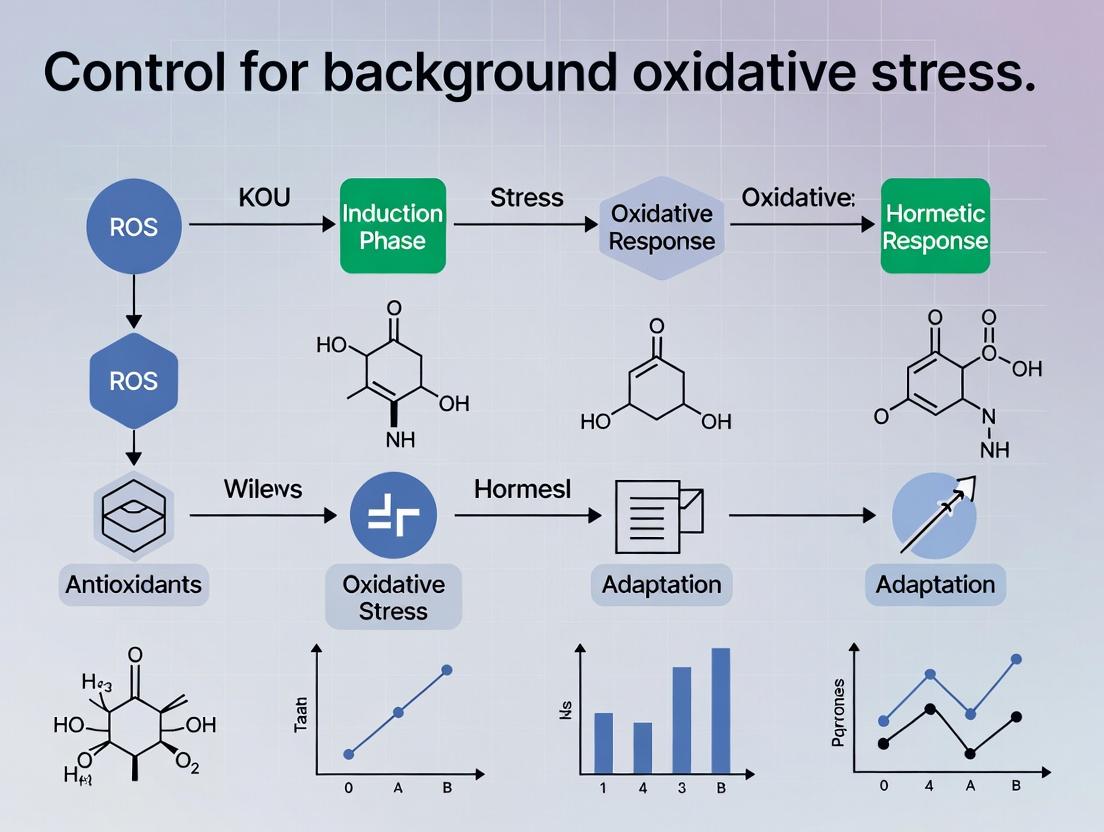
This article provides a comprehensive methodological framework for researchers in pharmacology, toxicology, and drug development to address the critical challenge of background oxidative stress in hormesis studies.
Mastering the Baseline: A Critical Guide to Controlling Oxidative Stress for Accurate Hormesis Research
Abstract
This article provides a comprehensive methodological framework for researchers in pharmacology, toxicology, and drug development to address the critical challenge of background oxidative stress in hormesis studies. Hormesis—the biphasic dose-response phenomenon where low doses of a stressor are beneficial while high doses are harmful—is profoundly influenced by pre-existing cellular redox states. We explore the foundational impact of basal oxidative stress on hormetic outcomes, detail advanced protocols for its quantification and control, troubleshoot common experimental confounders, and present comparative validation strategies. The synthesis of these four intents offers a robust toolkit for enhancing the reproducibility, precision, and clinical translatability of hormesis research in biomedical science.
The Redox Baseline: Why Background Oxidative Stress is the Silent Confounder in Hormesis
Troubleshooting Guides & FAQs
Q1: My biphasic dose-response curve for a compound appears shifted to the right, suggesting a lower potency for hormetic effects than expected. What could be the cause? A: This is a classic signature of unaccounted-for basal Reactive Oxygen Species (ROS). The experimental system's pre-existing oxidative stress acts as a background "dose," meaning the applied compound's effective dose is higher than recorded. The hormetic zone (the low-dose beneficial response) is therefore reached at a nominally higher applied concentration, shifting the curve rightward.
Q2: I observe no biphasic response, only toxicity, even at low doses of a purported hormetic agent. How might basal ROS explain this? A: High basal ROS levels may have already pushed the cellular system beyond the hormetic threshold into the toxic phase. The applied low dose adds to this high background, resulting in a net toxic response from the start. The biphasic curve is effectively truncated, showing only the inhibitory arm.
Q3: My positive control (e.g., low-dose H₂O₂) fails to elicit a hormetic response. Is my assay broken? A: Not necessarily. This failure strongly indicates that your system's basal ROS is already saturating the adaptive response pathways. Before testing new compounds, you must first quantify and, if necessary, reduce basal ROS to establish a true baseline.
Q4: What are the critical validation steps for ROS detection probes in this context? A: 1) Specificity: Confirm probe signal is quenched by a specific scavenger (e.g., N-acetylcysteine for general ROS). 2) Linearity: Perform a probe calibration curve using known ROS inducers/scavengers. 3) Baseline Measurement: Always include an untreated control and a "zero background" control (e.g., cells treated with a potent antioxidant cocktail) to define the measurable basal range.
Experimental Protocol: Quantifying and Controlling for Basal ROS
Objective: To measure basal ROS levels and establish a corrected dose-response framework.
Materials:
- Cell culture system under study.
- ROS-sensitive fluorescent probe (e.g., DCFH-DA, CellROX).
- Flow cytometer or fluorescence microplate reader.
- Reference hormetic agent (e.g., low-dose curcumin, sulforaphane).
- Potent antioxidant (e.g., N-acetylcysteine (NAC) at 5-10 mM, Tempol).
Procedure:
- Seed cells in appropriate plates and allow to adhere under standard conditions.
- Establish Basal ROS: a. Treatment Groups: (i) Untreated control, (ii) Antioxidant-treated control (incubate with NAC for 1-2 hours prior to assay). b. Load Probe: Incubate all groups with the ROS probe per manufacturer's protocol. c. Acquire Signal: Measure fluorescence intensity (FI). The difference between (i) and (ii) represents the quantifiable basal ROS.
- Perform Dose-Response with Correction: a. Pre-treat a separate cell set with the antioxidant (from Step 2a-ii) to create a "low-baseline" system. b. Wash out antioxidant. c. Treat these cells with a full dose range of your test compound. d. Measure both ROS (short-term) and the relevant endpoint (e.g., cell viability, proliferation, specific enzyme activity) at 24-48 hours.
- Data Analysis: Plot the endpoint against the applied dose. Compare curves from cells with high basal (untreated) vs. low basal (antioxidant-pre-treated) backgrounds.
Table 1: Impact of Basal ROS Correction on Appointed Hormetic Parameters
| Parameter | High Basal ROS System (Uncorrected) | Low Basal ROS System (Corrected) | Interpretation |
|---|---|---|---|
| EC₅₀ for Benefit (µM)* | 15.2 ± 2.1 | 5.8 ± 0.9 | Potency underestimated by ~62% without correction. |
| Maximum Stimulation (%) | 125 ± 5 | 142 ± 6 | Magnitude of hormetic benefit is obscured. |
| Threshold Toxicity (µM) | 25.0 ± 3.0 | 18.5 ± 2.5 | Toxic threshold appears artifically high. |
| Width of Hormetic Zone (µM) | 10.0 | 12.7 | The beneficial dose range appears narrower. |
*Data is illustrative, based on simulated experiments with curcumin in a cellular model with inducible oxidative stress.
Signaling Pathway: ROS-Mediated Hormetic Adaptation
Diagram Title: NRF2 Pathway Activation by Total ROS Determines Hormetic Outcome
Experimental Workflow for Correcting Dose-Response
Diagram Title: Workflow for ROS-Corrected Hormesis Dose-Response Assay
The Scientist's Toolkit: Key Research Reagent Solutions
Table 2: Essential Reagents for Controlling Background Oxidative Stress
| Reagent/Category | Example Product | Primary Function in Hormesis Studies |
|---|---|---|
| General ROS Scavengers | N-acetylcysteine (NAC), Tempol | Reduces high basal ROS to establish a low-background baseline system. |
| Specific ROS Probes | DCFH-DA (H₂O₂, ONOO⁻), MitoSOX (Mitochondrial O₂⁻) | Quantifies specific ROS species in real-time to measure basal and induced flux. |
| NRF2 Pathway Activator | Sulforaphane | Positive control for inducing the canonical hormetic antioxidant response pathway. |
| NRF2 Pathway Inhibitor | ML385 | Negative control; confirms NRF2-dependence of observed hormetic effects. |
| Antioxidant Enzyme Assays | SOD Activity Kit, Catalase Activity Kit | Functional readout of the downstream hormetic adaptive response. |
| Cell Viability Assay | AlamarBlue, MTT, ATP-based Luminescence | Measures the ultimate phenotypic hormetic benefit (enhanced proliferation/survival). |
Technical Support Center: Troubleshooting & FAQs
FAQ 1: My cultured cells exhibit high and variable baseline ROS levels, confounding my hormesis dose-response studies. What are the primary culture-related sources?
Answer: High baseline oxidative stress in cell cultures often stems from suboptimal conditions that perturb redox homeostasis. Key sources include:
- Serum Batches: Variability in antioxidant (e.g., glutathione, tocopherol) and pro-oxidant (e.g., iron, lipid peroxides) content between serum lots.
- Passage Number & Confluence: High passage cells can experience replicative senescence with mitochondrial dysfunction. Over-confluent cultures become nutrient-depleted and acidify media.
- Media Components: Pyruvate (an antioxidant) and glucose (high levels can induce mitochondrial ROS via glycolysis) concentrations are critical. Phenol red can have photodynamic effects.
- Atmospheric Oxygen: Standard incubator O₂ (18-20%) is hyperoxic compared to most in vivo physiologic niches (1-13%), leading to perpetual oxidative pressure.
FAQ 2: How can I minimize donor-to-donor variability in primary cell studies of oxidative hormesis?
Answer: Donor variability in age, health status, and genetics significantly impacts baseline mitochondrial function and antioxidant defenses.
- Characterization: Always pre-screen primary cell isolates for baseline ROS (using DCFDA or MitoSOX), mitochondrial membrane potential (TMRE, JC-1), and key antioxidant (e.g., GSH, SOD) levels.
- Pooling vs. Segregating: For hypothesis-testing, pool cells from multiple donors after confirming similar baselines. For population studies, treat each donor as a separate cohort and analyze data with appropriate statistical models (mixed-effects).
- Culture Standardization: Use the same passage range, serum lot, and confluence at harvest across all donor cell sets.
FAQ 3: My treatment is intended to be mildly hormetic, but the metabolic state of my control cells is shifting during experiments, altering their sensitivity. How can I control for this?
Answer: Cellular metabolic state (glycolytic vs. oxidative phosphorylation) directly governs ROS production. Key controls:
- Nutrient Standardization: Ensure consistent and documented media composition (glucose, glutamine, pyruvate levels). For acute experiments, use a defined, serum-free incubation buffer.
- Seeding Density Optimization: Determine and use a density that maintains stable nutrient and pH levels for the full experiment duration.
- Real-Time Metabolic Profiling: Employ a Seahorse Analyzer or similar to establish the baseline Oxygen Consumption Rate (OCR) and Extracellular Acidification Rate (ECAR) of your control cells at experiment start and end.
Experimental Protocols
Protocol 1: Assessing and Standardizing Baseline ROS in Cultured Cells
Objective: To quantify and normalize baseline cellular ROS levels prior to hormetic stimulus application.
Materials:
- H₂DCFDA (2',7'-Dichlorodihydrofluorescein diacetate) or CellROX Green reagent.
- HBSS (Hanks' Balanced Salt Solution, without phenol red).
- Fluorescent microplate reader or flow cytometer.
- Positive control (e.g., 100-200 µM tert-Butyl hydroperoxide, tBHP).
Method:
- Culture cells in standardized conditions (consistent serum lot, 80% confluence, same passage window).
- Prepare cells in a 96-well black-walled plate or suspension for flow cytometry.
- Wash cells 2x with warm HBSS.
- Load with H₂DCFDA (5-10 µM in HBSS) or recommended concentration of CellROX. Incubate for 30-45 min at 37°C, protected from light.
- Wash cells 2x with HBSS to remove excess probe.
- Immediately read fluorescence (Ex/Em ~492-495/517-527 nm for H₂DCFDA/CellROX Green).
- Include wells with tBHP (1-hour pretreatment) as a positive control and unstained cells for background.
- Normalization: Express raw fluorescence values as a percentage of the plate median control value or normalize to total protein (e.g., via SRB assay post-read).
Protocol 2: Profiling Donor Variability in Primary Human Fibroblasts
Objective: To characterize the redox and mitochondrial phenotype of primary cells from different donors.
Materials:
- Primary human fibroblasts from ≥3 donors.
- MitoSOX Red (for mitochondrial superoxide), MitoTracker Green (mitochondrial mass).
- TMRE (Tetramethylrhodamine, ethyl ester) for mitochondrial membrane potential (ΔΨm).
- Glutathione assay kit (e.g., GSH-Glo).
- Flow cytometer.
Method:
- Culture donor cells under identical conditions to the same passage (e.g., P4-P6).
- At ~80% confluence, harvest and aliquot into tubes for parallel staining.
- Mitochondrial ROS: Stain with MitoSOX Red (5 µM, 15 min, 37°C). Analyze by flow cytometry (Ex/Em ~510/580 nm).
- Mitochondrial Mass/ΔΨm: Co-stain with MitoTracker Green (50 nM, 30 min) and TMRE (50-100 nM, 30 min). Use carbonyl cyanide 4-(trifluoromethoxy)phenylhydrazone (FCCP, 10 µM) as a ΔΨm depolarization control.
- Antioxidant Capacity: Lyse a separate cell aliquot for the glutathione assay per kit instructions.
- Data Analysis: Create a table of median fluorescence intensities (MFI) or concentration values for each donor. Calculate coefficients of variation (CV). Donors with CV >25% for key parameters may need separate analysis cohorts.
Data Presentation
Table 1: Impact of Cell Culture Conditions on Baseline ROS (Relative Fluorescence Units, RFU)
| Condition Variable | Tested Modifications | Effect on Baseline ROS (vs. Optimal Control) | Recommended Best Practice for Hormesis Studies |
|---|---|---|---|
| Serum | Different lots (Fetal Bovine Serum) | CV of 15-40% between lots | Pre-test and select a low-ROS lot; use same lot for entire study |
| Oxygen Tension | 20% vs. 5% O₂ incubation for 48h | 20% O₂: 150-200% increase | Use physiologic O₂ (5%) for primary cells; standardize for cell lines |
| Glucose | High (25 mM) vs. Low (5 mM) for 24h | High: 120-180% increase | Use physiological glucose (5.5 mM); avoid "high-glucose" media |
| Passage Number | Early (P5) vs. Late (P15) fibroblasts | Late: 220-300% increase | Use a narrow, low passage window (e.g., P5-P8) |
| Confluence at Assay | 70% vs. 100% confluent | 100%: 130-175% increase | Harvest/assay at 70-80% confluence |
Table 2: Key Reagent Solutions for Controlling Background Oxidative Stress
| Research Reagent / Material | Function & Rationale |
|---|---|
| Defined, Serum-Free Assay Medium | Eliminates variability from serum components during short-term treatments and ROS measurement. |
| N-Acetylcysteine (NAC) Control Wells | A direct precursor to glutathione. Used to establish the "reducible" portion of baseline ROS signal. |
| Mitochondrial Inhibitors (Oligomycin, Rotenone, Antimycin A) | Used in Seahorse or fluorometric assays to dissect the contribution of mitochondrial ETC complexes to baseline ROS. |
| Low-Oxygen (Tri-gas) Incubator | Enables culture at physiologically relevant O₂ levels (e.g., 5% O₂, 5% CO₂, balance N₂) to reduce hyperoxic stress. |
| Charcoal/Dextran-Stripped Serum | Removes hormones and variable signaling molecules that can indirectly affect metabolic state and ROS. |
| ECAR/OCR Assay Kits (e.g., Seahorse XF) | Quantifies real-time metabolic flux, a primary determinant of ROS generation, prior to treatment. |
Mandatory Visualizations
Diagram 1: Key Sources of Background Oxid Stress in Cell Culture
Diagram 2: Workflow for Controlling Variables in Hormesis Studies
Diagram 3: Metabolic Pathways Influencing Baseline ROS
Technical Support Center
Troubleshooting Guide & FAQs
Q1: In my hormesis study, my low-dose preconditioning agent is not inducing a protective effect but is instead causing additive damage. How do I troubleshoot this?
- A: This likely indicates that your experimental system's background oxidative stress (Redox Tone) is already too high, shifting the preconditioning threshold. The low-dose stimulant pushes the system into a generalized stress zone instead of the hormetic zone.
- Troubleshooting Steps:
- Quantify Baseline Redox Tone: Before applying any preconditioning agent, measure key biomarkers in your control group (e.g., basal ROS via fluorescent probes like H2DCFDA, ratio of GSH/GSSG, or lipid peroxidation products like 4-HNE).
- Compare to Reference Table: See Table 1 for expected ranges in common models. If your baseline values are in the "Elevated" range, your model may be unsuitable for standard preconditioning protocols.
- Solution: Implement a Redox Tone Reduction Protocol (see below) for your model system before repeating the preconditioning experiment.
Q2: How can I experimentally distinguish between specific oxidative stress (signaling) and generalized oxidative damage in my samples?
- A: This is a core interpretive challenge. You must implement a multi-parameter assay strategy targeting spatially and chemically distinct species.
- Troubleshooting Protocol:
- Simultaneous Measurement: Use probes for specific signaling ROS (e.g., mitoSOX for mitochondrial O2•−, Hyper for H2O2) alongside global damage markers (e.g., protein carbonyls for proteins, 8-OHdG for DNA).
- Temporal Analysis: Measure at multiple time points (e.g., 15min, 1h, 6h, 24h post-treatment). A transient spike in specific ROS (e.g., H2O2) followed by an upregulation of antioxidants (Nrf2, SOD) indicates signaling. A sustained, cumulative increase in damage markers indicates generalized stress.
- Pathway Inhibition Test: Apply a low dose of your agent in the presence of a specific scavenger (e.g., PEG-Catalase for H2O2). If the protective hormetic effect is blocked, it confirms the specificity of that ROS as a signaling agent.
Q3: My cell culture media and incubator conditions are standard. What hidden factors could be altering my background Redox Tone?
- A: Common, often-overlooked sources include:
- Serum Batches: Variation in antioxidant capacity (e.g., albumin, vitamins) between lots of fetal bovine serum.
- Passage Number & Confluency: High passage cells or over-confluent cultures often have elevated basal ROS.
- Antibiotics/Antimycotics: Routine use of penicillin/streptomycin or amphotericin B can subtly alter mitochondrial function and redox state.
- Thawing Protocols: Slow or suboptimal thawing of cryopreserved cells induces severe oxidative stress that can persist for several passages.
Experimental Protocols
Protocol 1: Establishing Baseline Redox Tone in a Cell Culture Model
Purpose: To quantify the background oxidative stress level before initiating a hormesis study. Materials: See "Research Reagent Solutions" table. Steps:
- Culture cells under standard conditions for at least three passages in consistent, logged serum.
- At 70-80% confluency, harvest cells.
- For GSH/GSSG: Use a commercial kit (e.g., Cayman Chemical #703002). Deproteinize samples immediately in metaphosphoric acid. Measure fluorescence per manufacturer's instructions.
- For Basal ROS: Load cells with 10 µM H2DCFDA in serum-free media for 30 min at 37°C. Wash with PBS. Analyze fluorescence immediately via plate reader or flow cytometry (Ex/Em: 495/529 nm).
- Normalize: Normalize all values to total protein content (Bradford assay).
- Benchmark: Compare your results to established norms for your cell line (see Table 1).
Protocol 2: Redox Tone Reduction Pre-Treatment
Purpose: To lower a pathologically high background oxidative stress to a level permissive for observing hormesis. Steps:
- Identify the major source of high tone (e.g., mitochondrial dysfunction, NOX overactivity).
- For Mitochondrial ROS: Treat cells with 100 nM MitoTEMPO or 5 µM SkQ1 in full growth media for 48 hours prior to the preconditioning experiment.
- For General Antioxidant Support: Supplement media with 50 µM N-acetylcysteine (NAC) for 24 hours. Note: Wash out NAC completely before starting the hormetic treatment to avoid direct scavenging of the signaling ROS.
- Re-measure Redox Tone biomarkers (Protocol 1) to confirm reduction to the "Normal" range.
Protocol 3: Mapping the Preconditioning Threshold
Purpose: To empirically determine the dose-range where an agent switches from hormetic to toxic. Steps:
- Prepare a wide, logarithmic dilution series of your preconditioning agent (e.g., 0.1 µM, 1 µM, 10 µM, 100 µM, 1 mM for H2O2).
- Treat cells (with confirmed normal Redox Tone) for a defined, short period (e.g., 30-60 min).
- Wash cells and replace with fresh media.
- After a 24-hour recovery period, challenge all groups with a standard cytotoxic insult (e.g., 500 µM H2O2 for 2 hours).
- Measure cell viability 24 hours post-challenge using two independent assays (e.g., MTT and LDH release).
- Plot viability against the log10 of the preconditioning dose. The preconditioning threshold is the dose point where viability falls below that of the "challenge-only" control.
Data Presentation
Table 1: Reference Ranges for Redox Tone Biomarkers in Common Research Models
| Biomarker | Assay | Normal Range (Mammalian Cells) | Elevated Redox Tone | Notes |
|---|---|---|---|---|
| GSH/GSSG Ratio | Enzymatic Recycling | 10:1 to 20:1 | < 5:1 | Gold standard for redox buffering capacity. Highly sensitive to sample processing. |
| Basal ROS (DCF Fluorescence) | H2DCFDA | 100-300% of unstained control | > 500% of control | Semi-quantitative. Use same passage, confluency, and instrument settings. |
| Lipid Peroxidation | 4-HNE ELISA | 0.5 - 2.0 ng/µg protein | > 4.0 ng/µg protein | Marker of generalized oxidative damage. |
| Mitochondrial Superoxide | mitoSOX Red Flow Cytometry | MFI 10^3 - 10^4 | MFI > 10^5 | Measure in live cells immediately after loading. |
Table 2: Key Characteristics of Specific vs. Generalized Oxidative Stress
| Feature | Specific Oxidative Stress (Signaling) | Generalized Oxidative Stress (Damage) |
|---|---|---|
| Spatial Localization | Compartmentalized (e.g., lipid raft, mitochondrial matrix). | Widespread, diffuse. |
| Chemical Species | Often specific (e.g., H2O2, mitochondrial O2•−). | Mixed ROS/RNS, including highly reactive (•OH). |
| Temporal Dynamics | Transient, pulsatile (seconds to minutes). | Sustained, cumulative (hours to days). |
| Cellular Outcome | Activation of adaptive pathways (e.g., Nrf2, HIF-1α). | Inactivation of enzymes, DNA damage, apoptosis. |
| Biomarker Example | Reversible protein cysteine oxidation. | Irreversible protein carbonylation or nitrotyrosine formation. |
The Scientist's Toolkit: Research Reagent Solutions
| Item | Function & Rationale |
|---|---|
| H2DCFDA (General ROS Probe) | Cell-permeable, becomes fluorescent upon oxidation by various ROS. Best for initial, broad screening of intracellular oxidant activity. |
| MitoSOX Red (Mitochondrial Superoxide Probe) | Targeted to mitochondria, selectively oxidized by superoxide (O2•−). Critical for distinguishing mitochondrial vs. cytosolic ROS signaling. |
| PEG-Catalase | Polyethylene glycol-conjugated catalase. Membrane-impermeable, used extracellularly to scavenge specific signaling H2O2 that acts as an autocrine/paracrine messenger. |
| MitoTEMPO | Mitochondria-targeted superoxide dismutase mimetic and antioxidant. Used to selectively lower mitochondrial ROS to adjust Redox Tone. |
| BSO (Buthionine sulfoximine) | Inhibitor of glutamate-cysteine ligase, the rate-limiting enzyme in GSH synthesis. Used to experimentally deplete glutathione and raise background Redox Tone. |
| Nrf2 siRNA/Keap1 Overexpression Plasmid | Tools to manipulate the Nrf2-Keap1 pathway, the master regulator of the antioxidant response, to test its necessity in the hormetic effect. |
Mandatory Visualizations
Title: Impact of Redox Tone on the Preconditioning Threshold
Title: Experimental Workflow to Discern Specific vs. Generalized Stress
Technical Support Center: Troubleshooting Uncontrolled Baseline Oxidative Stress
FAQs & Troubleshooting Guides
Q1: How can an uncontrolled baseline lead to the disappearance of a hormetic dose-response in my cell culture experiments? A: An uncontrolled high baseline of reactive oxygen species (ROS) leaves cells in a state of pre-existing oxidative stress. When a low-dose stressor (e.g., a drug candidate) is applied, it pushes the total cellular ROS load beyond a toxicity threshold, eliminating the protective adaptive response and showing only toxicity. This is a primary source of irreproducibility.
Q2: What are the most common laboratory sources of unintended background oxidative stress? A: See Table 1 for a summary of common sources and their mitigation strategies.
Table 1: Common Sources of Background Oxidative Stress in Experimental Systems
| Source | Impact on Baseline | Recommended Control Measure |
|---|---|---|
| Cell Culture Serum Batch Variability | High iron/catalase/antioxidant content alters redox tone. | Pre-screen and pool serum batches; use defined serum alternatives. |
| High Passage Number of Cells | Accumulation of mitochondrial dysfunction, increased ROS. | Use cells within a low, standardized passage range (e.g., 5-20). |
| Ambient Oxygen (20-21% O₂) | Supra-physiological hyperoxia, inducing constant oxidative stress. | Use physiological O₂ tension (e.g., 5% O₂) in a tri-gas incubator. |
| Photocatalysis in Media | Riboflavin/tryptophan in media generate ROS under fluorescent lab lights. | Wrap media/reagents in foil; use amber tubes; minimize light exposure. |
| Mycoplasma Contamination | Metabolically triggers significant host cell ROS. | Implement routine, sensitive PCR-based testing. |
Q3: What are the critical protocols for establishing and validating a controlled low-stress baseline before initiating a hormesis experiment? A: Follow this standardized Pre-Experiment Baseline Validation Workflow:
- Cell State Preparation: Use low-passage cells, maintained in a physiological O₂ incubator (5% O₂) for at least 48 hours prior to assay.
- Media Conditioning: Incubate fresh, complete culture media (wrapped in foil) in the experimental incubator for 24 hours to equilibrate temperature, pH, and O₂/CO₂ tension.
- Baseline ROS Quantification:
- Seed cells in a 96-well plate at standard density.
- At time of experiment, wash cells with warm PBS.
- Load with 10 µM CellROX Green or DCFH-DA in serum-free media. Incubate 30 min at 37°C.
- Wash twice with PBS. Add fresh, pre-conditioned media.
- Measure fluorescence (Ex/Em ~485/535 nm). Acceptance Criterion: Fluorescence of untreated control cells should not exceed 1.5-fold over a no-cell background blank and must be consistent across experimental batches (CV < 15%).
- Positive Control for Responsiveness: Include a parallel well treated with a sub-toxic bolus of H₂O₂ (e.g., 50-100 µM, 1 hour) to confirm the assay system can detect an induced oxidative stress response.
Q4: Can you provide a documented case study from the literature where controlling the baseline was critical for observing hormesis? A: Case Study: Resveratrol and Endothelial Cell Viability.
- Issue: Contradictory reports on resveratrol's effects; some showed low-dose protection (hormesis), others showed direct toxicity.
- Root Cause: Studies using cells at high passage or in 20% O₂ had elevated baselines of p53 and NF-κB activity, markers of chronic stress.
- Key Protocol for Reproducibility:
- Human umbilical vein endothelial cells (HUVECs) were maintained at ≤ passage 6.
- Cells were cultured in a physiological (5%) O₂ incubator for a minimum of 1 week prior to experiments.
- Baseline p53 activation was quantified via western blot (target: phospho-p53 Ser15) and only cell batches with low, uniform baseline were used.
- Under these controlled conditions, a clear hormetic U-shaped curve for resveratrol (1-10 µM promoting viability, >50 µM inhibiting) was consistently observed, which was absent in high-O₂ controls.
- Conclusion: The pro-survival (hormetic) pathway was only unmasked when the background stress (stabilizing p53) was minimized.
Pathway Diagram: Baseline Stress Determines Hormetic Outcome
Experimental Workflow for Reliable Hormesis Studies
The Scientist's Toolkit: Key Research Reagent Solutions
Table 2: Essential Reagents for Baseline Oxidative Stress Control
| Reagent/Material | Function & Rationale | Example Product/Catalog |
|---|---|---|
| Tri-Gas Cell Incubator | Maintains physiological O₂ (e.g., 5%) to prevent hyperoxia-induced baseline stress. | Thermo Scientific Heracell VIOS; Baker Ruskinn InvivO₂. |
| ROS-Sensitive Fluorescent Probes | Quantify basal and induced cellular ROS levels. | Thermo Fisher CellROX Green (general ROS); MitoSOX Red (mitochondrial superoxide). |
| Defined, Low-Antioxidant Serum | Reduces batch variability in redox-active serum components. | Thermo Fisher Charcoal/Dextran Treated FBS; Defined FBS alternatives. |
| Mycoplasma Detection Kit | Sensitive, routine validation of cell culture health. | Lonza MycoAlert Detection Assay; PCR-based kits. |
| Ambient Light Blocking Materials | Prevents photo-oxidation of culture media/reagents. | Amber tubes/vials; aluminum foil for wrapping flasks. |
| Nrf2 & p53 Activation Assays | Key pathway reporters for adaptive vs. damage responses. | CST antibodies: Phospho-Nrf2 (Ser40); Phospho-p53 (Ser15). ELISA kits available. |
| Low-Attachment Culture Plates | For generating consistent spheroids/organoids, which can have different baselines than 2D culture. | Corning Ultra-Low Attachment multi-well plates. |
Practical Protocols: Measuring and Standardizing Baseline Redox States in Experimental Models
Technical Support Center
Troubleshooting Guides & FAQs
Q1: My DCFH-DA assay shows high background fluorescence in control samples. How can I minimize this? A: High background in DCFH-DA assays is a common challenge, especially critical in hormesis studies where baseline oxidative stress must be precisely defined. Causes and solutions include:
- Probe Autoxidation: Prepare DCFH-DA stock solutions in anhydrous DMSO and aliquot to avoid freeze-thaw cycles. Keep working solutions on ice and in the dark.
- Incomplete Ester Hydrolysis: Ensure adequate time for intracellular esterase conversion of DCFH-DA to DCFH (typically 30-45 min at 37°C). Include a no-esterase control (lysis buffer without esterase activity) to assess non-enzymatic hydrolysis.
- Light Exposure: Perform all steps under minimal light conditions. Wrap plates in foil.
- Media Components: Some media (e.g., Phenol Red) fluoresce. Use clear, serum-free buffer (like HBSS) during the dye loading and incubation period.
- Cell Health: High background can indicate basal stress. Always include a positive control (e.g., tert-butyl hydroperoxide) and a blank (cells without probe) to validate assay window.
Q2: MitoSOX Red signal is weak or diffuse, not distinctly mitochondrial. What went wrong? A: This indicates compromised specificity for mitochondrial superoxide.
- Loading Concentration/Temperature: Typical working concentration is 2-5 µM. Overloading can cause probe localization to other organelles. Load at 37°C, not room temperature, for proper mitochondrial targeting.
- Incubation Time: Over-incubation (>30 min) leads to probe diffusion. Follow a strict 10-30 minute incubation protocol.
- Confirmation with Mitochondrial Dyes: Always co-stain with a mitochondrial marker (e.g., MitoTracker Green) to confirm co-localization. Use high-magnification fluorescence microscopy.
- Cell Line Variability: Mitochondrial membrane potential affects uptake. For cells with low potential, consult literature for protocol adjustments but note this variable itself is a confounder in hormesis.
Q3: Protein carbonyl assay yields inconsistent results (high variability between replicates). A: Protein carbonyls are a stable marker but the assay is multi-step and prone to variability.
- Sample Preparation: Use fresh or properly snap-frozen samples. Avoid repeated freeze-thaw cycles. Completely remove interfering substances (e.g., nucleic acids) via precipitation. Ensure complete re-suspension of the protein pellet after precipitation.
- DNPH Reaction Conditions: Standardize the DNPH reaction time and temperature precisely (e.g., 20-30 min in the dark at RT). Include a sample control incubated with 2.5M HCl instead of DNPH for background subtraction.
- Washing: After DNPH labeling, wash the protein pellet thoroughly (3-4x) with ethanol:ethyl acetate mixtures to remove unbound DNPH, which causes high background.
- Normalization: Accurately determine the protein concentration after the DNPH reaction and washing steps for final normalization. Use the same assay (e.g., BCA) for all samples.
Q4: My GSH/GSSG ratio is always lower than expected, and GSSG seems high. Could this be an artifact? A: Accurate GSH/GSSG measurement is technically demanding due to rapid GSH autoxidation during sample processing.
- Sample Derivatization Speed: The critical step is to instantly derivatize GSH in the sample to prevent oxidation to GSSG. Use a dedicated reagent like N-ethylmaleimide (NEM) immediately upon cell/tissue homogenization. Commercial kits with proprietary thiol-scavenging reagents are recommended.
- Homogenization Buffer: Use an acidic buffer (e.g., with 5-10% metaphosphoric acid) to denature enzymes and stabilize thiols.
- Run Separate Assays: For highest accuracy, perform separate determinations for total glutathione (GSH+GSSG) and GSSG alone (using NEM to mask GSH), then calculate GSH by difference.
Q5: How do I control for cell number/confluence variability when comparing fluorescent probe signals across treatments in a hormesis study? A: Normalization is essential for interpreting dose-response curves.
- Direct Normalization: Use a viability dye (e.g., Calcein AM, CyQUANT) in a separate well from the same plate run in parallel.
- Post-Hoc Protein Normalization: After reading fluorescence, lyse cells and perform a protein assay (e.g., BCA) on the same well. This is the most reliable method.
- Internal Normalization Dyes: Use cautious interpretation with dyes like Hoechst (nuclei stain), as some hormetic agents may affect DNA content or dye uptake.
Table 1: Comparison of Oxidative Stress Quantification Tools
| Tool / Assay | Target | Key Advantages | Key Limitations | Best Use Context in Hormesis Research |
|---|---|---|---|---|
| DCFH-DA | Broad intracellular ROS (H₂O₂, ONOO⁻, •OH) | Cell-permeable, live-cell imaging, high-throughput capable. | Non-specific, photo-oxidation, pH-sensitive, measures "oxidative activity" not a specific molecule. | Initial screening for general redox shifts. Must be coupled with specific probes. |
| MitoSOX Red | Mitochondrial superoxide (O₂•⁻) | Relatively specific to mitochondria; ratiometric potential with DNA-binding. | Can be oxidized by other oxidases (e.g., Cyt P450); signal depends on membrane potential. | Assessing mitochondrial-specific ROS contribution in hormetic pathways. |
| Protein Carbonyls | Oxidatively modified proteins (stable adduct) | Stable, cumulative marker; reflects long-term oxidative damage; multiple detection methods (WB, ELISA). | Destructive endpoint assay; complex protocol; does not indicate source of ROS. | Measuring irreversible macromolecular damage as a counterpoint to signaling ROS in adaptive responses. |
| GSH/GSSG Ratio | Cellular redox buffer status (reducing capacity) | Central integrative measure of cellular redox environment; sensitive indicator of stress. | Technically challenging; requires rapid processing; ratio can be swayed by small GSSG changes. | Defining the precise redox poise of cells during the biphasic hormetic response. |
Detailed Experimental Protocols
Protocol 1: Precise GSH/GSSG Ratio Determination for Hormesis Dose-Response Objective: To accurately measure the dynamic change in cellular redox state across a range of hormetic agent concentrations.
- Cell Treatment & Harvest: Seed cells in multiple plates. Treat with a concentration gradient of the hormetic agent (e.g., 0.1x, 0.5x, 1x, 2x, 10x EC₅₀) for the desired time. Include vehicle and positive (e.g., 500 µM DEM) controls.
- Rapid Derivatization: Aspirate media and immediately add cold 5% metaphosphoric acid (MPA) to wells. Scrape cells and transfer to pre-chilled microtubes. Flash-freeze in liquid N₂.
- Sample Preparation: Thaw and centrifuge at 12,000 g for 10 min at 4°C. Split supernatant into two aliquots:
- For Total Glutathione (GSH+GSSG): Neutralize with a solution of 4M Triethanolamine (TEAM).
- For GSSG Alone: First treat supernatant with 2-vinylpyridine (1-2%) for 1 hour at RT to derivative GSH, then neutralize with TEAM.
- Enzymatic Recycling Assay: Follow kit instructions (e.g., Cayman Chemical #703002). In a plate, mix sample, NADPH, and DTNB. Start reaction with glutathione reductase. Monitor absorbance at 412 nm every 30-60 seconds.
- Calculation: Generate standard curves for GSH and GSSG. Calculate concentrations in samples. Determine GSH = (Total Glutathione) - (2 x GSSG). Compute Ratio = GSH / GSSG.
Protocol 2: Protein Carbonyl Detection via Slot-Blot/Immunoblot Objective: To quantify protein oxidative damage as a marker of potential excessive stress beyond hormetic adaptation.
- Protein Extraction & Derivatization: Homogenize tissue/cells in PBS with protease inhibitors. Take 10-20 µg of protein. React with 10mM DNPH in 2.5M HCl (for sample) or 2.5M HCl alone (for control) for 20 min in the dark.
- Protein Precipitation & Washing: Add 20% TCA to precipitate protein. Pellet by centrifugation. Wash pellet 3x with 1:1 Ethanol:Ethyl Acetate to remove free DNPH.
- Resuspension & Quantification: Dissolve final pellet in 6M Guanidine HCl. Determine protein concentration of the DNPH-treated sample (using BCA on a small aliquot diluted in PBS).
- Detection: Load equal protein amounts (2-5 µg) onto a nitrocellulose membrane using a slot-blot or standard western blot apparatus. Block with 5% BSA in TBST.
- Immunodetection: Incubate with primary anti-DNP antibody (1:1000) overnight at 4°C. Use HRP-conjugated secondary antibody and chemiluminescence. Quantify band/slot intensity via densitometry. Normalize to total protein via Ponceau S or Sypro Ruby staining.
Visualizations
Title: Hormetic Agent Impact on Redox Toolkit Markers
Title: DCFH-DA High Background Troubleshooting
The Scientist's Toolkit: Essential Research Reagent Solutions
| Reagent / Material | Function in Oxidative Stress Quantification |
|---|---|
| DCFH-DA (2',7'-Dichlorodihydrofluorescein diacetate) | Cell-permeable, non-fluorescent probe. Intracellular esterases cleave acetate groups, trapping DCFH, which is oxidized by ROS to fluorescent DCF. |
| MitoSOX Red Mitochondrial Superoxide Indicator | Live-cell permeant fluorogenic dye targeted to mitochondria. Selectively oxidized by superoxide, producing red fluorescence upon binding to nucleic acids. |
| Anti-DNP Antibody (Anti-2,4-Dinitrophenyl) | Primary antibody for immunodetection of protein carbonyls derivatized with DNPH. Used in Western, Slot, or Dot blot assays. |
| Glutathione (GSH) Assay Kit (e.g., Enzymatic Recycling) | Contains reagents (DTNB, NADPH, GR) to quantitatively measure total and oxidized glutathione levels for GSH/GSSG ratio calculation. |
| N-Ethylmaleimide (NEM) | Thiol-scavenging reagent used to rapidly alkylate free GSH during sample processing for specific measurement of GSSG. |
| Metaphosphoric Acid (MPA) | Protein precipitant and acidifying agent used in glutathione assays to denature proteins, inhibit enzymatic activity, and stabilize thiols. |
| Butylated Hydroxytoluene (BHT) / EDTA | Common antioxidants added to buffers during sample homogenization for protein carbonyl assays to prevent ex vivo oxidation artifacts. |
| MitoTracker Green FM | Mitochondrial-selective dye (potential-independent) used to confirm mitochondrial localization and morphology in conjunction with MitoSOX. |
Technical Support Center
Troubleshooting Guides & FAQs
Q1: We observe high variability in basal reactive oxygen species (ROS) readings between cell passages, confounding our hormesis dose-response studies. What are the primary control points? A: Passage-induced variability is common. Implement these controls:
- Standardize Passage Number: Use cells between passages 5-15 only. Document the exact passage for every experiment.
- Serum Batch Control: Use a single, large batch of fetal bovine serum (FBS). Pre-test new batches for basal ROS.
- Confluence Consistency: Harvest cells at the same confluence (recommended 70-80%). Over-confluence increases metabolic stress.
- Pre-Experimental Quenching: Include a control well treated with a ROS quencher (e.g., N-acetylcysteine, 5mM) for 1 hour prior to measurement to establish assay background.
Q2: Our fluorescent probe (e.g., DCFDA) shows rapid photobleaching and high background signal. How can we optimize the assay? A: This indicates probe overloading or improper handling.
- Optimize Loading Concentration & Time: Titrate DCFDA from 5-20 μM for 30-45 minutes at 37°C, protected from light.
- Ensure Thorough Washing: Perform at least two washes with warm, dye-free buffer to remove extracellular probe.
- Control for Auto-oxidation: Include a "probe only" control (cells loaded with probe but no other treatment). If this control shows high signal, prepare probe stock fresh in anhydrous DMSO and store aliquots at -20°C.
- Use a Plate Reader with Temperature Control: Take readings immediately after loading at a constant 37°C to minimize time-based decay.
Q3: How do we differentiate between generalized oxidative stress and specific peroxide (H₂O₂) signaling in our profiling workflow? A: Employ a panel of complementary probes, as shown in the table below.
| Probe/Target | Excitation/Emission (nm) | Measured Species | Key Interpretative Note |
|---|---|---|---|
| DCFDA / H2DCFDA | 485/535 | Broad ROS (Peroxides, Peroxynitrite) | General oxidative stress indicator. Susceptible to artifacts. |
| MitoSOX Red | 510/580 | Mitochondrial Superoxide (O₂⁻) | Specific for mitochondrial ROS. Use with MitoTracker Green for normalization. |
| HyPer | 420/500 (Ratio) | Specific H₂O₂ | Genetically encoded. Provides subcellular, ratiometric H₂O₂ measurement. |
| Amplex Red | 571/585 | Extracellular H₂O₂ | Measures H₂O₂ released from cells. Coupled with horseradish peroxidase. |
Q4: In animal tissue samples, how do we control for post-sacrifice oxidative artifact? A: Post-sacrifice ischemia is a critical confounder.
- Rapid Processing: Flash-freeze tissues in liquid nitrogen within 60-90 seconds of sacrifice.
- Use Stabilizing Buffers: Homogenize directly in lysis buffers containing antioxidants (e.g., butylated hydroxytoluene) and metal chelators (e.g., DTPA).
- Biomarker Choice: Measure stable byproducts like lipid peroxidation (MDA via TBARS assay) or protein carbonylation, which are less susceptible to acute artifact than labile ROS.
Q5: Our glutathione (GSH/GSSG) ratio measurements are inconsistent. What are common pitfalls in the assay protocol? A: Glutathione is highly oxidizable during sample prep.
- Instant Derivatization: Add cells/tissue directly into cold metaphosphoric acid or assay buffer containing the thiol-scavenging reagent (e.g., N-ethylmaleimide) to instantly stabilize redox state.
- Avoid Freeze-Thaw: Perform assay on freshly prepared lysates. Do not freeze samples for GSH/GSSG.
- Use a Kinetic Assay: Prefer enzymatic recycling assays (using glutathione reductase and DTNB) over single-point colorimetric kits for greater accuracy.
Detailed Experimental Protocol: Comprehensive Cell-Based Oxidative Stress Profile
Objective: To establish a basal oxidative stress profile prior to hormetic stimulus application.
Materials:
- Cells (e.g., HepG2, primary fibroblasts)
- Phenol-red free culture medium
- Fluorescent probes: H2DCFDA (general ROS), MitoSOX Red (mitochondrial O₂⁻), CellROX Deep Red (nuclear/cytosolic stress)
- Antioxidant controls: N-acetylcysteine (NAC, 5mM), MitoTEMPO (100 µM)
- PBS (warm)
- Black-walled, clear-bottom 96-well plate
- Microplate reader capable of fluorescence and absorbance measurements
- Flow cytometer (optional, for population heterogeneity assessment)
Procedure:
- Cell Seeding: Seed cells at a standardized density (e.g., 10,000 cells/well) in a 96-well plate. Incubate for 24 hours to reach 70-80% confluence.
- Probe Loading: Prepare working solutions in serum-free, phenol-red free medium.
- H2DCFDA: Load at 10 µM for 45 minutes.
- MitoSOX Red: Load at 5 µM for 30 minutes.
- CellROX Deep Red: Load at 2.5 µM for 30 minutes.
- Include parallel wells for antioxidant pre-treatment (1 hour with NAC or MitoTEMPO) followed by probe loading.
- Washing: After incubation, gently wash all wells twice with warm PBS.
- Measurement:
- Microplate Reader: Add fresh PBS to each well. Read fluorescence immediately using appropriate filters. For ratiometric normalization, also perform a cell viability assay (e.g., resazurin) on the same wells.
- Flow Cytometry: Trypsinize, resuspend in PBS, and analyze immediately. This assesses population distribution of ROS.
- Data Analysis: Calculate Fold Change over unstressed control. Normalize fluorescence to cell number (via absorbance or viability dye). The antioxidant control wells define the "quenchable" baseline ROS.
Signaling Pathways in Oxidative Stress & Hormesis
Title: NRF2 Pathway in Low vs High Dose Oxidative Stress
Pre-Experimental Profiling Workflow
Title: Pre-Experimental Oxidative Stress Profiling Workflow
The Scientist's Toolkit: Research Reagent Solutions
| Item | Function in Profiling | Key Consideration |
|---|---|---|
| H2DCFDA / CM-H2DCFDA | Cell-permeable, general ROS indicator. Becomes fluorescent upon oxidation. | CM- variant has chloromethyl group for better retention. Artifact-prone; use with antioxidant controls. |
| MitoSOX Red | Mitochondrially-targeted probe selective for superoxide (O₂⁻). | Requires careful validation with mitochondrial inhibitors/uncouplers. |
| Amplex Red | Detects extracellular H₂O₂ via horseradish peroxidase-coupled reaction. | Highly sensitive. Must ensure no contaminating peroxidase in samples. |
| GSH/GSSG-Glo Assay | Luminescent-based assay for glutathione ratio from intact cells. | Minimizes sample handling artifact. Provides ratio directly. |
| NADP/NADPH Assay Kit | Measures the redox cofactor ratio critical for antioxidant regeneration. | Indicator of cellular redox buffering capacity. Requires rapid acid extraction. |
| Anti-8-OHdG Antibody | Detects 8-hydroxy-2'-deoxyguanosine, a marker of oxidative DNA damage. | Gold standard for fixed cells or isolated DNA. Use for baseline genotoxic stress. |
| N-Acetylcysteine (NAC) | Cell-permeable antioxidant precursor (increases glutathione). | Used as a negative control to establish "quenched" baseline ROS levels. |
| MitoTEMPO | Mitochondria-targeted superoxide scavenger. | Control for specifically inhibiting mitochondrial ROS signaling. |
Technical Support Center
Troubleshooting Guides & FAQs
Q1: My treatment with N-Acetylcysteine (NAC) fails to lower detectable basal ROS in my cell culture hormesis assay. What could be wrong? A: Common issues and solutions:
- Incorrect Preparation: NAC is unstable in solution. Prepare fresh in serum-free medium, adjust pH to 7.0-7.4, and use immediately. Do not store working solutions.
- Timing Misalignment: In hormesis studies, pre-treatment timing is critical. For modulating basal ROS prior to a hormetic stimulus, pre-incubate for 1-2 hours. Verify by measuring ROS immediately before applying your stimulus.
- Insufficient Concentration: While high doses (e.g., 5-10 mM) are common, they can be cytotoxic. Perform a dose-response (0.5-10 mM) and viability assay. Consider using a more stable precursor like N-Acetylcysteine amide (NACA).
- Assay Interference: NAC can directly react with certain fluorescent ROS probes (e.g., H2DCFDA), causing artifactual signals. Include a "NAC + probe only" control and allow 20-30 minutes after probe loading for esterification before reading.
Q2: My SOD1/SOD2 knockdown increases basal ROS as expected, but my cells show severe growth defects or death, confounding my hormesis experiment. How can I achieve a more moderate modulation? A: This indicates excessive oxidative stress.
- Titrate Knockdown: Use an inducible shRNA or CRISPRi system to achieve partial, tunable knockdown rather than complete KO. Monitor SOD activity (see protocol below) to target a 40-60% reduction.
- Alternative Model: Consider using a cell line with inherent low antioxidant capacity or switch to a primary cell culture more relevant to your thesis.
- Rescue with Physiology: Use lower serum (e.g., 0.5-2%) during the experiment to reduce exogenous antioxidants and growth factors, making the cells more sensitive to the genetic modulation without overt toxicity.
Q3: How do I accurately measure the success of my basal ROS modulation before applying the hormetic stimulus? A: Implement these parallel validation assays:
- Direct ROS Quantification: Use a non-perturbing, specific probe like CellROX Green (nuclear/cytosol) or MitoSOX Red (mitochondrial). Flow cytometry provides the best quantification of population shifts.
- Biomarker Assay: Measure the ratio of reduced to oxidized glutathione (GSH/GSSG) using a commercially available colorimetric kit. A lower ratio confirms a more pro-oxidant intracellular environment.
- Enzymatic Activity: For SOD knockdowns, directly confirm knockdown efficacy using a SOD activity assay kit (based on inhibition of WST-1 formazan generation).
Q4: I observe high variability in basal ROS readings between experiments, making it hard to establish a consistent baseline for hormesis studies. How can I standardize this? A: Standardization is critical for thesis research.
- Cell Passage & Status: Use cells within a narrow passage range (e.g., P5-P15). Ensure consistent confluence (e.g., 70-80%) at treatment and use serum-starvation (2-6 hours) in PBS or low-serum media immediately before assay to minimize metabolic variability.
- Environmental Control: Perform all experiments in a dedicated, low-vibration area. Maintain strict CO2, temperature, and humidity control for incubators. Shield culture plates from light.
- Internal Controls: Include a reference sample (e.g., a batch of frozen, aliquoted cells treated with a standard oxidant like 50 µM tert-Butyl hydroperoxide) in each experiment to normalize inter-assay values.
Experimental Protocols
Protocol 1: Validating Pharmacological ROS Scavenging with N-Acetylcysteine (NAC) Objective: To establish and verify a reduction in basal cytosolic ROS in adherent cells prior to a hormetic stimulus.
- Cell Preparation: Seed cells in a 96-well black-walled plate. Grow to 70-80% confluence.
- NAC Pre-treatment: Prepare fresh 1M NAC stock in sterile PBS, pH to 7.2. Dilute in serum-free medium to final concentrations (e.g., 0.1, 1, 5 mM). Replace culture medium with NAC media. Incubate for 2 hours at 37°C, 5% CO2.
- ROS Loading & Measurement: After 1 hour 45 minutes, load cells with 10 µM H2DCFDA (or 5 µM CellROX Green) in HBSS for 30 minutes at 37°C. Protect from light.
- Wash & Read: Gently wash cells 2x with warm HBSS. Add fresh HBSS. Immediately read fluorescence (Ex/Em ~488/525 nm) on a plate reader. Include wells for a no-probe control (background) and a positive control (e.g., 100 µM H2O2, 30 min).
- Viability Check: In parallel, run an MTT or Calcein-AM assay to rule out cytotoxicity from NAC treatment.
Protocol 2: Confirming Efficacy of SOD2 Knockdown via Activity Assay Objective: To biochemically confirm reduced mitochondrial antioxidant capacity in a stable SOD2 knockdown cell line.
- Cell Lysate Preparation: Harvest 1x10^6 control and SOD2 KD cells by gentle scraping in cold PBS. Pellet at 600 x g for 5 min at 4°C.
- Lysis: Resuspend pellet in 100 µL of cold 0.1% Triton X-100 in PBS. Vortex vigorously. Incubate on ice for 30 minutes, vortexing every 10 minutes.
- Clarification: Centrifuge at 14,000 x g for 15 minutes at 4°C. Transfer supernatant to a new tube. Keep on ice.
- Activity Assay (Commercial Kit - Abcam ab65354 example):
- Prepare all reagents and a BSA standard curve per kit instructions.
- In a clear 96-well plate, mix 20 µL of sample/standard with 200 µL of WST working solution.
- Add 20 µL of Enzyme Working Solution to start the reaction.
- Incubate at 37°C for 20 minutes, protected from light.
- Read absorbance at 450 nm.
- Calculation: SOD activity (inhibition rate %) is calculated per kit manual. Normalize total protein concentration (via BCA assay). Successful knockdown should show ≥50% reduced activity compared to control lysates.
Data Presentation
Table 1: Common Pharmacological Agents for Basal ROS Modulation
| Agent | Primary Target/Mechanism | Typical Concentration Range | Key Considerations for Hormesis Studies |
|---|---|---|---|
| N-Acetylcysteine (NAC) | Precursor for glutathione synthesis, direct scavenger | 0.5 - 10 mM | Unstable in media; pH critical; can interfere with some assays. |
| MitoTEMPO | Mitochondria-targeted SOD mimetic / scavenger | 10 - 200 µM | Specific for mitochondrial ROS; validate with MitoSOX. |
| Auranofin | Inhibits Thioredoxin Reductase | 0.1 - 5 µM | Potently increases basal ROS; narrow therapeutic window. |
| Ebselen | GPx mimetic | 1 - 50 µM | Modulates H2O2 and peroxynitrite; useful for subtle modulation. |
| Buthionine sulfoximine (BSO) | Inhibits GSH synthesis (γ-glutamylcysteine synthase) | 0.1 - 1 mM | Depletes glutathione over 12-24h; ideal for chronic basal increase. |
Table 2: Genetic Tools for Modulating Basal ROS Levels
| Tool | Target | Expected Effect on Basal ROS | Experimental Validation Required |
|---|---|---|---|
| shRNA/siRNA Knockdown | SOD1, SOD2, Catalase, GPx1 | Increase (Antioxidant KD) | qRT-PCR, Activity Assay, Western Blot |
| CRISPR-Cas9 Knockout | Nrf2, KEAP1, NOX4 | Decrease (Nrf2 KO) or Increase (KEAP1/NOX4 KO) | Sequencing, Functional rescue, ROS imaging |
| cDNA Overexpression | Catalase, SOD1, Nrf2 (constitutive active) | Decrease | Activity Assay, Target Gene Expression (for Nrf2) |
| Inducible Systems | Any antioxidant/pro-oxidant gene | Temporal control of ROS shift | Kinetics of expression/repression post-induction |
The Scientist's Toolkit: Research Reagent Solutions
| Item | Function in Basal ROS Modulation |
|---|---|
| CellROX Green/Oxidative Stress Reagents | Fluorogenic probes for generalized cellular ROS. Less prone to artifact than H2DCFDA. |
| MitoSOX Red | Highly selective for mitochondrial superoxide. Essential for validating SOD2 modulation. |
| GSH/GSSG Ratio Detection Kit | Gold-standard biochemical measure of cellular redox state. |
| SOD Activity Assay Kit | Colorimetric/WST-based kit to directly confirm functional changes post-SOD modulation. |
| N-Acetylcysteine (Cell Culture Grade) | Direct reducing agent and GSH precursor. Must be high-purity, sterile, and prepared fresh. |
| Doxycycline-inducible shRNA System | Allows tunable, temporal gene knockdown to avoid compensatory adaptation or severe phenotypes. |
| Tet-free Fetal Bovine Serum | Required for experiments using tetracycline/doxycycline-inducible systems to avoid background induction. |
Pathway & Workflow Diagrams
Diagram 1: Core Strategies to Modulate Basal ROS
Diagram 2: Experimental Workflow for Hormesis Studies
Technical Support Center: Troubleshooting & FAQs
Q1: In our primary hepatocyte hormesis studies, we observe high basal apoptosis, confounding the low-dose oxidant response. What are the primary causes and solutions?
A: High basal stress in primary cells often stems from isolation-induced ROS. Key troubleshooting steps:
- Cause: Extended cold ischemia time during liver procurement.
- Solution: Ensure tissue processing begins within 20 minutes. Use a pre-warmed, antioxidant-rich perfusion buffer (see Protocol 1).
- Cause: Overactive Kupffer cell contamination releasing TNF-α.
- Solution: Include a centrifugal elutriation or a selective adherence step to reduce non-parenchymal cells to <5%.
- Critical Control: Quantify background oxidative stress by measuring extracellular hydrogen peroxide (Amplex Red assay) and intracellular glutathione (GSH/GSSG ratio) immediately after plating (Table 1).
Q2: Our immortalized cell line shows a weakened or absent hormetic response to pro-oxidants compared to published data. How can we restore a physiologically relevant redox tone?
A: Cell lines adapt to culture, often upregulating baseline antioxidant defenses.
- Cause: Serial passaging in high-glucose media leading to glycation and Nrf2 pathway saturation.
- Solution: Culture cells for at least 5 passages in physiological glucose (5.5 mM) media. Consider using a defined, serum-free formulation to reduce exogenous antioxidants.
- Cause: Over-confluent cultures inducing contact inhibition and altering redox signaling.
- Solution: Maintain cells in exponential growth phase and never exceed 80% confluency prior to hormesis induction.
- Experimental Protocol (Protocol 2): "Re-sensitization" by transient Nrf2 inhibition. Treat cells with a sub-toxic dose of brusatol (50 nM) for 6 hours, wash, and recover in fresh media for 18 hours before the hormetic stimulus.
Q3: Our 3D organoids develop a necrotic core, creating extreme oxidative stress gradients that mask hormetic dosing. How can we improve oxygen and nutrient penetration?
A: Necrosis indicates diffusion limitations inherent to 3D structures.
- Cause: Organoids exceeding the critical diffusion limit (~500 µm diameter for most tissues).
- Solution: Mechanically or enzymatically split organoids when they reach ~300-400 µm. Use a 40 µm reversible strainer to size-select for experiments.
- Cause: Dense extracellular matrix (e.g., Matrigel) impeding diffusion.
- Solution: Optimize the ECM:culture media ratio. For intestinal organoids, reduce Matrigel from 70% to 50% and supplement with 10% PEG-8000 to maintain structure.
- Measurement: Embedding a fluorescent oxygen probe (e.g., Image-iT Red) can visualize the hypoxic core prior to treatment.
Q4: When treating spheroids with a pro-oxidant, how do we accurately quantify the delivered dose, given penetration barriers?
A: The nominal media concentration is not the intracellular dose. A two-pronged approach is needed:
- Direct Measurement (Protocol 3): Use a cell-permeant, ROS-sensitive dye (e.g., CellROX Deep Red) at the end of treatment. Immediately dissociate the spheroid into a single-cell suspension and measure median fluorescence intensity (MFI) via flow cytometry. Compare to a 2D culture standard curve.
- Computational Estimation: Use the diffusive barrier model to estimate the effective concentration (C_eff) at the spheroid center (Table 1).
Table 1: Baseline Oxidative Stress Metrics Across Model Systems
| Model System | Typical GSH/GSSG Ratio | Basal Extracellular H₂O₂ (nM) | Recommended Max Size for Homogeneity | Critical Nrf2 Target Gene (Fold Change vs. In Vivo) |
|---|---|---|---|---|
| Primary Mouse Hepatocytes | 12:1 ± 3 | 120 ± 45 | N/A | NQO1 (0.8x) |
| HepG2 Cell Line | 45:1 ± 10 | 25 ± 10 | N/A | HMOX1 (5.2x) |
| Intestinal Organoid | ~8:1 (edge) to ~2:1 (core) | Not Applicable | 400 µm | GCLC (1.5x) |
Table 2: Calculated Effective Pro-Oxidant Concentration in 300 µm Spheroids
| Nominal H₂O₂ Dose (µM) | Estimated C_eff at Center (µM) | Time to Reach Steady State (min) |
|---|---|---|
| 50 | 12.5 ± 3.1 | 45 |
| 100 | 31.0 ± 5.6 | 50 |
| 200 | 85.0 ± 12.3 | 60 |
Experimental Protocols
Protocol 1: Low-Stress Primary Hepatocyte Isolation for Hormesis Studies
- Pre-warm perfusion buffers: Buffer I (Chelating), Buffer II (Collagenase). Supplement with 100 µM deferoxamine (iron chelator) and 50 µM ascorbic acid 2-phosphate.
- Perform in situ liver perfusion via the portal vein in < 20 min from extraction.
- Filter cell suspension through a 100 µm mesh, wash 3x in cold, antioxidant-free hepatocyte maintenance media.
- Plate on collagen-I coated plates at desired density. Allow to attach for 4 hours.
- Before hormesis experiment: Replace media and incubate for 1 hour. Measure extracellular H₂O₂ as quality control. Discard preparations showing >200 nM.
Protocol 2: Brusatol-Mediated Nrf2 Reset in Cell Lines
- Culture cells in physiological glucose (5.5 mM) DMEM for ≥5 passages.
- At 60-70% confluency, treat with 50 nM brusatol (from 1 mM DMSO stock) in complete media for 6 hours.
- Aspirate media, wash cells 2x with PBS.
- Add fresh, brusatol-free media and incubate for 18 hours.
- Proceed with pro-oxidant hormesis treatments. Validate by measuring Nrf2 nuclear translocation (immunofluorescence) and a target gene (e.g., HMOX1 mRNA via qPCR).
Protocol 3: Quantifying Intracellular Oxidant Burden in 3D Spheroids
- Generate size-uniform spheroids (e.g., via hanging drop or ultra-low attachment plates).
- Treat spheroids with pro-oxidant in standard media.
- At endpoint, add CellROX Deep Red (2.5 µM final) to media, incubate 30 min.
- Wash 2x with PBS. Dissociate to single cells using TrypLE Express (15-20 min, 37°C) with gentle pipetting.
- Quench reaction with cold, serum-containing media. Pass cells through a 35 µm strainer.
- Analyze immediately via flow cytometry. Compare MFI to a 2D culture treated in parallel and generate a standard curve of fluorescence vs. nominal dose.
Diagrams
Workflow for Model System Selection and QC
Nrf2 Pathway in Hormesis and Cell Line Adaptation
The Scientist's Toolkit: Key Research Reagent Solutions
| Reagent / Material | Primary Function in Controlling Background Oxidative Stress |
|---|---|
| Ascorbic Acid 2-Phosphate | Stable vitamin C derivative used in isolation buffers to minimize acute isolation-induced ROS in primary cells. |
| Deferoxamine Mesylate | Iron chelator. Added to perfusion buffers to inhibit Fenton chemistry during tissue dissociation. |
| Brusatol | Specific inhibitor of Nrf2 protein synthesis. Used to transiently lower saturated antioxidant defenses in cell lines, restoring redox responsivity. |
| PEG-8000 | High-molecular-weight polyethylene glycol. Used to reduce Matrigel density in organoid cultures, improving nutrient diffusion while maintaining 3D structure. |
| CellROX Deep Red Reagent | Fluorogenic probe for measuring generalized oxidative stress. Used in flow cytometry post-dissociation to quantify actual intracellular oxidant burden in 3D models. |
| Image-iT Red Hypoxia Reagent | Fluorescent compound whose intensity increases under low oxygen. Used to map hypoxic/necrotic cores in spheroids prior to experimentation. |
| Physiological Glucose DMEM (5.5 mM D-glucose) | Standard media formulation to prevent high-glucose-induced metabolic adaptation and glycative stress during long-term cell line culture. |
| Reversible Strainer (40 µm) | Used for gentle, size-based selection of organoids or spheroids to ensure population homogeneity and prevent diffusion-limited necrosis. |
Solving the Noise Problem: Identifying and Correcting for Common Experimental Confounders
FAQs & Troubleshooting Guides
Q1: Why has my hormetic dose-response curve (e.g., for a pro-oxidant compound) become biphasic or disappeared entirely in recent experiments? A: This is a classic symptom of uncontrolled background oxidative stress. The baseline redox state of your cellular or organismal model acts as a pre-conditioning signal. A high background oxidative load can shift the hormetic zone to lower doses or eliminate it entirely, as the system is already near its adaptive capacity threshold.
- Primary Check: Quantify baseline reactive oxygen species (ROS) and glutathione (GSH/GSSG) ratios in control groups from both your original (successful) and current (problematic) experiments. Use the protocol below.
- Solution: Implement a strict environmental and handling control regimen (see Table 1).
Q2: My cell culture model shows a consistent hormetic window, but my animal model does not. What could be the cause? A: In vivo systems introduce immense variability in background stress. Key culprits are circadian rhythm disruptions, subclinical infections, variable dietary antioxidant intake, and social stress in group housing.
- Primary Check: Monitor plasma corticosterone (rodents) and 8-OHdG (urinary/serum) in control animals across the study period.
- Solution: Standardize feeding with defined, low-phytoestrogen diets; implement consistent light/dark cycles; use pathogen-free cohorts; and consider single-housing for studies where social hierarchy is a confounder.
Q3: The preconditioning effect from a low-dose stressor is no longer reproducible. How do I troubleshoot the priming signal? A: The Nrf2/Keap1 and FOXO signaling pathways, which mediate adaptive responses, can be desensitized or constitutively activated by chronic, low-level stressors in the laboratory environment.
- Primary Check: Perform nuclear/cytosolic fractionation with Western blot for Nrf2 in control cells/animals from different batches or housing locations.
- Solution: Audit incubator CO₂ stability, humidity, and vibration; test serum batches for antioxidant capacity; and implement a "laboratory acclimation" period for animals after delivery.
Key Experimental Protocols
Protocol 1: Quantifying Background Oxidative Stress in Cell Culture
- Cell Harvest: Seed cells at identical density and passage number in 6-well plates. Harvest at 80% confluence (control groups only).
- ROS Assay: Load cells with 10 µM CM-H₂DCFDA in PBS for 30 min at 37°C. Wash twice with warm PBS. Analyze immediately via flow cytometry (FL1 channel) or plate reader (Ex/Em: 485/535 nm). Report as geometric mean fluorescence intensity (MFI).
- Glutathione Redox State: Use the GSH/GSSG Ratio Detection Assay Kit (Fluorometric). Deproteinize cell lysates with 5% metaphosphoric acid. Follow kit instructions. Calculate the ratio: [GSH] / [GSSG].
Protocol 2: Standardizing In Vivo Baseline Stress
- Environmental Controls: House animals in a dedicated, low-traffic room. Maintain a 12:12 light-dark cycle with timed lights on/off. Provide autoclaved, fixed-formula diet and acidified water ad libitum.
- Biomarker Sampling (Baseline): At the same Zeitgeber time (ZT) each day (e.g., ZT3), collect tail vein blood (20 µL) into heparinized capillaries from a randomly selected subset of cage controls over 3 days prior to experiment start.
- Analysis: Measure plasma 8-isoprostane via ELISA and total antioxidant capacity (TAC) using a colorimetric kit (e.g., ABTS-based). Establish an acceptable baseline range for your facility (see Table 2).
Data Presentation
Table 1: Impact of Uncontrolled Variables on Hormetic Window Position
| Variable | Measured Effect (Typical Shift) | Recommended Control Measure |
|---|---|---|
| Serum Batch Variability | EC₅₀ for adaptive response can shift by ±40% | Pre-screen batches with a standardized ROS assay; use a single, large lot for a study series. |
| Cell Passage Number (>P25) | Loss of biphasic response; monotonic toxicity | Strictly limit passages (e.g., P15-P22); use early-crisis certified lines. |
| Ambient Lab Vibration | Complete loss of low-dose preconditioning efficacy | Use vibration-damping platforms for incubators; isolate cell culture rooms. |
| Subclinical Mycoplasma | High baseline NF-κB, obscuring hormetic NF-κB pulsation | Monthly PCR testing; treat cultures with plasmocin prophylactically. |
Table 2: Acceptable Baseline Ranges for Common Rodent Models (C57BL/6J)
| Biomarker | Sample Type | Acceptable Baseline Range (Mean ± 2SD) | Method |
|---|---|---|---|
| Plasma 8-isoprostane | Plasma (EDTA) | 120 - 280 pg/mL | ELISA |
| Urinary 8-OHdG (Cr-adjusted) | 24-hr Urine | 12 - 28 ng/mg creatinine | LC-MS/MS |
| Liver GSH/GSSG Ratio | Snap-frozen tissue | 15 - 30 | Fluorometric Assay |
| Serum Corticosterone (ZT3) | Serum | 50 - 150 ng/mL | EIA |
Diagrams
Diagram 1: Nrf2-Keap1 Signaling in Hormetic Adaptation
Diagram 2: Workflow for Controlling Background Stress
The Scientist's Toolkit: Research Reagent Solutions
| Item | Function & Rationale |
|---|---|
| Defined, Low-Phytoestrogen Diet (e.g., AIN-93G Purified) | Eliminates variable antioxidant intake from soybean-based chow; essential for reproducible redox biology in vivo. |
| CM-H₂DCFDA (Cell-permeant ROS dye) | General redox sensor for cytosolic H₂O₂ and peroxynitrite; critical for establishing baseline ROS in cell models. |
| GSH/GSSG-Glo Assay (Luciferase-based) | Homogeneous, high-throughput assay to quantify the glutathione redox potential, a master regulator of cellular redox state. |
| MitoTEMPO (Mitochondria-targeted antioxidant) | Tool to selectively scavenge mitochondrial superoxide; used to test if background stress is mitochondrially derived. |
| tBHQ (tert-Butylhydroquinone) | Stable Nrf2 activator; positive control for the adaptive response pathway in assay validation. |
| Pathogen-Free Animal Rederivation | Service to eliminate confounding immune activation from Helicobacter, parvovirus, etc., which elevate background inflammation/oxidation. |
| Vibration-Isolated Incubators | Equipment to prevent subtle mechanical stress from altering cell signaling pathways via mechanotransduction. |
Technical Support Center & Troubleshooting Hub
Frequently Asked Questions (FAQs)
Q1: In my hormesis study, I observe a significant increase in the hormetic response in cell population A compared to population B, despite using the same treatment. Could this be due to serum batch variability? A: Yes. Serum is a complex, biologically derived material with inherent batch-to-batch variability in growth factors, hormones, lipids, and antioxidants (e.g., glutathione levels). A batch with higher intrinsic antioxidants can suppress background oxidative stress, potentially masking or altering a hormetic dose-response. Action: Implement a serum screening and validation protocol (see Experimental Protocol 1). For critical hormesis studies, consider using qualified, lot-matched serum or serum-free media formulations.
Q2: My cells exhibit high baseline reactive oxygen species (ROS) after routine passaging, confounding my low-dose oxidant treatments. How can I minimize passaging-induced stress? A: Passaging (trypsinization, centrifugation, reseeding) imposes acute mechanical and metabolic stress, elevating background ROS for 24-48 hours. This high "noise floor" can obscure genuine hormetic signals. Action: Standardize your passaging protocol (see Experimental Protocol 2). Allow cells to recover for a minimum of 48 hours post-passaging before initiating any hormesis experiment, and confirm baseline ROS has stabilized.
Q3: I switched to a different basal media formulation (e.g., from DMEM to RPMI) and my EC₅₀ for a pro-oxidant hormetin shifted. Why? A: Basal media composition directly influences cellular redox metabolism. Key variables include:
- Glucose concentration: High glucose can increase mitochondrial ROS production.
- Antioxidant content: Levels of pyruvate, selenium (for glutathione peroxidase), and other radical scavengers vary.
- Amino acid profile: Cysteine/cystine availability is the rate-limiting factor for glutathione synthesis. These factors alter the cell's intrinsic antioxidant capacity, thereby changing the effective dose of an applied oxidative agent.
Q4: How can I practically control for these artifacts across a multi-experiment, multi-operator study? A: The core strategy is rigorous standardization and incorporation of specific control experiments. Mandate the use of:
- A single, large, aliquoted lot of serum for an entire study series.
- A defined, consistent passaging and recovery protocol.
- In-study controls: Include an "unperturbed baseline" group (cells handled identically but without treatment) and a "vehicle control" group in every experiment to monitor background drift.
Experimental Protocols
Protocol 1: Serum Batch Qualification for Hormesis Studies Objective: To select a serum lot that supports consistent, low-background oxidative stress. Method:
- Cell Preparation: Seed a defined number of passages of your cell line in 96-well plates using your standard media formulated with 3 different candidate serum lots (A, B, C). Include a serum-free control.
- Recovery: Culture for 48 hours.
- Baseline ROS Assay: Measure baseline ROS levels using a fluorescent probe (e.g., H2DCFDA or CellROX) via plate reader. Perform in 8 replicates.
- Proliferation/Growth Assay: In parallel, perform an MTT or CellTiter-Glo assay to ensure serum lots support normal growth.
- Data Selection: Qualify the serum lot that yields the lowest and most consistent baseline ROS signal without impairing proliferation. Purchase a large, single lot and aliquot for long-term storage at -80°C.
Protocol 2: Standardized Passaging for Minimal Baseline Perturbation Objective: To reduce passaging-induced oxidative stress and ensure reproducible experimental baselines. Detailed Method:
- Trypsinization: Use warm, PBS-diluted trypsin-EDTA (e.g., 0.05%) for the minimum time required for detachment. Avoid over-trypsinization.
- Neutralization: Use pre-warmed, serum-containing complete medium (not just PBS or basal media) to neutralize trypsin immediately.
- Centrifugation: Spin at a low, standardized force (e.g., 200 x g) for a consistent, minimal time (e.g., 4 minutes).
- Resuspension & Seeding: Gently resuspend the pellet in fresh, pre-warmed complete medium. Perform an accurate cell count and seed at a consistent, pre-optimized density.
- Recovery Period: Do not experiment on cells within 24 hours of passaging. For hormesis studies, a mandatory 48-hour recovery period in a stabilized incubator is recommended. Validate recovery by confirming stable baseline ROS and pH (media color) before treatment.
Table 1: Impact of Serum Batch on Baseline ROS in HEK293 Cells
| Serum Lot Number | Avg. Baseline ROS (RFU) ± SD | Glutathione (nmol/mg protein) | Cell Viability (% of Control) |
|---|---|---|---|
| Lot A (Qualified) | 1050 ± 120 | 42.5 ± 3.1 | 100 ± 5 |
| Lot B (High Antioxidant) | 650 ± 85* | 68.2 ± 4.7* | 102 ± 4 |
| Lot C (Low Quality) | 1850 ± 310* | 18.9 ± 2.4* | 78 ± 8* |
RFU: Relative Fluorescence Units; * denotes significant difference (p<0.05) from Lot A.
Table 2: Passaging-Induced ROS Elevation and Recovery Timeline
| Time Post-Passaging | Intracellular ROS (% of 48hr Baseline) | Glutathione Redox Ratio (GSH/GSSG) | Recommended Use for Experiment |
|---|---|---|---|
| 0-6 hours | 180-220%* | Severely Reduced | Avoid. Acute stress period. |
| 24 hours | 125-140%* | Partially Recovered | Avoid for hormesis. Unstable baseline. |
| 48 hours | 95-110% | Fully Restored | Ideal. Baseline stabilized. |
| 72 hours | 100-105% | Fully Restored | Ideal. |
Indicates significant elevation above stabilized baseline.
Diagrams
Title: Serum Batch Effects on Hormesis Studies
Title: Passaging-Induced Stress and Recovery Workflow
Title: Media Composition Influences Cellular Redox State
The Scientist's Toolkit: Key Research Reagent Solutions
Table 3: Essential Materials for Controlling Background Oxidative Stress
| Item | Function in Hormesis Studies | Key Consideration |
|---|---|---|
| Qualified Fetal Bovine Serum (FBS) | Provides consistent growth signals and minimizes antioxidant variability. | Pre-screen multiple lots for baseline ROS; purchase large, single lot. |
| Phenol-Red Free Media | Eliminates phenol red, which can have weak estrogenic/redox activity. | Essential for sensitive fluorescent ROS detection assays. |
| Defined Serum-Free Media | Eliminates serum variability entirely; offers full composition control. | May require cell line adaptation; can alter basal physiology. |
| H2DCFDA / CellROX Green | Cell-permeable fluorescent probes for measuring general ROS levels. | H2DCFDA is non-specific; CellROX is more stable. Use same probe/batch across study. |
| GSH/GSSG Assay Kit | Quantifies the major cellular antioxidant (glutathione) and its redox ratio. | The GSH/GSSG ratio is a critical marker of redox status. |
| Trypsin Neutralization Solution | Specific trypsin inhibitors (e.g., Soybean Trypsin Inhibitor) as an alternative to serum. | Reduces variable serum carryover during passaging. |
| Cryopreservation Vials | Create low-passage master cell banks to minimize genetic drift and phenotypic shift. | Foundation for long-term study reproducibility. |
Technical Support Center
Troubleshooting Guides & FAQs
Q1: After running my hormesis assay, my normalized response values for the positive control are significantly lower than expected. What could be the cause?
A: This is often due to inappropriately high background oxidative stress in your untreated control wells, compressing the dynamic range. First, verify that your cell culture reagents (especially serum) are from a consistent, low-reactive lot. Second, ensure your assay plate reader's environmental chamber is properly regulated; temperature fluctuations can increase basal stress. Immediately repeat the experiment using a fresh aliquot of your normalizing agent (e.g., N-acetylcysteine) to rule out reagent degradation. Re-calculate using a plate median normalization instead of column-specific controls if the issue is isolated to one plate edge.
Q2: When pooling data from multiple experimental runs, the Z' factor for my oxidative stress readout (e.g., DCFDA fluorescence) is inconsistent. How can I improve inter-assay reproducibility?
A: Variable baselines directly impact the Z' factor. Implement a standard curve normalization using a reactive oxygen species (ROS) standard (e.g., a titrated H₂O₂ gradient) on every plate. Normalize all raw fluorescence readings to the standard curve's slope for that specific run. This accounts for day-to-day variations in probe loading efficiency and reader sensitivity. See Protocol 1 below.
Q3: My negative control baseline for a luminescence-based apoptosis assay drifts upward over the duration of a longitudinal hormesis study. How should I adjust my analysis?
A: This indicates cumulative background stress, likely from media depletion or metabolite buildup. Time-point matched normalization is required. For each time point (e.g., 24h, 48h), use the mean of the negative controls harvested at that same time point as your normalizing factor, not the T=0 controls. This is critical for longitudinal hormesis data. Incorporate additional "media-only" wells to subtract background luminescence from the culture medium itself.
Q4: What is the best statistical method to normalize gene expression data (qPCR) from hormesis experiments where the control housekeeping gene expression itself is affected by low-dose stress?
A: Relying on a single housekeeping gene is not recommended. Use a geometric mean of multiple, validated reference genes (e.g., HPRT1, GAPDH, β-actin) selected for stability under low-level oxidative stress in your specific model. Software like NormFinder or geNORM should be used on pilot data to identify the best candidates. Normalization is then performed using the geometric mean of these stable genes. See Table 1 for a comparison of normalization methods.
Data Presentation
Table 1: Comparison of Data Normalization Methods for Hormesis Assays
| Method | Formula | Use Case | Pros | Cons |
|---|---|---|---|---|
| Column/Plate Control | Norm = (Sample - Median(NegCtrl)) / (PosCtrl - Median(NegCtrl)) |
Single-endpoint, high-throughput screening. | Simple, intuitive. | Assumes uniform baselines; fails with edge effects. |
| Standard Curve | Norm = Sample / (Slope of ROS Std Curve) |
Inter-assay comparison of fluorescent/luminescent ROS probes. | Accounts for run-to-run technical variation. | Requires extra plate wells; adds cost. |
| Percent of Control (PoC) | Norm = (Sample / NegCtrl) * 100 |
Preliminary data screening. | No positive control needed. | Amplifies error from variable negative controls. |
| Variance Stabilizing Normalization (VSN) | f(x) = asinh(a + b*x) |
High-content data with heteroscedasticity. | Stabilizes variance across signal range. | Computationally complex; less intuitive. |
| Robust Z-score | Z = (Sample - Median(Plate)) / MAD(Plate) |
Large-scale screening with many compounds/conditions. | Minimizes influence of outliers. | Does not directly account for biological positive control response. |
Experimental Protocols
Protocol 1: Inter-Assay Normalization Using a Hydrogen Peroxide Standard Curve Objective: To control for inter-experimental variation in ROS-sensitive fluorescent dye assays (e.g., DCFDA, CellROX).
- Plate Layout: In addition to your experimental wells and controls, dedicate one column on each 96-well plate to a 7-point, 1:2 serial dilution of H₂O₂ (e.g., 100µM to 1.56µM) in assay buffer. Include a blank (buffer only).
- Assay Execution: Load cells and treat according to your hormesis protocol. At the readout stage, add the ROS-sensitive dye to all wells, including the H₂O₂ standard column.
- Data Acquisition: Read fluorescence at the appropriate Ex/Em.
- Normalization Calculation: For the standard column, plot
Fluorescencevs.[H₂O₂]. Fit a linear regression (y = mx + c). For each experimental well on that plate, calculate the Normalized Response:(Raw Fluorescence - c) / m. This expresses the signal as "H₂O₂-equivalent concentration," enabling direct comparison across runs.
Protocol 2: Validating Stable Reference Genes for qPCR in a Hormesis Model Objective: To identify housekeeping genes unaffected by low-dose oxidative stressors for reliable qPCR normalization.
- Treatment: Expose your cell line or model organism to a range of low-dose pro-oxidants (e.g., 1-50 µM H₂O₂) that induce hormetic responses, plus a high-dose (cytotoxic) control and a true negative control.
- RNA Extraction & cDNA Synthesis: Harvest cells at your key time points (e.g., 6h, 24h). Extract total RNA, quantify, and reverse transcribe equal amounts of RNA from each sample using a high-fidelity kit.
- qPCR: Run qPCR for a panel of candidate reference genes (e.g., ACTB, GAPDH, 18S rRNA, HPRT1, YPHAZ, SDHA) and target genes of interest.
- Stability Analysis: Input the Cq values into the geNORM or NormFinder algorithm. The software will rank the genes by their expression stability (M value); a lower M value indicates greater stability.
- Selection: Select the top 2-3 most stable genes for use in calculating a normalization factor (geometric mean of their Cqs) for all subsequent experiments.
Mandatory Visualization
Title: Data Normalization Workflow for Hormesis Assays
Title: Key Oxidative Stress Pathway in Hormesis
The Scientist's Toolkit: Research Reagent Solutions
Table 2: Essential Reagents for Controlling Baselines in Hormesis Studies
| Item | Function & Rationale |
|---|---|
| CellROX Green/Oxidative Stress Reagents | Fluorogenic probes for direct measurement of cellular ROS. Different probes target specific ROS (e.g., superoxide, H₂O₂). Critical for quantifying the basal oxidative state before treatment. |
| N-Acetylcysteine (NAC) | A cell-permeable antioxidant precursor (increases glutathione). Used as a negative control to establish minimum oxidative signal and to verify ROS-dependent mechanisms. |
| tert-Butyl Hydroperoxide (tBHP) | A stable, membrane-permeable organic peroxide. A reliable positive control for inducing consistent, quantifiable oxidative stress across assays. |
| Rotenone/Antimycin A | Mitochondrial electron transport chain inhibitors. Used as positive controls to induce mitochondrial superoxide production, testing specific ROS pathways. |
| Hydrogen Peroxide (H₂O₂) Standard | Used to generate a standard curve for inter-assay normalization of ROS probe signals, converting fluorescence to molar equivalents. |
| Validated, Stable qPCR Reference Gene Panel | A pre-tested set of primers for genes (e.g., from TaqMan Human Endogenous Control Panel) whose expression is invariant under study conditions, enabling accurate gene expression normalization. |
| Lyophilized Luciferase Control (e.g., for Caspase-Glo) | For normalizing luminescence-based assay plates for well-to-well variation in cell number or reagent delivery, separate from the biological signal. |
| Low-Reactive Serum Lot (Charcoal-Stripped/FBS) | Serum is a major source of variable background oxidative activity. Using a consistent, tested lot of low-reactive serum minimizes baseline drift. |
Technical Support & Troubleshooting Center
This support center provides guidance for researchers working within the thesis framework of Controlling for background oxidative stress in hormesis studies. The following FAQs and troubleshooting guides address common experimental pitfalls that compromise the detection of subtle, biphasic hormetic responses.
FAQs & Troubleshooting Guides
Q1: Our cell-based assay shows high variability in the control group's baseline oxidative stress markers, obscuring potential hormetic shifts. What are the primary sources of this background noise? A: High variability often stems from inconsistent cell culture conditions, which are a major confounder in hormesis research. Key factors to control include:
- Passage Number & Senescence: Primary cells or high-passage cell lines accumulate oxidative stress. Standardize experiments within a narrow passage range (e.g., passages 5-15 for many lines).
- Serum Batch Variability: Different lots of fetal bovine serum (FBS) have varying antioxidant levels. Use a single, large, pre-tested batch for an entire study.
- Cell Confluence & Metabolism: Harvest cells at a consistent confluence (e.g., 70-80%) to ensure metabolic uniformity.
- Media Oxidation: Freshly prepare phenol-red-free media and supplement with stable antioxidants (e.g., pyruvate) if required, but document this as it affects the baseline.
Q2: When using fluorescent probes like DCFH-DA or H2DCFDA to detect ROS, we get a strong signal even in untreated controls, and the dose-response curve is chaotic. How can we improve specificity? A: These broad-spectrum ROS probes are highly susceptible to artifacts. Implement this troubleshooting protocol:
- Validate with Inhibitors: Co-incubate with a broad antioxidant (e.g., N-acetylcysteine, 5mM) or specific inhibitors (e.g., catalase-PEG for H₂O₂). A true ROS signal will be quenched.
- Assay Interference Check: Test your hormetic agent in cell-free assay buffer with the probe. Some compounds (e.g., polyphenols) can auto-oxidize and fluoresce.
- Shift to More Specific Probes: For hormesis studies, move beyond DCF. Use next-generation, more specific probes and confirm with orthogonal methods.
Key Research Reagent Solutions for Oxidative Stress/Hormesis Assays
| Reagent / Material | Function in Hormesis Studies | Critical Consideration |
|---|---|---|
| MitoSOX Red | Targets mitochondrial superoxide specifically. | Essential for detecting mitohormesis. Use with proper mitochondrial membrane potential controls. |
| HyPer Family (e.g., HyPer-3) | Genetically encoded, ratiometric sensor for H₂O₂. | Provides subcellular resolution and dynamic, quantitative tracking of subtle shifts. |
| CellROX Deep Red | Low cytotoxicity, fixable ROS probe for general oxidative stress. | Better for longer-term assays vs. DCFH-DA. Use with far-red filter to reduce autofluorescence. |
| Amplex Red / Horseradish Peroxidase (HRP) | Fluorometric detection of extracellular H₂O₂. | Measures secreted H₂O₂, key for redox signaling. Critical to include no-HRP control. |
| Seahorse XF Analyzer Reagents | Measures mitochondrial respiration and glycolytic function in real-time. | The gold standard for functional metabolic readouts of hormetic responses. |
| Antioxidant Enzymes (PEG-Catalase, PEG-SOD) | Used as specific quenching agents in control wells. | Confirms the molecular species involved in the observed signal. |
Q3: What is a robust step-by-step protocol to validate an assay's sensitivity for a hormetic dose-response? A: Protocol: Establishing a Hormetic Dose-Response Curve for an Antioxidant Enzyme Inducer
- Objective: To detect a biphasic response in antioxidant enzyme activity (e.g., Catalase, NQO1) following low-dose H₂O₂ exposure.
- Cell Line: HepG2 cells (robust redox metabolism).
- Pre-Conditioning: Culture cells in standardized, serum-reduced (2% FBS) media for 24h prior to assay to lower variable antioxidant input.
- Treatment: 6-well plate. Treat cells with a logarithmic dilution series of H₂O₂ (e.g., 1 µM to 500 µM) for 1 hour. Include a pretreatment control group with 10nM sulforaphane (a known Nrf2 activator) for 24h prior to a mid-range H₂O₂ challenge.
- Lysate Preparation: Post-treatment, wash with cold PBS. Lyse cells in RIPA buffer with protease inhibitors. Centrifuge (12,000g, 10 min, 4°C). Keep on ice.
- Key Assay – NQO1 (DT-Diaphorase) Activity:
- Prepare reaction mix: 25mM Tris-HCl (pH 7.4), 0.18mg/mL BSA, 5µM FAD, 0.2mg/mL NADH, 40µM DCPIP (electron acceptor).
- In a 96-well plate, add 200µL reaction mix to 40µg of cell lysate (in triplicate).
- Immediately measure absorbance at 600nm (for DCPIP reduction) kinetically for 3 minutes.
- Calculate activity as nmol DCPIP reduced/min/mg protein (using ε₆₀₀ = 21,000 M⁻¹cm⁻¹).
- Data Normalization: Express all activity as a percentage of the untreated control (0 µM H₂O₂). Use the sulforaphane control to confirm assay responsiveness.
Q4: Our Western blot data for Nrf2 or other stress pathway proteins are inconsistent. How do we optimize sample preparation for these transient, subtle activations? A: Nuclear translocation of Nrf2 during hormesis can be rapid and transient.
- Troubleshooting Steps:
- Time Course is Non-Negotiable: Perform a detailed time course (e.g., 15, 30, 60, 120, 240 min) at your optimal low dose before the full dose-response.
- Fractionate to Enrich Signal: Use nuclear/cytoplasmic fractionation kits instead of whole-cell lysates to dramatically improve the signal-to-noise ratio for transcription factors.
- Phospho-Specific Antibodies: For kinases like p38 MAPK or AMPK, use phospho-specific antibodies. Ensure lysis buffer contains fresh phosphatase inhibitors (sodium fluoride, β-glycerophosphate, sodium orthovanadate).
Data Presentation
Table 1: Impact of Assay Choice on Detectable Hormetic Window for H₂O₂-Induced NQO1 Activity Comparison of two common assay methodologies using the same HepG2 cell treatment protocol (H₂O₂ dose curve, 1 hr exposure).
| Assay Method | Optimal Hormetic Dose Range Identified | Fold-Increase Over Control (Mean ± SEM) | Key Advantage for Hormesis | Major Interference Controlled |
|---|---|---|---|---|
| Whole-Cell Lysate, Broad-Spectrum ROS Probe (DCFH-DA) | Not clearly discernible | Highly variable | Throughput | Serum antioxidants, cellular esterase activity, probe auto-oxidation. |
| Cytosolic Fraction, Specific Enzyme Activity (NQO1) | 10 - 25 µM H₂O₂ | 1.8 ± 0.2 | Specificity & Sensitivity | Removes mitochondrial & nuclear contaminants, measures functional endpoint. |
Visualizations
Beyond the Assay: Validating Hormesis Through Functional and Comparative Endpoints
FAQs & Troubleshooting Guides
Q1: My viability assay (e.g., MTT, CCK-8) shows increased metabolic activity after a low-dose oxidant treatment, but the PI/Annexin V flow cytometry data indicates no change in apoptosis. Are these results conflicting? A: Not necessarily. This is a classic signature of hormetic adaptation. Low-level oxidative stress can transiently upregulate metabolic enzymes and NAD(P)H production, leading to increased signal in tetrazolium-based assays without true proliferation. This underscores the need for multi-parameter assessment.
- Troubleshooting: Correlate viability assays with direct cell counting (e.g., trypan blue, automated counters) and senescence markers (SA-β-Gal). Treat increased MTT signal alone as a potential redox-confounded metric, not a definitive viability readout.
Q2: When measuring mitochondrial membrane potential (ΔΨm) with JC-1 or TMRM, I see high heterogeneity after preconditioning with a low-dose stressor. How should I interpret this? A: Heterogeneity is expected and biologically meaningful in an adapting population. It indicates varying degrees of mitochondrial uncoupling or biogenesis in response to the redox stimulus.
- Troubleshooting:
- Gating Strategy: Use flow cytometry. Create subpopulations (e.g., low, medium, high ΔΨm) and sort them or correlate with other markers in parallel assays.
- Normalization: Always normalize fluorescence ratios (e.g., JC-1 red/green) to both an untreated control and a CCCP-treated (depolarized) control within each experiment.
- Coupling Assay: Perform a Seahorse XF Mito Stress Test or similar to functionally link ΔΨm shifts to actual OCR/ECAR changes.
Q3: My Western blot data for Nrf2, SOD2, or other adaptive markers are inconsistent between biological replicates in my hormesis experiments. A: Inconsistency often stems from poorly defined "background oxidative stress" and harvest timing. The adaptive response is transient and pulsatile.
- Troubleshooting Protocol:
- Baseline Control: Characterize background ROS in your control cells using a plate-reader based DCFDA or CellROX assay for 3 consecutive passages. Only proceed if background variance is <15%.
- Kinetic Time-Course: Perform a detailed time-course (e.g., 0.5, 2, 6, 12, 24, 48h) post-treatment to capture the peak of nuclear Nrf2 translocation or antioxidant gene expression. This peak timepoint should then be used for all subsequent replicates.
Q4: How do I practically "control for background oxidative stress" as required in hormesis studies? A: Implement a standardized pre-experimental culture protocol to minimize and monitor baseline redox noise.
- Detailed Protocol:
- Reagent Control: Use the same batch of serum, culture media (pre-reduced if possible), and PBS. Record the lot numbers.
- Passage Standardization: Maintain consistent cell confluence (e.g., never >80%) and use a fixed passage window (e.g., P5-P10).
- Validation Assay: 24 hours before the main experiment, plate cells in a 96-well plate and measure baseline ROS with a fluorescent probe (e.g., H2DCFDA, 10µM, 30 min incubation). The coefficient of variation across control wells should be <20%. If not, discard the culture batch.
Experimental Protocols
Protocol 1: Integrated Assessment of Viability, Senescence, and Redox State Objective: To dissect the contribution of senescence to viability metrics under low-dose oxidant exposure. Method:
- Seed cells in 3 identical plates.
- Treat with a range of oxidant (e.g., H2O2, 0-200µM) for 24h, then replace with fresh media.
- Plate 1 (Viability): At 48h, perform a CCK-8 assay according to manufacturer instructions. Simultaneously, dissociate parallel wells for live/dead cell counting via trypan blue exclusion.
- Plate 2 (Senescence): At 72h, fix cells and perform a Senescence-Associated β-Galactosidase (SA-β-Gal) stain (pH 6.0). Quantify the percentage of blue cells from 5 random fields (>100 cells/field).
- Plate 3 (Redox State): At 1h, 24h, and 48h, load cells with 5µM CellROX Green (for general ROS) or 5µM MitoSOX Red (for mitochondrial superoxide). Analyze by flow cytometry or plate reader. Use 100µM tert-butyl hydroperoxide as a positive control. Analysis: Correlate data in a table format.
Protocol 2: Mitochondrial Functional Coupling to Redox Changes Objective: To measure the functional consequence of ΔΨm shifts. Method (Seahorse XF Analyzer):
- Seed cells in XFp/XFe96 plates at optimal density. Pre-condition with low-dose stressor (e.g., 50µM H2O2) for 2h. Replace media and recover for 22h.
- Day of Assay: Equilibrate in XF DMEM (pH 7.4) at 37°C, non-CO2 for 1h.
- Mito Stress Test Injections:
- Port A: 1.5µM Oligomycin (ATP synthase inhibitor).
- Port B: 1.0µM FCCP (uncoupler).
- Port C: 0.5µM Rotenone/Antimycin A (Complex I/III inhibitors).
- Run the assay. Normalize protein content per well post-assay. Analysis: Calculate basal respiration, ATP-linked respiration, proton leak, maximal respiration, and spare respiratory capacity. Compare preconditioned vs. naive cells.
Data Presentation
Table 1: Correlation Matrix of Redox Metrics and Functional Outcomes Post-Hormetic Stimulus (Hypothetical Data Model)
| Metric | Assay | Time Post-Stimulus | Trend in Adaptive Phase (vs. Control) | Correlation with Viability (r) | Notes for Interpretation |
|---|---|---|---|---|---|
| Cellular ROS | H2DCFDA (Flow Cytometry) | 1h | ↑ 40-60% | -0.85 (strong negative) | Initial burst; must be transient. |
| Cellular ROS | H2DCFDA (Flow Cytometry) | 24h | ↓ 20-30% | +0.65 (positive) | Induces adaptive response. |
| Mitochondrial O2•- | MitoSOX (Flow Cytometry) | 24h | ↓ 15-25% | +0.70 (positive) | Linked to UCP2 activation. |
| ΔΨm | TMRM (Confocal) | 24h | Heterogeneous (↓ 10% median) | +0.20 (weak) | Heterogeneity critical; link to function. |
| Glycolytic Rate | ECAR (Seahorse) | 24h | ↑ 25% | +0.45 (moderate) | Possible Warburg-like shift. |
| Spare Respiratory Capacity | OCR (Seahorse) | 24h | ↑ 35% | +0.90 (strong positive) | Best functional correlate of increased fitness. |
| Senescence | SA-β-Gal (Microscopy) | 72h | ↓ 50% | +0.80 (strong positive) | Delayed outcome of successful adaptation. |
The Scientist's Toolkit: Research Reagent Solutions
| Reagent/Category | Example Product(s) | Primary Function in Redox/Hormesis Studies |
|---|---|---|
| ROS Detection Probes | CellROX Green/Orange, H2DCFDA, MitoSOX Red | Chemically detect specific ROS (general ROS, mitochondrial superoxide). |
| Viability/Senescence Kits | CCK-8/WST-8, PrestoBlue, SA-β-Gal Staining Kit (pH 6.0) | Measure metabolic activity (caution: redox interference) and senescent cell burden. |
| Mitochondrial Function | JC-1, TMRM, Seahorse XFp/XFe Kits (Mito Stress Test) | Assess ΔΨm and key metabolic parameters (OCR, ECAR). |
| Antioxidant/Stress ELISA | Human/Mouse Total Nrf2 ELISA, HO-1 ELISA, 8-OHdG ELISA | Quantify adaptive pathway activation and oxidative DNA damage. |
| Redox Cycling Agents | Tert-Butyl Hydroperoxide (tBHP), Menadione, DMNQ | Induce controlled, reproducible oxidative stress for preconditioning. |
| Pathway Modulators | Sulforaphane (Nrf2 activator), ML385 (Nrf2 inhibitor), Necrostatin-1 | Activate or inhibit specific nodes of the antioxidant response to establish mechanism. |
| Critical Culture Additives | N-Acetylcysteine (NAC), Reduced L-Glutathione, Pyruvate | Scavenge background ROS in media; control baseline redox tone. |
Visualizations
Diagram 1: Integrated experimental workflow for redox hormesis.
Diagram 2: Nrf2-mediated adaptive response to oxidative stress.
Technical Support Center: Troubleshooting Baseline Oxidative Stress Control
FAQs & Troubleshooting Guides
Q1: Why is my hormetic dose-response curve not reproducible, showing stimulatory effects in some experiments but not in others? A: This is a classic symptom of uncontrolled background oxidative stress. Variability in baseline redox status (e.g., due to serum batch differences, cell passage number, or animal diet) dramatically shifts the "starting point" for the intervention. A low-level stressor may show hormesis in a low-stress baseline but have no effect or be toxic in a high-stress baseline. Solution: Implement a pre-experimental quantification of baseline stress markers (e.g., cellular ROS, GSH/GSSG ratio, protein carbonyls) and stratify or normalize your experimental groups.
Q2: What are the most reliable markers to quantify background oxidative stress in cell culture models before starting a hormesis study? A: Use a panel of complementary assays. See the table below for recommended markers and protocols.
Q3: My positive control (e.g., low-dose H2O2) for inducing hormesis works in one cell line but fails in another. Is my protocol wrong? A: Not necessarily. Different cell types have intrinsically different antioxidant baselines (e.g., Nrf2 activity, SOD levels). A dose that is mildly stimulatory in one line may be irrelevant or damaging in another. Solution: Perform a baseline antioxidant capacity assay (e.g., ORAC, cellular antioxidant capacity assay) for each new model and re-titrate your hormetic agent accordingly.
Q4: How can I control for dietary antioxidants in animal studies of hormesis? A: Unstandardized diet is a major confounder. Solution: Use a defined, low-phytochemical diet (e.g., AIN-93G with casein as the protein source) for a minimum 2-week acclimation period for all animals. Randomize litter-mates across control and treatment groups. Document and control fasting status before sacrifice.
Key Experimental Protocols
Protocol 1: Pre-Experimental Baselines Assessment for Cell Cultures
- Seed Cells: Plate cells for experiments in parallel with dedicated baseline assay plates.
- Harvest for Baselines (24h post-seeding): Lyse cells for biochemical assays or load with fluorescent probes for imaging/flow cytometry.
- Quantify Key Markers:
- ROS: Incubate with 10 µM CM-H2DCFDA in PBS for 30 min at 37°C. Measure fluorescence (Ex/Em: 495/529 nm).
- GSH/GSSG Ratio: Use a commercial kit (e.g., GSH/GSSG-Glo). Lyse cells with two lysis buffers (total GSH and GSSG-only). Follow luminescent protocol.
- Antioxidant Enzymes: Measure SOD, catalase, and GPx activity via colorimetric kits.
- Analysis: Establish acceptable ranges for your model. Postpone the main experiment if baseline values fall outside pre-defined QC limits.
Protocol 2: Controlled Induction of Preconditioning (Hormesis) in vivo
- Animal Acclimation: House rodents on a defined, low-antioxidant diet for 2 weeks.
- Baseline Sampling: Collect tail vein blood for plasma 8-isoprostane (GC-MS) or urinary 8-OHdG (ELISA) as a non-invasive baseline.
- Randomization: Randomize animals into groups based on baseline biomarker levels.
- Hormetic Preconditioning: Administer the low-dose stressor (e.g., 0.1 mg/kg toxin, mild exercise, calorie restriction).
- Challenge & Outcome: After a precise lag period (e.g., 48h), apply the model challenge (e.g., ischemia-reperfusion, high-dose toxin). Measure final outcomes (infarct size, survival, functional recovery).
Data Presentation
Table 1: Comparison of Successful vs. Failed Hormesis Study Parameters
| Parameter | Successful Study (e.g., Resveratrol Neuroprotection) | Failed Study (e.g., Unreplicable Phytochemical Hormesis) |
|---|---|---|
| Baseline Control | Quantified serum-free medium ROS; used cells below passage 20. | Used commercial serum, unmonitored passage number (>40). |
| Background Oxidative Stress | Measured and reported (e.g., Control group 8-OHdG = 15 ± 3 pg/µg DNA). | Not measured or reported. |
| Diet/Serum Standardization | Defined, low-phenol serum replacement; single serum lot for all experiments. | 10% FBS from various suppliers/lots across replicates. |
| Positive Control | Low-dose H2O2 (5 µM) showed consistent 15-20% proliferation increase. | Positive control response variable or absent. |
| Hormetic Window | Clear U-shaped or J-shaped dose-response across 6+ log scales. | Flat, toxic, or highly variable response. |
| Key Outcome | Replicable 30-40% protection against subsequent oxidative challenge. | No significant protection observed. |
Table 2: Essential Markers for Baseline Oxidative Stress Assessment
| Marker | Assay Method | Target Sample | Function & Interpretation |
|---|---|---|---|
| Reactive Oxygen Species (ROS) | CM-H2DCFDA fluorescence (flow cytometry) | Live Cells | General oxidative load. High baseline fluorescence indicates high background stress. |
| GSH/GSSG Ratio | Enzymatic recycling assay (luminescence) | Cell Lysate, Tissue | Major redox buffer. Ratio <10 indicates oxidative stress. |
| Protein Carbonyls | DNPH derivatization (ELISA/Western) | Cell Lysate, Plasma | Marker of protein oxidation. High baseline = accumulated damage. |
| 8-OHdG / 8-isoprostane | ELISA / GC-MS | Urine, Plasma, Tissue | Gold-standard in vivo markers of DNA lipid peroxidation, respectively. |
| Nrf2 Nuclear Translocation | Immunofluorescence / Subcellular fractionation | Cells, Tissue | Indicator of constitutive antioxidant pathway activation. |
The Scientist's Toolkit: Research Reagent Solutions
| Item | Function in Hormesis Studies |
|---|---|
| CM-H2DCFDA | Cell-permeable, fluorescent probe for detecting general intracellular ROS (H2O2, peroxynitrite). |
| GSH/GSSG-Glo Assay | Luminescent-based kit for specific, sensitive quantification of the glutathione redox couple. |
| Defined, Phenol-Free Cell Culture Media | Eliminates confounding antioxidant effects of media components like phenol red. |
| Low-Phytochemical Animal Diet (e.g., AIN-93G) | Standardizes in vivo background antioxidant intake across experimental cohorts. |
| N-Acetylcysteine (NAC) | Useful tool to experimentally raise background antioxidant capacity and test hormesis dependency on baseline stress. |
| Buthionine sulfoximine (BSO) | Inhibitor of GSH synthesis. Tool to experimentally lower background antioxidant capacity. |
| Specific ROS Inducers (e.g., menadione, t-BHP) | Positive controls for inducing defined oxidative pathways, preferable to H2O2 in some models. |
Visualizations
Hormesis Relies on Optimal Baseline Stress
Key Signaling Pathways in Hormetic Adaptation
FAQs & Troubleshooting Guides
Q1: My transcriptomic data shows an inverted U-shaped dose-response, but my proteomic data does not. Is this evidence against hormesis or an artifact? A: This discrepancy is common and not necessarily an artifact. Consider these troubleshooting steps:
- Check Temporal Dynamics: mRNA changes precede protein changes. Ensure your proteomic time point is appropriate (often later than transcriptomic sampling). Re-run samples from multiple time points (e.g., 6h, 24h, 48h).
- Assay Linearity & Sensitivity: Verify your proteomic platform (e.g., LC-MS/MS) is sensitive enough to detect low-fold changes typical in hormesis. Use spiked-in heavy labeled standards to confirm quantitative linearity.
- Background Oxidative Stress Control: High background stress in controls can flatten the proteomic hormetic curve. Re-analyze your proteomic data, stratifying samples based on measured baseline oxidative stress markers (see Table 1).
Q2: How do I differentiate a true hormetic signature from a simple stress response in my pathway enrichment analysis? A: A true hormetic signature shows biphasic pathway activation. Troubleshoot your analysis as follows:
- Dose-Resolution Issue: You may have too few dose points. The experiment must include doses below, at, and above the hypothesized hormetic zone. Repeat with a minimum of 6 concentrations.
- Pathway Analysis Method: Standard GSEA may miss biphasic patterns. Re-analyze using specialized tools like "Biphasic Dose-Response Analysis" software or perform manual dose-by-dose pathway enrichment and look for inversion.
- Reference Database Contamination: Ensure your pathway database (e.g., GO, KEGG) isn't biased by studies with high background stress. Curate a reference list from low-stress control studies in your model system.
Q3: What is the best experimental design to control for background oxidative stress when collecting samples for 'omics? A: Follow this validated protocol:
- Pre-Screening: Culture cells or maintain model organisms under strictly controlled conditions. Use a subset to measure baseline ROS (e.g., with CellROX or DCFH-DA) or antioxidant markers (e.g., GSH/GSSG ratio).
- Stratification: Only use biological units (plates, animals) with baseline oxidative stress measurements within a tight, pre-defined low range for your main 'omics experiment.
- In-Experiment Monitoring: Include concurrent, separate samples treated identically for real-time oxidative stress measurement at the time of 'omics sample collection. Do not use the same sample for both.
- Post-Hoc Covariate Analysis: In your statistical model, include the measured baseline oxidative stress value as a covariate.
Key Experimental Protocols
Protocol 1: Validating a Hormetic Transcriptomic Signature Objective: To confirm an inverted U-shaped gene expression pattern is reproducible and not stochastic.
- Cell Treatment: Plate cells at low density. Pre-screen plates for uniform confluency.
- Dosing: Apply treatment in 8 concentrations (including vehicle) across a 1000-fold range, with n=6 biological replicates per dose.
- RNA Extraction & QC: At precisely defined time (e.g., 4h), lyse cells in TRIzol. Extract RNA. Critical Step: Ensure all samples have RIN > 9.5.
- Library Prep & Sequencing: Use poly-A selection and a strand-specific protocol. Sequence to a depth of ≥ 40 million paired-end reads per sample.
- Bioinformatic Analysis: Map reads (STAR aligner). Quantify gene counts (featureCounts). Model dose-response per gene using a biphasic threshold model (e.g.,
DRomicsR package). Validate top hormetic genes via RT-qPCR with a separately treated batch of samples.
Protocol 2: Integrated Proteomic Workflow for Hormesis Verification Objective: To detect proteomic changes corresponding to transcriptomic hormesis.
- Sample Preparation: From the same treatment cohort, lyse cells in 8M Urea buffer. Quantify protein via BCA assay.
- TMT Labeling: Take 100µg protein per sample, reduce, alkylate, and digest with trypsin. Label resulting peptides with TMTpro 16-plex reagents.
- High-pH Fractionation: Pool labeled peptides and fractionate using basic pH reversed-phase HPLC into 96 fractions, concatenated into 24.
- LC-MS/MS Analysis: Analyze each fraction on a Q-Exactive HF-X mass spectrometer with a 120min gradient.
- Data Processing: Search data (MaxQuant, Andromeda). Critical Step: Apply an interference correction algorithm. Normalize data to the median of vehicle control channels.
- Dose-Response Analysis: Use non-linear regression (e.g., in
R) to fit a biphasic model to each protein's abundance across doses.
Data Tables
Table 1: Impact of Background Oxidative Stress on Apparent Hormetic Parameters
| Baseline ROS Level (Relative Fluorescence Units) | Observed Hormetic Peak Fold-Change (mRNA) | Observed Protective Benefit (Cell Viability %) | Recommended Action |
|---|---|---|---|
| < 1000 (Low) | 2.5 - 3.5 | 120 - 135 | Proceed with 'omics. |
| 1000 - 2500 (Moderate) | 1.5 - 2.5 | 105 - 120 | Re-culture under reduced light/Serum starvation. |
| > 2500 (High) | < 1.5 (No peak) | < 105 (Toxic) | Discard batch; review cell culture conditions. |
Table 2: Expected Concordance Between Omics Layers in True Hormesis
| 'Omic Layer | Typical Time to Peak Response | Expected Fold-Change at Optimal Dose | Key Confounding Factor |
|---|---|---|---|
| Transcriptomics | 2 - 8 hours | 1.8 - 3.5 | Transient stress responses, PCR artifacts. |
| Proteomics | 12 - 48 hours | 1.3 - 2.2 | Protein half-life, translation efficiency. |
| Phosphoproteomics | 15 min - 4 hours | 2.0 - 5.0 | Kinase inhibitor background activity. |
The Scientist's Toolkit: Research Reagent Solutions
| Item | Function in Hormesis 'Omics Validation |
|---|---|
| CellROX Deep Red Reagent | Fluorogenic probe for measuring baseline oxidative stress in live cells prior to lysis for 'omics. |
| TMTpro 16-plex Isobaric Label Reagents | Allows multiplexed quantitative comparison of 16 dose conditions in a single LC-MS run, minimizing batch effects. |
| SILAC (Stable Isotope Labeling by Amino Acids) Media | For metabolic labeling in cell culture, providing an internal standard for proteomic quantification. |
| ERCC RNA Spike-In Mix | Exogenous RNA controls added before RNA-seq library prep to assess technical variation and normalize cross-sample data. |
| Seahorse XFp Analyzer Cartridge | For real-time, concurrent measurement of mitochondrial stress and glycolysis, key endpoints in metabolic hormesis. |
| Precision Low-Binding Microtubes | Minimizes protein/peptide loss during sample preparation for proteomics, critical for detecting low-abundance changes. |
Diagrams
Technical Support Center: Troubleshooting & FAQs
Context: This support center is framed within the thesis research on "Controlling for background oxidative stress in hormesis studies." It addresses common experimental challenges in this specific domain.
Frequently Asked Questions (FAQs)
Q1: How do I accurately measure and account for baseline/cell culture background oxidative stress before applying a potential hormetic agent?
A: This is a critical first step. Standard protocol:
- Pre-measurement: Use a fluorescent probe (e.g., H2DCFDA for general ROS, MitoSOX Red for mitochondrial superoxide) on control cell cultures before introducing your agent.
- Quantification: Use flow cytometry or a fluorescence plate reader. Express results as relative fluorescence units (RFU) normalized to protein content or cell number.
- Threshold Setting: Establish an acceptable baseline range (e.g., mean RFU ± 2SD) from ≥5 independent culture preparations. Cultures exceeding this should be investigated for serum batch, passage number, or incubator issues.
- Inclusion Criteria: Only proceed with experimental treatments on cultures within your defined baseline range.
Q2: My positive control for inducing oxidative stress (e.g., H₂O₂) yields inconsistent results across plates. What could be wrong?
A: Inconsistency often stems from H₂O₂ instability and handling.
- Solution A (Preparation): Always prepare a fresh dilution from a 30% stock in cold, serum-free medium immediately before use. Do not store working dilutions.
- Solution B (Calibration): The effective concentration can vary by cell type and density. Perform a full kill curve (0 μM to 2 mM range) for each new cell line or batch. Use a reference agent like menadione as a secondary control.
- Solution C (Delivery): Add the H₂O₂ solution gently but mix thoroughly by rocking the plate to ensure even distribution. Avoid placing treated plates near the incubator fan.
Q3: When assessing a hormetic "low-dose stimulation, high-dose inhibition" response, how do I define the optimal number and spacing of doses?
A: A sub-optimal dose range is a major flaw. Follow this guideline:
- Perform a wide-range exploratory experiment (e.g., 8-10 doses, log-scale spacing) to identify the approximate threshold and toxic doses.
- For the definitive experiment, use at least 6 doses within the hormetic zone (typically below the NOAEL - No Observed Adverse Effect Level) and 3-4 doses in the inhibitory/toxic range.
- Use linear, not log, spacing within the hormetic zone to better characterize the biphasic curve. Include a minimum of 8 biological replicates per dose.
Q4: My cell viability assay (e.g., MTT) shows stimulation, but my target gene expression assay does not align. How do I troubleshoot this?
A: Temporal disconnect is a common issue in hormesis.
- Checkpoint 1 - Timing: Viability/ proliferation peaks may occur at 24-48h, while adaptive gene expression (e.g., Nrf2, HO-1) often peaks earlier (4-12h). Establish a time course for each endpoint.
- Checkpoint 2 - Assay Choice: Ensure your gene assay is specific. Use qPCR with validated primers and probe sets for antioxidants (SOD, Catalase) over just reporter assays. Confirm at the protein level (Western blot) if possible.
- Checkpoint 3 - Pathway Specificity: Your agent may stimulate proliferation via a non-oxidative stress pathway. Use an oxidative stress inhibitor (e.g., NAC) as a co-treatment to see if the stimulatory effect is abolished.
Q5: What are the best practices for selecting and validating antioxidants (like NAC) as tools to confirm an oxidative stress-mediated hormetic mechanism?
A: Improper use of inhibitors can lead to false conclusions.
- Validation Step: Confirm that the antioxidant itself does not have a hormetic or toxic effect in your system across a range of concentrations.
- Timing & Concentration: Pre-treat cells with the antioxidant (e.g., 1-5 mM NAC for 1-2h) before adding the hormetic agent. This ensures the antioxidant system is primed to scavenge induced ROS.
- Mechanistic Check: Measure ROS directly post-treatment with and without the antioxidant to confirm it effectively quenches the specific ROS species induced by your agent.
Table 1: Comparison of Published Guidelines on Key Hormesis Experimental Parameters
| Parameter | Calabrese et al. (2022) Guidelines | OECD (2021) In Vitro Testing Notes | ICH S12 (2023) Draft (Pharma) | Best-Practice Synthesis for Background Oxidative Stress Control |
|---|---|---|---|---|
| Dose Range | Minimum of 6 doses, must show biphasic curve | 5+ concentrations, include zero-effect & toxic levels | Range from expected human exposure to 100x > for hazard ID | 8-12 doses: 6+ in sub-NOAEL zone, linear spacing. |
| Replicates | n ≥ 6 for biological, ≥ 3 for technical | n ≥ 3 (biological) | Justified based on variability | n ≥ 8 biological replicates per dose to power biphasic stats. |
| Baseline Measurement | Stressed vs. non-stressed controls | Vehicle/sham control required | Concurrent vehicle & positive controls | Mandatory pre-screening of cell ROS baseline; reject high outliers. |
| Positive Control | Reference hormetin (e.g., curcumin) recommended | Standard genotoxicant (e.g., H₂O₂) | Agent-specific, mechanism-based | Dual Controls: H₂O₂ (acute ROS) & a known hormetin (e.g., low-dose cadmium). |
| Timepoints | Multiple, to capture adaptation | Usually single (24-48h) | Kinetic data encouraged | Minimum two: Early (4-12h for gene/protein) & late (24-72h for phenotype). |
| Statistical Model | Hormetic dose-response (β-curve, Brain-Cousens) | Linear or threshold models | Standard toxicological models | Mandatory biphasic model fitting (e.g., β-model); report EC₅₀ stim & inhib. |
Table 2: Common Reagents for Controlling Background Oxidative Stress
| Reagent | Target/Function | Recommended Concentration (Typical) | Key Consideration for Hormesis Studies |
|---|---|---|---|
| N-Acetylcysteine (NAC) | Precursor to glutathione; broad-spectrum antioxidant. | 1-5 mM (pre-treatment 1-2h) | Can itself induce reductive stress at high doses; validate no standalone effect. |
| MitoTEMPO | Mitochondria-specific superoxide scavenger. | 10-100 µM | Excellent for confirming mitochondrial ROS-mediated hormesis. |
| Catalase (PEGylated) | Scavenges extracellular H₂O₂. | 100-500 U/mL | Confirms role of extracellular H₂O₂ as a signaling molecule. |
| L-Buthionine-sulfoximine (BSO) | Inhibits glutathione synthesis. | 100-200 µM (24h pre-treat) | Elevates baseline stress; tests if hormesis requires functional GSH system. |
| H₂DCFDA / CM-H2DCFDA | General ROS fluorescent probe (primarily H₂O₂). | 5-20 µM (load 30 min) | Photoxidation prone; use low light, short incubation, and same passage cells. |
| MitoSOX Red | Mitochondrial superoxide-specific probe. | 2-5 µM (load 15 min) | More specific than DCF; confirm with inhibitor like MitoTEMPO. |
Experimental Protocols
Protocol 1: Establishing Baseline Oxidative Stress in Cell Cultures Objective: To quantify and qualify background ROS levels in untreated cell cultures to establish acceptance criteria for experiments. Materials: Cell line of interest, complete growth medium, serum-free medium, H2DCFDA or MitoSOX Red dye (in DMSO), PBS, fluorescence plate reader or flow cytometer, cell counter. Procedure:
- Cell Plating: Plate cells at standard density (e.g., 10,000/well in 96-well black plate) in complete medium. Include ≥8 replicate wells per batch. Incubate 24h.
- Dye Loading: Prepare 10 µM H2DCFDA (or 5 µM MitoSOX) in warm, serum-free medium. Remove culture medium, add dye solution (100 µL/well). Incubate 30 min (H2DCFDA) or 15 min (MitoSOX) at 37°C in the dark.
- Washing & Measurement: Gently wash cells 2x with warm PBS. Add 100 µL PBS. Immediately read fluorescence (Ex/Em: 485/535 nm for DCF; 510/580 nm for MitoSOX).
- Normalization: Lyse cells with 0.1% Triton X-100, perform BCA protein assay on lysate. Express fluorescence as RFU/µg protein.
- Baseline Definition: Repeat with ≥5 independent cell culture batches (different passages, thawings). Calculate grand mean ± 2 standard deviations. This is your acceptable baseline operating range.
Protocol 2: Co-Treatment Experiment to Confirm Oxidative Stress-Mediated Hormesis Objective: To determine if the observed low-dose beneficial effect is dependent on the induction of oxidative stress. Materials: Test hormetic agent, antioxidant (e.g., NAC), cell viability assay kit (e.g., CellTiter-Glo), ROS probe. Procedure:
- Experimental Groups: Design a 96-well plate with the following conditions for both a low (hormetic) and high (toxic) dose of your agent: a) Vehicle control, b) Antioxidant control, c) Hormetic agent alone, d) Antioxidant + Hormetic agent. n=8 wells/group.
- Pre-treatment: Add the antioxidant (or vehicle) to relevant wells and incubate for 2 hours.
- Treatment: Add the hormetic agent (or vehicle) at the predetermined concentrations directly to the wells. Do not change medium.
- Parallel Measurement: At the appropriate early timepoint (e.g., 4h post-agent), use one plate to measure ROS with a probe as in Protocol 1.
- Endpoint Measurement: At the phenotypic timepoint (e.g., 48h), use a second plate to assess cell viability/proliferation with CellTiter-Glo per manufacturer instructions.
- Analysis: If the hormetic effect is ROS-mediated, the "Antioxidant + Hormetic agent" group should show: a) reduced early ROS burst, and b) abolished late proliferative stimulation.
The Scientist's Toolkit: Research Reagent Solutions
| Item | Function in Hormesis/Oxidative Stress Research |
|---|---|
| CM-H2DCFDA (Cell-permeant ROS probe) | Chloromethyl derivative of H2DCFDA, better retained in cells, measures general redox state (H₂O₂, peroxynitrite). |
| CellROX Green/Orange/Deep Red | Fluorogenic probes for measuring oxidative stress in live cells; different wavelengths allow multiplexing. |
| MitoTracker Probes (e.g., Deep Red FM) | Stains active mitochondria; used in conjunction with MitoSOX to correlate ROS with mitochondrial mass/activity. |
| Nrf2 Antibody (phospho & total) | For Western blot or immunofluorescence to monitor activation of the key antioxidant response pathway. |
| GSH/GSSG Ratio Assay Kit | Quantifies the reduced/oxidized glutathione ratio, a master indicator of cellular redox status. |
| XFe96 Seahorse Analyzer FluxPak | For real-time measurement of mitochondrial oxygen consumption rate (OCR) and extracellular acidification rate (ECAR) to assess metabolic hormesis. |
| Recombinant Human Catalase (PEGylated) | Long-acting enzyme to scavenge extracellular H₂O₂ without cell entry, proving paracrine signaling. |
β-model Fitting Software (e.g., drhormesis R package) |
Specialized statistical tool for fitting and analyzing biphasic dose-response data, providing EC₅₀ for stimulation/inhibition. |
Visualizations
Conclusion
Controlling for background oxidative stress is not merely a technical detail but a fundamental prerequisite for rigorous, reproducible hormesis research. As synthesized from the four intents, the field must transition from treating redox state as a hidden variable to profiling it as a primary experimental parameter. Establishing a standardized pre-assessment of basal oxidative stress, implementing robust normalization protocols, and validating findings through functional and comparative 'omics are essential steps. This paradigm shift will enhance the predictive power of hormesis studies, unlocking their potential for developing novel therapeutic strategies—such as preconditioning agents and mitohormetic compounds—in aging, neurodegenerative diseases, and oncology. Future directions must include the development of universal reference materials for redox state calibration and the integration of continuous, real-time oxidative stress monitoring in live-cell hormesis assays.