Mastering Randles Circuit EIS Fitting: A Complete Guide for Redox System Analysis in Biomedical Research
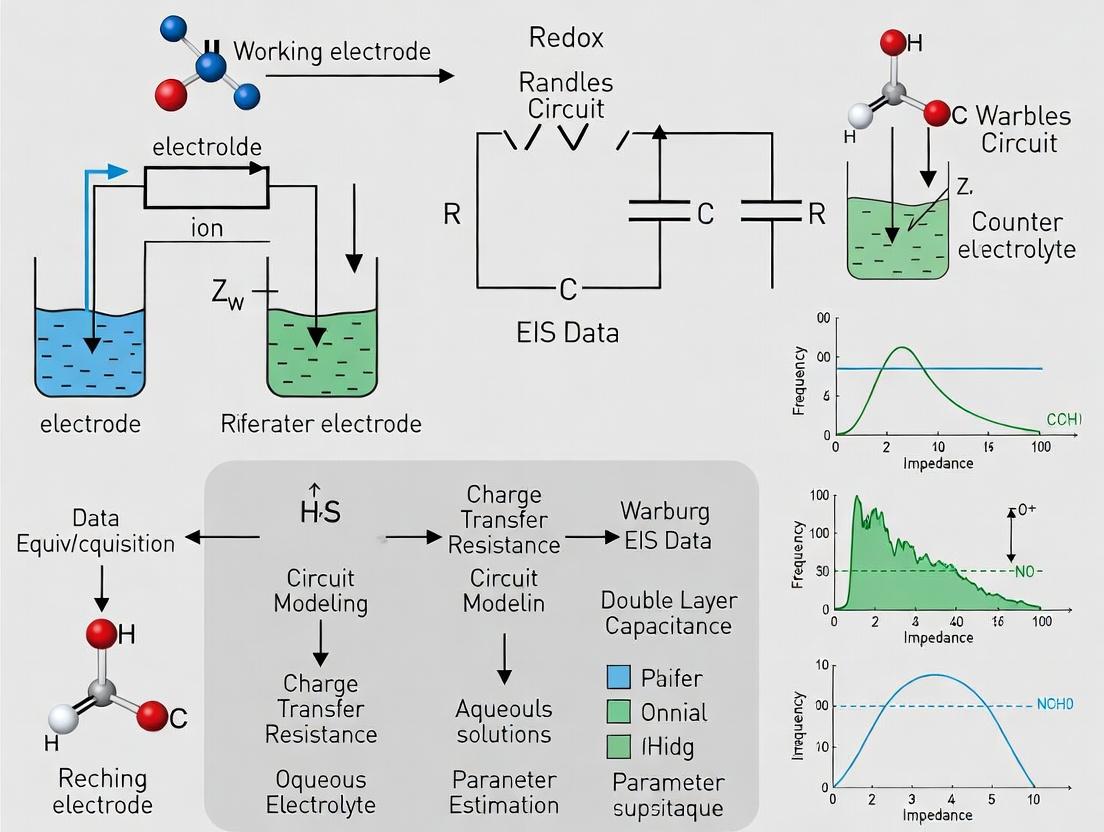
This comprehensive guide provides researchers, scientists, and drug development professionals with a complete framework for analyzing electrochemical impedance spectroscopy (EIS) data from redox-active systems using the Randles equivalent circuit.
Mastering Randles Circuit EIS Fitting: A Complete Guide for Redox System Analysis in Biomedical Research
Abstract
This comprehensive guide provides researchers, scientists, and drug development professionals with a complete framework for analyzing electrochemical impedance spectroscopy (EIS) data from redox-active systems using the Randles equivalent circuit. We cover fundamental principles of electron transfer kinetics and mass transport, step-by-step methodologies for accurate fitting and parameter extraction, troubleshooting strategies for common experimental artifacts, and validation protocols to ensure reliability and reproducibility. By integrating foundational theory with practical application, this article enables precise characterization of charge transfer resistance, double-layer capacitance, Warburg diffusion, and solution resistance for applications ranging from biosensor development to drug metabolism studies and electrochemical immunoassays.
Understanding the Randles Circuit: From Electron Transfer Theory to Practical EIS Modeling
This application note contextualizes the study of electron transfer (ET) kinetics and mass transport within the broader thesis research on Electrochemical Impedance Spectroscopy (EIS) data fitting for redox systems using the Randles circuit model. Understanding these physical principles is critical for accurate model selection and parameter extraction, with direct applications in biosensor development, drug metabolism analysis, and energy storage research.
Core Theoretical Principles & Quantitative Data
Key Kinetic and Transport Parameters
The following parameters are fundamental to modeling redox systems and are the target outputs from EIS fitting procedures using the Randles circuit.
Table 1: Fundamental Parameters of Redox Kinetics and Transport
| Parameter | Symbol | Typical Range (Aqueous Solution) | Unit | Significance in Randles Circuit |
|---|---|---|---|---|
| Standard Rate Constant | ( k^0 ) | (10^{-5} - 10 \, \text{cm s}^{-1}) | cm s⁻¹ | Governs charge transfer resistance ((R_{ct})) |
| Charge Transfer Coefficient | ( \alpha ) | (0.3 - 0.7) | Dimensionless | Describes symmetry of energy barrier |
| Diffusion Coefficient (Oxidized) | ( D_O ) | (10^{-6} - 10^{-5}) | cm² s⁻¹ | Influences Warburg impedance |
| Diffusion Coefficient (Reduced) | ( D_R ) | (10^{-6} - 10^{-5}) | cm² s⁻¹ | Influences Warburg impedance |
| Electron Transfer Rate Constant | ( k_{et} ) | Variable | s⁻¹ | Related to ( k^0 ) and overpotential |
Key Equations Governing System Behavior
Table 2: Governing Equations for Data Fitting
| Process | Governing Equation | Relation to EIS Element |
|---|---|---|
| Butler-Volmer Kinetics | ( i = i_0 [ e^{(1-\alpha)f\eta} - e^{-\alpha f\eta} ] ) | Linearized for (R{ct} = RT/(nFi0)) |
| Semi-infinite Linear Diffusion (Warburg) | ( Z_W = \sigma \omega^{-1/2} (1-j) ) | ( \sigma = \frac{RT}{n^2 F^2 A\sqrt{2}}( \frac{1}{CO^*\sqrt{DO}} + \frac{1}{CR^*\sqrt{DR}} ) ) |
| Randles Circuit Impedance | ( Z = R\Omega + \frac{1}{j\omega C{dl} + \frac{1}{R{ct} + ZW}} ) | Full model for fitting |
Experimental Protocols
Protocol 1: Benchmarking ET Kinetics via Cyclic Voltammetry for EIS Validation
Objective: To determine the standard electrochemical rate constant ((k^0)) and charge transfer coefficient ((\alpha)) of a redox couple (e.g., Ferrocenemethanol) using cyclic voltammetry (CV). This provides ground-truth validation for parameters extracted from EIS fitting.
Materials: See "The Scientist's Toolkit" below.
Procedure:
- Electrode Preparation: Polish the glassy carbon working electrode (3 mm diameter) sequentially with 1.0, 0.3, and 0.05 μm alumina slurry on a microcloth. Sonicate in deionized water and ethanol for 2 minutes each. Dry under a gentle stream of N₂.
- Solution Preparation: Prepare a 1.0 mM solution of the redox probe (e.g., Ferrocenemethanol) in a supporting electrolyte (e.g., 0.1 M KCl or PBS). Decoxygenate with argon or N₂ for at least 15 minutes prior to experiments.
- Data Acquisition: Using a potentiostat, record CVs at multiple scan rates (ν) from 0.01 to 10 V s⁻¹. Use a standard three-electrode setup. Ensure quiet time of 5 s at initial potential.
- Data Analysis for (k^0) and (\alpha): a. Calculate the peak-to-peak separation ((\Delta Ep)) at each scan rate. b. For quasi-reversible systems ((\Delta Ep) > 59 mV), use the Nicholson method: ( \psi = k^0 / [\pi a D n F \nu /(RT)]^{1/2} ), where (\psi) is a tabulated function of (\Delta E_p). c. Plot (\psi) vs. (\nu^{-1/2}) to extract (k^0). d. Determine (\alpha) from the asymmetry of anodic and cathodic peak potentials at low scan rates.
Protocol 2: EIS Measurement for Randles Circuit Parameter Extraction
Objective: To acquire impedance spectra of a redox system and fit the data to the Randles equivalent circuit to extract (R\Omega), (C{dl}), (R_{ct}), and Warburg coefficient (σ).
Procedure:
- DC Potential Selection: From Protocol 1 CV, identify the formal potential ((E^0)). Set this as the DC bias potential for the EIS measurement.
- AC Signal Settings: Apply a sinusoidal potential perturbation with amplitude of 10 mV (rms). Measure impedance across a frequency range of 100 kHz to 0.1 Hz, with 10 points per decade.
- Measurement: Record impedance (Z) and phase angle (θ) at each frequency. Perform in triplicate.
- Data Fitting: a. Use non-linear least squares (Levenberg-Marquardt) fitting algorithm in dedicated software (e.g., ZView, EC-Lab). b. Fit to the Randles circuit model: ( R\Omega + C{dl} / / (R{ct} + W) ), where W is the semi-infinite Warburg element. c. Constrain (C{dl}) to a realistic range (10-100 μF cm⁻² for bare electrodes). d. From the extracted σ, calculate the apparent diffusion coefficient using the equation in Table 2, assuming (CO^* = CR^*).
Visualizing the EIS Data Fitting Workflow
Diagram 1: Workflow for correlating kinetic experiments with EIS fitting.
Diagram 2: Randles circuit elements map to physical processes.
The Scientist's Toolkit
Table 3: Essential Research Reagent Solutions & Materials
| Item | Function/Composition | Purpose in Redox System Studies |
|---|---|---|
| Redox Probes (e.g., Potassium Ferricyanide, Ferrocenemethanol) | Well-characterized, reversible single-electron transfer couples. | Benchmarking electrode performance, validating EIS fitting models, determining (k^0). |
| Supporting Electrolyte (e.g., 0.1 M KCl, PBS, TBAPF6 in ACN) | High concentration (> 0.1 M) inert salt. | Minimizes solution resistance ((R_Ω)), suppresses migration current, defines ionic strength. |
| Polishing Suspensions (Alumina or Diamond) | 1.0, 0.3, and 0.05 μm abrasive particles in water. | Creates reproducible, clean electrode surface crucial for consistent kinetics and (C_{dl}). |
| Purging Gas (Argon or Nitrogen, high purity) | Inert, oxygen-free gas. | Removes dissolved O₂ which can interfere as an unintended redox species. |
| External Redox Couple (e.g., Ru(NH₃)₆³⁺/²⁺) | Outer-sphere, diffusion-controlled probe. | Independent measurement of diffusion coefficients and electrode area. |
| Non-Faradaic Buffer Solution (e.g., 0.1 M KCl only) | Solution containing only supporting electrolyte. | Measurement of double-layer capacitance ((C_{dl})) in absence of faradaic processes. |
Within the broader thesis on Electrochemical Impedance Spectroscopy (EIS) data fitting for redox systems, the Randles circuit remains the foundational model. In biomedical contexts—spanning biosensor development, drug-target interaction analysis, and cellular redox monitoring—accurately deconstructing and assigning physical meaning to its components (Rs, Rct, Cdl, Zw) is critical. This document provides application notes and protocols for applying and fitting the Randles circuit to biologically relevant redox systems.
Circuit Component Definitions & Biomedical Correlates
The Randles circuit is a simplified equivalent circuit modeling a redox-active electrochemical interface.
| Component | Symbol | Physical Meaning | Typical Biomedical System Correlate |
|---|---|---|---|
| Solution Resistance | Rs | Resistance of ionic solution between reference and working electrodes. | Buffer conductivity in a biosensor flow cell; extracellular fluid resistance in implantable sensors. |
| Charge Transfer Resistance | Rct | Resistance to electron transfer across electrode-electrolyte interface. Inverse measure of redox reaction rate. | Density of accessible binding sites on an immobilized aptamer; efficacy of a drug inhibiting an enzymatic redox process. |
| Double Layer Capacitance | Cdl | Capacitance of the ionic double layer at the electrode-electrolyte interface. | Changes in local permittivity due to protein adsorption (fouling) on an electrode surface. |
| Warburg Impedance | Zw | Resistance to mass transfer (diffusion) of redox species. | Diffusion-limited response in a cellular redox secretion assay or through a hydrogel membrane in a sensor. |
Key Research Reagent Solutions & Materials
The Scientist's Toolkit for Biomedical EIS with Randles Circuits
| Item | Function & Relevance |
|---|---|
| Potentiostat/Galvanostat with EIS Module | Core instrument for applying small AC potential perturbation and measuring current response across a frequency range. |
| Screen-Printed or Planar Gold Electrodes | Common biocompatible, surface-functionalizable working electrodes for biosensing applications. |
| Phosphate Buffered Saline (PBS), 1X, pH 7.4 | Standard physiologically-relevant electrolyte supporting ionic conduction (defines Rs). |
| Redox Mediators (e.g., [Fe(CN)₆]³⁻/⁴⁻) | Well-characterized, reversible redox couple for probing Rct and system performance. |
| Self-Assembled Monolayer (SAM) Kit (e.g., Thiolated PEG/Alkanethiols) | For creating controlled, biocompatible interfaces on gold electrodes to modulate Rct and minimize non-specific binding. |
| Target Analytes (Proteins, DNA, Small Molecule Drugs) | The biological species of interest; binding/action alters interfacial properties (Rct, Cdl). |
| Data Fitting Software (e.g., ZView, EC-Lab, Python SciPy) | For complex nonlinear least squares (CNLS) fitting of EIS data to the Randles model and its variants. |
Experimental Protocols
Protocol 1: Baseline Characterization of a Biosensor Interface
Objective: Establish the initial Randles parameters for a functionalized electrode in buffer. Workflow:
- Electrode Preparation: Clean gold working electrode. Immerse in 1 mM thiolated probe (e.g., DNA aptamer) solution for 16 hours at 4°C to form SAM. Rinse and backfill with 1 mM mercaptohexanol for 1 hour.
- EIS Measurement Setup: Assemble 3-electrode cell (functionalized WE, Pt CE, Ag/AgCl RE) in 10 mL PBS containing 5 mM [Fe(CN)₆]³⁻/⁴⁻.
- Data Acquisition: Apply DC potential at formal potential of redox mediator (+0.22 V vs. Ag/AgCl). Superimpose AC sine wave with 10 mV amplitude. Sweep frequency from 100 kHz to 0.1 Hz. Record impedance (Z) and phase (θ).
- Initial Fitting: Fit Nyquist plot data to the basic Randles circuit (Rs, Rct, Cdl) using CNLS fitting. Record fitted values as baseline.
Protocol 2: Monitoring Biomolecular Binding (e.g., Protein-Target Interaction)
Objective: Quantify changes in Rct and Cdl upon specific binding to the electrode surface. Workflow:
- Obtain Baseline: Perform Protocol 1 to get pre-binding Rct₀ and Cdl₀.
- Introduce Analyte: Add purified target protein to the electrochemical cell to a final concentration of 100 nM. Incubate under static conditions for 30 minutes.
- Post-Binding Measurement: Repeat EIS measurement (Step 3 of Protocol 1) without disturbing the electrode.
- Data Analysis: Refit the post-binding EIS data. Calculate ΔRct = Rct - Rct₀. The increase in Rct correlates with target binding, which hinders electron transfer of the redox mediator to the electrode surface.
Protocol 3: Assessing Diffusion-Limited (Warburg-Dominated) Systems
Objective: Identify and fit the Warburg impedance (Zw) in a diffusion-controlled biomedical system. Workflow:
- Create Diffusion Barrier: Modify electrode by depositing a porous hydrogel (e.g., agarose) or a confluent cell monolayer.
- EIS Measurement at Low Frequency: Perform EIS from 10 kHz to 0.01 Hz. Use a lower AC amplitude (5 mV) to avoid perturbing delicate biological layers.
- Data Fitting with Zw: Fit the Nyquist plot, focusing on the low-frequency linear region (45° slope), to a Randles circuit with a Warburg element (Rs, Rct, Cdl, Zw). Use a constant phase element (CPE) instead of Cdl if the interface is non-ideal (typical for biological layers).
Data Presentation: Representative Fitted Values
Table: Example Randles Circuit Parameters from a Model Biosensor Experiment (Fitted in ZView, Chi-squared < 1e-3)
| Experimental Condition | Rs (Ω) | Rct (kΩ) | Cdl (µF) | Warburg, W (Ω•s⁻⁰•⁵) | Notes |
|---|---|---|---|---|---|
| Bare Gold in PBS/[Fe(CN)₆]³⁻/⁴⁻ | 120 ± 5 | 1.2 ± 0.1 | 3.1 ± 0.2 | - | Unhindered electron transfer. |
| With SAM of Aptamer | 125 ± 6 | 12.5 ± 0.8 | 2.1 ± 0.1 | - | Rct increases due to insulating SAM. |
| After Target Binding (100 nM) | 130 ± 5 | 28.4 ± 1.2 | 1.8 ± 0.1 | - | Rct further increases, confirming binding. |
| With Hydrogel Coating | 150 ± 10 | 15.0 ± 1.0 | 1.5 ± 0.2 | 850 ± 50 | Low-frequency linear slope appears, fit with Zw. |
Visualization Diagrams
Diagram Title: Workflow for Biomedical EIS with Randles Circuit Fitting
Diagram Title: Randles Circuit Elements and Biomedical Correlates
This application note is part of a broader thesis on Electrochemical Impedance Spectroscopy (EIS) data fitting for redox-active systems. The central question addressed is when the Randles model, the most ubiquitous equivalent circuit in electroanalytical chemistry, is applicable, and what criteria define its validity for both ideal and non-ideal interfacial charge transfer. Accurate model selection is critical for extracting meaningful electrochemical parameters (e.g., charge transfer resistance, double-layer capacitance) from experimental data, which directly impacts research in biosensing, corrosion science, battery development, and drug discovery involving redox-active molecules.
Criteria for Ideal Redox Behavior and Randles Model Applicability
The classical Randles circuit (Rs(RctCdl)W) is rigorously applicable only under a strict set of conditions for a one-step, outer-sphere electron transfer reaction.
Primary Criteria for Ideal Behavior:
- Semi-Infinite Planar Diffusion: The dominant mode of mass transport is one-dimensional diffusion to a planar electrode of infinite size relative to the diffusion layer. This is typically achieved using rotating disk electrodes or unstirred solutions with sufficient quiet time.
- Fast Electrochemical Kinetics: The electron transfer rate is sufficiently fast to be governed by mass transport at equilibrium potentials (reversible system). For kinetic studies, the system should exhibit clear Butler-Volmer behavior.
- Homogeneous, Non-Adsorbing Electrolyte: The electroactive species is dissolved in a solution with a high concentration of supporting electrolyte (≥50:1 excess) to minimize migration effects. The redox species and products do not adsorb onto the electrode surface.
- Single-Step, Nernstian Reaction: The redox reaction involves a single electron transfer step and obeys the Nernst equation at the interface.
- Uniform Surface: The electrode surface is smooth, homogeneous, and chemically inert.
Quantitative Indicators from EIS Data:
When these criteria are met, the electrochemical impedance spectrum exhibits a characteristic shape. A complex non-linear least squares (CNLS) fit to the Randles model will yield statistically robust parameters.
Table 1: EIS Spectral Indicators for Ideal Redox Systems Fitting the Randles Model
| Feature | Quantitative/Qualitative Signature | Interpretation |
|---|---|---|
| Nyquist Plot Shape | A well-defined, depressed semicircle at high frequencies followed by a 45° Warburg line at mid-low frequencies, transitioning to a vertical line at very low frequencies (finite-length diffusion). | The semicircle corresponds to the parallel Rct-Cdl combination. The 45° line is the signature of semi-infinite planar diffusion (Warburg element, W). |
| Semicircle Depression | Phase angle of the capacitive loop is close to -90°. The depression angle (α) from the real axis is minimal (α < 10°). | A depressed semicircle (α > 10°) indicates surface inhomogeneity or frequency-dependent capacitance, violating the ideal Cdl assumption. |
| Warburg Coefficient (σ) | Obtainable from a linear fit of Zreal vs. ω-1/2 in the diffusion-dominated region. Should agree with the theoretical value: σ = (RT/(√2 n²F²A))(1/(DO1/2CO) + 1/(DR1/2CR*)). | Validates semi-infinite diffusion control. Discrepancy suggests non-ideal diffusion (e.g., porous or bounded). |
| Cdl Frequency Independence | The fitted double-layer capacitance value should remain constant across a range of applied DC potentials and AC frequencies. | Frequency-dependent capacitance suggests a constant phase element (CPE) is needed instead of Cdl. |
Decision Flow for Applying the Randles Model to Ideal Systems
Non-Ideal Redox Behavior and Randles Circuit Modifications
Deviations from the above criteria necessitate modifications to the classical Randles circuit. These deviations are common in real-world applications, including in drug development where molecules may adsorb or undergo complex reaction mechanisms.
Common Non-Ideal Behaviors and Model Adjustments:
Table 2: Non-Ideal Criteria and Corresponding Circuit Modifications
| Non-Ideal Criterion | Physical Origin | EIS Signature | Modified Circuit Element | Typical Systems |
|---|---|---|---|---|
| Surface Roughness/ Heterogeneity | Fractal geometry, porous coatings, polycrystalline electrodes. | Depressed capacitive semicircle (phase angle < -90°). | Replace Cdl with a Constant Phase Element (CPE). Impedance: ZCPE = 1/(Q(jω)n). | Modified electrodes, coated sensors, corroding surfaces. |
| Finite-Length/ Bounded Diffusion | Thin-layer cells, polymer films, diffusion through membranes. | Warburg line bends toward real axis at low frequency, becoming vertical. | Replace Ws (infinite) with WO (open) or WS (short) finite-length Warburg. | Membrane transport studies, battery intercalation, immobilized enzyme layers. |
| Adsorption of Reactant/Product | Redox species chemically adsorbs to the electrode surface. | An additional low-frequency time constant (semicircle or pseudo-inductive loop) appears. | Add an additional Rads-Cads branch in series with the Warburg element. | Many drug molecules (e.g., anticancer agents), organic redox probes. |
| Slow Chemical Step (CE, EC) | Electron transfer coupled with chemical reactions (Catalytic, ECE). | Distorted low-frequency response; may show inductive or capacitive loops depending on mechanism. | Requires complex circuits (e.g., (RctCdl)(RchemL) for adsorption with slow step). | Catalytic biosensors, metalloprotein redox, drug metabolism studies. |
Randles Circuit Evolution for Non-Ideal Behaviors
Experimental Protocol: Validating Model Choice for a Redox Probe
This protocol outlines the steps to determine whether a simple Randles model is sufficient for characterizing a novel redox-active pharmaceutical compound in buffered solution.
Materials & Reagent Solutions
Table 3: Research Reagent Solutions for EIS Validation Study
| Item | Specification/Concentration | Function in Experiment |
|---|---|---|
| Redox Probe | Compound of interest (e.g., 1-5 mM in DMSO stock). | The electroactive species under investigation. |
| Supporting Electrolyte | Phosphate Buffered Saline (PBS, 0.1 M, pH 7.4) or KCl (0.1 M). | Minimizes solution resistance (Rs), eliminates migration current. |
| Internal Standard | Potassium Ferricyanide, K3[Fe(CN)6] (1-5 mM). | Ideal outer-sphere redox couple used to benchmark electrode performance and validate ideal Randles behavior. |
| Working Electrode | Polished glassy carbon disk (3 mm diameter). | Provides a smooth, well-defined planar electrode surface. |
| Reference Electrode | Ag/AgCl (3 M KCl) electrode. | Provides a stable, known reference potential. |
| Counter Electrode | Platinum wire or coil. | Completes the current path in the three-electrode cell. |
| Electrode Polishing Kit | Alumina slurry (1.0, 0.3, 0.05 µm). | Ensures a fresh, reproducible, and smooth electrode surface. |
| Degassing Agent | Argon or Nitrogen gas (high purity). | Removes dissolved oxygen to prevent interfering redox reactions. |
Step-by-Step Procedure
- Electrode Preparation: Polish the glassy carbon working electrode sequentially with 1.0, 0.3, and 0.05 µm alumina slurry on a microcloth. Rinse thoroughly with deionized water and sonicate for 1 minute in water.
- Internal Standard Test (Ideal Behavior Benchmark):
- Prepare a solution of 1 mM K3[Fe(CN)6] in 0.1 M KCl.
- Transfer 10 mL to the electrochemical cell. De-gas with Argon for 10 minutes.
- Assemble the three-electrode system. Perform Cyclic Voltammetry (CV) at 50 mV/s. The ΔEp should be ~59-70 mV for a reversible system.
- At the formal potential (E1/2), acquire EIS data. Typical parameters: AC amplitude = 10 mV rms, frequency range = 100 kHz to 0.1 Hz.
- Fit the data to the Randles circuit. Record Rct, Cdl, and σ. The fit should be excellent (χ² < 10-3), with a non-depressed semicircle and clear Warburg region.
- Test Compound Analysis:
- Prepare a solution of the target compound (e.g., 0.5 mM) in PBS (0.1 M, pH 7.4) with supporting electrolyte.
- De-gas as before.
- Perform CV to identify the redox peak potentials for the compound.
- At the compound's formal potential, acquire EIS data using identical instrument settings as in Step 2.
- Data Analysis & Model Selection:
- Visually inspect the Nyquist plot. Compare its shape to the ideal [Fe(CN)6]3-/4- data.
- Primary Attempt: Perform a CNLS fit using the ideal Randles circuit. Evaluate the goodness-of-fit (χ²) and the physical reasonableness of parameters (e.g., positive values, Cdl ~10-100 µF/cm²).
- Residuals Analysis: Plot the weighted residuals for the fit. Random, uncorrelated scatter indicates a good model. Systematic trends indicate a poor model.
- If Fit is Poor: Systematically test modified circuits from Table 2.
- Step A: Replace Cdl with a CPE. Check if χ² improves significantly and n is between 0.8-1.0.
- Step B: If a second time constant is visually apparent at low frequency, add an R-C branch in series with the Warburg.
- Statistical Validation: Use the F-test or Akaike Information Criterion (AIC) to determine if the improvement in fit with the more complex model is statistically justified over the simpler Randles model.
The decision to use the classical Randles model is not assumed but must be empirically validated. For ideal redox systems meeting the criteria of planar diffusion, fast kinetics, and a homogeneous surface, it provides a robust, physical basis for parameter extraction. In the broader context of thesis research on EIS fitting, this note establishes that most real-world systems, especially in drug development involving complex organic molecules, will exhibit non-ideal behaviors such as adsorption or surface heterogeneity. In these cases, methodical, stepwise modification of the Randles circuit, guided by spectral signatures and statistical tests, is the essential protocol for obtaining accurate and meaningful electrochemical insights.
Within the broader thesis on Electrochemical Impedance Spectroscopy (EIS) data fitting for redox systems using Randles circuit analysis, the integrity of the extracted parameters is entirely dependent on the quality and validity of the raw impedance data. Two critical pre-fitting steps, Data Quality Assessment and Kramers-Kronig (K-K) validation, form the essential gatekeepers for reliable analysis. These steps ensure that the data are consistent, stable, and compliant with the fundamental laws of linearity, causality, and stability before any complex equivalent circuit modeling, such as with the Randles circuit, is attempted.
Data Quality Assessment: Core Principles and Protocol
Data Quality Assessment involves a suite of tests to evaluate the noise, stability, and linearity of the measured EIS data. For redox systems, where electrode processes can be non-stationary, these checks are paramount.
Experimental Protocol: Data Quality Assessment for Redox Systems
Replicate Measurement Protocol:
- Perform a minimum of three (n=3) consecutive impedance measurements on the identical electrochemical cell under identical conditions (potential, perturbation amplitude, frequency range).
- Allow a 30-second stabilization period at the applied DC potential before initiating each frequency sweep.
- Record each full spectrum independently.
Stability Test (Time-Domain Protocol):
- After completing the frequency sweep, hold the system at the same DC potential.
- Measure the impedance at a single, characteristic frequency (e.g., 1 Hz for a typical redox system) over a period of 300 seconds.
- Record the real (Z') and imaginary (Z") components at 5-second intervals.
Linearity Test (Perturbation Amplitude Protocol):
- At a fixed DC potential within the redox-active region, perform EIS measurements across the standard frequency range (e.g., 100 kHz to 10 mHz) using a series of increasing AC perturbation amplitudes.
- A recommended sequence is 5 mVrms, 10 mVrms, 15 mVrms, and 20 mVrms.
- Ensure adequate settling time between measurements to avoid hysteresis effects.
Quantitative Data Assessment Metrics: The data from the above protocols are evaluated using the following metrics, summarized in Table 1.
Table 1: Data Quality Assessment Metrics and Acceptance Criteria
| Test | Metric | Calculation | Acceptance Criterion for Redox Systems | ||||||
|---|---|---|---|---|---|---|---|---|---|
| Replicate Measurement | Coefficient of Variation (CV) at key frequencies | (Standard Deviation / Mean) * 100% for | Z | , Z', Z" | CV < 2% across mid-frequency range (1 Hz - 1 kHz) | ||||
| Stability Test | Drift Slope | Linear regression slope of | Z | vs. time at fixed frequency | Slope | < 0.1 Ω/min | |||
| Linearity Test | Relative Deviation (%) | ( | Z | amplitudeX - | Z | _5mV) / | Z | _5mV * 100% | Deviation < 3% across all frequencies for amplitudes ≤ 10 mVrms |
Kramers-Kronig Validation: Theory and Application
The Kramers-Kronig relations are a set of integral equations that define the necessary and sufficient conditions for impedance data to be valid. They require the system to be linear, causal, and stable. K-K validation checks the self-consistency of the data, often by transforming the real component to predict the imaginary component and vice-versa.
Experimental/Computational Protocol: K-K Validation
Data Pre-processing:
- The measured impedance spectrum (Z(ω) = Z'(ω) + jZ"(ω)) is the input.
- Ensure the frequency array is logarithmically spaced with sufficient density (≥ 10 points per decade).
- Identify and exclude obvious outliers.
Residuals Calculation via Line-Fitting Method (Common Protocol):
- A suitable equivalent circuit model (e.g., a generic Voigt model with 5-7 R-C elements) is fitted to the entire measured dataset. This model does not need physicochemical meaning; it serves as a K-K compliant interpolant.
- The fitted values (Z'fit, Z"fit) are compared to the measured values.
- Residuals for both real and imaginary parts are calculated: ΔZ' = Z'meas - Z'fit, ΔZ" = Z"meas - Z"fit.
Statistical Validation Test:
- Perform a χ² (chi-squared) test on the weighted residuals or a Maximum Relative Residual (MRR) analysis.
- A common metric is the Mean Absolute Relative Residual (MARR): MARR = (1/N) * Σ |(Zmeas - Zfit)| / |Z_meas|.
Table 2: Kramers-Kronig Validation Output and Interpretation
| Output | Description | Pass/Fail Indicator |
|---|---|---|
| Residual Plot (ΔZ' & ΔZ" vs. log f) | Graphical representation of discrepancies. | Random, unstructured scatter around zero indicates pass. Systematic trends indicate failure. |
| Mean Absolute Relative Residual (MARR) | Average magnitude of relative error across spectrum. | MARR < 0.5% suggests excellent compliance. MARR > 2% suggests violation of K-K constraints. |
| χ² Test p-value | Probability that residuals are due to random noise. | p-value > 0.05 suggests no significant violation of K-K relations. |
The Scientist's Toolkit: Essential Materials for EIS of Redox Systems
Table 3: Key Research Reagent Solutions and Materials
| Item | Function/Description |
|---|---|
| Potentiostat/Galvanostat with FRA | Fundamental instrument for applying potential/current and measuring impedance response. Frequency Response Analyzer (FRA) module is essential. |
| Faraday Cage | Metallic enclosure to shield the electrochemical cell from external electromagnetic interference, crucial for low-current, low-frequency measurements. |
| Three-Electrode Cell Setup | Working Electrode (e.g., glassy carbon, gold disk): Site of redox reaction. Counter Electrode (Pt wire/foil): Completes current circuit. Reference Electrode (Ag/AgCl, SCE): Provides stable potential reference. |
| Redox Probe Solution (e.g., 5mM K₃[Fe(CN)₆]/K₄[Fe(CN)₆] in 1M KCl) | A well-understood, reversible redox couple used for system validation, electrode cleanliness checks, and methodology calibration. |
| Supporting Electrolyte (e.g., 0.1M PBS, KCl, TBAPF₆) | Provides high ionic conductivity, minimizes ohmic (solution) resistance, and controls the double-layer structure. Inert over potential window. |
| Data Quality & K-K Validation Software | Software packages (e.g., EC-Lab ZFit, MEISP, PyEIS, homemade scripts) capable of performing replicate analysis, stability checks, and K-K validation tests. |
Visualized Workflows
EIS Data Validation Workflow
Pre-Fitting Steps Ensure Meaningful Randles Parameters
Step-by-Step EIS Fitting Protocol: From Raw Data to Kinetic Parameters
Within the broader thesis on Electrochemical Impedance Spectroscopy (EIS) data fitting for redox systems using Randles circuit models, the reliability of the final fitted parameters is critically dependent on the initial experimental design. This document provides detailed application notes and protocols for electrode preparation and measurement parameter selection to generate high-quality, reproducible EIS data for redox-active systems, pertinent to biosensor development and drug discovery research.
Electrode Preparation Protocols
Working Electrode Polishing Protocol
A meticulously polished electrode surface is fundamental for reproducible kinetics.
- Materials: Glassy carbon (GC) working electrode (3 mm diameter), 1.0, 0.3, and 0.05 µm alumina powder slurries, polishing microcloth, sonication bath, ultrapure water (>18 MΩ·cm).
- Procedure:
- Place polishing cloth on a flat surface and apply a few drops of the 1.0 µm alumina slurry.
- Hold the electrode perpendicular to the cloth and polish using a figure-8 pattern for 60 seconds.
- Rinse thoroughly with ultrapure water.
- Repeat steps with 0.3 µm and finally 0.05 µm alumina slurries on fresh cloths.
- Sonicate the electrode in ultrapure water for 2 minutes after the final polish to remove adhered particles.
- Dry gently with a stream of inert gas (N₂ or Ar).
Electrochemical Pre-Treatment (Activation) for Glassy Carbon
This step creates a reproducible surface oxide layer and electroactive state.
- Setup: Polished GC electrode in 0.5 M H₂SO₄ (deaerated with N₂/Ar).
- Procedure: Perform cyclic voltammetry (CV) from -0.5 V to +1.5 V vs. Ag/AgCl at a scan rate of 100 mV/s for 20-50 cycles until a stable CV profile is achieved. Rinse with copious ultrapure water.
Redox Layer Deposition (e.g., Self-Assembled Monolayer with Redox Probe)
For model Randles systems, a well-defined redox layer is essential.
- Materials: 2 mM solution of redox probe (e.g., ferrocene-terminated alkanethiol) in ethanol.
- Procedure for Gold Electrodes:
- Immerse a clean, polished gold electrode in the probe solution for 12-24 hours at room temperature in the dark.
- Remove electrode and rinse extensively with pure ethanol to remove physisorbed material.
- Dry under a gentle stream of inert gas.
Measurement Parameter Optimization
Establishing the DC Bias (E_dc)
The applied DC potential must be set relative to the formal potential (E⁰') of the redox couple.
- Protocol: First, run a CV in your experimental electrolyte (e.g., 0.1 M KCl or PBS) containing your redox species to identify E⁰' (average of anodic and cathodic peak potentials). For a surface-confined system, the ideal EIS measurement is performed at E_dc = E⁰'.
- Rule: For solution-phase species, perform EIS at Edc = E⁰'. For modified electrodes with ideal Nernstian behavior, the charge transfer resistance (Rct) is minimum at E_dc = E⁰'.
AC Amplitude Selection
A balance between signal-to-noise ratio and linearity (validity of perturbation).
- Optimization Protocol: At E_dc = E⁰', perform a series of EIS measurements varying AC amplitude from 5 mV to 25 mV rms.
- Criterion: Select the maximum amplitude where the measured R_ct remains constant. Exceeding this range leads to non-linear system response.
- Typical Value: 10 mV rms is a standard, safe starting point for most redox systems.
Frequency Range Determination
The range must cover all relevant physical processes.
- Theoretical Guidance: The characteristic frequency, fmax, at which the imaginary impedance is maximum, is related to the electron transfer rate constant (k⁰): fmax ≈ k⁰ / (2π).
- Practical Protocol: Perform a preliminary EIS from a high frequency (e.g., 100 kHz) to a low frequency (e.g., 0.1 Hz). Inspect the Nyquist plot. Ensure the low-frequency limit shows a clear 45° Warburg line (diffusion control) or a complete semicircle (kinetic control). Extend the lower limit if necessary to capture the full response.
- Standard Range: 100 kHz to 0.1 Hz is common, but slower systems may require 10 mHz.
Data Density (Points per Decade) and Integration Time
Affects resolution and measurement duration.
- Protocol: Use a logarithmic distribution. A minimum of 7-10 points per frequency decade is recommended for reliable Randles circuit fitting.
- Integration Time: Use the potentiostat's "auto" setting or manually set to ensure stable readings at low frequencies, where noise is higher.
Table 1: Summary of Optimized EIS Measurement Parameters for Redox Systems
| Parameter | Recommended Value / Range | Rationale & Optimization Criterion |
|---|---|---|
| DC Bias (E_dc) | Set to formal potential, E⁰' | Minimizes R_ct for clear measurement; verify via CV. |
| AC Amplitude | 5 - 15 mV rms (10 mV typical) | Ensures linear system response; check R_ct invariance. |
| Frequency Range | 100 kHz to 0.1 Hz (extend to 10 mHz if needed) | Must capture high-frequency solution resistance, mid-frequency kinetic arc, and low-frequency diffusion tail. |
| Points per Decade | ≥ 7 (10-12 optimal) | Provides sufficient data density for accurate CNLS fitting. |
| Integration Time | Potentiostat "Auto" or ≥ 3 cycles per point | Balances measurement speed with signal stability, critical at low f. |
Validation and Quality Control Protocol
Before collecting data for fitting, validate the experimental setup.
- Ferri-/Ferrocyanide Validation Test:
- Use a polished GC electrode in a solution of 5 mM K₃[Fe(CN)₆] / K₄[Fe(CN)₆] in 1 M KCl.
- Set Edc to +0.24 V vs. Ag/AgCl (E⁰').
- Run EIS with parameters from Table 1.
- Expected Result: A well-defined Randles circuit response. Fit with the [Rs(Cdl[RctW])] circuit to obtain k⁰. A k⁰ > 0.01 cm/s indicates a properly prepared electrode and valid measurement.
The Scientist's Toolkit: Key Research Reagent Solutions
Table 2: Essential Materials for Redox EIS Experiments
| Item / Reagent | Function / Purpose |
|---|---|
| Alumina Polishing Slurries (1.0, 0.3, 0.05 µm) | For sequential mechanical polishing of working electrodes to a mirror finish, ensuring a fresh, reproducible surface. |
| Potassium Ferri-/Ferrocyanide (K₃[Fe(CN)₆]/K₄[Fe(CN)₆]) | Standard redox probe in high-conductivity electrolyte (1 M KCl) for validating electrode activity and overall EIS measurement setup. |
| Supporting Electrolyte (e.g., KCl, PBS, TBAPF₆) | Provides ionic conductivity, controls double-layer structure, and minimizes solution resistance (R_s). Choice depends on system solubility and potential window. |
| Redox Probe Molecules (e.g., Ferrocene derivatives, Ru(NH₃)₆³⁺) | Well-characterized, reversible redox species for creating model experimental systems to test EIS theory and fitting procedures. |
| Self-Assembled Monolayer (SAM) Precursors (e.g., Alkanethiols) | Used to modify electrode surfaces with a controlled, ordered layer for studying interfacial electron transfer kinetics. |
| Deaerating Gas (Argon or Nitrogen) | For removing dissolved oxygen from solutions, which can interfere with redox chemistry and cause unwanted background currents. |
| Ag/AgCl Reference Electrode (with proper frit) | Provides a stable, non-polarizable reference potential. Soaking in matching electrolyte minimizes liquid junction potentials. |
Visualized Workflows
Title: Workflow for Reliable Redox EIS Experiment Design
Title: Physical Elements of the Randles Equivalent Circuit
Within the broader thesis on Electrochemical Impedance Spectroscopy (EIS) data fitting for redox systems using the Randles circuit model, initial parameter estimation is a critical step. Accurate starting values for circuit elements significantly improve the convergence, speed, and reliability of non-linear least squares (NLLS) fitting algorithms. This application note details protocols for extracting these "smart guesses" from Bode and Nyquist plot features, specifically for the ubiquitous Randles circuit (RΩ + Qdl/(Rct + Wd)) used in redox system analysis.
Theoretical Basis: Randles Circuit and Plot Features
The Randles circuit is the foundational model for a simple, one-step redox reaction at an electrode. Its elements represent:
- RΩ: Uncompensated solution resistance.
- Qdl: Constant Phase Element (CPE) representing the non-ideal double-layer capacitance.
- Rct: Charge transfer resistance, inversely related to the electron transfer kinetics.
- Wd: Warburg diffusion element for semi-infinite linear diffusion.
Each element dominates the impedance response within specific frequency ranges, creating identifiable features in Bode and Nyquist plots.
Characteristic Plot Features for Parameter Estimation
Table 1: Randles Circuit Parameter Correlation with Plot Features
| Parameter | Nyquist Plot Feature | Bode Plot Feature (Magnitude) | Bode Plot Feature (Phase) | Dominant Frequency Region | ||
|---|---|---|---|---|---|---|
| RΩ | High-frequency left-intercept on Z' axis | High-frequency plateau ( | Z | ≈ RΩ) | Phase → 0° at very high frequency | Very High (>10 kHz) |
| Rct | Diameter of the semicircle (or chord) | Mid-frequency plateau height minus RΩ | Phase peak near the characteristic frequency | Medium (1 Hz - 1 kHz) | ||
| Qdl (Y0, n) | Depression of semicircle center below Z' axis | Slope of -1 in mid-high frequency (if n=1) | Maximum phase angle (Φmax < 90° for n<1) | Medium-High | ||
| Characteristic Frequency (f0) | Top of the semicircle (Z'' max) | Inflection point in magnitude plot | Frequency at Φmax | f0 = 1/(2πRctCdl) | ||
| Wd (σ) | Low-frequency 45° line (Warburg tail) | Low-frequency slope of +0.5 in | Z | Phase → 45° at low frequency | Low (<1 Hz) |
Experimental Protocols for Data Acquisition
Protocol 1: Standard EIS Measurement for Redox Systems (e.g., Ferri/Ferrocyanide)
- Objective: Acquire high-quality, reproducible EIS data suitable for Randles circuit analysis.
- Materials: See "Scientist's Toolkit" below.
- Procedure:
- Cell Setup: Assemble a standard three-electrode cell in a Faraday cage. Insert working, counter, and reference electrodes into the analyte solution (e.g., 1-10 mM K3[Fe(CN)6]/K4[Fe(CN)6] in 0.1-1 M KCl supporting electrolyte).
- Potentiostat Conditioning: Allow the system to thermally equilibrate for 5 minutes. Connect the cell to the potentiostat.
- Open Circuit Potential (OCP) Measurement: Measure and record the stable OCP for at least 60 seconds to define the DC bias for EIS.
- EIS Parameter Setup:
- DC Bias: Apply the recorded OCP.
- AC Amplitude: Set a sinusoidal perturbation of 5-10 mV RMS. This ensures linearity of the response.
- Frequency Range: Typically 100 kHz (or the instrument maximum) to 0.1 Hz (or lower for clear diffusion tails). Use 5-10 points per decade.
- Integration/Averaging: Set each measurement to integrate over 2-3 cycles of the AC signal. Perform at least 3 replicate measurements.
- Data Validation: During acquisition, monitor the "goodness of fit" to the sine wave (if reported by the software) to ensure data quality. Check replicate consistency.
- Data Export: Export raw data as Z'(Ω), Z''(Ω), and Frequency (Hz). Do not apply internal fitting routines at this stage.
Protocol 2: Visual-Graphical Extraction of Initial Parameters
- Objective: Manually extract initial guesses for RΩ, Rct, and f0 from raw EIS plots.
- Input: Raw EIS data from Protocol 1.
- Procedure:
- Plot Data: Generate Nyquist and Bode (|Z| & Phase vs. Frequency) plots.
- Estimate RΩ:
- On the Nyquist plot, visually extrapolate the high-frequency data points to the real (Z') axis. The intercept is RΩ.
- On the Bode magnitude plot, identify the high-frequency plateau value. This is |Z| ≈ RΩ.
- Estimate Rct:
- On the Nyquist plot, if a semicircle is present, estimate the diameter along the Z' axis. This is Rct.
- If the semicircle is depressed, draw a chord between the high-frequency intercept (RΩ) and the low-frequency start of the Warburg tail. The horizontal span of this chord approximates Rct.
- Estimate f0 and Qdl:
- On the Nyquist plot, identify the frequency at the top of the semicircle (maximum -Z''). This is f0.
- On the Bode phase plot, identify the frequency (fΦmax) at which the phase angle is maximum.
- Make an initial guess for the CPE exponent n (typically 0.8-1.0 for a quasi-capacitive interface). Assume a pure capacitor first (n=1).
- Calculate an initial guess for the CPE parameter Y0 using the relationship at the characteristic frequency: f0 ≈ 1 / [2π (Rct * Cdl)], where Cdl is approximated from Y0 and ω0.
- Estimate Wd (σ): If a low-frequency Warburg tail (45° line) is visible in the Nyquist plot, estimate its slope. The Warburg coefficient σ is related to the slope of Z' vs. ω-1/2 in a separate transformation.
Table 2: Summary of Initial Parameter Estimation Steps
| Step | Target Parameter | Visual Cue (Nyquist) | Quantitative Action | Initial Guess Formula (if applicable) |
|---|---|---|---|---|
| 1 | RΩ | High-frequency intercept on Z' axis | Read Z' value at highest frequency point. | RΩ = Z'f→max |
| 2 | Rct | Diameter of semicircle/chord | Subtract RΩ from low-frequency Z' of semicircle/chord. | Rct = Z'f→low - RΩ |
| 3 | f0 | Frequency at maximum -Z'' | Note f at the top of the Nyquist semicircle. | f0 from plot |
| 4 | CPE (n) | Depression of semicircle | Estimate from phase peak: n ≈ Φmax / 90°. | ninitial = 0.9 - 1.0 |
| 5 | CPE (Y0) | Derived from f0 & Rct | Assume Cdl = 1/(2π f0 Rct). For n≈1, Y0 ≈ Cdl. | Y0, initial ≈ 1/(2π f0 Rct) |
| 6 | σ (Wd) | Slope of low-f 45° line | Plot Z' vs. ω-1/2 for low-f data; fit line slope = σ. | σ = ΔZ' / Δ(ω-1/2) |
Visualization of the Parameter Estimation Workflow
Initial Parameter Estimation from EIS Plots
Randles Circuit and Plot Feature Relationships
The Scientist's Toolkit
Table 3: Essential Research Reagents & Materials for EIS of Redox Systems
| Item | Function & Specification | Rationale |
|---|---|---|
| Potentiostat/Galvanostat with FRA | Core instrument for applying potential/current perturbations and measuring impedance. Requires a Frequency Response Analyzer (FRA) module. | Enables precise AC impedance measurement across a wide frequency range with low-noise detection. |
| Faraday Cage | Metallic enclosure to shield the electrochemical cell from external electromagnetic interference. | Critical for obtaining stable, low-noise measurements, especially at low frequencies and high impedance. |
| Three-Electrode Cell | Electrochemical cell with separate Working, Counter, and Reference electrode compartments. | Isolates the reaction of interest at the WE and provides a stable potential reference (RE). |
| Redox Probe Solution | e.g., 5 mM K3[Fe(CN)6] / K4[Fe(CN)6] 1:1 mixture in 0.1 M KCl. | Provides a well-characterized, reversible, one-step redox couple ideal for validating EIS setups and fitting procedures. |
| Supporting Electrolyte | High-concentration, inert salt (e.g., KCl, KNO3, NaClO4) at 0.1-1.0 M. | Minimizes solution resistance (RΩ) and ensures charge transport is dominated by migration of the inert ions. |
| Platinum or Gold Working Electrode | Inert, polished disk electrode (diameter 1-3 mm). | Provides a well-defined, reproducible surface for outer-sphere redox reactions. |
| Platinum Wire/Counter Electrode | High-surface-area inert counter electrode. | Completes the circuit without limiting current. |
| Ag/AgCl (sat'd KCl) Reference Electrode | Stable, low-impedance reference electrode. | Provides a constant potential against which the WE potential is controlled and measured. |
| EC-Lab, ZView, or Equivalent Software | Software for instrument control, data acquisition, and circuit fitting. | Necessary for running experiments, visualizing Bode/Nyquist plots, and performing NLLS fitting with initial guesses. |
1. Introduction and Thesis Context Within the broader thesis on Electrochemical Impedance Spectroscopy (EIS) data fitting for redox systems using the Randles circuit model, the selection of the fitting algorithm and the appropriate weighting of error structures is paramount. The Randles circuit, representing a diffusion-controlled redox process, yields a complex nonlinear model. Incorrect fitting procedures can lead to significant bias in estimated parameters like charge-transfer resistance (Rct) and double-layer capacitance (Cdl), compromising conclusions in drug development research on redox-active compounds.
2. Core Algorithms: Complex Nonlinear Least Squares (CNLS) CNLS is the standard method for EIS data fitting. It minimizes the weighted sum of squared residuals between measured and modeled impedance.
Objective Function: The function minimized is:
S = Σ [w_re,i (Z'_re,i - Z'_model,i)^2 + w_im,i (Z''_im,i - Z''_model,i)^2]whereZ'andZ''are real and imaginary components, andware weights defining the error structure.Implementation Protocol:
- Model Definition: Define the Randles circuit impedance function,
Z_model(ω; RΩ, Rct, Cdl, Zw), whereZwis the Warburg diffusion element. - Parameter Initialization: Provide robust initial guesses via prior knowledge or preliminary graphical analysis (e.g., from Nyquist plot intercepts and semicircle diameter).
- Algorithm Selection: Use a trust-region-reflective or Levenberg-Marquardt algorithm capable of handling complex numbers and parameter bounds (e.g., Rct > 0).
- Iteration & Convergence: Run iterations until parameter changes are below a defined tolerance (e.g., 1e-9) or a maximum iteration count is reached.
- Uncertainty Estimation: Calculate the covariance matrix from the Jacobian at the solution to estimate standard errors for each parameter.
- Model Definition: Define the Randles circuit impedance function,
3. Error Structures and Weighting Protocols
The choice of weights (w) in the CNLS objective function corrects for the inherent heteroscedasticity (frequency-dependent variance) in EIS measurements.
Table 1: Common Error Structures for EIS Data Fitting
| Error Structure (Weight) | Formula (wre, wim) | Best Applied When... | Impact on Parameter Bias |
|---|---|---|---|
| Unit Weighting | 1, 1 | Error variance is constant across all frequencies (rare in EIS). | High bias; overweights high-impedance, low-frequency data. |
| Proportional (Modulus) | 1/|Zi|², 1/|Zi|² | Relative error is constant. Common default for broad-frequency fits. | Reduces bias; balanced weighting. |
| Modified Proportional | 1/(Z'i)², 1/(Z''i)² | Separate real/imaginary variance proportional to component value. | Good for well-defined semicircles. Can be unstable near axes. |
| Measurement-Based | 1/σ²re,i, 1/σ²im,i | Reliable estimates of standard deviation (σ) per point are available from replicate measurements. | Theoretically optimal if σ is accurate. Requires extensive data. |
Protocol for Selecting Error Structure:
- Data Acquisition: Collect EIS data with multiple (≥3) replicates at each frequency.
- Variance Calculation: At each frequency, compute the variance (σ²) for the real and imaginary components.
- Diagnostic Plotting: Plot log(σre) and log(σim) versus log(frequency) or log(|Z|).
- Model Selection: Fit a trend (e.g., linear) to the diagnostic plot. The slope indicates the appropriate weight model (e.g., slope ≈ 1 suggests proportional weighting).
- Iterative Fitting: Perform CNLS fitting using the selected weight. Re-evaluate residuals for randomness.
4. Integrated Fitting Workflow Diagram
Title: EIS CNLS Fitting Protocol with Error Analysis
5. The Scientist's Toolkit: Essential Research Reagents & Materials
Table 2: Key Reagents and Materials for EIS on Redox Systems
| Item | Function in Randles Circuit EIS Experiment |
|---|---|
| Potentiostat/Galvanostat with FRA | Core instrument for applying potential/current perturbation and measuring phase-sensitive impedance response. |
| 3-Electrode Electrochemical Cell | Contains working (e.g., glassy carbon), counter (Pt wire), and reference (Ag/AgCl) electrodes for controlled measurements. |
| Redox Probe Solution | e.g., 5 mM K₃[Fe(CN)₆]/K₄[Fe(CN)₆] in 0.1 M KCl. Provides a well-characterized, reversible redox couple for circuit validation. |
| Supporting Electrolyte | e.g., KCl, PBS. Provides ionic conductivity, minimizes solution resistance, and controls double-layer structure. |
| Purified Inert Gas (N₂/Ar) | For de-aerating solutions to remove dissolved O₂, which can interfere with redox reactions. |
| EIS Fitting Software | e.g., ZView, EC-Lab, Python SciPy. Implements CNLS algorithms and allows for custom error weighting and model definition. |
| Faraday Cage | Encloses the cell to shield from external electromagnetic noise, crucial for accurate low-current measurements. |
This application note is framed within a broader thesis on advanced Electrochemical Impedance Spectroscopy (EIS) data fitting for redox-active systems, focusing on the ubiquitous Randles circuit model. While fitting provides the numerical values for circuit elements like the charge transfer resistance (Rct) and the Warburg impedance (Zw), the true scientific value lies in extracting the fundamental physicochemical parameters that describe the system: the standard electron transfer rate constant (k⁰), the diffusion coefficient (D), and the charge transfer coefficient (α). This protocol details the methodologies for this critical conversion, transforming phenomenological circuit parameters into meaningful chemical kinetics and mass transport descriptors relevant to researchers in electrochemistry, biosensor development, and drug discovery.
Theoretical Foundation & Data Relationships
For a reversible, one-step, one-electron redox couple (O + e⁻ ⇌ R) under semi-infinite linear diffusion, the Randles circuit elements can be related to fundamental parameters. The following equations form the core of the extraction process.
Key Equations:
- Charge Transfer Resistance (Rct) to k⁰:
Rct = (RT) / (nF A k⁰ C₀^(1-α) C_R^α)where C₀ = C_R = C (bulk concentration for both species). Simplified for equal concentrations:k⁰ = RT / (nF A C Rct)For more precise work including α:k⁰ = [RT/(nF Rct A C)] * [1/(K^(α) * K^(1-α))]where K = exp[(nF/(RT))(E - E⁰')].
Warburg Coefficient (σ) to Diffusion Coefficient (D): The Warburg impedance is represented as
Zw = σ ω^(-1/2) (1-j). The coefficient σ is extracted from the linear region of the Zreal vs. ω^(-1/2) plot in the low-frequency domain.σ = (RT) / (√2 n²F² A C D^(1/2))assuming D₀ = D_R = D. Therefore:D = [RT / (√2 n²F² A C σ)]²Extracting the Charge Transfer Coefficient (α): α can be determined from the potential dependence of Rct. From the Butler-Volmer equation:
Rct ∝ 1/{k⁰ [exp(-αfη) + exp((1-α)fη)]}, where f=F/(RT), η = E - E⁰'. By measuring Rct at different overpotentials (η) relative to the formal potential E⁰', α can be fitted.
Table 1: Summary of Parameter Extraction Equations
| Target Parameter | Primary Source | Key Formula | Assumptions & Notes |
|---|---|---|---|
| Standard Rate Constant (k⁰) | Rct | k⁰ ≈ RT/(nF A C Rct) (simplified) |
Equal conc. of O & R, small η. Requires accurate A, C, and T. |
| Diffusion Coefficient (D) | Warburg Coefficient (σ) | D = [ RT/(√2 n²F² A C σ) ]² |
Semi-infinite linear diffusion, DO = DR. |
| Charge Transfer Coeff. (α) | Potential dependence of Rct | Fit to: Rct⁻¹ ∝ exp(-αfη) + exp((1-α)fη) |
Requires known E⁰', measurement at varied potential. |
Experimental Protocols
Protocol 1: Determination of Rct and σ from EIS Data
Objective: To obtain accurate Rct and Warburg coefficient (σ) values from experimental EIS data of a redox system using Randles circuit fitting. Materials: See "Scientist's Toolkit" below. Procedure:
- System Setup: Assemble a standard three-electrode cell with the working electrode (e.g., glassy carbon), appropriate counter electrode, and reference electrode in a solution containing the redox probe (e.g., 1-5 mM [Fe(CN)₆]³⁻/⁴⁻ in supporting electrolyte).
- DC Potential Setting: Apply a DC potential equal to the formal potential (E⁰') of the redox couple. Determine E⁰' via cyclic voltammetry prior to EIS.
- EIS Measurement: a. Set the AC amplitude (typically 5-10 mV rms). b. Measure impedance across a frequency range of 0.1 Hz to 100,000 Hz (or wider as appropriate). c. Ensure the system is at steady-state before and during measurement.
- Data Fitting: a. Use a complex non-linear least squares (CNLS) fitting algorithm. b. Fit the data to the Randles equivalent circuit: R_solution(Rct(Cdl(Zw))). c. Obtain fitted values for Rct and the parameters defining Zw (typically σ).
- Validation: Check the goodness of fit (χ², error distribution). Visually inspect the match between fitted and experimental data on Nyquist and Bode plots.
Protocol 2: Extraction of k⁰ and D from Fitted Parameters
Objective: To calculate k⁰ and D using the results from Protocol 1 and known experimental constants. Procedure:
- Calculate k⁰:
a. Record the fitted Rct value, experimental temperature (T in K), and known values for n (number of electrons), analyte concentration (C in mol/cm³), and working electrode area (A in cm²).
b. Apply the simplified formula:
k⁰ = (RT) / (nF A C Rct). c. Report k⁰ in cm/s. - Calculate D:
a. From the Randles circuit fit, extract the Warburg coefficient σ (Ω * s^(-1/2)).
b. Using the same constants (T, n, A, C), apply the formula:
D = [ RT/(√2 n²F² A C σ) ]². c. Report D in cm²/s. - Error Propagation: Estimate uncertainties in k⁰ and D by propagating the standard errors from the fitted Rct and σ.
Protocol 3: Determination of α via Potential-Dependent EIS
Objective: To determine the charge transfer coefficient α by measuring Rct at various overpotentials. Procedure:
- Potential Series: Perform EIS measurements (as per Protocol 1) at a series of DC potentials (E_app) around the formal potential E⁰' (e.g., E⁰' ± 50 mV in 10 mV steps).
- Data Fitting: At each potential, fit the EIS data to the Randles circuit to obtain a value for Rct.
- Plotting: Create a plot of ln(1/Rct) or ln(I₀) where I₀ ≈ 1/Rct vs. overpotential η (η = E_app - E⁰').
- Analysis: Fit the data to the equation derived from the Butler-Volmer kinetics:
1/Rct = (nF A C k⁰ / RT) * [exp(-αfη) + exp((1-α)fη)]. Use a non-linear regression to fit the single parameter α (assuming k⁰ is constant over the small η range).
Visual Workflows
Title: Workflow for Extracting k⁰, D, and α from EIS Data
Title: Relationship Between EIS Data, Circuit Elements, and Target Parameters
The Scientist's Toolkit
Table 2: Essential Research Reagents and Materials
| Item | Function & Rationale |
|---|---|
| Potentiostat/Galvanostat with EIS Module | Core instrument for applying controlled potentials/currents and measuring impedance response across a frequency range. |
| Three-Electrode Cell | Standard electrochemical cell: Working Electrode (site of reaction), Reference Electrode (stable potential reference), Counter Electrode (completes circuit). |
| Glassy Carbon Working Electrode | Common inert electrode with well-defined surface area for reproducible kinetics studies. |
| Redox Probe (e.g., [Fe(CN)₆]³⁻/⁴⁻) | A reversible, well-characterized redox couple used for method validation and system calibration. |
| Supporting Electrolyte (e.g., 1M KCl) | Provides ionic conductivity, minimizes solution resistance (Rₛ), and suppresses migration effects. |
| EIS Fitting Software (e.g., ZView, EC-Lab) | Software utilizing CNLS algorithms to fit experimental impedance data to equivalent circuit models like the Randles circuit. |
| Ultrasonic Cleaner & Polishing Kits | For consistent and reproducible working electrode surface preparation, critical for accurate Rct and k⁰ measurement. |
| Faraday Cage | Enclosure to shield the electrochemical cell from external electromagnetic interference, reducing noise in low-frequency EIS measurements. |
Solving Common Randles Circuit Fitting Problems in Redox Systems
This application note is framed within a broader thesis on electrochemical impedance spectroscopy (EIS) data fitting for redox systems using the Randles circuit model. A common challenge is obtaining poor fits, often characterized by non-ideal capacitive behavior, residual plots showing systematic errors, and chi-squared (χ²) values orders of magnitude higher than expected. This work details protocols to diagnose whether these poor fits originate from electrode surface heterogeneity or specific adsorption effects, both of which violate the standard Randles circuit assumptions.
Table 1: Diagnostic Signatures from EIS Data Fitting
| Parameter / Observation | Typical Randles Fit (Ideal) | Signature of Surface Heterogeneity | Signature of Adsorption Effects |
|---|---|---|---|
| Constant Phase Element (CPE) Exponent (α) | 1.0 (pure capacitor) | 0.8 < α < 1.0 | Often < 0.9, but not definitive alone |
| Chi-squared (χ²) Goodness-of-Fit | ~10⁻³ to 10⁻⁴ | Poor (e.g., >10⁻²) | Poor (e.g., >10⁻²) |
| Residual Plot Pattern | Random scatter | Systematic trend in residuals, often at mid-frequencies | Systematic trend, particularly at low frequencies |
| Warburg Coefficient (σ) Consistency | Constant with potential/conc. | Apparent σ varies illogically | May be obscured by additional time constants |
| Low-Frequency Capacitance | Finite diffusion limit | May show frequency dispersion | Often shows a sharp rise or pseudo-inductive loop |
| Proposed Circuit Alteration | N/A | Replace Cdl with CPE; Consider "Voigt" model distributions | Add a series R-C or R-L "adsorption" sub-circuit |
Table 2: Experimental Parameters for Diagnosis
| Experimental Variable | Test for Heterogeneity | Test for Adsorption |
|---|---|---|
| Electrode Pretreatment | Polish to mirror finish vs. controlled roughness. | Intensive cleaning (e.g., UV-Ozone, potential cycling) to remove contaminants. |
| Electrolyte Composition | Use simple, inert electrolyte (e.g., KCl). | Add/remove suspected adsorbing species (e.g., biological molecules, inhibitors). |
| Potential Window | Perform fit at multiple DC biases across redox peak. | Focus on potentials before, during, and after the adsorption potential. |
| Redox Probe Concentration | Fit parameters (Rct) should scale with 1/conc. | Deviation from linearity in Rct vs. 1/conc. may indicate adsorption blocking. |
| Frequency Range | Wide range (e.g., 100 kHz to 10 mHz). | Essential to extend to very low frequencies (< 1 Hz) to see adsorption time constant. |
Experimental Protocols
Protocol 1: Systematic EIS Acquisition for Diagnostic Purposes
Objective: Acquire high-quality EIS data suitable for diagnosing fit failures. Materials: Potentiostat/Galvanostat with FRA, 3-electrode cell (WE: Au or GC disk; RE: Ag/AgCl; CE: Pt wire), Ferri/Ferrocyanide redox probe (e.g., 5 mM in 0.1 M KCl). Procedure:
- Electrode Preparation: Polish working electrode sequentially with 1.0, 0.3, and 0.05 µm alumina slurry on microcloth. Rinse thoroughly with deionized water. Sonicate for 5 minutes in water, then ethanol.
- Cell Assembly: Fill electrochemical cell with degassed electrolyte. Insert electrodes. Perform 10 cycles of cyclic voltammetry (CV) from -0.2 V to +0.6 V vs. Ag/AgCl at 100 mV/s to stabilize the surface.
- EIS Parameters: Set DC potential to the formal potential (E⁰') of the redox couple (e.g., +0.22 V vs. Ag/AgCl for Ferri/Ferrocyanide). Apply a sinusoidal perturbation of 10 mV RMS amplitude. Acquire data from 100,000 Hz to 0.1 Hz, with 10 points per frequency decade. Perform in quiet Faraday cage.
- Data Validation: Immediately after EIS, record a CV at 50 mV/s to confirm system stability.
Protocol 2: Distinguishing Heterogeneity via Surface Modification
Objective: Correlate increasing surface roughness/heterogeneity with CPE behavior. Materials: As in Protocol 1, additional polishing pads with different grit sizes. Procedure:
- Create Surface Series: Prepare four identical working electrodes. Polish to different finishes: Mirror (0.05 µm), Fine (0.3 µm), Medium (1.0 µm), Coarse (3.0 µm alumina). Characterize roughness via AFM if available.
- Acquire Comparative EIS: For each electrode, follow Protocol 1 exactly.
- Fitting Analysis: Fit all spectra to a simple Randles circuit [Rs(RctW)] with a capacitor (C) and then with a CPE (Q). Record the CPE exponent (α) and the fitted χ² value for each fit.
- Interpretation: A clear trend of decreasing α and increasing χ² with increasing surface roughness indicates heterogeneity is the dominant cause of non-ideality.
Protocol 3: Probing Adsorption via Additive Studies
Objective: Identify the impedance signature of a specifically adsorbing molecule. Materials: Baseline system from Protocol 1 (5 mM Ferri/Ferrocyanide, mirror electrode). Adsorbate solution (e.g., 0.1 mM bovine serum albumin (BSA) or a drug molecule in development). Procedure:
- Acquire Baseline EIS: Perform EIS on the clean, well-defined system as per Protocol 1. Fit data to a Randles circuit. This is the "control" spectrum.
- Introduce Adsorbate: Add a small volume of concentrated adsorbate stock solution to the cell to achieve the desired concentration. Stir gently. Allow 10-15 minutes for adsorption equilibrium.
- Acquire EIS with Adsorbate: Without perturbing the electrode, acquire a new EIS spectrum under identical parameters.
- Data Comparison: Visually compare Nyquist and Bode plots. Refit the "with adsorbate" data. A significantly worse fit with the Randles model, especially requiring an additional R-C loop in series with the double-layer to model a low-frequency time constant, indicates adsorption effects.
Visualizations
Diagram 1: Diagnostic Decision Tree for Poor Randles Fits
Diagram 2: Equivalent Circuit Evolution for Diagnosis
The Scientist's Toolkit: Essential Research Reagents & Materials
Table 3: Key Research Reagent Solutions for Diagnostic EIS
| Item | Function / Purpose | Example & Notes |
|---|---|---|
| Benchmark Redox Probe | Provides a well-understood, reversible reaction to test system ideality. | 1-5 mM Potassium Ferri/Ferrocyanide [Fe(CN)₆]³⁻/⁴⁻ in 0.1-1 M KCl. Inert, outer-sphere, minimal adsorption on clean Au/GC. |
| Inert Supporting Electrolyte | Provides ionic conductivity without participating in reactions or adsorbing. | Potassium Chloride (KCl), Sodium Perchlorate (NaClO₄). High purity (≥99.99%) to minimize organic contamination. |
| Electrode Polishing System | Creates reproducible, homogeneous electrode surfaces. | Alumina or diamond polishing suspensions (1.0, 0.3, 0.05 µm) and microcloth pads. |
| Adsorbate Molecules | Used in additive studies to introduce controlled adsorption effects. | Bovine Serum Albumin (BSA), cysteine, or the drug candidate of interest. Prepare fresh in supporting electrolyte. |
| Ultrasonic Cleaner | Removes polishing particles and contaminants from electrode surface. | Bath sonicator with water/ethanol. Critical step after polishing. |
| Electrochemical Cell (Faraday Cage) | Minimizes external electrical noise for low-current, low-frequency EIS measurements. | Glass cell with lid, placed inside grounded metal mesh enclosure. |
| Model Adsorbing Redox Probe | System where adsorption is inherent to the redox process. | Methylene Blue or Dopamine in buffer. Shows clear adsorption signatures in EIS. |
| Software for Distribution of Relaxation Times (DRT) | Advanced tool to deconvolute multiple time constants without a priori circuit models. | DRTtools, pyDRTtools. Helps identify hidden processes from poor fits. |
Within the broader context of electrochemical impedance spectroscopy (EIS) data fitting for redox systems using the Randles circuit, the accurate modeling of the electrode-electrolyte interface is paramount. The ideal double-layer capacitor (Cdl) is often insufficient for describing real-world, heterogeneous surfaces. This note details the criteria and protocols for identifying non-ideal capacitive behavior and switching to a Constant Phase Element (CPE) to improve model fidelity and data interpretation.
Indicators for Switching from Cdl to CPE
Non-ideality manifests in both EIS data and fit quality metrics. The following table summarizes key quantitative indicators:
Table 1: Indicators of Non-Ideal Capacitive Behavior and CPE Necessity
| Indicator | Ideal Capacitor (Cdl) Behavior | Non-Ideal (CPE Required) Behavior | Quantitative Threshold |
|---|---|---|---|
| Nyquist Plot - Semicircle Depression | Perfect semicircle, center on real axis. | Depressed, flattened semicircle; center below real axis. | Depression angle > 5-10°. |
| Bode Phase Plot | Symmetric, sharp phase peak at characteristic frequency. | Broadened, asymmetric phase peak. | Phase peak width at half-height > 1.5 decades in frequency. |
| CPE Exponent (α or n) | Not applicable (implicitly α = 1). | α < 1. | Typically α < 0.95 suggests significant dispersion. |
| Chi-squared (χ²) / Goodness-of-Fit | Low χ² value when fitting with Cdl. | χ² improves significantly with CPE substitution. | Reduction in χ² by > 20-30% is a strong indicator. |
| Physical Electrode State | Homogeneous, smooth, ideally polarizable surface. | Heterogeneous surface (roughness, porosity, adsorption, coating). | Qualitative observation guides initial hypothesis. |
Experimental Protocol: Diagnostic Workflow for CPE Implementation
Protocol 1: Systematic Assessment of Capacitive Non-Ideality
Objective: To diagnose non-ideal capacitive behavior and validate the transition from a Cdl to a CPE in a Randles circuit model.
Materials & Reagent Solutions:
- Electrochemical Cell: 3-electrode setup (Working, Counter, Reference).
- Electrolyte: Phosphate Buffered Saline (PBS, 0.1 M, pH 7.4). Provides a stable, physiologically relevant ionic environment.
- Redox Probe: Potassium Ferricyanide/ferrocyanide ([Fe(CN)₆]³⁻/⁴⁻, 5 mM each in PBS). A well-characterized, reversible redox couple for benchmarking.
- Working Electrodes:
- Gold Electrode (Polished): Represents a near-ideal, homogeneous surface.
- Carbon Paste Electrode (Unpolished): Represents a rough, heterogeneous surface.
- Potentiostat/EIS Analyzer: Capable of performing impedance measurements.
Procedure:
- Electrode Preparation:
- Polish the gold electrode sequentially with 1.0 µm, 0.3 µm, and 0.05 µm alumina slurry. Rinse thoroughly with deionized water.
- Prepare the carbon paste electrode by packing paste into a well. Smooth manually (no polishing).
- Clean/activate both electrodes in supporting electrolyte (PBS) via cyclic voltammetry (e.g., 10 cycles from -0.2 to 0.6 V vs. Ag/AgCl at 100 mV/s).
- EIS Measurement:
- Set the DC potential to the formal potential (E⁰') of the [Fe(CN)₆]³⁻/⁴⁻ couple (~0.22 V vs. Ag/AgCl in PBS).
- Apply a sinusoidal AC perturbation of 10 mV RMS amplitude.
- Measure impedance across a frequency range of 100 kHz to 0.1 Hz.
- Record data for both electrodes in the presence of the redox probe.
- Data Fitting & Analysis (Iterative):
- Step A: Fit all data initially to the ideal Randles circuit: Rs(Cdl(RctW)).
- Step B: Extract the χ² value, Cdl value, and visually inspect the fit overlaid on the Nyquist and Bode plots. Note the depression of the semicircle for the carbon electrode.
- Step C: Replace Cdl with a CPE in the circuit model: Rs(CPE(RctW)).
- Step D: Re-fit the data. Extract the new χ² value and the CPE parameters: Y₀ (admittance) and α (exponent, 0<α≤1).
- Step E: Compare the goodness-of-fit (χ²) and the physical reasonableness of parameters between the two models.
Table 2: Expected Results from Diagnostic Protocol
| Electrode | Circuit Model | χ² (Typical Order) | Capacitive Parameter (Cdl or Y₀) | α (CPE exponent) | Semicircle Depression? |
|---|---|---|---|---|---|
| Polished Au | Rs(Cdl(RctW)) | ~10⁻⁴ | Cdl ~ 20 µF | 1 (fixed) | Minimal |
| Polished Au | Rs(CPE(RctW)) | ~10⁻⁴ | Y₀ ~ 20 µF·s^(α-1) | 0.98 - 1.00 | - |
| Rough C Paste | Rs(Cdl(RctW)) | ~10⁻³ | Cdl ~ 50 µF | 1 (fixed) | Pronounced |
| Rough C Paste | Rs(CPE(RctW)) | ~10⁻⁴ | Y₀ ~ 80 µF·s^(α-1) | 0.85 - 0.92 | - |
The Scientist's Toolkit: Essential Research Reagents & Materials
Table 3: Key Research Reagent Solutions for EIS of Redox Systems
| Item | Function in Experiment |
|---|---|
| Potassium Ferri-/Ferro-cyanide ([Fe(CN)₆]³⁻/⁴⁻) | Reversible, outer-sphere redox probe for benchmarking electrode kinetics and double-layer properties. |
| Phosphate Buffered Saline (PBS) | Standard, non-adsorbing, biologically relevant electrolyte with stable pH and conductivity. |
| Alumina Polishing Slurries (1.0, 0.3, 0.05 µm) | For creating a smooth, reproducible, and homogeneous electrode surface to minimize inherent dispersion. |
| Ag/AgCl (3M KCl) Reference Electrode | Provides a stable, well-defined reference potential in aqueous systems. |
| Nafion Perfluorinated Membrane | Coating used to modify electrode surfaces, introducing controlled heterogeneity or selectivity. |
| Potassium Chloride (KCl, 0.1M - 1.0M) | Inert supporting electrolyte with high conductivity, used for fundamental double-layer studies. |
Visualizations
Diagram 1: Cdl vs CPE Diagnostic Decision Workflow
Diagram 2: Randles Circuit Evolution: Ideal to Non-Ideal
In electrochemical impedance spectroscopy (EIS) of redox systems, the Randles circuit is the foundational model. A critical, often ambiguous, component is the Warburg element (Z_W), which models diffusion. The accuracy of data fitting hinges on correctly specifying the diffusion boundary conditions: infinite (semi-infinite), finite (bounded), or semi-infinite with blocking behavior. Misidentification leads to significant errors in extracting key parameters like diffusion coefficients (D) and heterogeneous electron transfer rate constants (k⁰). This note provides protocols to resolve this ambiguity experimentally and analytically.
Core Diffusion Regimes: Definitions & Quantitative Signatures
Table 1: Characteristics of Key Diffusion Regimes in EIS
| Regime | Physical Description | Expected Impedance Signature (Low Frequency) | Key Equation for Diffusion Impedance |
|---|---|---|---|
| Semi-Infinite (Infinite) | Diffusion layer is unbounded; no concentration gradient at infinity. Classic Randles case. | Linear 45° line on Nyquist plot; Phase = 45° on Bode. | Z_W = σω⁻¹/² (1-j) |
| Finite (Bounded) | Diffusion is constrained by a boundary at distance δ (e.g., cell wall, membrane). Steady-state can be reached. | Nyquist plot curves toward real axis; Low-freq capacitive tail (Phase → 90°). | Z_W,finite = σω⁻¹/² (1-j) tanh( δ(jω/D)¹/² ) |
| Semi-Infinite with Adsorption | Coupled diffusion and surface-bound redox species. | Two time constants; May show pseudo-inductive or additional capacitive loops. | Z = Rct + ZW + 1/(jωCad + 1/Rad) |
Table 2: Key Extracted Parameter Dependence on Regime Assumption
| Fitted Parameter | Impact of Incorrect Regime Assumption (e.g., Using Infinite for Finite) |
|---|---|
| Diffusion Coefficient (D) | Can be overestimated by orders of magnitude. |
| Electron Transfer Rate (k⁰) | Can be significantly biased, affecting Butler-Volmer analysis. |
| Double Layer Capacitance (C_dl) | May be conflated with low-frequency diffusion capacitance. |
| Standard Rate Constant (k⁰) | Error propagates, compromising drug-redox interaction studies. |
Experimental Protocols for Regime Identification
Protocol 1: Variable Frequency Range & Thickness Experiment
Objective: Distinguish semi-infinite from finite diffusion by probing low-frequency limits. Materials: Electrochemical cell, potentiostat with EIS capability, working electrode (e.g., 3mm glassy carbon), counter electrode, reference electrode, redox probe (e.g., 1 mM K₃[Fe(CN)₆] in 0.1 M KCl), spacer foils (for δ variation). Procedure:
- Prepare a standard ferro/ferricyanide solution.
- Experiment A (Variable Low Frequency Limit): a. Perform a full EIS from 100 kHz to 10 mHz at formal potential (E⁰'). b. Note the lowest frequency (f_min) where data is reliable. c. Observe the low-frequency end of the Nyquist plot. A continued 45° line suggests semi-infinite. A clear deviation toward the real axis suggests finite diffusion.
- Experiment B (Variable Diffusion Layer Thickness δ): a. Assemble cell with a defined spacer (e.g., 100 µm). b. Acquire EIS spectrum as in A2. c. Repeat with increased spacer thickness (e.g., 500 µm, 1 mm). d. Analysis: If the frequency of deviation from the 45° line scales inversely with δ² (f_dev ∝ D/δ²), finite diffusion is confirmed. For semi-infinite, no change in spectral shape occurs.
Protocol 2: Potentiostatic Hold & Time-Dependent EIS
Objective: Detect the transition from semi-infinite to finite diffusion over time. Procedure:
- At E⁰', apply a constant potential and initiate EIS immediately (starting at high freq).
- Repeatedly acquire full EIS spectra over a period (e.g., every 5 minutes for 1 hour).
- Monitor the evolution of the low-frequency impedance. A progressive development of a capacitive tail indicates the diffusion field reaching a boundary, confirming a finite condition.
Protocol 3: DC Voltammetry for Supporting Evidence
Objective: Use cyclic voltammetry (CV) to corroborate EIS findings. Procedure:
- Record CVs at varying scan rates (ν).
- For semi-infinite diffusion, the peak current (i_p) scales with ν¹/².
- For finite (thin-layer) diffusion, i_p scales linearly with ν.
- The presence of symmetric, peak-shaped CVs at low scan rates suggests bounded diffusion.
Data Fitting Workflow & Decision Logic
Diagram Title: Decision Logic for EIS Diffusion Model Fitting
The Scientist's Toolkit: Essential Research Reagents & Materials
Table 3: Key Reagent Solutions for EIS Redox Studies
| Item | Function & Rationale |
|---|---|
| Potassium Ferri/Ferrocyanide (1-5 mM in 1 M KCl) | Standard, reversible outer-sphere redox probe for benchmarking cell and method. |
| Supporting Electrolyte (e.g., KCl, PBS, TBAPF6) | Provides ionic conductivity, controls double-layer structure, and minimizes migration. |
| Quinhydrone Saturated Solution | Simple organic redox couple for probing pH-dependent kinetics in drug development. |
| Hydroquinone / Benzoquinone | Model for biologically relevant two-proton, two-electron transfer processes. |
| Purified N₂ or Ar Gas | For deaeration to remove interfering O₂, crucial for accurate low-frequency measurements. |
| Polished Glassy Carbon Electrode | Reproducible, inert working electrode surface for fundamental studies. |
| Nafion Membrane or Agar Salt Bridge | Used to create defined diffusion boundaries (finite regime) in controlled experiments. |
| Electrochemical Cell with Spacer Kit | Allows systematic variation of diffusion layer thickness (δ) for Protocol 1. |
Advanced Protocol: Integrated CV-EIS for Full System Characterization
Procedure:
- DC Characterization: Perform CV at multiple scan rates to estimate D (from ip vs. ν¹/²) and ΔEp (for k⁰ estimation).
- AC Characterization: At E⁰', perform EIS with frequency range extending to at least 0.1 Hz or lower.
- Consistency Check: The D and k⁰ values extracted from EIS fitting (using the identified diffusion model) must be consistent with the order of magnitude from CV analysis. Significant discrepancy indicates an erroneous model assumption or experimental artifact.
- Report: Always state the assumed and validated diffusion regime alongside all fitted parameters.
Application Notes
This document details strategies to enhance the Signal-to-Noise Ratio (SNR) in Electrochemical Impedance Spectroscopy (EIS) measurements within complex biological media, framed within a thesis on EIS data fitting for redox systems using Randles circuit analysis. Biological matrices (e.g., serum, lysate, living tissue) introduce significant noise and non-faradaic background, obscuring low-concentration redox signals crucial for drug development research.
1. Source-Based SNR Optimization Fundamental improvements begin at signal generation. For redox systems modeled by the Randles circuit (solution resistance Rs, charge transfer resistance Rct, Warburg element W, double-layer capacitance Cdl), key strategies include:
- Potentiostat Selection: Utilize instruments with low internal noise (< 1 µV RMS) and high input impedance (> 1 TΩ).
- Excitation Signal Tuning: Optimize AC amplitude (typically 5-10 mV rms) to maximize faradaic current while avoiding nonlinear response. Lower frequencies (< 1 kHz) probe kinetic (Rct) parameters but are slower and noisier.
2. Pathway-Based SNR Enhancement Post-measurement, specialized fitting and filtering pathways are applied to raw EIS data prior to Randles circuit parameter extraction.
Diagram 1: EIS Data Processing Workflow for Low SNR Systems (82 chars)
3. Experimental Design for Biological Media Biological media present specific challenges. The following protocol and reagent toolkit are designed to mitigate these issues.
Protocol 1: EIS Measurement of a Redox Probe in Serum-Supplemented Buffer Objective: To reliably measure the charge transfer resistance (Rct) of a benchmark redox couple (e.g., Ferri-/Ferrocyanide) in a biologically relevant, low-SNR medium. Materials: See "Research Reagent Solutions" table. Procedure:
- Electrode Preparation: Polish gold disk working electrode (WE) sequentially with 1.0 µm, 0.3 µm, and 0.05 µm alumina slurry on a microcloth. Rinse thoroughly with deionized water.
- Electrochemical Cleaning: In 0.5 M H₂SO₄, perform cyclic voltammetry (CV) from -0.1 V to +1.5 V (vs. Ag/AgCl reference) at 1 V/s for 50 cycles. Rinse with water.
- Baseline in Clean System: Assemble a standard 3-electrode cell with the cleaned WE, Pt wire counter electrode (CE), and Ag/AgCl reference electrode (RE) in PBS. Add 5 mM K₃[Fe(CN)₆] / K₄[Fe(CN)₆]. Acquire EIS spectrum from 100 kHz to 0.1 Hz at +0.22 V DC bias (formal potential). Record as baseline.
- Introduction of Biological Medium: Carefully remove 90% of the solution. Gently add serum-supplemented PBS (10% v/v fetal bovine serum in PBS) containing the same 5 mM redox probe. Mix gently without introducing bubbles.
- Low-SNR Measurement: Acquire EIS spectrum under identical parameters. Increase averaging per frequency point to 5-10 readings.
- Data Processing: Apply a moving average filter (3-point window) to the raw data. Validate data consistency using a Kramers-Kronig test. Fit both datasets to a Randles equivalent circuit with constant phase element (CPE) replacing Cdl, using complex non-linear least squares (CNLS) with constraints (Rct > 0).
Research Reagent Solutions
| Item | Function in Low-SNR EIS Experiment |
|---|---|
| Gold Disk Working Electrode | Stable, inert substrate for redox reactions; polishable for renewal. |
| Alumina Polishing Slurries (1.0, 0.3, 0.05 µm) | Remove adsorbed biological foulants and create reproducible electrode surface. |
| Redox Probe (e.g., [Fe(CN)₆]³⁻/⁴⁻) | Provides a stable, well-understood faradaic signal for Rct monitoring. |
| Fetal Bovine Serum (FBS) | Represents a complex biological medium with proteins, lipids, and ions that cause fouling and noise. |
| Phosphate Buffered Saline (PBS) | Provides consistent ionic strength and pH background. |
| Kalman Filter Algorithm | Software tool for real-time noise reduction in streaming potentiostat data. |
Table 1: Quantitative Impact of SNR Strategies on EIS Parameters in 10% Serum Data simulated from typical experimental trends.
| Strategy | Estimated %Δ in Rct Error* | Key SNR Improvement Mechanism |
|---|---|---|
| Electrode Polishing | -60% | Reduces non-faradaic current from surface contamination. |
| Increased Averaging (n=10) | -40% | Attenuates stochastic thermal noise. |
| Low-Pass Digital Filtering | -30% | Removes high-frequency instrumentation noise. |
| CNLS Fitting with Constraints | -50% | Prevents physically meaningless parameter drift due to noise. |
| Compared to unoptimized measurement in same medium. |
Protocol 2: In-situ Anti-fouling Coating Application During EIS Objective: To perform EIS monitoring of a redox system while applying a dynamic anti-fouling agent (e.g., PEG-thiol) to preserve signal. Procedure:
- Set up cell with baseline redox probe in PBS. Acquire initial EIS (10 kHz - 1 Hz, single frequency at Rct minimum preferred for speed).
- Inject concentrated PEG-thiol solution directly into cell to achieve a final concentration of 1 mM.
- Immediately begin continuous, low-frequency EIS monitoring at the previously identified frequency, recording Zreal and Zimag every 30 seconds for 60 minutes.
- Model the time-dependent Rct change to quantify fouling inhibition kinetics.
Diagram 2: Fouling Mechanism and Passivation Strategy in Biological Media (90 chars)
Validating Randles Circuit Results: Best Practices and Alternative Models
Within the broader thesis on Electrochemical Impedance Spectroscopy (EIS) data fitting for redox systems using the Randles circuit model, rigorous statistical validation is paramount. The application of Chi-square (χ²) tests, confidence intervals, and residual analysis ensures the reliability of extracted electrochemical parameters (e.g., charge transfer resistance Rct, double-layer capacitance Cdl, Warburg coefficient σ) for critical applications in biosensor development and drug discovery.
Key Validation Metrics: Theory and Application
Chi-Square Goodness-of-Fit Test
The reduced chi-square statistic (χ²_ν) is the primary metric for assessing the quality of the non-linear least squares (NLLS) fit of the Randles circuit model to experimental EIS data.
Formula: χ²ν = (1/ν) Σ [(Zexp,i - Zmodel,i)² / σi²] where ν is degrees of freedom (number of data points - number of fitted parameters), Zexp and Zmodel are complex impedances, and σ_i is the estimated measurement error at frequency i.
Interpretation Table:
| χ²_ν Value Range | Fit Interpretation | Implication for Randles Circuit Analysis |
|---|---|---|
| 0.8 < χ²_ν < 1.2 | Excellent Fit | Model adequately describes redox process. Parameters are reliable. |
| 1.2 < χ²_ν < 3 | Acceptable Fit | Model is plausible. Check for minor systematic trends in residuals. |
| χ²_ν > 3 | Poor Fit | Randles model may be inappropriate, data is noisy, or initial parameter guesses were poor. |
| χ²_ν << 1 | Over-Fitting or Overestimated Errors | Model may be too complex, or error estimates (σ_i) are too large. |
Protocol for Calculation:
- Perform NLLS fitting of the Randles circuit to the complex impedance data.
- Obtain the weighted sum of squared residuals (WSSR).
- Calculate degrees of freedom: ν = N - p, where N is number of frequency points, p is number of fitted parameters (typically Rs, Rct, C_dl, for the basic Randles cell).
- Compute χ²_ν = WSSR / ν.
- Compare to ranges in table above.
Confidence Intervals for Fitted Parameters
Confidence intervals (CIs) quantify the uncertainty in extracted electrochemical parameters.
Common Method: Asymptotic standard error from the covariance matrix in NLLS fitting. A 95% CI is typically reported.
Data Presentation: Example Output from EIS Fit
| Fitted Parameter | Estimated Value | 95% Confidence Interval | Unit | Relative CI Width (%) |
|---|---|---|---|---|
| Solution Resistance (R_s) | 125.4 | [121.1, 129.7] | Ω | ±3.4% |
| Charge Transfer Resistance (R_ct) | 1850 | [1755, 1945] | Ω | ±5.1% |
| Double-Layer Capacitance (C_dl) | 2.15e-5 | [2.02e-5, 2.28e-5] | F | ±6.0% |
Protocol for Calculation (using fitting software):
- Ensure the fit has converged successfully (χ²_ν in acceptable range).
- Extract the covariance matrix from the NLLS fitter.
- The standard error (SE) for parameter i is SE(i) = sqrt(Cov(i,i)).
- Calculate 95% CI: Value ± (t-critical * SE). For ν > 30, t-critical ≈ 1.96.
- Report as shown in table.
Residual Analysis
Residual analysis identifies systematic errors undetected by χ². For EIS, both real (Z') and imaginary (Z'') residuals must be analyzed.
Types of Residuals:
- Weighted Residuals: (Zexp - Zmodel) / σ. Should be randomly distributed.
- Normal Probability Plots: Check for normality of residuals.
Diagnostic Table for Residual Patterns:
| Residual Plot Pattern | Likely Cause in EIS/Randles Context |
|---|---|
| Random scatter around zero | Fit is adequate. |
| "U"-shaped or inverted "U" trend | Incorrect model. Randles circuit may be missing a diffusion element (Warburg) or constant phase element (CPE). |
| Outliers at specific frequencies | Experimental artifact at high or low frequency limits. |
| Systematic trend in Z'' residuals only | Error in modeling capacitive/inductive component. CPE may be needed instead of pure capacitor. |
Protocol for Analysis:
- Plot weighted residuals for Z' and Z'' versus log(frequency).
- Plot weighted residuals versus fitted impedance magnitude.
- Examine plots for non-random patterns using the diagnostic table.
- If patterns are found, refine the equivalent circuit model and re-fit.
Experimental Workflow for Validated EIS Analysis
(Diagram Title: EIS Data Fitting & Statistical Validation Workflow)
The Scientist's Toolkit: Essential Research Reagents & Materials
| Item Name | Function in EIS of Redox Systems |
|---|---|
| Phosphate Buffered Saline (PBS), 0.1M, pH 7.4 | Standard electrolyte for biochemical redox studies (e.g., protein electron transfer). Provides ionic conductivity and stable pH. |
| Potassium Ferricyanide/Ferrocyanide (1-10 mM) | Benchmark reversible redox couple ([Fe(CN)₆]³⁻/⁴⁻) for validating electrode performance and fitting procedures. |
| High-Purity Inert Gas (Argon/N₂) | Used to deoxygenate electrolyte solutions to prevent interference from O₂ reduction in many redox systems. |
| Gold or Glassy Carbon Working Electrode | Standard electrode materials for reproducible, clean electrochemistry in Randles circuit analysis. |
| Potentiostat/Galvanostat with FRA | Frequency Response Analyzer (FRA) capable of performing EIS measurements (typically 100 kHz to 10 mHz). |
| Randles Circuit Simulation Software | Software (e.g., ZView, EC-Lab, pyimpspec) to perform NLLS fitting and extract parameters with statistical metrics. |
| Redox-Active Drug Molecule (e.g., Doxorubicin) | Target analyte for drug development studies. Its electron transfer kinetics (via R_ct) are quantified. |
| Self-Assembled Monolayer (SAM) Reagents (e.g., 6-mercapto-1-hexanol) | Used to functionalize electrode surfaces to study specific, controlled redox interactions. |
Application Notes
In the context of a broader thesis on Electrochemical Impedance Spectroscopy (EIS) data fitting for redox systems using the Randles circuit model, cross-validation with complementary electrochemical and spectroscopic techniques is critical. EIS provides a powerful, non-destructive method for probing interfacial charge transfer processes, represented by circuit elements like charge transfer resistance (Rct) and Warburg diffusion impedance (W). However, model validation requires corroborative data from techniques that directly measure redox potentials, kinetics, and concentration changes. This protocol details the integrated use of Cyclic Voltammetry (CV), Amperometry, and Spectroelectrochemistry to validate and refine parameters extracted from EIS fitting for redox-active systems relevant to biosensor development and drug discovery.
Table 1: Comparative Outputs of Techniques for Redox System Validation
| Technique | Primary Measured Parameter | Key Output for EIS Validation | Typical Time Scale |
|---|---|---|---|
| Cyclic Voltammetry (CV) | Current vs. Applied Potential | Formal Potential (E°'), heterogeneous electron transfer rate constant (k°), diffusion coefficient (D) | Seconds to minutes |
| Amperometry | Current vs. Time at fixed potential | Catalytic rate constant (kcat), stability of signal, confirmation of Rct trends | Minutes to hours |
| Spectroelectrochemistry | Absorbance vs. Wavelength/Time at fixed potential | Concentration of redox species, extinction coefficients (Δε), validation of redox state change | Minutes |
| EIS (Randles Fit) | Impedance vs. Frequency | Charge transfer resistance (Rct), Double-layer capacitance (Cdl), Warburg coefficient (σ) | Minutes |
Table 2: Correlating Technique Outputs to Randles Circuit Parameters
| Randles Circuit Element | Validated by Technique | Correlative Measurement | Expected Outcome of Cross-Validation |
|---|---|---|---|
| Solution Resistance (Rs) | CV, Amperometry | High electrolyte conductivity | Low, stable Rs value across techniques. |
| Charge Transfer Resistance (Rct) | CV (k°), Amperometry (i-steady state) | k° ∝ 1/Rct; i ∝ 1/Rct | A calculated k° from CV should align with Rct from EIS via relationship Rct = RT/(nFk°C). |
| Double-Layer Capacitance (Cdl) | CV (non-Faradaic region) | Capacitive current scan rate dependence | Cdl from EIS should match capacitive current slope from CV. |
| Warburg Impedance (W) | Spectroelectrochemistry, Chronoamperometry | Diffusion coefficient (D) | D from spectroelectrochemistry or Cottrell analysis should correspond to σ from EIS. |
Experimental Protocols
Protocol 1: Integrated CV-EIS Analysis for Randles Parameter Extraction
Objective: To determine the formal potential (E°') and kinetic parameters (k°) for subsequent EIS fitting and validation.
- Preparation: Use a standard three-electrode system (glassy carbon working, Pt counter, Ag/AgCl reference) in a supporting electrolyte (e.g., 0.1 M PBS, pH 7.4). Purge with inert gas (N2/Ar) for 10 minutes.
- CV Acquisition: Perform CV scans at multiple rates (e.g., 10, 25, 50, 100, 200 mV/s) across a suitable potential window encompassing the redox event.
- Data Analysis:
- Plot peak current (ip) vs. square root of scan rate (v^(1/2)) to confirm diffusion-controlled behavior.
- Calculate E°' as the average of anodic and cathodic peak potentials (Epa + Epc)/2 at low scan rates.
- For quasireversible systems, use the Nicholson method to estimate k° from the peak separation (ΔEp).
- EIS Acquisition: Set the DC potential to the determined E°'. Apply a sinusoidal AC perturbation of 10 mV amplitude across a frequency range of 100 kHz to 0.1 Hz. Record impedance spectrum.
- Fitting: Fit the EIS data to the Randles equivalent circuit. Use the k° from CV as an initial fitting constraint for Rct.
Protocol 2: Amperometric Validation of Charge Transfer Resistance (Rct)
Objective: To confirm trends in Rct observed from EIS under catalytic or steady-state conditions.
- Potential Selection: Based on CV results, choose an applied potential sufficiently positive or negative of E°' to drive the redox reaction under mass-transport limited conditions.
- Amperometric Measurement: In a stirred solution, apply the fixed potential and record the current transient for 300-600 seconds until a steady-state current (iss) is achieved.
- Kinetic Analysis: For systems with a substrate (e.g., enzymatic), vary substrate concentration and plot 1/iss vs. 1/[S]. The slope can yield apparent catalytic constants.
- Cross-Check: Monitor changes in iss upon system modification (e.g., inhibitor addition). The reciprocal of iss should correlate linearly with Rct values obtained from EIS under identical conditions, as both are inversely proportional to the rate of electron transfer.
Protocol 3: UV-Vis Spectroelectrochemistry for Redox Species Concentration
Objective: To directly quantify the concentration of oxidized and reduced species during potentiostatic control, validating the surface process assumed in EIS.
- Cell Setup: Use an optically transparent thin-layer electrochemical (OTTLE) cell or a working electrode with a long optical pathlength (e.g., indium tin oxide in a cuvette).
- Baseline Acquisition: Acquire a UV-Vis absorption spectrum of the solution at open circuit potential.
- Potentiostatic Control: Apply a potential step from a value where the species is fully reduced to a value where it is fully oxidized (based on CV E°'). Hold the potential.
- Spectral Monitoring: Record absorption spectra continuously until no further change is observed (spectral equilibrium).
- Data Processing: Plot absorbance at a characteristic wavelength (λmax) vs. applied potential. Fit to the Nernst equation to determine E°' and the number of electrons (n). The absolute absorbance change provides Δε, allowing quantification of active species concentration, critical for verifying the surface concentration used in EIS models.
The Scientist's Toolkit: Key Research Reagent Solutions
Table 3: Essential Materials for Cross-Validated Redox Experiments
| Item | Function & Specification |
|---|---|
| Redox Probe | Function: Model system for method validation. Example: Potassium ferricyanide/ferrocyanide ([Fe(CN)6]3−/4−) in buffered solution. Provides a well-characterized, reversible one-electron redox couple. |
| Supporting Electrolyte | Function: Minimizes solution resistance (Rs) and eliminates migration current. Example: 0.1 M Potassium Chloride (KCl) or Phosphate Buffered Saline (PBS). Must be inert and have high ionic strength. |
| Chemically Modified Electrode | Function: Platform for studying specific redox systems (e.g., enzymes, drug molecules). Example: Gold electrode modified with a self-assembled monolayer (SAM) and covalently attached redox mediator. |
| Potentiostat/Galvanostat with EIS & Digital I/O | Function: Instrument to apply potential/current and measure response. Specification: Must include a frequency response analyzer (FRA) for EIS and analog outputs for synchronizing with a spectrometer. |
| Spectroelectrochemical Cell | Function: Allows simultaneous electrochemical control and optical measurement. Example: Quartz cuvette with inserted ITO working electrode, Pt wire counter, and miniature reference electrode. |
| Deoxygenation Agent | Function: Removes dissolved O2 which can interfere with redox chemistry. Example: Ultra-pure Argon or Nitrogen gas for purging, or an enzymatic O2-scavenging system for biological samples. |
| Data Fitting Software | Function: To perform complex nonlinear fitting of EIS and spectroscopic data. Example: Software capable of fitting to equivalent circuits (e.g., ZView, EC-Lab) and global analysis of spectroelectrochemical data. |
Diagrams
Title: Cross-Validation Workflow for Redox System Analysis
Title: Randles Circuit Parameter Validation Map
Application Notes
Redox biology involves complex electron transfer chains, protein-protein interactions, and compartmentalized reactions that often deviate from the simplistic, single-step electron transfer model described by the Randles circuit. Advanced equivalent circuit modeling for Electrochemical Impedance Spectroscopy (EIS) is required to accurately deconvolute these processes. These models provide critical insights into drug mechanisms affecting mitochondrial respiration, oxidative stress signaling, and enzymatic redox cycles.
Key Limitations of the Standard Randles Circuit
- Assumes a single, homogeneous electron transfer step.
- Models diffusion as a semi-infinite, planar process (Warburg element).
- Cannot resolve parallel redox processes or interfacial adsorption.
- Fails to account for distributed elements or constant phase elements (CPEs) arising from surface heterogeneity common in biological films.
Advanced Circuit Models for Complex Redox Systems
The table below summarizes advanced circuit elements and their biological correlates.
Table 1: Advanced EIS Circuit Elements and Their Biological Interpretations
| Circuit Element | Symbol | Physical/Biological Meaning | Typical Application in Redox Biology |
|---|---|---|---|
| Constant Phase Element (CPE) | Q | Accounts for non-ideal capacitance from surface roughness, porosity, or heterogeneous distribution. | Model capacitance of irregular cell membranes or protein films on electrode surfaces. |
| Generalized Finite Warburg (O) | G | Bounded diffusion with finite length (L). | Electron transfer coupled to diffusion of a redox mediator in a confined cellular compartment or hydrogel. |
| Transmission Line (TLM) | T | Models porous electrodes or interdigitated structures with distributed resistance/capacitance. | Analysis of electron transport through conductive biofilms or layered epithelial tissues. |
| Voigt Circuit (Maxwell-Wagner) | Nested R-CPE pairs in parallel | Represents multiple, discrete relaxation processes with different time constants. | Deconvolution of simultaneous redox events (e.g., mitochondrial complex I & III activity). |
| Maxwell Circuit | Nested R-CPE pairs in series | Models interfacial polarization across sequential barriers. | Analyzing electron transfer across a bilayer membrane or through a multi-protein complex. |
Table 2: Quantitative EIS Data Fit Comparison: Randles vs. Voigt Model for Mitochondrial Membrane Redox
| Parameter | Randles Circuit Fit (Error %) | Voigt Circuit (2-Time Constant) Fit (Error %) | Biological Parameter Correlated |
|---|---|---|---|
| Charge Transfer R (Rct) | 1.85 kΩ (± 25%) | N/A (distributed) | Overall electron transfer resistance |
| CPE-T (Y0) | 1.2e-5 Ω-1sn (± 18%) | N/A | Membrane capacitance |
| Process 1: R1 | N/A | 3.10 kΩ (± 7%) | Outer membrane electron shuttling |
| Process 1: CPE1-T | N/A | 8.5e-6 Ω-1sn (± 5%) | Outer membrane capacitance |
| Process 2: R2 | N/A | 5.60 kΩ (± 9%) | Inner membrane / complex activity |
| Process 2: CPE2-T | N/A | 4.2e-6 Ω-1sn (± 6%) | Cristae capacitance |
| Chi-Squared (χ²) | 3.2e-3 | 8.7e-4 | Goodness of fit |
Experimental Protocols
Protocol 1: EIS Analysis of Mitochondrial Redox Activity Using a Voigt Circuit Model
Objective: To resolve the individual contributions of inner and outer mitochondrial membrane redox processes to the total impedance using a modified cytochrome c-coated electrode.
Materials & Reagents: The Scientist's Toolkit: Key Research Reagent Solutions
| Item | Function |
|---|---|
| Isolated Mitochondria (e.g., from liver tissue) | Biological sample containing the intact redox chain. |
| Cytochrome c (Cyt c) Solution (500 µM) | Immobilized on electrode to act as an electron shuttle to mitochondrial complexes. |
| Potassium Ferri/Ferrocyanide [Fe(CN)6]3-/4- | Standard redox probe for system validation. |
| Rotenone (10 mM in DMSO) | Specific inhibitor of mitochondrial Complex I. |
| Antimycin A (5 mM in DMSO) | Specific inhibitor of mitochondrial Complex III. |
| Poly-L-lysine or Nafion Solution | For forming a stable mitochondrial film on the electrode. |
| MAS Buffer (pH 7.2) | Mannitol, sucrose, HEPES-based buffer for mitochondrial respiration. |
| Glutaraldehyde (0.1% v/v) | Mild crosslinker for membrane protein stabilization. |
Procedure:
- Electrode Preparation: Polish a 3mm gold working electrode with 0.05 µm alumina slurry. Sonicate in ethanol and DI water. Electrochemically clean via cyclic voltammetry (CV) in 0.5 M H2SO4.
- Cytochrome c Immobilization: Deposit 10 µL of 500 µM cytochrome c solution on the electrode. Allow to adsorb for 1 hour at 4°C. Rinse gently with cold PBS.
- Mitochondrial Film Formation: Mix isolated mitochondria (2 mg protein/mL) with 0.01% poly-L-lysine. Pipette 5 µL onto the Cyt c-modified electrode. Crosslink with 2 µL of 0.1% glutaraldehyde for 5 minutes. Rinse with MAS buffer.
- EIS Data Acquisition: Place the modified electrode in a cell with MAS buffer (+5 mM succinate) at 37°C. Use a Ag/AgCl reference and Pt counter electrode. Apply DC potential corresponding to Cyt c formal potential (~+0.25 V). Record EIS from 100 kHz to 10 mHz with a 10 mV RMS perturbation.
- Inhibitor Studies: Acquire a baseline EIS spectrum. Add rotenone to a final concentration of 50 µM, incubate 10 min, and record EIS. Repeat with subsequent addition of antimycin A (25 µM final).
- Data Fitting: Fit control spectrum to a standard Randles circuit (Rs(Q[RctW])). Note the poor fit in the mid-frequency range. Refit the data to a 2-time-constant Voigt circuit: Rs(Q1[R1])(Q2[R2]). Assign R1/Q1 to Cyt c/outer membrane interface and R2/Q2 to inner membrane processes.
- Validation: Monitor the change in R1 and R2 upon addition of specific inhibitors to confirm assignment.
Protocol 2: Analyzing Diffusional Constraints in a Redox Hydrogel Using a Finite Warburg Element
Objective: To model bounded diffusion within a enzymatic redox hydrogel (e.g., glucose oxidase in a polymer matrix) using the Generalized Finite Warburg element.
Procedure:
- Hydrogel Electrode Fabrication: Formulate a redox hydrogel by mixing glucose oxidase (GOx), poly(vinylpyridine) complexed with [Os(bpy)2Cl] redox centers, and poly(ethylene glycol) diglycidyl ether crosslinker.
- Film Deposition: Spin-coat the hydrogel solution onto a glassy carbon electrode to form a film of precise thickness (L ≈ 5-20 µm), measured by profilometry.
- EIS Measurement: Perform EIS in 0.1 M PBS (pH 7.4) without glucose. Set DC potential to the formal potential of the Os complex. Acquire data from 100 kHz to 50 mHz.
- Circuit Fitting: Fit the low-frequency impedance tail using a circuit: Rs(Q[RctO]). Use the Generalized Finite Warburg element (O). The parameter B = L/√D, where L is the measured film thickness and D is the effective diffusion coefficient of electrons through the hydrogel.
- Extract D: From the fit value of B, calculate the apparent diffusion coefficient D. Compare D values with/without substrate (glucose) to assess kinetics vs. diffusion limitations.
Diagrams
Diagram 1: Simplified redox signaling pathway with key nodes.
Diagram 2: EIS data fitting workflow for complex redox systems.
Diagram 3: Evolution from Randles to advanced circuit logic.
This application note, situated within a thesis on Electrochemical Impedance Spectroscopy (EIS) data fitting for redox systems using Randles circuit models, outlines standardized protocols for benchmarking the electrochemical characterization of redox-active drug compounds and the development of corresponding biosensors. We focus on reproducibility in key metrics such as formal potential (E⁰'), electron transfer rate constant (k⁰), and charge transfer resistance (Rct), which are critical for drug mechanism studies and diagnostic biosensor design.
Quantifying the redox properties of pharmaceuticals (e.g., chemotherapeutics, antibiotics) is essential for understanding their mechanism of action, metabolic pathways, and potential off-target effects. Reproducible electrochemical characterization enables the rational development of biosensors for therapeutic drug monitoring. The Randles circuit [R(QR)(RW)] remains the foundational model for fitting EIS data of diffusion-controlled, quasi-reversible redox systems common in biological environments. This document provides a comparative benchmarking of methodologies and a detailed protocol to enhance cross-laboratory reproducibility.
Benchmarking Data: Comparative Analysis of Reported Redox Parameters
The following table summarizes key electrochemical parameters for common redox-active drug compounds, as reported in recent literature, highlighting the variability that necessitates standardized protocols.
Table 1: Benchmarking of Redox Parameters for Selected Drug Compounds
| Drug Compound | Therapeutic Class | Reported Formal Potential (E⁰') vs. Ag/AgCl | Reported k⁰ (cm/s) | Electrode & Method | Electrolyte (pH) | Reference Year |
|---|---|---|---|---|---|---|
| Doxorubicin | Anthracycline Chemotherapy | -0.43 V | 0.015 ± 0.003 | Glassy Carbon CV | PBS (7.4) | 2022 |
| Doxorubicin | Anthracycline Chemotherapy | -0.41 V | 0.021 ± 0.005 | Gold SPE, DPV | PBS (7.4) | 2023 |
| Metronidazole | Antibiotic | -0.51 V | 0.0028 | GCE, SWV | BR buffer (7.0) | 2021 |
| Chlorpromazine | Antipsychotic | +0.42 V | Not Reported | Carbon Paste CV | Acetate Buffer (5.6) | 2023 |
| Acetaminophen | Analgesic | +0.35 V | 0.027 | Graphene-modified GCE, EIS | PBS (7.0) | 2022 |
Detailed Protocols
Protocol A: Standardized Redox Characterization of a Drug Compound
Objective: To determine the formal potential (E⁰'), electron transfer kinetics (k⁰), and diffusion coefficient (D) of a redox-active drug using Cyclic Voltammetry (CV) and EIS with Randles circuit fitting.
Materials & Reagents:
- Electrochemical Workstation: Potentiostat capable of EIS and CV.
- Three-Electrode Cell:
- Working Electrode: Polished 3mm diameter Glassy Carbon Electrode (GCE).
- Counter Electrode: Platinum wire.
- Reference Electrode: Ag/AgCl (3M KCl).
- Drug Solution: 1.0 mM solution of target drug in 0.1 M Phosphate Buffered Saline (PBS), pH 7.4. Prepare fresh daily.
- Supporting Electrolyte: 0.1 M PBS, pH 7.4, degassed with N₂ for 10 min.
- Ferricyanide Control: 1.0 mM K₃[Fe(CN)₆] in 0.1 M KCl.
Procedure:
- Electrode Pretreatment: Polish GCE sequentially with 1.0, 0.3, and 0.05 μm alumina slurry on a microcloth. Rinse thoroughly with deionized water and sonicate for 1 minute in ethanol and then in water.
- System Validation: Perform CV in the ferricyanide control solution from +0.6 V to -0.1 V at 100 mV/s. The peak separation (ΔEp) should be ≤ 70 mV.
- Drug CV Analysis: Replace cell solution with the 1 mM drug solution. Record CVs at scan rates from 10 to 500 mV/s. Flush with N₂ between scans.
- Data Analysis (CV):
- Plot peak current (Ip) vs. square root of scan rate (v¹/²) for linear regression to confirm diffusion control.
- Calculate D using the Randles-Ševčík equation.
- E⁰' = (Epa + Epc)/2.
- Estimate k⁰ using Nicholson's method for quasi-reversible systems.
- EIS Measurement: At the formal potential E⁰' (determined in step 4), apply a 10 mV RMS sinusoidal perturbation from 100 kHz to 0.1 Hz. Record impedance spectrum.
- EIS Data Fitting: Fit the Nyquist plot data to the Randles Equivalent Circuit using non-linear least squares fitting software.
- Circuit Model: Rs(Q[RctW]) where:
- Rs: Solution resistance.
- Q: Constant Phase Element (accounts for double-layer capacitance).
- Rct: Charge transfer resistance.
- W: Warburg element (semi-infinite linear diffusion).
- Circuit Model: Rs(Q[RctW]) where:
- Calculate k⁰ from Rct: Use the relation k⁰ = (RT)/(nF²A C* Rct), where C* is the bulk concentration.
Protocol B: Reproducible Biosensor Fabrication & Calibration
Objective: To fabricate an EIS-based biosensor for the target drug and establish a calibration curve relating R_ct to drug concentration.
Materials & Reagents:
- Substrate: Gold screen-printed electrodes (SPEs).
- Bioprobe: Target-specific aptamer or enzyme (e.g., cytochrome P450 enzyme for drug metabolism studies).
- Immobilization Chemicals: 11-mercaptoundecanoic acid (11-MUA), 1-ethyl-3-(3-dimethylaminopropyl)carbodiimide (EDC), N-hydroxysuccinimide (NHS).
- Blocking Agent: 6-mercapto-1-hexanol (MCH) or Bovine Serum Albumin (BSA).
- Measurement Buffer: 10 mM Tris-HCl with 5 mM [Fe(CN)₆]³⁻/⁴⁻ as a redox probe, pH 7.4.
Procedure:
- Electrode Functionalization: a. Clean gold SPEs with ethanol and dry under N₂. b. Immerse in 1 mM 11-MUA in ethanol for 16h to form a self-assembled monolayer (SAM). c. Rinse with ethanol and water. d. Activate carboxyl groups by incubating in a fresh mixture of 0.4 M EDC / 0.1 M NHS in water for 30 min.
- Bioprobe Immobilization: a. Incubate activated electrodes with 1 µM bioprobe solution in PBS for 2h. b. Rinse with PBS. c. Block non-specific sites with 1 mM MCH (or 1% BSA) for 1h. d. Rinse and store in PBS at 4°C until use.
- EIS Biosensor Calibration: a. Record EIS spectrum in measurement buffer at open circuit potential as a baseline. b. Incubate functionalized electrode in standard drug solutions of known concentration (e.g., 1 nM – 100 µM) for 15 min. c. After each incubation, rinse gently and perform EIS in measurement buffer. d. For each spectrum, extract R_ct via Randles circuit fitting.
- Data Analysis: Plot ΔRct (Rct(sample) - R_ct(baseline)) vs. log[drug concentration]. Fit with a sigmoidal (logistic) or linear model depending on the response.
The Scientist's Toolkit: Key Research Reagent Solutions
Table 2: Essential Materials for Drug Redox Studies & Biosensor Development
| Item | Function & Rationale |
|---|---|
| Glassy Carbon Electrode (GCE) | Standard, well-defined, polishable working electrode for fundamental characterization. Provides a clean, renewable surface. |
| Screen-Printed Electrodes (SPEs) | Disposable, portable, and integrable platforms for biosensor development and high-throughput screening. |
| [Fe(CN)₆]³⁻/⁴⁻ Redox Probe | Reversible, outer-sphere redox couple used to validate electrode activity and monitor surface modifications via EIS/CV. |
| Constant Potential/Impedance Potentiostat | Instrument for applying controlled potentials and measuring current/impedance. Essential for CV, DPV, and EIS. |
| Randles Circuit Fitting Software | (e.g., ZView, EC-Lab, custom Python scripts) to extract quantitative parameters (R_ct, CPE, W) from complex impedance data. |
| Thiolated SAM-forming molecules (e.g., 11-MUA) | To create a reproducible, ordered, and functionalizable monolayer on gold surfaces for consistent bioprobe immobilization. |
| Crosslinkers (EDC/NHS) | Activate carboxyl-terminated SAMs for covalent amide bond formation with amine-containing bioprobes (enzymes, aptamers). |
Visualization of Experimental Workflows
Diagram Title: Protocol A: Drug Redox Characterization Workflow
Diagram Title: Protocol B: Biosensor Fabrication & Calibration Workflow
Diagram Title: Randles Circuit Context in Thesis & Applications
Conclusion
Successfully fitting EIS data for redox systems using the Randles circuit requires a disciplined integration of theoretical understanding, meticulous experimental design, robust fitting protocols, and rigorous validation. By mastering the extraction of Rct, Cdl, and Zw parameters, researchers can quantitatively probe electron transfer kinetics and diffusion processes critical to biomedical applications. Future directions include integrating machine learning for automated model selection, adapting Randles-based analysis for single-cell electrochemical measurements, and developing standardized protocols for regulatory submissions in drug development. As electrochemical methods continue to advance in biomedical research, the Randles circuit remains an indispensable tool for transforming impedance spectra into fundamental biological and chemical insights.