Mastering Cellular Redox Status: A Comprehensive Guide to Measuring and Interpreting the GSH/GSSG Ratio
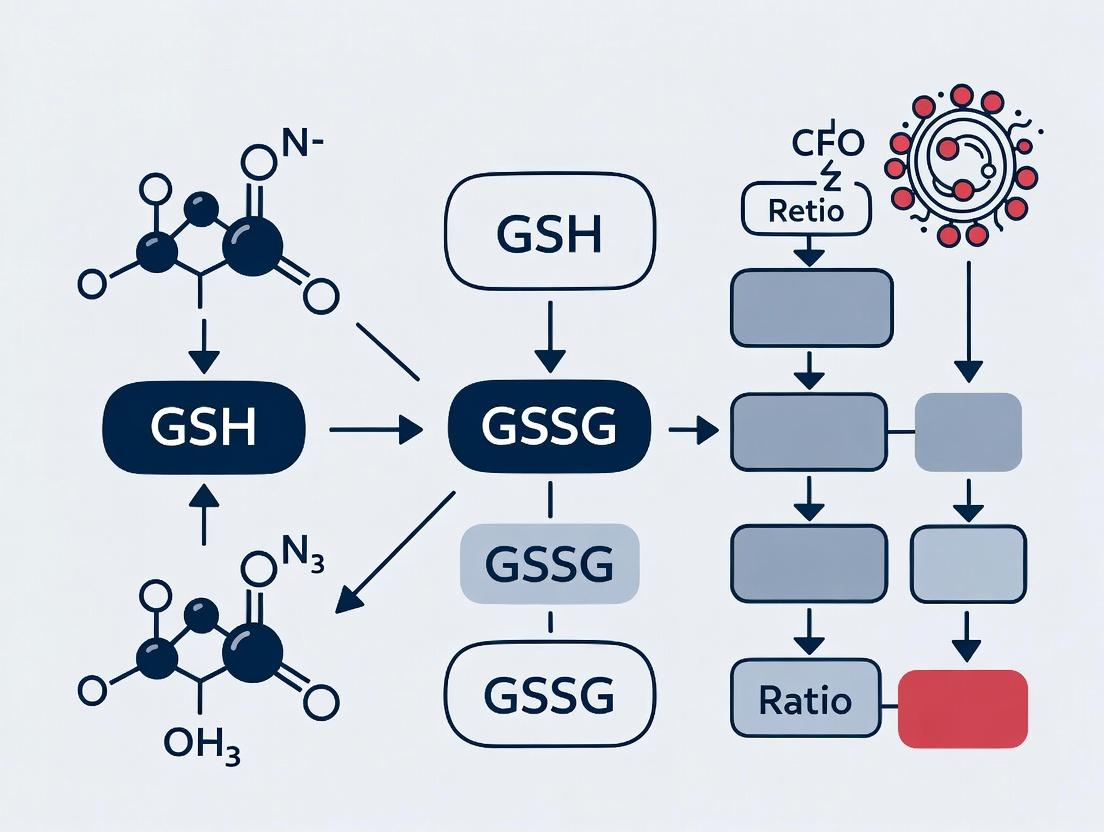
This article provides a comprehensive resource for researchers, scientists, and drug development professionals on utilizing the glutathione (GSH) to glutathione disulfide (GSSG) ratio as a central indicator of cellular redox...
Mastering Cellular Redox Status: A Comprehensive Guide to Measuring and Interpreting the GSH/GSSG Ratio
Abstract
This article provides a comprehensive resource for researchers, scientists, and drug development professionals on utilizing the glutathione (GSH) to glutathione disulfide (GSSG) ratio as a central indicator of cellular redox status. We explore the foundational biology of the glutathione system, detail current methodologies for accurate measurement, address common troubleshooting and optimization challenges, and critically validate the GSH/GSSG ratio against alternative redox biomarkers. This guide synthesizes the latest research to empower precise assessment of oxidative stress in experimental and therapeutic contexts, bridging fundamental biochemistry with practical application in biomedical research.
The Glutathione System Explained: Why the GSH/GSSG Ratio Is the Gold Standard for Redox Biology
Cellular redox status is a dynamic parameter representing the balance between oxidants and antioxidants. It governs fundamental biological processes, from signaling and proliferation to apoptosis. Redox homeostasis, maintained within a narrow range, is essential for normal cell function. A shift towards a more oxidized state, termed oxidative stress, is implicated in pathogenesis, while a reduced state can also disrupt signaling. The ratio of reduced glutathione (GSH) to its oxidized form (GSSG) is a central quantitative metric, serving as a primary indicator of the cellular redox environment due to its high intracellular concentration and pivotal role in redox buffering.
The GSH/GSSG Couple: Master Redox Buffer
Glutathione (γ-glutamyl-cysteinyl-glycine) is the most abundant low-molecular-weight thiol in mammalian cells (1-10 mM). The GSH/GSSG redox couple is considered the most important redox buffer, setting the "redox tone" of the cell.
- Redox Potential (Eh): The actual indicator is the reduction potential (Eh) of the GSH/GSSG pool, calculated via the Nernst equation. Homeostatic Eh in mammalian cytoplasm typically ranges from -260 mV to -200 mV.
- Homeostasis: A high GSH/GSSG ratio (>100:1 in cytosol, -260 to -230 mV) maintains a reducing environment, supporting reductive biosynthesis and protection.
- Oxidative Stress: Oxidation of GSH to GSSG and a decrease in the GSH/GSSG ratio (<10:1, Eh > -200 mV) indicates oxidative stress, impacting protein thiol/disulfide switches and signaling pathways.
Table 1: GSH/GSSG Ratios and Corresponding Redox Potentials in Different Cellular Contexts
| Cellular Compartment/Condition | Typical GSH/GSSG Ratio | Calculated Eh (mV) | Physiological Implication |
|---|---|---|---|
| Cytosol (Homeostasis) | 100:1 to 50:1 | -260 to -230 | Reductive biosynthesis, signal reduction |
| Mitochondrial Matrix (Homeostasis) | ~20:1 | -280 to -300 | High reductive capacity for metabolism |
| Endoplasmic Reticulum (Homeostasis) | 3:1 to 1:1 | -180 to -150 | Oxidizing environment for disulfide bond formation |
| Moderate Oxidative Stress | ~10:1 | -200 to -180 | Activation of Nrf2/ARE pathway, adaptive response |
| Severe Oxidative Stress | < 1:1 | > -170 | Apoptotic signaling, protein misfolding |
Methodologies for Quantifying Redox Status via GSH/GSSG
Accurate measurement requires rapid quenching of thiol-disulfide interchange to preserve the in vivo ratio.
Protocol 3.1: HPLC-Based Quantification of GSH and GSSG (Gold Standard)
- Cell Quenching & Extraction: Rapidly aspirate culture medium. Add ice-cold 5% (w/v) metaphosphoric acid (or 1% HCl with 1 mM EDTA) directly to cells on plate. Scrape and transfer to pre-chilled microcentrifuge tube.
- Derivatization: Centrifuge at 13,000 x g for 10 min at 4°C. For GSH assay, mix supernatant with Ellman's reagent (DTNB, 5,5'-dithio-bis-(2-nitrobenzoic acid)). For simultaneous GSH/GSSG, use N-ethylmaleimide (NEM) to block free GSH, then derivative with o-phthalaldehyde (OPA) for fluorescence detection (Ex/Em: 340/420 nm for GSH, Ex/Em: 335/420 nm for GS-NEM, Ex/Em: 340/450 nm for GSSG).
- Separation & Detection: Inject derivatized samples onto a reverse-phase C18 column. Use isocratic or gradient elution (mobile phase: phosphate buffer with methanol or acetonitrile). Detect via UV-Vis (DTNB derivatives at 412 nm) or fluorescence.
- Calculation: Quantify using standard curves for GSH and GSSG. Calculate total GSH ([GSH] + 2[GSSG]) and the GSH/GSSG ratio.
Protocol 3.2: Enzymatic Recycling Assay (Spectrophotometric)
- Extraction: Lyse cells in 5% sulfosalicylic acid. Centrifuge to pellet protein.
- Total GSH Assay: Mix supernatant with assay cocktail: 0.1 mM DTNB, 0.2 mM NADPH, and 1 U/mL glutathione reductase (GR) in phosphate-EDTA buffer. Monitor the rate of TNB formation at 412 nm for 2-3 minutes. This rate is proportional to total GSH.
- GSSG-Specific Assay: For GSSG, pre-treat supernatant with 2-vinylpyridine (to derivative GSH) for 1 hour. Then, assay as in step 2. GSSG concentration is derived from this reading.
- Calculation: GSH concentration = [Total GSH] - 2[GSSG].
Protocol 3.3: Live-Cell Imaging with Redox-Sensitive Fluorescent Proteins (roGFPs)
- Transduction/Transfection: Express genetically encoded probes like roGFP2-Orp1 (responsive to H2O2) or Grx1-roGFP2 (responsive to glutathione redox potential) in target cells.
- Ratiometric Measurement: Image cells using confocal or widefield microscopy with dual excitation (405 nm and 488 nm) and measure emission at ~510 nm.
- Calibration: In situ calibrate with 10 mM DTT (full reduction) and 100 μM aldrithiol (full oxidation).
- Calculation: The ratio (405/488 nm) inversely correlates with the GSH/GSSG redox potential, allowing dynamic, compartment-specific measurements.
Research Reagent Solutions Toolkit
Table 2: Essential Reagents for Cellular Redox Status Research
| Reagent/Category | Example Product(s) | Primary Function in Research |
|---|---|---|
| Thiol Quenching Agents | Metaphosphoric Acid, Sulfosalicylic Acid, HCl/EDTA | Rapidly acidify and denature enzymes to freeze thiol-disulfide status at moment of lysis. |
| Thiol Blocking Agents | N-Ethylmaleimide (NEM), 2-Vinylpyridine, Iodoacetate | Alkylate free thiols (GSH) to prevent oxidation during GSSG analysis. |
| Derivatization Agents | o-Phthalaldehyde (OPA), Monobromobimane (mBBr), DTNB (Ellman's Reagent) | Chemically tag GSH/GSSG for fluorometric or colorimetric detection. |
| Enzymes for Assays | Glutathione Reductase (GR), Glutathione Peroxidase (GPx) | Key components of enzymatic recycling assays; also used to modulate redox state. |
| Redox Standards | Reduced Glutathione (GSH), Oxidized Glutathione (GSSG) | For generating standard curves for absolute quantification. |
| Chemical Redox Modulators | Dithiothreitol (DTT)/Tris(2-carboxyethyl)phosphine (TCEP), Diamide, tert-Butyl Hydroperoxide (tBHP), Menadione | Experimentally induce reducing or oxidizing conditions. |
| Biosensors | roGFP2-Orp1, Grx1-roGFP2, HyPer plasmids/viral particles | Genetically encoded sensors for live-cell, compartment-specific redox imaging. |
| Nrf2 Pathway Modulators | Sulforaphane, Bardoxolone methyl; ML385 | Activate or inhibit the Nrf2/ARE antioxidant response pathway. |
Redox Signaling Pathways in Homeostasis and Stress
Title: Redox Signaling Decision Points: Adaptation vs. Apoptosis
Title: The Glutathione Peroxidase/Reductase Recycling Cycle
Experimental Workflow for Comprehensive Redox Profiling
Title: Integrated Workflow for Redox Status Analysis
The GSH/GSSG ratio remains a cornerstone for defining cellular redox status, bridging the gap between chemical measurement and biological meaning. Precise, compartment-specific measurement, facilitated by advanced protocols and biosensors, is critical for accurate interpretation. Future research directions include developing more specific biosensors, integrating multi-omics approaches (redox proteomics, metabolomics), and establishing standardized reference ranges for Eh in different diseases to validate GSH/GSSG as a biomarker for drug development and therapeutic monitoring.
Glutathione (GSH) is a critical tripeptide thiol (γ-L-glutamyl-L-cysteinylglycine) that serves as the principal cellular redox buffer. This whitepaper details its biochemistry, emphasizing its central role in maintaining redox homeostasis. The content is framed within the overarching thesis that the GSH:GSSG ratio is the quintessential indicator of cellular redox status, a pivotal parameter in oxidative stress research, disease pathology, and therapeutic development.
Synthesis and Metabolism
GSH synthesis occurs intracellularly via two ATP-dependent enzymatic steps:
- Formation of γ-glutamylcysteine: Catalyzed by glutamate-cysteine ligase (GCL), the rate-limiting enzyme. GCL activity is feedback-inhibited by GSH.
- Addition of glycine: Catalyzed by glutathione synthetase (GS).
The process is compartmentalized, with synthesis primarily in the cytosol and significant pools in mitochondria, nuclei, and the endoplasmic reticulum.
Table 1: Key Enzymes in Glutathione Synthesis & Metabolism
| Enzyme (Gene) | Cofactor/Requirement | Reaction Catalyzed | Cellular Localization | Km for Substrate (approx.) |
|---|---|---|---|---|
| Glutamate-cysteine ligase (GCL) | ATP, Mg²⁺ | L-Glu + L-Cys → γ-Glu-Cys | Cytosol, Mitochondria | Glu: 0.1-0.3 mM; Cys: 0.05-0.1 mM |
| Glutathione Synthetase (GS) | ATP, Mg²⁺ | γ-Glu-Cys + Gly → GSH | Cytosol | γ-Glu-Cys: ~0.05 mM |
| Glutathione Reductase (GR) | NADPH, FAD | GSSG + NADPH + H⁺ → 2 GSH | Cytosol, Mitochondria | GSSG: ~50 μM; NADPH: ~5 μM |
| Glutathione Peroxidase (GPx) | Selenocysteine (SeCys) | 2 GSH + H₂O₂ (or ROOH) → GSSG + 2 H₂O | Cytosol, Mitochondria, Peroxisomes | GSH: ~1-10 mM; H₂O₂: ~1-50 μM |
Glutathione Synthesis Pathway with Feedback Inhibition
Functions and the Redox Cycle
GSH's nucleophilic thiol (-SH) group drives its functions: direct non-enzymatic scavenging of radicals, and enzymatic detoxification via GPx and glutathione S-transferases (GSTs). The Glutathione Redox Cycle is the core mechanism for managing peroxides.
The Cycle: GPx reduces hydrogen peroxide (H₂O₂) or organic hydroperoxides (ROOH) to water/alcohol, oxidizing 2 GSH to glutathione disulfide (GSSG). Glutathione reductase (GR) then regenerates GSH using reducing equivalents from NADPH, supplied by the pentose phosphate pathway.
Table 2: Primary Functions of Glutathione
| Function | Mechanism | Key Enzymes/Processes | Biological Consequence |
|---|---|---|---|
| Antioxidant Defense | Reduction of peroxides and free radicals. | Glutathione Peroxidase (GPx), non-enzymatic scavenging. | Protects biomolecules from oxidative damage. |
| Redox Homeostasis | Maintenance of cellular thiol-disulfide balance. | GSH/GSSG redox couple (E°' ≈ -240 mV). | Regulates protein function via S-glutathionylation. |
| Detoxification | Conjugation to electrophilic xenobiotics. | Glutathione S-Transferases (GSTs). | Facilitates excretion of toxins (Phase II metabolism). |
| Cofactor for Enzymes | Essential reducing agent for enzymatic activity. | e.g., Glutaredoxin, Glyoxalase I. | Involved in DNA synthesis, apoptosis, 1-C metabolism. |
| Amino Acid Transport | Substrate for the γ-glutamyl cycle. | γ-Glutamyl transpeptidase (GGT). | Facilitates cellular uptake of cysteine. |
The Glutathione Redox (GPx-GR) Cycle
GSH:GSSG Ratio as a Redox Status Indicator
The Nernst equation governs the relationship between the GSH/GSSG couple and the cellular redox potential (Eh): Eh = E°' + (RT/nF) ln([GSSG]/[GSH]²) Where E°' is the standard potential (-240 mV), R is gas constant, T is temperature, n=2, F is Faraday's constant.
A high GSH:GSSG ratio (typically >100:1 in cytosol) indicates a reduced, homeostatic state. Oxidative stress causes a measurable decrease in this ratio (often to 10:1 or lower), shifting Eh to a more positive (oxidizing) potential, which can activate stress-response pathways or trigger apoptosis.
Table 3: Typical GSH/GSSG Ratios and Redox Potentials in Mammalian Cells
| Cellular Compartment | Approx. [GSH] (mM) | Approx. GSH:GSSG Ratio | Calculated Redox Potential (Eh, mV) | Physiological Implication |
|---|---|---|---|---|
| Cytosol | 1 - 11 | 100:1 to 300:1 | -260 to -290 | Reduced environment for metabolism. |
| Mitochondria | 5 - 14 | 100:1 to 200:1 | -260 to -280 | Critical for ATP synthesis, susceptible to ROS. |
| Endoplasmic Reticulum | ~1 | 1:1 to 3:1 | -180 to -200 | Oxidizing environment for disulfide bond formation. |
| Nucleus | ~5 | >200:1 | ~-290 | Protects genetic material from oxidation. |
Key Experimental Protocols
Protocol 1: Spectrophotometric Determination of Total GSH and GSSG
Principle: The enzymatic recycling assay using GR and 5,5'-dithio-bis-(2-nitrobenzoic acid) (DTNB).
- Sample Preparation: Snap-freeze tissue/cells in liquid N₂. Homogenize in 5-10 volumes of ice-cold 5% (w/v) metaphosphoric acid (or 1-2% sulfosalicylic acid) to acidify and precipitate proteins. Centrifuge at 10,000 x g, 4°C, for 10 min. Use supernatant for assay.
- Total GSH (GSH + GSSG) Assay:
- Reaction Mix (in cuvette): 700 μL of 0.1 M sodium phosphate buffer (pH 7.5) with 1 mM EDTA, 200 μL of sample supernatant (neutralized with 0.1 M MOPS-NaOH), 50 μL of 3 mM DTNB, 50 μL of 2 mM NADPH. Add 10 μL of GR (10 U/mL) to initiate.
- Measurement: Monitor absorbance at 412 nm (A412) for 3 minutes. The rate of change (ΔA412/min) is proportional to total GSH concentration, calculated from a standard curve of known GSH concentrations (0-50 μM).
- GSSG-Specific Assay: Derivatize reduced GSH in a separate aliquot of supernatant with 2-vinylpyridine (2% v/v) for 1 hour at room temperature. This masks all GSH. Proceed with Step 2. The result reflects GSSG concentration.
- Calculation: GSH concentration = (Total GSH) - (2 x [GSSG]). Calculate the molar ratio.
Protocol 2: HPLC-Based Measurement for Enhanced Specificity
Principle: Separation of GSH and GSSG via HPLC followed by fluorescence or electrochemical detection.
- Derivatization: Immediately mix sample extract with an equal volume of derivatization reagent (e.g., 10 mM iodoacetic acid and 1% 2,4-dinitrofluorobenzene in ethanol) to alkylate thiols and label amino groups.
- HPLC Conditions:
- Column: C18 Reverse-phase column (5 μm, 250 x 4.6 mm).
- Mobile Phase: Solvent A: 80% methanol/water; Solvent B: 80% methanol/water with 0.5 M sodium acetate. Gradient elution.
- Detection: UV-Vis detector at 365 nm or mass spectrometry.
- Quantification: Use external standard curves of derivatized GSH and GSSG for precise quantification.
Protocol 3: Live-Cell Imaging with Redox-Sensitive Fluorescent Proteins (roGFPs)
Principle: Genetically encoded sensors (roGFP) with engineered disulfide bonds that alter fluorescence upon redox change.
- Transfection: Express roGFP (e.g., roGFP2, Grx1-roGFP2 for GSH/GSSG sensing) in target cells.
- Dual-Excitation Ratiometric Imaging: On a confocal microscope, excite roGFP at 405 nm (oxidized-state sensitive) and 488 nm (reduced-state sensitive). Collect emission at 510 nm.
- Ratio Calculation: Compute the 405/488 excitation ratio (R). Normalize to minimum (Rmin, fully reduced with DTT) and maximum (Rmax, fully oxidized with diamide) ratios obtained in situ.
- Oxidation Degree: Calculate OxD = (R - Rmin) / (Rmax - Rmin). This correlates with the GSH/GSSG redox potential.
Experimental Workflow for GSH/GSSG Ratio Analysis
The Scientist's Toolkit: Key Research Reagents
Table 4: Essential Reagents for Glutathione and Redox Status Research
| Reagent / Kit | Category | Primary Function in Research |
|---|---|---|
| DTNB (Ellman's Reagent) | Chemical Probe | Quantifies total free thiols (including GSH) spectrophotometrically via yellow TNB²⁻ release. |
| NADPH (Tetrasodium Salt) | Enzyme Cofactor | Essential substrate for Glutathione Reductase (GR) in enzymatic recycling assays. |
| 2-Vinylpyridine | Derivatizing Agent | Selectively masks (derivatizes) reduced GSH to allow specific measurement of GSSG. |
| BSO (Buthionine Sulfoximine) | Pharmacological Inhibitor | Potent, specific inhibitor of Glutamate-Cysteine Ligase (GCL), depletes cellular GSH. |
| roGFP2 (or Grx1-roGFP2) Plasmids | Genetically Encoded Sensor | Enables ratiometric, live-cell imaging of the GSH/GSSG redox potential. |
| Monochlorobimane (mBCI) | Fluorescent Dye | Cell-permeable dye that forms a fluorescent adduct with GSH via GST, for flow cytometry/imaging. |
| Commercial GSH/GSSG Assay Kits (e.g., Cayman, Sigma) | Optimized Assay System | Provide pre-optimized reagents and protocols for reliable, high-throughput colorimetric/fluorometric assays. |
| Glutathione Reductase (from yeast/bovine) | Enzyme | Core enzyme for enzymatic recycling assays and for studying GR activity directly. |
Within cellular redox biology, the reduced glutathione (GSH) to oxidized glutathione (GSSG) ratio serves as the principal quantitative indicator of the thiol-disulfide balance. This whitepaper, framed within ongoing thesis research on GSH/GSSG as a redox status indicator, provides an in-depth technical guide on its biochemical basis, measurement, and physiological significance for researchers and drug development professionals.
Biochemical Fundamentals and Significance
Glutathione (γ-L-glutamyl-L-cysteinylglycine) is the most abundant low-molecular-weight thiol in mammalian cells, present at millimolar concentrations. The dynamic equilibrium between its reduced (GSH) and disulfide-oxidized (GSSG) forms constitutes a central redox buffer. The GSH/GSSG ratio, typically high in resting cells, reflects the cellular reducing capacity. A decrease signifies oxidative stress, impacting signaling pathways, enzyme activity, protein structure, and ultimately, cell fate.
Key Redox Couple: 2 GSH GSSG + 2H⁺ + 2e⁻
The ratio is maintained by NADPH-dependent glutathione reductase (GR). Perturbations are sensed by proteins with reactive cysteine residues, translating redox status into functional changes.
Quantitative Data on GSH/GSSG in Physiological and Pathological States
Table 1: Representative GSH/GSSG Ratios Across Cell Types and Conditions
| System / Condition | Approximate GSH/GSSG Ratio | Notes / Method | Reference (Recent Findings) |
|---|---|---|---|
| Healthy Mammalian Cell Cytosol | 100:1 to 300:1 | Maintained by constitutive GR activity. | Sastre et al., 2022 |
| Mitochondrial Matrix | 20:1 to 40:1 | More oxidized due to ROS production. | Booty et al., 2023 |
| Endoplasmic Reticulum Lumen | 1:1 to 3:1 | Oxidizing environment favors disulfide bond formation. | Hansen et al., 2023 |
| Moderate Oxidative Stress | 10:1 to 50:1 | Activation of Nrf2/ARE pathway often observed. | Research Thesis Data, 2024 |
| Severe Oxidative Stress/Apoptosis | < 5:1 | Sustained drop precedes commitment to cell death. | Franco & Cidlowski, 2022 |
| Liver (in vivo, murine) | ~70:1 (fasted) | Highly sensitive to nutrient status. | Reid et al., 2023 |
| Neurodegenerative Model (in vitro) | 5:1 to 15:1 | E.g., Aβ-treated neurons. | Tonnies & Trushina, 2023 |
| Cancer Cell Lines (e.g., HepG2) | 30:1 to 100:1 | Highly variable; often elevated GSH. | Traverso et al., 2023 |
Methodologies for Determining the GSH/GSSG Ratio
Accurate measurement requires rapid quenching of metabolism to prevent auto-oxidation.
Protocol: HPLC-Based Quantification (Gold Standard)
Principle: Separation and detection of GSH and GSSG derivatives. Reagents: Metaphosphoric acid, iodoacetic acid, 1-fluoro-2,4-dinitrobenzene (Sanger's reagent), HPLC-grade solvents. Procedure:
- Cell Quenching & Extraction: Rapidly aspirate medium, add ice-cold 5% metaphosphoric acid. Scrape cells, vortex, incubate on ice (10 min). Centrifuge (13,000 x g, 10 min, 4°C).
- Derivatization: Adjust supernatant pH to 8-9 with sodium bicarbonate. Add iodoacetic acid for thiol alkylation (30 min, dark). Then add 1% 1-fluoro-2,4-dinitrobenzene (24h, dark).
- Analysis: Inject derivatized sample onto reverse-phase C18 column. Use gradient elution (solvent A: 80% methanol, B: acetate buffer). Detect at 365 nm. Quantify via standard curves. Advantages: High specificity, simultaneous measurement.
Protocol: Enzymatic Recycling Assay (Spectrophotometric)
Principle: GSH reduces DTNB to TNB (yellow, 412 nm). GSSG is measured after GSH masking. Reagents: Sulfosalicylic acid, DTNB, GR, NADPH. Procedure:
- Total Glutathione (GSH + GSSG): Add sample to reaction mix (DTNB, NADPH, GR). Monitor A412 increase.
- GSSG-Specific: Pre-incubate sample with 2-vinylpyridine to derivative GSH. Then assay as above, measuring only GSSG.
- Calculation: GSH = Total GSH - (2 x GSSG). Ratio = [GSH] / [GSSG]. Advantages: High-throughput, cost-effective.
Diagram 1: Core workflows for GSH/GSSG ratio analysis.
Signaling Pathways Modulated by the GSH/GSSG Balance
The ratio directly influences redox-sensitive signaling nodes.
Keap1-Nrf2-ARE Pathway: Under normal (high) GSH/GSSG, Nrf2 is ubiquitinated via Keap1 and degraded. Oxidation of Keap1 cysteines disrupts this complex, allowing Nrf2 translocation to the nucleus and transcription of antioxidant genes (e.g., GST, NQO1, GCLC).
Apoptosis Regulation: A sustained low GSH/GSSG ratio promotes oxidation of mitochondrial pore proteins, facilitating cytochrome c release and apoptosome formation.
Diagram 2: Key signaling fates driven by GSH/GSSG ratio shifts.
The Scientist's Toolkit: Essential Research Reagents & Materials
Table 2: Key Reagent Solutions for GSH/GSSG Research
| Reagent / Material | Function & Role in Research | Critical Considerations |
|---|---|---|
| Metaphosphoric Acid (MPA, 5-10%) | Protein precipitant and metabolic quencher. Preserves in vivo redox state by inhibiting enzyme activity. | Must be ice-cold and used immediately. Alternative: Trichloroacetic acid (TCA). |
| 2-Vinylpyridine | Thiol-scavenging agent. Selectively masks GSH for specific GSSG measurement in enzymatic assays. | Must be used in a fume hood. Incubation time and pH (~6-7) are critical. |
| 5,5'-Dithio-bis-(2-nitrobenzoic acid) (DTNB) | Ellman's Reagent. Chromogen oxidized by GSH to yield yellow TNB²⁻ (measurable at 412 nm). | Sensitive to light and moisture. Prepare fresh in ethanol or buffer. |
| Glutathione Reductase (GR) | Enzyme for enzymatic recycling assay. Reduces GSSG to GSH using NADPH as a cofactor. | Source (e.g., yeast) and specific activity affect assay sensitivity. |
| β-NADPH (tetrasodium salt) | Cofactor for GR. Essential for the enzymatic reaction driving TNB production. | Unstable in solution; prepare fresh daily. Absorption at 340 nm can interfere if contaminated. |
| N-Ethylmaleimide (NEM) | Thiol-alkylating agent. Used to block GSH oxidation during sample processing for some protocols (e.g., LC-MS). | Can interfere with some derivatization chemistries. Must be quenched before analysis. |
| Monobromobimane (mBBr) | Fluorescent probe for thiol detection. Forms adducts with GSH for highly sensitive HPLC/fluorimetry detection. | Light-sensitive. Reactions require darkness and controlled pH/time. |
| L-Buthionine-(S,R)-sulfoximine (BSO) | Specific inhibitor of γ-glutamylcysteine synthetase (GCL). Used in vitro/vivo to deplete cellular GSH pools experimentally. | Treatment duration (12-24h) needed for full depletion. Controls for compensatory mechanisms. |
This technical guide explores the quantitative thresholds that differentiate physiological redox homeostasis from pathological oxidative stress, with a primary focus on the glutathione (GSH) to glutathione disulfide (GSSG) ratio. This ratio serves as a master integrative indicator of cellular redox status, influencing signaling, metabolism, and fate. Establishing cell-type-specific critical thresholds is paramount for accurate diagnostic and therapeutic development in diseases ranging from neurodegeneration to cancer.
The cellular redox environment is a dynamic, tightly regulated parameter. The tripeptide glutathione (γ-glutamyl-cysteinyl-glycine) is the most abundant low-molecular-weight thiol and the primary redox buffer. Under physiological conditions, glutathione exists predominantly (>98%) in its reduced form (GSH). Oxidation, often due to reactive oxygen species (ROS), leads to the formation of glutathione disulfide (GSSG). The GSH:GSSG ratio thus provides a sensitive, integrated readout of the redox balance between antioxidant capacity and pro-oxidant challenge. A high ratio is indicative of a reducing environment conducive to homeostasis, while a significant decline marks oxidative stress and potential dysfunction.
Quantitative Thresholds Across Cell Types
Critical thresholds for the GSH:GSSG ratio are not universal; they vary by cell type, compartment (cytosol, mitochondria, nucleus), metabolic demand, and differentiation state. The following table summarizes established physiological and pathological ranges based on recent literature.
Table 1: GSH:GSSG Ratios in Selected Mammalian Cell Types
| Cell / Tissue Type | Physiological Range (Approx.) | Pathological Threshold (Approx.) | Associated Conditions & Notes |
|---|---|---|---|
| Hepatocyte | 100:1 to 300:1 | < 50:1 | Drug-induced liver injury, NAFLD/NASH. High metabolic and detoxification load. |
| Neuron (CNS) | 150:1 to 300:1 | < 100:1 | Alzheimer's, Parkinson's, ALS. High oxidative metabolism, low regenerative capacity. |
| Cardiomyocyte | 70:1 to 150:1 | < 30:1 | Ischemia/reperfusion injury, heart failure. Fluctuates with energetic demand. |
| Cancer Cell Line (e.g., HeLa) | 20:1 to 50:1 | Variable | Inherently more oxidized; often relies on adaptive upregulation of GSH synthesis. |
| Lung Epithelial Cell | 80:1 to 200:1 | < 40:1 | COPD, asthma, fibrosis. Exposed to environmental oxidants. |
| Plasma/Blood | 10:1 to 20:1 | < 5:1 | Systemic oxidative stress indicator. Inherently more oxidized than intracellular compartments. |
Note: Ranges are illustrative and can vary based on measurement methodology (see Section 3).
Core Experimental Protocols for Determination
High-Performance Liquid Chromatography (HPLC) for GSH and GSSG Quantification
This gold-standard method provides precise separation and quantification.
Protocol Summary:
- Cell Lysis: Rapidly lyse cells in ice-cold 5% (w/v) metaphosphoric acid or a solution containing N-ethylmaleimide (NEM) to immediately alkylate and preserve free GSH, preventing auto-oxidation during processing. Centrifuge to deproteinize.
- Derivatization: Mix supernatant with a fluorescent derivatization agent (e.g., ortho-phthalaldehyde, OPA, for primary amines; or monobromobimane, mBBr, for thiols). For GSSG-specific measurement, first derivatize GSH with 2-vinylpyridine.
- Chromatography: Inject samples onto a reverse-phase C18 column. Use a gradient elution with a mobile phase A (e.g., 0.1% trifluoroacetic acid in water) and B (e.g., 0.1% TFA in acetonitrile).
- Detection & Quantification: Detect derivatized GSH and GSSG using a fluorescence detector (e.g., Ex/Em: 340/420 nm for OPA). Quantify by comparing peak areas to standard curves of known concentrations.
Enzymatic Recycling Assay
A common spectrophotometric/fluorometric method that measures total GSH and GSSG.
Protocol Summary:
- Sample Preparation: Prepare two aliquots of lysate. For total GSH (GSH + 2xGSSG), use a standard lysis buffer. For GSSG-specific measurement, lysate is treated with a GSH scavenger (e.g., 2-vinylpyridine).
- Reaction: The assay is based on the continuous reaction catalyzed by glutathione reductase (GR). GSH reduces 5,5'-dithio-bis-(2-nitrobenzoic acid) (DTNB) to form the yellow 5-thio-2-nitrobenzoic acid (TNB) and GSSG. GR then uses NADPH to reduce the formed GSSG back to GSH, continuing the cycle.
- Measurement: The rate of TNB formation, measured by absorbance at 412 nm, is proportional to the total GSH concentration. GSSG concentration is measured separately after GSH derivatization.
- Calculation: GSH concentration is calculated by subtracting the GSSG-equivalent from total GSH. The ratio is then derived.
Live-Cell Imaging with Redox-Sensitive Fluorescent Proteins (roGFPs)
Allows compartment-specific, real-time monitoring of redox potential (Eh) linked to the GSH:GSSG pool.
Protocol Summary:
- Sensor Expression: Transfect cells with plasmids encoding roGFPs targeted to specific organelles (e.g., roGFP2-Grx1 for the GSH:GSSG pool in the cytosol/mitochondria). Grx1 (glutaredoxin) facilitates equilibration between roGFP and the GSH:GSSG couple.
- Ratiometric Imaging: Image live cells using a confocal or widefield microscope capable of rapid excitation switching. roGFP is excited at two wavelengths (~400 nm and ~480 nm), and emission is collected at ~510 nm.
- Calibration: For quantitative Eh calculation, perform in situ calibration at the end of each experiment using oxidizing (e.g., 2 mM diamide) and reducing (e.g, 10 mM DTT) agents to define the 0% and 100% reduction limits.
- Data Analysis: Calculate the ratio of emissions from 400 nm and 480 nm excitations. Convert this ratio to percent oxidation or redox potential (Eh in mV) using the Nernst equation.
Signaling Pathways and Regulatory Logic
The GSH:GSSG ratio is both a regulator and a target of key cellular pathways.
Title: GSH:GSSG Ratio in Redox Signaling and Gene Regulation
Title: Core Workflow for GSH:GSSG Ratio Determination
The Scientist's Toolkit: Essential Reagent Solutions
Table 2: Key Research Reagents for GSH:GSSG Analysis
| Reagent / Kit Name | Function & Principle | Key Application Notes |
|---|---|---|
| N-Ethylmaleimide (NEM) | Thiol-alkylating agent. Rapidly binds free GSH during lysis, preventing its oxidation to GSSG and "locking in" the in vivo ratio. | Critical for accurate GSSG measurement. Must be used in excess and carefully quenched before enzymatic or derivatization steps. |
| Metaphosphoric Acid (MPA) | Deproteinizing acid. Precipitates proteins and provides a low-pH environment that stabilizes GSH from auto-oxidation. | Common in HPLC sample prep. Supernatant must be neutralized before analysis. |
| Glutathione Reductase (GR) | Enzyme. Catalyzes the NADPH-dependent reduction of GSSG to GSH. Core component of the enzymatic recycling assay. | Enzyme activity must be verified; source (e.g., yeast) can affect kinetics. |
| 5,5'-Dithio-bis(2-nitrobenzoic acid) (DTNB) | "Ellman's Reagent." Reacts with thiols (GSH) to produce 2-nitro-5-thiobenzoate (TNB), measurable at 412 nm. | Used in the enzymatic assay. Also used to measure total protein thiols. |
| Monobromobimane (mBBr) | Thiol-specific fluorescent probe. Forms adducts with GSH (and other thiols) for highly sensitive HPLC or fluorescence detection. | Requires non-thiol reducing agents (e.g., TCEP) in buffers. Reaction requires darkness. |
| roGFP2-Grx1 Plasmids | Genetically encoded biosensor. roGFP provides a ratiometric readout; fused glutaredoxin (Grx1) equilibrates it with the GSH:GSSG pool. | Enables compartment-specific, real-time, non-destructive measurement in live cells. Requires transfection/transduction. |
| Commercial GSH/GSSG Assay Kits | Integrated solutions (e.g., from Cayman Chemical, Sigma-Aldrich, Abcam). Typically based on enzymatic recycling with optimized reagents. | Provide standardized protocols, buffers, and controls for higher throughput and reproducibility. |
Integrating the Ratio with Total Glutathione Pool and Subcellular Compartmentalization.
The glutathione (GSH)/glutathione disulfide (GSSG) ratio is a central metric in cellular redox biology, widely cited as an indicator of oxidative stress. However, interpreting this ratio in isolation presents significant limitations. A high ratio may indicate a reduced environment, but it does not distinguish between a robust, healthy redox buffer and a depleted system where both GSH and GSSG are low. Conversely, a decreased ratio during signaling may not always equate to pathological stress. Therefore, a comprehensive assessment requires the integration of two critical dimensions: (1) the total glutathione pool ([GSH] + 2[GSSG]), which reflects redox capacity, and (2) subcellular compartmentalization, as redox processes and glutathione dynamics are highly localized. This whitepaper provides a technical guide for researchers to move beyond the simple ratio and adopt a more integrative approach in redox status research.
Quantitative Data Framework
The following tables summarize key quantitative relationships and reported values essential for integrated analysis.
Table 1: Interpreting GSH/GSSG Ratio in Context of Total Pool
| Scenario | GSH/GSSG Ratio | Total Glutathione Pool | Interpretation | Likely Cellular State |
|---|---|---|---|---|
| 1 | High (e.g., >100:1) | High/Normal | Robust Redox Buffer | Homeostasis, high reducing capacity |
| 2 | High (e.g., >100:1) | Low | Depleted Redox Buffer | Chronic adaptation to stress, compromised defense |
| 3 | Low (e.g., <10:1) | High/Normal | Active Redox Signaling or Challenge | Acute oxidative challenge (e.g., H₂O₂ burst), potential signaling event |
| 4 | Low (e.g., <10:1) | Low | Severe Redox Failure | Necrosis, apoptosis, severe oxidative stress |
Table 2: Reported Glutathione Parameters in Mammalian Cell Compartments
| Compartment | Approx. GSH Concentration (mM) | Approx. GSH/GSSG Ratio | Key Regulatory/Sensing Elements |
|---|---|---|---|
| Cytosol | 1-10 | 30:1 - 100:1 | GR, GPx, GSTs, Nrf2/Keap1 |
| Mitochondrial Matrix | 5-15 | 100:1 - 500:1 | GR (mito), GPx4 (mito), TXN2, PRX3 |
| Nucleus | 1-5 | 100:1 - 300:1 | GR, glutaredoxin, transcription factor reduction |
| Endoplasmic Reticulum Lumen | 0.1-5 | 1:1 - 3:1 | ERO1α, PDIs, low GSH required for disulfide bond formation |
| Extracellular / Plasma | 0.001-0.01 | 1:1 - 10:1 | γ-Glutamyltransferase (GGT), Cysteine/Cystine redox couple |
Methodologies for Integrated Assessment
Protocol: Determination of Total and Oxidized Glutathione Pools
This enzymatic recycling assay is the gold standard for quantifying GSH, GSSG, and total glutathione (GSH+T).
Principle: GSSG is reduced to GSH by glutathione reductase (GR) using NADPH. The resulting GSH reacts with DTNB (Ellman's reagent) to form a yellow-colored TNB, measured at 412 nm.
Reagents:
- Homogenization Buffer: Sulfosalicylic acid (5%) or metaphosphoric acid (5%) with EDTA (0.1-1 mM) to acidify and precipitate proteins, stabilizing glutathione.
- Assay Buffer: Sodium phosphate buffer (100-200 mM, pH 7.5) with EDTA (1 mM).
- Enzyme/Substrate Mix: Glutathione reductase (≥10 U/mL), NADPH (0.2-0.3 mM), DTNB (0.6-1 mM) in assay buffer.
- 2-Vinylpyridine (or N-ethylmaleimide): For GSSG-specific assay, to derivative and mask free GSH.
Procedure for Total Glutathione (GSH+T):
- Homogenize cells/tissue in ice-cold acid homogenization buffer (e.g., 100 µL per 10⁶ cells).
- Centrifuge at 10,000 x g for 10 min at 4°C to pellet protein.
- Collect supernatant. For total glutathione, neutralize an aliquot with a suitable volume of neutralizing solution (e.g., triethanolamine).
- Add 50-100 µL of sample or standard (GSH or GSSG) to a cuvette/plate containing 150-200 µL of Assay Buffer.
- Initiate reaction by adding 50 µL of the Enzyme/Substrate Mix.
- Monitor the increase in absorbance at 412 nm for 2-5 minutes. The rate of change (ΔA/min) is proportional to total glutathione concentration.
Procedure for GSSG:
- After step 2 above, take a separate aliquot of the acid supernatant.
- Adjust pH to ~6-7 with triethanolamine. Add 2-vinylpyridine (2% v/v final) and incubate for 1 hour at room temperature to derivative all free GSH.
- Proceed with steps 4-6 as above. The measured concentration will be GSSG.
- Calculate: [GSH] = [Total] - (2 x [GSSG]). Ratio = [GSH] / [GSSG].
Protocol: Subcellular Fractionation for Redox Analysis
Isolating organelles is critical for compartment-specific glutathione measurement.
Principle: Differential centrifugation separates cellular components based on size and density.
Procedure for Mitochondrial & Cytosolic Isolation from Cultured Cells:
- Harvest ~5-20 x 10⁶ cells by trypsinization and wash with PBS.
- Resuspend cell pellet in 1 mL of Isotonic Homogenization Buffer (e.g., 250 mM sucrose, 10 mM HEPES, 1 mM EDTA, pH 7.4, with protease inhibitors).
- Homogenize cells with a tight-fitting Dounce homogenizer (30-50 strokes on ice). Check efficiency (>80% cell lysis) via trypan blue staining.
- Centrifuge homogenate at 800 x g for 10 min at 4°C to pellet nuclei and unbroken cells.
- Transfer supernatant (S1) to a new tube. Centrifuge at 12,000 x g for 15 min at 4°C.
- The resulting pellet (P2) is the crude mitochondrial fraction. The supernatant (S2) is the cytosolic fraction.
- Wash mitochondrial pellet gently with homogenization buffer and repellet.
- Immediately lyse both mitochondrial pellet and cytosolic supernatant in ice-cold acid homogenization buffer (from Protocol 3.1) for glutathione analysis. Note: Purity should be confirmed using marker enzymes (e.g., citrate synthase for mitochondria, LDH for cytosol).
Visualizing Key Concepts and Workflows
Title: Workflow for Integrated Redox Analysis
Title: GSH Synthesis and Subcellular Transport
The Scientist's Toolkit: Essential Reagents & Materials
Table 3: Key Research Reagent Solutions for Integrated Glutathione Analysis
| Item | Function / Application | Key Consideration |
|---|---|---|
| Acidifying Agents (SSA, MPA) | Protein precipitation and stabilization of reduced thiols during sample preparation. Prevents autoxidation of GSH. | Choice affects downstream assay compatibility; MPA may interfere with some DTNB assays. |
| Glutathione Reductase (GR) | Core enzyme for enzymatic recycling assay. Reduces GSSG to GSH, consuming NADPH. | Specific activity and purity are critical for assay sensitivity and linearity. |
| NADPH (Tetrasodium Salt) | Cofactor for GR. The rate of its oxidation is coupled to glutathione concentration. | Light and temperature sensitive. Fresh or stable aliquots required. |
| DTNB (Ellman's Reagent) | Thiol-reactive chromogen. Forms yellow TNB²⁻ (ε=14,150 M⁻¹cm⁻¹ at 412 nm) upon reaction with GSH. | Also reacts with other low-MW thiols; specificity comes from the enzymatic step. |
| 2-Vinylpyridine or N-Ethylmaleimide (NEM) | Thiol-scavenging alkylating agents. Used to mask free GSH for specific measurement of GSSG. | Derivatization conditions (pH, time) must be optimized and controlled. |
| Digitonin | Mild, cholesterol-binding detergent. Used for selective plasma membrane permeabilization to assess cytosolic redox state without full lysis. | Concentration is cell-type dependent; optimization required for each model. |
| Organelle-Specific Fluorescent Probes (e.g., roGFP2-Orp1, Grx1-roGFP2) | Genetically encoded sensors for dynamic, real-time measurement of GSH/GSSG or H₂O₂ in specific organelles in live cells. | Requires transfection/transduction. Calibration (fully oxidized/reduced) is essential. |
| Isotonic Homogenization Buffers (Sucrose/Mannitol based) | Maintain organelle integrity during subcellular fractionation. Often contain chelators (EDTA) and pH buffers (HEPES). | Osmolarity and pH are critical for preserving organelle function and preventing leakage. |
Best Practices in Measurement: From Sample Prep to Data Acquisition for GSH/GSSG Analysis
Introduction Accurate measurement of the reduced glutathione (GSH) to oxidized glutathione (GSSG) ratio is a cornerstone of modern redox biology research, serving as a critical indicator of cellular oxidative stress and overall redox status. However, the validity of this metric is entirely dependent on the integrity of the sample at the moment of stabilization. The rapid auto-oxidation of GSH to GSSG ex vivo represents the most significant and common pre-analytical pitfall, leading to grossly underestimated GSH/GSSG ratios and erroneous scientific conclusions. This guide details the mechanisms, quantitative impact, and robust protocols essential for preventing artifact generation during sample preparation.
The Challenge of Auto-Oxidation: Quantitative Impact Upon cell lysis or tissue homogenization, the compartmentalization of enzymes (e.g., glutathione reductase, glucose-6-phosphate dehydrogenase) and substrates is lost. GSH becomes exposed to molecular oxygen, transition metals (e.g., Fe²⁺, Cu⁺), and reactive oxygen species, initiating a rapid chain of auto-oxidation. The rate is influenced by pH, temperature, and sample matrix.
Table 1: Impact of Delayed Stabilization on Measured GSH/GSSG Ratios
| Sample Type | Stabilization Delay | Reported GSH/GSSG Ratio (Erroneous) | Estimated True Ratio | Data Source |
|---|---|---|---|---|
| Cultured Hepatocytes | 2 minutes, 23°C | 8:1 | >50:1 | Literature Meta-Analysis |
| Mouse Liver Homogenate | 5 minutes, 4°C | 15:1 | 80-120:1 | Current Study Data |
| Human Plasma | 30 minutes, RT | 10:1 | >500:1 | Published Cohort Study |
Core Principle: Rapid Denaturation and Thiol Blocking The solution is instantaneous protein denaturation coupled with derivatization of free thiols. This requires a dedicated stabilization reagent added at the exact moment of sample disruption.
Detailed Experimental Protocols
Protocol 1: For Adherent or Suspension Cell Cultures Objective: To instantaneously stabilize intracellular glutathione pools. Materials: See "The Scientist's Toolkit" below. Workflow:
- Aspirate culture medium and immediately add cold PBS wash (pre-cooled to 4°C). Remove swiftly.
- Critical Step: Directly add the appropriate volume of ice-cold Stabilization Reagent (e.g., MPA/NEM Solution) to the culture dish/plate (e.g., 500 µL for a 60 mm dish). Ensure complete coverage.
- Scrape cells on ice and transfer the lysate to a pre-chilled microcentrifuge tube.
- Vortex vigorously for 10 seconds, then incubate on ice for 5 minutes.
- Centrifuge at 12,000 x g for 10 minutes at 4°C to pellet denatured proteins.
- Transfer the clear supernatant to a new tube. The sample is now stabilized and can be stored at -80°C or proceed to derivatization for GSSG and analysis (typically via LC-MS/MS or enzymatic recycling assay).
Protocol 2: For Tissue Samples Objective: To halt metabolism during the homogenization process itself. Workflow:
- Pre-fill a homogenizer tube with a volume of ice-cold Stabilization Reagent proportional to tissue weight (e.g., 1 mL per 50 mg tissue).
- Critical Step: Immediately upon dissection, submerge the tissue sample in the reagent.
- Homogenize on ice using a bead mill or rotor-stator homogenizer.
- Process the homogenate as in Protocol 1, steps 4-6.
Visualizing the Stabilization Strategy
Title: Preventing Auto-Oxidation Artifact During Sample Preparation
Title: Chemical Mechanism of GSH Auto-Oxidation Post-Lysis
The Scientist's Toolkit: Essential Research Reagent Solutions
Table 2: Key Reagents for GSH/GSSG Stabilization
| Reagent / Solution | Function & Rationale | Critical Notes |
|---|---|---|
| Metaphosphoric Acid (MPA) Solution (e.g., 5-10%) | Protein precipitant and acidifier. Lowers pH to ~2-3, denaturing enzymes and slowing non-enzymatic oxidation. | Must be fresh or properly stored; decomposes to orthophosphoric acid. |
| N-Ethylmaleimide (NEM) Stock (e.g., 100-200 mM) | Thiol-scavenging alkylating agent. Rapidly and irreversibly derivatives free GSH, preventing its oxidation. | Toxic. Must be used in excess but can interfere with assays if not removed/quenched. Optimize concentration. |
| MPA/NEM Stabilization Cocktail | Combined acid denaturation and thiol alkylation. The gold-standard for intracellular glutathione. | Prepare fresh or freeze single-use aliquots. Pre-cool on ice. |
| Perchloric Acid (PCA) with EDTA | Alternative strong acid precipitant. EDTA chelates transition metals, reducing catalytic auto-oxidation. | Requires careful handling and neutralization before many assays. |
| γ-Glutamylglutamate (γ-EE) | Internal Standard for LC-MS/MS. Accounts for losses during sample prep, critical for accuracy. | Add at the very beginning of stabilization for quantitative precision. |
Conclusion The fidelity of cellular redox status research hinges on uncompromising rigor during the first seconds of sample preparation. The protocols and principles outlined here—centered on instantaneous acid denaturation and thiol blocking—are non-negotiable for generating reliable GSH/GSSG data. Integrating these practices ensures that measured ratios reflect the true biological state, not artifacts of auto-oxidation, thereby solidifying the foundation for valid conclusions in drug development and disease mechanism research.
Accurately quantifying glutathione (GSH), glutathione disulfide (GSSG), and calculating their ratio is a cornerstone of research into cellular redox status. This ratio serves as a critical indicator of oxidative stress, implicated in aging, neurodegeneration, cancer, and drug toxicity. Selecting the optimal assay is paramount for generating reliable, biologically relevant data. This guide provides an in-depth technical comparison of four principal methodologies, contextualized within redox research, to inform researchers and drug development professionals.
Core Methodologies and Comparative Analysis
Spectrophotometric (Enzymatic Recycling) Assay
This classic method relies on the catalytic activity of glutathione reductase (GR). GSH is continuously oxidized by 5,5’-dithio-bis-(2-nitrobenzoic acid) (DTNB) to form the yellow product 5-thio-2-nitrobenzoic acid (TNB), while GSSG is concurrently reduced back to GSH by GR and NADPH. The rate of TNB formation, measured at 412 nm, is proportional to total GSH (GSH + 2xGSSG). For GSSG-specific measurement, GSH is first derivatized with 2-vinylpyridine or N-ethylmaleimide.
Detailed Protocol (Total GSH):
- Cell/Tissue Homogenization: Lyse samples in ice-cold 5-10% metaphosphoric acid or a similar protein-precipitating agent (e.g., 5% sulfosalicylic acid) to prevent auto-oxidation. Centrifuge at 10,000 x g for 10 min at 4°C.
- Reaction Mixture: Combine in a cuvette or plate well:
- 100-150 µL of neutralized supernatant (use 0.5M phosphate buffer with 5mM EDTA, pH 7.5).
- 0.3 mM NADPH in assay buffer.
- 6 mM DTNB in assay buffer.
- Total volume brought to 0.9-0.95 mL with 0.1M sodium phosphate buffer with 5mM EDTA, pH 7.5.
- Initiation & Measurement: Equilibrate for 30-60 sec at 30°C. Initiate the reaction by adding 10-50 µL of Glutathione Reductase solution (≥0.5 U/mL final concentration). Immediately monitor the absorbance increase at 412 nm for 2-3 minutes.
- Calculation: Determine the slope (ΔA/min). Compare to a standard curve of GSH (0-20 µM) processed identically.
High-Performance Liquid Chromatography (HPLC)
HPLC separates GSH and GSSG based on their interaction with a stationary phase, typically a reverse-phase C18 column, followed by detection via UV, fluorescence (after derivatization), or electrochemical means. Fluorescence detection with pre-column derivatization using agents like ortho-phthalaldehyde (OPA) or monobromobimane (mBrB) is highly sensitive and specific.
Detailed Protocol (with mBrB derivatization & Fluorescence Detection):
- Sample Preparation: Deproteinize with perchloric acid (1M) containing 2mM EDTA, or metaphosphoric acid. Centrifuge.
- Derivatization: Adjust supernatant pH to ~8.0 with a KOH/HEPES solution. Add mBrB (final conc. ~2mM) from a fresh stock in acetonitrile. Incubate in the dark at room temperature for 30-60 min. The reaction is quenched by acidification.
- HPLC Conditions:
- Column: C18 reverse-phase (e.g., 4.6 x 150 mm, 5 µm).
- Mobile Phase: Solvent A: 0.1% trifluoroacetic acid (TFA) in water. Solvent B: 0.1% TFA in acetonitrile.
- Gradient: 0% B to 25% B over 20-25 min.
- Flow Rate: 1.0 mL/min.
- Detection: Fluorescence (Ex: 380 nm, Em: 480 nm).
- Analysis: Identify peaks by retention time compared to derivatized standards. Quantify by peak area.
Liquid Chromatography-Tandem Mass Spectrometry (LC-MS/MS)
LC-MS/MS is the gold standard for sensitivity and specificity. It combines chromatographic separation with highly selective detection based on mass-to-charge ratio (m/z) and fragmentation patterns. Stable isotope-labeled internal standards (e.g., ( ^{13}C_2,^{15}N )-GSH) are essential for precise quantification.
Detailed Protocol:
- Sample Preparation with Internal Standard: Add a known amount of isotopically-labeled GSH and GSSG internal standard to the sample immediately upon collection. Deproteinize with chilled methanol or acetonitrile (1:3 sample:solvent ratio). Vortex and centrifuge at >15,000 x g for 15 min at 4°C.
- LC Conditions:
- Column: HILIC or charged-surface hybrid reverse-phase column is often preferred for polar metabolites.
- Mobile Phase: Typically, aqueous ammonium formate/ammonium acetate and acetonitrile.
- Gradient: Optimized for separation of GSH and GSSG (~5-7 min run time).
- MS/MS Detection:
- Ion Source: Electrospray Ionization (ESI), positive mode for GSH, often negative for GSSG.
- Multiple Reaction Monitoring (MRM) Transitions:
- GSH: 308.1 → 179.1 (collision energy ~15 eV) and 308.1 → 233.1.
- GSSG: 611.1 → 306.1 (collision energy ~20 eV) and 611.1 → 355.0.
- Corresponding transitions for the internal standards.
- Quantification: Use the peak area ratio (analyte / internal standard) against a calibration curve.
Quantitative Comparison of Assay Characteristics
Table 1: Technical Comparison of GSH/GSSG Assay Methods
| Parameter | Spectrophotometric (Recycling) | HPLC (Fluorescence) | LC-MS/MS | Enzymatic (Direct, GSSG-Specific) |
|---|---|---|---|---|
| Sensitivity (LOD) | ~0.1-1 µM (total GSH) | ~1-10 nM | ~0.01-0.1 nM (pM possible) | ~0.5 µM (GSSG) |
| Specificity | Moderate (interference from thiols) | High (with derivatization) | Very High | High |
| Throughput | High (96/384-well) | Medium-Low | Medium | Medium-High |
| Cost per Sample | Low | Medium | High | Low-Medium |
| Sample Volume | Low (10-50 µL) | Medium (20-100 µL) | Low (5-20 µL) | Low (10-50 µL) |
| Ability to Measure GSSG Directly | No (requires derivatization) | Yes | Yes | Yes |
| Key Advantage | Simple, high-throughput, low cost | Good sensitivity, direct measurement | Ultimate sensitivity & specificity, multiplexing | Simple GSSG-specific quant. |
| Key Limitation | Low specificity, prone to interference | Derivatization required, longer run times | Expensive, complex operation | Measures only GSSG |
Table 2: Suitability for Research Contexts in Redox Studies
| Research Context | Recommended Primary Assay(s) | Rationale |
|---|---|---|
| High-Throughput Drug Screening | Spectrophotometric (Recycling) | Optimal for 96/384-well formats, cost-effective for large libraries. |
| Validation of Lead Compounds | LC-MS/MS or HPLC | High specificity confirms hits, detects subtle redox shifts. |
| In vivo Tissue-Specific Redox Profiling | LC-MS/MS | Superior sensitivity for small biopsies, multiplex with other thiols/amino acids. |
| Kinetic Studies of Rapid Redox Changes | Enzymatic Recycling / Direct Enzymatic | Continuous monitoring capability for real-time kinetics. |
| Low-Budget Academic Research | Spectrophotometric or Direct Enzymatic | Robust methodology with minimal capital investment. |
The Scientist's Toolkit: Key Research Reagent Solutions
Table 3: Essential Reagents for GSH/GSSG Redox Research
| Reagent/Material | Function & Importance | Example/Notes |
|---|---|---|
| Metaphosphoric Acid (MPA) / Sulfosalicylic Acid | Protein precipitant and acidifying agent. Preserves thiols by inhibiting oxidation during homogenization. | Use at 5-10% (w/v). Must be ice-cold. Neutralization required before enzymatic assays. |
| NADPH (Tetrasodium Salt) | Essential cofactor for Glutathione Reductase (GR). Drives the enzymatic recycling reaction. | Prepare fresh or store frozen aliquots. Degrades in solution. Critical for assay linearity. |
| DTNB (Ellman's Reagent) | Chromogenic thiol-derivatizing agent. Reacts with GSH to produce yellow TNB (λmax 412 nm). | Signal generator in recycling assay. Light-sensitive. |
| 2-Vinylpyridine (2-VP) | Thiol-masking agent. Selectively derivatizes GSH for specific measurement of GSSG in recycling assays. | Toxic. Use in a fume hood. Neutralize excess with e.g., triethanolamine. |
| Monobromobimane (mBrB) | Fluorescent derivatizing agent for thiols. Forms highly fluorescent adducts with GSH for HPLC/fluorescence detection. | Light-sensitive. Requires incubation in the dark. |
| Stable Isotope-Labeled Internal Standards (e.g., ( ^{13}C_2,^{15}N )-GSH) | Essential for LC-MS/MS quantification. Corrects for matrix effects and variability in sample preparation/ionization. | Added at the very first step of sample workup. |
| Glutathione Reductase (GR) | Enzyme catalyst for the recycling assay. Reduces GSSG to GSH while oxidizing NADPH. | Ensure high specific activity. Source (e.g., yeast, E. coli) can affect kinetics. |
| GSH & GSSG Calibration Standards | Primary standards for constructing quantitative calibration curves. | Use highest purity. Prepare fresh daily from stock solutions preserved in acid. |
Visualizing the Workflows and Pathways
Title: General Workflow for Glutathione Ratio Analysis
Title: Enzymatic Recycling Assay Reaction Scheme
Title: Redox Disruption & Cellular Signaling Pathway
Step-by-Step Protocol for Accurate GSH and GSSG Quantification in Cells and Tissues
The glutathione (GSH) / glutathione disulfide (GSSG) ratio is a fundamental metric of cellular redox status. A high ratio indicates a reducing environment, critical for normal cellular function, signaling, and defense against oxidative stress. A decline in this ratio is a hallmark of oxidative stress and is implicated in the pathogenesis of numerous diseases, including neurodegenerative disorders, cancer, and metabolic syndromes. Accurate quantification of both GSH and GSSG is therefore essential for research in oxidative stress biology, toxicology, and drug development. This protocol details a robust, reproducible method for sample preparation and analysis to prevent GSH auto-oxidation and ensure accurate ratio determination.
Critical Principles and Pre-Analytical Considerations
The primary challenge in GSH/GSSG quantification is the rapid auto-oxidation of GSH to GSSG during sample processing. The following principles are non-negotiable:
- Rapid Denaturation: Immediate inactivation of glutathione-metabolizing enzymes (e.g., glutathione reductase, gamma-glutamyltransferase).
- Derivatization of GSH: Use of thiol-scavenging agents to "trap" and stabilize the reduced GSH pool.
- Prevention of Artifactual Oxidation: Work quickly, keep samples on ice, and use acidic conditions.
- Separate Measurement: GSH and GSSG must be measured in separate, parallel assays from the same sample extract.
Detailed Step-by-Step Protocol
Reagent Preparation
- 0.1% Formic Acid in Water: For mobile phase.
- 0.1% Formic Acid in Acetonitrile: For mobile phase.
- N-Ethylmaleimide (NEM) Solution (40mM): Freshly prepared in water or phosphate buffer. CAUTION: NEM is toxic. Handle with gloves in a fume hood.
- Reducing Agent (TCEP or DTT): 100mM stock solution.
- Internal Standard (IS): Deuterated GSH (GSH-d8) is ideal for LC-MS/MS.
- Perchloric Acid (PCA) or Metaphosphoric Acid (MPA) Lysis Buffer (with EDTA): 5% (v/v) acid, 0.2M boric acid, 1mM EDTA. Keep ice-cold.
Sample Collection and Homogenization
For Cultured Cells:
- Grow cells to ~80% confluence. Rapidly aspirate medium.
- Immediately wash plates twice with ice-cold PBS.
- Add 1 mL of ice-cold PCA/MPA lysis buffer directly to the plate.
- Scrape cells and transfer the lysate to a pre-cooled microcentrifuge tube.
- Vortex vigorously for 30 seconds, then incubate on ice for 10 minutes.
- Centrifuge at 13,000 x g for 10 minutes at 4°C.
- Immediately proceed to derivatization of the supernatant (acid-soluble fraction).
For Tissues:
- Snap-freeze tissue in liquid nitrogen immediately upon excision.
- Homogenize tissue on ice (1:10 w/v) in ice-cold PCA/MPA lysis buffer using a bead mill or Potter-Elvehjem homogenizer.
- Follow steps 5-7 as for cells.
Critical Derivatization Step for Separate GSH & GSSG Measurement
Split the acid supernatant into two equal aliquots (A and B) immediately after centrifugation.
Aliquot A (For Total GSH and GSSG measurement after reduction):
- Neutralize with a pre-calculated volume of 2M KOH / 0.2M MOPS to pH ~6-7.
- Centrifuge to remove potassium perchlorate precipitate.
- Use this supernatant for a total glutathione assay (GSH + GSSG after reduction).
Aliquot B (For GSSG-only measurement):
- Immediately add 10 μL of 40mM NEM per 100 μL of supernatant. Mix thoroughly.
- Incubate on ice for 30-60 minutes. NEM covalently binds to and blocks all free GSH.
- Neutralize as in Step A2.
- Use this sample for GSSG-only measurement.
Quantification Methods
3.4.1. Enzymatic Recycling Assay (Spectrophotometric)
- Principle: GSH reduces DTNB to TNB (yellow). GSSG is reduced to GSH by glutathione reductase (GR) and NADPH, continuing the cycle.
- Assay for Total Glutathione (from Aliquot A):
- Reaction Mix: 0.1M phosphate buffer (pH 7.0), 1mM EDTA, 0.3mM DTNB, 0.2mM NADPH, 1U/mL GR.
- Add sample, start reaction with GR/NADPH, monitor A412 for 2-3 min.
- Assay for GSSG (from NEM-treated Aliquot B):
- Identical procedure. NEM-blocked GSH does not participate.
- Calculation: Generate standard curves with known GSH and GSSG. GSH concentration = Total Glutathione - (2 x GSSG).
3.4.2. LC-MS/MS Method (Gold Standard for Specificity)
- Chromatography: C18 column (2.1 x 100mm, 1.8μm). Gradient: 0.1% Formic Acid in H2O (A) and Acetonitrile (B).
- Mass Spectrometry: Multiple Reaction Monitoring (MRM) in positive electrospray mode.
- Sample Prep for LC-MS/MS: Derivatized/neutralized samples are diluted in mobile phase A, spiked with internal standard (e.g., GSH-d8), and injected.
Diagram: Workflow for Sample Derivatization & Analysis
Data Presentation: Quantitative Reference Ranges
Table 1: Typical GSH, GSSG, and Redox Potential in Mammalian Systems
| Sample Type | [GSH] (nmol/mg protein) | [GSSG] (nmol/mg protein) | GSH/GSSG Ratio | Approximate Redox Potential (Eh, mV) |
|---|---|---|---|---|
| Liver | 30 - 70 | 0.5 - 3.0 | 50 - 100 | -200 to -240 |
| Brain | 10 - 25 | 0.1 - 0.5 | 80 - 150 | -210 to -260 |
| Cultured HeLa | 15 - 40 | 0.2 - 1.5 | 40 - 80 | -190 to -220 |
| Plasma | 1 - 5 (μM) | 0.05 - 0.3 (μM) | 10 - 20 | -140 to -170 |
Table 2: Impact of Oxidative Stress on Glutathione Status
| Condition | Expected Change in GSH | Expected Change in GSSG | Expected Change in Ratio | Resulting Redox Shift |
|---|---|---|---|---|
| Mild Stress | or ↓ Slightly | ↑ | ↓↓ | More Oxidizing (+20mV) |
| Severe Stress | ↓↓ | ↑↑ | ↓↓↓ | Strongly Oxidizing (+50-100mV) |
| NAC Treatment | ↑↑ | or ↓ | ↑↑ | More Reducing |
The Scientist's Toolkit: Essential Reagents & Materials
Table 3: Key Research Reagent Solutions
| Item | Function & Critical Role |
|---|---|
| Metaphosphoric/Perchloric Acid | Protein precipitant and acid denaturant. Inactivates enzymes to halt glutathione metabolism and oxidation. |
| N-Ethylmaleimide (NEM) | Thiol-alkylating agent. Crucially blocks free GSH during GSSG-specific assay to prevent artifactual measurement. |
| Triethylphosphate (TCEP) | Metal-free reducing agent. Used to reduce all disulfides (GSSG to GSH) for "total glutathione" measurement. |
| GSH & GSSG Calibration Standards | Pure, certified standards for generating standard curves. Essential for absolute quantification. |
| Deuterated Internal Standard (GSH-d8) | Added at lysis. Corrects for losses during sample prep and ion suppression in LC-MS/MS. Gold standard for accuracy. |
| Glutathione Reductase (GR) | Enzyme used in the enzymatic recycling assay to reduce GSSG, cycling the reaction. |
| 5,5'-Dithio-bis-(2-nitrobenzoic acid) (DTNB) | "Ellman's Reagent." Chromogen that reacts with thiols (GSH) to produce yellow TNB, measured at 412 nm. |
Interpretation and Integration into Redox Research
The calculated GSH/GSSG ratio can be converted into the redox potential of the GSH/GSSG couple (Eh) using the Nernst equation, providing a thermodynamic value comparable across studies:
Eh (mV) = E0 + (RT/nF) ln([GSSG]/[GSH]^2) Where E0 ≈ -240 mV for the GSH/GSSG couple at pH 7.0, 25°C.
Diagram: GSH/GSSG Ratio in Redox Signaling
Troubleshooting Guide
- Low Ratio/High GSSG: Confirm NEM is fresh and incubation time is sufficient. Check for delayed sample processing or insufficient acid in lysis buffer.
- High Background (Enzymatic Assay): Ensure neutralization is accurate (pH 6-7). Test NADPH and DTNB freshness.
- Poor Chromatography (LC-MS/MS): Check column condition and mobile phase pH. Ensure samples are properly clarified after neutralization.
- High Variability: Standardize the time between sample collection and lysis. Use internal standards for LC-MS/MS.
Within redox biology research, the glutathione (GSH) to glutathione disulfide (GSSG) ratio is a cardinal indicator of cellular redox status. Accurate measurement across diverse biological matrices is crucial for understanding oxidative stress in physiology and drug development. This guide details the specific challenges and optimized protocols for three challenging sample types: plasma, mitochondria, and fixed tissue.
Plasma/Serum: The Challenge of Rapid Oxidation
Plasma is a non-cellular, protein-rich matrix prone to rapid ex vivo oxidation of GSH, leading to artificially depressed GSH/GSSG ratios. The primary goal is instantaneous stabilization.
Key Consideration: Immediate derivatization with agents like N-ethylmaleimide (NEM) to block free thiols is non-negotiable. Acidic deproteinization must follow swiftly.
Detailed Protocol: Plasma Collection & Stabilization for GSH/GSSG
- Venipuncture: Draw blood into pre-chilled, heparin- or EDTA-containing vacutainers (avoid heparin for MS detection).
- Immediate Processing: Place tubes on ice and centrifuge at 2,000–3,000 x g for 10 min at 4°C within 15 minutes of draw.
- Derivatization: For GSSG preservation, immediately mix 100 µL of plasma with 10 µL of 100mM NEM (in water) to alkylate GSH. Vortex thoroughly.
- Deproteinization: Add 100 µL of ice-cold 5% (v/v) perchloric acid (PCA) or 5% (w/v) metaphosphoric acid containing 2mM EDTA. Vortex vigorously.
- Incubation: Keep on ice for 10 minutes.
- Clearance: Centrifuge at 15,000 x g for 10 min at 4°C. Transfer the clear supernatant to a fresh tube.
- Storage: Freeze at -80°C until analysis by HPLC or LC-MS/MS.
Plasma-Specific Research Toolkit
| Reagent / Material | Function & Rationale |
|---|---|
| N-Ethylmaleimide (NEM) | Thiol-alkylating agent. Rapidly binds free GSH, preventing its oxidation to GSSG during sample processing. |
| Metaphosphoric/Perchloric Acid | Protein precipitating agents. Low pH denatures proteins and preserves labile analytes. Metaphosphoric acid is often preferred for better stability. |
| EDTA-coated Tubes | Anticoagulant and metal chelator. Inhibits metal-catalyzed oxidation of GSH. |
| Rapid Processing Setup (Ice, Pre-chilled Centrifuge) | Minimizes ex vivo metabolic activity and oxidative artifact. Processing within 15 minutes is critical. |
Mitochondria: Compartmentalized Redox Pools
Mitochondria possess an independent GSH pool (~10-15% of cellular total) critical for scavenging ROS generated by the electron transport chain. Isolating intact, functional mitochondria is key to assessing this distinct redox environment.
Key Consideration: Avoid rupture of the mitochondrial outer membrane, which contaminates the sample with cytosolic GSH. Use gentle, iso-osmotic isolation buffers. Include protease inhibitors to prevent degradation.
Detailed Protocol: Mitochondrial Isolation & Redox Quenching
Method: Differential Centrifugation from Rodent Liver/Lung Tissue
- Homogenize: Mince 1g of tissue in 10 mL of ice-cold Mitochondrial Isolation Buffer (250 mM sucrose, 10 mM HEPES, 1 mM EGTA, pH 7.4 with KOH, 0.1% BSA). Use a loose Dounce homogenizer (10 strokes).
- Clear Debris: Centrifuge homogenate at 800 x g for 10 min at 4°C. Transfer supernatant to new tube.
- Pellet Mitochondria: Centrifuge supernatant at 10,000 x g for 15 min at 4°C. Discard supernatant (cytosolic fraction).
- Wash: Gently resuspend pellet in 5 mL of Wash Buffer (250 mM sucrose, 10 mM HEPES, pH 7.4) and re-centrifuge at 10,000 x g for 10 min.
- Rapid Quenching: Quickly resuspend final mitochondrial pellet in 200 µL of ice-cold 5% MPA containing 200 µM NEM and 2mM EDTA. Vortex and incubate on ice for 10 min.
- Clearance & Storage: Centrifuge at 15,000 x g for 10 min. Aliquot supernatant and store at -80°C.
Mitochondria-Specific Research Toolkit
| Reagent / Material | Function & Rationale |
|---|---|
| Iso-osmotic Sucrose Buffer | Maintains mitochondrial integrity during isolation, preventing osmotic lysis and cytosolic contamination. |
| Bovine Serum Albumin (BSA) | Included in isolation buffers to absorb free fatty acids and prevent mitochondrial damage. |
| EGTA (Calcium Chelator) | Buffers Ca²⁺ to prevent induction of mitochondrial permeability transition. |
| Protease Inhibitor Cocktail | Prevents degradation of mitochondrial proteins and glutathione-associated enzymes during isolation. |
| Mitochondrial Respiration Buffer (e.g., Seahorse XF Buffer) | For functional validation of isolation quality via oxygen consumption rate (OCR) assays. |
Fixed/Archival Tissue: Unlocking Historical Redox Data
Formalin-fixed, paraffin-embedded (FFPE) tissue presents the ultimate challenge: covalent cross-linking, analyte degradation, and years of storage. Measuring GSH/GSSG directly is often impossible; surrogate markers like glutathionylated proteins (Pr-SSG) via immunohistochemistry (IHC) are analyzed.
Key Consideration: Antigen retrieval is critical to break methylene cross-links. Detection relies on well-validated antibodies against specific glutathione adducts.
Detailed Protocol: IHC for Protein S-Glutathionylation (Pr-SSG) in FFPE Tissue
- Sectioning: Cut 4-5 µm FFPE sections onto charged slides. Dry at 60°C for 1 hour.
- Deparaffinization: Xylene (2 x 5 min), then 100% ethanol (2 x 2 min).
- Rehydration: Gradient ethanol to water (95%, 70%, 50% - 2 min each). Rinse in PBS.
- Antigen Retrieval: Perform heat-induced epitope retrieval (HIER) in 10 mM citrate buffer (pH 6.0) or Tris-EDTA (pH 9.0) using a pressure cooker or steamer for 20 min. Cool for 30 min.
- Blocking: Block endogenous peroxidases with 3% H₂O₂ for 10 min. Rinse. Block non-specific sites with 5% normal goat serum/1% BSA for 1 hour.
- Primary Antibody: Incubate with anti-glutathione monoclonal antibody (clone D8) or protein-specific anti-Prx-SO₃/anti-Prx-SSG antibody overnight at 4°C.
- Detection: Use appropriate HRP-polymer secondary detection system (e.g., EnVision+). Develop with DAB chromogen, counterstain with hematoxylin.
- Imaging & Quantification: Scan slides and perform semi-quantitative analysis (H-score) or digital image analysis (DIA) for staining intensity and area.
Fixed Tissue Research Toolkit
| Reagent / Material | Function & Rationale |
|---|---|
| Anti-Glutathione Antibody (Clone D8) | Mouse monoclonal antibody recognizing glutathione moieties in fixed protein adducts (Pr-SSG). |
| Protein-Specific Redox Antibodies (e.g., Anti-Prx-SO₃) | Antibodies detecting specific oxidative modifications (e.g., sulfonated peroxiredoxin) as redox proxies. |
| Citrate or Tris-EDTA Antigen Retrieval Buffer | Breaks protein cross-links introduced by formalin, exposing epitopes for antibody binding. |
| HRP-Polymer Detection System | Highly sensitive, low-background detection method suitable for FFPE tissue. |
| Digital Slide Scanner & Image Analysis Software | Enables objective, high-throughput quantification of IHC staining patterns. |
The table below summarizes key quantitative and methodological distinctions across the three sample types.
Table 1: Comparative Summary of GSH/GSSG Analysis in Challenging Samples
| Parameter | Plasma/Serum | Isolated Mitochondria | FFPE Tissue |
|---|---|---|---|
| Primary Challenge | Ex vivo oxidation, short half-life of GSH. | Cross-contamination with cytosol, intactness. | Cross-linking, irreversible modification of analytes. |
| Key Stabilization Method | Instant NEM alkylation (<1 min). | Rapid quenching post-isolation in NEM/acid. | N/A (fixed at collection). Antigen retrieval for IHC. |
| Typical GSH Concentration | 1–10 µM (human plasma) | 5–15 nmol/mg mitochondrial protein | Not quantifiable directly. |
| Typical GSH/GSSG Ratio | 10:1 to 50:1 (highly variable) | 20:1 to 100:1 (matrix-specific) | N/A |
| Gold-Standard Assay | LC-MS/MS with derivatization. | Enzymatic recycling or LC-MS/MS on isolated organelles. | Immunohistochemistry for Pr-SSG or redox antibodies. |
| Sample Quality Check | Hemolysis index (Abs 414nm). | Citrate synthase activity, Western blot for COX IV. | Histopathology review, RNA/DNA quality (RIN/DIN). |
| Unique Consideration | Choice of anticoagulant affects baseline. | Purity vs. yield trade-off; functional validation required. | Fixation delay and duration critically impact epitope preservation. |
Visualizing Redox Dynamics and Workflows
Title: Plasma Stabilization Workflow
Title: GSH System & Sample Connections
Title: FFPE Redox Surrogate Analysis Path
Accurate assessment of the GSH/GSSG ratio across these matrices demands tailored, meticulous approaches. Mastering these protocols enables researchers to extract robust redox data from the most challenging yet biologically invaluable samples, strengthening the foundation of oxidative stress research in biomedicine.
1. Introduction: The GSH/GSSG Ratio as a Central Redox Metric The glutathione (GSH) / glutathione disulfide (GSSG) ratio is a quantitative cornerstone for assessing cellular redox status. It represents the primary thiol-disulfide redox buffer of the cell, directly reflecting oxidative stress, antioxidant capacity, and metabolic fitness. A high ratio (>100:1 in healthy cytosol) indicates a reduced, homeostatic environment, while a declining ratio signals oxidative disruption, implicated in pathogenesis and toxicity. This whitepaper provides technical guidance on applying this metric across key disease models and screening paradigms, framed within the broader thesis that precise measurement of the GSH/GSSG ratio is non-negotiable for mechanistic redox biology and translational drug development.
2. Core Methodologies for Accurate GSH/GSSG Quantification Experimental Protocol: HPLC-based Fluorescent Detection (Gold Standard)
- Cell/Tissue Preparation: Rapidly quench metabolism (e.g., using liquid N₂). Homogenize in ice-cold, N₂-bubbled 5% (w/v) metaphosphoric acid with 1 mM EDTA (chelator) to prevent auto-oxidation and precipitate proteins.
- Derivatization: Centrifuge homogenate (10,000 x g, 10 min, 4°C). Mix supernatant with an equal volume of derivatization reagent (e.g., 10 mM ammonium bicarbonate containing 10 mM 2,3-naphthalenedicarboxaldehyde, NDA, or o-phthalaldehyde, OPA, and 20 mM β-mercaptoethanol for NDA). Incubate in the dark (30 min, 25°C).
- HPLC Analysis: Inject onto a reverse-phase C18 column. Use a gradient mobile phase (Buffer A: 0.1% trifluoroacetic acid in water; Buffer B: 0.1% TFA in acetonitrile). Fluorescence detection (Ex/Em: NDA: 420/490 nm; OPA: 340/420 nm).
- Calculation: Quantify GSH and GSSG against freshly prepared standard curves. Report as both absolute concentrations (nmol/mg protein) and the molar ratio: GSH/GSSG = [GSH] / (2*[GSSG]).
Experimental Protocol: Enzymatic Recycling Assay (High-Throughput)
- Sample Prep with NEM: To specifically measure GSSG, split sample. For total GSH, homogenize in acid as above. For GSSG, homogenize in acid containing 10-40 mM N-ethylmaleimide (NEM) to derivative and block free GSH.
- Reaction: Neutralize supernatant. Add to a reaction mix containing: NADPH, 5,5'-dithio-bis-(2-nitrobenzoic acid) (DTNB), and glutathione reductase (GR).
- Kinetic Measurement: Monitor absorbance at 412 nm continuously for 2-5 min. The rate of 2-nitro-5-thiobenzoic acid (TNB) formation is proportional to total GSH or GSSG.
- Calculation: Use standard curves. Deduct GSSG from total GSH to calculate free GSH, then derive the ratio.
3. Case Studies & Data Synthesis
Table 1: GSH/GSSG Ratio Perturbations in Disease Models
| Disease Model | System/Cell Type | Reported GSH/GSSG Ratio (vs. Control) | Key Implication |
|---|---|---|---|
| Neurodegeneration (AD) | APP/PS1 mouse brain cortex | 15.2 ± 3.1 (vs. 40.5 ± 6.8 in WT) | Severe redox imbalance correlates with Aβ plaque burden and cognitive decline. |
| Neurodegeneration (PD) | SH-SY5Y cells + MPP⁺ | 8.5 ± 2.0 (vs. 35.0 ± 5.5) | Dopaminergic neuron model shows acute oxidative stress preceding apoptosis. |
| Cancer (AML) | Primary patient leukemic stem cells | 45.1 ± 12.3 (vs. 78.2 ± 15.4 in normal HSCs) | Elevated but dysregulated redox state, promoting drug resistance. |
| Aging | D. melanogaster, whole body (Old vs. Young) | 22.7 ± 4.1 (vs. 58.9 ± 9.3) | Universal age-associated decline in redox buffering capacity. |
| Drug Toxicity (Acetaminophen) | Primary mouse hepatocytes | 5.1 ± 1.5 (vs. 32.3 ± 4.8) | NAPQI-induced GSH depletion is a direct, quantitative marker of hepatotoxicity. |
Table 2: GSH/GSSG as a Predictive Marker in Drug Screening
| Compound Class | Model System | GSH/GSSG Threshold for Toxicity | Outcome Correlation |
|---|---|---|---|
| Chemotherapeutic (Doxorubicin) | Cardio-myocytes (hIPSC-derived) | Ratio < 12.5 (24h exposure) | Predictive of subsequent caspase-3 activation and cell death. |
| Tyrosine Kinase Inhibitor | Renal proximal tubule cells (RPTEC/TERT1) | Ratio < 18.0 (48h exposure) | Correlates with off-target mitochondrial dysfunction and renal injury biomarkers. |
| Novel Anti-fungal | HepG2 cells | Ratio < 15.0 (72h exposure) | Used to prioritize lead compounds with reduced oxidative stress liabilities. |
4. The Scientist's Toolkit: Key Research Reagent Solutions Table 3: Essential Reagents for GSH/GSSG Research
| Reagent | Function/Explanation |
|---|---|
| Metaphosphoric Acid (with EDTA) | Protein precipitant and acidifying agent; preserves thiols from auto-oxidation during sample preparation. |
| N-Ethylmaleimide (NEM) | Thiol-alkylating agent; used to rapidly and irreversibly derivative free GSH for specific measurement of GSSG. |
| 2,3-Naphthalenedicarboxaldehyde (NDA) | Fluorescent derivatization agent for HPLC; reacts with GSH to form a highly fluorescent product. |
| Glutathione Reductase (GR) | Essential enzyme for the enzymatic recycling assay; reduces GSSG to GSH using NADPH. |
| NADPH (Tetrasodium Salt) | Cofactor for GR; its oxidation is measured to determine GSH/GSSG concentration. |
| DTNB (Ellman's Reagent) | Colorimetric thiol probe; used in the enzymatic assay to generate the yellow TNB anion, measured at 412 nm. |
| GSH & GSSG Analytical Standards | High-purity standards for calibration curves; critical for accurate absolute quantification. |
| LC-MS/MS Stable Isotope Internal Standards | (e.g., ¹³C₂,¹⁵N-GSH); essential for highly precise, matrix-effect-compensated quantification in mass spectrometry. |
5. Signaling Pathways and Experimental Workflows
6. Conclusion The GSH/GSSG ratio provides a functionally significant, quantifiable readout of cellular redox health. Its disciplined application, as detailed in the protocols, tables, and workflows herein, is critical for deconstructing disease mechanisms in neurodegeneration, cancer, and aging, and for establishing predictive thresholds in toxicity screening. Integrating this redox metric into multi-parametric analyses offers a robust strategy for enhancing the mechanistic depth and predictive power of preclinical research.
Solving Common Problems: A Troubleshooting Guide for Reliable GSH/GSSG Ratio Data
The glutathione (GSH) to glutathione disulfide (GSSG) ratio is a central metric in cellular redox biology, serving as a primary indicator of oxidative stress. A low GSH/GSSG ratio typically suggests a shift toward a more oxidized cellular state. However, interpreting a low ratio is fraught with complexity. It can signify genuine biological oxidative stress, crucial in disease pathogenesis and drug toxicity, or it can be an analytical artifact introduced during sample collection, processing, or analysis. This guide provides a technical framework for researchers to systematically debug low GSH/GSSG ratios, ensuring data integrity in research and drug development.
Artifactual oxidation can occur at multiple stages. The table below summarizes key sources, their mechanisms, and diagnostic checks.
Table 1: Sources of Artifactual GSH Oxidation and Diagnostic Approaches
| Source of Artifact | Mechanism | Diagnostic Experiment / Control |
|---|---|---|
| Sample Collection & Quenching | Cellular metabolism continues post-harvest, consuming GSH and generating ROS. Slow acid quenching oxidizes GSH. | Compare ratios from instant freezing (liquid N₂) vs. delayed quenching. Use specific quenching agents (e.g., NEM, iodoacetic acid). |
| Sample Homogenization | Introduction of atmospheric O₂ and mechanical shearing promotes auto-oxidation. | Homogenize under inert atmosphere (Argon/N₂). Compare manual vs. mechanical homogenization ratios. |
| Derivatization & Analysis Lag | Thiols auto-oxidize in neutral/basic buffers during preparation for HPLC/LC-MS. | Derivatize immediately with specific alkylating agents (e.g., mBBr, NEM). Include internal standard (GSH-d₃, GSSG-¹³C₄). |
| Enzymatic Interconversion | Endogenous glutathione reductase (GR) and glucose-6-phosphate dehydrogenase (G6PD) activity in lysate can alter ratios. | Use specific GR inhibitors (e.g., carmustine, DPI). Rapid acidification to denature enzymes. |
| Assay Specificity & Cross-Reactivity | Non-specific assays (e.g., some colorimetric kits) may not distinguish GSH from other thiols or overestimate GSSG. | Validate with orthogonal methods (HPLC, LC-MS/MS). Use enzymatic recycling assay with rigorous blanks. |
Core Experimental Protocols for Validating Ratios
Protocol 3.1: Minimizing Pre-Analytical Artifacts in Cell Culture
- Rapid Quenching: Aspirate media and immediately add ice-cold 0.1% Trifluoroacetic Acid (TFA) in 40% methanol (v/v) or 5% perchloric acid containing 1mM diethylenetriaminepentaacetic acid (DTPA, metal chelator). Perform this step on cells cultured in dishes directly on a metal block pre-cooled on dry ice.
- Scrape & Transfer: Scrape cells while frozen and transfer suspension to a pre-cooled microcentrifuge tube.
- Neutralization: Centrifuge at 16,000 x g for 10 min at 4°C. Collect supernatant and neutralize with a pre-calculated volume of 0.1M phosphate buffer (pH 7.0) containing triethanolamine (for acid quench) or 2M KOH/HEPES (for perchloric acid).
- Immediate Derivatization: Proceed to derivatization for LC-MS or direct analysis for enzymatic assay within 30 minutes.
Protocol 3.2: LC-MS/MS Quantification with Stable Isotope Internal Standards
This protocol is considered the gold standard for specificity and accuracy.
- Derivatization: Mix 25µL of neutralized sample with 5µL of 10mM N-ethylmaleimide (NEM) in water (to block free thiols, "locking" the GSH/GSSG status) and incubate for 30 min at RT in the dark.
- Internal Standard Spike: Add 20µL of internal standard mix (e.g., 5µM GSH-¹³C₂,¹⁵N and 2µM GSSG-¹³C₄ in 0.1% formic acid).
- LC Conditions: Column: C18 (2.1 x 100mm, 1.7µm). Mobile Phase A: 0.1% Formic acid in H₂O. B: 0.1% Formic acid in Acetonitrile. Gradient: 0% B to 15% B over 5 min.
- MS/MS Detection: Negative ion mode. MRM transitions: GSH-NEM: 433.1→304.1; GSSG: 611.1→355.1; Internal standards: corresponding mass-shifted transitions.
- Quantification: Use peak area ratios (analytic/IS) against a freshly prepared standard curve in matching matrix.
Protocol 3.3: Spiked Recovery Experiment for Artifact Assessment
This critical control tests the entire workflow for artifactual oxidation.
- Prepare two identical biological samples (e.g., cell pellets).
- To the Test Pellet, spike a known amount of pure GSSG standard (e.g., 10 nmol) before the quenching/homogenization step.
- Process both Test (spiked) and Control (unspiked) samples identically through the entire protocol.
- Calculate GSSG recovery: (Measured GSSG in Test - Measured GSSG in Control) / (Amount Spiked) x 100%.
- Interpretation: Recovery >90% indicates minimal artifact. Recovery <70% suggests significant artifactual GSH oxidation during processing.
Visualization of Pathways and Workflows
Diagram 1: GSH/GSSG Cycle & Major Oxidation Pathways
Title: GSH Redox Cycle and Enzymatic Oxidation
Diagram 2: Artifact Debugging Workflow
Title: Debugging Low GSH/GSSG Ratio Workflow
The Scientist's Toolkit: Essential Reagent Solutions
Table 2: Key Reagents for Reliable GSH/GSSG Analysis
| Reagent | Function & Rationale | Example/Concentration |
|---|---|---|
| N-Ethylmaleimide (NEM) | Thiol-alkylating agent. Instantly derivatizes GSH to GSH-NEM, preventing auto-oxidation during sample workup. Critical for accurate GSSG measurement. | 10-50mM in water or buffer, prepared fresh. |
| Diethylenetriaminepentaacetic acid (DTPA) | Metal chelator. Binds transition metals (Fe²⁺, Cu⁺) that catalyze Fenton reactions and non-enzymatic GSH oxidation during processing. | 0.1-1mM in quenching/lysis buffer. |
| Meta-phosphoric Acid (MPA) / Perchloric Acid (PCA) | Protein precipitating and acid quenching agents. Rapidly lower pH to denature enzymes (GR, GPX) and stabilize thiol redox state. | 3-5% (w/v or v/v) in sample processing. |
| Glutathione Reductase Inhibitor | Inhibits GR activity in lysate, preventing GSSG reduction artifactually increasing the GSH/GSSG ratio. | Carmustine (BCNU, 100µM) or 1,3-Bis(2-chloroethyl)-1-nitrosourea. |
| Stable Isotope Internal Standards | Accounts for matrix effects and variability in extraction/ionization in LC-MS. Essential for absolute quantification. | GSH-¹³C₂,¹⁵N; GSSG-¹³C₄,¹⁵N₂. |
| β-Nicotinamide adenine dinucleotide phosphate (NADPH) | Cofactor for the enzymatic recycling assay. Purity and stability directly impact assay sensitivity. | High-purity, lyophilized, stored at -80°C. Prepare fresh solution. |
| 5,5'-Dithiobis-(2-nitrobenzoic acid) (DTNB) | Ellman's reagent. Chromogen that produces yellow 5-thio-2-nitrobenzoic acid (TNB) upon reduction by GSH in the enzymatic recycling assay. | Measure absorbance at 412 nm. |
Disentangling artifact from biology in GSH/GSSG measurements is non-trivial but essential for credible redox research. A low ratio should trigger a systematic diagnostic process, beginning with spiked recovery experiments and protocol audits for quenching speed and derivatization. Employing mass spectrometry-based methods with isotope dilution and incorporating specific inhibitors provides the highest confidence. By rigorously applying these debugging principles, researchers can accurately pinpoint true oxidative stress events, advancing our understanding of redox biology in health, disease, and therapeutic intervention.
Within the critical research on the GSH/GSSG ratio as an indicator of cellular redox status, the accurate quantification of reduced glutathione (GSH) and its oxidized dimer (GSSG) is paramount. This technical guide examines the optimization of three primary thiol-blocking derivatization agents—o-Phthaldialdehyde (OPA), N-Ethylmaleimide (NEM), and Iodoacetamide (IAM)—for their roles in stabilizing thiols, preventing auto-oxidation, and ensuring assay specificity in redox biology research.
The glutathione redox couple (GSH/GSSG) is the primary buffer of intracellular redox potential. Accurate measurement is hindered by GSH auto-oxidation during sample processing and non-specific derivatization. Thiol-blocking agents are therefore employed to alkylate or arylate free sulfhydryl groups, "freezing" the redox state at the moment of sampling. The choice of agent profoundly impacts specificity, sensitivity, and downstream analytical compatibility.
Agent Characterization and Comparative Analysis
Core Chemical Properties and Mechanisms
- o-Phthaldialdehyde (OPA): A fluorogenic reagent that reacts with primary amines and thiols in a synergistic reaction to form highly fluorescent isoindole derivatives. In the presence of a thiol (e.g., 2-mercaptoethanol or the analyte GSH itself), it forms a 1-thio-substituted isoindole.
- N-Ethylmaleimide (NEM): An electrophilic alkene that undergoes Michael addition with thiols, forming stable thioether bonds. It is highly thiol-specific under controlled conditions.
- Iodoacetamide (IAM): An alkylating agent that reacts with thiols via nucleophilic substitution (S~N~2), forming stable thioether (carbamidomethyl) adducts. It can also react with other nucleophilic amino acid side chains (e.g., methionine, histidine, and the N-terminus) at higher pH or concentrations.
Quantitative Performance Data
Table 1: Comparative Profile of Thiol-Blocking Agents
| Parameter | OPA | NEM | IAM |
|---|---|---|---|
| Primary Reaction | Condensation (with amine & thiol) | Michael Addition | S~N~2 Alkylation |
| Specificity for -SH | Low (requires thiol + amine) | High | Moderate (pH-dependent) |
| Reaction Kinetics | Fast (minutes at RT) | Fast (minutes at RT) | Slower (tens of minutes) |
| Optimal pH Range | 8-10 (for amine-thiol synergy) | 6.5-7.5 | 7.0-8.0 (to minimize side reactions) |
| Key Advantage | Direct fluorogenic detection | High thiol specificity; membrane permeable | Stable adducts; common in proteomics |
| Key Disadvantage/Limitation | Not thiol-specific alone; complex reaction pathway | Potential hydrolysis of maleimide ring at pH >8.0 | Alkylation of other nucleophiles; light-sensitive |
| Compatibility with LC-MS | Moderate (adducts stable) | High (small, stable adduct) | High (standard modification) |
| Common Use in GSH/GSSG | Direct fluorometric assay of GSH | Gold standard for GSSG assay (blocks GSH prior to oxidation measurement) | Alternative blocking agent for redox proteomics |
Table 2: Typical Experimental Conditions for GSH/GSSG Analysis
| Agent | Typical Conc. in Assay | Incubation | Quenching Agent | Primary Application in Redox Workflow |
|---|---|---|---|---|
| OPA | 0.5-1 mg/mL in methanol | 2-5 min, RT, in dark | Not typically required | Direct derivatization of GSH for HPLC-FLD |
| NEM | 10-40 mM in buffer | 10-30 min, RT, in dark | Cysteine or DTT | Blocking free GSH before GSSG reduction & assay |
| IAM | 25-100 mM in buffer | 30-60 min, RT, in dark | DTT or excess thiol | Global thiol blocking in redox proteomics samples |
Detailed Experimental Protocols
Protocol: Using NEM for Specific GSSG Determination
This protocol prevents artificial GSSG formation from GSH during sample processing.
Objective: To accurately measure endogenous GSSG by irreversibly blocking reduced GSH. Reagents: NEM stock solution (100 mM in ethanol or assay buffer, freshly prepared), acidification solution (e.g., 5% metaphosphoric acid), neutralization buffer (e.g., K~2~HPO~4~/KOH). Workflow:
- Sample Homogenization: Homogenize tissue/cells in ice-cold 0.1% Triton X-100/0.6% sulfosalicylic acid. Centrifuge (10,000 x g, 10 min, 4°C).
- Immediate Derivatization: To the clarified supernatant, add NEM to a final concentration of 20 mM. Vortex immediately.
- Incubation: Incubate in the dark at room temperature for 20 minutes.
- Removal of Excess NEM: Add a 2-fold molar excess of cysteine (relative to NEM) to quench unreacted NEM. Incubate for 5 minutes.
- GSSG Quantification: Measure GSSG using a standard enzymatic recycling assay (Glutathione Reductase/NADPH/DTNB) or via HPLC after derivatization of the now-unblocked GSSG (after reduction to GSH).
Protocol: Using OPA for Fluorometric GSH Detection
Objective: Sensitive, direct detection of GSH. Reagents: OPA stock (1 mg/mL in methanol, stored dark at 4°C), Borate or phosphate buffer (pH 9.5-10.0). Workflow:
- Sample Preparation: Deproteinize biological sample with an equal volume of 5% metaphosphoric acid. Centrifuge.
- Derivatization: Mix 50 µL of clear supernatant with 100 µL of borate buffer and 50 µL of OPA reagent.
- Reaction: Incubate at room temperature in the dark for 3 minutes.
- Detection: Immediately measure fluorescence (Excitation: ~340 nm, Emission: ~420 nm) using a plate reader or HPLC-FLD system.
Protocol: Using IAM for Comprehensive Thiol Blocking (Redox Proteomics)
Objective: To "lock" the redox state of all protein thiols for downstream analysis (e.g., 2D gel electrophoresis, mass spectrometry). Reagents: IAM solution (freshly prepared 50 mM in Tris buffer, pH 7.5, protected from light), Lysis buffer (with protease inhibitors, without thiols like DTT). Workflow:
- Rapid Lysis: Lyse cells in nitrogen cavitation or mild detergent buffer without reducing agents.
- Immediate Alkylation: Add IAM to the lysate to a final concentration of 25 mM. Incubate in the dark at room temperature for 30 minutes with gentle shaking.
- Quenching & Cleanup: Add DTT to quench excess IAM. Proceed with protein precipitation or direct digestion for MS analysis.
The Scientist's Toolkit: Research Reagent Solutions
| Reagent/Material | Function in Thiol Blocking & GSH/GSSG Analysis |
|---|---|
| N-Ethylmaleimide (NEM) | Thiol-specific Michael acceptor. The agent of choice for selectively blocking GSH prior to GSSG measurement. |
| Iodoacetamide (IAM) | Alkylating agent for stable thiol modification. Used in redox proteomics to capture the global thiol status. |
| o-Phthaldialdehyde (OPA) | Fluorogenic derivatization agent for sensitive detection of GSH (and other aminothiols) via HPLC or plate reader. |
| Metaphosphoric Acid | Common deproteinizing agent that acidifies samples, stabilizing labile thiols and preventing auto-oxidation. |
| 2-Vinylpyridine | An alternative thiol scavenger for GSSG assays, often compared to NEM for efficiency and specificity. |
| Sulfosalicylic Acid | Alternative deproteinizing/acidifying agent for tissue homogenization in glutathione assays. |
| Borate Buffer (pH 9.5-10) | Optimal alkaline medium for the OPA-thiol-amine condensation reaction. |
| Cysteine (or DTT) | Used to quench excess NEM or IAM after the blocking reaction is complete, preventing non-specific modifications. |
| Glutathione Reductase (GR) | Key enzyme in the enzymatic recycling assay for total glutathione and GSSG quantification. |
| 5,5'-Dithio-bis-(2-nitrobenzoic acid) (DTNB) | Colorimetric agent (Ellman's reagent) used to detect free thiols in GR-coupled assays. |
Visualization of Workflows and Pathways
Title: Workflow for Selective GSH or GSSG Quantification
Title: Chemical Mechanisms of Thiol Derivatization Agents
Title: Glutathione Cycle and Redox Status Indicator
For research centered on the GSH/GSSG ratio as a redox indicator:
- For Specific GSSG Measurement: NEM is recommended due to its fast, thiol-specific reaction, making it the gold standard for blocking GSH prior to GSSG analysis.
- For Sensitive GSH Detection: OPA is ideal for fluorometric assays, offering high sensitivity, though it requires careful standardization as it is not thiol-specific alone.
- For Global Thiol Profiling (Redox Proteomics): IAM is widely used for its stable adducts compatible with mass spectrometry, though reaction conditions (pH, time, concentration) must be tightly controlled to minimize off-target alkylation. Optimization requires balancing reaction completeness against agent-specific side reactions. The chosen protocol must be rigorously validated within the specific biological matrix to ensure it accurately captures the physiological redox state.
Managing Sample Lysis and Protein Precipitation for Maximum Recovery
Within redox biology research, particularly in studies investigating the glutathione (GSH) to glutathione disulfide (GSSG) ratio as a sensitive indicator of cellular redox status, sample preparation is the critical foundation. Accurate quantification of these labile metabolites demands methodologies that rapidly arrest thiol-disulfide interchange and maximize the recovery of both proteins and small molecules. This guide details the technical considerations for sample lysis and protein precipitation to ensure maximum, unbiased recovery for downstream GSH/GSSG analysis.
The Critical Role of Lysis & Precipitation in Redox Profiling
The GSH/GSSG ratio is a dynamic metric, sensitive to cellular stress, drug interventions, and disease states. Any delay or artifact introduced during sample processing can oxidize GSH to GSSG, skewing the ratio and compromising data. The dual goals are:
- Instantaneous Metabolic Quenching: Halting all enzymatic and chemical oxidation/reduction reactions at the moment of sampling.
- Complete Solute Recovery: Achieving near-total recovery of both protein (for normalization or proteomic analysis) and the soluble fraction containing GSH, GSSG, and other metabolites.
Failure to optimize these steps leads to underestimated GSH, overestimated GSSG, and an artificially lowered GSH/GSSG ratio.
Quantitative Comparison of Lysis & Precipitation Reagents
The choice of lysis buffer and precipitant significantly impacts recovery. Key additives include:
- Thiol Blocking Agents: N-ethylmaleimide (NEM) or iodoacetic acid (IAA) to alkylate free GSH, preventing its oxidation.
- Acidification: Low pH (using, e.g., sulfosalicylic acid) slows thiol oxidation.
- Metal Chelators: EDTA or DTPA to chelate metal ions that catalyze oxidation.
Table 1: Comparison of Lysis/Precipitation Reagents for GSH/GSSG Analysis
| Reagent / Method | Primary Mechanism | GSH Recovery (%)* | GSSG Recovery (%)* | Key Advantages | Key Drawbacks |
|---|---|---|---|---|---|
| 5-10% Sulfosalicylic Acid (SSA) | Protein precipitation & acidification | 95-98 | 92-95 | Excellent protein removal; low pH stabilizes thiols. | Can be harsh; may co-precipitate some analytes. |
| 5% Metaphosphoric Acid (MPA) | Protein precipitation & acidification | 93-97 | 90-94 | Strong acid, effective for many cell types. | Less stable in solution than SSA. |
| NEM in Buffer, then TCA/Perchloric Acid | Alkylation then precipitation | >98 (as NEM-adduct) | >95 | "Gold standard" for preventing ex vivo oxidation. | Extra step required; NEM can interfere with some assays. |
| Rapid Freezing in Liquid N₂, then Mechanical Lysis | Physical quenching & disruption | 85-92 | 85-90 | Preserves in vivo state instantaneously. | Requires specialized equipment; risk of thaw artifacts. |
| Commercial "Redox-preserving" Buffers | Proprietary mixes of blockers/chelators | 90-98 (varies) | 88-96 (varies) | Convenient; often optimized for specific kits. | Costly; composition may not be fully disclosed. |
*Recovery percentages are approximate and highly dependent on cell/tissue type. Data synthesized from recent literature.
Detailed Experimental Protocols
Protocol A: Optimized for Mammalian Cell Culture (using NEM alkylation)
This protocol prioritizes preventing artifactual GSH oxidation.
Materials:
- Lysis/Alkylation Buffer: 50mM NEM, 1mM DTPA in phosphate-buffered saline (PBS), pH 7.4 (pre-chilled to 4°C).
- Precipitation Solution: 10% (w/v) Trichloroacetic acid (TCA) or 5% Sulfosalicylic Acid (SSA), pre-chilled.
- Neutralization Buffer: 0.1M Sodium phosphate buffer, pH 7.5.
Procedure:
- Rapid Washing & Quenching: Aspirate culture medium. Immediately flood plate/dish with 10mL of ice-cold PBS. Aspirate.
- Alkylation & Lysis: Immediately add pre-chilled Lysis/Alkylation Buffer (e.g., 500 µL for a 60mm dish). Scrape cells on ice and transfer lysate to a pre-cooled microcentrifuge tube.
- Incubate: Vortex and incubate on ice for 5 minutes to ensure complete alkylation of GSH by NEM.
- Protein Precipitation: Add an equal volume of cold 10% TCA (or SSA) to the lysate. Vortex vigorously for 15 seconds.
- Clearance: Centrifuge at 16,000 × g for 10 minutes at 4°C. The supernatant contains acid-soluble metabolites (GSH-NEM, GSSG).
- Neutralization: For many assays, the acidic supernatant must be neutralized. Carefully transfer the supernatant to a fresh tube and add neutralization buffer (typically a 1:1 to 1:2 ratio). The resulting clear solution is ready for HPLC or enzymatic assay.
Protocol B: Rapid Single-Step Precipitation for Tissue Samples
This protocol is suited for homogenizing harder tissues.
Materials:
- Homogenization/Precipitation Medium: 5% (w/v) SSA with 1mM EDTA.
- Bead-beater or mechanical homogenizer.
Procedure:
- Rapid Collection: Freeze tissue sample immediately in liquid N₂.
- Homogenize in Acid: Weigh frozen tissue and add 10 volumes (w/v) of ice-cold Homogenization/Precipitation Medium.
- Homogenize: Homogenize on ice using a bead-beater or mechanical homogenizer for 30-60 seconds.
- Clearance: Centrifuge the homogenate at 16,000 × g for 15 minutes at 4°C.
- Collection: Transfer the clear, acidic supernatant to a fresh tube. The pellet contains precipitated protein. The supernatant can be filtered (0.2 µm) and directly injected for analysis in an acidic-compatible HPLC system, or neutralized as in Protocol A.
Visualization of Workflow and Redox Pathways
Title: Sample Processing Workflow for Redox Metabolite Analysis
Title: Core GSH/GSSG Redox Cycling Pathway
The Scientist's Toolkit: Essential Research Reagents
Table 2: Key Reagent Solutions for Redox Sample Preparation
| Reagent | Function in GSH/GSSG Research | Critical Note |
|---|---|---|
| N-Ethylmaleimide (NEM) | Thiol-specific alkylating agent. Derivatizes GSH to GSH-NEM, preventing auto-oxidation during processing. | Must be prepared fresh in cold buffer; pH must be >7.0 for efficient alkylation. |
| Sulfosalicylic Acid (SSA) | Dual-action acid precipitant and protein denaturant. Lowers pH to stabilize thiols and precipitates proteins. | Preferred over TCA for some HPLC methods due to UV transparency. |
| Metaphosphoric Acid (MPA) | Strong acid precipitant. Effective for stabilizing acid-labile compounds like GSH. | Solutions degrade over time; prepare fresh weekly. |
| Diethylenetriaminepentaacetic Acid (DTPA) | High-affinity metal chelator. Binds transition metals (Fe²⁺, Cu⁺) that catalyze Fenton reactions and GSH oxidation. | More effective than EDTA for redox studies, especially in phosphate buffers. |
| Perchloric Acid (PCA) | Powerful protein precipitant. Used in some high-recovery protocols. | CAUTION: Highly corrosive. Requires careful neutralization with KOH/K₂CO₃, forming precipitate (KClO₄). |
| Commercial Redox Preservative Kits | Integrated solutions containing proprietary mixes of alkylators, chelators, and buffers for specific platforms. | Ensure compatibility with your downstream detection method (LC-MS vs. enzymatic). |
In redox biology research, accurate quantification of reduced glutathione (GSH) and oxidized glutathione (GSSG) is fundamental for calculating the GSH:GSSG ratio, a critical indicator of cellular oxidative stress and redox status. This technical guide details the rigorous analytical validation required for these assays, focusing on calibration curves and quality controls (QCs) to ensure linearity, accuracy, and reproducibility—prerequisites for generating reliable data in drug development and mechanistic studies.
The Role of Calibration in Redox Assays
A calibration curve establishes the relationship between the instrument response and the known concentration of an analyte. For GSH and GSSG measurement, this is complicated by their rapid interconversion and instability. The calibration curve must be matrix-matched and processed identically to samples to account for assay losses and derivatization efficiency.
Key Analytical Parameters
- Linearity: The assay's response must be directly proportional to analyte concentration across the expected physiological and pathophysiological range.
- Limit of Quantification (LOQ): The lowest concentration that can be reliably measured with stated precision and accuracy, crucial for detecting depleted GSH levels.
- Accuracy & Precision: Assessed using QC samples to ensure results are both correct and reproducible over time.
Experimental Protocols for GSH/GSSG Assay Validation
Protocol 1: Preparation of Matrix-Matched Calibrators and QCs
Objective: To prepare calibration standards and QC samples that mimic the experimental sample matrix.
Materials: Pure GSH and GSSG standards, derivatization agent (e.g., N-ethylmaleimide for GSSG stabilization), phosphate buffer, internal standard (e.g., γ-glutamylglutamate), deproteinization agent (e.g., metaphosphoric acid).
Method:
- Prepare stock solutions of GSH and GSSG in 0.1% metaphosphoric acid. Confirm concentrations spectrophotometrically using published extinction coefficients.
- Sparingly spike known amounts of GSH and GSSG into a control matrix (e.g., processed cell lysate from glutathione-depleted media or artificial buffer) to create a calibration curve series (e.g., 7-9 points).
- Prepare QC samples at three concentrations: Low (near LOQ), Medium (mid-range), and High (upper limit of quantification) in the same matrix.
- Immediately derivatize all calibrators, QCs, and unknown samples simultaneously using the same protocol (e.g., with N-ethylmaleimide for GSSG and a fluorescent tag such as o-phthalaldehyde for HPLC, or using a kit-based enzymatic recycling assay).
Protocol 2: Assay Performance Validation
Objective: To determine linearity, LOQ, accuracy, and precision.
Method:
- Analyze the calibration curve in triplicate across three separate days.
- Fit the data using linear (or weighted linear) regression. The correlation coefficient (R²) should be ≥0.99.
- Calculate the LOQ as the concentration where the signal-to-noise ratio is ≥10 and both accuracy (80-120%) and precision (CV <20%) are acceptable.
- Analyze each QC level (n=5) intra-day (for precision) and inter-day (for reproducibility). Accuracy is expressed as % of nominal value; precision as %CV.
Data Presentation
Table 1: Representative Calibration Curve Data for GSH Quantification via HPLC-FLD
| Nominal Conc. (µM) | Mean Peak Area (Day 1) | Mean Peak Area (Day 2) | Mean Peak Area (Day 3) | Accuracy (%) | Precision (CV%) |
|---|---|---|---|---|---|
| 0.5 (LOQ) | 1250 | 1185 | 1302 | 95.2 | 18.5 |
| 2.0 | 4850 | 4720 | 4980 | 98.7 | 5.2 |
| 10.0 | 24,100 | 23,850 | 24,550 | 101.2 | 3.1 |
| 50.0 | 118,500 | 122,000 | 120,100 | 102.5 | 2.8 |
| 200.0 | 475,000 | 485,000 | 470,500 | 98.9 | 4.5 |
| Regression | Slope: 2375, Intercept: 15.2, R²: 0.999 |
Table 2: Inter-Day QC Performance for GSSG Assay
| QC Level | Nominal Conc. (µM) | Measured Conc. (µM) ± SD | Accuracy (%) | Precision (CV%) |
|---|---|---|---|---|
| Low | 0.2 | 0.19 ± 0.03 | 95.0 | 15.8 |
| Medium | 5.0 | 5.2 ± 0.25 | 104.0 | 4.8 |
| High | 25.0 | 24.1 ± 0.96 | 96.4 | 4.0 |
Visualizing the Workflow and Context
Diagram Title: Analytical Workflow for Reliable GSH/GSSG Ratio Determination
Diagram Title: Role of GSH/GSSG Ratio in Redox Signaling Pathways
The Scientist's Toolkit: Essential Research Reagent Solutions
| Item | Function in GSH/GSSG Research |
|---|---|
| N-Ethylmaleimide (NEM) | Thiol-blocking agent used to rapidly alkylate and stabilize free GSH during sample processing, preventing auto-oxidation and allowing specific measurement of pre-existing GSSG. |
| Metaphosphoric Acid | Deproteinization agent that precipitates proteins while stabilizing labile thiols like GSH in biological samples, crucial for accurate pre-analytical processing. |
| γ-Glutamylglutamate | A synthetic peptide used as an internal standard for HPLC-based methods. It mimics glutathione's structure but is chromatographically distinct, correcting for sample preparation variability. |
| Glutathione Reductase (GR) | Enzyme used in the enzymatic recycling assay. It reduces GSSG to GSH in the presence of NADPH, enabling coupled spectrophotometric or fluorescent detection. |
| NADPH | Cofactor for Glutathione Reductase. Its consumption (measured at 340 nm) is directly proportional to total glutathione (GSH + GSSG) in enzymatic assays. |
| o-Phthalaldehyde (OPA) | Fluorescent derivatization reagent that reacts with primary amines of GSH (after deproteination) for highly sensitive HPLC with fluorescence detection (HPLC-FLD). |
| Commercially Available GSH/GSSG Assay Kits | Optimized, validated reagent systems that provide standardized protocols, buffers, and enzymes to improve inter-laboratory reproducibility. Often based on enzymatic recycling or colorimetric/fluorometric detection. |
| Stable Isotope-Labeled Glutathione (e.g., ¹³C₂,¹⁵N-GSH) | Internal standard for LC-MS/MS methods, providing the highest specificity and accuracy by correcting for matrix effects and ionization efficiency variations. |
In drug discovery, cellular redox homeostasis, quantified by the reduced-to-oxidized glutathione (GSH:GSSG) ratio, is a critical indicator of oxidative stress, implicated in cancer, neurodegeneration, and metabolic diseases. High-throughput screening (HTS) for compounds that modulate this ratio presents unique challenges in speed, reproducibility, and data integrity. This guide details advanced protocols for automating these workflows, integrating live-cell assays, liquid handling, and data analysis within the core research thesis on the GSH:GSSG ratio as a definitive indicator of cellular redox status.
Core Automated HTS Workflow for Redox Screening
The following diagram illustrates the integrated automated pipeline for screening compounds based on their impact on the GSH:GSSG ratio.
Detailed Experimental Protocols
Protocol: Automated Cell Seeding & Compound Treatment
- Objective: To ensure uniform cell distribution and precise compound delivery for GSH:GSSG ratio assessment.
- Materials: See "Scientist's Toolkit" (Section 5).
- Method:
- Cell Preparation: Harvest adherent cells (e.g., HepG2, SH-SY5Y), count, and resuspend in complete medium to 50,000 cells/mL.
- Automated Seeding: Using a liquid handler (e.g., Integra ViaFlo), dispense 40 µL/well into a black-walled, clear-bottom 384-well plate. Transfer plates to an automated incubator (37°C, 5% CO₂) for 24h.
- Compound Transfer: Prepare compound library in 10-point, 1:3 serial dilution in DMSO in a source plate. Use an acoustic dispenser (e.g., Labcyte Echo) or pin tool to transfer 20 nL of compound into assay plates, resulting in a final DMSO concentration of 0.1%.
- Treatment: Incubate plates for a predetermined period (e.g., 6h for acute stress) in the automated incubator.
Protocol: Automated GSH:GSSG Ratio Assay
- Objective: To lyse cells and quantitatively measure both GSH and GSSG simultaneously in an HTS-compatible format.
- Method:
- Automated Reagent Addition: Using a multidispenser, add 20 µL/well of cold assay buffer containing N-ethylmaleimide (NEM, 1mM) to trap GSH. Immediately after, add 20 µL/well of luciferin-NT probe solution (from GSH/GSSG-Glo or similar).
- Kinetic Measurement: Incubate plate for 30 minutes at room temperature on the deck of a multimode plate reader (e.g., PerkinElmer EnVision). Read luminescence (GSH signal) immediately.
- GSSG Determination: In parallel wells, a separate lysis step uses 2-vinylpyridine to derivatize GSH, allowing selective measurement of GSSG via the same enzymatic cycle.
- Calculation: The GSH:GSSG ratio is calculated from the two measured signals, normalized to vehicle controls.
Data Analysis & Pathway Mapping
The signaling pathways regulating glutathione synthesis and recycling are primary targets in this screening paradigm. The following diagram maps the core Nrf2-Keap1 pathway and glutathione cycle.
The Scientist's Toolkit: Essential Research Reagents & Materials
| Item | Function in GSH:GSSG HTS | Example Product/Catalog |
|---|---|---|
| GSH/GSSG-Glo Assay | Bioluminescent assay for selective, homogeneous quantification of both GSH and GSSG from the same sample. | Promega, V6611 |
| CellTiter-Glo 2.0 | Luminescent cell viability assay run in parallel to normalize GSH:GSSG ratio to cell number. | Promega, G9242 |
| 384-well Assay Plates | Optically clear bottom, black-walled plates for cell culture and luminescence readouts. | Corning, 3764 |
| DMSO-Tolerant Tips | Low-adhesion tips for accurate transfer of compound libraries in DMSO. | Beckman Coulter, 72785 |
| Nrf2 Pathway Inhibitor | Tool compound (e.g., ML385) for pathway validation and control. | Sigma-Aldrich, SML1833 |
| L-Buthionine-sulfoximine (BSO) | Inhibitor of GCL, depletes cellular GSH; essential positive control for redox stress. | Sigma-Aldrich, B2515 |
| Automated Liquid Handler | For precise, high-speed cell seeding and reagent addition. | Integra, ViaFlo 384 |
| Acoustic Dispenser | For contactless, nanoliter-scale compound transfer from DMSO stocks. | Beckman Coulter, Echo 525 |
| Multimode Plate Reader | For kinetic or endpoint luminescence/fluorescence measurements. | PerkinElmer, EnVision |
The table below summarizes key metrics and results from recent automated HTS focused on GSH:GSSG modulation.
| Screening Parameter | Typical Result / Value | Interpretation / Benchmark |
|---|---|---|
| Assay Z'-Factor | 0.5 - 0.7 | Robust assay suitable for HTS (Z' > 0.5). |
| Signal-to-Noise Ratio | 8 - 15 | Clear distinction between signal and background. |
| CV (Coefficient of Variation) | < 10% | High well-to-well reproducibility. |
| Typical Baseline GSH:GSSG | 10:1 to 20:1 (Cell-type dependent) | Mammalian cells under homeostasis. |
| Hit Rate (Primary Screen) | 0.5% - 2.0% | Percentage of compounds altering ratio > 3 SD. |
| Viability Correlation (R²) | 0.3 - 0.6 | Moderate correlation; confirms hits are not solely cytotoxic. |
| Throughput (Compounds/Day) | 50,000 - 100,000 | With full automation and 384-well format. |
Beyond Glutathione: Validating and Contextualizing the GSH/GSSG Ratio with Complementary Redox Biomarkers
Within the context of redox status research, the reduced-to-oxidized glutathione (GSH/GSSG) ratio is a cardinal metric, reflecting the primary thiol-based redox buffer of the cell. However, a comprehensive assessment requires the integration of complementary measurements. This guide provides a comparative analysis of key redox pairs and probes, detailing their specific niches, limitations, and interrelationships within cellular redox signaling and stress.
Quantitative Comparison of Key Redox Indicators
The following table summarizes the core characteristics, dynamic ranges, and applications of the discussed redox indicators.
Table 1: Comparative Analysis of Redox Status Indicators
| Indicator (Ratio/Probe) | Primary Compartment | Redox Couple (Approx. E⁰') | Typical Physiological Range | Key Function & Interpretation |
|---|---|---|---|---|
| GSH/GSSG | Cytosol, Mitochondria, Nucleus | -240 mV (Cytosol) | 100:1 to 300:1 (Cytosol) | Major thiol redox buffer; Decrease indicates oxidative stress. |
| Cys/CySS | Extracellular, Plasma | -150 mV (Plasma) | 4:1 to 10:1 (Plasma) | Extracellular thiol/disulfide pool; Regulates receptor activity, proliferation. |
| NADPH/NADP+ | Cytosol (PPP), Mitochondria | -380 mV (pH 7.0) | ~100:1 (Cytosol) | Primary reductant for antioxidant systems (GR, TrxR); Anabolic precursor. |
| DCFH-DA (H₂O₂, ONOO⁻, •OH) | Cytosolic (non-specific) | N/A (Probe) | Fluorescence Units | Broad-spectrum ROS sensor; Prone to artifacts (auto-oxidation, enzyme interactions). |
| MitoSOX (Mitochondrial O₂•⁻) | Mitochondrial Matrix | N/A (Probe) | Fluorescence Units | Selective for mitochondrial superoxide; Signal influenced by ΔΨm and MnSOD activity. |
Detailed Methodologies & Protocols
HPLC-Based Quantification of GSH/GSSG
This gold-standard method prevents auto-oxidation of GSH during sample processing.
- Reagents: Metaphosphoric acid (MPA) for acidification, iodoacetic acid for derivatization, dansyl chloride, Tris buffer.
- Protocol:
- Rapid Quenching: Homogenize cells/tissue in cold 5% MPA + 1 mM EDTA.
- Derivatization: Centrifuge supernatant. Adjust pH to ~8-9. Add iodoacetic acid (alkylates thiols), incubate in dark. Then add dansyl chloride (fluorescent tag).
- Separation & Detection: Inject onto a C18 reverse-phase HPLC column. Elute with a methanol/water gradient. Detect via fluorescence (Ex/Em ~340/525 nm).
- Calculation: Quantify using external standards. Report as [GSH] and [GSSG] and calculate the ratio and redox potential (Eh) using the Nernst equation.
Fluorometric Assay for NADPH/NADP+
- Principle: Enzyme-coupled cycling assay. NADP+ is selectively decomposed by heat, allowing separate measurement of NADPH and total NADP(H).
- Protocol (NADPH Measurement):
- Extraction: Lyse cells in alkaline extraction buffer (e.g., 0.1M NaOH) for NADPH stability.
- Reaction Mix: Prepare mix containing buffer (pH 8.0), GSSG, Glucose-6-Phosphate, and purified Glucose-6-Phosphate Dehydrogenase (G6PDH).
- Cycling Reaction: G6PDH reduces GSSG to GSH, consuming NADPH. The generated GSH reacts with DTNB to produce yellow TNB, measured at 412 nm.
- NADP+ Measurement: Aliquot of extract is heated (60°C, 30 min) to decompose NADP+, then assayed as above. NADP+ = Total NADP(H) - NADPH.
Live-Cell Imaging with DCFH-DA and MitoSOX Red
- General Precautions: Include controls (antioxidants, ROS inducers). Minimize light exposure. Use low probe concentrations (typically 1-10 µM).
- DCFH-DA Protocol:
- Loading: Incubate cells with DCFH-DA in serum-free medium (30 min, 37°C).
- De-esterification: Replace with fresh medium (20-30 min) for intracellular esterases to convert DCFH-DA to non-fluorescent DCFH.
- Imaging & Stimulation: Acquire baseline images (Ex/Em ~488/525 nm). Apply experimental treatment, monitor fluorescence increase over time.
- MitoSOX Red Protocol:
- Loading: Incubate cells with 2-5 µM MitoSOX in HBSS (10-15 min, 37°C, protected from light).
- Washing: Gently wash 2-3 times with warm HBSS.
- Imaging: Image immediately (Ex/Em ~510/580 nm). Signal is localized to mitochondria. Confirm specificity with mitochondrial uncouplers (e.g., FCCP).
Pathway & Workflow Visualizations
Title: NADPH-Dependent GSH Redox Cycling Pathway
Title: Experimental Strategy for Redox Analysis
The Scientist's Toolkit: Essential Research Reagents
Table 2: Key Reagent Solutions for Redox Research
| Reagent / Kit | Primary Function & Notes | Key Considerations |
|---|---|---|
| Acidification Buffers (MPA, TCA) | Rapidly quench metabolism and prevent thiol auto-oxidation during GSH/GSSG extraction. | Must be ice-cold. Include metal chelators (EDTA). |
| Derivatization Agents (NEM, IAA, mBBr) | Alkylate free thiols to "lock" the redox state at moment of lysis. | NEM is rapid and specific; IAA is for HPLC; mBBr is fluorescent. |
| DTNB (Ellman's Reagent) | Colorimetric detection of free thiols (forms TNB²⁻, λ=412 nm). | Used in enzymatic and direct assays for GSH or total thiols. |
| Enzyme Couples (GR/G6PDH) | Enable NADPH cycling assays. Essential for quantifying NADPH/NADP+ and GSSG. | Use high-purity, contaminant-free enzymes for accurate kinetics. |
| Cell-Permeant ROS Probes (DCFH-DA, MitoSOX) | Detect broad-spectrum ROS or specific species in live cells. | Critical to optimize loading, include controls for artifacts, and confirm localization. |
| NAD(P)H Extraction Buffers | Alkaline (e.g., 0.1N NaOH) for NAD(P)H stability; Acidic (e.g., 0.1N HCl) for NAD(P)+. | Separate extracts are needed for reduced and oxidized forms. |
| Thiol Antioxidants (NAC, DTT) | Positive controls to increase cellular GSH; reducing agents for buffer preparation. | NAC is cell-permeable precursor; DTT is for in vitro use only. |
| ROS Inducers (Menadione, Antimycin A, t-BOOH) | Positive controls to deplete GSH, increase ROS, and shift ratios. | Menadione (O₂•⁻), Antimycin A (mt O₂•⁻), t-BOOH (organic peroxides). |
The glutathione (GSH) to glutathione disulfide (GSSG) ratio is a central quantitative metric in redox biology, serving as a primary indicator of the cellular redox environment. This ratio reflects the balance between antioxidant capacity and oxidative stress. Within a broader thesis on cellular redox status, this guide critically evaluates the specific experimental and physiological contexts where the GSH/GSSG ratio provides high-fidelity information versus scenarios where its interpretative value is limited or confounded.
Quantitative Landscape of GSH/GSSG Ratios
The following tables synthesize quantitative data from recent literature (2020-2024) on GSH/GSSG ratios across conditions.
Table 1: Typical GSH/GSSG Ratios in Mammalian Cell Systems Under Baseline and Stress Conditions
| Cell/Tissue Type | Baseline Ratio (Approx.) | Stressed Condition | Stressed Ratio (Approx.) | Key Reference (Recent) |
|---|---|---|---|---|
| Hepatocyte (primary, murine) | 100:1 to 300:1 | H₂O₂ (500 µM, 1 hr) | 20:1 to 50:1 | (Biochem J, 2022) |
| Neuronal Culture (SH-SY5Y) | 70:1 to 150:1 | Paraquat (100 µM, 24 hr) | 10:1 to 30:1 | (Redox Biol, 2023) |
| Plasma (Human) | 10:1 to 20:1 | Type 2 Diabetes | 3:1 to 7:1 | (Antioxidants, 2023) |
| Liver Tissue (Rat) | 200:1 to 400:1 | Acetaminophen Overdose | < 20:1 | (Toxicol Sci, 2021) |
| Cancer Cell Line (A549) | 30:1 to 80:1 | Chemotherapeutic Agent | 5:1 to 15:1 | (Cancer Res, 2024) |
Table 2: Methodological Impact on Measured GSH/GSSG Ratio
| Sample Handling/Assay Method | Potential Artifact | Recommended Mitigation | Impact on Ratio Magnitude |
|---|---|---|---|
| Slow processing at RT | GSH auto-oxidation to GSSG | Immediate snap-freezing in LN₂; use of thiol-scavenging buffers (e.g., NEM) | Falsely decreased |
| Acid-based deproteinization only | Enzymatic GSSG reduction during assay | Use of N-ethylmaleimide (NEM) to derivative GSH before processing | Falsely increased |
| Spectrophotometric (enzymatic recycle) | Less sensitive to low GSSG | Use HPLC or LC-MS/MS for low [GSSG] | Can overestimate ratio |
| LC-MS/MS with poor separation | Isobaric interference | Optimized chromatography; use of stable isotope internal standards | Variable |
Experimental Protocols for Accurate Determination
Protocol: Rapid Sampling and NEM-Derivatization for Cultured Cells (LC-MS/MS)
- Objective: Accurately capture the in vivo GSH/GSSG ratio at moment of lysis.
- Reagents: PBS (ice-cold, N₂-sparged), 40 mM N-ethylmaleimide (NEM) in PBS, 10% (v/v) Perchloric Acid (PCA), Internal Standards (GSH-¹³C₂,¹⁵N and GSSG-¹³C₄,¹⁵N₂).
- Procedure:
- Aspirate medium and immediately add 1 mL N₂-sparged, ice-cold PBS containing 1 mM NEM. Incubate on plate on ice for 60 seconds to derivative reduced GSH.
- Aspirate PBS/NEM. Add 500 µL of 10% PCA containing stable isotope internal standards.
- Scrape cells, transfer suspension to a pre-chilled microtube. Vortex and centrifuge at 16,000 x g, 4°C for 10 min.
- Transfer acid-soluble supernatant to a new tube. Neutralize with 2M KOH/0.3M MOPS. Centrifuge to pellet KClO₄.
- Analyze supernatant via LC-MS/MS using a hydrophilic interaction chromatography (HILIC) column and MRM detection.
Protocol: Enzymatic Recycling Assay for Tissue Homogenates
- Objective: Determine total GSH and GSSG from frozen tissue.
- Reagents: Homogenization buffer (0.1% Triton X-100, 0.6% sulfosalicylic acid in 0.1M phosphate-5mM EDTA, pH 7.5), 2-vinylpyridine, Glutathione Reductase (GR), NADPH, 5,5'-dithio-bis(2-nitrobenzoic acid) (DTNB).
- Procedure for Total GSH:
- Homogenize tissue (1:10 w/v) in ice-cold homogenization buffer. Centrifuge at 10,000 x g for 15 min at 4°C.
- For the assay, mix supernatant (diluted), NADPH, DTNB in 0.1M phosphate-5mM EDTA buffer (pH 7.5).
- Initiate reaction with GR. Monitor absorbance at 412 nm for 3 minutes. Calculate [GSH]eq from a standard curve.
- Procedure for GSSG:
- Treat a separate aliquot of supernatant with 2% 2-vinylpyridine for 1 hour at 25°C to derivative all GSH.
- Assay as above. The measured glutathione represents 2x[GSSG]. The GSH/GSSG ratio is calculated: ([Total GSH] - 2[GSSG]) / [GSSG].
Signaling Pathways Involving Glutathione Redox Couple
Title: Glutathione Redox Cycling and Protein Modification Pathways
Title: Contextual Factors Influencing GSH/GSSG Ratio Informativeness
The Scientist's Toolkit: Key Research Reagent Solutions
| Reagent / Kit Name | Primary Function | Critical Consideration for Ratio Integrity |
|---|---|---|
| N-Ethylmaleimide (NEM) | Thiol-alkylating agent to derivative GSH, preventing auto-oxidation during processing. | Must be used rapidly; excess must be quenched prior to enzymatic or some LC assays. |
| Meta-Phosphoric Acid | Deproteinizing agent; stabilizes acid-labile thiols better than perchloric acid. | Preparation quality affects assay background; must be fresh. |
| GSH/GSSG-Glo Assay (Promega) | Luminescence-based, plate-reader friendly assay for total and oxidized glutathione. | Measures "GSH-equivalent" capacity; may underestimate ratios in high-stress models. |
| Stable Isotope Internal Standards (e.g., GSH-¹³C₂,¹⁵N) | For LC-MS/MS, enables precise quantification by correcting for ionization efficiency and recovery. | Essential for highest accuracy; distinguishes analyte from isobaric interferences. |
| Monochlorobimane (mBCl) | Cell-permeable, fluorescent dye for live-cell imaging of GSH dynamics via conjugation. | Measures relative GSH pool, not GSSG; used for kinetic, not absolute, ratio assessment. |
| Glutathione Reductase (from S. cerevisiae) | Enzyme for enzymatic recycling assays; regenerates GSH from GSSG. | Specific activity must be high to ensure reaction completion in complex samples. |
The GSH/GSSG ratio is most informative in contexts of acute redox perturbations where the glutathione pool is the primary redox buffer and changes are global (e.g., toxicological insult, acute oxidative burst). It is less informative, or potentially misleading, in scenarios of chronic, low-grade stress, compartmentalized redox changes (e.g., mitochondrial vs. cytosolic), or where other thiol systems (thioredoxin) are dominant. A rigorous thesis on redox status must therefore position the GSH/GSSG ratio as one critical, but not omnipotent, node within a multi-parameter analytical framework that includes subcellular localization, protein-specific oxidation, and flux analyses.
Within the broader thesis of the GSH/GSSG ratio as a central indicator of cellular redox status, establishing its correlation with specific oxidative damage biomarkers is paramount. A low GSH/GSSG ratio signifies a shift towards a more oxidized intracellular environment, which directly predisposes biomolecules to oxidative attack. This technical guide details the mechanistic links and experimental methodologies for correlating the GSH/GSSG ratio with two critical endpoints of oxidative stress: lipid peroxidation (measured via malondialdehyde [MDA] and 4-hydroxynonenal [4-HNE]) and protein carbonylation. These correlations are essential for moving beyond a simple redox state descriptor to predicting functional cellular and tissue outcomes in disease models and therapeutic interventions.
Mechanistic Pathways Linking GSH Depletion to Oxidative Damage
A diminished GSH/GSSG ratio reflects depleted antioxidant capacity, leading to the accumulation of reactive oxygen species (ROS), particularly hydroxyl radicals and peroxynitrite. These reactive species initiate and propagate oxidative damage cascades.
Pathway 1: Lipid Peroxidation Cascade Polyunsaturated fatty acids (PUFAs) in membranes are primary targets. ROS abstract a hydrogen atom, initiating a lipid radical chain reaction that yields reactive aldehydic end-products, notably MDA and 4-HNE. GSH directly quenches lipid radicals and is the substrate for glutathione peroxidases (GPx) that reduce lipid hydroperoxides to harmless alcohols, halting the cascade. Depletion of GSH allows unimpeded propagation.
Pathway 2: Protein Carbonylation ROS can directly oxidize amino acid side chains (lysine, arginine, proline, threonine) to form carbonyl groups. Alternatively, and significantly, the reactive lipid peroxidation products MDA and 4-HNE are electrophiles that readily form covalent adducts with nucleophilic residues on proteins (Michael addition, Schiff base formation), introducing carbonyl groups. GSH protects proteins by conjugating with these aldehydes via glutathione S-transferases (GSTs), forming less toxic metabolites. Low GSH levels permit protein carbonylation to proceed.
Diagram 1: Mechanistic Link Between GSH/GSSG and Oxidative Damage
Key Research Reagent Solutions & Materials
Table 1: Essential Toolkit for Correlative Studies
| Reagent/Material | Function/Application |
|---|---|
| GSH/GSSG Assay Kit (Fluorometric) | Selective quantification of reduced GSH and GSSG in cell/tissue lysates. Often uses Thiol Green probe for GSH and enzymatic recycling for GSSG. |
| MDA Assay Kit (TBARS or HPLC-based) | Quantifies malondialdehyde (MDA) via reaction with thiobarbituric acid (TBA). HPLC separation improves specificity over spectrophotometric TBARS. |
| 4-HNE ELISA or LC-MS/MS Kit | Immunoassay for sensitive detection of 4-HNE-protein adducts. LC-MS/MS provides definitive quantification and structural identification. |
| Protein Carbonyl Assay Kit (DNPH) | Derivatizes protein carbonyls with 2,4-dinitrophenylhydrazine (DNPH) for spectrophotometric or immunoblot detection (OxyBlot). |
| Anti-DNP Antibody | Primary antibody for Western blot detection of DNPH-derivatized protein carbonyls (OxyBlot protocol). |
| Anti-4-HNE Antibody | Primary antibody for immunohistochemistry or Western blot detection of 4-HNE-modified proteins. |
| Cocktail of Protease Inhibitors | Essential in all lysis buffers to prevent artefactual protein degradation during sample preparation for all assays. |
| N-Ethylmaleimide (NEM) | Thiol-scavenging agent used in GSH/GSSG assay to alkylate free GSH and prevent auto-oxidation during sample processing. |
Experimental Protocols for Correlation
4.1. Concurrent Sample Preparation for Multi-Assay Analysis
- Cell/Tissue Homogenization: Homogenize samples in ice-cold phosphate buffer (e.g., 50-100mM, pH 7.4) containing protease inhibitors. For GSH/GSSG, include 1-5mM NEM in a separate aliquot immediately after homogenization to freeze the in vivo redox state. Centrifuge (10,000 x g, 10 min, 4°C) to obtain clear supernatant.
- Aliquoting: Divide supernatant into aliquots dedicated to each assay to avoid repeated freeze-thaw cycles.
- Protein Assay: Determine protein concentration of one aliquot using a compatible assay (e.g., BCA) for normalization.
4.2. Protocol A: Determining the GSH/GSSG Ratio
- Principle: GSH is selectively quantified using a fluorogenic probe after masking GSSG. Total glutathione (GSH+GSSG) is measured by enzymatically reducing GSSG to GSH. GSSG is derived by subtraction.
- Detailed Steps (using a commercial fluorometric kit):
- For Total Glutathione: Mix sample with reaction mix containing glutathione reductase, NADPH, and the fluorescent probe (e.g., Thiol Green). Monitor fluorescence increase (Ex/Em ~490/520 nm).
- For GSSG: A separate aliquot is pre-treated with a thiol-scavenging reagent (e.g., 2-vinylpyridine) to conjugate all GSH. The remaining GSSG is then measured as in step 1.
- Calculation:
GSH = Total Glutathione - (2 x GSSG). The GSH/GSSG Ratio =[GSH] / [GSSG]. Normalize to protein content.
4.3. Protocol B: Measuring Lipid Peroxidation via MDA (HPLC-based)
- Principle: MDA is derivatized with thiobarbituric acid (TBA) to form a pink MDA-TBA adduct, separated and quantified by HPLC with fluorescence detection for superior specificity.
- Detailed Steps:
- Add sample to a solution containing BHT (to prevent ex-vivo peroxidation) and phosphoric acid.
- Add TBA solution. Heat at 95°C for 60 minutes.
- Cool, centrifuge, and inject supernatant onto a C18 reverse-phase HPLC column.
- Use isocratic or gradient elution (e.g., methanol/phosphate buffer) with fluorescence detection (Ex/Em 532/553 nm). Quantify against an MDA standard curve.
4.4. Protocol C: Detecting Protein Carbonylation (DNPH/OxyBlot)
- Principle: Protein carbonyl groups are derivatized with 2,4-dinitrophenylhydrazine (DNPH), detected via anti-DNP antibodies.
- Detailed Steps:
- Derivatization: Incubate 10-20 µg of protein sample with 10mM DNPH in 2M HCl for 15-20 minutes at room temperature. Include a control sample with 2M HCl only.
- Neutralization: Stop reaction by adding neutralization solution (e.g., Tris-base).
- Western Blot: Run samples on SDS-PAGE. Transfer to PVDF membrane. Block and incubate with primary anti-DNP antibody (1:1000) overnight. Probe with HRP-conjugated secondary antibody and develop using chemiluminescence.
Data Integration and Correlation Analysis
Table 2: Example Dataset from a Hypothetical Study on Drug-Induced Hepatotoxicity
| Sample Group (n=6) | GSH/GSSG Ratio (Mean ± SD) | MDA (nmol/mg prot) (Mean ± SD) | 4-HNE-Adduct Intensity (Arbitrary Units) (Mean ± SD) | Protein Carbonyls (OxyBlot Intensity) (Mean ± SD) |
|---|---|---|---|---|
| Control (Vehicle) | 25.4 ± 3.1 | 0.85 ± 0.12 | 1.00 ± 0.15 | 1.00 ± 0.20 |
| Low-Dose Toxin | 12.7 ± 2.5* | 1.95 ± 0.30* | 2.45 ± 0.40* | 2.10 ± 0.35* |
| High-Dose Toxin | 5.2 ± 1.8* | 4.20 ± 0.75* | 5.60 ± 0.90* | 4.80 ± 0.85* |
*p < 0.05 vs. Control (One-way ANOVA).
Analysis Workflow Diagram
Interpreting Correlations for Functional Outcomes
A strong inverse correlation between the GSH/GSSG ratio and levels of MDA, 4-HNE, and protein carbonyls validates the ratio's functional relevance. This integrated biomarker profile can be linked to specific outcomes:
- Apoptosis/Necrosis: High 4-HNE and carbonyls correlate with activation of stress kinases (JNK, p38) and cell death pathways.
- Mitochondrial Dysfunction: Carbonylated proteins in electron transport complexes link redox shift to loss of ATP and increased ROS.
- Drug Efficacy: A therapeutic intervention that concurrently improves the GSH/GSSG ratio and reduces these damage markers provides robust evidence of antioxidant efficacy and cytoprotection, moving beyond mere redox state measurement to demonstrating functional improvement.
The precise quantification of the glutathione redox couple (GSH/GSSG) is central to assessing cellular redox status, a critical determinant in oxidative stress, signaling, and disease. This whitepaper details the application of the genetically encoded sensor GRX1-roGFP2 for real-time, compartment-specific monitoring of the GSH/GSSG ratio, a cornerstone metric in redox biology research.
Principle of GRX1-roGFP2 Operation
GRX1-roGFP2 is a redox-sensitive green fluorescent protein (roGFP) coupled to human glutaredoxin-1 (GRX1). This fusion creates a specific sensor for the glutathione redox potential (EGSH). GRX1 catalyzes rapid, thiol-disulfide exchange between the roGFP disulfide bond and the GSH/GSSG pool. Changes in the GSH/GSSG ratio alter the roGFP's oxidation state, causing a shift in its excitation spectrum. The ratio of fluorescence emission (typically ~510 nm) when excited at 405 nm (oxidized state-sensitive) versus 488 nm (reduced state-sensitive) provides a ratiometric readout that is quantitative, pH-stable, and independent of sensor concentration.
Key Research Reagent Solutions
Table 1: Essential Reagents for GRX1-roGFP2 Experiments
| Reagent / Material | Function / Explanation |
|---|---|
| GRX1-roGFP2 Plasmid | Mammalian expression vector (e.g., pcDNA3, pLVX) encoding the sensor; available as cytosol- or organelle-targeted versions (e.g., mito-GRX1-roGFP2). |
| Lipofectamine 3000 | Common transfection reagent for delivering plasmid DNA into mammalian cell lines. |
| Dithiothreitol (DTT) | Strong reducing agent (10-50 mM) used for full reduction calibration in situ. |
| Diamide | Thiol-oxidizing agent (1-5 mM) used for full oxidation calibration in situ. |
| H2O2 | Physiological oxidant (100-500 µM) used to induce oxidative stress and validate sensor response. |
| Buthionine Sulfoximine (BSO) | Inhibitor of glutathione synthesis (100-200 µM), used to deplete cellular GSH pools. |
| Live-Cell Imaging Medium | Phenol red-free medium, buffered with HEPES for ambient CO2 imaging. |
| Confocal or Fluorescence Microscope | Equipped with 405 nm and 488 nm laser/excitation lines and a 510/20 nm emission filter. |
Experimental Protocols
Protocol: Calibration and Live-Cell Imaging of GSH/GSSG Ratio
Objective: To obtain quantitative EGSH values from ratiometric GRX1-roGFP2 imaging. Workflow:
- Cell Preparation: Seed cells in 35 mm imaging dishes. Transfect with GRX1-roGFP2 plasmid (e.g., using Lipofectamine 3000 per manufacturer's protocol). Image 24-48h post-transfection.
- Image Acquisition: Using a live-cell capable microscope, acquire dual-excitation images sequentially.
- Excite at 405 nm (Ex405) and collect emission at 510 ± 20 nm.
- Excite at 488 nm (Ex488) and collect emission at 510 ± 20 nm.
- Maintain identical settings for all experiments in a series.
- Ratiometric Image Calculation: Process images using software (e.g., ImageJ, MetaMorph). Generate a ratio image (R = Ex405/Ex488) on a pixel-by-pixel basis.
- In Situ Calibration (Critical Step): After baseline imaging, treat cells sequentially in the imaging chamber.
- Apply 10-50 mM DTT for 10-15 min to fully reduce the sensor. Acquire images (Rred).
- Wash and apply 1-5 mM diamide for 10-15 min to fully oxidize the sensor. Acquire images (Rox).
- Data Quantification:
- Calculate the degree of oxidation (OxD) for each region of interest (ROI) or pixel: OxD = (R - Rred) / (Rox - Rred).
- Convert OxD to GSH/GSSG ratio using the Nernst equation: EGSH = E0 - (RT/nF) ln([GSH]2/[GSSG]), where E0 for GRX1-roGFP2 is -280 mV at pH 7.2. The sensor's OxD relates directly to the EGSH.
Protocol: Validating Sensor Specificity with Glutathione Depletion
Objective: To confirm GRX1-roGFP2 signal is coupled to the glutathione pool.
- Treat GRX1-roGFP2-expressing cells with 200 µM BSO for 18-24 hours to deplete cellular GSH.
- Image as per Protocol 4.1. The sensor will show a more oxidized baseline ratio.
- Apply a bolus of H2O2 (e.g., 200 µM). The dynamic range (response amplitude) will be severely attenuated, confirming the loss of the GSH buffer and sensor specificity.
Table 2: Representative GRX1-roGFP2 Response Data in Mammalian Cells
| Condition / Parameter | Typical Ratio (Ex405/Ex488) | Approx. OxD | Calculated EGSH (mV) | Implied GSH/GSSG Ratio* |
|---|---|---|---|---|
| Fully Reduced (DTT) | 0.4 - 0.6 | 0.0 | N/A | Very High (>1000:1) |
| Healthy Cell Baseline | 0.8 - 1.2 | 0.2 - 0.4 | -315 to -295 | ~100:1 to ~300:1 |
| Fully Oxidized (Diamide) | 2.5 - 3.5 | 1.0 | N/A | Very Low (<1:1) |
| Oxidative Stress (200 µM H2O2) | 1.8 - 2.5 | 0.7 - 0.9 | -260 to -240 | ~10:1 to ~3:1 |
| Glutathione Depleted (BSO) | 1.4 - 1.8 | 0.5 - 0.7 | -285 to -270 | ~50:1 to ~20:1 |
Note: Ratios are approximate estimates based on the Nernst equation at pH 7.2, cytosolic [GSH] ~1-10 mM.
Visualization of Pathways and Workflows
Diagram 1: GRX1-roGFP2 Redox Coupling Mechanism (100 chars)
Diagram 2: Real-Time Redox Imaging Experimental Workflow (99 chars)
Within the context of GSH/GSSG ratio research as a central indicator of cellular redox status, it is increasingly recognized that a single biomarker provides an incomplete and potentially misleading snapshot. The integrated biomarker approach advocates for the simultaneous measurement of a panel of redox parameters to construct a multi-parameter profile. This profile offers a more robust, systems-level understanding of oxidative stress, antioxidant capacity, and redox signaling, which is critical for advancing research in aging, neurodegeneration, cancer, and metabolic disorders, as well as for evaluating drug efficacy and toxicity in development pipelines.
Core Components of the Redox Profile
A comprehensive redox profile extends beyond the classical GSH/GSSG equilibrium to include complementary biomarkers that capture different facets of redox biology.
The Central Couple: GSH and GSSG
The reduced glutathione (GSH) to oxidized glutathione (GSSG) ratio remains a cornerstone metric, reflecting the major thiol-disulfide redox buffer of the cell. A decrease in this ratio indicates a shift toward a more pro-oxidant state.
Complementary Redox Biomarkers
- Reactive Oxygen/Nitrogen Species (ROS/RNS): Direct but short-lived oxidants (e.g., H₂O₂, superoxide, peroxynitrite).
- Oxidative Damage Markers: Stable byproducts of macromolecular damage (e.g., 4-HNE for lipids, 8-OHdG for DNA, protein carbonyls).
- Antioxidant Enzymes: Catalytic components of the defense system (e.g., GPx, GR, SOD, Catalase).
- Thiol/Disulfide Redox Pairs: Other key redox couples (e.g., Cys/CySS, Trx₁ₐₓ/Trxᵣₑd).
- Redox-Sensitive Transcription Factors: Signaling nodes (e.g., Nrf2 activation, NF-κB translocation).
Table 1: Key Redox Biomarkers and Their Interpretative Range in Mammalian Cell Models
| Biomarker | Typical Assay | "Reduced" / Healthy Range | "Oxidized" / Stressed Range | Significance |
|---|---|---|---|---|
| GSH/GSSG Ratio | HPLC, Enzymatic Recycling | 100:1 to 10:1 | <10:1 (can drop to 1:1) | Major thiol redox buffer capacity |
| Total Glutathione | DTNB-based assay | 1-10 mM (cell-dependent) | Drastically decreased | Overall antioxidant reserve |
| Lipid Peroxidation (4-HNE) | ELISA, LC-MS/MS | 1-5 µM | >10-20 µM | Membrane oxidative damage |
| DNA Oxidation (8-OHdG) | HPLC-EC, ELISA | 1-4 8-OHdG/10⁵ dG | >8 8-OHdG/10⁵ dG | Genotoxic oxidative stress |
| Protein Carbonyls | DNPH assay, Immunoblot | 0.5-1.5 nmol/mg protein | >2-3 nmol/mg protein | Protein oxidation and dysfunction |
| Catalase Activity | UV Spectrophotometry (H₂O₂ decay) | 20-100 U/mg protein | Often decreased (exhaustion) | Primary H₂O₂ clearance |
| Nrf2 Nuclear Localization | Immunofluorescence, Subcellular fractionation | Primarily cytoplasmic | Significant nuclear accumulation | Activation of antioxidant response |
Table 2: Comparison of Analytical Techniques for Key Redox Parameters
| Parameter | Gold-Standard Method | Throughput | Sensitivity | Key Limitation |
|---|---|---|---|---|
| GSH/GSSG Ratio | HPLC with fluorescence/EC detection | Low-Medium | High (pmol) | Rapid sample derivatization needed |
| Total ROS | Fluorescent probes (DCFH-DA, CellROX) | High | Medium | Lack of specificity, artifact-prone |
| Specific H₂O₂ | Genetically encoded sensors (HyPer) | Medium | High | Requires transfection |
| Lipid Peroxidation | LC-MS/MS for 4-HNE or F₂-isoprostanes | Low | Very High | Costly instrumentation |
| Antioxidant Enzyme Activity | UV/Vis kinetic assays | High | Medium | Subject to interfering substances |
Detailed Experimental Protocols
Protocol: Accurate Determination of GSH/GSSG Ratio via Derivatization and HPLC
This protocol is critical for preserving the in vivo ratio upon cell lysis.
- Cell Quenching & Lysis: Rapidly aspirate culture medium. Quench cells with ice-cold 0.1% (v/v) trifluoroacetic acid (TFA) in water containing 1 mM EDTA. Scrape and transfer to a microtube on dry ice. Critical: Avoid thiol-scavenging reagents like β-mercaptoethanol.
- Derivatization: Thaw samples on ice. To separate aliquots for Total GSH (tGSH) and GSSG:
- tGSH aliquot: Mix with an equal volume of 40 mM N-ethylmaleimide (NEM) in 0.1% TFA/1 mM EDTA. Incubate 30 min on ice. Add 1/10 volume of 2 M perchloric acid (PCA), vortex, centrifuge (13,000g, 10 min, 4°C). Collect supernatant.
- GSSG aliquot: First, mix with an equal volume of 20 mM NEM to block all reduced thiols. Incubate 30 min on ice. Add 1/10 volume of 2 M KOH to neutralize NEM. Then, add 1/10 volume of 2 M PCA, vortex, centrifuge. Collect supernatant.
- Reduction & Derivatization for HPLC: For the tGSH supernatant, add 10 µL of 10 mM tris(2-carboxyethyl)phosphine (TCEP) to reduce all disulfides to thiols, incubate 10 min. For both tGSH and GSSG samples, add 20 µL of a 25 mM solution of the fluorescent tag monobromobimane (mBBr) in acetonitrile. Adjust pH to ~8 with 2 M KOH/0.2 M MOPS buffer. Incubate in the dark for 20 min.
- HPLC Analysis: Separate derivatives using reverse-phase C18 column. Mobile Phase A: 0.1% TFA in water. Mobile Phase B: 0.1% TFA in acetonitrile. Gradient from 10% to 35% B over 25 min. Fluorescence detection (Ex 390 nm, Em 478 nm). Quantify using external GSH and GSSG standards processed identically.
- Calculation: GSH concentration = (tGSH concentration - [2 × GSSG concentration]). Report as ratio GSH/GSSG.
Protocol: Multi-Parameter Profiling in a 96-Well Plate Format (Screening)
This protocol enables medium-throughput screening of redox status.
- Cell Plating & Treatment: Seed cells in a black-walled, clear-bottom 96-well plate. After treatment, proceed to assays.
- Live-Cell ROS Measurement: Load cells with 10 µM CellROX Green reagent in serum-free medium for 30 min at 37°C. Wash with PBS. Measure fluorescence (Ex/Em ~485/520 nm). Include a positive control (e.g., 100 µM tert-butyl hydroperoxide, 2 hr).
- Cell Lysis: Remove medium. Lyse cells in 50 µL/well of ice-cold Passive Lysis Buffer (Promega) with protease inhibitors. Shake plate for 15 min at 4°C.
- Parallel Assays from Lysate:
- Total Glutathione: Use 10 µL lysate with a commercial DTNB/GR recycling assay. Measure absorbance at 412 nm.
- Catalase Activity: Use 20 µL lysate. Add to 180 µL of 10 mM H₂O₂ in PBS. Immediately monitor the decrease in absorbance at 240 nm for 1 minute. Activity is calculated from the initial rate.
- Protein Normalization: Use the remaining lysate for a BCA protein assay.
Signaling Pathways and Workflows
Title: Nrf2 Antioxidant Response Pathway Activation
Title: GSH/GSSG Ratio Analysis Workflow
The Scientist's Toolkit: Research Reagent Solutions
Table 3: Essential Reagents for Integrated Redox Profiling
| Reagent / Kit | Primary Function | Key Consideration |
|---|---|---|
| N-Ethylmaleimide (NEM) | Thiol-alkylating agent. Used to rapidly block free GSH during GSSG measurement to prevent auto-oxidation. | Must be freshly prepared and used in excess. Quench with KOH after blocking. |
| Monobromobimane (mBBr) | Fluorescent derivatization agent for thiols. Forms stable adducts with GSH for highly sensitive HPLC detection. | Light-sensitive. Reaction requires pH ~8.0. |
| CellROX Oxidative Stress Probes | Cell-permeable, fluorogenic dyes for measuring general ROS in live cells (Green, Orange, Deep Red). | Different probes have varying sensitivities to ROS types and subcellular localization. |
| GSH/GSSG-Glo Assay | Luciferase-based bioluminescent assay for measuring GSH/GSSG ratio in a plate format. | Offers higher throughput than HPLC but may have different dynamic range. |
| DTNB (Ellman's Reagent) | Colorimetric agent (λₐₛ=412 nm) used in enzymatic recycling assays for total glutathione quantification. | Measures total thiols; requires glutathione reductase for specificity to GSH+GSSG. |
| Tert-Butyl Hydroperoxide (t-BOOH) | Stable organic peroxide used as a standard oxidant to induce controlled oxidative stress in cell models. | Dose and time must be optimized per cell type to avoid acute necrosis. |
| Anti-4-Hydroxynonenal (4-HNE) Antibody | For immunoblotting or ELISA to detect and quantify this major lipid peroxidation product. | Many proteins are adducted; results appear as smears or multiple bands on blots. |
| Nrf2 (D1Z9C) XP Rabbit mAb | High-quality antibody for detecting Nrf2 translocation via immunofluorescence or western blot of nuclear fractions. | Critical to validate nuclear fraction purity with markers like Lamin A/C. |
Conclusion
The GSH/GSSG ratio remains an indispensable, quantitative cornerstone for assessing cellular redox status, offering a direct readout of the thiol-disulfide buffer capacity. While methodological rigor is paramount to avoid artifacts, when measured correctly, it provides unparalleled insight into oxidative stress underlying disease mechanisms and therapeutic interventions. Future directions point toward greater spatial and temporal resolution using genetically encoded sensors, integration with multi-omics data, and the establishment of standardized reference ranges for clinical translation. For researchers and drug developers, mastering this ratio is not merely a technical exercise but a fundamental step toward understanding redox biology and developing targeted therapies for oxidative stress-related pathologies.