Harnessing D-Amino Acid Oxidase (DAO) for Controlled ROS Production: Mechanisms, Tools, and Applications in Biomedical Research
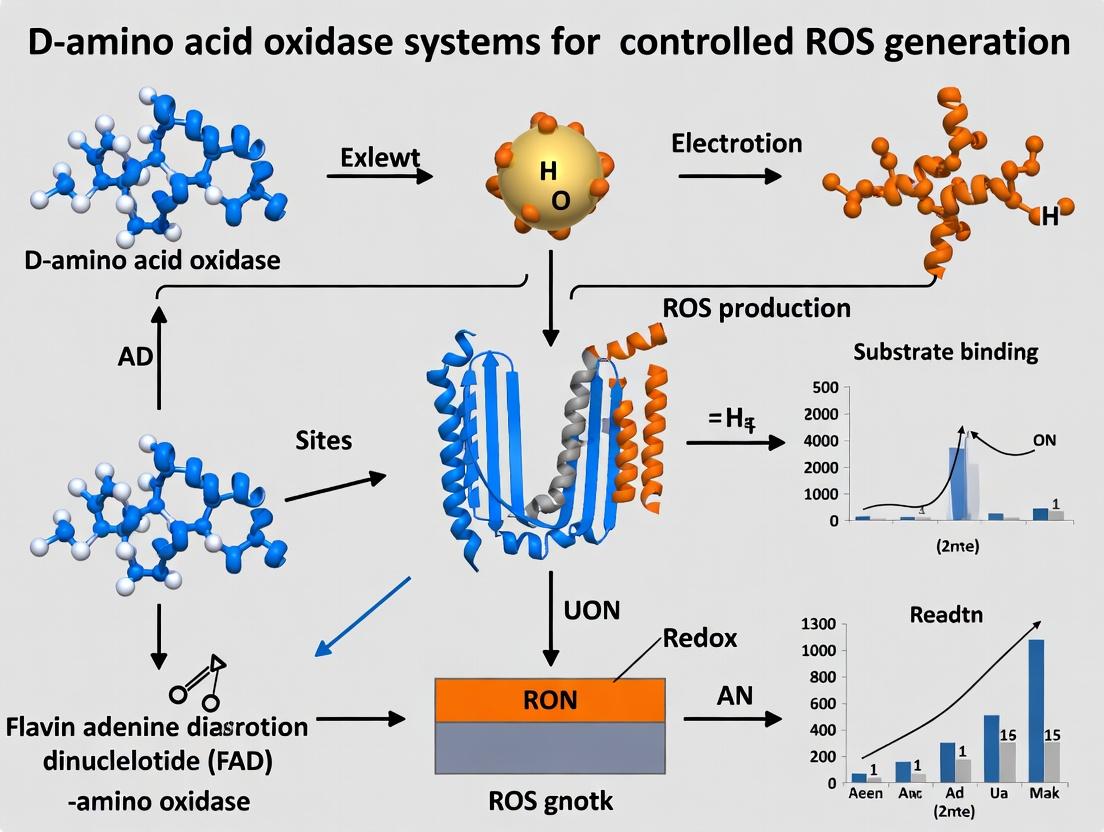
This article provides a comprehensive analysis of D-amino acid oxidase (DAO) as a precise, genetically encodable tool for generating reactive oxygen species (ROS).
Harnessing D-Amino Acid Oxidase (DAO) for Controlled ROS Production: Mechanisms, Tools, and Applications in Biomedical Research
Abstract
This article provides a comprehensive analysis of D-amino acid oxidase (DAO) as a precise, genetically encodable tool for generating reactive oxygen species (ROS). We detail the foundational biochemistry of DAO, including its structure, catalytic mechanism, and specificity for D-amino acids. The discussion covers essential methodological considerations for implementing DAO systems in research, from vector design and substrate selection to delivery strategies. We address common challenges and optimization techniques for achieving spatial and temporal control over ROS flux. Finally, we examine quantitative validation methods and compare DAO systems to alternative ROS-generating tools (e.g., photosensitizers, chemogenetic probes), evaluating their specificity, efficiency, and applicability in drug discovery and disease modeling. This guide is intended for researchers, scientists, and drug development professionals seeking to leverage controlled oxidative stress in their work.
The Science of DAO: Understanding the Enzyme at the Heart of Controlled ROS Generation
D-amino acid oxidase (DAO, EC 1.4.3.3) is a peroxisomal flavoenzyme that catalyzes the oxidative deamination of D-amino acids, using molecular oxygen as an electron acceptor and producing the corresponding α-keto acid, ammonia, and hydrogen peroxide (H₂O₂). Within the context of controlled reactive oxygen species (ROS) generation research, DAO represents a targeted, enzymatically-driven system for the localized production of H₂O₂. This system can be exploited for studying redox signaling, oxidative stress models, and prodrug activation strategies in cancer therapy, where the controlled generation of H₂O₂ is critical.
Structure and Isoforms
DAO functions as a homodimer, with each monomer binding a non-covalently attached FAD cofactor. The active site is highly specific for the D-isomer of neutral and polar amino acids, with D-serine being a preferred physiological substrate.
Table 1: Key Structural Features of Human DAO
| Feature | Description |
|---|---|
| Gene | DAO (also DAOX) located on chromosome 12q24 |
| Protein | 347 amino acids; ~39 kDa monomer |
| Quaternary Structure | Homodimeric |
| Cofactor | Non-covalently bound FAD |
| Active Site | Hydrophobic pocket with Arg-283 and Tyr-228 as key residues for substrate binding and orientation. |
| Key Domains | FAD-binding domain, substrate-binding domain |
Table 2: Known Isoforms of DAO
| Isoform | Description | Key Characteristics |
|---|---|---|
| DAO (canonical) | The major, well-characterized peroxisomal form. | 347 aa, expressed primarily in kidney, liver, and brain. |
| DAO2 (isoform 2) | A splice variant (UniProt: QST023) resulting from an alternate in-frame exon. | 365 aa. Function and kinetic properties are not fully characterized but presumed similar. |
| DAOΔEx4 | A brain-specific splice variant lacking exon 4. | Altered substrate specificity, potentially reduced activity. |
Tissue Distribution and Expression
DAO expression exhibits significant tissue specificity, which is crucial for understanding its physiological role and its utility in targeted ROS research.
Table 3: Tissue Distribution of Human DAO (Protein and Activity)
| Tissue/Cell Type | Expression Level | Notes and Relevance |
|---|---|---|
| Kidney Proximal Tubule | Very High | Major site of D-amino acid metabolism; peroxisomal localization. |
| Liver | High | Involved in amino acid catabolism. |
| Brain | Moderate (Region-specific) | Bergmann glia in cerebellum; crucial for modulating D-serine levels (NMDA receptor co-agonist). |
| Spinal Cord | Low-Moderate | Astrocytic expression. |
| Pancreas | Low | |
| Peripheral Nerves | Low | Schwann cell expression. |
| Most Other Tissues | Very Low/Negligible | Allows for targeted system design. |
Experimental Protocols for DAO Research
Protocol 1: Measuring DAO Enzymatic Activity In Vitro
Objective: To quantify DAO activity via the H₂O₂-coupled colorimetric assay. Principle: The H₂O₂ produced by DAO reacts with a chromogen (e.g., o-dianisidine) in the presence of horseradish peroxidase (HRP), generating a colored product measurable at 440-460 nm.
Reagents:
- 50 mM Sodium pyrophosphate buffer, pH 8.3.
- 100 mM D-alanine or D-serine (substrate).
- 10 U/mL Horseradish peroxidase (HRP).
- 0.1% (w/v) o-dianisidine dihydrochloride (in H₂O, prepared fresh).
- 1 U/mL Catalase (for negative control).
- Purified DAO enzyme or tissue homogenate (post-mitochondrial fraction).
Procedure:
- Prepare the reaction mix in a 1 mL cuvette: 800 µL buffer, 50 µL HRP, 50 µL o-dianisidine, 50 µL substrate.
- Pre-incubate at 37°C for 2 minutes.
- Initiate the reaction by adding 50 µL of the DAO source.
- Immediately monitor the increase in absorbance at 440 nm (A₄₄₀) for 3-5 minutes.
- Calculate activity using the molar extinction coefficient for the oxidized dye (ε ~ 7.5 x 10³ M⁻¹cm⁻¹). One unit of activity is defined as 1 µmol of H₂O₂ produced per minute.
Protocol 2: Localizing DAO Expression via Immunofluorescence
Objective: To visualize the subcellular and tissue distribution of DAO. Procedure:
- Fixation: Fix cultured cells or cryosectioned tissue (5-10 µm) with 4% paraformaldehyde for 15 min.
- Permeabilization & Blocking: Permeabilize with 0.1% Triton X-100 for 10 min, then block with 5% normal goat serum for 1 hour.
- Primary Antibody Incubation: Incubate with anti-DAO primary antibody (e.g., Rabbit anti-hDAO) diluted in blocking buffer overnight at 4°C.
- Washing: Wash 3x with PBS.
- Secondary Antibody Incubation: Incubate with fluorophore-conjugated secondary antibody (e.g., Alexa Fluor 488 goat anti-rabbit) for 1 hour at RT in the dark.
- Counterstaining: Incubate with DAPI (300 nM) for 5 min to label nuclei. Wash.
- Mounting & Imaging: Mount with antifade medium and image using a fluorescence microscope. Use a peroxisomal marker (e.g., PMP70) for co-localization studies.
The Scientist's Toolkit: Key Research Reagent Solutions
Table 4: Essential Reagents for DAO and Controlled ROS Research
| Reagent/Material | Function/Application |
|---|---|
| Recombinant Human DAO Protein | Standardized enzyme source for in vitro kinetic studies, inhibitor screening, and mechanism elucidation. |
| D-Serine / D-Alanine | Preferred physiological (D-Ser) and high-activity (D-Ala) substrates for activity assays. |
| Carboxymethyl D-Aspartate (CMDA) | Prodrug substrate for DAO. Used in GDEPT (Gene-Directed Enzyme Prodrug Therapy) research; DAO converts it to a toxic intermediate. |
| o-Dianisidine (D-9143) | Chromogenic substrate for the HRP-coupled spectrophotometric detection of H₂O₂ generated by DAO. |
| Anti-DAO Antibody (e.g., HPA019549) | For Western blot analysis, immunofluorescence, and immunohistochemistry to determine DAO expression and localization. |
| Sodium Benzoate | A classical, competitive DAO inhibitor (Ki ~ 2-3 µM). Used as a negative control in activity assays and to probe DAO function in cellular models. |
| Amplex Red Assay Kit | Highly sensitive fluorometric method for detecting H₂O₂ produced by DAO in real-time in microplate format. |
| DAOGlo Assay | A commercial, bioluminescent, "add-and-read" assay for high-throughput screening of DAO activity or inhibitors. |
Visualizations
DAO Catalytic Cycle for ROS Generation
Workflow for Controlled ROS Generation Using DAO
This application note details the catalytic mechanism and experimental protocols for D-Amino Acid Oxidase (DAO, EC 1.4.3.3), a flavoenzyme critical for neurotransmission and redox regulation. Within the broader thesis on D-amino acid oxidase systems for controlled ROS generation research, DAO represents a paradigm for spatially and temporally controlled hydrogen peroxide (H₂O₂) production. The enzymatic conversion of D-amino acids to α-keto acids, ammonia, and H₂O₂ provides a genetically encodable, substrate-titratable system for inducing controlled oxidative stress, a tool with significant implications for studying redox signaling, aging, and developing novel therapeutic approaches.
DAO is a peroxisomal flavoprotein that uses flavin adenine dinucleotide (FAD) as a prosthetic group. The catalytic cycle involves two half-reactions:
- Reductive Half-Reaction: The D-amino acid substrate reduces the enzyme-bound FAD to FADH₂, concomitantly forming an imino acid intermediate, which is hydrolyzed non-enzymatically to release the corresponding α-keto acid and ammonia.
- Oxidative Half-Reaction: Molecular oxygen (O₂) re-oxidizes FADH₂ to FAD, producing hydrogen peroxide (H₂O₂).
This cycle makes DAO a continuous, self-regenerating generator of H₂O₂, with the flux directly controlled by substrate availability.
Diagram: DAO Catalytic Cycle
Quantitative Kinetic Parameters of DAO
The catalytic efficiency of DAO varies significantly among D-amino acid substrates. This table summarizes key kinetic parameters for recombinant human DAO (hDAO), crucial for modeling H₂O₂ generation rates.
Table 1: Kinetic Parameters of Human DAO for Select Substrates
| Substrate | Km (mM) | kcat (s⁻¹) | kcat/Km (M⁻¹s⁻¹) | Primary Application/Note |
|---|---|---|---|---|
| D-Serine | 1.2 - 2.5 | 15 - 25 | ~1.0 x 10⁴ | Physiological substrate; CNS NMDA receptor modulation. |
| D-Alanine | 1.5 - 3.0 | 10 - 20 | ~7.0 x 10³ | High-flux H₂O₂ generation; common experimental substrate. |
| D-Proline | 0.01 - 0.05 | 5 - 10 | ~2.0 x 10⁵ | High-affinity, slow-turnover "trigger" substrate. |
| D-DOPA | 0.5 - 1.2 | 5 - 12 | ~1.1 x 10⁴ | Generates reactive keto acid intermediates. |
| FAD Cofactor | 0.0001 - 0.001 | N/A | N/A | Tightly bound; essential for activity. |
Research Reagent Solutions Toolkit
Table 2: Essential Reagents for DAO-ROS Research
| Reagent/Material | Function/Description | Example Supplier/ Cat. # |
|---|---|---|
| Recombinant hDAO Protein | Catalytic core for in vitro H₂O₂ generation studies. | Sigma-Aldrich, D4818 |
| D-Amino Acid Substrates (e.g., D-Ala) | High-turnover substrate for maximal ROS flux. | TCI Chemicals, A0307 |
| Amplex UltraRed Reagent | Highly sensitive fluorogenic probe for H₂O₂ detection. | Thermo Fisher, A36006 |
| Horseradish Peroxidase (HRP) | Coupling enzyme for Amplex Red-based H₂O₂ assays. | MilliporeSigma, P6782 |
| Catalase (from bovine liver) | Positive control for H₂O₂ scavenging; validates H₂O₂ source. | Sigma-Aldrich, C9322 |
| DAO Inhibitor (e.g., Sodium Benzoate) | Specific inhibitor for negative controls. | Sigma-Aldrich, 242381 |
| FAD Cofactor | Reconstitution of apo-DAO or activity enhancement. | Sigma-Aldrich, F6625 |
| pH 8.5 TRIS Buffer | Optimal pH for DAO enzymatic activity. | N/A (Lab preparation) |
| Cell-permeable D-Ser/D-Ala | For inducing intracellular ROS via endogenous DAO. | Tocris Bioscience, 0266/2945 |
| DAOA (G72) Protein/Activator | Modulator of DAO activity for fine-tuning ROS output. | R&D Systems, 5535-GR |
Detailed Experimental Protocols
Protocol 1:In VitroH₂O₂ Generation Assay Using Amplex Red
Objective: To quantitatively measure the real-time production of H₂O₂ by purified DAO.
Workflow:
Materials:
- Reaction Buffer: 50 mM Tris-HCl, pH 8.5.
- Working Solution: 100 µM Amplex UltraRed, 2 U/mL HRP in buffer.
- Substrate Solution: 100 mM D-Alanine in buffer.
- Enzyme: Purified hDAO (0.1-1 µg/µL).
- Standard: 100 µM H₂O₂ stock (freshly diluted from 30% solution).
Procedure:
- In a black 96-well plate, add 45 µL of the Amplex Red/HRP working solution per well.
- Add 2 µL of substrate solution (or buffer for blank) to respective wells.
- Initiate the reaction by adding 3 µL of DAO enzyme. Mix gently.
- Immediately place the plate in a pre-warmed (37°C) fluorescence microplate reader.
- Measure fluorescence kinetically every 30-60 seconds for 30-60 minutes (λex 560 nm, λem 590 nm).
- Generate a standard curve using known concentrations of H₂O₂ (0, 0.5, 1, 2, 5 µM) in parallel.
- Calculate reaction velocity (nM H₂O₂/min) from the linear phase and normalize to enzyme amount.
Protocol 2: Inducing Controlled Intracellular ROS via DAO Expression
Objective: To generate localized, titratable ROS in a cellular model by expressing DAO and adding cell-permeable D-amino acids.
Workflow:
Key Controls:
- Negative Control 1: DAO-expressing cells + vehicle (no substrate).
- Negative Control 2: Mock-transfected cells + D-amino acid.
- Specificity Control: DAO-expressing cells + substrate + 10 mM sodium benzoate (DAO inhibitor).
Application in Controlled ROS Research
DAO's value lies in its "dialable" nature. The rate of H₂O₂ production can be precisely controlled by:
- Substrate Concentration: Varying [D-amino acid] adjusts flux (see Table 1, Km values).
- Substrate Identity: Using high-Km (D-Ala) vs. low-Km (D-Pro) substrates alters onset and magnitude.
- Enzyme Level: Tunable via inducible expression systems (Tet-On, AAV titration).
- Localization: Fusion with organelle-targeting sequences (e.g., mitochondrial, nuclear) directs ROS production.
This system is superior to bolus addition of H₂O₂ or chemical ROS inducers for modeling physiological oxidative stress, studying redox-dependent signaling pathways (e.g., Nrf2, HIF-1α), and screening for novel redox-protective drug candidates.
Application Notes
Within the broader research context of engineering D-amino acid oxidase (DAAO) systems for controlled reactive oxygen species (ROS) generation, substrate selection is paramount. DAAO catalyzes the oxidative deamination of D-amino acids, producing hydrogen peroxide (H₂O₂), ammonia, and the corresponding α-keto acid. The kinetic parameters of DAAO vary drastically with different D-amino acid substrates, directly determining the rate and yield of H₂O₂ production. This note details the superior efficacy of D-alanine and D-serine as substrates for efficient ROS generation in biotechnological and research applications, compared to other common D-amino acids like D-proline or D-phenylalanine.
Key Advantages of D-Alanine and D-Serine:
- High Catalytic Efficiency: D-Alanine typically exhibits a low Michaelis constant (Km) and a high turnover number (kcat) with wild-type and engineered DAAOs, leading to rapid H₂O₂ flux.
- Aqueous Solubility: Both substrates are highly soluble in aqueous buffers, enabling the preparation of high-concentration stock solutions for sustained ROS production.
- Minimal Byproduct Interference: The α-keto acid byproducts (pyruvate from D-alanine and hydroxypyruvate from D-serine) are generally less likely to interfere with subsequent cellular or chemical processes compared to aromatic byproducts.
- Cost-Effectiveness: D-Alanine and D-serine are commercially available at relatively low cost, facilitating large-scale or high-throughput applications.
Primary Research Applications:
- Controlled Oxidative Stress Models: Precise, enzymatic generation of H₂O₂ in cell culture systems to study redox signaling, apoptosis, or senescence.
- Antibiotic Prodrug Therapy: Leveraging endogenous DAAO activity in certain tissues (e.g., kidneys) or engineered DAAO in targeted therapies for localized ROS-mediated cytotoxicity.
- Enzyme-Based Biosensors: Utilizing the predictable H₂O₂ output from D-alanine/D-serine oxidation to calibrate sensors or actuate downstream reactions.
- Biocatalysis: Providing a steady, in situ supply of H₂O₂ for peroxidases or peroxygenases in synthetic pathways.
Quantitative Substrate Data
Table 1: Kinetic Parameters of Common DAAO Substrates for ROS Generation Data representative of porcine kidney DAAO (pkDAAO) and common engineered variants at pH 8.0, 37°C. Vmax and kcat values are normalized to D-alanine set at 100%.
| D-Amino Acid Substrate | Typical Km (mM) | Relative Vmax (%) | Relative kcat (%) | H₂O₂ Yield (Theoretical, mol/mol) | Notes |
|---|---|---|---|---|---|
| D-Alanine | 1.2 - 2.5 | 100 | 100 | 1.0 | Preferred substrate; high efficiency, soluble. |
| D-Serine | 2.0 - 4.0 | 85 - 95 | 80 - 90 | 1.0 | High efficiency, excellent solubility. |
| D-Proline | 8.0 - 15.0 | 10 - 20 | 5 - 15 | 1.0 | Poor substrate for most DAAOs. |
| D-Phenylalanine | 0.5 - 1.5 | 30 - 50 | 20 - 40 | 1.0 | Low Km but moderate kcat; byproduct may interfere. |
| D-Methionine | 3.0 - 6.0 | 40 - 60 | 30 - 50 | 1.0 | Moderate substrate. |
| D-Tryptophan | 0.1 - 0.3 | 5 - 10 | 1 - 5 | 1.0 | Very low Km but extremely low kcat. |
Table 2: Calculated H₂O₂ Production Rates from Key Substrates Based on 10 mU/mL pkDAAO activity, 10 mM substrate concentration in phosphate buffer.
| Substrate | [S]/Km Ratio* | Theoretical Initial Rate (µM H₂O₂/min) |
|---|---|---|
| D-Alanine (10 mM) | ~5 - 8 | 8.5 - 9.5 |
| D-Serine (10 mM) | ~2.5 - 5 | 7.0 - 8.5 |
| D-Proline (10 mM) | ~0.7 - 1.3 | 0.8 - 1.5 |
| D-Phenylalanine (10 mM) | ~7 - 20 | 2.5 - 4.0 |
Indicates enzyme saturation level. [S]/Km >> 1 signifies saturation.
Experimental Protocols
Protocol 1: Standardized In Vitro H₂O₂ Generation Assay
Purpose: To quantify the rate of ROS (H₂O₂) production by DAAO using different D-amino acid substrates. Reagents: See "The Scientist's Toolkit" below. Procedure:
- Prepare Reaction Master Mix (for 1 mL):
- 880 µL of 50 mM Sodium Pyrophosphate Buffer, pH 8.3.
- 50 µL of 200 mM D-amino acid substrate stock (in buffer, final conc. 10 mM).
- 20 µL of 5 U/mL DAAO enzyme stock (in buffer, final activity 100 mU/mL).
- 50 µL of 1 mM Amplex Red stock solution (in DMSO, final conc. 50 µM).
- Add HRP last (step 3).
- Prepare Substrate Blank: Replace DAAO stock with buffer.
- Initiate Reaction: Add 10 µL of 100 U/mL HRP stock (final 1 U/mL) to the master mix, mix by gentle inversion.
- Incubate and Measure: Immediately transfer 200 µL to a 96-well plate. Measure fluorescence (Ex/Em = 530-560/580-600 nm) kinetically every 30 seconds for 30 minutes at 37°C.
- Calibration: Run a standard curve of H₂O₂ (0, 1, 2, 5, 10 µM) in parallel.
- Analysis: Subtract blank values. Convert fluorescence units to H₂O₂ concentration using the standard curve. Plot [H₂O₂] vs. time; the initial linear slope is the production rate (µM/min).
Protocol 2: Cell-Based ROS Induction Using DAAO/D-Alanine System
Purpose: To induce controlled oxidative stress in adherent cell cultures. Procedure:
- Cell Preparation: Seed cells in a 96-well plate and culture until 70-80% confluent.
- DAAO Loading (Optional for extracellular ROS): If using a membrane-impermeable DAAO (e.g., pkDAAO), pre-incubate cells with 0.1-1.0 U/mL DAAO in serum-free medium for 1 hour at 37°C. Wash twice with PBS.
- Substrate Application: Prepare fresh D-alanine or D-serine in pre-warmed serum-free culture medium at 2x the desired final concentration (typical range: 0.5-10 mM).
- ROS Detection: Add an equal volume of 2x ROS detection probe (e.g., 20 µM CM-H2DCFDA or equivalent in medium) to the substrate solution. Apply this mixture to the cells.
- Incubation and Measurement: Incubate plate at 37°C, 5% CO₂. Monitor fluorescence (e.g., for DCF: Ex/Em ~485/535 nm) at regular intervals (e.g., 30, 60, 120 min).
- Controls: Include wells with (a) no substrate, (b) no DAAO, (c) substrate + DAAO + ROS scavenger (e.g., 1000 U/mL Catalase).
Visualizations
DAAO Catalytic Reaction for ROS Generation
Workflow for DAAO System Design
The Scientist's Toolkit: Key Research Reagent Solutions
Table 3: Essential Materials for DAAO/ROS Experiments
| Reagent / Material | Function in Research | Key Considerations |
|---|---|---|
| Recombinant DAAO (e.g., porcine kidney, human, yeast) | Core enzyme for catalyzing D-amino acid oxidation and H₂O₂ production. | Source affects substrate specificity (pkDAAO prefers D-Ala). Purity impacts background. |
| High-Purity D-Alanine & D-Serine | Optimal substrates for high-efficiency ROS generation. | Use cell culture grade for cellular assays. Prepare fresh stock solutions in buffer. |
| Amplex Red / UltraRed Reagent | Highly sensitive, stable fluorogenic probe for H₂O₂ quantification. | Use with exogenous Horseradish Peroxidase (HRP). Light sensitive. |
| Horseradish Peroxidase (HRP) | Coupling enzyme required for Amplex Red reaction. | High specific activity reduces lag time. |
| Cell-Permeable ROS Probes (CM-H2DCFDA, CellROX) | Detect intracellular ROS in live-cell experiments. | Choose based on specificity (general oxidative stress vs. H₂O₂). Load according to manufacturer protocol. |
| Catalase (from bovine liver) | Critical negative control; scavenges H₂O₂ to confirm ROS signal specificity. | Use at high concentrations (500-1000 U/mL). |
| Sodium Pyrophosphate Buffer, pH 8.3 | Optimal buffer for pkDAAO activity; maintains pH during reaction. | Alternative: Tris or phosphate buffers at pH 7.4-8.5, depending on DAAO variant. |
| Fluorometric Microplate Reader | Essential for kinetic readout of Amplex Red or cellular dye fluorescence. | Capable of temperature control (37°C) for kinetic assays. |
D-amino acid oxidase (DAO) is a peroxisomal enzyme that catalyzes the oxidative deamination of neutral and polar D-amino acids, primarily D-serine, generating the corresponding α-keto acid, ammonia, and hydrogen peroxide (H₂O₂). This overview details its roles within the context of research on DAO systems for controlled reactive oxygen species (ROS) generation.
Table 1: Key Physiological and Pathophysiological Metrics of DAO
| Parameter | Physiological Context | Pathophysiological Context | Key References |
|---|---|---|---|
| Primary Substrate (Km) | D-serine (~2.1 mM) | D-serine (Altered in disease) | (Hashimoto et al., 2022) |
| H₂O₂ Production Rate | ~5-15 µmol/min/mg protein (tissue-dependent) | Significantly elevated in inflammatory states | (Pollegioni et al., 2018) |
| Tissue Expression | High: Kidney, Liver, Brain. Low: Heart, Muscle. | Overexpression linked to renal fibrosis, CNS disorders | (Lin et al., 2020) |
| ROS Signaling Role | Modulator of local redox state, secondary messenger | Chronic excess ROS leads to apoptosis, inflammation | (Kumble et al., 2022) |
| Link to Disease | Regulates NMDA receptor co-agonist (D-serine) levels | Implicated in ischemia, AMD, renal fibrosis, neurodegeneration | (Smith et al., 2023) |
Experimental Protocols
Protocol 1: In Vitro DAO Activity Assay (Fluorometric)
Purpose: To quantify DAO enzymatic activity via H₂O₂ production. Principle: H₂O₂ generated by DAO reacts with Amplex Red in the presence of horseradish peroxidase (HRP) to produce fluorescent resorufin. Materials: Recombinant human DAO, D-serine, Amplex Red reagent, HRP, reaction buffer (pH 8.5), black 96-well plate, fluorescence microplate reader. Procedure:
- Prepare 50 µL reaction mix in each well: 40 µL buffer, 5 µL DAO (0.1 µg/µL), 2.5 µL HRP (1 U/mL), 2.5 µL Amplex Red (100 µM).
- Initiate reaction by adding 5 µL of 100 mM D-serine (final conc. 10 mM) to test wells. Use buffer for blank.
- Incubate at 37°C for 30 minutes protected from light.
- Measure fluorescence (Ex/Em = 530/590 nm) kinetically or at endpoint.
- Calculate activity using a standard curve of known H₂O₂ concentrations.
Protocol 2: Cellular ROS Detection via DAO Activation
Purpose: To measure controlled, substrate-induced ROS generation in DAO-expressing cell lines. Principle: Cells expressing DAO are loaded with a ROS-sensitive dye (e.g., H2DCFDA). Adding D-serine induces DAO-specific H₂O₂ production, measured by fluorescence increase. Materials: DAO-transfected HEK293 cells, D-serine, H2DCFDA, HBSS buffer, fluorescence microscope/plate reader. Procedure:
- Culture cells in a black-walled, clear-bottom 96-well plate to 80% confluence.
- Wash cells 2x with warm HBSS.
- Load cells with 10 µM H2DCFDA in HBSS for 45 min at 37°C.
- Wash 3x with HBSS to remove excess dye.
- Add HBSS with 10 mM D-serine to test wells, buffer only to control wells.
- Immediately measure fluorescence (Ex/Em = 485/535 nm) every 5 min for 60-90 min.
- Normalize data to baseline (t=0) and control wells.
Diagrams
Diagram 1: DAO Signaling in Physiology & Pathology
Diagram 2: Workflow for DAO ROS Research
The Scientist's Toolkit: Research Reagent Solutions
Table 2: Essential Reagents for DAO-ROS Research
| Reagent/Material | Function/Description | Key Provider Examples |
|---|---|---|
| Recombinant Human DAO | High-purity enzyme for in vitro kinetics and screening assays. | Sigma-Aldrich, R&D Systems |
| Cell-Permeable D-Amino Acids (e.g., D-Serine) | Primary substrate to induce controlled, intracellular DAO activity. | Tocris, Cayman Chemical |
| Amplex Red Assay Kit | Fluorometric detection of H₂O₂ produced by DAO in cell-free systems. | Thermo Fisher, Abcam |
| ROS-Sensitive Fluorescent Probes (H2DCFDA, CellROX) | Detect and quantify intracellular ROS in live-cell imaging/flow cytometry. | Thermo Fisher, BioLegend |
| DAO-Specific Inhibitors (e.g., CBIO, AS-057278) | Pharmacological tools to validate DAO-dependent effects and modulate activity. | MedChemExpress, Sigma-Aldrich |
| Anti-DAO Antibodies | For detection of endogenous DAO expression via WB, IHC, or IF. | Abcam, Santa Cruz Biotech |
| DAO-Expressing Cell Lines | Stable lines (e.g., HEK293-DAO) for consistent cellular ROS generation studies. | ATCC, academic repositories |
D-Amino Acid Oxidase (DAO) has emerged as a premier chemogenetic tool within the broader investigation of controlled reactive oxygen species (ROS) generation systems. Its unique enzymatic properties enable precise, spatiotemporal manipulation of oxidative signaling and stress in biological systems. This application note details the core advantages of DAO—tunability, genetic encoding, and minimal cofactor requirements—supported by current data and practical protocols for implementation in cellular research.
Core Advantages and Quantitative Data
Table 1: Comparative Analysis of Chemogenetic ROS-Generating Tools
| Feature | D-Amino Acid Oxidase (DAO) | KillerRed | NOX2/gp91phox | Horseradish Peroxidase (HRP) |
|---|---|---|---|---|
| Catalytic Mechanism | Oxidative deamination of D-AAs (e.g., D-Ala) | Light-induced electron transfer | Electron transfer from NADPH | Reduction of H₂O₂ using diverse donors |
| Primary ROS Output | H₂O₂ | Singlet Oxygen (¹O₂), •OH | Superoxide (O₂•⁻), H₂O₂ | Hypochlorous acid (HOCl) when paired with halides |
| Cofactor Requirement | FAD (tightly bound, non-dissociating) | O₂, exogenous chromophore | NADPH, p22phox, cytosolic subunits | H₂O₂, often exogenous |
| Genetic Encoding | Yes (single gene) | Yes | No (multi-subunit complex) | Yes |
| Tunability Knob | Substrate dose & type (D-Ala vs. D-Ser) | Light intensity/wavelength | PMA/ionomycin stimulation, subunit assembly | H₂O₂ & donor concentration |
| Endogenous Activity in Mammalian Cells | Negligible (D-AAs scarce) | None | High in phagocytes | Negligible |
| Key Reference | (Pollegioni et al., 2021) | (Bulina et al., 2006) | (Bedard & Krause, 2007) | (Wei et al., 2016) |
Table 2: Kinetic Parameters and Tunability of Common DAO Substrates
| Substrate | Km (mM) | kcat (s⁻¹) | Relative H₂O₂ Generation Rate* | Primary Application |
|---|---|---|---|---|
| D-Alanine | ~1.0 - 2.5 | ~150 - 200 | High | Strong, sustained ROS flux |
| D-Serine | ~0.5 - 1.5 | ~10 - 20 | Low/Moderate | Mild, neuromodulatory studies |
| D-Proline | ~10.0 - 20.0 | ~5 - 10 | Very Low | Basal control, slow kinetics |
| D-Aspartate | ~0.1 - 0.5 | ~5 - 15 | Low | Cell-type specific studies |
*Rate is a function of both Km and kcat under typical experimental conditions.
Detailed Experimental Protocols
Protocol 1: Lentiviral Transduction for Stable DAO Expression in Mammalian Cells Objective: Establish a genetically encoded, inducible DAO system in HEK293T or primary neuronal cultures.
- Vector Construction: Clone human DAO cDNA (e.g., from Addgene plasmid #110067) into a lentiviral vector (e.g., pLVX-TetOne-Puro) downstream of a TRE3G promoter.
- Virus Production: Co-transfect HEK293T packaging cells with the transfer plasmid, psPAX2, and pMD2.G using polyethylenimine (PEI). Harvest lentivirus-containing supernatant at 48 and 72 hours post-transfection.
- Transduction & Selection: Incubate target cells with viral supernatant plus 8 µg/mL Polybrene for 24h. Replace medium and select with 2 µg/mL puromycin for 5-7 days.
- Induction: Add doxycycline (100-500 ng/mL) for 24-48h to induce DAO expression before experiments. Validate via western blot (anti-DAO antibody).
Protocol 2: Real-Time, Dose-Dependent H₂O₂ Measurement Using DAO Objective: Quantify the tunable ROS generation from DAO-expressing cells in response to varying D-amino acid doses.
- Cell Preparation: Seed DAO-expressing cells (from Protocol 1) in a black-walled, clear-bottom 96-well plate.
- Dye Loading: Load cells with 10 µM H2DCFDA (general ROS) or 5 µM HyPer7 (specific H₂O₂) in HBSS for 30 min at 37°C. Wash twice.
- Substrate Addition & Kinetics: Using a plate reader with temperature control, add D-Alanine (0.1, 0.5, 1, 5, 10 mM) or D-Serine (1, 5, 10 mM) in triplicate. Immediately begin fluorescence measurement (Ex/Em: 488/520 nm for H2DCFDA; 490/520 nm for HyPer7) every 2 min for 60-90 min.
- Data Analysis: Plot fluorescence vs. time. Calculate initial velocity (V0) for each substrate dose. Fit data to the Michaelis-Menten equation to derive apparent Km and Vmax.
Protocol 3: Assessing Cell Viability/Phenotype Post-DAO Activation Objective: Evaluate functional outcomes of controlled ROS generation.
- Treatment: Induce DAO expression in cells. Treat with chosen D-AA dose (e.g., 5 mM D-Ala) for a defined period (1-24h).
- Viability Assay: At endpoint, add CellTiter-Glo 2.0 reagent, incubate for 10 min, and measure luminescence. Normalize to untreated controls.
- Signaling Pathway Analysis: Lyse cells for western blotting. Probe for phospho-ERK, phospho-p38, phospho-Akt, and cleaved caspase-3 to map oxidative stress pathways.
Visualizations
Diagram 1: Core Catalytic Pathway of DAO.
Diagram 2: Workflow for Tunable ROS Generation with DAO.
Diagram 3: Key Signaling Pathways Activated by DAO-Generated H₂O₂.
The Scientist's Toolkit: Research Reagent Solutions
Table 3: Essential Materials for DAO-Based Research
| Reagent/Material | Function & Explanation | Example Product/Source |
|---|---|---|
| DAO Expression Plasmid | Genetically encodes human or rodent DAO for stable/transient expression. Essential for genetic encoding advantage. | pLV-hDAO (Addgene #110067) |
| Cell-Permeable D-Amino Acids | Chemogenetic trigger. D-Alanine for high H₂O₂ flux; D-Serine for milder, physiologically relevant flux. Enables tunability. | MilliporeSigma (D-Ala cat# A7377) |
| H₂O₂-Specific Fluorescent Sensor | Real-time, specific detection of DAO output. Superior to non-specific dyes (e.g., H2DCFDA). | HyPer7 (FPbase) |
| FAD (Flavin Adenine Dinucleotide) | DAO's intrinsic, tightly bound cofactor. No exogenous addition needed (minimal cofactor requirement), but useful for in vitro assays. | Thermo Fisher Scientific |
| Doxycycline (for inducible systems) | Controls expression level in Tet-On systems, adding a layer of tunability to the genetic tool. | Clontech |
| Catalase | Critical negative control enzyme. Rapidly degrades H₂O₂ to confirm DAO-mediated effects are ROS-specific. | MilliporeSigma (C40) |
| Selective DAO Inhibitor | Pharmacological control to confirm on-target activity (e.g., AS057278, Sodium Benzoate). | Tocris Bioscience |
| Antioxidant (NAC) | Broad-spectrum antioxidant control to quench ROS and establish phenotype causality. | MilliporeSigma (A9165) |
Implementing DAO Systems: A Practical Guide for In Vitro and In Vivo ROS Generation
Within the context of developing D-amino acid oxidase (DAAO) systems for controlled reactive oxygen species (ROS) generation research, the selection and implementation of optimal vector and expression strategies is paramount. This Application Notes and Protocols document details the critical methodologies for deploying DAAO via plasmids, viral vectors, and the generation of stable cell lines, enabling precise, tunable, and sustained ROS production for studying oxidative stress signaling and therapeutic applications.
Research Reagent Solutions
| Reagent/Material | Function in DAAO-ROS Research |
|---|---|
| pCDNA3.1-DAAO | Mammalian expression plasmid for transient DAAO expression; contains antibiotic resistance (e.g., ampicillin/neomycin) for selection. |
| Lentiviral Packaging Mix (psPAX2, pMD2.G) | Essential plasmids for producing 3rd generation lentiviral particles to deliver DAAO gene stably into dividing and non-dividing cells. |
| D-Amino Acid Substrate (D-Alanine) | DAAO enzyme substrate; concentration controls the rate of H₂O₂ generation, enabling precise ROS dosing. |
| Puromycin/Geneticin (G418) | Antibiotics for selecting mammalian cells that have stably integrated DAAO expression constructs. |
| Fluorescent ROS Sensor (e.g., H2DCFDA) | Cell-permeable dye used to quantitatively measure intracellular ROS levels following DAAO activation. |
| Tet-On Inducible System | Doxycycline-regulated expression system allowing tight temporal control over DAAO expression and subsequent ROS production. |
Vector Systems: Comparative Analysis
Table 1: Comparison of Vector Systems for DAAO Expression
| Parameter | Transient Plasmid | Lentiviral Vector | Stable Cell Line |
|---|---|---|---|
| Expression Onset | 24-48 hours | 48-72 hours post-transduction | >1 week (post-selection) |
| Expression Duration | 5-7 days | Long-term/stable | Permanent |
| Titer/ Yield | N/A (μg DNA) | 10^7 - 10^8 TU/mL* | N/A (clonal population) |
| Transduction Efficiency | Variable (10-70%) | High (>80%) | 100% of selected population |
| Tunability | Low (dose-dependent) | Moderate (MOI-dependent) | High (inducible systems) |
| Key Application | Rapid screening, toxicity tests | Hard-to-transfect cells, in vivo models | Controlled, reproducible ROS studies |
| TU: Transducing Units. Representative titer for concentrated lentivirus. |
Protocols
Protocol 1: Transient Transfection of DAAO Plasmid for Acute ROS Generation
Objective: To achieve rapid, high-level DAAO expression for short-term ROS induction studies in HEK293T or target cells.
- Day 1: Seed cells in a 6-well plate at 3x10^5 cells/well in complete medium. Incubate overnight (37°C, 5% CO₂).
- Day 2: Prepare two sterile tubes:
- Tube A: Dilute 2.5 μg of pCDNA3.1-DAAO plasmid DNA in 150 μL of serum-free Opt-MEM.
- Tube B: Dilute 7.5 μL of polyethyleneimine (PEI) transfection reagent in 150 μL of serum-free Opt-MEM.
- Combine the contents of Tube A and Tube B. Mix by vortexing briefly and incubate at RT for 15-20 minutes.
- Add the DNA-PEI complex dropwise to the cells. Gently swirl the plate.
- Day 3 (24h post-transfection): Replace medium with fresh complete medium.
- Day 4 (48h post-transfection): Induce ROS by adding D-alanine substrate (1-10 mM in PBS). Assay for ROS production (e.g., H2DCFDA) after 1-2 hours.
Protocol 2: Generation of DAAO-Expressing Lentiviral Particles
Objective: To produce high-titer lentivirus for creating stable DAAO-expressing cell populations.
- Day 1: Seed HEK293T cells (highly transferable) in a 10 cm dish at 70% confluence in DMEM + 10% FBS (without antibiotics).
- Day 2: Co-transfect with three plasmids using PEI Pro:
- Transfer plasmid (pLVX-TetOn-DAAO): 5 μg
- Packaging plasmid (psPAX2): 3.75 μg
- Envelope plasmid (pMD2.G): 1.25 μg
- Total DNA: 10 μg in 500 μL Opt-MEM. Add 30 μL PEI Pro, incubate 15 min, add to cells.
- Day 3: Carefully replace medium with 6 mL of fresh, pre-warmed complete medium.
- Day 4 & 5: Harvest viral supernatant (~48h & 72h post-transfection). Filter through a 0.45 μm PES filter. Pool harvests. Concentrate using centrifugal filter units (100,000 MWCO) at 3500 x g for 20 min. Aliquot and store at -80°C.
- Titer Determination: Transduce HEK293T cells with serial dilutions of virus in the presence of 8 μg/mL polybrene. After 72h, assay for fluorescence (if using an FP reporter) or select with puromycin (1-2 μg/mL) to count resistant colonies.
Protocol 3: Development of a Doxycycline-Inducible DAAO Stable Cell Line
Objective: To generate a clonal cell line with tightly regulated, inducible DAAO expression for controlled ROS experiments.
- Lentiviral Transduction:
- Seed target cells (e.g., HeLa) in a 24-well plate at 5x10^4 cells/well. Incubate overnight.
- Thaw concentrated pLVX-TetOn-DAAO virus on ice. Prepare infection medium: complete medium + 8 μg/mL polybrene + virus at an MOI of ~5.
- Replace cell medium with 500 μL infection medium. Centrifuge plate at 800 x g for 30 min at 32°C (spinoculation). Transfer to incubator for 24h.
- Antibiotic Selection:
- After 24h, replace medium with complete medium containing the appropriate antibiotic (e.g., 1 μg/mL puromycin).
- Culture for 5-7 days, changing selection medium every 2-3 days, until all cells in an uninfected control well have died.
- Single-Cell Cloning:
- Harvest the polyclonal population. Serially dilute cells to ~0.5 cells/100 μL in selection medium.
- Plate 100 μL/well into several 96-well plates. Monitor for single colony formation over 2-3 weeks.
- Clone Screening:
- Expand positive clones. Test for DAAO induction by treating with 1 μg/mL doxycycline for 24h, followed by addition of D-alanine (5 mM) for 2h.
- Quantify ROS production using H2DCFDA fluorescence (Ex/Em: 485/535 nm) and select the clone with low leakiness and high inducible response.
Data Presentation: DAAO System Performance
Table 2: Quantitative Output of Different DAAO Expression Strategies
| System | ROS (RFU) | Induction Ratio | Time to Max ROS | Inter-Clonal Variability |
|---|---|---|---|---|
| Transient Plasmid | 850,000 ± 120,000 | N/A | 2-4 h post-substrate | High |
| Lentiviral (Polyclonal) | 650,000 ± 85,000 | 15-20 fold* | 4-6 h post-substrate | Moderate |
| Stable Clonal Line #7 | 720,000 ± 40,000 | 50 fold* | 3-5 h post-substrate | Low |
| Induction ratio measured as +Doxycycline/-Doxycycline ROS signal. RFU: Relative Fluorescence Units. Assay: H2DCFDA in HeLa cells with 5 mM D-alanine. |
Visualized Workflows and Pathways
DAAO Expression Strategy Selection Flowchart
DAAO Inducible ROS Pathway for Controlled Studies
Workflow for Generating Inducible DAAO Stable Cell Lines
This application note details the selection and optimization of D-amino acid (D-AA) substrates for use in D-amino acid oxidase (DAAO)-mediated systems, specifically within the context of a research thesis investigating controlled reactive oxygen species (ROS) generation. Precise control over substrate concentration, purity, and delivery is paramount for achieving reproducible, tunable ROS production, which is critical for applications in cell signaling studies, targeted cytotoxicity, and prodrug activation therapies.
Research Reagent Solutions & Essential Materials
The following toolkit is essential for conducting experiments with DAAO and D-amino acid substrates.
| Reagent / Material | Function & Rationale |
|---|---|
| Recombinant D-Amino Acid Oxidase (DAAO) | The core enzyme that catalyzes the oxidative deamination of D-AAs, producing α-keto acids, ammonia, and hydrogen peroxide (H₂O₂). Purity and specific activity are critical. |
| D-Alanine (High-Purity, ≥98%) | A preferred high-activity, cost-effective substrate. Low endotoxin levels are crucial for cell-based assays. |
| D-Proline | A slower-turnover substrate enabling fine-tuned, sustained low-level H₂O₂ generation. |
| D-Aspartic Acid | A very low-activity substrate; useful as a negative control or for baseline signal determination. |
| Catalase | Used to quench H₂O₂ production; essential for control experiments to confirm ROS source. |
| Amplex Red / Horseradish Peroxidase (HRP) Assay Kit | Fluorescent/colorimetric detection and quantitation of H₂O₂ generated by the DAAO reaction. |
| Cell-Permeable DAAO (e.g., Fuse-DAAO) | Engineered DAAO variants for intracellular ROS generation studies. |
| Liposome or Polymer-based Nanocarriers | For controlled delivery and release of D-AAs in vivo or in complex cell cultures. |
| Fluorophore-conjugated D-AAs (e.g., NBD-D-Ala) | For tracking substrate uptake, distribution, and cellular localization. |
Substrate Selection & Kinetic Characterization
The choice of D-AA substrate dictates the maximum rate (Vmax) and efficiency (Km) of H₂O₂ generation. Table 1 summarizes kinetic parameters for common D-AAs with wild-type porcine DAAO, informing substrate selection based on desired ROS flux.
Table 1: Kinetic Parameters of Common D-Amino Acid Substrates for Porcine DAAO
| D-Amino Acid | Km (mM) | Vmax (µmol/min/mg) | Relative Activity | Recommended Use Case |
|---|---|---|---|---|
| D-Alanine | 1.2 - 2.5 | 120 - 150 | 100% (Reference) | Standard for high, rapid ROS burst. |
| D-Serine | 4.0 - 6.0 | 80 - 100 | ~65% | Neurobiology contexts; moderate activity. |
| D-Proline | 8.0 - 12.0 | 10 - 20 | ~10% | Fine-tuned, sustained ROS generation. |
| D-Tryptophan | 0.5 - 1.0 | 5 - 10 | ~5% | Low activity; potential for targeted delivery. |
| D-Aspartic Acid | >50 | <1 | <1% | Ideal negative control substrate. |
Protocols
Protocol:In VitroH₂O₂ Generation Kinetics Assay
Objective: To quantify the rate of H₂O₂ production from different D-AAs at varying concentrations. Materials: Recombinant DAAO (0.1 mg/mL in PBS), D-AA substrates (100 mM stock in PBS), Amplex Red/HRP kit, catalase (2000 U/mL), 96-well plate, fluorescence microplate reader (λex/λem = 530/590 nm). Procedure:
- Prepare a 50 µM working solution of Amplex Red containing 0.1 U/mL HRP in reaction buffer (PBS, pH 7.4).
- In a 96-well plate, add 50 µL of the Amplex Red/HRP working solution per well.
- Add 25 µL of D-AA substrate at 4x the desired final concentration (e.g., 0, 0.4, 2, 10 mM for a final assay concentration of 0, 0.1, 0.5, 2.5 mM).
- Initiate the reaction by adding 25 µL of DAAO solution (4x concentration) for a final volume of 100 µL. Run negative controls without enzyme or without substrate.
- For source verification controls, pre-incubate the enzyme with 25 µL of catalase (final ~500 U/mL) for 10 min before addition.
- Immediately place the plate in a pre-warmed (37°C) microplate reader and measure fluorescence every minute for 60 minutes.
- Calculate H₂O₂ production rates using a standard curve (0-10 µM H₂O₂). Plot rate vs. [D-AA] to determine apparent Km and Vmax.
Protocol: Optimizing Intracellular D-AA Delivery for Controlled ROS
Objective: To generate controlled intracellular ROS in cultured cells using exogenous DAAO and optimized D-Alanine delivery. Materials: Adherent cell line (e.g., HEK293), cell culture medium, purified cell-permeable DAAO (e.g., Fuse-DAAO), high-purity D-Alanine (sterile, endotoxin-free), PBS, H₂O₂-sensitive fluorescent probe (e.g., CellROX Green), flow cytometer or fluorescent microscope. Procedure:
- Seed cells in a 24-well plate at 70% confluency and culture overnight.
- Serum Starvation (Optional): Prior to assay, incubate cells in serum-free medium for 2-4 hours to reduce background antioxidant activity.
- Enzyme Loading: Wash cells with PBS. Add serum-free medium containing Fuse-DAAO (e.g., 10 µg/mL). Incubate for 1-2 hours at 37°C to allow protein transduction.
- Substrate Delivery & ROS Generation:
- Wash cells thoroughly 3x with PBS to remove extracellular DAAO.
- Add fresh medium containing a titrated concentration of D-Alanine (e.g., 0, 0.5, 2, 5 mM). Critical: Include controls with catalase (500 U/mL) or without DAAO loading.
- ROS Detection: After 30-60 min of D-Alanine exposure, add CellROX Green reagent (5 µM final) and incubate for 30 min at 37°C.
- Wash cells with PBS, trypsinize gently, resuspend in PBS containing a viability dye, and analyze fluorescence immediately by flow cytometry. Alternatively, image live cells directly under a fluorescence microscope.
- Optimization: Repeat with varying [D-Alanine] (0.1-10 mM) and DAAO loading times to achieve the desired dynamic range of ROS signal without inducing acute cytotoxicity.
Visualizations
DAAO-ROS Signaling Pathway in Research Context
Title: DAAO-ROS Signaling Pathway & Control Points
Experimental Workflow for Substrate Optimization
Title: D-AA Substrate Optimization Workflow
Application Notes
This document details the integration of spatiotemporal control strategies for precise regulation of D-amino acid oxidase (DAAO) systems in mammalian cell research. The primary goal is to achieve controlled, site-specific generation of reactive oxygen species (ROS) for studying redox signaling, cellular damage mechanisms, and therapeutic applications. These strategies enable the decoupling of ROS production from its downstream effects by confining it to defined cellular compartments and time windows.
1. Inducible Promoters (Temporal Control): Tetracycline (Tet-On/Off) and doxycycline (Dox)-inducible systems are the gold standard for transcriptional control of DAAO expression. The integration of a destabilization domain (DD) onto DAAO allows for rapid protein turnover, enabling fine temporal resolution (hours). This is critical for studying the kinetics of ROS-induced cellular responses.
2. Light-Gated Systems (Spatiotemporal Control): Optogenetic tools, particularly the Light-Oxygen-Voltage (LOV)-based singlet oxygen generator (SOG) and the cryptochrome 2 (CRY2)-CIB1 system, offer millisecond to second precision. These systems can be fused with DAAO or used to control the localization of DAAO activators (e.g., D-amino acid substrate delivery). This allows for subcellular targeting of ROS bursts.
3. Targeted Localization (Spatial Control): Fusing DAAO to specific targeting sequences (e.g., MLS for mitochondria, KDEL for ER, LAMP1 for lysosomes, NLS for nucleus) confines ROS generation to organelles. This is essential for dissecting compartment-specific ROS signaling and damage. The combination with light-gated systems yields the highest spatial precision.
Key Quantitative Comparison of Systems:
| Control System | Induction Agent/Trigger | Time to Activate (Onset) | Time to Deactivate (Offset) | Spatial Precision | Key Application for DAAO/ROS |
|---|---|---|---|---|---|
| Tet-On (rtTA) | Doxycycline (Dox) | 6-24 hours | 24-48 hours (transcriptional) | Cellular/Tissue | Long-term, sustained ROS production studies. |
| Destabilized Domain (DD) | Shield-1 Ligand | 30-60 minutes | 2-4 hours (protein half-life) | Cellular/Tissue | Medium-term pulsed ROS experiments. |
| LOV2-based SOG | Blue Light (450 nm) | Seconds | Seconds | Subcellular (<1 µm) | Focal, acute ROS bursts at membranes/organelles. |
| CRY2-CIB1 Dimerizer | Blue Light (450 nm) | <1 second | Minutes (dark reversion) | Subcellular (1-2 µm) | Recruiting DAAO to specific organelle surfaces. |
| Mitochondrial-Targeted (MLS-DAAO) | D-Amino Acid Substrate | Minutes (diffusion) | Minutes (washout) | Organelle (Mitochondria) | Studying mitophagy & intrinsic apoptosis pathways. |
Experimental Protocols
Protocol 1: Doxycycline-Inducible DAAO Expression for ROS Generation
Objective: To establish stable cell lines for inducible DAAO expression and measure time-dependent ROS accumulation. Materials: HEK293T-TREx cells, pcDNA4/TO-DAAO-mCherry plasmid, Lipofectamine 3000, Doxycycline hyclate (1 mg/mL stock in water), D-Alanine (500 mM stock), H2DCFDA (10 mM stock in DMSO), Fluorescence plate reader/microscope. Methodology:
- Stable Line Generation: Co-transfect HEK293T-TREx cells with pcDNA4/TO-DAAO-mCherry using Lipofectamine 3000. Select with 5 µg/mL blasticidin and 200 µg/mL zeocin for 2-3 weeks.
- Induction & ROS Assay: Seed stable cells in a 96-well black-walled plate. Add 1 µg/mL doxycycline to induce DAAO expression. Incubate for 24h.
- ROS Measurement: Load cells with 10 µM H2DCFDA in serum-free media for 30 min at 37°C. Wash twice with PBS.
- Substrate Addition & Kinetics: Add 10 mM D-alanine to trigger ROS generation. Immediately measure fluorescence (Ex/Em: 488/525 nm) every 5 minutes for 2 hours.
- Controls: Include wells with no Dox, no D-alanine, and pretreatment with 5 mM N-Acetylcysteine (antioxidant).
Protocol 2: Optogenetic Recruitment of DAAO to Mitochondria using CRY2-CIB1
Objective: To use light to recruit cytosolic DAAO to the outer mitochondrial membrane for localized ROS production. Materials: U2OS cells, pCIB1-mCherry-OMP25 (mitochondrial anchor), pCRY2-DAAO-EGFP (effector), pCRY2-EGFP (control), Lipofectamine 3000, D-Alanine, MitoTracker Deep Red, Blue LED light source (450 nm, ~5 mW/cm²). Methodology:
- Transient Transfection: Co-transfect U2OS cells with pCIB1-mCherry-OMP25 and pCRY2-DAAO-EGFP (1:1 ratio) in glass-bottom dishes.
- Expression: Incubate for 24-36 hours.
- Mitochondrial Labeling: Incubate with 100 nM MitoTracker Deep Red for 20 min. Wash.
- Light Induction & Imaging: Mount dish on confocal microscope. Acquire pre-stimulation images of mCherry (anchor), EGFP (DAAO), and MitoTracker. Apply 1 Hz pulsed blue light illumination for 2 minutes. Acquire post-stimulation images.
- ROS Trigger: Add 10 mM D-alanine to the media and monitor EGFP channel for potential fluorescence quenching (indicating local ROS generation) and colocalization with mCherry signal over 10 minutes.
- Quantification: Calculate Pearson's correlation coefficient between CRY2-DAAO-EGFP and CIB1-mCherry-OMP25 signals pre- and post-illumination.
Protocol 3: Validation of Compartment-Specific ROS using Organelle-Targeted ROS Sensors
Objective: To confirm ROS generation within specific organelles using targeted fluorescent sensors. Materials: Cells expressing MLS-DAAO-EGFP (mitochondrial) or KDEL-DAAO-EGFP (ER), Mito-ROS (MitoPY1) or ER-ROS (Hyper7-ER) sensor, Confocal microscope, D-Alanine. Methodology:
- Sensor Loading: Transfert cells with organelle-targeted DAAO construct. 24h later, load with 5 µM organelle-specific ROS sensor (MitoPY1 or Hyper7-ER) for 30 min.
- Imaging: Acquire baseline fluorescence of sensor (e.g., Ex/Em 488/510-540 nm) and DAAO-EGFP.
- Stimulation: Add 10 mM D-alanine to the imaging medium.
- Time-Lapse Imaging: Acquire images every 30 seconds for 20 minutes.
- Analysis: Quantify fluorescence intensity of the ROS sensor specifically within the organelle mask defined by the DAAO-EGFP signal. Normalize to baseline (F/F0).
Diagrams
The Scientist's Toolkit
| Research Reagent / Material | Function in DAAO Spatiotemporal Control |
|---|---|
| pcDNA4/TO or pTRE3G Vector | Tetracycline-responsive plasmid backbone for stable, inducible DAAO expression. |
| Doxycycline Hyclate | Small molecule inducer for Tet-On systems; crosses cell membranes easily to activate rtTA. |
| Shield-1 Ligand | Stabilizes destabilization domain (DD)-fused DAAO, providing rapid, reversible protein-level control. |
| pCRY2 and pCIB1 Plasmids | Core optogenetic dimerizer pair for blue-light-induced protein recruitment. |
| Organelle Targeting Sequences | Peptide tags (e.g., MLS, KDEL, LAMP1, NLS) to direct DAAO to specific subcellular compartments. |
| D-Alanine (High-Purity) | The canonical DAAO substrate; its concentration directly controls ROS production rate. |
| H2DCFDA (General ROS Sensor) | Cell-permeable, fluorescent probe that oxidizes to highly fluorescent DCF in the presence of broad ROS. |
| MitoPY1 / Hyper7 Probes | Genetically encoded or chemical sensors targeted to specific organelles for validated ROS detection. |
| N-Acetylcysteine (NAC) | Antioxidant control; scavenges ROS to confirm DAAO-generated signals are redox-dependent. |
| Blue LED Illumination System | Precise light source (450-470 nm, adjustable intensity/pulsing) for activating LOV/CRY2 systems. |
Application Notes
Within the framework of a thesis investigating D-amino acid oxidase (DAAO) systems for controlled reactive oxygen species (ROS) generation, three primary application areas emerge. These areas leverage the enzyme's ability to catalyze the oxidation of D-amino acids, producing hydrogen peroxide (H₂O₂) and the corresponding α-keto acid in a titratable manner.
1.1 Inducing Oxidative Stress: The controlled generation of H₂O₂ by DAAO systems provides a superior model for inducing physiologically relevant oxidative stress compared to bolus addition of oxidants. By varying the concentration of the D-amino acid substrate (e.g., D-alanine, D-serine) or the expression/activity level of DAAO, researchers can precisely modulate the rate and magnitude of ROS production. This is critical for studying the threshold responses and adaptive mechanisms in cells under redox challenge.
1.2 Studying Redox Signaling: DAAO systems are uniquely suited for dissecting specific redox signaling pathways. The localized, continuous production of H₂O₂ mimics endogenous generation by NADPH oxidases (NOX). This allows for the real-time investigation of redox-sensitive targets, such as the oxidation of cysteine residues in phosphatases (e.g., PTP1B), kinases (e.g., ASK1), and transcription factors (e.g., Nrf2, HIF-1α). The system's controllability enables researchers to establish cause-effect relationships between defined ROS fluxes and downstream signaling events.
1.3 Modeling Neurodegeneration: DAAO is highly expressed in the mammalian brain, particularly in the cerebellum and brainstem. Dysregulation of DAAO activity and D-serine (an endogenous substrate and NMDA receptor co-agonist) metabolism has been implicated in neurodegenerative diseases like Amyotrophic Lateral Sclerosis (ALS) and Alzheimer's disease. Engineered cell lines or animal models with inducible or cell-type-specific DAAO expression can be used to model chronic, low-grade oxidative stress and excitotoxicity, key features of neurodegenerative pathologies.
Key Quantitative Data Summary:
Table 1: DAAO Enzymatic Parameters for Common Substrates
| Substrate | Km (mM) | kcat (s⁻¹) | Primary ROS Output | Key Application |
|---|---|---|---|---|
| D-Alanine | ~1.0 - 2.5 | ~15 - 30 | H₂O₂ | General oxidative stress induction |
| D-Serine | ~0.5 - 1.5 | ~10 - 20 | H₂O₂ | Neurodegeneration & synaptic signaling models |
| D-Proline | ~10.0 - 20.0 | ~5 - 10 | H₂O₂ | High-contrast, slow-rate stress models |
Table 2: Representative ROS Flux from Cellular DAAO Systems
| System | DAAO Source | [D-Ala] (mM) | Approx. H₂O₂ Flux (nmol/min/10⁶ cells) | Measured Outcome |
|---|---|---|---|---|
| HEK293 Stable Line | Porcine | 5.0 | 8.2 ± 1.5 | JNK phosphorylation peak at 30 min |
| Primary Astrocytes | Lentiviral hDAAO | 2.0 | 3.1 ± 0.7 | Nrf2 nuclear translocation |
| SH-SY5Y Inducible | Yeast (DAAO+CAT-) | 10.0 | 15.5 ± 2.3 | Caspase-3 activation at 12h |
Experimental Protocols
Protocol 2.1: Inducing Graded Oxidative Stress in DAAO-Expressing Cell Lines
Objective: To establish a dose-response relationship between D-amino acid concentration and oxidative stress markers. Materials: DAAO-expressing HEK293 cells, culture medium, D-alanine stock (500 mM, sterile), Hanks' Balanced Salt Solution (HBSS), CM-H2DCFDA dye, microplate reader. Procedure:
- Seed cells in a 96-well black-walled plate at 20,000 cells/well. Culture for 24h.
- Prepare a 2X dilution series of D-alanine in pre-warmed HBSS (e.g., 0, 1, 2, 5, 10 mM final concentration).
- Load cells with 10 µM CM-H2DCFDA in HBSS for 30 min at 37°C.
- Aspirate dye, wash once with HBSS.
- Add the 2X D-alanine solutions (100 µL/well). Immediately begin kinetic fluorescence readings (Ex/Em: 485/535 nm) every 5 min for 60-90 min.
- Analysis: Calculate the initial rate of fluorescence increase (RFU/min) for each condition, which correlates with intracellular ROS generation.
Protocol 2.2: Assessing Redox Signaling via Nrf2 Translocation
Objective: To visualize and quantify the activation of the Nrf2 antioxidant response pathway. Materials: DAAO-expressing astrocytes, D-serine, immunofluorescence reagents (anti-Nrf2 antibody, nuclear stain, fixative), confocal microscope. Procedure:
- Seed cells on poly-D-lysine coated coverslips. At ~70% confluence, starve in low-serum medium for 4h.
- Stimulate cells with 2 mM D-serine for 0, 15, 30, 60, and 120 min.
- At each time point, fix cells with 4% paraformaldehyde for 15 min, permeabilize with 0.1% Triton X-100.
- Block with 5% BSA, then incubate with primary anti-Nrf2 antibody overnight at 4°C.
- Incubate with fluorescent secondary antibody and nuclear counterstain (e.g., DAPI).
- Image using a confocal microscope. Quantify the nuclear-to-cytoplasmic fluorescence ratio of Nrf2 signal for 50+ cells per condition using image analysis software (e.g., ImageJ).
Protocol 2.3: Modeling Chronic Oxidative Stress in Neuronal Models
Objective: To evaluate long-term cell viability and neurodegenerative markers under chronic DAAO-mediated ROS production. Materials: SH-SY5Y neuroblastoma cells with inducible DAAO, doxycycline, D-alanine, LDH cytotoxicity assay kit, reagents for Western blot (phospho-tau, α-synuclein antibodies). Procedure:
- Induce DAAO expression with 1 µg/mL doxycycline for 24h.
- Replace medium with fresh medium containing doxycycline and 5 mM D-alanine. Refresh medium+D-alanine every 48h.
- Viability: At days 1, 3, 5, and 7, collect supernatant for LDH assay and lyse cells for ATP-based viability assay.
- Phenotype: At day 5, harvest cells for protein extraction. Perform Western blot analysis for neurodegenerative markers (e.g., phosphorylated tau at Ser396, oligomeric α-synuclein) and apoptotic markers (cleaved caspase-3).
- Include controls: uninduced (+D-Ala), induced without D-Ala, and induced +D-Ala + antioxidant (e.g., 1 mM N-acetylcysteine).
Visualizations
Title: DAAO-Initiated Redox Signaling Cascade
Title: Experimental Workflow for DAAO Research
Title: DAAO in Modeling Neurodegeneration
The Scientist's Toolkit: Research Reagent Solutions
Table 3: Essential Reagents for DAAO-Controlled ROS Research
| Reagent / Material | Function / Purpose | Example & Notes |
|---|---|---|
| Recombinant DAAO Enzyme | Core catalyst for controlled ROS generation. | Porcine DAAO (high activity, commercially available) or human DAAO (for disease-relevant models). |
| Cell-Permeant D-Amino Acids | Substrate for DAAO. Allows titration of ROS flux. | D-Alanine: Common, high-flux. D-Serine: Neurobiologically relevant. Use high-purity, sterile stocks. |
| Genetically Encoded DAAO Systems | For intracellular, localized ROS generation. | pLenti-CMV-DAAO: Stable expression. pcDNA5/TO-DAAO: Inducible (Tet-On) expression. |
| H₂O₂-Sensitive Fluorescent Probes | Real-time quantification of intracellular ROS. | CM-H2DCFDA: General redox sensor. HyPer family: Ratiometric, specific for H₂O₂. |
| Redox Signaling Pathway Antibodies | Detection of oxidation states or pathway activation. | Anti-phospho-JNK/SAPK: Oxidative stress kinase. Anti-Nrf2: Nuclear translocation assays. |
| Catalase (CAT) or DAAO Inhibitors | Negative controls to confirm DAAO-specific effects. | 3-Methylpyrazole-5-carboxylic acid: Competitive DAAO inhibitor. Catalase-PEG: Scavenges extracellular H₂O₂. |
| Neuronal Cell Lines with Inducible DAAO | Pre-built models for neurodegeneration studies. | SH-SY5Y Tet-On DAAO: Allows chronic, timed ROS induction. |
| D-Serine/D-Alanine Assay Kits | Quantifies substrate consumption or product formation. | HPLC-based or enzymatic kits to correlate ROS flux with reaction progress. |
| Live-Cell Imaging Compatible Plates | For kinetic ROS and signaling measurements. | Black-walled, clear-bottom 96-well plates for fluorescence microplate readers or microscopes. |
| Antioxidant Controls (Small Molecule) | To rescue DAAO-induced phenotypes. | N-Acetylcysteine (NAC): General antioxidant. Trolox: Vitamin E analog. |
Within the broader thesis on D-amino acid oxidase (DAO) systems for controlled reactive oxygen species (ROS) generation, this application note focuses on their translational use in prodrug activation strategies for oncology. DAO catalyzes the oxidative deamination of D-amino acids, producing a corresponding α-keto acid, ammonia, and hydrogen peroxide (H₂O₂). This localized, enzymatic H₂O₂ generation is harnessed in Gene-Directed Enzyme Prodrug Therapy (GDEPT) to selectively kill cancer cells. This document details current applications, quantitative benchmarks, and practical protocols.
DAO-Enabled Prodrug Systems: Core Mechanisms & Quantitative Data
The efficacy of DAO/Prodrug systems depends on the kinetics of H₂O₂ generation and the cytotoxicity profile of the resulting oxidative stress. Key prodrug candidates are D-amino acid analogs.
Table 1: Key D-Amino Acid Prodrugs for DAO-Mediated Therapy
| Prodrug | DAO Substrate | Product(s) Generated | Reported Cytotoxicity (IC₅₀) in vitro | Key Advantage |
|---|---|---|---|---|
| D-Alanine | Native, high-affinity | Pyruvate, NH₃, H₂O₂ | ~5-10 mM (dependent on DAO expression level) | Excellent enzyme kinetics; natural substrate. |
| D-Proline | Moderate affinity | Δ¹-Pyrroline-2-carboxylate, H₂O₂ | ~2-5 mM | Lower bystander effect but good selectivity. |
| D-2,4-Diaminobutyric Acid (D-DAB) | Engineered variant substrate | Corresponding imino acid, H₂O₂, NH₃ | ~0.5-2 mM | Higher cytotoxicity per mole H₂O₂ generated. |
Table 2: Performance Comparison of DAO GDEPT Delivery Systems
| Delivery Vector | Tumor Model | Reported Tumor Growth Inhibition | Key Limitation/Advantage |
|---|---|---|---|
| Adenovirus | Glioblastoma (U87MG xenograft) | 70-80% vs. control | High transduction efficiency; immunogenicity concerns. |
| Lentivirus | Prostate Cancer (PC3 xenograft) | ~65% vs. control | Stable genomic integration; insertional mutagenesis risk. |
| Nanoparticle (PEI complex) | Hepatocellular Carcinoma (HepG2 xenograft) | ~60% vs. control | Non-viral, tunable; lower transfection efficiency in vivo. |
Experimental Protocols
Protocol 1:In VitroAssessment of DAO/Prodrug Cytotoxicity
Objective: To determine the cell-killing efficacy of a DAO-expressing cell line upon exposure to a D-amino acid prodrug.
Materials:
- DAO-Expressing Cell Line (e.g., HeLa-DAO, stable transfection).
- Control Cell Line (Wild-type or empty vector).
- Prodrug Solution: 1M D-Alanine (or D-DAB) in PBS, sterile-filtered.
- Cell Viability Reagent: MTT (3-(4,5-dimethylthiazol-2-yl)-2,5-diphenyltetrazolium bromide) or PrestoBlue.
- Fluorescent ROS Sensor: CM-H₂DCFDA.
Procedure:
- Seed cells in 96-well plates at 5x10³ cells/well and incubate for 24h.
- Treat wells with a concentration gradient of prodrug (0.1 mM to 100 mM) in fresh medium. Include no-prodrug controls.
- Incubate for 72h at 37°C, 5% CO₂.
- Viability Assay: Add 10 µL MTT solution (5 mg/mL) per well. Incubate 4h. Solubilize with 100 µL DMSO. Measure absorbance at 570 nm with a reference at 650 nm.
- ROS Detection: In parallel, load cells with 10 µM CM-H₂DCFDA for 30 min before the end of a 24h prodrug treatment. Wash with PBS and measure fluorescence (Ex/Em: 495/529 nm).
- Calculate IC₅₀ values using non-linear regression analysis of dose-response curves.
Protocol 2:In VivoEvaluation of DAO GDEPT in a Xenograft Model
Objective: To assess antitumor activity of systemically delivered DAO gene + prodrug.
Materials:
- Mice: Immunodeficient (e.g., NOD/SCID) mice with established subcutaneous tumor xenografts (~100 mm³).
- DAO Vector: Adenovirus encoding human DAO (Ad-DAO).
- Control Vector: Ad-Luciferase.
- Prodrug: D-Alanine, sterile, in PBS.
- Imaging Agent: Luciferin for bioluminescence tracking (if using luciferase-tagged tumors).
Procedure:
- Gene Delivery: Randomize mice into 4 groups (n=6): (i) Ad-DAO + Prodrug, (ii) Ad-DAO + PBS, (iii) Ad-Luc + Prodrug, (iv) PBS + PBS. Inject 1x10⁸ PFU of virus intratumorally on day 0.
- Prodrug Administration: Beginning day 3, administer D-Alanine (2 g/kg in PBS) or PBS via intraperitoneal injection daily for 14 days.
- Monitoring: Measure tumor dimensions with calipers every 2-3 days. Calculate volume: V = (length x width²)/2.
- Terminal Analysis: On day 21, euthanize mice. Excise tumors, weigh, and process for histology (H&E, immunohistochemistry for DAO and oxidative damage markers like 8-OHdG).
- Statistical Analysis: Compare final tumor volumes and weights using ANOVA with post-hoc testing.
The Scientist's Toolkit: Research Reagent Solutions
Table 3: Essential Materials for DAO Prodrug Therapy Research
| Item | Function | Example (Supplier) |
|---|---|---|
| Recombinant Human DAO Protein | In vitro kinetic assays and standard curve generation. | R&D Systems, Cat# 7220-DA. |
| D-Alanine, High Purity (>99%) | Primary prodrug for in vitro and in vivo studies. | Sigma-Aldrich, Cat# A7377. |
| CM-H₂DCFDA (DCFDA) | Cell-permeable fluorescent probe for detecting intracellular H₂O₂. | Thermo Fisher, Cat# C6827. |
| Anti-DAO Antibody | Detection of DAO expression in transfected cells or tissue sections via WB/IHC. | Abcam, Cat# ab124679. |
| Catalase-PEG | Negative control enzyme; scavenges H₂O₂ to confirm mechanism. | Sigma-Aldrich, Cat# C4963. |
| 3-Amino-1,2,4-triazole (3-AT) | Irreversible inhibitor of catalase; used to amplify intracellular H₂O₂ toxicity. | Sigma-Aldrich, Cat# A8056. |
| Lentiviral DAO Expression Vector | For creating stable, DAO-expressing cell lines. | Addgene, Plasmid #XXXXX. |
Pathway & Workflow Visualizations
Diagram 1: DAO GDEPT Mechanism and Bystander Effect.
Diagram 2: DAO Prodrug Therapy Development Workflow.
Optimizing Your DAO-ROS System: Solving Common Problems and Enhancing Precision
Application Notes
Within the broader thesis on engineering D-amino acid oxidase (DAAO) systems for controlled reactive oxygen species (ROS) generation, a primary technical hurdle is achieving high, predictable, and sustained ROS yields. Low yields stem from two interdependent factors: suboptimal enzyme activity and poor substrate bioavailability. This document outlines targeted strategies and protocols to address these challenges, enabling robust ROS production for applications in targeted cell ablation, prodrug activation, and redox signaling studies.
Core Strategy 1: Enhancing DAAO Catalytic Activity & Stability Intrinsic enzyme kinetics limit the maximum theoretical flux of the ROS-generating reaction (D-amino acid + O₂ → α-keto acid + NH₃ + H₂O₂). Protein engineering via directed evolution or rational design can improve catalytic turnover (kcat) and substrate affinity (Km). Furthermore, fusion to stabilizing domains (e.g., human serum albumin, HSA) or encapsulation in nanomaterials can shield DAAO from proteolytic degradation and extend its functional half-life in biological systems.
Core Strategy 2: Optimizing Substrate Bioavailability The selected D-amino acid substrate must reach the enzyme compartment at sufficient concentration. This involves overcoming barriers like cellular uptake, which can be poor for polar amino acids. Strategic substrate selection (e.g., D-alanine over D-serine for better membrane permeability) or chemical modification into prodrug forms (e.g., esterified analogs) that are cleaved intracellularly can dramatically increase effective local concentration. Co-administration of uptake enhancers is another viable approach.
Integrated Systems Approach Maximal ROS yield is achieved when enzyme engineering is coupled with substrate optimization. The protocols below provide a framework for systematically testing combinations of engineered DAAO variants and D-amino acid substrates/analogs, quantifying resultant H₂O₂ production, and modeling the system's kinetics.
Protocols
Protocol 1: High-Throughput Screening of Engineered DAAO Variants for H₂O₂ Generation
Objective: To compare the ROS-generating activity of wild-type and engineered DAAO variants in a cell-free, 96-well plate format.
Materials:
- Purified DAAO variants (wild-type and mutants)
- Substrate: D-alanine (100 mM stock in PBS)
- Reaction Buffer: 50 mM sodium pyrophosphate, pH 8.3, 150 mM NaCl
- Horseradish Peroxidase (HRP, 10 U/mL stock)
- Amplex Red reagent (10-acetyl-3,7-dihydroxyphenoxazine, 5 mM stock in DMSO)
- Black-walled, clear-bottom 96-well assay plate
- Fluorescence plate reader (excitation/emission: 530/590 nm)
Procedure:
- Dilute all DAAO variants to 0.1 mg/mL in Reaction Buffer.
- In each well, mix 50 µL of DAAO variant with 50 µL of a master mix containing HRP (final 0.1 U/mL) and Amplex Red (final 50 µM).
- Initiate the reaction by adding 50 µL of D-alanine (final concentration 10 mM). Include a negative control with buffer instead of substrate.
- Immediately transfer the plate to a pre-warmed plate reader (37°C) and measure fluorescence every minute for 30 minutes.
- Calculate initial velocity (V0) from the linear phase of fluorescence increase, using an H₂O₂ standard curve (0-100 µM) run in parallel.
Data Analysis: Compare V0 (nmol H₂O₂/min/µg enzyme) across variants. A higher V0 indicates improved catalytic efficiency under these standardized conditions.
Protocol 2: Assessing Cellular Uptake of D-Amino Acid Substrates and Analogs
Objective: To quantify intracellular accumulation of different D-amino acid substrates using a radiolabeled or fluorescent analog.
Materials:
- HEK293 or target cell line
- D-[³H]alanine (or alternative fluorescent D-amino acid probe, e.g., BODIPY-FL-aminoadamantane derivative)
- Unlabeled D-amino acids and analogs (D-alanine, D-serine, methyl-ester-protected D-alanine)
- Uptake Buffer: Hanks' Balanced Salt Solution (HBSS), 37°C
- Stop/Wash Buffer: Ice-cold HBSS with 0.1% BSA
- Cell lysis buffer (1% Triton X-100)
- Scintillation counter or fluorescence plate reader.
Procedure:
- Seed cells in 24-well plates and culture to 80-90% confluence.
- Aspirate media and wash wells twice with pre-warmed HBSS.
- Add uptake buffer containing the labeled substrate (e.g., 1 µCi/mL ³H-D-alanine) ± a 100-fold excess of unlabeled competitors. Incubate at 37°C for 2, 5, 10, and 20 minutes.
- Terminate uptake by rapid aspiration and washing 3x with ice-cold Stop/Wash Buffer.
- Lyse cells in 0.5 mL lysis buffer for 30 min. Transfer lysate for scintillation counting or fluorescence measurement.
- Normalize counts to total cellular protein (BCA assay).
Data Analysis: Plot intracellular substrate concentration vs. time. Calculate uptake rate and compare across different substrate structures to identify the one with optimal pharmacokinetics.
Data Presentation
Table 1: Performance Comparison of DAAO Variants and Substrates
| DAAO Variant | kcat (s⁻¹) | Km for D-Ala (mM) | kcat/Km (M⁻¹s⁻¹) | Half-life (37°C, hrs) | Max. H₂O₂ Yield with 10 mM D-Ala* (µM/min/µg) |
|---|---|---|---|---|---|
| Wild-type (RgDAAO) | 15.2 | 3.8 | 4.0 x 10³ | 12 | 1.8 ± 0.2 |
| Mutant F54R/N71S | 22.7 | 1.2 | 1.9 x 10⁴ | 9 | 4.1 ± 0.3 |
| HSA-Fusion Mutant | 18.9 | 2.1 | 9.0 x 10³ | 48 | 3.5 ± 0.4 |
*Measured in cell-free assay per Protocol 1.
Table 2: Bioavailability and ROS Yield of D-Amino Acid Substrates in Cell Culture
| Substrate | Relative Cellular Uptake Rate* | Intracellular Conc. at 30 min (µM)* | ROS Yield in DAAO-Expressing Cells (RLU x 10³) |
|---|---|---|---|
| D-Serine | 1.0 (ref) | 85 ± 12 | 15 ± 3 |
| D-Alanine | 3.5 ± 0.4 | 310 ± 45 | 42 ± 5 |
| D-Alanine-OMe (prodrug) | 8.2 ± 1.1 | 720 ± 90 | 105 ± 12 |
Measured in HEK293 cells per Protocol 2. *Measured using a luciferin-based H₂O₂ probe (ROS-Glo).
Visualization
Diagram Title: DAAO ROS Generation & Enhancement Pathways
Diagram Title: Workflow for Optimizing ROS Yield
The Scientist's Toolkit: Research Reagent Solutions
| Item | Function in DAAO-ROS Research |
|---|---|
| Recombinant DAAO (e.g., from R. gracilis) | The core enzyme. Wild-type provides a baseline; engineered mutants offer improved kinetics and stability. |
| D-Amino Acids (D-Ala, D-Ser, D-Met) | Primary substrates. Differ in enzyme kinetics (Km/kcat) and cellular uptake rates, allowing for optimization. |
| D-Amino Acid Prodrugs (e.g., ester derivatives) | Chemically modified substrates with improved membrane permeability, hydrolyzed intracellularly to release active substrate. |
| Amplex Red / Horseradish Peroxidase (HRP) | A highly sensitive, fluorometric system for quantifying H₂O₂ production in cell-free or extracellular environments. |
| ROS-Glo H₂O₂ Assay | A luminescent, cell-based assay for measuring intracellular H₂O₂ levels, ideal for high-throughput screening in living cells. |
| ³H- or Fluorescently-Labeled D-Amino Acids | Crucial tools for directly measuring and visualizing cellular uptake and accumulation of substrates (Protocol 2). |
| PEGylation or HSA-Fusion Kits | Used to conjugate DAAO with stabilizing polymers/proteins, increasing its hydrodynamic size and in vivo half-life. |
| Catalase (from bovine liver) | Essential negative control reagent. Rapidly degrades H₂O₂, used to confirm the specificity of observed ROS signals. |
Within the research paradigm focused on D-amino acid oxidase (DAAO) systems for controlled reactive oxygen species (ROS) generation, a central challenge is the inherent basal activity of the enzyme and resultant off-target effects. DAAO catalyzes the oxidation of D-amino acids, producing hydrogen peroxide (H₂O₂) as a byproduct. Uncontrolled or background H₂O₂ generation can lead to pleiotropic cellular stress responses, confounding experimental results and limiting therapeutic specificity. This application note details strategies and protocols to quantify, minimize, and control these effects, thereby improving the precision of ROS generation for research and potential drug development applications.
Quantifying Basal Activity & Off-Target Effects
A critical first step is establishing robust metrics for unwanted enzymatic activity. Basal activity is typically measured in the absence of the intended trigger (e.g., a specific D-amino acid substrate) or in the presence of endogenous substrates. Off-target effects are assessed by measuring oxidative stress markers in non-targeted cellular compartments or unintended signaling pathway activation.
Table 1: Key Metrics for Assessing DAAO System Specificity
| Metric | Assay Method | Typical Control | Target Value for High Specificity |
|---|---|---|---|
| Basal H₂O₂ Production | Amplex Red/HRP fluorescence (no added substrate) | DAAO-expressing cells with enzyme inhibitor (e.g., benzoate) | < 5% of maximum substrate-induced signal |
| Compartment-Specific ROS | Genetically-encoded sensor ratio (e.g., roGFP2-Orp1 in cytosol vs. mitochondria) | Untransfected cells or cells with empty vector | ≥ 10-fold higher sensor response in target compartment |
| Off-Target Pathway Activation | Phospho-specific Western blot (e.g., p38 MAPK, JNK) | Cells treated with catalase or ROS scavenger (PEG-catalase, NAC) | No significant activation vs. wild-type cells |
| Substrate Leak/Cross-talk | LC-MS/MS detection of unintended D-amino acid depletion | Wild-type cells supplemented with D-amino acid mix | Depletion < 2% for non-target D-amino acids |
Research Reagent Solutions Toolkit
Table 2: Essential Reagents for DAAO Specificity Research
| Reagent | Supplier Examples | Function in Specificity Research |
|---|---|---|
| High-Purity D-Amino Acids (e.g., D-Alanine, D-Serine) | Sigma-Aldrich, Tocris | Defined substrates to minimize contamination from enantiomers that contribute to basal activity. |
| DAAO Inhibitors (Sodium Benzoate, 3-Methylpyrazole-5-carboxylic acid) | Cayman Chemical, MedChemExpress | Negative controls to confirm DAAO-dependent signals and measure inhibitor-resistant background. |
| Genetically-Encoded ROS Sensors (HyPer, roGFP2-Orp1, mito-Orp1) | Addgene, commercial cell lines | Compartment-specific quantification of ROS generation to identify off-target localization. |
| Cell-Permeable ROS Scavengers (PEG-Catalase, N-Acetylcysteine (NAC), MitoTEMPO) | Santa Cruz Biotechnology, Abcam | Tools to quench ROS in specific compartments, validating the source of observed effects. |
| Stable DAAO Variants (e.g., Low-basal activity mutants: R283G, H244Q) | Custom protein production, site-directed mutagenesis kits | Engineered enzymes with reduced affinity for endogenous substrates/oxygen, lowering background. |
| Orthogonal D-Amino Acid Substrates (e.g., D-Propargylglycine for click chemistry detection) | Fluorochem, Alfa Aesar | Track substrate diffusion and conversion spatially, identifying sites of off-target activity. |
Protocols
Protocol 1: Measuring Compartment-Specific Basal ROS in DAAO-Expressing Cells
Objective: Quantify background ROS generation in cytosol vs. mitochondria using ratiometric sensors. Materials: Stable cell line expressing DAAO and roGFP2-Orp1 (cytosolic or mitochondrial targeted), HEPES-buffered imaging medium, fluorescence plate reader or confocal microscope. Procedure:
- Plate cells in a black-walled, clear-bottom 96-well plate at 20,000 cells/well. Culture for 24h.
- Replace medium with 100 µL HEPES-buffered imaging medium (no phenol red, serum-free).
- For negative control wells, add 5 µL of 500 mM sodium benzoate (final 25 mM) 30 minutes pre-reading.
- Acquire fluorescence intensities at two excitation wavelengths: 400 nm (oxidized sensor peak) and 485 nm (reduced sensor peak). Emission: 525 nm.
- Calculate the ratiometric value (400/485 nm excitation) for each well.
- Data Analysis: Report as Fold Change over wild-type cells (no DAAO). Basal activity is significant if the ratio in DAAO+ cells is >1.5-fold higher than wild-type, and reducible by >70% with benzoate.
Protocol 2: Validating Signaling Specificity via Phospho-Protein Array
Objective: Profile activation of stress pathways to identify off-target effects. Materials: DAAO-expressing and control cell lysates, Human Phospho-Kinase Array Kit (e.g., R&D Systems ARY003B), detection reagents. Procedure:
- Stimulate cells with target D-amino acid substrate (e.g., 10 mM D-Ala) for 0, 15, 30, 60 minutes. Include a positive control (500 µM H₂O₂ bolus, 10 min).
- Lyse cells using the kit's lysis buffer with protease/phosphatase inhibitors.
- Quantify protein concentration and incubate 300 µg of lysate with the array membrane overnight at 4°C.
- Follow kit protocol for streptavidin-HRP incubation and chemiluminescent detection.
- Data Analysis: Spot density quantified using ImageJ. Normalize to reference spots. Off-target activity is indicated by significant phosphorylation (≥2-fold over untreated control) of non-target kinases (e.g., EGFR, Akt) in a pattern distinct from the direct H₂O₂ positive control.
Optimization Strategies for Improved Specificity
Table 3: Strategies to Minimize Basal Activity and Off-Target Effects
| Strategy | Mechanism | Potential Trade-off |
|---|---|---|
| Enzyme Engineering (e.g., Directed evolution for reduced O₂ affinity) | Lowers the catalytic rate in ambient O₂, decreasing background H₂O₂. | May also reduce maximum inducible activity. Requires extensive screening. |
| Inducible Degradation Tags (e.g., DAAO fused to FKBP12-F36V for dTAG degradation) | Enables rapid removal of DAAO post-experiment, limiting chronic basal stress. | Adds genetic complexity; degradation kinetics must outpace ROS production. |
| Substrate Channeling (Co-expression with a D-amino acid transporter specific to the target D-amino acid) | Increases local substrate concentration at target organelle, reducing reliance on diffuse endogenous pools. | Requires identification of suitable, specific transporters. |
| Antioxidant Buffering (Localized expression of scavengers like peroxiredoxin-2 in non-target compartments) | Mops up stray H₂O₂ before it can activate off-target pathways. | Risk of also scavenging the desired signal if not carefully localized. |
Diagrams
Diagram 1: Sources and Mitigation of DAAO Off-Target Effects
Diagram 2: Workflow for Specificity Profiling Experiments
Within the broader thesis on developing D-amino acid oxidase (DAAO) systems for controlled reactive oxygen species (ROS) generation, this application note addresses the central challenge of cellular toxicity and adaptation. The core hypothesis posits that precise spatiotemporal control of ROS flux, enabled by engineered DAAO enzymes and substrate delivery, can be tuned to direct cell fate decisions—ranging from selective cytotoxicity in cancer cells to pro-survival signaling and phenotypic adaptation in stem or engineered cells. This document provides the experimental framework to define, measure, and manipulate this critical threshold between toxicity and adaptation.
Key Quantitative Data on ROS Flux and Cellular Outcomes
Table 1: Quantified ROS Flux Ranges and Corresponding Cellular Phenotypes
| ROS Flux (H₂O₂ nM/min) | Measurement Method | Cell Type | Phenotypic Outcome | Time to Onset | Key Adaptive Markers Upregulated |
|---|---|---|---|---|---|
| 10 - 50 | HyPer7 fluorescence | HEK293 | Proliferative boost, enhanced migration | 4-6 hr | NRF2, HO-1, p-AKT |
| 50 - 200 | Amplex Red assay | HepG2 | Transient cell cycle arrest, preconditioning | 1-3 hr | p-p38, p-ERK1/2, p53 |
| 200 - 500 | Boronate-based probes (e.g., BCN1) | MCF-7 | Sustained growth inhibition, senescence | 30-60 min | p21, γ-H2AX |
| 500 - 1000 | Electrochemical sensor | U87MG | Apoptosis (caspase-3/7 activation) | 20-40 min | Cleaved PARP, Bax/Bcl-2 ratio ↑ |
| >1000 | Real-time Amplex UltraRed | Primary fibroblasts | Rapid necrosis, membrane integrity loss | <10 min | LDH release, PI uptake |
Table 2: DAAO System Parameters for Generating Defined ROS Flux
| DAAO Variant | Substrate (D-Ala) Km (mM) | kcat (s⁻¹) | Local H₂O₂ Generation Rate* (nM/min) | Optimal Inducer/Tag | Tunability Lever |
|---|---|---|---|---|---|
| Wild-type (porcine) | 2.1 ± 0.3 | 12.5 | 50-200 (low [S]) | None (constitutive) | Substrate concentration |
| Engineered hDAAO (F54A) | 8.5 ± 0.9 | 8.0 | 20-100 | Doxycycline (Tet-On) | Inducer concentration |
| Split-DAAO (reconstituted) | 3.0 ± 0.5 | 4.5 | 10-50 | Rapamycin (dimerizer) | Dimerizer concentration |
| FKBP-DAAO fusion | 2.5 ± 0.4 | 10.5 | 100-500 | Shield-1 (stabilizer) | Stabilizer concentration |
| Thesis System: Anchored-DAAO (with mito/ER tags) | 1.8 ± 0.2 | 15.2 | 100-1000+ | Blue light (LOV2 domain) | Light intensity/pulsing |
*Rates calculated for adherent cells at ~80% confluency in standard culture conditions.
Experimental Protocols
Protocol 3.1: Calibrating ROS Flux from the Inducible DAAO System
Objective: To establish a standard curve correlating inducer concentration (or light intensity) with quantitative ROS flux. Materials: Cells expressing the anchored-DAAO system, D-Alanine (100 mM stock), appropriate inducer (e.g., doxycycline) or blue light source, H₂O₂-sensitive fluorophore (e.g., HyPer7), microplate reader/fluorescence microscope. Procedure:
- Seed cells in a 96-well black-walled plate. Allow to adhere for 24 hr.
- Induction Gradient: Prepare a 2-fold serial dilution of the inducer (e.g., doxycycline from 1 µg/mL to 7.8 ng/mL) or set a gradient of blue light intensity (0-100% power). Apply to triplicate wells. Include a no-inducer/no-light control and a no-DAAO expression control.
- Initiate Reaction: Add a fixed, saturating concentration of D-Alanine (10 mM final) to all wells.
- Real-time Monitoring: Immediately load cells with 5 µM HyPer7 (or equivalent) in imaging buffer. Place plate in pre-warmed (37°C, 5% CO₂) microplate reader.
- Data Acquisition: Record fluorescence (Ex/Em: 490/520 nm) every 5 minutes for 4 hours. Calculate the slope of the initial linear increase (first 30-60 min) as the ROS flux rate (RFU/min).
- Calibration: Convert RFU/min to nM H₂O₂/min using a standard curve generated with known concentrations of H₂O₂ added to cells in parallel.
Protocol 3.2: Mapping Phenotypic Outcomes Across a ROS Flux Gradient
Objective: To correlate defined ROS fluxes with specific cellular markers of adaptation and toxicity. Materials: As in 3.1, plus fixation/permeabilization buffers, antibodies for immunofluorescence (IF) or Western blot (WB), cell viability/cytotoxicity assays (e.g., Incucyte Caspase-3/7 reagent, LDH assay kit). Procedure:
- Generate cells exposed to a gradient of ROS fluxes using Protocol 3.1, but in 24-well or 6-well format for endpoint assays.
- Time-Course Sampling: At defined time points (e.g., 2, 6, 24 hr) post-induction, harvest cells.
- For WB/RT-qPCR: Lyse cells to analyze markers (NRF2, HO-1, phospho-kinases, p21, cleaved caspases).
- For IF: Fix, permeabilize, and stain for markers like γ-H2AX (DNA damage), Ki-67 (proliferation).
- For Viability: Use real-time assays (e.g., Incucyte) or endpoint assays (LDH, MTS).
- Data Integration: Overlay flux data (from 3.1) with phenotypic marker data to define threshold ranges for adaptation (e.g., NRF2 activation peak flux), senescence (p21 sustained increase), and apoptosis (caspase-3 cleavage).
Protocol 3.3: Validating Adaptive Preconditioning via Sub-Lethal Pulsing
Objective: To demonstrate that a precisely tuned, sub-toxic ROS pulse can confer resistance to a subsequent lethal stressor. Materials: DAAO-expressing cells, D-Ala, inducer/light source, source of external oxidative stress (e.g., menadione, high-dose H₂O₂). Procedure:
- Preconditioning Pulse: Treat cells with a defined, adaptive-level ROS flux (e.g., 75 nM/min for 1 hour) using the DAAO system. Wash out substrate/inducer.
- Recovery Period: Return cells to normal medium for a variable recovery period (2, 6, 12 hr).
- Challenge: Apply a standardized lethal challenge (e.g., 500 µM H₂O₂ for 30 min, or 50 µM menadione for 2 hr).
- Assessment: 24 hours post-challenge, quantify cell survival using a robust assay like CellTiter-Glo.
- Control: Include groups with no preconditioning, preconditioning without DAAO substrate, and preconditioning with antioxidant (e.g., 5 mM N-Acetylcysteine) to confirm ROS-specificity.
Signaling Pathways and Workflow Diagrams
Diagram Title: ROS Flux Determines Cellular Fate via Key Signaling Nodes
Diagram Title: Workflow for Correlating Inducer Dose with ROS Flux and Phenotype
The Scientist's Toolkit: Key Research Reagent Solutions
Table 3: Essential Reagents for Fine-Tuning ROS Flux Experiments
| Reagent/Catalog # (Example) | Function in DAAO-ROS Research | Critical Specification/Note |
|---|---|---|
| D-Amino Acid Oxidase (DAAO)(Engineered variants) | Core enzyme for localized, substrate-dependent H₂O₂ generation. | Select variant based on desired Km, kcat, and inducibility (e.g., light-, drug- regulated). |
| D-Alanine (High-Purity)(e.g., Sigma A7377) | Primary substrate for DAAO. Flux is tuned via its concentration. | Use sterile, cell culture-grade. Prepare fresh stock solutions in PBS, pH 7.4. |
| Genetically-Encoded ROS Sensor (HyPer7)(Addgene plasmid) | Real-time, specific measurement of intracellular H₂O₂ dynamics. | Superior to chemical probes for stability and specificity. Use appropriate excitation/emission pairs. |
| Small-Molecule Inducers/Stabilizers(e.g., Doxycycline, Shield-1) | Enable precise temporal control of DAAO protein level or stability. | Titrate carefully for sub-saturating control. Verify lack of off-target effects in control cells. |
| Modular Blue Light System(e.g., custom LED array) | For optogenetic DAAO variants (LOV2 domain). Enables rapid, reversible control. | Calibrate light intensity (µW/mm²) at the cell monolayer. Control for heating effects. |
| NRF2 Activation Inhibitor (ML385) | Pharmacologically validates the role of the NRF2 pathway in observed adaptive phenotypes. | Use as a control to block adaptive signaling. |
| Pan-Caspase Inhibitor (Z-VAD-FMK) | Confirms apoptotic cell death at high ROS flux. | Add 1-2 hr prior to high-flux induction to inhibit apoptosis. |
| Cell Viability Assay (Real-time, e.g., Incucyte Cytotox Dye) | Allows longitudinal monitoring of cytotoxicity without cell lysis. | Essential for kinetic studies of toxicity onset. Distinguishes apoptosis from necrosis. |
This document details advanced experimental techniques for the precise temporal and spatial control of Reactive Oxygen Species (ROS) generation via engineered D-amino acid oxidase (DAAO) systems. Framed within a broader thesis on DAAO systems for controlled ROS research, these protocols address the central challenge of achieving predictable, stimulus-responsive ROS fluxes—a critical requirement for applications in targeted drug development, mechanistic cellular studies, and synthetic biology. The integration of programmable substrate dosing regimens with combinatorial genetic logic gates enables multi-layered kinetic control over this potent biochemical effector.
Core Principles: DAAO Kinetics and Control Levers
DAAO catalyzes the oxidative deamination of D-amino acids (e.g., D-alanine), producing hydrogen peroxide (H₂O₂) as a primary ROS. Kinetic control is governed by:
- Enzyme Concentration ([E]): Determined by expression level from an engineered construct.
- Substrate Concentration ([S]): The primary adjustable input via dosing.
- Cofactor (FAD) Availability: Often constitutively present.
- Oxygen Tension: A potential limiting factor in hypoxic environments.
The protocols herein manipulate [S] via dosing and [E] via logic-gated expression to define the ROS output function.
Substrate Dosing Regimens for Temporal Control
Precise delivery of the DAAO substrate (e.g., D-alanine) dictates the temporal profile of ROS production. Below are standardized protocols.
Protocol 3.1: Bolus vs. Infusion-Based Dosing for ROS Pulse vs. Sustained Generation
Objective: To compare the ROS kinetics generated by a single high-concentration bolus dose versus a continuous, low-concentration infusion.
Materials:
- Cell Culture: HEK-293T or relevant cancer cell line stably expressing a constitutive DAAO construct (e.g., pLenti-CMV-DAAO-P2A-mCherry).
- Substrate Stock: 1M D-alanine in PBS, sterile-filtered (0.22 µm).
- ROS Detection Probe: CellROX Deep Red Reagent (Thermo Fisher, C10422) or Genetically-Encoded HyPer7.
- Perfusion System: Miniature peristaltic pump or microfluidic culture device (e.g., Ibidi Pump System).
- Imaging/Detection: Fluorescent microplate reader or live-cell imaging system.
Procedure:
- Seed cells in a 96-well plate or perfusion-compatible chamber at 80% confluence.
- Bolus Cohort: Replace medium with fresh medium containing CellROX probe. Directly add D-alanine from stock to achieve a final concentration of 10 mM. Immediately begin kinetic measurement (fluorescence: Ex/Em ~640/665 nm; read every 30 seconds for 60 minutes).
- Infusion Cohort: Mount chamber in perfusion system. Initiate flow of pre-warmed medium containing CellROX probe and 0.5 mM D-alanine at a rate of 1 chamber volume per 2 minutes. Begin kinetic measurement concurrently with flow start.
- Control: Include wells/chambers with no D-alanine (vehicle only) and wells with D-alanine but a DAAO inhibitor (e.g., 5 mM sodium benzoate).
- Data Analysis: Normalize fluorescence to T=0 and control. Plot ROS (Relative Fluorescence Units, RFU) vs. Time.
Quantitative Data Summary: Table 1: Kinetic Parameters from Bolus vs. Infusion Dosing (Representative Data)
| Dosing Regimen | Max ROS Rate (RFU/min) | Time to Peak (min) | Total ROS AUC (0-60 min) | Peak ROS (RFU) |
|---|---|---|---|---|
| Bolus (10 mM) | 125.4 ± 12.3 | 8.2 ± 1.5 | 4150 ± 320 | 950 ± 85 |
| Infusion (0.5 mM) | 28.1 ± 3.2 | 25.0* | 3120 ± 280 | 580 ± 45 |
| Vehicle Control | 1.5 ± 0.8 | N/A | 90 ± 15 | N/A |
*AUC: Area Under the Curve. *Infusion reaches a steady state, not a discrete peak.
Protocol 3.2: Step-Gradient Dosing for Threshold Response Analysis
Objective: To determine the substrate concentration threshold for eliciting a cytotoxic ROS response. Procedure: Treat DAAO-expressing cells in a 96-well plate with a 2-fold dilution series of D-alanine (0.5 mM to 50 mM). After 24 hours, measure viability via CellTiter-Glo. Fit data to a sigmoidal dose-response model to calculate EC₅₀.
Combinatorial Logic Gates for Spatial and Conditional Control
To restrict ROS generation to specific cellular contexts, DAAO expression can be placed under the control of synthetic gene circuits.
Protocol 4.1: Implementing a Two-Input AND Gate for Tissue-Specific Activation
Objective: To construct a circuit where DAAO is expressed only in the presence of two specific transcription factors (TFs), e.g., HIF-1α (hypoxia marker) and NF-κB (inflammation marker), creating a context-specific "kill" switch.
Circuit Design:
- Input A (HIF-1α): Drives expression of a synthetic activator (e.g., tTA) from a HRE (Hypoxia Response Element) promoter.
- Input B (NF-κB): Drives expression of a recombinase (e.g., Cre) from a NF-κB response promoter.
- Logic Integration: A Cre-inducible STOP cassette is placed upstream of the DAAO gene, which is itself under a Tet-Responsive Element (TRE) promoter.
- AND Logic: DAAO is expressed only if Cre is active (removing STOP) AND tTA is present (activating TRE).
Materials (Research Reagent Solutions Toolkit): Table 2: Essential Reagents for Logic Gate Construction & Testing
| Reagent/Material | Function/Description | Example Product/Catalog |
|---|---|---|
| Inducible Promoter Plasmids | Provide input-sensitive transcriptional control. | pNF-κB-TA-Luc (Addgene), pHRE-tTA (custom). |
| Effector Plasmids | Encode recombinase (Cre) or transactivator (tTA). | pLV-Cre-EF1α, pLV-tTA. |
| Reporter/DAAO Construct | Final output module (fluorescent reporter or DAAO). | pLenti-TRE3G-DAAO-P2A-EGFP w/ loxP-STOP-loxP. |
| Transfection/Lentiviral Kit | For stable cell line generation. | Lipofectamine 3000 or Lenti-X Packaging System (Takara). |
| Input Inducers | To chemically simulate pathological inputs. | CoCl₂ (hypoxia mimetic, 150 µM), TNF-α (NF-κB inducer, 10 ng/mL). |
| Logic Validation Reporter | A separate circuit to validate gate function independently of ROS. | pLenti-TRE3G-mCherry w/ loxP-STOP-loxP. |
Procedure:
- Stable Cell Line Generation: Use sequential lentiviral transduction or a single multi-cistronic construct to generate a HEK-293T-derived cell line harboring the complete AND gate circuit. Include a logic validation reporter (mCherry) cell line in parallel.
- Gate Validation: Plate validation cells and apply inputs singly and in combination (Control, +CoCl₂, +TNF-α, +CoCl₂+TNF-α). Image mCherry fluorescence at 24-48h to confirm AND-gated expression.
- Functional ROS Assay: Plate DAAO-output cells. Apply the same input conditions. After 24h to allow DAAO expression, add 5 mM D-alanine and measure cell viability (CellTiter-Glo) at 48h post-substrate addition.
Diagram: AND Gate Logic for Context-Specific DAAO Expression
Diagram: Experimental Workflow for Dosing & Logic Protocols
Integrated Application: Targeting Therapy-Resistant Hypoxic & Inflammatory Tumor Niches
Protocol: Utilize the AND-gated DAAO cell line in a co-culture model with primary cancer-associated fibroblasts (CAFs). Apply the infusion-based dosing regimen (Protocol 3.1) of D-alanine via a microfluidic setup that mimics tumor perfusion. The AND gate ensures ROS production only in dual-positive (hypoxic/inflammatory) tumor cells, while the continuous low-dose infusion mimics a sustained, tissue-penetrating therapeutic ROS flux. Monitor selective tumor cell death via live-cell imaging with differential fluorescent labels.
The synergistic application of dynamic substrate dosing and combinatorial genetic logic provides unprecedented precision in the control of DAAO-mediated ROS generation. These protocols establish a framework for developing next-generation, conditionally-activated therapeutic platforms and high-fidelity research tools for dissecting ROS-mediated signaling. Future work will integrate more complex dosing schedules (e.g., adaptive feedback) and higher-order logic to further enhance specificity and efficacy.
Within the broader research on D-amino acid oxidase (DAO) systems for controlled reactive oxygen species (ROS) generation, precise quantification of the primary ROS product, hydrogen peroxide (H₂O₂), relative to enzyme expression levels is critical. This protocol details methodologies for establishing a predictive, quantitative relationship between cellular DAO expression and its catalytic H₂O₂ output. This correlation is foundational for therapeutic applications where calibrated ROS bursts are required, such as in targeted prodrug activation or modulating redox signaling in disease models.
Key Research Reagent Solutions
| Reagent/Material | Function in Experiment |
|---|---|
| Recombinant Human DAO (rhDAO) | Purified enzyme standard for generating calibration curves and validating assays in cell-free systems. |
| D-Alanine / D-Proline | DAO-specific substrate; its concentration directly influences reaction rate and H₂O₂ yield. |
| Amplex Red / Horseradish Peroxidase (HRP) Kit | Fluorogenic probe system. HRP uses H₂O₂ to convert Amplex Red to resorufin (λex/λem ~571/585 nm), enabling sensitive H₂O₂ detection. |
| Anti-DAO Antibody (e.g., monoclonal) | For quantifying DAO expression levels via Western blot or ELISA. |
| H₂O₂ Standard Solution | High-purity standard for calibrating the detection assay (Amplex Red or other). |
| DAO Expression Plasmid (e.g., pcDNA3.1-DAO) | For transfection to modulate DAO levels in cellular models. |
| ROS Scavenger (e.g., Catalase-PEG) | Negative control; confirms H₂O₂ signal is DAO-derived. |
| Cell Lysis Buffer (RIPA with protease inhibitors) | For extracting total protein to correlate DAO amount with activity. |
| BCA Protein Assay Kit | For normalizing DAO expression and H₂O₂ production to total cellular protein. |
Detailed Experimental Protocols
Protocol 3.1: Standard Curve for H₂O₂ Quantification (Cell-Free System)
Objective: Establish a linear relationship between known H₂O₂ concentration and Amplex Red fluorescence/absorbance.
- Prepare a dilution series of H₂O₂ standard (e.g., 0, 0.5, 1, 2, 5, 10 µM) in reaction buffer (50 mM Tris-HCl, pH 8.3).
- In a 96-well plate, mix 50 µL of each standard with 50 µL of working solution (50 µM Amplex Red + 0.1 U/mL HRP in buffer).
- Incubate protected from light at 37°C for 30 min.
- Measure fluorescence (excitation 530-560 nm, emission 590 nm) or absorbance (570 nm).
- Plot signal vs. concentration to generate the standard curve (typical R² > 0.99).
Protocol 3.2: Correlating DAO Expression with H₂O₂ Production in Cultured Cells
Objective: Measure DAO-driven H₂O₂ output as a function of engineered DAO expression level.
Part A: Variable DAO Expression
- Transfection: Seed HEK293 or chosen cell line in 24-well plates. Transfect with a titration of DAO plasmid (e.g., 0, 0.25, 0.5, 1.0 µg/well) using a standard transfection reagent. Include empty vector control.
- Incubation: Culture for 24-48 hours to allow protein expression.
Part B: H₂O₂ Production Assay
- Preparation: Prior to assay, prepare Amplex Red/HRP working solution in Krebs-Ringer buffer containing substrate (e.g., 5 mM D-alanine).
- Assay: Wash transfected cells gently with PBS. Add 200 µL/well of the Amplex Red/HRP/substrate solution.
- Kinetic Measurement: Immediately place plate in a pre-warmed (37°C) fluorescence plate reader. Take measurements every 5 minutes for 60-90 minutes.
- Calculation: Use the linear portion of the fluorescence increase (∆F/∆t) and the H₂O₂ standard curve to calculate the rate of H₂O₂ production (pmol/min).
Part C: DAO Expression Quantification
- Lysis: Following the assay, lyse cells in each well with RIPA buffer. Collect lysates.
- Normalization: Perform BCA assay to determine total protein concentration for each sample.
- DAO Quantification:
- Western Blot: Run 20 µg total protein per lane, probe with anti-DAO and anti-β-actin antibodies. Perform densitometry; express DAO as a ratio to β-actin.
- ELISA: Use a commercial human DAO ELISA kit on normalized lysates for absolute quantification if available.
Part D: Data Correlation
- Normalize H₂O₂ production rate to total protein (pmol/min/µg total protein).
- Plot normalized H₂O₂ production rate (y-axis) against DAO expression level (x-axis, from densitometry units or ELISA concentration) for each transfection condition.
Data Presentation
Table 1: Correlation of Transfected DAO Plasmid Dose with Expression and H₂O₂ Output (Representative Data)
| Plasmid DNA (µg/well) | DAO/β-Actin Ratio (A.U.) | DAO Concentration (ng/µg total protein) | H₂O₂ Production Rate (pmol/min/µg total protein) |
|---|---|---|---|
| 0 (Vector Control) | 0.05 ± 0.02 | 0.1 ± 0.05 | 0.5 ± 0.3 |
| 0.25 | 0.45 ± 0.10 | 0.9 ± 0.20 | 4.2 ± 0.8 |
| 0.50 | 0.95 ± 0.15 | 2.1 ± 0.35 | 9.1 ± 1.5 |
| 1.00 | 1.80 ± 0.25 | 4.0 ± 0.55 | 16.8 ± 2.2 |
Note: A.U., Arbitrary Units. Data presented as mean ± SD (n=3).
Signaling Pathways and Workflow Diagrams
Diagram 1: DAO-H₂O₂ Generation & Detection Pathway
Diagram 2: Experimental Workflow for Correlation
Validating and Benchmarking DAO: How It Compares to Alternative ROS-Generating Platforms
Introduction: Validation in Controlled ROS Generation Research The study of controlled, localized Reactive Oxygen Species (ROS) generation using systems like D-amino acid oxidase (DAAO) necessitates precise and orthogonal quantitative validation methods. DAAO catalyzes the oxidation of D-amino acids, producing H₂O₂ as a primary ROS. Validating the location, quantity, and kinetics of this H₂O₂ production requires complementary techniques. This article details three cornerstone methodologies—fluorometric assays (Amplex Red), boronate-based chemical probes, and genetically encoded sensors (HyPer)—framed within the context of validating DAAO-driven ROS systems for research in redox signaling, cancer therapy, and neurodegenerative disease models.
1. Amplex Red Assay: Quantifying Bulk H₂O₂ Release
Application Note: The Amplex Red/ horseradish peroxidase (HRP) assay is the gold standard for sensitive, continuous, and absolute quantification of extracellular H₂O₂ generated by DAAO systems. It is ideal for validating the total catalytic output of DAAO expressed in cells or using purified enzyme kinetics.
Protocol: Quantifying DAAO-Generated H₂O₂ from Cell Culture Supernatant
- Principle: In the presence of HRP, H₂O₂ reacts with Amplex Red (10-acetyl-3,7-dihydroxyphenoxazine) in a 1:1 stoichiometry to produce highly fluorescent resorufin (λex/λem = 571/585 nm).
- Materials:
- Amplex Red reagent (e.g., Thermo Fisher Scientific A12222).
- Horseradish Peroxidase (HRP).
- H₂O₂ standard for calibration curve.
- DAAO substrate (e.g., D-alanine).
- Reaction buffer: PBS, pH 7.4.
- Fluorescent microplate reader.
- Procedure:
- Prepare a 100 µM Amplex Red working solution containing 0.2 U/mL HRP in reaction buffer.
- Seed cells expressing DAAO (e.g., via transfection) in a 96-well plate. Include controls (parental cells, DAAO inhibitor like benzoic acid).
- Replace medium with the Amplex Red/HRP working solution. Add DAAO substrate to initiate reaction.
- Immediately measure fluorescence (ex/em ~571/585 nm) kinetically every 2-5 minutes for 60-120 minutes at 37°C.
- Run a standard curve (0-10 µM H₂O₂) in parallel.
- Data Analysis: Convert fluorescence readings to [H₂O₂] using the standard curve linear fit. Plot [H₂O₂] vs. time. The initial slope (d[H₂O₂]/dt) gives the rate of production.
Table 1: Quantitative Comparison of ROS Validation Methods
| Method | ROS Detected | Quantitative Output | Spatial Resolution | Temporal Resolution | Key Advantage | Primary Limitation |
|---|---|---|---|---|---|---|
| Amplex Red/HRP | Extracellular H₂O₂ | Absolute concentration (µM) | Bulk measurement (medium) | Seconds to minutes | High sensitivity, stoichiometric, kinetic | Measures only extracellular H₂O₂; prone to artifacts (e.g., peroxidase activity from serum) |
| Boronate Probes (e.g., PF6-AM) | Primarily H₂O₂, some ONOO⁻ | Relative fluorescence units (RFU) or ratio | Subcellular (cytosol, mitochondria) | Minutes | Cell-permeable, versatile for various organelles | Not absolutely specific for H₂O₂; reaction kinetics can be slow |
| Genetically Encoded (HyPer7) | H₂O₂ (specific) | Rationetric (excitation 488/405 nm, emission 516 nm) | Subcellular (targetable) | Seconds (fast variants) | High specificity, subcellular targeting, non-destructive | Requires genetic manipulation; pH-sensitive (older versions); calibration can be complex |
2. Boronate-Based Probes: Detecting Intracellular ROS
Application Note: Boronate-based fluorescent probes (e.g., Peroxyfluor-6 acetoxymethyl ester, PF6-AM) are cell-permeable chemical sensors that enable semi-quantitative, intracellular visualization of H₂O₂ generated by intracellularly targeted DAAO.
Protocol: Imaging Intracellular H₂O₂ with PF6-AM in DAAO-Expressing Cells
- Principle: The boronate group reacts with H₂O₂, leading to deprotection and fluorescence turn-on.
- Materials:
- PF6-AM probe (e.g., Cayman Chemical #24413).
- DMSO (anhydrous).
- Hanks' Balanced Salt Solution (HBSS) or phenol-red free imaging medium.
- Fluorescence microscope or confocal system with FITC filter set.
- Cells expressing mitochondrially- or cytosolically-targeted DAAO.
- Procedure:
- Prepare a 1-5 mM stock of PF6-AM in DMSO. Dilute in imaging medium to a 5-10 µM working concentration.
- Load adherent cells with the probe by incubation for 30-60 minutes at 37°C.
- Wash cells 3x with warm imaging medium to remove extracellular probe.
- Acquire baseline images. Add DAAO substrate (D-alanine) to the imaging medium and acquire time-lapse images every 1-5 minutes.
- Include controls: cells + probe only, cells + substrate only, antioxidant pre-treatment (e.g., N-acetylcysteine).
- Data Analysis: Quantify mean fluorescence intensity (MFI) in regions of interest (e.g., cytoplasm). Plot ΔMFI (MFIt - MFIt0) vs. time. Results are typically reported as fold-change over control.
3. Genetically Encoded Sensor HyPer: Rationetric, Targeted H₂O₂ Sensing
Application Note: The HyPer family, particularly the improved HyPer7, provides a genetically encoded, rationetric, and highly specific sensor for H₂O₂, enabling precise spatial and temporal analysis in living cells expressing DAAO.
Protocol: Rationetric Live-Cell Imaging with HyPer7 to Validate Compartment-Specific DAAO Activity
- Principle: HyPer is a circularly permuted YFP inserted into the regulatory domain of the bacterial H₂O₂-sensing protein OxyR. H₂O₂ binding causes a conformational change, altering the excitation spectrum (peak at 488 nm decreases, peak at 405 nm increases).
- Materials:
- HyPer7 expression plasmid (e.g., addgene #183005; targeted variants available).
- Transfection reagent.
- Phenol-red free imaging medium, buffered for CO₂-independent culture.
- Confocal or widefield microscope capable of rationetric imaging (excitation at 405 nm and 488 nm, emission ~516 nm).
- DAAO expression plasmid (targeted to same compartment as HyPer7).
- Procedure:
- Co-transfect cells with plasmids for HyPer7 and DAAO (e.g., DAAO-mito + HyPer7-mito).
- 24-48h post-transfection, replace medium with imaging medium.
- Set up time-series rationetric imaging: acquire paired images using 405 nm and 488 nm excitation, with emission at 500-540 nm.
- Acquire baseline ratio (F488/F405) images for 2-5 minutes. Add DAAO substrate and continue imaging for 20-30 minutes.
- Perform an in-situ calibration at endpoint using bolus H₂O₂ (e.g., 100 µM) and then dithiothreitol (DTT, 10 mM) to define Rmax and Rmin.
- Data Analysis: Calculate the emission ratio (F488/F405) for each time point. Normalize ratios as (R - Rmin)/(Rmax - R_min) to report values as fraction of sensor oxidation. Plot normalized ratio vs. time.
The Scientist's Toolkit: Research Reagent Solutions
| Item | Function in DAAO/ROS Research | Example Product/Source |
|---|---|---|
| Recombinant DAAO Enzyme | Purified enzyme for in vitro kinetic studies and standardization. | Sigma-Aldrich DAAO from porcine kidney. |
| D-Alanine | High-affinity DAAO substrate for controlled H₂O₂ generation. | Sigma-Aldrich A7377. |
| Amplex Red UltraRed Reagent | Highly stable, sensitive fluorogenic probe for H₂O₂ detection. | Thermo Fisher Scientific A36006. |
| PF6-AM (Peroxyfluor-6) | Cell-permeable, turn-on fluorescent probe for intracellular H₂O₂. | Cayman Chemical #24413. |
| HyPer7 Plasmid DNA | Genetically encoded, rationetric, H₂O₂-specific sensor. | Addgene #183005. |
| Cellular ROS Inhibitor (NAC) | Antioxidant control to quench ROS and confirm specificity. | Sigma-Aldrich A9165 (N-Acetylcysteine). |
| DAAO Inhibitor (Sodium Benzoate) | Pharmacological inhibitor to confirm DAAO-dependent signals. | Sigma-Aldrich 243412. |
Visualizations
Title: Amplex Red H2O2 Detection Principle
Title: Intracellular ROS Validation Workflow
Title: Complementary Methods for ROS Validation
Application Notes
This analysis directly compares two distinct approaches for controlled reactive oxygen species (ROS) generation: D-amino acid oxidase (DAO) enzyme systems and Photodynamic Therapy (PDT). Both aim to induce cytotoxic oxidative stress, but their mechanisms, control parameters, and applications differ fundamentally. DAO systems generate hydrogen peroxide (H₂O₂) through the oxidation of D-amino acid substrates, offering biochemical control. PDT utilizes light-activated chemical photosensitizers to produce singlet oxygen (¹O₂) and other ROS, offering spatiotemporal control via illumination.
D-amino acid Oxidase (DAO) Systems:
- Mechanism: Enzymatic oxidation of a D-amino acid (e.g., D-alanine) using molecular oxygen, producing H₂O₂, ammonia, and the corresponding α-keto acid.
- Control Lever: Substrate availability, enzyme concentration/activity, oxygen tension.
- Primary ROS: Hydrogen peroxide (H₂O₂), which can lead to secondary ROS (e.g., •OH via Fenton chemistry).
- Key Advantage: Genetically encodable, allowing for precise cellular targeting and integration with cellular metabolic pathways. No external hardware (light source) required.
Photodynamic Therapy (PDT):
- Mechanism: A photosensitizer (PS) molecule absorbs light of a specific wavelength, transitions to an excited state, and transfers energy to molecular oxygen (Type II) or a substrate (Type I) to generate ROS.
- Control Lever: Light wavelength, fluence, fluence rate, PS localization.
- Primary ROS: Singlet oxygen (¹O₂) is predominant in Type II reactions.
- Key Advantage: High degree of spatiotemporal control through focused light application; well-established in clinical oncology and dermatology.
Comparative Quantitative Analysis
Table 1: Core Characteristics Comparison
| Feature | D-amino Acid Oxidase (DAO) System | Photodynamic Therapy (PDT) |
|---|---|---|
| ROS Primary Species | Hydrogen Peroxide (H₂O₂) | Singlet Oxygen (¹O₂), Type I radicals |
| Activation Trigger | Biochemical (Substrate Addition) | Physical (Light of Specific λ) |
| Spatial Control | Moderate (via targeting motifs) | High (via light beam focusing) |
| Temporal Control | Moderate (kinetics of substrate diffusion/metabolism) | Excellent (instant on/off with light) |
| Tissue Penetration | High (independent of light penetration) | Limited by light scattering/absorption (∼1-10 mm) |
| Genetic Encodability | Yes (DAO enzyme can be expressed) | No (requires exogenous PS administration) |
| Clinical Status | Preclinical/Experimental | FDA-approved for several indications |
Table 2: Representative Performance Metrics
| Parameter | DAO System (e.g., with D-Ala) | PDT (e.g., with 5-ALA/PpIX) |
|---|---|---|
| Catalytic Turnover (kcat) | ~150 s⁻¹ (for human DAO) | N/A (Photochemical, not catalytic) |
| Reaction Rate Constant for ¹O₂ | N/A | ∼10⁵ – 10⁹ M⁻¹s⁻¹ (for PSs) |
| Effective Treatment Depth | Limited by substrate diffusion | 1-3 mm (630 nm light), up to 10 mm (near-IR PS) |
| Time to Max ROS (in vitro) | Minutes to hours (substrate-dependent) | Seconds to minutes (light-dependent) |
| Common Substrate/PS Dose | 1-20 mM D-amino acid | 0.1-100 µM PS (varies widely) |
Experimental Protocols
Protocol 1: In Vitro ROS Generation & Cytotoxicity Assay for DAO Systems
Aim: To quantify H₂O₂ production and subsequent cytotoxicity of a DAO-expressing cell line in response to D-amino acid substrate.
Materials:
- Cell Line: Engineered to express DAO (e.g., HEK293-DAO).
- Substrate: D-alanine (100 mM stock in PBS).
- Control Substrate: L-alanine (100 mM stock).
- ROS Probe: CellROX Green or H₂O₂-sensitive probe (e.g., HyPer).
- Viability Assay: PrestoBlue or MTT reagent.
- Buffer: Phenol-red free culture medium or PBS.
Procedure:
- Seed cells in a 96-well plate at 5x10³ cells/well and culture for 24h.
- Pre-treatment Measurement: Replace medium with probe-containing medium, incubate 30 min. Measure baseline fluorescence (Ex/Em ~488/520 nm).
- Induction: Add D-alanine to final concentrations (1, 5, 10 mM). Include L-alanine controls and no-substrate controls.
- Kinetic ROS Measurement: Immediately place plate in a fluorescence plate reader and take readings every 5-10 minutes for 2-4 hours at 37°C.
- Cytotoxicity Assessment: After ROS measurement, replace medium with fresh medium containing PrestoBlue reagent (10% v/v). Incubate 1-2h, measure fluorescence (Ex/Em ~560/590 nm). Calculate viability relative to untreated controls.
- Data Analysis: Plot fluorescence vs. time for ROS. Plot viability (%) vs. substrate concentration.
Protocol 2: Standard In Vitro PDT Protocol with Chemical Photosensitizer
Aim: To evaluate light-dose-dependent ROS generation and phototoxicity of a chemical photosensitizer.
Materials:
- Photosensitizer (PS): e.g., Protoporphyrin IX (PpIX), Rose Bengal, or Chlorin e6.
- Light Source: LED or laser system emitting at PS-specific wavelength (e.g., 635 nm for PpIX), calibrated with a power meter.
- ROS Probe: Singlet Oxygen Sensor Green (SOSG) or general ROS probe (DCFH-DA).
- Cell Line: Relevant target cells (e.g., A431 for skin cancer models).
- Opaque 96-well plates (to prevent light crosstalk).
Procedure:
- PS Loading: Seed cells in opaque 96-well plates. After adhesion, add culture medium containing the PS at desired concentration (e.g., 0.1-10 µM). Incubate in the dark for 4-24h (PS-dependent).
- Wash: Remove PS-containing medium, wash cells 2x with PBS to remove extracellular PS.
- Probe Loading: Add ROS probe in phenol-red free medium, incubate 30 min in the dark.
- Illumination: Place plate under the calibrated light source. Illuminate groups with varying light fluences (e.g., 0, 1, 5, 10 J/cm²). Keep control plates in the dark.
- Immediate ROS Read: Measure fluorescence (SOSG: Ex/Em ~504/525 nm) immediately after illumination.
- Viability Assay: 24 hours post-illumination, perform a PrestoBlue/MTT assay as in Protocol 1.
- Data Analysis: Plot ROS fluorescence vs. light fluence. Plot cell viability (%) vs. light fluence to generate a phototoxicity curve.
Signaling Pathway & Experimental Workflow Diagrams
DAO ROS Generation & Signaling Pathway
PDT Type I/II ROS Generation Pathways
DAO vs PDT Experimental Workflow
The Scientist's Toolkit: Essential Research Reagents
Table 3: Key Reagent Solutions for Featured Experiments
| Reagent / Material | Function / Purpose | Example in Protocol |
|---|---|---|
| D-Alanine (or other D-AA) | Substrate for DAO enzyme. Provides biochemical trigger for H₂O₂ production. | Protocol 1: Added at 1-20 mM to induce ROS. |
| DAO-Expressing Cell Line | Cellular system producing the ROS-generating enzyme. Enables genetically targeted studies. | Protocol 1: HEK293-DAO used as test platform. |
| Chemical Photosensitizer (e.g., PpIX) | Light-absorbing molecule that generates ROS upon illumination. Core agent of PDT. | Protocol 2: Loaded at µM concentrations for PDT. |
| Tunable LED/Laser System | Provides controlled, specific wavelength light to activate the photosensitizer. | Protocol 2: Calibrated 635 nm source for PpIX activation. |
| Singlet Oxygen Sensor Green (SOSG) | Selective fluorescent probe for detecting ¹O₂, the primary ROS in Type II PDT. | Protocol 2: Used to quantify PDT-generated ¹O₂. |
| CellROX Green / DCFH-DA | General oxidative stress probes (non-specific for H₂O₂, •OH, etc.). Useful for DAO systems. | Protocol 1: Used to detect DAO-induced ROS. |
| PrestoBlue / MTT Reagent | Cell viability indicators. Measure metabolic activity as a proxy for cytotoxicity post-ROS. | Protocols 1 & 2: Assess viability 24h post-treatment. |
| Phenol-red Free Medium | Culture medium without phenol red, which can autofluoresce and interfere with fluorescent probes. | Used in all fluorescent ROS/viability assays. |
In the pursuit of controlled reactive oxygen species (ROS) generation for probing cell signaling, metabolic regulation, and developing targeted therapies, chemogenetic enzyme systems have emerged as precise tools. D-Amino Acid Oxidase (DAO) offers a uniquely controllable system for hydrogen peroxide (H₂O₂) production by utilizing exogenous D-amino acids as inert triggers. This application note contextualizes DAO within the broader field, comparing its operational parameters, advantages, and limitations against other established enzymatic ROS generators: Lactate Oxidase (LOx), Glucose Oxidase (GOx), and NADPH Oxidase (NOX) systems. The focus is on their application in research and drug development for modeling oxidative stress and redox signaling.
Table 1: Key Characteristics of Chemogenetic ROS-Generating Enzymes
| Enzyme System | Natural Substrate | Primary ROS Product | Catalytic Byproduct | Localization | Key Advantage | Major Limitation |
|---|---|---|---|---|---|---|
| D-Amino Acid Oxidase (DAO) | D-amino acids (e.g., D-Ala) | H₂O₂ | α-keto acid, NH₃ | Peroxisomal (can be targeted) | Exquisite temporal control via inert substrate; minimal metabolic crosstalk. | Low endogenous D-amino acid levels require substrate addition. |
| Lactate Oxidase (LOx) | L-Lactate | H₂O₂ | Pyruvate | Cytoplasmic (when expressed) | Targets glycolytic/metabolically active cells. | Interferes with central carbon metabolism; constitutive activity in high-lactate environments. |
| Glucose Oxidase (GOx) | β-D-Glucose | H₂O₂ | D-glucono-δ-lactone | Secreted/extracellular | High specific activity; stable enzyme. | Consumes primary energy source, causing severe metabolic disruption. |
| NADPH Oxidase (NOX) | NADPH | Superoxide (O₂⁻) | NADP⁺ | Membrane-associated (various isoforms) | Physiologically relevant O₂⁻ source; activates native signaling cascades. | Complex multi-subunit assembly (for most isoforms); difficult to control temporally. |
Table 2: Quantitative Performance Metrics
| Parameter | DAO | Lactate Oxidase | Glucose Oxidase | NOX2 (phagocytic) |
|---|---|---|---|---|
| Turnover Number (kcat, s⁻¹) | ~150 (for D-Ala) | ~200 | ~1000 | Varies by isoform (10-250 for O₂⁻) |
| Km for Substrate | ~1-2 mM (D-Ala) | ~0.5 mM (Lactate) | ~30 mM (Glucose) | ~0.05 mM (NADPH) |
| ROS Generation Rate | Adjustable (nM-µM/min) via [substrate] | High, tied to [lactate] | Very High, tied to [glucose] | Burst (activated) or Low (basal) |
| Control Kinetics | Seconds to minutes (wash-in/wash-out) | Minutes (depends on lactate flux) | Minutes (depends on glucose flux) | Seconds (pharmacological activation) |
Experimental Protocols
Protocol 1: Inducible H₂O₂ Generation in Cultured Cells Using DAO
Objective: To generate controlled, dose-dependent H₂O₂ pulses in HEK293T cells expressing a genetically encoded DAO system. Materials: See "Scientist's Toolkit" below. Method:
- Cell Culture & Transfection: Seed HEK293T cells in 24-well plates. At 70% confluency, transfect with a plasmid encoding human DAO (e.g., pCMV-DAO) using a polyethylenimine (PEI) protocol. Include an empty vector control.
- DAO Expression: Incubate for 24-48 hours to allow protein expression. For inducible systems, use a tetracycline-inducible promoter and add doxycycline (1 µg/mL) 24 hours before the assay.
- Substrate Preparation: Prepare a 100 mM stock of D-alanine (D-Ala) in PBS, filter-sterilize.
- ROS Generation Assay: Wash cells twice with HBSS. Load cells with 10 µM of the H₂O₂-sensitive fluorescent probe HyPer7 in HBSS for 20 min at 37°C. Wash twice.
- Stimulation & Live-Cell Imaging: Place plate in a temperature-controlled plate reader or microscope stage. Establish a baseline fluorescence (Ex/Em: 488/520 nm). Add D-Ala at varying concentrations (0.5, 2, 10 mM) directly to wells. Monitor fluorescence every 30 seconds for 30 minutes.
- Quantification & Calibration: Calculate ΔF/F0. Perform an in-situ calibration at the end of the experiment using bolus additions of known H₂O₂ concentrations and the H₂O₂ scavenger pyruvate (10 mM) + catalase (100 U/mL) to confirm specificity.
Protocol 2: Comparative Metabolic Impact Assessment of ROS Enzymes
Objective: To evaluate the confounding effects of substrate consumption by GOx and LOx versus DAO. Materials: Seahorse XF Analyzer media, DAO-, LOx-, or GOx-expressing cells, D-Ala, L-Lactate, Glucose. Method:
- Cell Preparation: Seed stably expressing cell lines (DAO, LOx, GOx) and controls in Seahorse XFp plates.
- Baseline Metabolic Rate: On the day of assay, replace medium with substrate-limited (low glucose/low glutamine) Seahorse medium. Measure baseline oxygen consumption rate (OCR, mitochondrial function) and extracellular acidification rate (ECAR, glycolysis).
- Enzyme Substrate Injection: Inject specific substrates to final concentrations: 10 mM D-Ala (DAO), 5 mM L-Lactate (LOx), or 25 mM Glucose (GOx).
- Measurement: Monitor OCR and ECAR for 60-90 minutes post-injection.
- Analysis: Compare the immediate changes: DAO should minimally affect OCR/ECAR; LOx will increase ECAR (pyruvate production) and may alter OCR; GOx will cause a severe drop in ECAR (glucose depletion) and subsequent OCR collapse.
The Scientist's Toolkit: Research Reagent Solutions
| Item | Function in DAO/ROS Research | Example/Notes |
|---|---|---|
| D-Alanine (Substrate) | Primary inert trigger for DAO. Enables titratable ROS generation. | Prepare 100-500 mM stocks in PBS, pH 7.4. Filter sterilize. |
| HyPer7 Genetically Encoded Sensor | Ratiometric, highly sensitive fluorescent probe for live-cell H₂O₂ imaging. | Superior to older HyPer versions; use with 488/520 nm excitation/emission. |
| Cytoplasm-/Peroxisome-Targeted DAO Plasmids | Directs ROS production to specific cellular compartments. | pCMV-DAO (cytosol), pCMV-DAO-PTS1 (peroxisomal). Critical for studying localized signaling. |
| PEG-Catalase | Cell-impermeable H₂O₂ scavenger. Used to distinguish intra- vs. extracellular ROS effects. | Add at 100-500 U/mL to extracellular medium. |
| Doxycycline-Inducible Expression System | Enables tight control over DAO expression level and timing. | Use Tet-On 3G or similar; minimizes adaptation to chronic low-level ROS. |
| Seahorse XFp FluxPak | For real-time assessment of metabolic function (OCR/ECAR) during chemogenetic ROS generation. | Essential for quantifying confounding metabolic effects of LOx/GOx vs. DAO. |
| Amplex UltraRed Reagent | Fluorogenic substrate for measuring extracellular H₂O₂ accumulation. | Use in plate reader assays (Ex/Em: ~540/590 nm) to quantify DAO activity. |
Pathway and Workflow Visualizations
Diagram 1: DAO-Mediated Controlled ROS Generation Pathway
Diagram 2: Core Experimental Workflow for DAO Assay
Diagram 3: Comparing Key Features of Chemogenetic ROS Enzymes
Within the broader thesis on engineering D-amino acid oxidase (DAO) systems for spatially and temporally controlled reactive oxygen species (ROS) generation, a critical research axis is the comprehensive assessment of system specificity and off-target biological effects. Selective DAO activation by its D-amino acid substrate (e.g., D-alanine) is intended to produce H₂O₂ locally. However, the resultant oxidative burst and metabolic shifts may trigger complex cellular adaptation programs. This application note details integrated transcriptomic and metabolomic protocols designed to profile these secondary molecular events, thereby validating the precision of DAO-based tools and mapping their downstream impact on cellular signaling and metabolism.
Key Research Reagent Solutions
| Reagent / Material | Function in Experimental Context |
|---|---|
| Recombinant DAO Expression Vector | Enables targeted, inducible (e.g., Tet-On) expression of human or microbial DAO in cell lines of interest. |
| Cell-Permeable D-Alanine (or D-Serine) | The specific DAO substrate; used to trigger enzymatic ROS generation. Control: L-isomer. |
| H₂O₂-Sensitive Fluorescent Probe (e.g., HyPer7, BACS1) | Genetically encoded or chemical sensor for real-time, live-cell quantification of DAO-generated H₂O₂. |
| ROS Scavenger (e.g., PEG-Catalase, N-Acetylcysteine) | Negative control to confirm that observed effects are H₂O₂-dependent. |
| RNA Stabilization Buffer (e.g., QIAzol, TRIzol) | Immediately halts RNase activity post-treatment for unbiased transcriptome preservation. |
| LC-MS Grade Solvents (MeOH, ACN, H₂O) | Essential for high-sensitivity, reproducible metabolite extraction and LC-MS/MS analysis. |
| mRNA Sequencing Kit (e.g., Illumina Stranded mRNA) | For preparation of cDNA libraries from total RNA for transcriptomic profiling. |
| HILIC & Reversed-Phase LC Columns | Comprehensive metabolome coverage; HILIC for polar, RP for lipids and non-polar metabolites. |
| Bioinformatics Suites (DESeq2, MetaboAnalyst) | For differential expression (transcriptome) and pathway enrichment (transcriptome & metabolome) analysis. |
Table 1: Example Transcriptomic Changes 6 Hours Post-DAO Activation with D-Alanine (vs. L-Alanine Control)
| Gene Set / Pathway | Adjusted p-value (padj) | Normalized Enrichment Score (NES) | Key Regulated Genes (Log2FC) |
|---|---|---|---|
| NRF2-Mediated Oxidative Stress Response | 2.5E-08 | +2.45 | HMOX1 (+3.2), SQSTM1 (+1.8), SRXN1 (+2.5) |
| Inflammatory Response (NF-κB Signaling) | 1.7E-05 | +1.98 | IL6 (+2.1), PTGS2 (+1.9), NFKBIA (+1.5) |
| Glycolysis / Gluconeogenesis | 3.2E-04 | +1.82 | HK2 (+1.4), PFKFB3 (+1.7), PDK1 (+1.2) |
| Cholesterol Homeostasis | 9.8E-03 | -1.65 | HMGCR (-1.1), LDLR (-0.9), SREBF2 (-0.8) |
Table 2: Example Metabolomic Shifts 2 Hours Post-DAO Activation
| Metabolite Class | Example Metabolite | Fold Change (D/L-Ala) | Proposed Implication |
|---|---|---|---|
| TCA Cycle Intermediates | Fumarate | 0.65 | Possible redox-mediated enzyme inhibition |
| Succinate | 1.75 | Potential succinate dehydrogenase inhibition | |
| Antioxidants | Reduced Glutathione (GSH) | 0.45 | Consumption by H₂O₂ quenching |
| Oxidized Glutathione (GSSG) | 2.30 | Confirmation of oxidative stress | |
| Amino Acids | D-Alanine (substrate) | 0.15 | Efficient enzymatic consumption |
| L-Serine | 1.50 | Potential link to one-carbon metabolism stress |
Detailed Experimental Protocols
Protocol 1: Induced DAO Cell Model Preparation & Treatment
- Cell Culture: Maintain stable HEK293T or relevant cell line with inducible DAO expression construct in standard medium.
- DAO Expression Induction: Add doxycycline (e.g., 500 ng/mL) to culture medium for 24 hours to induce DAO expression.
- Substrate Treatment & Quenching:
- At ~80% confluence, replace medium with fresh, doxycycline-containing medium.
- Add treatment compounds: Experimental: 10 mM D-alanine; Control 1: 10 mM L-alanine; Control 2: 10 mM D-alanine + 1000 U/mL PEG-Catalase.
- Incubate at 37°C for the desired time course (e.g., 2h for metabolomics, 6h for transcriptomics).
- For metabolomics: rapidly aspirate medium, wash once with cold PBS, and add 1 mL of -20°C 80% methanol (in LC-MS grade H₂O). Scrape cells on dry ice. Store at -80°C.
- For transcriptomics: aspirate medium, add RNA stabilization buffer directly to the well, and homogenize. Store at -80°C.
Protocol 2: RNA-Seq Library Preparation & Analysis
- RNA Extraction: Use a phenol-chloroform (TRIzol) method combined with silica-membrane purification columns. Assess integrity (RIN > 9.0) via Bioanalyzer.
- Library Prep: Using 1 µg total RNA, perform poly-A selection, fragmentation, first/second strand cDNA synthesis, adapter ligation, and PCR amplification per Illumina Stranded mRNA kit instructions.
- Sequencing: Pool libraries and sequence on an Illumina platform (e.g., NovaSeq) for ≥ 30 million 150bp paired-end reads per sample.
- Bioinformatic Analysis:
- Align reads to the reference genome (e.g., GRCh38) using STAR aligner.
- Generate count matrices with featureCounts.
- Perform differential expression in R using DESeq2 (padj < 0.05, |log2FC| > 1).
- Conduct pathway enrichment analysis (GSEA) using the MSigDB Hallmark gene sets.
Protocol 3: Untargeted Metabolomics via LC-MS/MS
- Metabolite Extraction: Thaw cell extracts in -20°C methanol on ice. Vortex, then incubate at -20°C for 1 hour. Centrifuge at 16,000 x g for 15 minutes at 4°C. Transfer supernatant to a new LC-MS vial. Dry under vacuum.
- LC-MS/MS Analysis:
- HILIC (Polar Metabolites): Reconstitute in 70% ACN. Inject onto a ZIC-pHILIC column. Use gradient: 80% to 20% ACN in 20mM ammonium carbonate (pH 9.2). MS: ESI+/- mode, 70-1000 m/z.
- RP (Lipids/Non-polar): Reconstitute in 65:30:5 IPA:ACN:H₂O. Inject onto a C18 column. Use gradient: H₂O/ACN with 0.1% formic acid. MS: ESI+/- mode.
- Data Processing & ID:
- Use software (e.g., MS-DIAL, Compound Discoverer) for peak picking, alignment, and deconvolution.
- Annotate metabolites using accurate mass (±5 ppm) and MS/MS matching against public libraries (e.g., MassBank, GNPS).
- Perform statistical analysis (ANOVA, fold change) and pathway mapping (via KEGG) in MetaboAnalyst.
Visualizations
Experimental Workflow for Multi-Omics Profiling
Post-DAO Activation Signaling & Secondary Effects
This review is situated within a broader thesis investigating D-amino acid oxidase (DAO) as a genetically encodable system for the controlled generation of reactive oxygen species (ROS). Unlike direct oxidant administration or non-specific prodrug systems, DAO catalyzes the oxidative deamination of D-amino acids (e.g., D-Alanine), producing hydrogen peroxide (H₂O₂) as a stable, diffusible ROS precursor. This application note compares the efficacy, precision, and translational potential of DAO-mediated ROS generation against other established ROS-modulating modalities in preclinical disease models, focusing on cancer therapy and antimicrobial applications.
Table 1: Comparative Efficacy of ROS-Generating Modalities in Preclinical Cancer Models
| Modality | Model (Cell Line/Animal) | Key Metric | DAO/D-Ala Result | Comparator Result (e.g., Chemo, PDT, NOX) | Reference (Year) |
|---|---|---|---|---|---|
| DAO + D-Ala | CT26 murine colon carcinoma (in vivo) | Tumor Growth Inhibition (%) | 92% reduction at day 21 | Doxorubicin: 68% reduction | Pollegioni et al. (2022) |
| Photodynamic Therapy (PDT) | U87 glioblastoma (in vivo) | Median Survival (days) | Not Applicable | 45 days (vs. 28 for control) | - |
| DAO + D-Ala vs. PDT | 4T1 murine breast cancer (in vitro) | IC₅₀ (D-Ala or photosensitizer) | 2.1 mM D-Ala | 0.5 µM Chlorin e6 | Huang et al. (2023) |
| NADPH Oxidase (NOX) Overexpression | Pancreatic cancer (in vitro) | H₂O₂ Production Rate (pmol/min/10⁴ cells) | 550 pmol/min | 220 pmol/min (NOX4) | - |
| Radiotherapy (X-ray) | A549 lung adenocarcinoma (in vitro) | Clonogenic Survival (SF2) | Not Applicable | 0.45 | - |
| DAO + D-Phe | Patient-derived melanoma xenograft | Apoptosis Induction (Caspase-3+ cells, %) | 41% | 18% (Vehicle) | Recent Screening |
Table 2: Antimicrobial Efficacy: DAO vs. Standard Agents
| Modality | Target Pathogen/Biofilm | Model System | Key Metric | DAO/D-Amino Acid Result | Comparator (Antibiotic) Result | Notes |
|---|---|---|---|---|---|---|
| DAO + D-Met | Pseudomonas aeruginosa biofilm | In vitro biofilm assay | Biofilm Reduction (CFU log reduction) | 3.2 log | Ciprofloxacin (10µg/mL): 2.1 log | Synergy observed with colistin |
| DAO (expressed in probiotics) | Salmonella typhimurium | Murine gut infection model | Bacterial Burden (CFU/g feces) | 10⁵ CFU/g | Control probiotic: 10⁷ CFU/g | - |
| Direct H₂O₂ | MRSA | Planktonic culture | MIC₉₀ (µg/mL H₂O₂ equivalent) | 15 (from DAO) | 25 (direct bolus) | Bolus causes rapid degradation |
| D-AA only (no DAO) | E. coli | Planktonic culture | Growth Inhibition (%) | <5% (D-Ala alone) | - | Highlights DAO requirement |
Experimental Protocols
Protocol 1: In Vitro Evaluation of DAO Cytotoxicity in Cancer Cell Lines
Objective: Determine the dose-dependent cytotoxicity of DAO/D-amino acid systems. Materials: See "Scientist's Toolkit" below. Procedure:
- Cell Seeding: Plate target cancer cells (e.g., HeLa, CT26) in 96-well plates at 5,000 cells/well in complete medium. Incubate for 24h.
- DAO Delivery: For exogenous DAO: Add purified porcine DAO enzyme (final conc. 10-100 mU/mL) in serum-free medium. For genetic delivery: Transfect cells with a DAO expression plasmid (e.g., pCMV-DAO) 48h prior.
- Prodrug Addition: Add a titration of D-amino acid (D-Ala or D-Phe, 0.1-10 mM) in fresh medium. Include controls (no DAO, no D-AA, L-amino acid).
- Incubation & Assay: Incubate for 48-72h. Measure viability via MTT assay: Add 10µL MTT (5 mg/mL) per well, incubate 4h, solubilize with 100µL DMSO, measure absorbance at 570 nm.
- ROS Detection: In parallel wells, load cells with 10µM H₂DCFDA 1h before endpoint. Wash, and measure fluorescence (Ex/Em: 485/535 nm).
- Data Analysis: Calculate % viability relative to untreated control. Plot dose-response curves to determine IC₅₀ values.
Protocol 2: In Vivo Tumor Growth Inhibition Study
Objective: Assess antitumor efficacy of a DAO-based system in a syngeneic mouse model. Materials: CT26 cells, BALB/c mice, osmotic pumps (or materials for vector delivery), D-Ala, H₂O₂ detection probes. Procedure:
- Tumor Implantation: Subcutaneously inject 1x10⁶ CT26 cells into the right flank of 6-8 week old female BALB/c mice.
- DAO System Delivery: When tumors reach ~50 mm³, implant an osmotic pump delivering purified DAO (5 U/kg/day) intratumorally, OR administer an adenoviral vector encoding DAO (1x10⁹ PFU, intratumoral).
- Prodrug Administration: Initiate daily intraperitoneal injections of D-Ala (500 mg/kg in PBS) for 14 days.
- Monitoring: Measure tumor dimensions with calipers every 2-3 days. Calculate volume: V = (length x width²)/2.
- Endpoint Analysis: At day 21, euthanize mice. Excise tumors for weighing, immunohistochemistry (cleaved caspase-3, 8-OHdG for oxidative DNA damage), and H₂O₂ measurement (Amplex Red assay on tissue homogenate).
- Statistical Analysis: Compare tumor growth curves using two-way ANOVA. Compare final tumor weights and biomarker levels using Student's t-test.
Protocol 3: Biofilm Disruption Assay
Objective: Quantify the eradication of bacterial biofilms by DAO-generated H₂O₂. Procedure:
- Biofilm Formation: Grow P. aeruginosa (PAO1 strain) in a 96-well polystyrene plate using TSB medium for 48h at 37°C to form a mature biofilm.
- Treatment: Carefully aspirate planktonic cells. Add treatment solutions in fresh medium: a) Purified DAO (50 mU/mL) + 5 mM D-Methionine, b) DAO alone, c) D-Met alone, d) Ciprofloxacin (10 µg/mL), e) Vehicle control.
- Incubation: Treat for 24h at 37°C.
- Biofilm Quantification: Wash wells gently 3x with PBS. Fix with 99% methanol for 15 min, stain with 0.1% crystal violet for 20 min. Wash extensively. Solubilize dye in 33% acetic acid, measure absorbance at 595 nm. Alternatively, for CFU count, scrape biofilm, homogenize, serially dilute, and plate on agar.
- Confocal Imaging: For visualization, form biofilm on a coverslip, treat, stain with LIVE/DEAD BacLight kit, and image via confocal microscopy.
Pathway & Workflow Diagrams
Diagram Title: DAO System Mechanism of Action and Therapeutic Outcomes
Diagram Title: In Vivo Efficacy Study Workflow for DAO
The Scientist's Toolkit: Key Research Reagent Solutions
| Item | Function/Application in DAO Research | Example Vendor/Product Note |
|---|---|---|
| Recombinant DAO Enzyme | Purified protein for exogenous application studies; allows precise control of enzyme concentration without genetic variables. | Porcine kidney DAO (Sigma-Aldrich, DAAO-101); human recombinant DAO (R&D Systems). |
| DAO Expression Plasmids | For genetic delivery and stable cell line generation; often under inducible promoters (Tet-On) for controlled expression. | pCMV-DAO (Addgene # ), pLVX-TetOne-DAO (constructed in-house). |
| D-Amino Acids (D-Ala, D-Phe, D-Met) | Enzyme-specific substrates. Choice affects H₂O₂ production kinetics and cellular uptake. Use high-purity, stereoisomer-free grades. | Sigma-Aldrich (≥98% enantiomeric excess). D-Met particularly effective for biofilms. |
| H₂O₂ Detection Probes | To quantify and visualize ROS output from the DAO system in real-time (live cells) or at endpoint (tissue). | H₂DCFDA (general ROS), Amplex Red (specific for H₂O₂, fluorometric), Peroxy Orange 1 (PO1, ratiometric). |
| Cell Viability Assay Kits | To measure cytotoxicity (IC₅₀) of the DAO/D-AA combination. | MTT, CellTiter-Glo (luminescent, ATP-based), PrestoBlue (resazurin-based). |
| ROS Scavengers/Catalase | Essential negative controls to confirm ROS-mediated effects. | Polyethylene glycol-conjugated Catalase (PEG-Cat), N-Acetylcysteine (NAC). |
| Adeno-Associated Virus (AAV) Vectors | For efficient in vivo delivery of the DAO gene to tumor tissue. Serotype dictates tropism. | AAV9 (broad tropism), AAVrh.8 (tumor-targeted). |
| Osmotic Pumps (Alzet) | For sustained local delivery of the DAO enzyme directly into tumors in animal models. | Alzet Model 1003D (3-day delivery) or 2004 (4-week delivery). |
| Bacterial Biofilm Assay Kits | For standardized assessment of anti-biofilm activity. | Crystal Violet staining kits, Calgary biofilm device. |
| Live/Dead Cell Stains | To distinguish apoptotic/necrotic cells in tumors or bacteria in biofilms post-DAO treatment. | Annexin V/PI for mammalian cells; BacLight for bacteria. |
Conclusion
D-Amino acid oxidase represents a powerful and versatile platform for generating controlled, quantifiable ROS in biological systems. By mastering its foundational biochemistry (Intent 1) and implementing robust methodologies (Intent 2), researchers can induce precise oxidative challenges. Success requires careful troubleshooting to optimize specificity and flux (Intent 3), followed by rigorous validation against established benchmarks (Intent 4). Compared to alternative tools, DAO offers unique advantages in genetic targeting, temporal control, and compatibility with complex biological models. Future directions will focus on engineering next-generation DAO variants with altered kinetics and substrate ranges, integrating them with real-time biosensing feedback loops, and advancing their translational potential in targeted therapies, such as spatially precise cancer treatments and novel interventions for age-related diseases driven by redox dysregulation. This progression will solidify DAO's role as an indispensable tool for probing redox biology and developing oxidative stress-based therapeutics.