Detecting Extracellular Hydrogen Peroxide: A Comprehensive Guide to the Amplex Red Assay Protocol
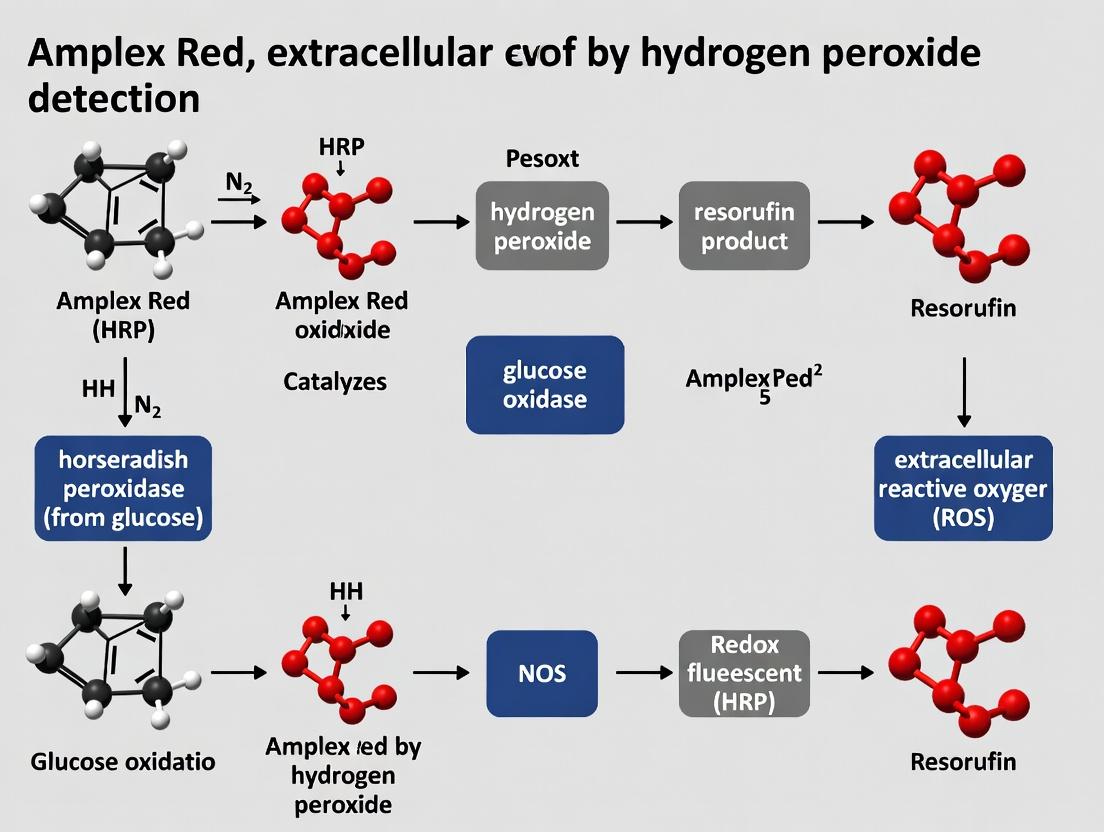
This article provides a complete guide to the Amplex Red/horseradish peroxidase (HRP) assay for detecting and quantifying extracellular hydrogen peroxide (H₂O₂).
Detecting Extracellular Hydrogen Peroxide: A Comprehensive Guide to the Amplex Red Assay Protocol
Abstract
This article provides a complete guide to the Amplex Red/horseradish peroxidase (HRP) assay for detecting and quantifying extracellular hydrogen peroxide (H₂O₂). Designed for researchers, scientists, and drug development professionals, it covers the fundamental principles of the assay, a detailed step-by-step protocol for applications in cell culture and drug screening, common troubleshooting and optimization strategies, and a critical comparison with alternative H₂O₂ detection methods. The goal is to equip users with the knowledge to implement this sensitive and versatile assay reliably in biomedical research.
Understanding the Amplex Red Assay: Principles, Components, and Significance in Redox Biology
Extracellular hydrogen peroxide (H₂O₂) is now recognized as a key redox signaling molecule, mediating critical processes in physiology and pathology. Its controlled production by membrane-bound NADPH oxidases (NOX enzymes) and diffusion across membranes allows it to modulate a wide array of cellular functions, including proliferation, differentiation, migration, and immune response. Dysregulated H₂O₂ signaling is implicated in cancer, neurodegenerative diseases, and cardiovascular disorders. Accurate detection and quantification of extracellular H₂O₂, therefore, are fundamental for advancing therapeutic interventions. This application note, framed within a thesis on the Amplex Red assay protocol, details the methodologies and considerations for studying this pivotal signaling molecule.
Research Reagent Solutions Toolkit
| Item | Function/Explanation |
|---|---|
| Amplex Red (10-Acetyl-3,7-dihydroxyphenoxazine) | A colorless, non-fluorescent probe that reacts with H₂O₂ in a 1:1 stoichiometry, catalyzed by horseradish peroxidase (HRP), to produce highly fluorescent resorufin (λex/λem ~571/585 nm). |
| Horseradish Peroxidase (HRP) | Enzyme catalyst for the Amplex Red reaction. Essential for signal generation. Typically used at 0.1-1 U/mL. |
| Recombinant NADPH Oxidase (NOX) Enzymes/Activators | e.g., PMA (phorbol myristate acetate) for NOX2 activation. Used to stimulate controlled, physiological H₂O₂ production in cellular models. |
| Catalase | H₂O₂-scavenging enzyme. Serves as a critical negative control to confirm signal specificity. |
| Extracellular Superoxide Dismutase (SOD) | Converts superoxide (O₂•⁻) to H₂O₂. Used to measure total extracellular superoxide flux via H₂O₂ detection. |
| H₂O₂ Standard Solution | High-purity, standardized stock for generating calibration curves. Essential for absolute quantification. |
| Phenol Red-free, Serum-free Cell Culture Medium | Standard cell culture media contain phenol red (a pH indicator) and serum antioxidants (e.g., catalase), which can interfere with the assay. |
| Multi-mode Microplate Reader | Equipment capable of fluorescence measurement (fluorescence intensity or TRF) in a 96- or 384-well format, ideally with temperature control. |
Key Quantitative Data on Extracellular H₂O₂ Signaling
Table 1: Sources and Physiological Concentrations of Extracellular H₂O₂
| Source | Primary Enzyme/Process | Estimated [H₂O₂] (nM) | Key Target/Pathway |
|---|---|---|---|
| Immune Activation (Macrophages) | NOX2 (phagocytic oxidase) | 100 - 10,000 | Bacterial killing, NF-κB signaling |
| Growth Factor Stimulation (e.g., PDGF, EGF) | NOX4, DUOX1/2 | 10 - 1,000 | Receptor tyrosine kinase inhibition via PTP oxidation, PI3K/Akt |
| Vascular Tone Regulation (Endothelial cells) | eNOS uncoupling, NOX | 100 - 500 | Soluble guanylate cyclase, Ca²⁺ signaling |
| Wound Healing & Cell Migration | NOX1, NOX4 | 50 - 2,000 | Src kinase, MAPK/ERK pathway |
Table 2: Comparison of H₂O₂ Detection Methods
| Method | Principle | Limit of Detection | Key Advantage | Key Limitation for Extracellular Use |
|---|---|---|---|---|
| Amplex Red + HRP | HRP-catalyzed oxidation to fluorescent resorufin | ~50 nM | High sensitivity, homogenous, plate-reader compatible | Susceptible to peroxidase/oxidase interferents |
| HyPer Family (Genetically Encoded) | H₂O₂-sensitive fluorescent protein (cpYFP) | ~100 nM | Subcellular targeting, real-time in vivo imaging | Requires transfection, pH-sensitive |
| Boronates (e.g., PF6-AM) | H₂O₂-specific boronate oxidation to fluorescent product | ~100 nM | Cell-permeable, can measure intra- and extracellular | Slower reaction kinetics |
| Electrochemical (e.g., H₂O₂ electrode) | Amperometric detection at electrode surface | ~10 nM | Real-time, continuous measurement | Requires calibration, can be fouled by proteins |
Detailed Experimental Protocols
Protocol 4.1: Basic Amplex Red Assay for Extracellular H₂O₂ Quantification
Objective: To quantify real-time production of extracellular H₂O₂ from adherent cells in culture. Materials: Amplex Red reagent (Thermo Fisher, A12222), Horseradish Peroxidase (HRP), 1X Hanks' Balanced Salt Solution (HBSS, phenol red-free, Ca²⁺/Mg²⁺-containing), H₂O₂ standard (30% w/w), cell culture plate (96-well, clear bottom, black-walled), fluorescence microplate reader.
Procedure:
- Solution Preparation:
- Prepare 50 µM Amplex Red / 0.1 U/mL HRP working solution in pre-warmed (37°C) HBSS. Protect from light. Prepare fresh daily.
- Prepare a standard curve of H₂O₂ in HBSS (e.g., 0, 100, 250, 500, 750, 1000, 1500 nM) from a freshly diluted 10 µM stock.
- Cell Preparation:
- Plate cells in 96-well plate at desired density (e.g., 2x10⁴ cells/well for many lines). Grow to ~80% confluence.
- On day of experiment, gently wash cells 2x with warm HBSS.
- Assay Execution:
- Add 100 µL of Amplex Red/HRP working solution to each sample well and to H₂O₂ standard wells.
- Immediately place plate in pre-warmed (37°C) microplate reader.
- Measure fluorescence (Ex/Em = 530-560/580-600 nm, e.g., 571/585 nm) kinetically every 1-5 minutes for 30-120 minutes.
- Data Analysis:
- Subtract the fluorescence of a "no-cells" blank from all readings.
- Generate a standard curve from the endpoint (or initial rate) readings of the H₂O₂ standards.
- Calculate the H₂O₂ concentration in sample wells from the standard curve linear regression. Express as nmol/min/10⁶ cells or cumulative nM produced.
Protocol 4.2: Protocol for Differentiating H₂O₂ from Superoxide in NOX Activity Assays
Objective: To specifically attribute the Amplex Red signal to H₂O₂ and assess the contribution of superoxide dismutase (SOD)-convertible superoxide. Materials: All materials from Protocol 4.1 plus: Polyethylene glycol-conjugated Superoxide Dismutase (PEG-SOD, 100 U/mL stock), PEG-Catalase (500 U/mL stock), NOX activator (e.g., 100 nM PMA).
Procedure:
- Set up four treatment conditions per cell type/condition in triplicate:
- Condition A: Amplex Red/HRP + vehicle.
- Condition B: Amplex Red/HRP + NOX activator (e.g., PMA).
- Condition C: Amplex Red/HRP + NOX activator + PEG-Catalase (250 U/mL final).
- Condition D: Amplex Red/HRP + NOX activator + PEG-SOD (50 U/mL final).
- Perform assay as in Protocol 4.1, adding inhibitors/activators simultaneously with the Amplex Red/HRP working solution.
- Interpretation:
- Signal in (C) (Catalase) confirms the signal is H₂O₂-specific.
- An increase in signal in (D) (SOD) over (B) indicates concurrent release of superoxide, which is converted to H₂O₂ by added SOD. The difference represents the superoxide flux.
- True H₂O₂ release = Signal (B) - Signal (C).
- Total extracellular ROS flux (as H₂O₂) = Signal (D) - Signal (C).
Visualizations
Title: Extracellular H₂O₂ Signaling Pathways
Title: Amplex Red Experimental Workflow & Controls
Title: Amplex Red Reaction Mechanism
Within the broader thesis on extracellular hydrogen peroxide (H₂O₂) detection, the Amplex Red/HRP assay is a cornerstone methodology. It provides a highly sensitive, fluorometric means to quantify H₂O₂ released from cellular systems, a critical reactive oxygen species (ROS) involved in cell signaling, oxidative stress, and drug mechanisms. Understanding the precise core chemistry is fundamental for experimental design, data interpretation, and troubleshooting in pharmacological and biochemical research.
Core Reaction Mechanism
The assay is a coupled enzymatic reaction. In the presence of horseradish peroxidase (HRP), H₂O₂ oxidizes the non-fluorescent probe Amplex Red (10-acetyl-3,7-dihydroxyphenoxazine) in a 1:1 stoichiometry. This oxidation yields the brightly fluorescent product resorufin (excitation/emission maxima ~571/585 nm), along with a molecule of water.
Critical Chemical Pathway:
Title: Core Reaction of Amplex Red to Resorufin
Key Research Reagent Solutions & Materials
Table 1: Essential Components of the Amplex Red Assay
| Reagent/Material | Function & Critical Notes |
|---|---|
| Amplex Red Reagent | The substrate (10-acetyl-3,7-dihydroxyphenoxazine). Typically prepared as a DMSO stock solution (e.g., 10-20 mM), stored desiccated at ≤ -20°C, protected from light. |
| Horseradish Peroxidase (HRP) | The catalyst. Supplied as a lyophilized powder. A working stock (e.g., 100 U/mL) is prepared in reaction buffer. Enzyme activity is critical for assay sensitivity. |
| Reaction Buffer | Typically a non-reactive buffer (e.g., Krebs-Ringer phosphate, HEPES, or PBS, pH 7.4). Must be free of azide, thiols, or other peroxidase inhibitors. |
| Hydrogen Peroxide Standard | A freshly diluted standard (e.g., from a 30% stock) is essential for generating a calibration curve to quantify unknown H₂O₂ concentrations. |
| Microplate Reader | A fluorescence plate reader capable of detecting excitation/emission at ~571/585 nm (or using a Cy3/TRITC filter set). |
| 96- or 384-well Microplates | Black plates with clear bottoms are optimal to minimize crosstalk and allow for possible cell imaging. |
| Catalase (Optional Control) | Enzyme that specifically scavenges H₂O₂. Used as a negative control to confirm signal specificity. |
Detailed Protocol for Extracellular H₂O₂ Detection
Reagent Preparation
- Amplex Red Stock Solution: Dissolve in anhydrous DMSO to a final concentration of 10 mM. Aliquot and store at ≤ -20°C, protected from light and moisture. Thaw and use on the same day.
- HRP Stock Solution: Prepare in reaction buffer to a concentration of 100 U/mL. Aliquot and store at 4°C for short-term use (weeks) or at -20°C for longer storage.
- 1X Reaction Working Solution: Prepare fresh for each experiment. Combine in a tube protected from light:
- Reaction Buffer: to final volume.
- Amplex Red: 50-100 µM final concentration.
- HRP: 0.1-0.2 U/mL final concentration.
- Note: Optimize concentrations for your specific system.
Standard Curve Generation
- Prepare serial dilutions of H₂O₂ in your reaction buffer (e.g., from 0 to 20 µM). Prepare fresh from a commercial 30% stock, whose concentration must be verified spectrophotometrically (ε₂₄₀ = 43.6 M⁻¹cm⁻¹).
- In a microplate, add 50 µL of each H₂O₂ standard to wells in triplicate.
- Add 50 µL of the 1X Reaction Working Solution to each well. Mix gently.
- Incubate at 37°C (or desired temperature) for 30 minutes, protected from light.
- Measure fluorescence (Ex/Em ~571/585 nm).
Table 2: Example H₂O₂ Standard Curve Data
| H₂O₂ Standard (µM) | Mean Fluorescence (RFU) | Standard Deviation (RFU) |
|---|---|---|
| 0.0 | 450 | 25 |
| 0.5 | 1250 | 80 |
| 1.0 | 2050 | 110 |
| 2.5 | 4800 | 250 |
| 5.0 | 9500 | 400 |
| 10.0 | 18500 | 750 |
Sample Measurement (Cell-Based)
Title: Workflow for Cell-Based H₂O₂ Detection
- Seed cells in a black-walled, clear-bottom 96-well plate and culture to desired confluence.
- Carefully remove the culture medium and wash cells gently with warm reaction buffer.
- Add reaction buffer alone (for background) or containing your experimental treatments to appropriate wells.
- Prepare the 1X Reaction Working Solution (Section 4.1).
- Add an equal volume of Working Solution directly to each well containing buffer/treatment. Final volume typically 100 µL/well.
- Incubate plate at 37°C (or appropriate temp) for 30-60 minutes, protected from light.
- Measure fluorescence. Include standard curve wells on the same plate.
- Subtract the mean fluorescence of no-enzyme or catalase-treated controls from all values.
- Interpolate sample fluorescence values against the H₂O₂ standard curve to calculate extracellular H₂O₂ concentration.
Critical Validation & Control Experiments
Table 3: Essential Control Experiments
| Control Type | Purpose & Protocol | Expected Outcome |
|---|---|---|
| No-Enzyme Control | Omit HRP from the Working Solution. | Confirms reaction is HRP-dependent. Fluorescence should be near background. |
| Catalase Control | Pre-incubate sample with catalase (e.g., 100 U/mL) for 10 min before adding Working Solution. | Confirms signal specificity for H₂O₂. Catalase degrades H₂O₂, drastically reducing signal. |
| No-Cell/Blank Control | Wells with buffer only + Working Solution. | Measures background fluorescence of reagents. |
| Standard Curve | As in Section 4.2. | Essential for quantification. Linear range typically 0.1-10 µM. R² > 0.99 is ideal. |
Title: Signal Deconvolution via Control Experiments
This application note is situated within a broader thesis research project focused on the quantitative detection of extracellular hydrogen peroxide (H₂O₂) using the Amplex Red/Peroxidase assay. The accurate measurement of H₂O₂, a key reactive oxygen species (ROS) involved in cellular signaling and oxidative stress, is critical for studies in redox biology, pharmacology, and drug development. The reliability of this assay is fundamentally dependent on the precise understanding and application of its core reagents: the fluorogenic probe Amplex Red, the enzyme Horseradish Peroxidase (HRP), and the supporting buffer systems.
Core Reagent Functions and Properties
Amplex Red (10-Acetyl-3,7-dihydroxyphenoxazine)
Amplex Red is a non-fluorescent, colorless probe that serves as the electron donor in the peroxidase-catalyzed reaction. In the presence of H₂O₂ and HRP, it is oxidized to resorufin, a highly fluorescent product (excitation/emission maxima ~571/585 nm). Its specificity for H₂O₂ over other ROS (e.g., superoxide, nitric oxide) makes it ideal for extracellular detection, though interference from cellular reductants must be controlled.
Horseradish Peroxidase (HRP)
HRP (EC 1.11.1.7) is a heme-containing oxidoreductase that catalyzes the reduction of H₂O₂ to water, simultaneously oxidizing Amplex Red. Its high catalytic turnover rate (k~10⁷ M⁻¹s⁻¹) and stability make it the enzyme of choice. Critical factors include specific activity (typically >250 U/mg), purity (absence of catalase and other contaminating enzymes), and the absence of sodium azide (a common preservative that can scavenge ROS) in assay buffers.
Critical Buffer Components
The buffer system maintains optimal pH and ionic strength, prevents non-specific interferences, and stabilizes the enzymes and reaction products.
Table 1: Critical Buffer Components and Their Roles
| Component | Typical Concentration | Role & Critical Considerations |
|---|---|---|
| Phosphate Buffered Saline (PBS) or HEPES | 20-50 mM, pH 7.4 | Maintains physiological pH. HEPES offers better pH stability over long assays. |
| HRP (Type II) | 0.1-0.2 U/mL final assay | Catalyzes the key reaction. Concentration must be optimized to ensure linear kinetics. |
| Amplex Red | 50-100 µM final assay | Probe concentration must be in excess to [H₂O₂] for stoichiometric conversion. |
| EDTA or DTPA | 100-500 µM | Chelates trace metal ions (Fe²⁺, Cu²⁺) that catalyze Fenton reactions and decompose H₂O₂. |
| Superoxide Dismutase (SOD) | 50-100 U/mL | Added to specifically scavenge superoxide (O₂⁻) which can indirectly produce H₂O₂, confounding results. |
| Catalase (for negative controls) | 1000 U/mL | Used to confirm H₂O₂-specific signal by its enzymatic degradation. |
Table 2: Representative Quantitative Parameters for the Amplex Red/HRP Assay
| Parameter | Value / Range | Notes |
|---|---|---|
| Linear Detection Range | 0.1 - 10 µM H₂O₂ | Highly sensitive; suitable for low-level extracellular flux. |
| Assay pH Optimum | 7.0 - 7.5 | Mimics physiological conditions. Activity drops sharply below pH 6.5. |
| Reaction Temperature | 22-37°C | Room temp is standard; 37°C for physiological studies. |
| Incubation Time | 10 - 60 min | Time-course must be established for each cell type/treatment. |
| Limit of Detection (LOD) | ~50 nM H₂O₂ | Dependent on fluorometer sensitivity and background fluorescence. |
| Molar Extinction Coefficient of Resorufin (ε₅₇₁) | ~54,000 cm⁻¹M⁻¹ | Used for calibrating fluorescence units to concentration. |
| HRP Turnover Number (kcat) | ~4.0 x 10³ s⁻¹ | Indicates high catalytic efficiency for H₂O₂ reduction. |
Detailed Experimental Protocol for Extracellular H₂O₂ Detection
Reagent Preparation
- Assay Buffer (10 mL, pH 7.4): 20 mM HEPES-NaOH, 140 mM NaCl, 2.7 mM KCl, 1 mM MgCl₂, 100 µM diethylenetriaminepentaacetic acid (DTPA), 50 U/mL Superoxide Dismutase (SOD). Filter sterilize (0.2 µm) and store at 4°C for up to 2 weeks.
- 10 mM Amplex Red Stock: Dissolve 5.0 mg Amplex Red (MW ~257.3) in 1.94 mL of high-purity, anhydrous DMSO. Aliquot, shield from light, and store at -20°C for up to 6 months. Avoid freeze-thaw cycles.
- HRP Stock Solution: Prepare a 100 U/mL stock in assay buffer. Aliquot and store at -20°C. Thaw on ice before use.
- H₂O₂ Standard Curve Stock: Dilute a certified 30% H₂O₂ stock in assay buffer daily. Determine exact concentration via absorbance at 240 nm (ε₂₄₀ = 43.6 M⁻¹cm⁻¹). Prepare a 100 µM working stock and serially dilute for standards (0, 0.5, 1, 2, 5, 10 µM).
Cell-Based Assay Workflow for 96-Well Plate
Day 1: Seed cells at optimal density in a black-walled, clear-bottom 96-well plate. Culture for 24-48 hours to reach desired confluence. Day 2 (Assay Day):
- Gently wash cells 2x with warm, phenol-red free culture medium or directly with pre-warmed Assay Buffer.
- Prepare Reaction Master Mix: For 1 mL (10 wells x 100 µL/well): 894 µL Assay Buffer + 5 µL 10 mM Amplex Red (50 µM final) + 1 µL 100 U/mL HRP (0.1 U/mL final). Keep on ice, protected from light.
- Set up Plate:
- Column 1 & 2: Standard Curve. Add 100 µL of each H₂O₂ standard (0-10 µM) to wells containing 100 µL Assay Buffer (no cells).
- Column 3-10: Sample Wells. Aspirate buffer from cell wells. Add 100 µL of Master Mix per well. For negative controls, include wells with: a) cells + Master Mix + Catalase (1000 U/mL), b) Master Mix only (no cells, blank).
- Kinetic Measurement: Immediately place plate in a pre-warmed (37°C) fluorescence microplate reader. Measure fluorescence (Ex/Em = 530-560/580-600 nm, e.g., 571/585 nm) every 2-5 minutes for 30-60 minutes.
- Termination: After final read, add 20 µL of Catalase (1000 U/mL) to all sample wells to stop the reaction and confirm H₂O₂ specificity.
Data Analysis
- Subtract the average fluorescence of the "no-cell" blank from all values.
- Generate a standard curve by plotting the final fluorescence of H₂O₂ standards (after 30 min) vs. concentration (µM). Apply linear regression (R² > 0.98 is desirable).
- For sample wells, select fluorescence values from the linear phase of the kinetic curve (typically 10-30 minutes). Use the standard curve equation to convert sample RFU to extracellular H₂O₂ concentration (µM).
- Normalize data to cell number (e.g., via post-assay DNA quantification) or protein content as required.
The Scientist's Toolkit: Essential Research Reagent Solutions
Table 3: Essential Materials for Amplex Red-Based H₂O₂ Detection
| Item | Function & Rationale |
|---|---|
| Black-walled, clear-bottom microplate | Minimizes optical crosstalk; allows fluorescence bottom-reading and optional cell visualization. |
| Fluorescence microplate reader | Equipped with filters/optics for ~571/585 nm. Temperature control and kinetic capability are essential. |
| Cell-permeable H₂O₂ probes (e.g., CM-H2DCFDA) | For complementary intracellular ROS detection. Amplex Red is largely extracellular. |
| Catalase from bovine liver | Critical negative control enzyme. Confirms signal is H₂O₂-derived. |
| Superoxide Dismutase (SOD) | Scavenges superoxide, preventing its dismutation to H₂O₂ and ensuring assay specificity for direct H₂O₂ release. |
| Metal Chelators (DTPA/EDTA) | Suppresses non-enzymatic H₂O₂ decomposition and ROS generation via Fenton chemistry. DTPA has higher affinity for relevant metals. |
| Anhydrous, high-purity DMSO | For stable, long-term Amplex Red stock solution preparation. Prevents probe hydrolysis. |
| Validated H₂O₂ standard solution | Essential for daily standard curve. Certified ampoules or spectrophotometrically verified dilutions ensure accuracy. |
| Phenol-red free, serum-free medium/ buffer | Serum contains antioxidants (e.g., catalase, albumin); phenol red interferes with fluorescence. |
Signaling and Experimental Workflow Diagrams
Title: Amplex Red/HRP H₂O₂ Detection Reaction Mechanism
Title: Workflow for Extracellular H₂O₂ Detection Assay
Title: H₂O₂ Generation, Detection, and Control Pathways
Advantages and Primary Applications in Cell-Based and Cell-Free Systems
Within the broader thesis on optimizing the Amplex Red assay for extracellular hydrogen peroxide (H₂O₂) detection, a fundamental choice governs experimental design: the use of cell-based versus cell-free systems. Each paradigm offers distinct advantages and is suited to specific applications in mechanistic research and drug screening. The Amplex Red protocol, relying on horseradish peroxidase (HRP)-catalyzed oxidation to fluorescent resorufin, serves as a critical readout in both contexts, measuring H₂O₂ produced by cellular enzymes (e.g., NADPH oxidases) or generated in defined biochemical reactions.
Comparative Advantages: Cell-Based vs. Cell-Free Systems
Cell-Based Systems provide a physiologically relevant environment, capturing the complexity of intact cellular machinery, signaling networks, and compartmentalization. Cell-Free Systems (including purified protein assays and expression lysates) offer unparalleled control over reaction components, reducing complexity to isolate specific biochemical pathways.
Table 1: Comparative Advantages of Cell-Based and Cell-Free Systems for H₂O₂ Research
| Aspect | Cell-Based Systems | Cell-Free Systems |
|---|---|---|
| Physiological Relevance | High; intact membranes, organellar compartments, native enzyme complexes. | Low to Moderate; defined biochemical mimicry without full cellular architecture. |
| Experimental Control & Complexity | High complexity; many concurrent processes. Difficult to isolate single variables. | High control; precise component concentrations. Minimal confounding variables. |
| Throughput & Scalability | Moderate; constrained by cell culture logistics, viability, and growth rates. | High; rapid assembly of reactions in multi-well plates, no viability concerns. |
| Cost & Technical Demand | Higher; requires sterile culture, media, and extended timelines. | Lower; utilizes purified components/lysates in single-reaction vessels. |
| Primary Application in H₂O₂ Research | Studying NADPH oxidase (NOX) activity in live cells, redox signaling, receptor-triggered ROS bursts, and antioxidant drug effects in a native context. | Kinetic characterization of ROS-generating enzymes (e.g., purified NOX, XO), screening for direct enzyme inhibitors, and calibrating the Amplex Red assay itself. |
| Compatibility with Amplex Red | Requires careful optimization of probe concentration, cell permeability considerations, and controls for background peroxidases. | Straightforward; direct addition of HRP and Amplex Red to the reaction mix, enabling precise kinetic measurements. |
Detailed Application Notes and Protocols
Application Note 1: Cell-Based System – Measuring Ligand-Induced H₂O₂ Production in Immune Cells
Objective: To quantify extracellular H₂O₂ production from macrophage NOX2 activation in response to phorbol myristate acetate (PMA) using Amplex Red.
Research Reagent Solutions & Essential Materials:
| Item | Function |
|---|---|
| Amplex Red Reagent (10-acetyl-3,7-dihydroxyphenoxazine) | Fluorogenic substrate oxidized by HRP in the presence of H₂O₂ to produce resorufin. |
| Recombinant Horseradish Peroxidase (HRP) | Enzyme that catalyzes the H₂O₂-dependent oxidation of Amplex Red. |
| Hank's Balanced Salt Solution (HBSS), phenol red-free | Physiological buffer for live-cell assays, minimizing background fluorescence. |
| Phorbol Myristate Acetate (PMA) | Potent protein kinase C activator that stimulates NOX2 complex assembly and activity. |
| Diphenyleneiodonium (DPI) chloride | Flavoprotein inhibitor; negative control to confirm NOX-derived H₂O₂ signal. |
| Catalase | H₂O₂-scavenging enzyme; negative control to confirm signal specificity. |
| Black-walled, clear-bottom 96-well microplate | Optimized for fluorescence readings while allowing microscopic observation. |
| Fluorescence plate reader | Equipped with excitation ~530-560 nm / emission ~585-590 nm filters. |
Protocol:
- Cell Preparation: Seed RAW 264.7 macrophages at 2x10⁵ cells/well in a 96-well plate. Culture overnight in complete medium.
- Assay Buffer Preparation: Prepare working solution of 50 µM Amplex Red and 0.1 U/mL HRP in warm, phenol red-free HBSS. Protect from light.
- Pre-treatment (Optional): For inhibitor studies, pre-incubate cells with 10 µM DPI or vehicle for 30 min.
- Reaction Setup: Remove cell culture medium. Wash cells once with HBSS. Add 100 µL of Amplex Red/HRP working solution per well.
- Stimulation: Add 100 µL of working solution containing 200 nM PMA (final 100 nM) or vehicle control directly to wells. Mix gently.
- Fluorescence Measurement: Immediately place plate in a pre-warmed (37°C) plate reader. Measure fluorescence (Ex/Em ~560/590 nm) kinetically every 2-5 minutes for 60-120 minutes.
- Controls: Include wells without cells (background control), with cells but no PMA (basal control), and with cells + PMA + 500 U/mL catalase (specificity control).
- Data Analysis: Subtract background fluorescence (no cells). Calculate initial rates (RFU/min) from the linear phase or total H₂O₂ produced from a standard curve.
Diagram: Cell-Based H₂O₂ Detection Workflow
Application Note 2: Cell-Free System – Kinetic Characterization of Xanthine Oxidase Activity
Objective: To determine the kinetic parameters (Vmax, Km) of xanthine oxidase (XO)-generated H₂O₂ using a purified enzyme system and Amplex Red.
Research Reagent Solutions & Essential Materials:
| Item | Function |
|---|---|
| Purified Xanthine Oxidase (XO) | Enzyme that generates H₂O₂ and uric acid from hypoxanthine/xanthine. |
| Hypoxanthine | Substrate for XO. Prepare fresh stock in dilute NaOH. |
| Allopurinol | Direct XO inhibitor; negative control. |
| Sodium Phosphate Buffer (50 mM, pH 7.4) | Optimal buffer for XO activity. |
| H₂O₂ Standard Solution | For generating a standard curve to quantify produced H₂O₂. |
Protocol:
- Reaction Setup: In a black 96-well plate, assemble 50 µL reactions containing: 50 mM phosphate buffer (pH 7.4), 50 µM Amplex Red, 0.1 U/mL HRP, and varying concentrations of hypoxanthine (e.g., 0, 10, 25, 50, 100, 250 µM).
- Background Controls: Prepare wells without hypoxanthine and wells without XO enzyme.
- Initiation: Start the reaction by adding purified XO to a final concentration of 5-10 mU/mL. Mix immediately.
- Measurement: Place plate in a plate reader at 25°C or 37°C. Record fluorescence (Ex/Em ~560/590 nm) every 30 seconds for 30 minutes.
- Standard Curve: In parallel, create an H₂O₂ standard curve (0 to 10 µM) in identical buffer with Amplex Red/HRP.
- Data Analysis: Convert initial linear fluorescence rates (RFU/min) to H₂O₂ production rates (nM/min or pmol/min) using the standard curve. Plot rate vs. [hypoxanthine] and fit data to the Michaelis-Menten equation to derive Km and Vmax.
Diagram: Cell-Free Kinetic Assay Workflow
Table 2: Primary Applications Aligned with System Advantages
| Research Goal | Recommended System | Rationale & Protocol Emphasis |
|---|---|---|
| Drug Discovery: Screening for NOX Inhibitors | Cell-Based (primary screen) → Cell-Free (mechanistic follow-up). | Primary screen identifies cell-permeable compounds affecting signaling; follow-up confirms direct enzyme inhibition. |
| Mechanistic Study of Redox Signaling Pathways | Cell-Based with genetic (siRNA/CRISPR) manipulation. | Preserves native context of protein interactions and compartmentalization crucial for signaling. |
| Biochemical Characterization of ROS-Generating Enzymes | Cell-Free (purified enzyme systems). | Enables precise control of co-factors, substrates, and pH to determine kinetic constants. |
| Assessment of Antioxidant Capacity (Small Molecules/Serum) | Cell-Free (H₂O₂-scavenging assay). | Direct measurement of scavenging ability without confounding cellular uptake or metabolism. |
| Calibration and Optimization of the Amplex Red Assay | Cell-Free (H₂O₂ standard curve generation). | Eliminates variables from cells (probe uptake, efflux, metabolism) for assay validation. |
Critical Signaling Pathway in Cell-Based Research
Diagram: Simplified NOX2 Activation & H₂O₂ Detection Pathway
Safety Considerations and Proper Handling of Reagents
Within the context of research utilizing the Amplex Red protocol for extracellular hydrogen peroxide (H₂O₂) detection, rigorous reagent safety and handling are paramount. This assay’s sensitivity and reproducibility depend on the stability of critical, often hazardous, chemicals. Proper management mitigates risks to personnel and ensures data integrity for researchers and drug development professionals.
Hazard Classification of Key Reagents
The following table summarizes the primary hazards associated with core reagents used in the Amplex Red assay protocol.
Table 1: Hazard Profile of Key Reagents for Amplex Red Assay
| Reagent | Primary Use in Assay | Hazard Classification (GHS) | Key Risks | Recommended Storage |
|---|---|---|---|---|
| Amplex Red (10-Acetyl-3,7-dihydroxyphenoxazine) | Fluorogenic substrate oxidized by HRP in presence of H₂O₂ | May cause eye irritation. Suspected of causing genetic defects. | Mutagenicity potential, irritant. | -20°C, desiccated, protected from light and moisture. |
| Horseradish Peroxidase (HRP) | Enzyme catalyst for the reaction | Non-hazardous. | Potential allergen (respiratory sensitizer). | 4°C for ready-use solutions; -20°C for long-term stock. |
| Dimethyl Sulfoxide (DMSO) | Solvent for preparing Amplex Red stock solutions | Flammable liquid and vapor. Causes serious eye irritation. | Highly hygroscopic, penetrates skin rapidly carrying dissolved compounds. | Room temperature in airtight containers, with desiccant. |
| Hydrogen Peroxide (H₂O₂) | Standard for calibration and positive control | Oxidizing liquid; may cause severe skin burns and eye damage. | Strong oxidizer, can decompose exothermically. | 4°C, in original dark bottle, away from combustibles. |
| Reaction Buffer (e.g., PBS) | Provides optimal pH and ionic strength for HRP | Non-hazardous. | None specific. | Room temperature or 4°C. |
Detailed Safety Protocols and Handling Procedures
General Laboratory Safety Principles
- Personal Protective Equipment (PPE): Wear appropriate lab coat, nitrile gloves, and safety goggles at all times. Consider face shields when handling concentrated H₂O₂.
- Engineering Controls: Use chemical fume hoods for weighing solids (especially Amplex Red powder) and preparing stock solutions in DMSO or other volatile solvents.
- Hygiene: Never eat, drink, or store food in lab areas. Wash hands thoroughly after handling reagents and before leaving the lab.
- Spill Management: Have spill kits accessible. For DMSO spills, contain and absorb. For H₂O₂ spills (>3%), dilute extensively with water.
Reagent-Specific Handling Protocols
Protocol A: Preparation of 10 mM Amplex Red Stock Solution in DMSO
Objective: To safely prepare a stable, high-concentration stock solution of the fluorogenic substrate. Materials: Amplex Red reagent (lyophilized powder), anhydrous DMSO, amber vials, chemical fume hood, PPE. Procedure:
- Perform all steps in a certified chemical fume hood.
- Equip with lab coat, gloves, and safety goggles.
- Allow the vial of Amplex Red and DMSO to equilibrate to room temperature inside the hood to prevent condensation.
- Calculate the volume of DMSO needed to achieve a 10 mM concentration based on the mass and molecular weight (Mw: 257.24 g/mol) of the provided reagent. Example: For 5 mg of Amplex Red: (5 mg / 257.24 g/mol) = 0.0194 mmol. Volume DMSO = 0.0194 mmol / 0.010 mol/L = 1.94 mL.
- Using a clean pipette, slowly add the calculated volume of anhydrous DMSO to the vial containing the Amplex Red powder.
- Cap the vial tightly and vortex gently until the powder is completely dissolved.
- Immediately aliquot the solution into small, amber vials to minimize freeze-thaw cycles and exposure to light/air.
- Label each aliquot with contents, concentration, date, and hazard warnings.
- Store at -20°C in a desiccated environment. Under these conditions, the stock is stable for approximately 6 months.
Protocol B: Preparation and Use of Hydrogen Peroxide Working Standards
Objective: To accurately and safely dilute high-concentration H₂O₂ for assay calibration. Materials: 30% (w/w) H₂O₂ stock, reaction buffer (e.g., 1X PBS, pH 7.4), PPE, face shield, ice bath. Procedure:
- Caution: Concentrated H₂O₂ (≥30%) is a strong oxidizer and corrosive. Wear gloves, goggles, and a face shield. Work on a clean, stable surface, preferably in a fume hood.
- Pre-cool the reaction buffer and a suitable container on ice. Dilution in cold buffer minimizes decomposition.
- Prepare a primary dilution (e.g., 10 mM) immediately before use. Example: To make 10 mL of 10 mM H₂O₂ from ~30% (~9.8 M) stock: C1V1 = C2V2 → (9.8 M)(V1) = (0.01 M)(0.01 L). V1 ≈ 10.2 µL.
- Using a positive-displacement pipette or a microliter syringe, carefully transfer the calculated volume of concentrated H₂O₂.
- Slowly add this volume to the pre-chilled buffer while gently swirling. Never add water or buffer to concentrated H₂O₂.
- Serially dilute this primary standard in cold buffer to create a standard curve (typically 0.1 to 100 µM for extracellular detection).
- Use working standards immediately. Discard any leftover diluted H₂O₂ on the same day.
The Scientist's Toolkit: Essential Reagent Solutions
Table 2: Essential Research Reagent Solutions for Amplex Red Assay
| Item | Function in Assay | Key Handling Note |
|---|---|---|
| Amplex Red, 10 mM in DMSO | Stable stock solution of the fluorogenic probe. | Aliquot to avoid freeze-thaw. Thaw on ice, protected from light. |
| HRP, 10 U/mL in Buffer | Working enzyme solution. Catalyzes the reaction. | Prepare fresh from lyophilized powder or glycerol stock; keep on ice during use. |
| H₂O₂ Standard Curve Set | Quantifies unknown H₂O₂ concentrations. | Prepare fresh daily from concentrated stock using cold buffer. |
| Assay Buffer (e.g., PBS, pH 7.4) | Provides physiological reaction conditions. | May include Ca²⁺/Mg²⁺ for cell-based assays. Check for HRP compatibility. |
| Cell Culture Media (Phenol Red-Free) | Matrix for extracellular H₂O₂ measurement from cells. | Phenol Red must be omitted due to fluorescence interference. |
| Reaction Stop Solution | Halts enzymatic activity at defined timepoint. | 1-10 mM Sodium Azide or 0.1 M HCl. Azide is highly toxic—handle with extreme care. |
Visualizing Key Workflows and Pathways
Amplex Red to Resorufin Reaction Pathway
Amplex Red Assay Experimental Workflow
Step-by-Step Amplex Red Protocol: From Plate Setup to Data Acquisition
Essential Equipment and Recommended Instrument Settings (Plate Reader)
Within the broader thesis investigating extracellular hydrogen peroxide (H₂O₂) dynamics using the Amplex Red assay, the precise configuration of the microplate reader is paramount. This protocol details the essential equipment and optimized settings to ensure sensitive, reproducible, and accurate quantification of H₂O₂ in cell culture supernatants and enzymatic reactions.
Essential Equipment
Microplate Reader
A fluorescence microplate reader with the following capabilities is non-negotiable:
- Detection Mode: Fluorescence (top or bottom reading).
- Light Source: Xenon arc lamp, LED, or laser-based system with stable output.
- Optical Filters or Monochromators: Must accommodate the excitation/emission maxima of resorufin (~571 nm / ~585 nm).
- Temperature Control: Maintains 37°C ± 0.5°C for kinetic assays involving live cells or enzymes.
- Atmospheric Control (Optional but Recommended): CO₂ and O₂ control for long-term live-cell assays.
- Injection System (Optional but Recommended): For initiating reactions directly in the well (e.g., adding Amplex Red/HRP mix after establishing a baseline).
Consumables and Accessories
- Microplates: Black-walled, clear-bottom, 96- or 384-well plates to minimize crosstalk and allow optical clarity.
- Plate Sealer: Adhesive optical film to prevent evaporation and contamination.
- Multichannel Pipettes and Reagent Reservoirs: For consistent reagent dispensing.
- Microcentrifuge: For sample preparation.
Recommended Instrument Settings
Optimized settings are derived from current literature and application notes for the Amplex Red assay. The table below provides a consolidated reference.
Table 1: Recommended Fluorescence Plate Reader Settings for Amplex Red Assay
| Parameter | Recommended Setting | Rationale & Notes |
|---|---|---|
| Read Mode | Fluorescence Intensity (Kinetic) | Enables real-time monitoring of H₂O₂ production. |
| Excitation Wavelength | 530 - 570 nm | Optimal peak for Amplex Red/Resorufin is ~571 nm. A range of 530-570 nm is commonly effective. |
| Emission Wavelength | 580 - 620 nm | Optimal peak for resorufin is ~585 nm. Collecting at 590±10 nm is standard. |
| Bandwidth/Cutoff | 10-15 nm (if using filters) | Balances signal intensity and specificity. |
| Gain/PMT Voltage | Adjusted to place buffer control at 5-10% of max dynamic range. | Prevents signal saturation from high [H₂O₂] samples. Must be kept constant across an experiment. |
| Read Height | Optimized for plate type (often 6-7 mm for 96-well). | Maximizes signal collection from the well bottom. |
| Integration Time | 100 - 200 ms per well | Provides a stable signal without excessive read times. |
| Number of Reads per Well | 1 | Typically sufficient. |
| Kinetic Settings | ||
| - Interval | 1 - 5 minutes | Suitable for most cell-based or enzymatic reactions. |
| - Duration | 30 - 120 minutes | Ensures sufficient data points for linear rate calculation. |
| - Orbital Shaking | 3-5 seconds before read | Ensures reagent and sample mixing, critical for consistency. |
| Temperature | 37°C (for biologics) or 25°C (enzymatic) | Maintains physiological or standard assay conditions. |
Shaking is critical to avoid concentration gradients.
Detailed Experimental Protocol: Amplex Red Assay for Extracellular H₂O₂
A. Reagent Preparation
- Amplex Red Stock Solution (10 mM): Dissolve 5 mg Amplex Red reagent (N-Acetyl-3,7-dihydroxyphenoxazine) in 1.56 mL of high-quality, anhydrous DMSO. Aliquot and store protected from light at -20°C for up to 6 months.
- Horseradish Peroxidase (HRP) Stock Solution (100 U/mL): Prepare in reaction buffer. Aliquot and store at -20°C.
- Working Solution (50 µM Amplex Red / 0.1 U/mL HRP):
- For 10 mL: Add 50 µL of 10 mM Amplex Red stock and 10 µL of 100 U/mL HRP stock to 9.94 mL of 1X Reaction Buffer.
- Protect from light and use immediately. Discard any unused solution.
- H₂O₂ Standard Curve Dilutions: Prepare a 100 µM stock from a commercial 30% H₂O₂ solution (concentration verified spectrophotometrically, A₂₄₀, ε=43.6 M⁻¹cm⁻¹). Serially dilute in assay buffer to create standards (e.g., 0, 0.5, 1, 2, 5, 10 µM).
B. Cell-Based Assay Workflow
- Cell Plating: Seed cells in a black-walled, clear-bottom 96-well plate. Include cell-free control wells for background subtraction. Culture until desired confluence (e.g., 80-90%).
- Pre-assay Wash: Gently wash adherent cells 2x with warm, phenol red-free HBSS or assay buffer.
- Reagent Addition: Add 100 µL of pre-warmed Amplex Red/HRP working solution to each well. For inhibitor studies, pre-incubate cells with inhibitor in buffer for 30 min prior to adding the working solution containing the same inhibitor concentration.
- Plate Reading: Immediately place the plate in the pre-warmed (37°C) reader. Begin the kinetic measurement using the parameters defined in Table 1.
- Data Analysis:
- Subtract the average fluorescence of the no-cell control wells from all sample readings.
- Using the H₂O₂ standard curve, convert fluorescence units (RFU) to [H₂O₂] (µM or pmol/well).
- Calculate the initial linear rate of H₂O₂ production (slope of [H₂O₂] vs. time).
Visualizing the Amplex Red Signaling Pathway and Workflow
Amplex Red H2O2 Detection Reaction Pathway
Experimental Workflow for Cell-Based H2O2 Detection
The Scientist's Toolkit: Key Research Reagent Solutions
Table 2: Essential Materials for Amplex Red H₂O₂ Detection Assays
| Item | Function & Importance in Assay |
|---|---|
| Amplex Red Reagent (10-acetyl-3,7-dihydroxyphenoxazine) | The probe itself. In the presence of HRP and H₂O₂, it is oxidized 1:1 to highly fluorescent resorufin. Light-sensitive. |
| Horseradish Peroxidase (HRP), Lyophilized Powder | The enzyme catalyst. Drives the oxidation of Amplex Red by H₂O₂. Specific activity and purity are critical for low background. |
| High-Purity, Anhydrous DMSO | For preparing stable, concentrated Amplex Red stock solutions. Must be dry to prevent probe degradation. |
| Phenol Red-Free Cell Culture Buffer (e.g., HBSS) | Assay buffer for cell-based studies. Phenol red absorbs/emits light and interferes with the fluorescent signal. |
| Recombinant Horseradish Peroxidase (rHRP) | Optional, but offers superior lot-to-lot consistency and lower background compared to plant-extracted HRP for high-sensitivity applications. |
| Validated H₂O₂ Standard (e.g., 30% stock) | Required for generating a standard curve to convert fluorescence to molar concentration. Must be verified spectrophotometrically. |
| Catalase from bovine liver | Critical negative control enzyme. Specifically degrades H₂O₂ to H₂O and O₂, confirming signal specificity. |
| Black-Walled, Clear-Bottom Microplates | Minimizes optical crosstalk between wells (black walls) while allowing clarity for bottom-reading instruments and microscopic observation if needed. |
This document constitutes Part 1 of a comprehensive protocol developed for a broader thesis investigating the Amplex Red/Peroxidase assay for the specific, sensitive detection of extracellular hydrogen peroxide (H₂O₂) in cell-based research models. The accurate quantification of extracellular H₂O₂ is critical for studies in redox biology, signal transduction, and drug development, particularly for compounds targeting oxidative stress pathways. This section details the foundational steps of reagent preparation and the systematic optimization of the working solution, which are prerequisites for obtaining reliable and reproducible data.
The Scientist's Toolkit: Essential Research Reagent Solutions
The following table lists the key reagents and materials required for the Amplex Red assay.
| Reagent/Material | Function in the Assay | Notes for Preparation & Storage |
|---|---|---|
| Amplex Red (10-Acetyl-3,7-dihydroxyphenoxazine) | Fluorogenic substrate. Reacts with H₂O₂ in a 1:1 stoichiometry, catalyzed by HRP, to form highly fluorescent resorufin (Ex/Em ~571/585 nm). | Supplied as a lyophilized solid. Prepare a high-concentration stock (e.g., 10-20 mM) in anhydrous DMSO. Aliquot and store at ≤ -20°C, protected from light and moisture. |
| Horseradish Peroxidase (HRP) | Enzyme catalyst. Dramatically accelerates the reaction between Amplex Red and H₂O₂, providing the necessary sensitivity for physiological H₂O₂ levels. | Supplied as a lyophilized powder. Reconstitute in ultrapure water or recommended buffer to make a concentrated stock (e.g., 100-200 U/mL). Aliquot and store at ≤ -20°C. |
| H₂O₂ Standard Solution | Calibration standard. Used to generate a standard curve for quantifying unknown H₂O₂ concentrations in experimental samples. | Use a certified, stable stock (e.g., 30% w/w). Dilute freshly in the assay buffer for each experiment. Concentration must be verified spectrophotometrically (A₂₄₀, ε=43.6 M⁻¹cm⁻¹). |
| Assay Buffer (e.g., Krebs-Ringer Phosphate, KRP) | Physiological reaction medium. Must be compatible with cell health (if used with cells) and maintain HRP activity. Often contains 0.1-0.5 mM EGTA to chelate metal ions. | Pre-warm to 37°C and adjust pH to 7.4. Filter sterilize (0.22 µm). For cell-free validation experiments, a simple PBS (pH 7.4) can be used. |
| Enzyme/Substrate Working Solution | The final, optimized mixture of Amplex Red and HRP added to samples to initiate the detection reaction. | Prepared fresh by diluting DMSO and enzyme stocks into assay buffer. Final concentrations must be optimized (see Section 4). Protect from light. |
| Multi-well Plate Reader | Detection instrument. Equipped with fluorescence filters suitable for resorufin (Ex 530-570 nm / Em 580-610 nm). | Must be capable of kinetic reads at 37°C with orbital shaking for cell-based assays. |
Reagent Preparation Protocols
Preparation of Amplex Red Stock Solution (20 mM in DMSO)
- Warm a vial of anhydrous DMSO to room temperature.
- Centrifuge the vial of Amplex Red powder briefly to pellet the contents.
- Using anhydrous DMSO, reconstitute the powder to a final concentration of 20 mM.
- Vortex thoroughly for 1-2 minutes to ensure complete dissolution.
- Aliquot (e.g., 20 µL) into amber microcentrifuge tubes or tubes wrapped in aluminum foil.
- Store at ≤ -20°C in a desiccator for long-term stability (up to 6 months). Avoid repeated freeze-thaw cycles.
Preparation of Horseradish Peroxidase (HRP) Stock Solution (100 U/mL)
- Reconstitute HRP (e.g., 1,000-unit vial) in 10 mL of cold assay buffer or ultrapure water.
- Gently swirl to dissolve. Do not vortex vigorously, as this may denature the enzyme.
- Prepare smaller working aliquots (e.g., 100 µL) and store at ≤ -20°C.
- For daily use, keep an aliquot on ice.
Preparation of H₂O₂ Standard Curve Dilutions
- Determine the exact concentration of a commercial 30% H₂O₂ stock by measuring its absorbance at 240 nm in a 1 cm cuvette.
Concentration (M) = (A₂₄₀) / (43.6 M⁻¹cm⁻¹). - In a fume hood, prepare a 1 mM intermediate dilution in ice-cold assay buffer. This solution is unstable and must be prepared fresh.
- Perform serial dilutions in assay buffer to generate standard points (e.g., 0, 0.5, 1, 2, 5, 10 µM) in a final volume appropriate for your plate format.
Working Solution Optimization: Methodology and Data
The concentration of Amplex Red and HRP in the final working solution must be optimized to balance sensitivity, linearity, and cost-effectiveness, while minimizing background signal and potential cytotoxicity.
Experimental Protocol: Titration of Amplex Red Concentration
Objective: To determine the minimum Amplex Red concentration that yields maximal signal-to-noise for a given H₂O₂ concentration.
- Prepare a master mix of assay buffer containing a fixed, optimal concentration of HRP (e.g., 0.1 U/mL, based on preliminary data).
- Spike this master mix with a known, physiologically relevant concentration of H₂O₂ (e.g., 5 µM).
- Prepare working solutions with varying Amplex Red concentrations (e.g., 1, 5, 10, 25, 50 µM) from the master mix.
- Pipette 100 µL of each working solution into multiple wells of a clear-bottom, black-walled 96-well plate.
- Immediately measure fluorescence kinetically (Ex/Em 571/585 nm) every minute for 30 minutes at 37°C.
- Calculate the Net Endpoint RFU (RFU at 30 min for H₂O₂ sample minus RFU at 30 min for a no-H₂O₂ control) for each Amplex Red concentration.
- Plot Net Endpoint RFU vs. [Amplex Red]. The optimal concentration is at the beginning of the plateau phase.
Experimental Protocol: Titration of HRP Concentration
Objective: To determine the minimum HRP concentration required for complete and rapid conversion of the Amplex Red/H₂O₂ reaction.
- Prepare a master mix of assay buffer containing the now-optimized, fixed concentration of Amplex Red.
- Spike with the same known H₂O₂ concentration (5 µM).
- Prepare working solutions with varying HRP concentrations (e.g., 0.01, 0.05, 0.1, 0.2, 0.5 U/mL).
- Repeat steps 4-6 from Section 4.1.
- Plot Net Endpoint RFU vs. [HRP]. Also, calculate the initial reaction velocity (V₀) from the linear phase of the kinetic curve for each [HRP].
- The optimal [HRP] is where V₀ plateaus, ensuring enzyme is not rate-limiting.
Table 1: Optimization of Amplex Red Concentration (Fixed [HRP] = 0.1 U/mL, [H₂O₂] = 5 µM)
| [Amplex Red] (µM) | Background RFU (No H₂O₂) | Net H₂O₂ Signal RFU | Signal-to-Background Ratio |
|---|---|---|---|
| 1 | 152 ± 12 | 1,050 ± 45 | 6.9 |
| 5 | 310 ± 25 | 4,850 ± 120 | 15.6 |
| 10 | 550 ± 40 | 9,100 ± 200 | 16.5 |
| 25 | 1,450 ± 110 | 9,450 ± 180 | 6.5 |
| 50 | 2,800 ± 150 | 9,500 ± 210 | 3.4 |
Table 2: Optimization of HRP Concentration (Fixed [Amplex Red] = 10 µM, [H₂O₂] = 5 µM)
| [HRP] (U/mL) | Initial Velocity, V₀ (RFU/min) | Time to 95% Max Signal (min) |
|---|---|---|
| 0.01 | 85 ± 10 | >30 |
| 0.05 | 405 ± 35 | 18 ± 2 |
| 0.1 | 780 ± 50 | 10 ± 1 |
| 0.2 | 795 ± 55 | 9 ± 1 |
| 0.5 | 800 ± 60 | 9 ± 1 |
Conclusion: Based on the data, the optimized working solution for subsequent experiments in this thesis uses 10 µM Amplex Red and 0.1 U/mL HRP in the chosen assay buffer. This provides an excellent signal-to-background ratio and rapid, complete reaction kinetics.
Visualizations
Diagram 1: Amplex Red to Resorufin Conversion Pathway
Diagram 2: Workflow for Working Solution Optimization
This protocol details the critical pre-analytical steps for preparing cell culture supernatants and complex biological fluids (e.g., serum, plasma, bronchoalveolar lavage fluid) for the quantification of extracellular hydrogen peroxide (H₂O₂) using the Amplex Red assay. Accurate sample preparation is paramount, as the presence of endogenous enzymes (e.g., catalase, peroxidases), proteins, and interfering substances can lead to significant signal amplification or quenching, resulting in inaccurate H₂O₂ measurements. This document is an integral part of a comprehensive thesis on optimizing the Amplex Red protocol for extracellular H₂O₂ detection in translational research and drug development.
Research Reagent Solutions & Essential Materials
| Reagent/Material | Function in Sample Preparation |
|---|---|
| 1X Dulbecco's Phosphate-Buffered Saline (DPBS), Ca²⁺/Mg²⁺-free | Used for cell washing and sample dilution to maintain physiological pH and osmolarity without interfering with Ca²⁺/Mg²⁺-sensitive pathways. |
| Protease Inhibitor Cocktail (EDTA-free) | Prevents degradation of H₂O₂-producing or -scavenging enzymes in samples during collection and storage. EDTA-free is recommended to avoid chelation of metal ions in certain assays. |
| Catalase Inhibitor (e.g., 3-Amino-1,2,4-triazole, ATZ) | Specifically inhibits endogenous catalase activity in samples, preventing loss of the target H₂O₂ signal prior to measurement. |
| Sodium Azide (NaN₃) | Inhibits microbial growth and heme-containing peroxidases that could consume H₂O₂ or react with Amplex Red. |
| Heat-Inactivated Fetal Bovine Serum (FBS) | Used as a matrix control or for spike-and-recovery experiments. Must be heat-inactivated to remove background enzymatic activity. |
| Microcentrifuge Filters (e.g., 10 kDa MWCO) | For rapid protein depletion and clarification of samples to reduce background and matrix effects. |
| Low-Protein-Binding Microcentrifuge Tubes | Minimizes adsorption of H₂O₂ and proteins to tube walls, ensuring maximum sample recovery. |
| Ice-cold Acetonitrile or Methanol | For protein precipitation in highly complex fluids like serum, facilitating removal of interfering substances. |
Detailed Sample Preparation Protocols
Protocol A: Preparation of Cell Culture Supernatants
Objective: To collect cell-conditioned medium devoid of cells and inhibitory artifacts for H₂O₂ measurement.
Methodology:
- Cell Treatment: Perform experimental treatments (e.g., drug compound, agonist/antagonist) in a culture vessel appropriate for your assay. Include vehicle controls.
- Inhibitor Addition: Prior to supernatant collection, add required inhibitors directly to the culture medium to final concentrations:
- Sodium Azide: 0.1 mM (final concentration)
- Catalase Inhibitor (ATZ): 10 mM (final concentration)
- Incubate for 5 minutes at 37°C.
- Collection: Gently pipette the conditioned medium into a pre-chilled, low-protein-binding microcentrifuge tube. Avoid disturbing the cell monolayer.
- Clarification: Centrifuge at 4°C for 10 minutes at 2,000 x g to pellet any detached cells or debris.
- Aliquoting: Immediately transfer the clarified supernatant into fresh, pre-chilled tubes. Perform Amplex Red assay promptly or flash-freeze in liquid nitrogen and store at -80°C for single-use aliquots.
Protocol B: Preparation of Biological Fluids (Serum/Plasma)
Objective: To deplete endogenous peroxidase activity and precipitate proteins that cause high background in the Amplex Red assay.
Methodology:
- Initial Handling: Thaw frozen serum/plasma samples slowly on ice. Vortex briefly to ensure homogeneity.
- Protein Precipitation:
- Mix 50 µL of biological fluid with 150 µL of ice-cold acetonitrile in a 1.5 mL tube.
- Vortex vigorously for 30 seconds.
- Incubate on ice for 10 minutes.
- Pelletization: Centrifuge at 4°C for 15 minutes at 16,000 x g.
- Supernatant Recovery: Carefully transfer the clear supernatant (avoiding the protein pellet) to a new tube.
- Neutralization & Buffer Exchange: Evaporate the acetonitrile using a vacuum concentrator (do not over-dry). Reconstitute the sample in 50 µL of 1X DPBS, pH 7.4. Vortex thoroughly.
- Optional Filtration: Pass the reconstituted sample through a 10 kDa molecular weight cut-off (MWCO) centrifugal filter at 4°C, 14,000 x g for 20 minutes. The filtrate is ready for the Amplex Red assay.
Table 1: Impact of Sample Preparation Steps on H₂O₂ Recovery from Spiked Serum.
| Preparation Method | Spiked H₂O₂ (µM) | Measured H₂O₂ (µM) Mean ± SD | % Recovery | Background Signal (RFU) |
|---|---|---|---|---|
| No Processing (Raw Serum) | 10.0 | 2.1 ± 0.5 | 21% | 1250 |
| Azide + ATZ Inhibition Only | 10.0 | 6.8 ± 1.1 | 68% | 980 |
| Protein Precipitation Only | 10.0 | 8.5 ± 0.7 | 85% | 150 |
| Inhibition + Precipitation | 10.0 | 9.7 ± 0.3 | 97% | 120 |
| Inhibition + Precipitation + Filtration | 10.0 | 9.8 ± 0.2 | 98% | 95 |
Table 2: Recommended Sample Types and Preparation Pathways.
| Sample Type | Primary Interference | Recommended Prep Protocol | Maximum Advised Dilution in Assay |
|---|---|---|---|
| Adherent Cell Supernatant | Live cells, Catalase | Protocol A (Clarification + Inhibitors) | 1:2 |
| Suspension Cell Supernatant | Catalase, Peroxidases | Protocol A with higher-speed centrifugation | 1:2 |
| Blood Serum/Plasma | Hemoglobin, Peroxidases, Albumin | Protocol B (Full) | 1:5 |
| Bronchoalveolar Lavage Fluid | Variable protein, Mucus | Protocol B (Precipitation + Filtration) | No dilution |
| Cerebrospinal Fluid | Low protein, Low activity | Protocol A (Clarification only) | No dilution |
Visualized Workflows and Pathways
Title: Sample Preparation Decision Workflow
Title: Interference Pathways and Countermeasures
Within the context of optimizing the Amplex Red protocol for extracellular hydrogen peroxide (H₂O₂) detection, selecting the appropriate measurement strategy is critical for data accuracy and biological relevance. Kinetic and endpoint assays offer distinct advantages and are chosen based on experimental goals, including the need to monitor reaction dynamics or to maximize throughput and sensitivity. This application note details the protocols, comparative data, and considerations for employing each strategy in H₂O₂ detection research.
Key Concepts and Comparative Analysis
Kinetic vs. Endpoint Measurements
Kinetic Measurements involve continuously monitoring the fluorescence signal over time. This is essential for determining initial reaction rates (V₀), which are proportional to enzyme activity or analyte concentration under defined conditions. It is ideal for time-course studies and when substrate depletion or product inhibition may occur.
Endpoint Measurements involve taking a single reading at a fixed time point after the reaction has been stopped or has reached completion. This approach maximizes signal amplitude and is suitable for high-throughput screening where simplicity and comparability across many samples are paramount.
Table 1: Comparative Analysis of Kinetic vs. Endpoint Strategies for Amplex Red H₂O₂ Detection
| Parameter | Kinetic Measurement | Endpoint Measurement |
|---|---|---|
| Data Output | Fluorescence vs. time curve (Slope = rate) | Single fluorescence value at time T |
| Key Metric | Initial velocity (V₀, RFU/min) | Total fluorescence (RFU) |
| Throughput | Lower (requires continuous monitoring) | High (parallel processing possible) |
| Information Gained | Reaction linearity, real-time dynamics | Snapshot of total product formed |
| Sensitivity | High for rate changes | High for cumulative signal |
| Reagent Stability | Critical during read period | Critical only at read point |
| Best For | Enzyme kinetics, real-time release | Screening, single time-point comparisons |
Detailed Experimental Protocols
Protocol 1: Kinetic Measurement of Extracellular H₂O₂ Using Amplex Red
Principle: Horseradish peroxidase (HRP) catalyzes the reaction of H₂O₂ with Amplex Red to generate fluorescent resorufin. The increase in fluorescence (ex/em ~560/590 nm) is monitored in real-time.
Materials (Research Reagent Solutions Toolkit):
- Amplex Red Reagent (10-acetyl-3,7-dihydroxyphenoxazine): Fluorogenic substrate, non-fluorescent until oxidized.
- Horseradish Peroxidase (HRP): Enzyme catalyst for the reaction.
- Reaction Buffer (e.g., Krebs-Ringer phosphate buffer): Physiologically relevant pH-stable environment.
- H₂O₂ Standard Solution: For generating a standard curve.
- Test Samples: Cell culture supernatants or other biological fluids.
- Fluorescence Microplate Reader with kinetic capability and temperature control.
Procedure:
- Solution Preparation: Prepare a working solution containing 50-100 µM Amplex Red and 0.1-0.2 U/mL HRP in reaction buffer. Protect from light.
- Plate Setup: In a clear-bottomed 96-well plate, add 50 µL of H₂O₂ standard (0-10 µM range) or unknown sample per well in triplicate.
- Initiate Reaction: Add 50 µL of the Amplex Red/HRP working solution to each well using a multichannel pipette. Mix gently.
- Kinetic Read: Immediately place the plate in a pre-warmed (37°C) reader. Measure fluorescence (ex 530-560 nm / em 585-590 nm) every 30-60 seconds for 15-30 minutes.
- Data Analysis: For each well, plot fluorescence vs. time. Calculate the slope (RFU/min) from the linear portion of the curve (typically the first 5-10 minutes). Generate a standard curve of slope vs. H₂O₂ concentration and interpolate unknown values.
Protocol 2: Endpoint Measurement of Extracellular H₂O₂ Using Amplex Red
Principle: The reaction is allowed to proceed for a fixed, optimized period and then stopped (or read at completion), and the total accumulated fluorescence is measured once.
Procedure:
- Solution & Plate Setup: Prepare reagents and plate as described in Protocol 1, Steps 1-3.
- Incubation: Cover the plate to protect from light and incubate at 37°C for a predetermined time (e.g., 30 minutes). This time must be established experimentally to ensure the reaction is complete or within the linear range for all expected analyte concentrations.
- Termination & Read: After incubation, the reaction can be stopped by adding 20 µL of a stop solution (e.g., 100 mM sodium azide, an HRP inhibitor) or read directly without stopping. Measure the endpoint fluorescence.
- Data Analysis: Generate a standard curve of endpoint fluorescence (RFU) vs. H₂O₂ concentration. Interpolate unknown sample values directly from this curve.
Visualization of Pathways and Workflows
Decision Workflow for Assay Type
Amplex Red H₂O₂ Detection Pathway
Comparison of Kinetic vs. Endpoint Workflows
The Scientist's Toolkit: Research Reagent Solutions
Table 2: Essential Materials for Amplex Red H₂O₂ Detection Assays
| Item | Function & Importance in Assay |
|---|---|
| Amplex Red Reagent | Core fluorogenic substrate. Specific oxidation by H₂O₂:HRP yields fluorescent resorufin. Light-sensitive. |
| Recombinant HRP | Enzyme catalyst. Must be highly active and free of contaminants that affect kinetics or background. |
| Physiological Buffer (e.g., KRP, HBSS) | Maintains pH and ionic strength relevant to the extracellular environment being studied. |
| Hydrogen Peroxide Standard | Critical for generating a daily standard curve for accurate quantification of unknowns. |
| Sodium Azide (Stop Solution) | Inhibits HRP activity instantly for precise endpoint measurements. (Caution: Toxic). |
| Fluorescent Microplate Reader | Must have appropriate filters/excitation sources (∼560/590 nm) and temperature control. |
| Low-Fluorescence Microplates | Minimize background signal, especially for low-concentration H₂O₂ detection. |
| Cell Culture Supernatant | Typical sample matrix. May require centrifugation to remove cells/debris prior to assay. |
Generating a Standard Curve and Calculating H₂O₂ Concentrations
Application Notes and Protocols for Quantifying Extracellular H₂O₂ Using Amplex Red
Within the context of a broader thesis investigating cellular redox signaling and oxidative stress in disease models, the reliable quantification of extracellular hydrogen peroxide (H₂O₂) is paramount. The Amplex Red (10-acetyl-3,7-dihydroxyphenoxazine) assay is a widely adopted, highly sensitive fluorometric method for this purpose. This protocol details the generation of a precise standard curve and the subsequent calculation of unknown H₂O₂ concentrations in biological samples, which is critical for validating drug effects on reactive oxygen species (ROS) production in drug development research.
The Scientist's Toolkit: Essential Reagents and Materials
| Item | Function in the Amplex Red Assay |
|---|---|
| Amplex Red Reagent | A non-fluorescent substrate that reacts stoichiometrically with H₂O₂ in the presence of HRP to produce fluorescent resorufin. |
| Horseradish Peroxidase (HRP) | Enzyme catalyst that drives the oxidation of Amplex Red by H₂O₂. Essential for reaction specificity and signal amplification. |
| Hydrogen Peroxide (H₂O₂) Standard | High-purity stock solution used to generate the standard curve for absolute quantification of unknowns. |
| Reaction Buffer (e.g., Krebs, PBS) | Isotonic, pH-stable buffer (typically pH 7.4) to maintain physiological conditions for extracellular measurement. |
| Microplate Reader (Fluorometric) | Instrument capable of exciting at ~560 nm and detecting emission at ~590 nm for resorufin quantification. |
| 96-well or 384-well Microplates | Assay plates, preferably black-walled and clear-bottomed to minimize cross-talk and allow for optical detection. |
| Enzymatic Inhibitors (Optional) | e.g., Catalase, a scavenger used in negative controls to confirm signal specificity to H₂O₂. |
Detailed Protocol: Generating the H₂O₂ Standard Curve
Principle: A dilution series of known H₂O₂ concentrations is reacted with the Amplex Red/HRP working solution. The resulting fluorescence intensity (RFU) is plotted against concentration to create a standard curve, from which the equation for the line of best fit is derived.
Procedure:
- Prepare Amplex Red/HRP Working Solution: Dilute Amplex Red stock (typically 10 mM in DMSO) and HRP stock (e.g., 200 U/mL) in the chosen reaction buffer to final concentrations of 50-100 µM and 0.1-0.2 U/mL, respectively. Protect from light and use promptly.
- Prepare H₂O₂ Standard Dilutions: Dilute a certified H₂O₂ stock solution (e.g., 30% w/w) in reaction buffer to create a 20 µM top standard. Perform serial dilutions to generate a standard range (e.g., 0, 0.3125, 0.625, 1.25, 2.5, 5, 10, 20 µM). Concentrations should bracket the expected H₂O₂ levels in experimental samples.
- Plate Setup and Reaction:
- In a black-walled 96-well plate, add 50 µL of each H₂O₂ standard or experimental sample (cell culture supernatant, etc.) in triplicate.
- Add 50 µL of the Amplex Red/HRP working solution to each well.
- Mix gently and incubate the plate, protected from light, at room temperature or 37°C for 30 minutes.
- Critical Control: Include a "No HRP" or "Catalase-spiked" control to account for non-enzymatic oxidation or non-H₂O₂ signals.
- Fluorescence Measurement: Read the plate using a fluorometric microplate reader with excitation at 530-560 nm and emission detection at 580-590 nm.
Data Analysis and Calculation:
- Calculate the mean RFU for each standard and blank.
- Subtract the mean blank (0 µM H₂O₂) RFU from all standard and sample RFU values.
- Plot the corrected mean RFU (y-axis) against the known H₂O₂ concentration in µM (x-axis).
- Perform linear regression analysis (y = mx + b). A robust assay yields an R² value >0.99.
- Use the regression equation to calculate the H₂O₂ concentration in unknown samples: [H₂O₂]sample = (RFUsample - b) / m.
Quantitative Data Presentation
Table 1: Representative H₂O₂ Standard Curve Data
| H₂O₂ Standard (µM) | Mean RFU (Corrected) | Standard Deviation (SD) |
|---|---|---|
| 0.00 | 0 | 0 |
| 0.3125 | 1025 | 45 |
| 0.625 | 2150 | 78 |
| 1.25 | 4350 | 120 |
| 2.5 | 8650 | 210 |
| 5.0 | 17250 | 430 |
| 10.0 | 34500 | 850 |
| 20.0 | 68900 | 1650 |
Linear Regression: y = 3445x + 25; R² = 0.9995
Table 2: Calculated H₂O₂ Concentrations in Experimental Samples
| Sample Description | Corrected RFU | Calculated [H₂O₂] (µM) | Notes |
|---|---|---|---|
| Control Supernatant | 550 | 0.152 | Baseline extracellular level |
| Drug-Treated (10 µM) | 12500 | 3.620 | Indicative of induced ROS |
| Drug + Inhibitor | 1800 | 0.515 | Confirms pathway specificity |
| Spiked Recovery (5 µM) | 17200 | 4.988 | 99.8% recovery, validates assay |
Visualization of Workflows and Pathways
Amplex Red Assay Experimental Workflow
Amplex Red Detection Chemistry
This application note expands upon a broader thesis investigating the Amplex Red/Peroxidase assay for the specific, sensitive, and quantitative detection of extracellular hydrogen peroxide (H₂O₂). The protocol is pivotal for elucidating the role of H₂O₂ as a second messenger in cellular signaling and as a damaging agent in oxidative stress, particularly in response to pharmacological agents. Its application in drug response studies enables researchers to delineate therapeutic mechanisms, identify pro-oxidant drug effects, and screen for novel antioxidant compounds.
Key Applications in Research
- Drug Mechanism Elucidation: Quantifying H₂O₂ production induced by chemotherapeutic agents (e.g., Doxorubicin), targeted therapies, or natural products.
- Oxidative Stress Profiling: Measuring the oxidative burst from immune cells, mitochondrial dysfunction, or environmental toxicant exposure.
- Antioxidant Drug Screening: Evaluating the efficacy of candidate compounds in scavenging H₂O₂ or inhibiting its cellular production.
- Receptor Signaling Studies: Assessing H₂O₂ generation downstream of receptor activation (e.g., Growth Factor Receptors, GPCRs).
Table 1: Comparative Analysis of H₂O₂ Detection Methods
| Method | Principle | Detection Limit | Linear Range | Advantages | Limitations for Extracellular H₂O₂ |
|---|---|---|---|---|---|
| Amplex Red | HRP oxidizes Amplex Red to resorufin with H₂O₂ | ~50 nM | 0.1 - 100 µM | Highly sensitive, fluorometric, continuous, adaptable to high-throughput. | Potential interference from cellular peroxidases/oxidases. |
| Ferric-Xylenol Orange (FOX) | Fe³⁺ reduction by H₂O₂, complex with XO | ~1 µM | 1 - 100 µM | Colorimetric, simple, inexpensive. | End-point only, less sensitive, affected by other oxidants. |
| Horseradish Peroxidase (HRP)-based Probes (e.g., scopoletin) | HRP-mediated oxidation of fluorescent probe | ~10 nM | 0.01 - 10 µM | Very sensitive, fluorometric. | Probe photobleaching, less stable than Amplex Red. |
| Electrochemical (Biosensor) | H₂O₂ oxidation at electrode surface | ~10 nM | 0.01 - 1000 µM | Real-time, in vivo potential, minimal sample prep. | Sensor fouling, requires specialized equipment. |
Table 2: Exemplar H₂O₂ Production Data from Drug Treatments
| Cell Line | Stimulus/Drug | Concentration | Assay | Measured [H₂O₂] (Extracellular) | Time Point | Reference Context |
|---|---|---|---|---|---|---|
| RAW 264.7 Macrophages | PMA (PKC activator) | 100 ng/mL | Amplex Red | 5.2 ± 0.8 µM | 60 min | Positive control for NADPH oxidase. |
| Cardiomyocytes (H9c2) | Doxorubicin | 1 µM | Amplex Red | 3.1 ± 0.5 µM | 120 min | Cardiotoxicity model. |
| HeLa | EGF | 100 ng/mL | Amplex Red | 0.8 ± 0.2 µM | 15 min | Receptor tyrosine kinase signaling. |
| Jurkat T-cells | -- | -- | Amplex Red | 0.05 - 0.2 µM (basal) | -- | Basal metabolic output. |
Detailed Protocol: Amplex Red Assay for Drug Response Studies
I. Reagent Preparation
- Amplex Red Stock Solution (10 mM): Dissolve 5 mg of Amplex Red (N-Acetyl-3,7-dihydroxyphenoxazine) in 1.56 mL of anhydrous DMSO. Aliquot and store at -20°C, protected from light and moisture.
- Horseradish Peroxidase (HRP) Stock Solution (200 U/mL): Dilute HRP in 1X Reaction Buffer. Prepare fresh or aliquot and store at -20°C.
- 10X Reaction Buffer: 0.5 M Potassium Phosphate, pH 7.4. Dilute to 1X for use.
- Working Solution: For 1 mL, mix 10 µL of 10 mM Amplex Red, 10 µL of 200 U/mL HRP, and 980 µL of 1X Reaction Buffer. Prepare immediately before use and shield from light.
- Drug Solutions: Prepare stocks of the drug of interest and relevant controls (e.g., N-acetylcysteine as an antioxidant control) in appropriate solvents (DMSO, PBS). Ensure final solvent concentration is ≤0.1% in the assay.
II. Cell-Based Experimental Procedure
- Cell Plating: Plate cells in a clear-bottomed, black-walled 96-well plate at optimal density (e.g., 20,000-50,000 cells/well) in full growth medium. Incubate overnight.
- Assay Setup: Wash cells twice with warm, serum-free assay buffer (e.g., HBSS, pH 7.4).
- Reaction Initiation: Add 100 µL of Amplex Red/HRP Working Solution to each well. Include critical controls:
- Negative Control: Cells + Working Solution.
- No-Cell Control: Working Solution + Buffer (background fluorescence).
- H₂O₂ Standard Curve: Working Solution + known H₂O₂ concentrations (0, 0.5, 1, 2.5, 5, 10 µM) in buffer.
- Drug-Treated Wells: Working Solution + Drug (at various concentrations).
- Measurement: Immediately place the plate in a pre-warmed (37°C) microplate reader. Measure fluorescence (Ex/Em = 530-560 / 580-610 nm, e.g., 540/590 nm) kinetically every 5 minutes for 60-120 minutes.
- Data Analysis:
- Subtract the average no-cell control fluorescence from all readings.
- Generate a standard curve (Fluorescence vs. H₂O₂ concentration) at a chosen time point (e.g., 30 min).
- Convert sample fluorescence values to H₂O₂ concentration using the standard curve equation.
- Normalize data to cell number (e.g., via post-assay protein quantification) if comparing across conditions.
The Scientist's Toolkit
Table 3: Essential Research Reagent Solutions
| Item | Function & Rationale |
|---|---|
| Amplex Red Reagent | Fluorogenic substrate. Specifically oxidized by HRP in the presence of H₂O₂ to highly fluorescent resorufin. |
| Horseradish Peroxidase (HRP) | Enzyme catalyst. Drives the specific reaction between H₂O₂ and Amplex Red, amplifying signal. |
| Cell Culture-Tested DMSO | Solvent for Amplex Red and many drug stocks. Must be high purity and sterile to avoid cellular toxicity. |
| H₂O₂ Standard Solution | Critical for generating a standard curve in each experiment to convert RFU to concentration. Must be freshly diluted. |
| Clear-Bottom Black-Wall Plates | Minimizes optical crosstalk and background fluorescence in microplate fluorometry. |
| Antioxidant Controls (e.g., Catalase, NAC) | Catalase (enzyme) or N-acetylcysteine (scavenger) confirm H₂O₂ specificity. Abolishment of signal validates the assay. |
| Serum-Free Assay Buffer | Removes serum components (e.g., catalase, peroxidases) that would interfere with the extracellular measurement. |
| Fluorometric Microplate Reader | Enables sensitive, high-throughput kinetic measurement of resorufin fluorescence. |
Visualizations
Diagram 1: H₂O₂ Detection Workflow in Drug Response
Diagram 2: Drug-Induced H₂O₂ Signaling Pathways
Amplex Red Assay Troubleshooting: Solving Common Problems and Enhancing Sensitivity
Within the context of optimizing the Amplex Red protocol for the specific and sensitive detection of extracellular hydrogen peroxide (H₂O₂) in cell culture and drug screening assays, managing background fluorescence is paramount. High background can obscure genuine H₂O₂ signals, leading to poor signal-to-noise ratios, reduced assay sensitivity, and compromised data interpretation. This document details the primary sources of elevated background in Amplex Red-based assays and provides validated protocols for their identification and minimization.
Background fluorescence in Amplex Red assays arises from both non-enzymatic and enzymatic pathways, as well as from reagent and material interference.
Non-Enzymatic Oxidation of Amplex Red
Amplex Red can be directly oxidized by compounds in the assay medium, generating the fluorescent product resorufin in the absence of H₂O₂ and horseradish peroxidase (HRP). Common oxidants include:
- Reactive Oxygen/Nitrogen Species: Superoxide (O₂⁻), peroxynitrite (ONOO⁻), and certain redox-active metal ions.
- Cytochromes: Released from damaged cells, particularly in protocols involving cell lysis or permeabilization.
- Light Exposure: Prolonged exposure to ambient light can photo-oxidize Amplex Red.
Enzyme-Mediated Background
- Peroxidase Contamination: Endogenous peroxidases present in serum supplements (e.g., bovine serum) or within certain cell types (e.g., macrophages, some plant cells) can catalyze Amplex Red oxidation.
- Other Oxidoreductases: Cellular reductases can inadvertently reduce resorufin back to non-fluorescent Amplex Red or reduce intermediates, complicating kinetic readings.
Reagent and Material Impurities
- HRP Preparation: Commercial HRP may contain trace contaminating activities.
- Amplex Red Stability: Degraded or impure Amplex Red reagent increases background.
- Labware & Media Components: Phenol red in culture media, plasticizers leaching from low-quality microplates, and contaminants in buffers (e.g., amine-containing compounds like Tris) can contribute.
Cellular Autofluorescence
Certain cell types, treatments (e.g., with fluorescent drugs), or culture conditions exhibit intrinsic fluorescence at wavelengths overlapping with resorufin (Ex/Em ~571/585 nm).
The following table summarizes the relative contribution of key background sources and the expected improvement from mitigation strategies, based on recent literature and experimental validation.
Table 1: Impact and Mitigation of Background Fluorescence Sources in Amplex Red Assays
| Source Category | Specific Source | Approx. Background Increase (vs. Baseline) | Primary Mitigation Strategy | Expected Reduction |
|---|---|---|---|---|
| Reagent/Media | Phenol red in culture media | 40-60% | Use phenol red-free media or establish baseline correction | >90% of media contribution |
| Reagent/Media | Non-enzymatic oxidation by trace metals | 20-30% | Add metal chelators (e.g., 10 µM DTPA) | 70-80% |
| Enzymatic | Serum peroxidases (e.g., in FBS) | 100-300% | Use heat-inactivated serum or serum-free conditions | 95-99% |
| Methodological | Photo-oxidation during handling | 15-25% | Perform all reagent prep and assay steps in minimal light | >80% |
| Material | Autofluorescence of plasticware | 10-20% | Use black-walled, clear-bottom plates designed for fluorescence | ~100% of plate contribution |
| Cellular | Cell autofluorescence (specific lines) | Variable (5-50%) | Use a cell-free control well for each condition; spectral unmixing if severe | Context-dependent |
Experimental Protocols for Identification and Minimization
Objective: To diagnose the primary contributor(s) to high background in a specific experimental setup. Materials: See "The Scientist's Toolkit" below. Workflow:
- Prepare a 96-well plate with the following control conditions in triplicate:
- A1-A3: Complete System: Cells, full assay buffer (with HRP, Amplex Red), stimulus.
- B1-B3: No-Cell Control: Full assay buffer only (identifies background from reagents/media).
- C1-C3: No-HRP Control: Cells, assay buffer without HRP (identifies non-HRP enzymatic/oxidative background).
- D1-D3: No-Amplex Red Control: Cells, buffer with HRP only (identifies cellular autofluorescence).
- E1-E3: No-Stimulus Control: Cells, full assay buffer only (baseline H₂O₂ production).
- Incubate at 37°C for the standard assay duration (e.g., 30-60 min).
- Measure fluorescence (Ex/Em 530-570/580-620 nm).
- Analyze Data: Subtract the average fluorescence of the No-Amplex Red Control (D) from all other wells to correct for autofluorescence. Compare the corrected signals of No-Cell (B) and No-HRP (C) controls to the Complete System (A) to quantify reagent vs. cellular/enzymatic background.
Diagram Title: Workflow for Diagnosing Fluorescence Background Sources
Protocol 4.2: Optimized Amplex Red Assay Protocol for Low Background
Objective: To measure extracellular H₂O₂ with minimal background interference. Reagent Preparation:
- 10x Assay Buffer (low autofluorescence): 250 mM sodium phosphate pH 7.4, 1.4 M NaCl, 50 mM KCl, 50 µM DTPA (diethylenetriaminepentaacetic acid). Filter through 0.2 µm. DTPA chelates trace metal catalysts.
- HRP Stock: Prepare a 100 U/mL stock in 1x Assay Buffer. Aliquot and store at -20°C.
- Amplex Red Stock: Prepare a 10 mM stock in anhydrous DMSO. Aliquot under inert gas (N₂/Ar) into single-use vials, store desiccated at -20°C, protected from light. Prevents oxidation by moisture/air.
- Working Solution: Prepare fresh for each assay. For 1 mL: 889 µL 1x Assay Buffer (phenol red-free) + 100 µL Amplex Red stock + 10 µL HRP stock → final 1 mM Amplex Red, 1 U/mL HRP. Keep on ice in the dark.
Assay Procedure:
- Cell Preparation: Plate cells in a black-walled, clear-bottom 96-well plate in phenol red-free culture medium. For adherent cells, wash 2x with warm, phenol red-free HBSS or assay buffer before assay.
- Background Controls: Include wells for: a) No-cell control (working solution only), b) No-HRP control (Amplex Red only in buffer), c) No-stimulus control (cells + working solution).
- Reagent Addition: Remove culture medium, gently add 100 µL/well of pre-warmed (37°C) Working Solution. For drug studies, pre-incubate cells with compounds as required.
- Incubation & Measurement: Immediately place plate in a pre-warmed (37°C) fluorescence microplate reader. Measure kinetics (e.g., every 5 min for 60 min) with appropriate filters (Ex 530-570 nm / Em 580-620 nm). Keep plate in the dark between reads.
- Data Analysis: Subtract the average fluorescence of the No-cell control from all sample wells. Express data as fluorescence units over time or calculate H₂O₂ production rate using a standard curve (0-5 µM H₂O₂) run on the same plate.
Diagram Title: Amplex Red Reaction & Background Pathways
The Scientist's Toolkit: Key Research Reagent Solutions
Table 2: Essential Materials for Low-Background Amplex Red Assays
| Item | Function & Rationale | Recommended Example/Brand |
|---|---|---|
| Amplex Red Ultrapure | High-purity, stabilized reagent to minimize non-specific oxidation. | Thermo Fisher Scientific A36006 |
| Horseradish Peroxidase (HRP), High Purity | Lyophilized, low-activity contaminant preparation. | Sigma-Aldrich P8375 |
| Phenol Red-Free Cell Culture Medium | Eliminates spectral interference from phenol red dye. | Gibco 21063-029 |
| Black-walled, Clear-bottom Microplates | Maximizes signal capture, minimizes cross-talk and plate autofluorescence. | Corning 3603 |
| Metal Chelator | Inhibits metal-catalyzed oxidation of Amplex Red. | Diethylenetriaminepentaacetic acid (DTPA), Sigma 32318 |
| Heat-Inactivated Fetal Bovine Serum (HI-FBS) | Inactivates endogenous peroxidases present in serum. | Standard protocol: 56°C for 30 min. |
| Anhydrous DMSO | For stable Amplex Red stock preparation; prevents hydrolysis. | Sigma-Aldrich 276855 |
| Sodium Phosphatase Buffer | Non-amine buffer (avoids interference) for pH stabilization. | Prepare from Na₂HPO₄/NaH₂PO₄. |
Within the context of the Amplex Red protocol for extracellular hydrogen peroxide (H₂O₂) detection, obtaining a low or absent fluorescent signal is a common challenge that can invalidate experimental results. This issue often stems from problems related to Horseradish Peroxidase (HRP) enzyme activity, the presence of inhibitors, or suboptimal reaction kinetics. This document provides application notes and protocols to systematically diagnose and resolve these issues, ensuring robust and reliable H₂O₂ quantification.
The Scientist's Toolkit: Key Research Reagent Solutions
| Reagent/Material | Function in Amplex Red Assay |
|---|---|
| Amplex Red (10-Acetyl-3,7-dihydroxyphenoxazine) | Fluorescent probe. Reacts with H₂O₂ in a 1:1 stoichiometry, catalyzed by HRP, to form resorufin. |
| Horseradish Peroxidase (HRP) | Catalyst enzyme. Essential for the oxidation of Amplex Red by H₂O₂. Specific activity is critical. |
| Hydrogen Peroxide (H₂O₂) Standard | Positive control. Validates the entire assay system (enzyme, probe, detection instrument). |
| Catalase | Negative control enzyme. Confirms specificity by scavenging H₂O₂, leading to signal loss. |
| Sodium Azide (NaN₃) or 3-Amino-1,2,4-triazole (3-AT) | Known HRP inhibitors. Used as control inhibitors to test system sensitivity. |
| Reaction Buffer (e.g., Krebs, PBS, pH 7.4) | Provides optimal ionic and pH environment for HRP activity. Chelators (e.g., EDTA) may be included. |
| Resorufin Standard | Direct fluorescent standard. Used to generate a standard curve independent of the enzymatic reaction. |
| Fluorescence Microplate Reader | Detection instrument. Typically with excitation/emission filters of ~560/590 nm. |
Diagnostic Protocol: Identifying the Source of Low/No Signal
Objective: To systematically identify whether low signal originates from compromised HRP, inhibitory substances, or kinetic limitations.
Workflow Summary:
Diagram Title: Diagnostic Workflow for Signal Failure
Protocol 3.1: Direct HRP Activity Test
- Purpose: Verify the intrinsic activity of the HRP stock.
- Procedure:
- Prepare a fresh control reaction in a microplate well: 50 µL of 1X reaction buffer, 50 µL of 100 µM Amplex Red, 50 µL of 100 µM H₂O₂.
- Initiate the reaction by adding 50 µL of HRP stock solution (diluted to 0.1-1.0 U/mL final concentration in the well).
- Immediately measure fluorescence (Ex/Em ~560/590 nm) kinetically for 10-30 minutes.
- Interpretation: A rapid, linear increase in fluorescence confirms HRP activity. A flat line indicates inactive HRP.
Protocol 3.2: Spiked H₂O₂ Recovery Test
- Purpose: Detect the presence of HRP inhibitors or H₂O₂ scavengers in the biological sample.
- Procedure:
- Set up two sets of sample-containing assay wells (e.g., cell supernatant).
- To the "Test" wells, add a known, low concentration of H₂O₂ standard (e.g., 1-5 µM final).
- Run the standard Amplex Red/HRP assay on both Test wells and unspiked "Control" wells.
- Calculate the signal increase in the Test wells attributable to the spike.
- Interpretation: Failure to recover >80-90% of the expected spike signal suggests the sample contains inhibitors or competing substrates.
Protocol 3.3: Kinetic Parameter Optimization Check
- Purpose: Determine if reagent concentrations are rate-limiting.
- Procedure:
- Perform the assay with varying final concentrations of Amplex Red (e.g., 5, 10, 20, 50 µM) and HRP (e.g., 0.01, 0.1, 1.0 U/mL).
- Use a saturating concentration of H₂O₂ (e.g., 50 µM) for this test.
- Measure initial reaction rates (V₀) from the linear slope of fluorescence increase.
- Interpretation: Plot V₀ vs. concentration. Signal may be low if Amplex Red or HRP is below the Km of the reaction. Optimal final concentrations are typically 50 µM Amplex Red and 0.1-1.0 U/mL HRP.
Table 1: Key Kinetic Parameters for the Amplex Red/HRP Reaction
| Parameter | Typical Value (Range) | Condition (pH 7.4, 25°C) | Implication for Low Signal |
|---|---|---|---|
| Km (HRP for H₂O₂) | ~1 - 50 µM | Varies by HRP isozyme | H₂O₂ conc. << Km leads to low rate. |
| Km (HRP for Amplex Red) | ~10 - 40 µM | Varies by HRP isozyme | Amplex Red conc. << Km leads to low rate. |
| Optimal [Amplex Red] | 50 - 100 µM | Final in well | Ensures saturation, avoids probe inhibition. |
| Optimal [HRP] | 0.1 - 1.0 U/mL | Final in well | Balances adequate rate vs. cost/background. |
| Turnover Number (kcat) | ~1.5 x 10³ s⁻¹ | For H₂O₂ reduction | High kcat indicates fast catalysis; low signal not due to slow inherent kinetics. |
Table 2: Common Inhibitors and Their Effects
| Inhibitor/Interferent | Typical Source | Effect on Amplex Red Signal | Mechanism |
|---|---|---|---|
| Sodium Azide (NaN₃) | Preservative, microbial agent. | Potent suppression (IC₅₀ ~1-10 µM). | Binds the heme iron in HRP. |
| Ascorbic Acid | Cell culture media, serum, antioxidants. | Competitive reduction of H₂O₂. | Scavenges H₂O₂, can also reduce resorufin. |
| Thiols (e.g., DTT, GSH) | Reducing agents in lysates. | Complex: can inhibit or enhance. | Can reduce HRP intermediates or H₂O₂ directly. |
| Catalase | Some cell types, bacterial contamination. | Complete signal abolition. | Enzymatically degrades H₂O₂ to H₂O and O₂. |
| Phenol Red | Common pH indicator in media. | Fluorescence quenching. | Absorbs light at ~560 nm. |
Mitigation Protocol: Resolving Inhibitor & Kinetic Issues
Objective: To implement validated methods to restore assay function in the presence of inhibitors or kinetic challenges.
Workflow Summary:
Diagram Title: Solution Pathways for Common Problems
Protocol 5.1: Overcoming Sample Inhibition
- Sample Dilution:
- Dilute the biological sample (e.g., cell media) 2-10 fold with reaction buffer and re-assay.
- Rationale: Reduces inhibitor concentration below its effective IC₅₀ while preserving a measurable amount of H₂O₂. Use standard addition to calibrate recovery.
- Rapid Desalting:
- Use a spin desalting column (e.g., 7kDa MWCO) pre-equilibrated with assay buffer.
- Apply the sample, centrifuge, and collect the filtrate for assay.
- Rationale: Removes small molecule inhibitors (azide, ascorbate, thiols) while retaining H₂O₂.
Protocol 5.2: Optimizing Reaction Kinetics
- Reagent Titration and Saturation:
- Based on Protocol 3.3, increase the final concentration of Amplex Red to 50-100 µM.
- Increase the final concentration of HRP to 1.0-2.0 U/mL (or higher if background permits).
- Critical Control: Always run a "No HRP" control with the new conditions to account for any non-enzymatic oxidation of the probe.
- Extended Kinetic Reading:
- For very low levels of H₂O₂, extend the kinetic measurement period from 30 minutes to 60-120 minutes at 25-37°C.
- Ensure fluorescence readings remain within the linear range of the detector.
This application note, framed within a broader thesis on the Amplex Red assay for extracellular hydrogen peroxide (H₂O₂) detection, details the systematic optimization of three critical parameters: pH, temperature, and probe concentration. Robust optimization is essential for achieving maximal sensitivity, linearity, and reproducibility in H₂O₂ measurement for applications in cell signaling research, oxidative stress studies, and drug development screening. The protocols and data herein provide researchers with a validated framework for establishing reliable assay conditions.
The Amplex Red/Peroxidase assay is a cornerstone method for detecting extracellular H₂O₂. The reaction involves horseradish peroxidase (HRP) catalyzing the one-to-one stoichiometric reaction between H₂O₂ and the non-fluorescent Amplex Red reagent to generate highly fluorescent resorufin. While the core reaction is well-established, its efficiency is profoundly influenced by the reaction environment. Suboptimal conditions can lead to reduced sensitivity, high background, and nonlinear kinetics, compromising data integrity. This guide provides specific, actionable protocols for determining the optimal pH, incubation temperature, and Amplex Red probe concentration for your experimental system.
Optimizing pH for the Amplex Red/HRP System
The enzymatic activity of HRP is highly pH-dependent. An optimal pH balances maximal enzyme activity with probe stability.
Protocol: pH Titration Experiment
- Reagent Preparation: Prepare a 100 µM H₂O₂ standard in a reaction buffer (e.g., 20 mM) spanning a pH range from 5.5 to 8.5 in 0.5 pH unit increments. Common buffers include phosphate (pH 5.5-7.5) and Tris (pH 7.0-8.5). Include 0.1 mM Amplex Red and 0.2 U/mL HRP in all buffers.
- Assay Setup: In a black 96-well plate, add 50 µL of each pH-buffered reaction mix to separate wells. Initiate the reaction by adding 50 µL of the 100 µM H₂O₂ standard (final [H₂O₂] = 50 µM). Run triplicates for each pH.
- Measurement: Immediately measure fluorescence (Ex/Em ~560/590 nm) kinetically for 10-30 minutes at a constant temperature (e.g., 25°C).
- Analysis: Calculate the initial velocity (RFU/min) for each pH condition from the linear phase of the reaction. Plot velocity vs. pH to identify the optimum.
Table 1: Representative Initial Reaction Velocity vs. pH
| pH | Mean Initial Velocity (RFU/min) | Standard Deviation | Signal-to-Background Ratio |
|---|---|---|---|
| 5.5 | 850 | 75 | 12.1 |
| 6.0 | 1250 | 92 | 17.5 |
| 6.5 | 1850 | 110 | 25.0 |
| 7.0 | 2100 | 105 | 28.5 |
| 7.5 | 1950 | 120 | 26.0 |
| 8.0 | 1400 | 98 | 19.0 |
| 8.5 | 900 | 115 | 13.2 |
Data indicates pH 7.0 as optimal under these specific buffer conditions.
Optimizing Incubation Temperature
Temperature affects both enzyme kinetics and non-enzymatic probe degradation. Optimization maximizes signal generation while minimizing background.
Protocol: Temperature Gradient Experiment
- Preparation: Prepare a master reaction mix containing optimal pH buffer, 0.1 mM Amplex Red, and 0.2 U/mL HRP. Aliquot into PCR tubes.
- Equilibration: Pre-equilibrate aliquots and a 50 µM H₂O₂ standard in thermal cyclers or water baths at target temperatures (e.g., 4°C, 15°C, 25°C, 30°C, 37°C).
- Reaction Initiation: Mix pre-warmed/cooled reagents and rapidly transfer to a pre-equilibrated black microplate reader. Measure fluorescence kinetically.
- Analysis: Determine the maximum signal amplitude (endpoint) and initial velocity at each temperature. Plot these values against temperature.
Table 2: Assay Performance at Various Incubation Temperatures
| Temperature (°C) | Max Fluorescence (RFU) | Time to Max Signal (min) | Background (No H₂O₂) RFU |
|---|---|---|---|
| 4 | 5,000 | >60 | 450 |
| 15 | 12,000 | 45 | 500 |
| 25 | 18,500 | 20 | 550 |
| 30 | 22,000 | 15 | 650 |
| 37 | 21,500 | 10 | 1,200 |
37°C offers speed but higher background. 30°C provides an optimal balance of high signal, speed, and manageable background for many applications.
Optimizing Amplex Red Probe Concentration
Probe concentration must be sufficient to avoid substrate depletion but not so high as to cause autoxidation or increased cost.
Protocol: Probe Concentration Titration
- Preparation: Prepare a series of reaction mixes with Amplex Red concentrations ranging from 1 µM to 100 µM in optimal pH buffer, all containing 0.2 U/mL HRP.
- Assay: Add 50 µL of each probe concentration to wells containing 50 µL of a H₂O₂ standard curve (0 to 100 µM final concentration).
- Measurement: Incubate at optimal temperature and measure endpoint fluorescence.
- Analysis: For each probe concentration, generate a standard curve. The optimal concentration yields the highest sensitivity (slope), lowest limit of detection (LOD), and a linear range (R² > 0.99) covering your expected H₂O₂ concentrations.
Table 3: Standard Curve Parameters at Various Amplex Red Concentrations
| [Amplex Red] (µM) | Slope (RFU/µM H₂O₂) | R² Value | LOD (µM H₂O₂) | Linear Range (µM) |
|---|---|---|---|---|
| 5 | 150 | 0.987 | 0.5 | 0.5 - 20 |
| 10 | 280 | 0.995 | 0.3 | 0.3 - 40 |
| 20 | 480 | 0.998 | 0.2 | 0.2 - 60 |
| 50 | 520 | 0.999 | 0.1 | 0.1 - 80 |
| 100 | 525 | 0.995 | 0.1 | 0.1 - 50 |
A probe concentration of 50 µM is recommended for a wide linear range and high sensitivity.
The Scientist's Toolkit: Essential Research Reagents
| Item | Function in Amplex Red Assay |
|---|---|
| Amplex Red Reagent (10-Acetyl-3,7-dihydroxyphenoxazine) | Non-fluorescent substrate oxidized by HRP in the presence of H₂O₂ to yield fluorescent resorufin. |
| Horseradish Peroxidase (HRP) | Enzyme catalyst for the oxidation of Amplex Red by H₂O₂. Critical for reaction specificity and amplification. |
| H₂O₂ Standard Solution | Primary standard used to generate a calibration curve for quantifying unknown H₂O₂ samples. |
| Cell Culture Media (Phenol Red-free) | Assay buffer for cell-based experiments. Phenol Red is omitted due to its absorbance/fluorescence interference. |
| Krebs-Ringer Phosphate (KRP) Buffer | A physiologically balanced salt buffer often used for extracellular H₂O₂ detection from cells. |
| Catalase | Enzyme that specifically degrades H₂O₂. Used in negative controls to confirm the signal specificity to H₂O₂. |
| Sodium Azide | Inhibitor of heme peroxidases like HRP. Used as an assay control to rule out non-enzymatic oxidation. |
| Black/Walled Microplate | Prevents optical cross-talk between wells, essential for sensitive fluorescence measurements. |
| Fluorescence Microplate Reader | Instrument capable of excitation at ~560 nm and emission detection at ~590 nm. |
Visualized Protocols and Pathways
Optimization Workflow for Assay Parameters
Amplex Red H2O2 Detection Principle and Source
Within Amplex Red-based extracellular hydrogen peroxide (H₂O₂) detection research, robust experimental controls are non-negotiable for generating credible data. This application note details the implementation of three critical controls—No-HRP, No-Sample, and Scavenger—essential for validating assay specificity, quantifying background signals, and confirming the peroxide-dependent nature of the signal. These controls are foundational to a thesis investigating dynamic H₂O₂ fluxes in cellular models of disease and drug action.
The Critical Controls: Purpose and Interpretation
No-HRP Control
Purpose: To measure background fluorescence not derived from the specific enzymatic reaction of Horseradish Peroxidase (HRP). This includes auto-oxidation of Amplex Red, fluorescence of assay components, or H₂O₂-independent oxidation. Protocol:
- Prepare the complete Amplex Red reaction mixture (e.g., 50 µM Amplex Red in physiological buffer) identically to experimental wells.
- Omit the HRP enzyme from the mixture.
- Add cell culture supernatant, purified H₂O₂ standard, or other samples as applicable.
- Incubate under the same conditions as experimental wells (e.g., 37°C, 30 minutes, protected from light).
- Measure fluorescence (Ex/Em ~571/585 nm). Interpretation: The signal from this control represents the assay background. This value must be subtracted from all experimental and standard curve readings.
No-Sample Control
Purpose: To establish the baseline "zero" H₂O₂ signal of the complete assay system and confirm reagent stability. Protocol:
- Prepare the complete Amplex Red/HRP reaction mixture.
- Omit the H₂O₂ source (e.g., cells, stimulus, chemical peroxide). Replace sample volume with assay buffer.
- Incubate and measure fluorescence identically to experimental wells. Interpretation: This control indicates if the reagents themselves generate signal over time. A rising signal in this control suggests Amplex Red auto-oxidation, often due to light exposure or contaminant catalysts.
Scavenger Control
Purpose: To definitively confirm that the measured signal is specific to H₂O₂ by using enzymes that catalytically remove H₂O₂. Protocol:
- Pre-treat the sample (e.g., cell supernatant) with a H₂O₂-scavenging enzyme prior to addition to the Amplex Red/HRP mix.
- Catalase Protocol: Add Catalase (500-1000 U/mL final concentration) to the sample. Incubate for 10-30 minutes at room temperature or 37°C.
- Alternatively, include Catalase directly in the Amplex Red/HRP reaction mix for concurrent scavenging.
- Add the treated sample to the complete assay reagent mixture.
- Incubate and measure fluorescence. Interpretation: A significant reduction (typically >90%) in fluorescence in the Scavenger control versus the experimental sample confirms the signal is H₂O₂-specific. Incomplete quenching suggests non-H₂O₂ interference.
Table 1: Expected Outcomes from Critical Controls in a Model Experiment (Thesis Data)
| Control Type | Key Components | Expected Fluorescence (RFU) | Interpretation of Valid Result |
|---|---|---|---|
| Full Experimental | Sample + Amplex Red + HRP | Variable (e.g., 10,000) | Total signal from H₂O₂ + background. |
| No-HRP Control | Sample + Amplex Red (No HRP) | Low (e.g., 500) | Background signal. Subtract from Experimental. |
| No-Sample Control | Amplex Red + HRP + Buffer (No Sample) | Very Low (e.g., 200) | Assay reagent baseline. Should be stable over time. |
| Scavenger Control | Sample + Catalase + Amplex Red + HRP | Near No-Sample levels (e.g., 300) | Confirms H₂O₂ specificity. >90% signal loss is ideal. |
Integrated Experimental Workflow Protocol
This protocol integrates controls for a cell-based H₂O₂ detection assay.
Day 1: Cell Seeding
- Seed cells in a clear-bottom 96-well plate at desired density. Include wells for all controls.
Day 2: Assay Execution
- Prepare Reagents:
- Amplex Red/HRP Working Solution: 50 µM Amplex Red, 0.1 U/mL HRP in Krebs-Ringer Phosphate buffer (pH 7.4). Protect from light.
- Catalase Stock: 10,000 U/mL in buffer.
- H₂O₂ Standard Curve: Dilutions from 0 to 20 µM in assay buffer.
- Apply Treatments/Stimuli to cells as per experimental design.
- Prepare Control Wells:
- No-HRP: Replace HRP with buffer in the working solution.
- No-Sample: Use buffer instead of cell supernatant (or use unconditioned media from cell-free wells).
- Scavenger: Add Catalase (500 U/mL final) directly to selected sample wells for 15 min pre-incubation.
- Initiate Reaction: Remove cell culture medium (or use it directly if measuring extracellular flux). Add 100 µL of the appropriate working solution to each well.
- Incubation: Incubate plate for 30-60 minutes at 37°C, protected from light.
- Measurement: Read fluorescence on a plate reader (Ex/Em 571/585 nm).
Data Analysis:
- Subtract the average No-HRP control RFU from all other wells.
- Generate a standard curve from corrected H₂O₂ standard values.
- Express unknown sample values as µM H₂O₂ equivalents.
- Verify H₂O₂ specificity by comparing Scavenger control to experimental values.
Visualization: Amplex Red Assay Control Logic & Workflow
Control Logic for H₂O₂ Detection Assay
Integrated Assay Workflow with Controls
The Scientist's Toolkit: Essential Research Reagents
Table 2: Key Reagents for Amplex Red H₂O₂ Detection Assay
| Reagent/Material | Function & Role in Controls | Typical Specification/Note |
|---|---|---|
| Amplex Red (10-Acetyl-3,7-dihydroxyphenoxazine) | Fluorogenic substrate. Oxidized by HRP in the presence of H₂O₂ to fluorescent resorufin. | High purity (>97%), store desiccated at -20°C, protect from light. |
| Horseradish Peroxidase (HRP) | Enzyme catalyst. Critical for specific reaction. Its omission defines the No-HRP control. | Lyophilized powder, ~100-250 U/mg solid. |
| Catalase (from bovine liver or microbe) | Scavenging enzyme. Catalyzes 2H₂O₂ → 2H₂O + O₂. Used in Scavenger control to confirm H₂O₂ specificity. | High activity (≥2,000 U/mg protein). Heat-inactivated catalase can be used as a negative control. |
| Hydrogen Peroxide (H₂O₂) Standard | Quantitative reference. Used to generate a standard curve for converting RFU to µM H₂O₂. | Dilute fresh from 30% stock solution (handled with care). |
| Clear-Bottom 96- or 384-Well Plates | Assay vessel compatible with fluorescence plate readers. | Black sides minimize cross-talk; tissue culture treated for cell-based assays. |
| Fluorescence Microplate Reader | Detection instrument. Measures resorufin fluorescence. | Equipped with filters/ monochromators near Ex/Em 571/585 nm. |
| Physiological Buffer (e.g., HBSS, KRP) | Assay medium. Must be phenol red-free to avoid optical interference. | pH adjusted to 7.4. May contain Ca²⁺/Mg²⁺ for cell studies. |
This application note provides critical experimental guidance within a broader thesis on the Amplex Red assay for extracellular hydrogen peroxide (H₂O₂) detection. While Amplex Red (10-acetyl-3,7-dihydroxyphenoxazine) is a widely used, sensitive probe for H₂O₂, its utility is compromised by several significant artifacts: photobleaching of the fluorescent product resorufin, autoxidation of the probe itself, and interference from cellular peroxidases like myeloperoxidase (MPO) or eosinophil peroxidase (EPO). This document details protocols to identify, quantify, and mitigate these pitfalls to ensure robust, interpretable data in drug discovery and basic research.
Quantitative Pitfall Analysis & Mitigation Strategies
The following table summarizes the core quantitative characteristics of each major pitfall and recommended solutions.
Table 1: Summary of Key Pitfalls, Their Impact, and Controls
| Pitfall | Primary Cause | Key Quantitative Impact | Recommended Control/Mitigation |
|---|---|---|---|
| Photobleaching | Exposure of resorufin to excitation light. | Signal decay rate: Can exceed 5-10% per minute under typical imaging conditions. | 1. Minimize light exposure. 2. Use antioxidant mounting media (e.g., with Trolox). 3. Perform kinetic calibration. |
| Amplex Red Autoxidation | Spontaneous, enzyme-independent oxidation of Amplex Red. | Background rate: Typically 0.5-2% of total signal in cell-based assays, but varies with lot and buffer. | 1. Always run a no-enzyme control. 2. Use fresh probe aliquots. 3. Purge buffers with argon. |
| Cellular Peroxidase Interference | Peroxidases (e.g., MPO, EPO) using Amplex Red as a substrate independent of H₂O₂. | False positive rate: Can account for >50% of total signal in neutrophils or eosinophils. | 1. Run no-HRP controls with cells. 2. Use specific inhibitors (e.g., Azide, 4-ABAH for MPO). 3. Use scavengers (Catalase) to confirm H₂O₂ dependence. |
Detailed Experimental Protocols
Protocol 1: Quantifying Photobleaching of Resorufin
Objective: To determine the rate of photobleaching under your specific imaging or plate reader conditions. Materials:
- Resorufin sodium salt (e.g., Thermofisher, R363)
- Assay buffer (e.g., Krebs-Ringer Phosphate buffer, pH 7.4)
- Microplate reader or fluorescence microscope
- Black 96-well plates
Procedure:
- Prepare a 1 µM resorufin solution in assay buffer (from a 10 mM DMSO stock).
- Aliquot 100 µL per well into a black 96-well plate (n=6-8).
- Plate Reader Method:
- Set excitation/emission to ~560/590 nm.
- Take fluorescence readings every 30 seconds for 30-60 minutes.
- Use minimal read time and attenuate light if possible.
- Data Analysis:
- Plot fluorescence (F) vs. time (t).
- Fit to a first-order decay model: ( Ft = F0 * e^{-kt} ), where k is the decay constant.
- Calculate half-life: ( t_{1/2} = ln(2)/k ).
Protocol 2: Measuring Amplex Red Autoxidation
Objective: To determine the background signal not attributable to HRP-catalyzed H₂O₂ detection. Materials:
- Amplex Red reagent (e.g., Thermofisher, A12222)
- Horseradish Peroxidase (HRP)
- Assay buffer
- Microplate reader
Procedure:
- Prepare two sets of reactions in buffer:
- Test 1: 50 µM Amplex Red + 0.1 U/mL HRP.
- Test 2 (No-Enzyme Control): 50 µM Amplex Red only.
- Aliquot 100 µL of each mixture into wells (n=6).
- Incubate at 37°C protected from light.
- Measure fluorescence (Ex/Em ~560/590 nm) at time=0 and every 10 minutes for 1 hour.
- Calculation:
- Autoxidation Rate = Slope of fluorescence increase for Test 2.
- Percent Autoxidation = (Rate of Test 2 / Rate of Test 1) * 100 at a matched time point.
Protocol 3: Controlling for Cellular Peroxidase Interference
Objective: To dissect the contribution of cellular peroxidases vs. extracellular H₂O₂ to the total signal. Materials:
- Cell sample (e.g., neutrophils, macrophages)
- Amplex Red reagent
- HRP (positive control)
- Catalase (2000-3000 U/mL)
- Myeloperoxidase inhibitor (e.g., 4-Aminobenzoic acid hydrazide, 4-ABAH, 100 µM)
- Sodium Azide (1-10 mM) Note: Also inhibits mitochondrial respiration.
Procedure:
- Plate cells in a 96-well format in appropriate buffer.
- Set up the following conditions (in triplicate):
- A: Cells + Amplex Red (50 µM)
- B: Cells + Amplex Red + Catalase (500 U/mL)
- C: Cells + Amplex Red + 4-ABAH (100 µM)
- D: Amplex Red + HRP (0.1 U/mL) [Positive Control]
- E: Amplex Red only [Autoxidation Control]
- Pre-incubate inhibitors with cells for 15-30 minutes. Add catalase immediately before assay.
- Add Amplex Red to initiate reaction. Read kinetically for 30-60 minutes.
- Interpretation:
- Signal in Condition A = Total apparent "H₂O₂" (contains artifacts).
- Signal abolished by Catalase (B) = H₂O₂-dependent component.
- Signal reduced by 4-ABAH (C) = Myeloperoxidase-dependent component.
- Residual signal in (B) = Non-H₂O₂, non-MPO artifacts (e.g., other peroxidases, autoxidation).
Visualization of Experimental Logic and Pathways
Diagram 1: Main Pitfalls and Corresponding Controls
Diagram 2: Amplex Red Reaction Pathways & Interferences
The Scientist's Toolkit: Essential Research Reagents
Table 2: Key Reagents for Robust Amplex Red Assays
| Reagent / Material | Primary Function | Key Consideration / Role in Mitigation |
|---|---|---|
| Amplex Red (10-Acetyl-3,7-dihydroxyphenoxazine) | Core probe; oxidized by peroxidase-H₂O₂ to fluorescent resorufin. | Aliquot and store at ≤ -20°C, protected from light and moisture to minimize autoxidation. |
| Horseradish Peroxidase (HRP) | Enzyme catalyst for the specific H₂O₂-dependent oxidation of Amplex Red. | Use a consistent, low concentration (e.g., 0.1 U/mL) to standardize the primary reaction. |
| Catalase (from bovine liver) | H₂O₂ scavenging enzyme. Critical negative control. | Addition confirms H₂O₂ dependence of signal. Abolished signal validates specificity. |
| Sodium Azide (NaN₃) | Inhibitor of heme peroxidases (e.g., MPO, HRP itself). | Use to test for cellular peroxidase interference. Toxic and inhibits cytochrome c oxidase. |
| 4-Aminobenzoic acid hydrazide (4-ABAH) | Specific, reversible inhibitor of myeloperoxidase (MPO). | More selective than azide for identifying MPO-derived artifacts in immune cells. |
| Resorufin Sodium Salt | Fluorescent product standard. | Essential for calibrating fluorescence units and quantifying photobleaching rates. |
| Trolox (6-hydroxy-2,5,7,8-tetramethylchroman-2-carboxylic acid) | Water-soluble vitamin E analog. | Added to assay or mounting buffer (50-100 µM) to reduce photobleaching via antioxidant activity. |
| Dimethyl Sulfoxide (DMSO), anhydrous | Solvent for preparing Amplex Red stock solutions. | Use high-quality, dry DMSO to prevent probe hydrolysis. Keep stocks under inert gas if possible. |
| Black-walled, Clear-bottom 96-well Plates | Assay vessel for fluorescence reading. | Minimizes cross-talk between wells. Allows for kinetic measurements with minimal light exposure. |
Validating Your Results: How Amplex Red Compares to Other H₂O₂ Detection Methods
1. Introduction Within the framework of research utilizing the Amplex Red/horseradish peroxidase (HRP) assay for the detection of extracellular hydrogen peroxide (H₂O₂), establishing assay specificity is paramount. The Amplex Red reagent reacts with H₂O₂ in a 1:1 stoichiometry to produce the fluorescent resorufin. However, potential interference from other reactive oxygen species (ROS) or peroxidases necessitates rigorous validation. This document provides detailed application notes and protocols for confirming H₂O₂-specific signal generation using enzymatic and chemical scavengers, primarily catalase.
2. Core Principle of Specificity Confirmation The definitive test for H₂O₂ involvement in the measured signal is its elimination by catalase, an enzyme that specifically decomposes H₂O₂ to water and oxygen. A significant reduction in fluorescence upon inclusion of catalase confirms that the signal is derived from H₂O₂. Additional scavengers can be used to rule out contributions from other reactive species.
3. Quantitative Scavenger Data Summary Table 1: Efficacy of Common Scavengers in Amplex Red Assay Validation
| Scavenger | Target Specificity | Typical Working Concentration | Expected Signal Reduction for H₂O₂-dependent Signal | Primary Function & Notes |
|---|---|---|---|---|
| Catalase | H₂O₂ | 500 - 1000 U/mL | >95% | Gold-standard confirmatory test. Rapidly degrades H₂O₂. |
| Superoxide Dismutase (SOD) | Superoxide (O₂⁻) | 100 - 500 U/mL | Minimal (unless O₂⁻ dismutates to H₂O₂) | Converts O₂⁻ to H₂O₂ and O₂. May increase signal if H₂O₂ is measured downstream. |
| Sodium Azide (NaN₃) | HRP, Heme Catalase | 1 - 10 mM | >95% (via HRP inhibition) | Inhibits HRP and heme-containing catalase. Nonspecific; confirms HRP-dependence. |
| Mannitol | Hydroxyl Radical (•OH) | 10 - 100 mM | Minimal | Hydroxyl radical scavenger. Tests for •OH-mediated resorufin formation. |
| DMSO | Hydroxyl Radical (•OH) | 0.1 - 1% (v/v) | Minimal | Alternative •OH scavenger. |
| Exogenous Peroxidase (e.g., HRP) | Controls | 0.1 - 1 U/mL | N/A (Control) | Positive control to confirm assay reagent functionality. |
4. Detailed Experimental Protocols
Protocol 4.1: Catalase-Based Specificity Test Objective: To confirm that the fluorescent signal in the Amplex Red assay is specifically generated from H₂O₂. Materials:
- Reaction buffer (e.g., Krebs-Ringer phosphate, pH 7.4)
- Amplex Red reagent stock solution (10 mM in DMSO)
- Horseradish Peroxidase (HRP) stock solution (200 U/mL in buffer)
- Catalase from bovine liver (aqueous stock, 10,000 U/mL)
- Test compound or cell culture supernatant suspected of generating H₂O₂
- 96-well microplate, fluorimeter
Procedure:
- Prepare a master mix containing reaction buffer, Amplex Red (final 50 µM), and HRP (final 0.1 U/mL). Protect from light.
- Aliquot the master mix into two sets of wells (minimum n=3 per condition).
- To the Test + Catalase wells, add catalase to a final concentration of 500 U/mL.
- To the Test Control wells, add an equal volume of reaction buffer.
- Initiate the reaction by adding the H₂O₂-generating sample (e.g., drug-treated cell supernatant, enzyme reaction mix, or a known H₂O₂ standard) to all wells.
- Incubate at 37°C (or desired temperature) for 30-60 minutes, protected from light.
- Measure fluorescence (Ex/Em ≈ 530-560 / 580-590 nm).
- Data Interpretation: Calculate the percentage signal inhibition:
[1 - (Fluorescence+Catalase / FluorescenceControl)] * 100%.A reduction >90% strongly indicates a H₂O₂-specific signal.
Protocol 4.2: Multi-Scavenger Panel Screen Objective: To systematically rule out interference from various ROS. Procedure:
- Set up a 96-well plate with identical reaction mixtures as in Protocol 4.1, excluding scavengers.
- Pre-incubate individual scavengers with the H₂O₂-generating sample for 10 minutes at assay temperature before adding to the master mix. Use the concentrations listed in Table 1.
- Include the following conditions in triplicate:
- Negative Control: Master mix + sample buffer (no H₂O₂ source).
- Positive Control: Master mix + known H₂O₂ standard (e.g., 5-10 µM).
- Test Sample: Master mix + unknown sample.
- Test Sample + Catalase
- Test Sample + SOD
- Test Sample + Mannitol
- Test Sample + Sodium Azide (added to master mix to inhibit HRP).
- Initiate reaction, incubate, and read fluorescence as in Protocol 4.1.
- Data Interpretation: Normalize all fluorescence readings to the Test Sample control (set as 100%). Only catalase (and sodium azide) should abrogate a true H₂O₂ signal. SOD may increase signal if O₂⁻ is a precursor.
5. Visualizing Specificity Test Logic and Workflow
Diagram Title: Specificity Validation Logic Flow
Diagram Title: Catalase Intercepts H₂O₂ Before Detection
6. The Scientist's Toolkit: Essential Research Reagents
Table 2: Key Reagents for Amplex Red Specificity Validation
| Reagent | Function in Specificity Testing | Key Consideration |
|---|---|---|
| Catalase (from bovine liver or microbe) | Gold-standard scavenger to prove H₂O₂ dependence. | Use high-purity, azide-free if also testing sodium azide. Aliquot and store at -20°C. |
| Superoxide Dismutase (SOD) | Scavenges superoxide to rule out its direct reaction or conversion to H₂O₂. | Distinguish between Cu/Zn-SOD and Mn-SOD based on experimental system. |
| Sodium Azide (NaN₃) | Potent inhibitor of HRP; confirms signal is peroxidase-dependent. | TOXIC. Use with caution. Can also inhibit heme-containing catalase. |
| Mannitol | Hydroxyl radical (•OH) scavenger. Rules out signal from Fenton chemistry. | High concentrations often needed due to low scavenging rate constant. |
| Dimethyl Sulfoxide (DMSO) | Alternative •OH scavenger. Useful if mannitol interferes. | Ensure the DMSO concentration is consistent across wells to avoid artifacts. |
| Recombinant HRP | Positive control enzyme. Confirms activity of Amplex Red/HRP reagents. | More consistent than plant-derived extracts. |
| Hydrogen Peroxide Standard | Critical quantitative calibrator for all experiments. | Standardize fresh daily from a stock solution, concentration verified by A240 (ε = 43.6 M⁻¹cm⁻¹). |
| Amplex Red (10-Acetyl-3,7-dihydroxyphenoxazine) | The probe itself. Reacts with H₂O₂ in presence of HRP. | Prepare in anhydrous DMSO, aliquot, store desiccated at ≤ -20°C, protected from light and moisture. |
The detection and quantification of extracellular hydrogen peroxide (H₂O₂) is a critical component in redox biology, signaling studies, and drug development, particularly for compounds modulating oxidative stress. This application note, framed within a broader thesis on the Amplex Red protocol, provides a comparative analysis of two prevalent colorimetric/fluorimetric methods: the Amplex Red assay and the Ferrous Oxidation-Xylenol Orange (FOX) assay. The evaluation focuses on sensitivity, dynamic range, and applicability in complex biological matrices to guide researchers in selecting the optimal method for their experimental needs.
Table 1: Comparative Performance Metrics of Amplex Red and FOX Assays
| Parameter | Amplex Red Assay | FOX Assay |
|---|---|---|
| Detection Principle | Enzymatic (HRP), Fluorimetric | Chemical Oxidation, Colorimetric |
| Primary Signal | Fluorescence (Ex/Em ~571/585 nm) | Absorbance (560 nm) |
| Reported Sensitivity (Limit of Detection) | 1 - 5 nM H₂O₂ | 0.5 - 2 µM H₂O₂ |
| Typical Dynamic Range | 10 nM - 50 µM H₂O₂ | 1 µM - 100 µM H₂O₂ |
| Time to Complete Reaction | 30 - 60 minutes | 30 - 40 minutes |
| Susceptibility to Interference | Moderate (Peroxidases, reducing agents) | High (Other oxidants, metal chelators) |
| Key Advantage | High sensitivity, suitable for real-time kinetics | Simple, no enzyme required, cost-effective |
| Key Limitation | Cost, potential for enzyme inhibition | Lower sensitivity, less specific for H₂O₂ |
Detailed Experimental Protocols
Amplex Red Assay Protocol for Extracellular H₂O₂ Detection
Research Reagent Solutions & Materials:
- Amplex Red Reagent (10-acetyl-3,7-dihydroxyphenoxazine): Fluorogenic substrate, non-fluorescent until oxidized.
- Horseradish Peroxidase (HRP): Enzyme that catalyzes H₂O₂-dependent oxidation of Amplex Red.
- Hanks' Balanced Salt Solution (HBSS) or Phosphate Buffered Saline (PBS), pH 7.4: Physiological assay buffer.
- H₂O₂ Standard Solution: Freshly diluted from a certified stock for calibration.
- Microplate Reader: Capable of fluorescence measurement (Excitation ~530-570 nm, Emission ~580-610 nm).
Procedure:
- Prepare a working solution containing 50 µM Amplex Red and 0.1 U/mL HRP in pre-warmed (37°C) reaction buffer (e.g., HBSS). Protect from light.
- Aliquot 50-100 µL of cell culture supernatant or standard into a 96-well microplate. For extracellular detection, ensure samples are cell-free.
- Add an equal volume of the Amplex Red/HRP working solution to each well. Mix gently.
- Immediately place the plate in a pre-warmed microplate reader and incubate at 37°C.
- Measure fluorescence (Ex/Em = 571/585 nm) kinetically every 5 minutes for 30-60 minutes.
- Generate a standard curve using known H₂O₂ concentrations (e.g., 0, 0.1, 0.5, 1, 5, 10 µM). Calculate sample concentrations from the linear region of the standard curve (typically initial rates or endpoint fluorescence).
Ferrous Oxidation-Xylenol Orange (FOX) Assay Protocol
Research Reagent Solutions & Materials:
- FOX Reagent: Contains 250 µM Xylenol Orange, 100 µM Ferrous Ammonium Sulfate, and 25 mM H₂SO₄ in 90% (v/v) methanol.
- H₂O₂ Standard Solution.
- Methanol: High-purity, serves as solvent and protein precipitant.
- Microplate Reader: For absorbance measurement at 560 nm.
Procedure:
- Prepare the FOX reagent fresh daily. Dissolve components in 90% methanol/water (v/v) with final concentrations as stated above.
- Mix 100 µL of sample (cell culture supernatant, pre-cleared of cells) with 900 µL of FOX reagent in a microcentrifuge tube. Vortex.
- Incubate the mixture at room temperature for 30 minutes, protected from light, to allow color development (ferric-XO complex formation).
- Centrifuge at 12,000 x g for 5 minutes to pellet any precipitated protein.
- Transfer 200 µL of the clear supernatant to a 96-well plate.
- Measure absorbance at 560 nm against a reagent blank.
- Generate a standard curve using H₂O₂ standards (e.g., 0, 5, 10, 25, 50, 100 µM) prepared in the same matrix as samples.
Visualizations
Title: Amplex Red Detection Pathway
Title: FOX Assay Detection Pathway
Title: Assay Selection Decision Guide
The Scientist's Toolkit: Essential Research Reagent Solutions
Table 2: Key Reagents for H₂O₂ Detection Assays
| Reagent/Material | Primary Function | Critical Notes for Use |
|---|---|---|
| Amplex Red | Fluorogenic substrate. Oxidized by HRP in the presence of H₂O₂ to fluorescent resorufin. | Light-sensitive. Prepare fresh working solution. High purity is essential to minimize background. |
| Horseradish Peroxidase (HRP) | Enzyme catalyst. Specifically enables H₂O₂-dependent oxidation of Amplex Red. | Use a consistent, high-activity grade. Can be inhibited by azide, cyanide, or high concentrations of reducing agents. |
| Xylenol Orange | Chromogenic indicator. Forms a colored complex with Fe³⁺, enabling colorimetric detection. | Component of FOX reagent. Quality affects molar absorptivity of the final complex. |
| Ferrous Ammonium Sulfate | Source of Fe²⁺ ions. Oxidized to Fe³⁺ by H₂O₂ in the FOX assay. | Must be fresh. Prepare in acidic conditions to prevent auto-oxidation. |
| Methanol (for FOX) | Solvent for FOX reagent. Also precipitates proteins in samples, reducing interference. | Use high-purity grade. The 90% concentration is critical for reagent stability and performance. |
| Catalase (from bovine liver) | Control enzyme. Specifically degrades H₂O₂. Used to confirm signal specificity in both assays. | A critical negative control. Pre-incubation of sample with catalase should abolish signal. |
| H₂O₂ Standard Solution | Calibration standard for quantifying unknown samples. | Must be freshly diluted from a stock of known concentration, verified by absorbance at 240 nm (ε = 43.6 M⁻¹cm⁻¹). |
This application note, framed within a broader thesis on the Amplex Red protocol for extracellular hydrogen peroxide (H₂O₂) detection, compares the spatial resolution capabilities of the chemical probe Amplex Red with genetically encoded probes like HyPer. Spatial resolution—the ability to localize H₂O₂ signals to specific cellular compartments or microdomains—is critical for understanding redox signaling. While Amplex Red is a robust, well-established tool for measuring extracellular H₂O₂, its spatial resolution is fundamentally limited. In contrast, genetically encoded probes offer targeted, subcellular detection but present different experimental challenges.
Comparative Analysis of Spatial Resolution
Fundamental Limitations
Amplex Red (10-Acetyl-3,7-dihydroxyphenoxazine):
- Mechanism: A cell-impermeable probe that reacts with H₂O₂ in the presence of horseradish peroxidase (HRP) to generate fluorescent resorufin.
- Spatial Context: Confined to the extracellular medium. It cannot report on intracellular H₂O₂ pools.
- Key Limitation: Measures net extracellular efflux. It cannot discriminate between H₂O₂ released from different subcellular compartments (e.g., mitochondria vs. plasma membrane NADPH oxidase). The signal represents an average from the entire cell population in the well/dish, lacking single-cell and subcellular resolution.
- Diffusion Artifacts: H₂O₂ is diffusible. A signal detected extracellularly may have originated from a source distant from the detector probe, blurring spatial information.
Genetically Encoded Probes (e.g., HyPer family):
- Mechanism: A fusion protein of a circularly permuted fluorescent protein (cpFP) with the H₂O₂-sensitive domain of the bacterial transcription factor OxyR.
- Spatial Context: Expressed within the cell. Can be targeted to specific organelles (e.g., mitochondria, endoplasmic reticulum, nucleus) using localization sequences.
- Key Advantage: Provides compartment-specific H₂O₂ measurements with high spatial fidelity at the single-cell level.
- Consideration: Requires genetic manipulation, which may not be feasible in all model systems.
Quantitative Data Comparison
Table 1: Key Characteristics of Amplex Red vs. HyPer Probes
| Feature | Amplex Red/HRP Assay | Genetically Encoded HyPer Probes |
|---|---|---|
| Spatial Resolution | Low (Extracellular, population-average) | High (Subcellular, single-cell) |
| Measurement Context | Net extracellular H₂O₂ efflux | Intracellular H₂O₂ concentration |
| Compartment Specificity | None (bulk extracellular medium) | High (targetable to organelles) |
| Temporal Resolution | Seconds to minutes (bulk kinetics) | Seconds (real-time in live cells) |
| Cellular Perturbation | Minimal (non-invasive addition) | High (requires transfection/transduction) |
| Artifacts | Peroxidase activity interference, photoinstability | pH sensitivity (HyPer3 improved), expression variability |
| Throughput | High (plate-reader compatible) | Low to Medium (microscopy-based) |
| Optimal Use Case | Quantifying secreted H₂O₂ in high-throughput screens | Visualizing redox dynamics in specific organelles |
Table 2: Typical Experimental Parameters
| Parameter | Amplex Red Protocol | HyPer Imaging Protocol |
|---|---|---|
| Detection Limit (H₂O₂) | ~50-100 nM | ~1-5 µM (in cytosol) |
| Excitation/Emission | Ex/Em ~571/585 nm | Dual-excitation ratio (Ex: 420/500 nm, Em: 516 nm) |
| Response Time (t½) | <1 minute (assay dependent) | <30 seconds |
| Assay Format | Microplate, cuvette | Live-cell fluorescence microscopy |
| Key Interferants | Other peroxidases, reducing agents, strong oxidants | pH changes, thiol-reactive agents |
Detailed Experimental Protocols
Protocol 1: Amplex Red Assay for Extracellular H₂O₂ Detection
This protocol is designed for a 96-well plate format.
I. Research Reagent Solutions
- Amplex Red Reagent Stock Solution (10 mM): Dissolve 50 µg of Amplex Red (MW ~257.3) in 19.5 µL of anhydrous DMSO. Aliquot, shield from light, and store at -20°C.
- Horseradish Peroxidase (HRP) Stock Solution (100 U/mL): Prepare in reaction buffer. Store at 4°C.
- 1X Reaction Buffer: Krebs-Ringer Phosphate (KRPG) buffer, pH 7.4, or Hanks' Balanced Salt Solution (HBSS). Pre-warm to 37°C.
- H₂O₂ Standard Curve Stock (1 mM): Prepare fresh from 30% stock by dilution in buffer. Verify concentration via A240 (ε = 43.6 M⁻¹cm⁻¹).
II. Procedure
- Cell Preparation: Plate adherent cells in a clear-bottom 96-well plate. On the day of the experiment, wash cells 2x with warm 1X Reaction Buffer.
- Working Solution: Prepare Amplex Red/HRP Working Solution immediately before use. For 1 mL: Mix 10 µL of 10 mM Amplex Red stock, 10 µL of 100 U/mL HRP stock, and 980 µL of Reaction Buffer. Final concentrations: 100 µM Amplex Red, 1 U/mL HRP. Protect from light.
- Standard Curve: Prepare H₂O₂ standards (0, 0.1, 0.5, 1, 2, 5 µM) in buffer with Working Solution in a separate plate.
- Assay Execution: Add 100 µL of Working Solution to each sample well containing 100 µL of buffer (total volume 200 µL). For inhibitor studies, pre-incubate cells with drug/inhibitor prior to addition.
- Measurement: Immediately place plate in a pre-warmed (37°C) fluorescence microplate reader. Record fluorescence (Ex/Em = 571/585 nm) every 30-60 seconds for 30-60 minutes. Use kinetic mode.
- Data Analysis: Subtract the background (0 µM H₂O₂ standard) from all readings. Generate a standard curve from the linear slope of the standards (RFU/min vs. [H₂O₂]). Use this curve to convert sample RFU/min rates to pmol/min/well or normalize to cell count.
Protocol 2: Live-Cell Imaging with HyPer for Subcellular H₂O₂
This protocol uses a widefield or confocal microscope with ratiometric capability.
I. Research Reagent Solutions
- Expression Construct: Plasmid encoding organelle-targeted HyPer (e.g., HyPer-Mito, HyPer-nuc, cyto-HyPer).
- Transfection Reagent: Suitable for cell type (e.g., lipofectamine).
- Imaging Buffer: Phenol-red free culture medium or HBSS, buffered with 20 mM HEPES, pH 7.4.
- Stimulation/Inhibition Agents: Prepared as concentrated stocks in appropriate solvent.
- Validation Controls: 100 µM H₂O₂ bolus; 1 mM DTT (strong reducing agent).
II. Procedure
- Cell Preparation & Transfection: Seed cells onto glass-bottom imaging dishes. At 50-70% confluency, transfect with the HyPer plasmid. Perform experiments 24-48 hours post-transfection.
- Microscope Setup: Use a microscope equipped with a 40x or 60x oil objective, a stable incubation chamber (37°C, 5% CO₂), and appropriate filters. For ratiometric imaging, configure excitation at 420 nm and 500 nm (or 488 nm as a proxy), with emission collection at 516 nm.
- Baseline Acquisition: Replace medium with pre-warmed Imaging Buffer. Select 10-20 healthy, expressing cells per field. Acquire a time-series (e.g., 1 ratio image every 30 seconds) for 5-10 minutes to establish a stable baseline (F500/F420).
- Stimulation: Without moving the field of view, carefully add the stimulating agent (e.g., growth factor, drug) and continue acquisition for the desired duration (e.g., 20-40 minutes).
- Controls & Calibration: In separate experiments, apply 100 µM H₂O₂ at the end to obtain a maximum ratio response (Oxidation). Then, apply 1-5 mM DTT to obtain a fully reduced minimum ratio.
- Data Analysis: Use image analysis software (e.g., ImageJ/Fiji) to define regions of interest (ROIs) for the targeted compartment in individual cells. Calculate the F500/F420 ratio over time. Normalize data as (R - Rmin)/(Rmax - R_min) using control values, or present as fold-change from baseline.
Visualizations
Diagram 1: Spatial Context of H₂O₂ Detection Mechanisms (76 chars)
Diagram 2: Probe Selection Workflow Based on Spatial Needs (74 chars)
The Scientist's Toolkit: Essential Research Reagents
Table 3: Key Reagents for H₂O₂ Detection Studies
| Reagent | Function & Role | Key Consideration |
|---|---|---|
| Amplex Red | Chromogenic substrate oxidized by H₂O₂ in presence of HRP to fluorescent resorufin. | Light-sensitive; measures extracellular pool. |
| Horseradish Peroxidase (HRP) | Enzyme catalyst for the Amplex Red reaction. Essential for signal generation. | Source of potential artifact (endogenous peroxidases). |
| H₂O₂ Standard (30%) | Primary standard for generating calibration curves to quantify unknown samples. | Concentration decays; verify spectrophotometrically (A240). |
| Catalase | H₂O₂-scavenging enzyme. Critical negative control to confirm signal specificity. | Add prior to assay to validate H₂O₂-dependent signal. |
| HyPer DNA Plasmid | Genetically encoded sensor for intracellular H₂O₂. Enables targeted expression. | Choose variant (HyPer3, HyPer7) and targeting sequence for organelle of interest. |
| Phenol-red Free Medium | Cell culture medium for fluorescence imaging. Reduces background autofluorescence. | Essential for sensitive live-cell microscopy. |
| Dithiothreitol (DTT) | Strong reducing agent. Fully reduces HyPer probe for calibration (R_min). | Use at end of experiment for in-situ calibration. |
| HEPES Buffer | Biological pH buffer for imaging in ambient air (without CO₂ control). | Maintains physiological pH during microscope experiments. |
Advantages and Disadvantages Relative to Electrochemical (Biosensor) Methods.
Within the broader thesis investigating extracellular hydrogen peroxide (H₂O₂) dynamics using the Amplex Red (AR) fluorogenic assay, a critical evaluation of the methodological landscape is required. While the AR protocol offers a robust, solution-based approach for quantifying H₂O₂ release from cell cultures or enzyme reactions, electrochemical biosensors represent a principal alternative. This application note details the comparative advantages and disadvantages of the AR method relative to electrochemical (biosensor) techniques, providing context for its selection in the thesis's core experimental workflows.
Comparative Analysis: Amplex Red vs. Electrochemical Biosensors
The following table summarizes the key operational and performance parameters differentiating these two major methodological approaches for extracellular H₂O₂ detection.
Table 1: Direct Comparison of Amplex Red Assay and Electrochemical Biosensor Methods
| Parameter | Amplex Red / Fluorometric Assay | Electrochemical (Biosensor) Method |
|---|---|---|
| Principle | Enzymatic (HRP) conversion of AR to fluorescent resorufin. | Direct redox reaction or enzyme (e.g., HRP)-mediated electron transfer at an electrode surface. |
| Primary Output | Fluorescence intensity (A.U.). | Current (amperometry) or potential (potentiometry). |
| Sensitivity (Typical) | ~1-50 nM H₂O₂ (in optimized, low-background setups). | ~10-100 nM, with some advanced nano-sensors reaching pM levels. |
| Temporal Resolution | Moderate (seconds to minutes, limited by mixing & reading intervals). | Excellent (sub-second to seconds), enabling real-time kinetics. |
| Spatial Resolution | None (bulk solution measurement). | High (µm-scale) with micro/nano-electrodes for localized detection. |
| Sample Throughput | High (compatible with microplate formats). | Low to moderate (typically single or few sensors per experiment). |
| Invasiveness / Artifacts | Potential chemical interference (e.g., antioxidants, reductants). Requires cell membrane permeabilization for intracellular detection. | Minimal chemical interference for direct detection. Can be minimally invasive for near-cell surface measurements. |
| Key Advantage | High-throughput, endpoint or kinetic measurement in familiar plate-reader format. Relatively low cost per sample. | Real-time, label-free monitoring with high temporal and potential spatial resolution. |
| Key Disadvantage | Indirect measurement susceptible to pharmacological/chemical interference. Lower temporal resolution. | Sensor fabrication/calibration can be complex. Lower throughput and generally higher initial setup cost. |
| Best Suited For | Screening multiple samples/conditions, measuring cumulative or steady-state H₂O₂ production from cell populations. | Studying rapid burst kinetics (e.g., NADPH oxidase activation), localized flux, or in vivo/implantable sensing applications. |
Detailed Experimental Protocols
Protocol 1: Standard Amplex Red Assay for Extracellular H₂O₂ in Cell Culture (Thesis Core Protocol)
- Objective: Quantify H₂O₂ released from adherent cells (e.g., stimulated macrophages or cancer cells) into the culture medium.
- Research Reagent Solutions:
- Amplex Red Reagent (10 mM Stock): Dissolve in anhydrous DMSO. Aliquot and store at -20°C, protected from light.
- Horseradish Peroxidase (HRP) Stock (100 U/mL): In PBS. Aliquot and store at -20°C.
- Reaction Buffer: Krebs-Ringer Phosphate (KRP) or HEPES-buffered saline, pH 7.4. Pre-warm to 37°C.
- Working Solution: Prepare fresh. Dilute AR stock and HRP stock in reaction buffer to final concentrations of 50 µM AR and 0.1 U/mL HRP.
- Positive Control: Dilute H₂O₂ in buffer to create a standard curve (0 to 10 µM).
- Methodology:
- Culture cells in a clear-bottom 96-well microplate. Include cell-free wells for background.
- Prior to assay, gently wash cells 2x with warm reaction buffer.
- Add 100 µL of AR/HRP Working Solution to each well. For standard curve wells, add known amounts of H₂O₂ standard.
- Immediately place plate in a pre-warmed (37°C) fluorescence microplate reader.
- Measure fluorescence kinetically (λex ~540-570 nm, λem ~580-610 nm) every 30-60 seconds for 30-60 minutes.
- Data Analysis: Subtract background (no-cells control) fluorescence. Calculate H₂O₂ concentration from the linear region of the standard curve (∆F/∆t). Express as nmol/min/µg protein or /10^6 cells.
Protocol 2: Calibration of an Amperometric H₂O₂ Biosensor
- Objective: Establish the sensitivity and linear range of a commercial or lab-fabricated HRP-based or Prussian Blue-based H₂O₂ biosensor.
- Materials: Electrochemical workstation, H₂O₂ biosensor, Ag/AgCl reference electrode, Pt wire counter electrode, magnetic stirrer.
- Methodology:
- Place the sensor in 20 mL of stirred, deaerated (N₂ bubbled) 0.1 M PBS (pH 7.4) in an electrochemical cell.
- Apply the recommended detection potential (e.g., -0.05 V vs. Ag/AgCl for HRP-based sensors, +0.6 V for direct oxidation).
- Allow the background current to stabilize (~10-20 min).
- Sequentially add small volumes of fresh H₂O₂ stock to achieve increasing, known concentrations in the bath (e.g., 0.5, 1, 2, 5, 10 µM). Record the current after each addition.
- Plot the steady-state current (nA or pA) against H₂O₂ concentration. Perform linear regression to determine sensitivity (nA/µM) and linear range.
Visualizations
Title: H₂O₂ Detection Method Workflows
Title: Method Selection Decision Logic
The Scientist's Toolkit: Key Research Reagent Solutions
Table 2: Essential Materials for Amplex Red-based H₂O₂ Detection
| Item | Function / Role in Assay |
|---|---|
| Amplex Red (Acetylated) | Fluorogenic probe. Acetylation improves stability. Reacts with H₂O₂ via HRP to form fluorescent resorufin. |
| Horseradish Peroxidase (HRP), Lyophilized | Essential enzyme catalyst. Drives the peroxidation reaction between H₂O₂ and Amplex Red. |
| Cell Culture Medium without Phenol Red | Phenol red interferes with fluorescence. Required for background reduction in cell-based assays. |
| Reaction Buffer (e.g., KRP, HBSS) | Provides physiological ion balance and pH control during the extracellular measurement period. |
| Catalase (from bovine liver) | Negative control enzyme. Specifically scavenges H₂O₂ to confirm signal specificity. |
| Diphenyleneiodonium (DPI) Chloride | Pharmacological inhibitor of NADPH oxidases. Used to confirm enzymatic source of cellular H₂O₂. |
| Dimethyl Sulfoxide (DMSO), Anhydrous | Standard solvent for preparing high-concentration, stable stock solutions of Amplex Red and many inhibitors. |
| Black/Clear-Bottom 96-Well Microplates | Optimal plate type for fluorescence measurements, minimizing cross-talk between wells. |
This application note is framed within a broader thesis investigating the Amplex Red/Peroxidase assay for the specific, sensitive detection of extracellular hydrogen peroxide (H₂O₂) in biological systems. The selection of appropriate methodological tools is critical for generating reliable data in redox biology, drug screening, and mechanistic studies. This guide provides a structured decision framework and detailed protocols to address common experimental needs in this field.
Decision Guide & Comparative Tool Analysis
The choice of assay depends on the experimental question, required sensitivity, specificity, and sample type. The following table summarizes key quantitative characteristics of common tools for H₂O₂ detection.
Table 1: Comparative Analysis of Extracellular H₂O₂ Detection Methods
| Method / Assay | Detection Principle | Approx. Sensitivity (Lower Limit) | Time to Result | Key Interferences / Considerations | Best Suited For |
|---|---|---|---|---|---|
| Amplex Red/HRP | Fluorogenic (Resorufin) | 50-100 nM | 30-60 min | Peroxidases, strong reductants, ambient light. High specificity for H₂O₂. | Specific, sensitive detection in cell supernatants & enzyme kinetics. |
| Homovanillic Acid (HVA)/HRP | Fluorogenic (Dimer) | ~1 µM | 60-120 min | Similar to Amplex Red. Slightly less specific. | Lower-cost alternative for bulk H₂O₂ measurement. |
| Ferrous Oxidation-Xylenol Orange (FOX) | Colorimetric (Fe³⁺-XO complex) | ~1-5 µM | 30-45 min | Other oxidants, metal chelators. Measures lipid hydroperoxides as well. | Simple, plate-reader based detection of higher [H₂O₂]. |
| HyPer-7 (Genetically Encoded) | Ratiometric Fluorescence (cpYFP) | ~10-50 nM in situ | Real-time | pH sensitivity (requires controls). Intracellular expression. | Real-time, subcellular H₂O₂ dynamics in live cells. |
| Electrochemical (e.g., H₂O₂ sensor) | Amperometric | ~10 nM | Real-time | Electroactive species (ascorbate, urate). Requires sensor calibration. | Real-time, continuous monitoring in stirred solutions. |
Detailed Experimental Protocols
Core Protocol: Amplex Red Assay for Extracellular H₂O₂ in Cell Culture
This protocol is optimized for detecting H₂O₂ released from adherent cells (e.g., stimulated macrophages, endothelial cells) into the supernatant.
Research Reagent Solutions & Essential Materials:
- Amplex Red Reagent (10-acetyl-3,7-dihydroxyphenoxazine): Stable, non-fluorescent probe. Reacts 1:1 with H₂O₂.
- Horseradish Peroxidase (HRP): Enzyme catalyst. Converts Amplex Red to fluorescent resorufin in presence of H₂O₂.
- H₂O₂ Standard Solution: For generating a standard curve. Must be freshly diluted from a stock of known concentration.
- Hanks' Balanced Salt Solution (HBSS) or Phenol Red-free culture medium: Reaction buffer to avoid background fluorescence.
- Microplate Reader (Fluorescence): Equipped with excitation ~560 nm / emission ~590 nm filters.
- Cell Culture Plate (e.g., 96-well, clear-bottom black-walled): Minimizes signal crosstalk and background.
Procedure:
- Preparation: Grow and treat cells in a 96-well plate. Include wells for standard curve (cell-free) and blanks (no cells, no H₂O₂).
- Reagent Mix Preparation: Prepare a working solution containing 50 µM Amplex Red and 0.1 U/mL HRP in pre-warmed, phenol-red free HBSS. Protect from light.
- Assay Execution: Carefully remove cell culture medium. Gently wash cells once with warm HBSS. Add 100 µL of the Amplex Red/HRP working solution to each well.
- Incubation & Measurement: Incubate the plate at 37°C, protected from light. Measure fluorescence (Ex/Em ~560/590 nm) kinetically every 5-10 minutes for 30-60 minutes.
- Standard Curve: In separate wells, add known amounts of H₂O₂ (0 to 10 µM final concentration) to the Amplex Red/HRP working solution. Measure fluorescence concurrently.
- Data Analysis: Subtract the blank (no H₂O₂) value from all readings. Use the linear region of the H₂O₂ standard curve to calculate the amount of H₂O₂ in experimental samples.
Validation Protocol: Specificity Control Using Catalase
A critical control to confirm the measured signal is due to H₂O₂.
Procedure:
- Set up duplicate or triplicate wells for key experimental conditions.
- After adding the Amplex Red/HRP working solution, add Catalase (final concentration 500-1000 U/mL) to the designated control wells.
- Proceed with incubation and measurement as in the core protocol.
- Interpretation: A >90% inhibition of the fluorescence signal in the catalase-treated wells confirms the specificity of the assay for H₂O₂.
Visualizing Pathways and Workflows
Title: Amplex Red Assay Signaling & Detection Pathway
Title: Experimental Workflow for Extracellular H₂O₂ Detection
Conclusion
The Amplex Red assay remains a cornerstone technique for sensitive and quantitative detection of extracellular hydrogen peroxide, offering a robust platform for studying redox biology, oxidative stress, and drug mechanisms. Success hinges on a solid understanding of its foundational chemistry, meticulous execution of the protocol, and vigilant troubleshooting to avoid artifacts. While it excels in providing quantitative data from bulk samples, researchers must be aware of its limitations regarding spatial resolution and potential interferences. Future directions involve integrating Amplex Red with complementary techniques like fluorescent protein-based sensors to achieve both temporal-spatial and quantitative insights, further advancing our understanding of H₂O₂'s role in health, disease, and therapeutic intervention.