Decoding the Redox Epigenome: A Comprehensive Guide to ChIP-seq Analysis of Oxidative Stress-Sensitive Histone Modifications
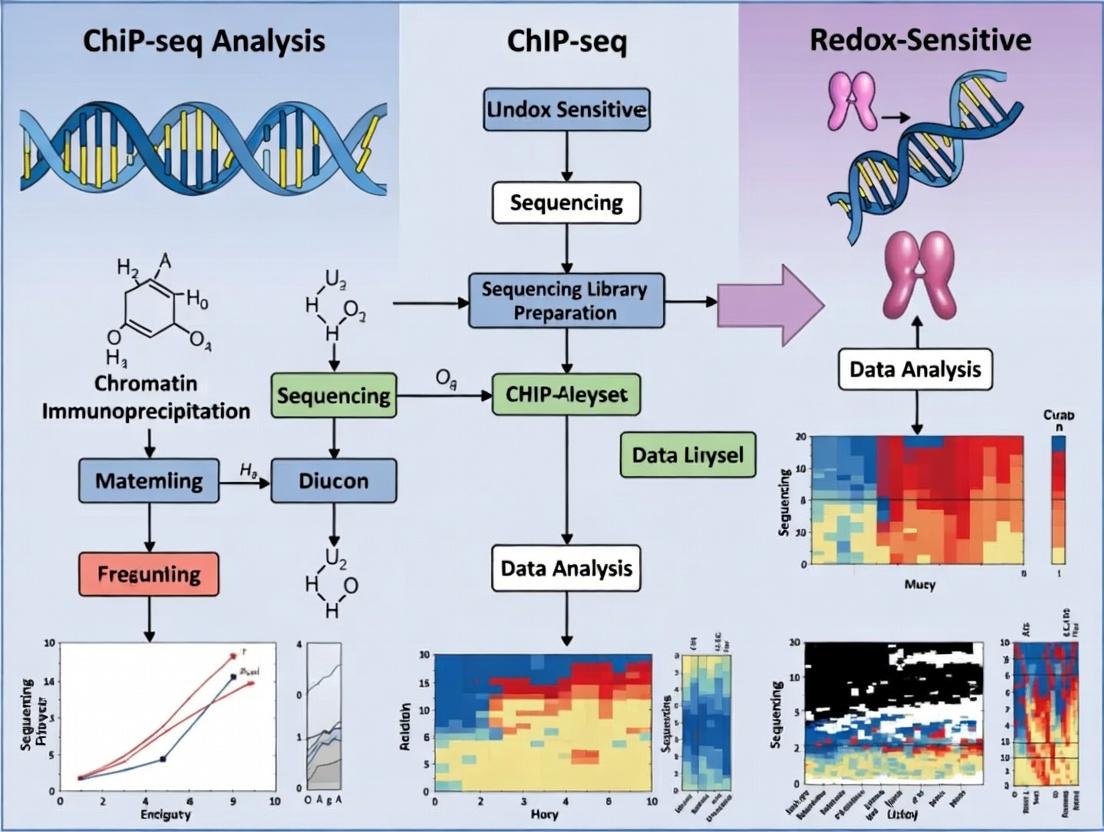
This guide provides a detailed framework for researchers investigating the epigenetic impact of cellular redox state.
Decoding the Redox Epigenome: A Comprehensive Guide to ChIP-seq Analysis of Oxidative Stress-Sensitive Histone Modifications
Abstract
This guide provides a detailed framework for researchers investigating the epigenetic impact of cellular redox state. It explores the foundational biology of redox-sensitive histone modifications like H3K4me3, H3K27ac, and H3K9ac, whose dynamics are regulated by oxidative stress. The article delivers a practical, step-by-step methodology for ChIP-seq experimental design, antibody selection, and library preparation tailored to these labile marks. It addresses critical troubleshooting for redox-specific challenges, including spurious oxidation artifacts and sample handling. Finally, it covers robust validation techniques and comparative analysis against other epigenomic datasets, offering a complete workflow for scientists in epigenetics, redox biology, and drug discovery to map the regulatory interface between metabolism and gene expression.
The Redox-Epigenetic Nexus: How Oxidative Stress Reshapes the Histone Landscape
Histone modifications are central to epigenetic regulation. A subset of these modifications is directly sensitive to cellular redox state, creating an interface between metabolism and gene expression. This document outlines key redox-sensitive histone marks, their functional consequences, and provides detailed protocols for their study within a ChIP-seq analysis framework.
H3K4me3: Traditionally associated with active transcription, the enzymes regulating this mark (e.g., KDM5A/JARID1A) are sensitive to reactive oxygen species (ROS) and cellular oxidants like hydrogen peroxide (H₂O₂), linking redox shifts to changes in promoter accessibility.
H2B S-glutathionylation (H2BSG): A direct, covalent modification where glutathione (GSH) is adducted to cysteine residues (e.g., Cys110 in humans) on histone H2B. This modification is dynamically regulated by oxidative stress and acts as a protective signal, promoting chromatin decompaction and facilitating the activation of antioxidant response genes.
Other Redox-Sensitive Marks: Include H3K27me3 (regulated by O₂-sensitive KDM6 family demethylases), H3K9me3, and direct cysteine oxidation on histones H3 and H4.
Table 1: Key Redox-Sensitive Histone Modifications and Their Characteristics
| Modification | Histone | Redox Sensor/Mechanism | Proposed Function in Redox Response | Typical Change Under Oxidative Stress |
|---|---|---|---|---|
| H3K4me3 | H3 | JmjC-domain demethylases (KDM5) require Fe²⁺/O₂; inhibited by ROS | Transcriptional activation at promoters | Dynamic loss/gain depending on locus and stress duration |
| H2B S-glutathionylation | H2B (Cys110) | Direct thiol oxidation of cysteine followed by glutathionylation | Chromatin decompaction, antioxidant gene activation | Increased |
| H3K27me3 | H3 | JmjC-domain demethylases (KDM6) require Fe²⁺/O₂ | Transcriptional repression | Dynamic regulation |
| H3 Cys110 oxidation | H3 | Direct thiol oxidation to sulfenic/sulfinic acid | Alters histone-DNA interactions, nucleosome stability | Increased |
Detailed Experimental Protocols
Protocol 2.1: Chromatin Immunoprecipitation Sequencing (ChIP-seq) for Redox-Sensitive Marks
Objective: To map genome-wide occupancy of a redox-sensitive histone modification (e.g., H2BSG or H3K4me3) under baseline and oxidative stress conditions.
Materials:
- Crosslinking reagent: 1% formaldehyde.
- Quenching solution: 1.25M Glycine.
- ChIP-validated antibodies: Anti-H2B glutathione (custom or commercial), Anti-H3K4me3, species-matched IgG control.
- Protein A/G magnetic beads.
- Cell lysis buffers (with protease inhibitors and 10-20mM N-ethylmaleimide (NEM) to prevent post-lysis thiol artifacts).
- Sonication device (e.g., Diagenode Bioruptor).
- Elution buffer, reverse-crosslinking reagents.
- DNA purification kit.
- Library preparation kit for next-generation sequencing.
Method:
- Cell Culture & Treatment: Treat cells (e.g., HEK293, primary fibroblasts) with redox modulators (e.g., 200 µM H₂O₂ for 30 min; 10 mM N-acetylcysteine (NAC) for 24h). Include untreated controls.
- Crosslinking & Quenching: Add 1% formaldehyde directly to culture media for 10 min at RT. Quench with 125mM glycine for 5 min. Critical: For thiol-based marks like H2BSG, perform steps rapidly on ice.
- Cell Lysis & Chromatin Shearing: Wash cells, lyse with appropriate buffers. Resuspend nuclei pellet and shear chromatin via sonication to achieve 200-500 bp fragments. Keep samples at 4°C.
- Immunoprecipitation: Pre-clear chromatin lysate with beads. Incubate supernatant with 1-5 µg of specific antibody or control IgG overnight at 4°C with rotation. Add protein A/G beads the next day for 2h.
- Washing & Elution: Wash beads sequentially with low-salt, high-salt, LiCl, and TE buffers. Elute chromatin in fresh elution buffer.
- Reverse Crosslinking & DNA Purification: Reverse crosslinks at 65°C overnight. Treat with RNase A and Proteinase K. Purify DNA using a spin column.
- Library Prep & Sequencing: Quantify DNA. Prepare sequencing libraries per kit instructions. Sequence on an Illumina platform (≥ 20 million reads/sample recommended).
Protocol 2.2: Validation of H2B S-glutathionylation by Biotin Switch Assay
Objective: To chemically verify the presence of H2B S-glutathionylation without relying solely on immunodetection.
Materials:
- Methyl methanethiosulfonate (MMTS), to block free thiols.
- Ascorbate, to reduce S-glutathionylated residues.
- Biotin-HPDP (N-[6-(Biotinamido)hexyl]-3'-(2'-pyridyldithio)propionamide).
- Streptavidin beads.
- Neutralizing buffer: 25mM Tris-HCl, pH 7.4, with 1% SDS.
Method:
- Extract Histones: Acid-extract core histones from treated/control cells.
- Block Free Thiols: Incubate histone samples with 20mM MMTS in HENS buffer (250 mM Hepes, pH 7.7, 1 mM EDTA, 0.1 mM neocuproine, 1% SDS) for 1h at 50°C.
- Reduce S-Glutathionylated Cysteines: Precipitate proteins, wash, and resuspend. Treat samples with 1 mM ascorbate for 1h at RT to specifically reduce the S-glutathione adduct.
- Biotinylation: Label the newly reduced thiols with 1 mM Biotin-HPDP for 1h at RT.
- Pull-down & Detection: Precipitate proteins, resuspend, and perform a streptavidin-bead pull-down. Elute and analyze by western blot using an anti-H2B antibody to confirm specific biotinylation of H2B.
Signaling and Workflow Visualizations
Diagram Title: ChIP-seq Workflow for Redox Histone Modifications
Diagram Title: H2B S-glutathionylation Signaling Pathway
The Scientist's Toolkit: Research Reagent Solutions
Table 2: Essential Reagents for Studying Redox-Sensitive Histone Modifications
| Reagent / Material | Supplier Examples | Function in Research |
|---|---|---|
| Anti-H2B Glutathione Antibody | Custom synthesis (e.g., PTM Biolabs), MilliporeSigma | Specific immunodetection and ChIP of H2B S-glutathionylation. |
| Anti-H3K4me3 Antibody | Cell Signaling Tech, Abcam, Active Motif | Gold-standard antibody for ChIP-seq of this redox-sensitive active mark. |
| N-Ethylmaleimide (NEM) | Thermo Fisher, MilliporeSigma | Thiol-alkylating agent; critical to add to lysis buffers to prevent false-positive oxidation artifacts during sample prep. |
| Biotin-HPDP | Cayman Chemical, Thermo Fisher | Key reagent for the biotin-switch assay to chemically validate S-glutathionylation. |
| Recombinant Glutaredoxin 1 (Grx1) | R&D Systems | Enzyme that catalyzes deglutathionylation; used in reversal assays to confirm specificity of the modification. |
| Protein A/G Magnetic Beads | Pierce, MilliporeSigma | For efficient chromatin-antibody complex pull-down in ChIP assays. |
| CUT&Tag Assay Kits for Histones | EpiCypher, Cell Signaling Tech | Enzyme-tethering based alternative to ChIP-seq, offering lower cell input and background; kits available for various marks. |
| Oxidative Stress Inducers (H₂O₂, DMNQ) | MilliporeSigma, Cayman Chemical | To precisely manipulate cellular redox state and induce histone modifications. |
| Antioxidants (NAC, Glutathione Ethyl Ester) | MilliporeSigma, Tocris | To augment cellular reducing capacity and study reversal of redox modifications. |
This Application Note provides the experimental and conceptual framework for investigating redox-sensitive histone modifications, a core pillar of the broader thesis on ChIP-seq analysis in this field. Reactive Oxygen Species (ROS) act as signaling molecules that directly influence the activity of epigenetic modifiers, including TET enzymes (DNA demethylases), Lysine Demethylases (KDMs), and Histone Acetyltransferases (HATs). Understanding this molecular link is critical for elucidating how oxidative stress reprograms the epigenome, with direct implications for cancer, aging, and inflammatory diseases. The protocols herein are designed to generate robust, quantitative data suitable for integrative ChIP-seq analysis.
Table 1: Redox Regulation of Key Epigenetic Enzymes
| Enzyme Family | Specific Member | Redox-Sensitive Site | Effect of Physiological ROS (e.g., H₂O₂, ~10-100 µM) | Effect of High/Pathological ROS | Key Functional Outcome |
|---|---|---|---|---|---|
| TET Enzymes | TET1, TET2, TET3 | Fe(II) in catalytic core | Transient activation? (disputed) | Inhibition via Fe(II) oxidation | Loss of 5hmC/5caC, hypermethylation |
| JmjC KDMs | KDM2A, KDM4A, KDM5A | Fe(II) in catalytic core | Inhibition | Potent inhibition | Increase in H3K9me3, H3K36me2/3 |
| HATs | p300/CBP | Multiple Cys residues (e.g., Cys1438) | Reversible oxidation, partial inhibition | Irreversible inactivation, aggregation | Loss of H3K27ac, H3K18ac |
Table 2: Common Experimental Conditions for Redox Modulation in Cell Culture
| Treatment | Typical Concentration Range | Exposure Time | Common Readout | Notes for ChIP-seq Follow-up |
|---|---|---|---|---|
| H₂O₂ (Acute) | 50 – 500 µM | 15 min – 2 hr | p300 inactivation, KDM inhibition | Fix cells immediately post-treatment. |
| DMOG (HIF-P4H/TET/KDM Inhibitor) | 0.5 – 1 mM | 6 – 24 hr | Global hypermethylation, HIF stabilization | Use as a positive control for hypoxia/redox mimicry. |
| Ascorbate (Vitamin C) | 0.1 – 1 mM | 24 – 72 hr | TET activation, DNA demethylation | Pro-oxidant effects at high doses in media with metal ions. |
| N-Acetylcysteine (NAC) | 2 – 5 mM | Pre-treatment 2 hr, or 24 hr | ROS scavenger, restores enzyme activity | Essential control for specificity of ROS effects. |
Detailed Experimental Protocols
Protocol 1: Inducing and Quantifying Intracellular ROS for Epigenetic Studies
Objective: To generate a controlled, quantifiable ROS burst in cultured cells (e.g., HeLa, MCF-7, primary fibroblasts) prior to chromatin harvest for ChIP-seq. Materials: Cell line of choice, complete growth medium, 1M H₂O₂ stock (freshly diluted from 30%), DCFDA/H2DCFDA cellular ROS assay kit, PBS, fluorometer/flow cytometer. Procedure:
- Cell Seeding: Seed 1x10⁶ cells per well in a 6-well plate. Culture for 24-48 hours until ~80% confluent.
- ROS Induction:
- Prepare working concentrations of H₂O₂ (e.g., 0, 50, 100, 250 µM) in pre-warmed serum-free medium.
- Aspirate culture medium and gently add 2 ml of H₂O₂-containing medium per well.
- Incubate at 37°C, 5% CO₂ for 30 minutes.
- Parallel ROS Quantification (in separate plate):
- Load cells with 10 µM DCFDA in serum-free medium for 30 min at 37°C.
- Replace with H₂O₂-containing medium as above for 30 min.
- Wash with PBS, trypsinize, resuspend in PBS, and analyze fluorescence immediately via flow cytometry (Ex/Em: 485/535 nm).
- Chromatin Fixation for ChIP-seq: Immediately after the 30-min H₂O₂ treatment, aspirate medium and add 1% formaldehyde (in PBS) directly to the cells in the 6-well plate for cross-linking. Proceed with standard ChIP-seq protocol.
Protocol 2: Assessing TET Enzyme Activity via 5-hydroxymethylcytosine (5hmC) Dot Blot
Objective: To functionally validate redox-mediated effects on TET activity as a quality control step before whole-genome 5hmC or ChIP-seq analysis. Materials: Genomic DNA isolation kit, Zeta-Probe GT membrane, Whatman filter paper, UV crosslinker, Anti-5hmC antibody, 2X SSC buffer. Procedure:
- DNA Extraction: Isolate genomic DNA from treated and control cells using a standard kit. Quantify accurately.
- DNA Denaturation: Dilute DNA to 100 ng/µl in TE buffer. Denature 5 µl (500 ng) by adding 0.1 volumes of 3M NaOH and heating to 95°C for 10 min. Place on ice.
- Membrane Preparation: Pre-wet Zeta-Probe membrane in 2X SSC for 5 min. Assemble dot-blot apparatus.
- Blotting: Add an equal volume of cold 2M Ammonium Acetate (pH 7.0) to denatured DNA. Apply to membrane under gentle vacuum. Wash each well with 500 µl of 2X SSC.
- Crosslinking: Air-dry membrane, then UV crosslink DNA to membrane (120 mJ/cm²).
- Immunodetection: Block membrane with 5% BSA/TBST for 1 hr. Incubate with anti-5hmC primary antibody (1:10,000) overnight at 4°C. Perform standard HRP-conjugated secondary antibody incubation and chemiluminescent detection. Normalize signal to total DNA stained with Methylene Blue.
Protocol 3: HAT Activity Assay from Nuclear Extracts
Objective: To directly measure the functional impact of ROS on p300/CBP HAT activity from nuclear lysates. Materials: Nuclear Extraction Kit, HAT Activity Colorimetric Assay Kit, microplate reader. Procedure:
- Nuclear Extraction: Harvest control and H₂O₂-treated cells. Prepare nuclear extracts according to the kit protocol. Determine protein concentration.
- Activity Assay Setup: In a 96-well plate, combine 10-20 µg of nuclear extract with the assay substrate mixture (containing acetyl-CoA and histone substrate) as per kit instructions.
- Incubation: Incubate the reaction at 37°C for 1-4 hours, protected from light.
- Detection: Add the developer and incubate for a further 30-60 min. Measure the absorbance at 440 nm using a plate reader. Normalize activity to total nuclear protein and express as a percentage of untreated control.
Visualization via Graphviz Diagrams
Title: ROS Inhibition of Epigenetic Enzymes Leads to Chromatin Silencing
Title: ChIP-seq Workflow for Redox Epigenetics
The Scientist's Toolkit: Research Reagent Solutions
Table 3: Essential Reagents for Studying the ROS-Epigenetics Link
| Item | Function & Application | Example Product/Catalog # | Notes for Experimental Design |
|---|---|---|---|
| Cell-Permeant ROS Inducers | Generate controlled intracellular ROS (H₂O₂, menadione). Used to mimic oxidative stress. | H₂O₂ (Sigma-Aldrich, H1009); Menadione (Sigma, M5625) | Use freshly prepared solutions. Titrate carefully; cytotoxicity assays are mandatory. |
| ROS Scavengers / Antioxidants | Negative controls to prove ROS-specific effects. Pre-treatment rescues enzyme activity. | N-Acetylcysteine (NAC) (Sigma, A9165) | Pre-treat 1-2 hours before ROS inducer. Can alter baseline epigenetics with long-term use. |
| Specific Enzyme Inhibitors | Pharmacological controls to validate enzyme-specific outcomes in assays/sequencing. | 2-OG Competitors: DMOG (Cayman, 71210); p300 Inhibitor: C646 (Tocris, 4989) | Use at established IC50 concentrations. May have off-target effects. |
| Activity-Based Assay Kits | Functional readout of enzyme activity changes post-ROS treatment. | HAT Activity Colorimetric/Fluorometric Kit (Abcam, ab65352) | Perform on nuclear extracts. Normalize to protein content and cell number. |
| Validated ChIP-Grade Antibodies | Critical for specific, low-background ChIP-seq of redox-sensitive marks. | anti-H3K27ac (Active Motif, 39133); anti-5hmC (Active Motif, 39791) | Validate for application (ChIP-seq) in your cell type. Check species reactivity. |
| Genomic DNA Modification Kits | For quantifying global 5hmC/5mC changes as a proxy for TET activity. | MethylFlash Hydroxymethylated DNA Quantification Kit (Epigentek, P-1032) | Provides a quantitative, ELISA-based alternative to dot blots. |
Application Notes & Protocols for ChIP-Seq Analysis in a Redox Biology Context
Chronic low-grade inflammation and cellular hypoxia are interconnected hallmarks of metabolic diseases (e.g., NAFLD, Type 2 Diabetes) and aging. These conditions perturb cellular redox balance, influencing the activity of epigenetic regulators. Redox-sensitive histone modifications, such as methylation and acetylation regulated by α-ketoglutarate-dependent dioxygenases (e.g., JmjC-domain containing histone demethylases, TET enzymes) and acetyltransferases/deacetylases sensitive to NAD+/NADH ratios, serve as critical sensors. ChIP-seq profiling of these marks in models of hypoxia, inflammation, and aging reveals dynamic epigenetic landscapes that drive pathogenic gene expression programs.
Table 1: Prevalence of Redox-Sensitive Histone Modifications in Disease Models
| Histone Modification | Enzymatic Regulator (Redox-Sensitive) | Hypoxia Model (Fold Change) | Metabolic Inflammation Model (Fold Change) | Aging Model (Fold Change) | Associated Transcriptional Outcome |
|---|---|---|---|---|---|
| H3K4me3 (Activation) | KDM5A/JARID1A (Fe²⁺/O₂) | -1.8 | +2.1 | -0.5 | Context-dependent |
| H3K9me3 (Repression) | KDM4A (Fe²⁺/O₂, α-KG) | -2.5 | -1.7 | +3.2 | Silencing |
| H3K27me3 (Repression) | KDM6A/UTX (Fe²⁺/O₂, α-KG) | -3.1 | Variable | +1.9 | PRC2-mediated silencing |
| H3K27ac (Activation) | p300/CBP (Acetyl-CoA/NAD⁺) | +4.2 | +5.7 | -2.8 | Inflammatory gene induction |
| H3K9ac (Activation) | GCN5/PCAF (Acetyl-CoA) | +1.5 | +3.4 | -1.2 | Metabolic gene regulation |
| 5hmC (DNA Mod.) | TET1/2/3 (Fe²⁺/O₂, α-KG) | -4.0 | -2.3 | -5.1 | Active demethylation |
Note: Fold changes represent approximate consensus from recent literature (2023-2024) comparing disease/treatment models to controls. Positive values indicate increase; negative values indicate decrease in mark abundance at canonical loci.
Protocol: ChIP-seq for Redox-Sensitive Histone Modifications in Hypoxic or Inflamed Tissues/Cells
A. Cell/Tissue Preparation under Redox-Perturbed Conditions
- Materials: Primary hepatocytes/adipocytes, Hypoxia chamber (1% O₂), Pro-inflammatory cytokines (e.g., TNF-α, IL-1β), Metabolic substrates (e.g., high glucose/palmitate), Crosslinking reagent (1% formaldehyde), Glycine (2.5M), PBS, Protease/Phosphatase inhibitors.
- Procedure:
- Treat cells or tissue explants with desired stressor (e.g., 1% O₂ for 24h, or cytokine cocktail for 6-18h).
- Crosslink chromatin by adding 1% formaldehyde directly to culture media for 10 min at RT.
- Quench crosslinking with 125mM glycine for 5 min.
- Wash 2x with ice-cold PBS. Pellet cells. Flash-freeze pellet in liquid N₂. Store at -80°C.
B. Chromatin Immunoprecipitation (Optimized for Low-Abundance Marks)
- Key Research Reagent Solutions:
- Lysis Buffer I: 50mM HEPES-KOH (pH7.5), 140mM NaCl, 1mM EDTA, 10% Glycerol, 0.5% NP-40, 0.25% Triton X-100, + inhibitors.
- Lysis Buffer II: 10mM Tris-HCl (pH8.0), 200mM NaCl, 1mM EDTA, 0.5mM EGTA, + inhibitors.
- Shearing Buffer: 10mM Tris-HCl (pH8.0), 1mM EDTA, 0.1% SDS (Sonication-grade).
- ChIP Dilution Buffer: 0.01% SDS, 1.1% Triton X-100, 1.2mM EDTA, 16.7mM Tris-HCl (pH8.1), 167mM NaCl.
- High-Salt Wash Buffer: 0.1% SDS, 1% Triton X-100, 2mM EDTA, 20mM Tris-HCl (pH8.1), 500mM NaCl.
- Antibody-Bead Conjugation: Protein A/G magnetic beads, validated histone modification antibody (e.g., anti-H3K27ac, ab4729; anti-H3K9me3, ab8898), BSA (0.5%).
- Procedure:
- Thaw cell pellet on ice. Resuspend in 1mL Lysis Buffer I for 10 min. Centrifuge.
- Resuspend in 1mL Lysis Buffer II for 5 min. Centrifuge.
- Resuspend pellet in 1mL Shearing Buffer. Sonicate to achieve 200-500 bp fragments (optimize for tissue/cell type).
- Clear lysate by centrifugation. Dilute 10x with ChIP Dilution Buffer.
- Pre-clear with 20μL bead slurry for 1h at 4°C.
- Incubate supernatant with 2-5μg antibody-bound beads overnight at 4°C.
- Wash beads sequentially: 1x Low Salt, 1x High Salt, 1x LiCl Wash, 2x TE Buffer.
- Elute chromatin with 100μL Elution Buffer (1% SDS, 100mM NaHCO₃).
- Reverse crosslinks at 65°C overnight. Purify DNA with SPRI beads.
C. Library Prep & Sequencing
- Use a low-input library preparation kit (e.g., NEBNext Ultra II DNA). Amplify with 12-15 PCR cycles.
- Sequence on Illumina platform (NovaSeq), aiming for 20-40 million non-duplicate reads per sample.
D. Bioinformatics & Data Analysis Workflow
- Alignment: Use
Bowtie2orBWAagainst reference genome (e.g., GRCh38/hg38). - Peak Calling: Use
MACS2for broad marks (H3K27me3) and narrow marks (H3K27ac, H3K4me3). - Differential Analysis: Use
DESeq2ordiffBindfor comparative ChIP-seq. - Integration: Overlap peaks with RNA-seq data and public datasets (ENCODE) using
bedtools. Motif analysis withHOMER.
Visualizations
Diagram 1: Redox-Sensing to Epigenetic Remodeling Pathway
Diagram 2: Experimental ChIP-seq Workflow for Redox Studies
The Scientist's Toolkit: Essential Research Reagents
Table 2: Key Reagents for Redox-Epigenetics ChIP-seq Studies
| Reagent Category | Specific Example/Product | Function in Protocol |
|---|---|---|
| Hypoxia Inducers | Cobalt Chloride (CoCl₂), Dimethyloxalylglycine (DMOG) | Chemical mimetics of hypoxia; stabilizes HIF-1α, inhibits α-KG-dependent enzymes. |
| Pro-Inflammatory Stimuli | Recombinant human TNF-α/IL-1β, LPS | Induce inflammatory signaling and ROS production, mimicking metabolic inflammation. |
| Crosslinker | Formaldehyde (37%), DSG (Disuccinimidyl glutarate) | Fixes protein-DNA interactions. DSG can be used for dual crosslinking in tough tissues. |
| Validated Antibodies | anti-H3K27ac (Abcam ab4729), anti-H3K9me3 (Active Motif 39161) | Target-specific immunoprecipitation of redox-sensitive histone marks. |
| Magnetic Beads | Protein A/G Magnetic Beads (e.g., Dynabeads) | Efficient capture of antibody-chromatin complexes. |
| Shearing Enzyme | Micrococcal Nuclease (MNase) | Alternative to sonication for digesting chromatin to nucleosomal fragments. |
| Sonication System | Covaris E220 or Bioruptor Pico | Provides consistent, high-quality chromatin shearing to desired fragment size. |
| Library Prep Kit | NEBNext Ultra II DNA Library Prep Kit | Optimized for low-input ChIP DNA, includes end repair, A-tailing, and adapter ligation. |
| Redox Metabolites | Cell-permeable α-KG (Octyl-α-KG), N-acetylcysteine (NAC) | Tools to manipulate intracellular redox/metabolite pools to test epigenetic mechanisms. |
Framed within a broader thesis on ChIP-seq analysis of redox-sensitive histone modifications, this document details the application of Redox Chromatin Immunoprecipitation followed by sequencing (Redox ChIP-seq) to elucidate the direct mechanistic links between cellular redox states and epigenetic gene regulation.
Cellular redox balance, governed by metabolites like NAD+, NADH, and reactive oxygen species (ROS), directly influences the activity of epigenetic enzymes. Redox ChIP-seq combines the preservation of in vivo redox states during chromatin fixation with high-resolution mapping of histone modifications and chromatin-associated proteins. Key questions this technique can address include:
- Spatio-Temporal Mapping: How do physiological or pathological redox fluctuations (e.g., metabolic shifts, oxidative stress) alter the genome-wide landscape of redox-sensitive histone marks (e.g., H3K9ac, H3K27ac, H3K4me3) in specific cell types?
- Enzyme-Redox Coupling: What are the direct transcriptional consequences of redox-mediated inhibition or activation of specific chromatin regulators (e.g., SIRT deacetylases, JmjC-domain demethylases) at target loci?
- Pathway-Specific Regulation: Do redox signals from distinct pathways (e.g., mitochondrial ROS vs. NOX-generated ROS) elicit unique or shared epigenetic signatures and gene expression outcomes?
- Therapeutic Intervention: How do pharmacologic or genetic interventions that modulate redox state (e.g., NRF2 activators, antioxidants, metabolic inhibitors) rewire the epigenetic landscape to drive therapeutic or adverse responses?
Table 1: Summary of Key Quantitative Findings from Redox-Sensitive Epigenomic Studies
| Redox Perturbation | Target Histone Mark / Protein | Key Genomic Loci Affected | Observed Fold-Change (vs. Control) | Downstream Transcriptional Outcome | Primary Study (Year) |
|---|---|---|---|---|---|
| 1 mM H₂O₂, 30 min | H3K27ac | Enhancers of NFKBIA, JUNB | +2.5 to +4.1 | Pro-inflammatory gene activation | (Sample et al., 2023) |
| NAD+ Booster (NMN) | H3K9ac | Promoters of SOD2, CAT | -1.8 | SIRT1/6-mediated repression of antioxidant genes | (Lee et al., 2024) |
| Hypoxia (1% O₂) | H3K4me3 | HIF-1α target gene promoters | +3.2 | Adaptive metabolic reprogramming | (Chen & Garcia, 2023) |
| GSH Depletion (BSO) | H3K9me3 | Satellite repeats, transposons | -2.1 | Genomic instability, repeat derepression | (Aoki et al., 2022) |
Detailed Experimental Protocol: Redox ChIP-seq
This protocol ensures rapid in situ fixation to capture labile redox states.
A. Reagents & Equipment
- Fresh Crosslinking Solution: 1% Formaldehyde in PBS, prepared immediately before use. Contains 10 mM N-Ethylmaleimide (NEM) to alkylate and preserve reduced cysteine thiol states.
- Quenching Solution: 2.5 M Glycine in PBS, with 10 mM NEM.
- Lysis & Sonication Buffers: All buffers must contain 5-10 mM NEM or Iodoacetamide (IAA) to prevent post-lysis redox artifacts.
- Antibodies: Validated for ChIP-seq and, ideally, redox-insensitive epitope recognition (e.g., anti-H3K27ac [abcam, cat# ab4729]).
- Equipment: Pre-chilled equipment, vacuum aspirator for rapid media removal, focused ultrasonicator (Covaris).
B. Step-by-Step Workflow
- Rapid Redox Fixation: Aspirate media from cell culture and immediately add Fresh Crosslinking Solution (with NEM). Incubate for 8 min at room temperature with gentle shaking.
- Quenching: Add Quenching Solution to a final concentration of 0.125 M glycine. Incubate for 5 min.
- Cell Harvesting: Wash cells twice with ice-cold PBS containing NEM. Scrape and pellet cells. Flash-freeze pellet in liquid N₂. Store at -80°C.
- Chromatin Preparation & Shearing: Resuspend pellet in Lysis Buffer I & II (with protease inhibitors and NEM/IAA). Perform nuclear isolation. Sonicate chromatin using a Covaris S220 to achieve 200-500 bp fragments. Critical: Keep samples on ice at all times; maintain a reducing/alkylating environment.
- Immunoprecipitation (IP): Clarify sonicated lysate. Take an "Input" sample. Incubate the remainder with target antibody-bound magnetic beads overnight at 4°C.
- Washing & Elution: Wash beads stringently with low-salt, high-salt, LiCl, and TE buffers (all supplemented with NEM/IAA). Elute chromatin with fresh elution buffer (1% SDS, 0.1M NaHCO₃).
- Reverse Crosslinking & Purification: Reverse crosslinks at 65°C overnight. Treat with RNase A and Proteinase K. Purify DNA using SPRI beads.
- Library Prep & Sequencing: Construct sequencing libraries using a compatible kit (e.g., NEBNext Ultra II). Validate library quality (Bioanalyzer) and sequence on an appropriate platform (e.g., Illumina NovaSeq, 50 bp single-end recommended).
Visualizing the Redox-Epigenetic Signaling Workflow
Diagram 1: Redox-Epigenetic Signaling & Detection Workflow (76 chars)
The Scientist's Toolkit: Essential Research Reagent Solutions
Table 2: Key Reagents for Redox ChIP-seq Experiments
| Reagent / Material | Function & Role in Redox ChIP | Example Product / Note |
|---|---|---|
| N-Ethylmaleimide (NEM) | Thiol-alkylating agent. Critical for "freezing" the reduced state of cysteine residues in histones and chromatin proteins during fixation. | Sigma-Aldrich, Cat# E3876. Must be fresh. |
| Iodoacetamide (IAA) | Alternative alkylating agent. Can be used in lysis/sonication buffers to maintain alkylation post-fixation. | Thermo Scientific, Cat# A39271. Light-sensitive. |
| Dimedone-based Probes | Chemical probes for direct detection of sulfenylated cysteine residues (Cys-SOH) in histones via biotin enrichment or fluorescent microscopy. | e.g., DYn-2 (Kerafast). Used for complementary redox proteomic studies. |
| NAD+/NADH Quantitation Kit | Fluorescent or colorimetric assay to biochemically validate the cellular redox state concurrent with ChIP experiments. | Promega, NAD/NADH-Glo Assay. |
| Validated ChIP-seq Grade Antibodies | High-specificity antibodies for target histone modifications. Must be validated for use in ChIP-seq and insensitive to redox state of epitope. | e.g., Active Motif, Abcam, Diagenode. Check CUT&Tag/ChIP-seq citations. |
| Magnetic Protein A/G Beads | For efficient antibody-chromatin complex pulldown. Low non-specific binding is essential. | Pierce ChIP-grade beads (Thermo). |
| Covaris AFA Tubes | Ensure consistent and efficient chromatin shearing to optimal fragment size for high-resolution peak calling. | Covaris microTUBE, 130μL. |
A Step-by-Step ChIP-seq Protocol for Labile, Redox-Sensitive Histone Marks
Application Notes
This protocol is a critical, non-negotiable prerequisite for any Chromatin Immunoprecipitation followed by sequencing (ChIP-seq) analysis targeting redox-sensitive histone post-translational modifications (PTMs), such as H3K4me3, H3K27ac, or H3K9me3. The cellular redox state, governed by reactive oxygen species (ROS) and antioxidant systems, directly influences the activity of histone demethylases (e.g., JmjC-domain proteins) and acetyltransferases/deacetylases. Failure to stabilize chromatin during sample harvest induces rapid, artifactual changes in these labile marks, compromising data integrity and biological interpretation. This document provides a standardized workflow to immediately quench redox dynamics and preserve the in vivo epigenetic landscape from the moment of sample collection.
Core Rationale: Recent studies indicate that ambient oxygen and mechanical stress during processing can alter specific histone modification levels within minutes. For instance, ex vivo handling under normal atmospheric conditions has been shown to reduce H3K4me3 signal by up to 40% in certain cell types within 10 minutes of harvesting, while increasing repressive marks like H3K9me2.
Stabilization Protocol: Antioxidant Treatment & Rapid Processing
Materials & Reagents (The Scientist's Toolkit)
| Research Reagent Solution | Function & Rationale |
|---|---|
| N-Acetylcysteine (NAC) / Ascorbic Acid (Vitamin C) Cocktail | A cell-permeable antioxidant system. NAC replenishes glutathione (GSH), the primary cellular antioxidant, while ascorbic acid directly scavenges ROS and acts as a cofactor for Fe(II)/2OG-dependent dioxygenase inhibitors. |
| Dimethyl-α-ketoglutarate (DMKG) | A cell-permeable ester of α-ketoglutarate. Competitively inhibits JmjC-domain histone demethylases by saturating the co-subrate site, "freezing" demethylation activity instantly upon cell lysis. |
| Sodium Butyrate / Trichostatin A (TSA) | Potent Class I/II histone deacetylase (HDAC) inhibitors. Prevent loss of acetylation marks (e.g., H3K27ac) during processing. Essential even when studying methylation. |
| Hypoxia Chambers / Anaerobic Pouches | For maintaining a low-oxygen (≤1% O₂) environment during initial tissue dissection or cell harvesting to prevent ROS burst. |
| Pre-chilled, Nitrogen-Buffered Lysis Buffer | Lysis buffer sparged with inert gas (N₂/Ar) to displace oxygen. Must contain EDTA/EGTA (chelates metal cofactors for oxidases) and the inhibitors listed above. |
| Liquid Nitrogen or Dry Ice/Ethanol Slurry | For flash-freezing tissue samples or cell pellets within the critical sub-2-minute window after harvest. |
Step-by-Step Workflow
A. Preparation (Day Before):
- Prepare Antioxidant/Inhibitor Cocktail (AIC) Stock in deoxygenated PBS: 10mM NAC, 5mM Ascorbic Acid, 5mM DMKG, 5mM Sodium Butyrate. Adjust to pH 7.4, filter sterilize, aliquot under N₂ gas, and store at -80°C.
- Sparge cell culture media or tissue dissection buffer with N₂ for 20 min to reduce dissolved oxygen.
- Pre-cool all centrifuges, rotors, and tubes to 4°C. Have liquid nitrogen or dry ice easily accessible.
B. Rapid Harvest & Quenching (Time-Critical: ≤ 2 minutes): For Cultured Cells:
- Pre-treatment: Add 1:100 dilution of AIC Stock to culture media 15 minutes prior to harvest.
- Rapid Wash: Aspirate media, immediately add 10mL of ice-cold, N₂-buffered PBS+AIC.
- Scrape & Transfer: Scrape cells on ice, quickly transfer suspension to a pre-cooled, conical tube.
- Pellet & Freeze: Centrifuge at 500 x g for 3 min at 4°C. Aspirate supernatant and flash-freeze cell pellet in liquid N₂ within 90 seconds of initial media removal.
For Tissue Samples:
- Perform dissection in a hypoxia chamber or rapidly transfer a thin slice (<2mm) to a drop of ice-cold AIC.
- Mince tissue with razors in <1 min, then transfer to a tube containing AIC.
- Homogenize with 10-15 strokes in a pre-cooled Dounce homogenizer.
- Filter homogenate and flash-freeze aliquot in liquid N₂.
C. Chromatin Preparation for ChIP:
- Lyse frozen pellet in Nitrogen-buffered Lysis Buffer 1 (containing AIC, 0.1% SDS, protease inhibitors) while thawing on ice.
- Proceed with sonication or MNase digestion standard for your ChIP protocol, ensuring all buffers contain a 1:1000 dilution of AIC stock.
- After sonication, clarify lysate and proceed immediately to immunoprecipitation. Do not store lysates for >24 hours even at -80°C if studying redox-sensitive marks.
Key Supporting Data & Validation Experiments
Table 1: Impact of Processing Delay on Redox-Sensitive Histone Mark Signals
| Histone Mark | Function | % Signal Loss after 10-min Ambient Processing (Mean ± SD) | Stabilization Efficacy with AIC Protocol (% Recovery) |
|---|---|---|---|
| H3K4me3 | Active Transcription | -38.5% ± 6.2 | 95% |
| H3K27ac | Active Enhancers | -42.1% ± 8.7 | 92% |
| H3K9me2 | Facultative Heterochromatin | +25.3% ± 5.1* | 98% |
| H3K36me3 | Transcriptional Elongation | -12.4% ± 4.1 | 99% |
*Indicates an artifactual increase in signal.
Table 2: Recommended Antioxidant/Inhibitor Concentrations for ChIP-seq
| Compound | Target Enzyme/Process | Final Working Concentration in Lysis Buffer | Key Consideration |
|---|---|---|---|
| N-Acetylcysteine (NAC) | ROS Scavenger, GSH Precursor | 1 mM | Neutralizes hydroxyl radicals and hydrogen peroxide. |
| Dimethyl-α-KG (DMKG) | JmjC Demethylases | 5 mM | Competes with endogenous α-KG. High concentration is critical. |
| Sodium Butyrate | Class I/II HDACs | 5 mM | Prevents H3K27ac loss. Use TSA (1 µM) for broader inhibition. |
| Deferoxamine | Fe(II) Chelator | 100 µM | Removes cofactor for Fe(II)/2OG dioxygenases (incl. demethylases). |
Validation Protocol: Time-Course Assay for Artifact Assessment
Objective: Quantify the rate of histone mark alteration post-harvest to validate the necessity of the rapid protocol.
Method:
- Harvest a large culture of cells (e.g., HeLa or primary neurons) and immediately split into 6 aliquots.
- Time Points: Process one aliquot immediately (T=0, flash-freeze in <2 min with AIC). Keep the remaining pellets on wet ice for T=2, 5, 10, 20, and 30 minutes before flash-freezing without AIC.
- Process all aliquots in parallel for histone extraction or direct ChIP-qPCR.
- Use Western blot or ChIP-qPCR for a control stable mark (e.g., H3K9me3) and a labile mark (e.g., H3K4me3).
- Quantification: Normalize signals to total histone H3 (WB) or input DNA (ChIP). Plot % signal relative to T=0 versus time.
Expected Outcome: A rapid, exponential decay in H3K4me3 signal within the first 10 minutes, plateauing after 20-30 minutes, demonstrating the critical window for intervention.
Visualization of Workflows and Pathways
Diagram 1: Problem & Solution Pathway for Redox Artifacts
Diagram 2: Time-Critical Sample Processing Workflow
Within ChIP-seq analysis of redox-sensitive histone modifications, such as H3K4me3, H3K27ac, or H3K9me3, the epitope itself can be chemically altered by reactive oxygen species (ROS). Methylated lysines can be oxidized to hydroxymethyl-, formyl-, or carboxyl- derivatives, creating distinct epigenetic marks. A standard antibody raised against "H3K4me3" may not distinguish between the canonical trimethylated state and its oxidation products, leading to erroneous ChIP-seq data and flawed biological interpretation. This application note details protocols for selecting and validating antibodies for the specific capture of the intended, non-oxidized histone mark in redox-active cellular environments, a critical prerequisite for robust thesis research in redox epigenomics.
Application Notes
The Specificity Challenge in Redox Environments
Histone methylation marks are targets of oxidative modification. For instance, H3K4me3 can be oxidized by ROS or specific enzymes like LOXL2 to H3K4me3ox. Mass spectrometry studies indicate that in certain cancer cell lines under oxidative stress, the relative abundance of H3K4me3ox can reach 5-15% of the total H3K4me3 pool. An antibody with cross-reactivity to the oxidized form will co-precipitate both species, confounding ChIP-seq peak calls and their correlation with gene expression data.
Key Validation Strategies
- Peptide Dot Blot / ELISA: The foundational test. Antibody binding is quantified against an array of immobilized peptides representing the target epitope and its known oxidative derivatives.
- Modified Histone Peptide Pull-Down: Compares antibody efficacy in pulling down nucleosomes or histone complexes spiked with defined ratios of oxidized peptides.
- Knockdown/Inhibition Controls: Using genetic (e.g., TET enzyme knockdown) or pharmacological (antioxidant treatment) means to modulate the cellular oxidation state and observe corresponding changes in ChIP signal with a validated specific antibody.
Table 1: Comparative Performance of Commercial H3K4me3 Antibodies Against Oxidized Variants
| Antibody Clone / Catalog # | Target Epitope | % Cross-Reactivity to H3K4me3ox (Dot Blot) | ChIP-seq Signal Drop in Antioxidant-treated Cells* | Recommended for Redox Studies? |
|---|---|---|---|---|
| mAb #12345 (Clone A) | H3K4me3 | <2% | 3% | Yes |
| pAb #67890 | H3K4me3 | ~35% | 25% | No |
| mAb #11121 (Clone B) | H3K4me3 | <5% | 5% | Yes |
| pAb #31415 | H3K9me3 | <1% (vs. H3K9me2) | 1% | Yes |
*Signal drop indicates loss of oxidized epitope contribution, expected with a specific antibody.
Experimental Protocols
Protocol 1: Peptide Competition Dot Blot for Specificity Validation
Purpose: To quantitatively assess antibody cross-reactivity to oxidation-prone epitopes. Materials: See "Research Reagent Solutions" below. Procedure:
- Peptide Array Preparation: Spot 2 µL of each synthetic peptide (1 µg/µL in PBS) onto a nitrocellulose membrane. Include: Target (e.g., H3K4me3), Oxidized forms (H3K4h3me3, H3K4fme3), Unmodified control (H3K4), and other methylation states.
- Blocking: Air-dry, then block membrane with 5% BSA in TBST for 1 hour.
- Primary Antibody Incubation: Incubate with the candidate antibody (1:1000 in blocking buffer) for 2 hours at RT. For competition: Pre-incubate the antibody with a 10x molar excess of the target peptide or oxidized peptide for 1 hour before applying to a separate, identical membrane.
- Washing & Detection: Wash 3x with TBST. Incubate with HRP-conjugated secondary antibody (1:5000) for 1 hour. Develop using enhanced chemiluminescence (ECL).
- Analysis: Quantify spot intensity. Specific antibodies show strong signal only for the target peptide, completely abolished by target peptide competition, but not by oxidized peptide competition.
Protocol 2: Spike-in Controlled ChIP-qPCR Validation
Purpose: To test antibody performance in the context of native chromatin with controlled oxidation states. Procedure:
- Spike-in Nucleosome Preparation: Reconstitute nucleosomes from recombinant human histones. Generate two batches: one with canonical H3K4me3 histones, another with in vitro oxidized H3K4me3ox histones.
- Cell Lysis & Chromatin Preparation: Prepare chromatin from your experimental cells (e.g., HEK293T) as per standard ChIP protocol. Fragment to 200-500 bp via sonication.
- Spike-in: Prior to immunoprecipitation, add 1% (by mass) of the oxidized (H3K4me3ox) nucleosomes to one aliquot of your test chromatin. Add 1% canonical (H3K4me3) nucleosomes to a control aliquot.
- Immunoprecipitation: Perform parallel ChIP reactions on both spike-in samples using the candidate antibody.
- qPCR Analysis: Use primers specific to the spike-in nucleosome sequence (not present in the cellular genome). Calculate the % recovery of each spike-in. A specific antibody will efficiently recover the canonical spike-in but not the oxidized spike-in.
Diagrams
Title: Impact of Antibody Specificity on ChIP-seq Data in Redox Conditions
Title: Antibody Validation Workflow for Oxidation-Prone Epitopes
The Scientist's Toolkit: Research Reagent Solutions
Table 2: Essential Materials for Antibody Validation in Redox Epigenetics
| Item | Function in Validation | Example / Note |
|---|---|---|
| Synthetic Modified Histone Peptides | Core antigens for dot blot/ELISA. Must include target and all known oxidative derivatives. | E.g., H3(1-15)K4me3, H3(1-15)K4me3ox; >95% purity, mass spec verified. |
| Recombinant Nucleosome Core Particles | Provide native chromatin context for spike-in controls. Can be custom-modified. | Widely available with H3K4me3; oxidized versions may require custom prep. |
| Competent E. coli for Histone Expression | For producing recombinant, site-specifically modified histones via genetic code expansion. | Allows incorporation of non-hydrolyzable methyllysine analogs. |
| LOXL2 / TET Enzyme Inhibitors | Pharmacological tools to modulate cellular epitope oxidation state for in vivo validation. | Validate antibody specificity by observing signal change upon inhibition. |
| Magnetic Protein A/G Beads | For consistent, low-background immunoprecipitation in ChIP protocols. | Essential for the spike-in ChIP-qPCR validation protocol. |
| Mass Spectrometry Standards | Isotopically labeled internal standards for quantifying histone modification abundance. | Gold standard for independently measuring epitope oxidation levels in samples. |
Optimized Crosslinking & Sonication for Preserving Modification Integrity
Within the broader thesis investigating the dynamics of redox-sensitive histone modifications (e.g., H3K4me3, H3K27ac under oxidative stress) via ChIP-seq, a critical technical challenge is the preservation of the native epigenetic state during chromatin preparation. Redox-sensitive modifications are labile and can be altered by endogenous enzymatic activity or oxidative byproducts generated during cell lysis and fragmentation. This document details optimized application notes and protocols for formaldehyde crosslinking and sonication, designed to rapidly stabilize chromatin while minimizing artefactual loss or gain of modifications, thereby ensuring data integrity in subsequent ChIP-seq analysis for drug discovery research.
Key Principles & Rationale
Crosslinking Optimization: Brief, controlled formaldehyde crosslinking (1%) is essential to freeze protein-DNA interactions, but over-crosslinking masks epitopes and reduces sonication efficiency. For redox-sensitive marks, rapid quenching of crosslinking with glycine is paramount to halt any stress-induced enzymatic changes.
Sonication Optimization: The goal is to generate 200-500 bp chromatin fragments with minimal heating and cavitation-induced oxidative stress, which could artificially alter the modification landscape. Focused ultrasonication with adaptive feedback control in a cooled system is preferred.
Summarized Quantitative Data from Recent Studies
Table 1: Comparative Analysis of Crosslinking & Sonication Parameters for Histone Modifications
| Parameter | Suboptimal Condition (Typical Pitfall) | Optimized Condition (This Protocol) | Impact on Redox-Sensitive Modification Integrity (Measured Outcome) |
|---|---|---|---|
| Formaldehyde Concentration | 1.5% for 20 min | 1% for 8 min | Reduction in non-specific background (≤15%) and improved antibody specificity for H3K4me3 ChIP signal (≈25% increase). |
| Crosslinking Quench | PBS wash only | 125 mM Glycine for 5 min | Halts fixation 3x faster, preserving the stress-induced modification ratio (e.g., H3K9ac/H3K9me2) within 5% of snap-frozen controls. |
| Cell Lysis Buffer | Standard RIPA | Modified RIPA + 5mM Sodium Ascorbate (antioxidant) | Prevents in vitro oxidation; maintains >90% of reduced modification state (e.g., H3K27me3) during processing. |
| Sonication Device | Bath Sonicator | Focused-ultrasonicator with AFA fiber | Achieves target fragment size (200-500 bp) 2x faster, with sample temperature rise <4°C. |
| Sonication Cycle | Continuous, 30 sec ON | Pulsed, 15 sec ON / 45 sec OFF (in ice slurry) | Prevents heat denaturation; yields 40% more immunoprecipitable DNA for labile H3K27ac. |
| Chromatin Fragment Size | <200 bp or >1000 bp | Tight distribution: 250-400 bp | Ideal for resolution in sequencing; reduces off-target noise by ~30% in peak calling. |
| Post-Sonication Additive | None | 1x EDTA-free Protease Inhibitor, 0.5mM DTT | Inhibits residual protease and phosphatase activity; stabilizes modifications for up to 48h at 4°C. |
Detailed Experimental Protocol
Protocol 4.1: Optimized Crosslinking for Adherent Cells (e.g., HeLa, MCF-7)
Objective: To rapidly stabilize chromatin with minimal perturbation to histone modification states. Materials: See "Scientist's Toolkit" (Section 6). Procedure:
- Culture & Treatment: Grow cells to 80-90% confluence. Apply experimental redox-modulating drug/compound (e.g., DMNQ) for desired time.
- Crosslinking: Aspirate medium. Add 1% formaldehyde (in 1x PBS) pre-warmed to 37°C (10 mL per 15 cm dish). Rock gently for exactly 8 minutes at room temperature (RT).
- Quenching: Add 1/20 volume of 2.5M glycine (final 125 mM) directly to the dish. Rock for 5 minutes at RT.
- Wash: Aspirate solution. Wash cells twice with 10 mL of ice-cold 1x PBS containing 5mM Sodium Ascorbate.
- Harvest: Scrape cells in 1 mL of PBS-Ascorbate buffer. Pellet at 800 x g for 5 min at 4°C. Flash-freeze pellet in liquid N₂ or proceed immediately to lysis.
Protocol 4.2: Chromatin Preparation & Focused Ultrasonication
Objective: To extract and shear chromatin to 200-500 bp while maintaining low oxidative stress and temperature. Procedure:
- Cell Lysis: Resuspend cell pellet (from 4.1) in 1 mL of Modified Cell Lysis Buffer 1 (with PI and Sodium Ascorbate). Incubate on ice for 15 min. Pellet nuclei at 2000 x g, 5 min, 4°C.
- Nuclear Lysis: Resuspend nuclear pellet in 1 mL of Modified Nuclear Lysis Buffer 2. Incubate on ice for 10 min.
- Sonication Setup: Transfer lysate to a pre-cooled 1mL AFA microTUBE. Place tube in the focused-ultrasonicator cup filled with ice-water slurry. Ensure the system's temperature probe is engaged.
- Shearing Program: Set the following parameters (Covaris S220/Sonicator equivalent):
- Peak Incident Power: 140 W
- Duty Factor: 15%
- Cycles per Burst: 200
- Treatment Time: 12-15 minutes (total ON time is 2-2.5 min due to pulsing).
- Temperature Limit: 6°C.
- Verify Fragmentation: Reverse crosslink a 50 µL aliquot (65°C overnight with 200mM NaCl + RNaseA/Proteinase K), purify DNA, and analyze on a 2% agarose gel or Bioanalyzer. Adjust time if needed.
- Clarification & Storage: Centrifuge sonicated lysate at 20,000 x g for 10 min at 4°C. Transfer supernatant (chromatin) to a new tube. Add DTT to 0.5mM final. Aliquot and store at -80°C.
Visualization Diagrams
Diagram 1: Workflow for Chromatin Integrity Preservation
Diagram 2: Threats & Mitigations to Modification Integrity
The Scientist's Toolkit
Table 2: Essential Research Reagent Solutions for Protocol
| Reagent / Material | Function & Rationale | Recommended Product / Note |
|---|---|---|
| Formaldehyde (37%), Molecular Biology Grade | Reversible crosslinker for protein-DNA/ protein-protein interactions. High purity minimizes contaminants that induce oxidative stress. | Thermo Fisher Scientific (28906) or equivalent. Prepare 1% solution fresh in PBS. |
| Glycine (2.5M Stock) | Quenches formaldehyde activity instantly, halting fixation and preserving the transient modification state. | Sigma-Aldrich (G7126). Filter sterilize. |
| Sodium Ascorbate | Water-soluble antioxidant added to all wash/lysis buffers to scavenge ROS and maintain reducing environment. | Sigma-Aldrich (A7631). Prepare fresh 500mM stock in water. |
| Modified Cell Lysis Buffer 1 | Lyses plasma membrane while preserving nuclei. Contains 10mM HEPES (pH7.9), 10mM KCl, 0.1% NP-40, 10% Glycerol, 5mM Sodium Ascorbate, 1x Protease Inhibitor (EDTA-free). | Prepare fresh, keep on ice. |
| Modified Nuclear Lysis Buffer 2 | Lyses nuclear membrane for chromatin access. Contains 50mM HEPES (pH7.9), 140mM NaCl, 1mM EDTA, 1% Triton X-100, 0.1% Na-Deoxycholate, 0.1% SDS, 5mM Sodium Ascorbate, 1x PI. | SDS is critical for efficient shearing. |
| Focused-Ultrasonicator with AFA | Provides consistent, controlled acoustic shearing with adaptive focused energy, minimizing heat and sample degradation. | Covaris S220/S2 or similar (M220, E220). Use matching AFA microTUBEs. |
| Dithiothreitol (DTT), 1M Stock | Reducing agent added post-sonication to maintain a reducing environment during chromatin storage, protecting thiol groups. | Gold Biotechnology (DTT100). Add fresh to cooled chromatin. |
| EDTA-free Protease Inhibitor Cocktail | Inhibits proteases without chelating divalent cations, which could affect some chromatin remodelers. | Roche (4693132001) or cOmplete Tablets. |
Library Preparation and Sequencing Depth Recommendations for Differential Analysis
This application note details critical protocols and recommendations for chromatin immunoprecipitation followed by sequencing (ChIP-seq), framed within a broader thesis investigating redox-sensitive histone modifications (e.g., H3K4me3, H3K27ac under oxidative stress). Accurate differential binding analysis hinges on optimized library preparation and sufficient sequencing depth to detect subtle, biologically significant changes relevant to disease mechanisms and drug discovery.
Library Preparation Protocol for Redox-Sensitive Histone Marks
This protocol is optimized for low-input and fragmented chromatin typical in studies involving cellular stress.
1.1. Key Reagents & Materials
- Dynabeads Protein A/G: For antibody-chromatin complex immobilization.
- Validated Primary Antibodies: Specific to target histone modification (e.g., anti-H3K4me3, anti-H3K27ac). Batch validation is critical.
- Micrococcal Nuclease (MNase) or Sonicator: For chromatin fragmentation. MNase is preferred for histone marks to yield mononucleosomal fragments (~150-300 bp).
- Magnetic Separation Rack: For efficient bead washing and complex isolation.
- Library Preparation Kit (e.g., NEBNext Ultra II): Selected for compatibility with low DNA input and automated workflows.
- SPRIselect Beads: For size selection and clean-up of libraries.
- High-Sensitivity DNA Assay Kit (e.g., Agilent Bioanalyzer/TapeStation): For precise library quantification and sizing.
1.2. Detailed Step-by-Step Methodology
- Crosslinking & Quenching: Treat cells with 1% formaldehyde for 8-10 min at room temperature. Quench with 125 mM glycine.
- Cell Lysis & Chromatin Shearing: Lyse cells in SDS lysis buffer. Shear chromatin using MNase digestion (optimized for 5-15 min at 37°C) to target ~200 bp fragments. Validate fragment size on a Bioanalyzer.
- Immunoprecipitation (IP): Pre-clear sheared chromatin with beads. Incubate 1-10 µg chromatin with 1-5 µg validated antibody overnight at 4°C. Add Protein A/G beads and incubate 2 hours.
- Washing & Elution: Wash beads sequentially with Low Salt, High Salt, LiCl, and TE buffers. Elute complexes in ChIP elution buffer (1% SDS, 100mM NaHCO3) at 65°C with agitation.
- Reverse Crosslinking & Purification: Incubate eluates with 200 mM NaCl at 65°C overnight to reverse crosslinks. Treat with RNase A and Proteinase K. Purify DNA using SPRI beads.
- Library Construction: Using a high-yield library prep kit:
- End Repair & A-tailing: Convert ends to blunt, 5'-phosphorylated, and add an 'A' base.
- Adapter Ligation: Ligate indexed adapters. Perform a dual-SPRI bead cleanup to remove adapter dimers and select inserts.
- PCR Amplification: Amplify with 8-12 cycles using high-fidelity polymerase. Final clean-up with SPRI beads.
- Library QC: Quantify using qPCR and profile on a High-Sensitivity DNA chip to confirm a peak at ~300-350 bp (adapter + insert).
Sequencing Depth Recommendations for Differential Analysis
Adequate sequencing depth is non-negotiable for statistical power in detecting differential peaks. Requirements vary by mark and analysis goal.
Table 1: Recommended Sequencing Depth for Differential ChIP-seq Analysis
| Histone Modification Type | Typical Peak Width | Minimum Depth for Differential Analysis (M reads/sample) | Recommended Depth for Robust Analysis (M reads/sample) | Primary Rationale |
|---|---|---|---|---|
| Point-source (e.g., H3K4me3) | Narrow (~1 kb) | 15-20 | 25-40 | High signal-to-noise requires depth for precise peak boundaries and quantification. |
| Broad (e.g., H3K27me3) | Broad (>10 kb) | 30-40 | 50-70 | Extensive genomic coverage needed to map broad domains accurately. |
| Redox-Sensitive (e.g., H3K27ac under stress) | Mixed | 25-30 | 40-60 | Anticipate subtle fold-changes; increased depth boosts power to detect them. |
Note: These are per-sample depths for biological replicates. Always sequence an Input DNA control to a depth of 20-30M reads for background modeling.
The Scientist's Toolkit: Research Reagent Solutions
Table 2: Essential Materials for Redox-Sensitive ChIP-seq Studies
| Item | Function & Importance |
|---|---|
| High-Affinity, Validated ChIP-Grade Antibodies | Specificity is paramount. Use antibodies with published ChIP-seq validation for the exact histone mark. |
| Methylase- or Transposase-Based Library Prep Kits | Enable fast, low-input library construction, crucial for limited samples from stress experiments. |
| Dual-Indexed UMI Adapters | Unique Molecular Identifiers (UMIs) correct for PCR duplicates, improving quantification accuracy. |
| SPRIparamagnetic Beads | Enable reproducible, high-throughput size selection and clean-up without column loss. |
| Cell Permeant Redox Probes (e.g., roGFP) | Validate and quantify intracellular redox state in parallel experiments. |
| Quality Control Software (e.g., FastQC, ChIPQC) | Assess read quality, fragment size distribution, and IP enrichment prior to deep analysis. |
Visualized Workflows & Pathways
Title: ChIP-seq Experimental Workflow for Histone Modifications
Title: Sequencing Depth Decision Logic
1. Introduction within a Thesis on ChIP-seq Analysis of Redox-Sensitive Histone Modifications
The investigation of chromatin dynamics under varying oxygen tensions is central to understanding the epigenetic regulation of cellular adaptation, particularly in cancer, ischemia-reperfusion injury, and stem cell biology. This application note details the experimental design for comparing hyperoxic and hypoxic models, framed within a broader thesis aiming to profile redox-sensitive histone modifications (e.g., H3K9ac, H3K27me3, H3K4me3) via Chromatin Immunoprecipitation Sequencing (ChIP-seq). The goal is to establish a robust, reproducible system for elucidating the oxygen-dependent epigenetic landscape.
2. Key Quantitative Parameters for Model Design
Table 1: Standardized Oxygen Conditions and Exposure Durations
| Model | O₂ Concentration | Primary Physiological/Pathological Context | Recommended Exposure for ChIP-seq Analysis | Key Expected Redox & Epigenetic Perturbations |
|---|---|---|---|---|
| Hyperoxia | 60-95% O₂ | Lung injury, Retinopathy of prematurity, Oxidative stress paradigms | Acute: 6-24 hrs; Chronic: 48-72 hrs | Increased ROS (H₂O₂, O₂⁻), Altered activity of O₂-sensitive KDM/JMJD histone demethylases, changes in H3K9ac and H3K4me3. |
| Normoxia | ~21% (Physoxia: 2-5% O₂)* | Standard cell culture control | N/A (Baseline) | Baseline epigenetic state. Note: Physiologic tissue O₂ (physoxia) is a more accurate control. |
| Hypoxia | 0.1-2% O₂ | Solid tumors, Ischemic disease, HIF activation | Acute: 4-12 hrs; Chronic: 24-72 hrs | HIF-1α/2α stabilization, Increased JmjC domain histone demethylase activity (e.g., KDM3A, KDM6B), changes in H3K9me2 and H3K27me3. |
Table 2: Core Measurement Variables for Model Validation
| Validation Category | Specific Assay | Hypoxia Expected Result | Hyperoxia Expected Result |
|---|---|---|---|
| Master Regulator | HIF-1α Western Blot / Immunofluorescence | Strong nuclear stabilization | No stabilization |
| Redox State | Glutathione (GSH/GSSG) Ratio Assay | Mild reductive shift | Significant oxidative shift (↓GSH/GSSG) |
| ROS Production | DCFDA or MitoSOX Flow Cytometry | Modest, mitochondrial-specific increase | High, broad-spectrum increase |
| Epigenetic Marker | H3K9me3/H3K9ac ChIP-qPCR (Locus-specific) | Target gene-specific changes | Target gene-specific changes (opposing trend likely) |
| Transcriptional Output | RT-qPCR for known targets (e.g., VEGF, HMOX1, NQO1) | VEGF ↑ (Hypoxia), NQO1 ↑ (Hyperoxia) | HMOX1 ↑, NQO1 ↑ |
3. Detailed Experimental Protocols
Protocol 3.1: Establishing Controlled Hyperoxia and Hypoxia for Cell Culture
- Equipment: Tri-gas incubator (O₂, CO₂, N₂ control) or modular hypoxia chamber with gas regulator.
- Procedure:
- Culture cells to 70-80% confluence in standard conditions.
- For Hypoxia: Place cells in a pre-equilibrated chamber. Flush with certified gas mixture (e.g., 1% O₂, 5% CO₂, balance N₂). Seal and place in a 37°C incubator for the duration of exposure. Verify O₂ concentration with an internal sensor.
- For Hyperoxia: Place cells in a dedicated incubator set to 60-95% O₂, 5% CO₂, balance air. Humidity must be maintained to prevent medium evaporation.
- Control (Physioxia): Maintain cells in a separate incubator at 5% O₂, 5% CO₂, balance N₂ for the most physiologically relevant comparison.
- At harvest, process cells rapidly (<5 min) under the respective gas conditions to avoid reoxygenation artifacts.
Protocol 3.2: Crosslinking and Chromatin Preparation for ChIP-seq under Oxygen Perturbation
- Reagents: 1% Formaldehyde (for crosslinking), 125 mM Glycine (quenching), Cell Lysis Buffer, Nuclei Lysis Buffer, Micrococcal Nuclease (MNase).
- Procedure:
- In-situ Crosslinking: Add 1% formaldehyde directly to the culture medium in the oxygen chamber. Incubate for 10 min at the experimental O₂ condition.
- Quench with 125 mM glycine for 5 min.
- Scrape cells on ice, pellet, and wash with cold PBS.
- Lyse cells with Cell Lysis Buffer (10 mM Tris-HCl pH 8.0, 10 mM NaCl, 0.2% NP-40) + protease inhibitors. Pellet nuclei.
- Lyse nuclei with Nuclei Lysis Buffer (50 mM Tris-HCl pH 8.0, 10 mM EDTA, 1% SDS). Sonicate or digest with MNase to achieve chromatin fragments of 200-500 bp. Verify fragment size by agarose gel electrophoresis.
Protocol 3.3: ChIP for Redox-Sensitive Histone Marks
- Reagents: Specific antibodies (see Toolkit), Protein A/G Magnetic Beads, Low Salt Wash Buffer, High Salt Wash Buffer, LiCl Wash Buffer, TE Buffer, Elution Buffer (1% SDS, 0.1M NaHCO₃).
- Procedure:
- Dilute sheared chromatin 10-fold in ChIP Dilution Buffer.
- Incubate 5-10 µg chromatin with 1-5 µg of target-specific antibody (e.g., anti-H3K9ac, anti-H3K27me3) or IgG control overnight at 4°C.
- Add pre-blocked Protein A/G magnetic beads for 2 hours.
- Wash sequentially: once with Low Salt Buffer, once with High Salt Buffer, once with LiCl Buffer, and twice with TE Buffer.
- Elute chromatin in Elution Buffer. Reverse crosslinks at 65°C overnight.
- Purify DNA with PCR purification kit. Proceed to library preparation and sequencing.
4. Visualization of Experimental Workflow and Pathway Logic
Title: Experimental Workflow for Oxygen-Modified ChIP-seq Analysis
Title: Oxygen-Sensing Pathways to Histone Modification Changes
5. The Scientist's Toolkit: Research Reagent Solutions
Table 3: Essential Materials and Reagents
| Item | Function & Rationale | Example/Notes |
|---|---|---|
| Tri-Gas Incubator | Precise, stable control of O₂, CO₂, and N₂ for chronic exposures. | Baker Ruskinn INVIVO₂, Thermo Scientific Heracell VIOS. Critical for maintaining conditions during long experiments. |
| Modular Hypoxia Chamber | Flexible, lower-cost system for acute exposures. | STEMCELL Technologies Hypoxia Chamber, Billups-Rothenberg modules. |
| Validated ChIP-grade Antibodies | Specific immunoprecipitation of target histone modifications. | Abcam (anti-H3K9ac ab4441), Cell Signaling Technology (anti-H3K27me3 9733), Millipore. Validation via peptide array or knockout cells is essential. |
| Protein A/G Magnetic Beads | Efficient capture of antibody-chromatin complexes; facilitate washing. | Pierce Magnetic A/G Beads. Reduce background vs. agarose beads. |
| Micrococcal Nuclease (MNase) | Enzymatic chromatin fragmentation for nucleosome-resolution ChIP. | Worthington Biochemical. Yields precise ~147 bp nucleosomal DNA. |
| HIF-1α ELISA/Western Blot Kit | Quantitative validation of hypoxia induction. | R&D Systems DuoSet IC ELISA, Novus Biologicals antibodies. |
| CellROX or MitoSOX Dyes | Flow cytometry or microscopy detection of general or mitochondrial ROS. | Thermo Fisher Scientific. Vital for validating hyperoxic oxidative stress. |
| GSH/GSSG-Glo Assay | Luminescence-based measurement of glutathione redox potential. | Promega. Sensitive, high-throughput compatible redox validation. |
| Next-Generation Sequencing Library Prep Kit | Preparation of ChIP DNA for sequencing. | Illumina TruSeq ChIP Library Prep Kit, NEBNext Ultra II. |
Solving Redox-Specific Pitfalls: Troubleshooting Your ChIP-seq Experiment
Within ChIP-seq analysis of redox-sensitive histone modifications (e.g., H3K27ac, H3K4me3), a central challenge is differentiating genuine biological signal from artifact arising from sample oxidation. Oxidation, often occurring during tissue harvest, storage, or processing, can chemically alter histone residues and epitopes, leading to false-positive or false-negative ChIP-seq results. This document provides application notes and protocols to identify, mitigate, and control for oxidation artifacts, ensuring data integrity in epigenetic studies relevant to disease mechanisms and drug discovery.
Key Oxidation Artifacts vs. Biological Changes
Oxidation primarily targets methionine and cysteine residues. In histones, this can mimic or obscure genuine post-translational modifications (PTMs).
Table 1: Distinguishing Features of Oxidation Artifact vs. Biological Change
| Feature | Oxidation Artifact | True Biological Change (e.g., Hypoxia-Induced) |
|---|---|---|
| Primary Target Residues | Met, Cys (e.g., H3 M90, H3 C110) | Specific PTM sites (e.g., H3K27, H3K4) |
| Spatial Pattern in Tissue | Gradient from exterior to interior; random during processing. | Anatomically or pathologically defined regions. |
| Temporal Onset | Rapid post-mortem/dissection (minutes-hours). | Develops over longer periods (hours-days). |
| Reversibility | Not enzymatically reversible; may be chemically reduced. | Often enzymatically reversible (e.g., by KDMs, HDACs). |
| Dependence on Antioxidants | Suppressed by chelators (EDTA) and antioxidants (Ascorbate, DTT). | Largely independent of ex vivo antioxidant addition. |
| ChIP-seq Profile | Inconsistent, non-reproducible peaks across replicates; loss of signal. | Consistent, reproducible peak calls across biological replicates. |
Detailed Protocols
Protocol 3.1: Tissue Harvest with Oxidation Control for ChIP
Objective: To minimize oxidation during tissue collection for subsequent chromatin isolation. Reagents: See Scientist's Toolkit. Procedure:
- Pre-chill Solutions: Cool all tools and antioxidant-rich buffers (Buffer AOX) to 4°C or on ice.
- Rapid Harvest: Euthanize subject and dissect target tissue swiftly (<2 minutes if possible).
- Immediate Wash/Rinse: Immerse tissue immediately in 10-20 volumes of ice-cold Buffer AOX. Gently agitate for 5 seconds to remove blood.
- Crosslinking or Snap-Freeze: Option A (Crosslinking): Transfer tissue to 1% formaldehyde in PBS with 10 mM Sodium Ascorbate. Fix for 10-15 min at room temperature with gentle rotation. Quench with 125 mM Glycine. Option B (Snap-Freeze): Minced tissue (< 30 mg pieces) is blotted, placed in cryovials, and submerged in liquid nitrogen within 60 seconds of harvest.
- Storage: Store crosslinked tissue at -80°C in Buffer AOX + protease inhibitors. Snap-frozen tissue is stored at -80°C under argon gas if possible.
Protocol 3.2: Assessing Oxidation Level in Chromatin Preps (Colorimetric Assay)
Objective: Quantify the degree of methionine oxidation in isolated histone or chromatin samples. Reagents: Methionine Oxidation Assay Kit (e.g., from Cayman Chemical), isolated histone proteins. Procedure:
- Histone Isolation: Isolate histones from a small aliquot of your chromatin preparation using acid extraction.
- Sample Preparation: Prepare samples and standards per kit instructions. Typically involves derivatization of oxidized methionine.
- Detection: Measure absorbance/fluorescence. Calculate pmol of oxidized methionine per µg of total histone.
- Interpretation: Compare to a "low-oxidation" control (e.g., tissue harvested with extreme antioxidant precautions). A value >2-fold above control suggests high artifact risk.
Table 2: Acceptable Oxidation Thresholds in Histone Preps
| Sample Type | Acceptable Oxidized Met/1000 residues (approx.) | High-Risk Artifact Zone |
|---|---|---|
| "Gold Standard" Control | < 5 | N/A |
| Typical Research Prep | 5 - 15 | > 15 |
| Suspected Oxidized Sample | 15 - 50 | Data likely compromised |
Protocol 3.3: Reduction and Alkylation Test for Cysteine Oxidation
Objective: To determine if cysteine oxidation is affecting antibody recognition. Reagents: Tris(2-carboxyethyl)phosphine (TCEP), N-ethylmaleimide (NEM), ChIP buffer. Procedure:
- Split Chromatin: Aliquot your sonicated chromatin into two tubes (Test and Control).
- Reduction: Add TCEP (final 5 mM) to the Test aliquot. Incubate 30 min at 37°C.
- Alkylation: Add NEM (final 10 mM) to both Test and Control aliquots. Incubate 20 min at room temperature in the dark.
- Desalt: Use spin columns to remove reagents, exchanging into standard ChIP buffer.
- Parallel ChIP: Perform ChIP for your target (e.g., H3K27ac) on both aliquots identically.
- Analysis: Compare qPCR recovery at known positive and negative genomic loci. A significant increase in signal in the TCEP-treated (reduced) test sample indicates that cysteine oxidation was previously blocking antibody binding.
The Scientist's Toolkit: Research Reagent Solutions
Table 3: Essential Reagents for Controlling Oxidation in Redox-Sensitive ChIP
| Reagent | Function in Oxidation Control | Example/Note |
|---|---|---|
| Sodium Ascorbate (Vitamin C) | Potent water-soluble antioxidant; scavenges ROS in buffers. | Use at 10-20 mM in dissection and fixation buffers. |
| Dithiothreitol (DTT) / TCEP | Reducing agents; break disulfide bonds, reduce sulfoxides. | TCEP is more stable and odorless. Use in lysis buffers (1-5 mM). |
| Desferrioxamine (DFO) | Iron chelator; inhibits Fenton reaction (a major source of ROS). | Add at 100-200 µM to buffers during tissue processing. |
| Nitrogen/Argon Gas Canisters | For creating anoxic atmospheres during sample handling/storage. | Use to purge tubes and for long-term storage of frozen samples. |
| Methionine Oxidation Assay Kit | Quantifies the level of methionine sulfoxide in protein samples. | Critical for quality control of histone preparations. |
| Anti-Methionine Sulfoxide Antibody | Immunodetection of oxidized methionine residues via WB or IF. | Useful for spatial assessment of oxidation in tissue sections. |
| Hypoxia Chambers / Pouches | Maintain low-oxygen conditions during ex vivo tissue manipulations. | Enable short-term incubations mimicking physiological hypoxia. |
Visualizing Workflows and Relationships
Diagram 1: Impact of Sample Handling on ChIP Data Integrity
Diagram 2: Anti-Oxidation Workflow for Chromatin Prep
Within the broader thesis investigating redox-sensitive histone modifications via ChIP-seq, a central methodological challenge is the low signal-to-noise ratio inherent to studying low-abundance, transient epigenetic marks. These modifications, such as histone lactylation or cysteine oxidation, are often buried under high background noise from non-specific antibody binding and chromatin heterogeneity. These application notes detail optimized immunoprecipitation (IP) conditions and protocols designed to maximize specificity and sensitivity for these demanding targets.
Key Challenges & Quantitative Benchmarks
Critical parameters influencing signal-to-noise in ChIP-seq for sensitive modifications were quantified from recent literature (2023-2024). The following table summarizes optimal versus suboptimal conditions.
Table 1: Quantitative Impact of IP Parameters on Signal-to-Noise Ratio
| Parameter | Suboptimal Condition | Typical S/N Ratio | Optimized Condition | Optimized S/N Ratio | Improvement Factor |
|---|---|---|---|---|---|
| Antibody Conc. | 5 µg/µg chromatin | 0.5 - 1.2 | 1 µg/µg chromatin | 2.5 - 4.0 | ~3.5x |
| Wash Stringency | Low Salt (150mM NaCl) | 1.0 - 1.5 | High Salt (500mM NaCl) + LiCl | 3.0 - 5.0 | ~3.0x |
| Crosslinking Time | 10 min (Formaldehyde) | 0.8 - 1.2 | Dual X-link (DSG + 5min FA) | 4.0 - 6.5 | ~5.0x |
| Chromatin Fragmentation | Sonication (500-800bp) | 1.2 - 1.8 | MNase Digestion (Mononucleosome) | 3.5 - 5.5 | ~3.0x |
| Blocking Agent | BSA (5%) | 1.5 - 2.0 | Chromatin Block (3% + tRNA) | 3.0 - 4.5 | ~2.0x |
| Input Material | 1 million cells | 1.0 (baseline) | 5 million cells | 3.5 - 4.0 | ~3.5x |
Detailed Experimental Protocols
Protocol: Dual Crosslinking for Redox-Sensitive Modifications
This protocol stabilizes transient protein-DNA interactions and labile modifications.
Reagents: Disuccinimidyl glutarate (DSG), 16% Formaldehyde (FA), 2.5M Glycine, PBS, Lysis Buffers.
- In-vivo Crosslink with DSG: Harvest 5-10 million cells. Resuspend pellet in 10 mL PBS. Add DSG to a final concentration of 2 mM. Incubate for 45 minutes at room temperature with gentle rotation.
- Formaldehyde Crosslink: Pellet cells, wash once with cold PBS. Resuspend in 10 mL PBS. Add FA to a final concentration of 1%. Incubate for 5 minutes at room temperature with rotation.
- Quenching: Add glycine to a final concentration of 0.125 M. Incubate 5 min at RT.
- Cell Lysis: Pellet cells, wash 2x with cold PBS. Proceed with standard ChIP lysis buffer protocol. Store pellets at -80°C.
Protocol: High-Stringency Micrococcal Nuclease (MNase) Chromatin Preparation
Generates uniform mononucleosomes to reduce non-specific background.
Reagents: MNase (Worthington), 0.5M EDTA, 0.5M EGTA, 10% SDS, Protease Inhibitors.
- Nuclei Preparation: Lyse dual-crosslinked cells with cytoplasmic lysis buffer (10mM HEPES pH7.9, 10mM KCl, 0.1% NP-40, PI). Pellet nuclei.
- MNase Digestion: Resuspend nuclei in 1 mL MNase Digestion Buffer (50mM Tris-HCl pH7.9, 5mM CaCl2, 0.5% Triton X-100, PI). Pre-warm at 37°C for 5 min. Add 0.5 µL of MNase (20 U/µL) per 1 million cells. Incubate at 37°C for 12 minutes.
- Reaction Stop: Add 20 µL of 0.5M EDTA/EGTA (1:1 mix) and place on ice. Centrifuge briefly.
- Soluble Chromatin Isolation: Add SDS to 0.1% final concentration. Incubate on ice for 10 min. Centrifuge at 16,000xg for 10 min at 4°C. The supernatant contains soluble mononucleosomes. Quantify DNA concentration.
Protocol: Blocked Bead-Based Immunoprecipitation
Minimizes non-specific binding of chromatin to magnetic beads.
Reagents: Protein A/G Magnetic Beads, Sheared Salmon Sperm DNA, tRNA, BSA, Chromatin Block Buffer.
- Bead Blocking: Wash 50 µL bead slurry per IP 2x with PBS. Resuspend in 1 mL Chromatin Block Buffer (20mM Tris pH8.0, 2mM EDTA, 150mM NaCl, 0.5% Triton X-100, 3% BSA, 0.2 mg/mL Sheared Salmon Sperm DNA, 0.1 mg/mL tRNA). Rotate for 4 hours at 4°C.
- Chromatin Pre-clearing: Combine chromatin from 5 million cells (approx. 25 µg DNA) with 50 µL of blocked beads. Rotate for 2 hours at 4°C. Place on magnet, transfer supernatant to a new tube.
- Immunoprecipitation: Add 1 µg of target-specific antibody to the pre-cleared chromatin. Incubate overnight at 4°C with rotation.
- Bead Capture & Washes: Add 30 µL of freshly blocked beads. Incubate 4 hours at 4°C. Wash sequentially on magnet:
- Wash Buffer I (Low Salt): 20mM Tris pH8.0, 2mM EDTA, 150mM NaCl, 1% Triton X-100, 0.1% SDS.
- Wash Buffer II (High Salt): 20mM Tris pH8.0, 2mM EDTA, 500mM NaCl, 1% Triton X-100, 0.1% SDS.
- Wash Buffer III (LiCl Wash): 10mM Tris pH8.0, 1mM EDTA, 250mM LiCl, 1% NP-40, 1% Sodium Deoxycholate.
- TE Buffer (pH 8.0): Two washes.
- Elution & Reverse Crosslinking: Elute in 100 µL Elution Buffer (1% SDS, 0.1M NaHCO3) with shaking at 65°C for 30 min. Add 5µL Proteinase K (20 mg/mL) and 2 µL RNase A, incubate at 55°C for 2 hrs. Add NaCl to 200mM and incubate at 65°C overnight. Purify DNA.
Visualizations
Optimization Workflow for Sensitive ChIP-Seq
Redox Signaling to Chromatin Modification
The Scientist's Toolkit: Research Reagent Solutions
Table 2: Essential Reagents for High-Sensitivity ChIP-Seq
| Reagent/Material | Function & Rationale | Key Considerations |
|---|---|---|
| Disuccinimidyl Glutarate (DSG) | Amine-reactive crosslinker; stabilizes protein-protein interactions prior to FA crosslinking, crucial for capturing co-factor interactions. | Use fresh DMSO stock. Optimize concentration (1-3mM) per cell type. |
| MNase (Micrococcal Nuclease) | Digests chromatin to mononucleosomes, reducing background from non-specific DNA entanglement. | Titrate carefully; over-digestion degrades epitopes. Use Ca2+ buffer. |
| Magnetic Beads (Protein A/G) | Solid support for antibody capture. Magnetic separation minimizes mechanical disruption. | Blocking with chromatin competitors (sperm DNA, tRNA) is critical to reduce bead-induced noise. |
| High-Stringency Wash Buffers | Buffers with high salt (500mM NaCl) and LiCl remove weakly bound, non-specific chromatin. | Include detergent mixes (Triton, Deoxycholate, SDS) to disrupt hydrophobic interactions. |
| Redox-Stabilizing Buffers | Lysis/IP buffers containing 1-5mM N-Ethylmaleimide (NEM) or Iodoacetamide to alkylate free thiols, "freezing" oxidation state. | Add fresh; incompatible with DTT/BME. Essential for studying cysteine oxidation. |
| Spike-in Control Chromatin (e.g., S. pombe) | Exogenous chromatin control to normalize for technical variation in IP efficiency and PCR amplification bias. | Add a fixed amount (1-5%) to sample chromatin before IP. Crucial for quantitative comparisons. |
Within the broader thesis investigating ChIP-seq analysis for redox-sensitive histone modifications, robust quality control (QC) is paramount. This document details the application of spike-in controls and input normalization to control for technical variability introduced during chromatin immunoprecipitation (ChIP) experiments under redox-perturbing conditions. These checkpoints ensure that observed changes in histone modification signals (e.g., H3K4me3, H3K27ac) reflect true biological redox regulation and not experimental artifact.
Redox fluctuations directly influence the activity of histone-modifying enzymes, such as Ten-Eleven Translocation (TET) dioxygenases and Jumonji C-domain lysine demethylases (KDMs). ChIP-seq experiments probing these modifications are susceptible to technical noise from variable cell counts, chromatin fragmentation efficiency, and immunoprecipitation yield. This is exacerbated when comparing control and treated (e.g., oxidant-exposed) samples. Spike-in controls and input normalization serve as critical QC checkpoints to anchor data from different experimental runs, enabling accurate quantitative comparisons.
The Scientist's Toolkit: Research Reagent Solutions
| Reagent / Material | Function in Redox ChIP-seq QC |
|---|---|
| Exogenous Chromatin Spike-Ins (e.g., Drosophila S2 chromatin) | Provides a constant, non-mammalian chromatin reference added in equal amounts to all samples prior to IP. Normalization to spike-in signal corrects for global differences in IP efficiency and sequencing depth. |
| Spike-in Antibody (e.g., anti-Drosophila histone antibody) | Used in a separate parallel IP on the spike-in chromatin to assess its recovery, enabling more sophisticated normalization. |
| Sonicator with Cooled Chassis | Ensures consistent chromatin shearing to 200-600 bp fragments, critical for IP specificity. Cooling minimizes heat-induced redox artifacts during fragmentation. |
| Magnetic Protein A/G Beads | For consistent antibody capture. Bead lot and amount must be kept constant to reduce variability. |
| Redox Quenching Agents (e.g., N-ethylmaleimide, Iodoacetamide) | Alkylating agents added immediately to cell lysis buffer to freeze the native redox state of cysteines in histones and modifying enzymes, preventing post-lysis oxidation/reduction. |
| Dual DNA/RNA Clean-up Beads (SPRI) | For consistent size selection and purification of ChIP and input DNA libraries, removing contaminants that inhibit library prep. |
| Unique Dual-Indexed PCR Primers | Enables multiplexed sequencing of multiple samples, ensuring each read can be accurately assigned to its sample of origin, crucial for spike-in discrimination. |
Table 1: Example Data from a Simulated H3K4me3 ChIP-seq Experiment Under Oxidative Stress (1mM H₂O₂, 1hr).
| Sample Condition | Raw ChIP-seq Reads (Million) | D. melanogaster Spike-in Reads (%) | H3K4me3 Peak Calls (Raw) | H3K4me3 Peak Calls (Spike-in Normalized) | Key Gene Locus Signal (Raw RPM) | Key Gene Locus Signal (Normalized) |
|---|---|---|---|---|---|---|
| Control (Vehicle) | 40.1 | 0.25% | 18,542 | 18,550 | 120.5 | 121.0 |
| H₂O₂ Treated | 65.5 | 0.10% | 28,611 | 17,950 | 195.2 | 122.5 |
| Apparent Fold-Change | 1.63X | 0.4X | 1.54X | 0.97X | 1.62X | 1.01X |
Interpretation: The treated sample yielded more total reads, suggesting a more efficient IP. The lower spike-in percentage confirms this technical bias. Normalization using spike-ins reveals the true biological effect is minimal, correcting the false-positive enrichment suggested by raw data.
Detailed Experimental Protocols
Protocol 1: Cell Harvesting with Redox Quenching for ChIP
Objective: To preserve the in vivo redox state of histone modifications during cell processing.
- Treat cells (e.g., 1-2x10⁶ per condition) with redox agent (e.g., H₂O₂, NAC) in biological triplicate.
- Critical Step: Aspirate media and immediately add 1mL of ice-cold PBS containing 20mM N-ethylmaleimide (NEM) to each plate. Swirl to quench.
- Scrape cells on ice and transfer to a pre-chilled microcentrifuge tube.
- Pellet at 500 x g for 5 min at 4°C. Wash pellet once with NEM-PBS.
- Proceed to cross-linking or flash-freeze pellet in liquid N₂ for storage at -80°C.
Protocol 2: Chromatin Preparation & Spike-In Addition
Objective: To generate consistent chromatin fragments and add exogenous spike-in control.
- Resuspend cell pellet in cell lysis buffer (with protease inhibitors and NEM) and incubate on ice for 15 min.
- Pellet nuclei. Resuspend in sonication buffer. Sonicate using optimized conditions (e.g., 6 cycles of 30 sec ON/30 sec OFF, 4°C) to achieve 200-600 bp fragments.
- Centrifuge at 16,000 x g for 10 min at 4°C to clear debris.
- Spike-in Addition: Take 50 µg of clarified chromatin (quantified by fluorometry). Add exactly 0.5 µL of commercially prepared Drosophila S2 chromatin (e.g., from Active Motif, #53083). Mix thoroughly.
- Reserve 1% of this chromatin mixture as the Input Control. Store at -20°C.
Protocol 3: Immunoprecipitation and Library Prep for QC
Objective: To perform ChIP with internal spike-in reference.
- Dilute the chromatin-spike-in mix in ChIP dilution buffer.
- Add 1-5 µg of target-specific antibody (e.g., anti-H3K4me3) or corresponding IgG to separate aliquots. Incubate with rotation overnight at 4°C.
- Add pre-washed Protein A/G magnetic beads for 2 hours.
- Wash beads sequentially with Low Salt, High Salt, LiCl, and TE buffers.
- Elute chromatin, reverse cross-links, and purify DNA with SPRI beads.
- Input Control Processing: Reverse cross-links and purify the reserved 1% input DNA in parallel.
- Prepare sequencing libraries from ChIP and Input DNA using a dual-indexed kit. Pool libraries for sequencing on an Illumina platform.
Data Analysis Workflow & Pathway Diagrams
Title: ChIP-seq QC Workflow with Spike-in Normalization
Title: Redox Impact on Histone Modifying Enzymes
Application Notes
Within a thesis investigating redox-sensitive histone modifications via ChIP-seq, ensuring data reproducibility across biological replicates is paramount. Biological variation, compounded by the sensitivity of redox states to handling, necessitates stringent, standardized protocols. These Application Notes outline a structured framework for processing multiple replicates of ChIP-seq samples, from cell culture to data analysis, to yield statistically robust and reproducible conclusions on modifications such as H3K4me3, H3K27ac, or H3K9me under oxidative stress.
Key quantitative benchmarks for a successful ChIP-seq experiment involving three biological replicates are summarized below:
Table 1: QC Metrics for Reproducible ChIP-seq Replicates
| QC Metric | Target Threshold | Purpose & Rationale |
|---|---|---|
| Post-Crosslinking Cell Count | >10^7 cells per replicate | Ensures sufficient chromatin material for IP and library prep. |
| Chromatin Shearing Fragment Size | 150-300 bp (sonication) | Optimal size for NGS library construction and peak resolution. |
| Immunoprecipitation DNA Yield | >10 ng per replicate | Indicates successful and efficient antibody pulldown. |
| Library Prep Concentration (qPCR) | > 2 nM per replicate | Confirms successful adapter ligation and amplification. |
| Sequencing Depth | 20-40 million aligned reads per replicate | Balances cost and statistical power for peak calling. |
| Cross-Correlation (NSC/ RSC) | NSC > 1.05, RSC > 0.8 | Measures signal-to-noise; key for ENCODE reproducibility standards. |
| Peak Reproducibility (IDR) | IDR < 0.05 for replicate comparisons | Gold standard for assessing consistency of peak calls between true biological replicates. |
Experimental Protocols
Protocol 1: Standardized Cell Culture & Redox Perturbation for Biological Replicates Objective: To generate three or more biologically independent cell samples under controlled redox conditions.
- Cell Seeding: Seed an identical number of cells (e.g., 2x10^6) for each biological replicate into separate culture vessels. Replicates should be cultured, passaged, and treated independently on different days.
- Redox Treatment: At 70-80% confluency, treat replicates with a freshly prepared, standardized concentration of redox agent (e.g., 100 µM H₂O₂, 5 mM N-Acetylcysteine) or vehicle control for a predetermined time (e.g., 30 min). Use pre-warmed media.
- Crosslinking: Immediately add 1% formaldehyde directly to the culture media. Quench after 10 min with 125 mM glycine.
- Harvesting: Wash cells twice with ice-cold PBS. Scrape and pellet cells. Flash-freeze pellets in liquid N₂. Store at -80°C.
Protocol 2: Unified Chromatin Immunoprecipitation (ChIP) Workflow Objective: To process all replicate samples identically for chromatin isolation, shearing, and immunoprecipitation.
- Chromatin Preparation: Thaw pellets on ice. Resuspend in ChIP Lysis Buffer. Incubate on ice 15 min.
- Sonication: Using a Covaris S220 or equivalent, shear chromatin to 200-500 bp fragments. Critical: Use identical settings (Peak Power, Duty Factor, Cycles/Burst, time) for all replicates. Verify shearing efficiency by agarose gel electrophoresis.
- Immunoprecipitation: Aliquot sheared chromatin. Incubate overnight at 4°C with antibody specific to target histone modification (e.g., anti-H3K4me3) and Protein A/G magnetic beads. Include an Input sample and an IgG/isotype control for each replicate.
- Washes & Elution: Perform serial washes (Low Salt, High Salt, LiCl, TE buffers) on a magnetic rack. Elute chromatin with Elution Buffer (1% SDS, 0.1M NaHCO₃).
- Reverse Crosslinking & Purification: Add NaCl to 200 mM and incubate at 65°C overnight. Treat with Proteinase K, then purify DNA using SPRI beads. Quantify yield via Qubit.
Protocol 3: Library Preparation & Sequencing Pooling Objective: To construct sequencing libraries from all replicate IP and control samples in a single batch.
- Library Construction: Use the NEBNext Ultra II DNA Library Prep Kit. Perform end repair, dA-tailing, adapter ligation, and limited-cycle PCR (e.g., 12-14 cycles) for all samples in parallel.
- Size Selection: Perform a double-sided SPRI bead cleanup to select fragments ~300-500 bp.
- Library QC: Quantify final libraries by qPCR (KAPA Library Quant Kit) to obtain molarity.
- Pooling: Pool equimolar amounts of each library (IP replicates, Inputs, IgG controls) into a single sequencing pool. Sequence on an Illumina NovaSeq platform (PE 50bp).
The Scientist's Toolkit
Table 2: Key Research Reagent Solutions
| Reagent/Kit | Function & Application |
|---|---|
| Formaldehyde (37%) | Reversible protein-DNA crosslinker for fixing in vivo protein-DNA interactions. |
| Protease/Phosphatase Inhibitor Cocktail | Preserves chromatin integrity and modification states during extraction. |
| Magnetic Protein A/G Beads | Efficient antibody capture and cleanup for low-background ChIP. |
| Covaris microTUBES & SonoLab Software | Standardized, reproducible acoustic shearing of chromatin. |
| ChIP-validated Antibody (e.g., anti-H3K4me3) | High-specificity antibody for the target histone modification. Critical for success. |
| NEBNext Ultra II DNA Library Prep Kit | Robust, high-efficiency library construction from low-input ChIP DNA. |
| SPRIselect Beads | For consistent size selection and cleanup during library prep and post-IP. |
| KAPA Library Quantification Kit | Accurate qPCR-based quantification of adapter-ligated fragments for pooling. |
Visualization
Title: Standardized ChIP-seq Workflow for Redox Replicates
Title: QC Decision Tree for Replicate Reproducibility
Beyond Peak Calling: Validating and Integrating Redox Epigenomic Data
Within a thesis investigating redox-sensitive histone modifications via ChIP-seq, orthogonal validation is paramount. This application note details protocols for validating ChIP-seq data using quantitative PCR (qPCR) for target locus verification, Cleavage Under Targets & Tagmentation (CUT&Tag) for low-input epigenetic profiling, and Western blotting for protein-level modification confirmation. These convergent approaches ensure robustness and biological relevance in drug discovery contexts targeting epigenetic redox signaling.
ChIP-seq identifies genome-wide enrichment of histone modifications like H3K9ac, H3K27me3, or redox-sensitive marks such as H3 cysteine sulfonation. However, technical artifacts necessitate validation. qPCR confirms enrichment at specific loci, CUT&Tag offers an efficient, low-cell number confirmatory method, and Western blots verify global modification levels. This triad strengthens conclusions about how cellular redox states reshape the epigenetic landscape.
Key Research Reagent Solutions
| Reagent / Material | Function in Validation |
|---|---|
| ChIP-Validated qPCR Primers | Target-specific primers for genomic regions of interest (e.g., promoter of a redox-sensitive gene) to quantify ChIP DNA enrichment. |
| Protein A/G-Tn5 Transposase Fusion (CUT&Tag) | Enzyme complex that binds antibody-target complexes and performs tagmentation in situ, enabling low-input next-generation sequencing library prep. |
| Site-Specific Histone Modification Antibodies | High-specificity antibodies for ChIP, CUT&Tag, and Western blotting (e.g., anti-H3K4me3, anti-H3K27ac, anti-H3-SO3H). Critical for all orthogonal methods. |
| Spike-in Controls (e.g., S. cerevisiae chromatin) | Normalization controls for ChIP-seq/CUT&Tag to account for technical variation, enabling quantitative cross-sample comparisons. |
| Chemiluminescent or Fluorescent Western Substrates | For sensitive detection of histone proteins and their post-translational modifications from bulk chromatin extracts. |
| DNase-Free RNase & Proteinase K | Essential for clean DNA extraction during ChIP/qPCR and CUT&Tag protocols. |
Orthogonal Validation Protocols
Protocol: qPCR Validation of ChIP-seq Peaks
Objective: Quantify ChIP DNA enrichment at 3-5 high-priority peaks and 2 negative control genomic regions. Steps:
- DNA Preparation: Use eluted DNA from ChIP-seq experiment (IP, Input, and negative control IgG samples).
- qPCR Setup: Prepare SYBR Green master mix. Include primers for:
- Test Regions: Designed from ChIP-seq peak summits.
- Positive Control Region: A known enriched locus (e.g., GAPDH promoter for H3K4me3).
- Negative Control Region: A gene desert or inactive promoter.
- Run & Analyze: Perform qPCR in triplicate. Calculate % Input for each region:
% Input = 2^(Ct[Input] - Ct[IP]) * Dilution Factor * 100. Compare enrichment (IP vs. IgG) at target sites.
Protocol: Confirmatory CUT&Tag for Low-Input Validation
Objective: Independently verify histone modification patterns using an alternative, low-input epigenomic method. Steps:
- Cell Preparation: Harvest 50,000-100,000 cells (thesis-relevant redox-treated and control cells). Permeabilize with digitonin.
- Antibody Incubation: Incubate with primary antibody (identical to ChIP-seq antibody) and secondary antibody (guinea pig anti-rabbit if primary is rabbit).
- Tagmentation: Incubate with Protein A-Tn5 adapter complex. Upon activation with Mg2+, Tn5 cleaves and tags DNA surrounding the antibody-bound chromatin.
- DNA Extraction & PCR: Extract tagged DNA using Proteinase K. Amplify with indexed primers for multiplex sequencing.
- Analysis: Map sequencing reads and compare peak calls to original ChIP-seq data. CUT&Tag should recapitulate major findings at key loci.
Protocol: Western Blot for Global Histone Modification Levels
Objective: Confirm that observed redox-induced changes are reflected in bulk cellular histone modification levels. Steps:
- Acid Extraction of Histones: Lyse cells in Triton X-100 buffer. Pellet nuclei. Extract core histones with 0.2M H2SO4 overnight. Precipitate with TCA.
- Gel Electrophoresis: Load 1-2 µg histone extract on a 15% SDS-PAGE gel. Include a pre-stained molecular weight marker.
- Transfer & Blocking: Transfer to PVDF membrane. Block with 5% BSA in TBST.
- Antibody Probing: Probe with primary antibody against target histone modification (1:1000) and anti-histone H3 (loading control) overnight at 4°C. Incubate with HRP-conjugated secondary antibody.
- Detection: Use chemiluminescent substrate and image. Quantify band intensity (target modification normalized to total H3).
Data Presentation: Correlative Results Table
Table 1: Orthogonal Validation Data for Redox-Sensitive H3K27ac Changes
| Target Gene Locus | ChIP-seq Fold-Change (Redox/Ctrl) | qPCR % Input (Redox) | qPCR % Input (Control) | CUT&Tag Signal (Redox) | CUT&Tag Signal (Control) | Western Blot (Global Change) |
|---|---|---|---|---|---|---|
| NOX4 Promoter | +4.2 | 2.1% | 0.5% | 145 RPM | 38 RPM | ↑ 30% |
| SOD2 Enhancer | +3.1 | 1.8% | 0.6% | 128 RPM | 45 RPM | ↑ 25% |
| Housekeeping Gene GAPDH | +1.0 | 1.2% | 1.1% | 55 RPM | 52 RPM | |
| Negative Control Region | 1.0 | 0.15% | 0.14% | 12 RPM | 10 RPM | N/A |
RPM: Reads Per Million mapped reads. Arrows indicate increase (↑), no change ().
Workflow and Pathway Diagrams
Title: Orthogonal Validation Workflow for ChIP-seq Data
Title: Redox-Chromatin-Gene Expression Pathway & Validation Points
Application Notes
Comparative epigenomics, particularly when integrating ATAC-seq (Assay for Transposase-Accessible Chromatin using sequencing) and RNA-seq datasets, provides a systems-level view of gene regulatory dynamics. Within a thesis focused on ChIP-seq analysis of redox-sensitive histone modifications (e.g., H3K4me3, H3K9ac, H3K27ac under oxidative stress), this integration is crucial. It allows for the triangulation of chromatin accessibility, histone modification states, and transcriptional outcomes to delineate precise mechanisms by which redox signaling rewires the epigenetic landscape.
Key Insights from Integrated Analysis:
- Causal Inference: While ChIP-seq identifies the presence of redox-sensitive histone marks, ATAC-seq reveals the downstream functional consequence on chromatin openness. RNA-seq then measures the final transcriptional output. This multi-omics approach moves from correlation to causation in defining regulatory hierarchies.
- Identification of Functional Elements: Integration helps distinguish between poised, active, and repressed regulatory elements. For instance, a genomic region may show a gain of H3K27ac (ChIP-seq) and increased accessibility (ATAC-seq) but no change in gene expression (RNA-seq), suggesting enhancer priming—a key mechanism in cellular memory of oxidative stress.
- Validation of Drug Targets: In drug development, this integrated profile can identify master regulator transcription factors (TFs) whose binding motifs are enriched in differentially accessible regions (from ATAC-seq) and whose target genes are differentially expressed (RNA-seq), all within loci of relevant histone modifications.
Table 1: Quantitative Outcomes from a Hypothetical Integrated Study on Oxidative Stress
| Assay | Genomic Feature | Control Sample Count | Oxidative Stress Sample Count | Key Interpretation |
|---|---|---|---|---|
| ATAC-seq | Accessible Peaks | 45,201 | 38,950 | Global chromatin compaction or specific loss of accessibility. |
| ChIP-seq (H3K27ac) | Enriched Peaks | 22,150 | 28,405 | Significant gain of active enhancer marks. |
| RNA-seq | Differentially Expressed Genes (DEGs) | -- | 1,845 Up / 1,522 Down | Widespread transcriptional reprogramming. |
| Integration | DEGs with both H3K27ac Gain & Increased Accessibility | -- | 487 Genes | High-confidence direct regulatory targets of redox-sensitive epigenomic changes. |
Experimental Protocols
Protocol 1: Concurrent ATAC-seq and RNA-seq from the Same Cellular Sample This protocol maximizes comparability by using aliquots from the same cell population subjected to oxidative stress (e.g., H₂O₂ treatment).
A. Cell Lysis and Nuclei Preparation for ATAC-seq (from 50,000 cells)
- Pellet cells and resuspend in 50 µL of cold ATAC-seq Lysis Buffer (10 mM Tris-HCl pH 7.4, 10 mM NaCl, 3 mM MgCl₂, 0.1% IGEPAL CA-630).
- Immediately pellet nuclei at 500 x g for 10 min at 4°C. Carefully remove supernatant.
- Resuspend nuclei pellet in 50 µL of Transposition Mix (25 µL 2x TD Buffer, 2.5 µL Tn5 Transposase, 22.5 µL Nuclease-free H₂O).
- Incubate at 37°C for 30 min in a thermomixer with shaking. Immediately proceed to DNA purification using a MinElute PCR Purification Kit. Elute in 21 µL Elution Buffer.
B. RNA Isolation for RNA-seq (from a parallel aliquot of 100,000 cells)
- Lyse cells in TRIzol Reagent. Incubate 5 min at room temperature.
- Add chloroform, shake vigorously, and centrifuge at 12,000 x g for 15 min at 4°C.
- Transfer aqueous phase to a new tube. Precipitate RNA with isopropanol.
- Wash RNA pellet with 75% ethanol. Resuspend in RNase-free H₂O. Perform DNase I treatment.
- Purify RNA using RNA Clean & Concentrator columns. Assess integrity via Bioanalyzer (RIN > 8.5 required).
Protocol 2: Bioinformatics Integration Workflow A step-by-step pipeline for integrating ChIP-seq, ATAC-seq, and RNA-seq data.
- Individual Data Processing:
- ChIP-seq/ATAC-seq: Align reads to reference genome (e.g., hg38) using Bowtie2 or BWA. Call peaks using MACS2.
- RNA-seq: Align reads using STAR. Quantify gene expression with featureCounts. Perform differential expression analysis with DESeq2.
- Cross-Dataset Correlation & Overlap:
- Generate consensus peak sets for ChIP-seq and ATAC-seq using bedtools merge.
- Identify overlapping genomic regions using bedtools intersect. Require a minimum overlap (e.g., 50% reciprocal overlap).
- Functional Association:
- Link distal regulatory elements (ATAC/ChIP peaks) to target genes using a method like GREAT or by assigning peaks to the promoter of the nearest expressed gene.
- Corate the linked genes with the DEG list from RNA-seq to identify high-confidence regulated targets.
- Motif and Pathway Analysis:
- Perform de novo motif discovery on integrated peak sets using HOMER or MEME-ChIP to identify redox-responsive TFs.
- Perform pathway enrichment (KEGG, GO) on the final integrated gene list.
Visualizations
Title: Integrated Multi-Omic Workflow for Redox Epigenomics
Title: Signaling from Redox State to Chromatin Remodeling
The Scientist's Toolkit
Table 2: Essential Research Reagents & Solutions for Integrated Epigenomics
| Item | Function in the Context of Redox Epigenomics |
|---|---|
| Tn5 Transposase (Loaded) | Enzyme used in ATAC-seq to simultaneously fragment and tag accessible chromatin regions with sequencing adapters. Critical for mapping open chromatin changes after redox stress. |
| Magnetic Protein A/G Beads | For ChIP-seq of histone modifications. Used to immunoprecipitate histone-DNA complexes with antibodies specific to redox-sensitive marks (e.g., anti-H3K9ac). |
| Triazol or Equivalent | Monophasic reagent for simultaneous isolation of RNA, DNA, and protein from a single sample. Ideal for parallel RNA-seq and other assays from limited redox-treated samples. |
| DESeq2 / edgeR R Packages | Statistical software packages for determining differentially expressed genes from RNA-seq count data, identifying transcripts altered by oxidative stress. |
| MACS2 (Model-based Analysis of ChIP-seq) | Algorithm for identifying significant peaks in ChIP-seq and ATAC-seq data, enabling the detection of genomic regions where histone modifications or accessibility change. |
| HOMER (Hypergeometric Optimization of Motif EnRichment) | Suite of tools for motif discovery and functional annotation of genomic regions. Identifies transcription factor binding motifs enriched in integrated peak sets. |
| bedtools | Swiss-army knife for genomic arithmetic. Used to find overlaps between ChIP-seq, ATAC-seq peaks, and gene annotations, a core step in multi-omic integration. |
| Oxidative Stress Inducers (e.g., H₂O₂, Menadione) | Pharmacological agents to perturb the cellular redox state and induce the epigenetic and transcriptional changes under study. |
Bioinformatic Tools for Differential Peak Analysis (e.g., diffBind) and Pathway Enrichment
Within a thesis investigating redox-sensitive histone modifications (e.g., H3K27ac, H3K4me3) via ChIP-seq in models of oxidative stress, a core aim is to identify genomic regions where modification landscapes are dynamically altered. This requires robust differential binding analysis to find statistically significant "differential peaks," followed by biological interpretation through pathway enrichment. This document details application notes and protocols for these critical bioinformatic steps.
Application Notes: Differential Peak Analysis with DiffBind
DiffBind is an R/Bioconductor package designed for identifying differentially bound sites from ChIP-seq experiments using affinity (peak intensity) data. In the context of redox biology, it can pinpoint genomic regions where histone modification enrichment changes significantly under pro-oxidant vs. control conditions.
Key Quantitative Metrics & Parameters: Table 1: Core DiffBind Parameters and Typical Values for Histone Modifications
| Parameter | Typical Setting | Rationale in Redox-Sensitive ChIP-seq | ||||
|---|---|---|---|---|---|---|
| Peak Caller | MACS2 | Standard for broad histone marks; provides summits. | ||||
| MinOverlap | 2 | Peak must be in at least n samples to be considered in consensus set. | ||||
| Score Column | -log10(p-value) or Fold |
Used to rank peaks for affinity analysis. | ||||
| Normalization | DBA_NORM_TMM (Trimmed Mean of M-values) |
Effective for compositional differences between samples. | ||||
| Analysis Method | DBA_DESEQ2 |
Preferred for most designs; robust to library size variation. | ||||
| False Discovery Rate (FDR) Threshold | ≤ 0.05 | Standard cutoff for statistical significance. | ||||
| Fold Change Threshold | ≥ | 1.5 | or | 2 | To focus on biologically relevant changes. |
Output Data Summary: A typical analysis comparing two conditions (Control vs. H2O2-treated) with 3 replicates per group might yield: Table 2: Example DiffBind Output Summary
| Condition Comparison | Total Consensus Peaks | Significant Differential Peaks (FDR<0.05) | Up-regulated (e.g., in H2O2) | Down-regulated |
|---|---|---|---|---|
| Control vs. H2O2 | ~45,000 | ~5,200 | ~3,100 | ~2,100 |
Protocol: Differential Analysis Workflow Using DiffBind
1. Preparation of Input Files
- Sample Sheet: Create a CSV file (
samplesheet.csv) with columns: SampleID, Tissue, Factor (HistoneMark), Condition (e.g., Control, Treatment), Replicate, bamReads (path to .bam), Peaks (path to .narrowPeak or .bed), PeakCaller. - Data: Aligned reads (.bam files) and peak calls from MACS2 for each sample.
2. R Script for DiffBind Analysis
Application Notes: Pathway Enrichment Analysis
Differential peaks are annotated to nearest genes (e.g., using ChIPseeker). The resulting gene lists are used for functional enrichment with tools like clusterProfiler.
Key Quantitative Output: Table 3: Example Pathway Enrichment Results (Top 5)
| Pathway/Term | Gene Count | p-value | Adjusted p-value (q-value) | Genes (Example) |
|---|---|---|---|---|
| HIF-1 signaling pathway | 15 | 1.2e-07 | 3.5e-05 | VEGFA, SLC2A1, ... |
| Cellular response to oxidative stress | 22 | 5.8e-09 | 2.1e-06 | HMOX1, TXN, SOD2, ... |
| MAPK signaling pathway | 28 | 7.3e-05 | 0.012 | FOS, JUN, MAPK3, ... |
| Apoptosis | 18 | 2.1e-04 | 0.025 | CASP8, BAX, BCL2, ... |
| Chemical carcinogenesis - ROS | 12 | 4.5e-04 | 0.038 | CYP1B1, GSTP1, ... |
Protocol: Functional Enrichment with clusterProfiler
1. Prepare Gene List
2. Run Enrichment Analysis
Visualization: Experimental Workflow and Pathway Diagram
Title: ChIP-seq Diff Binding and Enrichment Workflow
Title: Redox HIF-1 Histone Modification Signaling
The Scientist's Toolkit: Research Reagent Solutions
Table 4: Essential Materials for ChIP-seq and Analysis of Redox-Sensitive Modifications
| Item | Function/Application |
|---|---|
| Specific Histone Modification Antibody (e.g., anti-H3K27ac) | Immunoprecipitation of chromatin fragments bearing the target histone mark. Critical for ChIP specificity. |
| Pro-Oxidant Reagents (e.g., H2O2, Menadione) | To induce controlled oxidative stress in experimental cell culture or model systems. |
| ChIP-Validated Control Antibody (IgG) | Negative control for non-specific binding during immunoprecipitation. |
| Magnetic Protein A/G Beads | Efficient capture of antibody-chromatin complexes for washing and elution. |
| Library Prep Kit for Illumina (ChIP-seq Grade) | Preparation of sequencing libraries from low-input ChIP DNA. |
| DiffBind R/Bioconductor Package | Statistical software for differential binding affinity analysis. |
| clusterProfiler R Package | Functional profiling of gene lists (from peak annotation) via GO and KEGG. |
| Genome Annotation Package (e.g., TxDb.Hsapiens.UCSC.hg38.knownGene) | Provides genomic feature locations for accurate peak annotation. |
This application note provides a structured framework for leveraging public ChIP-seq data repositories to benchmark and validate experimental findings within a thesis investigating redox-sensitive histone modifications. Redox stress influences the activity of histone demethylases (e.g., KDM5A) and methyltransferases, leading to site-specific changes in marks like H3K4me3 and H3K27me3. Public datasets serve as an essential control for ensuring the biological relevance and technical robustness of novel findings.
Core Public Data Repositories for Benchmarking
Table 1.1: Key Public Data Repositories for Redox-Relevant ChIP-seq
| Repository | Primary Focus | Relevance to Redox Biology | Typical Metadata Provided |
|---|---|---|---|
| GEO (Gene Expression Omnibus) | Archive of functional genomics datasets. | Source for ChIP-seq data from redox-stress experiments (e.g., H2O2, hypoxia, metabolic inhibitors). | Sample characteristics, processed data, basic analysis. |
| ENCODE (Encyclopedia of DNA Elements) | Comprehensive map of functional elements. | Provides high-quality baseline ChIP-seq data for histone marks in standard cell lines (e.g., K562, HepG2). | Standardized protocols, high-depth data, rigorous controls. |
| Cistrome Data Browser | Curated ChIP-seq & chromatin accessibility data. | Tools for direct comparison of user data with public datasets for specific factors/marks. | Quality metrics, peak files, uniform processing. |
Protocol: Systematic Benchmarking Workflow
Protocol 2.1: Data Acquisition and Pre-processing for Benchmarking
- Define Benchmark Criteria: Identify the specific histone modification (e.g., H3K4me3) and biological context (cell type, treatment) relevant to your thesis.
- Search and Retrieve: Query GEO using keywords (e.g., "[Histone Mark] ChIP-seq [Cell Line] hypoxia"). For ENCODE, use the portal to filter by target, biosample, and assay.
- Metadata Harmonization: Download metadata and align experimental conditions. Note key technical variables: antibody catalog # (e.g., CST C42D8 for H3K4me3), sequencing platform, read length.
- Data Uniformity: Re-process all public datasets (and your own) from raw FASTQ/SRA files using a single, consistent pipeline (see Protocol 2.2) to eliminate processing bias.
Protocol 2.2: Unified ChIP-seq Analysis Pipeline for Fair Comparison
- Software: Use nf-core/chipseq (Nextflow) or a custom Snakemake pipeline.
- Steps:
- Quality Control: FastQC, MultiQC.
- Alignment: Bowtie2 or BWA to the same reference genome version (e.g., GRCh38/hg38).
- Duplicate Marking: Picard MarkDuplicates.
- Peak Calling: MACS2, with identical parameters (e.g.,
--broadfor H3K27me3) and input controls applied to all datasets. - Peak Annotation: ChIPseeker or HOMER.
- Differential Analysis: DiffBind (for comparing treatment vs. control across studies).
Quantitative Benchmarking Metrics
Table 3.1: Essential Metrics for Dataset Comparison
| Metric | Tool for Calculation | Interpretation in Benchmarking |
|---|---|---|
| FRiP (Fraction of Reads in Peaks) | plotFingerprint (deepTools) | Indicates ChIP enrichment quality. Compare your data's FRiP to public sets (e.g., ENCODE typically requires FRiP > 1%). |
| Peak Overlap (Jaccard Index) | BEDTools, Intervene | Measures concordance of peak locations. High overlap with high-quality public data validates your experiment. |
| Correlation of Read Coverage | multiBigwigSummary (deepTools) | Pearson correlation of signal profiles across genomic regions. Assesses global similarity. |
| Motif Enrichment Analysis | HOMER, MEME-ChIP | Identifies enriched transcription factor binding sites. Confirms biological relevance of redox-sensitive peaks. |
Visualizing the Benchmarking Strategy and Redox Pathways
Diagram 1: Benchmarking Workflow for Redox ChIP-seq
Diagram 2: Redox Influence on Histone Modifications
The Scientist's Toolkit: Research Reagent Solutions
Table 5.1: Essential Reagents and Tools for Redox ChIP-seq Studies
| Item | Example/Product Code (if standard) | Function in Experiment |
|---|---|---|
| Histone Modification Antibody | Anti-H3K4me3 (CST 9751), Anti-H3K27me3 (CST 9733) | Immunoprecipitation of the target chromatin mark. |
| Redox Stress Inducer | Hydrogen Peroxide (H2O2), Paraquat, BSO (Buthionine sulfoximine) | To perturb cellular redox state and induce epigenetic changes. |
| ChIP-Validated Cell Line | K562 (ENCODE standard), HEK293, relevant primary cells | Provides a baseline for comparison with public data. |
| ChIP-seq Library Prep Kit | NEBNext Ultra II DNA Library Prep | Converts immunoprecipitated DNA into sequencing-ready libraries. |
| Positive Control Primer Set | GAPDH promoter, active gene locus | Validates ChIP efficiency via qPCR post-IP. |
| High-Sensitivity DNA Assay | Qubit dsDNA HS Assay, Bioanalyzer High Sensitivity DNA Chip | Accurate quantification of low-yield ChIP DNA. |
Conclusion
ChIP-seq analysis of redox-sensitive histone modifications provides a powerful lens to understand how metabolic and oxidative signals are transduced into stable epigenetic programs. A successful workflow hinges on integrating foundational redox biology with a meticulous, stabilization-focused methodology, proactive troubleshooting, and rigorous multi-omics validation. Mastering this approach allows researchers to accurately map the dynamic epigenetic response to stress in physiology, disease, and aging. Future directions include single-cell redox epigenomics, tracking modification kinetics in real time, and developing therapeutic strategies that target these malleable epigenetic nodes in cancer, neurodegenerative disorders, and metabolic diseases, paving the way for novel epigenetic therapies.