Chemogenetic Redox Engineering: A Guide to Controlling Cellular Signaling, Stress, and Disease Pathways for Researchers
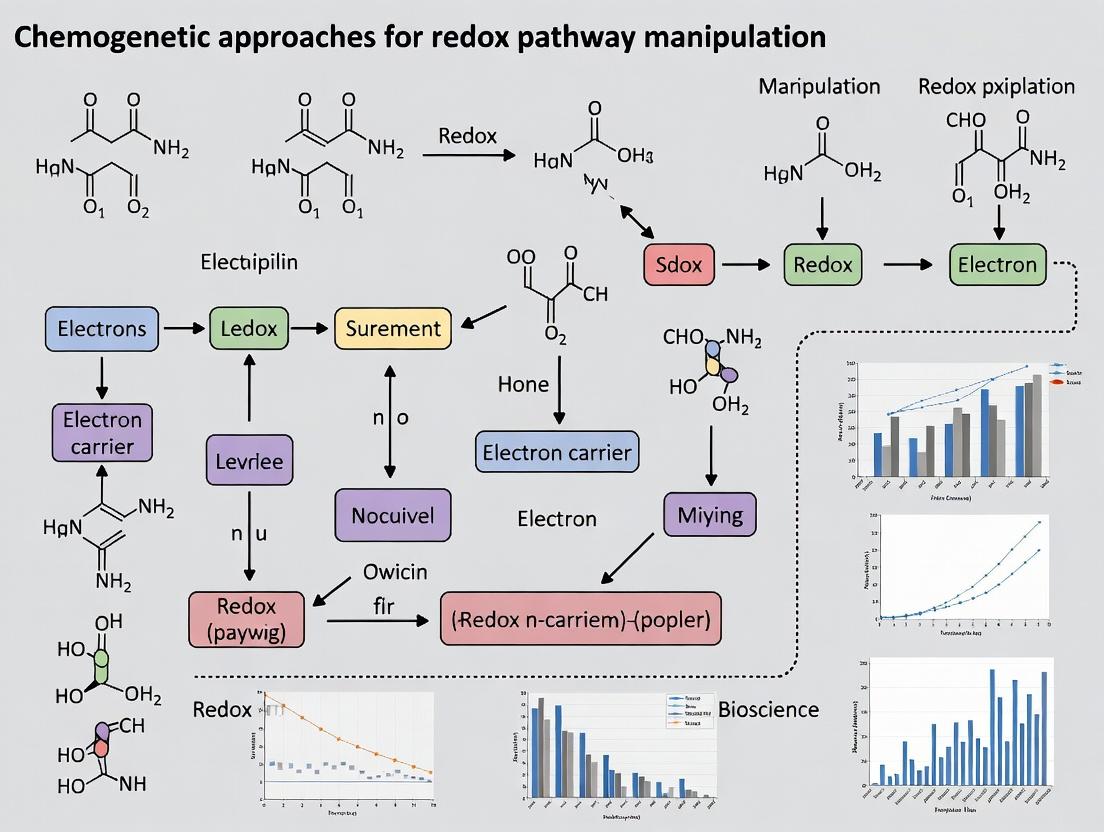
This article provides a comprehensive resource for researchers and drug development professionals on chemogenetic strategies to manipulate cellular redox pathways.
Chemogenetic Redox Engineering: A Guide to Controlling Cellular Signaling, Stress, and Disease Pathways for Researchers
Abstract
This article provides a comprehensive resource for researchers and drug development professionals on chemogenetic strategies to manipulate cellular redox pathways. We cover foundational redox biology principles and key molecular targets, detail the design and in vivo application of current chemogenetic tools like D-amino acid oxidase and engineered peroxidases, address critical troubleshooting and optimization challenges for specificity and delivery, and validate approaches through comparative analysis with pharmacological and genetic methods. The synthesis offers a strategic framework for leveraging chemogenetics to dissect redox mechanisms and develop novel therapeutic interventions.
The Redox Landscape: Core Principles, Molecular Players, and Druggable Targets for Chemogenetic Intervention
Cellular redox homeostasis is a dynamic equilibrium between pro-oxidant species—Reactive Oxygen Species (ROS) and Reactive Nitrogen Species (RNS)—and the antioxidant defense system. Within the thesis on chemogenetic approaches for redox pathway manipulation, precise understanding and measurement of these components are foundational. Chemogenetic tools allow for the targeted generation or scavenging of specific redox molecules in specific cellular compartments, enabling causal dissection of redox signaling versus oxidative stress pathways. This application note provides updated quantitative data, standardized protocols, and visualization tools essential for this research paradigm.
Quantitative Data: The Redox Species & Antioxidant Systems
Table 1: Major Cellular ROS/RNS Species: Sources and Half-Lives
| Species | Common Sources | Approximate Half-Life | Primary Detection Method |
|---|---|---|---|
| Superoxide (O₂•⁻) | Mitochondrial ETC, NOX enzymes | 1 microsecond | MitoSOX Red, HPLC-EC |
| Hydrogen Peroxide (H₂O₂) | Superoxide dismutation, oxidases | ~1 ms | HyPer, roGFP, Amplex Red |
| Hydroxyl Radical (•OH) | Fenton reaction | ~1 nanosecond | Spin traps (e.g., DMPO) |
| Peroxynitrite (ONOO⁻) | NO + O₂•⁻ reaction | ~10-20 ms | 3-nitrotyrosine detection |
| Nitric Oxide (•NO) | NOS enzymes | 1-5 seconds | DAF-FM, NO-sensitive electrodes |
Table 2: Core Enzymatic Antioxidant Systems
| System | Key Enzymes | Cofactor/Substrate | Chemogenetic Perturbation Example |
|---|---|---|---|
| Glutathione System | Glutathione peroxidase (GPx), Glutathione reductase (GR) | GSH, NADPH | AAV-delivered GPx4 overexpression or shRNA knockdown. |
| Thioredoxin System | Thioredoxin (Trx), Thioredoxin reductase (TrxR) | NADPH | Doxycycline-inducible TrxR1 dominant-negative mutant. |
| Catalase | Catalase | H₂O₂ (direct) | Chemogenetic H₂O₂ generation paired with catalase-targeted CRISPRi. |
| SOD Family | SOD1 (cytosol), SOD2 (mitochondria) | Cu/Zn, Mn | TET-ON SOD2 expression in specific cell types. |
Experimental Protocols
Protocol 1: Real-Time Monitoring of Cytosolic H₂O₂ using Genetically Encoded Sensor HyPer7 Objective: To quantify dynamic changes in cytosolic H₂O₂ upon chemogenetic activation of a engineered NOX enzyme (e.g., DAAO/Uricase system). Materials: Cells expressing HyPer7 (pH-stable version) and the chemogenetic H₂O₂-generating enzyme; Live-cell imaging medium; Ligand for chemogenetic system (e.g., D-Alanine for DAAO); Confocal or widefield fluorescence microscope. Procedure:
- Seed cells in a glass-bottom imaging dish. Transfect or transduce with HyPer7 and chemogenetic construct.
- 24-48h later, replace medium with live-cell imaging medium without phenol red.
- Set microscope with appropriate filters: Ex 420/40nm and 500/20nm, Em 535/30nm. Calculate ratio (R = F500/F420).
- Acquire baseline ratio images for 5 minutes.
- Add chemogenetic ligand (e.g., 10mM D-Alanine) directly to dish and continue time-lapse imaging for 20-30 minutes.
- Analyze ratio changes over time. Calibrate using bolus additions of known H₂O₂ concentrations and dithiothreitol (DTT) for full reduction. Note: Include controls expressing HyPer7 only to assess background changes.
Protocol 2: Assessing Glutathione Redox Potential (EGSH) using roGFP2-Grx1 Objective: To measure compartment-specific (e.g., mitochondrial) glutathione redox couple (GSH/GSSG) equilibrium following chemogenetic ROS induction. Materials: Cells expressing mito-roGFP2-Grx1; Live-cell imaging medium; 2mM H₂O₂ (oxidizing control); 10mM DTT (reducing control); Fluorescence microscope. Procedure:
- Prepare cells expressing the sensor as in Protocol 1.
- Image using ratiometric settings: Ex 410/25nm and 470/40nm, Em 525/50nm.
- Acquire baseline ratio (R = F410/F470).
- Perform full oxidation and reduction in situ by sequential perfusion with 2mM H₂O₂ (5 min) and 10mM DTT (5 min). Record ratios (Rox, Rred).
- The degree of oxidation (OxD) = (R - Rred) / (Rox - R_red).
- Calculate EGSH using Nernst equation: EGSH = E0 - (RT/nF) ln([GSH]²/[GSSG]), where E0 for roGFP2-Grx1 is -280 mV at 30°C.
- For experiments, treat cells with chemogenetic modulator and monitor OxD and EGSH dynamically.
The Scientist's Toolkit: Key Research Reagent Solutions
Table 3: Essential Reagents for Redox Chemogenetics
| Item | Function & Example | Application in Redox Manipulation |
|---|---|---|
| Chemogenetic H₂O₂ Generators | DAAO (D-amino acid oxidase) + D-Ala substrate. | Spatially/temporally controlled H₂O₂ production without external oxidants. |
| Targeted Antioxidants | Mito-TEMPO (mitochondria-targeted SOD mimetic). | Scavenges mitochondrial superoxide specifically; used as a rescue agent. |
| Redox-Sensitive GFPs | HyPer7, roGFP2-Orp1 (H₂O₂), roGFP2-Grx1 (EGSH). | Real-time, compartment-specific ratiometric imaging of redox states. |
| Small-Molecule Probes | MitoSOX Red (mito O₂•⁻), CellROX (general oxidative stress). | Endpoint or semi-quantitative assessment of ROS. |
| CRISPR Activation/Interference | dCas9-VPR (activation), dCas9-KRAB (inhibition) targeted to antioxidant gene promoters. | Transcriptional manipulation of endogenous antioxidant pathways. |
| Substrate-Limited Culture Media | Galactose media (forces mitochondrial ATP production). | Increases mitochondrial ROS baseline, enhancing sensitivity to redox perturbations. |
Visualization of Pathways and Workflows
Diagram 1: The Redox Homeostasis Network (100 chars)
Diagram 2: Chemogenetic Redox Experiment Workflow (79 chars)
Application Notes
Redox signaling, centered on hydrogen peroxide (H2O2), regulates critical cellular processes through the reversible oxidation of cysteine thiols in sensor proteins, ultimately modulating transcription factors like Nrf2 and NF-κB. Within chemogenetic research, targeted tools enable the precise generation or scavenging of H2O2 in specific cellular compartments, allowing for the dissection of pathway dynamics, target identification, and therapeutic validation.
1.1. H2O2 as a Specific Redox Messenger: Unlike other reactive oxygen species (ROS), H2O2 is relatively stable, membrane-diffusible, and acts as a deliberate second messenger. Its production is spatially and temporally regulated by enzymes like NADPH oxidases (NOXs). Chemogenetic tools such as genetically encoded D-amino acid oxidases (DAAOs) allow for controlled, substrate-dependent H2O2 production at defined locations.
1.2. Thiol Switches: The Molecular Targets: Key signaling proteins (e.g., phosphatases, kinases) contain redox-sensitive cysteine residues. Low, localized H2O2 fluxes lead to reversible modifications (e.g., sulfenylation, disulfide formation), altering protein function. Chemogenetic approaches utilize fusion proteins like HyPer (a H2O2 biosensor) and roGFP2-Orp1 (a sensor for thiol oxidation) to quantitatively monitor these events in real time.
1.3. Transcription Factor Regulation: Nrf2 and NF-κB represent pivotal redox-sensitive transcriptional nodes.
- Nrf2: Under basal conditions, Keap1 (a cysteine-rich sensor) targets Nrf2 for proteasomal degradation. Oxidation of specific Keap1 cysteines by H2O2 disrupts this complex, allowing Nrf2 nuclear translocation and transcription of Antioxidant Response Element (ARE)-driven genes.
- NF-κB: Redox regulation of NF-κB is context-dependent. H2O2 can activate the IκB kinase (IKK) complex upstream, but can also inhibit DNA binding via oxidation of a critical cysteine in the ReIA subunit. Chemogenetic H2O2 generation helps map these opposing effects.
1.4. Quantitative Data Summary:
Table 1: Key Chemogenetic Tools for Redox Pathway Manipulation
| Tool Name | Type | Mechanism of Action | Primary Readout/Application | Typical Dynamic Range/EC50 |
|---|---|---|---|---|
| DAAO (e.g., DAAO-mCherry) | H2O2 Generator | Converts D-amino acids (e.g., D-Ala) to H2O2 and corresponding keto acid. | Controlled, compartmentalized ROS production. | H2O2 production rate: ~5-40 µM/min per 10⁶ cells (depends on [D-Ala]). |
| HyPer7 | H2O2 Biosensor | Circularly permuted YFP fused to OxyR domain; fluorescence ratio changes upon H2O2 binding. | Real-time, rationetric quantification of cytosolic/nuclear H2O2. | Kd ~ 0.13 µM (HyPer7), excitation ratio 420/500 nm. |
| roGFP2-Orp1 | Thiol Oxidation Biosensor | roGFP2 fused to yeast oxidant receptor peroxidase 1; reflects glutathione redox potential via thiol-disulfide exchange. | Real-time measurement of compartment-specific thiol oxidation (e.g., in mitochondria). | Oxidation midpoint ~ -270 mV (pH 7.0). |
| Keap1-Nrf2 FRET Sensor | Protein-Protein Interaction Sensor | FRET pair flanking Keap1 and Nrf2; FRET loss upon oxidative dissociation. | Monitoring real-time Keap1-Nrf2 complex dissociation in cells. | FRET ratio change: 10-30% upon stimulation with 50-100 µM H2O2. |
Table 2: Redox-Sensitive Transcription Factor Parameters
| Transcription Factor | Primary Redox Sensor | Key Oxidative Modification | Outcome of Oxidation | Example Target Genes |
|---|---|---|---|---|
| Nrf2 | Keap1 (Cys151, Cys273, Cys288) | Cysteine sulfenylation/disulfide formation | Dissociation from Keap1, stabilization, nuclear translocation. | HMOX1, NQO1, GCLM, GCLC |
| NF-κB (p50/ReIA) | ReIA (Cys38 in DNA-binding loop) | Cysteine sulfenylation/S-glutathionylation | Inhibition of DNA binding, transcriptional repression. | IL6, TNFα, ICAM1 |
| IKK Complex | IKKβ (Cys179 in activation loop) | Disulfide bond formation? | Context-dependent activation or inhibition. | (Upstream regulator) |
Experimental Protocols
Protocol 1: Chemogenetic Generation and Measurement of H2O2 using DAAO and HyPer7
Objective: To induce and quantify localized H2O2 production in the cytosol of live cells.
Materials:
- HEK293T or HeLa cells expressing DAAO-mCherry (targeted to cytosol) and HyPer7 (cytosolic).
- Live-cell imaging medium (Phenol red-free, with 25 mM HEPES).
- D-Alanine (D-Ala) stock solution (1 M in PBS, sterile-filtered).
- Dimethyl sulfoxide (DMSO).
- Confocal or widefield fluorescence microscope with environmental control (37°C, 5% CO2) and capable of ratio-metric imaging.
Procedure:
- Cell Preparation: Seed cells expressing the constructs in a glass-bottom imaging dish 24-48h prior. On the day of imaging, replace medium with 2 mL pre-warmed live-cell imaging medium.
- Baseline Acquisition: Place dish on microscope. For HyPer7, acquire time-lapse images using two excitation wavelengths (Ex 420 nm and Ex 500 nm; Em 516 nm) every 30 seconds for 5 minutes. Calculate the 420/500 nm fluorescence ratio (R) for each time point.
- Stimulation: After acquiring 5 baseline points, add D-Ala to a final concentration of 10 mM directly to the dish (20 µL of 1 M stock). Gently swirl to mix. Continue time-lapse imaging for 20-30 minutes.
- Control: Perform a parallel experiment adding an equal volume of PBS (vehicle control).
- Calibration (Optional Endpoint): At the end of the experiment, add a bolus of H2O2 (final 100 µM) to obtain Rmax, followed by DTT (final 10 mM) to obtain Rmin. The calibrated ratio is (R - Rmin)/(Rmax - Rmin).
- Data Analysis: Plot the mean ratio (R or calibrated ratio) over time for the D-Ala and control conditions. The rate of ratio increase following D-Ala addition reports on the kinetics of DAAO-generated H2O2.
Protocol 2: Monitoring Keap1-Nrf2 Dissociation via FRET upon Thiol Oxidation
Objective: To visualize the real-time disruption of the Keap1-Nrf2 complex in response to chemically or genetically induced H2O2.
Materials:
- Cells stably expressing a CFP-Keap1 / Nrf2-YFP FRET construct.
- Live-cell imaging medium.
- Tert-Butyl hydroperoxide (tBHP) as a positive control oxidant (e.g., 200 µM).
- Sulforaphane (SFN, 10 µM) as a pharmacological Nrf2 activator control.
- Fluorescence microscope with FRET capabilities (filter sets for CFP, YFP, and FRET) and environmental control.
Procedure:
- Cell Preparation: Seed cells in an imaging dish as in Protocol 1.
- Image Acquisition: Acquire a time series (image every 60s) using three filter sets:
- CFP channel (Ex 430/24, Em 470/24).
- FRET channel (Ex 430/24, Em 535/30).
- YFP channel (Ex 500/20, Em 535/30).
- Baseline & Stimulation: Acquire 5 baseline time points. Add the experimental stimulus:
- Condition A: D-Ala (10 mM) for chemogenetic H2O2.
- Condition B: tBHP (200 µM) as a direct oxidant.
- Condition C: SFN (10 µM) as a cysteine-modifying agent.
- Condition D: Vehicle control.
- Continue Acquisition: Image for 45-60 minutes post-stimulation.
- FRET Calculation: Calculate the corrected FRET ratio (often FRET/CFP) for each cell and time point after background subtraction. A decrease in the FRET ratio indicates dissociation of Keap1 from Nrf2.
- Data Analysis: Normalize the FRET ratio to the pre-stimulation average (set as 100%). Plot normalized FRET ratio over time. Compare the kinetics and magnitude of dissociation between chemogenetic (D-Ala) and direct chemical (tBHP, SFN) induction.
Diagrams
Diagram 1: Chemogenetic H2O2 activates redox-sensitive transcription factors.
Diagram 2: Workflow for FRET-based Keap1-Nrf2 dissociation assay.
The Scientist's Toolkit: Research Reagent Solutions
Table 3: Essential Reagents for Chemogenetic Redox Signaling Research
| Reagent/Tool | Supplier Examples | Function in Experiment | Key Consideration |
|---|---|---|---|
| Genetically Encoded DAAO | Addgene (plasmids), custom cloning | Inducible, compartment-specific H2O2 generation. | Requires expression control and D-amino acid substrate (e.g., D-Ala). |
| D-Amino Acids (D-Ala, D-Asp) | Sigma-Aldrich, Tocris | Substrate for DAAO to trigger H2O2 production. | Use high-purity, sterile-filtered stocks. D-Ala is common. |
| HyPer Family Biosensors | Addgene (e.g., HyPer7, HyPer3) | Rationetric, specific live-cell measurement of H2O2 dynamics. | Choose sensor with appropriate affinity (Kd) and subcellular targeting. |
| roGFP2-Orp1 Biosensor | Addgene | Measures thiol oxidation state via glutathione redox coupling. | Ideal for organelles like mitochondria; requires ratio imaging. |
| FRET-based Keap1-Nrf2 Biosensor | Custom construct (published designs) | Real-time monitoring of the key protein-protein interaction. | Requires careful calibration and controls for photobleaching. |
| Cellular ROS Probes (e.g., CM-H2DCFDA) | Thermo Fisher, Abcam | General, non-rationetric detection of cellular ROS/oxidative stress. | Less specific than genetically encoded sensors; useful for validation. |
| Nrf2 Inhibitor (ML385) | Sigma-Aldrich, Selleckchem | Selectively blocks Nrf2 binding to ARE. | Used to confirm Nrf2-dependent phenotypes. |
| NF-κB Inhibitor (e.g., BAY 11-7082) | Sigma-Aldrich, Tocris | Inhibits IκBα phosphorylation. | Used to validate NF-κB pathway involvement. |
| Sulforaphane | Sigma-Aldrich, Cayman Chemical | Pharmacological inducer of Nrf2 via Keap1 cysteine modification. | Positive control for Nrf2 activation experiments. |
| Tet-On Inducible Expression System | Takara Bio, Clontech | Allows doxycycline-controlled expression of chemogenetic tools (DAAO). | Enables precise temporal control over H2O2 generation. |
Within the Thesis Context: These application notes support a chemogenetic thesis focused on precise, inducible manipulation of redox nodes (e.g., NRF2, KEAP1, NOX4, p66Shc, TXNIP) to dissect causality and identify therapeutic targets in disease-specific redox dysregulation.
Table 1: Key Redox Parameters in Disease Models vs. Healthy Controls
| Disease Area | Model System | Key Altered Parameter | Change vs. Control | Reported Implications |
|---|---|---|---|---|
| Cancer (PDAC) | Human PDAC cell lines (e.g., PANC-1) | Mitochondrial ROS (mROS) | +150-300% (DCFDA/MitoSOX) | Promotes proliferation, HIF-1α stabilization |
| Neurodegeneration (AD) | APP/PS1 mouse brain (cortex) | Lipid peroxidation (4-HNE) | +80-120% (IHC/WB) | Synaptic dysfunction, neuronal death |
| Metabolic Disorder (NAFLD) | HFD-fed mouse liver | Glutathione (GSH/GSSG) ratio | Decrease from ~20 to ~5 | Sensitizes to inflammatory injury |
| General Aging | p66Shc-/- mouse fibroblasts | Cellular H₂O₂ (HyPer probe) | -40% (fluorescence) | Linked to increased lifespan |
Core Experimental Protocols
Protocol 2.1: Chemogenetic Activation of the NRF2 Pathway Using KEAP1-Nullifer Molecules
- Objective: To induce endogenous NRF2 stabilization and antioxidant gene transcription in a time- and dose-dependent manner.
- Materials: Cell line of interest (e.g., HepG2), RTA-408 (or similar KEAP1 binder), NRF2 Reporter Plasmid (ARE-luciferase), qPCR reagents for HMOX1, NQO1.
- Procedure:
- Seed cells in 96-well plates for reporter assay or 6-well plates for gene expression.
- Transfert with ARE-luciferase plasmid if using reporter line.
- Treat cells with a concentration gradient of RTA-408 (e.g., 0.1, 0.5, 1.0 µM) for 6, 12, 24 hours.
- Luciferase Assay: Lyse cells, add substrate, measure luminescence.
- Gene Expression: Isolate RNA, perform reverse transcription, run qPCR for HMOX1 and NQO1 using GAPDH as control.
- Validation: Confirm NRF2 nuclear translocation via immunofluorescence.
Protocol 2.2: Quantifying Compartment-Specific ROS Using Genetically Encoded Sensors
- Objective: To measure real-time, compartment-specific ROS (e.g., H₂O₂) fluctuations upon chemogenetic intervention.
- Materials: Cells expressing roGFP2-Orp1 (cytosolic H₂O₂) or mito-roGFP2-Grx1 (mitochondrial H₂O₂), fluorescence plate reader/confocal microscope, DTT (reducing control), H₂O₂ (oxidizing control).
- Procedure:
- Establish stable cell line expressing sensor.
- Seed cells in black-walled, clear-bottom 96-well plates.
- In plate reader, collect dual-excitation (400 nm/485 nm) fluorescence, with emission at 520 nm.
- Calculate ratiometric value (400nm/485nm).
- Perform in situ calibration per experiment: Add 5mM DTT (Rmin), wash, then add 2mM H₂O₂ (Rmax).
- Application: Treat cells with chemogenetic tool (e.g., NOX activator). The degree of sensor oxidation is calculated as: (Rsample - Rmin) / (Rmax - Rmin).
Protocol 2.3: In Vivo Assessment of Redox State in a Chemogenetic Mouse Model
- Objective: To evaluate systemic redox effects of a chemogenetic NRF2 activator in a disease model.
- Materials: C57BL/6 mice on HFD (for NAFLD model), CDDO-Me (NRF2 activator), tissue homogenizer.
- Procedure:
- Randomize HFD mice into Vehicle and CDDO-Me (5 mg/kg/d, oral gavage) groups (n=8).
- Treat for 8 weeks. Monitor weight.
- Euthanize, collect liver, blood.
- Tissue Analysis: Homogenize liver. Use commercial kits for: Total glutathione, Lipid peroxidation (MDA/TBARS assay), Catalase activity.
- Serum Analysis: Measure 8-isoprostane (ELISA) as a non-invasive oxidative stress marker.
- Correlate redox parameters with histology (steatosis score).
Visualizations (Pathways & Workflows)
Title: Chemogenetic NRF2 Activation via KEAP1 Inhibition
Title: Workflow for roGFP2 Redox State Measurement
The Scientist's Toolkit: Key Research Reagent Solutions
Table 2: Essential Reagents for Chemogenetic Redox Research
| Reagent/Tool | Function & Application | Example Product/Catalog |
|---|---|---|
| KEAP1-NRF2 Protein-Protein Interaction Inhibitor | Chemogenetically disrupts the KEAP1-NRF2 complex, inducing ARE-driven gene transcription. | RTA-408 (Omaveloxolone); ML334 |
| Genetically Encoded Redox Sensors (roGFP2) | Ratiometric, real-time measurement of compartment-specific (cytosol, mitochondria) H₂O₂ or glutathione redox potential. | pCyt-roGFP2-Orp1; pMito-roGFP2-Grx1 |
| NOX Isoform-Specific Inhibitors/Activators | Targeted pharmacological manipulation of specific reactive oxygen species (ROS) sources. | GKT137831 (NOX1/4 inhibitor); VAS2870 (pan-NOX inhibitor) |
| Thiol-Reactive Fluorescent Probes (Cell-Permeant) | General assessment of cellular oxidative stress via glutathione depletion or protein thiol oxidation. | CM-H2DCFDA (general ROS); Monochlorobimane (GSH) |
| NRF2/ARE Pathway Reporter Kit | Luciferase-based readout for screening activators/inhibitors of the NRF2 antioxidant pathway. | Cignal Lenti ARE Reporter (Qiagen, CLS-2020L) |
| Comprehensive Antioxidant Assay Kits | Quantify key endogenous antioxidant molecules and enzyme activities from tissue/cell lysates. | Total Glutathione Assay Kit (Cayman, 703002); Lipid Hydroperoxide Assay Kit (Cayman, 705003) |
Traditional pharmacology, relying on systemic drug administration, faces significant limitations in studying redox pathways. Off-target effects, temporal delay, and lack of cellular specificity obscure precise causal relationships. Chemogenetics, using engineered receptors and bioorthogonal small molecules, overcomes these barriers by enabling spatiotemporally precise manipulation of redox signaling nodes. These Application Notes detail protocols for chemogenetic control in redox research.
Application Notes: Chemogenetic Targeting of Key Redox Nodes
Chemogenetic systems allow for the selective activation or inhibition of redox-regulated proteins within defined cell populations and time windows. This precision is critical for dissecting the role of transient reactive oxygen species (ROS) bursts or the function of specific antioxidant enzymes in complex physiological and disease models.
Table 1: Comparison of Pharmacological vs. Chemogenetic Manipulation of Redox Pathways
| Parameter | Traditional Pharmacology (e.g., NADPH Oxidase Inhibitor Apocynin) | Chemogenetic Approach (e.g., DREADD-iNOX Platform) |
|---|---|---|
| Onset/Offset Kinetics | Slow (minutes to hours), dependent on pharmacokinetics | Rapid (seconds to minutes), controlled by ligand addition/washout |
| Spatial/Cellular Specificity | Low; affects all cell types expressing the target | High; restricted to genetically defined cell populations (e.g., Cre-Lox) |
| Off-Target Effects | High (e.g., Apocynin acts as a general antioxidant) | Minimal; inert ligand (e.g., CNO, DCZ) binds only engineered receptor |
| Target Engagement Precision | Binds endogenous off-targets with similar affinity | Designed for exceptional bioorthogonality |
| Utility in In Vivo Causal Linking | Poor; systemic effects confound interpretation | Excellent; enables cell-type-specific gain/loss-of-function in behaving animals |
Detailed Protocols
Protocol 1: Establishing a DREADD-GEF Fusion System for Spatiotemporally Controlled Rac1/NOX2 Activation This protocol enables precise, ligand-induced ROS generation by recruiting a Rac1 guanine exchange factor (GEF) to activate membrane-bound NOX2.
Materials: See "Research Reagent Solutions" below. Procedure:
- Construct Design: Clone the sequence for hM3Dq DREADD, fused via a P2A linker to the catalytic domain of the Rac1-GEF Tiam1, into an AAV vector under a cell-type-specific promoter (e.g., CaMKIIa for neurons).
- Viral Production & Validation: Package the AAV construct (serotype AAV9 for in vivo neuronal transduction) and titer. Validate DREADD-GEF expression and membrane localization via immunocytochemistry in HEK293T cells.
- Cell/Animal Model Preparation:
- In Vitro: Transduce primary cultured cells (e.g., microglia) with AAV at an MOI of 10⁵.
- In Vivo: Stereotactically inject 500 nL of AAV (titer ≥ 1x10¹³ GC/mL) into the brain region of interest in Cre-driver mice.
- Allow ≥ 3 weeks for robust in vivo expression.
- Chemogenetic Stimulation & ROS Detection:
- Prepare a 10 mM stock of DCZ (deschloroclozapine) in DMSO. Dilute to working concentration (1-10 µM in vitro; 0.1 mg/kg for in vivo i.p. injection).
- For live-cell ROS imaging: Load cells with 5 µM CellROX Green reagent 30 minutes prior to imaging. Acquire baseline images, add DCZ (1 µM), and monitor fluorescence (Ex/Em ~485/520 nm) every 30 seconds for 20 minutes.
- For endpoint assay: Treat cells with DCZ for 15 minutes, then lyse for Rac1-GTP pulldown assays using PAK-PBD beads, followed by Rac1 immunoblotting.
Protocol 2: Chemogenetic Inhibition via engineered Keap1 (eKeap1) for NRF2 Pathway Activation This protocol uses a destabilized domain fused to Keap1, allowing ligand-dependent shielding from degradation and thus controlled NRF2 antioxidant response.
Procedure:
- Construct Design: Engineer a fusion protein of murine Keap1 with a destabilizing domain (DD, e.g., FKBP12⁶⁷⁷) that is stabilized by the small molecule Shield-1. Clone into a lentiviral vector with a GFP reporter.
- Cell Line Generation: Transduce your target cell line (e.g., cardiomyocytes) with the lentivirus and select with puromycin (2 µg/mL) for 1 week. FACS-sort GFP-positive cells to obtain a stable line.
- Validation of Inducible System:
- Treat cells with 1 µM Shield-1 or vehicle for 24 hours.
- Perform Western blot for Keap1 (expected: increased signal with Shield-1) and NRF2 downstream target HO-1 (expected: decreased signal with Shield-1 due to Keap1 stabilization and NRF2 inhibition).
- Application in an Oxidative Stress Model:
- Pre-treat eKeap1-expressing cells with 1 µM Shield-1 for 12 hours to stabilize Keap1 and suppress basal NRF2 activity.
- Wash out Shield-1 and immediately induce oxidative stress (e.g., 200 µM H₂O₂).
- At time points (1h, 4h, 8h) post-stress, assay for NRF2 nuclear translocation (immunofluorescence) or transcript levels of HMOX1 and NQO1 (qPCR).
Visualizations
Diagram Title: Pharmacology vs Chemogenetic Specificity
Diagram Title: In Vivo DREADD-GEF ROS Induction Workflow
The Scientist's Toolkit: Research Reagent Solutions
| Item | Function & Application |
|---|---|
| DREADD Ligands (DCZ, CNO) | Bioorthogonal small molecules that potently and selectively activate designer receptors. DCZ is preferred for in vivo due to higher potency and fewer metabolite concerns. |
| AAV vectors (Serotype 9, PHP.eB) | For efficient in vivo delivery of chemogenetic constructs to brain cells (neurons, glia). PHP.eB enables non-invasive crossing of the blood-brain barrier in mice. |
| Cre-Driver Mouse Lines | Provide genetic access to specific cell types (e.g., Sst-IRES-Cre for somatostatin neurons) for conditional expression of chemogenetic tools. |
| CellROX / H2DCFDA | Cell-permeable fluorescent probes that become brightly fluorescent upon oxidation, used for real-time detection of ROS in live cells. |
| Rac1 Activation Assay Kit | Biochemically measures Rac1-GTP levels via PAK-PBD domain pull-down, a key readout for NOX pathway activation. |
| Shield-1 | Small molecule ligand that stabilizes engineered FKBP12 destabilizing domains (DDs), used to control protein stability in systems like eKeap1. |
| Tet-ON/OFF Systems | Alternative to DREADDs for temporal control; allows chemogenetic transcription of redox proteins via doxycycline. |
Toolkit in Action: Designing, Delivering, and Applying Chemogenetic Redox Probes and Enzymes
Chemogenetic approaches enable precise, spatiotemporal control over cellular processes. The engineered enzymes DAAO, KillerRed, and MiniSOG represent a critical chemogenetic toolkit for the direct manipulation of cellular redox pathways. By generating reactive oxygen species (ROS) in a controlled manner, these systems allow researchers to induce oxidative stress, dissect redox signaling networks, model oxidative damage pathologies, and explore novel therapeutic strategies centered on selective oxidative cell death.
Comparative Analysis of Engineered ROS-Generating Enzymes
Table 1: Core Characteristics of DAAO, KillerRed, and MiniSOG Systems
| Feature | D-Amino Acid Oxidase (DAAO) | KillerRed | MiniSOG (Mini Singlet Oxygen Generator) |
|---|---|---|---|
| ROS Type | Hydrogen Peroxide (H₂O₂) | Superoxide (O₂•⁻) predominantly | Singlet Oxygen (¹O₂) |
| Catalytic Mechanism | Flavin-dependent oxidation of D-amino acids | Light-induced (λ~580 nm) electron transfer from chromophore | Light-induced (λ~448 nm) energy transfer from flavin |
| Activator/Substrate | D-Alanine (commonly used), other D-amino acids | Blue-Green Light (~580 nm) | Blue Light (~448 nm) |
| Genetic Encodability | Yes (typically from Rhodotorula gracilis) | Yes | Yes |
| Spatial Precision | Substrate-dependent diffusion | Very High (light-targetable) | Very High (light-targetable) |
| Temporal Precision | Moderate (min-scale, depends on substrate addition/washout) | Very High (sec-min, light-controlled) | Very High (sec-min, light-controlled) |
| Primary Applications | Chronic ROS models, regional oxidative stress, target validation | Focal cellular ablation, organelle-specific ROS bursts, PDT studies | Correlative LM/EM, nanoscale protein tagging, localized ¹O₂ damage |
| Key Advantage | No external hardware needed beyond substrate; sustained ROS production. | Exception high ROS yield per photon; robust phototoxicity. | Small tag (106 aa); compatible with EM; pure ¹O₂ production. |
Table 2: Quantitative Performance Metrics
| Parameter | DAAO + D-Ala | KillerRed (Illuminated) | MiniSOG (Illuminated) |
|---|---|---|---|
| Activation Wavelength | N/A | 540-580 nm (Optimal ~580 nm) | 448 nm |
| ROS Production Rate | ~10-30 µM H₂O₂/min/10⁶ cells* | Quantum yield for O₂•⁻: ~0.03-0.04 | Quantum yield for ¹O₂: ~0.03-0.04 |
| Cytotoxicity Onset | Hours to days (tunable via [substrate]) | Minutes of illumination (wattage-dependent) | Minutes of illumination (wattage-dependent) |
| Localization Versatility | Cytosol, peroxisomes, mitochondria (via targeting sequences) | Cytosol, membrane, nucleus, specific organelles | Cytosol, membrane, nucleus, specific organelles; EM tags. |
*Rate is highly variable based on expression level and D-Ala concentration.
Application Notes & Detailed Protocols
Protocol 1: DAAO-Mediated Chronic Oxidative Stress in Cultured Cells
Objective: To establish a sustained, tunable H₂O₂ stress model for studying adaptive redox signaling or chronic cytotoxicity.
Research Reagent Solutions & Materials:
- pDAAO-Expression Vector: Plasmid encoding R. gracilis DAAO, often with a peroxisomal targeting signal (SKL) or other organelle-specific tag.
- D-Alanine Stock Solution: 1M in PBS, sterile-filtered (pH 7.4). Primary substrate.
- Catalase (from bovine liver): Control enzyme to scavenge H₂O₂ and confirm phenotype is ROS-specific.
- CellROX Green / DCFH-DA: Fluorescent probes for general ROS detection.
- Amplex Red Reagent: Specific fluorogenic assay for extracellular H₂O₂ quantification.
Methodology:
- Transfection: Seed HeLa or HEK293 cells in 24-well plates. At 60-80% confluency, transfect with the DAAO expression plasmid using a standard transfection reagent (e.g., Lipofectamine 3000). Include an empty vector control.
- Expression: Allow 24-48 hours for protein expression.
- Substrate Application & Stress Induction: Replace medium with fresh, serum-containing medium. Add D-Alanine from the stock solution to achieve final concentrations ranging from 1-10 mM for titration. For controls, treat cells with medium only or medium + D-Ala on empty vector cells.
- Phenotypic Analysis:
- Viability: At 24-72h post-substrate addition, assess using MTT or CellTiter-Glo assays.
- ROS Detection: 6-24h after D-Ala addition, load cells with 5 µM CellROX Green in serum-free medium for 30 min. Wash, image via fluorescence microscopy, or measure fluorescence in a plate reader.
- Pathway Analysis: Harvest lysates for Western blotting of redox-sensitive pathways (e.g., phospho-p38, phospho-JNK, Nrf2, HO-1).
Protocol 2: KillerRed-Mediated Focal Photocytotoxicity
Objective: To achieve light-directed ablation of specific cells or subcellular compartments.
Research Reagent Solutions & Materials:
- KillerRed Expression Construct: Vectors available for cytosolic (pcDNA3-KillerRed) or targeted expression (e.g., KillerRed-Mito, -Actin).
- Light Source: LED or laser system emitting at 540-580 nm. A confocal microscope with a 561 nm laser is ideal.
- Live-Cell Imaging Medium: Phenol-red free medium with HEPES.
- Propidium Iodide (PI) / SYTOX Green: Cell-impermeant dyes for real-time death monitoring.
- Antioxidants (NAC, Trolox): Negative controls to rescue phototoxicity.
Methodology:
- Cell Preparation: Plate cells on glass-bottom dishes. Transfect with the KillerRed construct 24-48h prior to imaging.
- Setup & Control: Switch to live-cell imaging medium. Add PI (1 µg/mL) to the medium. Locate a field of view containing both KillerRed-positive and negative cells.
- Focal Illumination & Ablation:
- Using a confocal microscope, define a region of interest (ROI) over a single KillerRed-expressing cell or a specific organelle.
- Set the 561 nm laser to 50-100% power (typical settings; requires optimization). Acquire a brief pre-illumination image.
- Illuminate the defined ROI continuously for 30 seconds to 5 minutes while monitoring PI fluorescence (ex/em ~561/615 nm) in real time.
- Analysis: Observe the kinetics of PI influx into the illuminated cell versus adjacent non-illuminated control cells. Quantify time-to-death or changes in cell morphology.
Protocol 3: MiniSOG for Correlative Light & Electron Microscopy (CLEM)
Objective: To use MiniSOG for both light microscopy imaging and subsequent ultrastructural localization via EM.
Research Reagent Solutions & Materials:
- MiniSOG Fusion Construct: Tag gene of interest with MiniSOG (e.g., pMINI-SOG-C1).
- DAB (3,3'-Diaminobenzidine) Stock: Prepare 10 mg/mL in DMSO, store at -20°C. Acts as an electron donor for photooxidation.
- Glutaraldehyde: Electron microscopy grade (2.5% in cacodylate buffer). Fixative.
- Osmium Tetroxide: Provides electron density to the polymerized DAB reaction product.
- Blue Light Source: LED lamp centered at 448 nm or a fluorescence microscope with a standard FITC/DAPI filter set.
Methodology:
- Expression & Live Imaging: Express MiniSOG-fusion protein in cells. Image live or fixed cells using standard GFP filters to confirm localization.
- Chemical Fixation: Fix cells in 2% formaldehyde/2.5% glutaraldehyde in 0.1M cacodylate buffer for 1h at RT.
- Photooxidation Reaction:
- Wash cells thoroughly with 0.1M cacodylate buffer.
- Incubate with DAB solution (1 mg/mL in cacodylate buffer, freshly made from stock) for 30-60 min in the dark.
- Place the sample under a blue light source (e.g., within a fluorescence microscope). Illuminate for 5-15 minutes until a brown precipitate is visually observed.
- EM Processing: Wash samples, post-fix in 1% osmium tetroxide for 30 min, then proceed through standard dehydration (ethanol series), embedding (Epon resin), and ultrathin sectioning. No further heavy metal staining is typically required.
- Imaging: Image sections via transmission electron microscopy. MiniSOG-tagged proteins will appear as electron-dense deposits at the site of DAB polymerization.
Pathway & Workflow Visualizations
Title: ROS Generation Pathways of DAAO, KillerRed, and MiniSOG
Title: Selection Workflow for Engineered ROS Enzymes
The Scientist's Toolkit: Key Research Reagents
Table 3: Essential Reagents for Engineered ROS Enzyme Research
| Reagent | Primary Function | Example Use Case |
|---|---|---|
| D-Alanine | Small-molecule substrate for DAAO enzyme. | Inducing sustained H₂O₂ production in DAAO-expressing cells. |
| CellROX Oxidative Stress Probes | Fluorogenic dyes that exhibit bright fluorescence upon oxidation by ROS. | Real-time visualization and quantification of general ROS levels in live cells. |
| Amplex Red Assay Kit | Highly sensitive, specific fluorometric detection of H₂O₂. | Quantifying extracellular H₂O₂ flux from DAAO-expressing cells. |
| Sodium Azide (NaN₃) | Quencher of singlet oxygen (¹O₂) and inhibitor of catalase. | Confirming MiniSOG's ¹O₂-mediated effects or modulating H₂O₂ degradation. |
| MitoTEMPO / MitoQ | Mitochondria-targeted antioxidants (SOD mimetic / ubiquinone). | Scavenging mitochondrial superoxide in KillerRed-Mito experiments. |
| Propidium Iodide (PI) | Cell-impermeant nucleic acid stain for dead cells. | Real-time monitoring of KillerRed-induced plasma membrane rupture. |
| DAB (3,3'-Diaminobenzidine) | Chromogenic/electron-dense substrate for photooxidation. | Generating an EM-visible polymer at the site of MiniSOG activity for CLEM. |
| LED Light Sources (448nm, 580nm) | Precise, cool illumination for photoactivating KillerRed or MiniSOG. | Inducing ROS production with minimal heat damage in live-cell experiments. |
| N-Acetylcysteine (NAC) | Broad-spectrum antioxidant (precursor to glutathione). | Negative control to rescue ROS-induced phenotypes across all systems. |
Within chemogenetic approaches for redox pathway manipulation research, precise control over reactive oxygen species (ROS) levels is paramount. This set of application notes details the use of two principal chemogenetic tool classes: genetically encoded targeted peroxidases (HyPer7 and APEX2) and synthetic superoxide dismutase (SOD) mimics. These tools enable the selective scavenging of H₂O₂ or superoxide (O₂⁻) in defined subcellular locales or systemically, allowing for the dissection of redox signaling and damage pathways.
Targeted Peroxidases: HyPer7 & APEX2
1.1. Overview and Mechanism Targeted peroxidases are engineered proteins that catalyze the reduction of H₂O₂ to H₂O. Their genetic encoding allows for precise subcellular targeting via fusion with localization peptides.
- HyPer7: An improved genetically encoded fluorescent sensor and scavenger based on the OxyR transcription factor. It acts as a peroxiredoxin mimic, exhibiting high catalytic rate and specificity for H₂O₂, while also providing a ratiometric fluorescent readout.
- APEX2 (Ascorbate Peroxidase 2): An engineered peroxidase that, in the presence of H₂O₂, oxidizes phenolic substrates like boronates (e.g., PF6-EDA-biotin) to generate phenoxyl radicals. These radicals rapidly tag proximal endogenous proteins with biotin for subsequent pull-down and mass spectrometry, enabling spatiotemporally resolved proteomic mapping of H₂O₂ microenvironments.
Table 1: Comparison of Targeted Peroxidases
| Feature | HyPer7 | APEX2 |
|---|---|---|
| Primary Function | Ratiometric sensing & scavenging of H₂O₂ | Proximity labeling & scavenging of H₂O₂ |
| Catalytic Rate (kcat/M⁻¹s⁻¹) | ~2.0 x 10⁵ | ~2.3 x 10⁵ |
| H₂O₂ Specificity | High. Minimal reaction with other peroxides. | High. |
| Key Substrate/Readout | Endogenous cellular reductants; Fluorescence (Ex488/Ex405) | Exogenous Boronates (e.g., PF6-EDA-biotin) |
| Typical Application | Live-cell dynamic H₂O₂ quantification & depletion | Proximity-dependent proteomics (APEX-seq), EM labeling |
| Optimal Targeting | Cytosol, Mitochondria, Nucleus, ER | Mitochondrial matrix, Outer mitochondrial membrane, Peroxisome |
1.2. Protocol: APEX2-Mediated Proximity Labeling for Redox Microenvironment Proteomics Objective: Identify proteins within a specific subcellular compartment experiencing elevated H₂O₂ flux. Reagents: APEX2 fusion construct, PF6-EDA-biotin (Iris Biotech), H₂O₂, Streptavidin beads, Quenching Solution (Trolox, Sodium ascorbate, Sodium azide in PBS).
Procedure:
- Transfection & Expression: Transfect cells with your organelle-targeted APEX2 construct (e.g., APEX2-NES, APEX2-Mito). Culture for 24-36h.
- Labeling:
- Prepare labeling medium (phenol-red-free) containing 500 µM PF6-EDA-biotin.
- Pre-warm medium to 37°C. Replace cell culture medium with labeling medium.
- Incubate for 30 min to allow substrate diffusion.
- Initiate Labeling: Add 1 mM H₂O₂ (final concentration) to the medium. Incubate for exactly 1 minute.
- Quenching & Wash:
- Rapidly aspirate labeling medium and wash cells twice with 5 mL of ice-cold Quenching Solution.
- Wash twice more with ice-cold 1x PBS.
- Cell Lysis & Streptavidin Pull-down:
- Lyse cells in RIPA buffer supplemented with protease inhibitors.
- Clarify lysate by centrifugation (16,000 x g, 10 min, 4°C).
- Incubate supernatant with pre-washed streptavidin magnetic beads for 90 min at 4°C.
- Wash beads stringently (RIPA, 1M KCl, 100mM Na₂CO₃, 2M Urea).
- On-bead Digestion & MS Analysis:
- Perform on-bead tryptic digestion.
- Analyze eluted peptides by LC-MS/MS. Compare against APEX2-negative controls to identify enriched proteins.
1.3. Protocol: HyPer7 for Live-Cell H₂O₂ Scavenging & Quantification Objective: Scavenge and monitor H₂O₂ dynamics in the mitochondrial matrix. Reagents: HyPer7-Mito plasmid, Live-cell imaging medium, Antimycin A (for ROS induction).
Procedure:
- Cell Preparation: Seed cells in an imaging-grade dish. Transfect with HyPer7-Mito plasmid.
- Imaging Setup: Use a confocal or widefield fluorescence microscope with environmental control (37°C, 5% CO₂). Set up dual-excitation channels: Ex405 nm (H₂O₂-insensitive isosbestic point) and Ex488 nm (H₂O₂-sensitive). Collect emission at 510-530 nm.
- Ratiometric Measurement:
- Acquire a baseline (t=0) ratio image (F488/F405).
- Treat cells with a redox modulator (e.g., 1 µM Antimycin A to induce mitochondrial superoxide/H₂O₂ production).
- Acquire time-lapse images every 30 seconds for 15-20 minutes.
- Data Analysis: Calculate the 488/405 ratio (R) for each time point. Normalize to the baseline ratio (R₀). The normalized ratio (R/R₀) is proportional to H₂O₂ concentration. HyPer7 simultaneously scavenges H₂O₂, blunting the observed signal.
Superoxide Dismutase Mimics
2.1. Overview and Mechanism SOD mimics are low-molecular-weight, redox-active metal complexes that catalytically dismutate O₂⁻ to H₂O₂ and O₂, analogous to native SOD enzymes. Their cell-permeability allows for systemic or compartment-targeted delivery.
Table 2: Common SOD Mimics in Research
| Compound | Metal Center | Key Property | Common Research Application |
|---|---|---|---|
| MnTBAP | Mn(III) | Porphyrin-based, broad antioxidant activity | In vivo models of oxidative stress (e.g., ischemia-reperfusion). |
| Mn(III) Salen Complexes (EUK-8, EUK-134) | Mn(III) | Combined SOD and catalase mimic activity | Neurodegeneration, inflammation, and aging studies. |
| Mn(II) Cyclic Polyamine (GC4419) | Mn(II) | High catalytic activity, selectivity for O₂⁻ | Mitigation of radiation-induced toxicity (Phase III). |
| Mn(II) Pentaazamacrocycle (M40403) | Mn(II) | Non-peptidic, highly selective for O₂⁻ over H₂O₂ | Inflammatory pain, vascular dysfunction models. |
2.2. Protocol: Assessing SOD Mimic Efficacy in a Cellular Model Objective: Evaluate the protective effect of a SOD mimic (e.g., GC4419) against paraquat-induced superoxide cytotoxicity. Reagents: GC4419, Paraquat, Cell viability assay (e.g., MTT or Calcein-AM), DHE (Dihydroethidium) for O₂⁻ detection.
Procedure:
- Cell Treatment: Plate cells in 96-well plates. Pre-treat with a range of GC4419 concentrations (1-100 µM) for 2 hours.
- Oxidative Challenge: Add paraquat (1 mM final concentration) to induce superoxide production in mitochondria. Co-incubate for 18-24 hours.
- Viability Assessment:
- MTT Assay: Add MTT reagent (0.5 mg/mL final), incubate 3-4h. Solubilize formazan crystals with DMSO. Measure absorbance at 570 nm.
- Calcein-AM Assay: Add Calcein-AM (2 µM final), incubate 30 min. Measure fluorescence (Ex485/Em535).
- Superoxide Measurement (Parallel Experiment):
- In a separate plate, load cells with 10 µM DHE for 30 min after paraquat treatment.
- Wash and measure fluorescence (Ex518/Em605) corresponding to oxidized ethidium products.
- Analysis: Plot cell viability (%) and relative DHE fluorescence against SOD mimic concentration to determine EC₅₀ for protection.
The Scientist's Toolkit: Research Reagent Solutions
| Item | Function & Application |
|---|---|
| PF6-EDA-biotin | Cell-permeable biotin-phenol substrate for APEX2. Critical for proximity-dependent biotinylation in live cells. |
| Streptavidin Magnetic Beads | For high-affinity capture of biotinylated proteins from APEX2-labeled lysates prior to MS. |
| HyPer7 Plasmid Series | Genetically encoded tool for simultaneous ratiometric measurement and scavenging of H₂O₂ in specified compartments. |
| GC4419 (Avasopasem Manganese) | Potent, selective small-molecule SOD mimic. Used to dissect superoxide-specific pathways in vitro and in vivo. |
| MitoPY1 / MitoSOX Red | Mitochondria-targeted fluorescent probes for H₂O₂ and superoxide detection, respectively. Used to validate scavenger efficacy. |
| Antimycin A / Paraquat | Pharmacological inducers of mitochondrial and cytosolic superoxide production, used to create controlled oxidative challenge. |
| Trolox / Sodium Ascorbate | Essential components of the APEX2 quenching solution. Halt the radical labeling reaction instantly to minimize background. |
Visualizations
Diagram 1: Targeted Peroxidases: HyPer7 vs APEX2 Mechanisms (100 chars)
Diagram 2: ROS Scavenging Tool Selection Workflow (100 chars)
Chemogenetic approaches for redox pathway manipulation aim to achieve precise, temporal control over the production, localization, and activity of reactive oxygen and nitrogen species (ROS/RNS). Chemically-Induced Dimerization (CID) is a cornerstone technique within this toolkit, enabling the rapid and reversible recruitment of redox-active proteins to specific cellular compartments or effector complexes using cell-permeable, biologically inert small molecules. This application note details protocols and considerations for employing CID systems to control key redox nodes, such as NADPH oxidases (NOX), glutathione peroxidases, and cytochrome components, facilitating the dissection of redox signaling dynamics and their roles in disease.
Comparative Analysis of Major CID Systems for Redox Control
The choice of CID system is critical and depends on factors such as kinetics, reversibility, basal dimerization, and small-molecule properties. The table below summarizes the characteristics of the primary systems used in redox studies.
Table 1: Key CID Systems for Redox Protein Control
| CID System | Dimerizer | Dimerizer Characteristics | Binding Domains | Key Advantages for Redox Studies | Potential Limitations |
|---|---|---|---|---|---|
| FKBP-FRB | Rapamycin / Rapalogs (e.g., iRap) | Natural product, ~1 nM Kd, cell-permeable, reversible upon washout. | FKBP12 (12 kDa) and FRB (11 kDa). | Rapid induction (secs-mins), high specificity, widely validated. | Off-target effects of rapamycin (mTOR inhibition); requires analog use. |
| GAI-GID1 | Gibberellin (GA3) / GA3-AM | Plant hormone, synthetic AM ester improves permeability, ~100 nM Kd, reversible. | GAI (10 kDa) and GID1 (12 kDa). | Bio-orthogonal in mammalian cells, minimal off-targets, good reversibility. | Slower kinetics (mins), potential photoisomerization issues. |
| ABI-PYL1 | Abscisic Acid (ABA) | Plant hormone, ~100 nM Kd, highly cell-permeable, reversible. | ABI (13 kDa) and PYL1 (20 kDa). | Highly bio-orthogonal, excellent for in vivo studies, good reversibility. | Dimerization can be less tight than FKBP-FRB; possible endogenous ABA in some tissues. |
| dCas9-FKBP/FRB | Rapalog | Combined with sgRNA targeting. | FKBP/FRB fused to nuclease-dead Cas9 (dCas9). | Enables genomic locus-specific recruitment of redox effectors (e.g., NOX to promoters). | Complexity of three-component system; slower due to sgRNA expression. |
Research Reagent Solutions Toolkit
Table 2: Essential Reagents for CID-Based Redox Experiments
| Item | Function & Rationale |
|---|---|
| Rapalog (e.g., iRap, A/C Heterodimerizer) | Biologically inert small molecule that induces FKBP-FRB dimerization without inhibiting mTOR, essential for clean redox studies. |
| Gibberellin GA3-AM (Cell-Permeable) | Membrane-permeable ester form of GA3 for efficient induction of the GAI-GID1 system in mammalian cells. |
| ABI and PYL1 Plasmid Constructs | Mammalian expression vectors encoding the plant-derived CID domains, often fused to fluorescent proteins for validation. |
| Targeting Fusion Constructs | Plasmids encoding redox proteins (e.g., NOX2/p47phox cytosolic subunit, SOD2) fused to one CID partner (e.g., FKBP). |
| Localization Fusion Constructs | Plasmids encoding organelle-specific tags (e.g., Lck-membrane, NLS-nuclear, Mito-IMS) fused to the complementary CID partner (e.g., FRB). |
| HYPER or roGFP Redox Biosensors | Genetically encoded fluorescent sensors for H₂O₂ or glutathione redox potential (EGSSG/2GSH) to quantify CID-induced redox changes. |
| Dimerizer Vehicle (e.g., Ethanol, DMSO) | High-purity solvent for preparing dimerizer stock solutions; requires optimization of final concentration (<0.1%) to avoid cellular stress. |
| Washout Buffer / Competitor | For reversible systems: specialized media or competing small molecules (e.g., FK506 for FKBP) to dissociate dimer and terminate signaling. |
Detailed Experimental Protocols
Protocol 1: Rapid Induction of Mitochondrial H₂O₂ Flux Using a FKBP-FRB CID System
Objective: To recruit a constitutively active NOX4 cytosolic domain to the mitochondrial outer membrane, generating a localized, acute burst of superoxide/H₂O₂.
Materials:
- HEK293T or relevant cell line.
- Plasmids: pFRB-Mito (FRB fused to Tom20 mitochondrial targeting sequence), pFKBP-NOX4cd (FKBP fused to NOX4 cytosolic activating domain), pCMV-roGFP2-Orp1 (cytosolic H₂O₂ sensor).
- Transfection reagent.
- iRap (500 µM stock in DMSO).
- Live-cell imaging medium.
- Confocal or widefield fluorescence microscope with environmental control.
Method:
- Cell Preparation: Seed cells on glass-bottom imaging dishes 24h prior to transfection to reach 60-70% confluency.
- Transfection: Co-transfect with pFRB-Mito (100 ng), pFKBP-NOX4cd (100 ng), and pCMV-roGFP2-Orp1 (200 ng) per dish using a standard transfection protocol. Include controls (e.g., FRB-Mito + FKBP-only).
- Expression: Incubate for 24-36h to allow robust protein expression.
- Sensor Calibration (Pre-Experiment): Image cells in oxidation (10 mM DTT) and reduction (1 mM H₂O₂) buffers to establish the dynamic range (405/488 nm excitation ratio) of roGFP2-Orp1.
- CID Induction: Replace medium with fresh imaging medium. Acquire baseline images for 5 minutes. Add iRap to a final concentration of 100 nM directly to the dish while on the microscope stage.
- Image Acquisition: Continuously acquire ratiometric (405/488 nm) images every 30 seconds for 30-60 minutes post-induction.
- Data Analysis: Quantify the roGFP2-Orp1 oxidation ratio (405/488) in the cytosol over time. Normalize to the pre-calibration values (0% = reduced, 100% = oxidized).
Protocol 2: Reversible, Transcriptional Activation via Redox-Sensitive dCas9-VP64 CID Recruitment
Objective: To use a CID system to recruit a transcriptional activator (VP64) to a specific genomic locus via dCas9, where recruitment is modulated by the cellular redox state using a redox-sensitive FKBP mutant (rsFKBP).
Materials:
- U2OS cells stably expressing dCas9-FRB.
- Plasmids: psgRNA-(Target Gene Promoter), prsFKBP-VP64 (expressing a cysteine mutant FKBP whose conformation/dimerization efficiency is altered by oxidation).
- Rapalog (500 nM stock).
- Antioxidant (e.g., 5 mM N-Acetylcysteine, NAC) or Pro-oxidant (e.g., 200 µM tert-Butyl hydroperoxide, tBHP).
- RT-qPCR reagents for target gene mRNA quantification.
Method:
- Stable Line Preparation: Generate or obtain a U2OS cell line with stable, doxycycline-inducible expression of dCas9-FRB.
- Transient Transfection: Co-transfect the stable line with the target-specific sgRNA plasmid and the prsFKBP-VP64 plasmid.
- Redox Pre-conditioning (Optional): 4h post-transfection, treat cells with NAC or tBHP for 12h to modulate the basal redox state and alter rsFKBP conformation.
- CID Induction & Transcriptional Activation: Add rapalog (final 10 nM) to the culture medium for 6h to induce dimerization between dCas9-FRB and prsFKBP-VP64.
- Reversibility Test: In parallel, after 3h of rapalog treatment, wash cells thoroughly 3x with warm PBS and replace with rapalog-free medium for an additional 3h (reversal period).
- Harvest & Analysis: Harvest total RNA. Perform RT-qPCR for the target gene downstream of the recruited promoter, normalizing to a housekeeping gene (e.g., GAPDH). Compare expression levels across conditions: no dimerizer, +dimerizer, +dimerizer+redox modulant, +dimerizer washout.
Pathway and Workflow Visualizations
Title: General Workflow for CID-Based Redox Control Experiments
Title: CID-Induced Mitochondrial ROS Production Mechanism
Chemogenetic approaches for manipulating cellular redox pathways offer precise control over reactive oxygen species (ROS) signaling and antioxidant defenses. The efficacy of these tools—such as engineered redox-sensitive actuators or reporters—hinges on efficient, targeted in vivo delivery. This Application Note details three principal delivery modalities (AAV Vectors, Lipid Nanoparticles, and CPP Tags), providing protocols and comparisons tailored for redox chemogenetics research.
Table 1: Comparison of In Vivo Delivery Strategies for Redox Probes
| Parameter | AAV Vectors | Lipid Nanoparticles (LNPs) | Cell-Penetrating Peptides (CPPs) |
|---|---|---|---|
| Typical Payload | DNA (≤4.7 kb) | mRNA, siRNA, sgRNA (~4-12 kb RNA) | Peptides, proteins, nucleic acids (≤~50 aa / complexed cargo) |
| In Vivo Tropism | High (serotype-dependent) | Moderate (formulation & targeting-dependent) | Low (broad tissue penetration) |
| Onset of Action | Slow (weeks; requires transgene expression) | Fast (hours to days; direct delivery of mRNA) | Very Fast (minutes to hours) |
| Duration of Effect | Long-term (months to years) | Transient (days to weeks) | Short-term (hours to days) |
| Immunogenicity Risk | Low to Moderate (pre-existing immunity) | Moderate (LNP components can be reactogenic) | Low (but varies by sequence) |
| Titer/Concentration (Typical) | 1e11 - 1e13 vg/mL | 0.5 - 2.0 mg/kg mRNA dose | 5 - 20 mg/kg peptide/protein dose |
| Key Advantage for Redox Research | Stable, cell-type-specific expression of chemogenetic actuators (e.g., roGFP, H2O2-generating DAAO). | Rapid, dose-controlled delivery of redox enzyme mRNA (e.g., Catalase, NOX4) or CRISPR editors. | Direct cytosolic delivery of functional redox sensor proteins or inhibitory peptides. |
| Primary Limitation | Packaging limit, slow kinetics, potential genomic integration. | Complex formulation, predominantly hepatic tropism without targeting, transient effect. | Endosomal entrapment, lack of cell specificity, rapid clearance. |
Experimental Protocols
Protocol 2.1: Intracardiac AAV9 Delivery for Brain-Wide Redox Sensor Expression in Adult Mice
Objective: To achieve neuron-specific, long-term expression of a redox-sensitive GFP (roGFP-Orp1) for in vivo imaging. Materials: AAV9-CAG-FLEX-roGFP-Orp1 (≥1e13 vg/mL), stereotaxic frame, 10µL Hamilton syringe, heating pad, analgesics (buprenorphine), anesthetic (ketamine/xylazine).
Procedure:
- Anesthetize adult mouse (8-12 weeks) with ketamine/xylazine (100/10 mg/kg, IP). Confirm surgical plane.
- Secure the mouse in a stereotaxic apparatus on a heating pad.
- Inject AAV preparation via intracardiac route: a. Identify the xiphoid process; insert needle at 15-degree angle just to the left of the sternum. b. Advance 5-6mm until a pulsatile blood flow is observed in the syringe hub. c. Slowly inject 100µL of viral vector (diluted in PBS) over 2 minutes. d. Withdraw needle slowly and apply gentle pressure.
- Recovery: Monitor mouse on heating pad until ambulatory. Administer buprenorphine (0.1 mg/kg, SC) for post-operative analgesia.
- Expression Analysis: Allow 3-4 weeks for robust transgene expression. Analyze via two-photon microscopy or brain section fluorescence.
Protocol 2.2: LNP Formulation & IV Injection for HepaticGpx4mRNA Delivery
Objective: To transiently overexpress glutathione peroxidase 4 (GPX4) in the mouse liver to study ferroptosis inhibition. Materials: Gpx4 mRNA (5' cap1, Ψ-modified, polyA-tailed), ionizable lipid (e.g., DLin-MC3-DMA), DSPC, cholesterol, DMG-PEG2000, microfluidics mixer (e.g., NanoAssemblr), tangential flow filtration (TFF) system, PD-10 desalting columns.
Procedure:
- Prepare Lipid Mixture: Dissolve ionizable lipid, DSPC, cholesterol, and PEG-lipid at molar ratio 50:10:38.5:1.5 in ethanol.
- Prepare Aqueous Phase: Dilute Gpx4 mRNA to 0.1 mg/mL in 50 mM citrate buffer (pH 4.0).
- Nanoparticle Formation: Use a microfluidics device to mix aqueous and ethanol phases at a 3:1 flow rate ratio (total flow rate 12 mL/min). Collect output in PBS.
- Buffer Exchange & Concentration: Use TFF (100kDa MWCO) against 1X PBS (pH 7.4). Concentrate to final mRNA concentration of ~1 mg/mL.
- Characterization: Measure particle size (~80-100 nm) by DLS and encapsulation efficiency (>90%) by RiboGreen assay.
- In Vivo Delivery: Inject LNP formulation via tail vein at 1 mg mRNA/kg body weight in 200µL PBS. Sacrifice animals 24-48h post-injection for liver analysis (western blot for GPX4, lipid peroxidation assays).
Protocol 2.3: TAT Peptide Tagging and Intraperitoneal Delivery of a Redox-Inhibitory Protein
Objective: To deliver superoxide dismutase 1 (SOD1) fused to a CPP (TAT) to inhibit superoxide-mediated signaling in peritoneal macrophages. Materials: Recombinant TAT-SOD1 protein (≥95% pure), endotoxin-free PBS, sterile 0.22µm filter.
Procedure:
- Protein Preparation: Thaw recombinant TAT-SOD1 on ice. Dilute in endotoxin-free PBS to a working concentration of 5 mg/mL. Filter sterilize.
- In Vivo Administration: Inject mice intraperitoneally with 10 mg/kg TAT-SOD1 (e.g., 200µL for a 25g mouse).
- Tissue Harvest: Euthanize mice 2 hours post-injection. Lavage peritoneal cavity with 5 mL ice-cold PBS.
- Cell Analysis: Collect lavage fluid, centrifuge (300 x g, 5 min), and isolate macrophages. Assess intracellular SOD1 activity via native PAGE activity stain and measure cellular superoxide levels with dihydroethidium (DHE) flow cytometry.
Pathway & Workflow Diagrams
(Diagram 1: In Vivo Delivery Pathways for Redox Tools)
(Diagram 2: Strategy Selection Workflow for Redox Delivery)
The Scientist's Toolkit: Key Research Reagent Solutions
Table 2: Essential Reagents for In Vivo Redox Tool Delivery
| Reagent / Material | Supplier Examples | Function in Redox Delivery Research |
|---|---|---|
| AAV Serotype 9 (rAAV9) | Vigene, Addgene, Penn Vector Core | Broad tropism, crosses blood-brain barrier for CNS redox sensor delivery. |
| Ionizable Lipid (DLin-MC3-DMA) | MedChemExpress, Avanti Polar Lipids | Critical LNP component for encapsulating and delivering redox-related mRNA. |
| Chemically Modified mRNA (Cap1, Ψ) | TriLink BioTechnologies, Thermo Fisher | Enhanced stability and translation efficiency for redox enzyme overexpression. |
| TAT Peptide (GRKKRRQRRRPQ) | Genscript, AnaSpec | Canonical CPP for tagging and delivering redox proteins (e.g., SOD, CAT). |
| roGFP-Orp1 Plasmid | Addgene (Plasmid #64999) | Genetically encoded H2O2 sensor for chemogenetic redox state imaging. |
| In Vivo-JetPEI | Polyplus-transfection | Polymeric transfection reagent as an alternative to LNPs for nucleic acid delivery. |
| D-Luciferin (for IVIS) | PerkinElmer, GoldBio | Substrate for bioluminescence imaging if redox reporter includes luciferase. |
| RiboGreen Assay Kit | Thermo Fisher | Quantifies mRNA encapsulation efficiency in LNP formulations. |
| Anti-AAV Neutralizing Antibody Assay | Progen, Spark Therapeutics | Measures pre-existing immunity that could compromise AAV delivery efficacy. |
| Endotoxin Removal Resin | Thermo Fisher (Pierce) | Critical for purifying CPP-tagged proteins to prevent inflammatory confounds. |
This series of application notes demonstrates how targeted chemogenetic tools are pivotal for dissecting and manipulating redox-sensitive pathways within a broader thesis on redox pathway manipulation. By enabling precise, temporal control over specific cellular processes, these approaches overcome the limitations of classical genetic knockouts and broad-acting small molecules, allowing for the elucidation of causal mechanisms in inflammation, mitochondrial biology, and regulated cell death.
Application Note 1: Chemogenetic Modulation of the NLRP3 Inflammasome
Background: The NLRP3 inflammasome is a critical redox-sensitive multiprotein complex that drives the maturation of pro-inflammatory cytokines IL-1β and IL-18. Its dysregulation is implicated in numerous chronic diseases. Direct inhibitors often lack specificity, complicating mechanistic studies.
Chemogenetic Strategy: Use of a chemogenetically activated NLRP3 (caNLRP3) construct. This system involves a engineered NLRP3 protein that remains inert until bound by a specific, otherwise biologically inert small molecule (e.g., the drug-like molecule BMS-986299). Binding triggers oligomerization and activation, bypassing upstream signals.
Key Quantitative Data:
Table 1: caNLRP3 Activation Metrics in Primed THP-1 Macrophages
| Parameter | Control (Vehicle) | +Low Dose Ligand (10 nM) | +High Dose Ligand (100 nM) |
|---|---|---|---|
| IL-1β Secretion (pg/mL) | 45 ± 12 | 520 ± 85 | 1,850 ± 210 |
| Caspase-1 Activity (RFU/min) | 100 ± 8 | 450 ± 42 | 1,100 ± 95 |
| Pyroptosis (% PI+ cells) | 5 ± 2 | 22 ± 5 | 65 ± 7 |
| Activation Latency (min) | N/A | 15-20 | 10-15 |
Detailed Protocol: Acute caNLRP3 Activation and Readout
- Cell Preparation: Differentiate THP-1 monocytes to macrophages using 100 nM PMA for 48h. Transduce with lentivirus carrying the caNLRP3 construct and select with puromycin.
- Priming: Pre-treat cells with 100 ng/mL LPS for 3h to induce pro-IL-1β expression.
- Chemogenetic Activation: Replace medium with fresh media containing the specific small-molecule ligand (BMS-986299) at desired concentrations (10-100 nM). Vehicle control receives DMSO only.
- Incubation: Incubate cells for 4-6h at 37°C, 5% CO₂.
- Sample Collection & Analysis:
- Supernatant: Collect for IL-1β ELISA.
- Cells: Harvest for:
- Caspase-1 FLICA Assay: Use FAM-YVAD-FMK reagent, incubate for 1h, analyze by flow cytometry.
- Cell Death: Stain with Propidium Iodide (PI, 1 µg/mL) for 5 min, analyze by flow cytometry.
- Data Normalization: Normalize all values to vehicle control set at 1 (or 100% for cell death).
Diagram: Chemogenetic NLRP3 Inflammasome Activation Pathway
Application Note 2: Studying Mitochondrial Stress via Chemogenetic ROS Generation
Background: Mitochondrial reactive oxygen species (mtROS) are key redox signaling molecules and stress inducers. Global oxidants lack organellar specificity. Chemogenetic systems allow precise mtROS generation to study adaptive mitophagy and retrograde signaling.
Chemogenetic Strategy: Use of a mitochondria-targeted, chemogenetic ROS generator, such as mt-dLOV. This tool uses a light-oxygen-voltage (LOV) domain fused to a mitochondrial localization sequence. Upon addition of the cofactor flavin mononucleotide (FMN) and exposure to blue light, it generates superoxide specifically within mitochondria.
Key Quantitative Data:
Table 2: mt-dLOV Induced Mitochondrial Stress Parameters in HeLa Cells
| Parameter | Dark Control | Light Exposure (450 nm, 5 min) |
|---|---|---|
| Mitochondrial Superoxide (MitoSOX, RFU) | 100 ± 8 | 680 ± 75 |
| ΔΨm Loss (JC-1 Agg./Mono. Ratio) | 8.5 ± 0.9 | 1.8 ± 0.4 |
| PINK1 Stabilization (Fold Change) | 1.0 ± 0.2 | 12.5 ± 2.1 |
| LC3-II Puncta per Cell | 5 ± 2 | 32 ± 6 |
Detailed Protocol: Focal mtROS Burst and Mitophagy Assay
- Cell Culture & Transfection: Plate HeLa cells expressing mt-dLOV construct on glass-bottom dishes. Pre-incubate with 5 µM FMN in culture medium for 2h.
- Focal Stimulation: Using a confocal microscope with a 473nm laser, define a Region of Interest (ROI) encompassing 3-5 cells. Expose ROI to 10 iterative scans at 100% laser power (~5 min total).
- Live-Cell Imaging: Immediately after stimulation, image the same field.
- mtROS: Load with 5 µM MitoSOX Red for 10 min. Ex/Em: 510/580 nm.
- Mitochondrial Membrane Potential (ΔΨm): Load with 2 µM JC-1 for 20 min. Monitor shift from red (590 nm, aggregates) to green (529 nm, monomers) fluorescence.
- Mitophagy: Co-transfect with mt-Keima. Use dual-excitation ratio imaging (pH-sensitive: 550 nm ex; pH-insensitive: 440 nm ex; emission 620 nm).
- Fixed-Cell Analysis: At 2h post-stimulation, fix cells and immunostain for PINK1 and LC3. Quantify puncta number and fluorescence intensity.
Diagram: Chemogenetic mtROS-Induced Stress Pathway
Application Note 3: Inducing Ferroptosis with a Chemogenetic Lipid Peroxidation System
Background: Ferroptosis is an iron-dependent cell death driven by peroxidation of polyunsaturated fatty acids (PUFAs) in membranes. Manipulating this process requires precise control over lipid peroxidation kinetics, which is difficult with dietary PUFA modulation or non-specific pro-oxidants.
Chemogenetic Strategy: Use of an engineered ferroptosis executioner (Fen1-ACTR). This system involves a fusion of a lipid peroxidation enzyme (e.g., arachidonate 15-lipoxygenase, ALOX15) with a destabilizing domain (DD) that is stabilized by a small molecule (e.g., trimethoprim, TMP). Adding TMP induces rapid ALOX15 accumulation and targeted lipid peroxidation.
Key Quantitative Data:
Table 3: Fen1-ACTR Induced Ferroptosis in HT-1080 Cells
| Parameter | -TMP Control | +TMP (6h) | +TMP + Fer-1 (6h) |
|---|---|---|---|
| Cell Viability (% of Ctrl) | 100 ± 5 | 28 ± 6 | 92 ± 7 |
| Lipid ROS (C11-BODIPY 581/591 Shift) | 1.0 ± 0.1 | 4.5 ± 0.6 | 1.2 ± 0.2 |
| MDA (nmol/mg protein) | 0.5 ± 0.1 | 3.8 ± 0.4 | 0.7 ± 0.1 |
| GSH/GSSG Ratio | 25 ± 3 | 4 ± 1 | 22 ± 4 |
Detailed Protocol: Controlled Ferroptosis Induction & Rescue
- Cell Line Maintenance: Culture HT-1080 cells stably expressing the Fen1-ACTR (DD-ALOX15) construct. Maintain without TMP to keep ALOX15 levels low.
- Chemogenetic Induction: Plate cells at 70% confluence. To induce, add 10 µM Trimethoprim (TMP) to the medium. For rescue controls, co-treat with 1 µM Ferrostatin-1 (Fer-1) or 10 µM Deferoxamine (DFO).
- Time-Course Analysis: Harvest cells at 0, 2, 4, 6, and 8h post-TMP addition.
- Key Readouts:
- Viability: Use CellTiter-Glo luminescent assay.
- Lipid Peroxidation: Live-cell staining with 2 µM C11-BODIPY 581/591 for 30 min. Measure fluorescence shift from red (590 nm) to green (510 nm) by flow cytometry or microscopy.
- Malondialdehyde (MDA) Assay: Use a commercial TBARS assay kit on cell lysates.
- Glutathione Redox State: Use a GSH/GSSG-Glo assay kit.
- Validation: Confirm ferroptosis morphology (shrinking, mitochondrial condensation) via transmission electron microscopy.
Diagram: Chemogenetic Ferroptosis Induction Pathway
The Scientist's Toolkit: Research Reagent Solutions
Table 4: Essential Reagents for Chemogenetic Redox Studies
| Reagent / Tool | Supplier Examples | Primary Function in Chemogenetic Redox Studies |
|---|---|---|
| Chemogenetic NLRP3 Actuator (caNLRP3 + Ligand) | In-house construct; Ligand available from MedChemExpress | Enables precise, small-molecule-dependent activation of the NLRP3 inflammasome without confounding upstream stimuli. |
| mt-dLOV or similar (Mito-ROS Generator) | Addgene (plasmid #); FMN from Sigma-Aldrich | Allows spatially and temporally controlled generation of superoxide specifically within mitochondria for stress signaling studies. |
| DD-ALOX15 (Fen1-ACTR System) | In-house construct; Trimethoprim from Sigma-Aldrich | Provides inducible control over the key lipid peroxidation enzyme ALOX15 to trigger synchronized ferroptosis. |
| C11-BODIPY 581/591 | Thermo Fisher Scientific (D3861) | A lipid-peroxidation sensitive fluorescent probe that shifts emission from red to green upon oxidation; key for live-cell ferroptosis tracking. |
| MitoSOX Red | Thermo Fisher Scientific (M36008) | Mitochondria-targeted, superoxide-sensitive fluorogenic dye for specific detection of mtROS. |
| JC-1 Dye | Thermo Fisher Scientific (T3168) | Cationic dye that forms aggregates (red) in polarized mitochondria and monomers (green) upon depolarization; measures ΔΨm. |
| Ferrostatin-1 | Sigma-Aldrich (SML0583) | Potent, specific lipophilic antioxidant that scavenges lipid radicals, used as a definitive ferroptosis inhibitor in rescue experiments. |
| GSH/GSSG-Glo Assay | Promega (V6611) | Luciferase-based bioluminescent assay for quantifying the reduced/oxidized glutathione ratio, a central redox buffer metric. |
| Caspase-1 FLICA Assay (FAM-YVAD-FMK) | ImmunoChemistry Technologies (98) | Fluorescent inhibitor probe that binds active caspase-1, allowing flow cytometric or microscopic detection of inflammasome activity. |
Overcoming Hurdles: Optimizing Specificity, Minimizing Off-Targets, and Enhancing In Vivo Efficacy
Chemogenetic approaches for redox pathway manipulation require precise subcellular targeting to dissect compartment-specific oxidative signaling and stress. The mislocalization of a pro-oxidant generator or antioxidant enzyme can lead to ambiguous data and off-target effects. This Application Note details the primary targeting motifs and protocols for directing proteins and probes to the mitochondria, endoplasmic reticulum (ER), and nucleus, enabling precise redox interrogation.
Table 1: Canonical Targeting Motifs for Organelle Specificity
| Organelle | Targeting Sequence/Element (Name) | Typical Length | Localization Efficiency* | Key Interacting Partner | Primary Redox Application Example |
|---|---|---|---|---|---|
| Mitochondria | MLSLRQSIRFFKPATRTLCSSRYLL (Cytochrome c oxidase subunit VIII) | 25 aa | >95% | TOM/TIM Complexes | Targeting of roGFP or H2O2-generating enzymes to the matrix. |
| Mitochondria | N-Terminal Alternating Basic & Hydrophobic residues (e.g., MLS) | 20-35 aa | 90-98% | TOM20 | Uncoupling protein (UCP) fusion constructs. |
| ER | KDEL (Lys-Asp-Glu-Leu) - Retrieval Signal | 4 aa (C-term) | >90% | KDEL Receptor | Retention of glutathione peroxidase 4 (GPX4) in ER lumen. |
| ER | N-Terminal Signal Peptide (e.g., from Calreticulin) | ~17 aa | >95% | Signal Recognition Particle (SRP) | ER-targeted HyPer sensor for luminal H2O2. |
| Nucleus | PKKKRKV (SV40 Large T-antigen NLS) | 7 aa | ~99% | Importin-α | Nuclear import of Nrf2 fusion proteins or catalase. |
| Nucleus | KRPAATKKAGQAKKKK (Nucleoplasmin NLS) | 16 aa | ~99% | Importin-α/β | Targeting of redox-sensitive transcription factor reporters. |
| Nucleus | LQLPPLERLTL (Nuclear Export Signal, NES) | 11 aa | >90% | CRM1/Exportin1 | Redox-dependent nucleocytoplasmic shuttling studies. |
*Efficiency estimates from typical fluorescence microscopy or subcellular fractionation studies in standard mammalian cell lines (e.g., HEK293, HeLa).
Experimental Protocols
Protocol 1: Validating Mitochondrial Targeting via Confocal Microscopy and Fractionation
Application: Confirming localization of a fusion construct (e.g., Mito-roGFP2-Orp1 for mitochondrial H2O2). Materials: See Scientist's Toolkit. Method:
- Transfection: Plate HeLa cells on glass-bottom dishes. At 60-80% confluence, transfect with plasmid encoding the MTS (Cytochrome c oxidase subunit VIII)-roGFP2-Orp1 construct using a lipid-based transfection reagent.
- Live-Cell Staining (24h post-transfection): Incubate cells with 100 nM MitoTracker Deep Red FM in serum-free medium for 20 min at 37°C. Wash 3x with PBS.
- Confocal Imaging: Image using a 63x oil immersion objective. Excite roGFP at 405 nm and 488 nm, collect emission at 500-550 nm. Excite MitoTracker at 644 nm, collect emission at 665-720 nm.
- Co-localization Analysis: Calculate Pearson's Correlation Coefficient (PCC) between the roGFP and MitoTracker channels using ImageJ (JACoP plugin). PCC >0.8 indicates strong mitochondrial targeting.
- Biochemical Validation (Optional): Harvest transfected cells. Perform differential centrifugation to isolate a mitochondrial fraction. Analyze fractions by Western blot for roGFP (target), COX IV (mitochondrial marker), and GAPDH (cytosolic contaminant).
Protocol 2: Assessing ER Luminal Retention via Immunofluorescence and Secretion Assay
Application: Verifying KDEL-tagged ER protein localization (e.g., KDEL-tagged GRX1-roGFP2 for ER glutathione redox state). Method:
- Transfection & Fixation: Transfect HEK293 cells with ER-GRX1-roGFP2-KDEL plasmid. At 24h, fix cells with 4% paraformaldehyde for 15 min.
- Immunostaining: Permeabilize with 0.1% Triton X-100. Block with 5% BSA. Incubate with primary antibody against an ER marker (e.g., Calnexin, Protein Disulfide Isomerase) for 1h. Incubate with Alexa Fluor 568-conjugated secondary antibody for 45 min. Mount with DAPI.
- Imaging & Analysis: Acquire z-stack images. Calculate Mander's Overlap Coefficient for the roGFP signal colocalizing with the ER marker signal.
- Secretion Assay (Functional Validation): Culture transfected cells in serum-free medium for 6h. Collect conditioned medium and concentrate via centrifugal filter. Lyse cells. Analyze both medium and lysate by anti-GFP Western blot. Successful retention is indicated by the absence of the KDEL-tagged protein in the medium fraction.
Protocol 3: Quantitative Nuclear Import/Export Assay Using a Bidirectional Reporter
Application: Measuring redox-sensitive nuclear shuttling (e.g., fusion of NLS/NES to a redox-sensitive protein). Method:
- Construct Design: Clone a reporter (e.g., mCherry) flanked by a strong NLS (SV40) and a strong NES. Insert a redox-sensitive domain of interest (e.g., from Keap1) between them.
- Transfection & Treatment: Transfect cells with the construct. Treat with oxidative (e.g., 200 µM H2O2) or reductive (e.g., 10 mM N-acetylcysteine) stimuli for defined periods.
- Image Acquisition & Quantification: Fix cells at time points. Stain nuclei with DAPI. Acquire widefield fluorescence images.
- Data Analysis: Use ImageJ to define nuclear (based on DAPI) and cytoplasmic regions. Measure mean mCherry intensity in nucleus (N) and cytoplasm (C). Calculate Nuclear/Cytoplasmic (N/C) ratio for 100+ cells per condition. Statistical analysis (e.g., t-test) reveals redox-dependent translocation.
Visualization
Diagram Title: Chemogenetic Redox Tool Targeting Workflow
Diagram Title: Protein Trafficking via Targeting Motifs to Organelles
The Scientist's Toolkit
Table 2: Essential Research Reagent Solutions
| Reagent/Material | Function & Application | Example Product/Catalog # (Representative) |
|---|---|---|
| MitoTracker Deep Red FM | Far-red fluorescent dye for staining active mitochondria; used for colocalization validation. | Thermo Fisher Scientific, M22426 |
| ER-Tracker Red (BODIPY TR Glibenclamide) | Selective fluorescent dye for live-cell ER staining. | Thermo Fisher Scientific, E34250 |
| CellLight ER-GFP, BacMam 2.0 | GFP-tagged ER marker protein for transient expression and colocalization. | Thermo Fisher Scientific, C10590 |
| DAPI (4',6-Diamidino-2-Phenylindole) | Blue fluorescent nuclear counterstain for fixed cells. | Sigma-Aldrich, D9542 |
| Anti-Calnexin Antibody | Primary antibody for ER marker immunofluorescence. | Abcam, ab22595 |
| Anti-COX IV Antibody | Primary antibody for mitochondrial marker in Western blot. | Cell Signaling Technology, 4850S |
| Lipofectamine 3000 | Lipid-based transfection reagent for plasmid DNA delivery. | Thermo Fisher Scientific, L3000015 |
| Protease Inhibitor Cocktail (EDTA-free) | Protects proteins from degradation during subcellular fractionation. | Roche, 05892791001 |
| Mitochondria Isolation Kit | For preparation of purified mitochondrial fractions from cultured cells. | Abcam, ab110170 |
| Glass-bottom Culture Dishes | High-quality imaging substrate for live-cell and fixed-cell microscopy. | MatTek Corporation, P35G-1.5-14-C |
1. Introduction and Context This Application Note provides a methodological framework for the precise control of intracellular redox states, a core pillar of chemogenetic approaches for redox pathway manipulation. By treating enzymes as inducible actuators and substrates as tunable inputs, researchers can dissect redox signaling dynamics, identify therapeutic windows, and mitigate off-target effects. The protocols herein enable the controlled generation or scavenging of specific reactive oxygen species (ROS) or the manipulation of redox couples (e.g., NADPH/NADP+, GSH/GSSG), allowing for the systematic investigation of redox-mediated phenotypes in cellular and animal models.
2. Quantitative Parameters for Tuning Key quantitative parameters for controlling redox amplitude and duration are summarized in Tables 1 and 2.
Table 1: Common Chemogenetic Enzyme Systems for Redox Manipulation
| Enzyme System | Inducer/Activator | Primary Redox Output | Typical Expression Vector | Key Tunable Parameter |
|---|---|---|---|---|
| DAAO (D-Amino Acid Oxidase) | D-Alanine or D-Valine | H₂O₂ | Doxycycline-inducible (Tet-On) | Substrate concentration (0-20 mM) |
| LOV2-SSRP (Light-Oxygen-Voltage) | Blue Light (450 nm) | Superoxide (O₂⁻) | Constitutive (CMV) | Light intensity & pulse duration |
| FKBP12-rapamycin-FRB targeted NOX2 | Rapamycin | Superoxide (O₂⁻) | Stable, inducible expression | Rapamycin conc. (0-100 nM) |
| EX1-CAT (Engineered Catalase) | 4-Hydroxytamoxifen (4-OHT) | H₂O₂ degradation | Cre-ERT2 dependent | 4-OHT concentration & timing |
| Grx1-roGFP2 (Sensor) | N/A | Glutathione redox potential (EGSSG/2GSH) | Constitutive | N/A (Reporting tool) |
Table 2: Parameter Space for Amplitude/Duration Control
| Control Lever | Affects Amplitude? | Affects Duration? | Experimental Knob | Measurement Tool |
|---|---|---|---|---|
| Inducer Concentration (e.g., Doxycycline) | Yes (Max expression level) | Indirect (via enzyme turnover) | Titration (0-1000 ng/mL) | qPCR, Western Blot |
| Substrate Dose (e.g., D-Ala) | Yes (Reaction rate) | Yes (Depletion kinetics) | Bolus (0-20 mM) vs. Infusion | Amplex Red/H₂O₂ assay |
| Substrate Delivery Mode | Moderate | Yes | Bolus vs. Continuous (media exchange) | Real-time sensor (roGFP) |
| Pre-incubation Time (Inducer → Substrate) | Yes | No | Time between induction and substrate addition (0-48 h) | Flow cytometry (fluorescence) |
3. Core Experimental Protocols
Protocol 3.1: Titrating DAAO Expression and D-Alanine Dose for H₂O₂ Generation in HEK293T Cells Objective: To establish a calibrated H₂O₂ output curve. Materials: HEK293T-TetOn-DAAO cells, Doxycycline (Dox), D-Alanine (D-Ala), DMEM complete media, H₂O₂-sensitive dye (e.g., CellROX Green), plate reader/flow cytometer. Procedure: 1. Seed cells in a 96-well plate (5x10³ cells/well). Incubate for 24 h. 2. Induction Phase: Add fresh media containing a Dox gradient (0, 10, 50, 100, 500 ng/mL). Incubate for 24 h to allow DAAO expression. 3. Substrate Addition: Prepare a 2X D-Ala solution in PBS. Add equal volume to each well to achieve final concentrations (0, 0.5, 2, 5, 10 mM). Include controls (No Dox + D-Ala; Dox + No D-Ala). 4. Kinetic Measurement: Immediately load CellROX Green (5 µM final) and monitor fluorescence (Ex/Em ~485/520 nm) every 10 minutes for 6 h. 5. Analysis: Plot fluorescence over time. Calculate the maximum amplitude (peak fluorescence) and duration above 50% of peak for each condition.
Protocol 3.2: Calibrating Redox State Duration via Substrate Depletion in a Continuous Flow System Objective: To maintain a sustained redox shift by controlling substrate inflow. Materials: Perfusion chamber system, microfluidic pump, stable DAAO-expressing cell line, perfusion media with or without D-Ala, roGFP2-Orp1 expressing cells (for H₂O₂-specific readout). Procedure: 1. Load roGFP2-Orp1 cells into the perfusion chamber. 2. Equilibrate with standard media (no substrate) for 1 h. 3. Initiate perfusion with media containing a fixed D-Ala concentration (e.g., 2 mM). Maintain flow rate (e.g., 0.2 mL/min) to prevent nutrient depletion. 4. Using time-lapse microscopy (Ex 405/488 nm, Em 510 nm), calculate the ratiometric (405/488) roGFP2 signal. 5. To modulate duration, after a steady-state shift is achieved (e.g., 1 h), switch the inflow to substrate-free media. The signal decay kinetics map to effective duration of the redox stimulus.
4. Visualization of Pathways and Workflows
Diagram Title: The Chemogenetic Tuning Framework for Redox Control
Diagram Title: DAAO Chemogenetic System for H₂O₂ Generation and Sensing
5. The Scientist's Toolkit: Research Reagent Solutions
Table 3: Essential Materials for Redox Chemogenetics
| Reagent/Material | Provider Examples | Function in Experiment |
|---|---|---|
| Tet-On Advanced Cell Line | Takara Bio, Clontech | Enables precise, dose-dependent transgene expression (e.g., DAAO) via doxycycline. |
| D-Amino Acid Oxidase (DAAO) Expression Plasmid | Addgene (e.g., #113840) | Source of the chemogenetic actuator for H₂O₂ production. |
| Hydrogen Peroxide Sensor roGFP2-Orp1 | Addgene (e.g., #64999) | Genetically encoded, rationmetric sensor for specific, real-time H₂O₂ measurement. |
| CellROX Green Reagent | Thermo Fisher Scientific | Cell-permeant, fluorogenic probe for general ROS detection (primarily H₂O₂ & hydroxyl radical). |
| Rapamycin (AP21967) | Takara Bio, Sigma-Aldrich | Dimerizer drug for controlling FKBP/FRB-based chemogenetic systems (e.g., NOX recruitment). |
| D-Alanine, Powder | Sigma-Aldrich, Tocris | Pharmacologically inert substrate for DAAO; the primary "dose" knob for H₂O₂ generation. |
| Amplex Red Hydrogen Peroxide/Peroxidase Assay Kit | Thermo Fisher Scientific | Highly sensitive, quantitative assay for H₂O₂ concentration in cell media or lysates. |
| Matrigel for 3D Culture | Corning Inc. | Provides a more physiologically relevant 3D environment for studying redox signaling gradients. |
| Microfluidic Perfusion System (e.g., ibidi Pump) | ibidi GmbH, CellASIC | Enables precise temporal control of substrate delivery for duration studies. |
Mitigating Immune Recognition and Toxicity of Heterologous Enzymes
Within the broader thesis on Chemogenetic approaches for redox pathway manipulation, the administration of heterologous enzymes—such as engineered peroxidases, catalases, or superoxide dismutases—is a powerful strategy for modulating cellular redox states. However, their therapeutic application is significantly hampered by immune recognition leading to neutralization, allergic reactions, or anaphylaxis, and off-target toxicity. This document provides application notes and protocols for mitigating these risks, enabling more effective in vivo chemogenetic research and translational development.
Core Strategies for Mitigation
A. Protein Engineering to Reduce Immunogenicity:
- Deimmunization: Identify and mutate human leukocyte antigen (HLA) class II-binding T-cell epitopes using predictive algorithms (e.g., EpiMatrix, NetMHCIIpan).
- Humanization: Graft critical functional domains onto human protein scaffolds.
- Glycan Masking: Engineer N-linked glycosylation sites to shield immunogenic epitopes, leveraging eukaryotic expression systems for proper glycosylation.
- PEGylation & Polysialylation: Conjugation with polyethylene glycol (PEG) or polysialic acid to create a hydrophilic shield, reducing opsonization and clearance.
B. Modulating Cellular Uptake and Localization to Reduce Toxicity:
- Targeting Signals: Fuse enzymes with organelle-specific peptides (e.g., mitochondrial, nuclear, or peroxisomal targeting signals) to concentrate activity at the desired subcellular site and limit cytoplasmic off-target effects.
- Prodrug Strategies: Use enzyme-prodrug systems where the administered enzyme is inert until activated by a small molecule at the target site.
- Encapsulation: Utilize liposomal, polymeric nanoparticle, or exosomal delivery to protect the enzyme from immune surveillance and control biodistribution.
Table 1: Comparison of Mitigation Strategies for a Model Heterologous Catalase
| Strategy | Example Technique | % Reduction in IgG Response (vs. Wild-Type)* | Circulating Half-Life Extension* | Key Trade-off / Note |
|---|---|---|---|---|
| PEGylation | 20kDa linear PEG conjugation | 60-75% | 8-12x | Potential for anti-PEG antibodies; may reduce catalytic efficiency by ~15-30% |
| Deimmunization | Computational T-cell epitope removal (4 sites) | 40-60% | 1.5-2x | Requires extensive in vitro and in vivo validation of retained activity. |
| Humanization | CDR-grafting onto human SOD2 scaffold | 70-85% | ~2x | Most complex engineering; risk of conformational immunogenicity. |
| Nanoparticle Encapsulation | PLGA-PEG nanoparticle | 80-90% | 10-15x | Adds formulation complexity; burst release can cause toxicity. |
| Polysialylation | Polysialic acid conjugation (45kDa) | 50-70% | 6-9x | Enzymatic degradation can be inconsistent. |
*Representative data from murine models. Actual values vary by enzyme, dose, and formulation.
Table 2: Toxicity Profile (Liver Enzyme ALT) of Engineered vs. Wild-Type Enzyme
| Enzyme Formulation | Dose (mg/kg) | ALT Elevation (Fold over Baseline) | Notes on Administration Route |
|---|---|---|---|
| Wild-Type Enzyme (IV) | 5 | 3.5 ± 0.8 | Rapid clearance, high immune complex deposition in liver. |
| PEGylated Enzyme (IV) | 5 | 1.8 ± 0.4 | Reduced Kupffer cell uptake. |
| Targeted Enzyme (Mitochondrial, IV) | 5 | 1.2 ± 0.3 | Lower systemic exposure, concentrated therapeutic effect. |
| Nanoparticle (SC) | 5 | 1.1 ± 0.2 | Slow release minimizes peak plasma concentration. |
Detailed Experimental Protocols
Protocol 1: In Silico Deimmunization and In Vitro Validation
Objective: Identify and remove putative T-cell epitopes from a heterologous enzyme sequence.
Materials: See "Scientist's Toolkit" (Section 6).
Procedure:
- Sequence Analysis: Input the protein’s amino acid sequence into the IEDB Analysis Resource (NetMHCIIpan tool) for prediction against common human and murine HLA/MHC class II alleles.
- Epitope Mapping: Identify 9-15mer peptides with strong binding scores (<5% rank). Prioritize epitopes clustered on the protein surface and away from the active site.
- Design Mutations: Use structure-guided design (PyMOL) to substitute residues within epitopes with structurally similar, low-scoring alternatives (e.g., Alanine scanning or human homolog residue substitution).
- Gene Synthesis & Cloning: Order gene fragments encoding the deimmunized variants. Clone into an appropriate expression vector (e.g., pET for E. coli, or pcDNA for mammalian HEK293 cells).
- Protein Expression & Purification: Express and purify the wild-type and variant proteins using standard Ni-NTA or affinity chromatography. Confirm concentration via Bradford assay.
- In Vitro Immunogenicity Assay (Human PBMC Assay): a. Isolate PBMCs from multiple healthy human donors. b. Seed PBMCs in a 96-well plate (2x10^5 cells/well). c. Add purified enzymes (wild-type and variants) at 10 µg/mL. Use irrelevant protein and PHA as controls. d. After 6 days, measure T-cell activation via IFN-γ ELISpot or flow cytometry for CD4+ CD69+ CD25+ cells. e. Select variants showing a >50% reduction in T-cell response across donors while maintaining >80% enzymatic activity (validated by a standard in vitro kinetic assay).
Protocol 2: Formulation and Evaluation of PEGylated Enzyme
Objective: Conjugate a heterologous enzyme with PEG and assess its pharmacokinetics and immunogenicity.
Procedure:
- Site-Directed Thiol Engineering: Introduce a single cysteine residue at a solvent-exposed, non-critical site via site-directed mutagenesis.
- Protein Purification & Reduction: Purify the mutant protein. Reduce the cysteine thiol using a 10-fold molar excess of Tris(2-carboxyethyl)phosphine (TCEP) for 1 hour at 4°C, followed by buffer exchange into conjugation buffer (e.g., 50 mM HEPES, pH 7.0).
- PEG Conjugation: React the reduced protein with a 3-5 molar excess of maleimide-functionalized PEG (e.g., 20 kDa mPEG-MAL) for 2 hours at room temperature under gentle agitation.
- Purification of Conjugate: Use size-exclusion chromatography (SEC, e.g., Superdex 200) to separate mono-PEGylated protein from unreacted protein and free PEG.
- In Vivo PK/PD and Immunogenicity Study (Murine Model): a. Divide mice (n=8/group) into: Group 1 (Wild-type enzyme), Group 2 (PEGylated enzyme). b. Administer a single intravenous dose (2 mg/kg) via tail vein. c. Pharmacokinetics: Collect serial blood samples (5 µL via submandibular bleed) at 2 min, 30 min, 2h, 8h, 24h, 48h, 72h. Measure serum enzyme activity via a specific fluorogenic substrate. Fit data to a two-compartment model. d. Immunogenicity: On day 14, administer a second identical dose. Collect serum 7 days later (day 21). Measure anti-enzyme IgG titers by ELISA using plates coated with the wild-type enzyme.
Visualizations
Title: Workflow for Enzyme Immune & Toxicity Mitigation
Title: Deimmunization Protocol Workflow
The Scientist's Toolkit
Table 3: Essential Research Reagent Solutions
| Item / Reagent | Function & Application | Example Product / Note |
|---|---|---|
| IEDB Analysis Resource | Web-based suite for in silico prediction of T-cell and B-cell epitopes to guide deimmunization. | Free resource: iedb.org. Use NetMHCIIpan for Class II epitopes. |
| PyMOL Molecular Graphics | Software for visualizing protein 3D structure to guide mutation design away from the active site. | Schrödinger PyMOL. Critical for structure-guided engineering. |
| Maleimide-PEG (mPEG-MAL) | Reactive polymer for site-specific conjugation to engineered cysteine residues, creating a stealth coating. | BroadPharm BP-25811 (20kDa). Choose size based on application. |
| Superdex 200 Increase SEC Column | For high-resolution size-exclusion chromatography to purify PEGylated conjugates from reaction mixtures. | Cytiva 28990944. Essential for separating mono-PEGylated species. |
| Human PBMCs (Peripheral Blood Mononuclear Cells) | Primary immune cells for in vitro assessment of human T-cell responses to engineered protein variants. | Fresh from donor blood or cryopreserved (e.g., STEMCELL Tech 70025). |
| IFN-γ ELISpot Kit | Sensitive assay to quantify antigen-specific T-cell responses by measuring IFN-γ secretion at the single-cell level. | Mabtech 3420-2AST. Gold standard for immunogenicity screening. |
| Fluorogenic Redox Substrate (e.g., Amplex Red) | For sensitive, continuous measurement of enzymatic activity (e.g., peroxidase, oxidase) in kinetic assays and PK samples. | Thermo Fisher Scientific A12222. |
| PLGA-PEG Copolymer | Biodegradable polymer for formulating enzyme-loaded nanoparticles, enabling controlled release and reduced clearance. | PolySciTech AP154 (50:50 PLGA-PEG). |
Chemogenetic tools enable precise manipulation of cellular redox states, a core focus in modern redox biology and therapeutic development. This protocol is framed within a thesis investigating chemogenetic perturbation of pathways like the Nrf2-Keap1 and Thioredoxin systems. The validation of these tools requires rigorous controls and real-time readouts of redox dynamics. Genetically encoded, ratiometric redox-sensitive green fluorescent proteins (roGFPs) serve as indispensable companion reporters, providing quantitative, compartment-specific validation of chemogenetic tool efficacy and specificity.
Core Validation Controls for Chemogenetic Redox Tools
A robust validation strategy must include the controls summarized in Table 1.
Table 1: Essential Controls for Chemogenetic Redox Tool Validation
| Control Type | Purpose | Example Implementation |
|---|---|---|
| Catalytic Dead Mutant | Rules out overexpression artifacts & non-catalytic effects. | Express tool with point mutation in active site (e.g., Cys→Ser). |
| Pharmacological Inhibition | Confirms on-target activity of the chemogenetic tool. | Apply tool-specific inhibitor (e.g., Auranofin for TrxR1-based tools). |
| Substrate/Precursor Depletion | Tests dependency on intended molecular mechanism. | Culture cells in precursor-deficient media (e.g., Se-deficient for selenoproteins). |
| Oxidant/Reductant Challenge | Demonstrates tool's functional range and responsiveness. | Apply bolus H₂O₂ (e.g., 100-500 µM) or DTT (1-5 mM). |
| Compartment-Specific Negatives | Confirms subcellular localization and absence of off-target effects. | Express roGFP in non-target compartments (e.g., cytosol for a mitochondrial tool). |
| Endogenous Pathway Reporter | Measures downstream biological consequence, not just chemical output. | Co-express an Nrf2-dependent luciferase (e.g., ARE-reporter) or stress marker. |
Quantitative Data on roGFP Variants
roGFPs are fused to human glutaredoxin-1 (roGFP2-Grx1) or yeast oxidoreductase Orp1 (roGFP2-Orp1), conferring specificity toward the glutathione (GSH/GSSG) or H₂O₂ redox couples, respectively. Key characteristics are in Table 2.
Table 2: Properties of Key roGFP Reporter Variants
| roGFP Variant | Redox Couple Sensitivity | Dynamic Range (Rmax/Rmin)* | Excitation Peaks (nm) | Recommended Reference Standard |
|---|---|---|---|---|
| roGFP2 | General thiol/disulfide | ~6.0 - 8.0 | 400/490 | 2-5 mM DTT (full reduction), 1-10 mM H₂O₂ (full oxidation) |
| roGFP2-Grx1 | GSH/GSSG (Glutathione) | ~5.0 - 7.0 | 400/490 | Same as above, but insensitive to Trx system. |
| roGFP2-Orp1 | H₂O₂ (Peroxide) | ~4.0 - 5.0 | 400/490 | Titrated H₂O₂ bolus (1-100 µM); DTT for reduction. |
| roGFP3 | General thiol/disulfide | ~3.5 | 400/490 | As per roGFP2. |
| roGFP-iL | General thiol/disulfide (Improved brightness) | ~6.0 | 400/490 | As per roGFP2. |
*Dynamic range is the ratio of the 400-nm/490-nm excitation ratio at fully oxidized vs. fully reduced states.
Protocol: Validating a Chemogenetic Oxidoreductase Using roGFP2-Grx1
A. Materials & Reagent Toolkit Table 3: Research Reagent Solutions
| Item | Function/Description |
|---|---|
| roGFP2-Grx1 Plasmid | Reporter for glutathione redox potential (EGSSG/2GSH). |
| Chemogenetic Tool Plasmid | e.g., Engineered peroxiredoxin, NADPH oxidase, or reductase. |
| Catalytic Dead Mutant Plasmid | Key negative control plasmid. |
| Lipofectamine 3000 | Transfection reagent for plasmid delivery. |
| Live-Cell Imaging Medium | Phenol-red free medium with stable glutamine. |
| DTT Solution (1M stock) | Strong reductant for establishing Rmin. |
| H₂O₂ Solution (1M stock) | Strong oxidant for establishing Rmax. |
| Auranofin (Thioredoxin Reductase Inhibitor) | Pharmacological control for tool specificity. |
| Confocal or Fluorescence Microscope | Capable of rapid dual-excitation (400 & 490 nm) and emission (510 nm) detection. |
B. Detailed Methodology
- Cell Seeding & Transfection:
- Seed HEK293T or relevant cell line in 35-mm glass-bottom imaging dishes.
- At 60-70% confluence, co-transfect with:
- Experimental: roGFP2-Grx1 + Chemogenetic Tool.
- Control 1: roGFP2-Grx1 + Catalytic Dead Mutant.
- Control 2: roGFP2-Grx1 + Empty Vector.
- Use a 1:2 mass ratio (reporter:tool plasmid) for optimal expression balance.
- Culture for 24-48 hours post-transfection.
Live-Cell Ratiometric Imaging:
- Replace medium with pre-warmed Live-Cell Imaging Medium.
- On microscope, set environmental chamber to 37°C, 5% CO₂.
- Excitation: Rapidly alternate between 400 nm and 490 nm (bandwidth 10-15 nm).
- Emission: Collect at 510-540 nm.
- Acquire a baseline image (3-5 time points).
In-Situ Calibration and Challenge:
- Establish Rmax: Add H₂O₂ to final 5-10 mM. Image until ratio plateaus (~5-10 min).
- Wash: Gently wash cells 3x with warm PBS.
- Establish Rmin: Add DTT to final 5 mM. Image until ratio stabilizes (~5-10 min).
- Optional Challenge: After baseline, apply a pathophysiologically relevant oxidant (e.g., 100-200 µM H₂O₂) or tool-specific activator to test dynamic response.
Data Analysis & Quantification:
- Define cell ROI and calculate background-subtracted fluorescence intensity for each channel at each time point (F400 & F490).
- Compute ratio R = F400 / F490.
- Normalize the experimental ratios to the system's dynamic range:
- Oxidation Degree (OxD)roGFP = (R - Rmin) / (Rmax - Rmin)
- Calculate the apparent glutathione redox potential (EGSSG/2GSH) using the Nernst equation:
- EGSSG/2GSH = E0 - (RT/nF) * ln((1-OxD)/OxD)
- Where E0 for roGFP2-Grx1 is -280 mV at pH 7.0, R is gas constant, T is temp, n=2, F is Faraday's constant.
- Compare OxD and EGSSG/2GSH between Chemogenetic Tool and Control groups.
Visualizations
Diagram 1: Redox Validation Logic Pathway
Diagram 2: roGFP2-Grx1 Reporting Mechanism
Diagram 3: Experimental Workflow for Validation
In chemogenetic approaches for redox pathway manipulation, experimental outcomes hinge on precise control of engineered receptors and their ligands. Poor cellular response (signal) or excessive cytotoxicity (damage) directly compromise data integrity and the validity of mechanistic insights into redox biology. This guide provides a systematic diagnostic framework for researchers to identify and rectify these issues, ensuring robust experiments in drug development and fundamental research.
Step-by-Step Diagnostic Protocol
Phase 1: Initial Assessment & Experimental Validation
- Step 1: Verify Construct Integrity. Sequence your chemogenetic receptor plasmid (e.g., DREADD, engineered GPCR, chemogenetic enzyme) to confirm no mutations. Validate promoter (e.g., TRE, EF1α) and reporter/tag (e.g., GFP, HA-tag) sequences.
- Step 2: Confirm Ligand Specificity & Stability.
- Check the chemical stability of your chemogenetic ligand (e.g., CNO, DCZ, VU0467485). Prepare fresh stock solutions in the correct vehicle (DMSO, saline) and store per manufacturer specifications.
- Validate ligand specificity using a receptor-negative control cell line.
- Step 3: Quantify Expression & Localization.
- Perform flow cytometry or Western blot to quantify receptor expression levels.
- Use immunofluorescence to confirm correct subcellular localization (e.g., plasma membrane for GPCRs).
Phase 2: Targeted Troubleshooting of "Poor Signal"
- Step 4: Assess Pathway Engagement.
- Measure immediate early signaling events (e.g., cAMP, IP3, Ca²⁺ flux, MAPK/ERK phosphorylation) 5-30 minutes post-ligand application.
- If signal is low, perform a ligand dose-response (1 nM - 100 µM) and time-course experiment.
- Step 5: Evaluate Downstream Redox Output.
- For redox-focused chemogenetics, measure specific outputs: ROS/RNS levels (H₂O₂, O₂⁻, NO) using probes like H2DCFDA, MitoSOX, or DAF-FM; glutathione redox state (GSH/GSSG ratio); or activity of target enzymes (e.g., peroxiredoxin oxidation, Keap1-Nrf2 dissociation).
- Step 6: Check for Compensatory Native Pathways.
- Use RNA-seq or qPCR to determine if endogenous redox regulators (e.g., NOX4, SOD2, GPX4, TXNRD1) are being upregulated, masking the chemogenetic effect.
Phase 3: Targeted Troubleshooting of "Excessive Cellular Damage"
- Step 7: Differentiate On-Target from Off-Target Toxicity.
- On-Target: Damage correlates with receptor expression and ligand dose. It may indicate excessive pathway activation (e.g., overwhelming ROS burst).
- Off-Target: Damage occurs in non-expressing cells or with ligand alone. Points to chemical toxicity or solvent effect (e.g., DMSO concentration >0.1%).
- Step 8: Measure Cell Death Pathways.
- Use Annexin V/PI staining to discriminate apoptosis vs. necrosis.
- Assay for markers of ferroptosis (lipid peroxidation, e.g., BODIPY 581/591 C11) or pyroptosis (cleaved caspase-1, GSDMD).
- Step 9: Assess Metabolic & Energetic Stress.
- Measure ATP levels, mitochondrial membrane potential (JC-1, TMRM), and oxygen consumption rate (Seahorse Analyzer). Damage may stem from bioenergetic collapse following redox imbalance.
Data Presentation: Common Metrics & Thresholds
Table 1: Quantitative Benchmarks for Redox Chemogenetic Experiments
| Parameter | Optimal Range (Typical) | "Poor Signal" Alert | "Excessive Damage" Alert | Measurement Tool |
|---|---|---|---|---|
| Receptor Expression | 10³ - 10⁴ molecules/cell | < 10² molecules/cell | > 10⁵ molecules/cell | Quantitative Flow Cytometry |
| Ligand EC₅₀ | 1 - 100 nM | > 1 µM | N/A | Dose-Response (Ca²⁺, cAMP) |
| ROS Increase (Fold) | 1.5 - 4.0 fold over basal | < 1.3 fold | > 6.0 fold | H2DCFDA or MitoSOX Fluorescence |
| Viability (On-Target) | > 80% at working dose | N/A | < 60% at working dose | MTT, CellTiter-Glo |
| GSH/GSSG Ratio | Maintained ± 30% of control | N/A | Decrease > 50% | GSH/GSSG Glo Assay |
| Apoptotic Cells | < 15% (Post-Treatment) | N/A | > 35% | Annexin V+/PI- Flow Cytometry |
Detailed Experimental Protocols
Protocol A: Validating Chemogenetic Receptor Activation via ERK Phosphorylation
- Seed HEK293T or primary cells expressing the chemogenetic receptor in 6-well plates.
- Serum-starve cells for 4-6 hours prior to experiment.
- Stimulate with chemogenetic ligand at intended working concentration (e.g., 10 nM - 10 µM CNO) for 5, 15, and 30 minutes. Include vehicle control.
- Lyse cells immediately in RIPA buffer supplemented with phosphatase and protease inhibitors.
- Analyze by SDS-PAGE and Western blot, probing sequentially for p-ERK1/2 (Thr202/Tyr204) and total ERK1/2.
- Quantify band intensity; a ≥2-fold increase in p-ERK/tERK ratio indicates successful pathway engagement.
Protocol B: Measuring Compartment-Specific ROS in Response to Chemogenetic Activation
- Load Probes: Incubate cells with:
- MitoSOX Red (5 µM) for mitochondrial superoxide (20 min, 37°C).
- H2DCFDA (10 µM) for cytosolic/peroxisomal H₂O₂ (30 min, 37°C, protected from light).
- Wash 2x with warm PBS.
- Add Ligand: Treat cells with chemogenetic ligand directly in imaging buffer (HBSS with Ca²⁺/Mg²⁺).
- Image Immediately: Acquire time-lapse fluorescence microscopy images every 5 minutes for 60-90 minutes. Use appropriate filters (MitoSOX: Ex/Em ~510/580 nm; H2DCFDA: Ex/Em ~492/517 nm).
- Analyze: Quantify mean fluorescence intensity (MFI) per cell over time, normalized to time zero.
Visualization of Pathways & Workflows
Diagram 1: Diagnostic workflow for signal or damage issues.
Diagram 2: Chemogenetic receptor signaling to redox outcomes.
The Scientist's Toolkit: Research Reagent Solutions
Table 2: Essential Reagents for Chemogenetic Redox Experiments
| Reagent Category | Specific Example(s) | Function & Application |
|---|---|---|
| Chemogenetic Ligands | Clozapine-N-oxide (CNO), Deschloroclozapine (DCZ), Compound 21 | Pharmacologically inert small molecules designed to selectively activate engineered receptors (e.g., DREADDs). |
| Redox-Sensitive Probes | H2DCFDA (general ROS), MitoSOX Red (mito-O₂⁻), BODIPY 581/591 C11 (lipid peroxidation), roGFP (glutathione redox potential) | Fluorescent or genetically encoded sensors to quantify specific redox species in live cells. |
| Cell Viability/Cytotoxicity Assays | CellTiter-Glo (ATP), Annexin V/PI Apoptosis Kit, LDH-Glo Cytotoxicity Assay | Multiparametric assessment of cell health, death mode, and membrane integrity. |
| Antioxidants/Scavengers (Controls) | N-acetylcysteine (NAC), Trolox, PEG-SOD, PEG-Catalase | Pharmacological tools to scavenge ROS and validate the redox-dependent nature of an observed phenotype. |
| Key Pathway Inhibitors | Gö6983 (PKC inhibitor), H-89 (PKA inhibitor), VAS2870 (NOX inhibitor), ML171 (Nox1/Nox4 inhibitor) | Used to dissect signaling pathways upstream of redox generation. |
| GSH/GSSG Quantification | GSH/GSSG-Glo Assay, ThiolTracker Violet | Luminescent or fluorescent assays to measure the central thiol antioxidant system's redox state. |
| Validated Antibodies | Anti-HA-tag, Anti-FLAG-tag, Anti-pERK, Anti-cleaved Caspase-3 | For confirming receptor expression, activation of downstream pathways, and cell death markers. |
Benchmarking Success: How Chemogenetics Compares to Pharmacological and Genetic Redox Manipulation
Within the thesis framework "Chemogenetic approaches for redox pathway manipulation research," a critical comparison of toolkits is essential. Traditional small molecules (pro-oxidants/antioxidants) offer rapid, system-wide modulation but lack cellular and temporal precision. Chemogenetic tools, such as engineered enzymes activated by inert small molecules, provide exquisitely targeted manipulation within defined cellular populations but with slower kinetics and more complex implementation. This document provides protocols and data for head-to-head evaluation, enabling researchers to select the optimal strategy for probing redox signaling, oxidative stress models, or therapeutic development.
Quantitative Comparison: Key Parameters
Table 1: Characteristic Comparison of Redox Manipulation Modalities
| Parameter | Chemogenetic Tools (e.g., DAAO/HRP* chimeras) | Small Molecule Pro-Oxidants (e.g., Paraquat) | Small Molecule Antioxidants (e.g., N-acetylcysteine) |
|---|---|---|---|
| Onset of Action | ~5-30 min (dep. on expression & substrate diffusion) | Seconds to <5 min | Seconds to <5 min |
| Spatial Precision | Cell-type specific (via genetic targeting) | Systemic (all cell types exposed) | Systemic (all cell types exposed) |
| Temporal Control | High (controlled by substrate addition/washout) | Low (rapid, metabolism-dependent) | Low (rapid, metabolism-dependent) |
| Major ROS Modulated | H₂O₂ (primary, locatable) | O₂˙⁻, H₂O₂ (complex cascade) | Scavenges multiple ROS/RNS |
| Effect Duration | Tunable (min to hours via substrate conc.) | Prolonged (until compound clearance) | Short (rapid turnover/consumption) |
| Primary Use Case | Mapping redox signaling in specific circuits | Modeling environmental oxidative stress | Systemic redox buffering, rescue experiments |
| Key Limitation | Requires genetic manipulation; immunogenicity | Off-target toxicity; lack of specificity | Pleiotropic effects; can alter intended signaling |
*DAAO: D-amino acid oxidase; HRP: Horseradish peroxidase. Common chemogenetic tool: APEX2 for labeling, or engineered DAAO for H₂O₂ generation.
Table 2: Representative Experimental Data from Literature (Approximate Ranges)
| Experiment Readout | Chemogenetic H₂O₂ Generation | Paraquat (10-100 µM) | N-acetylcysteine (1-10 mM) |
|---|---|---|---|
| Intracellular [H₂O₂] Increase | 1-5 µM (localized) | 2-10 µM (global, fluctuating) | Decrease by 40-70% |
| Time to Peak [H₂O₂] | 10-20 min | 30-60 min | N/A |
| Time to Detectable Nrf2 Nuclear Translocation | 15-25 min | 30-90 min | Inhibits translocation |
| Cytotoxicity (LC₅₀, 24h) | Tunable (low at sub-strate limits) | 50-200 µM (cell-type dependent) | Generally non-toxic (>10 mM) |
| Half-life of Effect | ~60 min post-washout | >6 hours | 30-120 min |
Detailed Experimental Protocols
Protocol 1: Chemogenetic Generation of H₂O₂ Using Engineered DAAO Objective: To induce localized, controllable H₂O₂ production in genetically targeted cells. Materials: DAAO-expressing cell line (stable/transient), D-Alanine (substrate), Amplex Red/HRP assay kit, H₂DCFDA, culture media.
- Cell Preparation: Seed DAAO-expressing cells and control (GFP-expressing) cells in 24-well plates. Incubate until 70-80% confluent.
- Substrate Application: Prepare fresh 100 mM D-Alanine stock in PBS. Dilute in serum-free medium to final working concentrations (1-20 mM). Remove cell culture medium, wash once with PBS, and add the D-Alanine-containing medium.
- Kinetic Measurement (H₂O₂): At time points (0, 5, 15, 30, 60 min), collect 50 µL of extracellular medium. Mix with Amplex Red/HRP working solution per manufacturer's instructions. Incubate for 30 min in the dark, measure fluorescence (Ex/Em ~560/590 nm).
- Intracellular ROS Detection: Load parallel wells with 10 µM H₂DCFDA in serum-free medium for 30 min prior to D-Alanine addition. Image live cells over time using fluorescence microscopy (Ex/Em ~492-495/517-527 nm).
- Termination & Validation: Wash cells thoroughly with PBS containing catalase (100 U/mL) to quench reaction. Proceed to downstream assays (e.g., immunoblot for p38 MAPK phosphorylation).
Protocol 2: Acute Oxidative Stress Induction with Paraquat Objective: To induce global mitochondrial oxidative stress. Materials: Paraquat (Methyl viologen dichloride), cell line of interest, MTT or PrestoBlue assay reagents, antioxidants for rescue controls.
- Dose-Response Establishment: Seed cells in 96-well plates. The next day, treat with a serial dilution of Paraquat (e.g., 1 µM to 1 mM) in full growth medium.
- Kinetic Assessment: Incubate for 1-24 hours. For viability, add MTT reagent (0.5 mg/mL) for 2-4 hours, solubilize DMSO, read absorbance at 570 nm.
- ROS Detection: At desired time points (e.g., 2h), wash cells and incubate with 5 µM MitoSOX Red (for mitochondrial superoxide) in HBSS for 15 min at 37°C. Analyze by flow cytometry or fluorescence microscopy (Ex/Em ~510/580 nm).
- Rescue Experiment: Pre-treat cells with 5 mM N-acetylcysteine for 1 hour before adding Paraquat (e.g., 100 µM). Compare ROS and viability to Paraquat-only group.
Signaling Pathway & Workflow Diagrams
Title: Redox Manipulation Pathways: Small Molecule vs. Chemogenetic
Title: Decision Workflow for Selecting Redox Manipulation Tools
The Scientist's Toolkit: Key Reagent Solutions
| Reagent / Material | Primary Function in Redox Manipulation Research |
|---|---|
| D-Amino Acid Oxidase (DAAO) Constructs | Chemogenetic enzyme; converts inert D-Ala to H₂O₂ and pyruvate upon demand. |
| D-Alanine | Bioert substrate for DAAO; allows controlled initiation of H₂O₂ production. |
| Paraquat (Methyl viologen) | Small molecule pro-oxidant; accepts electrons from PSI, generating O₂˙⁻ in mitochondria. |
| N-acetylcysteine (NAC) | Precursor to glutathione; acts as a broad-spectrum antioxidant and ROS scavenger. |
| Amplex Red / Horseradish Peroxidase (HRP) Assay | Fluorometric kit for sensitive, quantitative measurement of extracellular H₂O₂. |
| H₂DCFDA (General ROS Probe) | Cell-permeable dye; oxidized by intracellular ROS (primarily H₂O₂) to fluorescent DCF. |
| MitoSOX Red | Mitochondrially-targeted fluorogenic dye specifically for detecting superoxide (O₂˙⁻). |
| Catalase (from bovine liver) | Enzyme used as a negative control or quenching agent to rapidly degrade H₂O₂. |
| Nrf2 Antibody (phospho-specific) | For monitoring activation of the key antioxidant response pathway via immunoblot/IF. |
| Tet-On/Off or Cre-lox Systems | Enables tighter temporal or cell-type-specific control of chemogenetic tool expression. |
Application Notes
Chemogenetic tools and CRISPR-based technologies represent two complementary pillars in modern pathway discovery, particularly within redox biology. Chemogenetics, utilizing engineered receptors and small-molecule actuators (e.g., DREADDs, PSEMs), offers acute, reversible, and dose-dependent control over specific cell signaling events. CRISPR-based knockout and screening provides definitive, permanent genetic disruption and enables unbiased, genome-wide interrogation of gene function. In tandem, they allow researchers to first identify critical redox pathway components via CRISPR screening and then probe the dynamic, real-time physiological consequences of modulating those components via chemogenetic intervention. This iterative cycle accelerates the validation of therapeutic targets for oxidative stress-related diseases, from neurodegeneration to cancer.
Integrated Protocol for Redox Pathway Discovery
Phase 1: CRISPR/Cas9 Pooled Screen for Redox-Regulating Genes
Objective: Identify genes critical for survival under oxidative stress. Workflow:
- Library Design: Utilize a genome-wide lentiviral sgRNA library (e.g., Brunello, 4 sgRNAs/gene).
- Cell Transduction: Transduce target cells (e.g., HEK293, HAP1) at low MOI (~0.3) to ensure single integration. Select with puromycin (2 µg/mL, 72 hours).
- Oxidative Stress Challenge: Split cells into control and treatment arms. Treat with a sub-lethal dose of a redox cycler (e.g., 150 µM Menadione) for 14-21 days. Maintain library representation (500x coverage per sgRNA).
- Genomic DNA Extraction & NGS: Harvest cells, extract gDNA (Qiagen Maxi Prep). Amplify integrated sgRNA sequences via PCR and submit for Next-Generation Sequencing.
- Bioinformatic Analysis: Align reads to the library reference. Use MAGeCK or CRISPResso2 to identify sgRNAs depleted in the treatment arm, pointing to genes essential for oxidative stress tolerance.
Phase 2: Chemogenetic Validation of Candidate Pathways
Objective: Functionally validate a hit (e.g., a kinase, KEAP1) by acutely modulating its activity. Workflow:
- Engineered Cell Line Generation: Stably express a chemogenetic actuator (e.g., a rM3D(Gs)-DREADD receptor fused to the candidate protein) in a CRISPR-generated knockout background of the endogenous gene.
- Acute Modulation & Redox Phenotyping:
- Treat cells with the inert DREADD agonist Compound 21 (10-100 nM).
- At time points (0, 15, 30, 60 min), assay redox status:
- GSH/GSSG Ratio: Using a luminescent GSH/GSSG-Glo Assay (Promega).
- H₂O₂ Flux: Using the genetically encoded sensor HyPer7 via live-cell imaging.
- Mitochondrial Superoxide: Measure via MitoSOX Red (5 µM) fluorescence.
- Pathway Output Measurement: Concurrently assay downstream signaling (e.g., phospho-antibody array, Nrf2 nuclear translocation immunofluorescence).
Table 1: Representative Data from CRISPR Screen for Menadione Resistance Genes
| Gene Symbol | Gene Name | MAGeCK β Score* | p-value | sgRNAs Enriched/Depleted | Known Redox Function |
|---|---|---|---|---|---|
| KEAP1 | Kelch-like ECH-assoc. protein 1 | -2.45 | 3.2e-07 | 4/4 Depleted | Negative regulator of Nrf2 |
| NQO1 | NAD(P)H Quinone Dehydrogenase 1 | -1.98 | 8.7e-06 | 4/4 Depleted | Antioxidant enzyme |
| GPX4 | Glutathione Peroxidase 4 | -1.76 | 4.1e-05 | 4/4 Depleted | Lipid peroxide repair |
| SLC7A11 | Solute Carrier Family 7 Member 11 | -1.52 | 2.3e-04 | 4/4 Depleted | Cystine importer for GSH synthesis |
*Negative β score indicates gene depletion under oxidative stress (essential for survival).
Table 2: Chemogenetic Modulation of KEAP1-Nrf2 Pathway Outputs
| Assay | Basal (Vehicle) | C21 (100 nM, 60 min) | Fold Change | Method |
|---|---|---|---|---|
| Nrf2 Nuclear Localization | 12% ± 3% of cells | 68% ± 7% of cells | 5.7x | High-content imaging |
| HO-1 mRNA Level | 1.0 ± 0.2 (rel. expr.) | 8.5 ± 1.1 (rel. expr.) | 8.5x | qRT-PCR |
| Intracellular GSH/GSSG | 12.5 ± 1.8 | 24.3 ± 3.1 | 1.9x | Luminescent assay |
| Cell Viability (500µM Menadione) | 42% ± 5% | 85% ± 6% | 2.0x | CellTiter-Glo |
The Scientist's Toolkit: Essential Reagents
| Item | Function & Specific Example |
|---|---|
| Genome-wide sgRNA Library | Enables pooled loss-of-function screening (e.g., Brunello Library, 76,441 sgRNAs). |
| DREADD Receptor Plasmid | Chemogenetic actuator; rM3D(Gs) for Gs-coupled signaling upon C21 binding. |
| Inert Ligand (Compound 21) | Potent, selective agonist for M3D-based DREADDs; enables acute pathway modulation. |
| Redox Biosensor (HyPer7) | Genetically encoded, rationetric fluorescent sensor for real-time H₂O₂ dynamics. |
| GSH/GSSG-Glo Assay | Luminescent kit for specific, sensitive quantification of glutathione redox potential. |
| MitoSOX Red | Mitochondria-targeted fluorogenic dye for detecting superoxide. |
| Next-Gen Sequencing Platform | For sgRNA readout quantification (e.g., Illumina NextSeq 500). |
Pathway and Workflow Diagrams
Title: Chemogenetic & Oxidative Stress Modulation of KEAP1/Nrf2 Pathway
Title: Integrated CRISPR-Chemogenetics Workflow for Target Discovery
In chemogenetic research targeting cellular redox pathways (e.g., Nrf2-Keap1, glutathione synthesis, thioredoxin system), manipulating a single node often triggers complex, systemic adaptations. Relying on a single readout (e.g., a luciferase reporter for Nrf2 activation) is insufficient to validate target engagement, mechanism of action, and functional consequence. This document outlines an integrated validation strategy employing orthogonal assays spanning metabolomics, proteomics, and functional phenotyping to provide a multi-layered confirmation of chemogenetic tool efficacy and biological impact.
Orthogonal Assay Workflow & Logical Framework
Diagram Title: Orthogonal Validation Workflow for Redox Chemogenetics
Detailed Protocols & Application Notes
Protocol: Targeted Metabolomics for Redox Metabolite Quantification
Purpose: Quantify changes in key redox metabolites (e.g., GSH/GSSG, NADPH/NADP+, Cystine/Cysteine) following chemogenetic perturbation.
Materials:
- Cells treated with chemogenetic activator/inhibitor and appropriate controls.
- Ice-cold 80% methanol (in HPLC-grade water) for extraction, containing isotopically labeled internal standards (e.g., GSH-¹³C₂,¹⁵N).
- LC-MS system (e.g., QqQ mass spectrometer) coupled to a HILIC column (e.g., BEH Amide).
Procedure:
- Quenching & Extraction: Aspirate media, wash cells quickly with cold PBS. Add ice-cold extraction solvent directly to plate on dry ice. Scrape cells, transfer to pre-chilled tubes. Vortex, incubate at -20°C for 1 hr.
- Centrifugation: Centrifuge at 21,000 x g, 15 min, 4°C. Transfer supernatant to a new tube. Dry under nitrogen or vacuum concentrator.
- Reconstitution: Reconstitute dried extracts in 100 µL of acetonitrile/water (70:30).
- LC-MS Analysis:
- Column: HILIC, 2.1 x 100 mm, 1.7 µm.
- Mobile Phase: A = 95:5 Water:Acetonitrile, 10 mM Ammonium Acetate; B = Acetonitrile.
- Gradient: 90% B to 40% B over 10 min, hold, re-equilibrate.
- MS: Multiple Reaction Monitoring (MRM) in positive/negative ESI mode.
- Data Analysis: Normalize peak areas to internal standards and cell count/protein. Calculate ratios (e.g., GSH/GSSG).
Protocol: TMT-Based Quantitative Proteomics
Purpose: Profile proteome-wide changes, including redox-sensitive proteins and pathway components.
Procedure:
- Sample Prep: Lyse cells in RIPA buffer with protease/phosphatase inhibitors. Reduce, alkylate, and digest proteins with trypsin.
- TMT Labeling: Desalt peptides. Label control and treated samples with different TMTpro 16-plex tags per manufacturer's protocol. Pool labeled samples.
- High-pH Fractionation: Fractionate pooled sample using basic pH reverse-phase chromatography into 96 fractions consolidated into 24.
- LC-MS/MS: Analyze fractions on a Orbitrap Eclipse or Exploris 480. Use MS1: 120k resolution; MS2: 50k resolution, HCD collision energy.
- Data Processing: Search data (MaxQuant, Proteome Discoverer) against human UniProt database. Quantify TMT reporter ions. Perform statistical analysis (Perseus, R).
Protocol: Functional Phenotypic Readout - Live-Cell ROS & CellTiter-Glo Viability
Purpose: Correlate molecular changes with functional redox stress and viability.
Procedure A - Live-Cell ROS (H2DCFDA):
- Seed cells in black-walled, clear-bottom 96-well plates.
- Treat with chemogenetic tool for desired time.
- Load cells with 10 µM H2DCFDA in PBS for 30 min at 37°C.
- Wash with PBS. Add fresh media. Acquire fluorescence (Ex/Em: 485/535 nm) immediately on plate reader.
- Normalize: Fluorescence to cell count via parallel Crystal Violet or nuclei stain.
Procedure B - ATP-based Viability (CellTiter-Glo 2.0):
- Treat cells in white-walled 96-well plates.
- Equilibrate plate and CTG reagent to room temp for 30 min.
- Add equal volume of CTG reagent to wells. Orbital shake 2 min, incubate 10 min.
- Record luminescence. Data represents relative ATP levels/cell viability.
Data Presentation: Example Quantitative Outcomes
Table 1: Example Metabolomics Data After Nrf2 Activation
| Metabolite | Control (nM/µg protein) | Chemogenetic Activator (nM/µg protein) | Fold Change | p-value |
|---|---|---|---|---|
| GSH | 15.2 ± 1.8 | 32.7 ± 3.1 | 2.15 | 0.0012 |
| GSSG | 1.05 ± 0.21 | 1.12 ± 0.18 | 1.07 | 0.45 |
| GSH/GSSG Ratio | 14.5 ± 2.1 | 29.2 ± 3.8 | 2.01 | 0.003 |
| NADPH | 4.8 ± 0.6 | 7.1 ± 0.9 | 1.48 | 0.012 |
| Cysteine | 2.1 ± 0.3 | 5.3 ± 0.7 | 2.52 | 0.0008 |
Table 2: Example Proteomics Data (Selected Redox-related Proteins)
| Protein (Gene) | Control (TMT Intensity) | Treated (TMT Intensity) | Log2 Fold Change | Adj. p-val |
|---|---|---|---|---|
| NQO1 | 24567 ± 2100 | 89234 ± 5600 | 1.86 | 1.2E-08 |
| HMOX1 | 12340 ± 980 | 65432 ± 4300 | 2.41 | 3.5E-10 |
| GCLC | 18760 ± 1500 | 42100 ± 2900 | 1.17 | 0.0004 |
| TXNRD1 | 33210 ± 2700 | 61200 ± 4100 | 0.88 | 0.0021 |
| Keap1 | 45670 ± 3800 | 44010 ± 3600 | -0.05 | 0.78 |
Table 3: Functional Phenotypic Readouts
| Assay | Control Signal | Treated Signal | % Change vs. Control | p-value |
|---|---|---|---|---|
| H2DCFDA Fluorescence (RFU) | 15500 ± 1200 | 8900 ± 950 | -42.6% | 0.0015 |
| CellTiter-Glo Luminescence (RLU) | 2.5E6 ± 1.8E5 | 2.7E6 ± 2.1E5 | +8.0% (ns) | 0.32 |
| Colony Count (Post-treatment) | 145 ± 12 | 168 ± 15 | +15.9% | 0.045 |
The Scientist's Toolkit: Key Research Reagent Solutions
| Reagent / Material | Vendor Examples | Function in Orthogonal Validation |
|---|---|---|
| TMTpro 16plex Label Reagent | Thermo Fisher | Isobaric mass tags for multiplexed, quantitative comparison of up to 16 proteomic samples in a single MS run. |
| HILIC Columns (e.g., BEH Amide) | Waters, Phenomenex | Chromatographic separation of polar metabolites for targeted LC-MS metabolomics. |
| H2DCFDA (DCFDA) | Cayman Chemical, Abcam | Cell-permeable fluorescent probe for detecting broad-spectrum intracellular ROS. |
| CellTiter-Glo 2.0 | Promega | Luminescent assay quantifying ATP as a direct correlate of metabolically active, viable cells. |
| Stable Isotope-Labeled Internal Standards (e.g., ¹³C,¹⁵N-Amino Acids, Metabolites) | Cambridge Isotope Labs, Sigma-Isotec | Enables precise absolute quantification in mass spectrometry by correcting for ion suppression and variability. |
| Recombinant Human Nrf2 Protein (Active) | Abcam, BPS Bioscience | Positive control for in vitro target engagement assays (e.g., TR-FRET, SPR). |
| Anti-Glutathione Antibody (for GSH/GSSG detection) | Cell Signaling, ViroGen | Validates metabolomics data via immunoblot or ELISA for protein glutathionylation. |
Integrated Signaling Pathway Diagram
Diagram Title: Integrated Redox Pathway with Orthogonal Readouts
Within the broader thesis on chemogenetic approaches for manipulating redox pathways, this analysis examines landmark studies that have pioneered the use of engineered proteins to manipulate reactive oxygen species (ROS) and redox states with spatiotemporal precision. These tools, primarily based on peroxidases, NADPH oxidases, and reductases, have transformed our understanding of redox signaling in physiology and disease. This document provides a critical analysis of their successes, limitations, and detailed application protocols.
Table 1: Summary of Key Chemogenetic Redox Tools and Landmark Findings
| Tool Name (Study) | Engineered Protein / System | Inducer/Activator | Primary Redox Action | Key Biological Finding (Success) | Major Caveat / Limitation |
|---|---|---|---|---|---|
| APEX/APEX2 (Rhee et al., 2013; Hung et al., 2016) | Ascorbate Peroxidase (APX) from plant | H₂O₂ (endogenous or supplied) | H₂O₂ detection & proximity labeling | Enabled subcellular, real-time H₂O₂ mapping & proteomics of H₂O₂ microenvironments. | Requires exogenous H₂O₂ for labeling; high concentrations may perturb native signaling. |
| D-amino acid oxidase (DAAO) (Arsenovic et al., 2012; Miller et al., 2020) | Recombinant DAAO targeted to organelles | D-Alanine | Local H₂O₂ generation from D-Ala oxidation. | Induced selective oxidative damage in mitochondria, linking H₂O₂ to autophagy. | D-Alanine metabolism in mammals can cause off-target effects; kinetics are slow. |
| HyPer Family (Belousov et al., 2006; Pak et al., 2020) | Circularly permuted YFP fused to OxyR | Endogenous H₂O₂ | Ratiometric H₂O₂ biosensor (excitation 420/500 nm). | First reliable, genetically encoded sensor for dynamic H₂O₂ imaging in live cells. | pH-sensitive; can be saturated under high oxidative stress; limited dynamic range. |
| mito/cyto-NOX (Woolley et al., 2013; Stanley et al., 2014) | Yeast NADPH oxidase (FNO1) | None (constitutively active) | Constitutive localized O₂⁻/H₂O₂ generation. | Established causal link between mitochondrial ROS and HIF-1α stabilization. | Non-physiological, continuous ROS production; difficult to control temporally. |
| LOV2-SHP2 (Wu et al., 2021) | Arabidopsis phototropin 1 LOV2 domain fused to SHP2 phosphatase | Blue Light (450 nm) | Light-induced SHP2 activation & downstream ROS modulation. | Precisely controlled growth factor signaling & associated ROS bursts in cancer cells. | Requires light delivery systems; potential for phototoxicity in long-term experiments. |
| Chemically Induced Dimerization (CID) Systems (Bathoorn et al., 2020) | FKBP-FRB with targeted peroxidase or NOX modules | Rapamycin/Rapalogs | Recruit ROS-generating enzymes to specific organelles. | Demonstrated compartment-specific ROS effects on NF-κB signaling. | Baseline leakiness; off-target effects of dimerizer drugs. |
Detailed Experimental Protocols
Protocol 1: Intracellular H₂O₂ Manipulation Using DAAO Chemogenetics Objective: To generate compartmentalized H₂O₂ in the mitochondrial matrix and assess downstream effects.
- Plasmid Transfection: Transfect cells with a plasmid encoding DAAO fused to a mitochondrial targeting sequence (e.g., COX VIII presequence) using a standard method (e.g., PEI for HEK293).
- Control Setup: Include cells transfected with a catalytically dead DAAO mutant (e.g., K153R).
- Starvation & Induction: 24h post-transfection, replace medium with D-Alanine-free, serum-reduced medium. Induce H₂O₂ production by adding D-Alanine to a final concentration of 10-20 mM.
- Validation & Measurement:
- Timepoint 1 (30 min): Harvest cells for western blot analysis of oxidative markers (e.g., phospho-H2AX, carbonylated proteins via OxyBlot).
- Timepoint 2 (0-60 min, live imaging): Load parallel samples with 5 µM CM-H2DCFDA (general ROS) or MitoSOX Red (mitochondrial superoxide) and image using fluorescence microscopy. Include a positive control (100 µM exogenous H₂O₂, 30 min).
- Functional Assay: Assess mitochondrial function at 2-4h post-induction via JC-1 assay (membrane potential) or Seahorse Analyzer (OCR).
Protocol 2: Ratiometric Live-Cell Imaging with HyPer7 Objective: To quantify cytosolic H₂O₂ dynamics in response to growth factor stimulation.
- Sensor Expression: Transfect cells with HyPer7 (cytoplasmic) plasmid using lipofection. Allow 24-48h for expression.
- Microscopy Setup: Use a confocal or widefield microscope with capabilities for ratiometric imaging. Set up sequential excitation at 405 nm and 488 nm, with emission collected at 520 nm.
- Calibration & Imaging:
- Acquire a baseline ratio (F488/F405) for 2 min in imaging buffer.
- Positive Control Perfusion: Perfuse with 100 µM H₂O₂ for 5 min to obtain Rmax.
- Reduction Control: Wash and perfuse with 5 mM DTT for 10 min to obtain Rmin.
- Stimulation Experiment: In separate dishes, perfuse with relevant stimulus (e.g., 100 ng/mL EGF). Record the 488/405 ratio over 15-20 min.
- Data Analysis: Normalize ratios: (R - Rmin) / (Rmax - Rmin). Plot normalized ratio versus time. Calculate peak amplitude and area under the curve.
Signaling Pathways and Experimental Workflows
Diagram 1: Chemogenetic Redox Manipulation and Sensing Pathways (98 chars)
Diagram 2: Chemogenetic Redox Experiment Design and Validation (98 chars)
The Scientist's Toolkit: Research Reagent Solutions
Table 2: Essential Reagents for Chemogenetic Redox Research
| Reagent / Material | Function / Application | Key Consideration |
|---|---|---|
| D-Alanine (High Purity) | Inducer substrate for DAAO systems. Use at 5-20 mM. | Check for D-amino acid metabolism in your cell type; can affect mTOR signaling. |
| Rapamycin / Rapalogs (i.e., A/C Heterodimerizers) | Inducer for CID systems to recruit redox enzymes. | Titrate carefully (nM-µM range) to minimize off-target kinase inhibition. |
| HyPer7 Plasmid (Addgene #171051) | Latest-generation, pH-resistant ratiometric H₂O₂ biosensor. | Always perform Rmax/Rmin calibration for quantitative comparisons. |
| Mito-DAAO Plasmid (e.g., Addgene #157558) | Targeted chemogenetic generator for mitochondrial H₂O₂. | Co-transfect with a fluorescent marker (e.g., mito-BFP) to identify transfected cells. |
| CM-H2DCFDA / H2DCFDA | General chemical ROS sensor (becomes fluorescent upon oxidation). | Highly non-specific; use as a secondary, not primary, validation tool. |
| MitoSOX Red / CellROX Reagents | Chemical sensors for mitochondrial superoxide (MitoSOX) or general oxidative stress (CellROX). | MitoSOX can be oxidized by other oxidants; quantify via microscopy, not plate reader. |
| Pegylated Catalase (PEG-Cat) | Cell-permeable antioxidant for rescue experiments. Scavenges H₂O₂. | Use to confirm H₂O₂-specific effects (typical range 100-1000 U/mL). |
| MitoTEMPO | Mitochondria-targeted superoxide scavenger. | Confirms mitochondrial ROS involvement (typical range 10-100 µM). |
| Antibody: Anti-Phospho-Histone H2A.X (Ser139) | Marker for DNA damage response, a common consequence of excessive ROS. | Validates functional oxidative damage in DAAO/NOX experiments. |
This application note is framed within a broader thesis on chemogenetic approaches for manipulating cellular redox pathways. Precise selection of experimental tools is critical for dissecting the roles of reactive oxygen species (ROS), antioxidants, and redox-sensitive signaling nodes in physiology and disease. This guide provides a structured decision matrix and detailed protocols to aid researchers in selecting and implementing the most appropriate chemogenetic tools.
Decision Matrix for Chemogenetic Tool Selection in Redox Research
The following matrix synthesizes current best practices (2024-2025) for matching key experimental questions with validated chemogenetic tools. It prioritizes tools offering temporal control, spatial specificity, and minimal off-target effects.
Table 1: Chemogenetic Tool Selection Matrix for Redox Pathway Manipulation
| Primary Experimental Goal | Recommended Chemogenetic Tool Class | Key Example Systems (2024/2025) | Temporal Control | Spatial Resolution | Primary Readout Compatibility |
|---|---|---|---|---|---|
| Generate specific ROS in organelles | Engineered DAAO variants + D-Ala | mito-DAAO (mutant for H2O2), ER-DAAO | Min-Hr (substrate add) | Organellar (via targeting) | HyPer7, roGFP2-Orp1, CellROX |
| Scavenge specific ROS in compartments | Targeted antioxidant enzymes | mito-Catalase, Cyto-SOD1 fusion, NES-APX | Constitutive/Inducible Promoter | Organellar/Cytoplasmic | H2DCFDA, MitoSOX, Lipid perox. probes |
| Reversibly inhibit redox-sensitive enzymes | Dihydrofolate reductase (DHFR) destabilization domain tags | DHFR-dd-tagged Keap1, TrxR1, or GPX4 | Min (TMP add/wash) | Whole cell / with targeting | Immunoblot, activity assays, viability |
| Activate redox-sensitive transcription factors | Chemically induced dimerization (CID) | ABA-induced Cry2/CIB1 dimerization of Nrf2 | Sec-Min (blue light/ABA) | Optogenetic: subcellular | ARE-luciferase, Nrf2 target gene qPCR |
| Model disease-associated redox protein mutants | Ligand-stabilized abnormal protein variants | Small molecule stabilizers of mutant IDH1 (R132H) | Hr (ligand add) | Whole cell | 2-HG measurement, metabolite profiling |
Detailed Experimental Protocols
Protocol 3.1: Inducible Organellar Hydrogen Peroxide Generation Using Mito-DAAO
Objective: To generate controlled, mitochondrial-specific H2O2 flux to study adaptive redox signaling or induce oxidative stress. Principle: A D-amino acid oxidase (DAAO) variant with reduced activity is targeted to the mitochondrial matrix. Addition of the inert substrate D-alanine induces local H2O2 production. Materials:
- HEK293T or relevant cell line stably expressing mito-DAAO (R67G/K88G mutant).
- Culture medium without serum (for acute experiments).
- 1M D-alanine stock in PBS, sterile-filtered.
- H2O2-sensitive probe (e.g., HyPer7-mito, MitoPY1).
- Live-cell imaging setup or plate reader.
Procedure:
- Seed cells expressing mito-DAAO in imaging-compatible plates 24h prior.
- Pre-equilibrate cells in serum-free medium for 1h.
- (Optional) Acquire baseline fluorescence using Ex/Em appropriate for chosen ROS probe.
- Add D-alanine to final concentration (typically 5-20 mM). Include a vehicle control.
- Acquire time-lapse fluorescence data every 5-10 minutes for up to 2h.
- Quantification: Normalize fluorescence intensity (F) to baseline (F0). For ratiometric probes (e.g., HyPer7), calculate the emission ratio over time.
Validation: Confirm mitochondrial specificity by co-localization with MitoTracker and abrogation of signal with co-treatment with mitochondrial-targeted catalase or the DAAO inhibitor sodium benzoate.
Protocol 3.2: Reversible Inhibition of a Redox Regulator using the DHFR Destabilization Domain
Objective: To achieve rapid, reversible knock-down of a protein of interest (e.g., Keap1) to study downstream Nrf2 pathway activation. Principle: Fusing the protein of interest to the destabilized DHFR domain (DD) causes its continuous proteasomal degradation. Addition of the stabilizing ligand trimethoprim (TMP) rapidly rescues protein function. Materials:
- Cell line expressing DD-Keap1 fusion protein.
- Trimethoprim (TMP) stock (10 mM in DMSO).
- Cycloheximide (CHX) stock (100 mg/mL in DMSO).
- Lysis buffer (RIPA with protease/phosphatase inhibitors).
- Antibodies for Keap1, Nrf2, and HO-1.
Procedure:
- Degradation Pulse: Treat DD-Keap1 cells with vehicle for 4-6h to establish a baseline of low Keap1.
- Stabilization/Rescue: Add TMP (final 1 µM) to culture medium. Harvest cells at 0, 30, 60, 120, and 240 min post-TMP.
- Reversal: After 4h of TMP, wash cells thoroughly with warm PBS and replace with TMP-free medium. Harvest cells at subsequent time points to monitor Keap1 re-degradation.
- Process all samples for immunoblotting.
- Probe for Keap1 (direct fusion level), Nrf2 stabilization, and induction of the Nrf2 target heme oxygenase-1 (HO-1).
- Quantification: Use densitometry to plot Keap1 protein half-life during rescue and decay phases. Correlate with Nrf2 target induction.
Signaling Pathways and Workflow Visualizations
Chemogenetic NRF2 Pathway Activation via Mito-H2O2
Chemogenetic Tool Selection and Validation Workflow
The Scientist's Toolkit: Key Research Reagent Solutions
Table 2: Essential Reagents for Redox Chemogenetics
| Reagent / Tool | Primary Function & Mechanism | Example Application in Redox Research |
|---|---|---|
| HyPer7 | Genetically encoded, ratiometric H2O2 biosensor with high sensitivity and dynamic range. | Real-time quantification of H2O2 fluxes in cytosol or targeted organelles (e.g., mito-HyPer7) upon chemogenetic stimulation. |
| DAAO (D-amino acid oxidase) variants | Enzyme that converts D-amino acids (e.g., D-Ala) to keto acids + H2O2. Mutants allow tunable activity. | Inducible, subcellular H2O2 generation when targeted to specific compartments (mitochondria, ER). |
| DHFR Destabilization Domain (DD) | A protein domain that induces fusion protein degradation unless bound by its ligand (Trimethoprim). | Reversible, rapid control of protein levels of redox sensors/regulators like Keap1 or GPX4. |
| Chemically Induced Dimerization (CID) Systems | Pairs of proteins (e.g., FKBP/FRB, ABA-PYL/ABI) that dimerize upon addition of a small molecule (rapamycin, abscisic acid). | Recruiting redox transcription factors (Nrf2) to DNA or forcing protein-protein interactions. |
| rAAV-DJ-ARE-Luciferase Reporter | Recombinant adeno-associated virus serotype DJ delivering an antioxidant response element (ARE)-driven luciferase. | In vivo measurement of Nrf2 pathway activation in animal models following chemogenetic intervention. |
| MitoSOX Red / CellROX Reagents | Cell-permeable, fluorogenic dyes that are oxidized by specific ROS (mitoSOX: mitochondrial superoxide). | End-point or live-cell imaging of ROS accumulation as a downstream consequence of chemogenetic manipulation. |
| Trimethoprim (TMP) | Small molecule ligand that binds and stabilizes the DHFR-DD, preventing degradation of the fused protein. | Used to rapidly "rescue" the function of a DD-tagged protein in reversible inhibition experiments. |
Conclusion
Chemogenetic approaches have fundamentally transformed our ability to interrogate redox biology with unprecedented spatial and temporal precision, moving beyond the limitations of broad-acting small molecules. By integrating foundational knowledge with sophisticated tool design, rigorous optimization, and comparative validation, researchers can now dissect nuanced redox signaling events and their causal roles in physiology and disease. The future of this field lies in developing next-generation tools with enhanced specificity, reversibility, and clinical translation potential—such as humanized enzymes for therapy and advanced biosensor-integrated systems for real-time monitoring. Embracing these strategies will accelerate the transition from mechanistic insight to novel redox-targeted therapeutics for cancer, neurodegeneration, and aging-related diseases.