Building Robust NIR Spectroscopy Models for Accurate Redox State Monitoring in Bioprocesses and Biomedical Research
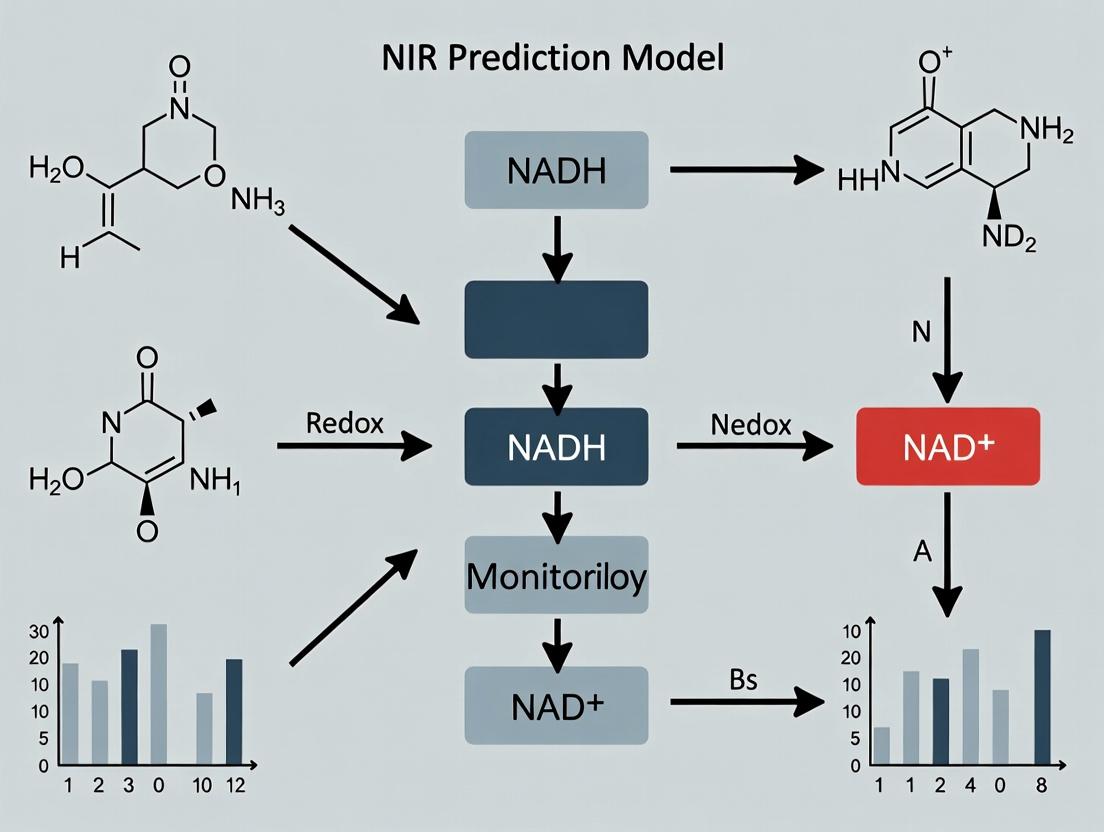
This article provides a comprehensive guide for researchers and bioprocessing professionals on developing and validating robust Near-Infrared (NIR) spectroscopy models for monitoring critical redox potential (ORP) and related metabolic states.
Building Robust NIR Spectroscopy Models for Accurate Redox State Monitoring in Bioprocesses and Biomedical Research
Abstract
This article provides a comprehensive guide for researchers and bioprocessing professionals on developing and validating robust Near-Infrared (NIR) spectroscopy models for monitoring critical redox potential (ORP) and related metabolic states. It covers the fundamental principles linking NIR spectra to redox chemistry, explores advanced chemometric methodologies like PLS and ANN, details strategies for troubleshooting and enhancing model robustness against biological and spectral variation, and provides a framework for rigorous validation against electrochemical sensors and complementary assays. The aim is to equip scientists with the knowledge to implement reliable, non-invasive redox monitoring for applications in cell culture optimization, bioreactor control, and biomedical diagnostics.
Understanding the Link: Core Principles of NIR Spectroscopy for Redox Potential Monitoring
Technical Support Center: Troubleshooting & FAQs for Redox Potential Measurement in NIR Model Development
FAQ & Troubleshooting Guide
Q1: Our NIR-predicted ORP values are drifting from probe measurements over time in a bioreactor. What could cause this? A: This is often a calibration or probe fouling issue, not necessarily a model failure. First, verify the reference electrode. Re-calibrate the ORP probe using fresh Zobell's solution (see Protocol 1). If drift persists, clean the probe membrane. For the NIR model, ensure your calibration set includes data across the full process trajectory and multiple batches to capture biological variance.
Q2: How do we differentiate between a true biological redox shift and an artifact from changing pH when developing a robust NIR model?
A: ORP (Eh) is pH-dependent. You must measure and record pH simultaneously. Use the corrected value: Eh' = Eh + (pH - 7) * 59.16 mV (at 25°C) for comparative biology. Your NIR model should include pH as a primary input variable. See Diagram 1 for the decision workflow.
Q3: We observe high noise in ORP readings, obscuring subtle biological trends. How can we improve signal quality? A: This is typically an electrical/connection issue.
- Check Grounding: Ensure the bioreactor and analyzer share a common ground.
- Shield Cables: Use fully shielded cables and keep them away from power sources.
- Buffer Solution: Verify the probe is filled with correct, fresh electrolyte (3M KCl, AgCl saturated).
- Averaging: Apply a moving average filter (e.g., 5-10 minute window) in software, but document this for model training data.
Q4: What is the best practice for validating an NIR prediction model for ORP against traditional probe data? A: Follow a strict hierarchical protocol (See Diagram 2). Use independent validation batches not included in the training set. Statistical benchmarks must be met before the model is considered robust (See Table 1).
Q5: Cell culture media color (phenol red, etc.) interferes with our NIR spectra for ORP prediction. How to mitigate? A: Two approaches:
- Spectroscopic: Use extended pathlength correction or select NIR wavelength regions less affected by the dye (e.g., regions > 1000nm). Advanced preprocessing (2nd derivative, MSC) is required.
- Experimental: Develop the model using media without indicator dyes if possible. If not, ensure your training dataset encompasses the full range of color change expected in production.
Table 1: Key Performance Metrics for NIR-ORP Model Validation
| Metric | Target Threshold | Purpose |
|---|---|---|
| Root Mean Square Error (RMSE) | < 5 mV | Measures absolute accuracy of prediction vs. probe. |
| R² (Validation Set) | > 0.85 | Indicates proportion of variance explained by the model. |
| Relative Prediction Deviation (RPD) | > 3.0 | Assesses model robustness for process monitoring. |
| Bias (Mean Error) | < ±2 mV | Checks for systematic over/under-prediction. |
Experimental Protocols
Protocol 1: Standard Calibration of an ORP/Redox Electrode Objective: To establish accurate millivolt output for NIR model reference data.
- Preparation: Warm Zobell's solution (3.33mM K₃Fe(CN)₆, 3.33mM K₄Fe(CN)₆, 0.1M KCl) to process temperature (e.g., 37°C).
- Calibration: Immerse cleaned ORP probe and a certified reference electrode (or use a combined probe) into the solution. Stir gently.
- Reading: Allow readings to stabilize (2-5 mins). The accepted potential is +86 mV ± 5 mV at 37°C vs. Ag/AgCl, 3M KCl.
- Adjustment: If using a meter with calibration offset, adjust to +86 mV. If not, record the offset for data correction.
- Verification: Rinse and place in Light's solution (0.1M K₃Fe(CN)₆, 0.1M K₄Fe(CN)₆, 0.1M KCl). Reading should be +255 mV ± 10 mV at 37°C.
Protocol 2: Generating Training Data for NIR-ORP Model in a Bioreactor Objective: To collect synchronized NIR spectra and ORP probe data across diverse process conditions.
- Design of Experiments (DoE): Plan batches that vary key factors: cell line (2-3), media (base & feeds), pH setpoints, aeration strategy (DO shifts), and feeding times.
- Instrument Synchronization: Synchronize the clocks on the NIR spectrometer, bioreactor control system, and data historian to <1 sec accuracy.
- Data Collection: For each batch, collect NIR spectra (every 2-5 mins) and log all process parameters (pH, DO, temp, etc.). ORP probe data should be logged at least every minute.
- Data Preprocessing: Time-align all data streams. Apply standard NIR preprocessing (SNV, Detrend, 1st/2nd derivative) to spectra. Correct ORP values for pH (see FAQ A2).
- Partitioning: Split data into Training (≥70%), Test (15%), and independent Validation (15%) sets by entire batches, not random points.
Diagrams
Title: Troubleshooting NIR vs. Probe ORP Discrepancy Workflow
Title: NIR-ORP Model Development & Validation Protocol
The Scientist's Toolkit: Key Research Reagent Solutions
| Item | Function in Redox/NIR Research |
|---|---|
| Zobell's Solution | Standard redox potential reference solution (+86 mV at 37°C) for probe calibration. |
| Light's Solution | Secondary verification standard (+255 mV at 37°C) for checking probe linearity. |
| Ag/AgCl, 3M KCl Filling Solution | Electrolyte for reference electrode; critical for stable potential and preventing clogging. |
| NIR Calibration Standards (e.g., WS-2) | Ceramic tiles for instrument performance verification and wavelength calibration. |
| Chemometric Software (e.g., Unscrambler, SIMCA, PLS_Toolbox) | For developing and validating multivariate NIR prediction models for ORP. |
| Process Analytical Technology (PAT) Probe | Robust, steam-sterilizable NIR probe (transmission or reflectance) for bioreactor integration. |
| Multi-Parameter Bioreactor Station | System capable of parallel, controlled fermentation with synchronized data logging for DoE. |
Technical Support & Troubleshooting Center
Frequently Asked Questions (FAQs)
Q1: Our NIR spectra show excessive noise when monitoring a bioreactor fermentation. What could be the cause and how can we resolve it? A1: Excessive noise in bioreactor monitoring is often due to physical matrix effects. First, ensure the immersion probe is positioned away from the impeller and gas sparging inlets to minimize bubble interference. Implement a moving average filter (e.g., 5-10 point smoothing) in your acquisition software. If using a transflectance probe, verify the gap is optimal for the cell density; high biomass can saturate the signal. Recalibrate with representative background spectra taken at different process phases.
Q2: During in-situ redox monitoring, our PLS model's prediction error suddenly increased. How should we troubleshoot the model? A2: This indicates model drift, common in dynamic biological matrices. Follow this protocol:
- Check for Outliers: Use Hotelling's T² and Q-residuals plots to identify spectral outliers.
- Verify Reference Data: Correlate the errant NIR predictions with offline HPLC or enzymatic assay results for redox species (e.g., NADH/NAD⁺). A discrepancy points to spectral issues; agreement suggests a process shift.
- Update the Model: If a process shift is confirmed, perform a model update using a few new calibration samples from the current batch. Techniques like Moving Window PLS or model ensemble approaches are recommended for long-term robustness.
Q3: What is the optimal pathlength for studying heterogeneous solid dosage forms to ensure representative sampling for redox state prediction? A3: For tablets or powders, use a reflectance probe with a large spot diameter (≥10 mm) to average over heterogeneity. The effective pathlength is governed by scattering. For robust quantitation of actives affecting redox, use a penetration depth of 1-3 mm. Always perform a homogeneity test by collecting spectra from at least 10 random points on the sample; the relative standard deviation of key peak intensities should be <5%.
Q4: How do we preprocess NIR spectra from cell culture media to correct for baseline shifts from temperature fluctuations? A4: Apply the following preprocessing sequence:
- Standard Normal Variate (SNV): Corrects for scatter and pathlength variations.
- Derivative (1st or 2nd, Savitzky-Golay): Removes baseline offsets and enhances peaks. Use a polynomial order of 2 and a window size of 15-21 points.
- Orthogonal Signal Correction (OSC): If temperature-correlated variance is known, OSC can remove components orthogonal to your reference redox data, dramatically improving model specificity.
Key Experimental Protocols
Protocol 1: Building a Robust PLS Model for NADH/NAD⁺ Ratio Prediction in Mammalian Cell Cultures
- Sample Set Design: Span the expected operational space: Vary cell line (2-3), cell density (0.5-10 x 10⁶ cells/mL), nutrient levels (glucose, glutamine), and pH (6.8-7.4). Aim for 50-100 independent calibration samples.
- Spectral Acquisition: Use a sterilizable immersion probe with a 2 mm pathlength. Acquire spectra in the 800-2200 nm range, 32 scans per spectrum at 8 cm⁻¹ resolution. Maintain constant probe positioning.
- Reference Analysis: Immediately after NIR scan, centrifuge sample, quench metabolites, and analyze using a validated enzymatic cycling assay or LC-MS/MS for absolute NADH and NAD⁺ concentrations.
- Modeling: Preprocess with MSC + 1st derivative. Use a 70/30 split for calibration/validation. The optimal PLS factor number is determined by minimizing the RMSECV. Model performance must be reported as RMSEP and R² for the independent validation set.
Protocol 2: Validating NIR for Real-Time Oxidation Monitoring in a Lipid-Based Formulation
- Accelerated Oxidation: Subject the formulation (e.g., an emulsion) to stressed conditions (40°C, 75% RH, light exposure). Sample every 4 hours over 48 hours.
- Multi-Point Correlation: At each interval, collect NIR spectra via a transflectance probe (0.5 mm gap). Perform simultaneous reference analysis: Peroxide Value (PV) by titration, and Thiobarbituric Acid Reactive Substances (TBARS) assay.
- Chemometric Modeling: Build separate PLS models correlating the NIR spectra to PV and TBARS values. The key spectral regions for lipid oxidation (C-H and O-H combinations near 1400 nm and 1900-2200 nm) should show high regression coefficients.
- Robustness Check: Test the model on a new batch produced with a slight excipient ratio variation. Report the required model update sample size to maintain prediction accuracy.
Data Presentation
Table 1: Performance Comparison of NIR vs. Traditional Methods for Redox Monitoring
| Parameter | NIR Spectroscopy | Traditional HPLC/Assay |
|---|---|---|
| Measurement Time | 30-60 seconds | 20-60 minutes |
| Sample Preparation | None (Non-invasive) | Extensive (Extraction, Derivatization) |
| Viability Impact | None (In-situ probe) | Destructive |
| Typical R² in Models | 0.92 - 0.98 (for key metabolites) | N/A (Primary reference) |
| Cost per Sample | Low (after initial investment) | Medium-High (Reagents, Consumables) |
| Automation Potential | High (Continuous, real-time) | Low (Discrete sampling) |
Table 2: Key Wavelength Assignments for Redox-Relevant Functional Groups in NIR
| Wavelength Range (nm) | Functional Group & Vibration | Associated Redox Analytes |
|---|---|---|
| 1450-1490 | O-H 1st overtone (Water) | Solvent background, hydration state |
| 1650-1750 | C-H 1st overtone (Aliphatic) | Lipids, fatty acid oxidation products |
| 2050-2220 | C=O, N-H combinations (Amides, Acids) | NADH, key coenzymes, protein conformation |
| 2250-2380 | C-H combinations (Aromatic, CH₂, CH₃) | Antioxidants (e.g., phenolic compounds) |
Visualizations
NIR Prediction Model Development Workflow
Cellular Redox State Links Pathways to NIR Signal
The Scientist's Toolkit: Research Reagent Solutions
Table 3: Essential Materials for NIR-based Redox Monitoring Experiments
| Item | Function & Rationale |
|---|---|
| Sterilizable NIR Immersion Probe (e.g., with SMA 905 connector) | Enables direct, aseptic insertion into bioreactors for real-time, in-situ monitoring. |
| Spectralon Diffuse Reflectance Standards | Provides >99% reflectance for daily instrument validation and consistent reflectance measurements. |
| Stable NADH/NAD⁺ & GSH/GSSG Calibration Kits | For generating accurate reference data to build and validate chemometric models. |
| Chemometric Software (e.g., Unscrambler, CAMO) | Essential for multivariate data analysis, including PCA, PLS regression, and model validation. |
| Temperature-Controlled Cuvette Holder | Minimizes spectral variance from temperature fluctuations during off-line sample scanning. |
| Quenching Solution (e.g., Cold Methanol/Buffered Saline) | For rapid metabolic quenching prior to offline reference analysis, ensuring an accurate "snapshot" of redox state. |
Technical Support & Troubleshooting Center
This center addresses common challenges encountered during near-infrared (NIR) spectroscopic experiments for redox monitoring. The guidance is framed to support the development of robust NIR prediction models for in vivo and in vitro applications.
Frequently Asked Questions (FAQs)
Q1: During in vivo NIR spectroscopy, my signal is dominated by water and lipid interference. How can I isolate the weak absorbance signals from redox cofactors? A: The primary strategy is differential spectroscopy. Use a reference spectrum from a baseline physiologic state (e.g., fully oxygenated tissue). Subtract this reference from the experimental spectrum to highlight redox-dependent changes. Ensure your spectrometer has high sensitivity (low noise) and sufficient spectral resolution (≤8 nm) to resolve the broad, overlapping bands. Employ advanced preprocessing like extended multiplicative signal correction (EMSC) specifically optimized to remove scattering effects from living tissues.
Q2: I am getting inconsistent FAD absorbance readings between my cell culture and purified protein experiments. What could be the cause? A: This is a common issue related to the microenvironment. In purified solutions, FAD is fully hydrated and free. In the cellular milieu, FAD is predominantly protein-bound (e.g., in flavoproteins like complex II), which can shift its absorbance spectrum and quantum yield. Confirm the metabolic state of your cells; the redox ratio (FAD/(NAD(P)H+FAD)) is more robust than absolute intensities. Ensure experimental conditions (temperature, pH, oxygenation) are tightly controlled and matched between preparations.
Q3: The cytochrome redox signals (Cyt a,a3, b, c) in my mitochondrial preparations are unresolvable. What should I check? A: Cytochrome signals are subtle and require specific conditions. First, verify anoxia/ischemia protocols are effective, as cytochromes require a pronounced redox shift for clear signal detection. Use a high-quality, cuvette-based spectrometer with a pathlength that increases sensitivity (e.g., 2-10 mm) for in vitro work. The key is to collect difference spectra between oxidized (fully aerobic) and reduced (anaerobic + succinate/dithionite) states. Check for contaminating hemoglobin/myoglobin, which have strong, overlapping Soret bands in the visible range that can interfere if using broad-spectrum assays.
Q4: My NIR prediction model for NADH/NAD+ ratio performs well in calibration but fails in validation with new tissue samples. How can I improve robustness? A: This indicates model overfitting to site- or sample-specific variations (scattering, background absorbance). Incorporate a wider variety of samples into your calibration set, varying species, tissue types, and preparation methods. Use variable selection algorithms (e.g., interval PLS, genetic algorithms) to identify the most biologically relevant wavelengths, not just statistically correlated ones. Always validate on a completely independent dataset. Implement scatter correction (e.g., SNV, detrending) as a standard preprocessing step to reduce physical light-path variability.
Troubleshooting Guide: Common Experimental Issues
| Problem | Potential Cause | Diagnostic Step | Solution |
|---|---|---|---|
| Excessive noise in 700-900 nm range | Low light throughput; detector saturation or inefficiency. | Check signal intensity at the detector; inspect integration time settings. | Optimize light source intensity and detector integration time. For in vivo, ensure proper probe contact to reduce coupling loss. |
| No detectable redox shift upon metabolic inhibition | Insufficient inhibitor dose/duration; cells/tissue are not metabolically active. | Verify cell viability/tissue respiration with a gold-standard assay (e.g., Seahorse, oxygen electrode). | Titrate inhibitors (e.g., cyanide, rotenone) and confirm efficacy. Ensure proper nutrient/oxygen supply before experiment. |
| Absorbance bands are broader than literature values | Excessive spectrometer slit width (poor resolution); high scattering in sample. | Measure a rare-earth oxide reference standard with known sharp peaks. | Decrease the spectrometer's spectral bandwidth/slit width. For turbid samples, acknowledge scattering contribution; use diffusive reflectance geometry if appropriate. |
| Irreversible signal drift during time-series | Sample heating from light source; photobleaching of cofactors. | Monitor sample temperature. Run control with light exposure but no metabolic challenge. | Attenuate light source intensity, use intermittent sampling, or incorporate a heat filter. Allow dark recovery periods between measurements. |
Key Quantitative Data: NIR Absorbance Bands for Redox Molecules
Note: Absorbance in the NIR region is weak (ε < 100 M⁻¹cm⁻¹) compared to visible/UV. These are primary bands for monitoring redox state changes in complex biological systems.
Table 1: Characteristic NIR Absorbance Features of Key Redox Cofactors
| Molecule | Redox State | Primary NIR Band(s) | Approx. Molar Absorptivity (ε) in NIR | Key Spectral Shift Upon Reduction |
|---|---|---|---|---|
| NAD(P)H | Reduced | ~700 nm | Very Low (< 50 M⁻¹cm⁻¹) | Increase at ~700 nm region. Oxidized form (NAD⁺) has negligible absorption. |
| FAD/FMN | Oxidized | ~850-900 nm, ~720 nm | Very Low (< 100 M⁻¹cm⁻¹) | Decrease at ~850-900 nm. Reduced form (FADH₂) has minimal absorption. |
| Cytochromes | Mixed (Fe center) | ~750-850 nm (Composite) | Low (~ 1-10 mM⁻¹cm⁻¹) | Decrease in broad absorbance as heme Fe²⁺ (reduced) absorbs less than Fe³⁺ (oxidized). |
Note: Exact peak positions can shift by ±20 nm due to protein-binding environment, pH, and scattering effects in biological matrices.
Detailed Experimental Protocols
Protocol 1: In Vitro Calibration of NIR Redox Signals Using Purified Enzymes
Purpose: To establish reference spectra for NADH and FAD under controlled conditions.
- Preparation: Prepare 100 µM solutions of NADH and FAD in phosphate buffer (pH 7.4). Keep on ice, protected from light.
- Oxidized Baseline: For FAD, scan from 650-950 nm in a quartz cuvette (pathlength: 10 mm). For NAD⁺ (oxidized), scan similarly (this provides a low-absorbance baseline).
- Reduced Scan: Add a minimal volume of sodium dithionite (fresh 100 mM stock) to the FAD cuvette to fully reduce it to FADH₂. Scan immediately.
- Data Processing: Subtract the buffer spectrum from all scans. For FAD, subtract the reduced (FADH₂) spectrum from the oxidized (FAD) spectrum to generate a differential absorbance spectrum. For NADH, use the NAD⁺ scan as background.
- Analysis: Identify the peak wavelength in the differential spectrum. Plot absorbance at this peak against concentration to estimate effective ε in the NIR.
Protocol 2: Time-Resolved Redox Monitoring in Cell Monolayers
Purpose: To track the cellular redox ratio response to metabolic perturbation.
- Sample Setup: Grow cells on specialized NIR-transparent cultureware. Use serum-free, phenol-red-free media during imaging.
- Baseline Acquisition: Place cultureware on a NIR spectroscopic microscope. Collect hyperspectral image cubes (λ=680-950 nm) under basal conditions. Acquire 5-time points (1-min interval) to establish baseline stability.
- Metabolic Perturbation: Gently add metabolic inhibitor (e.g., 2 mM KCN for oxidative phosphorylation inhibition) to the media. Do not move the sample.
- Time-Series Acquisition: Continue hyperspectral acquisition every minute for 30-60 minutes.
- Spectral Unmixing: For each pixel and time point, use a linear unmixing algorithm against the in vitro reference spectra (from Protocol 1) to calculate relative contributions of NADH and FAD signals.
- Output: Calculate the redox ratio FAD / (NADH + FAD) for each pixel and plot its mean value over time.
The Scientist's Toolkit: Essential Research Reagents & Materials
Table 2: Key Reagents for NIR Redox Spectroscopy Experiments
| Item | Function & Rationale | Example/Specification |
|---|---|---|
| NIR Spectrometer | Measures low-intensity absorbance in 650-1000 nm range. Requires high sensitivity and low stray light. | Fiber-optic coupled spectrometer with InGaAs array detector (cooled). |
| NIR-Transparent Cultureware | Allows spectral acquisition from adherent cells with minimal background interference. | Cyclic olefin copolymer (COC) or quartz-bottom dishes. |
| Phenol-Red Free Media | Eliminates background absorbance from the common pH indicator dye phenol red. | DMEM/F-12, without phenol red. |
| Metabolic Modulators | To induce controlled redox shifts for model calibration and validation. | Sodium cyanide (OxPhos inhibitor), Rotenone (Complex I inhibitor), Oligomycin (ATP synthase inhibitor). |
| Chemical Reductants/Oxidants | To generate fully reduced/oxidized reference states in vitro. | Sodium dithionite (reductant), Potassium ferricyanide (oxidant). |
| Spectralon Reflectance Standard | A diffuse reflectance standard for calibrating and correcting intensity in reflectance-mode setups. | LabSphere Spectralon, >99% reflectance in NIR. |
| Reference Dye Kit | For wavelength accuracy verification of the spectrometer across NIR range. | Rare-earth oxide standards (e.g., Holmium Oxide). |
| Data Analysis Software | For multivariate analysis, spectral unmixing, and predictive model building. | Python (HyperSpy, scikit-learn), MATLAB, PLS_Toolbox. |
Technical Support Center
FAQ & Troubleshooting Guide
Q1: During model calibration, I am getting a very high RMSEC but a reasonable RMSECV. What does this indicate and how should I proceed? A: This pattern suggests significant overfitting to your calibration set. The model is too complex and captures noise instead of the true underlying relationship between spectra and redox potential.
- Troubleshooting Steps:
- Check Preprocessing: Ensure your spectral preprocessing (e.g., SNV, derivative) is appropriate and not introducing artifacts.
- Reduce Model Complexity: Lower the number of latent variables (LVs) in PLS or components in PCR. Use the RMSECV minimum as a guide for optimal complexity.
- Review Outliers: Use leverage and residual plots to identify and investigate potential outlier samples in the calibration set.
- Reassess Variable Selection: If using a wavelength selection method (e.g., iPLS, GA), the selected region may be unstable. Try a broader or different spectral region.
Q2: My NIR model performs well in the lab but fails when applied to spectra from a new reactor or probe. What are the primary causes? A: This is a classic issue of model robustness and instrument transfer. The discrepancy is often due to changes in the physical measurement conditions rather than chemistry.
- Troubleshooting Steps:
- Diagnose with PCA: Perform PCA on the new spectra combined with your calibration set. If the new spectra cluster separately, the issue is spectral offset/differences.
- Apply Signal Correction: Implement standard normal variate (SNV) or extended multiplicative signal correction (EMSC) to minimize scatter effects from different path lengths or particle sizes.
- Use a Transfer Method: Apply instrument standardization techniques like direct standardization (DS) or piecewise direct standardization (PDS) if the spectral shift is systematic.
- Update Calibration: If possible, add a few representative samples measured on the new system to your calibration set and rebuild the model (model updating).
Q3: How do I determine the optimal number of latent variables for a PLS-R model predicting redox potential? A: The goal is to balance model fit and predictive ability. Never use the minimum RMSEC alone.
- Standard Protocol:
- Use Venetian blinds or leave-one-out cross-validation on your calibration set.
- Plot the RMSECV against the number of LVs.
- The optimal LV number is typically at the point where RMSECV reaches a minimum or a plateau. Increasing LVs beyond this point increases overfitting.
- Visually inspect the regression coefficients plot. A noisy, unstable coefficient vector at higher LVs indicates overfitting.
Q4: My spectral data has a strong baseline shift between batches. Which preprocessing method is most effective for maintaining redox prediction accuracy? A: Baseline shifts are common and detrimental. The choice depends on the shift's nature.
- Methodology Comparison:
| Preprocessing Method | Best For | Key Consideration for Redox |
|---|---|---|
| Detrending | Linear/quadratic baseline drift | Simple, but may remove some low-frequency chemical information. |
| Standard Normal Variate (SNV) | Scatter effects within a dataset | Centers and scales each spectrum individually. Very effective for solid/slurry samples. |
| 1st & 2nd Derivatives (Savitzky-Golay) | Simultaneous baseline and offset removal | Enhances small spectral features but amplifies noise. Requires careful optimization of derivative order and window size. |
| Multiplicative Scatter Correction (MSC) | Scatter effects relative to an "ideal" spectrum | Assumes a common shape. Can be biased if the reference spectrum is not truly representative. |
Q5: What is the minimum number of samples required to build a reliable PLS model for redox monitoring? A: There is no single rule, but guidelines exist based on the complexity of your system.
- Quantitative Data & Protocol:
- Absolute Minimum: 20-30 well-designed samples covering the full experimental space.
- Recommended Practice: Use algorithms like the Kennard-Stone technique to select a representative calibration set from a larger pool of available samples.
- Key Factors: The number should cover the expected chemical (redox potential range, pH, conductivity) and physical (temperature, density, particle size) variance. A common heuristic is to have at least 5-10 times more samples than the number of latent variables you expect to use.
Experimental Protocol: Building a Robust NIR-PLS Model for Redox Potential
1. Sample Preparation & Spectral Acquisition:
- Prepare solutions spanning the entire expected redox potential range (e.g., -500mV to +500mV) using standard buffers and titrating agents (e.g., dithiothreitol, potassium ferricyanide).
- Measure the reference redox potential using a calibrated potentiometric electrode.
- Immediately collect NIR spectra (e.g., 800-2500 nm) in transflectance or immersion probe mode. Use consistent path length, temperature control, and integration time.
- Repeat for at least 3 independent sample batches to capture batch-to-batch variance.
2. Data Preprocessing & Splitting:
- Assemble data matrix X (spectra) and vector y (reference redox values).
- Apply preprocessing (e.g., SNV followed by 1st derivative Savitzky-Golay, 11-point window, 2nd polynomial order).
- Split data into Calibration (≈70%) and independent Test Set (≈30%) using stratified random sampling to ensure both sets cover the full y-range.
3. Model Calibration & Validation:
- Perform Partial Least Squares Regression (PLSR) on the Calibration set.
- Determine optimal LVs via 10-fold cross-validation. Plot RMSECV vs. LVs.
- Validate the final model (with chosen LVs) by predicting the held-out Test Set. Report key metrics: R², RMSEP, Bias, and RPD.
Diagram: NIR to Redox Prediction Workflow
Title: Workflow for PLS Model Prediction from NIR Spectra
Diagram: Model Robustness Diagnostics Pathway
Title: Diagnostics for New Spectral Predictions
The Scientist's Toolkit: Key Research Reagent Solutions
| Item | Function in Redox Monitoring Research |
|---|---|
| Potassium Ferri-/Ferrocyanide | Reversible redox couple used for system suitability testing and generating controlled redox potential ranges for calibration. |
| Dithiothreitol (DTT) / Tris(2-carboxyethyl)phosphine (TCEP) | Reducing agents used to titrate and lower solution redox potential, studying reducing conditions. |
| Hydrogen Peroxide / Potassium Dichromate | Oxidizing agents used to titrate and increase solution redox potential, studying oxidative stress. |
| Standard pH & Redox Buffers | Solutions with stable, known potential (e.g., ZoBell's solution) for daily verification and calibration of reference electrodes. |
| Chemically Defined Cell Culture Media | For in-line bioprocess monitoring, provides a consistent background for modeling redox changes from metabolic activity. |
| NIR-Compatible Immersion/Flow Cell Probes | Enable direct, non-invasive spectral acquisition from reaction vessels in real time. |
| Spectralon Diffuse Reflectance Standards | Used for consistent instrument referencing and calibration transfer between probes or spectrometers. |
Technical Support Center: Troubleshooting NIR Spectral Interference
FAQ: Common Issues & Resolutions
Q1: My NIR spectra for cell culture monitoring show unexplained absorbance peaks around 5200 cm⁻¹ and 6900 cm⁻¹, obscuring the redox-relevant regions. What could be the source? A: These peaks are characteristic of water and its associated hydrogen-bonding states, which vary with temperature and ionic strength. In bioreactors, metabolic activity changes the culture medium's ionic composition, shifting the water peak shape and baseline. This is a primary interference for NADH/NAD+ prediction near 7000 cm⁻¹.
- Protocol for Mitigation: Implement a dynamic background subtraction protocol. Acquire a reference spectrum of fresh, pre-warmed culture medium from the same batch at the same temperature immediately before sampling. Use this as the background for all subsequent in-situ probe readings from that batch. Recalibrate for each new culture batch.
Q2: When analyzing tissue homogenates, I observe high scattering interference that flattens my signal. How can I correct for this? A: Light scattering from cellular debris and subcellular structures is a dominant interference in tissues. It causes multiplicative and additive effects on the absorbance spectrum, directly impacting model robustness.
- Protocol for Mitigation: Apply a scatter-correction preprocessing step. The Standard Normal Variate (SNV) or Multiplicative Scatter Correction (MSC) algorithm is essential. For homogenous tissue lysates, the protocol is:
- Centrifuge homogenate at 15,000g for 10 minutes at 4°C.
- Transfer supernatant to a 2mm pathlength quartz cuvette.
- Acquire NIR spectrum (4 cm⁻¹ resolution, 64 scans).
- Apply SNV transformation across the entire 9000-4000 cm⁻¹ range before feeding data into your PLS-R model for redox marker prediction.
Q3: The presence of phenol red in my culture medium causes significant interference. Should I always use phenol-red free media for NIR redox monitoring? A: Not necessarily, but you must account for it. Phenol red acts as a pH indicator, and its protonation state changes with culture acidification, causing dynamic spectral shifts (peaks ~6800 cm⁻¹ and ~5500 cm⁻¹) that overlap with key metabolic signals.
- Protocol for Mitigation: Characterize the interference. Spiked standards must be created.
- Prepare a set of calibration samples in your standard culture medium, spiked with known concentrations of your target analyte (e.g., lactate).
- Prepare an identical set in phenol-red free medium.
- Acquire spectra for both sets and build separate PLS models.
- Compare model performance metrics (R², RMSEP). If the model using phenol-red medium is significantly poorer, you must include pH as a covariate in your model or switch to phenol-red free medium for NIR studies.
Q4: How do I differentiate spectral interference from cell density versus redox state changes in a growing culture? A: This is a critical challenge, as both increasing biomass (scattering) and changing metabolite concentrations (absorbance) affect the spectrum. A multi-stage experimental design is required to deconvolve these factors.
- Protocol for Deconvolution:
- Phase 1 (Density Gradient): Culture cells under optimal conditions and sample at 12, 24, 48, and 72 hours. Measure NIR spectrum and perform off-line reference analyses: cell count (viability), and target redox markers (e.g., via HPLC for NADH/Glutathione).
- Phase 2 (Redox Perturbation): At a fixed time point (e.g., 48h), perturb redox state without affecting density. Treat parallel cultures with: a) 1mM H₂O₂ (oxidative stress), b) 5mM N-Acetylcysteine (reductive stress), c) Vehicle control.
- Sample and analyze as in Phase 1 after 30 min and 2 hours.
- Build your final PLS model using data from both phases to ensure it learns to separate density-correlated scattering from redox-specific absorbance.
Table 1: Primary Sources of Spectral Interference in Biological Matrices
| Interferent Source | Typical Spectral Location (cm⁻¹) | Primary Effect on Spectrum | Impact on Redox Monitoring (e.g., NADH ~7000 cm⁻¹) |
|---|---|---|---|
| Water (H₂O) | ~5200 (combination), ~6900 (1st overtone) | Very strong, variable absorbance; peak shape shifts with temp/ions | Masks nearby signals; requires precise temperature control & background subtraction. |
| Cell Density / Scattering | Broadband across spectrum | Multiplicative & additive baseline effects, signal attenuation | Can be misinterpreted as concentration change; must be corrected via SNV/MSC. |
| Phenol Red (pH-dependent) | ~6800, ~5500 | Absorbance changes dynamically with culture acidification | Direct overlap and confounding with redox species; requires modeling or medium change. |
| Proteins & Lipids | 6000-4500 (combination bands) | Broad, overlapping absorbances from C-H, N-H, O-H bonds | Contributes to complex covariance, necessitating multivariate models (PLS, PCR). |
| Culture Vessel / Substrate | Varies | Specific absorbances (e.g., polystyrene) & reflection artifacts | Creates non-biological offsets; requires vessel-specific background collection. |
Table 2: Performance Impact of Scatter Correction Methods on Tissue Lysate Models
| Preprocessing Method | PLS Model Latent Variables | R² (Validation) | RMSEP (μM GSH) | Baseline Stability |
|---|---|---|---|---|
| Raw Absorbance | 8 | 0.61 | 45.2 | Poor |
| 1st Derivative (Savitzky-Golay) | 6 | 0.78 | 28.7 | Improved |
| Multiplicative Scatter Correction (MSC) | 5 | 0.91 | 14.3 | Excellent |
| Standard Normal Variate (SNV) | 5 | 0.89 | 15.8 | Excellent |
Experimental Protocol: Building a Robust NIR Model for Redox State
Title: Protocol for NIR-Based Redox Monitoring in Adherent Cell Cultures with Interference Mitigation.
Objective: To acquire NIR spectra from live adherent cell cultures for prediction of glutathione (GSH/GSSG) ratio, while controlling for interference from medium components, cell density, and phenol red.
Materials:
- NIR spectrometer with fiber-optic diffuse reflection probe.
- ⁶-well culture plates (ensure material is NIR-compatible, e.g., specific polymer or glass-bottom).
- Cell line of interest.
- Standard and phenol-red free culture media.
- Metabolite standards (GSH, GSSG, lactate, glucose).
- Quenching solution (e.g., cold methanol).
- Reference assay kit (e.g., colorimetric GSH/GSSG assay).
Procedure:
- Background Acquisition: Warm culture medium to 37°C in a CO₂ incubator for 1 hour. Using the NIR probe, acquire a background spectrum (64 scans) of the medium alone in an empty well under standard incubator conditions (5% CO₂, 37°C).
- Cell Culture & Sampling: Seed cells at 3 densities (e.g., 50k, 100k, 200k cells/well) in triplicate. Include wells with medium only as controls.
- Spectral Acquisition (Time Course): At each time point (e.g., 24h, 48h, 72h), carefully remove the plate from the incubator. Gently aspirate medium and rinse cells once with warm PBS. Add 2mL of fresh, warm PBS to the well. Immediately place the NIR probe at a fixed distance and angle above the cell monolayer. Acquire spectrum (32 scans). Note: Limit exposure time to <2 minutes to prevent stress.
- Reference Analysis: Following spectral acquisition, quickly aspirate PBS and add 500μL of cold methanol to quench metabolism. Scrape cells, collect lysate, and perform the reference GSH/GSSG assay per kit instructions. Correlate results with spectral data.
- Data Preprocessing & Modeling: Organize spectral data (X-matrix) and reference GSH/GSSG ratios (Y-matrix). Apply preprocessing: SNV followed by 2nd derivative (Savitzky-Golay, 11 points, 2nd polynomial). Use 70% of data for training a PLS regression model and 30% for validation. Validate model with RMSEP and R².
The Scientist's Toolkit: Research Reagent Solutions
Table 3: Essential Materials for NIR Redox Monitoring Experiments
| Item | Function in Context of NIR Spectral Analysis |
|---|---|
| Phenol-Red Free Culture Medium | Eliminates dynamic spectral interference from the pH-sensitive dye phenol red, clarifying the ~6800 cm⁻¹ region for redox signatures. |
| NIR-Compatible Multi-Well Plates | Specialized plates (e.g., with quartz bottoms or specific polymers) that have minimal and consistent absorption in the NIR range, reducing vessel-specific variance. |
| Static-Dissipative Cuvettes | For analyzing cleared tissue lysates or media samples; prevents dust adhesion which causes severe light scattering artifacts. |
| Certified Metabolite Standards (GSH, NADH, Lactate) | High-purity standards for creating spiked calibration samples to build and validate the quantitative PLS-R model. |
| Temperature-Controlled Sample Stage | Critical for holding samples at a consistent temperature (e.g., 37°C) during scanning, as water spectra are highly temperature-sensitive. |
| Multivariate Analysis Software | Software capable of Partial Least Squares Regression (PLS-R), Principal Component Analysis (PCA), and advanced preprocessing (MSC, SNV, Derivatives). |
Visualization: Workflows and Relationships
Title: NIR Model Development Workflow with Interference Points
Title: NIR Light Interaction with Biological Sample Interferents
From Spectra to Insight: Building and Applying Robust NIR Redox Prediction Models
Technical Support Center: Troubleshooting NIR Model Development for Redox Monitoring
FAQs & Troubleshooting Guides
Q1: My initial NIR spectra show poor signal-to-noise ratio (SNR), leading to weak model performance. What are the primary causes and solutions? A: Low SNR is often related to sample presentation or instrument health.
- Cause 1: Improper sample cup filling or uneven surface.
- Solution: Ensure consistent, overfilled cup packing for solids or use a consistent, bubble-free quartz cuvette pathlength for liquids. Replicate scans and average.
- Cause 2: Instrument degradation or environmental interference.
- Solution: Perform daily instrument validation using a certified reference standard (e.g., ceramic tile). Check and control lab temperature and humidity. Ensure warm-up time is sufficient.
Q2: During sample selection, how do I handle class imbalance when my "oxidized state" samples are rarer than my "reduced state" ones? A: Class imbalance can bias the model towards the majority class.
- Solution 1 (Pre-processing): Apply synthetic minority over-sampling technique (SMOTE) to the spectral data before model training, or strategically under-sample the majority class if sufficient data exists.
- Solution 2 (Algorithmic): Use model algorithms that incorporate class weights (e.g., weighted SVM, class weight parameter in PLS-DA or Random Forest) to penalize misclassification of the minority class more heavily.
Q3: After pre-processing, my model is overfitting—excellent on training data, poor on validation. Which step should I re-examine? A: Overfitting commonly stems from excessive complexity relative to data size.
- Cause & Solution: Re-examine spectral pre-processing. Aggressive smoothing or too many derivative orders can amplify noise as "signal." Simplify the pre-processing pipeline. The table below compares common techniques:
Table 1: Impact of Common Spectral Pre-processing Techniques on Model Robustness
| Technique | Primary Function | Risk of Overfitting if Misapplied | Recommended Validation |
|---|---|---|---|
| Standard Normal Variate (SNV) | Corrects for scattering & pathlength. | Low. Core correction method. | Check if scatter is the dominant variance source. |
| Detrending | Removes baseline curvature. | Low. Often used with SNV. | --- |
| Savitzky-Golay Derivative | Removes baseline, enhances peaks. | High. Order & window size are critical. | Systematically test 1st vs 2nd derivative with cross-validation. |
| Multiplicative Scatter Correction (MSC) | Similar to SNV, uses mean spectrum. | Moderate. Sensitive to mean spectrum choice. | Ensure reference spectrum is representative. |
Q4: I have missing values in my spectral data matrix due to detector changeover regions. How should I address this before model training? A: Do not train models with missing values.
- Solution 1 (Exclusion): Remove the affected wavelengths (columns) from the entire dataset if they are confined to a specific, non-critical region.
- Solution 2 (Imputation): Apply a simple imputation method like linear interpolation from adjacent wavelengths for each sample, or replace with the mean value of that wavelength across all samples. Document the method used.
Q5: What is the minimum recommended sample size for a robust NIR calibration model for redox state prediction? A: There is no universal minimum, but guidelines exist based on complexity.
- Rule of Thumb: For multivariate models like PLS, a common heuristic is 5-10 samples per independent variable (latent variable). For complex biological matrices, prioritize diversity over sheer number.
- Protocol: Use sample size determination algorithms (e.g., based on desired effect size and power). A practical approach is detailed below:
Table 2: Key Research Reagent Solutions for NIR Redox Monitoring
| Item | Function in Redox Monitoring Context |
|---|---|
| Certified Reference Materials (e.g., NIST-traceable standards) | For daily instrument performance qualification, ensuring spectral reproducibility over time. |
| Controlled-Atmosphere Sample Cell | Allows acquisition of NIR spectra under inert gas (N₂) to prevent sample oxidation during measurement. |
Chemometric Software (e.g., PLS Toolbox, Unscrambler, R/python with pls & hyperSpec) |
For performing pre-processing, cross-validation, and developing regression/classification models. |
| Redox Buffer Standards | Chemical systems (e.g., DTT/GSH/GSSG gradients) with known redox potentials to create calibration samples for model training. |
| Hermetic Sealed Vial Kit | For storing and presenting hygroscopic or oxygen-sensitive samples without environmental interference. |
Experimental Protocol: Systematic Sample Selection & Dataset Construction for Redox Modeling
Objective: To build a representative and balanced calibration set for a PLS-R model predicting log(Redox Potential) in pharmaceutical buffer systems.
- Define Population: All possible combinations of your active pharmaceutical ingredient (API) at relevant concentrations (e.g., 1-50 mg/mL) across a physiologically relevant redox potential range (e.g., -150 mV to +150 mV), in the desired formulation buffer.
- Stratified Sampling: Divide the redox potential range into 6-8 strata (bins). Use a redox-sensitive dye or potentiometry to measure the actual potential of prepared samples.
- Sample Preparation: For each stratum, prepare 5-7 independent samples. Use redox buffers or titrating agents (e.g., Dithiothreitol) to achieve the target potential. Confirm potential measurement post-NIR scan.
- Data Acquisition:
- Instrument: FT-NIR Spectrometer.
- Mode: Reflectance for solids, Transflectance for liquids (e.g., with a gold-backed cuvette).
- Range: 12,000 - 4,000 cm⁻¹.
- Resolution: 8 cm⁻¹.
- Scans per Spectrum: 64 averaged scans.
- Temperature: Controlled at 25 ± 1°C.
- Replication: Each sample scanned in triplicate with repacking/reloading between scans.
- Pre-processing Workflow (Order is Critical): a. Average the triplicate spectra for each sample. b. Trim spectra to the informative region (e.g., 9,000 - 5,500 cm⁻¹). c. Apply Standard Normal Variate (SNV) to correct for scatter. d. Apply Savitzky-Golay 1st derivative (2nd order polynomial, 15-21 point window) to remove baseline offsets and enhance peaks. e. Mean-center the data before model input.
Visualization: NIR Redox Model Development Workflow
Title: Workflow for Robust NIR Redox Model Development
Visualization: Spectral Pre-processing Decision Pathway
Title: Decision Tree for Spectral Pre-processing
Troubleshooting Guides & FAQs
Q1: During PLS model calibration for redox potential prediction, my RMSE is high and the loadings plot shows noise. What is the likely cause and how can I resolve it?
A1: This typically indicates spectral pre-processing issues or irrelevant wavelength inclusion.
- Cause: Uncorrected baseline drift or scatter effects (e.g., from sample particulates) are dominating the spectral signal over the redox-relevant chemical information.
- Solution:
- Apply appropriate spectral pre-processing. For NIR redox studies, Standard Normal Variate (SNV) followed by Savitzky-Golay first derivative is often effective.
- Perform wavelength selection. Use interval PLS (iPLS) or genetic algorithms to identify regions most correlated with your redox standard values (e.g., reference potentiometry measurements).
- Protocol - iPLS Wavelength Selection:
- Split your pre-processed spectra into 20-30 equidistant intervals.
- Build a PLS model on each interval.
- Plot RMSECV vs. interval number.
- Select the 3-5 intervals with the lowest RMSECV for your final model.
Q2: My ANN model is overfitting the redox calibration data, performing well on training but poorly on validation samples. How do I improve generalization?
A2: Overfitting in ANNs is common with limited or highly correlated NIR datasets.
- Cause: The network architecture is too complex (too many hidden neurons/layers) for the number of independent calibration samples.
- Solution:
- Implement early stopping: Divide data into training, validation, and test sets. Monitor error on the validation set during training; stop when the validation error increases for a specified number of epochs.
- Apply regularization techniques like weight decay (L2 regularization) or dropout during training.
- Protocol - Optimal Architecture Search:
- Start with a single hidden layer. The number of neurons should be less than the number of training samples. A common rule is between the input size and output size.
- Use a hyperparameter grid search (e.g., via k-fold cross-validation) varying: hidden layers (1-3), neurons per layer (5-50), learning rate (0.001-0.1), and regularization parameter.
- Select the configuration yielding the lowest RMSE on the held-out test set.
Q3: When using SVM for redox regression, my model training is extremely slow. What factors affect SVM training time and how can I optimize it?
A3: SVM training time scales poorly with large sample sizes and certain kernel choices.
- Cause: The computational complexity of SVM is roughly O(n²) to O(n³), where n is the number of calibration samples. The Radial Basis Function (RBF) kernel is particularly computationally intensive.
- Solution:
- Data Reduction: Use a representative subset via Kennard-Stone or SPXY sampling for initial model tuning.
- Kernel Choice: Consider starting with a linear kernel. If non-linearity is essential, use a low-complexity kernel (e.g., polynomial degree 2) before moving to RBF.
- Parameter Tuning Strategy:
- Use a coarse-to-fine grid search for parameters C (cost) and γ (for RBF).
- Protocol: First, perform a wide-range search (e.g., C = [2⁻⁵, 2¹⁵]; γ = [2⁻¹⁵, 2³]) on a reduced dataset. Then, refine the search around the optimal region on the full dataset.
Q4: I need to compare the robustness of PLS, ANN, and SVM for my specific redox application. What is a statistically sound experimental design?
A4: Robustness must be assessed via repeated, stratified partitioning and multiple performance metrics.
- Protocol for Algorithm Comparison:
- Data Splitting: Use the SPXY method to split the total dataset into a calibration set (≈70%) and an independent external test set (≈30%). Ensure both sets cover the full redox potential range.
- Model Optimization & Validation: On the calibration set, perform 10-fold cross-validation repeated 5 times (5x10CV) for hyperparameter tuning (e.g., LV for PLS, C/γ for SVM, architecture for ANN).
- Final Evaluation: Train each final optimized model on the entire calibration set. Predict the held-out external test set.
- Reporting: Calculate and compare the following for the test set predictions: RMSEP (Root Mean Square Error of Prediction), R² (Coefficient of Determination), RPD (Ratio of Performance to Deviation), and Bias.
Table 1: Typical Performance Metrics for Redox Regression in NIR Studies (Hypothetical Example Based on Literature Trends)
| Algorithm | Key Hyperparameter(s) | Optimal Value (Example) | Typical Test Set RMSEP (mV) | Typical RPD | Relative Training Time |
|---|---|---|---|---|---|
| PLS | Number of LVs | 8-12 | 15.2 | 4.1 | Very Fast |
| ANN (MLP) | Hidden Layers / Neurons | 1 Layer / 15 Neurons | 12.8 | 4.8 | Medium |
| SVM (RBF) | Cost (C), Gamma (γ) | C=128, γ=0.0078 | 11.5 | 5.3 | Slow (Large Data) |
Table 2: Scenario-Based Algorithm Recommendation for Redox Regression
| Research Scenario | Recommended Algorithm | Rationale |
|---|---|---|
| Small Dataset (<100 samples), Linear Trends | PLS | Stable, interpretable, less prone to overfitting. |
| Large Dataset, Complex Non-linear Relationships | ANN or SVM (RBF) | Superior ability to model intricate spectral-redox mappings. |
| Model Interpretability is Critical | PLS | Loadings provide direct insight into influential wavelengths. |
| Prediction Speed for Real-Time Monitoring | PLS or Linear SVM | Fastest training and prediction times. |
| High-Dimensional Data with Many Variables | SVM | Effective in handling high-dimensional feature spaces. |
Experimental Workflow & Logical Diagrams
Title: Workflow for Robust Redox Model Development
Title: Algorithmic Approach to Redox Regression
The Scientist's Toolkit: Research Reagent Solutions
Table 3: Essential Materials for NIR-Based Redox Monitoring Experiments
| Item | Function in Redox Regression Research | Example/Specification |
|---|---|---|
| FT-NIR Spectrometer | Acquires spectral data from samples. Requires high signal-to-noise ratio for detecting subtle redox shifts. | Mettler Toledo Microphazir RX or equivalent with diffuse reflectance probe. |
| Redox Standard Buffers | Provides known redox potential (Eh) for model calibration and instrument validation. | ZoBell's solution (Eh +430 mV at pH 7). Light-sensitive, prepare fresh. |
| Quinhydrone Saturated Solutions | Secondary standard for verifying NIR model predictions across a range of pH values. | Saturated quinhydrone in pH 4 and pH 7 buffers. |
| Inert Atmosphere Chamber | Prevents atmospheric oxygen from interfering with the redox state of sensitive samples (e.g., biologics). | Glove box with N₂ or Ar gas purge. |
| Reference Potentiometer | Provides the primary ("ground truth") electrochemical redox potential measurement for model calibration. | Orion Star with platinum electrode and Ag/AgCl reference electrode. |
| Chemometric Software | For spectral pre-processing, model development (PLS, ANN, SVM), and validation. | PLS_Toolbox (Eigenvector), Unscrambler, or open-source (scikit-learn in Python). |
| Stable Sample Matrix | A consistent, non-interfering background for spiking redox standards, crucial for robust model transfer. | For bioprocesses: cell culture media or clarified fermentation broth. |
Feature Selection and Wavelength Optimization for Enhanced Redox Specificity
Troubleshooting Guides & FAQs
Q1: During NIR spectral data collection for cellular redox monitoring, my pre-processed spectra show an unusually high baseline offset, compromising feature extraction. What could be the cause and solution?
A: A high baseline offset is often due to light scattering effects from particulate matter or bubbles in the sample cuvette, or an incorrect background reference measurement.
- Troubleshooting Steps:
- Check Sample Homogeneity: Centrifuge your cell suspension briefly to remove large aggregates. Ensure no bubbles are introduced during pipetting.
- Verify Background: Re-acquire a background (reference) spectrum using the exact same buffer or medium, in a clean cuvette, immediately before the sample measurement.
- Inspect Instrument: Check the NIR spectrometer's light source and detector for stability. A flickering source can cause drift.
- Re-apply Pre-processing: Apply a standard baseline correction algorithm (e.g., asymmetric least squares, polynomial fitting) after ensuring physical sample issues are resolved.
Q2: My PLS regression model for predicting NADH/NAD+ ratio shows high performance on training data but fails on new cell line data. What feature selection or optimization steps can improve model robustness?
A: This indicates overfitting and a lack of generalizability. The issue likely lies in non-informative or line-specific spectral features.
- Troubleshooting Steps:
- Implement Wavelength Selection: Use genetic algorithms (GA) or successive projections algorithm (SPA) to select a subset of wavelengths specifically correlated with redox shifts, rather than using full-spectrum data.
- Validate on Diverse Data: Ensure your training set includes spectral data from multiple cell lines and under varied treatment conditions. Perform external validation with a completely independent dataset.
- Check for Covariates: Use analysis of variance (ANOVA) or similar to ensure selected features are sensitive to redox state, not just to changes in cell density or medium composition.
Q3: When optimizing wavelengths for a low-cost multispectral sensor, how do I balance specificity for multiple redox couples (e.g., NADH, FAD) with a limited number of wavelength bands?
A: This is a core challenge in moving from benchtop to application-specific systems.
- Troubleshooting Steps:
- Multi-Objective Optimization: Frame the problem as a multi-objective optimization. Use algorithms like non-dominated sorting genetic algorithm (NSGA-II) to find wavelength sets that simultaneously maximize prediction accuracy for all target analytes.
- Leverage Known Absorbance Bands: Start optimization from known NIR absorbance bands for key redox chromophores (see Table 1). Constrain the algorithm to search near these regions.
- Evaluate Information Redundancy: Calculate the correlation between candidate wavelengths. Highly correlated wavelengths provide redundant information; one can be dropped without significant loss of specificity.
Data Presentation
Table 1: Key NIR Absorbance Features for Redox-Sensitive Chromophores
| Chromophore | Redox State | Primary NIR Band(s) (nm) | Secondary Band(s) (nm) | Molar Absorptivity (M⁻¹cm⁻¹) Approx. |
|---|---|---|---|---|
| NADH | Reduced | 700, 900 | 980 | ~200 (at 700 nm) |
| NAD+ | Oxidized | N/A (very weak) | N/A | N/A |
| FAD | Oxidized | 720, 890 | 950 | ~150 (at 720 nm) |
| FADH₂ | Reduced | 680 | 910 | ~120 (at 680 nm) |
| Cytochrome c (Fe²⁺) | Reduced | 750, 820 | 880 | ~300 (at 820 nm) |
| Cytochrome c (Fe³⁺) | Oxidized | 790, 850 | 910 | ~280 (at 850 nm) |
Table 2: Comparison of Feature Selection Methods for Redox Model Robustness
| Method | Avg. RMSEP (NADH/NAD+) | Avg. RMSEP (FAD/FADH₂) | Number of Wavelengths Selected | Computational Cost | Suitability for Multisensor Design |
|---|---|---|---|---|---|
| Full Spectrum (1400-2000 nm) | 0.15 | 0.22 | 600 | Low | Poor |
| Genetic Algorithm (GA) | 0.09 | 0.12 | 18 | High | Excellent |
| Successive Projections (SPA) | 0.11 | 0.15 | 12 | Medium | Excellent |
| Regression Coefficients (PLS) | 0.13 | 0.18 | 25 | Low | Good |
| Competitive Adaptive Reweighted Sampling (CARS) | 0.08 | 0.11 | 15 | High | Excellent |
Experimental Protocols
Protocol 1: NIR Spectral Acquisition for Cellular Redox Monitoring
- Cell Preparation: Culture adherent cells in a specialized, optically clear NIR cuvette. For suspensions, use a stirred cuvette to maintain homogeneity.
- Instrument Setup: Configure NIR spectrometer (e.g., 650-1000 nm range). Set resolution to 8 cm⁻¹, perform 64 scans for both background and sample to improve SNR.
- Background Measurement: Aspirate medium. Add fresh, pre-warmed, phenol-red-free culture medium to the cell layer. Acquire and save background spectrum.
- Sample Measurement: Treat cells with redox modulator (e.g., 1 mM H₂O₂ for oxidation, 10 mM Glucose for reduction). Incubate for 5 min. Acquire sample spectrum without moving the cuvette.
- Data Export: Export spectra in .CSV format (Wavelength, Absorbance).
Protocol 2: Wavelength Optimization using Genetic Algorithm (GA)
- Data Compilation: Assemble a spectral matrix X (samples x wavelengths) and concentration matrix Y (samples x redox ratios) for a diverse calibration set.
- GA Initialization: Define population size (e.g., 100), chromosomes (binary string for each wavelength), crossover/mutation rates.
- Fitness Evaluation: For each chromosome (wavelength subset), build a PLS model. Use root mean square error of cross-validation (RMSECV) as the fitness score to minimize.
- Evolution: Run selection, crossover, and mutation for ~100 generations.
- Selection: Identify the wavelength subset from the final generation yielding the lowest RMSECV. Validate on a hold-out test set.
Visualization
NIR Redox Model Development Workflow
Metabolic Perturbation to NIR Signal Pathway
The Scientist's Toolkit: Research Reagent Solutions
| Item | Function in Redox-Specific NIR Studies |
|---|---|
| Phenol-Red Free Culture Medium | Eliminates background absorbance from pH dye, which interferes with NIR measurements in the 500-650 nm range. |
| Carbonyl Cyanide 3-Chlorophenylhydrazone (CCCP) | Mitochondrial uncoupler used as a positive control to induce a dramatic shift toward oxidized states (NAD+, FAD). |
| Rotenone | Complex I inhibitor used to induce a reduced state (accumulation of NADH) and validate specificity of selected wavelengths. |
| Cell-Permeant NADH/NAD+ Biosensor (e.g., SoNar) | Genetically encoded fluorescent sensor used for orthogonal validation of NIR model predictions in live cells. |
| Sodium Dithionite | Chemical reducing agent used to fully reduce redox chromophores in cell lysates for establishing reference absorbance spectra. |
| Antimycin A | Complex III inhibitor used to block electron transport, inducing a specific oxidized state in cytochrome c. |
| Optically Clear, Specialized Cuvettes | For adherent cell culture or stirred suspensions, minimizing light scattering for consistent NIR pathlength. |
| NIR Spectralon Reflectance Standards | Used for instrument calibration and ensuring reproducibility of spectral acquisition across multiple sessions. |
Technical Support Center: Troubleshooting & FAQs
Context: This support content is framed within a thesis investigating the robustness of Near-Infrared (NIR) spectroscopy prediction models for non-invasive redox monitoring in bioprocesses. The following troubleshooting guides address common experimental issues that can compromise data quality and model integrity.
Section 1: Mammalian Cell Culture (CHO Cell Bioreactor for mAb Production)
FAQ & Troubleshooting
Q1: During scale-up of my CHO cell bioreactor for monoclonal antibody production, I observe a sudden drop in viability alongside a spike in lactate. My NIR redox predictions are becoming erratic. What could be the cause?
A1: This pattern typically indicates a hypoxic event leading to a metabolic shift from oxidative phosphorylation to aerobic glycolysis (the Crabtree effect). The NIR model for redox (often predicting NADH/NAD+ ratio) becomes erratic because the fundamental relationship between the NIR spectra and the redox state changes under oxygen limitation.
- Primary Check: Calibrate your dissolved oxygen (DO) probe. Verify oxygen mass transfer (kLa) has not decreased due to fouled spargers or changed viscosity.
- Protocol for Verification:
- Take a sample and immediately measure off-line lactate and ammonium.
- Perform a trypan blue exclusion count for viability.
- Centrifuge a sample, freeze the pellet at -80°C, and later perform a quantitative NADH/NAD+ assay (colorimetric kit, e.g., Abcam ab65348) to ground-truth your NIR predictions.
Q2: My NIR model for viable cell density (VCD) works perfectly in one bioreactor but fails when applied to another of the same type. What are the key calibration points?
A2: This is a classic "instrument-to-instrument" variance issue affecting model robustness.
- Solution: Perform a standardization protocol using a non-biological reference standard (e.g., a uniform polystyrene slab or a certified NIR reflectance standard). Collect spectra from the standard in both bioreactors. Apply a piecewise direct standardization (PDS) or slope/bias correction algorithm to align the spectral data from the new reactor to the model-built reactor before applying the prediction model.
Research Reagent Solutions (CHO mAb Production)
| Reagent/Material | Function in Context of NIR-Redox Research |
|---|---|
| CD CHO Medium | Chemically defined, protein-free medium. Essential for consistent NIR spectral baselines and avoiding interference from undefined components like yeast extract. |
| Recombinant Insulin | Growth promoter. Batch variability can affect metabolic patterns; use a single, large lot for model development to reduce spectral noise. |
| Antifoam C (Sigma) | Silicone emulsion. Critical to maintain consistent optical windows for NIR probes; overuse can coat probes and attenuate signal. |
| NADH/NAD+ Assay Kit | Ground-truth measurement for redox state. Required for building and validating the NIR prediction model. |
| NIST-Traceable Polystyrene Standard | For instrument standardization. Ensures spectral consistency across different bioreactor ports and hardware. |
Section 2: Microbial Fermentation (E. coli for Recombinant Protein)
FAQ & Troubleshooting
Q3: During high-density E. coli fermentation, my NIR-predicted substrate (glucose) concentration lags behind and then sharply corrects, causing feeding errors. Why?
A3: This is likely caused by "matrix effect" changes. At high cell density, increased scattering from cells and changes in chemical composition (e.g., acetate accumulation) non-linearly affect the NIR spectra.
- Protocol for Model Update:
- Sample Diversification: Intentionally run fermentations that push into sub-optimal conditions (over-feeding, temperature shifts) to generate spectral data for high acetate, high biomass, etc.
- Off-line Analytics: Take frequent samples for HPLC (glucose, acetate) and dry cell weight (DCW).
- Model Enhancement: Use these data to expand your PLS or ANN model's calibration set to include these "extreme" matrix conditions, or implement a dynamic model updating (DMU) algorithm.
Q4: Foaming is severe, and the NIR probe window is constantly coated. How do I mitigate this without affecting the process?
A4: Foam coating causes severe light scattering and absorption, invalidating NIR readings.
- Step-by-Step Mitigation:
- Mechanical First: Increase headspace pressure or implement a mechanical foam breaker.
- Antifoam Strategy: Use a structured addition of a non-silicone antifoam (e.g., P-2000) at a low, constant feed rate rather than bulk additions. Non-silicone antifoams are often more NIR-transparent and less sticky.
- Probe Integration: Use a retractable probe housing that allows for automated, in-place cleaning of the window at set intervals without breaking sterility.
Experimental Protocol: Calibrating NIR for Acetate Prediction in E. coli Objective: Build a PLS-R model to predict acetate concentration from NIR spectra.
- Fermentation Design: Execute 6 fermentations with varying induction times and feed rates to produce a wide range of acetate (0-10 g/L) and DCW.
- Spectral Collection: Use an in-line transmission NIR probe. Collect spectra every 5 minutes. Ensure stirring is consistent during collection.
- Reference Analysis: For every 10-15 spectral samples, take a broth sample. Centrifuge, filter (0.22 µm), and analyze acetate via HPLC (Aminex HPX-87H column, 5 mM H2SO4 mobile phase).
- Data Processing: Spectra are pre-processed using Standard Normal Variate (SNV) + 1st Derivative (Savitzky-Golay). The time-stamped spectral and HPLC data are aligned.
- Modeling: 70% of data is used to build a PLS model (cross-validated). The remaining 30% is used for independent testing.
Section 3: Organoid Research (Intestinal Organoids for Toxicity Screening)
FAQ & Troubleshooting
Q5: I am using NIR to monitor organoid health in a Matrigel drop. The signal for "health" (likely water content/lipid ratio) is not correlating with my endpoint ATP assays. What confounders should I consider?
A5: Organoid systems present high heterogeneity. Key confounders are: 1. Matrigel Thickness/Batch Variation: This changes the background scattering. Use a consistent pipetting protocol for dome formation and characterize each Matrigel lot spectrally. 2. Differentiation State: Differentiated organoids have different spectral signatures than proliferative ones. The NIR "health" model must be phase-specific. 3. Lumen Size: A large, fluid-filled lumen will dominate the water signal. Use bright-field imaging to categorize organoids by size/lumen for stratified analysis.
Q6: How can I design an experiment to train an NIR model to predict early redox stress in liver organoids before cytotoxicity is evident?
A6: This requires a time-series experiment linking NIR spectra to early redox biomarkers.
- Detailed Protocol:
- Treatment: Expose liver organoids (e.g., HepaRG-derived) to a gradient of a known redox-cycler (e.g., menadione, 0-50 µM) in a 96-well plate with an optical bottom.
- Spectral Acquisition: Use a plate-reading NIR spectrometer to collect spectra from each well every 2 hours for 48 hours.
- Destructive Sampling: At each time point (e.g., 6h, 12h, 24h, 48h), sacrifice replicate wells for ground-truth analysis: a) GSH/GSSG ratio (colorimetric kit), b) ROS (CellROX Green flow cytometry), c) Cytotoxicity (LDH release at 48h).
- Model Building: Align spectra with the GSH/GSSG ratio (primary redox metric) at the corresponding early time points (6h, 12h). Use machine learning (e.g., Random Forest) to identify spectral features predictive of redox shift prior to LDH release.
Research Reagent Solutions (Intestinal/Liver Organoids)
| Reagent/Material | Function in Context of NIR-Redox Research |
|---|---|
| Matrigel, GFR | Basement membrane matrix. Major source of spectral variance. Pre-scan each lot to establish a baseline correction library. |
| IntestiCult Organoid Growth Medium | Defined medium for consistency. Contains antioxidants (e.g., N-Acetylcysteine) that directly influence baseline redox state; hold constant. |
| Recombinant R-spondin-1 | Essential for stem cell maintenance. Variability can alter growth/repair metabolism, affecting redox cycles. |
| CellROX Green Reagent | Fluorogenic probe for cellular ROS. Used for validation of NIR-predicted oxidative stress events. |
| GSH/GSSG-Glo Assay | Luminescence-based assay for glutathione ratio. The critical ground-truth dataset for building a redox prediction model. |
Data Presentation
Table 1: Summary of NIR Model Performance Metrics Across Case Studies
| Case Study | Predicted Variable | Model Type | Calibration Range | RMSECV | R² (Validation) | Key Spectral Pre-processing |
|---|---|---|---|---|---|---|
| CHO Cell Culture | Viable Cell Density | PLS-R | 0.5 - 15 x 10⁶ cells/mL | 0.41 x 10⁶/mL | 0.96 | SNV, 1st Derivative |
| CHO Cell Culture | NADH/NAD+ Ratio | ANN | 0.05 - 0.35 | 0.02 | 0.89 | MSC, 2nd Derivative |
| E. coli Fermentation | Glucose | PLS-R | 0 - 25 g/L | 0.8 g/L | 0.98 | SNV, Mean Center |
| E. coli Fermentation | Acetate | PLS-R | 0 - 8 g/L | 0.5 g/L | 0.93 | 1st Derivative, Detrend |
| Liver Organoids | GSH/GSSG Ratio (Early) | Random Forest | 10 - 30 (unitless) | 3.1 | 0.82 | SNV, Pareto Scaling |
Table 2: Common Failure Modes and Spectral Correction Actions
| Observed Issue | Probable Cause | Corrective Action | Impact on Redox Model |
|---|---|---|---|
| Baseline Spectral Drift | Probe window fouling, temperature drift. | Implement online PDS correction; schedule automatic window wash. | Prevents false drift in predicted redox values. |
| Erratic Predictions at High Density | Changing light scattering matrix. | Include DCW as a co-variate in the model; use scattering correction (MSC). | Maintains accuracy of redox predictions across growth phases. |
| Model fails in new bioreactor | Instrument-to-instrument variance. | Standardize using a spectral reference standard (e.g., ceramic tile). | Ensures model robustness and transferability. |
| Poor prediction in new organoid line | Biological variance (e.g., lipid content). | Expand training set with diverse organoid lines/batches (transfer learning). | Improves model generalizability across biological replicates. |
Mandatory Visualizations
Title: NIR Redox Model Development & Deployment Workflow
Title: Troubleshooting NIR Model Performance Issues
Integration into PAT (Process Analytical Technology) Frameworks and Control Strategies
Technical Support Center: NIR Model Robustness for Redox Monitoring
FAQs & Troubleshooting Guides
Q1: During real-time monitoring, our NIR predictions for dissolved oxygen (DO) show a sudden, sustained shift despite constant process parameters. What are the primary causes and corrective steps? A: This is a classic symptom of model extrapolation or sensor drift. First, verify the physical DO probe calibration. If that is stable, the issue is likely with the NIR model.
- Root Cause 1: The process has entered a state (e.g., new raw material property, different agitation profile) not covered by the original calibration dataset. The model is extrapolating.
- Troubleshooting Step: Check the model's statistical metrics in real-time. A sharp increase in the Mahalanobis distance (e.g., >3) indicates extrapolation.
- Corrective Action: Implement a Model State Indicator (MSI) control chart. If the MSI alarm triggers, the system should default to the primary sensor (e.g., Clark-type electrode) until new calibration samples are acquired and the model is updated.
- Root Cause 2: Physical degradation of the NIR probe window, leading to changes in the optical path.
- Troubleshooting Step: Perform a reference scan (e.g., with a certified reflectance standard). Compare to the baseline reference scan from model development.
- Corrective Action: Clean or replace the probe window. Re-establish the reference baseline in the PAT software.
Q2: How do we design a calibration set for a redox-relevant NIR model that ensures robustness across multiple bioreactor scales (e.g., 5L, 50L, 500L)? A: The design must encompass both chemical (redox species concentration) and physical (scale-dependent) variances.
Table 1: Key Factors for Multi-Scale Calibration Set Design
| Factor | 5L Bench Scale | 50L Pilot Scale | 500L Production Scale | Strategy for Calibration Set |
|---|---|---|---|---|
| Mixing Dynamics | High shear, fast homogeneity | Moderate shear | Lower shear, potential gradients | Include data across varying agitation rates at each scale. |
| Probe Placement | Multiple ports possible | Limited ports | Fixed, dedicated port | Collect spectra from all available ports; use the most representative for final model. |
| Path Length | Short, often <5mm | Variable | Long, may be >10mm | Use probes with comparable path lengths or include path length as a model variable. |
| Process Design Space | Wide, designed for DoE | Narrower, optimized | Very narrow, fixed | Calibration set should span the union of all scales' design spaces, not just the intersection. |
Experimental Protocol for Calibration Sample Acquisition:
- Define Ranges: Span the full operational range of redox parameters (DO 0-100%, and if applicable, oxidation-reduction potential (ORP) from -200mV to +200mV).
- Induce Variation: At each scale, use a Design of Experiments (DoE) approach. Manipulate DO via sparging rate/oxygen concentration, and ORP via feeding strategies or metabolite addition.
- Reference Analysis: For each experimental point, draw samples and analyze using primary methods: DO via calibrated electrochemical probe, ORP via a calibrated platinum electrode vs. Ag/AgCl reference.
- Spectral Acquisition: Synchronize NIR spectral capture (average 32-64 scans) with sample drawing. Ensure consistent probe optics contact and cleaning procedure.
- Data Labeling: Label each spectrum with the scale, bioreactor ID, timestamp, and lab-analyzed reference value.
Q3: Our model performs well offline but fails PAT validation for "Model Specificity" regarding redox state. What critical experiment might be missing? A: The model likely lacks challenge against interfering variables that co-vary with redox in your process. You must test for specificity against non-redox related changes.
- Missing Protocol - Interference Test: Conduct experiments where you change a major non-redox parameter while holding DO/ORP constant.
- In a cell-free medium, vary the cell culture media lot (different basal component batches) while maintaining constant DO via nitrogen/air overlay.
- Systematically vary temperature (±2°C from setpoint) at constant DO.
- If monitoring intracellular redox, induce cell morphology changes (e.g., via osmolality shift) without altering the metabolic redox pathway.
- Collect NIR spectra under these conditions and use the existing model to predict DO/ORP. A robust model should show no significant prediction change. Significant drift indicates interference, necessitating model refinement with these challenge datasets.
The Scientist's Toolkit: Research Reagent & Material Solutions
Table 2: Essential Reagents for NIR Redox Model Development
| Item | Function in Redox Monitoring Research |
|---|---|
| Sodium Dithionite | Chemical reductant used to create anoxic (0% DO) conditions for NIR model calibration at the lower limit. |
| Certified Gas Mixtures (e.g., N2, Air, O2) | Used to sparge bioreactors at precise concentrations to generate stable, known DO setpoints for calibration. |
| Potassium Ferricyanide/Ferrocyanide | Redox couple standard for validating ORP (oxidation-reduction potential) probe response and linking to NIR spectra. |
| NIST-Traceable Reflectance Standards (Spectralon) | Essential for verifying the long-term photometric stability of the fiber-optic NIR probe and detecting drift. |
| Sterilizable, In-situ NIR Probes (e.g., with sapphire windows) | PAT-compatible sensors for direct, non-invasive spectral collection from the bioreactor. Pathlength is critical. |
| Chemometric Software License (e.g., Unscrambler, SIMCA, MATLAB PLS Toolbox) | Required for performing Partial Least Squares (PLS) regression to build the quantitative prediction model. |
Visualization: NIR-PAT Integration Workflow for Redox Control
Diagram Title: PAT Workflow for NIR-Based Redox Control
Visualization: Key Factors Affecting NIR Model Robustness
Diagram Title: Four Pillars of NIR Model Robustness
Ensuring Reliability: Troubleshooting and Optimizing NIR Redox Model Performance
Technical Support Center: NIR Model Troubleshooting
Welcome to the NIR Prediction Model Robustness Support Hub. This center provides specific guidance for researchers diagnosing performance issues in NIR calibration models for redox monitoring in biochemical and drug development processes.
Troubleshooting Guides & FAQs
Q1: My NIR model shows excellent prediction accuracy on the calibration/training dataset but fails miserably on new validation batches or process streams. What is happening and how do I fix it?
A: This is a classic symptom of overfitting. The model has learned noise, artifacts, or specific characteristics of your training set instead of the generalizable relationship between NIR spectra and redox state.
Diagnostic Protocol:
- Plot Learning Curves: Plot model performance (e.g., RMSE, R²) for both calibration and validation sets against training iterations (epochs for ANN/PLS factors for PLS).
- Observe Divergence: An overfit model will show validation error decreasing to a point, then sharply increasing while calibration error continues to decrease.
- Quantify Complexity: Check the number of latent variables (PLS components) or network parameters relative to your number of calibration samples.
Remediation Steps:
- Apply Spectral Pre-processing: Use Savitzky-Golay derivatives, Standard Normal Variate (SNV), or Detrending to remove scatter and baseline effects unrelated to redox chemistry.
- Increase Data Quantity & Diversity: Augment your calibration set with spectra from multiple bioreactor runs, different cell lines, and varying process conditions.
- Implement Regularization: For machine learning models (e.g., ANN, SVM), apply L1 (Lasso) or L2 (Ridge) regularization to penalize complex models.
- Simplify the Model: Reduce the number of PLS components or ANN nodes/hidden layers. Use variable selection methods (e.g., VIP scores, genetic algorithms) to focus on relevant wavelengths.
Q2: My NIR model is consistently inaccurate, showing high error on both calibration and validation data. It seems to miss the underlying trends. What's wrong?
A: This indicates underfitting or high bias. The model is too simplistic to capture the non-linear or multivariate relationship between spectral data and redox potential/analyte concentration.
Diagnostic Protocol:
- Check Baseline Performance: Compare your model's error to the error of simply predicting the mean of the reference data. If they are similar, the model is not learning.
- Analyze Residuals: Plot residuals (predicted vs. actual) across the entire range. An underfit model will show non-random, structured patterns (e.g., a clear parabolic trend), not random scatter.
- Inspect Selected Features: If you used wavelength selection, the chosen regions may exclude critical spectral bands for redox-sensitive compounds (e.g., NADH, cytochrome bands).
Remediation Steps:
- Increase Model Complexity: Add more PLS components (cautiously) or increase the number of neurons/layers in a neural network.
- Incorporate Non-Linear Methods: If linear PLS underperforms, explore non-linear methods like Support Vector Regression (SVR) with an RBF kernel, or Artificial Neural Networks (ANN).
- Re-evaluate Pre-processing: Overly aggressive smoothing or filtering may have removed meaningful chemical information. Revisit your pre-processing pipeline.
- Expand Spectral Range: Ensure your NIR spectrometer covers relevant regions for your analytes (e.g., 700-1100 nm for biological matrices).
Q3: My model validated well internally, but performance degrades when deployed for real-time redox monitoring in a new facility or with a slightly changed process medium. Why?
A: This is a poor generalization failure due to dataset shift. The model encountered data outside the "domain" of its training set (e.g., different instrument response, probe pathlength, background matrix).
Diagnostic Protocol:
- Perform PCA on New Spectra: Project new process spectra onto the PCA model built from your calibration set. Observe if the new data falls outside the confidence ellipse (Hotelling's T²) of the original data.
- Monitor Model Transfer Metrics: Calculate the Root Mean Square Error of Prediction (RMSEP) and compare it to the Root Mean Square Error of Cross-Validation (RMSECV). A large increase signals generalization failure.
Remediation Steps:
- Implement Model Updating/Transfer: Use techniques like Direct Standardization (DS) or Piecewise Direct Standardization (PDS) to correct for instrument or probe differences.
- Employ Domain Adaptation: Include a small set of labeled spectra from the new process condition (new facility, new medium) to recalibrate or adapt the existing model.
- Use Robust Calibration Design: From the outset, design calibration sets that encompass all expected sources of variation (different instruments, operators, raw material batches).
Experimental Validation Protocols
Protocol 1: Systematic Diagnosis via k-Fold Cross-Validation & Test Set Holdout
- Data Partitioning: Randomly divide the full spectral dataset (X) and reference redox measurements (y) into 80% for model development and 20% as a final, untouched test set.
- Cross-Validation: On the 80% development set, perform 10-fold cross-validation. For each fold, fit models with varying complexity (e.g., PLS factors from 1 to 20).
- Error Calculation: Record the RMSECV for each model complexity.
- Optimal Complexity: Select the number of factors that minimizes RMSECV.
- Final Assessment: Train a final model on the entire 80% set using the optimal complexity. Predict the held-out 20% test set to compute the final RMSEP.
- Comparison: Compare RMSECV and RMSEP. A close match indicates good generalization; a large discrepancy signals a problem.
Protocol 2: External Validation with Temporal or Spatial Holdout
- Purpose: To test model robustness for real-time prediction.
- Method: Do not randomly split data. Use all data from Batch Runs 1-5 for calibration. Use all data from Batch Run 6, conducted at a later date or on a different bioreactor, as the sole validation set. This tests the model's ability to generalize across time or equipment.
Table 1: Model Performance Metrics Indicating Common Failures
| Diagnosis | Calibration R² | Validation R² | RMSECV vs. RMSEP | Key Indicator |
|---|---|---|---|---|
| Good Fit | >0.90 | >0.85 | RMSEP ≈ RMSECV | Stable performance on new data. |
| Overfitting | >0.95 | <0.70 | RMSEP >> RMSECV | Validation error spikes after optimal complexity. |
| Underfitting | <0.80 | <0.75 | Both errors are high & similar | Residuals show non-random patterns. |
| Poor Generalization | >0.90 | Variable (Degrades over time) | RMSEP increases in new domain | PCA shows new data outside calibration space. |
Table 2: Impact of Remediation Strategies on Model Error (Hypothetical Data)
| Strategy | Model Type | RMSECV (Before) | RMSECV (After) | RMSEP (New Batch) |
|---|---|---|---|---|
| Baseline (Overfit) | PLS (15 LV) | 0.08 mV | - | 0.45 mV |
| + SNV Pre-processing | PLS (8 LV) | 0.12 mV | 0.10 mV | 0.18 mV |
| + Variable Selection | PLS (6 LV) | 0.10 mV | 0.09 mV | 0.15 mV |
| Domain Adaptation | ANN | 0.15 mV | 0.11 mV* | 0.13 mV |
*After updating with 10 spectra from the new batch.
Visualizations
Diagram 1: NIR Model Diagnosis Workflow
Diagram 2: PLS Factor Selection & Error Relationship
The Scientist's Toolkit: Research Reagent & Solution Essentials
Table 3: Key Materials for NIR Redox Model Development & Validation
| Item | Function in NIR Redox Monitoring |
|---|---|
| NIR Spectrometer & Immersion Probe | Acquires real-time, in-situ spectra from the bioreactor. Fiber-optic probes enable sterile, non-invasive measurement. |
| Redox Buffer Standards | Chemical solutions (e.g., quinhydrone in pH buffer) with known, stable redox potentials. Used for probe calibration and signal stability checks. |
| NIST-Traceable Wavelength Standards | Rare-earth oxide glasses (e.g., Holmium Oxide) to verify the wavelength accuracy of the spectrometer, critical for model transfer. |
| Cell Culture Media & Components | To create diverse calibration sets, include media with varying concentrations of key redox-relevant components (e.g., glucose, glutamine, amino acids). |
| Chemical Perturbation Agents | Titrants like dithiothreitol (DTT) or hydrogen peroxide (H₂O₂) to experimentally shift the redox environment and generate a wide range of reference data for model training. |
| Reference Analytics Kit | Off-line methods (e.g., HPLC for metabolite concentration, Enzymatic Assays for NADH/NAD⁺ ratio) to provide the "ground truth" data (y-variable) for calibrating the NIR model. |
Troubleshooting Guide & FAQs
Q1: My NIR redox prediction model performs well with one cell line but fails with another, even when using the same media formulation. What could be the cause and how can I fix it?
A: This is a classic issue of intrinsic biological variability. Different cell lines have distinct metabolic baselines and stress responses, which directly alter the redox potential landscape your NIR model is trained to predict.
- Troubleshooting Steps:
- Characterize Baseline Metabolism: Run a foundational experiment to quantify key metabolites (e.g., lactate, glutamate, NAD+/NADH ratio) for the new cell line under control conditions. Compare this to your original training set cell line.
- Spike-in Validation: Introduce known concentrations of a redox-active compound (e.g., menadione) to both cell lines and measure the NIR signal response. This tests the model's sensitivity to a controlled perturbation.
- Model Retraining/Adaptation: Use transfer learning techniques. Fine-tune your existing NIR model with a small, new dataset (e.g., 3-5 bioreactor runs) from the new cell line, rather than training a new model from scratch.
Q2: After switching from a serum-containing to a chemically defined media, my model's predictions are consistently biased. How should I recalibrate?
A: Serum contains numerous undefined redox-active components (e.g., albumin, vitamins, amino acids). Its removal changes the background NIR spectrum and the cell's metabolic state.
- Troubleshooting Protocol:
- Run a Media-Only Spectral Baseline: Record NIR spectra of the old and new media across your operational parameter space (pH, temperature, dissolved oxygen). Create a difference spectrum.
- Perform a Forced Metabolic Shift Experiment:
- Culture cells in the new defined media.
- At mid-exponential phase, split the culture and apply two treatments: one bolus of a reducing agent (e.g., N-acetylcysteine) and one of an oxidizing agent (e.g., hydrogen peroxide at low, non-lethal concentration).
- Measure the NIR spectrum and offline validation metrics (e.g., % GSH/GSSG) at time points T0, T15, T60, T180 minutes.
- This creates a controlled dataset mapping spectral changes to redox states in the new media background for model adjustment.
Q3: During scale-up from a benchtop to a pilot-scale bioreactor, the prediction error for dissolved oxygen (a key redox covariate) increases. What strategies can mitigate this?
A: Scale-up introduces physical variability (mixing times, gas transfer gradients) that can create microenvironments, causing spatial heterogeneity not present in small-scale systems.
- Mitigation Strategy & Protocol:
- Implement Multi-Position NIR Probe Monitoring: If possible, install probes at multiple heights or locations (top, middle, impeller zone) to capture gradients.
- Conduct a Gradient Mapping Experiment:
- At pilot scale, run a standard process.
- At a critical time point (e.g., peak VCD), take small volume samples from multiple discrete ports corresponding to probe locations.
- Immediately analyze these samples for offline redox biomarkers (see Table 1).
- Correlate each local sample's biomarker value with the NIR prediction at that specific probe location. This identifies if error is linked to spatial heterogeneity.
Table 1: Key Offline Validation Assays for NIR Redox Model Troubleshooting
| Assay | Target Biomarker | Function in Troubleshooting | Typical Scale-up Variability |
|---|---|---|---|
| GC-MS / NMR | Extracellular Metabolites (Lactate, Glutamine, etc.) | Identifies shifts in central metabolism affecting redox cofactors. | Can vary ±15-30% due to mixing gradients. |
| LC-MS/MS | GSH/GSSG Ratio | Direct measure of cellular oxidative stress. Gold standard for model validation. | Most critical to validate; can show significant gradient effects. |
| Enzymatic Assay | Lactate / Ammonia | Rapid, high-throughput indicators of metabolic burden and waste product accumulation. | Used for frequent sampling during process adaptation. |
| Cell Counter & Viability | VCD & % Viability | Correlates redox state with growth and apoptosis. | Essential for contextualizing redox predictions. |
Experimental Protocol: Forced Metabolic Shift for Model Adaptation
Objective: To generate a robust dataset for adapting a NIR redox prediction model to a new cell line or media formulation.
Materials:
- Bioreactor or controlled culture system with NIR probe.
- New cell line or media to be tested.
- Redox-modulating agents: 500 mM N-acetylcysteine (reducing agent), 100 mM Hydrogen Peroxide (oxidizing agent, use caution).
- Quenching solution for metabolomics (e.g., cold methanol).
- Equipment for offline assays (HPLC, GC-MS, plate reader for enzymatic assays).
Procedure:
- Culture the cells in the new system until mid-exponential phase (e.g., Day 3).
- Record baseline NIR spectrum and take a T0 sample for offline validation (GSH/GSSG, metabolites).
- Split Culture: Aspirate culture into three separate vessels (or use one vessel with sequential, washed additions if splitting is not possible):
- Control: Add equal volume of PBS or media.
- Reducing Treatment: Add N-acetylcysteine to a final concentration of 5 mM.
- Oxidizing Treatment: Add H₂O₂ to a final, non-lethal final concentration (e.g., 100-200 µM; must be determined empirically).
- Time Course Monitoring: Continuously acquire NIR spectra. Take discrete samples for offline analysis at T15, T60, and T180 minutes post-treatment.
- Analysis: Plot the trajectory of offline redox measurements vs. NIR-predicted values. Use the data from this controlled shift to recalibrate model coefficients.
The Scientist's Toolkit: Research Reagent Solutions
| Item | Function in Redox Monitoring Research |
|---|---|
| Chemically Defined Media | Eliminates serum-induced spectral noise; provides a consistent baseline for NIR modeling. |
| Customized Feeding Strategies | Bolus or continuous feeds of key nutrients (e.g., glucose, glutamine) to manage metabolic flux and redox balance. |
| Redox Modulators (e.g., Menadione, NAC) | Used in controlled experiments to perturb the redox system and test model sensitivity/robustness. |
| Quenching Solutions (Cold Methanol) | Essential for "snapshot" metabolomics to obtain accurate intracellular redox biomarker levels for model training/validation. |
| DO & pH Probes (Calibrated) | Provide critical covariate data for multivariate NIR models; must be meticulously calibrated across scales. |
| NIR Spectrometer with Fiber-Optic Probe | Enables non-invasive, real-time monitoring; probe selection must be suitable for sterilization and scale. |
Diagrams
Model Adaptation Workflow for New Conditions
Sources of Variability Affecting NIR Redox Models
Technical Support Center: Troubleshooting & FAQs
Q1: My NIR predictions for oxidation levels are drifting over a 3-month period, showing a consistent bias. What is the most likely cause and how can I diagnose it?
A: This is a classic symptom of instrumental drift, often linked to environmental factors or component aging. A systematic diagnostic protocol is required.
Diagnostic Protocol:
- Immediate Check: Measure a set of stable, sealed reference standards (e.g., polystyrene, ceramic). If their spectral readings have shifted, the issue is instrumental.
- Environmental Audit: Log laboratory temperature and humidity for the past 3 months. Correlate shifts with environmental changes.
- Source/Detector Test: Follow the manufacturer's procedure to check lamp intensity and detector response. A >15% drop from baseline typically requires part replacement.
- Transfer Validation: If a master instrument is available, run the same samples on both. A consistent bias points to drift in the original instrument.
Corrective Action: Recalibrate using a robust set of calibration samples that span the expected chemical and physical variation. Implement a daily monitoring schedule with control charts for reference standards.
Q2: After relocating my NIR spectrometer to a new lab, my redox model performance degraded (RMSEP increased by 30%). How do I perform a calibration transfer correctly?
A: This indicates a significant change in the instrument's response function due to the new environment or inherent instrument differences. Calibration transfer is essential.
Calibration Transfer Protocol (DS-PDS Method):
- Sample Selection: Select 15-20 representative samples from your master (old lab) calibration set, covering the full redox range.
- Spectral Acquisition: Measure these transfer samples on both the master (A) and slave (new location, B) instruments under controlled, identical conditions.
- Model Transfer: Apply Direct Standardization (DS) or Piecewise Direct Standardization (PDS) algorithms. These calculate a transformation matrix (F) to map spectra from B to A.
- Formula (DS):
Spectrum_A = Spectrum_B * F - The matrix F is computed using the spectra of the transfer samples measured on both instruments.
- Formula (DS):
- Validation: Apply the transformation matrix to new slave instrument spectra, then predict using the original master model. Validate with an independent test set.
Key Consideration: If the environmental shift is the primary cause (e.g., different ambient humidity), including environmental predictors in the original model can improve robustness.
Q3: What are the critical daily and weekly maintenance checks to prevent environmental drift in sensitive redox monitoring studies?
A: Proactive maintenance is crucial for model robustness.
| Check Frequency | Procedure | Acceptance Criteria | Corrective Action |
|---|---|---|---|
| Daily | Measure internal energy/background scan. | Intensity within ±5% of baseline. | Allow longer warm-up, schedule service if persistent. |
| Daily | Scan a stable physical reference (e.g., ceramic tile). | Key peak positions within ±0.5 nm of reference. | Recalibrate wavelength if needed. |
| Daily | Log ambient temperature & humidity at the instrument. | Within operating range (e.g., 20±2°C, 40-60% RH). | Adjust HVAC, use local environmental control. |
| Weekly | Scan a set of 3 chemical standards (low/med/high redox). | Predicted values within 2 SD of certified value. | Investigate cause; may trigger model update. |
| Weekly | Inspect fiber optic probes (if used) for scratches/damage. | No visible defects, clean surface. | Clean with recommended solvent; replace if damaged. |
| Monthly | Perform full instrument performance validation per SOP. | All specifications met (SNR, Photometric Noise, etc.). | Contact technical support for recalibration. |
The Scientist's Toolkit: Research Reagent Solutions for Robust NIR Redox Modeling
| Item | Function in Redox Monitoring Research | Critical Specification |
|---|---|---|
| Stable Ceramic Reference Tile | Provides a constant reflectance standard for daily instrument verification and photometric stability checks. | High durability, non-hygroscopic, spectrally flat in key NIR regions. |
| Sealed Polystyrene Film | Used for wavelength accuracy validation due to its sharp, well-defined absorption peaks. | Vacuum-sealed to prevent moisture ingress and physical change. |
| Process-Analytical Technology (PAT) Probes | Enables in-situ monitoring of reactions in vessels without sampling. | Material must be chemically inert (e.g., sapphire tip) and rated for the process pressure/temperature. |
| Desiccant Capsules for Probe Housings | Controls micro-environment around the instrument's optical path to reduce humidity-induced spectral variance. | Indicator type to show when replacement is needed. |
| Certified Redox Calibration Standards | A chemically stable set of samples with known and spanning oxidation states for model building/transfer. | Must be homogeneous, stable over months, and cover the entire relevant chemical space. |
| NIR Transparent Solvent (e.g., Dry Carbon Tetrachloride) | For cleaning optical surfaces without leaving residues that absorb in the NIR. | Spectroscopic grade, anhydrous. |
Visualizations
Data Augmentation and Hybrid Modeling to Expand Operational Robustness
Technical Support Center: NIR Model Robustness for Redox Monitoring
Troubleshooting Guides
Issue 1: Model Performance Degrades with New Batches of Cell Culture Media
- Problem: NIR predictions for critical redox markers (e.g., NADH/NAD+ ratio) become inaccurate when switching to a new lot of media or feed.
- Root Cause: Spectral baseline shifts and subtle feature variations due to legitimate but unmodeled compositional differences in raw materials.
- Solution: Implement a hybrid calibration update protocol.
- Step 1: Spiking Experiment. Spike the new media with a range of known concentrations of the target redox cofactors (e.g., 0-5 mM NADH).
- Step 2: Data Augmentation. Generate synthetic spectra by applying a Direct Standardization (DS) transform, calibrated from the spiked new media spectra to the spiked old media spectra. Augment your training set with these transformed spectra.
- Step 3: Hybrid Model Update. Use a small subset (n=5-10) of the actual new-batch bioreactor samples (analyzed via reference HPLC) to perform a model ensemble update, blending the augmented model with a small corrective PLS component.
Issue 2: Poor Generalization Across Different Bioreactor Scales
- Problem: A model trained on 5L bioreactors fails to provide accurate redox state predictions in 2000L production-scale runs.
- Root Cause: Pathlength and scattering effect differences cause non-linear spectral distortions not captured by simple scaling.
- Solution: Employ physics-informed data augmentation.
- Step 1: Use Monte Carlo simulation for light propagation to model spectral perturbations between scales.
- Step 2: Apply these simulated perturbations (as kernel functions) to your 5L spectral library to generate a scaled-up synthetic dataset.
- Step 3: Train a hybrid model (e.g., CNN for feature extraction + Gaussian Process for uncertainty quantification) on the combined real 5L and synthetic large-scale data. Anchor the model with a few paired NIR-reference samples from the large scale.
Issue 3: High Noise Obscures Weak Redox-Related Spectral Features
- Problem: The signal for key oxidation states (e.g., cytochrome C) is buried in high-frequency instrument noise and low-frequency drift from temperature fluctuations.
- Root Cause: Insufficient signal-to-noise ratio for robust peak assignment of low-concentration analytes.
- Solution: Augment data with controlled noise and build a noise-invariant hybrid model.
- Step 1: Characterize noise by collecting spectra from a stable NIST-traceable reference standard over 24+ hours.
- Step 1 (Table): Noise Profile Quantification
Noise Type Frequency Band Amplitude (AU) Proposed Augmentation Method White Noise High (>0.1 Hz) ± 0.002 Additive White Gaussian Noise (AWGN) Drift Low (<0.01 Hz) ± 0.01 over 24h Polynomial Baseline Warping Spike Random ± 0.005 Random Point Outlier Injection - Step 3: Augment your clean training spectra by injecting these characterized noise profiles.
- Step 4: Train a 1D-Convolutional Autoencoder hybridized with a Partial Least Squares (PLS) regression head. The autoencoder learns to denoise, and the PLS layer performs the quantitative prediction.
Frequently Asked Questions (FAQs)
Q1: What is the minimum number of new samples required to update an augmented model for a new process? A: For a hybrid model built on a robust augmented dataset, 5-10 carefully selected, reference-analyzed samples are often sufficient for a transfer update using techniques like Bayesian regression or elastic net correction, provided they span the expected operational range.
Q2: Which data augmentation technique is most effective for NIR spectral data of cell cultures? A: The efficacy is context-dependent. Our benchmarking on a CHO cell redox monitoring dataset showed the following performance impact on Prediction Error (RMSEP):
| Augmentation Method | RMSEP (NADH) | RMSEP (Viable Cell Density) | Best For |
|---|---|---|---|
| Standard Normal Variate + Noise | 0.18 mM | 0.52 x 10^6 cells/mL | General baseline shift & robustness |
| Synthetic Minority Oversampling (SMOTE) on Spectra | 0.22 mM | 0.61 x 10^6 cells/mL | Balancing sparse abnormal culture states |
| Physics-Based Light Scattering Simulation | 0.15 mM | 0.48 x 10^6 cells/mL | Scale-up/Scale-down translation |
| Wavelength Interval Shuffling (for Deep Learning) | 0.20 mM | 0.58 x 10^6 cells/mL | Preventing overfitting in CNN/RNN models |
Q3: How do I validate a hybrid model for regulatory purposes? A: Follow a tiered validation approach:
- Internal Validation: Use repeated cross-validation on the unaugmented portion of your dataset to establish baseline performance.
- Augmentation Validation: Demonstrate that augmented data lies within the defined chemical/spectral manifold using PCA or t-SNE similarity metrics.
- External/Prospective Validation: The model must be tested on a completely independent, unseen batch run. Key metrics (R², slope, RMSEP) must meet pre-defined acceptance criteria versus the reference method.
Q4: Can data augmentation compensate for a complete lack of calibration data in a critical redox range? A: No. Augmentation extrapolates and strengthens patterns within the existing data manifold but cannot reliably create information from nothing. For a missing critical range (e.g., very high lactate/low pH), you must design a controlled experiment to spike or stress cultures to generate some anchor points in that range before augmentation can be applied to interpolate more densely.
Experimental Protocol: Hybrid Model Development for NADH Prediction
Title: Protocol for Developing a Data-Augmented Hybrid PLS-CNN Model for NIR-based NADH Monitoring.
Objective: To create a robust calibration model for predicting NADH concentration in bioreactors using NIR spectroscopy, enhanced by synthetic data and hybrid architecture.
Materials: See "Research Reagent Solutions" below.
Procedure:
- Reference Data Collection: Over multiple bioreactor runs, collect NIR spectra (e.g., 800-2500 nm, 1 nm resolution) simultaneously with offline samples. Analyze offline samples for NADH via enzymatic assay or HPLC. Build a primary dataset of [Spectra, Concentration] pairs (n ≥ 50).
- Data Augmentation Phase:
- A. Noise Injection: For each authentic spectrum, generate 5 variants by adding random Gaussian noise (mean=0, SD=0.002 AU).
- B. Baseline Warping: Apply random polynomial (degree 1-3) baseline shifts to simulate drift.
- C. Spiking Simulation: Using pure component spectra of media, water, and NADH, generate synthetic spectra for concentrations at the edges of your calibration range using Beer-Lambert derived mixtures.
- Data Splitting: Combine authentic and augmented data. Split into training (70%), validation (15%), and a held-out test set of ONLY authentic, unseen data (15%).
- Hybrid Model Training:
- Step 1: Preprocess all spectra (Savitzky-Golay derivative + MSC) using the training set parameters.
- Step 2: Train a 1D-CNN feature extractor (e.g., three convolutional layers) on the augmented training set to learn hierarchical spectral features.
- Step 3: Use the CNN to transform spectra into high-level features. Feed these features into a PLS regression layer.
- Step 4: Train the entire PLS-CNN hybrid end-to-end, using the validation set for early stopping.
- Evaluation: Apply the final model to the held-out authentic test set. Report RMSEP, R², and slope versus the reference method.
Diagrams
Title: Workflow for Building a Robust NIR Hybrid Model
Title: Architecture of a Hybrid CNN-PLS Prediction Model
Research Reagent Solutions
| Item | Function in NIR Redox Monitoring Experiment |
|---|---|
| NIST-Traceable White Reference Standard | Provides a consistent baseline for spectrometer calibration, ensuring day-to-day reproducibility of spectral measurements. |
| Optical Fiber Probe (Immersion Type) | Enables non-invasive, in-situ measurement inside the bioreactor; material must be compatible with steam-in-place (SIP) sterilization. |
| Certified NADH Standard (High Purity) | Used for creating spiking calibration curves in fresh media to perform data augmentation for new media lots. |
| Stable Cell Culture Reference Standard | A vial of cells or spent media with characterized redox parameters, used as a system suitability check for the NIR model before each run. |
| Savitzky-Golay Smoothing & Derivative Filters | Digital reagent (algorithm) for preprocessing spectra to enhance peaks and remove high-frequency noise without distorting signal shape. |
| Multiplicative Scatter Correction (MSC) Algorithm | Digital reagent for compensating for light scattering effects caused by variations in cell density and particle size. |
Best Practices for Ongoing Model Performance Monitoring and Updates
Technical Support Center
FAQs & Troubleshooting Guides
Q1: My NIR prediction model for redox potential shows significant performance decay in new batches of cell culture samples. What are the first diagnostic steps?
A: This is a classic case of data drift. Follow this protocol:
- Data Drift Detection: Calculate the statistical distance (e.g., Population Stability Index (PSI), Jensen-Shannon Divergence) between the spectral feature distributions of the training set and the new batch. A PSI > 0.25 indicates significant drift.
- Target Drift Check: If reference redox measurements (e.g., via HPLC) are available for the new batch, check for concept drift by comparing the
(NIR Prediction, Lab Reference)relationship to the original calibration. - Investigate Preprocessing: Ensure the exact same spectral preprocessing (SNV, derivative, etc.) is applied. Re-calibrate instrument baselines if necessary.
Q2: After updating our bioreactor sensors, the model predictions are biased. How can we correct for this without a full re-training?
A: This is a covariate shift issue. Implement a model update via Transfer Learning:
- Protocol: Freeze the early layers of your neural network (or keep PCA loadings fixed if using PLS). Re-train only the final regression layers using a small set of new paired data (NIR spectra + reference redox measurements) from the new sensor system.
- Required Data: A minimum of 50-100 new labeled samples is recommended for stable calibration transfer.
- Alternative: Use Standard Normal Variate (SNV) or Direct Standardization algorithms to mathematically map spectra from the new sensor to the original sensor's space before prediction.
Q3: How do we establish statistically sound alert thresholds for model performance metrics in a continuous monitoring setup?
A: Define thresholds based on the baseline performance distribution during validation.
| Metric | Recommended Threshold (Alert) | Threshold (Critical) | Calculation Basis |
|---|---|---|---|
| RMSEP | > 1.5 * Baseline RMSEP | > 2.0 * Baseline RMSEP | Rolling window of last 50 predictions vs. references. |
| Prediction Drift | PSI > 0.1 | PSI > 0.25 | On key latent variables (e.g., PC1 scores) over last 100 samples. |
| Model Confidence | Confidence Interval > 15 mV | Confidence Interval > 25 mV | Based on spectral leverage (Hotelling's T²) and residuals. |
Baseline RMSEP is the Root Mean Square Error of Prediction from the model's initial validation study.
Q4: Our partial least squares (PLS) model is overfitting to new data. What regularization or update strategy should we use?
A: Overfitting in updates suggests the model is learning noise. Follow this experimental update protocol:
- Gather New Data: Collect a new calibration set (N=100-150) representing current process variation.
- Re-optimize Complexity: Use k-fold cross-validation on the combined old and new data to re-select the optimal number of latent variables (LVs) for the PLS model.
- Weighted Update: Implement a moving window or exponentially weighted update strategy that gives more weight to recent data, gradually phasing out very old data that may no longer represent the current process state.
The Scientist's Toolkit: Research Reagent Solutions for NIR Redox Monitoring
| Item | Function in NIR Redox Research |
|---|---|
| Certified NIR Reflectance Standards (e.g., Spectralon) | Provides a stable, non-degrading reference for daily instrument validation (wavelength & intensity), critical for detecting sensor drift. |
| Quinhydrone in Saturated KCl | A stable redox buffer used as a chemical reference point to periodically verify the correlation between NIR-predicted and actual electrochemical potential. |
| Deuterium Oxide (D₂O) | Used as a solvent for in situ NMR validation studies, allowing direct measurement of redox metabolites without interfering NIR water absorption bands. |
| Stable Isotope-Labeled Nutrients (e.g., ¹³C-Glucose) | Enables tracing of redox cofactor (NADH/NAD⁺) generation pathways via coupled LC-MS, providing ground-truth data for model validation. |
| Methylene Blue / Resazurin Redox Dyes | Provides a rapid, colorimetric qualitative check of general redox state in cell cultures, useful for sanity-checking model output trends. |
Experimental Protocol: Detecting & Correcting for Spectral Data Drift
Objective: To diagnose the source of model decay and execute a corrective model update.
Materials: NIR spectrometer, historical training spectra (Xtrain), new spectral data (Xnew), reference redox measurements for subset (ynewsubset), chemometrics software (e.g., Python with scikit-learn, R with pls).
Methodology:
- Calculate Population Stability Index (PSI) for key spectral wavelengths or PCA scores.
- Bin the data of the feature from both datasets (training vs. new).
- PSI = Σ ( (%new - %train) * ln(%new / %train) ). See Table for thresholds.
- If PSI is high but reference redox states are unchanged, it is pure data drift. Correct using Piecewise Direct Standardization (PDS) to map Xnew onto Xtrain space.
- If the relationship between spectra and redox has changed, it is concept drift. Proceed to a model update.
- Model Update: Use a moving window calibration approach. Retrain the model on the most recent
nsamples (e.g., last 200 runs), ensuringnis large enough for robustness but small enough to adapt.
Title: Model Performance Alert Diagnostic & Update Workflow
Proving Predictive Power: Validation Strategies and Comparative Analysis of NIR Redox Models
Troubleshooting Guides & FAQs
Q1: During a validation run, my NIR-predicted Oxidation-Reduction Potential (ORP) values show a consistent positive bias compared to the electrochemical probe readings. What are the primary systematic error sources to investigate?
A1: A consistent positive bias indicates a systematic calibration offset. Follow this diagnostic protocol:
- Reference Electrode Check: Verify the Ag/AgCl reference electrode potential using a standard Zobell’s solution (see Protocol A). A drifted reference electrode is the most common source of bias.
- Probe Conditioning: Ensure the ORP probe has been properly conditioned in a pH 7.0 buffer or sample matrix for >30 minutes prior to calibration.
- NIR Model Domain: Confirm that the validation sample's physicochemical properties (e.g., turbidity, primary chromophores) fall within the calibration domain of your NIR Partial Least Squares (PLS) model. Use Mahalanobis distance or similar metrics.
Q2: The correlation between my NIR predictions and ORP probe measurements is strong initially but degrades over a multi-day fermentation batch. What could cause this temporal drift?
A2: Temporal decoupling suggests a change in system state not captured by the initial model.
- Probe Fouling: Biofilm or precipitate on the ORP probe junction causes signal lag and drift. Implement a routine cleaning protocol (mild detergent, then sterilization) every 24-48 hours and recalibrate.
- Matrix Effect Evolution: The NIR spectra are influenced by changing biomass, nutrient concentrations, or gas bubbles. The electrochemical probe measures only redox-active species. This is a fundamental difference. You may need to:
- Apply a Dynamic Orthogonal Projection correction to your NIR spectra.
- Develop a time-dependent model that includes batch age as a variable.
Q3: After a successful calibration in buffer solutions, I observed high prediction errors when moving to a complex cell culture medium with my NIR-ORP model. How should I approach model transfer?
A3: This is a classic matrix interference problem. Do not use the buffer model. Instead:
- Gather Representative Data: Perform a designed experiment spiking redox-active species (e.g., cysteine, ascorbate) into the actual culture medium.
- Use Robust Preprocessing: Apply Standard Normal Variate (SNV) or 2nd derivative preprocessing to NIR spectra to minimize light scattering effects from cells.
- Validate with Cross-Matrix CV: Use a cross-validation routine where entire medium types are left out as test sets to ensure robustness.
Experimental Protocols
Protocol A: Standardization of Electrochemical ORP Probe
Objective: To verify and calibrate the Ag/AgCl reference electrode system against a known standard.
- Prepare Zobell’s solution: Dissolve 0.0033 M potassium ferrocyanide, 0.0033 M potassium ferricyanide, and 0.1 M KCl in deoxygenated water.
- Measure the solution's ORP (Eh) with your probe at 25°C. The expected value is +430 mV ± 5 mV.
- If the reading is outside range, follow manufacturer instructions to re-fill or replace the reference electrolyte. Re-measure until standardized.
Protocol B: Synchronized NIR-ORP Data Acquisition for Model Building
Objective: To collect paired, time-synchronized datasets for PLS regression.
- Set up a bioreactor with an in-situ, immersion-style NIR probe and a sterilizable ORP probe.
- Program data logging to capture NIR spectra (e.g., 4 cm⁻¹ resolution, 64 scans) and the analog ORP signal to a common timestamp with ≤10-second interval.
- Induce controlled redox perturbations: Sparge with nitrogen (to reduce), oxygen (to oxidize), or add discrete aliquots of dithiothreitol (DTT) or hydrogen peroxide.
- Allow the system to equilibrate for 3 minutes after each perturbation before recording the paired data point.
- Collect a minimum of 50-60 such paired observations across the entire desired ORP range.
Data Presentation
Table 1: Common Error Sources & Diagnostic Checks
| Error Symptom | Likely Source | Diagnostic Check | Corrective Action |
|---|---|---|---|
| Constant Offset | Drifted Reference Electrode | Measure Zobell's solution (Protocol A) | Recondition or replace reference electrode |
| Increasing Noise | Probe Junction Fouling | Inspect probe tip; check response time in buffer | Clean probe with pepsin/HCl solution for biofilms |
| Non-Linear Response at Extremes | NIR Model Outside Calibration Range | Check Q-residuals & Hotelling's T² for new spectra | Augment calibration set with extreme samples |
| Good in Buffer, Poor in Broth | NIR Spectral Interference | Compare raw spectra of buffer vs. broth | Use orthogonal signal correction or develop in-matrix model |
Table 2: Example Validation Metrics for a Robust NIR-ORP Model
| Validation Metric | Acceptable Threshold | Result from Model M1 | Result from Model M2 (with SNV) |
|---|---|---|---|
| Calibration Set (n=60) | |||
| R² | >0.95 | 0.98 | 0.97 |
| RMSEC | Minimize | 8.5 mV | 6.2 mV |
| Test Set (n=20) | |||
| R² | >0.90 | 0.89 | 0.94 |
| RMSEP | Close to RMSEC | 15.7 mV | 8.1 mV |
| RPD (Ratio of SD to SEP) | >3 for screening | 2.1 | 3.8 |
| Bias | Not significantly ≠ 0 | +12.1 mV* | +1.3 mV |
*Indicates significant systematic error.
Mandatory Visualization
Title: NIR-ORP Validation & Model Workflow
Title: PLS Model Development Pathway
The Scientist's Toolkit: Research Reagent Solutions
Table 3: Essential Materials for NIR-ORP Correlation Studies
| Item | Function & Rationale |
|---|---|
| Sterilizable ORP Probe (e.g., Ag/AgCl, Pt ring) | Provides the gold-standard electrochemical redox potential measurement. Must be steam-sterilizable for in-situ bioprocess use. |
| Immersion Diode-Array NIR Probe | Enables real-time, in-situ spectral acquisition in the 800-2200 nm range critical for monitoring O-H, N-H, C-H bonds related to redox species. |
| Zobell’s Solution | Standard redox solution (+430 mV at 25°C) for verifying and calibrating ORP reference electrode accuracy. |
| Chemical Perturbation Standards (DTT, H₂O₂, Sodium Dithionite) | Used to induce controlled, stepwise changes in system redox potential for comprehensive model calibration across a wide ORP range. |
| PLS/MLR Chemometrics Software (e.g., Unscrambler, SIMCA, or Python/R packages) | Required for developing the multivariate regression model linking NIR spectral features to ORP values. |
| pH & Ionic Strength Buffer Kits | Necessary for experiments isolating redox effects, as ORP is highly dependent on pH (Nernst equation). |
Technical Support Center: Troubleshooting & FAQs for NIR Prediction Model Robustness in Redox Monitoring
This support center addresses common experimental issues encountered when implementing cross-validation techniques to develop robust NIR prediction models for pharmaceutical redox monitoring.
Troubleshooting Guides & FAQs
Q1: During k-fold cross-validation on NIR spectral data for redox potential prediction, my model performance varies wildly between folds. What could be the cause?
- A: High inter-fold variance often indicates that your dataset splits contain significant distributional differences. In redox monitoring, this is frequently due to non-random batch effects (e.g., from different reactor runs, reagent lots, or spectrometer calibrations). K-fold assumes randomly shuffled, independent samples.
- Solution: First, perform exploratory data analysis (EDA) using Principal Component Analysis (PCA) on your NIR spectra. Color points by the suspected batch variable. If clusters form by batch, use a stratified k-fold approach (if batch is categorical) or shift to Leave-One-Batch-Out (LOBO) validation, which is more industrially relevant for batch-processed materials.
Q2: When implementing Leave-One-Batch-Out (LOBO), the validation error is catastrophically high for certain batches. How should I interpret and address this?
- A: This is a critical finding, not just an error. It suggests your model has learned batch-specific artifacts rather than the fundamental spectral signatures of redox state. The model fails to generalize to the held-out batch's unique conditions (e.g., subtle differences in raw material properties or process parameters).
- Solution:
- Investigate Batch Covariates: Analyze process data (temperature, flow rates) and material attributes for the problematic batches.
- Pre-processing: Apply spectral pre-processing techniques like Standard Normal Variate (SNV) or Derivative filtering to reduce scatter effects. Consider batch-effect correction algorithms like External Parameter Orthogonalization (EPO) or Direct Standardization (DS).
- Model Design: Incorporate batch-invariant feature learning by using algorithms like Partial Least Squares (PLS) with engineered features or explore convolutional neural networks (CNNs) designed for spectral data.
Q3: For my industrial dataset with 10 distinct production batches, is 10-fold CV or LOBO more appropriate?
- A: LOBO is definitively more appropriate and realistic for assessing deployment robustness. The table below summarizes the key comparison:
Table 1: Comparison of 10-Fold CV vs. LOBO for Batch-Structured Data
| Aspect | 10-Fold Cross-Validation | Leave-One-Batch-Out (LOBO) |
|---|---|---|
| Data Splitting Unit | Individual samples (randomized). | Entire batches. |
| Industrial Relevance | Low. Assumes no temporal or batch correlation. | High. Simulates predicting on a future, unseen batch. |
| Performance Estimate | Often optimistically biased for batch data. | Pessimistic but more realistic "worst-case" gauge. |
| Variance of Estimate | Lower (uses more training data per fold). | Higher (fewer folds, larger validation set). |
| Primary Use Case | Model tuning on homogeneous data. | Assessing model robustness and generalizability across batch conditions. |
Q4: What is a robust experimental protocol for comparing k-fold and LOBO for my NIR redox model?
- A: Follow this detailed protocol:
Protocol: Comparative Validation for NIR Redox Model Robustness
Dataset Preparation:
- Collect NIR spectra (
X) with corresponding reference redox measurements (e.g., ORP, % conversion) (y). - Annotate each sample with its Batch ID (e.g., Reactor Run 1, 2, 3...).
- Apply consistent spectral pre-processing (e.g., Savitzky-Golay derivative + MSC) to all data.
- Collect NIR spectra (
k-Fold CV Experiment:
- Randomly shuffle all samples, ignoring Batch ID.
- Split data into k folds (e.g., k=5 or 10).
- For each fold: train a PLS regression model, predict the hold-out fold.
- Calculate performance metrics (RMSE, R²) across all predictions. Report mean ± std.
LOBO Experiment:
- Group data by Batch ID.
- For each unique batch: hold out the entire batch as the test set; train the model on all other batches.
- Predict the held-out batch. Cycle until each batch has been the test set once.
- Calculate performance metrics for each batch's predictions.
Analysis & Reporting:
- Create a summary table (see Table 2 below).
- Plot predicted vs. actual values for both methods, color-coding by batch for LOBO.
- Conclusion: If LOBO error is significantly higher than k-fold error, the model is likely capturing batch-specific noise. The LOBO results represent the expected performance in a true industrial setting.
Table 2: Example Results Summary for NIR Redox Model Validation
| Validation Method | Avg. RMSE (mV) | Std. Dev. RMSE | Avg. R² | Key Interpretation |
|---|---|---|---|---|
| 10-Fold CV | 12.5 | ± 1.8 | 0.94 | Model fits the pooled data well under ideal conditions. |
| LOBO | 28.7 | ± 10.5 | 0.76 | Model generalizability is poor. Performance drops unpredictably on new batches. |
Visual Workflow: Model Validation Strategy for Batch Data
Validation Workflow for Batch-Structured Data
The Scientist's Toolkit: Key Research Reagents & Materials for NIR Redox Monitoring
Table 3: Essential Materials for NIR Calibration Model Development
| Item / Reagent Solution | Function & Relevance in Redox Monitoring |
|---|---|
| NIR Spectrometer (Benchtop/Probe) | Acquires diffuse reflectance or transmittance spectra (e.g., 800-2500 nm) from reaction mixtures. Fiber-optic probes enable in-line, real-time monitoring. |
| Chemometric Software (e.g., Unscrambler, SIMCA, Python/R with PLS) | Performs multivariate calibration (PLS, PCR), model validation (k-Fold, LOBO), and spectral pre-processing. Essential for building the prediction model. |
| Reference Analytical Method (e.g., HPLC, Potentiometric Titration) | Provides the ground-truth redox measurement (e.g., concentration, conversion %) for each sample. Critical for calibrating the NIR model. |
| Standard Normal Variate (SNV) / Multiplicative Scatter Correction (MSC) | Spectral pre-processing algorithms that correct for light scattering effects and path length differences, crucial for robust models. |
| Stable Redox Calibration Standards | A series of samples with precisely known, stable redox states (e.g., solutions with varying ratios of oxidized/reduced species). Used for initial model calibration and instrument qualification. |
| Batch-Spanning Process Samples | The most critical material. Must include samples from multiple, independent production batches encompassing all expected process variability (raw material lots, equipment, operators). |
Technical Support Center
FAQs & Troubleshooting
Q1: Our NIR redox prediction model performs well on calibration samples but fails during online bioreactor monitoring when compared to offline HPLC reference. What could cause this discrepancy? A: This is often due to matrix effects or physical property changes (e.g., cell density, bubble formation) not present in calibration. Implement a model updating protocol using orthogonal offline assays (e.g., enzymatic assays) for periodic validation. Ensure your NIR probe window is clean and placement is consistent.
Q2: When benchmarking NIR against Raman for redox monitoring, our Raman signal is saturated at high cell densities. How do we correct this? A: Raman signal saturation is common. Use these steps:
- Perform a dilution series of concentrated samples to establish a linear range.
- Integrate a short-pathlength or micro-sampling flow cell.
- Reduce laser power or integration time, and recalibrate against a fluorescence-based viability assay (like resazurin) for the high-density range.
Q3: Fluorescence dyes (e.g., resorufin for NADH) show interference from media components in our system. How can we validate the NIR model? A: First, run a control experiment with dye in fresh media vs. spent media to quantify interference. Use centrifugation and filtration (0.22 µm) to remove cells and particulates before fluorescence reading. For NIR validation, correlate predictions to a more specific offline method like LC-MS for the target redox couple (e.g., NAD+/NADH ratio).
Q4: Our offline assays (enzymatic) and online NIR predictions for lactate show a consistent offset, not a random error. What's the fix? A: A consistent offset suggests a calibration transfer issue or a systematic error in the reference method. Re-run the enzymatic assay with spiked samples for recovery validation. For the NIR model, apply a bias correction (slope/bias adjustment) using the most recent offline data, ensuring you are within the model's scope.
Q5: How do we handle data synchronization when comparing fast NIR predictions with infrequent offline assays? A: Synchronize timestamps precisely at the moment of sample extraction. For benchmarking, use the offline assay value as the "truth" for the corresponding NIR spectrum averaged over a 2-minute window centered on the sampling time. Document the sample transport and processing delay for the offline assay.
Experimental Protocols for Benchmarking
Protocol 1: Orthogonal Validation of NIR Redox Predictions Objective: To validate NIR model predictions for the NAD+/NADH ratio using offline fluorescence and Raman spectroscopy.
- Sample Preparation: From a running bioreactor, aseptically extract 5 mL samples at 6 timepoints spanning the process.
- NIR Measurement: Collect NIR spectra (10,000-4,000 cm⁻¹, 32 co-scans) in situ via the reactor probe.
- Split-Sample Analysis:
- Aliquot A (Raman): Immediately analyze 1 mL using a 785 nm Raman spectrometer with a quartz cuvette. Integrate the peak at 1650 cm⁻¹ (NADH) and 1340 cm⁻¹ (background reference).
- Aliquot B (Fluorescence): Centrifuge 1 mL at 10,000g for 2 min. Filter supernatant (0.2 µm). Perform a commercial NAD/NADH enzymatic cycling assay in a fluorescence plate reader (Ex/Em = 540/590 nm).
- Aliquot C (Reference HPLC): Deproteinize 2 mL with 0.5M perchloric acid, neutralize, freeze at -80°C for later HPLC analysis with UV detection.
- Data Correlation: Perform univariate linear regression between NIR model predictions (from Step 2) and each orthogonal method's result.
Protocol 2: Benchmarking Signal-to-Noise Ratio (SNR) Across Platforms Objective: Quantitatively compare the sensitivity of NIR, Raman, and Fluorescence for a low-concentration redox indicator.
- Standard Solution: Prepare a serial dilution of riboflavin (a redox-sensitive fluorophore) in PBS from 100 µM to 0.1 µM.
- Parallel Measurement:
- NIR: Place each solution in a 2 mm pathlength vial, acquire spectra (4,500-10,000 cm⁻¹, 64 scans).
- Raman: Use 532 nm excitation, 10s integration, on a 10 µL droplet.
- Fluorescence: Use a plate reader (Ex/Em = 450/530 nm, gain=100).
- SNR Calculation: For each method and concentration, calculate SNR as (Mean Signal at Target Band) / (Standard Deviation of Background Region). Plot SNR vs. Concentration.
Data Presentation
Table 1: Comparative Metrics for Redox Monitoring Techniques
| Method | Typical SNR for 1mM Analyte | Time per Sample | Approx. Cost per Sample | Key Interference |
|---|---|---|---|---|
| NIR Spectroscopy | 1500:1 | 30 sec (online) | Low (online) | Water absorption bands, bubble scattering |
| Raman Spectroscopy | 50:1 | 60 sec | Medium | Media fluorescence, photobleaching |
| Fluorescence (Plate) | 100:1 | 5 min (offline) | Medium-High | Media quenching, pH sensitivity |
| Offline HPLC | 1000:1 | 20 min | High | Sample degradation, preparation time |
Table 2: Correlation of NIR Predictions vs. Benchmark Methods (n=24 samples)
| Benchmark Method | Analyte (Redox Pair) | R² with NIR | Slope | Root Mean Square Error |
|---|---|---|---|---|
| Raman (Peak Ratio) | NADH/NAD+ | 0.89 | 1.05 | 0.15 µM |
| Fluorescence Assay | NADH | 0.92 | 0.98 | 0.08 µM |
| Offline LC-MS | Glutathione (GSSG/GSH) | 0.95 | 1.01 | 0.05 mM |
The Scientist's Toolkit: Research Reagent Solutions
| Item | Function in Redox Monitoring Benchmarking |
|---|---|
| Quartz Cuvettes (Raman-grade) | Low fluorescence background for sensitive Raman measurements. |
| 0.22 µm Syringe Filters (PES membrane) | Rapid clarification of culture broth for offline fluorescence/HPLC. |
| Enzymatic NAD/NADH Assay Kit | Provides specific, amplified signal for offline validation of redox state. |
| NIST-traceable Wavelength Standard | Critical for daily calibration of Raman and NIR spectrometers. |
| Stable Isotope Internal Standards (¹³C-Glucose) | For LC-MS validation to correct for matrix effects and recovery. |
| Resazurin Sodium Salt | Fluorescent viability dye used as a secondary redox indicator. |
Diagrams
Diagram 1: Simplified Glycolytic Redox Pathway
Diagram 2: Multi-Method Benchmarking Workflow
Technical Support Center: NIR Model Troubleshooting
Frequently Asked Questions (FAQs)
Q1: My NIR calibration model has a high R² in cross-validation but performs poorly on new batches (high RMSEP). What is the root cause and how can I fix it?
A: This typically indicates overfitting or a lack of robustness due to batch-to-batch variability (e.g., in raw material source, processing parameters). To address this:
- Investigate Data Structure: Use PCA or t-SNE on your spectral data to visualize if new batches cluster separately from calibration batches.
- Implement Robust Validation: Move from simple cross-validation to batch-wise or time-series cross-validation.
- Model Enhancement: Use techniques like Generalized Least Squares (GLS) weighting, Orthogonal Partial Least Squares (OPLS) to remove orthogonal variation, or incorporate batch information as a variable.
- Standardize Protocols: Ensure strict control over sample presentation (temperature, particle size) and instrument conditions during both calibration and prediction phases.
Q2: For redox monitoring, my model's sensitivity is acceptable, but specificity is low, leading to false positives. How can I improve specificity without compromising sensitivity?
A: Low specificity suggests your model is responding to spectral variations not uniquely tied to the redox state (e.g., moisture, excipient interference).
- Band Selection: Refine your wavelength selection using algorithms like iPLS or GA-PLS to focus on regions known for redox-specific vibrations (e.g., 1st overtone N-H/O-H regions for quinone/hydroquinone transitions).
- Leverage Second-Order Data: If using a diode-array or imaging NIR, structure your data as a batch and apply multi-way models like PARAFAC or N-PLS, which can better isolate the analyte-specific signal.
- Augment Reference Data: Ensure your reference method (e.g., HPLC for quinone quantification) is highly specific and correlated with the true redox potential. Verify with spiked samples.
- Threshold Optimization: Adjust the classification threshold based on a Receiver Operating Characteristic (ROC) curve to find the optimal balance for your specific application.
Q3: When validating a classification model for "reduced" vs. "oxidized" states, which metrics should I prioritize alongside sensitivity and specificity?
A: For a robust assessment of a binary classifier in an imbalanced dataset:
- Always Report the Confusion Matrix: This is fundamental.
- Calculate Matthew's Correlation Coefficient (MCC): It is more informative than accuracy for imbalanced classes.
- Report Balanced Accuracy: (Sensitivity + Specificity) / 2.
- Provide the Area Under the Curve (AUC) of the ROC curve: This summarizes the model's performance across all thresholds.
Key Performance Metrics Reference Table
Table 1: Core Regression Metrics for NIR Quantification of Redox Potential
| Metric | Full Name | Ideal Value | Interpretation in Redox Monitoring |
|---|---|---|---|
| RMSEP | Root Mean Square Error of Prediction | 0, or ≤10% of data range | Predicts the average error in predicted redox potential (e.g., mV or concentration). Lower is better. |
| R² | Coefficient of Determination | 1.0 | Proportion of variance in redox state explained by the NIR model. >0.9 is often targeted. |
| RPD | Ratio of Performance to Deviation | >3 for robust screening | RMSEP relative to the standard deviation of the reference data. Higher is better. |
| Bias | Average Prediction Error | 0 | Systematic over- or under-prediction of the redox state. |
Table 2: Core Classification Metrics for Redox State Categorization
| Metric | Formula | Focus | Application Goal |
|---|---|---|---|
| Sensitivity | TP / (TP + FN) | Detecting the "Oxidized" state | Minimize false negatives in detecting oxidation. |
| Specificity | TN / (TN + FP) | Confirming the "Reduced" state | Minimize false positives; correctly identify stable/reduced forms. |
| Balanced Accuracy | (Sensitivity + Specificity) / 2 | Overall class-wise performance | Provides a single metric robust to class imbalance. |
| MCC | (TP×TN - FP×FN) / √((TP+FP)(TP+FN)(TN+FP)(TN+FN)) | Overall quality of binary classification | Returns a value between -1 and +1; +1 indicates perfect prediction. |
Experimental Protocols
Protocol 1: Standard Procedure for Validating NIR Redox Prediction Models
Objective: To assess the robustness of a PLS-R model predicting the concentration of an oxidized impurity in a drug substance.
Materials: See "Scientist's Toolkit" below. Method:
- Sample Set Design: Create a calibration set (n=~50) spanning 0-15% oxidized impurity, using forced degradation (heat, light, oxidizer). Include multiple independent batches.
- Spectral Acquisition: Acquire NIR spectra (10,000-4,000 cm⁻¹) in triplicate using a reflectance probe. Control sample temperature at 25±1°C.
- Reference Analysis: Quantify the oxidized impurity in all samples using a validated HPLC-UV method.
- Data Preprocessing: Apply Standard Normal Variate (SNV) followed by 2nd derivative (Savitzky-Golay, 21 points, 2nd polynomial) to the spectra.
- Model Development: Develop a PLS model on the calibration set using leave-one-batch-out cross-validation to determine optimal latent variables (LVs).
- External Validation: Predict the oxidized impurity level in a fully independent validation set (n=~20, new batch). Calculate RMSEP, R², and bias.
- Reporting: Document all parameters and results per the tables above.
Protocol 2: Determining Sensitivity & Specificity for a Redox State Classifier
Objective: To build and validate an NIR-based model to classify samples as "Acceptable" (oxidized impurity <5%) or "Unacceptable" (≥5%).
Method:
- Threshold Definition: Based on ICH stability guidelines, define the classification threshold at 5.0% oxidized impurity.
- Model Training: Using the calibration set from Protocol 1, develop a PLS-DA or SIMCA model. Optimize the discrimination threshold using the ROC curve from cross-validation.
- Validation: Apply the model to the independent validation set. Assign class predictions based on the optimized threshold.
- Construct Confusion Matrix: Compare predicted vs. HPLC-determined classes.
- Calculate Metrics: Compute Sensitivity, Specificity, and MCC directly from the confusion matrix.
Experimental Workflow Visualization
Diagram 1: NIR Model Development & Validation Workflow
Diagram 2: Relationship Between Model Metrics and Decision Making
The Scientist's Toolkit: Research Reagent Solutions
Table 3: Essential Materials for NIR Redox Monitoring Experiments
| Item / Reagent | Function & Relevance to Redox Monitoring |
|---|---|
| NIR Spectrometer (with fiber optic reflectance probe) | Enables non-destructive, rapid spectral acquisition directly in reaction vessels or blenders. Essential for real-time monitoring. |
| Forced Degradation Reagents (e.g., H₂O₂, Azo-initiators, Metal Catalysts) | Used to systematically generate samples with varying redox states (oxidized impurities) for calibration model development. |
| Chemometric Software (e.g., Unscrambler, SIMCA, PLS_Toolbox, in-house Python/R scripts) | Required for multivariate model development, validation, and calculation of all key performance metrics (RMSEP, R², Sensitivity). |
| Validated Reference Method (e.g., HPLC-UV/ECD, Titration, NMR) | Provides the ground truth (Y-variable) for the NIR model. Critical for accuracy; must be specific to the redox species of interest. |
| Standard Reference Materials (Stable, pure reduced and oxidized forms) | Used to verify instrument performance and as benchmark samples for model validation. |
| Temperature-Controlled Sample Holder | Minimizes spectral variation due to temperature-induced hydrogen bonding shifts, a key interferent in NIR. |
Technical Support Center
Troubleshooting Guide & FAQs
Q1: During online NIR calibration transfer between bioreactors, our prediction model for NADH/NAD+ shows significant drift. What are the primary troubleshooting steps?
A: Model drift during scale-up or transfer is often due to changes in physical sensor pathlength, probe window fouling, or subtle differences in media composition. Follow this protocol:
- Re-establish Baseline: Acquire spectra of a certified NIR calibration standard (e.g., Polystyrene or Teflon disk) in both the source and target reactor. Compare the absorbance at key water combination bands (e.g., ~1450 nm, ~1940 nm). A shift >0.1 AU indicates a hardware issue requiring probe re-calibration or cleaning.
- Perform a Standards Transfer: Use a set of offline analyte samples (e.g., from the source reactor's runs) measured by the reference method (HPLC) and scanned by the NIR probe in the target reactor's vessel. Apply Piecewise Direct Standardization (PDS) or Spectral Space Transformation (SST) algorithms to correct the spectral differences.
- Check Pre-processing: Ensure consistency in the spectral pre-processing pipeline (e.g., Savitzky-Golay derivative, MSC, SNV). A change in baseline offset is common with new probe installations.
Q2: Our PLS regression model for predicting glutathione (GSH/GSSG) ratio from NIR spectra has high RMSEP in fed-batch cultures beyond Day 10. How can we improve robustness?
A: This indicates the model is not capturing late-process metabolic shifts. Implement dynamic model updating:
- Expand the Calibration Set: Spiked experiments are crucial. Design calibration batches where you intentionally perturb redox states in mid-to-late culture (e.g., using hydrogen peroxide bolus or cysteine supplementation) and collect simultaneous NIR spectra and offline reference samples.
- Variable Selection: Re-evaluate your chosen wavelengths. Use Variable Importance in Projection (VIP) scores from your initial PLS model to identify spectral regions most relevant to the redox shift (often C-H and N-H third overtone regions). Exclude non-informative regions to reduce noise.
- Protocol for Spiked Calibration:
- At culture Day 8, take an initial offline sample for reference HPLC/MS assay of GSH/GSSG.
- Inject a small, non-lethal bolus of oxidant (e.g., 0.5 mM H₂O₂) or reducing agent.
- Monitor NIR spectra continuously every 2 minutes for 60 minutes.
- Take offline samples at T=15, 30, 45, 60 min for reference analysis.
- This creates a dynamic calibration dataset linking spectral changes to specific redox perturbations.
Q3: When comparing costs, how do the capital and operational expenses of implementing online NIR truly compare to traditional automated sampling & redox analyzers over a 5-year period?
A: The ROI favors NIR after an initial payback period, primarily due to reduced consumable costs and labor. See the quantitative breakdown below.
Table 1: 5-Year Total Cost of Ownership Comparison
| Cost Component | Traditional Automated Analyzer (e.g., HPLC/CE with sampler) | Online NIR Spectroscopy System |
|---|---|---|
| Capital Equipment | $150,000 - $250,000 | $80,000 - $150,000 |
| Annual Maintenance | 15% of capital ($22,500 - $37,500/yr) | 10% of capital ($8,000 - $15,000/yr) |
| Consumables (Kits, Columns, Electrodes) | $500 - $1,000 / run | ~$0 / run (non-invasive) |
| Labor (Sampling, Prep, Analysis) | 10-15 hours / run | <1 hour / run (monitoring only) |
| Data Density | Discrete points (e.g., 1/day) | Continuous, high-frequency (e.g., 1/min) |
| Estimated 5-Year Cost (50 runs/yr) | $625,000 - $1,125,000 | $200,000 - $375,000 |
Note: Costs are approximate industry estimates. NIR requires upfront model development cost (6-12 months of resource time).
Q4: What is the critical experimental protocol for validating NIR redox model predictions against the traditional "gold standard"?
A: A rigorous cross-validation protocol is essential for thesis robustness.
Protocol: Parallel Monitoring Validation Study
- Setup: Equip a fed-batch bioreactor with both an inline NIR probe and an automated aseptic sampler linked to a quenching/ extraction system.
- Synchronized Sampling: For the entire culture duration (e.g., 14 days), program the automated sampler to collect samples at critical phases: batch (Day 1-3), transition (Day 4), and fed-batch (Days 5-14). Simultaneously, tag the high-resolution NIR spectrum at the exact moment of sampling.
- Reference Analysis: Immediately quench samples (e.g., cold methanol) and analyze via reference methods:
- NADH/NAD+: Enzyme-linked cycling assays or HPLC.
- GSH/GSSG: LC-MS or enzymatic recycling assay (DTNB).
- Lactate/Glucose: Biochemical analyzer.
- Data Alignment: Create a table pairing each reference analyte value with its corresponding NIR spectrum. Use this paired dataset for final model training (70%) and independent, blind testing (30%).
Diagram: NIR Model Development & Validation Workflow
Title: Workflow for Robust NIR Predictive Model Development
The Scientist's Toolkit: Key Research Reagent Solutions
Table 2: Essential Materials for NIR Redox Monitoring Research
| Item | Function & Rationale |
|---|---|
| Inline Sterilizable NIR Probe (e.g., transflectance immersion type) | Enables real-time, aseptic spectral acquisition directly in the bioreactor. Pathlength (e.g., 2-10 mm) is critical for signal strength in aqueous media. |
| NIR Spectral Calibration Standards | Certified reflectance standards (e.g., Polystyrene) are mandatory for instrument validation and calibration transfer between units. |
| Quenching Solution (e.g., -40°C 60% Methanol) | Rapidly halts metabolism at the exact sampling moment, providing a true snapshot for reference redox analyte measurement. |
| Redox Assay Kits (e.g., NADH/NAD+ Glo, GSH/GSSG Fluorometric) | Provide the gold-standard offline quantification data required to build and validate the NIR prediction models. |
| Chemometric Software (e.g., MATLAB PLS Toolbox, SIMCA, Python Scikit-learn) | Essential for performing spectral pre-processing, variable selection, and regression model development (PLS, PCR, etc.). |
| Process Control Software with OPC Link | Allows the streaming of real-time NIR predictions (e.g., NADH concentration) back into the bioreactor control system for potential feedback strategies. |
Conclusion
Developing robust NIR prediction models for redox monitoring requires a holistic approach that spans from fundamental spectroscopic understanding to rigorous validation. A successful model hinges on capturing the complex spectral signatures of redox couples within a variable biological matrix, implemented via carefully selected and optimized chemometrics. Proactive troubleshooting for biological and instrumental variance is critical for maintaining predictive accuracy in real-world applications. Ultimately, thorough validation against established sensors and performance benchmarking is non-negotiable for scientific credibility and industrial adoption. The future of this field lies in the development of more generalized, portable models and their integration with multi-omics data, paving the way for NIR-based redox monitoring to become a cornerstone of advanced bioprocess control, personalized medicine, and dynamic metabolic health assessment in clinical settings.