Beyond the Green Glow: Critical Limitations and Artifacts of DCFH-DA in Cellular ROS Detection
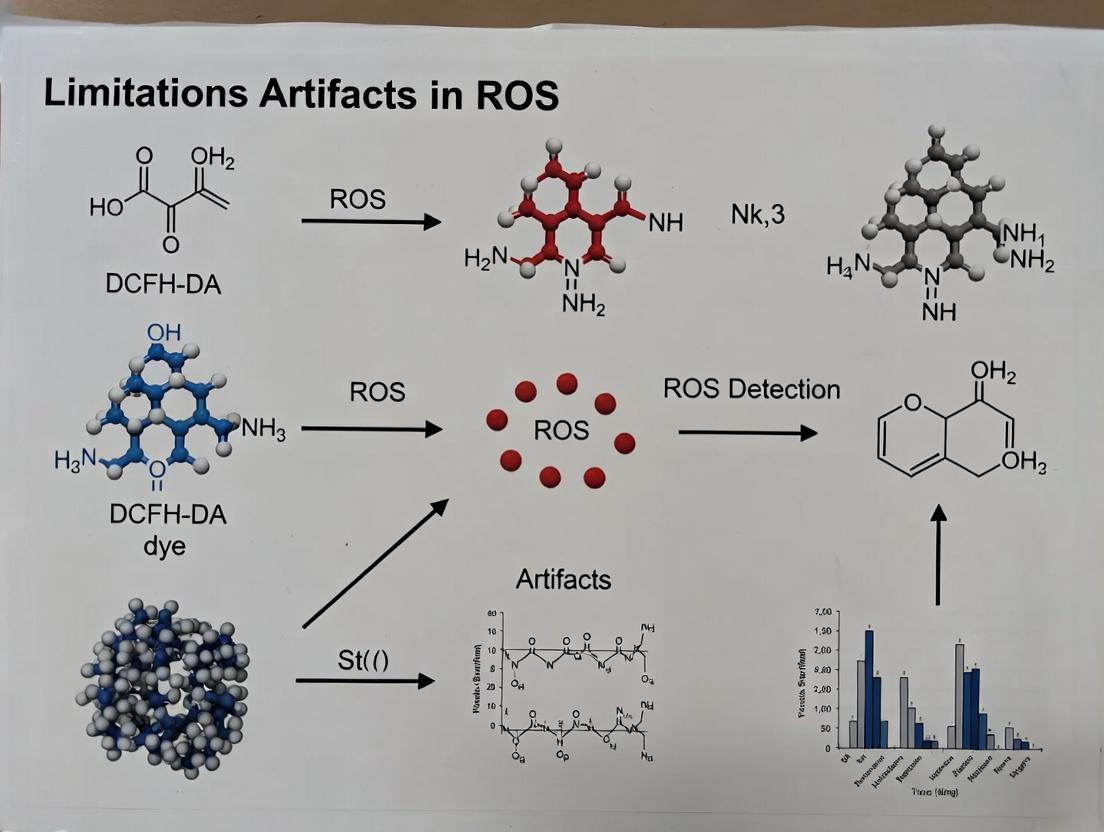
This article provides a comprehensive, critical analysis of 2',7'-Dichlorodihydrofluorescein diacetate (DCFH-DA), the most widely used fluorescent probe for detecting reactive oxygen species (ROS) in biological systems.
Beyond the Green Glow: Critical Limitations and Artifacts of DCFH-DA in Cellular ROS Detection
Abstract
This article provides a comprehensive, critical analysis of 2',7'-Dichlorodihydrofluorescein diacetate (DCFH-DA), the most widely used fluorescent probe for detecting reactive oxygen species (ROS) in biological systems. Tailored for researchers and drug development professionals, we explore the fundamental chemistry of DCFH-DA, detail methodological challenges and common artifacts, present troubleshooting strategies for data interpretation, and compare its performance against emerging alternative probes. The goal is to empower scientists to make informed choices, optimize experimental designs, and critically validate ROS data to ensure robust and reproducible research outcomes in biomedicine.
Understanding DCFH-DA: Mechanism, Popularity, and Inherent Flaws in ROS Sensing
Technical Support Center: Troubleshooting & FAQs
Frequently Asked Questions
Q1: My DCFH-DA assay shows high fluorescence in my negative control (no cells). What could be the cause? A: This is a common artifact. Causes include:
- Auto-oxidation of DCFH: The hydrolyzed probe (DCFH) is unstable and can auto-oxidize in the presence of light, media components (e.g., ferric ions, phenol red), or serum. Solution: Prepare and load DCFH-DA in serum-free, phenol red-free media. Keep the probe and assay plate in the dark at all times. Use an antioxidant (e.g., 1 mM pyruvate) in the buffer to scavenge ambient ROS.
- Chemical Hydrolysis: DCFH-DA can hydrolyze non-enzymatically in aqueous solution over time, especially at higher pH or temperatures. Solution: Prepare fresh DCFH-DA stock in high-quality anhydrous DMSO immediately before use. Do not store loaded probes in aqueous buffer for extended periods before adding cells.
Q2: I observe inconsistent fluorescence signals between replicates, even with the same treatment. A: Inconsistency often stems from:
- Unequal Esterase Activity: Cellular esterase activity, required for probe activation, can vary with cell number, confluency, and metabolic state. Solution: Ensure a consistent and healthy cell monolayer. Perform a cell titration experiment to determine the optimal cell density for your assay. Consider normalizing DCF fluorescence to cell number using a parallel assay (e.g., crystal violet, total protein).
- Inadequate Probe Loading/Washing: Incomplete removal of extracellular DCFH-DA leads to extracellular hydrolysis and high background. Solution: Follow a strict washing protocol (2-3 washes with PBS or serum-free media) after the loading incubation period (typically 30-45 min at 37°C).
Q3: My positive control (e.g., H₂O₂ or TBHP) does not yield a strong signal. A: This indicates a failure in ROS generation or detection. Solution:
- Validate your oxidant stock concentration and ensure it is fresh.
- Titrate your positive control to find the optimal concentration that gives a robust signal without causing acute cytotoxicity.
- Check that your instrument (plate reader, microscope) filters are correct (Ex/Em ~488/525 nm).
Troubleshooting Guide: Common Issues & Solutions
| Issue | Possible Cause | Recommended Solution |
|---|---|---|
| High Background | 1. Auto-oxidation of probe.2. Residual extracellular probe.3. Serum in loading media. | 1. Work in dark, use antioxidants.2. Increase wash steps post-loading.3. Use serum-free, phenol red-free media for loading. |
| Low/No Signal | 1. Low cellular esterase activity.2. Probe degradation.3. Incorrect instrument settings. | 1. Check cell viability, optimize cell density.2. Prepare fresh DCFH-DA stock.3. Verify fluorescence filter sets. |
| Variable Replicates | 1. Inconsistent cell seeding.2. Edge effects in plate.3. Uneven probe loading. | 1. Standardize cell seeding protocol.2. Use a plate with a lid to prevent evaporation, consider using inner wells only.3. Ensure uniform addition and mixing of probe. |
| Signal Saturation | 1. Probe concentration too high.2. Oxidant concentration too high.3. Reading time too long. | 1. Titrate DCFH-DA (1-50 µM typical range).2. Titrate the oxidative stimulus.3. Take kinetic readings more frequently to catch the linear range. |
Detailed Experimental Protocols
Protocol 1: Standard DCFH-DA Assay for Intracellular ROS in Adherent Cells
Key Principle: Cells are loaded with the cell-permeant DCFH-DA, which is hydrolyzed by intracellular esterases to DCFH and trapped inside. Oxidation by ROS yields fluorescent DCF.
Materials:
- Adherent cells (e.g., HEK293, HeLa)
- DCFH-DA stock solution (20 mM in anhydrous DMSO)
- Phenol red-free, serum-free cell culture medium (e.g., HBSS, PBS with Ca²⁺/Mg²⁺)
- Positive control oxidant (e.g., 100 µM tert-butyl hydroperoxide, TBHP)
- Antioxidant control (e.g., 10 mM N-acetylcysteine, NAC)
- 96-well black-walled, clear-bottom microplate
- Fluorescence plate reader (Ex/Em: 485/535 nm)
Method:
- Cell Seeding: Seed cells in the 96-well plate and culture until 70-80% confluent.
- Probe Loading: Prepare 10 µM DCFH-DA working solution in warm, serum-free medium. Protect from light. Remove cell culture medium and add 100 µL/well of the DCFH-DA solution. Incubate for 45 minutes at 37°C in the dark.
- Washing: Carefully remove the loading solution. Gently wash cells twice with 100 µL/well of pre-warmed PBS or serum-free medium.
- Treatment & Reading: Add 100 µL/well of fresh medium containing test compounds or controls (e.g., TBHP, NAC). Immediately place the plate in the pre-warmed (37°C) plate reader. Take kinetic fluorescence measurements every 5-10 minutes for 1-2 hours.
Normalization: Data can be normalized to the fluorescence at time zero (F/F₀) or to cell number from a parallel MTT/Crystal Violet assay.
Protocol 2: Assessing DCFH Auto-oxidation Artifacts
Key Principle: This control experiment quantifies non-cellular oxidation of the probe, critical for validating assay conditions.
Method:
- Prepare DCFH (the diacetate-free form) chemically: Hydrolyze 20 µL of 20 mM DCFH-DA with 10 µL of 1N NaOH for 30 minutes at room temperature in the dark. Neutralize with 10 µL of 1N HCl and dilute in assay buffer to 10 µM.
- In a 96-well plate, add 100 µL of assay buffer (with/without 1 mM pyruvate) or cell culture medium to wells.
- Add 100 µL of the prepared DCFH solution to the wells. Include a well with buffer only as blank.
- Immediately read fluorescence kinetically (Ex/Em: 485/535 nm) for 60 minutes under the same conditions as your cellular assay.
Interpretation: A rapid increase in fluorescence in the absence of cells indicates significant auto-oxidation. The condition with the lowest slope (e.g., buffer + antioxidant) represents the optimal assay medium.
Essential Visualizations
Diagram Title: Biochemical Pathway of DCFH-DA Activation and Key Artifacts
Diagram Title: Standard DCFH-DA Assay Experimental Workflow
The Scientist's Toolkit: Key Research Reagent Solutions
| Item | Function & Rationale |
|---|---|
| DCFH-DA | The core probe. Cell-permeant diacetate form that is non-fluorescent until hydrolyzed and oxidized. |
| Anhydrous DMSO | High-quality solvent for preparing stable, concentrated stock solutions (typically 10-100 mM). |
| Phenol Red-Free / Serum-Free Buffer (e.g., HBSS) | Assay medium that minimizes background auto-oxidation caused by phenol red and serum components. |
| tert-Butyl Hydroperoxide (TBHP) | A stable organic peroxide used as a standardized positive control to induce ROS and validate the assay. |
| N-Acetylcysteine (NAC) | A broad-spectrum antioxidant used as a negative control to inhibit ROS-dependent fluorescence. |
| Sodium Pyruvate | Added to assay medium (1-10 mM) to scavenge ambient H₂O₂, reducing auto-oxidation artifacts. |
| Catalase | Enzyme that rapidly degrades H₂O₂. Used in control experiments to confirm specificity of signal for H₂O₂. |
| Black-walled, Clear-bottom Microplates | Maximize signal collection while allowing for microscopic visualization or cell density normalization. |
Technical Support Center: Troubleshooting DCFH-DA Assays
Frequently Asked Questions (FAQs)
Q1: My DCF fluorescence signal is very low or absent. What could be the cause? A: Low signal can result from several factors:
- Inadequate Esterase Activity: DCFH-DA requires intracellular esterases to cleave the diacetate groups. Check cell viability and metabolic activity. Consider pre-incubating cells in serum-free medium if serum esterases are depleting the probe.
- Probe Loading Failure: The probe may not be loading properly. Ensure DCFH-DA is prepared in anhydrous DMSO and that the final DMSO concentration in the assay buffer is ≤ 0.1%. Verify cell membrane permeability.
- Oxidant Deficiency: The experimental treatment may not be generating sufficient ROS to oxidize DCFH. Include a positive control (e.g., 100-500 µM tert-Butyl hydroperoxide (t-BOOH)).
- Photobleaching: DCF is photolabile. Minimize light exposure during handling and imaging.
Q2: I am observing a high background signal in my untreated controls. How can I reduce this? A: High background is a common artifact.
- Autoxidation: DCFH can autoxidize spontaneously. Work quickly after loading and washing cells. Use fresh probe solution prepared immediately before use.
- Serum Components: Fetal bovine serum (FBS) can contain oxidants. Perform the probe loading and assay in serum-free or low-serum buffer.
- Light Exposure: Keep samples in the dark as much as possible from the moment the probe is added.
- Cellular Esterase Variability: Different cell lines have varying esterase activity, leading to inconsistent DCFH formation. Consider normalizing data to total protein content or cell number.
Q3: My positive control (e.g., H₂O₂ or t-BOOH) is not yielding the expected increase in fluorescence. What should I check? A:
- Probe Concentration: Confirm you are using an appropriate concentration (typically 5-50 µM).
- Incubation Time: Ensure sufficient time for esterase cleavage (usually 20-45 minutes) and for the oxidant to act (15-60 minutes).
- Oxidant Reactivity: H₂O₂ reacts relatively slowly with DCFH. t-BOOH is often a more reliable positive control. Consider using a peroxynitrite generator (SIN-1) as an alternative.
- Quenching by Media: Some culture media components (e.g., phenol red, pyruvate, antioxidants) can scavenge ROS. Use a simple buffer like Hank's Balanced Salt Solution (HBSS) during the oxidation step.
Q4: Is the DCF signal specific to H₂O₂? What other ROS/RNS can it detect? A: No, DCFH-DA is notoriously non-specific. While historically marketed for H₂O₂, DCFH is oxidized by a wide range of species, including peroxynitrite (ONOO⁻), hydroxyl radical (·OH), and cytochrome c. It can also be oxidized by cellular enzymes (peroxidases, heme proteins) independently of H₂O₂. This lack of specificity is a major limitation for definitive ROS identification.
Q5: How can I mitigate known artifacts like dye leakage, photobleaching, and interaction with antioxidants? A: Implement the following controls and protocols:
- Dye Leakage: Include wells with probe-loaded cells washed and measured over time to establish signal stability. Perform rapid measurements post-wash.
- Photobleaching: Use minimal excitation light intensity and duration. Employ a control experiment to quantify signal loss over the measurement period.
- Antioxidant Interaction: Pre-incubate with specific antioxidants (e.g., catalase for H₂O₂, SOD for O₂·⁻) to see if the signal is quenched. Be aware that N-acetylcysteine (NAC) can directly reduce DCF, causing artifactually lowered signals.
Key Artifacts and Limitations Table
Table 1: Major Limitations and Artifacts of DCFH-DA in ROS Detection
| Category | Specific Issue | Consequence for Data | Suggested Mitigation |
|---|---|---|---|
| Chemical Specificity | Oxidation by ONOO⁻, ·OH, heme proteins, peroxidases. | Overestimation of H₂O₂; false positives. | Use in conjunction with more specific probes (Amplex Red for H₂O₂) or scavengers. |
| Probe Autoxidation | Spontaneous oxidation of DCFH in medium. | High background, low signal-to-noise ratio. | Use serum-free buffers, minimize time between loading and assay, include reagent blanks. |
| Photochemical Artifacts | Photo-oxidation of DCFH; photobleaching of DCF. | Artificially increased or decreased signal. | Conduct assays in the dark; standardize illumination. |
| Cellular Interactions | Interaction with cellular antioxidants (e.g., GSH, NAC). | Artifactual signal quenching. | Interpret data with caution; avoid use with thiol antioxidants. |
| Enzymatic Interference | Esterase activity variability; peroxidase-mediated oxidation. | Inconsistent loading; non-ROS-dependent signal. | Normalize to protein/cell count; use inhibitors like azide (with caution). |
| pH Sensitivity | DCF fluorescence intensity is pH-dependent. | Signal changes not related to ROS. | Maintain consistent pH across all samples. |
| Quantification Limit | Signal is not stoichiometric; one DCF molecule can be repeatedly oxidized/reduced. | Prevents accurate quantification of ROS production. | Use for relative, not absolute, comparisons within a single experiment. |
Standardized Experimental Protocol for DCFH-DA Assay
Title: Protocol for Intracellular ROS Measurement Using DCFH-DA
Principle: Cell-permeable DCFH-DA is deacetylated by cellular esterases to non-fluorescent DCFH, which is trapped intracellularly. Upon oxidation by ROS, it converts to highly fluorescent DCF.
Materials:
- Cells cultured in a 96-well black-walled, clear-bottom plate.
- DCFH-DA stock solution (10-50 mM in anhydrous DMSO, stored at -20°C protected from light).
- Assay Buffer (e.g., HBSS, pH 7.4, pre-warmed to 37°C).
- Positive Control (e.g., 200 µM t-BOOH in assay buffer).
- Negative Control (assay buffer only).
- Fluorescence microplate reader or microscope with FITC filters (Ex/Em ~485/535 nm).
Procedure:
- Cell Preparation: Seed cells and grow to ~80% confluence. Wash cells 1x with warm assay buffer.
- Probe Loading: Dilute DCFH-DA stock in assay buffer to a final working concentration of 10-20 µM. Ensure final DMSO ≤ 0.1%. Add probe solution to cells. Incubate for 30-45 minutes at 37°C in the dark.
- Wash: Carefully remove the probe loading solution. Wash cells 2x with warm assay buffer to remove extracellular probe.
- Treatment & Measurement: Add treatments (experimental compounds, positive/negative controls) in assay buffer. Immediately place the plate in the pre-warmed (37°C) plate reader.
- Kinetic Read: Measure fluorescence every 5-10 minutes for 60-120 minutes. Use kinetic mode.
- Data Analysis: Subtract the background fluorescence (wells without cells). Normalize data to cell number (e.g., via a post-assay SRB or MTT stain) or protein content. Express results as Fold Change over the untreated control at a specific time point or as Area Under the Curve (AUC).
Key Signaling Pathways and Workflows
Diagram 1: DCFH-DA Mechanism and Common Artifacts
Diagram 2: Experimental Workflow for DCFH-DA Assay
The Scientist's Toolkit: Research Reagent Solutions
Table 2: Essential Materials for DCFH-DA-based ROS Detection Assays
| Reagent/Material | Function/Description | Key Consideration |
|---|---|---|
| DCFH-DA (2',7'-Dichlorodihydrofluorescein diacetate) | Cell-permeable ROS probe. Becomes fluorescent upon oxidation. | Critical: Aliquot in anhydrous DMSO, store at -20°C protected from light and moisture. Avoid freeze-thaw cycles. |
| Anhydrous DMSO | Solvent for preparing DCFH-DA stock solution. | Must be anhydrous to prevent hydrolysis of the diacetate groups before use. |
| HBSS (Hanks' Balanced Salt Solution) | Common assay buffer. Provides physiological ion concentrations. | Use without phenol red to avoid background fluorescence. Pre-warm to 37°C. |
| tert-Butyl Hydroperoxide (t-BOOH) | Organic peroxide used as a reliable positive control. | Often more effective than H₂O₂ at oxidizing DCFH. Prepare fresh. |
| Catalase | Enzyme that degrades H₂O₂. | Used as a scavenger control to test if signal is H₂O₂-dependent. |
| Sodium Azide (NaN₃) | Inhibitor of heme peroxidases and catalase. | Can help identify enzyme-mediated artifacts. Toxic: Handle with care. |
| Black-walled, Clear-bottom 96-well Plates | Optimal plate type for fluorescence assays. | Black walls minimize cross-talk; clear bottom allows for cell imaging if needed. |
| Fluorescence Plate Reader | Instrument for quantitative signal detection. | Must have temperature control (37°C) and appropriate filters (FITC range). |
Troubleshooting Guides & FAQs
Q1: My DCFH-DA assay shows a strong signal increase after treatment, but a specific •OH scavenger (e.g., mannitol) doesn't inhibit it. Does this mean my signal is from H2O2 and not •OH? A: Not necessarily. DCFH-DA is oxidized by a broad range of ROS and other cellular oxidants. A lack of inhibition by a selective scavenger like mannitol suggests •OH is not the primary contributor. However, the signal could still be from H2O2 (via cellular peroxidases), peroxynitrite (ONOO-), or even non-ROS artifacts like heme peroxidase activity. To clarify, you must use a combination of specific scavengers and confirmatory assays.
Q2: How can I experimentally distinguish between a DCF signal coming from H2O2 versus •OH in my cell model? A: A multi-pronged pharmacological approach is required, as no single experiment with DCFH-DA is definitive.
- Use Specific Scavengers/Inhibitors Concurrently: Treat cells with both a •OH scavenger (e.g., 5-10 mM mannitol or DMSO) and a H2O2-scavenging enzyme (e.g., catalase, 500-1000 U/mL). Compare inhibition patterns.
- Employ a "DCFH-DA + Catalase" Control: Add catalase directly to your assay buffer. If the signal is largely quenched, extracellular H2O2 is a major contributor. Use cell-permeable PEG-catalase to assess intracellular H2O2.
- Correlate with a Secondary, More Specific Probe: Perform a parallel experiment using a more selective probe (e.g., hydroxyphenyl fluorescein (HPF) for •OH/ONOO- or HyPer for H2O2). Correlation (or lack thereof) with DCF signal provides evidence.
Q3: My negative control (untreated cells) shows high DCF fluorescence. What could be causing this baseline artifact? A: High baseline can stem from several sources:
- Auto-oxidation: DCFH can auto-oxidize in light or in the presence of trace metals. Work in dim light, use metal chelators (e.g., DTPA) in buffers, and prepare solutions fresh.
- Serum Components: Serum in culture media contains oxidases. Always wash cells and incubate in serum-free, phenol-red-free buffer during the assay.
- Cellular Esterase Activity: Variances in esterase activity between cell lines can cause differing rates of DCFH formation, affecting baseline. Include an esterase inhibition control if needed.
- Photoreduction: If using a microscope, prolonged excitation light can photoreduce the DCF dye, causing artifactual signal. Strictly control exposure times.
Key Experimental Protocols
Protocol 1: Pharmacological Scavenger Test for ROS Specificity
Objective: To dissect the contribution of H2O2 vs. •OH to the DCF signal. Materials: DCFH-DA, specific ROS scavengers (see table below), cell culture in a 96-well plate. Method:
- Pre-treat cells with specific scavengers/inhibitors for 30-60 minutes prior to DCFH-DA loading:
- Condition A: Vehicle control (e.g., PBS).
- Condition B: 500 U/mL PEG-Catalase (scavenges intracellular H2O2).
- Condition C: 10 mM Mannitol (scavenges •OH).
- Condition D: 100 µM Sodium Azide (inhibits cellular peroxidases).
- Load all wells with 10 µM DCFH-DA in serum-free medium for 30 min at 37°C.
- Wash cells twice to remove extracellular probe.
- Apply experimental stimulus or vehicle to respective wells.
- Immediately measure fluorescence (Ex/Em: 485/535 nm) kinetically for 60-90 minutes.
- Data Analysis: Calculate the area under the curve (AUC) for each condition. Express AUC as % of the stimulated vehicle control (Condition A). Use the inhibition profile to infer contributing species.
Protocol 2: Validation Using a Secondary Probe (HPF for •OH/ONOO-)
Objective: To corroborate DCFH-DA results with a more selective probe. Materials: DCFH-DA, hydroxyphenyl fluorescein (HPF), cell culture. Method:
- Seed duplicate plates for DCF and HPF assays.
- For the DCF plate, follow standard loading and stimulation protocols.
- For the HPF plate, load cells with 5 µM HPF in serum-free medium for 30-60 min at 37°C. Wash and stimulate.
- Measure fluorescence for both plates in parallel (HPF uses the same Ex/Em as DCF).
- Data Analysis: Plot kinetic traces and compare the signal magnitude and shape between DCF and HPF. A strong DCF signal with a weak HPF signal suggests the oxidant is not •OH/ONOO- (pointing more towards H2O2 or artifacts).
Table 1: Efficacy of Common Scavengers Against Different Oxidants
| Scavenger/Inhibitor | Target ROS | Typical Working Concentration | % Inhibition of DCF Signal* (Example Range) | Key Limitations |
|---|---|---|---|---|
| Catalase (PEGylated) | H₂O₂ | 500-1000 U/mL | 40-80% | Large enzyme; PEG form is cell-permeable. Specific for H₂O₂. |
| Sodium Azide | Peroxidases (e.g., HRP, MPO) | 0.1-1 mM | 20-70% | Toxic to cells; inhibits cytochrome c oxidase, affecting metabolism. |
| Mannitol | •OH | 5-50 mM | 0-40% | Low cell permeability; can also scavenge other radicals. |
| Dimethyl Sulfoxide (DMSO) | •OH | 0.5-1% (v/v) | 0-50% | High conc. affects membrane & cell function; not perfectly specific. |
| Superoxide Dismutase (SOD) | O₂•⁻ | 100-300 U/mL | 0-30% | Cannot enter cells; only assesses extracellular O₂•⁻ contribution. |
| Trolox (water-soluble Vit E) | General Radical Chain Breaker | 100-200 µM | 10-60% | Broad anti-oxidant, not specific; can interfere with signaling. |
*Inhibition is highly dependent on cell type, stimulus, and the actual ROS produced. Data is illustrative.
Table 2: Comparison of Common Fluorescent ROS Probes
| Probe Name | Primary Target(s) | Specificity vs. DCFH-DA | Excitation/Emission (nm) | Key Artifact/Note |
|---|---|---|---|---|
| DCFH-DA | H₂O₂, •OH, ONOO⁻, RO•, Peroxidases | Low - Broad Spectrum | ~495/~529 | Many artifacts: photo-oxidation, auto-oxidation, non-ROS oxidation. |
| HPF | •OH, ONOO⁻ | High for these two | 490/515 | Much less reactive to H₂O₂, NO, O₂•⁻. Validates •OH/ONOO⁻ signal. |
| HyPer Series | H₂O₂ | Very High (Genetically Encoded) | 420/500 & 500/516 (ratiometric) | Requires transfection; ratiometric, pH-sensitive. |
| Amplex Red | H₂O₂ (via HRP) | High (Extracellular) | ~570/~585 | Measures extracellular H₂O₂ release. Requires exogenous HRP. |
| MitoSOX Red | Mitochondrial O₂•⁻ | High (within mitochondria) | ~510/~580 | Mitochondria-localized; can be oxidized by other oxidants. |
The Scientist's Toolkit: Research Reagent Solutions
| Item | Function & Rationale |
|---|---|
| PEG-Catalase | Cell-permeable form of catalase. Essential for scavenging intracellular H₂O₂ to test its contribution to the DCF signal. |
| Hydroxyphenyl Flucein (HPF) | More selective fluorescein-based probe for •OH and peroxynitrite. Critical as a secondary validation tool. |
| Metal Chelators (DTPA, Desferoxamine) | Added to assay buffers (50-100 µM) to chelate trace iron/copper, inhibiting Fenton reaction and DCFH auto-oxidation. |
| Sodium Azide | Inhibits cellular peroxidase enzymes (e.g., myeloperoxidase). Helps identify peroxidase-mediated DCF oxidation vs. direct ROS reaction. |
| Dimethyl Sulfoxide (DMSO) | A potent •OH scavenger. Used at low concentrations (0.5-1%) in scavenger cocktails. |
| Rotenone/Antimycin A | Mitochondrial electron transport chain inhibitors. Used as positive controls for mitochondrial ROS generation. |
| NADPH Oxidase Inhibitors (e.g., VAS2870, Apocynin) | Used to test if the DCF signal originates from NOX enzyme activity, common in many disease models. |
| Fluorescence Microplate Reader with Kinetic Capability | Necessary for capturing the dynamic, time-dependent changes in DCF fluorescence, which is more informative than single endpoint readings. |
Pathways & Workflow Diagrams
Title: DCFH-DA Oxidation Pathways and Artifact Sources
Title: Troubleshooting Logic Flow for DCF Signal Specificity
Technical Support Center
Troubleshooting Guide & FAQs
Q1: My DCFH-DA assay shows high fluorescence in negative control wells (no cells, no treatment). What is happening? A: This is a classic sign of autoxidation. The DCFH probe is spontaneously oxidizing in your buffer/media. Ensure your assay buffer is prepared fresh, de-gassed, or supplemented with metal chelators like DTPA (100 µM) to inhibit metal-catalyzed autoxidation. Keep probe stocks in anhydrous DMSO under inert gas (Argon) and avoid repeated freeze-thaw cycles.
Q2: Fluorescence increases dramatically the moment I place the plate in the reader, even before the first measurement. Why? A: This is likely photooxidation. The excitation light from your plate reader is itself oxidizing the DCFH probe. Immediately reduce the excitation light intensity/power or use neutral density filters. Perform kinetic reads with minimal exposure time and delay between wells. Consider using a plate reader with a controlled atmosphere chamber (low O₂) for sensitive measurements.
Q3: My treatment shows a strong DCF signal, but parallel assays (e.g., Amplex Red, ESR) show no ROS increase. Is DCFH-DA wrong? A: Not necessarily wrong, but likely confounded. The signal may be from autoxidation accelerated by your treatment's change in media pH or metal ion content, or from non-specific peroxidase activity. You must run a full suite of controls, including a DCFH-DA + treatment (no cells) control, a cells + inhibitor (e.g., NAC, catalase) control, and correlate with a chemically distinct ROS probe.
Q4: How can I distinguish genuine cellular ROS production from probe artifact in my experiment? A: Implement the following control experiment protocol:
- Sample Set: Prepare identical cell samples loaded with DCFH-DA.
- Control 1: Add a potent antioxidant (e.g., 10 mM Trolox or 5 mM NAC) 10 minutes before your stimulus.
- Control 2: Lyse cells with 0.1% Triton X-100 before adding stimulus. This differentiates enzymatic vs. non-enzymatic oxidation.
- Control 3: Run a probe + stimulus in cell-free medium. A signal suppressed by antioxidant but not present in lysed or cell-free controls strongly suggests genuine intracellular ROS.
Key Quantitative Data on DCFH-DA Artifacts
Table 1: Common Factors Accelerating DCFH Autoxidation and Mitigation Strategies
| Factor | Effect on Signal (Fold Increase) | Recommended Mitigation |
|---|---|---|
| Ambient Light Exposure (30 min) | 2.5 - 4.0 | Work in dim light; wrap samples in foil |
| PBS pH > 8.0 | 3.0+ | Use pH-stable buffer (e.g., HEPES, pH 7.4) |
| Contaminating Fe²⁺/Cu⁺ (1 µM) | 6.0 - 8.0 | Add chelators (DTPA, 100 µM) |
| Repeated Freeze-Thaw of Probe Stock | 2.0+ | Aliquot into single-use vials under Argon |
| High Reader Excitation Power | 10.0+ | Use < 5% power or filter light |
Table 2: Comparison of Artifact Contribution in Different Media
| Assay Medium | Baseline Autoxidation Rate (RFU/min)* | Photooxidation Rate under Read Light* |
|---|---|---|
| Plain PBS (pH 7.4) | 100 ± 15 | 450 ± 80 |
| PBS + 100 µM DTPA | 25 ± 5 | 120 ± 30 |
| Cell Culture Media (Serum-free) | 180 ± 25 | 600 ± 95 |
| Hanks' Buffer (with Ca²⁺/Mg²⁺) | 150 ± 20 | 500 ± 75 |
*Relative Fluorescence Units, normalized to plain PBS control. Data indicative of typical trends.
Experimental Protocols for Artifact Validation
Protocol 1: Quantifying Probe Autoxidation in Cell-Free Systems Objective: Determine the non-cellular oxidation rate of DCFH-DA/DCFH in your experimental buffer. Steps:
- Hydrolyze DCFH-DA to DCFH: Mix 500 µM DCFH-DA with 10 mM NaOH in the dark for 30 min. Neutralize with 10x volume of assay buffer.
- In a black 96-well plate, add 180 µL of your assay buffer (with/without additives like serum, metals, chelators).
- Add 20 µL of hydrolyzed DCFH solution (final conc. 5-10 µM).
- Immediately place in plate reader pre-warmed to 37°C. Measure fluorescence (Ex/Em: 485/535 nm) kinetically every 5 min for 1-2 hours, with minimal lamp exposure.
- Analysis: Plot RFU vs. time. The slope of the buffer-only wells is your autoxidation background rate.
Protocol 2: Validating Cellular ROS Signal with Inhibitor Controls Objective: Confirm that the observed DCF fluorescence increase is due to biologically generated ROS. Steps:
- Plate cells in a 96-well plate and grow to 80% confluency.
- Load with DCFH-DA (10 µM) in serum-free medium for 30-45 min at 37°C.
- Replace with fresh buffer. Set up four conditions per treatment:
- Condition A: Cells + Buffer (Baseline)
- Condition B: Cells + Oxidative Stimulus (e.g., H₂O₂, menadione)
- Condition C: Cells + Antioxidant (e.g., 5 mM NAC, 1000 U/mL Catalase) + Oxidative Stimulus
- Condition D: Cells + Vehicle Control for Antioxidant
- Measure fluorescence kinetically. A true ROS signal will show: B >> A, and C ≈ D (i.e., antioxidant abolishes the increase).
Diagrams
Title: DCFH Oxidation Pathways & Artifact Sources
Title: Experimental Workflow for Artifact Mitigation
The Scientist's Toolkit: Essential Research Reagents & Materials
| Item | Function/Benefit in Mitigating Artifacts |
|---|---|
| Diethylenetriaminepentaacetic acid (DTPA) | Metal chelator. Binds contaminating Fe/Cu ions, drastically reducing metal-catalyzed autoxidation of DCFH. Preferable to EDTA as it does not redox cycle. |
| N-Acetylcysteine (NAC) | Thiol antioxidant. Serves as a positive control inhibitor for most cellular ROS. If NAC abolishes signal, it is likely ROS-dependent. |
| PEG-Catalase | Cell-impermeable enzyme. Scavenges extracellular H₂O₂. Differentiates intracellular vs. extracellular ROS contribution to the signal. |
| Trolox | Water-soluble Vitamin E analog. Chain-breaking antioxidant. Used to confirm signal is from free radical chain reactions. |
| Argon Gas Canister | For creating an inert atmosphere when storing probe stock solutions, preventing atmospheric oxidation. |
| Black/Wrapped Microplates | Minimizes ambient light exposure of samples during preparation and incubation steps. |
| Neutral Density Filters | Optical filters placed in plate reader to reduce excitation light intensity, thereby lowering photooxidation rate. |
| HEPES Buffer (pH 7.4) | A pH-stable biological buffer. Prevents artifactual signal increases from pH drift (common in bicarbonate buffers). |
| Triton X-100 | Detergent. Cell lysis agent for the "lysed cell control" to check for enzymatic vs. non-enzymatic probe oxidation. |
The Catalytic Role of Cellular Peroxidases and Metal Ions in Signal Amplification
Technical Support Center: Troubleshooting DCFH-DA Assays
Frequently Asked Questions (FAQs)
Q1: My DCF fluorescence signal is unusually high in negative controls (e.g., no cells, no stimulus). What could be the cause? A: This is a common artifact. The likely cause is non-enzymatic, metal-catalyzed oxidation of DCFH. Trace metal ions (e.g., Fe²⁺, Cu⁺) in your buffer or media can react with residual peroxides, directly oxidizing the probe. Solution: Chelex-treat all buffers to remove transition metals. Include a metal chelator (e.g., desferrioxamine) in your assay buffer. Always run a cell-free DCFH-DA control to quantify this background.
Q2: I observe a rapid "flash" of fluorescence immediately after adding the probe, followed by a decline. Is this real ROS production? A: Probably not. The initial flash is often an artifact of intracellular esterase activity rapidly cleaving DCFH-DA to DCFH, which can undergo auto-oxidation upon exposure to light (photo-oxidation) or upon entry into a non-optimal pH environment. Solution: Reduce light exposure during loading and initial incubation. Ensure the assay medium is at physiological pH (7.4). Allow for a stabilization period after loading before taking the first measurement.
Q3: My positive control (e.g., adding H₂O₂ directly) gives a weak signal. Is my probe inactive? A: Not necessarily. DCFH is not directly oxidized by H₂O₂. The reaction requires cellular peroxidases (e.g., horseradish peroxidase in vitro, or heme peroxidases in cells) or metal ions as catalysts. A weak signal may indicate low peroxidase activity in your sample. Solution: For an in vitro system, add a known quantity of horseradish peroxidase (HRP) to confirm probe activity. For cellular assays, this result may be biologically accurate for your cell type.
Q4: Can I compare fluorescence between different cell types directly? A: No. Signal amplification is highly dependent on the intracellular concentration of peroxidases and redox-active metal ions, which vary between cell types. A higher signal may indicate greater catalytic capacity, not greater ROS production. Solution: Normalize data to cell number or protein content, but interpret comparisons with extreme caution. Use alternative, more specific probes (e.g., Amplex Red for H₂O₂) to validate findings.
Troubleshooting Guide: Step-by-Step Diagnostics
| Symptom | Possible Cause | Diagnostic Experiment | Corrective Action |
|---|---|---|---|
| High background in all wells | 1. Metal-catalyzed oxidation. 2. Light exposure. | 1. Run cell-free wells ± metal chelator (Desferroxamine 100µM). 2. Compare samples kept in dark vs. light. | 1. Chelex-treat buffers. 2. Minimize light exposure. |
| Signal decreases over time | 1. Photobleaching of DCF. 2. Exhaustion of substrate (DCFH). | 1. Measure fluorescence of a DCF standard over time. 2. Add bolus of H₂O₂ at endpoint; if no increase, substrate is depleted. | 1. Reduce read frequency/ exposure. 2. Confirm linear range of assay. |
| No response to a known stimulus | 1. Probe overload/self-quenching. 2. Inadequate catalytic environment. | 1. Load with 50% less DCFH-DA. 2. Add exogenous peroxidase (HRP) to cell lysates. | 1. Titrate probe concentration. 2. Report limitations of cell model. |
| Inconsistent replicates | 1. Uneven DCFH-DA loading. 2. Variable cell number/health. | 1. Measure loading efficiency via a control dye (e.g., Calcein-AM). 2. Check confluence and viability. | 1. Standardize loading protocol (time, temperature). 2. Seed cells at uniform density. |
Table 1: Catalytic Efficiency of Peroxidases and Metals in DCFH Oxidation
| Catalyst | Optimal Concentration | Rate Constant (Approx.) | Primary ROS Detected | Interfering Conditions |
|---|---|---|---|---|
| Horseradish Peroxidase (HRP) | 1-10 U/mL | k ~ 10⁶ M⁻¹s⁻¹ (for H₂O₂) | H₂O₂, Organic peroxides | Inhibited by Azide, Cyanide |
| Myeloperoxidase (MPO) | Variable in cells | k ~ 10⁷ M⁻¹s⁻¹ (for H₂O₂+Cl⁻) | HOCI (from H₂O₂ + Cl⁻) | Specific to neutrophils/monocytes |
| Free Fe²⁺/Cu⁺ ions | >0.1 µM can artifact | Fenton reaction kinetics | •OH (and other radicals) | Chelated by EDTA, Desferrioxamine |
| Heme groups (Cytochromes) | N/A (intracellular) | Variable, non-specific | Broad peroxides | Subject to cellular localization |
Table 2: Common Artifacts and Their Magnitude
| Artifact Source | Signal Increase (vs. True Baseline) | Conditions that Exacerbate It | Method to Quantify Artifact |
|---|---|---|---|
| Serum in loading medium | Up to 300% | Fetal Bovine Serum (FBS) >2% | Load cells in serum-free buffer. |
| Media Phenol Red | Up to 50% | High pH, old media | Use phenol-red free media for assay. |
| Photoxidation during read | 2-10% per read cycle | Blue light excitation, plate readers without temperature control. | Take single endpoint read or use integrated low-light mode. |
| Cell Lysis | Can be dramatic | Detergents, freeze-thaw, hypotonic shock. | Include viability dye, measure LDH release. |
Detailed Experimental Protocols
Protocol 1: Diagnosing Metal Ion Artifacts in Buffer Systems
- Prepare Chelex-Treated Buffer: Stir PBS (w/o Ca²⁺/Mg²⁺) with 5% (w/v) Chelex-100 resin for 1 hour at 4°C. Filter through a 0.22 µm filter.
- Prepare DCFH Solution: Hydrolyze DCFH-DA (10 mM stock in DMSO) to DCFH by mixing 10 µL with 2 mL of 10 mM NaOH. Incubate 30 min in dark. Neutralize with 18 mL of Chelex-treated PBS (final DCFH ~5 µM).
- Set Up Reaction in a 96-well plate:
- Well A: 100 µL DCFH + 100 µL Chelex-PBS (Background).
- Well B: 100 µL DCFH + 95 µL Chelex-PBS + 5 µL 100 µM FeSO₄ (Final 2.5 µM Fe²⁺).
- Well C: 100 µL DCFH + 95 µL Chelex-PBS + 5 µL 20 mM H₂O₂ (Final 500 µM).
- Well D: 100 µL DCFH + 90 µL Chelex-PBS + 5 µL FeSO₄ + 5 µL H₂O₂.
- Measurement: Immediately measure fluorescence (Ex/Em 485/535 nm) kinetically for 30 minutes. Compare initial rates. The signal in Well D indicates metal-catalyzed, non-enzymatic amplification.
Protocol 2: Assessing Cellular Peroxidase Contribution
- Cell Preparation: Seed cells in a black-walled, clear-bottom 96-well plate.
- Probe Loading: Load with DCFH-DA (e.g., 10 µM) in serum-free media for 30 min. Wash.
- Inhibitor/Modulator Treatment: Add fresh media containing:
- Condition 1: No addition (Control).
- Condition 2: Sodium Azide (10 mM, a peroxidase inhibitor).
- Condition 3: Catalase-polyethylene glycol (PEG-Catalase, 500 U/mL, scavenges extracellular H₂O₂).
- Condition 4: Desferrioxamine (100 µM, an iron chelator).
- Stimulation & Read: Add your stimulus or vehicle. Measure fluorescence kinetically. The difference between Control (1) and Azide (2) conditions estimates the peroxidase-dependent fraction of the signal.
Visualizations
Diagram Title: DCFH-DA Oxidation Pathways Showing Catalytic Amplification & Artifacts
Diagram Title: DCFH-DA Assay Troubleshooting Decision Tree
The Scientist's Toolkit: Research Reagent Solutions
Table 3: Essential Materials for Reliable DCFH-DA Experiments
| Reagent/Material | Function/Purpose | Key Consideration |
|---|---|---|
| DCFH-DA (High Purity, >95%) | The fluorogenic probe itself. | Store dessicated at -20°C in small aliquots. Avoid repeated freeze-thaw. |
| Chelex 100 Resin | Removes transition metal ions from buffers to reduce auto-oxidation. | Must filter sterilize after treatment. Can alter pH; re-adjust. |
| Desferrioxamine (DFO) | Specific iron(III) chelator. Used to inhibit Fenton reaction artifacts. | Does not effectively chelate copper. Use in cell-free and cellular controls. |
| Polyethylene Glybol-Catalase (PEG-Cat) | Scavenges extracellular H₂O₂. Distinguishes intra- vs. extracellular ROS. | Large PEG moiety prevents cellular uptake. |
| Sodium Azide (NaN₃) | Inhibits heme peroxidases (e.g., HRP, catalase, cytochromes). | TOXIC. Use in fume hood. Also inhibits Complex IV in mitochondria. |
| Horseradish Peroxidase (HRP) | Positive control catalyst. Confirms DCFH is active and reaction works. | Use a low, defined concentration (e.g., 1 U/mL) for standardization. |
| Black-walled, clear-bottom microplates | Minimizes crosstalk and background fluorescence during plate reading. | Ensure compatibility with your plate reader's optics. |
| Phenol Red-free assay medium | Eliminates background fluorescence from pH-sensitive dye in standard media. | Essential for accurate kinetic readings. |
Technical Support Center
Troubleshooting Guide: DCFH-DA Artifacts & Localization Issues
Issue 1: High background fluorescence or inconsistent signal.
- Potential Cause: Spontaneous oxidation of DCFH-DA during storage or handling, or incomplete hydrolysis of the DA ester groups. Probes localized to compartments with esterase activity or auto-oxidizing compounds yield false signals.
- Solution: Aliquot and store probe in anhydrous DMSO under inert gas (argon/nitrogen). Include a no-cell, probe-only control to assess auto-oxidation. Use a pre-incubation step in serum-free medium and wash thoroughly before ROS induction. Consider a cell-permeable esterase inhibitor control (e.g., bis-(p-nitrophenyl) phosphate) to differentiate cytosolic from organelle-specific signals.
Issue 2: Signal loss over time or no signal detected.
- Potential Cause: Probe leakage from cells, photobleaching, or quenching. If the probe is sequestered into organelles (e.g., acidic lysosomes via ion trapping), its fluorescence may be quenched, and it cannot report cytosolic ROS.
- Solution: Perform experiments at lower temperatures (e.g., 37°C vs. 4°C) to check for probe efflux. Minimize exposure to excitation light. Use a plate reader with temperature control. Include a positive control (e.g., tert-Butyl hydroperoxide, tBHP). Check colocalization with organelle-specific markers.
Issue 3: Signal in the absence of ROS stimulus or mismatched expectations.
- Potential Cause: Probe interaction with cellular components (e.g., iron, heme proteins, peroxidases) causing oxidation unrelated to general ROS. Localization to mitochondria or ER can report compartment-specific ROS not representative of the whole cell.
- Solution: Run interference controls: include antioxidants (N-acetylcysteine, ascorbate), metal chelators (deferoxamine), or peroxidase inhibitors. Always pair DCFH-DA with a more specific probe (e.g., MitoSOX for mitochondrial superoxide) for validation.
Frequently Asked Questions (FAQs)
Q1: Why is understanding the intracellular localization of my ROS probe critical? A: ROS are short-lived, compartmentalized signaling molecules. A probe localized to the mitochondria will report fundamentally different information than one in the cytosol, endoplasmic reticulum, or lysosomes. Assuming a "cytosolic" readout when the probe is organelle-specific leads to misinterpretation of the source, magnitude, and role of ROS in a biological process.
Q2: My DCFH-DA staining pattern isn't homogeneous. What does this mean? A: A punctate or non-uniform pattern strongly suggests subcellular compartmentalization. DCFH-DA can accumulate in mitochondria, lysosomes, the Golgi, or peroxisomes due to factors like esterase distribution, pH gradients, and membrane potentials. This pattern indicates your signal is not purely cytosolic and must be interpreted as a compartment-specific readout.
Q3: How can I experimentally determine where DCFH-DA is localized in my specific cell model? A: Perform a colocalization experiment. Follow the protocol below:
- Load cells with DCFH-DA (standard protocol).
- Incubate with a fluorescent organelle-specific marker (e.g., MitoTracker for mitochondria, LysoTracker for lysosomes, ER-Tracker for endoplasmic reticulum).
- Acquire high-resolution confocal microscopy images.
- Calculate Pearson's or Manders' correlation coefficients using image analysis software (e.g., ImageJ/Fiji) to quantify colocalization.
Q4: What are the main chemical artifacts associated with DCFH-DA? A: The primary artifacts are:
- Non-specific oxidation: By intracellular peroxidases, cytochrome c, and metal ions.
- Photo-oxidation: The probe itself generates ROS upon light exposure.
- Auto-oxidation: Spontaneous oxidation in culture medium.
- Dichlorofluorescin (DCFH) efflux: The oxidized product can leak out of cells, reducing signal.
- Signal amplification: A single oxidation event can yield multiple fluorescent photons, but the oxidation is irreversible and non-stoichiometric, complicating quantification.
Q5: Are there better alternatives to DCFH-DA for specific applications? A: Yes. For a more accurate assessment, use a panel of probes targeting different ROS and locations.
Quantitative Data on Probe Localization & Artifacts
Table 1: Common ROS Probes and Their Documented Localization Artifacts
| Probe Name | Target ROS | Primary Assumed Localization | Documented Compartmentalization & Artifacts |
|---|---|---|---|
| DCFH-DA / H2DCFDA | Broad (H2O2, ONOO-, •OH) | Cytosol | Accumulates in mitochondria, lysosomes, ER; High auto-oxidation; Metal/peroxidase interference. |
| Dihydroethidium (DHE) | Superoxide (O2•−) | Nuclear/ DNA-intercalating | Oxidized products (2-OH-E+ & E+) localize differently; Specificity requires HPLC validation. |
| MitoSOX Red | Mitochondrial Superoxide | Mitochondria | Can also respond to cytosolic O2•− if membrane potential is lost; Photoinstability. |
| Amplex Red | Extracellular H2O2 | Extracellular medium | Requires horseradish peroxidase (HRP); Can be used to infer efflux of intracellular H2O2. |
| HyPer | Cytosolic/Mitochondrial H2O2 | Genetically targeted (e.g., cytosol, mito) | High specificity and reversibility; Requires transfection/transduction. |
Table 2: Control Experiments for Validating DCFH-DA Data
| Control Experiment | Purpose | Expected Outcome for Valid ROS Signal |
|---|---|---|
| No-Cell Control | Measure probe auto-oxidation in buffer/medium. | Negligible fluorescence increase over experimental time. |
| Antioxidant Control | Pre-treat with broad-spectrum antioxidant (e.g., NAC). | Significant (>70%) reduction in fluorescence signal upon stimulus. |
| Inhibitor Control | Use specific pathway inhibitors (e.g., DPI, Rotenone). | Signal modulation consistent with known ROS source. |
| Colocalization Imaging | Co-stain with organelle markers. | Reveals specific punctate patterns, not diffuse cytosolic stain. |
Key Experimental Protocols
Protocol 1: Colocalization of DCFH-DA with Organelle Markers (Confocal Microscopy)
- Seed cells on glass-bottom confocal dishes.
- Load Probe: Incubate with 5-10 µM DCFH-DA in serum-free, phenol red-free medium for 30 min at 37°C.
- Wash: Replace with fresh, pre-warmed complete medium and incubate for an additional 20 min to allow complete de-esterification.
- Load Organelle Marker: Incubate with the appropriate organelle tracker (e.g., 50-100 nM MitoTracker Deep Red) for 15-30 min as per manufacturer's instructions.
- Wash & Image: Wash twice with PBS or imaging buffer. Image immediately using a confocal microscope with sequential scanning to avoid bleed-through. Use 488 nm excitation for DCF (emission: 500-550 nm) and the appropriate channel for the organelle marker.
Protocol 2: Distinguishing Esterase-Dependent Localization
- Prepare two cell samples: One pre-treated with 100 µM BNPP (an esterase inhibitor) for 1 hour, one untreated.
- Load DCFH-DA in the continued presence of BNPP for the treated sample.
- Wash and image both samples as in Protocol 1.
- Interpretation: A dimmer or altered localization pattern in the BNPP-treated sample indicates that probe hydrolysis and trapping are active drivers of its distribution.
Diagrams
Diagram 1: DCFH-DA Activation & Compartmentalization Pathways
Diagram 2: Troubleshooting Logic for High Background Signal
The Scientist's Toolkit: Key Research Reagent Solutions
| Item | Function / Relevance to DCFH-DA Experiments |
|---|---|
| DCFH-DA / H2DCFDA | The core non-fluorescent, cell-permeable probe. Hydrolyzed intracellularly to DCFH, which is oxidized by ROS to fluorescent DCF. |
| MitoTracker Deep Red | A red-fluorescent mitochondrial stain used for colocalization studies to confirm/rule out mitochondrial sequestration of DCFH. |
| LysoTracker Deep Red | A red-fluorescent lysosomal stain used for colocalization studies to confirm/rule out lysosomal sequestration. |
| N-Acetylcysteine (NAC) | A broad-spectrum antioxidant and glutathione precursor. Serves as a critical negative control to quench true ROS-dependent signal. |
| tert-Butyl Hydroperoxide (tBHP) | A stable organic peroxide used as a reliable positive control to induce ROS and validate probe function. |
| Bis-(p-nitrophenyl) phosphate (BNPP) | A cell-permeable esterase inhibitor. Used to block hydrolysis of DCFH-DA, helping to assess esterase-driven localization and loading. |
| Deferoxamine Mesylate | An iron chelator. Used to control for metal-catalyzed, non-specific oxidation of the probe. |
| Diphenyleneiodonium (DPI) | A flavoprotein inhibitor (blocks NADPH oxidases). Used as a pharmacological tool to identify the enzymatic source of ROS. |
| Phenol Red-Free Medium | Essential for fluorescence assays to eliminate background autofluorescence from the culture medium. |
| Dimethyl Sulfoxide (DMSO), Anhydrous | The recommended solvent for preparing and storing DCFH-DA stock solutions to minimize water-induced decomposition. |
Navigating the Experimental Maze: Best Practices and Pitfalls in DCFH-DA Assays
Troubleshooting Guide & FAQs
Q1: Why is my DCFH-DA fluorescence signal too high even in unstimulated control wells? A: This is a common artifact of incomplete washing. Residual extracellular DCFH-DA esterases can hydrolyze the probe, and the resulting DCFH can be oxidized extracellularly, contributing to background. Ensure at least two rigorous washes with warm, serum-free buffer (e.g., 1X PBS) post-loading and pre-stimulation. Include a "no-load" control to assess background from media and equipment.
Q2: After stimulation, I observe a rapid spike in fluorescence followed by a decline. Is this real biological quenching? A: Likely not. This artifact often stems from photobleaching of the DCF fluorophore during repeated plate reading or microscope exposure. Validate by reducing excitation light intensity or frequency of measurement. Always include a positive control (e.g., tert-Butyl hydroperoxide) and a vehicle control to establish signal dynamics.
Q3: My positive control (e.g., TBHP) shows a weak signal. What could be wrong with the loading step? A: Inadequate cellular uptake is the probable cause. DCFH-DA requires passive diffusion and intracellular esterase activity. Troubleshoot by: 1) Verifying esterase activity is not inhibited (use live cells, avoid esterase inhibitors), 2) Ensuring loading concentration is typically between 5-20 µM, and 3) Confirming loading incubation is sufficient (30-45 minutes at 37°C in the dark).
Q4: I suspect my test compound is directly oxidizing DCFH or quenching DCF fluorescence. How can I control for this? A: Perform an acellular control experiment. In a plate, add your stimulus and/or compound to DCFH (the hydrolyzed form) in buffer without cells. Measure fluorescence over time. An increase indicates direct oxidation; a decrease indicates direct fluorescence quenching. This must be factored into data interpretation.
Q5: How can I distinguish between ROS production and changes in cellular esterase activity or efflux? A: DCFH-DA signal is confounded by these factors. Implement an additional control using a cell-permeant, esterase-cleavable, but oxidation-insensitive dye (e.g., carboxy-DCFDA, which is already fluorescent post-hydrolysis). This controls for variations in loading, esterase activity, and efflux unrelated to ROS.
Table 1: Common DCFH-DA Protocol Parameters & Artifacts
| Step | Typical Parameter | Common Issue | Consequence & Recommended Fix |
|---|---|---|---|
| Loading | 5-20 µM, 30-45 min, 37°C | Too high concentration/long time | Cellular toxicity, artifactual ROS. Titrate concentration. |
| Washing | 2-3x with warm PBS | Incomplete washing | High background. Increase wash volume/cycles. |
| Stimulation/Incubation | Read every 5-30 min | Frequent reading | Photobleaching. Reduce read frequency, use optimal gain. |
| Control | Vehicle, +Oxidant (e.g., 100-200 µM TBHP) | Missing acellular control | False positives from direct oxidation. Include cell-free wells. |
Table 2: Troubleshooting Signal Abnormalities
| Observed Problem | Primary Suspect Artifact | Diagnostic Experiment |
|---|---|---|
| High Unstimulated Signal | Incomplete washing, extracellular oxidation | Compare "no-wash" vs. "washed" controls. |
| Rapid Signal Plateau/Decline | Probe exhaustion, Photobleaching | Measure +Oxidant control kinetics; reduce light exposure. |
| Variable Replicates | Uneven cell seeding, loading, or washing | Standardize cell count protocol; ensure even buffer aspiration. |
| No Signal with Stimulus | Cellular esterase inhibition, expired probe | Test esterase function with live/dead assay; use fresh reagent. |
Detailed Experimental Protocols
Protocol 1: Standard DCFH-DA Loading, Washing, and Stimulation
Objective: To measure intracellular ROS generation in adherent cells.
- Cell Preparation: Seed cells in a clear-bottom 96-well plate. Grow to desired confluence (~80%).
- Loading Solution: Prepare 10 µM DCFH-DA in pre-warmed, serum-free medium or buffer (e.g., HBSS). Protect from light.
- Loading: Aspirate growth medium. Add loading solution (100 µL/well for 96-well plate). Incubate for 45 minutes at 37°C in the dark.
- Washing: Aspirate loading solution. Gently wash cells 2-3 times with 150 µL of warm PBS per wash. Ensure complete buffer exchange.
- Stimulation: Add 100 µL of treatment compounds or stimulus in phenol-free, serum-containing medium to wells. Include vehicle and positive control (e.g., 200 µM TBHP) wells.
- Measurement: Immediately place plate in a pre-warmed (37°C) microplate reader. Measure fluorescence (Ex/Em: 485/535 nm) kinetically every 5-10 minutes for 1-2 hours.
Protocol 2: Acellular Control for Direct Oxidation/Quenching
Objective: To determine if a test compound directly interacts with the DCFH-DA assay chemistry.
- Solution Preparation: Hydrolyze DCFH-DA to DCFH chemically. Add 20 µL of 10 mM DCFH-DA in DMSO to 1 mL of 0.01 N NaOH. Incubate 30 min in the dark. Neutralize with 10 mL of 25 mM PBS (pH 7.4). This stock is DCFH (~20 µM).
- Plate Setup: In a black-walled plate, add 100 µL/well of DCFH solution.
- Compound Addition: Add test compounds, stimulus, or vehicle directly to the DCFH solution. Run in triplicate.
- Measurement: Read fluorescence (Ex/Em: 485/535 nm) immediately and over time (e.g., 60 min). An increase in fluorescence indicates direct oxidation of DCFH; a decrease indicates quenching.
Diagrams
Diagram 2: DCFH-DA Intracellular Reaction Pathway
The Scientist's Toolkit: Key Research Reagent Solutions
| Reagent/Material | Function in DCFH-DA Assay | Key Consideration |
|---|---|---|
| DCFH-DA (2',7'-Dichlorodihydrofluorescein diacetate) | Cell-permeant ROS probe. Intracellular hydrolysis and oxidation yields fluorescent DCF. | Light-sensitive. Aliquots should be stored at -20°C. Susceptible to auto-oxidation. |
| Carboxy-H2DCFDA (Control Probe) | Cell-permeant, esterase-cleavable fluorescent control dye. Becomes fluorescent without oxidation. | Controls for variations in loading, esterase activity, and efflux. Different Ex/Em (~492/517nm). |
| tert-Butyl Hydroperoxide (TBHP) | Stable organic peroxide used as a standard positive control oxidant. | Induces consistent ROS production. Typical working concentration: 100-500 µM. Toxic. |
| Phenol-red Free Assay Medium | Buffer or medium used during loading and measurement. | Eliminates background fluorescence from phenol red at measurement wavelengths. |
| N-Acetyl Cysteine (NAC) | Antioxidant used as a negative control to quench ROS signals. | Validates specificity of signal to ROS. Pretreat cells (1-5 mM) for 1 hour. |
| L-Ascorbic Acid (Vitamin C) | Water-soluble antioxidant control. | Another common antioxidant control. Can be used extracellularly to scavenge media ROS. |
| Dimethyl Sulfoxide (DMSO) | Common solvent for DCFH-DA and many test compounds. | Final concentration in wells should be ≤0.5% to avoid cellular stress and artifacts. |
Critical Control Experiments Every Lab Should Implement
Context: Reliable detection of reactive oxygen species (ROS) is crucial, yet methods like DCFH-DA are prone to artifacts. This guide, framed within a thesis on DCFH-DA limitations, provides troubleshooting support to ensure data integrity in ROS detection and related assays.
Troubleshooting Guides & FAQs
Q1: My DCF fluorescence signal is high even in the negative control (no stimulus). What could be wrong? A: This indicates auto-oxidation or photo-oxidation of the probe. Implement these controls:
- Dark Control: Keep one set of dye-loaded samples in complete darkness during incubation and measurement. Compare to normally handled samples.
- Catalase/SOD Control: Pre-treat samples with Catalase (1000 U/mL) and Superoxide Dismutase (SOD, 500 U/mL) for 30 min before adding DCFH-DA. A significant signal reduction confirms ROS-specific oxidation.
- Probe-Free Control: Include cells with no DCFH-DA to assess autofluorescence.
Q2: I observe inconsistent ROS signals between replicates using the same treatment. A: Inconsistency often stems from DCFH-DA loading variability.
- Troubleshooting Steps:
- Ensure consistent cell number per well (use hemocytometer or automated counter).
- Pre-warm DCFH-DA stock solution to 37°C and vortex thoroughly before dilution to prevent crystallization.
- Use a consistent loading temperature and duration (e.g., 37°C for 30 min). Shield plates from light.
- Implement a standardized washing protocol (exactly 2x with warm PBS).
Q3: My positive control (e.g., Tert-butyl hydroperoxide, t-BOOH) fails to produce a strong signal. A: The issue may be with the oxidant or cellular esterase activity.
- Protocol Verification:
- Freshness: Prepare a fresh aliquot of t-BOOH. Do not use stocks older than 1 month at -20°C.
- Concentration Gradient: Test t-BOOH from 50 µM to 500 µM to find the optimal dose for your cell type.
- Esterase Activity Control: Use Carboxy-H2DCFDA (a more stable, non-fluorescent form) which is less dependent on esterases. Alternatively, validate esterase function with a commercial calcein-AM assay.
Q4: How do I distinguish between general oxidative stress and specific ROS (like H2O2 vs. peroxynitrite)? A: DCFH-DA is non-specific. Implement pharmacological and probe-based controls.
- Detailed Methodology for Specificity:
- Inhibitor Cocktail: Treat cells with specific scavengers/inhibitors 1 hour prior to stimulation.
- For H2O2: Use PEG-Catalase (500 U/mL).
- For Superoxide: Use PEG-SOD (500 U/mL) or Tempol (100 µM).
- For Peroxynitrite: Use FeTPPS (50 µM), a peroxynitrite decomposition catalyst.
- Parallel Assay with Specific Probes: Run concurrent experiments with more specific probes (see table below).
- Inhibitor Cocktail: Treat cells with specific scavengers/inhibitors 1 hour prior to stimulation.
Table 1: Common Artifacts in DCFH-DA Assays and Control Solutions
| Artifact | Cause | Recommended Control Experiment | Expected Outcome with Proper Control |
|---|---|---|---|
| High Baseline Fluorescence | Probe auto-oxidation, serum components, light exposure. | Dark Control + Serum-Free Loading. Load and incubate dye in dark, in PBS or serum-free buffer. | ≥60% reduction in untreated sample fluorescence. |
| Non-ROS Oxidation | Media components (e.g., phenol red), heme peroxidases, cytochrome c. | Cell-Free System Control. Add DCFH-DA to complete media + treatment in a well without cells. | Signal should be negligible (<5% of cellular signal). |
| Signal Quenching | High cell density, antioxidant depletion, efflux pumps. | Cell Titration Control. Plate varying cell densities (e.g., 5k, 10k, 20k cells/well) and measure signal. | Fluorescence should increase linearly with cell number. |
| Photobleaching | Repeated or prolonged plate reader exposure. | Kinetic Read Control. Read the same well 5 times consecutively at 2-minute intervals. | Signal decay should be <10% over the interval. |
Table 2: Comparison of Common ROS Detection Probes
| Probe | Primary ROS Detected | Excitation/Emission (nm) | Key Advantage | Major Limitation | Recommended Positive Control |
|---|---|---|---|---|---|
| DCFH-DA | Broad-spectrum (H2O2, ONOO-, •OH) | 485/535 | Widely used, sensitive. | Non-specific, artifact-prone. | tert-Butyl hydroperoxide (200 µM) |
| Amplex Red | H2O2 (via horseradish peroxidase) | 571/585 | Highly specific for H2O2, extracellular. | Requires exogenous HRP. | Glucose (10 mM) + Glucose Oxidase (1 U/mL) |
| MitoSOX Red | Mitochondrial superoxide | 510/580 | Mitochondria-targeted. | Can be oxidized by other oxidants/Enzymes. | Antimycin A (10 µM) |
| HPF (Hydroxyphenyl fluorescein) | •OH and ONOO- (high specificity) | 490/515 | More specific than DCFH-DA for highly oxidizing species. | Less sensitive to H2O2 itself. | SIN-1 (500 µM) for ONOO- |
Detailed Experimental Protocols
Protocol 1: Validating DCFH-DA Specificity with Scavengers Objective: To confirm the ROS-dependent component of the DCF signal. Methodology:
- Seed cells in a black-walled, clear-bottom 96-well plate.
- Pre-treat wells for 1 hour with: a) Vehicle control, b) PEG-Catalase (500 U/mL), c) PEG-SOD (500 U/mL), d) Combined scavengers.
- Load cells with 10 µM DCFH-DA in serum-free medium for 30 min at 37°C in the dark.
- Wash 2x with warm PBS.
- Add treatment/stimulus in phenol-red free media.
- Measure fluorescence immediately (T0) and kinetically every 5 min for 1-2 hours using a plate reader.
Protocol 2: Cell-Free Check for Autoxidation Objective: To assess non-cellular oxidation of the probe. Methodology:
- In a 96-well plate, add 100 µL of the complete treatment medium (with stimulus) to wells.
- Add DCFH-DA (final conc. 10 µM) directly to the medium.
- Incubate under the exact same conditions as your cellular experiment (time, temperature, light).
- Measure fluorescence. This signal represents the "background" chemical oxidation and must be subtracted from cellular experiment signals.
Signaling Pathways & Workflows
Diagram 1: DCFH-DA Oxidation Pathways & Sources of Artifact
Diagram 2: Essential Control Workflow for ROS Detection
The Scientist's Toolkit: Research Reagent Solutions
Table 3: Essential Reagents for Robust ROS Detection Assays
| Reagent | Function & Role in Control Experiments | Example Supplier/ Cat. No. (for reference) |
|---|---|---|
| Carboxy-H2DCFDA | Cell-permeant, more stable than DCFH-DA; less prone to esterase variability. Used as a loading control. | Thermo Fisher, C400 |
| PEG-Catalase | Polyethylene-glycol conjugated enzyme; specifically scavenges H2O2. More cell-membrane permeable than native catalase. | Sigma-Aldrich, C4963 |
| PEG-Superoxide Dismutase (PEG-SOD) | PEG-conjugated SOD; scavenges superoxide anion. Used to confirm superoxide involvement. | Sigma-Aldrich, S9549 |
| FeTPPS | Peroxynitrite decomposition catalyst. Critical for identifying peroxynitrite (ONOO-)-dependent DCF oxidation. | Cayman Chemical, 34144 |
| Trolox | Water-soluble vitamin E analog; general antioxidant. Used to confirm redox-dependent signal. | Sigma-Aldrich, 238813 |
| Antimycin A | Mitochondrial electron transport chain inhibitor (Complex III). Standard positive control for inducing mitochondrial superoxide. | Sigma-Aldrich, A8674 |
| SIN-1 | Simultaneously generates superoxide and nitric oxide, which combine to form peroxynitrite. Positive control for ONOO- generating systems. | Cayman Chemical, 82210 |
| L-NAME | Nitric oxide synthase (NOS) inhibitor. Used to probe the involvement of NOS-derived radicals in DCF signal. | Sigma-Aldrich, N5751 |
Technical Support Center: Troubleshooting & FAQs
This support center addresses common experimental challenges in reactive oxygen species (ROS) detection using DCFH-DA, framed within the thesis context of its known limitations and artifacts. The guidance integrates solutions across fluorescence intensity (plate reader), flow cytometry, and microscopy quantification platforms.
FAQ 1: My DCF signal plateaus or decreases over time in my plate reader assay, despite expecting a continuous increase. What is happening and how can I fix this?
Answer: This is a classic artifact of DCFH-DA photobleaching and probe oxidation. The fluorescent product, DCF, is highly light-sensitive and can be further oxidized to non-fluorescent products.
- Troubleshooting Steps:
- Minimize Light Exposure: Perform all assay steps in dim light and keep the plate covered with foil when not in the spectrometer.
- Optimize Reading Intervals: Increase the time between kinetic reads (e.g., from 2 minutes to 5-10 minutes) to reduce total light exposure.
- Include Antioxidant Controls: Use a well with a known antioxidant (e.g., N-acetylcysteine) to confirm the signal is ROS-dependent.
- Validate with Alternative Probe: Confirm key findings with a structurally distinct ROS probe (e.g., CellROX, Amplex Red) to rule out DCFH-DA-specific artifacts.
- Protocol Adjustment for Kinetic Reads:
Modified Plate Reader Protocol:
- Seed cells in a black-walled, clear-bottom 96-well plate.
- Load with DCFH-DA (typical 10-20 µM) in serum-free buffer for 30-45 min at 37°C.
- Wash 2x with PBS or assay buffer.
- Add treatments, leaving at least 4 wells for controls: vehicle control, positive control (e.g., 100 µM H₂O₂), antioxidant control, and a blank (no cells).
- Place plate in pre-warmed (37°C) plate reader. Set excitation to 485-495 nm, emission to 520-530 nm.
- Read fluorescence kinetically with a 5-minute interval for 1-2 hours, with the plate chamber kept at 37°C and the plate shielded by the reader's lid.
FAQ 2: In flow cytometry, I see a wide spread of DCF fluorescence in my untreated control population. How can I improve signal-to-noise and gate more accurately?
Answer: High basal signal is often due to auto-oxidation of the probe during loading or the presence of serum esterases.
- Troubleshooting Steps:
- Reduce Loading Time/Temperature: Lower loading time to 20-30 minutes or perform at room temperature to decrease non-specific hydrolysis.
- Use Serum-Free Media for Loading: Always load the DCFH-DA probe in a serum-free, phenol-red-free buffer (e.g., HBSS) to inhibit serum esterases.
- Include an Inhibition Control: Use a well pre-treated with a ROS scavenger (e.g., Trolox) or an inhibitor of the oxidizing enzymes (e.g., DPI, though not specific) to define the "true negative" population for gating.
- Check Cell Health: Use a viability dye (e.g., propidium iodide) to gate out dead/dying cells, which have artificially high ROS.
- Detailed Flow Cytometry Protocol:
- Harvest cells gently to avoid stress. Use trypsin inhibitors or non-enzymatic dissociation if possible.
- Wash cells once in PBS.
- Resuspend cell pellet in pre-warmed, serum-free assay buffer at 0.5-1x10⁶ cells/mL.
- Add DCFH-DA from a fresh DMSO stock to a final concentration of 5-10 µM. Vortex gently.
- Incubate for 20-30 minutes at 37°C in the dark.
- Wash cells 2x with cold PBS or assay buffer.
- Resuspend in cold buffer containing a viability dye. Keep on ice in the dark.
- Run flow cytometry within 30 minutes. Use a 488 nm laser for excitation and detect fluorescence with a 530/30 nm (FITC) filter. Collect data for at least 10,000 singlet, live events.
FAQ 3: My confocal microscopy images show uneven, punctate DCF staining instead of a diffuse cytosolic signal. Is this real subcellular localization or an artifact?
Answer: Punctate staining is a frequent artifact indicating probe overloading, crystallization, or localization to organelles like mitochondria. It complicates quantitative intensity analysis.
- Troubleshooting Steps:
- Titrate the Probe: Systematically reduce DCFH-DA concentration (try 1-5 µM range) and loading time.
- Include a Permeabilization Control: After loading and washing, permeabilize cells with 0.1% Triton X-100. If punctae disappear and signal becomes diffuse, it indicates crystallization.
- Use a Co-localization Marker: Stain with MitoTracker to check for mitochondrial co-localization, which can happen due to the probe's lipophilicity.
- Switch to a Membrane-Impermeant Control: Use carboxy-H2DCFDA (cell-impermeant) to confirm signal is intracellular.
- Detailed Microscopy Protocol for Artifact Minimization:
- Culture cells on glass-bottom dishes or chambered coverslips.
- Wash 2x with pre-warmed, serum-free, phenol-red-free imaging buffer.
- Load with a low concentration of DCFH-DA (2 µM) in imaging buffer for 20 minutes at room temperature in the dark.
- Wash 3x thoroughly with imaging buffer.
- Replace with fresh buffer and incubate for an additional 10-15 minutes to allow for complete de-esterification.
- Image immediately using standard FITC settings. Keep exposure time constant and low to prevent photobleaching. Acquire a differential interference contrast (DIC) or phase-contrast image alongside.
Data Presentation: Platform Comparison for DCFH-DA Assays
Table 1: Quantitative Comparison of Key Metrics Across Detection Platforms
| Metric | Fluorescence Intensity (Plate Reader) | Flow Cytometry | Microscopy (Confocal) |
|---|---|---|---|
| Primary Output | Population-average Relative Fluorescence Units (RFU) | Single-cell fluorescence distribution (histogram) | Spatial (2D/3D) fluorescence intensity |
| Throughput | High (96-384 wells) | Medium (tubes/plates, 1000s of cells/sample) | Low (few cells/field) |
| Key Advantage | Excellent for kinetics & inhibitor screens | Single-cell resolution, identifies subpopulations | Subcellular localization (with caveats) |
| Major DCFH-DA Artifact | Photobleaching, signal plateau | High basal spread, auto-oxidation | Punctate crystallization, uneven loading |
| Best Statistical Metric | Mean RFU ± SD (from technical replicates) | Median Fluorescence Intensity (MFI) of gated population | Mean intensity/area in ROI ± SD |
| Viability Assessment | Indirect (separate assay) | Direct (co-staining with viability dye) | Indirect (morphology, separate stain) |
| Typical Positive Control | 100-500 µM H₂O₂ | 50-200 µM H₂O₂ (bolus) | 50-100 µM H₂O₂ or menadione |
| Data Normalization Method | Subtract blank, fold-change over vehicle | Normalize MFI to untreated control (Fold Change) | Normalize to background or internal control ROI |
Table 2: Essential Research Reagent Solutions & Materials
| Item | Function & Rationale |
|---|---|
| DCFH-DA (CAS 4091-99-0) | Cell-permeant ROS probe. De-esterified intracellularly to DCFH, which is oxidized to fluorescent DCF. Primary detection tool. |
| Carboxy-H2DCFDA | Cell-impermeant, charged analog. Used as a negative control to confirm intracellular oxidation and rule out extracellular artifacts. |
| H₂O₂ (30% stock) | Standard positive control for generating extracellular ROS. Must be freshly diluted for each experiment due to instability. |
| N-Acetylcysteine (NAC) | Broad-spectrum antioxidant. Serves as a critical inhibition control to confirm the ROS-specificity of the DCF signal. |
| Phenol-red-free, Serum-free Buffer (e.g., HBSS) | Essential loading medium. Serum contains esterases that cause extracellular hydrolysis of DCFH-DA, increasing background. |
| Black-walled, Clear-bottom Microplates | Optimal for plate reader assays. Maximize signal capture while allowing for cell visualization/adherence. |
| Propidium Iodide or 7-AAD | DNA-binding viability dyes for flow cytometry. Critical for gating out dead cells with compromised membranes and artifactual high ROS. |
| MitoTracker Deep Red | Mitochondrial stain. Used in microscopy to check for artifactual co-localization of DCFH-DA-derived crystals with organelles. |
Experimental Pathways & Workflows
Diagram 1: DCFH-DA Reaction Pathway & Key Artifacts
Diagram 2: Optimized Experimental Workflows for Each Platform
Diagram 3: DCFH-DA Signal Troubleshooting Decision Tree
The Impact of Cell Confluence, Metabolism, and Viability on DCF Signal
Troubleshooting Guides & FAQs
Q1: My DCF signal is unexpectedly high even in untreated control wells. What could be the cause? A: High background signal is a common artifact. Primary culprits are:
- Excessive Cell Confluence: Overcrowded cells experience "metabolic crowding," leading to reductive stress and autoxidation of the probe. Ensure cells are at a consistent, sub-confluent density (typically 60-80%) at the time of assay.
- Serum in Loading Buffer: Serum esterases can rapidly hydrolyze DCFH-DA extracellularly, causing probe depletion and extracellular oxidation. Always load the probe in serum-free media.
- Light Exposure: DCFH-DA and DCF are photosensitive. Perform all loading and washing steps in low light or using foil-wrapped plates.
- Prolonged Incubation: Extended time between probe loading and measurement allows for non-specific oxidation. Standardize and minimize the incubation period.
Q2: I observe a decrease in DCF signal upon treatment with a known ROS inducer. Is this possible? A: Yes, this paradoxical result is often linked to cell viability and metabolism.
- Rapid Cytotoxicity: If the treatment causes acute cell death (e.g., plasma membrane rupture), cells lose the fluorescent DCF product, leading to a signal drop. Always run a parallel viability assay (e.g., propidium iodide, MTT).
- Metabolic Inhibition: DCFH-DA entry and its hydrolysis to DCFH are dependent on cellular esterase activity. Treatments that inhibit esterases or general metabolism (e.g., low temperature, metabolic poisons) will block signal generation.
- Quenching by Cell Debris: High levels of dead cells can quench the fluorescence signal.
Q3: How does cell density specifically affect the DCF signal? A: Cell confluence alters the assay in multiple quantitative ways, as summarized below:
Table 1: Impact of Cell Confluence on DCF Assay Parameters
| Confluence Level | Probe Loading Efficiency | Esterase Activity Per Cell | Background Signal | Response to Inducer | Recommendation |
|---|---|---|---|---|---|
| Low (<50%) | Variable, can be low | Higher | Low | Potentially amplified | Avoid; inconsistent. |
| Optimal (60-80%) | Consistent and maximal | Normal | Moderate | Robust and reproducible | Ideal range for assay. |
| High (>90%) | Reduced due to contact inhibition | Diminished | Very High (metabolic stress) | Blunted or artifactual | Avoid; high artifact risk. |
Q4: What are the best practices to ensure my DCF signal reflects real intracellular ROS? A: Follow this validated protocol to minimize artifacts:
Experimental Protocol: DCFH-DA Assay with Confluence & Viability Controls
Key Reagent Solutions:
- DCFH-DA Stock Solution: 10-20 mM in anhydrous DMSO. Aliquot and store at -20°C, protected from light and moisture.
- H₂O₂ Working Solution: Freshly diluted in assay buffer from 30% stock for use as a positive control (typical range 50-500 µM).
- N-Acetylcysteine (NAC) Solution: 500 mM in PBS, pH 7.4, filter-sterilized. Use as an antioxidant control (typical final conc. 1-5 mM).
- Viability Stain: e.g., Propidium Iodide (PI, 1 mg/mL stock) or SYTOX Green.
Procedure:
- Seed Cells: Seed cells 24h prior to ensure 60-80% confluence at assay time.
- Treat Cells: Apply experimental treatments in full growth media.
- Load Probe: Wash cells 1x with warm, serum-free PBS. Add DCFH-DA diluted in serum-free medium (typical final concentration 10-50 µM). Incubate for 30-45 minutes at 37°C, in the dark.
- Wash: Remove probe solution and wash cells 2x with warm PBS to remove extracellular probe.
- Add Fresh Medium: Add phenol-red-free, serum-free assay buffer.
- Immediate Measurement: Place plate in pre-warmed (37°C) microplate reader. Measure fluorescence (Ex: 485 nm, Em: 525 nm) kinetically (e.g., every 5-15 min for 1-2 hours). Include the following controls in each plate: untreated + probe, H₂O₂ + probe, NAC + H₂O₂ + probe.
- Viability Assessment: At endpoint, add a viability stain (e.g., PI to 1 µg/mL) and measure fluorescence at appropriate wavelengths to normalize DCF signal to live cell count.
Q5: Are there chemical antioxidants I can use as specificity controls? A: Absolutely. Inclusion of antioxidant controls is critical for thesis work on DCF limitations.
- N-Acetylcysteine (NAC): A general antioxidant and glutathione precursor. Should quench signal from various ROS.
- Polyethylene Glycol-conjugated Catalase (PEG-Catalase): Scavenges H₂O₂. If it reduces signal, H₂O₂ is a major contributor.
- Polyethylene Glycol-conjugated Superoxide Dismutase (PEG-SOD): Scavenges superoxide anion. Use to implicate superoxide-dependent pathways.
- Tiron: A cell-permeable superoxide-specific scavenger.
- Note: The inability of these scavengers to fully inhibit signal points to non-ROS artifacts like autoxidation or dye efflux.
The Scientist's Toolkit: Key Research Reagent Solutions
| Reagent | Function in DCF Assay | Key Consideration |
|---|---|---|
| DCFH-DA (2',7'-Dichlorodihydrofluorescein diacetate) | Cell-permeable ROS probe. Esterases cleave it to DCFH, which oxidizes to fluorescent DCF. | Batch variability is high. Aliquot, protect from light/moisture. Optimize concentration. |
| Polyethylene Glycol (PEG)-Catalase | Scavenges extracellular H₂O₂. Used to confirm intracellular vs. extracellular signal origin. | PEG conjugation allows longer stability in culture; use as a specificity control. |
| Polyethylene Glycol (PEG)-Superoxide Dismutase (SOD) | Scavenges extracellular superoxide anion (O₂⁻). | Useful for discerning the specific ROS species involved in the signal. |
| N-Acetylcysteine (NAC) | Broad-spectrum antioxidant and glutathione precursor. Serves as a primary negative control. | Pre-incubate (e.g., 1 hr) before ROS inducer to boost cellular antioxidant capacity. |
| Carboxy-H2DCFDA | A more charged, less membrane-permeant variant of DCFH-DA. Can help reduce probe leakage. | Still subject to many of the same artifacts as DCFH-DA regarding oxidation specificity. |
| CellROX Reagents | Alternative, newer generation fluorogenic probes for general oxidative stress. | Offered as kits with different sub-localization (Green=cytosol, Orange=nucleus, Deep Red=mitochondria). |
| MitoSOX Red | Mitochondria-targeted probe specifically for superoxide. | Use in parallel with DCFH-DA to dissect mitochondrial vs. cytosolic ROS contributions. |
| Phenol-Red Free Assay Medium | Buffer for fluorescence readings. Removes phenol red, which can absorb/emit light. | Essential for reducing background fluorescence in plate reader assays. |
Troubleshooting Guides & FAQs
Q1: During my DCFH-DA assay for ROS detection, I observe a sharp, transient spike in fluorescence immediately after changing the cell culture media. What is causing this, and how can I prevent it? A1: This spike is a common artifact from the auto-oxidation of DCFH (the deacetylated probe) upon exposure to fresh media, which often has a higher pH and dissolved oxygen concentration than conditioned media. To prevent it:
- Pre-equilibrate Media: After adding fresh media to cells, allow the plate to equilibrate in the incubator for 15-30 minutes before adding DCFH-DA.
- Use Serum-free Media for Loading: Load and wash the DCFH-DA probe in a balanced salt solution (e.g., HBSS) or serum-free, phenol-red-free media to minimize non-specific oxidation.
- Include a Media-Only Control: Always run a control well with cells and fresh media but without DCFH-DA to subtract background fluorescence changes.
Q2: My positive control (e.g., tert-Butyl hydroperoxide, tBHP) works, but I get high and variable background fluorescence in my untreated samples. Could fetal bovine serum (FBS) be a factor? A2: Yes. Serum contains antioxidants (e.g., catalase, glutathione), quenchers, and esterase activity that can significantly alter DCFH-DA hydrolysis and oxidation kinetics, leading to high background.
- Solution: Standardize serum exposure. After loading DCFH-DA, perform all subsequent washes and assays in serum-free conditions. If serum is required for cell viability, use a consistent, minimal concentration (e.g., 0.5-1%) across all experimental groups and include matched controls.
Q3: I suspect that subtle pH shifts in my experimental treatments are being misread as ROS changes by DCFH-DA. How can I confirm and control for this? A3: DCF fluorescence is pH-sensitive, with intensity increasing in more alkaline environments. This can confound ROS measurements.
- Confirm with a pH Dye: Run a parallel experiment using a non-ROS responsive, pH-sensitive fluorescent dye (e.g., BCECF-AM) under identical treatment conditions.
- Use a pH Buffer: Perform the DCF fluorescence measurement in a well-buffered system (e.g., 20-25 mM HEPES-buffered saline). Note: Ensure the buffer does not itself affect ROS generation.
- Quantitative Correction: If a pH shift is confirmed, measure the pH in all samples and apply a correction factor based on a standard curve of DCF fluorescence vs. pH.
Key Quantitative Data on Common Artifacts
Table 1: Impact of Common Variables on DCF Fluorescence Intensity
| Variable / Condition | Typical Effect on DCF Signal | Approximate Signal Change* | Recommended Mitigation Strategy |
|---|---|---|---|
| Media Change (Fresh vs. Cond.) | Sharp Initial Increase | +15-40% | Pre-equilibration for 30 min |
| 10% FBS vs. Serum-Free | Increased Baseline & Variance | +50-200% | Standardize to serum-free post-loading |
| pH Shift (7.0 to 7.6) | Increased Fluorescence | +20-35% per 0.5 pH unit | Use HEPES buffer; measure concurrent pH |
| Light Exposure (Photo-oxidation) | Gradual, Continuous Increase | Variable, time-dependent | Perform all steps in dim light; use foil wraps |
| High Cell Density | Signal Quenching / Reduced Per Cell | -10-30% | Optimize & normalize to cell number |
*Represents a generalized range from reviewed literature; actual change is system-dependent.
Essential Experimental Protocols
Protocol 1: Minimizing Media Change & Serum Artifacts in DCFH-DA Assay
- Plate cells in a clear-bottom, black-walled 96-well plate.
- Treat cells as required in full growth media.
- Gently aspirate media and wash cells 2x with pre-warmed, phenol-red free HBSS or serum-free media.
- Load with DCFH-DA: Dilute DCFH-DA stock in serum-free, phenol-red free media or HBSS to final working concentration (typically 5-20 µM). Incubate for 30-45 minutes at 37°C, protected from light.
- Wash: Gently aspirate the probe solution and wash cells 3x with HBSS or serum-free media to remove extracellular dye.
- Add fresh treatment/control buffers (in serum-free media/HBSS). For media-change controls, add fresh media to the control wells at this step.
- Pre-equilibrate: Place the plate in the incubator for 25 minutes to allow pH/O₂ stabilization.
- Read fluorescence (Ex/Em ~485/535 nm) kinetically over the desired timeframe.
Protocol 2: Controlling for pH-Dependent Artifacts
- Prepare a pH Calibration Curve:
- Set up a solution of fully oxidized DCF (or treat a sample of cells with a high dose of tBHP to fully oxidize the probe).
- Aliquot the fluorescent solution into buffers of known pH (range 6.8-7.8, using 10 mM HEPES or phosphate buffers).
- Measure fluorescence immediately. Plot Fluorescence vs. pH to generate a correction curve.
- Measure Parallel Sample pH:
- For each experimental condition in a separate plate, use a pH-sensitive dye (e.g., BCECF-AM) according to its protocol.
- Alternatively, use a micro-pH electrode in bulk samples treated identically.
- Apply Correction: Adjust the raw DCF fluorescence values from your main experiment using the calibration curve based on the measured pH for each condition.
The Scientist's Toolkit: Research Reagent Solutions
Table 2: Essential Reagents for Managing DCFH-DA Artifacts
| Reagent / Material | Primary Function in Context | Key Consideration |
|---|---|---|
| Phenol-red free Media / HBSS | Buffer for dye loading and assays. Eliminates absorbance/fluorescence interference from phenol red. | Must be pre-warmed to 37°C to prevent cell shock. |
| HEPES Buffer (1M stock) | Maintains extracellular pH during readings outside a CO₂ incubator. Prevents alkalization-driven false positives. | Final concentration of 20-25 mM is typically sufficient. |
| Catalase (from bovine liver) | Negative control. Scavenges H₂O₂, confirming ROS-dependent signal. Validates assay specificity. | Use at 100-1000 U/mL final concentration. |
| tert-Butyl Hydroperoxide (tBHP) | Stable organic peroxide used as a reliable positive control for ROS generation. | Titrate for your system; common range 50-500 µM. |
| BCECF-AM (pH dye) | Ratiometric, ROS-insensitive fluorescent probe for simultaneous pH monitoring. | Requires a different filter set (Ex~440/495, Em~535). |
| Sodium Pyruvate | Added to media to quench extracellular H₂O₂, helping to isolate intracellular ROS signals. | Typical use at 1 mM final concentration. |
Visualizations
Title: DCFH-DA Assay Workflow with Artifact Controls
Title: pH-Sensitive Fluorescence Artifact Mechanism
Troubleshooting Guides & FAQs
Q1: How can I distinguish between genuine ROS production and direct oxidation of DCFH by a test compound? A: Perform a cell-free control experiment. Prepare DCFH (from DCFH-DA hydrolysis) in a buffer, add your compound at the working concentration, and measure fluorescence development over time in the absence of cells/oxidative systems. A significant increase indicates direct oxidation. Compare kinetics to positive controls like H₂O₂/HRP.
Q2: My test compound reduces DCF fluorescence. Is it quenching fluorescence or inhibiting ROS? A: Conduct a spike-in recovery assay. To cells or a solution with a known amount of pre-formed fluorescent DCF, add your compound. A reduction in the pre-existing DCF signal indicates quenching (optical interference). No change to pre-existing signal but reduction in new signal generation in a parallel assay suggests genuine ROS inhibition.
Q3: What are the best control experiments to validate DCFH-DA assay results when screening novel compounds? A: Implement a panel of three controls: 1) Cell-Free Compound + DCFH (detects direct oxidation), 2) Compound + Pre-formed DCF (detects quenching), and 3) Compound + Antioxidant (e.g., N-acetylcysteine) + Cellular Assay (confirms ROS-dependent signal). Always run a vehicle control and a standard oxidant (e.g., tert-butyl hydroperoxide) control.
Q4: Are there chemical properties that make a compound more likely to interfere with the DCF assay? A: Yes. Compounds with high redox activity (e.g., polyphenols, quinones, metal complexes), strong oxidizing/reducing potential, or conjugated aromatic structures that absorb/emit light at ~480-520 nm are high risk. Pre-screening compounds for absorbance at 488/525 nm is advised.
Q5: How should I report data when interference is detected? A: Transparently report all control experiments. Data from the main assay may still be presented but must be caveated with the control results. Consider stating: "Compound X exhibited direct oxidation/quenching in control assays (Fig. #), therefore DCF data may reflect artifact and should be interpreted with caution." Use an alternative ROS probe for validation.
Summarized Quantitative Data
Table 1: Common Interfering Compounds and Their Effects in DCFH-DA Assays
| Compound Class | Example | Typical Effect | Magnitude of Interference* | Recommended Control |
|---|---|---|---|---|
| Polyphenols | Resveratrol, Curcumin | Direct Oxidation & Quenching | High (50-150% false increase) | Cell-free oxidation assay |
| Quinones | Menadione | Direct Oxidation | Very High (>200% false increase) | Cell-free, use alternative probe |
| Metal Complexes | Ferrocene derivatives | Catalytic Oxidation | Variable, often High | Metal chelator control |
| Thiols | N-acetylcysteine, DTT | Quenching, Reduction of DCF | Moderate to High (30-80% reduction) | Pre-formed DCF spike-in |
| Aromatic Drugs | Doxorubicin | Optical Quenching | High (Absorbance overlap) | Spectral scan |
*Magnitude is relative fluorescence vs. vehicle control and is concentration-dependent.
Table 2: Key Parameters for Diagnostic Control Experiments
| Control Experiment | What it Diagnoses | Incubation Time | Key Interpretation Result |
|---|---|---|---|
| Cell-Free Compound + DCFH | Direct Chemical Oxidation | 30-60 min (match cell assay) | Signal increase = Direct Oxidizer |
| Compound + Pre-formed DCF | Signal Quenching | 5-15 min (immediate measure) | Signal decrease = Quencher |
| Antioxidant Co-treatment | Specificity for ROS | Full assay duration | Signal inhibition = ROS-dependent |
| No Probe Control | Compound Autofluorescence | Full assay duration | High background = Interference |
Experimental Protocols
Protocol 1: Cell-Free Direct Oxidation Test
- Hydrolyze DCFH-DA: Mix 100 µM DCFH-DA with 10 mM NaOH in PBS. Incubate 30 min in dark. Neutralize with 25 mM PBS, pH 7.4. This yields DCFH stock.
- Prepare Reaction Mix: In a black 96-well plate, add 150 µL PBS, 20 µL DCFH stock (final ~1-5 µM), and 10 µL test compound (at 10X final assay concentration) or vehicle. Run in triplicate.
- Controls: Include a vehicle control (no compound) and a positive control (e.g., 50 µM H₂O₂ with 1 U/mL Horseradish Peroxidase).
- Measurement: Immediately measure fluorescence (Ex/Em ~485/535 nm) kinetically every 5 min for 60-90 min at 37°C.
- Analysis: Plot fluorescence vs. time. A compound curve significantly above the vehicle control indicates direct oxidation.
Protocol 2: Pre-formed DCF Quenching Test
- Generate Pre-formed DCF: Fully oxidize DCFH (from Protocol 1, step 1) by incubating with excess H₂O₂/HRP or tert-butyl hydroperoxide for 1 hour. Confirm stable fluorescence.
- Dilute oxidized DCF in PBS to a fluorescence intensity similar to your typical assay readout.
- Mix: In a plate, combine 170 µL of the DCF solution with 20 µL of test compound (10X final concentration) or vehicle.
- Measure: Read fluorescence immediately and after 15 min incubation. Calculate % fluorescence relative to vehicle.
- Interpretation: A decrease >10-15% suggests significant optical quenching or chemical reduction of DCF.
Visualizations
Title: Decision Pathway for Diagnosing DCF Assay Interference
Title: DCFH-DA Validation Workflow with Controls
The Scientist's Toolkit: Research Reagent Solutions
| Item | Function/Benefit in Addressing Interference |
|---|---|
| Cell-Permeant ROS Probes (Alternative) | MitoSOX Red (for mitochondrial O₂⁻), H₂DCFDA (general ROS), Amplex Red (for extracellular H₂O₂). Use to corroborate DCFH-DA findings with a different chemistry. |
| Horseradish Peroxidase (HRP) | Used in cell-free control to catalyze H₂O₂-mediated DCFH oxidation, serving as a positive control and to test compound-enzyme interactions. |
| N-Acetylcysteine (NAC) | A broad-spectrum antioxidant. Co-treatment in the cellular assay can confirm if signal is ROS-dependent (signal should decrease). |
| Catalase & Superoxide Dismutase (SOD) | Specific enzymatic scavengers for H₂O₂ and superoxide, respectively. Used to identify the ROS species being detected. |
| Quenching Correction Buffer | Contains a high concentration of an inert quencher or a known interfering compound to establish a baseline for fluorescence adjustment in plate readers. |
| Metal Chelators (e.g., DTPA) | Added to cell-free and cellular assays to rule out artifactual oxidation mediated by trace metals in buffer or media. |
| Fluorescence Microplate Reader with Kinetic Mode | Essential for measuring the kinetics of fluorescence change, which often distinguishes artifact (rapid) from biological production (slower). |
Solving the DCFH-DA Puzzle: Strategies to Mitigate Artifacts and Improve Data Fidelity
Technical Support Center: Troubleshooting DCFH-DA Loading
Welcome to the technical support center for optimizing DCFH-DA (2',7'-dichlorodihydrofluorescein diacetate) loading. The use of this probe for reactive oxygen species (ROS) detection is central to many research and drug development projects. However, its limitations and artifacts are well-documented within the broader thesis of modern redox biology. Inconsistent or suboptimal loading conditions are a primary source of variability and false signals. This guide addresses common issues through targeted FAQs and detailed protocols.
Frequently Asked Questions (FAQs)
Q1: My DCF fluorescence signal is very weak or absent. What could be wrong? A: This is often due to insufficient probe loading or inactive esterases. First, verify that your stock solution in DMSO is fresh and properly stored (-20°C, desiccated, aliquoted). Ensure your cells are viable and metabolically active, as intracellular esterases are required to cleave the diacetate groups. Check the loading temperature; some cell types load more efficiently at 37°C than at room temperature. Finally, confirm that your fluorescence reader or microscope settings (excitation/emission ~488/525 nm) are correctly configured.
Q2: I observe high, uneven background fluorescence immediately after loading, before any experimental treatment. A: This indicates auto-oxidation of the probe or exposure to ambient light/ROS during the loading process. DCFH-DA and its deacetylated form (DCFH) are photolabile and can oxidize upon exposure to light. Perform all loading and washing steps in the dark (use aluminum foil). Ensure your buffers are fresh, pre-warmed, and free of contaminating oxidants. Consider reducing the loading concentration or time, as overloading can saturate cellular esterases and lead to extracellular hydrolysis and precipitation.
Q3: My positive control (e.g., H₂O₂ or menadione) gives a strong signal, but my experimental treatments show no change. Is my probe working? A: The probe is functional, but this result highlights a key artifact: DCFH-DA primarily detects peroxidase-dependent oxidation. Many cellular oxidants do not directly oxidize DCFH. The signal requires the presence of cellular peroxidases (e.g., heme proteins). Your experimental stimulus may not generate hydrogen peroxide or may act through a peroxidase-independent pathway. Consider validating with an alternative ROS detection method. Alternatively, your treatment may be affecting esterase activity or probe retention.
Q4: I see a rapid spike in fluorescence that then plateaus or decreases during my kinetic read. A: This is a classic artifact due to probe bleaching and/or efflux. DCF is photobleached rapidly under continuous illumination. For kinetic reads, use minimal light exposure, lower light intensity, or take intermittent measurements. The efflux of the fluorescent DCF anion from cells via multidrug resistance-associated proteins (MRPs) can also cause signal loss. Inhibitors like probenecid can be used but may have off-target effects. This efflux underscores why DCFH-DA is a qualitative, not quantitative, measure of cumulative oxidative stress.
Troubleshooting Guides
Issue: High Inter-Well/Inter-Sample Variability
- Check 1: Probe Solution Consistency. Always prepare a master mix of DCFH-DA in pre-warmed, serum-free buffer for homogeneous treatment across replicates. Do not add DMSO stock directly to individual wells.
- Check 2: Cell Confluence and Health. Use a consistent cell seeding density and confirm >90% viability at the time of loading. Unhealthy cells load poorly.
- Check 3: Washing Efficiency. Incomplete removal of extracellular probe leads to high background. Wash at least twice with ample buffer volume.
Issue: Signal Saturation in Positive Control
- Action 1: Reduce Loading. Your loading conditions are too aggressive. Titrate down the probe concentration and/or loading time.
- Action 2: Shorten Incubation with Oxidant. Reduce the exposure time to your positive control agent (e.g., treat with H₂O₂ for 15 minutes instead of 30).
- Action 3: Dilute Cells. If measuring in suspension, ensure the cell density is not too high, causing signal overshoot in your detector.
Table 1: Recommended DCFH-DA Loading Conditions for Common Cell Types
| Cell Type | Recommended Concentration (µM) | Loading Time (min) | Temperature | Key Consideration |
|---|---|---|---|---|
| RAW 264.7 Macrophages | 10 - 20 | 20 - 30 | 37°C | Prone to activation; use low [ ] to minimize artifact. |
| Primary Neurons | 5 - 10 | 30 - 45 | 37°C | High sensitivity; use neurobasal media without phenol red. |
| HEK293 | 10 - 20 | 20 - 30 | 37°C | Adherent well; standard conditions often apply. |
| Jurkat T Cells | 5 - 10 | 30 | 37°C | Suspension cells; pellet gently during washes. |
| Primary Hepatocytes | 10 | 15 - 20 | 37°C | High esterase & efflux activity; may require probenecid. |
Table 2: Impact of Suboptimal Loading Parameters on Experimental Outcomes
| Parameter | Too Low | Too High | Primary Artifact Introduced |
|---|---|---|---|
| Concentration | Weak signal; poor sensitivity. | High background; cytotoxicity; probe auto-oxidation. | False negatives or false positives. |
| Time | Uneven, incomplete loading. | Probe efflux/bleaching during load; cellular stress. | High well-to-well variability; reduced dynamic range. |
| Temperature | Slow, inefficient hydrolysis (4°C). | Increased metabolism & basal ROS at 37°C vs RT. | Altered baseline; temperature-confounded results. |
Experimental Protocols
Protocol 1: Standard Optimization Titration for Adherent Cells
- Plate cells in a black-walled, clear-bottom 96-well plate at standard density. Incubate 24h.
- Prepare loading master mixes of DCFH-DA in HBSS or PBS (no serum, no phenol red) at final concentrations of 1, 5, 10, 20, and 50 µM. Pre-warm to 37°C.
- Remove culture media and add 100 µL/well of each probe concentration. Incubate in the dark for 20, 30, 45, and 60 minutes (use separate plates for each time point) at both 37°C and Room Temperature.
- Wash cells 2x with 150 µL warm buffer.
- Add fresh buffer and immediately read fluorescence (Ex/Em 485/535 nm) on a plate reader.
- Add a positive control (e.g., 100 µM H₂O₂) to a set of optimally loaded wells and monitor kinetics for 60-90 minutes.
- Analyze data: Select the condition with the lowest basal signal and the highest signal-to-noise ratio after oxidant challenge.
Protocol 2: Assessing Probe Efflux with Probenecid
- Load cells with optimal DCFH-DA conditions as determined above.
- After washing, add buffer with or without 2.5 mM probenecid.
- Measure fluorescence immediately (T=0) and at 15-minute intervals for 2 hours.
- Interpretation: A steady signal in the probenecid-treated group versus a declining signal in the control group indicates significant DCF efflux, compromising long-term assays.
Diagrams
Diagram 1: DCFH-DA Activation & Signal Pathway
Diagram 2: DCFH-DA Loading Optimization Workflow
The Scientist's Toolkit: Key Research Reagent Solutions
| Item | Function & Rationale |
|---|---|
| DCFH-DA (High-Purity, Lyophilized) | The core probe. Lyophilized form ensures stability. Aliquot reconstituted stock in anhydrous DMSO to prevent hydrolysis. |
| Phenol Red-Free Buffer (HBSS/PBS) | Standard loading buffer. Removal of phenol red eliminates background fluorescence in the red spectrum. |
| Dimethyl Sulfoxide (DMSO, Anhydrous) | Standard solvent for stock solutions. Anhydrous grade prevents pre-hydrolysis of the diacetate groups. |
| Probenecid | Anion transport inhibitor. Used to block DCF efflux from cells, but may itself affect redox biology (use with controls). |
| Catalase & SOD (Superoxide Dismutase) | Scavenging enzymes. Critical negative controls to confirm the specificity of the fluorescent signal to H₂O₂/O₂•⁻. |
| Menadione or Tert-Butyl Hydroperoxide (tBHP) | Reliable positive control agents that generate intracellular ROS, used to validate the assay system. |
| Cell Viability Assay Kit (e.g., MTT, Resazurin) | Essential parallel assay. DCFH-DA can be cytotoxic at high concentrations; viability must be confirmed. |
| Alternative ROS Probes (e.g., DHE, MitoSOX, H2DCFDA variants) | Used for validation. Different probes have varying specificities (e.g., for superoxide, mitochondrial ROS). |
Essential Antioxidant Controls (e.g., NAC, PEG-Catalase) to Confirm ROS Specificity
Technical Support Center
Troubleshooting Guide: Using Antioxidant Controls with DCFH-DA
Issue 1: No Change in DCF Fluorescence After Adding Antioxidant Control
- Potential Cause 1: Insufficient Antioxidant Concentration or Incubation Time.
- Solution: Perform a dose-response experiment with the antioxidant. Pre-incubate cells with varying concentrations (e.g., NAC 1-10 mM, PEG-Catalase 50-500 U/mL) for 30 minutes to 2 hours before adding DCFH-DA and the ROS inducer.
- Potential Cause 2: Antioxidant Incompatibility with the ROS Species.
- Solution: Match the antioxidant to the suspected ROS. Use broad-spectrum scavengers like NAC for general ROS or peroxynitrite. Use specific enzymes: PEG-Catalase for H₂O₂, Superoxide Dismutase (SOD) for O₂⁻.
- Potential Cause 3: Antioxidant Degradation or Improper Storage.
- Solution: Prepare fresh NAC solutions for each experiment. Aliquot and store PEG-Catalase at -20°C. Avoid repeated freeze-thaw cycles.
Issue 2: Antioxidant Itself Alters DCF Fluorescence (Increases or Decreases Baseline)
- Potential Cause 1: Antioxidant Interacts with DCFH-DA or DCF.
- Solution: Include a control with antioxidant + DCFH-DA but no ROS inducer. This identifies any direct chemical interaction.
- Potential Cause 2: Antioxidant is Cytotoxic at Working Concentration.
- Solution: Always perform a cell viability assay (e.g., MTT, Trypan Blue) in parallel with the antioxidant treatment to rule out fluorescence changes due to cell death.
Issue 3: Inconsistent Results Between Antioxidant Controls
- Potential Cause 1: Differential Cell Permeability.
- Solution: NAC is cell-permeable. PEG-Catalase is designed for extracellular action. SOD is poorly permeable. Choose based on the ROS compartment (intracellular vs. extracellular). Use cell-permeable SOD mimetics (e.g., Tempol) for intracellular superoxide.
- Potential Cause 2: Artifacts from DCFH-DA Ester Hydrolysis or DCF Leakage.
- Solution: Include controls with DCF (the oxidized, fluorescent product) to check if the antioxidant affects fluorescence quenching or cellular export. Ensure consistent loading and washing protocols.
Frequently Asked Questions (FAQs)
Q1: Why is it critical to include both NAC and PEG-Catalase controls in DCFH-DA experiments? A: They target different artifacts. NAC, a general antioxidant and glutathione precursor, can quench a wide range of ROS and peroxynitrite-derived radicals, helping confirm the signal is redox-sensitive. PEG-Catalase specifically decomposes H₂O₂. If both significantly inhibit fluorescence, it suggests H₂O₂ or hydroxyl radicals (from H₂O₂) are involved. If only NAC works, it may indicate other ROS or non-specific oxidation.
Q2: What is the proper sequence for adding antioxidant, DCFH-DA, and the ROS inducer? A: The standard protocol is: 1) Pre-incubate cells with antioxidant in serum-free/media, 2) Load with DCFH-DA (in serum-free/media), 3) Wash to remove extracellular probe, 4) Add ROS inducer in fresh media (with or without continued antioxidant presence) and measure fluorescence.
Q3: Can antioxidant controls definitively prove that DCF fluorescence is due to a specific ROS? A: No. DCFH-DA is a non-specific probe. Antioxidant controls can only support specificity. A lack of inhibition by a specific scavenger (e.g., no effect with PEG-Catalase) argues against that species (e.g., H₂O₂) being the major contributor. Confirmation requires more specific probes (e.g., Amplex Red for H₂O₂) or techniques like EPR.
Q4: How do we interpret results if an antioxidant increases DCF fluorescence? A: This is a known artifact, often indicating the antioxidant is acting as a pro-oxidant under experimental conditions, or that it is altering cellular metabolism or the DCFH-DA hydrolysis/oxidation pathway itself. It underscores the need for multiple controls.
Q5: Are there other essential inhibitor controls beyond antioxidants for DCFH-DA? A: Yes. Crucially, include an inhibitor of the oxidation reaction itself. Sodium Azide (1-10 mM), an inhibitor of cellular peroxidases (like myeloperoxidase), can distinguish between direct ROS oxidation and peroxidase-mediated DCFH oxidation, a major artifact.
Experimental Data & Protocols
Table 1: Common Antioxidant Controls for DCFH-DA Assays
| Antioxidant | Target ROS/Species | Typical Working Concentration | Key Mechanism | Primary Use Case |
|---|---|---|---|---|
| N-Acetylcysteine (NAC) | Broad-spectrum (•OH, ONOO⁻, H₂O₂) | 1 - 10 mM | Precursor for glutathione synthesis; direct radical scavenging | General confirmation of redox-sensitive signal; intracellular thiol replenishment. |
| PEG-Catalase | Hydrogen Peroxide (H₂O₂) | 100 - 500 U/mL | Enzymatic decomposition of H₂O₂ to H₂O and O₂ | Specifically implicates or rules out H₂O₂ in the signal. Extracellular action. |
| Superoxide Dismutase (SOD) | Superoxide anion (O₂⁻) | 50 - 200 U/mL | Enzymatic dismutation of O₂⁻ to H₂O₂ and O₂ | Implicates extracellular O₂⁻. Poor cell permeability. |
| Tempol | Superoxide anion (O₂⁻) | 0.1 - 5 mM | Cell-permeable SOD mimetic | Implicates intracellular O₂⁻. |
| Sodium Azide | Peroxidases (e.g., MPO) | 1 - 10 mM | Inhibits heme-containing peroxidases | Controls for artifact from peroxidase-mediated DCFH oxidation. |
Detailed Protocol: Antioxidant Inhibition Experiment for DCFH-DA
Title: Validating ROS-Specific Fluorescence Using Pharmacological Scavengers. Objective: To determine the contribution of specific ROS to the total DCF fluorescence signal. Materials: See "Scientist's Toolkit" below. Procedure:
- Cell Preparation: Seed cells in a 96-well black-walled plate. Grow to desired confluence.
- Antioxidant Pre-treatment: Prepare fresh antioxidant solutions in serum-free medium or buffer. Replace culture medium with antioxidant-containing medium. Incubate for 1 hour at 37°C. Control wells: Serum-free medium without antioxidant.
- DCFH-DA Loading: Dilute DCFH-DA stock in serum-free medium to a final concentration of 10-20 µM. Remove antioxidant medium, add DCFH-DA solution, and incubate for 30-45 minutes at 37°C, protected from light.
- Washing: Gently wash cells 2-3 times with warm PBS or serum-free medium to remove extracellular probe.
- Induction & Measurement: Add fresh medium containing the ROS inducer (e.g., menadione, H₂O₂) with or without the continued presence of the antioxidant. Immediately place plate in a fluorescence microplate reader. Measure fluorescence (Ex/Em ~485/535 nm) kinetically every 5-10 minutes for 1-2 hours.
- Data Analysis: Normalize data to time zero or untreated controls. Calculate the percentage inhibition of fluorescence in antioxidant-treated wells compared to induced-only wells at the peak response time.
The Scientist's Toolkit: Research Reagent Solutions
| Item | Function in Antioxidant Control Experiments |
|---|---|
| N-Acetylcysteine (NAC) | Broad-spectrum, cell-permeable antioxidant control. Serves as a glutathione precursor and direct radical scavenger. |
| PEGylated Catalase | Long-acting, stabilized form of catalase. Used to scavenge extracellular hydrogen peroxide. |
| Dimethyl Sulfoxide (DMSO) | Common solvent for hydrophobic compounds. Also a potent scavenger of hydroxyl radicals (•OH). |
| Sodium Azide | Essential control to inhibit peroxidase enzymes that can artifactually oxidize DCFH. |
| Cell-permeable SOD Mimetics (e.g., Tempol) | Used to scavenge intracellular superoxide anion, complementing the extracellular action of SOD. |
| Deferoxamine (DFO) | Iron chelator. Used to inhibit Fenton chemistry, helping to distinguish •OH production. |
| Black-walled, Clear-bottom Microplates | Optimized for fluorescence assays, minimizing crosstalk between wells. |
| Fluorescence Microplate Reader | For kinetic measurement of DCF fluorescence. |
Visualizations
DCFH-DA Oxidation Pathways & Control Points
Experimental Workflow for Antioxidant Controls
Technical Support Center
Troubleshooting Guides & FAQs
Q1: My DCFH-DA assay shows high fluorescence in negative controls, even without the test compound. What is the most likely cause? A1: This is a classic sign of photoartifacts. DCFH is inherently photosensitive. Inadvertent exposure to ambient light during sample preparation, incubation, or plate reading can cause non-specific oxidation and fluorescence. Ensure all steps from dye loading onward are performed in subdued light or complete darkness using amber tubes or aluminum foil wraps.
Q2: I observe inconsistent fluorescence readings between replicate wells. Could light be a factor? A2: Yes. Uneven light exposure across the plate is a common source of variance. If plates are moved under lab lights or near a window before reading, edge wells may oxidize faster. Always use a plate reader with a controlled, internal light source and keep the plate covered with an opaque lid until the moment of reading.
Q3: My positive control (e.g., H₂O₂-treated) signal is lower than expected. How might light exposure affect this? A3: Pre-oxidation of the probe by light before the experimental oxidant is added depletes the available DCFH substrate, leading to an attenuated maximum signal. This compromises the dynamic range of your assay. Prepare and aliquot the DCFH-DA stock solution in the dark and verify the activity of your positive control with a fresh, protected dye batch.
Q4: Are there specific wavelengths of light most detrimental to DCFH-DA assays? A4: Yes. DCFH is particularly sensitive to blue and ultraviolet light. Standard fluorescent lab lighting and microscope arc lamps are major sources. A 2019 study quantified the rate of photooxidation under different light conditions (see Table 1).
Table 1: DCF Fluorescence Increase Due to Light Exposure
| Light Condition | Intensity | Exposure Time | Approx. Fluorescence Increase vs. Dark Control |
|---|---|---|---|
| Lab Fluorescent Lights | ~500 lux | 30 minutes | 180-220% |
| Microscope LED (Blue Light) | 470 nm, 10 mW/cm² | 5 minutes | 300-350% |
| Incubator Interior Light | ~100 lux | 60 minutes | 140-160% |
| Safe Light (Red LED) | >620 nm | 60 minutes | 105-110% |
Q5: What is a practical workflow to minimize light exposure during a standard DCFH-DA experiment? A5: Follow this shielded protocol:
- Dye Preparation: Thaw and dilute DCFH-DA stock in DMSO in a tube wrapped in aluminum foil.
- Cell Loading: After adding dye to cells, wrap the culture plate/flask in foil immediately. Perform incubation in a dark, light-tight box placed inside the CO₂ incubator.
- Washing & Treatment: Perform washes in subdued light. Add treatments and return plates to the light-tight box.
- Reading: Transport the plate to the reader covered. Use a reader that measures from the bottom to allow the plate lid to remain on.
Experimental Protocols
Protocol: Validating Light-Induced Artifacts in DCFH-DA Assay Objective: To quantify the contribution of ambient light to DCF fluorescence. Materials: Cell culture with DCFH-DA loaded, multi-well plate reader, aluminum foil, light-tight boxes, lux meter. Method:
- Load cells with DCFH-DA per standard protocol and wash.
- Divide replicate wells into four treatment groups:
- Group 1 (Dark Control): Keep wrapped in foil throughout.
- Group 2 (Lab Light): Expose to standard lab fluorescent lights (500-1000 lux) for 15 min prior to reading.
- Group 3 (Microscope): Expose to a standard fluorescence microscope light path (no filter, 2 sec exposure) 5 times.
- Group 4 (Positive Control): Treat with a known concentration of H₂O₂ (e.g., 100 µM) and keep in dark.
- Read fluorescence (Ex/Em: 485/535 nm) for all groups immediately after their respective exposures.
- Calculate fluorescence as a percentage of the Dark Control.
Protocol: Establishing a Light-Safe Workstation Objective: To create a dedicated area for photosensitive assay preparation. Method:
- Identify a bench area away from direct windows.
- Install red LED light strips (wavelength >620 nm), as DCFH has minimal absorption in this range.
- Use blackout curtains on nearby cabinets or shelves to create a three-sided enclosure.
- Keep amber tubes, foil, and opaque plate lids within this space.
- Validate the setup by running the artifact validation protocol above, using this station for "dark" handling.
Visualizations
Title: DCFH Photooxidation vs. ROS Oxidation Pathways
Title: Light-Safe DCFH-DA Experimental Workflow
The Scientist's Toolkit: Research Reagent Solutions
Table 2: Essential Materials for Mitigating DCFH-DA Photoartifacts
| Item | Function & Rationale |
|---|---|
| DCFH-DA (Amber Vial Stock) | The probe itself. Supplied in an amber vial to protect from light during storage. Always request amber vials or transfer to one. |
| Aluminum Foil | Impermeable, flexible light barrier for wrapping tubes, plates, and flasks during all steps. |
| Light-Tight Incubation Boxes | Rigid containers placed inside incubators to provide a dark environment for multiple plates during long incubations. |
| Red LED Light Source (>620 nm) | "Safe light" for performing necessary manipulations (pipetting, washing) without triggering DCFH photooxidation. |
| Opaque/Black Plate Seals & Lids | Prevents ambient light from entering wells during transport and in plate readers. Preferable to clear seals. |
| Microplate Reader with In-Lid Optics | Allows fluorescence reading from the top while the plate lid remains on, minimizing exposure during the read process. |
| Lux Meter | Quantitative tool to audit and identify "hot spots" of high light intensity in the lab workspace. |
| DMSO (Anhydrous, in Amber Bottles) | Standard solvent for preparing DCFH-DA stock solutions. Amber bottles prevent light degradation of the solvent and solute. |
Troubleshooting Guides & FAQs
Q1: My DCFH-DA assay shows high background fluorescence even in untreated control wells. What could be the cause and how can I mitigate it? A: High background is a common artifact. Causes include: 1) Auto-oxidation of DCFH due to prolonged light exposure or ambient oxygen during plate preparation. 2) Trace metal contamination (e.g., Fe, Cu) in buffers or cell media catalyzing non-specific oxidation. 3) Serum components in cell culture media. Mitigation: Prepare and load DCFH-DA/DCFH solutions in the dark, under inert atmosphere if possible. Use metal chelators like deferoxamine (DFO, 100 µM) in your assay buffer to chelate catalytic metals. Treat serum-containing media with Chelex resin before use. Include a no-dye control to account for autofluorescence.
Q2: I used a specific ROS inhibitor (e.g., Apocynin for NOX), but my DCF signal is still high. Does this mean the ROS is not from NOX? A: Not necessarily. DCFH is a non-specific probe oxidized by many ROS (H₂O₂, •OH, ONOO⁻, etc.). A persistent signal after inhibitor application could indicate: 1) Insufficient inhibitor concentration or pre-incubation time. 2) Compensation by another ROS source (e.g., mitochondrial). 3) Direct oxidation of DCFH by the inhibitor or its metabolites (a documented apocynin artifact). Troubleshooting: Establish an inhibitor dose-response curve. Use a combination of scavengers (e.g., PEG-catalase for H₂O₂) and pathway-specific inhibitors (e.g., Rotenone for mitochondrial complex I) simultaneously. Validate inhibitor efficacy with a positive control known to activate the targeted pathway.
Q3: How do I choose between a scavenger (e.g., PEG-Catalase) and a chelator (e.g., DFO) for my experiment? A: The choice depends on your hypothesis.
- Scavengers (PEG-Catalase, SOD, Tiron, Mannitol) directly neutralize specific ROS after they are generated. They tell you if a particular ROS species is involved in the signal.
- Chelators (DFO, DTPA) sequester transition metals (Fe²⁺/³⁺, Cu⁺/²⁺) required for •OH generation via Fenton/Haber-Weiss reactions. They indicate whether the observed DCF signal is dependent on metal-catalyzed reactions, often implicating H₂O₂ as a precursor. Protocol: Pre-incubate cells with DFO (100-500 µM) or DTPA (100-200 µM) for 1-2 hours before stimulation and during the DCFH-DA assay. For scavengers, add PEG-Catalase (100-500 U/mL) or other compounds 30-60 minutes prior to stimulation.
Q4: I get conflicting results when using different Fe chelators (DFO vs. Bipyridine). Why? A: Different chelators have varying properties, leading to different experimental outcomes.
| Chelator | Key Properties | Common Experimental Concentration | What a DCF Signal Decrease Indicates |
|---|---|---|---|
| Deferoxamine (DFO) | Hexadentate, hydrophilic, chelates Fe³⁺ > Fe²⁺. Cell-permeable via endocytosis. | 100 – 500 µM | Signal is dependent on extracellular/intra-lysosomal Fe³⁺ for Fenton chemistry. |
| 2,2'-Bipyridine (Bipy) | Bidentate, lipophilic, strongly chelates Fe²⁺. Highly cell-permeable. | 100 – 200 µM | Signal is dependent on intracellular, labile Fe²⁺ pools (cytosolic). |
| Deferiprone | Bidentate, lipophilic, chelates Fe³⁺. Highly cell-permeable. | 100 – 500 µM | Similar to Bipy, but for Fe³⁺. Can redistribute iron. |
Troubleshooting: Use multiple chelators with different properties. A signal inhibited by Bipy but not DFO suggests the critical Fenton-active iron pool is cytosolic Fe²⁺. Ensure chelators are not affecting cell viability (check with MTT assay).
Q5: How can I confirm that my scavenger/chelator is not just quenching the DCF fluorescence signal directly? A: This is a critical control experiment. Control Protocol:
- Generate DCF fluorescence in vitro: Oxidize DCFH (or use pre-oxidized DCF standard) in a cell-free buffer (e.g., with H₂O₂/HRP).
- Measure fluorescence (F_initial).
- Add your scavenger/chelator at the exact concentration used in your experiment.
- Measure fluorescence again (Ffinal) immediately. Interpretation: If Ffinal ≈ Finitial, the compound does not directly interfere with the dye's fluorescence. If Ffinal << F_initial, the compound is a direct quencher, and your cellular data are likely artifactual.
The Scientist's Toolkit: Research Reagent Solutions
| Reagent / Tool | Primary Function in ROS Deconvolution |
|---|---|
| DCFH-DA / CM-H₂DCFDA | Cell-permeable ROS probe. Non-specific, serves as the "readout" to be deconvoluted. |
| PEGylated Catalase | Scavenges extracellular H₂O₂. PEG conjugation prevents cellular uptake and pinocytosis. |
| Polyethylene glycol-Superoxide Dismutase (PEG-SOD) | Scavenges extracellular superoxide (O₂•⁻). |
| Deferoxamine (DFO) | Hydrophilic iron(III) chelator. Implicates extracellular/lysosomal Fe³⁺ in ROS generation. |
| 2,2'-Bipyridine | Lipophilic iron(II) chelator. Implicates cytosolic labile Fe²⁺ in Fenton chemistry. |
| Apocynin | NADPH oxidase (NOX) inhibitor (requires metabolic activation). Use with controls for specificity. |
| Rotenone / Antimycin A | Mitochondrial electron transport chain inhibitors (Complex I & III). Implicate mitochondrial ROS. |
| Allopurinol / Febuxostat | Xanthine oxidase inhibitors. Implicate purine catabolism as a ROS source. |
| L-NAME / L-NMMA | Nitric oxide synthase (NOS) inhibitors. Help deconvolute peroxynitrite (ONOO⁻) formation. |
| Tiron | Cell-permeable O₂•⁻ scavenger and also a weak iron chelator. |
Experimental Protocols
Protocol 1: Systematic Deconvolution of DCF Signal Using Scavengers & Chelators Objective: To identify the major contributing ROS species and required metal ions in a stimulated cellular ROS response.
- Cell Preparation: Plate cells in a black-walled, clear-bottom 96-well plate. Grow to desired confluence.
- Loading & Washing: Load cells with 10-20 µM CM-H₂DCFDA in serum-free media for 30 min at 37°C. Wash 2x with pre-warmed PBS or Hanks' Buffer.
- Pre-treatment (Key Step): Add fresh buffer containing your chosen deconvolution agents. Pre-incubate for the required time.
- Scavengers: PEG-Catalase (500 U/mL, 30 min), PEG-SOD (200 U/mL, 30 min).
- Chelators: DFO (200 µM, 2 hr), Bipyridine (150 µM, 1 hr).
- Inhibitors: Apocynin (500 µM, 1 hr), Rotenone (1 µM, 30 min).
- Stimulation & Reading: Add your stimulus directly to the wells. Immediately place plate in a pre-warmed (37°C) fluorescence microplate reader. Measure fluorescence (Ex/Em ~485/535 nm) kinetically every 5-10 minutes for 1-2 hours.
- Analysis: Calculate the area under the curve (AUC) for fluorescence vs. time. Express treatment group AUCs as a percentage of the "Stimulated, No Inhibitor" control.
Protocol 2: Control for Direct Fluorescence Quenching Objective: Rule out that scavengers/chelators directly interfere with DCF fluorescence.
- In a 96-well plate, prepare a solution of oxidized DCF (1-5 µM) in assay buffer.
- Measure initial fluorescence (F_initial).
- Add a volume of your inhibitor stock to achieve the final concentration used in cellular experiments. Mix gently.
- Measure fluorescence immediately (F_final).
- Calculation: % Quenching = [1 - (Ffinal / Finitial)] * 100. A value >10% suggests significant direct interference.
Diagrams
Title: DCFH-DA Limitations & Deconvolution Strategy
Title: Scavenger & Chelator Mechanism of Action
Title: Experimental Workflow for ROS Source Identification
Introduction In the context of researching DCFH-DA limitations and artifacts in reactive oxygen species (ROS) detection, robust normalization is paramount. Variability in cell count, viability, and protein content can confound DCF fluorescence signals, leading to misinterpretation of oxidative stress data. This technical support center addresses common experimental challenges related to normalization when using DCFH-DA and other fluorogenic probes.
Troubleshooting Guides & FAQs
Q1: My DCF fluorescence signal is highly variable between replicates, even with the same treatment. What normalization strategies should I prioritize? A1: High variability often stems from differences in cell number per well. Prioritize normalizing to cell number.
- Primary Check: Verify that cells are seeded uniformly. Use a pre-staining step with a non-invasive, spectrally compatible nuclear dye like Hoechst 33342 to count cells in situ immediately before reading the DCF signal.
- Protocol: Seed cells in a clear-bottom plate. Prior to DCFH-DA loading, incubate with Hoechst 33342 (e.g., 1 µg/mL) for 20-30 minutes. Acquire images or reads: Hoechst (Ex/Em ~350/461 nm) for cell count, followed by DCF (Ex/Em ~492-495/517-527 nm) for ROS. Calculate mean DCF fluorescence intensity per cell or per nucleus.
- Alternative: Post-experiment, perform a total protein assay (e.g., Bradford) on the same wells after lysis. This controls for both cell number and protein mass.
Q2: I am using Hoechst for normalization, but I suspect it is interfering with my ROS assay or cell health. What are the alternatives? A2: While convenient, Hoechst can induce cell cycle arrest or DNA damage at high concentrations/long exposures, potentially altering ROS metabolism.
- Solution 1: Use a cytoplasmic protein stain. After DCF reading, fix cells and stain with a far-red fluorescent protein dye (e.g., Deep Red Reversible Stain, Ex/Em ~640/655 nm). This minimizes spectral overlap and post-fixation eliminates biological interference.
- Solution 2: Normalize to total protein post-lysis. This is the most robust endpoint method. After live-cell DCF reading, lyse cells in the same well with a RIPA buffer. Perform a bicinchoninic acid (BCA) assay. Normalize DCF signal to µg of protein.
Q3: How do I choose between normalizing to cell number (Hoechst) vs. total protein content (BCA)? A3: The choice depends on your experimental question and the expected cellular response.
| Normalization Method | Best Used When... | Key Consideration for DCFH-DA Studies |
|---|---|---|
| Cell Number (Hoechst) | Treatments are not expected to affect cell cycle, proliferation, or DNA integrity within the assay timeframe. | Hoechst intensity can change with cell cycle and karyokinesis. Avoid if treatments cause DNA fragmentation or cell cycle arrest. |
| Total Protein (BCA) | Treatments may alter cell size, protein synthesis, or cause significant proliferation/death. | The gold standard for endpoint assays. Controls for overall biomass. Requires cell lysis, preventing time-course measurements in the same well. |
| Alternative Dye (Cytoplasmic) | You need a live-cell, spectrally distinct counterstain and are concerned about nuclear dye artifacts. | Ensures compatibility with DCF’s green emission. Must validate that the stain itself does not affect ROS production. |
Q4: After normalizing to Hoechst, my "per-cell" DCF signal still shows unexpected trends. What could be wrong? A4: This can highlight a key artifact in DCFH-DA assays.
- Troubleshooting Step: Check if your treatment alters esterase activity. DCFH-DA hydrolysis by cellular esterases is the first critical step. If a treatment inhibits esterases, less DCFH is trapped intracellularly, lowering signal independently of true ROS levels.
- Experimental Protocol to Test Esterase Activity: Run a parallel plate stained with calcein AM (a non-ROS-sensitive esterase substrate) under identical treatment conditions. Normalize calcein fluorescence to Hoechst. A decrease in calcein signal suggests altered esterase activity, invalidating simple DCF normalization.
The Scientist's Toolkit: Key Research Reagent Solutions
| Reagent / Material | Primary Function in Normalization | Key Consideration |
|---|---|---|
| Hoechst 33342 | Cell-permeant nuclear counterstain for in situ cell number quantification. | Use minimal effective concentration (< 2 µg/mL); potential for phototoxicity and cell cycle effects. |
| SYTOX Green/Red | Cell-impermeant nuclear dyes for normalizing to viable cell count only. | Useful if treatment causes significant cell death; signals compromised membrane integrity. |
| BCA or Bradford Assay Kits | Colorimetric quantification of total protein concentration in cell lysates. | Destructive method; requires a separate plate or post-read lysis. Highly robust. |
| Calcein AM | Esterase activity probe. Controls for artifacts in DCFH-DA loading/trapping. | Vital control experiment to confirm treatments do not interfere with probe hydrolysis. |
| Deep Red Reversible Protein Stain | Far-red fluorescent stain for total cellular protein, used post-fixation. | Excellent spectral separation from DCF; eliminates interference from live-cell processes. |
| CellTiter-Glo Luminescent Assay | Measures ATP content as a proxy for metabolically active cell number. | Homogeneous, add-mix-read assay. Can be used sequentially after DCF reading on some plate readers. |
Visualizations
Diagram 1: Normalization Strategy Decision Tree for DCFH-DA Assays
Diagram 2: Workflow for a Combined DCF & Normalization Assay with Controls
Troubleshooting Guides & FAQs
Q1: My DCFH-DA assay shows a high fluorescent signal even in the negative control (no stimulus). What could be causing this?
A: This is a common artifact. Suspect the following:
- Auto-oxidation: DCFH can spontaneously oxidize to fluorescent DCF, especially in light, high pH, or with trace metals. Work in dim light, use an iron chelator (e.g., deferoxamine) in buffers, and maintain neutral pH.
- Esterase Overload: Incomplete de-esterification of DCFH-DA can lead to accumulation and non-specific oxidation. Optimize loading concentration and time. Consider verifying with a plate-reader kinetics protocol during loading.
- Media Components: Certain media (e.g., phenol red, serum, pyruvate) can interfere. Use clear, serum-free buffers during the dye loading and assay phases where possible.
- Cell Viability Issues: Dead/dying cells produce non-specific signals. Always run a viability assay (e.g., propidium iodide) in parallel.
Q2: I observe a rapid spike in fluorescence immediately after adding the test compound, which then plateaus. Is this a real ROS burst?
A: This is a major red flag for a direct chemical interaction artifact. Many compounds (e.g., metalloporphyrins, polyphenols, quinones) can directly oxidize DCFH or reduce DCF, bypassing cellular enzymatic ROS generation.
- Troubleshooting Protocol: Perform a cell-free control experiment.
- Prepare DCFH (from hydrolyzed DCFH-DA) in assay buffer.
- Add your test compound at the same concentration used in cell assays.
- Measure fluorescence kinetics. A rapid increase confirms a direct chemical artifact.
Q3: My inhibitor (e.g., NAC, DPI) fails to reduce the DCF signal. Does this mean the signal is not ROS-related?
A: Not necessarily, but it is a warning sign. Consider:
- Insufficient Inhibitor Concentration/Pretreatment Time: Optimize based on literature for your cell type.
- Wrong Inhibitor for the ROS Source: DPI inhibits flavoprotein enzymes (e.g., NOX), but not mitochondrial ROS or other sources.
- Artifact Overwhelming Biology: If a direct oxidation artifact is present (see Q2), cellular inhibitors will have no effect.
- Protocol: Always include a positive control (e.g., menadione, TBHP) to confirm your inhibitor is working in the system.
Q4: How can I distinguish between different ROS (H₂O₂ vs. ONOO⁻ vs. •OH) using DCFH-DA?
A: You cannot reliably do so with DCFH-DA alone. DCFH is oxidized by a wide range of ROS/RNS (H₂O₂, •OH, ONOO⁻, ROO•). The signal is cumulative and non-specific.
- Best Practice: Use DCFH-DA as a general redox indicator. For specific ROS, employ more specific probes (e.g., Amplex Red for H₂O₂, HPF for ONOO⁻) or genetic sensors (e.g., HyPer).
Q5: Flow cytometry data shows two distinct populations (high and low fluorescence). Is this real heterogeneity?
A: Possibly, but artifacts must be ruled out.
- Check Viability: The high-fluorescence population may be dead/dying cells (common). Gate on live cells using a viability dye.
- Check Dye Loading: Heterogeneity can stem from uneven esterase activity or dye loading. Compare to a single, bright positive control (e.g., high-dose TBHP). If the "low" population disappears, the heterogeneity may be real. If two populations persist, it may be an artifact of cell health.
Table 1: Common DCFH-DA Artifacts and Confirmatory Tests
| Artifact Red Flag | Possible Cause | Confirmatory Experiment | Interpretation if Positive |
|---|---|---|---|
| High negative control signal | Auto-oxidation, serum, light | Cell-free buffer + DCFH, monitor kinetics | Auto-oxidation present. Use metal chelators, opaque plates. |
| Instant signal jump upon compound addition | Direct chemical oxidation | Cell-free buffer + DCFH + compound | Compound directly oxidizes probe; signal is not cellular. |
| Signal unaffected by "ROS scavengers" | Direct oxidation, wrong scavenger | Use a validated positive control (e.g., TBHP) with scavenger | Scavenger is ineffective or artifact dominates. |
| Signal decreases with time | Photobleaching, DCF leakage, antioxidant induction | Measure fluorescence in supernatant; limit light exposure | Signal loss is technical, not necessarily biological. |
| Discrepancy between plate reader & microscopy | Focal plane vs. whole-well, esterase differences | Use same detection platform for comparative studies; calibrate load. | Data from different platforms may not be comparable. |
Table 2: Key Research Reagent Solutions & Materials
| Item | Function & Rationale |
|---|---|
| DCFH-DA (2',7'-Dichlorodihydrofluorescein diacetate) | Cell-permeable ROS probe. Acetate esters are cleaved by intracellular esterases to trap non-fluorescent DCFH, which oxidizes to fluorescent DCF. |
| Deferoxamine (Desferrioxamine) | Iron chelator. Added to assay buffers (50-100 µM) to inhibit Fenton chemistry and DCFH auto-oxidation catalyzed by trace metals. |
| Catalase (PEG-Catalase preferred) | Enzyme that degrades H₂O₂. Used as a negative control/scavenger (100-500 U/mL) to confirm if signal is H₂O₂-dependent. |
| N-Acetylcysteine (NAC) | Broad-spectrum antioxidant and glutathione precursor. Common positive control inhibitor (1-10 mM pretreatment) to quench cellular ROS signals. |
| Tert-Butyl Hydroperoxide (TBHP) | Stable organic peroxide. Used as a reliable, consistent positive control oxidant (50-200 µM) to generate a standard ROS signal. |
| Dimethyl Sulfoxide (DMSO), High Purity | Common solvent for compounds. Must be used at minimal concentration (<0.1% v/v) as it itself can affect redox state. |
| Hanks' Balanced Salt Solution (HBSS), Phenol Red-Free | Ideal clear buffer for fluorescence assays during reading, eliminating background from phenol red. |
| Propidium Iodide or SYTOX Green | Cell-impermeable viability dyes. Essential to co-stain to gate out dead cells which show nonspecific DCF fluorescence. |
Experimental Protocols
Protocol 1: Cell-Free Check for Direct Probe Oxidation
Objective: To determine if a test compound directly oxidizes DCFH, bypassing cellular mechanisms.
- Hydrolyze DCFH-DA to DCFH: Incubate 50 µM DCFH-DA in 0.01 M NaOH (room temp, 30 min in dark). Neutralize with 25 mM PBS (pH 7.4). Use immediately.
- Prepare Reaction Mix: In a clear, 96-well plate, add:
- 150 µL of PBS (with 100 µM deferoxamine)
- 20 µL of hydrolyzed DCFH solution (final ~5 µM)
- Baseline Read: Read fluorescence (λex 485 nm, λem 535 nm) for 5-10 minutes.
- Add Compound: Add 30 µL of test compound (dissolved in buffer or minimal DMSO) or vehicle control. Final DMSO <0.1%.
- Kinetic Measurement: Immediately measure fluorescence every 1-2 min for 30-60 min.
- Analysis: A rapid increase in fluorescence slope upon compound addition, compared to vehicle, indicates direct oxidation.
Protocol 2: Optimized Cellular DCFH-DA Assay with Viability Gating (Flow Cytometry)
Objective: To measure intracellular ROS generation while controlling for viability artifacts.
- Cell Preparation: Harvest and wash cells in phenol-red free HBSS. Adjust to 1x10⁶ cells/mL in pre-warmed assay buffer (HBSS + 10 mM HEPES).
- Dye Loading: Incubate cells with 5-10 µM DCFH-DA (from 10 mM DMSO stock) for 30 min at 37°C in the dark.
- Washing: Pellet cells, wash twice with warm HBSS to remove extracellular dye. Resuspend in fresh HBSS/HEPES.
- Viability Stain: Add propidium iodide (PI, 1-2 µg/mL) or SYTOX Green (50 nM) to cell suspension 5 min before analysis.
- Stimulation & Acquisition:
- Divide cell suspension into tubes containing stimulus, inhibitor, or controls.
- Incubate at 37°C for desired time (e.g., 15-30 min).
- Keep samples on ice in the dark until acquisition.
- Analyze immediately on flow cytometer. Use 488 nm excitation. Collect DCF fluorescence in FITC/GF channel (530/30 nm) and PI in PE channel (585/42 nm).
- Gating & Analysis:
- Gate on single cells (FSC-A vs. FSC-H).
- From singlets, gate on PI-negative (viable) population.
- Analyze the median fluorescence intensity (MFI) of DCF in the viable cell population.
Diagrams
Title: DCFH-DA Activation Pathways & Artifact Sources
Title: DCFH-DA Artifact Troubleshooting Decision Tree
Beyond DCFH-DA: Validating Findings with Genetically Encoded Sensors and Next-Gen Probes
Troubleshooting Guides & FAQs
Q1: My DCFH-DA signal is high even in unstimulated/control cells. What could be the cause? A: This is a common artifact. Causes include: 1) Auto-oxidation of DCFH-DA during loading or incubation, especially if light-exposed or if medium contains serum oxidases. 2) Overly long incubation times allowing intracellular esterases to fully hydrolyze the probe, making it susceptible to baseline oxidation. 3) Contamination by trace metals in buffers. 4) Cell stress from serum starvation or confluency. Troubleshooting: Include a vehicle-only control, minimize light exposure, use a shorter loading incubation (typically 30-45 min), and consider adding a specific ROS scavenger (e.g., PEG-catalase for H₂O₂) to confirm the signal's specificity.
Q2: I see no increase in DCF fluorescence after applying a known ROS inducer. What should I check? A: First, verify cell viability post-treatment. High inducer concentrations (e.g., >500 µM H₂O₂) can cause rapid cell death and loss of signal. Second, confirm that your DCFH-DA stock is fresh and properly stored (-20°C, desiccated, in anhydrous DMSO). Old or hydrolyzed probe loses efficacy. Third, check your instrument's fluorescence settings; ensure you are using the correct excitation/emission (∼485/525 nm). Finally, some cell types have high efflux pump activity (e.g., MDR1) that can export the probe—consider using an inhibitor like verapamil during loading.
Q3: How can I distinguish between specific ROS (like H₂O₂) and general oxidative stress with DCFH-DA? A: You cannot directly distinguish ROS species with DCFH-DA alone. It is oxidized by a broad range of ROS/RNS (e.g., •OH, ONOO⁻, ROO•) and its signal is amplified by intracellular redox cycling. Validation requires independent, specific probes or methods (see below).
Validating DCFH-DA Data: Independent Methodologies
Given DCFH-DA's limitations—including dye auto-oxidation, pH sensitivity, nonspecificity, and susceptibility to artifactual influences from cellular thiol status and enzyme activities—data must be corroborated with orthogonal approaches.
Pharmacological Scavenger/Inhibitor Co-Treatment
A primary validation step is to blunt the DCF signal using specific chemical or enzymatic scavengers.
- Detailed Protocol: Pre-treat cells for 30-60 minutes with a scavenger prior to and during oxidant challenge. Include scavenger-only controls.
- For H₂O₂: Use PEGylated catalase (100-300 U/mL) to remain extracellular, or cell-permeable catalase mimics (e.g., EUK-134).
- For superoxide (O₂•⁻): Use cell-permeable superoxide dismutase mimetics (e.g., MnTBAP, 50-100 µM).
- For peroxynitrite (ONOO⁻): Use uric acid (100-500 µM) or FeTPPS (50 µM).
- Expected Validation: A significant reduction (>70%) in DCF fluorescence increase confirms the specific ROS species contributes to the signal.
Genetically Encoded Fluorescent Protein (FP) Biosensors
These provide real-time, compartment-specific ROS detection with better specificity.
- Detailed Protocol: Transfect or transduce cells with a biosensor (e.g., HyPer for H₂O₂, roGFP2-Orp1 for H₂O₂, or Grx1-roGFP2 for glutathione redox state). Image live cells using confocal or widefield microscopy. For HyPer, use dual-excitation ratiometric imaging (excitation at 420 nm and 500 nm, emission at 516 nm). Treat with your experimental conditions and compare the ratiometric response to DCFH-DA kinetics from parallel experiments.
- Expected Validation: Temporal and magnitude correlation between DCF signal and biosensor ratio change strengthens the DCF data.
Electron Paramagnetic Resonance (EPR) Spectroscopy with Spin Traps
The gold standard for direct, specific ROS detection.
- Detailed Protocol: Harvest treated cells or cell supernatants. Incubate with a spin trap (e.g., DMPO for •OH and O₂•⁻, final concentration 50-100 mM; or CMH for superoxide). Immediately draw the sample into a gas-permeable Teflon capillary tube. Acquire EPR spectra using appropriate settings (e.g., for DMPO-OH adduct: microwave power 20 mW, modulation amplitude 1 G, scan time 60 s). Quantify the amplitude of the characteristic triplet of doublets signal.
- Expected Validation: Detection of a specific spin adduct signal confirms the presence and identity of the ROS suggested by DCFH-DA.
HPLC-Based Detection of Specific Oxidation Products
Measures stable molecular footprints of specific ROS reactions.
- Detailed Protocol (for 8-OHdG, a marker of oxidative DNA damage by •OH): Extract DNA from treated cells using a commercial kit. Digest DNA to nucleosides with nuclease P1 and alkaline phosphatase. Separate the digest via HPLC with electrochemical detection. Quantify 8-OHdG against a standard curve and normalize to the total deoxyguanosine (dG) content (detected by UV absorbance at 260 nm).
- Expected Validation: A correlated increase in 8-OHdG levels with DCF signal supports the involvement of hydroxyl radical or related species.
Table 1: Comparison of ROS Detection Methods for Validating DCFH-DA Data
| Method | Target ROS Specificity | Sensitivity (Approx.) | Real-time Capability | Key Advantage for Validation | Key Limitation |
|---|---|---|---|---|---|
| DCFH-DA | Broad, non-specific | High (nM) | Yes | Easy, widely accessible | Artifact-prone, non-quantitative |
| PEG-Catalase Scavenging | H₂O₂ (Extracellular) | N/A | Semi-quantitative | Simple, confirms H₂O₂ involvement | Does not detect intracellular ROS |
| HyPer Biosensor | H₂O₂ | Moderate (µM) | Yes (Ratiometric) | Compartment-specific, quantitative | Requires genetic manipulation |
| EPR + Spin Trap (DMPO) | •OH, O₂•⁻ | High (pM-nM) | No (Endpoint) | Direct detection & identification | Technical complexity, short adduct half-life |
| HPLC (8-OHdG) | •OH (Footprint) | High (fmol) | No (Endpoint) | Measures stable oxidative damage | Indirect, complex sample preparation |
Table 2: Example Validation Outcomes from Co-Treatment Experiments
| Experimental Condition | DCF Fluorescence Increase (%) | + PEG-Catalase (200 U/mL) | + MnTBAP (100 µM) | EPR Signal (DMPO-OH) | Validation Conclusion |
|---|---|---|---|---|---|
| Control (Vehicle) | 10 ± 3 | 8 ± 2 | 12 ± 4 | Not Detected | Baseline signal is artifact. |
| H₂O₂ (200 µM) | 250 ± 25 | 55 ± 10* | 230 ± 30 | Not Detected | Signal primarily from extracellular H₂O₂. |
| Menadione (50 µM) | 180 ± 20 | 170 ± 15 | 45 ± 8* | Detected (O₂•⁻) | Signal primarily from superoxide. |
| SIN-1 (500 µM) | 300 ± 35 | 150 ± 20* | 110 ± 15* | Detected (•OH/ONOO⁻) | Signal from ONOO⁻/H₂O₂ mixture. |
* Denotes significant reduction (p<0.01) vs. untreated oxidant condition.
Visualizations
Title: DCFH-DA Validation Strategy Workflow
Title: Key ROS Signaling Pathways & DCFH-DA Interference
The Scientist's Toolkit: Research Reagent Solutions
Table 3: Essential Reagents for DCFH-DA Validation Experiments
| Reagent | Category | Function in Validation | Example Product/Catalog # (Typical) |
|---|---|---|---|
| PEG-Catalase | Pharmacological Scavenger | Scavenges extracellular H₂O₂; confirms its contribution to DCF signal. | Sigma-Aldrich, C4963 (5000 U/mL) |
| MnTBAP | SOD Mimetic / Scavenger | Scavenges superoxide (O₂•⁻) and peroxynitrite; validates superoxide involvement. | Cayman Chemical, 10010825 |
| EUK-134 | Catalase/SOD Mimetic | Cell-permeable synthetic scavenger for both O₂•⁻ and H₂O₂. | Sigma-Aldrich, E6777 |
| HyPer-3 Plasmid | Genetically Encoded Biosensor | Ratiometric, specific sensor for intracellular H₂O₂; orthogonal live-cell measurement. | Addgene, #42131 |
| CMH (Cytidine Hydroxide) | EPR Spin Trap | Cell-permeable spin trap for superoxide, forms stable adduct for EPR detection. | Noxygen, 00103 |
| DMPO | EPR Spin Trap | Traps •OH and O₂•⁻, forming characteristic adducts for specific identification. | Dojindo, D347 |
| Anti-8-OHdG Antibody | HPLC/Immunodetection | For ELISA or immunohistochemistry to detect oxidative DNA damage footprint. | Abcam, ab48508 |
| CellROX Deep Red | Alternative Fluorescent Probe | Cell-permeable, less artifact-prone ROS probe for general oxidative stress. | Thermo Fisher, C10422 |
| MitoSOX Red | Specific Fluorescent Probe | Targets mitochondrial superoxide specifically; validates compartmentalized ROS. | Thermo Fisher, M36008 |
| L-Buthionine-sulfoximine (BSO) | Metabolic Modulator | Depletes cellular glutathione; tests DCF signal dependence on thiol status. | Sigma-Aldrich, B2515 |
Comparison with Hydroethidine (HE/DHE) and MitoSOX for Superoxide Detection
FAQs & Troubleshooting Guide
Q1: How do the specificities of HE/DHE and MitoSOX for superoxide (O₂•⁻) compare, and how can I validate my results against DCFH-DA artifacts?
A1: Both HE/DHE and MitoSOX are more specific for O₂•⁻ than DCFH-DA, which is oxidized by various ROS and enzymatic activities, leading to artifacts.
- HE/DHE: Reacts with O₂•⁻ to form 2-hydroxyethidium (2-OH-E+), a specific product. However, it also forms non-specific ethidium (E+) via other oxidases. Quantification requires HPLC or fluorescence spectrometry to distinguish 2-OH-E+ from E+.
- MitoSOX Red: A cationic derivative of HE targeted to mitochondria. It is oxidized by mitochondrial O₂•⁻ to form a fluorescent product (2-OH-Mito-E+). While more specific than DCFH-DA, it can still be oxidized by other ROS or redox-active metals, especially at high concentrations or with prolonged incubation. Validation Protocol: Always include a positive control (e.g., antimycin A for mitochondria) and a critical negative control using a superoxide scavenger like polyethylene glycol-superoxide dismutase (PEG-SOD). Compare the signal in the presence vs. absence of PEG-SOD. For MitoSOX, confirm mitochondrial localization with a mitochondrial uncoupler (e.g., FCCP), which should decrease the signal.
Q2: What are the common sources of high background or non-specific fluorescence in HE/DHE and MitoSOX assays?
A2:
- Auto-oxidation: Both probes can auto-oxidize in culture medium, especially in the presence of serum or light. Solution: Prepare fresh stock solutions, reduce light exposure, and include a no-cell control to measure background.
- Overloading Cells: Using too high a probe concentration leads to non-specific oxidation and compartmentalization artifacts. Solution: Titrate the probe (typically 1-10 µM for MitoSOX, 5-50 µM for HE/DHE) to find the lowest effective concentration.
- Non-Specific Oxidation: As noted, cytochrome c, peroxidases, and other oxidases can oxidize the probes. Solution: Use specific inhibitors (e.g., SOD, catalase) to dissect the signal source.
- Binding to DNA: The oxidized fluorescent products (E+, 2-OH-E+) bind to DNA, causing a spectral shift and increased fluorescence. This is part of the assay but must be accounted for in quantification.
Q3: My MitoSOX signal is not co-localizing with my mitochondrial marker. What could be wrong?
A3:
- Probe Overload: Excess probe can localize to other cellular compartments. Re-titrate the probe concentration.
- Loss of Mitochondrial Membrane Potential (ΔΨm): MitoSOX accumulation depends on ΔΨm. If your treatment affects ΔΨm, use a ΔΨm-independent mitochondrial stain (e.g., MitoTracker Green FM) for co-localization.
- Incorrect Incubation/Wash: Follow a precise protocol: Load cells with 1-5 µM MitoSOX in buffer for 10-30 min at 37°C, then wash gently with buffer and image immediately or incubate for a short period (<60 min).
- Artifactual Oxidation Outside Mitochondria: If superoxide is produced elsewhere (e.g., by NADPH oxidases), the probe could be oxidized before entering mitochondria.
Q4: How should I quantitatively analyze data from HE/DHE and MitoSOX experiments to avoid the pitfalls common with DCFH-DA?
A4: Avoid simple mean fluorescence intensity (MFI) measurements from plate readers, which can be misleading (like with DCFH-DA). Employ these methods:
- HPLC Analysis: The gold standard for HE/DHE. Separates and quantifies 2-OH-E+ (specific) and E+ (non-specific). Express data as the ratio of 2-OH-E+ to E+ or internal standard.
- Fluorescence Spectrometry: Can distinguish 2-OH-E+ (Ex/Em ~400/580 nm) from E+ (Ex/Em ~500/580 nm) in cell lysates.
- Microscopy with Image Analysis: Use ratiometric analysis or careful thresholding. For MitoSOX, quantify fluorescence intensity specifically within regions defined by a mitochondrial mask (from a co-localized marker). Normalize to cell number or a viability indicator.
Key Quantitative Data Comparison
Table 1: Comparison of Superoxide Detection Probes
| Feature | DCFH-DA | Hydroethidine (HE/DHE) | MitoSOX Red |
|---|---|---|---|
| Primary ROS Detected | H₂O₂, Peroxidases, ONOO⁻ (Non-specific) | Superoxide (O₂•⁻) | Mitochondrial Superoxide |
| Specific Product | Dichlorofluorescein (DCF) | 2-Hydroxyethidium (2-OH-E+) | 2-Hydroxy-Mito-Ethidium |
| Key Artifact Source | Non-specific oxidation, Photoxidation, Cellular esterase variability | Auto-oxidation to Ethidium (E+), Oxidation by Cytochrome c | Auto-oxidation, Oxidation outside mitochondria at high load |
| Quantification Method | Problematic: MFI by plate reader | Required: HPLC or Fluorescence Spectrometry | Microscopy (with mask), Flow cytometry, Spectrofluorometry |
| Subcellular Localization | Cytosol (after de-esterification) | Nucleus (after oxidation & DNA binding) | Mitochondria |
| Typical Load Concentration | 5-20 µM | 5-50 µM | 1-5 µM |
| Key Control Experiment | Scavengers (e.g., NAC), Enzyme inhibitors (Catalase) | PEG-SOD, HPLC separation | PEG-SOD, Mitochondrial uncoupler (FCCP) |
Table 2: Troubleshooting Common Issues
| Problem | Possible Cause | Recommended Solution |
|---|---|---|
| High Background (No Cells) | Serum in media, Light exposure, Old probe stock | Use serum-free buffer during loading, work in dim light, prepare fresh stocks. |
| No Signal Change | Inefficient probe loading, Wrong detection wavelengths | Verify esterase activity (for DCFH-DA), use positive control (Antimycin A for MitoSOX), confirm filter sets. |
| Inconsistent Signal | Probe precipitation, Variable cell number/health | Sonicate probe stock, ensure consistent cell seeding and treatment. |
| Signal Not Specific to O₂•⁻ | Non-specific oxidation (esp. with DCFH-DA) | Use specific scavengers (SOD for O₂•⁻, Catalase for H₂O₂), switch to HE/DHE with HPLC. |
| Cytotoxicity | Probe concentration too high | Perform viability assay, titrate down probe concentration. |
Essential Experimental Protocols
Protocol 1: Specific Superoxide Detection with HE/DHE and HPLC Analysis
Objective: To quantify intracellular superoxide production by specifically measuring 2-hydroxyethidium (2-OH-E+). Reagents: HE or DHE, DMSO, HBSS, Methanol, HPLC system with fluorescence detector. Procedure:
- Cell Treatment: Seed and treat cells in 6-well plates.
- Probe Loading: Wash cells with warm HBSS. Load with 20-50 µM HE/DHE (from 20 mM DMSO stock) in HBSS for 30 min at 37°C in the dark.
- Harvest: Wash cells with cold HBSS. Lyse cells in 300 µL of ice-cold methanol. Scrape and transfer to a microtube.
- Extraction: Incubate lysates at -80°C for 15 min, then centrifuge at 15,000 x g for 15 min at 4°C.
- HPLC Analysis: Inject supernatant onto a C18 reverse-phase column. Use a gradient mobile phase (water/acetonitrile with 0.1% TFA). Detect fluorescence: 2-OH-E+ (Ex/Em 400/580 nm), E+ (Ex/Em 500/580 nm).
- Quantification: Calculate the peak area ratio of 2-OH-E+ to E+ or an internal standard.
Protocol 2: Confocal Microscopy for Mitochondrial Superoxide with MitoSOX
Objective: To visualize and semi-quantify mitochondrial superoxide production in live cells. Reagents: MitoSOX Red, Hanks' Balanced Salt Solution (HBSS), MitoTracker Green FM, PEG-SOD, Antimycin A. Procedure:
- Cell Preparation: Seed cells on glass-bottom dishes.
- Probe Loading: Prepare 5 µM MitoSOX in pre-warmed HBSS. Replace culture medium with MitoSOX solution. Incubate for 10-15 min at 37°C in the dark.
- Washing & Counterstaining: Wash cells 2-3 times gently with warm HBSS. Optional: Stain with 100 nM MitoTracker Green FM for 15 min to visualize mitochondria.
- Imaging: Image immediately on a confocal microscope. MitoSOX: Ex/Em ~510/580 nm. MitoTracker Green: Ex/Em ~490/516 nm.
- Controls: Include wells treated with 100 µM Antimycin A (positive control) for 30 min prior to loading and/or co-incubation with 500 U/mL PEG-SOD (negative control).
- Analysis: Use image analysis software to measure MitoSOX fluorescence intensity specifically within the mitochondrial area (masked by MitoTracker Green). Report values as mean fluorescence intensity per mitochondrial area or per cell.
The Scientist's Toolkit: Research Reagent Solutions
| Item | Function & Importance |
|---|---|
| Hydroethidine (DHE) | The core chemical probe for superoxide detection. Must be stored desiccated at -20°C, protected from light. |
| MitoSOX Red | Mitochondria-targeted derivative of HE. Essential for compartment-specific O₂•⁻ detection. Aliquot to avoid freeze-thaw cycles. |
| Polyethylene glycol-Superoxide Dismutase (PEG-SOD) | Critical negative control reagent. Cell-permeable SOD conjugate that scavenges superoxide, confirming the specificity of the probe signal. |
| Antimycin A | Mitochondrial electron transport chain inhibitor (Complex III). Standard positive control to induce mitochondrial superoxide production. |
| HPLC System with Fluorescence Detector | Necessary equipment for the definitive quantification of specific (2-OH-E+) vs. non-specific (E+) oxidation products of HE/DHE. |
| MitoTracker Green FM | ΔΨm-independent mitochondrial stain. Used for accurate co-localization and masking in MitoSOX microscopy experiments. |
| Carbonyl Cyanide-p-trifluoromethoxyphenylhydrazone (FCCP) | Mitochondrial uncoupler. Used as a control to confirm MitoSOX signal dependence on mitochondrial membrane potential. |
Visualization Diagrams
Diagram 1: DHE Oxidation Pathways to Specific and Non-Specific Products
Diagram 2: MitoSOX Experimental Workflow & Validation
Troubleshooting Guides & FAQs
Q1: My Amplex Red assay shows high background fluorescence even in the absence of H2O2. What could be the cause? A: High background can be caused by several factors:
- Contamination: Trace horseradish peroxidase (HRP) or H2O2 in buffers or reagents. Prepare fresh buffers and use ultra-pure water.
- Light Exposure: Amplex Red is light-sensitive. Perform experiments in low light and protect reaction mixtures from ambient light.
- Auto-oxidation: Can occur at alkaline pH or in the presence of certain metal ions. Ensure reaction pH is optimal (pH 7.4) and consider adding metal chelators like DTPA.
- Sample Components: Some cellular components (e.g., cytochromes) can catalyze Amplex Red oxidation. Include appropriate control wells containing sample without added HRP.
Q2: I am detecting signal with HPF in my cell-based assay, but a scavenger like mannitol does not reduce it. Does this mean my signal is not from •OH? A: Not necessarily. The ineffectiveness of mannitol could indicate:
- Site-Specific Generation: •OH generated via Fenton chemistry bound to metal ions or macromolecules may be inaccessible to bulk scavengers like mannitol.
- Alternative Oxidation: HPF, while highly selective, can be oxidized by other highly reactive species like peroxynitrite (ONOO⁻) or hypochlorite (OCl⁻). Use more specific scavengers or inhibitors (e.g., urate for peroxynitrite, azide for hypochlorite) for verification.
- Artifact from Probe De-esterification: Intracellular esterases may not have fully converted the probe, leading to fluorescence artifacts. Confirm complete hydrolysis by pre-incubating cells with the probe for sufficient time (typically 30-60 min).
Q3: How can I distinguish between extracellular vs. intracellular H2O2 signal when using Amplex Red? A: Use an experimental design with controlled accessibility.
- Protocol: Split your sample (cells) into two sets.
- Set 1 (Total H2O2): Add Amplex Red and HRP directly to the cell culture medium.
- Set 2 (Extracellular H2O2): Centrifuge cells, collect the conditioned medium, and then add Amplex Red/HRP to the cell-free medium. The signal here represents H2O2 already released.
- Interpretation: The difference in signal between Set 1 and Set 2 approximates cell-associated or intracellular H2O2. For pure intracellular measurement, use membrane-impermeant inhibitors of HRP (e.g., catalase in the medium) to quench extracellular signal.
Q4: What are the key storage and handling conditions to maintain probe integrity? A:
| Probe | Stock Solvent | Storage Temperature | Stable After Reconstitution | Light-Sensitive |
|---|---|---|---|---|
| Amplex Red | Anhydrous DMSO | -20°C to -80°C, desiccated | No, use immediately | Yes |
| HPF | High-Quality DMSO (e.g., >99.9%) | -20°C, desiccated | Aliquot and store at -20°C for ≤ 1 month | Yes |
Q5: Within the thesis context of moving beyond DCFH-DA, what are the primary advantages of using Amplex Red/HPF? A: These probes address critical DCFH-DA artifacts:
- Specificity: Amplex Red/HRP is highly specific for H2O2. HPF is selective for •OH and peroxynitrite over less reactive ROS like H2O2 and nitric oxide. This contrasts with DCFH-DA, which reacts non-specifically with multiple oxidants.
- Reduced Artifacts: They are less prone to auto-oxidation and do not undergo redox cycling, which artificially amplifies signal with DCFH-DA.
- Quantification Potential: Amplex Red allows for in vitro H2O2 quantification via a standard curve, providing more reliable comparative data than the semi-quantitative DCFH-DA.
Detailed Experimental Protocols
Protocol 1: Quantification of Extracellular H2O2 from Cell Cultures using Amplex Red
Principle: HRP catalyzes the 1:1 reaction of H2O2 with Amplex Red to generate fluorescent resorufin.
- Prepare Reagents:
- Amplex Red/HRP Working Solution: Dilute Amplex Red stock (in DMSO) and HRP stock (in PBS) in reaction buffer (e.g., Krebs-Ringer phosphate buffer, pH 7.4) to final concentrations of 50 µM and 0.1 U/mL, respectively. Keep on ice, protected from light.
- H2O2 Standard Curve: Prepare fresh dilutions of H2O2 in reaction buffer (e.g., 0, 0.5, 1, 2, 5 µM) using the known stock concentration (verified by A240, ε = 43.6 M⁻¹cm⁻¹).
- Assay Setup:
- In a black 96-well plate, add 50 µL of cell-conditioned medium (or standard) per well.
- Add 50 µL of Amplex Red/HRP working solution to each well.
- Incubate at 37°C for 30-60 minutes, protected from light.
- Measurement:
- Measure fluorescence (Ex/Em = 530-560 nm / 590 nm).
- Subtract the value of the no-H2O2 control from all readings.
- Plot standard curve fluorescence vs. H2O2 concentration and interpolate sample values.
Protocol 2: Detection of Intracellular •OH in Adherent Cells using HPF
Principle: HPF is cell-permeant, de-esterified intracellularly, and reacts with •OH to form a fluorescent product.
- Cell Loading:
- Culture cells in a black clear-bottom 96-well plate or on glass coverslips.
- Wash cells with warm, serum-free buffer.
- Load cells with 5-10 µM HPF (from DMSO stock) in serum-free medium for 30-60 minutes at 37°C.
- Stimulation & Scavenger Controls:
- After loading, wash cells twice to remove extracellular probe.
- For scavenger controls, pre-treat cells with •OH scavengers (e.g., 10-50 mM mannitol, 5-10 mM sodium formate) for 30 minutes prior to and during stimulation.
- Apply oxidative stimulus (e.g., menadione, H2O2/Fe²⁺) in fresh buffer.
- Measurement (Microplate Reader):
- Measure kinetic or endpoint fluorescence (Ex/Em ~490-495 nm / 515-520 nm).
- Measurement (Microscopy):
- Image live cells after stimulation using a FITC filter set. Include positive controls (e.g., a Fenton reaction system) and negative controls (unstimulated, scavenger-treated).
Diagrams
Signaling Pathways: DCFH-DA vs. Specific Probes
Experimental Workflow for Specific ROS Detection
The Scientist's Toolkit: Research Reagent Solutions
| Reagent/Material | Function/Benefit | Key Consideration |
|---|---|---|
| Amplex Red Reagent | Fluorogenic substrate for HRP. Specific for H2O2 detection. | Light and moisture sensitive. Prepare working solution immediately before use. |
| Horseradish Peroxidase (HRP) | Enzyme that catalyzes the oxidation of Amplex Red by H2O2. | Use a high-purity, azide-free preparation to avoid inhibition of cellular heme proteins. |
| Hydroxyphenyl Fluorescein (HPF) | Cell-permeant, fluorogenic probe selective for •OH and ONOO⁻. | More selective than DCFH-DA. Requires intracellular de-esterification for trapping. |
| Dihydroethidium (DHE) | Cell-permeant probe for superoxide (O₂•⁻). Forms fluorescent 2-hydroxyethidium. | Used in parallel with HPF to distinguish between different ROS types. |
| Catalase (from bovine liver) | Enzyme that rapidly degrades H2O2 to H₂O and O₂. | Critical negative control for H2O2 detection (confirms signal specificity). |
| Polyethylene Glycol-Catalase (PEG-Cat) | Cell-impermeant form of catalase. | Used to scavenge specifically extracellular H2O2 in cell assays. |
| Diethylenetriaminepentaacetic acid (DTPA) | Metal chelator that inhibits metal-catalyzed •OH formation (Fenton reaction). | Used in buffers to reduce metal-dependent probe oxidation artifacts. Preferable to EDTA for Fenton inhibition. |
| Sodium Azide (NaN₃) | Inhibitor of heme peroxidases (e.g., HRP, catalase). | Useful control for Amplex Red assays to confirm HRP-dependent signal. Highly toxic. |
| Mannitol / Sodium Formate | Hydroxyl radical (•OH) scavengers. | Used as negative controls in •OH detection assays (e.g., with HPF). May not access site-specific •OH. |
This technical support center is framed within a thesis context recognizing the significant limitations and artifacts of the chemical probe DCFH-DA in reactive oxygen species (ROS) detection, such as lack of specificity, photooxidation, and concentration-dependent artifacts. Genetically encoded sensors like HyPer (for H₂O₂) and roGFP (redox-sensitive GFP) offer targeted, ratiometric, and reversible alternatives, enabling precise, compartment-specific measurement of redox dynamics in live cells.
Advantages of Genetically Encoded Sensors Over Chemical Probes
The primary advantages stem from their genetic encoding, which allows for precise subcellular targeting, and their ratiometric nature, which minimizes artifacts related to sensor concentration, excitation intensity, and photobleaching.
| Advantage | DCFH-DA Limitation Addressed | Impact on Research |
|---|---|---|
| Specificity | Non-specific oxidation by various ROS/RNS and cellular enzymes. | HyPer is specific for H₂O₂; roGFP can be coupled with glutaredoxin for specificity to glutathione redox potential. |
| Ratiometric Readout | Intensity-based signal prone to artifacts from dye loading, leakage, and cell thickness. | Internal calibration corrects for sensor concentration and optical path length, yielding quantitative data. |
| Reversibility | Irreversible oxidation leads to signal accumulation and false positives over time. | Real-time monitoring of fluctuating redox states is possible. |
| Subcellular Targeting | Diffuse cytoplasmic localization. | Precise targeting to organelles (mitochondria, ER, nucleus) via genetic signal peptides. |
| Minimal Perturbation | Requires cell permeabilization (DCFH-DA ester hydrolysis) and can be toxic. | Expressed natively by cells; stable, long-term measurement possible. |
Experimental Workflow: From Design to Measurement
A generalized workflow for implementing these sensors.
Diagram Title: Genetically Encoded Sensor Experimental Workflow
Detailed Protocols
Protocol 1: Validating roGFP2-Orp1 Sensor Response in Mammalian Cells
- Objective: To confirm the H₂O₂-specific response of a roGFP2-Orp1 (yeast peroxidase) fusion sensor.
- Materials: See "Scientist's Toolkit" below.
- Method:
- Plate HeLa cells in a 35mm glass-bottom dish and transfert with the roGFP2-Orp1 construct using your preferred reagent (e.g., Lipofectamine 3000).
- 24-48 hours post-transfection, replace medium with pre-warmed, phenol-free imaging buffer.
- Acquire a time-series using a confocal or widefield fluorescence microscope with appropriate filter sets. For roGFP2, acquire images using two excitation wavelengths (e.g., 405nm and 488nm) and a single emission (e.g., 510/20nm).
- Capture a baseline (30-60s), then add a bolus of H₂O₂ (e.g., 100-500 µM final concentration) to the dish and continue imaging for 5-10 minutes.
- Wash out and add DTT (1-5 mM) to fully reduce the sensor and confirm reversibility.
- Analysis: Calculate the ratiometric value (405nm/488nm excitation) for each time point per cell. Plot ratio over time.
Protocol 2: Compartment-Specific H₂O₂ Measurement with Targeted HyPer
- Objective: To measure mitochondrial matrix H₂O₂ dynamics.
- Materials: HyPer7-Mito construct (contains mitochondrial targeting sequence).
- Method:
- Transduce your cell line of interest (e.g., primary neurons) with a lentivirus encoding HyPer7-Mito.
- Seed cells and allow for stable expression (48-72 hrs). Use antibiotic selection if needed.
- For imaging, use a microscope capable of rapid excitation switching. HyPer is excited at 420nm and 500nm, with emission at 516nm.
- After baseline acquisition, apply your experimental stimulus (e.g., drug treatment, metabolic stress).
- At the end of the experiment, add bolus H₂O₂ and then DTT as internal controls for dynamic range.
- Analysis: Calculate the 500nm/420nm excitation ratio. Normalize data to the initial baseline (F/F₀) or convert to H₂O₂ concentration using a standard curve.
Troubleshooting Guides & FAQs
Section 1: Sensor Expression & Validation
Q1: My sensor shows very weak or no fluorescence after transfection. What could be wrong?
- A: Check the following:
- Cell Health & Transfection Efficiency: Use a co-expressed fluorescent marker (e.g., mCherry) from the same plasmid or a separate one to confirm transfection worked.
- Promoter Compatibility: Ensure the construct's promoter (e.g., CMV, EF1α) is active in your cell type. Primary cells may require stronger or different promoters.
- Incubation Time: Some sensors (e.g., HyPer7) mature slowly. Allow 48-72 hours for expression before imaging.
- Construct Integrity: Verify plasmid sequence by diagnostic digest or sequencing.
Q2: How do I confirm my sensor is localized correctly (e.g., to mitochondria)?
- A: Perform co-localization staining.
- Transfert with your targeted sensor (e.g., roGFP1-Mito).
- 24 hrs later, stain cells with a commercially available organelle-specific dye (e.g., MitoTracker Deep Red) at a low, non-toxic concentration (50-100 nM) for 20-30 min.
- Acquire images in both sensor and dye channels.
- Calculate Pearson's or Manders' co-localization coefficients using ImageJ/Fiji software. A coefficient >0.7 typically indicates good targeting.
Section 2: Imaging & Data Acquisition
Q3: I am getting a high ratio signal even under "basal" conditions. Is my sensor already oxidized?
- A: This is common. Perform a post-experiment validation step.
- At the end of your imaging run, add a strong reducing agent (DTT, 5-10 mM) to the dish.
- The ratio should shift to a fully reduced minimum. If it does not, the sensor may be overoxidized or damaged.
- Solution: Ensure cells are healthy and not under excessive oxidative stress from culture conditions. For stable lines, use lower expression levels. Always include DTT treatment at the end to define your minimum ratio.
Q4: My ratiometric signal is noisy. How can I improve the signal-to-noise ratio (SNR)?
- A:
- Bin Pixels: Increase pixel binning on your camera during acquisition.
- Increase Exposure Time: Use longer exposure times, but balance against phototoxicity and temporal resolution.
- Reduce Laser Power: Use the lowest laser intensity that gives a clear signal to minimize photobleaching and cellular stress.
- Check Expression Level: Cells with very low expression will have poor SNR. Sort or select for populations with moderate, uniform expression.
Section 3: Data Analysis & Calibration
Q5: How do I convert my ratio values into actual H₂O₂ concentration or redox potential?
- A: You must perform an in situ calibration at the end of each experiment.
- For HyPer: After imaging, treat cells sequentially with:
- Reducing agent: DTT (10 mM) to get Rmin.
- Oxidizing agent: A saturating dose of H₂O₂ (e.g., 1-5 mM) to get Rmax.
- Calculate concentration using the formula (from Belousov et al., 2006):
[H₂O₂] = K_d * ((R - R_min)/(R_max - R))where Kd for HyPer is ~140 µM. Use the published Kd for your specific sensor variant. - For roGFP (redox potential): After Rmin and Rmax are obtained, the degree of oxidation (OxD) is calculated:
OxD = (R - R_min) / (R_max - R). The glutathione redox potential (EGsh) can then be estimated using the Nernst equation with a known midpoint potential (E0) for the roGFP variant.
- For HyPer: After imaging, treat cells sequentially with:
The Scientist's Toolkit: Key Reagent Solutions
| Reagent/Material | Function/Description | Example Product/Catalog # |
|---|---|---|
| roGFP2-Orp1 Plasmid | Genetically encoded sensor for specific H₂O₂ detection via roGFP2-thiol peroxidase fusion. | Addgene #64995 |
| HyPer7 Plasmid Series | Improved H₂O₂ sensor with higher brightness, pH-stability, and dynamic range. | From Evrogen; HyPer7-cyt, -Mito, -Nuc variants. |
| Phenol-free Imaging Buffer | Cell culture medium without phenol red (which can autofluoresce), for clear imaging. | Gibco Hanks' Balanced Salt Solution (HBSS) |
| Dithiothreitol (DTT) | Strong reducing agent used for in situ calibration to define R_min. | Thermo Scientific, #R0861 |
| Hydrogen Peroxide (H₂O₂) | Oxidizing agent for stimulus and calibration to define R_max. Use fresh dilutions. | Sigma-Aldrich, #H1009 |
| MitoTracker Deep Red FM | Far-red fluorescent dye for labeling active mitochondria, used for co-localization. | Thermo Scientific, #M22426 |
| Lipofectamine 3000 | High-efficiency lipid-based transfection reagent for plasmid DNA delivery. | Thermo Scientific, #L3000015 |
| Poly-D-Lysine | Coating agent for improved cell adhesion, especially for neuronal cultures. | Sigma-Aldrich, #P7280 |
Troubleshooting & FAQs: DCFH-DA in ROS Detection
Q1: My DCFH-DA assay shows high fluorescence in control samples without any oxidative stimulus. What could be the cause? A: This is a common artifact. Causes include: 1) Photo-oxidation: DCFH-DA and its product, DCF, are highly light-sensitive. Exposure to ambient light during preparation or reading can cause oxidation. 2) Auto-oxidation: Trace metals (e.g., Fe²⁺, Cu²⁺) in buffers or media can catalyze non-enzymatic oxidation. 3) Cell Esterase Overactivity: High esterase activity can rapidly hydrolyze the DA moiety, leaving DCFH, which is prone to auto-oxidation. 4) Serum Components: Fetal bovine serum (FBS) in culture media contains oxidizable components. Troubleshooting: Perform all steps in dim light, use metal-chelators (e.g., DTPA) in buffers, include a no-dye control, a no-cell control, and a serum-free control. Pre-treat cells with an antioxidant (e.g., N-acetylcysteine) as a negative control.
Q2: I observe a decrease in DCF fluorescence upon adding a known ROS generator (e.g., H₂O₂). Is this possible? A: Yes, this counterintuitive result is a documented pitfall. The "artificial decrease" can occur due to: 1) Cellular Toxicity & Loss: The oxidative insult may cause rapid cell death/detachment, reducing the signal. 2) Signal Quenching: At very high ROS levels, the fluorescent DCF product can be further oxidized to a non-fluorescent species (e.g., 2,7-dichlorofluorescein). 3) Exhaustion of the Probe: The intracellular DCFH may be fully oxidized early, and subsequent cell damage/ROS burst degrades the product. Troubleshooting: Always couple the assay with a viability measurement (e.g., propidium iodide, Trypan Blue). Run a time-course experiment and monitor morphology. Dilute your stimulus to find a sub-toxic concentration.
Q3: Can DCFH-DA reliably distinguish between specific ROS types like H₂O₂, •OH, or ONOO⁻? A: No, it cannot. DCFH-DA is a generic oxidative stress sensor. The dihydro form (DCFH) is oxidized by a wide range of ROS/RNS, including H₂O₂ (via peroxidase activity), •OH, ONOO⁻, and lipid peroxyl radicals. A signal increase cannot be attributed to a specific species. Troubleshooting: For specificity, use DCFH-DA as a broad indicator and confirm with more specific probes (e.g., Amplex Red for H₂O₂, HPF for •OH/ONOO⁻) or pharmacological inhibitors (e.g., catalase for H₂O₂, SOD for O₂•⁻).
Q4: My drug treatment increases DCF signal. Does this definitively prove it induces ROS? A: Not definitively. The increase could be due to: 1) Actual ROS Induction. 2) Altered Esterase Activity: The drug may increase esterase activity, leading to more probe hydrolysis and availability. 3) Altered Efflux: The drug may inhibit multidrug resistance pumps that export the dye. 4) Changes in pH or Cell Volume. Troubleshooting: Use complementary assays like dihydroethidium (DHE) for superoxide or MitoSOX Red for mitochondrial superoxide. Employ ROS scavengers to see if the signal is quenched. Measure esterase activity with a control substrate.
Table 1: Documented Artifacts Leading to Misinterpretation
| Artifact Cause | Observed Effect | Common Experimental Context | Reference Key Finding |
|---|---|---|---|
| Light Exposure | False positive increase in controls | Any protocol without light protection | Signal can increase up to 5-fold in PBS alone after 30 min light exposure. |
| Serum in Media | High background fluorescence | Cell culture experiments with >2% FBS | Serum-free controls showed 60-80% lower baseline fluorescence. |
| Cell Death/Detachment | False negative or decrease | High-dose toxin or prolonged treatment | Up to 70% signal loss correlated with 50% loss of adherent cells. |
| Probe Overload | Non-linear, saturating signal | High probe concentration (>10 µM) or long loading | Signal plateau unrelated to ROS; can mask true inhibition. |
Table 2: Conditions Where DCFH-DA Use Remains Valid & Informative
| Appropriate Use Case | Critical Controls Required | Data Interpretation | Typical Protocol Parameters |
|---|---|---|---|
| Kinetic measurement of acute oxidative burst (e.g., PMA in neutrophils) | Include specific enzyme inhibitors (e.g., DPI, catalase). | Rate of signal increase is meaningful; peak height less so. | 5 µM probe, load 30 min, measure every 1-2 min for 60 min. |
| Comparative screening of antioxidant compounds within a single, optimized system | No-treatment, oxidant-only, and antioxidant+oxidant controls. | Relative % inhibition compared to oxidant-only control is reliable. | Pre-incubate with antioxidant, then add consistent H₂O₂ bolus (e.g., 100 µM). |
| Confirming absence of gross oxidative stress in cytotoxicity studies | Parallel assays for viability and specific ROS. | Lack of signal increase is a useful negative data point. | Use as one of a panel of assays, not the sole readout. |
Experimental Protocols for Key Cited Studies
Protocol 1: Differentiating True ROS Signal from Auto-oxidation Artifacts
- Objective: To quantify the contribution of medium components and auto-oxidation to DCF signal.
- Methodology:
- Prepare a 10 mM stock of DCFH-DA in anhydrous DMSO. Store at -20°C in the dark.
- In a 96-well black plate, create the following conditions in triplicate:
- Condition A: Phenol-red free buffer + 5 µM DCFH-DA.
- Condition B: Complete cell culture medium + 5 µM DCFH-DA.
- Condition C: Complete cell culture medium + 5 µM DCFH-DA + 100 U/mL catalase.
- Condition D: Complete cell culture medium + 5 µM DCFH-DA + 1 mM DTPA.
- Protect all wells from light. Incubate the plate at 37°C.
- Measure fluorescence (Ex/Em: 485/535 nm) at T=0, 30, 60, 90, and 120 minutes using a plate reader.
- Data Analysis: Plot fluorescence vs. time. The slope for Condition B vs. A shows medium contribution. The reduction in slope in C and D shows H₂O₂- and metal-dependent oxidation, respectively.
Protocol 2: Validating DCFH-DA Signal with Pharmacological Inhibition
- Objective: To confirm that a drug-induced DCF signal increase is ROS-dependent.
- Methodology:
- Seed cells in 4 identical plates. Pre-treat cells with/without a broad-spectrum antioxidant (e.g., 5 mM N-acetylcysteine, NAC) for 1 hour.
- Load all cells with 5 µM DCFH-DA in serum-free medium for 30 min at 37°C in the dark.
- Wash cells and apply treatments:
- Plate 1: Control (vehicle) / No NAC.
- Plate 2: Drug Treatment / No NAC.
- Plate 3: Control (vehicle) / With NAC.
- Plate 4: Drug Treatment / With NAC.
- Measure fluorescence at the optimal time point post-treatment (determined from kinetics).
- Data Analysis: A true ROS signal will show: Drug (No NAC) > Control (No NAC). The Drug (With NAC) signal should be statistically reduced to near Control levels.
Visualizing DCFH-DA Pathways & Artifacts
Diagram 1: DCFH-DA Intracellular Conversion and Oxidation Pathway
Diagram 2: Experimental Workflow for Troubleshooting DCFH-DA Results
The Scientist's Toolkit: Research Reagent Solutions
Table 3: Essential Materials for Reliable DCFH-DA Assays
| Reagent/Material | Function & Rationale | Example Product/Catalog |
|---|---|---|
| DCFH-DA (High Purity) | The core probe. Use high-purity, lyophilized stocks to minimize pre-existing oxidation. | D6883 (Sigma), C400 (Thermo Fisher) |
| Metal Chelator (DTPA) | Chelates trace transition metals in buffers to inhibit metal-catalyzed auto-oxidation of DCFH. | D6518 (Sigma) |
| Catalase (Cell-impermeable) | Scavenges extracellular H₂O₂. Used as a control to identify extracellular oxidation artifacts. | C1345 (Sigma) |
| Polyethyleneimine (PEI) | Coats plates to enhance cell adhesion during oxidative stress, preventing signal loss from detachment. | 408727 (Sigma) |
| N-Acetylcysteine (NAC) | A broad-spectrum, cell-permeable antioxidant. Serves as a key negative control to quench true ROS signals. | A9165 (Sigma) |
| Diphenyleneiodonium (DPI) | Inhibitor of flavoprotein enzymes (e.g., NADPH oxidases). Helps identify enzymatic vs. non-enzymatic ROS sources. | D2926 (Sigma) |
| Phenol Red-Free Medium | Eliminates background fluorescence and potential interference from the pH indicator. | 21041025 (Thermo Fisher) |
| Black/Wall Clear-Bottom Plates | Minimizes cross-talk and allows for fluorescence reading while permitting microscopic observation of cell health. | 353219 (Corning) |
Within the context of a thesis on DCFH-DA limitations and artifacts, selecting the appropriate reactive oxygen species (ROS) detection methodology is critical. This framework helps researchers navigate tool selection based on specificity, sensitivity, and compatibility with their biological model.
Core Decision Factors & Comparative Data
Table 1: Quantitative Comparison of Common ROS Detection Probes
| Probe/Tool | Target ROS | Excitation/Emission (nm) | Common Artifacts | Relative Cost (per sample) |
|---|---|---|---|---|
| DCFH-DA | H₂O₂, Peroxynitrite, •OH | 495/529 | Autoxidation, Photo-oxidation, Dye Overloading | $ |
| Amplex Red | H₂O₂ | 571/585 | HRP Dependency, Interference from Phenolic Compounds | $$ |
| MitoSOX Red | Mitochondrial O₂•⁻ | 510/580 | Non-specific oxidation, Hydroethidium conversion | $$ |
| HyPer | H₂O₂ (genetically encoded) | 420/500 (ratio) | pH sensitivity, Requires transfection | $$$ |
| DHE | O₂•⁻ | 370/420, 570 (Ethidium) | Multiple oxidation products, Specificity issues | $ |
Table 2: Method Selection Based on Research Question
| Primary Research Goal | Recommended Primary Tool | Key Validation Experiment to Control for Artifacts |
|---|---|---|
| General Cellular Oxidative Stress | DCFH-DA (with strict controls) | Co-incubation with ROS scavengers (e.g., NAC), parallel cell-free control for autoxidation. |
| Specific Mitochondrial Superoxide Detection | MitoSOX Red + HPLC validation | HPLC analysis of hydroxyethidium product to confirm specificity. |
| Spatially-resolved H₂O₂ dynamics in live cells | HyPer or roGFP2-Orp1 | pH control using a parallel ratiometric pH sensor (e.g., SypHer). |
| Extracellular H₂O₂ flux from enzymes/ drugs | Amplex Red + HRP | Control without HRP, use of catalase to confirm H₂O₂ specificity. |
Troubleshooting Guides & FAQs
Q1: My DCFH-DA assay shows high fluorescence in negative controls (no cells). What is happening and how can I fix it? A: This is likely due to autoxidation or photo-oxidation of the probe.
- Troubleshooting Steps:
- Minimize Light Exposure: Perform all probe preparation and incubation steps in the dark (use aluminum foil).
- Fresh Probe: Prepare DCFH-DA stock in fresh, high-quality anhydrous DMSO immediately before use. Do not store working solutions.
- Include Antioxidant Controls: Run parallel samples with 5-10 mM N-acetylcysteine (NAC) to confirm ROS-dependent signal.
- Cell-Free Control: Always include a well with probe and buffer only to quantify background autoxidation, which should be subtracted.
Q2: My MitoSOX signal is localized outside the mitochondria in my confocal images. What could be the cause? A: This suggests probe oxidation by non-mitochondrial ROS or artifact from overloading.
- Troubleshooting Steps:
- Optimize Loading Concentration & Time: Titrate MitoSOX (typically 2-5 µM) and reduce incubation time (30 mins at 37°C). Overloading leads to diffusion.
- Validate with Inhibitors: Pre-treat cells with mitochondrial complex inhibitors (e.g., rotenone for complex I) to see if signal diminishes.
- Use HPLC Validation: For definitive results, extract and analyze cells via HPLC to confirm the specific product (2-hydroxyethidium) is present, which is more specific for superoxide.
Q3: The Amplex Red signal plateaus quickly and does not seem linear with my treatment. How can I improve the dynamic range? A: This is often due to probe exhaustion or enzyme (HRP) limitation.
- Troubleshooting Steps:
- Increase Probe/HRP Concentration: Systematically increase Amplex Red (up to 100 µM) and HRP (up to 0.2 U/mL) concentrations.
- Check for Interference: Ensure your drug/treatment does not contain phenolic compounds or antioxidants (e.g., serum) that interfere with the HRP reaction. Use serum-free buffer during the assay.
- Kinetic vs. End-Point: Measure fluorescence kinetically every 1-2 minutes instead of a single endpoint to capture the initial linear rate of reaction.
Experimental Protocols
Protocol 1: Validating DCFH-DA Specificity with Antioxidant Scavenging
Objective: To confirm that DCFH-DA fluorescence increase is due to ROS and not probe artifacts. Methodology:
- Seed cells in a black-walled, clear-bottom 96-well plate.
- Pre-treat triplicate wells with either vehicle, 10 mM NAC (broad antioxidant), or 1000 U/mL PEG-catalase (H₂O₂ scavenger) for 1 hour.
- Load all wells with 10 µM DCFH-DA in serum-free media for 30 mins at 37°C in the dark.
- Wash cells 2x with PBS.
- Apply experimental stimulus and immediately measure fluorescence (Ex/Em: 485/535 nm) kinetically for 60-90 minutes.
- Data Analysis: Subtract the average fluorescence of cell-free probe controls. The signal inhibitable by NAC or catalase is the ROS-specific component.
Protocol 2: HPLC Validation of MitoSOX Specificity
Objective: To distinguish specific superoxide-dependent 2-hydroxyethidium (2-OH-E+) from non-specific oxidation products. Methodology:
- Treat cells (in a 6-cm dish) with MitoSOX (5 µM, 30 min, 37°C) and experimental stimulus.
- Wash, harvest, and lyse cells.
- Extract fluorescence products using acidified ethanol or methanol.
- Separate products via HPLC with a C18 column using an isocratic mobile phase (e.g., 40% methanol, 60% water with 0.1% TFA).
- Detect using fluorescence detectors set for ethidium (Ex/Em: 510/580) and 2-OH-E+ (Ex/Em: 510/580, confirmed by spiking with authentic standard if available).
- Quantify the peak area corresponding to 2-OH-E+ as the most reliable indicator of superoxide.
Visualizations
DCFH-DA Activation & Major Artifact Pathways
ROS Detection Tool Selection Decision Tree
The Scientist's Toolkit
Table 3: Essential Research Reagent Solutions for ROS Detection
| Reagent | Function & Rationale | Example Usage/Control |
|---|---|---|
| N-acetylcysteine (NAC) | Broad-spectrum antioxidant and glutathione precursor. Used to confirm ROS-dependent signals by scavenging various ROS. | Positive control for inhibition of DCFH-DA fluorescence increase. |
| Polyethylene Glycol-conjugated Catalase (PEG-Catalase) | Scavenges extracellular and intracellular H₂O₂. PEG conjugation enhances cellular uptake. | Validates H₂O₂-specific component of a signal (e.g., with Amplex Red or DCFH-DA). |
| Sodium Azide | Inhibits heme-containing enzymes like peroxidases. | Negative control for assays relying on Horseradish Peroxidase (HRP) (e.g., Amplex Red). |
| Rotenone/Antimycin A | Mitochondrial electron transport chain inhibitors (Complex I and III). Induce mitochondrial superoxide production. | Positive control for mitochondrial superoxide probes (MitoSOX, DHE). |
| Authentic 2-Hydroxyethidium Standard | HPLC standard for the specific superoxide product of DHE/MitoSOX oxidation. | Essential for validating MitoSOX/DHE specificity via HPLC. |
| pH Buffers/ Sensors (e.g., SypHer, BCECF) | Controls for pH sensitivity, a major artifact for many fluorescent probes (DCFH-DA, some GFPs). | Run in parallel to ensure ROS signal is not confounded by pH changes. |
Conclusion
DCFH-DA remains a valuable, accessible tool for detecting general oxidative stress, but its significant limitations—lack of specificity, susceptibility to artifacts, and complex intracellular behavior—demand rigorous critical appraisal. Researchers must move beyond using it as a standalone, black-box assay. Robust conclusions require implementing stringent controls, understanding the probe's chemical pitfalls, and, crucially, validating key findings with complementary methods such as specific chemical probes or genetically encoded sensors. The future of accurate ROS biology lies in a multiplexed, validation-heavy approach. For drug development, where redox mechanisms are often central, acknowledging and correcting for DCFH-DA's flaws is essential to avoid costly misinterpretations and to develop therapies based on mechanistically sound, reproducible data.